Author Archives: Logan Dalton

Mini Reviews: Chachu #1, Mary Jane, Face It Tiger #1, Tank Girl Summer Love Sensation

Chachu #1

Sometimes, the staff at Graphic Policy read more comics than we’re able to get reviewed. When that happens you’ll see a weekly feature compiling reviews of the comics, or graphic novels, we just didn’t get a chance to write a full one for.

These are Graphic Policy’s Mini Reviews and Recommendations.

Logan

Chachu #1 (Image) – Chachu #1 is a hell of a creator-owned comic debut from writer Iman Vellani. She, Marianna Ignazzi, and Jordie Bellaire turn into a gorgeous Hollywood neo noir starring a Pakistani-Canadian college student whose trip to find her missing, mysterious uncle opens a big ol’ can of worms. Vellani’s captions demonstrate her protagonist’s yearning for connection and a life bigger than the one she’s currently have while Ignazzi and Bellaire’s visuals reveal a world full of glory and double dealing. Chachu’s missing wife might be the most interesting character of all as the creative team easily subverts damsel in distress/dead wife cliches to give her the beginnings of an arc and one hell of personality. This is a comic that will fit nicely on the shelf with such Image noirs as The Good Asian and the Brubaker/Phillips collaborations. Overall: 8.2 Verdict: Buy

Mary Jane, Face It Tiger #1 (Marvel) – Mary Jane, Face It Tiger #1 is an eras spanning celebration of one of the most badass female characters in comic books and her evolution from love interest to superhero on her own right. The comic leads off with a story set in the aftermath of Chameleon impersonating Peter Parker and then getting his ass beat by Mary Jane. JM DeMatteis and Andrea Broccardo use the superhero metaphor to explore living in the aftermath of trauma and also remind us how great Peter and MJ were together. Also, yay, therapy! In the second story, Ann Nocenti and Alina Yerofieieva offer a glimpse at Mary Jane’s superhero future while she fights off the villainous Haze on a movie set. Nocenti’s MJ is whip smart and easily bests an evil mist and a sleazy director with ease. Yerofieieva’s nigh-90s artwork, but with better storytelling chops fits the tone of the story too. Up next, JMS and Luigi Zacaria go for full bittersweet as an aged Mary Jane reflects on her life with Peter and Spider-Man. It’s a reminder that JMS was a damn good Spidey writer when he wasn’t focusing on the totems or One More Daying. MJ Face It Tiger #1 wraps up with a present day story showing MJ standing up for herself and her fellow actor with the help of the Venom symbiote. Sadly, this story is a bit of a rerun of the Nocenti/Yerofieieva one, but Phil Noto’s art is always solid and I need MJ’s Venom bag. Overall: 7.8 Verdict: Buy

Tank Girl Summer Love Sensation (Titan) – Tank Girl Summer Love Sensation is a reprint of a 1990 full color Tank Girl serial by Alan Martin and Jamie Hewlett in the mighty Deadline Magazine. Nominally, the comic follows Tank Girl and Booga visiting her grandparents in rural England, but it transforms into a mayhem, nudity, dirty joke, and obscure UK pop culture reference-filled quest for the Fountain of Youth. This comic is dense is a good way ; there’s always some new reference or background gag to laugh at. Also, Hewlett’s different visual approaches keeps the book interesting, especially his use of mixed media and collage. This is a book that can go from glorious Romantic art homages to jokes about rival cartoonist’s pubic hair. It’s the perfect beach read for the cheeky ones out there. Overall: 9.9 Verdict: Buy
Mini Reviews: The Dirt Beneath the Devil #1 and Concrete: Stars over Sand #2

Concrete: Stars over Sand #2

Sometimes, the staff at Graphic Policy read more comics than we’re able to get reviewed. When that happens you’ll see a weekly feature compiling reviews of the comics, or graphic novels, we just didn’t get a chance to write a full one for.

These are Graphic Policy’s Mini Reviews and Recommendations.

Logan

The Dirt Beneath the Devil #1 (Mad Cave) – In The Dirt Beneath the Devil #1, the family and business associates of a dead outlaw must hear his will, but first they must do a long ride from Kansas City to Wichita. Writer Dan Panosian tells the story from the POV of the outlaw’s Cornell-educated daughter June, which introduces fish out of water elements to go with the dark Western vibes. The other “heirs” are either the worst people period or quiet and mysterious making for good tension. On the art side, David Ferraci and Lee Loughridge provide gorgeous Western vistas with a side of jump scares featuring a horse, who may have a key role in this series. Overall: 8 Verdict: Buy

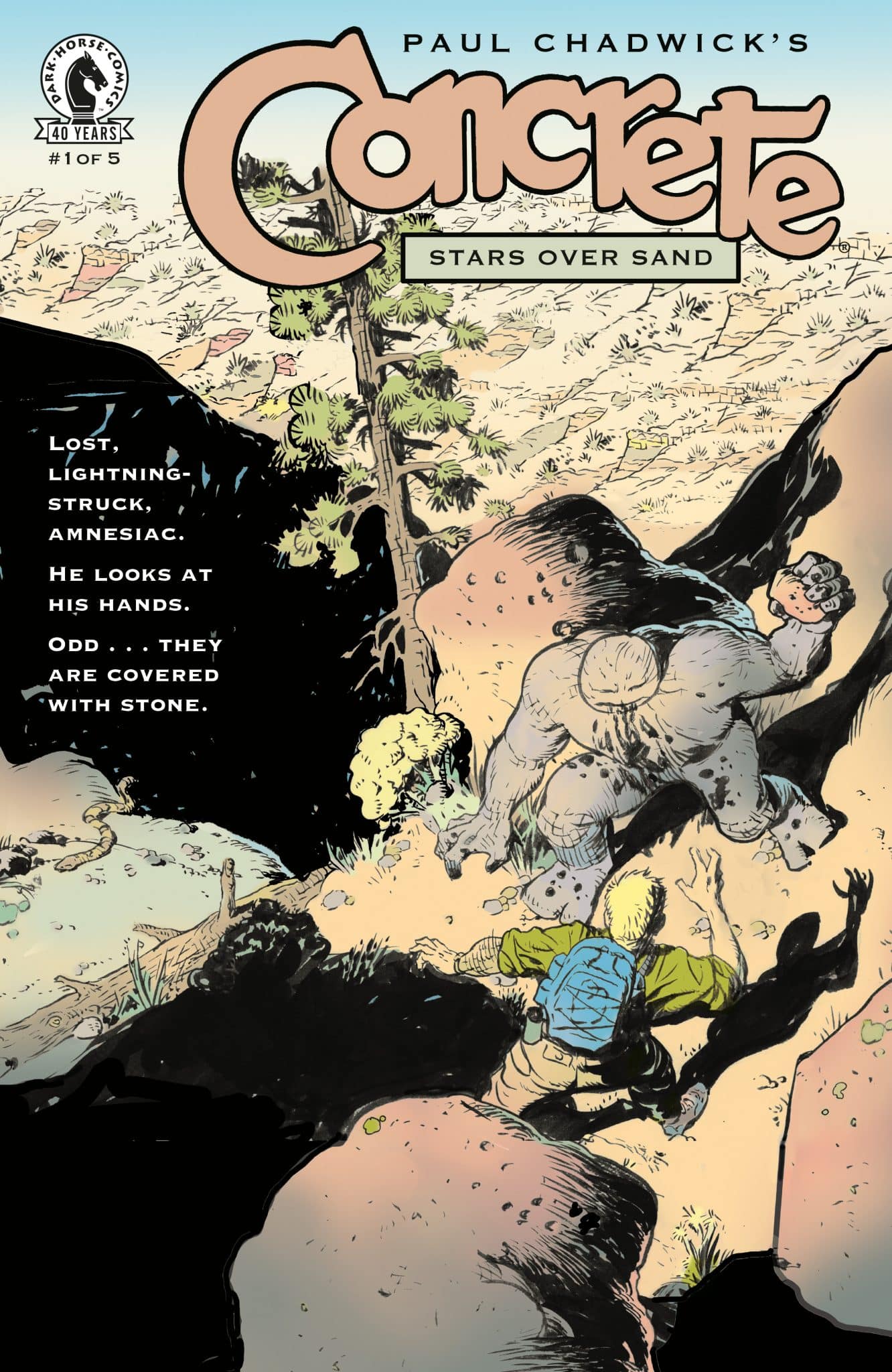
Concrete: Stars over Sand #2 (Dark Horse) – Concrete continues to wander aimlessly and amnesiacally as Maureen rounds up a search party to look for him so he can be there for his kid. Paul Chadwick continues to beautifully alchemize art and writing in Stars Over Sand #2, and his captions are especially poetic when Concrete sees the stars and the moon for the first time. The recurring element of the plot is “missed connections”, and we’re a wrong turn or a bit of stone in the corner of a dune surfer’s eye from finding the protagonist. But maybe he doesn’t want to be found. Stars Over Sand #2 has a true sense of total loneliness in a barren landscape. I hope everything ends up being okay. Overall: 8.7 Verdict: Buy

The Horror of Godzilla #1 is a reactive, harrowing peek into the origin of the more than a little post-apocalyptic universe

The Horror of Godzilla #1

The fittingly named The Horror of Godzilla is an eco-horror take on the original 1954 Godzilla film from Ethan S. Parker, Griffin Sheridan, Tristan Jones, and Josh Burcham that also acts as an origin story for the kai-sei energy that has defined this era of Godzilla comics. I’ve definitely fallen behind on the current Godzilla comics, but thankfully this is set decades in the past and is easy to jump in with even the most cursory knowledge of the King of Monsters. Similar to the excellent Shin Godzilla film, The Horror of Godzilla #1 jumps from biblical destruction to board room arguments plus there’s a missing scientist. It explores the time-honored theme of the folly of humanity and science in the face of natural forces as a plan for renewable energy backfires big time.

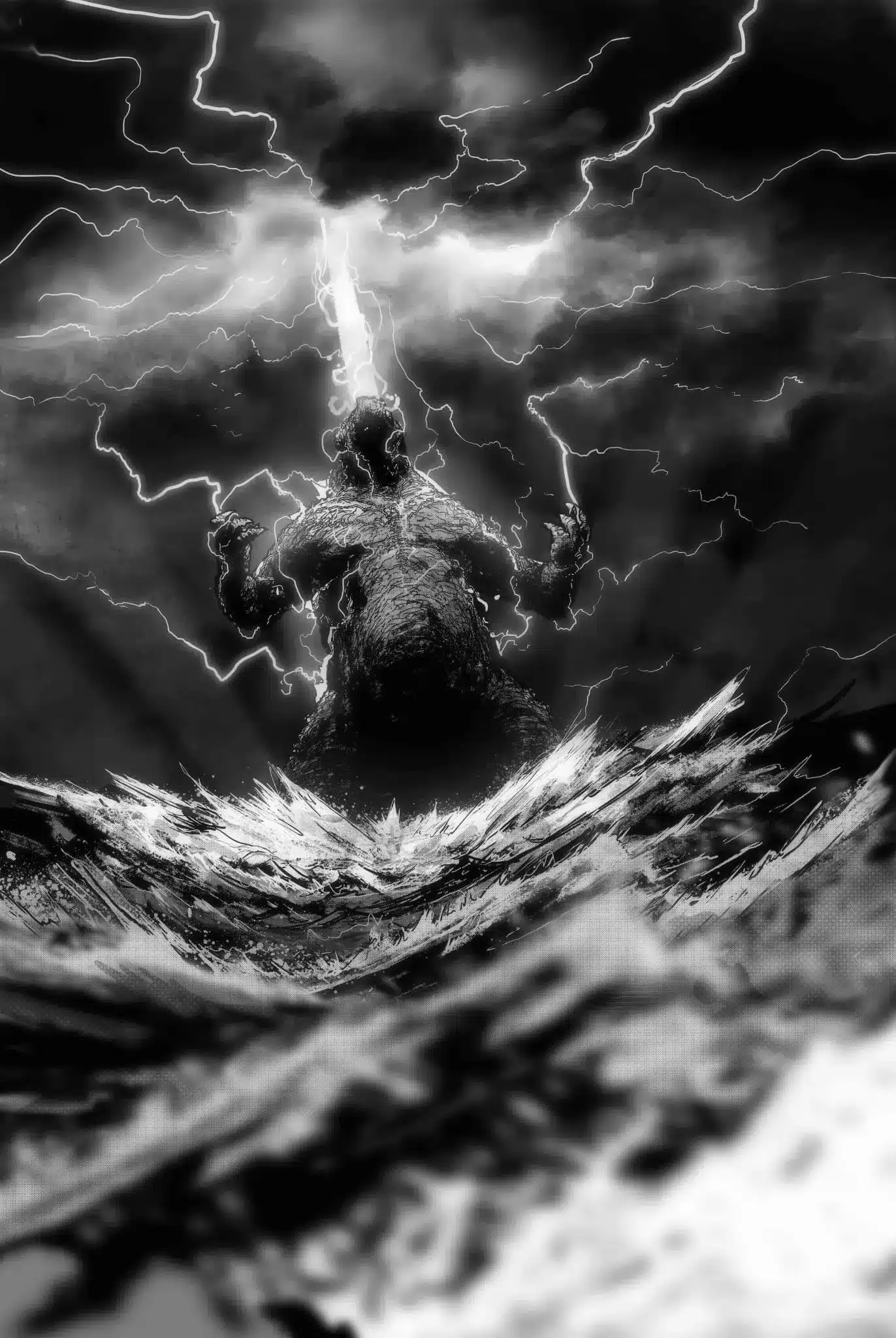
The art team of Jones and Burcham are in full multi-genre mode in their visual storytelling going from massive full page shots of Godzilla and the damage he’s caused to Tokyo to grey tone, almost handheld camera style of panel angles for folks trying to flee the city at all costs. Josh Burcham’s color palette has an apocalyptic drabness to it, but there are interjections of green representing the kai-sei that Godzilla secretes and has terrible consequences for anyone who comes into contact with it. It’s a leit motif that appears on almost every page of the comic culminating in a full-on body horror/mutation moment. There’s something truly sinister about this incarnation of Godzilla, and Parker and Sheridan back this up in the scientist Dr. Morrison’s dialogue when she talks about how Godzilla isn’t a hungry animal, but destruction personified. The Horror of Godzilla #1 isn’t an action book ; there’s not fighting back, just running and scrambling to figure out the situation.

But, despite being surrounded by disasters, Morrison is still optimistic about kai-sei energy’s ability to save the world from Godzilla and high energy bills. She’s a Baby Boomer optimist trapped into the most pessimistic story. I don’t think there’s a single positive panel in The Horror of Godzilla #1. Morrison might say that she has a plan, but then Ethan S. Parker, Griffin Sheridan, and Tristan Jones cross cut to an old man covered in green goo. The government committee during her hearing is quite confrontational, but from an in-story perspective, she screwed up on an extinction event level so, of course, they’re not going to be the most sympathetic audience. Jones effectively uses close-ups to show how drained and traumatized she is from her actions, and how basically the entire world is up a creek without a paddle. Plus it’s easier to find a scapegoat than a solution.

The Horror of Godzilla #1 is a reactive, harrowing peek into the origin of the more than a little post-apocalyptic universe. Parker, Sheridan, Jones, and Burcham transform Godzilla into something genuinely scary that effects humanity beyond just knocking down buildings and causing mass panic in the streets. To be honest, the victims are creepier than the monster, and at this stage in the game, no one has any answers, which makes the comics that more compelling. As an enthusiast of both kaiju and slasher stories, The Horror of Godzilla really hit the sweet spot for me.

Story: Ethan S. Parker, Griffin Sheridan Art: Tristan Jones 
Colors: Josh Burcham Letters: Tom Napolitano
Story: 7.8 Art: 8.6 Overall: 8.2 Recommendation: Buy

IDW Publishing provided Graphic Policy with a FREE copy for review


Purchase: Zeus Comics – Kindle

Mini Reviews: Swamp Thing 1989 #4, Giant Robot Hellboy Returns #1, Sicko #1, Gambit Wanted #1

Swamp Thing 1989 #4

Sometimes, the staff at Graphic Policy read more comics than we’re able to get reviewed. When that happens you’ll see a weekly feature compiling reviews of the comics, or graphic novels, we just didn’t get a chance to write a full one for.

These are Graphic Policy’s Mini Reviews and Recommendations.

Logan

Swamp Thing 1989 #4 (DC) – Rick Veitch wraps up his Swamp Thing run the way he originally intended with art from Tom Mandrake and Trish Mulvihill in Swamp Thing 1989 #4. There’s one last battle between Swamp Thing and Anton Arcane, the birth of his and Abby’s child (A son in this version), and a literal, but well set-up Deus ex machine to give the Hollands a happy ending. There’s a zen quality to Veitch and Mandrake’s work as Swamp Thing has seen and done everything and just wants to be with his wife and kid. He portrays calm compared to the chaos of Arcane and his ever shifting body. Superhero comics rarely have endings, but now Alan Moore and Rick Veitch’s Swamp Thing has a near-perfect one that actually fits in current DC continuity too. (PS It’s such a treat to have Mandrake draw Spectre in all his godlike and actually useful glory.) Overall: 9.6 Verdict: Buy

Giant Robot Hellboy Returns #1 (Dark Horse) – Giant Robot Hellboy Returns has diminishing returns from its predecessor despite high energy, craggy linework from Duncan Fegredo and some trippy violets from colorist extraordinaire Dave Stewart. But Mike Mignola’s script is filled with technobabble. The comic feels like the boring part of an old school Toho movie when the badly dubbed scientists yammer, and you wish giant monster and robot would duke it out. The worst part of GRH Returns #1 is that it just tapers off at the end instead of having a good cliffhanger. Overall: 6.1 Verdict: Pass

Sicko #1 (Ignition) – Tini Howard and Amilcar Pinna’s Sicko is a cathartic read for anyone who has been treated like shit or not believed by the health care system. Protagonist Valentine is dying, and she and her doctors don’t know why, but they wear hazmat suits around her. There’s also some shifty healthcare conglomerate/alternative medicine going on and creating conflict in the background. Howard’s nonlinear narrative creates context for Valentine’s plight while still being a propulsive biohazard thriller. Pinna and colorist Amanda Grazini go full trippy when Valentine uses her “abilities” on the run contrasting with the sterile hospital rooms. This issue has Breaking Bad pilot energy, but swap the blue meth for prescription pills. I’m definitely along for the ride. Overall: 8.9 Verdict: Buy

Gambit Wanted #1 (Marvel) – Once I got over the shock of Storm being a child for some reason, I ended enjoying this flashback Gambit comic from Chris Claremont, Robert Gill, and Bryan Valenza. Claremont’s writing is wordy as ever, but his captions provide insight into Gambit’s psyche while still leaving room for action. The highlight of the issue is an extended Gambit/Bullseye fight with breathtaking choreography from Gill and deep purples from Valenza. I don’t know the reasons behind the hit on Gambit, but Gambit Wanted #1 portrays the thief turned hero at a turning point in his career. I also look forward to more cool fight scenes. Overall: 7.7 Verdict: Buy

Dungeons & Dragons: Total Party Killers #1 is a fun little fantasy anti-hero diversion to ponderous sagas and blockbusters

Dungeons & Dragons - Total Party Killers #1

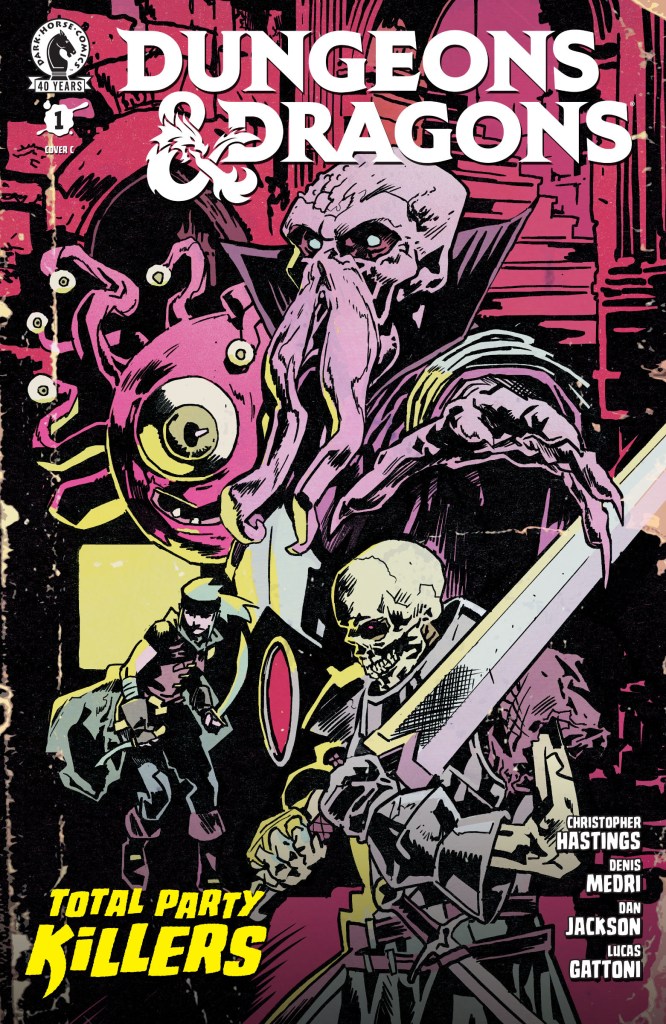
Not every fantasy story has to be an epic fantasy quest with complex world-building or a joke a minute comedic story with equally as complex world-building. Sometimes, a motley, morally dark grey crew of usually monstrous races banding together to procure or protect some powerful MacGuffin from a morally pitch black figure does the job just fine. And this second sentence is Dungeons & Dragons: Total Party Killers in a nutshell. Christopher Hastings indulges in so many twists and identity reveals that I felt like I was reading an airport novel for nerds. However, Denis Medri and Dan Jackson deliver colorful character designs and blasts of energy that elevates the material. Jackson’s flat colors are especially a standout and help bring the chaos.

In keeping with the title, Total Party Killers #1 switches the dynamic of the characters at a drop of the hat so it’s hard to latch onto anyone initially until Hastings lets the last few pages breathe and unleashes a parade of horribles that made the Suicide Squad and Doom Patrol fan in me smile. I could really care less about the various objects and character races that flit acting as Easter Eggs for more knowledgeable fans, but a talking green cube of gelatin and a cute little baby multi-eyed monster have my attention along with our protagonist, a charming rogue with a secret named Tilli, who has sapphic Han Solo energy. Honestly, the contrast in charisma between them and the initial party made me giggle even if the bad guy is a little underwhelming. But, it will be nice to see the group out and about in future issues.

Medri’s art style is more Saturday morning cartoon than typical fantasy art and even more so than Hastings’ script gets the tone of Total Party Killers across. This isn’t a serious work of fantasy, but quirky co-workers who are stuck together thanks to one hell of a micromanaging boss and are banding together to be free and finally enjoy life and free will. Dan Jackson gives each member of the party a key color, which helps keep everyone straight in the beginning when there’s all kinds of long hair, flowing robes, and pointy ear action going on and then establishes their actual personality. The cube, eye tyrant, and mind flayer especially stand out, and Christopher Hasting and Denis Medri transform a character that was the biggest, baddest thing on the block in Stranger Things into an unexpectedly charming and clever amalgamation of people.

Dungeon and Dragons: Total Party Killer #1 takes a little bit of time to show the type of book it’s going to be moving forward, but ends up being a fun little fantasy anti-hero diversion to ponderous sagas and blockbusters. Hastings and Medri’s book is quirky in the best way once it abandons the lore dumps and constant twists and turns for party banter, some action set piece fireworks, and a straightforward goal. I definitely want to see Tilli screw some more people over and howl at the moon though and maybe reveal that all the in-game conflict is the result of some chaotic friend/DnD group drama.

Story: Christopher Hastings Art: Denis Medri 
Colors: Dan Jackson Letters: Lucas Gattoni
Story: 7.0 Art: 8.0 Overall: 7.5 Recommendation: Read

Dark Horse Comics provided Graphic Policy with a FREE copy for review


Purchase: Zeus Comics – Kindle

Mini Reviews: Badrock #1, Of the Earth #3, Sonic x Godzilla #1, 3W/3M Foundations

Badrock #1

Sometimes, the staff at Graphic Policy read more comics than we’re able to get reviewed. When that happens you’ll see a weekly feature compiling reviews of the comics, or graphic novels, we just didn’t get a chance to write a full one for.

These are Graphic Policy’s Mini Reviews and Recommendations.

Logan

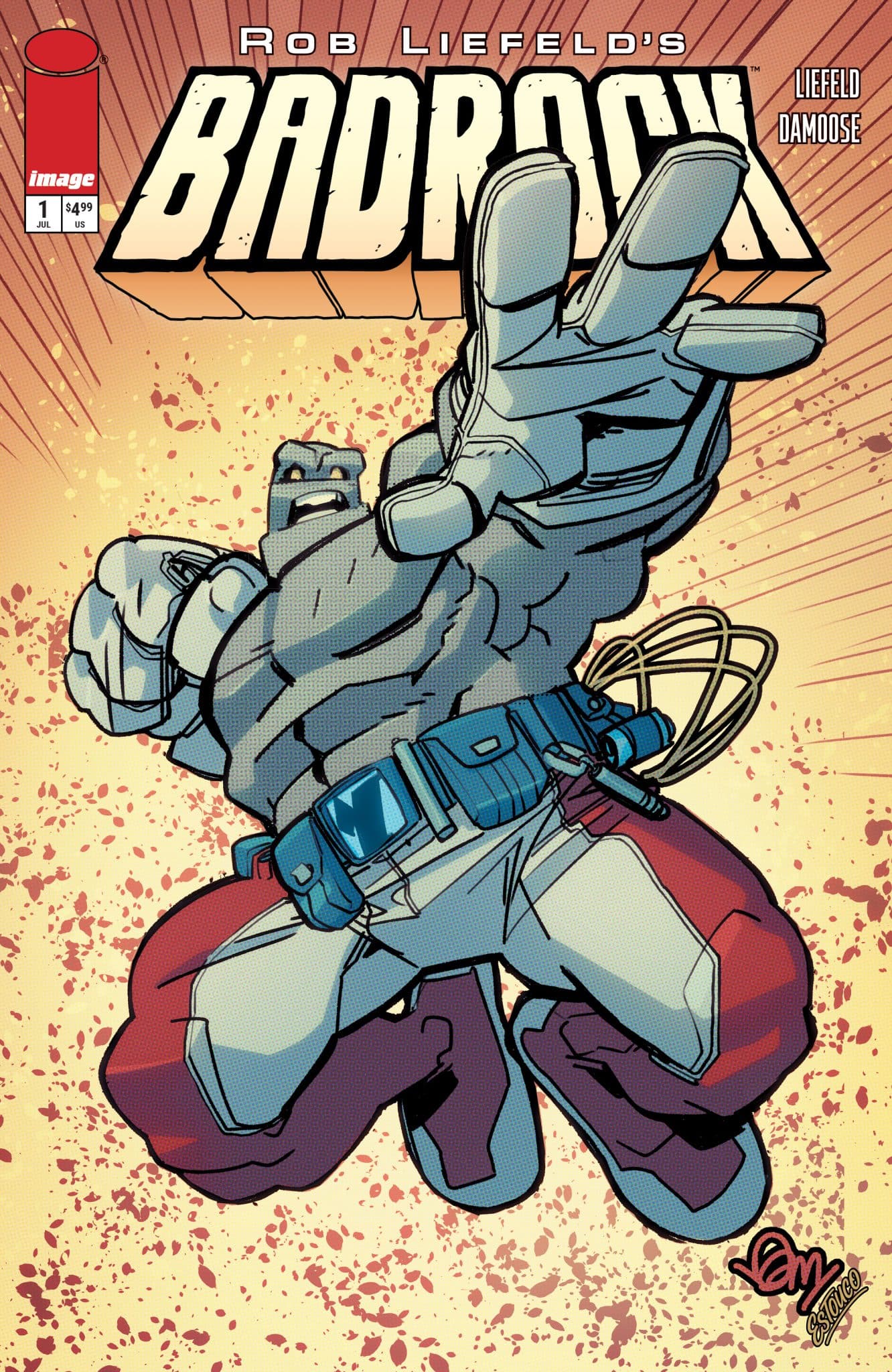
Badrock #1 (Image) -“Hello fellow kids” and wearing the comic’s writer’s podcast t-shirt aside, Badrock #1 is inoffensive action-packed fun. He’s basically if the Thing were a teenager, and his bond with his mom is wholesome. After a flash forward, Rob Liefeld and Seth Damoose build the book around their relationship. Badrock #1 has real heart and is the complete opposite of 90s edgelord. This extends to Damoose’s art, which has a powerful, primitive quality to it like Jack Kirby by the way of Liefeld, but he’s seen a few episodes of Venture Bros. Overall: 8 Verdict: Buy

Of the Earth #3 (Image) – Of the Earth has really started to hit its stride in the past couple issues. Letterer Hassan Otsmane-Elhaou makes the dialogue or lack of dialogue from protagonist Tabby’s grandma and a Fossil Oil employee that much creepier to go with Charlie Adlard and Pip Martin’s shadowy visuals and Chris Condon and Andrew Ehrich’s suspenseful script. Also, the back matter plays a key role in the comic kind of contradicting what we’ve just seen. Condon and Ehrich’s give Tabby and salt of the Earth oilman Thomas an easy rapport and trauma bond that grounds the comic as we start to get a real glimpse of the Wildcatter. Overall: 8.2 Verdict: Buy

Sonic x Godzilla #1 (IDW Publishing) – The Thunder of a battle between Team Sonic and Eggman is stolen by Mothra and Mechagodzilla in Sonic x Godzilla (Who’s not in the comic) #1. Nick Marino, Jack Lawrence, and Reggie Graham put the focus on fisticuffs in this first issue while still carving out some space for character connections. I love Amy Rose’s intuitions about Mothra even as the Queen of Monster causes chaos in the Sonic universe. This is a shoot first, ask questions later type of comic, but fun in the last few minutes of a Saturday cartoon episode way. Overall: 7.6 Verdict: Read

3W/3M Foundations (Dark Horse) – Although Mike Del Mundo, Mike Huddleston, and Jerome Opena provide mind opening artwork, reading 3W/3M Foundations without subscribing to the companion Substack is like diving into the Silmarillion without reading Lord of the Rings. Foundations showcases a trippy sci-fi world centered around complex systems of science, magic, and religion. However, Jonathan Hickman and Nick Spencer wisely use the relationship between a father and his kids as a frame story. I’ll admit I’m semi-invested in that aspect, but the rest of the world is nigh-impenetrable. I dig some of the character designs, especially for the Three Mages and Syg the White Stag, but if you’re looking to get into a new fictional universe, this isn’t a good place to start. Overall: 6.4 Verdict: Pass

Mini Reviews: Die Loaded #7

Die Loaded #7

Sometimes, the staff at Graphic Policy read more comics than we’re able to get reviewed. When that happens you’ll see a weekly feature compiling reviews of the comics, or graphic novels, we just didn’t get a chance to write a full one for.

These are Graphic Policy’s Mini Reviews and Recommendations.

Logan

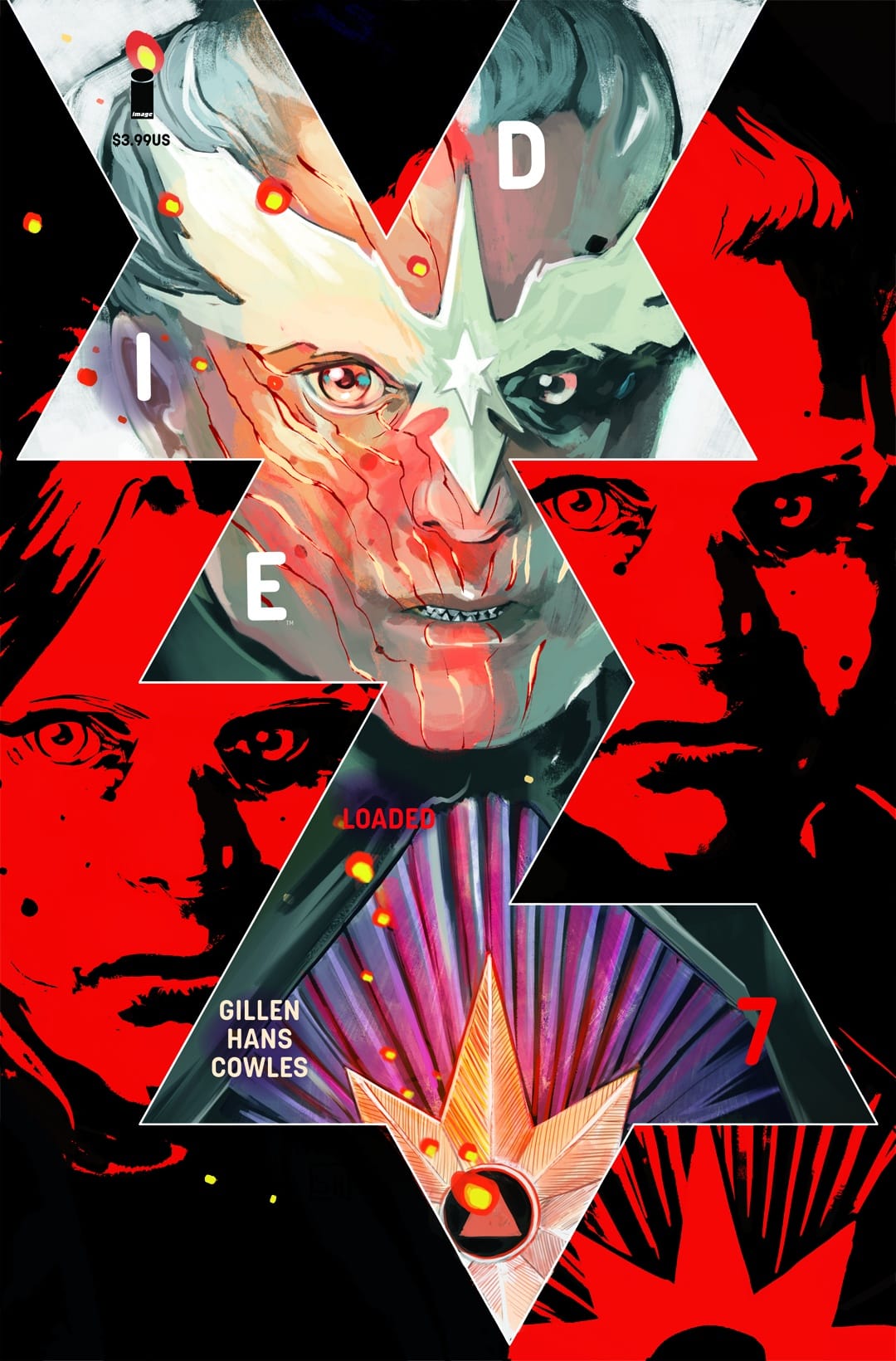
Die Loaded #7 (Image) – Kieron Gillen and Stephanie Hans use TTRPG, fantasy, and even fandom tropes to explore to deep human feelings about things like motherhood after IVF and living with dementia in Die Loaded #7. After the chaos of the previous arc, Sophie and Tommy have started taking over the role of team “parents” and more importantly voices of reason. Throughout the issue, they navigate ethical struggles and hard choices connected to their past lives in the “real world”.

Hans brings a grave line and dark palette to these glimpses in contrast with the more stylized horror fantasy vibes of most of the series. However, Die Loaded #7 isn’t all doom and gloom ; I got a chuckle from Die’s denizens cosplaying as human IT workers/Linux evangelists.

Overall: 8.7 Verdict: Buy

Mini Reviews: Killer Influences #1, Beast of Boriken #1, The Shaolin Cowboy: Staying A.I. Alive #1

Beast of Boriken #1

Sometimes, the staff at Graphic Policy read more comics than we’re able to get reviewed. When that happens you’ll see a weekly feature compiling reviews of the comics, or graphic novels, we just didn’t get a chance to write a full one for.

These are Graphic Policy’s Mini Reviews and Recommendations.

Logan

Killer Influences #1 (IDW Publishing) – Joey Esposito and Valerie Burzo serve up a satirical look at the true crime genre in Killer Influences #1. This isn’t a “catch a killer” story, but more of a psychological narrative with podcaster/journalist Kylie joining forces with local serial killer Melvin to boost both their profiles. No one is likable, but the book is great commentary on the exploitation of mass murderers on pop culture as well as the banality of middle America. The cast of Killer Influences have really money and family issues which grounds the story when it gets more macabre. And speaking of macabre, Burzo has a great visual storytelling rhythm going from sleepy smoke stacks to a dead body that will haunt my dreams tonight. Overall: 8 Verdict: Buy

Beast of Boriken #1 (Dark Horse) – In Beast of Boriken #1, Julio Anta, Daniel Irizarri, and Patricio Delpeche tell a ripped-from-the-headlines horror story about the resilience of Puerto Ricans against hurricanes and Western developers. This first issue fleshes out the Flores family and their Paul brother-esque adversary Simon Hunt. And, of course, there’s the titular Beast who gets Delpeche’s darkest colors and Irizarri’s most dynamic line work. Beast of Boriken #1 welcomes you into this sad, yet cathartic world full of activism, a fighting spirit, and a serious badass monster. Justin Jordan and Tony Akins’ black and white backup “Seven Gates” is a different kind of atmospheric horror rooted in urban legends and a crush gone haywire. Overall: 8.7 Verdict: Buy

The Shaolin Cowboy: Staying A.I. Alive #1 (Dark Horse) – Geof Darrow’s laconic Shaolin Cowboy is back for a new miniseries set in a heightened version of our current right wing hellscape. The satire is broad, but there’s something cathartic about a king fu master kicking the literal shit out of some racists or taking a beat before refusing a MAGA hat and wearing a good Ol’ Stetson. Staying AI Alive has the pitch black humor and detailed art that Darrow is known for, and that’s the appeal with the initial plot being a little thin. I love the talking animals though. Overall: 7.6 Verdict: Read

Mini Reviews: Ultimate Universe Finale #1, Swamp Thing 1989 #3, Summer of Supergirl Special #1, Exploit #4

Summer of Supergirl Special #1

Sometimes, the staff at Graphic Policy read more comics than we’re able to get reviewed. When that happens you’ll see a weekly feature compiling reviews of the comics, or graphic novels, we just didn’t get a chance to write a full one for.

These are Graphic Policy’s Mini Reviews and Recommendations.

Logan

Ultimate Universe Finale #1 (Marvel) – I wasn’t a fan of the timey wimey BS that was Ultimate Endgame #5, but Ultimate Universe Finale #1 is a better conclusion to Earth-6160 as well as bittersweet glance of what could have been. Jonathan Hickman and Marco Checchetto give Peter Parker a taste of his own medicine when May starts becoming a superhero capturing the domestic dynamic that made Ultimate Spider-Man refreshing. Bryan Hill and Stefano Caselli turn in a powerful coda to T’challa’s heroic journey and widely focus on his relationship with Storm. The Peach Momoko Ultimate X-Men and Deniz Camp Ultimates stories are the most tantalizing offering an exciting new status quo and a new Big Bad for Earth-6160. Finally, Chris Condon and Alessandro Capuccio’s is just a simple birthday hangout between Logan and Victor after issues and issues of violence. It feels like the conclusion this series deserved instead of chasing Magik through mazes. All in all, this comic reminded me of the good ol’ days of the Ultimate Universe, and maybe editorial will catch a hint and bring it back in a more comprehensive way than Ultimate Impact Reborn. Overall: 8 Verdict: Buy

Swamp Thing 1989 #3 (DC/Black Label) – The DC Universe-spanning tapestry that Rick Veitch and Tom Mandrake are weaving comes into clearer view in Swamp Thing 1989 #3. It’s a truly a cosmic gumbo featuring cameos from John Constantine, Nergal, Darkseid, Anthro, and more all invested in Swamp Thing’s narrative of birth and rebirth, life and death. And then you’ve got Arcane doing the opposite number, and giving Mandrake and colorist Tristh Mulvihill an opportunity to indulge in their grisly child. But the heart of the story continues to be Swamp Thing’s battle to be with Abby and their unborn child, and that’s what keeps me coming back to each installment. Even after he’s factory reset by the Source, this is his first and last thought, and he’ll try to make it back to his loved ones. Overall: 8.9 Verdict: Buy

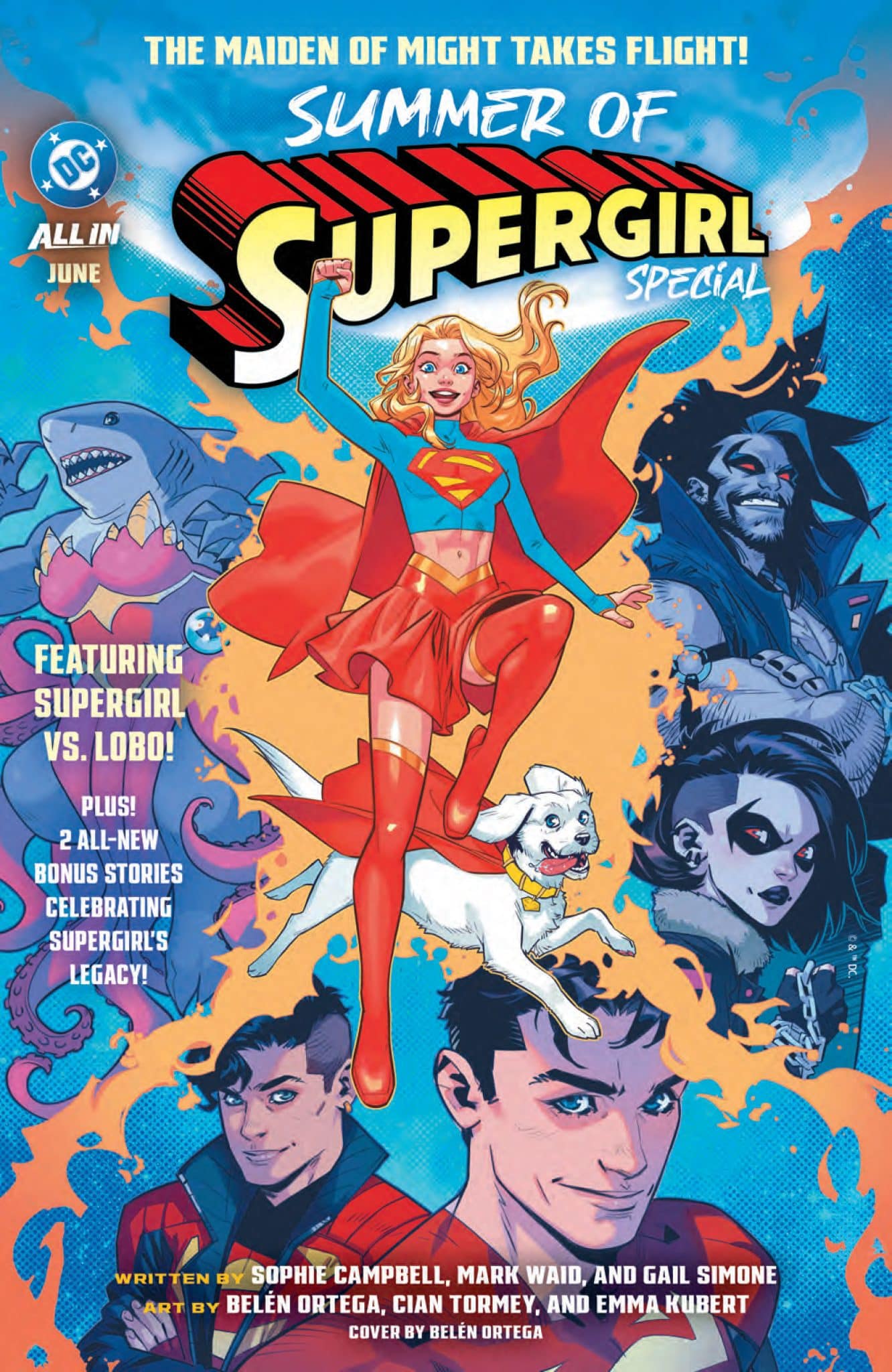
Summer of Supergirl Special #1 (DC) – Just in time for her new movie, the Summer of Supergirl Special #1 is a delightful entry into the world of the Last Daughter of Krypton for fans old and new. The lead story from Sophie Campbell and Belen Ortega pits Supergirl against Lobo with a side of Krypto and the fittingly named Dawg. Opening with a court case, this story is freaking hilarious and also heartwarming as Lobo and his daughter Crush adjust to life in Midvale. (The mac n cheese sandwiches help a lot.) The modern Supergirl feels like a mix of rebel and wholesome, and Campbell gets that which is why she is the current writer and sometimes artist on the ongoing title. This story made me want to catch up on the Supergirl and Lobo comics while acting as a full meal in its own right. Next up is a Mary Marvel/Supergirl backup from Gail Simone and Emma Kubert where they fight a power-negating robot, but mostly bond as fellow adoptees and young female superheroes who are often in the shadow of their male counterparts. Kubert’s art fuses old school superhero art with contemporary techniques and brings some big feelings. The final story is for all the continuity cops out there courtesy of who else but Mark Waid and the chameleon-like Cian Tormey, who does a Supergirl Eras tour slicker than the billionaire with the big record sales and even bigger carbon footprint. The story is a recontextualizing of 60+ years of sometimes insane stories into a sales pitch for why Supergirl is awesome and should have her own movie and comic. And the Crisis on Infinite Earths and Woman of Tomorrow callbacks are pure beauty. Overall: 8.4 Verdict: Buy

Exploit #4 (Mad Cave) – The ripped from the headlines/anti-billionaire/agitprop thriller series wraps up with a stylish, trollish extended heist issue from Tim Leong, Laura Hudson, and Emiliana Pinna. Pinna and colorist Rebecca Good make everything smooth and sleek thanks to the foundation of characterization laid in previous issues. It’s cathartic watching tech bros get their comeuppance, and the ending is pretty sweet/full circle with just a touch of bitterness to set up a potential sequel. Exploit is both a love letter to good tech journalism and a suspenseful story with badass queer leads. It’s the perfect way to wrap up Pride Month. Overall: 8.1 Verdict: Buy

Justice League: Dream Girls #4 shows both the triumphant and sad sides of queer identity

Justice League: Dream Girls #4

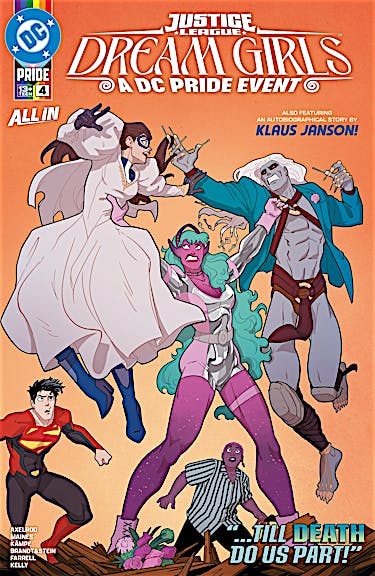
Jadzia Axelrod, Nicole Maines, Stein & Brandt, Rosi Kampe, Triona Farrell, and Dearbhla Kelly wrap up their beautiful, action-packed, and soul-searing Pride Month event in Justice League: Dream Girls #4. Most of this issue is set in the Kampe-drawn dream dimension, where Galaxy fights to save her BFF Dreamer from the clutches of the Key, who is very close to having infinite knowledge that will transform him from that one villain you vaguely remember getting knocked out by a boxing glove arrow in Grant Morrison’s JLA run to an A-list baddie. It cements the bond between Galaxy and Dreamer while setting them on two quite different, yet valid heroic paths. Axelrod and Maines give both heroines full arcs while leaving room for either them or other creators to play in the sandbox. In addition to wrapping up the weekly crossover event, JL: Dream Girls #4 features a powerful, personal black and white autobiographical comic from the legendary Klaus Janson about growing up as a gay, immigrant cartoonist in the 1960s and 1970s.

To start, it’s been such a pleasure to follow JL: Dream Girls each week and see transgender superheroes written by transgender comics creators get to be front and center in a big summer crossover with such a buffet of different art styles and a huge cast of characters, LGBTQ+ otherwise. (Batman is a trans ally, y’all!) And it wouldn’t be a summer crossover with some badass fisticuffs, and JL: Dream Girls #4 doesn’t disappoint. There’s a surreal action-horror vibe to Rosi Kampe and Kelly’s visuals, with interesting panel layouts as Galaxy flies around and tries to get Dreamer to literally wake up and not be married to the Key. For example, while Dreamer is under the Key’s thrall, the gutters are black, but when she gets her act together, they’re different colors or non-existent. Kampe’s line art and Dearbhla Kelly’s colors go from something light and almost trance-like to solid and punchy as the story progresses. As someone who has put on a variety of identities throughout the series, it’s so empowering to see Dreamer finally be herself in JL: Dream Girls #4’s climax.

After the big fight, JL: Dream Girls #4 has an extended epilogue that’s drawn by Stein & Brandt and colored by Farrell, who have done an excellent job on the Watchtower sequences throughout the series, giving this large cast of characters their own unique personalities, sometimes with a single eye movement or head tilt. (I live for Jon Kent’s eyes lighting up and wanting to play DnD even though Damian Wayne says it’s for nerds.) The use of “Bwahahaha” all but confirms, but they’re worthy successors to the superhero sitcom era of J.M. DeMatteis, Keith Giffen, and Kevin Maguire’s Justice League. The highlight of this part of the story is a conversation between Batman and Dreamer, where he tells her that if someone is uncomfortable with her being simply present in a space, that’s their problem. It brings the superhero/queerness/trans metaphor full circle and means a lot because it’s DC’s biggest seller saying those words. Jadzia Axelrod and Nicole Maines have done a wonderful job telling a story that is both a sci-fi/superhero epic with psychological dimensions that also works as a personal tale of two very different transgender women coming to terms with who they are. It was in the previous issue, but Coagula and Dreamer talking about being transgender lesbians is an all-time great moment in superhero comics. Finally, Galaxy and Dreamer are just awesome friends, and I hope they have many more adventures either as part of the Justice League or together. (DC editorial, we need a JLQ ongoing.)

After the colorful triumphs of the lead story, the black and white backup story from Janson entirely switches tone, and I appreciate the reader’s advisory between them. He gives a stark portrayal of what it was like to be a gay man in the 60s and 70s, with bullying, slurs, and not having heroes like Galaxy and Dreamer to look up to. However, young Klaus finds hope through superhero comics, which are the only part of the story done in color and give him an escape as he struggles to fit in with the oppressive society around him. Another place of escape for him is one of the first Pride parades that happened after Stonewall, and it’s cool to see the LGBTQ+ culture of the era, like when Klaus shows another young man his art portfolio after getting an early assignment at DC Comics. There’s also a shift in Klaus Janson’s art style as he grows in confidence in himself as an artist and gay man, before culminating in that iconic style that defined Batman and Daredevil for generations of heroes. And, personally, I love that a queer person like myself is partially responsible for those dark stories that were important to me growing up and still are to this day. I appreciate that Mr. Janson was able to share something so personal in such a beautiful way and that DC continues to publish autobiographical stories by LGBTQ+ creators.

Justice League: Dream Girls #4 shows both the triumphant and sad sides of queer identity through its punching and friendship-filled lead story and its sobering, yet hopeful backup story. It’s the perfect comic to read during the last week of Pride Month.

Story: Jadzia Axelrod, Nicole Maines, Klaus Janson
Art: Stein & Brandt, Rosi Kampe, Klaus Janson 
Colors: Triona Farrell, Dearbhla Kelly
Letters: Jodie Troutman, Frank Cvetkovic, Lucas Gattoni
Story: 9.0 Art: 9.5 Overall: 9.3 Recommendation: Buy

DC Comics provided Graphic Policy with a FREE copy for review


Purchase: Zeus Comics – Kindle

« Older Entries Recent Entries »