BAFTA-nominated composer Andrew Prahlow will be taking the stage at Music Hall of Williamsburg on October 17th, performing music from his award-winning Outer Wilds soundtrack, accompanied by a chamber orchestra. An open-world exploration game, Outer Wilds “finds new melodies within a familiar genre, and plays those notes masterfully” (Paste Magazine). This event comes on the heels of two nearly sold-out west coast performances and is sure to be an off-the-beaten-path highlight of New York Comic Con nightlife.
Described as “one of the most memorable musical experiences in video game history” (SPIN), and “hauntingly beautiful” (Game Developer), Prahlow’s larger-than-life, emotive soundscapes emerged as an overnight cult phenomenon, with over 27 million streams on Spotify in the last year alone. His scores for Outer Wilds, Outer Wilds: Echoes of the Eye, and The Lost Reels have received widespread critical acclaim, including four Best Original Score nominations (BAFTA, SXSW, Golden Joystick Awards, Jerry Goldsmith Awards), two Best Game Music awards, and a G.A.N.G. Award for Best Indie Game Music.
Prahlow began orchestrating the show after he was asked to adapt the track ‘Timber Hearth’ for the Metropole Orkest, an orchestra based in the Netherlands, to be performed during a tour showcasing video game soundtracks this past December.
Prahlow will be joined by Contemporaneous, a chamber orchestra ensemble based in New York City, whose mission is to bring to life transformative music by living composers. Hailed as “exact and detailed, but also lively and openly dancing” by The New York Times, Contemporaneous has premiered over 200 new works and has been presented by such institutions as Carnegie Hall, Lincoln Center, Park Avenue Armory, the Los Angeles Philharmonic, and Walt Disney Concert Hall.
Opening up the set will be Vines, the solo project of composer, producer, and multi-instrumentalist Cassie Wieland. Vines masterfully experiments with intimate ambient and experimental pop sound worlds and was praised as “sweetly shimmering” by The New York Times. Her music has been featured on Stereogum, KEXP, New Sounds, The New York Times, and NPR, among others.
Tickets are $51 and are available for purchase at axs.com.
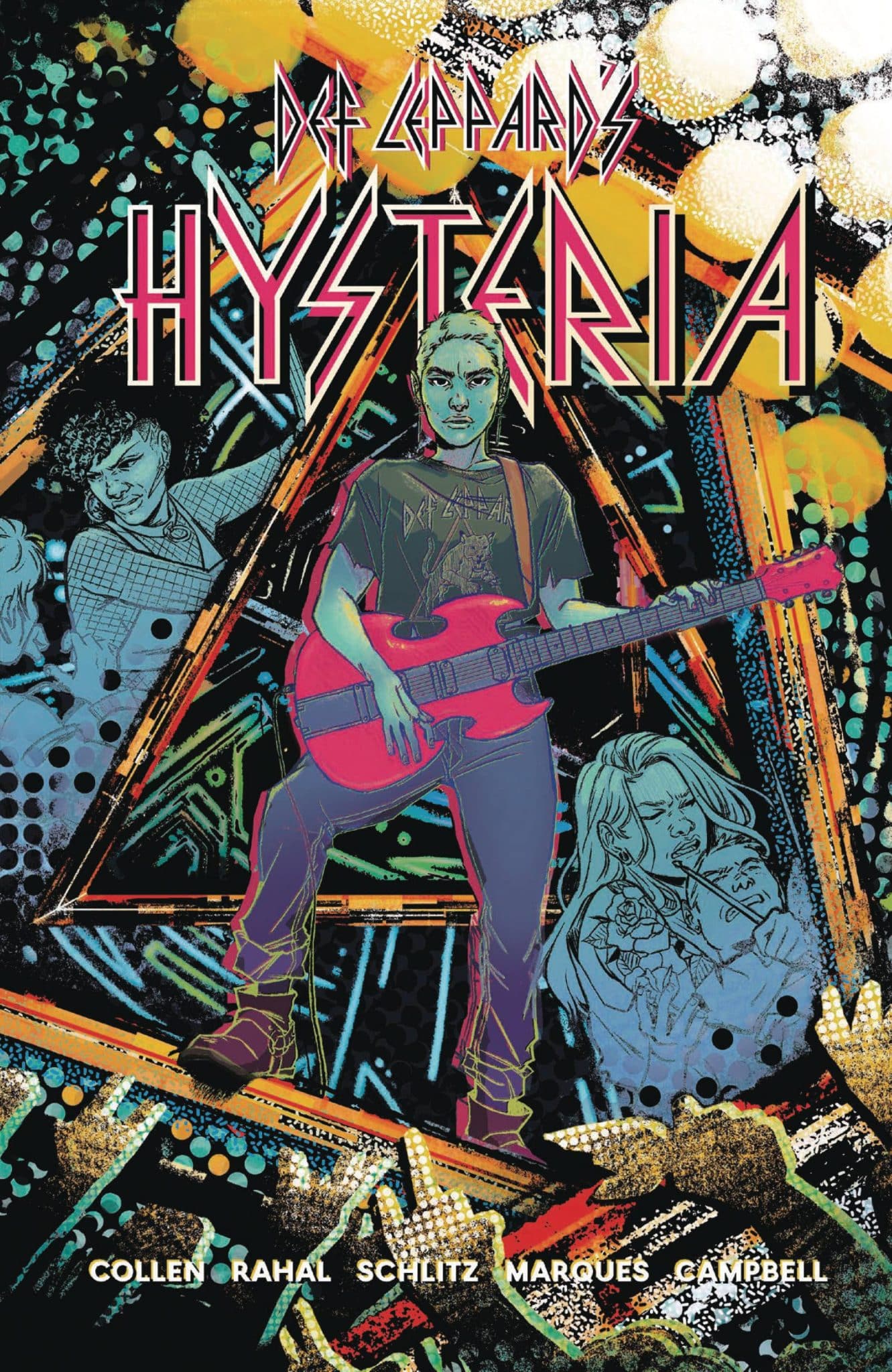
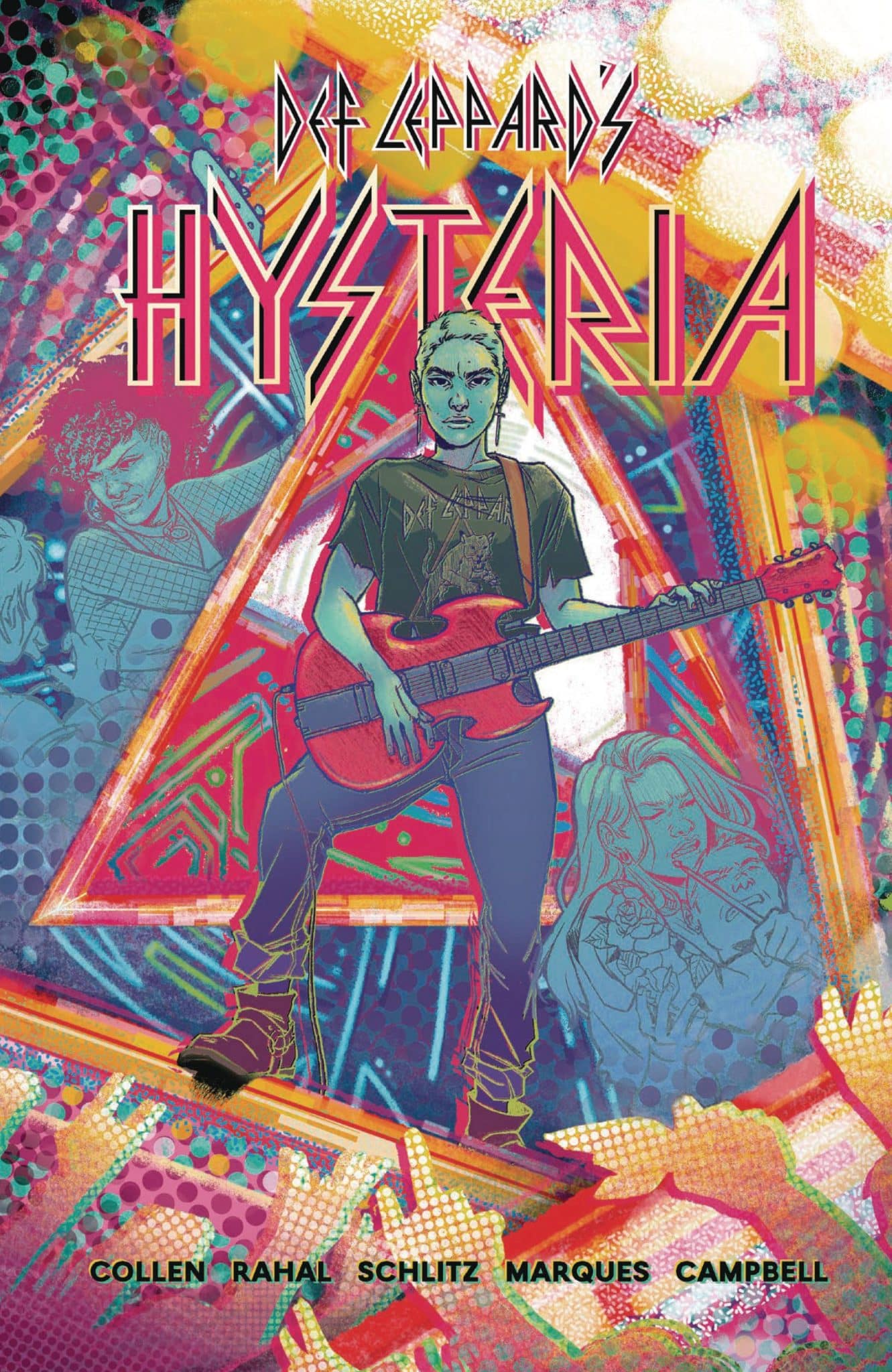
Vault and Def Leppard have announced a special zero issue for Hysteria, the forthcoming graphic novel co-written by Def Leppard guitarist Phil Collen and Eliot Rahal, with illustrations by Alex Schlitz, colors by Fabi Marques, and letters by Andworld Design. This extra-special single issue offering will give readers an early look at the much anticipated forthcoming graphic novel.
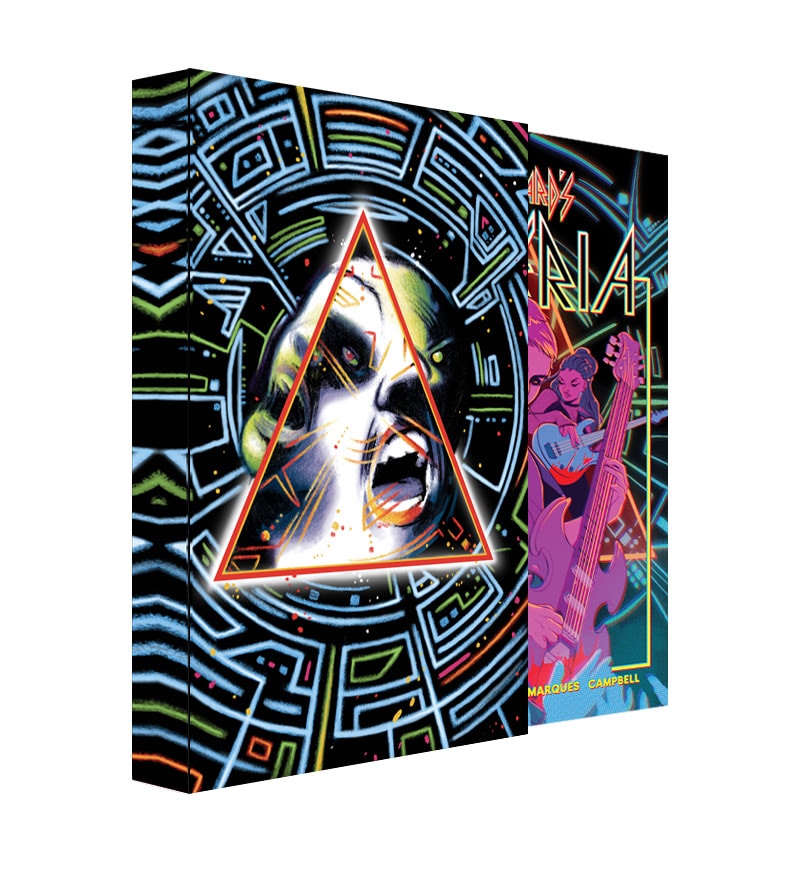
Included in the Hysteria zero issue release will be a hyper-limited foil variant edition signed by Def Leppard’s Phil Collen himself. Each signed copy will come with a CGC witnessed certificate of authenticity. Only 200 copies will be available, and can only be found in local comic shops. Pre-orders are open now.
Continuing the celebration of rock, the graphic novel Hysteria follows Foz, the frontwoman of indie band Darkside, after she inherits her father’s estate and discovers it comes with a half-remembered guitar from her childhood. The guitar speaks to her, promising fame and success. Soon, it delivers. But when Darkside’s equipment is stolen at a massive music venue, just before they’re set to take the stage with Def Leppard, Foz goes on the warpath to get it back. A knuckle-dusting rampage ensues, and the guitar’s true history is revealed.
Def Leppard’s Hysteria, the graphic novel, features never-before-heard music from Darkside, to be recorded in collaboration with Phil Collen, as it tells the story of the world’s most dangerous guitar. Additional details on the release of the Darkside EP will be announced at a later date.
Def Leppard’s Hysteria #0 will hit store shelves this October.
Def Leppard and the Vault Comics imprint Headsell have revealed their forthcoming graphic novel collaboration, Hysteria co-written by Def Leppard guitarist Phil Collen and Eliot Rahal, with illustrations by Alex Schlitz, Fabi Marques as colorist and Andworld Design as letterer. Def Leppard kicked off their 2024 North American summer tour in July. Retail and deluxe editions of Hysteria will be released spring 2025 with merch to follow.
Continuing the celebration of rock, the graphic novel Hysteria follows Foz, the frontwoman of indie band Darkside, after she inherits her father’s estate and discovers it comes with a half-remembered guitar from her childhood. The guitar speaks to her, promising fame and success. Soon, it delivers. But when Darkside’s equipment is stolen at a massive music venue, just before they’re set to take the stage with Def Leppard, Foz goes on the warpath to get it back. A knuckle-dusting rampage ensues, and the guitar’s true history is revealed.
Def Leppard’s Hysteria, the graphic novel, features never-before-heard music from Darkside, to be recorded in collaboration with Phil Collen, as it tells the story of the world’s most dangerous guitar. Additional details on the release of the Darkside EP will be announced at a later date.
Horror, thrills, music, and more are blended together in this fun, fast-paced, roller coaster ride from one of the biggest bands in rock history. Hysteria will be available in stores and online on April 15, 2025.
In advance of Kieron Gillen and Caspar Wjingaard’s upcoming comic The Power Fantasy, we’re revisiting some of Gillen’s previous creator-owned work.This article was originally published in January 2021 as part of a series of essays about Phonogram: The Singles Club, but has been edited and re-presented here.
“I used to have a special tape. Used to have my track. My one killer track that would get me flying. You got one of those.”- Buddy in Baby Driver [Aka Phonogram with cars]
“You can’t touch music, but music can touch you.”-Mordecai in Regular Show
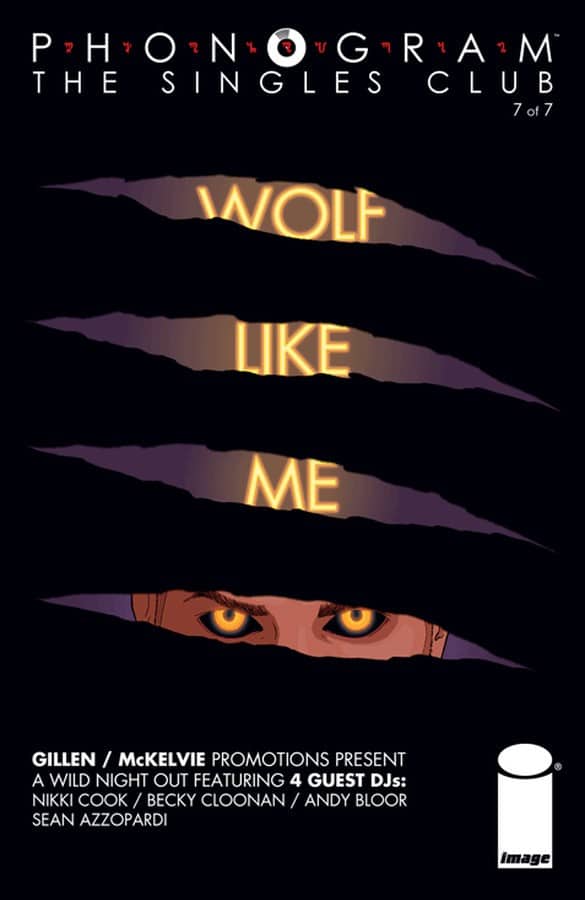
Phonogram: The Singles Club #7 is my go-to single issue for anyone wanting to get into the creative team of Kieron Gillen, Jamie McKelvie, and Matthew Wilson. I’ll also show this book to folks to demonstrate the relationship between sequential art and music and showcase the uniqueness and sheer coolness of comic books as a medium
The premise of The Singles Club #7 is simple, yet brilliant. Up to this point in the series, David Kohl’s hetero-lifemate Kid-with-Knife has been basically Chas from Hellblazer, but he likes Wu-Tang Clan. Sure, he loves music (especially hip hop), but he’s not a phonomancer. However, on the first page of the issue, David Kohl explains what phonomancy is, and Kid realizes that’s something that he and folks do all the time whether you’re walking aimlessly through the city streets, trying to finish a homework assignment, or get that last mile in on the treadmill. Deep down, everyone has that “killer track”, “pump up jam”, or song that gets us moving or feeling inspired and hopeful, and for Kid-with-Knife, that is “Wolf Like Me” by fantastic Brooklyn indie band TV on the Radio. He listens to the song, does parkour in the streets of Bristol, chases away rude men from a couple, ducks in for a kebab and has an amazing indie night with Kohl and Emily Aster. After that, Kid-with-Knife dances some more, forms a connection with, and sleeps with Penny B, who was the POV character in Phonogram: The Singles Club #1. What a night indeed!
Except for the first and final page of the comic, The Singles Club #7 is completely silent so it’s a showcase for Jamie McKelvie’s skill with motion and body language and Matthew Wilson’s color palette. It’s the antithesis of issue six’s black and white zine-inspired story and acts as the praxis to its theory. The art uses werewolf imagery based on “Wolf Like Me’s” lyrics with Wilson using plenty of dark blues, reds, and giving Kid glowing yellow eyes while McKelvie puts a moon in the background in a couple of key early panels before he and Gillen kick the story into parkour mode.
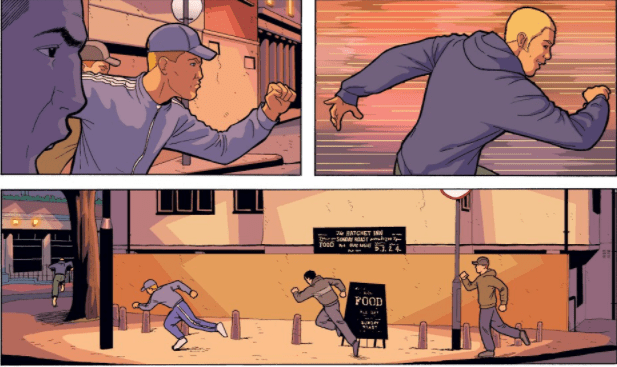
And speaking of parkour, this comic cements McKelvie as a master of showing action in space, especially during the humorous four pages or so where Kid insults a group of tough looking guys and ends up on the run. (He only wanted to get them away from an all-black wearing couple.) He uses The Hatchet Inn (Which is a real place) as a kind of comedic obstacle that Kid and the three guys run around in circles with Kid getting some extra speed lines due to the adrenaline, er, magic of the song. Then, McKelvie goes back to grid mode with the guys looking around a bridge for Kid before breaking it and showing him hanging on one of those height limit signs before making a superhero landing and going into a kebab shop. The power of music plus the heightened nature of McKelvie and Wilson’s storytelling has turned a “running away from a group of guys you probably shouldn’t have pissed off” situation into a chase straight out of one of the better Batman comics. The right track really makes you feel like you’re doing epic things, and that’s the truth. (I totally got pulled over for speeding while listening to Junkie XL’s score for Mad Max: Fury Road.)
Another amazing part of Phonogram: The Singles Club #7’s narrative is the payoff for the foreshadowing that Kieron Gillen slipped in back in issue three when Kohl told Emily Aster that Kid-with-Knife’s high energy came up from being hopped up on a TV on the Radio song. He and McKelvie conclude the issue by showing the indie club night from his perspective featuring intense grids, speech bubbles with symbols and not words, and one beautiful splash page. Kid is so “in the zone” that his perception has become primal. He has transcended boring, old human speech and becomes the werewolf in the song. (See his face as he digs into that kebab.) There are no conversations in The Singles Club #7: just shots, dancing, and bright lights. The use of symbols instead of text in dialogue bubbles is an ingenious way of showing how difficult it is to have conversations at the crowded bar or dance floor area at a club as Kid starts with retelling his pre-club shenanigans, but ends up just ordering a round of shots and dancing with Kohl and Aster. The comic ends up being a montage of fun moments from the previous six issues : all killer and no filler from Gillen McKelvie Wilson.
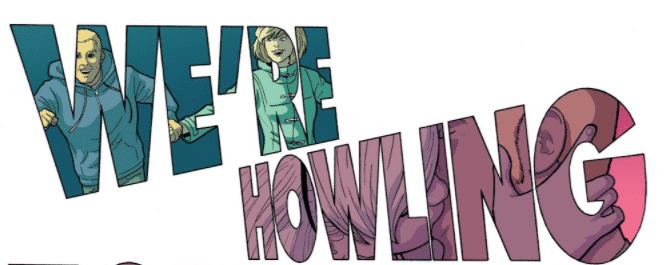
However, the conclusion of The Singles Club #7 and the miniseries as a whole is truly magical as the last bits of “Wolf Like Me” start to fade out, and Kid-with-Knife sees Penny B dancing to “Pull Shapes”. In the first issue, she had ended up dancing on her own and just enjoying her favorite song, but now Kid is in the double-page splash and offers his hand. It’s gorgeous visual choreography from Jamie McKelvie and Matthew Wilson as Penny gets caught up in the music with stars, precise dance moves, and frosted colors. But, then, Kid joins the dance, their energy matches each other in a rhythmic six-panel grid that erupts into them sleeping together. In a clever bit of storytelling, McKelvie syncs the sex scene to the “We’re howling forever” bit at the end of the song and frames it in the letters of the lyrics. It’s passion, chemistry, and great design sense all rolled into one as Kid-with-Knife and Penny B truly become one with this great song.
The main bit of symmetry in Phonogram The Singles Club #7 is definitely the return of Penny B to a prominent role and finally finding someone to dance and have a good time with after her tribulations of the first issue. There’s also symmetry in the larger narrative of Phonogram with both The Singles Club and Rue Britannia concluding with a man and woman in bed together. In Rue Britannia, it’s Beth remembering an old Manic Street Preachers song after she was unable to enjoy music for a while whereas in The Singles Club, it’s Kid-with-Knife and Penny B having a moment of clarity after intimately connecting via the feelings that music gives them. As a phonomancer, Penny is slightly analytical about the moment while Kid (With a sheepish grin on his face) is content to say, “I don’t know. You tell me.” Unlike Kohl, Aster, Lloyd or the other phonomancers we run into in the comic, Kid-with-Knife finds a song he likes and literally runs with it for a full issue with no asides about their subtext (Although, “Wolf Like Me” is definitely about sex.), influences, or any anecdotes from his past about why he is super obsessed with a band.
What I love most about Phonogram The Singles Club other than the masterful silent storytelling from Kieron Gillen, Jamie McKelvie, and Matthew Wilson is that it opens the gates of being a phonomancer to everyone. You don’t have to be a hipster or an indie snob, who makes zines and grimoires. You just have to have the capacity to be moved by music, physically like Kid-with-Knife or mentally like basically every other Phonogram character and the author of this article although I love a good boogie. This song can be in any genre: you just have to deeply connect with it. And that’s really what Phonogram The Singles Club is all about. It’s a saga of connecting or disconnecting with other folks in one night’s time with 2000s pop and indie music as a backdrop. (The kids call it “indie sleaze” now.) So, it’s fitting the book ends with two people finding each other via a song. Beautiful stuff, really!
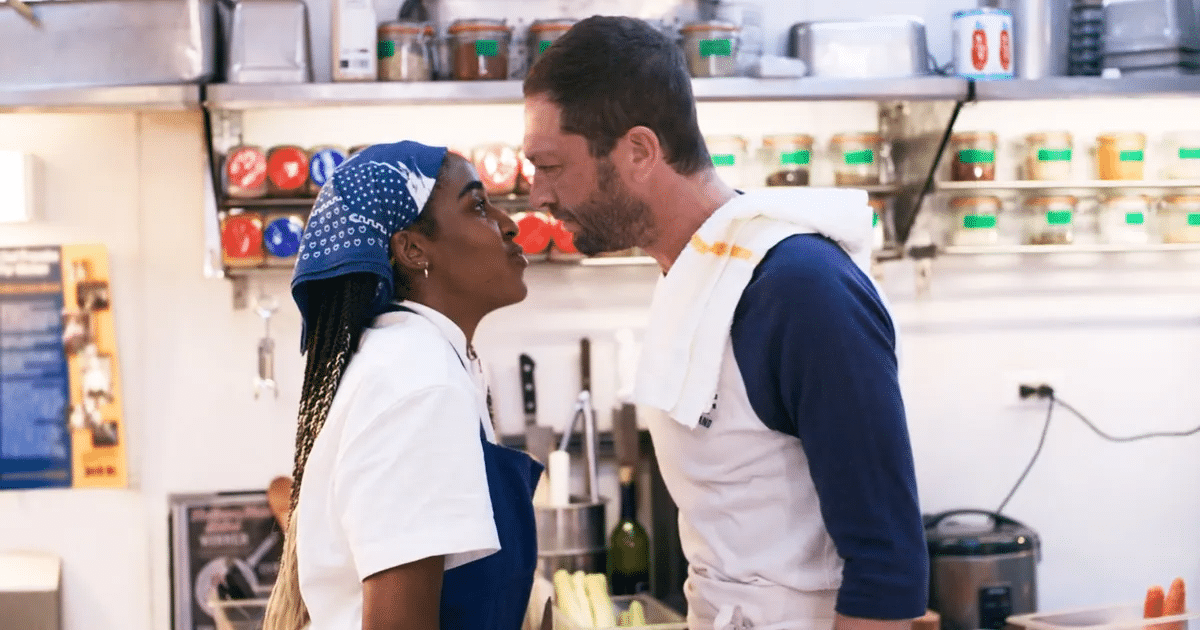
A middling third season aside, Hulu/FX’s The Bearhas been one of the best American TV shows of the past few years. The show follows the trials and tribulations of Carmy Berzato (Jeremy Allen White), a hot-shot chef, who leaves New York City to run his family’s sandwich shop The Beef after the passing of his brother Mikey (Jon Bernthal). In Season 2 and 3, he opens his own restaurant called The Bear with the help of the staff of The Beef. The Bear features strong performances from a deep ensemble cast, a powerful sense of narrative momentum that matches the stressfulness of the culinary world, and isn’t afraid to experiment like an hour-long flashback episode in Season Two called “The Fishes” set around the Feast of the Seven Fishes featuring guest appearances from Jamie Lee Curtis (As Carmy’s mother), Bob Odenkirk, John Mulaney, and Sarah Paulson.
It also has some pretty damn great music choices of mainly the alternative rock variety that enhance the characters’ arcs or just remind the audience that Chicago is a cool city with tasty food. (I miss it, but am never driving there again.) Without further ado, here are the seven best needle drops across The Bear‘s three seasons in chronological order.
The tensest episode of The Bear Season 1 starts with a breezy little ditty from Sufjan Stevens from his concept album Illinois. (He was supposed to make concept albums about all 50 states, but only did Illinois and Michigan.) It’s diegetic music with the radio DJ from Chicago’s adult album alternative station bantering about Stevens dressing up as a unicorn at the Metro before the more vulnerable demo version of “Chicago” plays in one of The Bear‘s mini montage. With historical, black and white flashbacks, archival footage of Barack Obama and Michael Jordan, and of course, loving tracking shots of many of Chicagoland’s beloved restaurants, it places Carmy, Manny (Richard Esteras), and Sydney’s (Ayo Edebiri) commute in context before shit hits the fan.
Wilco is one of the great Chicago bands, and their 2004 11 minute track “Spiders (Kidsmoke)” is the backbeat of The Beef being utterly torn apart when Sydney leaves the preorder option on for their to-go orders, and the receipts keep printing out orders before the restaurant has even open. Christopher Storer’s single take/single song approach to direction keeps the stress levels increasing with Carmy throwing a fit and Marcus (Lionel Boyce) and Sydney walking out after Carmy verbally abuses them. The creativity they’ve shown with their donut and risotto dishes respectively is thrown out the window to the whine of distorted guitars and Jeff Tweedy’s barely-heard vocals in-sync with the receipt machine.
Even though Carmy is busy trying to open his new restaurant The Bear, there’s a little time for romance in Season 2. He reconnects with an old friend named Claire (Molly Gordon), who is a resident physician, and understands working in a hectic profession where everything is literally life and death. He initially gives her the wrong number, but Neil Fak (Matty Mattheson) plays matchmaker and gives her Carmy’s real number. There’s some flirtations and a long car ride to get a liquor license, but they finally kiss at the end of a long, stressful day setting up The Bear’s kitchen. (Of course, Fak interrupts them at first.) And what better song to soundtrack a first kiss than “Can’t Hardly Wait” by The Replacements with Paul Westerberg’s emotive vocals matching the yearning in Gordon’s face, and that lovely chorus with the strings and horns kicking in as they start making out. Also, the lyric “Ashtray floors, dirty clothes, and filthy jokes” definitely defines The Bear’s back of house area. Pairing one of the brightest moments of The Bear with one of the best college rock songs of all time is a genius move from director Joanna Calo.
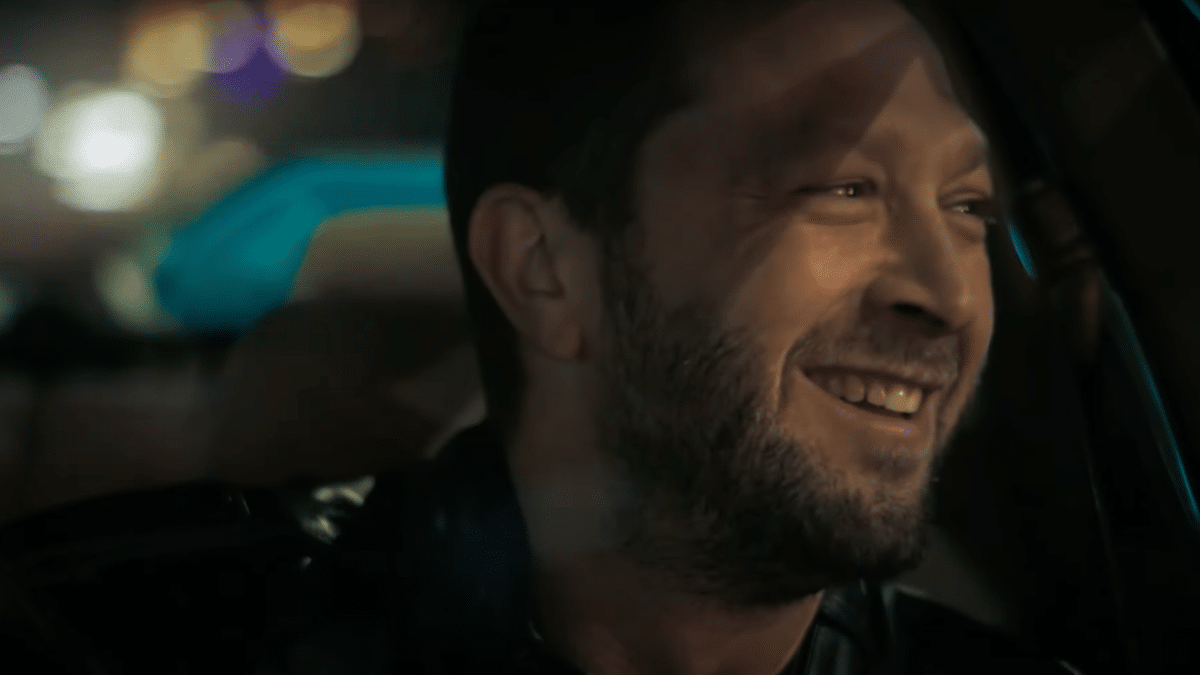
My favorite episode of The Bear Season Two is “Forks” where Carmy sends his brother’s best friend Richie (Ebon Moss-Bachrach) to stage at a fine dining restaurant called Ever even though he doesn’t have any culinary skill. He begins the episode by resenting having to clean forks to a spit-shine, but eventually, bonds with his colleagues, buys into their philosophy, and provides speedy, attentive service. Richie falling in love with his front of house role, suit jacket and all, is set to “Love Story” by Taylor Swift with Moss-Bachrach doing emotionally charged car karaoke vocals on the way to work. This song is emblematic of his Richie’s character development in Season 2, and Taylor Swift is his daughter’s favorite artist so there’s also a personal touch too.
The Bear loves its opening montage needle drops, and Season 3 is no exception with a cover of The English Beat’s “Save It for Later” by Pearl Jam frontman Eddie Vedder. It kicks off episode two and looks at a hustling, bustling Chicago starting its day and finds humanity in every corner from the diner waitress pouring coffee to the zamboni driver on the ice and even the guys who literally make the sausage. It’s how society should function before going into the chaotic world of The Bear. Vedder’s take on the iconic song is soulful, and there’s a feeling of basically everything be okay in the end. It put me in a calm state of mind before an episode full of arguing.
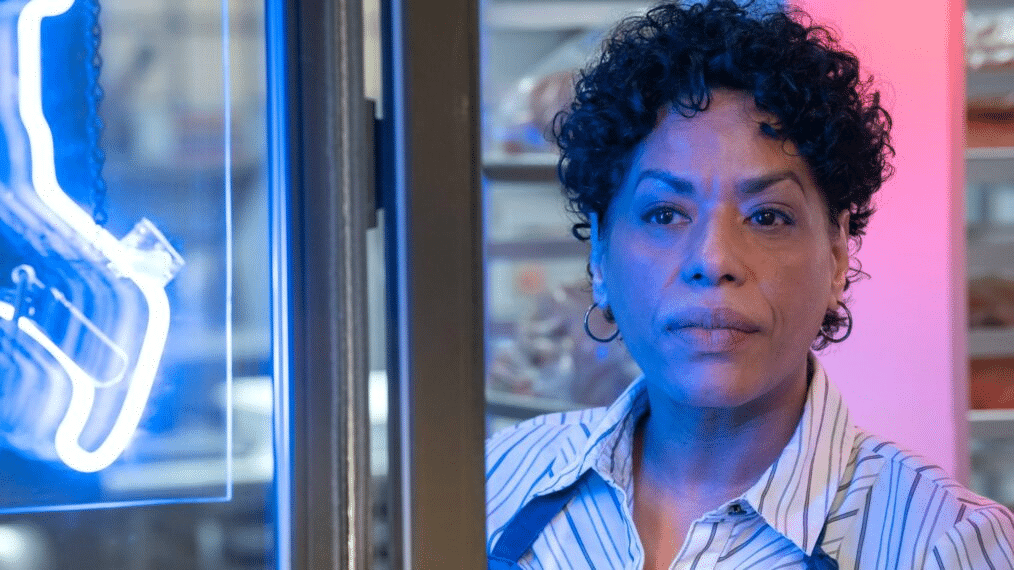
“Napkins” is easily the best episode of The Bear Season 3 with its laser focus on Tina (Liza Colon-Zayas), and how she navigated economic insecurity and the job market as a middle-aged Puerto Rican woman before finally finding a home at The Beef after a heart to heart with Mikey, who spots her crying at the restaurant. In the episode, Tina talks about liking having routine through working consistently, and “Morning Fog” by Kate Bush, which plays throughout “Napkins”, reinforces this character’s trait. It helps the transitional moments in the episode like Tina taking the bus all across Chicago to hand out her resume or go to job interviews that get cancelled pass pleasantly. It’s just sad that “Morning Fog” sadly won’t get an airplay boost like its more famous Hounds of Love sister “Running Up That Hill”.
The Bear weirdly has a lot of Weezer songs with a track from their Christmas album wrapping up “The Fishes” and “Getchoo” from Pinkerton showing up earlier this season. However, “In the Garage” kicks off The Bear Season 3 finale with a slideshow type of montage of different influential chefs who will be attending the funeral dinner for Ever, including Carmy himself, who stands off and looks at the pictures instead of interacting with anyone. The lyrics of the song are basically about Rivers Cuomo being happier to hang out in his garage with his comics, action figures, and guitars than interacting with people and having relationships, which if you substitute the nerdy stuff for the foodie stuff, that’s Carmy to a tee. (I’m kind of ticked that they didn’t leave in the verse about Kitty Pryde and Nightcrawler.) He loves tinkering with food and changing the menu every night even though this affects his colleagues and the restaurant’s bottom line. The “In the Garage” needle drop playfully creates a parallel between its lyrics and Carmy’s psyche. He just wants to be left alone cooking food.
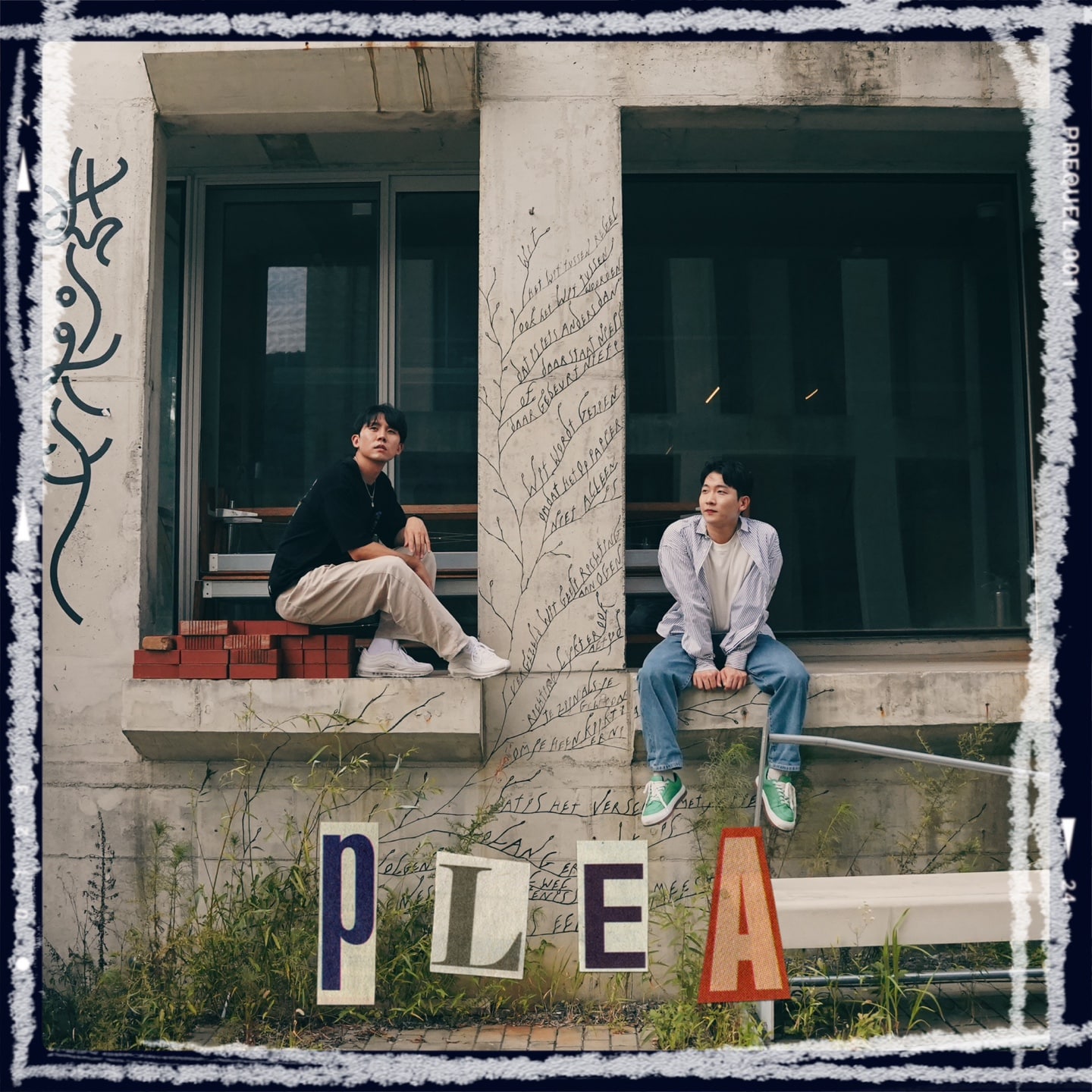
PLEA, a pop duo, will appear at Otakon 2024. The duo is comprised of members JAYJAY and clovd.
PLEA create music that fits comfortably into your playlist, easy to listen at anytime and anywhere. In the two years they’ve been active, they’ve released easy-to-groove-to songs like “Run to You,” “Her Name Is,” and “Stock Market.” In addition to being artists, they’re also active music producers.
JAYJAY has been a long-time producer for Cube Entertainment and a member of the producing group MosPick. He produced for various iconic K-pop groups, including IZ*ONE, TWICE, Stray Kids, NMIXX, and NCT. Clovd has produced for Apink, Loossemble, and Kiss of Life, but his career originally started as an artist, debuting as a member of the K-pop boy band ToppDogg in 2013.
PLEA will be joining Otakon 2024 to share their music, their vision, and their approach to the music-making process. Join them at their special industry panels, where they will share with you some of their insights and behind-the-scenes stories from their careers and from the exciting world of K-pop.
Otakon 2024 will be held from August 2 to August 4 at the Walter E. Washington Convention Center.
Mutant, in collaboration with Hollywood Records and Marvel Animation are proud to present the Newton Brothers‘ score to the hit animated series X-Men ’97 streamingon Disney+.
The highly anticipated series is as fun, thoughtful and emotionally charged as the original X-Men: The Animated Series, while being reimagined for a new generation of fans. But matching the energy, tone of the original was dependent on nailing the sound, and that clearly was top of mind for the series composers The Newton Brothers.
The Newton Brothers have produced an incredibly dynamic collection of music – from tackling the implications of serious political allegories, deep emotional truths, all while still embracing the fantastical surprises present in this universe (such as being sucked into a video game). X-Men ’97 proves you can balance creativity and honoring legacy in interesting and original ways.
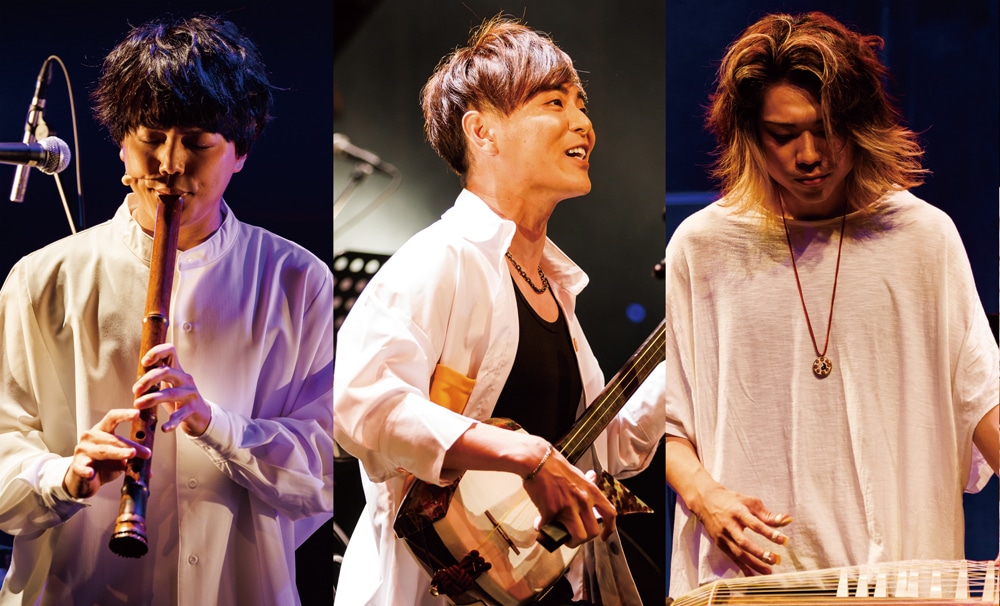
MIKAGE PROJECT, a trio of Japanese traditional instrument professionals, will perform at Otakon 2024. Their goal is to connect with the next generation, recreating folk songs from all over Japan in a modern style.
MIKAGE PROJECT was founded in December 2020. Mikage means the soul and the spirits of Shinto and Buddhism. The members are Koki Sato, who plays the Shakuhachi (bamboo flute); Sho Asano, who plays the Tsugaru Shamisen (Japanese stringed instrument); and Takashi Honma, who plays the twenty-five string koto (Japanese harp). In April 2021, they released their first EP, “MIKAGE PROJECT,” which included recordings of “Kokirikobushi” (a Toyama prefecture folk song).
They have appeared in the media multiple times. In October 2021, the group made a national broadcast debut on a show by the Japanese National broadcaster NHK, “Minyo Tamashii Furusato no Uta” (“Folk Song Spirit of Hometown”). Since then, they have appeared on various NHK shows, accomplishing such feats as a collaboration with a folk song legend, Naoyuki Harada, and Sho Asano winning accolades as a folk song concierge.
More recently, MIKAGE PROJECT released their second mini-album, “NEO BUSHI,” in May 2022. Also, they appeared in the Tokushima Prefecture Awa Odori Association New Year Performance in January 2022. Their efforts to create a new wave of Japanese folk songs are gaining support. Their fourth mini-album, “TOU,” will be released in June 2024.
Otakon 2024 will be held from August 2 to August 4 at the Walter E. Washington Convention Center.
Japanese rock band FLOW, known for countless anime song contributions, will perform at Otakon 2024. The Friday concert will be part of the band’s first five-continent tour, “FLOW WORLD TOUR: ANIME SHIBARI 2024-2025.”
At this time, a total of 16 performances have been announced for Australia and North America. After that, they are scheduled to tour Europe, South America, and Asia, with the total number of performances still to be announced.
The tour title “ANIME SHIBARI” meaning “Anime-only” in Japanese, denotes that they will only perform the numerous songs that FLOW has contributed to Japanese animation. Many of FLOW’s most popular songs will be performed, including songs from “NARUTO,” “Code Geass,” “Dragon Ball Z,” and more.
Their highest streamed song “Sign” has amassed over 100 million streams on Spotify alone, and FLOW is loved around the world, having performed in nearly 20 countries from 2006 until now.
The tour will kick off in Australia in July, then move on to a North American tour, with stops in the United States and Canada. Major cities such as Sydney, New York, Chicago, and Toronto are among the tour destinations.
Further tour dates and details of performances in Europe, South America, and Asia are to be announced on FLOW’s official website, special World Tour website, and social media at a later date.
As a tribute to FLOW’s anime heritage and tour theme, the key visual of the World Tour features the five band members depicted as anime characters, along with an animated promotional video, both created by ZERO Animation.
Before kicking off their tour in Australia, in Japan FLOW will hold “FLOW THE FESTIVAL 2024”, an anime song rock festival they curated to wrap up their 20th anniversary. This festival will be their first curated festival and biggest performance to date.
Otakon 2024 will be held from August 2 to August 4 at the Walter E. Washington Convention Center.
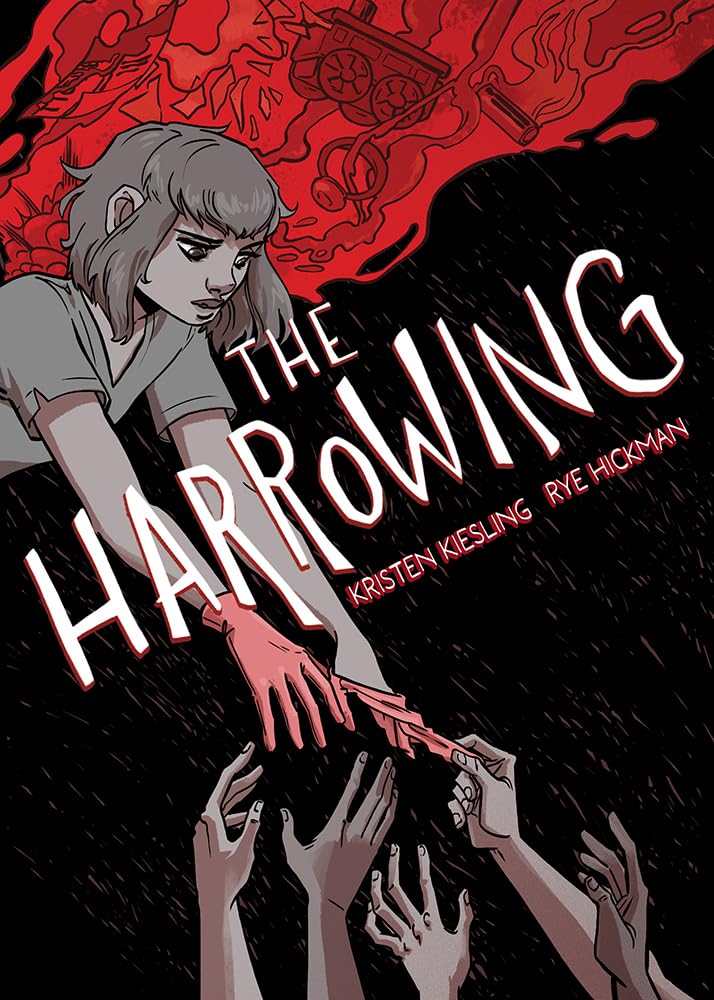
Next week, Abrams Fanfare will publish the genre-bending graphic novel thriller The Harrowing by illustrator Rye Hickman and writer Kristen Kiesling, who is making her comics writing debut. Stylish, surprising, suspenseful, and unsettling, the book follows a psychic teen who hunts potential killers… until she discovers the boy she loves is her next target. The Harrowingwill be published on April 16, 2024.
On the very day that 17 year-old Rowan Sterling almost, nearly, finally, kisses her longtime best friend and secret crush Lucas, she makes a surprising (and quite unwelcome) discovery. Rowan should be worrying about normal teenage things like attending college and whether Lucas is maybe more than a friend after all. But Rowan Sterling is gifted and she’s having terrifying visions of blood and violence. As her premonitions increase in number and intensity, Rowan seeks her father’s help, but instead finds herself drugged, kidnapped, and sent to a mysterious facility called Rosewood. And it isn’t long before Rowan discovers that it isn’t a boarding school or an asylum: it’s a training center for teens with special abilities who are known as Harrows. Rowan is a Harrow, a seer of death, and her world has forever changed.
Kiesling has shared an exclusive playlist and commentary to go with the upcoming graphic novel.
Music impacts all aspects of my writing. Different melodies and rhythms help me build tension or draw out a character’s emotions in a scene. For example, when I was writing The Harrowing, I knew Rowan’s character had to undergo the journey of losing everything she believed about her family, finding a new sense of identity, and then having it all torn away. It demanded that I tap into emotions of grief, chaos, love, and betrayal. Sometimes, I found myself stuck, unsure of what to write next or how to infuse the scene with the emotional punch it needed. Creating a playlist helped me immerse myself in the direction the story needed to take and kept me inspired to continue. I hope you enjoy!!!