Tag Archives: monstress

10 Spooky Comics for this Halloween

If you, like the rest of the internet, have been celebrating Halloween since before Labor Day, or have gotten swept up in the pumpkin spice frenzy, or are riding the high of those spooky seasonal vibes, hey. You’re not alone.

Though this year has been widely deemed a dumpster fire, 2017 has provided some excellent seasonal reads for readers who like their comics with a side of horror and mystery. Here are ten comics perfect for setting the Halloween mood.

babyteeth-01-cvrBabyteeth
Donny Cates, Garry Brown, and Mark Englert (AfterShock Comics)

Being a teenager can feel like hell. For pregnant sixteen year old Sadie, it might literally be hell. The first volume explores the strength of familial relationships, navigating the world as a teen mom, and how to deal when a powerful underground group of assassins tries to kill your baby, who is the antichrist.

Goldie Vance
Hope Larson, Jackie Ball, Brittney Williams, Noah Hayes (BOOM! Studios)

Goldie Vance is a teenage detective story appropriate for all ages. Join Goldie as she takes on the mysteries at the Florida resort where she and her dad work. The series is no longer published as single issues and will instead be published in the future in a series of graphic novels, and each arc is an excellent jumping-on point for the series.

Goosebumps_01_CoverA copyGoosebumps: Monsters at Midnight
Jeremy Lambert and Chris Fenoglio (IDW Publishing)

Goosebumps: Monsters at Midnight was released by IDW earlier this month. While it’s definitely geared toward a younger demographic, the first issue is full of references to the original books and stays true to their voice.

HellraiserOmnibus_v1_SC_PRESS_1Hellraiser Omnibus Volume 1
Clive Barker, Tom Garcia, various (BOOM! Studios)

The Hellraiser Omnibus isn’t for the squeamish. The book collects issues 1-20 of Clive Barker’s 2011-2012 Hellraiser series, as well as Hellraiser Annual #1. As part of Hellraiser canon, the comic explores the fate of Kirsty Cotton and the Cenobite realm–and changes them forever.

Infernoct-1InferNoct
Mina Elwell, Eli Powell, and Tristan Elwell (Scout Comics)

The first issue of this Lovecraft-inspired horror comic from Scout Comics was released earlier this month. The story follows Sam, who is trying to save her town (and the people in it) from vicious monster attacks while keeping her grip on sanity.

insexts-3Insexts
Marguerite Bennett, Ariela Kristantina, and Jessica Kholine (AfterShock Comics)

The second collected volume of Insexts will be released in late November, but this comic is well worth reading. The first volume followed Lady Bertram and her lover Mariah as they come to grips with their insect powers and go up against the monsters terrorizing Victorian England. The second volume deals with the aftermath in the same beautiful, erotic, and horrific style as the first volume.

Nancy-Hardy-001-Cov-A-DaltonNancy Drew and the Hardy Boys: The Big Lie
Anthony Del Col, Werther Dell’Edera (Dynamite Entertainment)

Fans of the original series or previous Drew-Hardy team-ups will likely appreciate this series, which brings the gang back together to figure out who killed Fenton Hardy. This is something of a dark departure from the original series (which never featured murder) but is an interesting update appropriate for teens and adults alike.

Monstress01_CoverMonstress
Marjorie Liu and Sana Takeda (Image Comics)

Though Monstress is currently on hiatus, this comic remains one of the most visually and narratively interesting comics published this year. The second volume, released in July, develops each character as they process the consequences of the Monstrum living inside main character Maika.

anc_lit-my_favorite_thing_is_monsters-900My Favorite Thing is Monsters
Emil Ferris (Fantagraphics)

My Favorite Thing is Monsters is a gorgeous book with an incredible amount of narrative depth. Though the fact that the main character, Karen Reyes, believes herself a monster makes this read Halloween-appropriate, readers will likely find plenty to relate to in Karen’s interests and search for identity.

My-Pretty-Vampire-coverMy Pretty Vampire
Katie Skelly (Fantagraphics)

Katie Skelly’s My Pretty Vampire combines comics with vintage horror in a gorgeous and compelling color palette. The book follows vampire Clover, who escapes from an oppressive ruled by her brother. Clover’s newfound freedom leads her on a town-wide murder spree, with a shadowy organization not far behind.

Around the Tubes

It’s a new week. We were at Awesome Con and Heroes Con this past weekend and head to Salt City this coming weekend. While you await some con coverage, here’s some comic news and reviews from around the web in our morning roundup.

Around the Tubes

The Comichron – Comics orders rebound in five-week May; Secret Empire tops list, Liefeld has #1 graphic novel – For those that care about the horse race.

WKRN – Accused comic book thief arrested in Sumner County – Good.

Philly – Philly comic shop awarded $50000 to open more doors – Congrats!


Around the Tubes Reviews

Talking Comics – Dark Days: The Forge #1

Talking Comics – The Defenders #1

Herts Advertiser – Marvel Platinum: The Definitive Spider-Man Reloaded

Meniscuszine – Monstress Vol. 1

Meniscuszine – Paper Girls Vol. 1 & 2

Graphic Policy Celebrates Women’s History Month: Our Favorite Women in Comics

patsy walker aka hellcat 1 featuredLogan: Kate Leth, Brittney Williams, Megan Wilson, and Rachelle Rosenberg’s Hellcat has been a joyful celebration of superheroes, young people, and queerness. I will miss its humor, chibi style art, and especially my bi bae Ian Soo when it ends in a couple months.

faith-8-feat

Alex: Faith (Valiant) I really can’t understate just how enjoyable this series is. There have definitely been some issues stronger than others, but each and every one in the ongoing series (and preceding miniseries) has been nothing short of a pleasure to read.

Jody Houser, Marguerite Sauvage and the revolving cast of artists have taken Faith to stunning heights in an effortlessly charming and warm series that will make you fall in love with comics all over again.

black-panther-world-of-wakanda-4-featured

Shay: Gail Simone brings me LIFE! As does Roxane Gay! And I’m really loving Amanda Conner and her hubby’s direction for Harley Quinn! Also, loving Marguerite Bennett for the realistic portrayal of lesbians in Batwoman!

animosity3

Joe: One of the best titles in the last year is Animosity from Aftershock. This fantastic story is written by Marguerite Bennett who has taken the comic book world by storm lately, and drawn by Rafael de Latorre. Basically, society has collapsed when animals can talk and decide to take over the world from humanity. Instead of a boy and his dog adventure like we’ve seen so many times, we get a girl and her dog. Jesse and her hound, Sandor are not only an awesome pair, but the story is about Jesse’s growth into womanhood without a mother figure. Sandor knows he cannot help like her mother could, but he learns to rely on the other female animals to guide her. It’s brilliant, and everyone should be reading it.

nocenti-daredevil

Patrick: Ann Nocenti’s run on Daredevil blew my mind when it was coming out. It was so different from what I’d been used to seeing from Denny O’Neil and Frank Miller – a strange urban poetry that was as close to magic realism as I’d ever seen in mainstream comics. With an off-kilter humor – the Human Torch showing up in a tight t-shirt reading “Bad!” – twisted romance, and psychodrama. Her writing was like nothing else on the stands.

A huge thanks to the editors and publishers behind the scenes who made a ton of great comics happen: Jenette Kahn, cat yronwode, Diana Schutz, Louise Jones/Simonson, Ann Nocenti, Shelly Bond, Alisa Kwitney, and most especially the inestimable Karen Berger.

Troy: It was a bit short lived, but I think there was a Defender’s title by Cullen Bunn about Valkyrie being tasked with assembling Midgard’s Valkyrie. Fear Itself the Fearless was kind of the prelude series to that. I really would have loved to see this series fleshed out.

monstress #5 featured

Madison: It’s no secret that I’m obsessed with Monstress and Bitch Planet. They’re not for everyone, but they’re two of my go-to recommendations for people who love science fiction or fantasy. Elizabeth Breitweiser, Rachelle Rosenberg, and Jordie Bellaire consistently blow me away with their incredible colors.

Brett: I’m slightly obsessed with M. Goodwin’s Tomboy which is published by Action Lab: Danger Zone. The series follows a teenage girl whose best friend is murdered in a corrupt cop/conspiracy and she gets posessed by an avenging ghost in a way. Think Kick-Ass but a teenage girl in the lead and a manga influence to it all. An amazing mix of horror, action, and manga the hero Addison is a teenager that can kick ass and get some vengeance.

Around the Tubes

Monstress01_CoverThe Super Bowl dominated the weekend and featured new spots for a whole bunch of this year’s comic movie adaptations. Which one did you look forward to the most? Sound off in the comments below!

While you decide on that, here’s some comic news and reviews from around the web in our morning roundup.

Around the Tubes

CBR – Powerless Superhero Sitcom Debuts to Not So Super Ratings – Ooph.

ICv2 – IDW Profits Up – Very interesting.

The Beat – A year of free comics: Two by Rosemary Valelro-O’Connell – Free comics to read!

The Beat – A year of free comics: Sports Manga Essentials, a sampler of sporting action – It’s free, go read it!

The Beat – A year of free comics: get back to nature with Mark Trail – Also free! You’ve got no excuse.


Around the Tubes Reviews

Talking Comics – Blood Blister #1

Comic Attack – Monstress Vol. 1: Awakening

Talking Comics – Star Wars: Darth Maul #1

(Update) Image Announces 100% of the March Women’s History Month Variant Proceeds to Go to Planned Parenthood

Image Comics has revealed the first five of 11 variants planned for March’s 25th anniversary theme month—“Women’s History.” The variants will serve to celebrate the careers of women in comics, the strides made throughout comics history made by the women’s movement, and the company’s history of shaking up the status quo. 100% of the proceeds made from these March Women’s History variant covers will be donated to Planned Parenthood. We’ve reached out to Image to clarify exactly what is being donated.

(Update) We asked for clarification as to what would be donated. Image responded with:

Any money Diamond pays Image for these Women’s History variants covers will instead be donated to Planned Parenthood. Image Comics will cover the artists’ fees for these covers.

In the release announcement Director of Sales at Image Comics Corey Murphy said:

Many of Image Comics’ staff—myself included—and an ever-growing catalog of some of the most talented writers and artists in the industry, feel strongly about supporting women’s reproductive rights. Women have come a long way in this country, and the progress that’s been made is in part due to the efforts Planned Parenthood has made in sex education and affordable, preventative healthcare. I’m extremely proud to be a part of a company that’s unafraid to take a stance in supporting a non-profit that’s recently been under fire. This month we celebrate Women’s History, the strides the women have made in the comics industry, and the difference that everyone—male and female—has made by coming together in spreading equality.

Each month of Image’s 25th year will boast a theme for special anniversary variants, beginning with Wednesday, February 1st—the exact date of Image Comics’ founding in 1992, and the date of this year’s “Image Comics Day.”

Available in stores on Wednesday, March 1st:

  • Rat Queens #1 by Kurtis J. Wiebe & Owen Gieni, variant artwork by Colleen Doran (Diamond Code DEC168662)
  • Royal City #1 by Jeff Lemire, variant artwork by Emi Lenox (Diamond Code DEC168665)

Available in stores on Wednesday, March 8th:

  • The Wicked + The Divine #27 by Kieron Gillen & Jamie McKelvie, variant artwork by Chynna Clugston-Flores  (Diamond Code DEC168658)
  • Motor Crush #4 by Brenden Fletcher, Cameron Stewart & Babs Tarr, variant artwork by Leslie Hung  (Diamond Code DEC168659)
  • East of West #32 by Jonathan Hickman & Nick Dragotta, variant artwork by Meredith McClaren (Diamond Code DEC168668)
  • Low #16 by Rick Remender & Greg Tocchini, variant artwork by Vanesa R. Del Rey (Diamond Code DEC168663)

Available in stores on Wednesday, March 15th:

  • Moonshine #6 by Brian Azzarello & Eduardo Risso, variant artwork by Jill Thompson (Diamond Code DEC168660)

Available in stores on Wednesday, March 22nd:

  • She Wolf #7 by Rich Tommaso, variant artwork by Marian Churchland (Diamond Code DEC168661)
  • Magdalena #1 by Tini Howard, Ryan Cady & Christian Dibari, variant artwork by Roberta Ingranata (Diamond Code DEC168666)

Available in stores on Wednesday, March 29th:

  • Monstress #11 by Marjorie Liu & Sana Takeda, variant artwork by Sanya Anwar (Diamond Code DEC168664)
  • Old Guard #2 by Greg Rucka & Leandro Fernandez, variant artwork by Nicola Scott (Diamond Code DEC168667)

The Final Four Image Variants

Image Comics has revealed the final 4 of 15 tribute variants planned for February’s 25th anniversary theme month to round out the full list of “tribute covers” celebrating the legendary cover images from throughout the Image’s history.

The newly revealed tribute variants include: Sean Lewis & Hayden Sherman’s The Few #2 commemorating Jonathan Hickman & Nick Dragotta’s East of West #1, Chris Dingess, Matthew Roberts, Owen Gieni’s Manifest Destiny #26 commemorating Jonathan Layman & Rob Guillory’s Chew #1, Marjorie Liu and Sana Takeda’s Monstress #10 commemorating Todd McFarlane’s Spawn #1, and Outcast by Robert Kirkman & Paul Azaceta #25 commemorating Rob Liefeld’s Brigade #1.

Each month of Image’s 25th year will announce a list of special themed anniversary variants, which will begin to hit shelves on Wednesday, February 1st—the exact date of Image Comics’ founding in 1992, and the date of this year’s “Image Comics Day.”

manifest-destiny-26 monstress-10 outcast-by-robert-kirkman-paul-azaceta-25 the-few-2

If/Then: Resident Evil: The Final Chapter

resident-evil-the-final-chapterWhen it comes to suggesting comics for individuals to check out, it’s often good to start with what they like in other media like television, movies, books, or video games. Enter If/Then, where we’ll throw out suggestions for you to check out!

Returning to theaters this weekend is the kick-ass Resident Evil: The Final Chapter.

The human race’s last hope against apocalyptic obliteration is super soldier Alice (Milla Jovovich), but she’s been stripped of her psychic powers. She must form alliances and rally survivors in Raccoon City for the climactic battle against the Umbrella Corporation and its ravenous hordes of the undead. This sixth installment of the video game-inspired franchise is directed by Paul W.S. Anderson.

So, we’ve got a zombie flick headed up by a kick-ass female lead. I think we’ve got some comics that can fill that niche. If you want to know what you should check out, find out below.


resident-evilResident Evil (Manga by Viz Media) – Did you know there’s Resident Evil comics? The highly virulent C-virus became a global disaster, but where did the outbreak start? In this prequel to the hit Resident Evil 6 game, the terrifying origins are revealed.

Published by Viz Media, this manga series will keep you entertained and immersed in the world of Resident Evil. If you love the video games and the movie then you should absolutely check these manga out to find out what you’ve been missing. Each volume perfectly captures and extends the world on the printed page.

The Walking Dead (Skybound Entertainment/Image Comics) – Yes, there’s a television series, but before that, there was a comic series. For well over 100 issues the story of Rick, Carl, Michonne, and more has been chronicled in shocking and gory detail.

This one is for fans of the zombie aspect of the movie and video game series it differs enough from the television series that you’ll be kept on your toes and is more gory and unrestrained.

Monstress01_CoverDC Comics Bombshells (DC Comics) – If you like the idea of kick-ass women, this comic series might be for you if you’re also into superheroes. Set in an alternative world this series takes inspiration from bombshell/pin-up art putting the women front and center as the world’s superheroes. What has me including this comic series on the list is its strong feminist leads and it’s women saving the day, much like Alice. Entertaining and action-packed, it’s a solid alternative for those looking for a world where women are the ones doing the punching, taking the lead, and the ones saving it.

Buffy, the Vampire Slayer (Dark Horse) – Numerous volumes have been released bringing the popular character from television to comics. Released as seasons, the comics act as a continuation of the world made popular on the small screen. Replace zombies with demons and vampires and you’ve got a more teen-friendly take on a similar story.

Monstress (Image Comics) – Steampunk meets Kaiju in this original fantasy epic for mature readers, as young Maika risks everything to control her psychic link with a monster of tremendous power, placing her in the center of a devastating war between human and otherworldly forces. A horror fantasy series full of monsters and magic is as jaw dropping beautiful to look at as it is engaging to read.


What would you suggest that I didn’t include? Sound off in the comments below!

Madison’s Favorite Comics of 2016

Last year I prioritized cutting back on cape books and diversifying the publishers and stories that I read. Though many of the comics I read weren’t published in 2016 (especially ones I read during Women’s History Month) I still found it hard to narrow down the list of ongoing series I particularly loved throughout the year.

Here are ten comics I couldn’t put down in 2016:

goldie vance #1 featured

10. Goldie Vance by Hope Larson and Brittney Williams

This is a series I would have loved as a child. Goldie is the perfect mix of Nancy Drew and Eloise (of Plaza fame). Goldie Vance is great for a younger audience but doesn’t shy away from emotionally complex stories. Goldie and her friends are well-rounded characters with a wide range of interests who readers–young and not-young alike–will be able to relate to.

elasticator #1 featured

9. Elasticator by Alan C. Medina and Kevin Shah

Elasticator is the kind of smart, political superhero comic I wish was more prevalent. The writing is fresh and interesting and Shah’s art is lively and animated with great colors from Ross A. Campbell.

Snotgirl

8. Snotgirl by Bryan Lee O’Malley and Leslie Hung

Lottie Person is just about as far away from Scott Pilgrim as you could get, though they do, at times, share a similar self-absorption. Snotgirl quickly became one of my favorite series of the year, because while not many people can say they’re successful fashion bloggers, they can likely relate to Lottie’s personal problems. Leslie Hung and Mickey Quinn provide gorgeous, vibrant visuals and the best wardrobe in comics, to boot.

welcome back 1 featured

7. We(l)come Back by Christopher Sebela and Claire Roe

Reincarnation? Check. Assassins? Check. Shadowy organizations? Check. A+ fashion choices? Check. Reincarnated assassins in love running from other assassins who are trying to assassinate them? …Also check. What more can you want from a story?

shutter #18 featured

6. Shutter by Joe Keatinge and Leila del Duca

Shutter is one of Image’s most underrated titles. The story follows Kate Kristopher, the daughter of legendary explorer Chris Kristopher, and her discovery of some little-known family history. The comic is consistently interesting not only because of its plot, but because del Duca and colorist Owen Gieni are constantly experimenting with narrative structure and using different techniques to influence how the story is read.

clean room 1 featured

5. Clean Room by Gail Simone and Jon Davis-Hunt

Clean Room is a creepy psychological horror comic about journalist Chloe Pierce’s investigation of self-help master Astrid Mueller, who Pierce suspects is more cult leader than anything else. Or is she? Mueller is a fascinating character, and the unknowable question of which side she’s actually on only adds to the story’s suspense.

the-wicked-the-divine-24-featured

4. The Wicked + The Divine by Kieron Gillen and Jamie McKelvie

What if you could be a god, but you’d die within two years? Consistently equal parts entertaining and heartbreaking with consistently incredible art and color from Jamie McKelvie and Matt Wilson. You’ve probably heard of this one.

mockingbirdyas

3. Mockingbird by Chelsea Cain, Kate Niemczyk, Sean Parsons, and Ibrahim Moustafa

One of the few superhero comics I read this year, Mockingbird was one of my absolute favorites. Cain writes Bobbi Morse as confident and smart, and the result was a fun mystery thriller with gorgeous art. The series also featured some of my favorite colors and covers this year, by Rachelle Rosenberg and Joelle Jones.

By the time I write my 2017 list, I might be over Mockingbird’s cancellation.

bitch planet 2 b

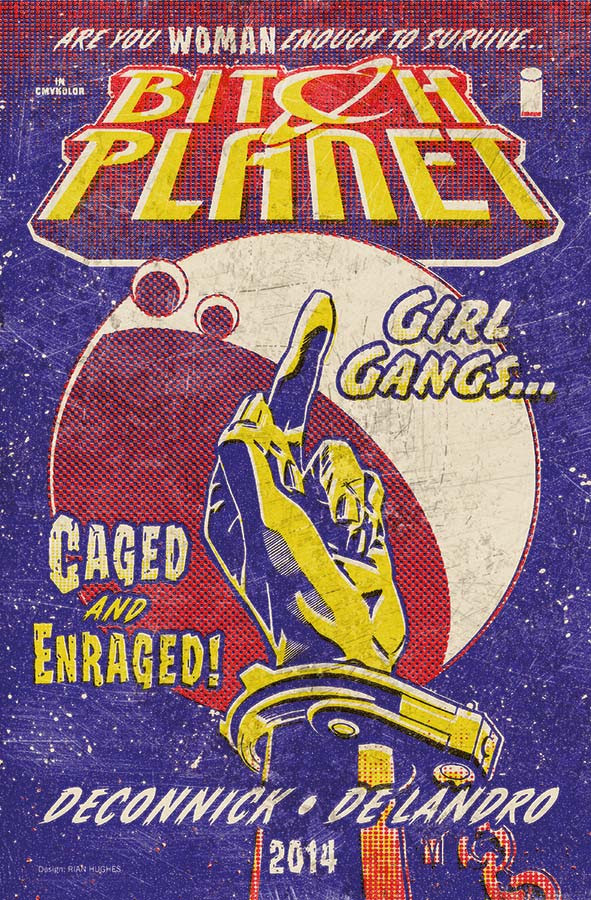
2. Bitch Planet by Kelly Sue DeConnick and Val DeLandro

2016 was light on Bitch Planet–only four issues were released throughout the year–but continued to provide insightful and relevant commentary in what turned out to be a period of rapid change in the real-life political landscape.

monstress-7-featured

1. Monstress by Marjorie Liu and Sana Takeda

Monstress started strong in 2015 and only got better. The main character, Maika, is a teenage girl living with a monster inside, something she learns to live with and use to her advantage as the plot develops. Monstress is full of unrepentant female characters set in a stunningly rendered fantasy world.

Ms. Monster

bitch planetDuring my undergraduate study, I spent an enlightening semester learning entirely about women writers and how they write women and girls. It’s something I’ve carried with me, especially in reading comics. While it is now less rare for women to occupy a central role in comics, the field is still overwhelmingly male-dominated and male character-centric. This often leaves female characters in a space that is Other, or separate from the norm.

With creator-owned comics on the rise, women are now able to carve spaces in which to tell their own stories. Two stories in particular, Kelly Sue DeConnick and Valentine DeLandro’s Bitch Planet and Marjorie Liu and Sana Takeda’s Monstress, challenge the Othering of femininity by exploiting the connection of femininity to monstrosity and allowing characters to reclaim this aspect of their identities by embracing the monstrous.

It is possible to understand this reclamation of identity by using Julia Kristeva’s theory of abjection as a lens. Kristeva is a Bulgarian-French philosopher, psychoanalyst, and feminist whose work spans multiple disciplines but is prominent in structuralism and poststructuralism.

Powers of Horror: An Essay on Abjection outlines Kristeva’s theory of abjection in a very French and somewhat complex way. The abject, by definition, is a “non-object” that lingers in a person’s psyche as a consequence of repression. The abject disturbs system, identity, and order. To abject something is to other it from the “I,” pushing it away from the self to maintain personal boundaries.

Monstress01_CoverA simple example of this sort of behavior is food loathing. This is a common behavior, especially in children, but the dissonance between something that is supposed to nourish and the unpleasant taste or nauseous feeling causes abjection. If you hated broccoli as a kid or avoid a certain food after eating something and getting sick, this is a basic form of abjection.

Abjection can also exist among people, so when discussing abjection it is important to make a distinction between subject, object, and abject. The subject is “I.” (When you, reader, speak about yourself, your thoughts, you say “I.” You’re subject.) Now table that thought for a moment. The difference between object and abject is contingent on one point. Objects hold weight and meaning. The abject is not an object because it does not hold weight. The only “object” quality the abject possesses is that it opposes the “I.”

One example Kristeva uses to distinguish each definition is that of a corpse. Kristeva says corpses are simultaneously subject, object, and abject–the body was once a person, a subject, but became object after death. Corpses are also abject because they force us to consider the uncomfortable truth of our inevitable deaths.

What both the food loathing and corpse examples have in common is the idea that they are improper or unclean. People and bodies will abject things they deem “incorrect,” but what is unclean, gross, or incorrect doesn’t directly cause abjection; they create a disruption of a person’s system, identity, and order and that causes abjection. Disruption of the boundaries demonstrates their fragility.

Abjection of people is driven by a failure of one member of a group to recognize its kin. This same lack of recognition drives fear of what has been deemed Other. A person possessing some quality that has been deemed “incorrect” on a larger social scale causes a lack of recognition, which is perpetuated on an individual level. This creates a cycle of fear and rejection by engendering disgust for the “not normal” or “not human.” Social constructs are upheld and continue to oppress the abject.

BitchPlanet02_CoverAccording to Kristeva, one natural reaction to abjection is religion, which is an attempt to create order where the abject has disturbed it. Using this reasoning, the formation of governing bodies–including the Cumaea in Monstress and the male-led government in Bitch Planet—are an attempt to control the abject.

Kristeva says another natural reaction to the abject is to create art. Using comics to explore the abject allows both readers and creators to approach the subject in worlds both fictional and real. The settings of the comics discussed here (an off-world prison and an alternate version of early 20th century Asia) allow writers and artists to discuss issues present in real life. The main characters of both comics are monstrous women, all of whom are attempting to create their own space in the world. Comics give these creators a space to both examine the abject and criticize the social systems that oppress the abject in a fictional world, as well as in our real one. (Bitch Planet also accomplishes this by including essays in the backmatter of single issues.)

In Kelly Sue DeConnick and Valentine DeLandro’s Bitch Planet, women who are determined “non-compliant” are shipped to an off-world prison. Non-compliance in women is determined by any number of “crimes,” including being “aesthetically offensive,” obese, or transgender. In Bitch Planet, misogyny is taken to an extreme level. Women who fall outside of a narrow box of acceptable gender behavior and presentation and individuals who don’t conform to traditional binary standards are punished for existing. It’s a harsh critique of the standards women are held to in real life–both behaviorally and aesthetically.

Monstress, by Marjorie Liu and Sana Takeda, combines a number of fantasy elements that make up an alternate Asia, which plays home to Maika, an Arcanic teen. The Arcanics’ magic makes them highly desired by the Cumaea, a religious order that uses Arcanic Lilium to enhance the powers of its members. Arcanics are regarded as a lowly sub-human class, which allows the story to explore themes of racism and slavery. Since it is told from Maika’s perspective, much of the story also focuses on her strength (inner and outer) as she resists the oppressive force of the Cumaea.

Monstress05_CoverThough they take place in vastly different worlds, Bitch Planet and Monstress feature protagonists who have been Othered in some way. The characters readers are meant to root for and maybe even identify with are seen as non-human because they disrupt established social structures and system, identity, and order.

Inmates of the Auxiliary Compliance Outpost are abject for any number of reasons, from not being feminine enough to “driving” their husbands to infidelity. They are treated inhumanely, used only as an example for other women and bodies in sport. The women find a sense of community with each other, bound by their monstrous qualities.

Maika of Monstress is introduced as a slave, immediately establishing her as abject and Other. This is only furthered when readers learn of her powerful psychic connection to a literal monster that she refers to as her “hunger.” Maika is considered a monster even before she embraces this title.

The pathologization of women’s behavior in Bitch Planet and demonization of Arcanics mean that these characters are considered monsters regardless of whether their behavior reflects that designation. Neither comic is subtle about its connection of femininity to the monstrous, and both take care to show that women’s experiences with society intersect differently based on race and sexuality.

The metaphor of the monstrous is accessible in Bitch Planet, where the particularly relevant issue three focuses on how women are punished for attempting to conform to social standards (taking part in harmful diets and beauty rituals) and for living outside these standards (in which case they are made social outcasts). The metaphor is equally accessible in Monstress, where Maika quite literally lives with a murderous monster called Monstrum inside of her. The Monstrum, though dangerous, helps Maika to defend herself against threats and to withstand constant dehumanization.

These works are important because they bring to light issues that some readers may not experience because of their social or economic privileges. By forcing readers to interact with abject concepts, these stories also force readers to consider perspectives they otherwise wouldn’t because readers themselves wish to escape the uncomfortableness of the topic. These stories also examine institutions which have been founded on oppressive platforms whose original intent was to protect the privileged from the abject.

Despite being considered monstrous, the characters in either comic embrace this aspect of their identity. Inmates in Bitch Planet use their strengths as non-compliant women (both physical and mental) to fight for their freedom. While Maika’s goal is to find answers about her mother’s death, she also uses her monstrousness to protect other Arcanics and fight the Cumaean order. This is a way to claw back at the systems that have rejected and othered them and to reclaim their identities and their rights to live a free and happy life.

Characters pushing back against oppressive systems reflect the real-life struggle for equality between the abject and those who have abjected them. These characters want to be seen as an “object” rather than Other in the sense that this would allow them to be recognized by their peers as non-abject and human.

Though Bitch Planet and Monstress explore vastly different worlds, they both offer a unique approach to examining the abject. And as female characters fight for and claw out their own space in their worlds, their creators do the same in ours.

This paper was originally presented as part of the 2016 Comics and Popular Arts Conference in Atlanta, Georgia.

Review: Monstress #7

monstress07_coverMaika’s journey of discovery takes a somewhat darker turn in the latest installment of Marjorie Liu and Sana Takeda’s Monstress. You have been warned.

After sacrificing what remained of her left arm to defeat the Cumean Mother Superior, Maika has returned to her mother’s home with Kippa and Ren in hopes of getting answers about the mask and photograph she’s been carrying. Maika’s life before the story began has been slowly revealed in fragments, and her trip home allows for natural development of her background. Readers meet some new people from Maika’s past, each of whom are equally as interesting and surprising as every other character.

While this issue explores more of Maika’s history, it also explores the rising tension between her and Kippa. Kippa, though loyal, has grown as a character immensely since her introduction. As she grows, so does her kindness and sense of right and wrong. In the first arc of the story, Maika grew steadily more ruthless as she recognized the Monstrum’s power. Though Kippa is young and innocent, her moral code is strong and the story offers no clues as to how the growing conflict between the two will be resolved.

Monstress #7 also explores a little more background on Ren, a nekomancer. The nekomancers are, as their name implies, cat necromancers, which is not only an interesting and unique concept, but also one of the best puns in a comic possibly ever. Bringing in the different groups keeps the comic well-rounded and balanced, and introducing them little by little.

Despite the increasingly detailed and complex worldbuilding, the comic doesn’t feel inaccessible. The experience of reading Monstress is, as always, fully fleshed out with Sana Takeda’s beautiful illustration. The amount of care and attention that goes into each character’s expressions and clothing contribute just as much to the worldbuilding as the lore of the story. The inclusion of detail in everyday scenes–filigreed perfume bottles, brocaded clothing, carved stone pillars–makes a lack of detail especially noticeable. Takeda applies a lack of detail masterfully, using it to emphasize the lack of control Maika has over her hunger.

The colors emphasize the detail and set the mood. Monstress is often serious in tone and deals with dark themes, but the comic itself is rarely visually dark. Dynamic, layered colors build up and add to the magic of the series. The amount of thought put into the colors and detail make Monstress an especially gorgeous fantasy epic that will stand the test of time.

Story: Marjorie Liu Art: Sana Takeda
Story: 10.0 Art: 10.0 Overall: 10.0 Recommendation: Buy

Image Comics provided Graphic Policy with a FREE copy for review

« Older Entries Recent Entries »