Tag Archives: j.h. williams iii

Get a Look at the Anticipated Locke & Key/The Sandman Universe: Hell & Gone #1 Before its April 14 Release

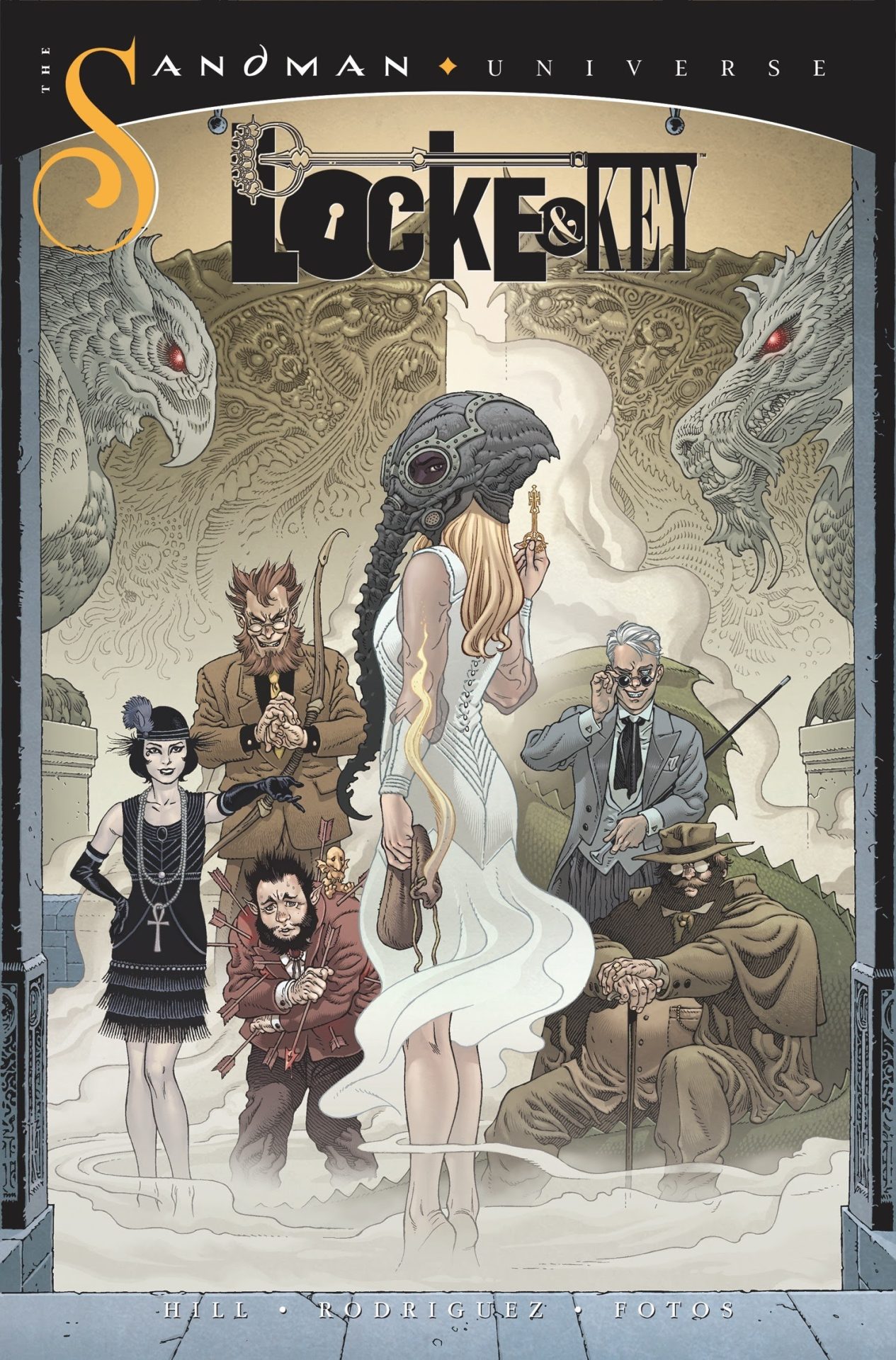
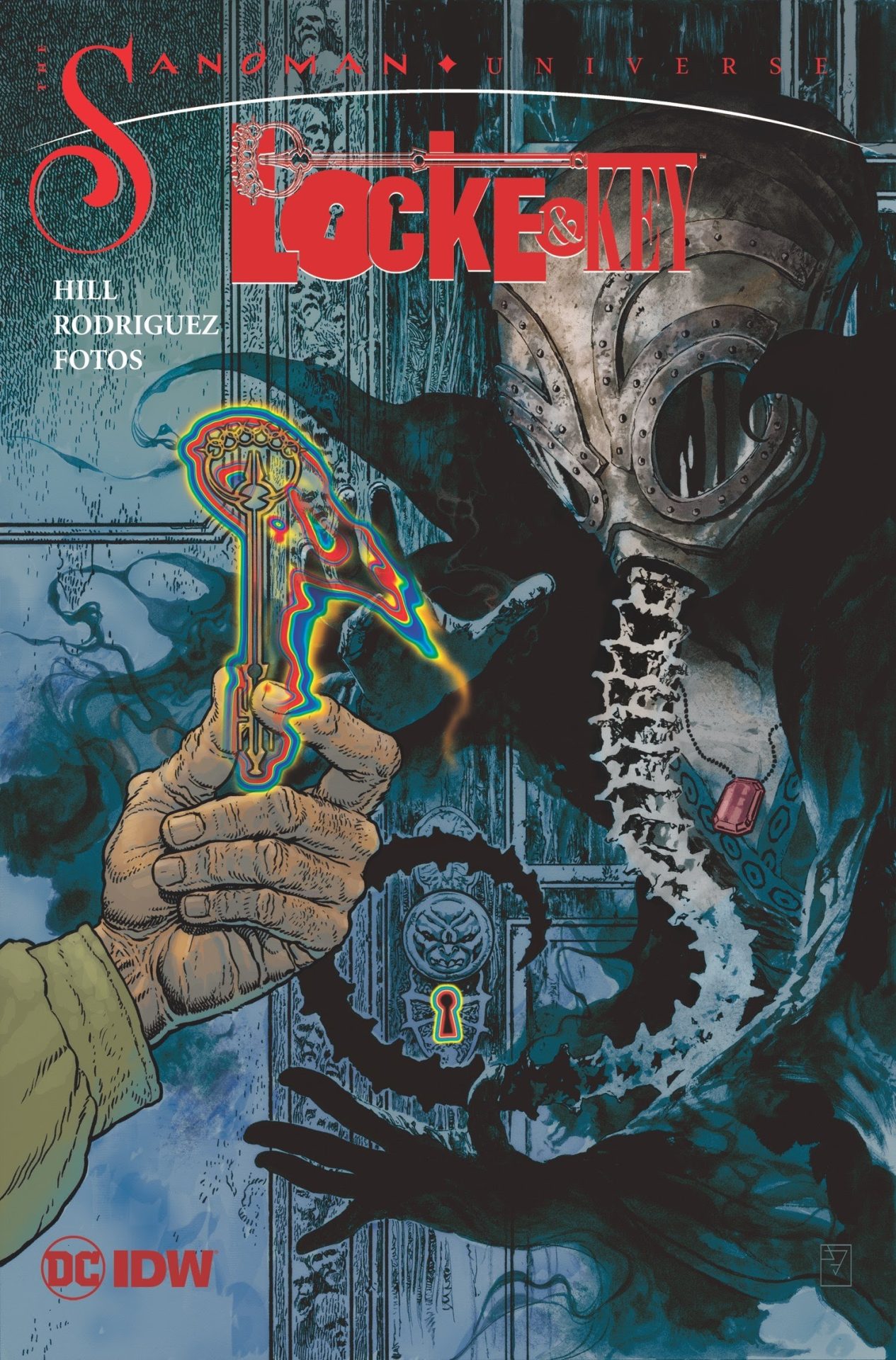
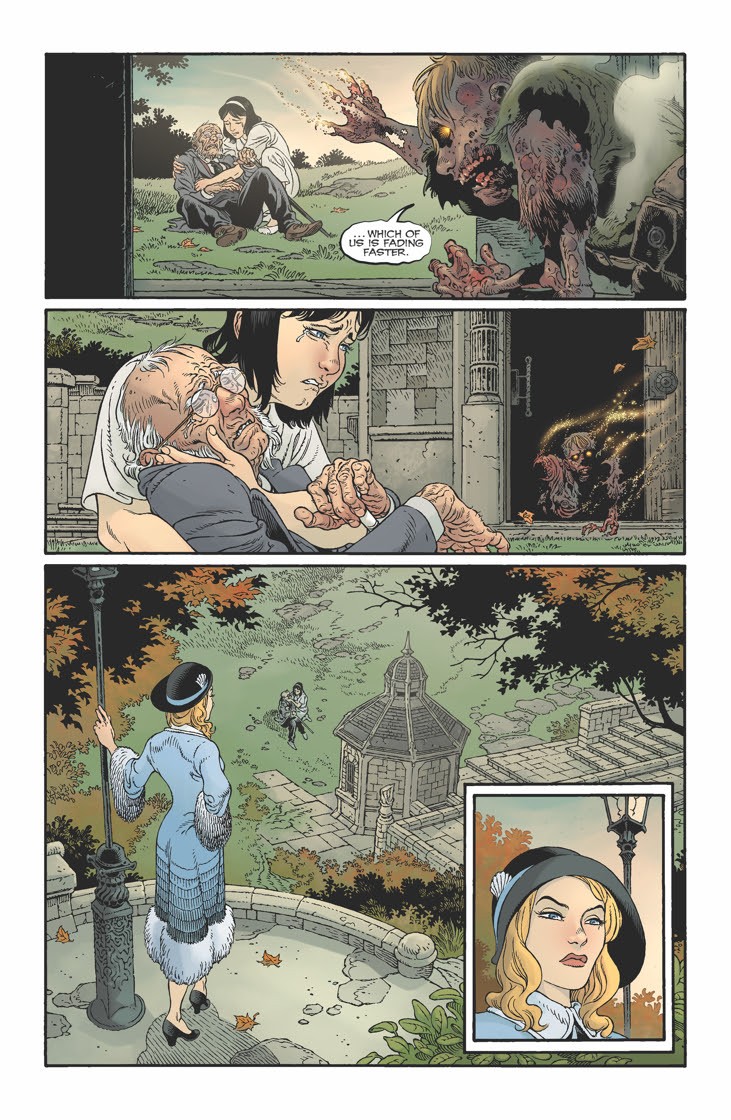
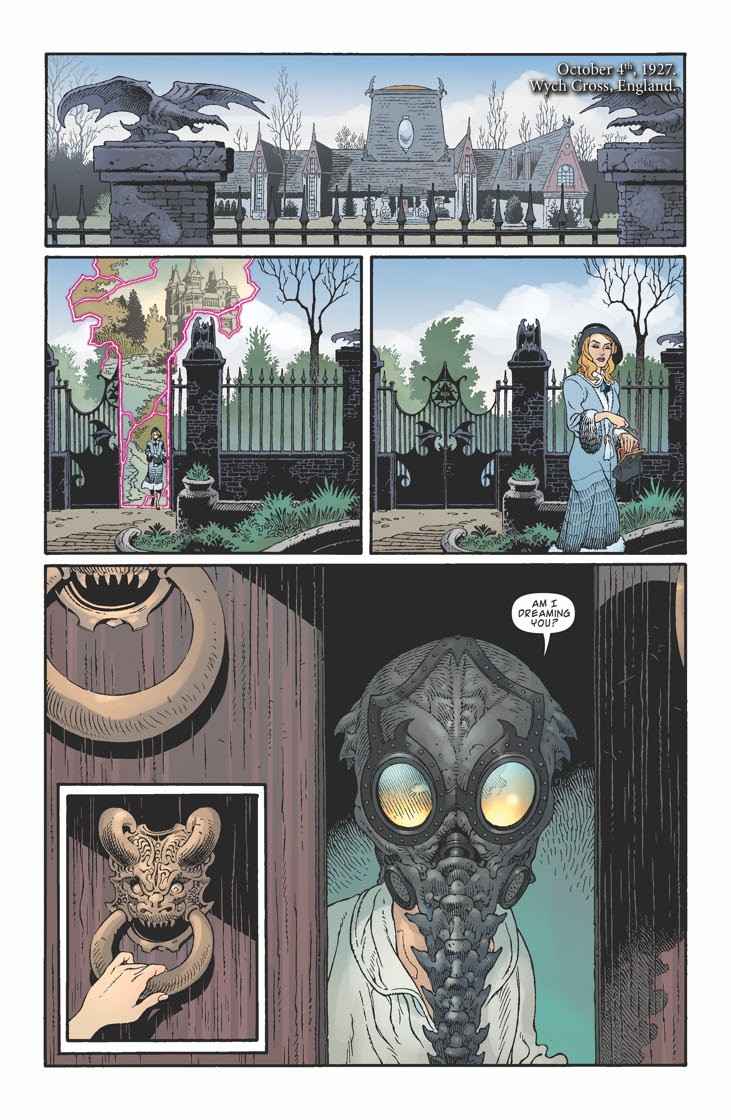
New York Times bestselling novelist Joe Hill and superstar artist Gabriel Rodríguez have crafted a tale of mystery and terror, bringing together two of comics’ greatest fantasy franchises — their award-winning series Locke & Key published by IDW and DC’s blockbuster The Sandman, created by Neil GaimanSam Kieth, and Mike Dringenberg — in Locke & Key / The Sandman Universe: Hell & Gone #1, slated for release on April 14th.

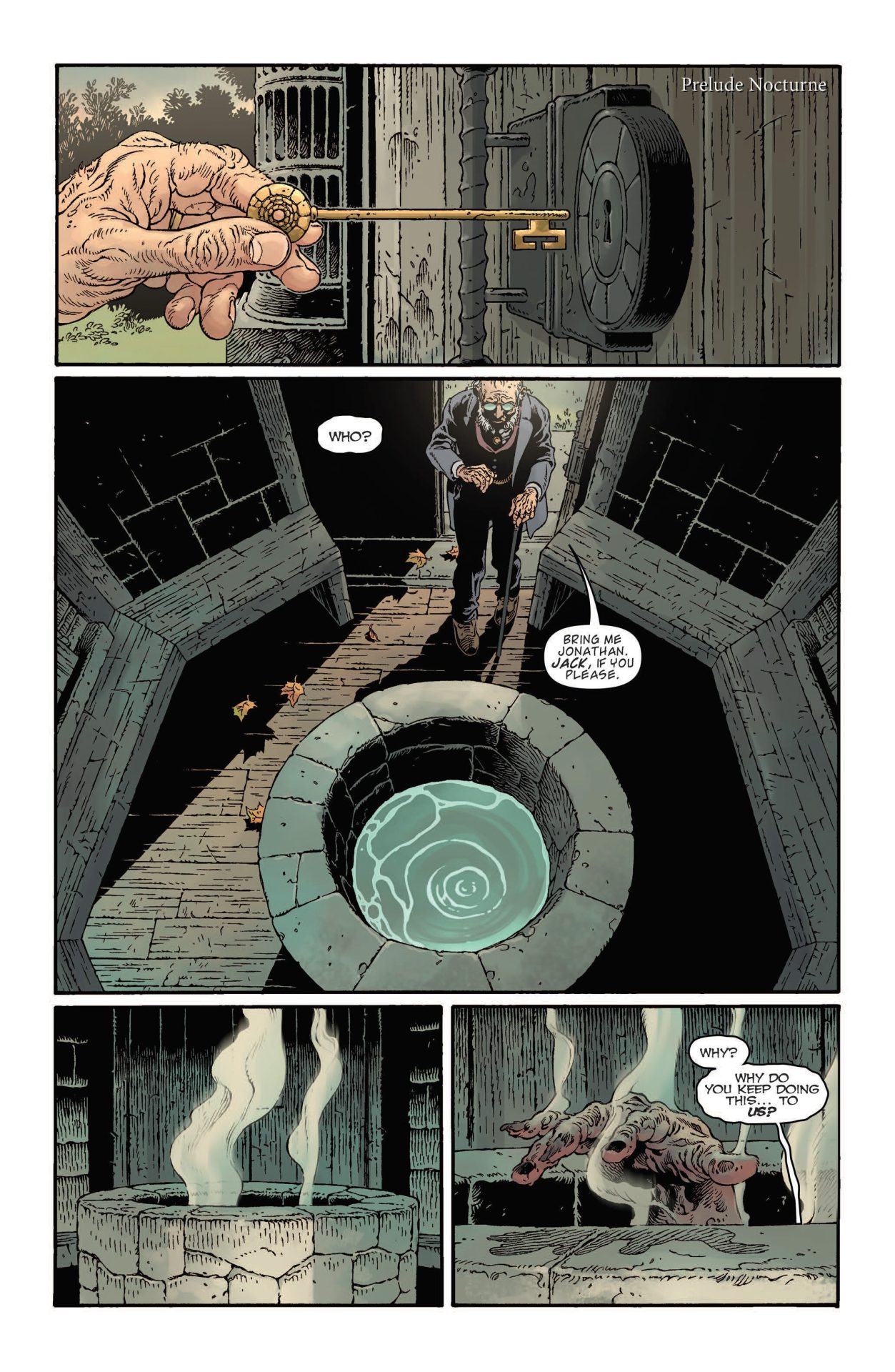
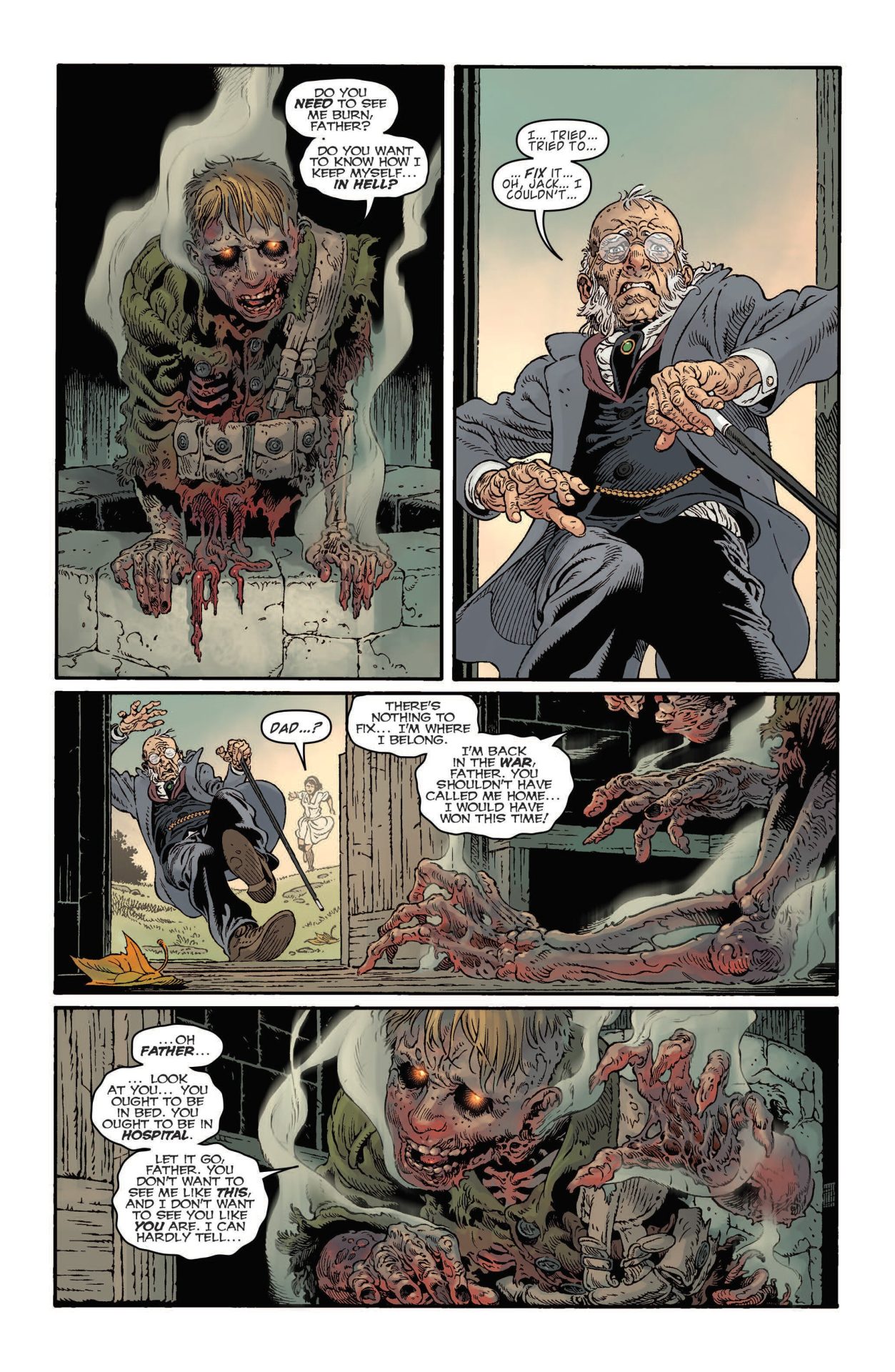
Hell & Gone #1 follows a desperate Mary Locke, whose brother Jack may be 10 years dead but still sends letters home from Hell. Her quest to rescue him from The Pit will require her to outsmart Roderick Burgess (the most wicked man in England), puzzle her way through the House of Mystery, and risk the walking nightmare known as The Corinthian in a disintegrating Kingdom of Dreams!

Locke & Key / The Sandman Universe: Hell & Gone #1 will be available with multiple cover variants for retailers and fans to enjoy, including Cover A by Gabriel Rodríguez, Cover B by JH Williams III, Cover C by Kelley Jones, and two Retailer Incentive editions featuring art by Rodríguez and Williams, respectively.

Locke & Key / The Sandman Universe: Hell & Gone #1

Review: Batman: Black & White #1

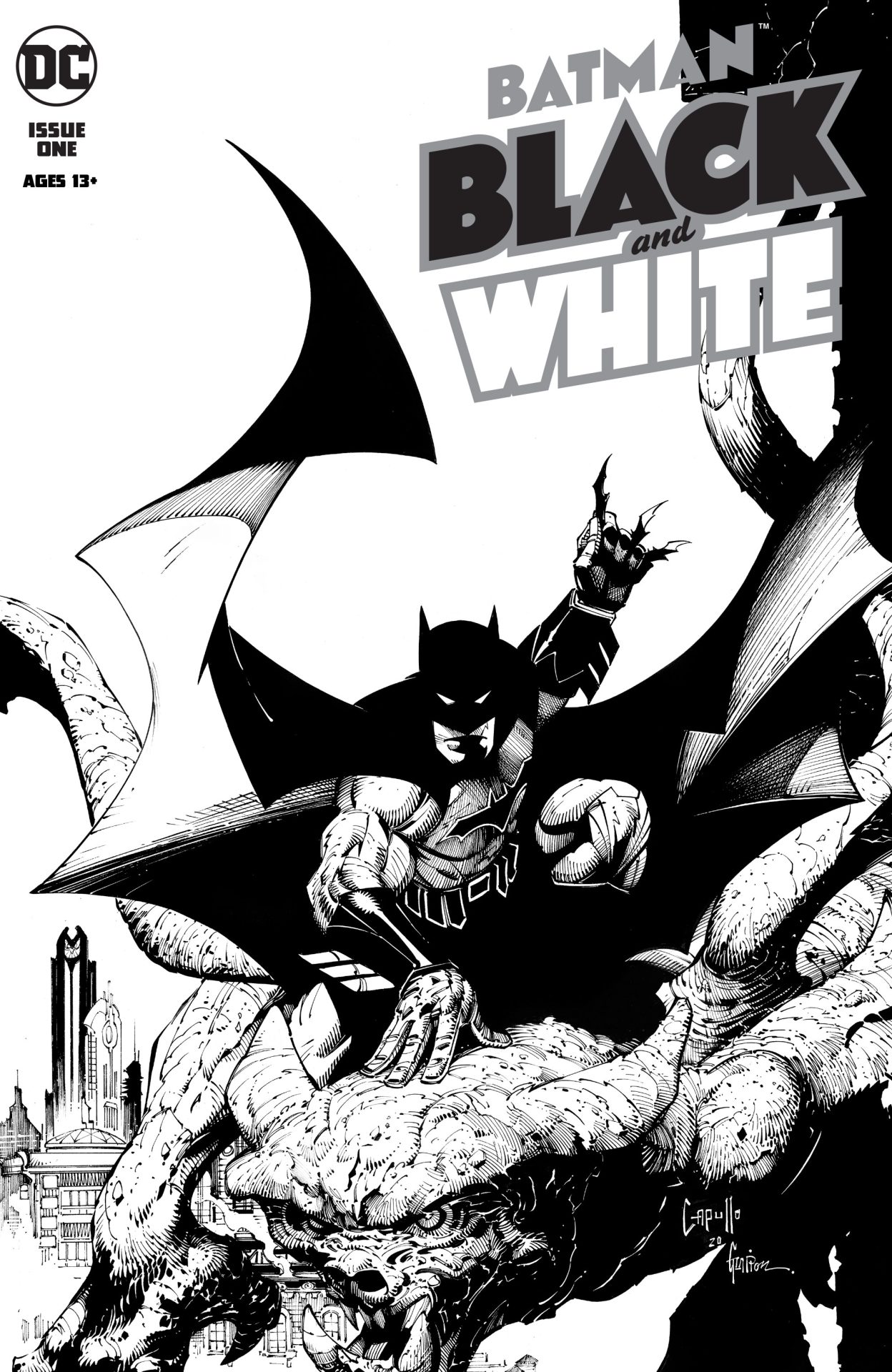
Batman: Black & White #1

Anthology series are always something I enjoy to read in comics. In a comic, you get varied voices and styles, getting to see what creators you might not read would do with characters. It’s also a chance to see what different creators would do in the same sandbox. That often results in a lot of variation showing how versatile comics and their characters can be. Batman: Black & White #1 kicks off a new series with one hell of a start.

Batman: Black & White #1 is one of the best anthologies I’ve read in some time. While the stories are varied and interesting, this debut issue’s art is what really stands out. There’s a common theme, beyond Batman, of artists breaking the mold delivering visuals that “break the page”.

With five stories, Batman: Black & White #1 gives us variation not just in styles but the perspectives and subjects. There’s some “traditional” Batman focused stories but others come from different perspectives. The opening for example is told from the perspective of a member of the League of Assassins.

Each story is entertaining in their own way. They are varied in pacing, tone, and focus, keeping things interesting. Some keep things more traditional in the narrative while others are presented in a more poetic style. The dialogue and types of stories alone are worth picking up the issue. But, it’s the art that really stands out in this issue.

The styles of art vary but they all have one thing in common. Each story breaks traditional page layouts and panels. The opening story uses Batman’s cape to break up the sequences, another is laid out like poem flowing across the page. Another story uses the pearls of Bruce Wayne’s mother to break up the page. In an amazing visual, art from throughout the years is laid out on page like a collage of Batman’s history. You’ll linger on every page in awe as to what’s been laid out. Every inch of the page is used and used well. Only one of the stories comes close to expected page layouts and even then, that tale delivers a lot for Batman fans in the background.

All of that is delivered in black and white.

Batman: Black & White #1 is a hell of a start to the series. It had me lingering on pages in awe of what was before me and wanting more. It shows off some amazing art and will have you longing for more of this and fewer boxes on the page. This is a fantastic issue for Batman fans and fans of beautiful art. It also creates a high bar for future issues to reach.

Story: James Tynion IV, J.H. Williams III, G. Willow Wilson, Emma Rios, Paul Dini
Art: Tradd Moore, J.H. Williams III, Greg Smallwood, Emma Rios, Andy Kubert, Dexter Soy
Letterer: Clayton Cowles, Todd Klein, Clem Robins, Steve Wands, Rob Leigh
Story 8.45 Art: 10 Overall: 9.0 Recommendation: Buy

DC Comics provided Graphic Policy with a FREE copy for review


Purchase: comiXologyKindleZeus Comics

Preview: Batman: Black & White #1

Batman: Black & White #1

Written by: J.H. Williams III, Paul Dini, G. Willow Wilson, Emma Rios
Art by: J.H. Williams III, Andy Kubert, Greg Smallwood, Emma Rios, Tradd Moore

The iconic anthology series returns with a brand-new slate of comics’ most exciting and innovative storytellers to explore the Batman mythos in stark black-and-white! In this debut issue: • James Tynion IV and Tradd Moore explore the world of Ra’s al Ghul and the League of Assassins • J.H. Williams III returns to DC Comics for a trip through the Dark Knight’s history • Emma Rios explores the eternal struggle of the Dark Knight • Paul Dini and Andy Kubert pit Batman against an infestation of ninja Man-Bats in the Batcave • G. Willow Wilson and Greg Smallwood portray Batman in his strangest standoff ever with Killer Croc With a lineup this strong and a cover by legendary Batman artist Greg Capullo, you won’t want to miss the start of this tremendous collection of Batman tales by some of comics’ top creators!

Batman: Black & White #1

Review: Cable: The Nemesis Contract

It’s Tuesday which means it’s new comic book day at book stores! This week we’ve got Cable!

Cable: The Nemesis Contract collects Cable (1993) #59-70 and Annual ’99 and X-Man #45-47 by Joe Casey, Karl Bollers, Michael Higgins, Terry Kavanagh, Jose Ladronn, Stephen Platt, Andy Smith, German Garcia, Alitha E. Martinez, Mark Pajarillo, and J.H. Williams III.

Get your copy. To find a comic shop near you, visit http://www.comicshoplocator.com or call 1-888-comicbook or digitally and online with the links below.

Amazon/Kindle/comiXology or TFAW


Marvel provided Graphic Policy with FREE copies for review
This post contains affiliate links, which means that if you click on one of the product links and make a purchase, we’ll receive a percentage of the sale. Graphic Policy does purchase items from this site. Making purchases through these links helps support the site.

Preview: Micronauts #4

Micronauts #4

Cullen Bunn (w) • Max Dunbar (a) • J.H. Williams III (c)

The MICRONAUTS are caught between a rock and a hard place—or, in this case, a FORCE COMMANDER and a BARON KARZA. With their universe collapsing around them, the MICRONAUTS must survive a deadly civil war while the cataclysmic Entropy Storm keeps expanding. And whatever enters the Entropy Storm is never seen again!

FC • 32 pages • $3.99

Micronauts04_cvr

Preview: Rom #1

Rom #1

Christos Gage & Chris Ryall (w) • David Messina (a) • J.H. Williams III (c)

WE’VE BEEN INVADED AND ONLY A SPACE KNIGHT CAN SAVE US! First there was his epic return in this year’s FCBD #0, and now the ongoing tale of ROM begins in earnest! Christos Gage, Chris Ryall, and David Messina kick off the wildest new series of the year as Rom’s war with the DIRE WRAITHS hits close to home in “Earthfall, part 1!”

FC • 40 pages • $4.99

Rom01_cvrA

Preview: Micronauts #3

Micronauts #3

Cullen Bunn (w) • David Baldeón (a) • J.H. Williams III (c)

The universe is being torn apart and the MICRONAUTS are caught in the middle! They find themselves prisoners… er, guests… of the enigmatic FORCE COMMANDER, leader of the SPACE GLIDERS, who has a connection to Captain Oziron Rael—one that makes Rael a target for BARON KARZA and his ACROYEARS!

FC • 32 pages • $3.99

Micronauts03_cvr

Review: The Sandman: Overture #1 (Special Edition)

SANDMAN_OVERTURE_SPECIAL_ED_1_8bbb16vidv_I have a confession. I have never read any of Neil Gaiman‘s Sandman. Yup, that’s it, I can breathe easier now, like a weight has been lifted from my shoulders. So, going into the much hyped and anticipated The Sandman: Overture, I was a clean slate, not knowing what to expect at all other than brilliance according to everyone out there. And it was very evident to me only a few pages in that me not knowing anything about this series was going to be an issue. So, while reading my review of the first issue, as well as the “special edition” keep that in mind.

Twenty-five years since The Sandman changed the landscape of modern comics, Neil Gaiman’s legendary series is back  with this much hyped mini-series. Gaiman is joined by J.H. Williams III, whose amazing artistic ability is on full display in this first issue, and that’s the highlight for me.

The series is The Sandman’s origin story. From the birth of a galaxy to the moment that Morpheus is captured, the series will feature cameo appearances by fan-favorite characters such as The Corinthian, Merv Pumpkinhead and, of course, the Dream King’s siblings: Death, Desire, Despair, Delirium, Destruction and Destiny.

The first issue to me is utterly incoherent as far as story. I barely know who these characters are, what their deal is, or why they’re important and very little is explained in the rather trippy dream-like world Gaiman has whipped up. I didn’t enjoy the first issue as far as story. What I did enjoy was Williams’ gorgeous artwork. Each page I lingered, not due to trying to figure out what was happening, it was because of the art which almost makes it all work it.

Each of the six issues of The Sandman: Overture is being followed the next month by its own Special Edition which will include an interview with a member of the creative team, plus rare artwork and more. This issue starts things off with an interview with Williams.

This issue includes the entire first issue of the new miniseries, including the gatefold in its original form before coloring, giving readers a behind-the-scenes at J.H. Williams’ unique process. Williams’ original coloring will be shown in addition to the black, white and gray tones of the original work. In addition, the lettering will be translucent, allowing the reader to see the exquisite artwork behind the word balloons.

Now getting to see behind the scenes to me is pretty cool, and for folks who like to check out the process of creating such works, that’s something that’s fun to check out. But, I might rather wait until the series, along with the extras, are collected in a trade instead.

I can only review in how I ended my experience, and in this case it wasn’t very good. I can’t recommend the regular series at all for folks who have never read Gaiman’s previous works. The “Special Edition” might be worth it just to get the behind the scenes look. For folks who know Sandman, and have read it before, I have no idea how much you’ll like it.

Story: Neil Gaiman Art: J.H. Williams III
Regular Edition: Story: 6 Art: 9 Overall: 6.5 Recommendation: Pass
Special Edition: Story: 6 Art: 9 Overall: 7.25 Recommendation Read

DC Comics provided Graphic Policy with FREE copy of the Special Edition

Around the Tubes

The weekend is almost here! Here’s some news for you to spend your Friday with.

Around the Tubes

Robot 6 – Williams bids farewell to “Batwoman” – Everyone is going to wonder what the differences are.

Robot 6 – DC’s Dan DiDio to hear Whoopi Goldberg’s pitch on ‘The View’ – It’ll be interesting to see if this goes better than when they talked Marvel comics.


Around the Tubes Reviews

Comic Vine – Animal Man #24

Talking Comics – Animal Man #24

Comic Vine – Batman/Superman #4

Comic Vine – Hawkeye #13

Comic Vine – Indestructible Hulk Special #1

Comic Vine – Justice League of America #8

Comic Vine – Letter 44 #1

Comic Vine – Liberator #4

ICv2 – Miss Peregrine’s Home for Peculiar Children: The Graphic Novel HC

Comic Vine – New Avengers #11

Comic Vine – Nowhere Men #6

Talking Comics – S.H.O.O.T. First #1

Comic Vine – S.H.O.O.T. First #1

Comic Vine – Supergirl #24

Comic Vine – Uncanny X-Men #13

Comic Vine – Wonder Woman #24

Comic Vine – X-O Manowar #18

Holy Matrimony, Batman!

Guest commentary post from Emma Houxbois. Emma is a queer blogger for hire out of Vancouver, BC most recently attached to Girls Read Comics. You can follow her on Twitter @emmahouxbois.

batwomanIn the wake of J.H. Williams III and W. Haden Blackman stepping down from writing duties on Batwoman, a common thread among the title’s fanbase is the despondent proclamation that Macklemore didn’t free the gays for this. Only Macklemore himself can answer the question of why he freed us and likewise, only Dan Didio can speak for why he chose to uphold the veto on Kate Kane and Maggie Sawyer’s relationship progressing beyond an engagement (which he has done on Facebook of all places) so allow me to speak as a queer woman on why I’m glad Kate Kane won’t be getting married anytime soon.

Since, for better or worse, the situation has become a referendum on letting fictional homosexuals marry, there really does have to be a more considered and nuanced evaluation of whether or not marriage is something that actually needs to be pushed for. The irony of the current debate, and the point at which I begin to depart from what seems to be the fandom consensus, is that feminist literary criticism was born to challenge the reality that women’s stories end in either death or marriage. Decades of informed criticism and measured responses to the portrayal of marriage in popular fiction seem to have somehow sailed out the window as soon as the concept of same sex marriage (which has since oozed itself into the highly suspect terminology “marriage equality”) gained traction within the mainstream. While there certainly is significant merit to awarding same sex couples the same rights as their heterosexual peers and the broken institution of marriage is the most expedient vehicle to accomplish that in reality, the same does not necessarily hold true in fiction. Northstar’s wedding was valuable and important because it extended a long Marvel tradition of event weddings to a character whose publication history has embodied the full scope of the growing pains that the company underwent in becoming comfortable with portraying a gay character. Marvel was creating a new covenant with it’s readership just as much as Jean-Paul was with his boyfriend. By contrast, the wedding between Luke Cage and Jessica Jones could and should have been subjected to far more criticism than it did as it didn’t seem to accomplish much more than further the notion that matrimony is the necessary culmination of a romance and ostensibly the only context in which to raise a child. At the end of the day, the more progressive and meaningful approach to Luke and Jessica’s relationship would have been a recognition that a couple could- as many do in real life- remain unmarried and raise their daughter in a perfectly healthy environment.

Likewise, I just do not see the value in insisting that the only queer superhero with their own solo title get married. It reeks of marriage’s forceful domination of the discourse around LBGT rights and ignores the fundamental reality that the central dispute over whether or not these women should marry in a comic book is controlled on both sides by men because such is the poor state of superhero comics that the only creators with the clout and drive to push the genre’s only queer female protagonist into publication are men. That’s fucked up, and it’s infinitely more fucked up than the actual question of whether or not these two characters should get married. Williams is a phenomenal talent- the best living artist in comics- who has participated in two of the biggest victories for queer female representation in superhero fiction (Promethea and his Batwoman work dating back to Greg Rucka’s Detective Comics run) and Blackman deserves a great deal of respect for stepping up to the plate and lasting a whole two years under the strain of what seems to have been a deeply troubled book from it’s inception, but there is still something truly and fundamentally wrong with the situation, especially when the only female creator to participate on the title to date was only able to contribute a horrifyingly rushed product that only conveyed a quarter of her true talent. This is of course a pattern repeated across most of comics where female lead/majority titles like X-Men, FF, Fearless Defenders, and Wonder Woman have entirely male creative teams with Kelly Sue Deconnick’s Captain Marvel and Gail Simone’s Batgirl essentially being the lone prancing rainbow maned unicorns of major female characters actually being written by women.

I don’t believe that marriage is the compulsory or even necessarily the best culmination of any romance, and that is a position deeply informed by my identity as a queer woman. Furthermore, I don’t see where marriage has any real place in Kate Kane’s narrative. A look back at Maggie Sawyer’s pre-Flashpoint publication history shows that she was one of the earliest lesbian characters in superhero comics, first appearing in Metropolis under Dan Turpin. Maggie was definitely a direct precursor to both Renee Montoya and Kate Kane, who was first brought from Metropolis to Gotham by Ed Brubacker and Greg Rucka to appear alongside Renee Montoya in Gotham Central and then threaded into Kate’s narrative through her stint leading Detective Comics so it’s quite possible that this marriage was part of Rucka’s long game that Williams and Blackman committed themselves to following through in Batwoman, but it still seems directly contradictory to Kate’s story up to this point and Rucka’s wider body of work. Seen from Maggie’s perspective, it follows a very similar trajectory to Northstar barring the facts that until her first encounter with Kate she’d been most recently seen in a stable relationship of her own and that the comic is called Batwoman, not Gotham Central.

As I put forward in my last appearance on the podcast, the strongest common thread that links Greg Rucka’s most significant comic work is the central theme of women navigating the institutions responsible for meting out state sanctioned violence. The responses crafted for Renee Montoya and Kate Kane in the pages of 52 were that the institutions they represented- the police and military respectively- would ultimately reject and destroy them, necessitating that they move outside those institutions to achieve their higher callings (ultimately manifesting in the Question and Batwoman personas). What made Rucka’s Gotham based work so successful was his recognition that institutional failure and identification with The Other are the cornerstones of that fictional space created in the image of Bruce Wayne and his ability to push those sensibilities forward into contemporary concerns. To that end, it seems bizarre and wrongheaded that Kate Kane, who literally gave up a ring because she was unwilling to lie about who she was would turn around and put her faith in another ring whose backing institution has the very same history of marginalizing her identity. She found a way to serve outside of the mainstream, so it only really follows that she would find and embrace a way to love that also sits outside of the mainstream. Finding empowerment and self expression outside the normative is what made Kate a truly different, truly queer character and dictating that she express love and intimacy in the most banal, normative way possible is a fundamental violation of the Kate Kane that gave me the strength to assert my own queer identity. The Kate Kane whose nautical star I had tattooed between my shoulder blades.

« Older Entries Recent Entries »