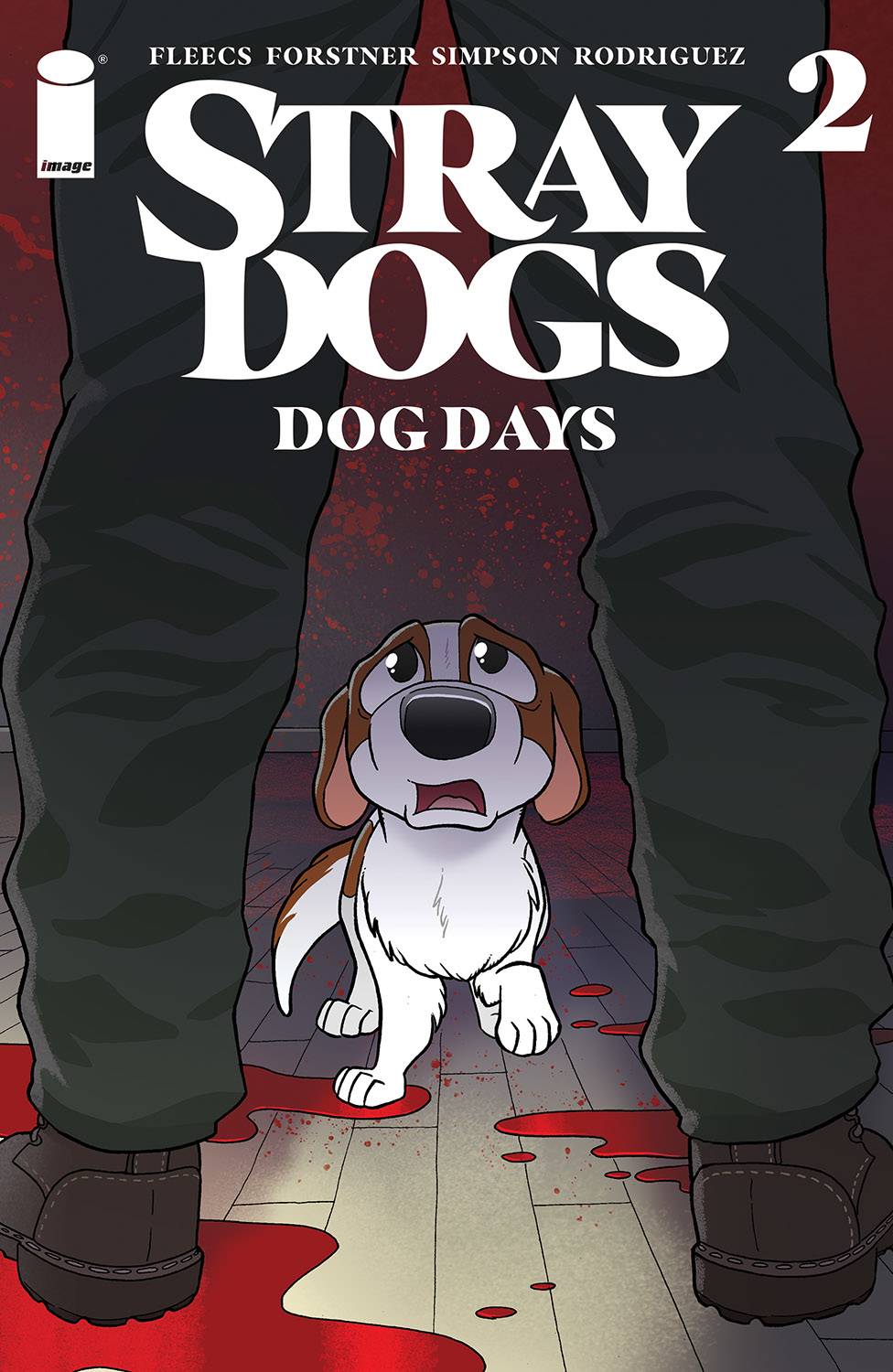
Stray Dogs has been an emotional read since the very first issue. It’s fitting that it ends on equal terms, with an emphasis on moving beyond trauma to find some kind of closure. The individual dog stories in “Dog Days” (the two-issue follow-up to the main series) achieves this while also combining for a sensible conclusion that lays every emotion imaginable out in the open with an invitation to feel each one.
Dog Days #2, which continues in the same short story format of the first entry, centers on several of the main story’s dogs to get at their origin stories and how they related to their human companions, the ones taken by their serial killer master. CreatorsTony Fleecs and Trish Forstner change it up with stories about victims that initially get away from the main story’s serial killer thanks to their protective dogs and stories focused on memorial services for those who were unfortunate enough to cross paths with the killer.
This issue plays out like an emotional reckoning that brings in the ugliness of the story to the forefront with the intention of accentuating the ripple effects of evil actions and how they all stem from the egotistical desires of twisted individual. What’s impressive is how each segment in the book wrestles with those ideas.
Fleecs and Forstner allow each dog to represent themes such as confusion, anger, acceptance, and mourning during their stories to make sure the overarching narrative closes with an understanding that violence leads to messy endings and that navigating them is never meant to be an easy or clearly defined process.
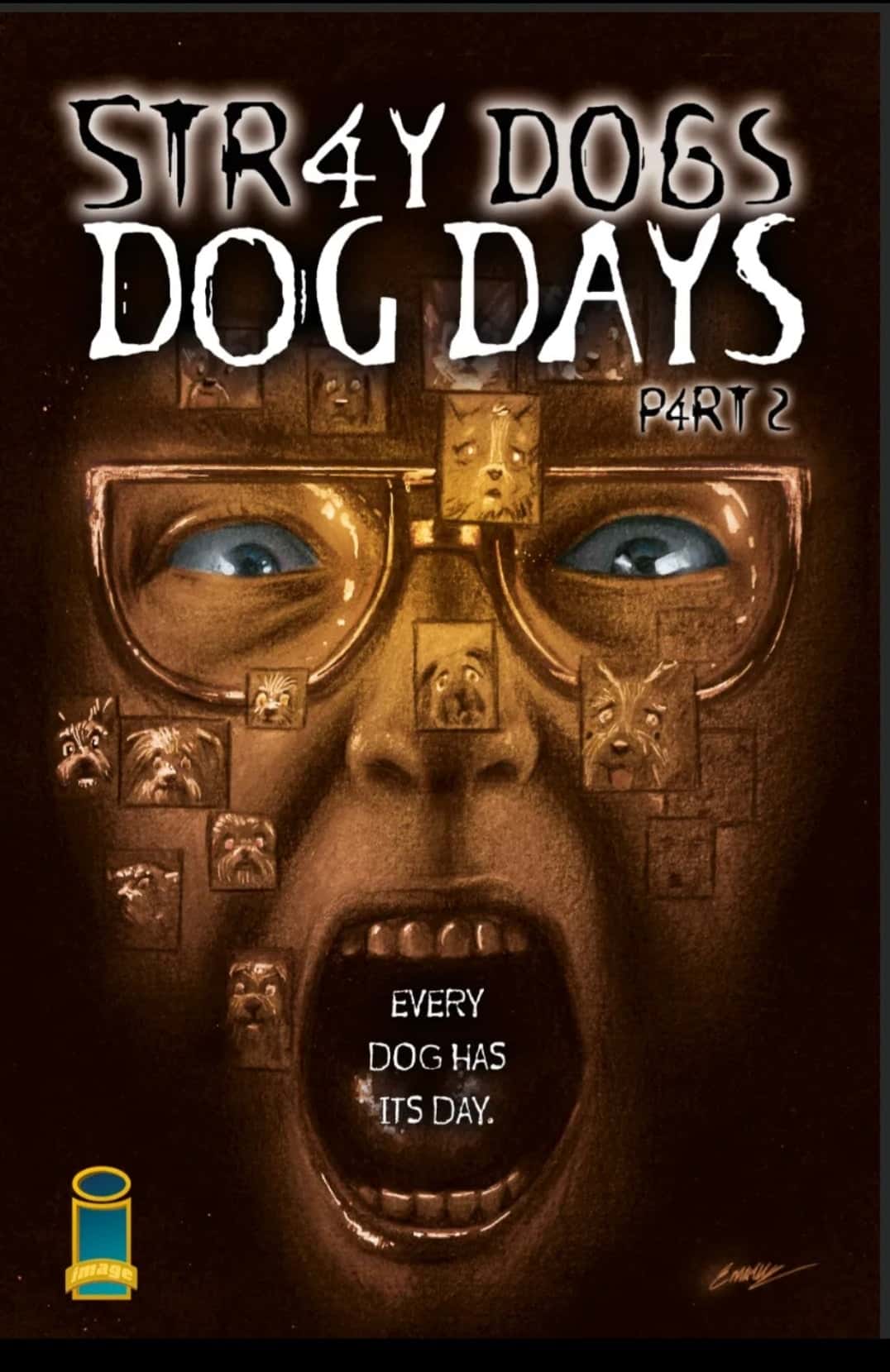
Stray Dogs: Dog Days #2, variant cover by Manu Silva
As has been the case with the entire series, the art style continues to be an exercise in contrasts where the dark subject matter collides with Disney-like cartoon visuals to produce a harder-hitting storytelling experience. The same strategy that’s worked before is still intact and continues to work just as well. Forstner has shown complete mastery of the cartoon style and has done a remarkable job adapting it to a type of story that is not usually associated with it.
Fleecs’ script also stays true to form, unafraid to venture into heart-breaking territory without beating you over the head with it. Dog Days #1 already tugged on the heart strings enough, so it was refreshing to see Fleecs take a step back to explore other possibilities, as was the case of one the dog’s successful attempt at scaring the killer away during a kidnapping attempt. It helps to develop the dogs beyond just being victims of the killer’s design and it puts the animal characters under a different light.
Fleecs and Forstner make a formidable creative team and I hope to see more of their work together. Stray Dogs is so good I wish there was a way to extend our stay in its world. There might be a chance of it if they try for an American Horror Story kind of anthology format in which a different horror scenario plays out with different animals and settings. It might open the door for a Stray Cats series in the future, hopefully. For now, though, we have Stray Dogs, and I’ll be rereading it several times more before I’m done with it. You should too.
Story: Tony Fleecs Art: Trish Forstner Colors: Brad Simpson Story: 10 Art: 10 Overall: 10 Recommendation: Buy, read, reread, and then adopt a dog. They can scare away serial killers.
Image Comics provided Graphic Policy with a FREE copy for review
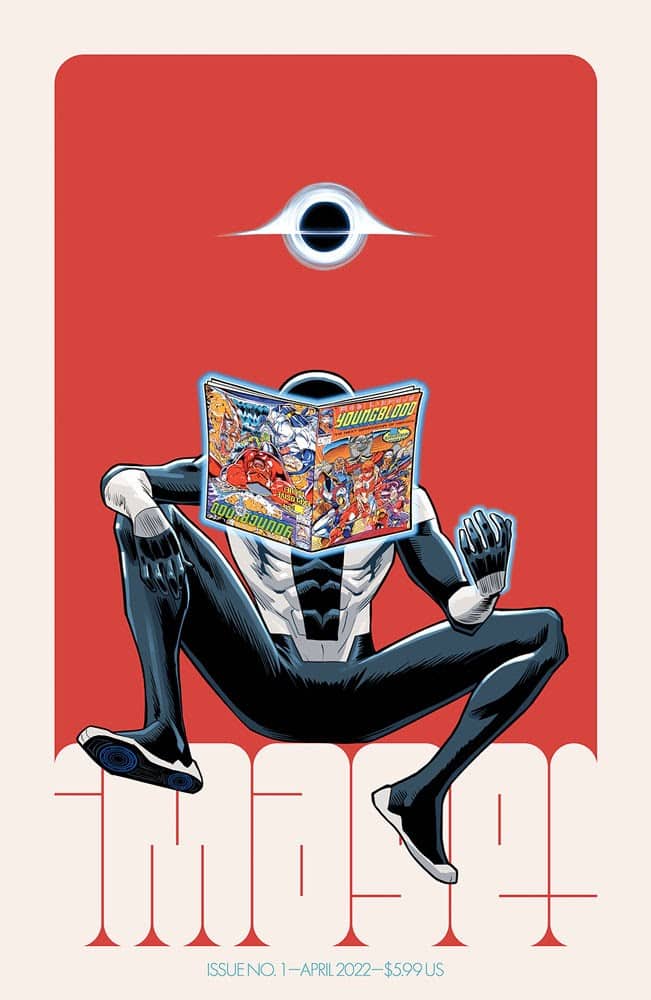
Celebrate the 30th anniversary of Image Comics with the upcoming anthology series Image! kicking off in April. This 12-issue series will treat readers to all-new stories from some of the biggest and best names in comics.
Edited by Image Comics’ Publisher Eric Stephenson and featuring a combination of ongoing serials and standalone short stories, Image! will be the cannot-miss event of the year.
This first issue will showcase a combination of ongoing serials and standalone short stories, including the first chapters of two 12-part stories, “The Blizzard” by Geoff Johns and Andrea Mutti, as well as the opening installments of a trio of three-parters: “Gospel for a New Century” by Wyatt Kennedy and Luana Vecchio, “Hopeless” by Mirka Andolfo, and “Shift” by Kyle Higgins and Daniele Di Nicuolo. Readers will also be treated to an exclusive first look at Declan Shalvey’s upcoming Old Dog series, an original ongoing comic strip by Skottie Young, and more.
The series will also boast the talents of such comics powerhouses as, Brenden Fletcher, W. Maxwell Prince, Martín Morazzo, Robert Kirkman, Cory Walker, Ed Brubaker, Sean Phillips, Tim Seeley, Bryan Lee O’Malley, Leslie Hung, Joe Casey, Nathan Fox, Zoe Thorogood, Maria Lovett, Jay Faerber, Matt Fraction, Fábio Moon, Gabriel Bá, Kelly Sue DeConnick, Emma Ríos, James Tynion IV, Kieron Gillen, and many more.
Image! #1 (Diamond Code FEB220047) will be available at comic book shops on Wednesday, April 13.
Time got away from me this week, so we’re rerunning an older column from yesteryear.
This is a column that focuses on something or some things from the comic book sphere of influence that may not get the credit and recognition it deserves. Whether that’s a list of comic book movies, ongoing comics, or a set of stories featuring a certain character. The columns may take the form of a bullet pointed list, or a slightly longer thinkpiece – there’s really no formula for this other than whether the things being covered are Underrated in some way. This week: A.D. After Death
I found the hard cover trade of A.D. After Death used for a penny shy of $10 Canadian dollars a month or ago along with a couple other hard cover books that were being sold for a surprisingly good price (which I’m sure will show up in this column eventually). After finally getting a chance to read and finish the book, it wound up as the subject of today’s column.
If you want to read the series’ synopsis, it’s below. If you don’t… well, skip the next paragraph, I guess. Either way, you’ll find the core premise of the comic below.
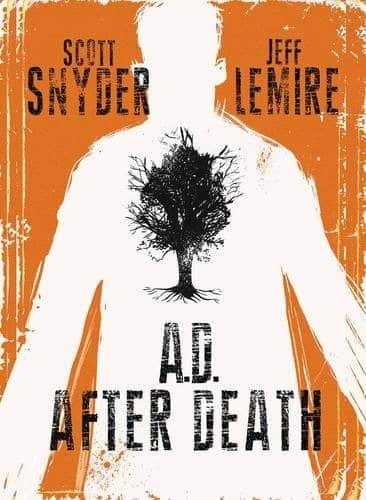
What if we found a cure for death? Two of comics’ most acclaimed creators, Scott Snyder (Wytches, Batman, American Vampire) and Jeff Lemire (Descender, Plutona, Moon Knight, Sweet Tooth) unite to create an epic like no other, set in a future where a genetic cure for death has been found. Years after the discovery, one man starts to question everything, leading him on a mind-bending journey that will bring him face-to-face with his past and his own mortality. A unique combination of comics, prose, and illustration, A.D. After Death is an oversized hardcover graphic novel written by Snyderand fully painted by Lemire.
What struck me most after A.D. After Death was that it’s more than a typical comic or graphic novel. While the hardcover I have collects the three oversized issues, the story itself is presented with a lot of Scott Snyder’s prose text set against Jeff Lemire’s haunting artwork in conjunction with more traditional comic panels. The book is really interestingly laid out because of this, and presents a fascinating visual journey from start to finish. It’s a hauntingly beautiful book, with a story that’s equally as haunting.
A.D. After Death isn’t the kind of story I’m used to reading from Scott Snyder, honestly, and I was surprised at how much I enjoyed the ambiguity of the story; told in both the present day and with flashbacks (via the prose text), you’re never quite sure what direction the story will take. I loved the ending, too, but won’t say why because it will reveal a touch too much.
What I will say, is that this may be a book that I won’t read again for some time, but the story itself will stay with me for a long time to come. In a story that can be so much to so many, we’re left asking ourselves who we really are; are you really the person you think you are, or are you just a product of what this world has made you?
Join us next week where there will doubtless be another movie, series, comic or comic related thing discussed that is, for whatever reason, Underrated.
Time got away from me this week, so we’re rerunning an older column from yesteryear.
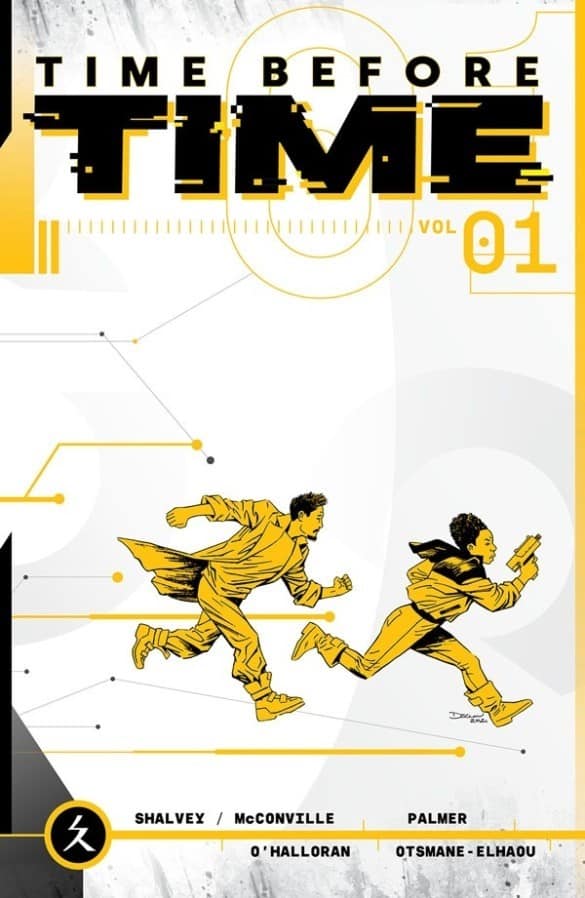
This is a column that focuses on something or some things from the comic book sphere of influence that may not get the credit and recognition it deserves. Whether that’s a list of comic book movies, ongoing comics, or a set of stories featuring a certain character. The columns may take the form of a bullet pointed list, or a slightly longer thinkpiece – there’s really no formula for this other than whether the things being covered are Underrated in some way. This week: Time Before Time vol. 1.
Ever since I first watched Marty McFly try and find his way through the 50’s in Back To The Future, I’ve always enjoyed a good time travel story. There’s something about being able to witness history first hand that has always intrigued me, and I get oddly excited when thinking about the details and implications of how the time travelling actually works in different stories. For example can you change the past, or have your actions already happened eve though you haven’t done anything yet?
Is time a river where you can hop out and in at different points but you are still in the same river and it’s course doesn’t divert regardless of what you do, or does each action that you take that differs from what should have happened create something new?
Time Before Time aligns closer to the former example in the above paragraph. In the year 2140, the criminal gang the Syndicate will smuggle you back in time from a world with very little prospects or future to a time with a better tomorrow (albeit with no Wi-Fi). Tatsuo, one of the Syndicate’s time smugglers has had enough of the grind (and radiation exposure) of constant time jumps.
It’s about this moment when he’s caught up with an FBI agent who throws a bit of a wrench into his escape plan, which obviously works out well for the reader.
The comic wasn’t on my radar at all until I was filing back issues away at my LCS and something about the cover caught my eye. I’d love to say I picked it up and read it at home, but instead I stopped what I was doing and read it there and then, and upon finishing picked up the remaining five issues for cover price. There is a trade also available for those same issues, and while the story doesn’t end with the first volume, I’m writing about it today because it was really enjoyable. Time Before Time is one of those stories that I didn’t expect to find – I’m not going to say I didn’t expect to enjoy it, because I’d heard nothing about the book until I actually read the comic. Maybe my head was in the clouds with this one, but I don’t remember putting it in many pull boxes during the initial run of the individual comics earlier in the year, either. So assuming my shop is typical (which it very well may not be), I figured there’s a chance that the book has been slept on by a fair few people.
Do yourselves a favour, and check it out.
Join us next week where there will doubtless be another movie, series, comic or comic related thing discussed that is, for whatever reason, Underrated.
Sometimes, the staff at Graphic Policy read more comics than we’re able to get reviewed. When that happens you’ll see a weekly feature compiling short reviews from the staff of the comics, or graphic novels, we just didn’t get a chance to write a full review for. Given the lack of new comics, expect this weekly update to begin featuring comics that we think you’ll enjoy while you can’t get anything new to read – only new to you.
These are Graphic Policy’s Mini Reviews and Recommendations.
Logan
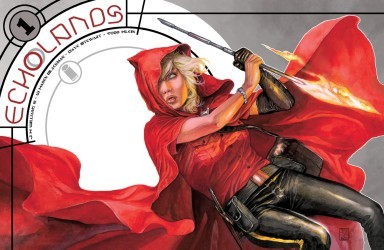
Echolands #4 (Image)– Hope and her band of adventurers are on the run from the wizard’s daughter and the double-dealing, Kirby homaging Romlus IV in JH Williams, Haden Blackman, and Dave Stewart’s Echolands #4. Williams uses insane washes to show the protagonists struggling to find an exit of the trap with Stewart layering ink black darkness on the line art. Blackman and JH Williams’ plotting and writing is also praise-worthy as they use the device of a meal laid out in a double page spread to flesh out Echolands’ ensemble cast that also functions as a breather and ties into some of the backmatter of previous issues. Echolands continues to be the best-looking ongoing comic with its fusion of art styles and genres all woven together into a narrative of adventure, political intrigue, and something perhaps a bit more cosmic and philosophical. It’s worth reading for Williams’ mastery of the spread alone. Overall: 8.8 Verdict: Buy
Grrl Scouts: Stone Ghost #1 (Image)– Grrl Scouts is back with a new lead character, Dio, and a crazy supporting cast like bounty hunter Turtleneck Jones, the shifty Geordi, and a whole lot of folks who wanna fuck shit up. Most importantly, Jim Mahfood’s free-flowing, street art tinged art style is in full effect and a perfect fit for the lawlessness of space some time in the future. Grrl Scouts: Stone Ghost #1 isn’t bogged down by explanations or exposition, but just in being a good and sad time. I love how Mahfood uses black and white notebook style pages and a loose art style to talk about Dio’s experiences with her dead boyfriend, and how much she misses him. Grrl Scouts: Stone Ghost is a cool looking, fast moving comic that also packs an emotional punch and has an air of mystery. Jim Mahfood is a true treasure, and you shouldn’t definitely check out his sweet storytelling. I mean, the cartoonist makes the rhythm of buying and downing a beer and a shot compelling. Overall: 9.2 Verdict: Buy
Amazing Spider-Man #79 (Marvel)– Cody Ziglar, Michael Dowling, and Jesus Aburtov lean into the corporate satire (Of the Beyond Corporation) in Amazing Spider-Man #79 while also telling an action-packed, poignant Spidey tale. Joking to mask the pain is definitely a recurring thread in this one beginning with a laugh out loud opening sequence of a Beyond Corporation pencil pusher disappearing while singing a drunken rendition of “What A Fool Believes”. Although it’s hard to tell the Beyond folks apart (And maybe that’s the point), Dowling’s clean art style makes Spider-Man’s fight scenes look smooth while adding a little chaos to the mix once this issue’s bad guy shows up. Because deep down, this is a story where Spider-Man literally and metaphorically gets his ass kicked with Michael Dowling and Aburtov bringing the pain while Ziglar’s anxious narration highlights every missed dodge, block, and opening. I hadn’t read many Ben Reilly stories before this run, but Cody Ziglar and Dowling do a great job of making me interested in a guy, who has the dual struggles of pleasing corporate masters and stepping into the legacy of one of the greatest heroes of all time. Plus the usual fisticuffs, scum, and villainy. Overall: 8.1 Verdict: Buy
Wolverine #18 (Marvel)– Wolverine #18 is an action movie in single comic form with heart and humor from Benjamin Percy, Paco Diaz, and Java Tartaglia. Percy threads in some of the most successful elements of his run, like supporting characters Jeff Bannister and Maverick, to give this story some stakes. Wolverine can really be himself and have a good time around Bannister and his daughter so threatening is a sure fire recipe for suspense. Diaz uses wide, inter-cutting panels to intensify the big truck/Krakoan chase sequencek and also shows that Maverick is better as a profit-driven anti-hero instead of an ally. Throw in some funny data pages and Johnny Cash karaoke, and this is an enjoyable installment of Wolverine even though Adam Kubert’s art is sorely missed. Overall: 8.0 Verdict: Buy
Black’s Myth #5 (Ahoy)– Eric Palicki and Wendell Cavalcanti wrap up this werewolf PI mystery in a neat bow placing previous scenes in the series in a new context. I love the character growth for Strummer and Ben too as he runs point on a case, and she finds a little romance. Black’s Myth #5 definitely had me wishing there were more cases in store for this LA Noire meets Fables duo. Overall: 7.7 Verdict: Read
Brett
Task Force Z #2 (DC Comics) – The first issue debuted the crazy concept of Batman rogues returned from the dead after A-Day to join a team led by Red Hood. It was so out there and worked so well. The second issue delivers more of the same with a greater focus on what’s going on. When I heard the pitch, I rolled my eyes. But, some great character interaction, action, and solid art, it’s a comic I’m excited to see how far it goes. Overall Rating: 8.35 Recommendation: Buy
Well, there you have it, folks. The reviews we didn’t quite get a chance to write. See you next week!
Please note that with some of the above comics, Graphic Policy was provided FREE copies for review. Where we purchased the comics, you’ll see an asterisk (*). If you don’t see that, you can infer the comic was a review copy. In cases where we were provided a review copy and we also purchased the comic you’ll see two asterisks (**).
This is a column that focuses on something or some things from the comic book sphere of influence that may not get the credit and recognition it deserves. Whether that’s a list of comic book movies, ongoing comics, or a set of stories featuring a certain character. The columns may take the form of a bullet pointed list, or a slightly longer thinkpiece – there’s really no formula for this other than whether the things being covered are Underrated in some way. This week: Starlight.
Conceived by Hollywood darling Mark Millar (with art by Goran Parlov), Starlight was a six issue miniseries that was released beginning in March of 2014 and ending in October 2014. Telling the story of the superbly named Duke McQueen, an Air Force pilot who went to space and saved the alien planet of Tantalus from tyranny forty years ago, before returning home and raising a family instead of staying to rule the planet. His exploits, sadly, were written off as the ravings of a attention seeker, and Duke became a joke to all but his sweetheart.
Now, with his wife dead, his family not giving him the time of day, and people still treating him as a joke, a spaceship arrives to take the old man on one last grand adventure to save the planet Tantalus once again.
One of the less Mark Millar-y comics that have come from his keyboard in the last half decade, this mini series had none of the hyper violence seen in things such as Kick-Ass, Wanted and Kingsman. Surprisingly Starlight is a sentimental yarn about a former hero redeeming himself in his own eyes and saving the planet from a tyrannical despot once again.
Starlight is a pleasure to read. Although criticism can be levelled at the sudden change as Duke McQueen goes from couch-bound crank to crack aimed space hero over the course of only a couple of issues, for me that misses the spirit of the book. Think not of Starlight in terms of the modern, more realism based stories we’ve become accustomed to, and instead fall back into the nostalgia of the classic stories of yesteryear as Millar embraces the straight forward nature of the story – almost against type, as McQueen battles against an antagonist who doesn’t measure up to the rich and deep characterization of the hero; Kingfisher is a perfectly adequate villain, but make no mistake, Starlight is a redemptive story for Duke McQueen.
Perhaps in seeing McQueen struggle against overwhelming odds, himself, and the reputation he had been given, we can find hope and inspiration in our own lives. Not quite the lesson I expected to take from a Mark Millar book.
I had forgotten how much I loved Starlight until I saw a tweet mentioning the series a few days ago that inspired me to dig the comics out and reread them. It’s a love that I genuinely believe you’ll share when you give the series a chance – it’s an underrated gem that you wouldn’t typically expect to come from Mark Millar.
Join us next week when we look at something else that is, for whatever reason, Underrated.
Sometimes, the staff at Graphic Policy read more comics than we’re able to get reviewed. When that happens you’ll see a weekly feature compiling short reviews from the staff of the comics, or graphic novels, we just didn’t get a chance to write a full review for. Given the lack of new comics, expect this weekly update to begin featuring comics that we think you’ll enjoy while you can’t get anything new to read – only new to you.
These are Graphic Policy’s Mini Reviews and Recommendations.
Logan
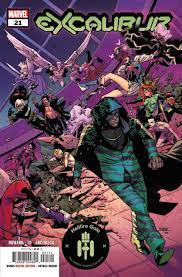
Excalibur #21 (Marvel)– Tini Howard and Marcus To use the Hellfire Gala setting to advance several plots in their own series, including the dissolution of the tenuous UK/Krakoa alliance, Rogue leaving the team to join the Krakoan X-Men, and all kinds of blood magic/Arthurian stuff. The British/magic stuff continues to be inconsistent as ever, but Howard continues to nail the interpersonal moments between characters like Gambit being proud of his wife becoming an X-Man again, Rictor and Shatterstar struggling to get back together, and Rachel Grey and Captain Britain sharing a dance away from the folks that would ply them for information. I don’t know if it’s because the book is an event tie-in, but Excalibur #21 does have several reversal and twists that act as the perfect canvas for Erick Arciniega’s bright blasts of color and To’s wide panels for scenes of magic. Excalibur is still a mid-tier X-Book, but I feel like the overall story has real momentum again and feels like a team book instead of Captain Britain and her Amazing Friends. Overall: 7.6 Verdict: Read
X-Men #21 (Marvel)– The final issue of Jonathan Hickman’s X-Men volume is up and down. For the most part, the visuals are brilliant from Nick Dragotta’s manga-infused and heavy shadows take on Namor, Russell Dauterman getting to unveil the new X-Men team and bask in his fashion brilliance, and Sara Pichelli showing everyone a good time. (Lucas Werneck is stuck with the photo-tracing celebrities gig.) However, the story fluctuates from clip show to teaser trailer in both the selection of the new X-Men team and the Sinister Secrets data page and finally some actual good stuff as Namor reminds Professor X and Magneto that, yes, he controls 70% of the world. Hickman has a good ear for writing him as evidenced by his work on New Avengers, and I hope he figures in future storylines. The rest of the story shows Krakoa at what seems to be its “peak” as it flexes its muscles before the fall alluded to in Marauders #21. The art’s great, but there’s too much montage and not enough story. Overall: 7.0 Verdict: Read
Marjorie Finnegan: Temporary Criminal #2 (AWA Studios)– Garth Ennis and Goran Sudzuka’s self-indulgence continues in Marjorie Finnegan #2, which opens with its protagonist saying Jesus was just a guy, chasing Henry VIII with a strap on, and shitting on Donald Trump’s head. Edgy, sophomoric stuff cleanly rendered by Sudzuka with flat background colors by Miroslav Mrva. The plot sort of starts to take out with this one with Marjorie fighting her sister, the time cop Harriet while the bad guys go around her flat looking for a book that could change human history. The satire might be a little Maher-esque, but Ennis’ dialogue is earthy as ever and Goran Sudzuka’s art is easy to follow. The fight between Marjorie and Harriet is overlong, and the villains are underdeveloped so this issue is worth skipping or waiting for the full narrative in trade. Overall: 6.0 Verdict: Pass
Children of the Atom #4 (Marvel)– Centering around Wolverine/general fanboy Benny Thomas aka Marvel Guy is a smart move from Vita Ayala and Paco Medina, but this little team of mutant wannabes (Except possibly Carmen.) is starting to annoy me. The fandom stuff is interesting and kudos to Ayala for crafting a diverse cast of characters, but this issue is pretty weak and honestly creepy with the team using their friend Cole’s DNA off his basketball jersey to try to crash the Hellfire Gala. And, of course, it goes badly, and they’re caught by mutant hunters. The narration with Benny is okay, but it doesn’t really connect to the overall plot and just ends up being the pre-requisite internal drama before they fight the bad guys. The issue ends on a star-studded splash page, but it is definitely unearned and comes across as a sales-boosting gimmick. Children of the Atom is a middle of the road teen superhero team comic, and fans looking for a more interesting look at young (actual) Krakoans with better visuals would be better off checking out Vita Ayala and Rod Reis’ New Mutants. Also, this issue has nothing to do with Hellfire Gala if you just picked it up for that. Overall: 5.7 Verdict: Pass
Die #17 (Image)– Die #17 is a Lovecraftian dungeon crawler (Guest starring the actual H.P. Lovecraft) from Kieron Gillen and Stephanie Hans, and the series turns to horror in its endgame. There are some meditations on games, dreams, and death as Matt sees the face of his dead mother and the tubes she’s hooked up in Cthulhu. At this point, Gillen has a strong command on the characters’ basic personalities and use an out of character moment to great effect like Chuck behaving seriously, or Isabelle paying off her debts as a godbinder. He and Hans also reveal more about the underlying mechanics of Die connecting it to the imagery of many-angled gods in the works of Lovecraft. And speaking of Stephanie Hans, her work is majestic, spacious, and full of chaos and fear as she delves into dreams and nightmares. Die’s final arc has been quite excellent so far. Overall: 9.1 Verdict: Buy
Well, there you have it, folks. The reviews we didn’t quite get a chance to write. See you next week!
Please note that with some of the above comics, Graphic Policy was provided FREE copies for review. Where we purchased the comics, you’ll see an asterisk (*). If you don’t see that, you can infer the comic was a review copy. In cases where we were provided a review copy and we also purchased the comic you’ll see two asterisks (**).
Sometimes, the staff at Graphic Policy read more comics than we’re able to get reviewed. When that happens you’ll see a weekly feature compiling short reviews from the staff of the comics, or graphic novels, we just didn’t get a chance to write a full review for. Given the lack of new comics, expect this weekly update to begin featuring comics that we think you’ll enjoy while you can’t get anything new to read – only new to you.
These are Graphic Policy’s Mini Reviews and Recommendations.
Logan
Future State: The Next Batman #1 (DC)– In the lead story of Future State: The Next Batman #1, John Ridley, Nick Derington, and Tamra Bonvillain paint a picture of Gotham run by private security who shoot masked vigilantes or villains on sight. Ridley uses this first issue to introduce the new Batman, Tim Fox, and show a variety of POVs on this future Gotham from the Fox family to two young kids in Little Santa Prisca who want to join the Banelitos and a cop and an ex-cop and cop, who trade barbs more than banter. The hook for this lead story is Derington’s fluid visuals and Bonvillain’s smooth colors that feels like Batman: The Animated Series with a tougher edge. I also like seeing the contrast between how Tim is seen as a deadbeat by his more outwardly successful brother, Luke, and his cool efficiency in the field.The second story “Outsiders” by Brandon Thomas, Sumit Kumar, Raul Fernandez, and Jordie Bellaire is a tightly plotted fight comic where Duke Thomas gets some kids away from the Magistrate’s domain, and Katana faces an old foe. This is easily one of the coolest Katana comics I’ve read, and Kumar and Fernandez’s loose pencils and ink-slinging plus electric colors from Bellaire show how tenacious a fighter she is even as she still misses her husband Maseo. The sequence everyone is going to be talking about is a double page, multi-staircase fight scene. Add a cool guest star that really progresses the plot, and I’m very excited for the next installment.The third story “Arkham Knights” by Paul Jenkins, Jack Herbert, and Gabe Eltaeb is about Astrid Arkham with armor and plenty of chivalric posturing leading an army of former villains against the Magistrate. It’s Robocop meets Arkham Asylum as Jenkins digs into the psyche of characters like Two-Face, Zsasz, and Clayface, who have all been given different names by Arkham as part of their rehabilitation. Her behavior is definitely weird and cultish, but with a touch of empathy as she makes sure they’re going to therapy. Herbert’s art is photorealistic and chunky, which works for the armored protagonist and antagonist , but not the tone of the story so much. Overall: 8.2 Verdict: Buy
Eternals #1 (Marvel)– I didn’t really know much about The Eternals before reading this comic, but Kieron Gillen, Esad Ribic, and Matthew Wilson do an excellent job explaining their mythos and also setting up a family drama/murder mystery/battle of the gods narrative. Gillen and Ribic focus on Ikaris and Sprite in the first issue: a powerhouse and trickster type and shows them go about a “typical day” before running into the first of two series hooks. This issue’s secret weapon is Gillen’s narration via The Machine, a device that lets the Eternals teleport around the Earth, which is witty and adds context and exposition in an entertaining way like comparing Deviants to Mogwais from Gremlins. On the visual side, Ribic and Wilson channel their epic work on Thor, but with a degree of removal for humanity. However, Ribic’s facial expressions on close-ups are superb, and when the Eternals interact with each other, it’s like a family reunion with weirder costumes and the archetypal inspiration for world deities. Many creators have aspired to doing the whole “gods with feet of clay” story in the Marvel Universe, but Gillen, Ribic, and Wilson have pulled it off balancing worldbuilding with genuinely funny and cool moments. Also, picking the big guy who likes to hit things is the best kind of POV character to have in a new, complex world. Overall: 8.8 Verdict: Buy
Future State: Harley Quinn #1 (DC)– Hannibal Lecter (sans cannibalism) and anime meet in Stephanie Phillips, Simone Di Meo, and Tamra Bonvillain’s Future State: Harley Quinn #1. Much of this comic is Dr. Jonathan Crane (He’s put aside his Scarecrow identity.) and Harley Quinn basically having a therapy-off while coming up with psychologically interesting ways to capture various villains in Gotham for the Magistrate. To keep the story interesting and to avoid talking heads, Phillips and Di Meo show Quinn’s schemes to capture characters like Pyg and Firefly in action while she relates them to Crane. However, it’s not all smooth sailing as the Magistrate’s mooks see Crane and Harley as “freaks”, and there’s a little jump scare with his old identity. The animation influenced art with garish, futuristic colors from Bonvillain and focus on Harley Quinn’s knowledge of the human psyche (She has a PhD, folks.) to take down baddies makes for entertaining reading as Phillips and Di Meo set up the real threat in the final pages. Overall: 8.6 Verdict: Buy
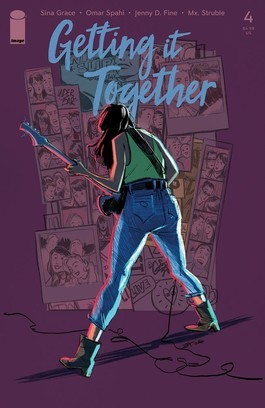
Getting It Together #4 (Image)– Sina Grace, Omar Spahi, Jenny D Fine, and Mx Struble’s slice of life goodness wraps up with Grace taking on interior art duties as Lauren moves to L.A. to start a solo career. After the tumultuous events of previous issues, Getting It Together #4 is all about growing up and finding your own path with Sam and Jack rekindling their friendship, and Jack using his art skills to help the queer community instead of just troll for dick. But Lauren and her reactions to LA is the main focus of this final issue as she deals with writer’s block, deadlines, mixed signals, and just the general difficulty of moving to a new, strange place. I love the contrast in Grace’s clean line versus Fine’s more chaotic approach, and he and Struble make a great tag team to show creativity and music visually. Plotwise, Grace and Spahi leave some threads open like the results of Lauren’s first solo show, the new lineup of Nipslip, and of course, Sam and Jack’s relationship so I hope we get more of this relatable and visually soothing series. Overall: 9.2 Verdict: Buy
Hellions #8 (Marvel)– Zeb Wells and Stephen Segovia’s Hellions #8 is a tour de force in moral dilemmas, fights against racist robot fights, and draws a dark parallel in how humans treat mutants with how mutants treat A.I. But before the big questions get asked, there lots of blasting, Cameron Hodge monologues, and cheeky Wells-penned one-liners. I love how he gives the “Hodgemind” A.I. a mini character arc as their language changes through their interactions with Havok so the inevitable betrayal hits a little harder in the end. Visually, Segovia’s work is the extreme 90s meets Marvel house style, which personally isn’t my cup of tea, but works with this kind of story and cast of characters. His homage to an early 90s blockbuster via Empath’s abilities is pretty fun and made me like the team asshole if only for a panel or two. Hellions continue to be the most consistent ongoing X-book with its entertaining blend of humor, explosive action, and ongoing moral quandaries. Overall: 8.9 Verdict: Buy
X-Factor #6 (Marvel)– Leah Williams and David Baldeon showcase some fun character interactions and creative use of powers (Together, Eye-Boy, Daken, Rachel Summers, and Prodigy are an unstoppable lie detector), but I’m not really connecting with the “mystery” of Siryn’s multiple deaths in X-Factor #6. It’s like they expect you have to tons of background knowledge about previous X-Factor comics to be emotionally hooked instead of setting it up in the current comic so the “big reveal” with Siryn comes across as a Diet Caffeine Free Phoenix situation. (Because apparently Phoenix belongs to the Avengers office now.) However, X-Factor #6 isn’t a total wash, and the team’s interactions with the British CSI techs is actually pretty funny like a parody of Broadchurch. Speaking of humor, Baldeon does draw some fun facial expressions like Northstar’s reaction to Prodigy wanting to start a body farm so he can basically pioneer the scientific field of mutant decomposition. I really enjoy how Williams writes Prodigy with a thirst for knowledge that matches his abilities and with a dark secret to boot that gets relegated to a data page instead of the main plot, which I honestly have seen before and wish was over. Another criticism I have is that Baldeon draws Polaris and Siryn way too similar, which isn’t good because the big final scene hinges on an interaction between them. I really like the cast of characters in X-Factor, but this storyline is turning out to be skippable. Overall: 6.3 Verdict: Pass
Happy Hour #3 (Ahoy!) Peter Milligan and Michael Montenat give readers our first look at Landor Cohen’s unhappiness commune, and it’s a total shithole with colorist Felipe Sobreiro even using lots of browns. So, yeah, Jerry and Kim aren’t going to find a utopia at the end of their road trip. What they do find is Gleesville, a town that was home to racial unrest and violent incidents, and now executes visitors who aren’t up to par on the level of happiness. Jerry avoids execution by having a genuinely happy moment, and the relationship between him and Kim gets a little tenser as Milligan and Montenant veer away from the dark jokes and into the complicated nature of human interactions. Their relationship is easily the best part of Happy Hour along with its satirical assault on extreme emotions and call to just be a human being and not tell other folks how they should or shouldn’t feel. Overall: 8.0 Verdict: Buy
Brett
Shang-Chi #4 (Marvel) – The series has been good so far and this issue delivers some twists and turns that throw the future into question. Things aren’t quite as clear as if Shang-Chi’s mission is a good thing or not but we get a lot more of the new history the team is crafting and the pacing and action continue to be solid. It’s just been a solid ride so far and a great relaunch of the character. Overall Rating: 8.0 Recommendation: Buy
X-Men #16 (Marvel) – The series starts its post X of Swords direction with some interesting concepts that don’t quite make a lot of sense for what’s been set up so far. This is one that really plays for the long-time readers, new ones might shrug their shoulders over it. But, the art continues to be nice, so there’s that. Overall Rating: 7.0 Recommendation: Read
Taskmaster #2 (Marvel) – It’s Taskmaster vs. Hyperion in the start of his mission. The series is a lot of fun with great pacing, humor, and action. This takes a match that’s clearly lopsided and gives it some twists that makes it realistic. I didn’t know I wanted a series with this character but now I want even more. It just nails that entertaining aspect. Overall Rating: 8.5 Recommendation: Buy
Well, there you have it, folks. The reviews we didn’t quite get a chance to write. See you next week!
Please note that with some of the above comics, Graphic Policy was provided FREE copies for review. Where we purchased the comics, you’ll see an asterisk (*). If you don’t see that, you can infer the comic was a review copy. In cases where we were provided a review copy and we also purchased the comic you’ll see two asterisks (**).
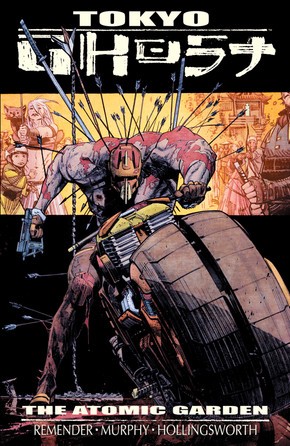
This is a column that focuses on something or some things from the comic book sphere of influence that may not get the credit and recognition it deserves. Whether that’s a list of comic book movies, ongoing comics, or a set of stories featuring a certain character. The columns may take the form of a bullet-pointed list, or a slightly longer thinkpiece – there’s really no formula for this other than whether the things being covered are Underrated in some way. This week: Tokyo Ghost: The Atomic Garden.
I had never heard of Tokyo Ghost: The Atomic Garden.until I saw the cover of the trade at my LCS, which doesn’t really mean much other than sometimes I miss things. Something about the cover caught my attention as I was putting it on the shelf. There was something about a motorcycle rider stuck full of arrows that made me stop and wonder what the hell I was putting on the shelf, so I flipped the book and read a synopsis that was just curious enough to be immediately interesting, saw Rick Remender’s name and immediately purchased the book.
It never made it to the shelf.
The synopsis that helped to hook me in: The Isles of Los Angeles 2089: Humanity is addicted to technology, a population of unemployed leisure seekers blissfully distracted from toxic contamination, who borrow, steal, and kill to buy their next digital fix. Getting a virtual buzz is the only thing left to live for. It’s the biggest industry, the only industry, the drug everyone needs, and gangsters run it all. And who do these gangsters turn to when they need their rule enforced? Constables Led Dent and Debbie Decay. This duo is about to be given a job that will force them out of the familiar squalor of Los Angeles to take down the last tech-less country on Earth: The Garden Nation of Tokyo. You can check out the first issue on Image’s website from this link if you’re curious.
The promise of a story that deals with the dangers of technology wasn’t lost on the person who works with technology every damn day across two jobs and sees the impact of it on another as digital comics are an always present conversation piece at the shop (usually in how they don’t compare, but then that’s to be expected given the people in the conversation are literally buying physical comics at the time).
Remender takes our current obsession with technology to an extreme with Tokyo Ghost, imagining a world that reminds me of the dystopian future of the Matrix with the worst of a Hollywood drug den spread across LA. If Snake Plisken was here, he’d be trying to escape. Through the haze and horror of a tech addicted world, Remender focuses on a Constable, Led Dent, and his tech-free partner Debbie Decay. We see Debbie try to break Led’s all encompassing tech addiction by forcing him to detox… it’s an oddly uncomfortable story that’s all the more powerful by the striking nature of the addiction.
Look, I know you’re reading this on your phone, tablet, laptop or whatever. But this is a book that’ll remind you to go outside in an oddly non-preachy way. It doesn’t hurt that the art is perfectly suited to do what it needs to do; whether in the hell of LA or the relative paradise of Japan… this is a book that you really should be reading.
That the story is good is a byproduct of it’s message – and that’s one we probably all need to listen to (he says as he goes back to surfing the interwebs, where, incidentally, I discovered this is volume one of two, so maybe technology isn’t all bad…).
Join us next week when we look at something else that is, for whatever reason, Underrated.
Sometimes, the staff at Graphic Policy read more comics than we’re able to get reviewed. When that happens you’ll see a weekly feature compiling short reviews from the staff of the comics, or graphic novels, we just didn’t get a chance to write a full review for. Given the lack of new comics, expect this weekly update to begin featuring comics that we think you’ll enjoy while you can’t get anything new to read – only new to you.
These are Graphic Policy’s Mini Reviews and Recommendations.
Logan
Big Girls #1 (Image)– Big Girls #1 is a fun surprisingly socially conscious, and occasionally hilarious take on the kaiju genre from cartoonist Jason Howard. The comic’s basic premise is that some men have a gene that causes them to grow to Godzilla-esque sizes and go on rampages; women have a similar gene, but don’t lose their humanity so some of them get recruited to be “big girls”. (Think Ultraman or the jaegers from Pacific Rim, but less mecha.) Howard’s dialogue spoofs the overly pseudo-science of almost every monster movie while his art is full of energy, and at times, emotion as he is in full ink slinger mode through the whole book. He balances moral dilemmas with cheeky humor and big can of rage-turned-into whoop ass expertly in the protagonist, Ember, who wants to take a more nuanced approach to her job. This all fits into Big Girls’ monsters as a metaphor for toxic masculinity narrative. It’s a bit on the nose, but come on, this a book where a ten foot tall woman unloads a full clip into a giant monster so leave nuance for your Philosophy 101 class. Overall: 8.6 Verdict:Buy
Marauders #11 (Marvel)– After what seems like forced emotions, Gerry Duggan and Stefano Caselli bring the Kate Pryde is having issues with resurrection arc to a close. There are complications along the way, and I hope some of this gets unpacked in future issues and not tossed to the side for X of Swords. Sure, there are Viking funerals, heartfelt tributes from Nightcrawler and Professor X, and even some longing looks from Magik and Rachel, but it seems like they want to jump to the good stuff: all out war against Sebastian Shaw. In probably the most interesting part of the issue, there is a small subplot with Storm getting some Krakoan meds to an X-Desk agent in DC to her mom with dementia. It makes Storm a bit of a wild card in a very pro-mutant society as she strives to help people even if they’re not Krakoan. But, yeah, this was just a pause before all-out war and maybe a bit of a parody of superhero funerals? Who knows, this series has seen better days. Overall: 6.0 Verdict: Pass
Well, there you have it, folks. The reviews we didn’t quite get a chance to write. See you next week!
Please note that with some of the above comics, Graphic Policy was provided FREE copies for review. Where we purchased the comics, you’ll see an asterisk (*). If you don’t see that, you can infer the comic was a review copy. In cases where we were provided a review copy and we also purchased the comic you’ll see two asterisks (**).