Category Archives: Interviews

Scott Burman and Eric Nguyen spend time talking their time travel trip White Savior

White Savior #1

I recently got a chance to catch up with the very busy creators behind the recently acquired Dark Horse property, White Savior, Scott Burman and Eric Nguyen, the master minds behind this brilliant concept which I had  the pleasure of reviewing the debut issue back in 2019, where  I described it as a “cross between Back To The Future and Real Genius” but also an old school fan of the show Heroes in its first few seasons , it absolutely harkens back to Hiro’s storyline, if you know, you know.

Graphic Policy: How are you doing during the Pandemic? How has it influenced your art/comic?

Eric: Pandemic was a killer for comics – I know a lot of stores had trouble staying in business, but I think things are picking up again.

GP: Let’s talk about how the deal with Dark Horse came about?

Eric: The whole thing started when Scott sent me a blind email. No idea who he was, but I read one of his scripts – How I Got Drunk and Saved the World – and it was the funniest thing I ever read. I was working for Marvel at the time, but we kept in touch. And when I was free, I called him up, and said, let’s make something funny.

Scott: I think he’s crazy going from Marvel and DC to some nobody named Scott Burman, but I wasn’t complaining. So we brainstormed, came up with this idea, and went to work. We did this without any publisher interest at all, and we actually self-published the first issue – very briefly – when we heard from Dark Horse.

Eric: Yeah. I got an email about them wanting to turn another one of my books, Gigantic, into a movie. So I sent them White Savior and within one day, Mike Richardson, the president of the company, read it, said it was hysterical, and gave us a deal.

GP: What were your favorite comics growing up?

Scott: This is when I want to be cool and pretend like I was into stuff that wasn’t totally mainstream, but I’m not cool at all, so Spider-Man and Batman. Every comic that involved the two of them was solid gold for me.

GP: Are there any specific comics creators that influenced you?

Eric: Todd MacFarlane. When he came along, he changed the game. 

GP: Since normally we see people of color in supporting roles in books, movies and television shows with the exception of the most recent reboot of Quamtum Leap, did you feel a need as creators ot subvert expectations?

Eric: That’s an interesting question, because oddly enough, when we first started writing this, we didn’t set out to do anything except make readers laugh and give them a good story. The whole concept started from a joke about the movie The Great Wall, with Matt Damon. 

Scott: Yeah. We basically said, what if the guy destined to save everyone was an idiot? And from there, we started developing it.

Eric: And it was only when we started writing and researching a bit more, that we realized the underlying importance of what we were doing. 

White Savior

GP: With Octavia Butler’s book, Kindred being made into a television show, what was your initial reaction and , having read it myself multiple times, to include the john Jennings graphic adaptation, Butler never wrote for the faint of heart, where many of her scenes were tough to read and even see  in the graphic novel, do you think the world is ready for it?

Scott: Even though the title is definitely head-turning, I like to think our book is a very light-hearted comedy.  So in terms of the world being ready, I don’t know if the world is ready for any comedy in general. That’s why you’re seeing a lot less comedy movies and comics, mainly because the reaction, no matter what, is always so divided. So I guess my answer is, ready or not, here we come. 

GP: What influence do your parents have on your work? What was their reaction, when you told what you wanted to do for a living?

Eric: My parents wanted me to be anything but an artist. Steady income, that’s what they definitely were insistent on. When I got my first big two paycheck, it definitely helped sway their opinion.

Scott: So I’m Jewish, and I think there are certain similarities between Jewish and Asian parents. The stereotype of Jewish parents wanting their sons and daughters to be doctors and lawyers may be rooted in a little bit of truth. Or, a lot of truth. My parents were supportive, but they also wanted me to have a back up plan, and in hindsight, a backup plan might have helped out during some tough times.  I’m 40 and this is my first break, so maybe they had a bit of a point. I’d never admit that to them, though. You’re not going to print that, are you?

GP: How did you get started in comics?

Eric: I got started doing Strange Girl for Image and Rick Remender. 

Scott: And I got started close to twenty years later when I somehow convinced him to work with me.

GP: I read the review about the original script from The Black List, do you still have some hopes for a movie?

Eric: We do. And I think the hopes are becoming closer and closer to a reality every day. 

Scott: That’s all we’ll say about that for now. Cause I’m sure what we are and aren’t allowed to say at this point.

GP: Is there any “white Savior movie you think was completely horrible in message and story or either? Are there any that you like?, mine is Cool Runnings, but I am a big John Candy fan, and it was based on a true story

Eric: I think that just because something is a “white savior” movie doesn’t mean it’s a bad movie. Our book spoofs The Last Samurai a lot, and we both love that movie. Same with Cool Runnings. Same with dozens of other similar stories. I think our book just focuses on the fact that the majority of these stories, where an outsider comes to a town and saves them from whatever ailment, had protagonists who were….

Scott: Who looked like me. A white guy. Well, usually a taller, more handsome version of me. And there weren’t enough stories being told from a different point of view.

GP: Is there any musicians you listened to that molded your consciousness?

Scott: Not sure if they molded my consciousness. And even if they did, they definitely wouldn’t want to be responsible for whatever craziness my consciousness possesses. But I can tell you, to get the energy cranked up, I throw AC/DC on Spotify and I’m ready to go.

GP: Eric, what is your favorite Marvel character to draw? Favorite DC character?

Eric: I did Old Man Logan with Jeff Lemire, and I got to say, there’s just something so badass about Wolverine. You can’t go wrong with Logan. For DC, I did a little work on Batman, and would love to take another crack at that.

GP: Scott, I was scrolling through your Instagram, and saw your favorite background is McDonald/s can you tell us more about it?

Scott: Ha! I’m not a social media guy – which is either a good or bad thing for our comic, depending on how you look at it. But I went on a 4 month Eurotrip, and whenever I saw a McDonald’s, I took a pic in front of one, and sent it to my family as my “Europe photos”. Instead of the Eiffel Tower or Big Ben, I showed them photos of McDonald’s. People seemed to like it, so I said, what the hell, and posted them on Instagram.

GP: Do you have any favorite comics you are reading right now?

Eric: Everyone should read The Good Asian by my buddy Pornsak Pichetshote. 

Scott: Seconded on that. Too many other ones to name. 

GP: Are there any current artists/writers out there you admire and would like to work with?

Scott: So one of the best parts of this experience, for me, has been interacting with some awesome creators I admire. I try not to be too much of a fan, but it definitely comes out. I’ve spoken to Mark Russell, Michael Avon Oeming, Skottie Young, Darick Roberston, Cliff Chiang… so many great creators, and I’m still floored they’re talking to me. I should be washing their cars, not talking to them about comics.

GP: When was the first time, you identified with a character on TV/in the movies/ or between the pages of a comic book?

Eric: I never really saw myself in any comic. I never thought about it too much, but that might be one of the reasons we created this. The main character, Todd, is very similar to me. He’s not a kung fu guru, not good at math. He’s just, a regular guy.

Scott: I always thought Batman was basically Scott Burman. We’re pretty much the same person. That’s a joke, folks.

GP: What do you want readers to get from” White Savior”?

Eric: Honestly. Just a good time reading a funny, action packed comic. If a message comes across, even better, but ultimately, the goal is to bring people together through the laughter and fun of our comic.

GP: What is your favorite word?

Scott: In honor of our book, I’m going to go with “Fugnuggets.”

GP: What do you value most in your friends?

Eric: Loyalty. Can’t beat that.

GP: If you were reincarnated as some other plant or animal, what would it be?

Scott: A very fat dog.

GP: What is your favorite occupation?

Eric: That’s easy. What I do now.

GP: Who are your favorite fictional heroes?

Scott: Spider-Man’s always been my guy.

Eric: I’m going with Todd Parker. Can’t go wrong with that.

GP: What natural gift would you most like to possess?

Scott: I wish I could draw. I think my goal is to be like Eric.

GP: What profession other than your own would you like to attempt?

Eric: Video games. Either owning the company or designing them.

Scott: For me, retired billionaire. That’s the goal.

GP: What profession would you not like to do?

Eric: Anything with math.

GP: If Heaven exists, what would you like to hear God say when you arrive at the Pearly Gates?

Scott: Can I get your autograph? White Savior was my favorite comic.

Ricky Miller looks back at 10 years of Avery Hill and its packed 2023

Avery Hill logo

Launched in 2012, Avery Hill has become known for publishing some amazing graphic novels and finding talent before they break big. Tillie Walden and Zoe Thorogood are just two of the names you’ll have found published by them.

Coming off of celebrating 10 years in publishing we got a chance to chat with one of the founders and copublisher Ricky Miller looking at the past ten years and looking forward to what 2023 brings!

Graphic Policy: First, I want to say congrats on ten years. How does it feel to make it to a decade in the comic industry?

Ricky Miller: Unexpected! 

When we started the company, we thought we’d be doing it for a couple of years at most. So to reach ten years is pretty mind-blowing. 

The longevity can be put down to some of the amazing authors we’ve met along the way who have made us want to keep things going. Discovering Tillie Walden was a big factor, and then other fantastic creators like Charlot Kristensen, Zoe Thorogood, and George Wylesol helped us keep up that momentum. Additionally, seeing our other authors, like Tim Bird, Katriona Chapman, B. Mure, and Owen Pomery develop into outstanding graphic novelists gives us so much energy and excitement.

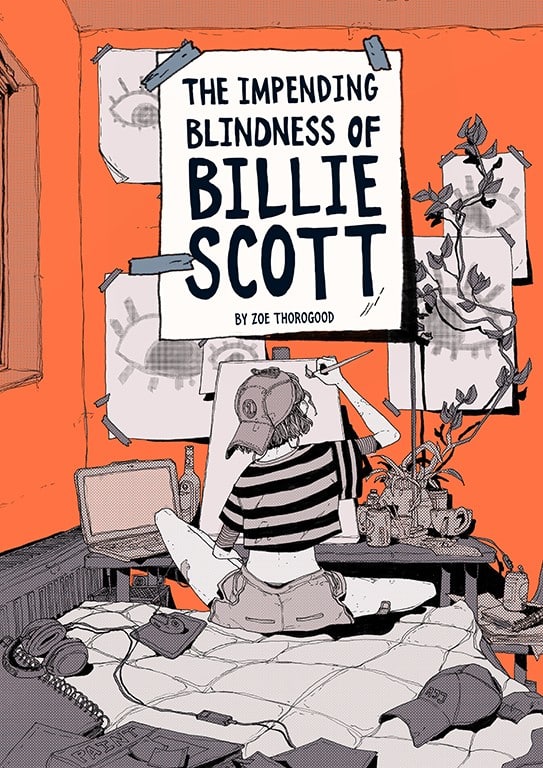
The Impending Blindness of Billie Scott

We’ve also had the opportunity to travel around, go to some brilliant comics shows in various countries and meet people, see cities, and have experiences that we probably would never have had if not for comics! Really, it’s been life changing.

Also you saying “in the comics industry” made my heart do a little flutter there, as I don’t often think about us being in the comics industry. But I guess we are, and the me in my early teens would have very much been amazed at that.

GP: Before we get to the future, I want to focus a bit on the recent past. The comic industry is absolutely in an interesting space with so much shifting, how has Avery Hill fared during everything that’s been going on?

RM: Yes there we are definitely living in “interesting times!”

Some of the things going on have impacted the UK, and some haven’t. Obviously, the pandemic affected everybody, and while it was going on we were quite successful in pivoting our focus to sales through our online store while sales from online retailers also remained strong. In fact, 2020 was one of our best ever years in terms of sales. However, there was definitely a fall-off the following year and it was a massive shame not to be able to give proper launches to the books that came out during that time.

Some of the digital developments, such as the growth of Webtoon and Tapas, haven’t really featured on our radar as yet. Any digital sales we have are a very small part of our overall sales and I’ve yet to be convinced that the adult GN market has much of a future digitally, at least not until there’s a really good reader that can handle things like double page spreads nicely!

I think the thing we’re most waiting to see the effect of is some of the antipathy towards the traditional social media platforms impacting our sales. There was a time when we would find new creators through Twitter (such as Tillie Walden and Zoe Thorogood), but I think that is getting increasingly hard due to the amount of noise on that platform making it almost impossible to spot anything new or worthwhile. Sales through our online store that we used to be able to directly attribute to social media posts have definitely been decreasing as well. 

What We Don't Talk About

GP: What challenges have you felt as a publisher?

RM: There are lots of logistical issues, especially around how long international shipping takes and the associated costs. We have UK and US distribution, so getting the books out to the US in time for launch dates has definitely been a problem. Issues with EU VAT have meant selling and shipping books into the EU has become a lot harder. 

And then there are print costs going through the roof and the retail sector figuring out new/altered models of business. . . .

GP: You had some interesting tweets lately about an initiative for “adult graphic novels” that’s similar to the push for the middle-grade market that’s caused massive growth there. With some “adult” graphic novels that are really well-known in the mainstream, why do you think one has succeeded with such growth and the other hasn’t?

RM: A lot of the issue with adult graphic novels gets blamed on superheroes, and on the fact that grown-ups can be put off because of the broader reputation of comics being just that single genre.

However, I think the kind of adult market we should be aiming for, the kind of adult that regularly reads novels and non-fiction, are well aware that GNs aren’t just for kids. They may even have read Persepolis or Fun Home. But they just have never moved on to read them regularly. 

A lot of that is not knowing what else they should be reading. The information sources they have, the non-comics focused media, only tends to latch onto one (or fewer) GN per year and then loses interest. Mostly that GN will be non-fiction and have a topical or relatable angle that can be written about. 

These people don’t have friends who regularly read comics, and they‘ve never been in a comics store. Their local bookshop might have stocked a couple of GNs due to being talked into it by a sales rep (possibly something random or boring), but the owner has probably never read them and definitely isn’t actively pushing them. No one is visibly reading them on their commute. So they don’t know what to buy, and they don’t know where to buy it. And worse, they don’t even know that they’re missing anything.

Most of the graphic novel publishers who are putting out adult graphic novels are small indie publishers (as is Avery Hill), so we don’t necessarily have the resources of ‘the big 5’. But I think it’s essential for all of us to think about expanding the market and gaining new readers as we publish every book – raising the profile of adult graphic novels so those booksellers and readers have comics in the front of their minds!

GP: What do you see as being behind the growth of the middle-grade graphic novel market?

RM: The middle-grade market was created in the US by Scholastic and First Second, essentially getting to the kids through schools and libraries. Money and time was spent educating them and publishing great books and authors (like Bone, Raina Telgemeier, Dav Pilkey). 

These books are widely available in the UK, but kids of the same age over here aren’t reading them as voraciously because there hasn’t ever been the same sort of initiative targeted towards them by a publisher. Manga sells here, because manga is, firstly, AMAZING, and secondly, there are tons of ways for young people to be introduced to manga titles.

Alone in Space

GP: You’re a publisher that has a talent for finding aspiring creators who haven’t broken out yet. How does it feel being able to recognize and find that talent and any secrets to being so good at it?

RM: I’m sure that most people who had seen work by the likes of Tillie Walden and Zoe Thorogood before they were published knew they were looking at good work, we’re not particularly alone in that!

What we’re also looking for is something a little different about the authors we work with, some kind of sensibility or sense of humor or something that makes you stop and think – something that makes them unique. With Tillie, it was her ability to just shine emotion out of every drawing she did, to make you feel something. For Zoe, it was all about attitude and little details in her work that made me feel like there was a great intelligence in what she was doing, that every detail had been thought of – if not consciously, then at least subconsciously, like her mind had been living this stuff for years. 

With both of those two, it pretty much just took one drawing for me to make my mind up about them. Then the real trick is in deciding if authors are ready to make a book and being able to help them do that. 

Making one piece of art is much different from making a book. We have extensive conversations with authors about the process and time-commitment of making comics before we sign a contract with them, and then work to help them as much as possible throughout the process. We also publish a number of ‘novella-length’ graphic novels – not only are they a satisfying way to read, that means we don’t need to ask first-time authors to make 200 – 300 page books!

GP: Talk to us about what’s coming in 2023. What can readers and fans look forward to? What are you excited to get out there?

RM: We’ve got some exciting titles in store for 2023, with genres ranging from horror to literary to science fiction – some from new authors, and some from returning Avery Hill favorites.

Pet Peeves by Nicole Goux is a horror story about being in your twenties and wanting to be a musician but owning a soul sucking alien dog instead. We’ve been following Nicole’s work for years since we came across it at a couple of comics shows, and we’re very excited to be putting out her first full-length comic that she’s written and drawn. 

Then there’s Ellice Weaver’s new book, Big Ugly, which is about sibling rivalry/co-dependency that stretches deep into adulthood. As anyone who has read her first book, Something City, would know, Ellice combines an incredible gift for illustration and design, with a slightly odd worldview that makes everything she does beautiful and just a little strange. No one else could or would have written this book like this, and we find that massively exciting. 

Our third book is an adaptation of Macbeth by K. Briggs. We’ve never done any kind of adaptation before and didn’t know we wanted to until Briggs sent us this. It’s the full text rendered in Briggs’ stained-glass window/collage art style, and it’s a wonder. 

Then we have a sci-fi book by Owen Pomery called The Hard Switch. If you enjoyed Owen’s book Victory Point, which is gentle, thoughtful and lovely, then this is like that . . . but with guns and spaceships!

GP: How long have these graphic novels been in the works?

RM: We tend to know what we’re putting out a couple of years in advance. With these graphic novels, we’ve been involved at different points in the process for each one. Nicole had already finished Pet Peeves when she came to us about it last year, whereas Owen only had a title and synopsis plus a couple of images when we started discussing The Hard Switch. Macbeth has been a long labor of love for Briggs, and Ellice has been trying to do another graphic novel for years, but has been swamped with illustration jobs.

GP: When putting together what to publish in a year, what type of thoughts go into it?

RM: Building a year-long publishing schedule is part creative, part logistics (that’s a HUGE part!), and part balancing all that against our personal lives and commitments.

Beyond that, we like to try to get a mix of different types of books and try to get a balance between new creators and creators we’ve worked with before. We also like to have one or two US creators in there when we find someone whose work we fall in love with.

Predominantly though, we definitely see ourselves as a UK publisher, with responsibility towards helping to nurture our local creators. Publishing opportunities for adult graphic novelists in the UK are few, and seem to always be getting fewer.

It always makes for an interesting list of authors and titles, and I’m excited for you to see everything that’s in store from Avery Hill in 2023!

GP: Thanks so much for chatting and looking forward to reading Avery Hill’s releases!

Those Two Geeks Episode 183: Matthew Klein Joins us to talk about Crashing and Wrestling

The two geeks talk with Matthew Klein once again in advance of his debut comic from IDW Crashing (due September 21st). The last time Matthew joined us, we mostly ignored the comic and his journey in comics to talk about wrestling. We didn’t do that this time – instead we almost entirely ignored the comic to talk about wrestling.

Matthew can be found on Twitter @matthewklein316, and his signing schedule is below.

As always, Alex and Joe can be found on Twitter respectively @karcossa and @FirstRonin4 if you feel the need to tell them they’re wrong individually, or @those2geeks if you want to yell at them together on Twitter, or by email at ItsThose2Geeks@gmail.com.

Music by AlexGrohl from Pixabay

Radical: My Year With a Socialist Senator– Graphic Novelist Sofia Warren

NY’s 1st Socialist State Senator in 100 years, get’s the graphic novel treatment in Sofia Warren‘s new graphic memoir — Radical: My Year With a Socialist Senator. 

New York, Socialism, community organizing and COMICS are near the top of my list of interests so I’m excited to have cartoonist Sofia Warren on the show to talk about her book. Reading this graphic memoir might make you feel a little more hopeful and inspired and certainly a lot more well informed about how political organizing can win change for the better at the local level — no matter where you are.

Here’s Sofia’s instagram.

And here’s the Opertation Save Abortion online event July 17 I promotes in my intro.

Emmett Hobbes : Comics Writer/Artist makes the heist comic you need in your life

“A diagnosis should set somebody free. It should be a descriptor, not a definition” – Emmett Hobbes.

Royale: The Prussian Blue is a Lupin III-meets-Pan’s Labyrinth caper. A renowned white-hat burglar stumbles into London’s supernatural underbelly to win his target back from an untouchable (and mysterious) art collector. It’s a very queer and extremely well crafted heist comic that truly stands out and you can read it on the Webtoons app. 

Writer and artist Emmett Hobbes joins me to talk about his work, neurodiversity, queerness and also the comics classic Preacher. Of course!

Follow him here: https://twitter.com/emmettcomix

Or his website; https://www.emmettcomix.art/

Royale credits: Story and ink: Emmett Hobbes | Color: Hank Jones | Costume design: Erik Ojo and Seth Smith | Edited: Ethan Leblanc and Spencer Gooding | Technical assist: Traceton Randolph | Published exclusively by Webtoon Originals

Eric Orner talks Smahtguy and the making of a graphic memoir

Smahtguy takes us through the life of former Congressman Barney Frank from his humble beginnings to his eventual retirement from Congress. It’s full of ups and downs, warts and all, and a fascinating look at such an influential politician.

I got a chance to talk to Eric Orner about the graphic novel and what it’s like to make a graphic memoir of your former boss.

Get your copy in comic shops! To find a comic shop near you, visit http://www.comicshoplocator.com or call 1-888-comicbook or digitally and online with the links below.

Amazon
Kindle
Bookshop


Metropolitan Books provided Graphic Policy with a FREE copy for review
This post contains affiliate links, which means that if you click on one of the product links and make a purchase, we’ll receive a percentage of the sale. Graphic Policy does purchase items from this site. Making purchases through these links helps support the site

It’s Sword-and-Sorcery Infused with The Terminator. David Pepose Talks Savage Avengers

Savage Avengers #1

Announced in February, Savage Avengers returns this May with a whole new lineup and a whole new creative team.

Writer David Pepose guides Conan the Barbarian, Daredevil (Elektra), Anti-Venom, Black Knight, Cloak & Dagger, and Weapon H along with Carlos Magno in a whole new adventure. They’ll fight their way through the Hyborian Age with an evil Deathlok hot on their trail!

We got to talk to David about what we can expect from his Marvel ongoing series debut as well as his upcoming take on Moon Knight.

Graphic Policy: David, for the people out there that haven’t met you yet, please introduce yourself and tell them about your various minis and Ringo Award-winning exploits.

DP: Sure thing! I’m David Pepose, and I’m the writer of books like Scout’s Honor at AfterShock Comics, Spencer & Locke and Going to the Chapel at Action Lab, and my Ringo Award-winning Kickstarter series The O.Z. I’ve been reading comics my entire life, and it’s been a real honor to work in the independent comics scene — and a tremendous privilege to now be making my Big Two debut at Marvel.

GP: And now you’re on Savage Avengers. You’ve commented before that a few particular team books were favorites and influential in your approach. Let’s talk about when you first encountered those books and the particular elements that affect how you yourself write a team.

DP: For sure — some of the big influences behind Savage Avengers were Al Ewing’s work in Mighty Avengers, Rick Remender’s Uncanny X-Force, and of course Grant Morrison’s seminal JLA. JLA was probably the earliest book I’d encountered, and I really enjoyed the way Grant found creative ways to utilize their cast’s powers, but while still distilling their voices and establishing really fun character dynamics amongst their roster. 

I think Al Ewing did a similar thing in Mighty Avengers, which was a book that I nearly passed over — but I’m so glad I gave it a shot, because he did such an incredible job at taking characters I didn’t have any knowledge or affection for (especially newer legacy heroes like White Tiger and Power Man) and made them into a cohesive unit that you really cared about. Al’s work is probably the biggest influence on Savage Avengers, and it’s always a comfort to know you’re being inspired by the best.

Rick Remender’s work in Uncanny X-Force, meanwhile, has always influenced me in terms of rhythm — his voice is so singular because of the pacing and intensity of his writing, and that’s something I’ve tried to incorporate into Savage Avengers as well. But there’s also that throughline in his Marvel work of dysfunctional groups having to hash it out and learn to cooperate, and that plays a big role here, too.

GP: You had a hand in picking most of the team members you’re using in Savage Avengers. Can you describe how you approached that process, and what kind of give-and-take goes into (forgive me) assembling a team for Marvel?

DP: When my editor Tom Brevoort first reached out to me about potential ideas for Savage Avengers, my first instinct was to see if we could establish a permanent roster for the book, since Gerry Duggan’s spectacular run had more of a rotating cast of characters that would cross paths with Conan during his wild adventures in the Marvel Universe. So I approached this roster with two directives: how do I speak to Gerry’s iconic original roster of Conan, Punisher, Elektra, Wolverine, Venom and Doctor Voodoo, but how do I do that in a way that lets me put my own stamp on the book?

With that in mind, I figured I could have my cake and eat it, too — on the one hand, we’ve got legacies of the core original Savage Avengers, with Conan, Elektra, Anti-Venom, and Weapon H. On the other hand, we’re building up this really cool sword-and-sorcery element to the team with Black Knight, Cloak and Dagger. But ultimately, they all share a similar throughline — these are all characters struggling with their dark side, and they’re going to wind up having to help each other navigate through that darkness.

Back-and-forth is a great way to describe how a roster like this comes together. Especially when you’re a new writer taking a swing this big, you’ve got to be flexible — that doesn’t mean you need to settle, but it means you need to come up with backup plans that have just as much love and affection as the number-one thing you’re pitching. There are very, very few characters that I’d consider “bad” — there’s always a way to make someone everyone else is overlooking and polish them into a show-stopping, A-list-quality character. And maybe that’s the real throughline for this entire roster, y’know?

But the thing is, there’s a ton of other books going on, and when you’re just starting out like I was, you’re never going to be privy to everything — so you wind up putting together a massive list of characters that you think could be a potential fit, and you work your way down. Is Flash Thompson busy? What about Elektra as Daredevil — is there a way to fit her in that doesn’t mess with Chip Zdarsky’s plans? There’s a lot of behind-the-scenes coordination, but I was honestly pretty fortunate in getting just about everything I wanted on the first pass. The only characters I told Tom that I’d go to the mat begging for were Cloak and Dagger, and thankfully I didn’t get any pushback on them. (Laughs)

Savage Avengers

GP: You’ve developed a reputation for both being really good with a pastiche, weaving in satire, and punctuating things with dark humor. In what way does the “Pepose brand” manifest itself in the book?

DP: The “Pepose Brand” for Savage Avengers is really in the high concept, since this series feels almost like a sword-and-sorcery-infused version of The Terminator. As a warrior hailing from the Hyborian Age, Conan the Barbarian is now a man out of time in the modern Marvel Universe… and that puts him head-to-head with Deathlok, who has charged Conan with crimes against the timestream.

So we’re able to take elements that you might be familiar with, but subvert them in some really cool and exciting ways — Conan is a natural-born warrior, but he’s going to find himself pushed to his limits against this soldier from the future. Meanwhile, the rest of the Savage Avengers are going to find themselves way out of their depths as the Deathlok’s rampage takes some surprising turns. Mashups are something that really interests me as a writer, as it lets me cover a pretty wide spread narratively and can make some really unexpected and fun sparks start to fly.

GP: Conan the Barbarian has a mammoth cultural history. Was it intimidating to take on that character? What are the elements that you believe must be in a Conan story, and what are the challenges and/or exciting parts of bumping him against the members of your cast?

DP: Hugely intimidating. (Laughs) But I think having Conan in the mix is part of the reason why I was so excited to tackle this book in the first place — it’s the mashup ethos, it’s having a team of scrappy Marvel superheroes alongside one of the biggest icons in sword-and-sorcery! But my favorite Conan stories are both dramatic and just purely fun escapism — like, living in the Hyborian Age is hard… but it’s also kind of fun to vicariously live through Conan’s adventures as a sword-swinging badass, y’know? So figuring out Conan’s unique voice was a really cool experience for me — sometimes he’s got this amazing bravado in the heat of combat, other times he can be hostile and even selfish. He’s complex, but he’s also larger-than-life, and that makes him a perfect leading man for this series.

That quality also makes him the perfect foil for the rest of our roster. Conan’s closest with Elektra, having interacted with her throughout Gerry Duggan’s run on the series, and he’s also teamed up with Black Knight briefly in the tail end of that run — but Conan is unapologetically himself, and as the target for Deathlok, the rest of the cast is going to be inherently curious as to what kind of man is worth all this hassle. Conan’s also very good at cutting through B.S., and his bluntness is a great way to either strip our Savage Avengers of their self-deceptions, or to make them rise to the challenge and defend their beliefs.

GP: The villain, at least initially according to advance information, is a version of Deathlok. Why Deathlok, and what makes him different than other versions of the character that have played a villain’s role?

DP: Deathlok, in a lot of ways, is the elemental opposite of Conan as a character — whereas Conan is this mountain of muscle from the distant past, Deathlok is this hard-edged metal machine from the far future. They’re both men out of time, and Deathlok has this laser-focused mad-on for Conan that is going to put every bit of the Cimmerian’s strength and strategy to the test. But since this is also a team book, I needed to find ways to stack the deck, to make sure this Deathlok could conceivably take down a whole roster of superheroes — and I’m really happy with the various ways we’ve done it.

But I’ve always appreciated the inner duality of Deathlok as a character — I thought Dwayne McDuffie did such an amazing job with the Michael Collins incarnation of Deathlok, which was the version of the character that I grew up with. So to me, there’s always been this question of morality at the heart of Deathlok as a concept — he’s ultimately someone committed to doing the right thing, but what does that look like? How do his circumstances as a cyborg zombie dictate what the right thing even is? And what about the vaguely sinister implications of conscripting corpses as a multiversal peacekeeping force? Without spoilers, Deathlok’s mission in Savage Avengers is perhaps more complicated than even he knows, and his growth as an antagonist is one of my favorite elements of the entire series.

GP: Your partner in savagery is Carlos Magno, who has done Kang, Avengers Forever, and Fantastic Four, among others. The preview art looks fantastic; what does Carlos bring to the book, and how does his art affect the way that you write?

DP: I couldn’t be more fortunate or grateful to be working with somebody as incredible as Carlos Magno. He is as gracious as he is talented, and the thing I like most about working with him is he’s clearly as hungry for this book to succeed as I am. He’s a diehard Conan fan, and it’s been a real treat watching him crush every page that our legendary Cimmerian is on — but boy, seeing the way he’s translated the rest of our cast has been so inspiring. In particular, the way he draws Cloak is an absolute show-stopper, and I downright adore the way that he draws Anti-Venom, especially in Flash’s feral state. It’s a really fun way to take John Romita, Jr.’s unique visual iconography, but in a way that makes it his own, y’know?

But Carlos’ work evokes bits of Phil Jimenez and Bryan Hitch, which honestly has just inspired me to keep thinking of more larger-than-life scenarios to really play to Carlos’ style. The craziest part of all this, though? He keeps raising the bar for himself — like, seeing the jump just from Issue #1 to Issue #2 blew my mind. So I hope that readers recognize just how much effort Carlos is putting into these pages, and I really hope to keep working with Carlos as long as he’ll have me. He’s absolutely the Real Deal.

Savage Avengers

GP: I know that you interned at the Distinguished Competition years ago, but this is your first time working for Marvel and your first time writing for the Big Two. Your work for smaller companies and Kickstarted books have all been creator-owned. What’s the adjustment of being the captain and commander of the story to being the custodian of major players like Conan and Elektra? And what’s it like working with an editor like Tom Brevoort, who knows a thing or two-hundred about the process?

DP: The thing is, I’m approaching this series as not just a fan of Marvel, but as a fan of these particular characters — I’d hand-picked this entire roster, because I want the comics-reading populace to love them as much as I do. There’s so much potential to this roster, and because I know these characters and their voices, Savage Avengers as a whole has been this really fun dance between reclaiming cool personality traits and dynamics, while simultaneously finding new angles to build on all these characters in some really additive ways. Sometimes that’s figuring out new ways to exercise their powers, sometimes it’s finding surprising commonalities or massive conflicts in their personalities — but it’s been a fairly straightforward process for me because I know in my heart of hearts, none of these characters are broken. There’s just pure potential, and I’m excited to be part of the team showing it off.

Beyond that, really the biggest learning curve is figuring out the traffic grid of it all — especially when you’re starting out like I am, you have to really trust your editors to be able to tell you if something works within everything else going on in the general Marvel constellation, or if you need to think of a different angle because it’s bumping up against something else that’s already in the works. 

But that’s where I’ve been really fortunate to be working with my editors Tom Brevoort, Martin Biro and Annalise Bissa, who have honestly made this as painless of an experience as I could have imagined. Tom in particular is… honestly, the best way I can describe Tom is he’s an editorial Jedi master. (Laughs) And that’s a good thing! I tend to overthink a lot of my story elements, and while that’s led to what I think is a career of pretty good writing, that means I tend to have a lot of questions, backup plans, alternate options to agonize over… and he gives me such well-considered responses to all of it. It’s been such a great experience working with someone who’s given me an immense amount of latitude, while also nudging me in the right direction if the story isn’t adding up. So yeah, I’m very grateful — there’s a lot of moving parts to navigate working at Marvel, so I’m really lucky that I’m in good hands with all of it.

GP: I’d be remiss if I didn’t also ask about your forthcoming Moon Knight story.

DP: Our Moon Knight story is so much fun. I’m teaming up with Leonardo Romero on a story that’s a day in the life of Marc Spector — as well as his other personalities, which makes it a little bit of a mystery as well. With a 10-page real estate, you either get into a short and punchy adventure, or you dive deep into a character study — but with a character as rich and layered as Moon Knight as well as an artist as insanely talented as Leo, I got to do both. That story will in Moon Knight: Black, White & Blood #2, which is currently scheduled to hit stores the same day as Savage Avengers #1!

GP: What separates Savage Avengers from every other book on the stands, and why, in your estimation, is it something that readers shouldn’t miss?

DP: There’s a sense of scale to our adventure that I think is really engaging, and I think one that’s accessible for anyone, whether or not they’ve read any previous Conan adventures or even any adventures with the rest of our cast. And there’s a real intensity to it all that I hope stands out amongst the pack, tempered with a real sense of heart that I think people might not expect from a book called Savage Avengers. But ultimately, I think the big draw for this series has to be the unexpected dynamics that we’re building amongst our roster, and Carlos Magno’s exceptional artwork — I think we’re really firing on all cylinders for this series, and if you want a superhero adventure that tackles both sci-fi and fantasy, and you’re definitely going to want to check out the genre-crossing jam band that is Savage Avengers. 

GP: Last thing: tell the good people what else is coming up and where they can find you and your work online.

DP: For sure — I’m working on a lot of different stuff right now that I can’t talk about quite yet, including my ongoing work on Savage Avengers, a few more hush-hush projects, as well as a brand-new original series that’s scheduled for later this year, as well as the return of The O.Z. to Kickstarter closer to the end of 2022. I’ve also got my new short story The Master of Kung Fthulhu in Russell Nohelty’s Cthulhu Is Hard To Spell: Battle Royale Kickstarter, which you can order today at cthulhuishardtospell.com. As for me, you can find me on Twitter and Instagram at @Peposed, as well as on Facebook at @DavidPeposeComics, on my personal website at davidpepose.com, and you can subscribe to my newsletter PEP TALKS. But no matter what, I’m just so grateful for this opportunity, and I’m excited for people to see what else we’ve got coming down the pike in 2022!

Alex Segura: Secret Identity, Noir Comics and Archie

Anthony Award-winning writer Alex Segura talks about his new book Secret Identity, a rollicking literary mystery set in the world of comics. The book combines comics and prose for a vivid1975 NYC featuring new protagonist, writer Carmen Valdez. We discuss our shared love of the noir genre and his time writing Archie meeting The Ramones and Blondie and other delights. 

Check out the book https://us.macmillan.com/books/9781250801753/secretidentity

And follow Alex online: https://twitter.com/alex_segura

Exclusive: Executive Editor Rob Levin Discusses Archer & Armstrong’s Triumphant Return!

Archer & Armstrong Forever #1 Bernard Chang cover
cover by Bernard Chang

It’s the triumphant return of Valiant‘s best friends, Archer and Armstrong! When the hard-drinking immortal Armstrong seemingly loses his ability to heal, the young and optimistic Archer refuses to let his best buddy go gentle into that good night. But when you live for millennia, you rack up plenty of enemies who’ll be thrilled to find out you’re no longer indestructible…

Archer & Armstrong Forever is out May 4 written by Steve Fox, art by Marcio Fiorito, colors by Alex Guimarães, and lettering by Hassan Otsmane-Elhaou. Covers for the first issue are by Bernard Chang, David Talaski, Dan Hipp, Ro Stein and Ted Brandt, a black variant, and special 1:250 Burnt Wood variant that is yet to be revealed!

For longtime fans, this is a continuation of the duo’s adventures. For new fans, this is a perfect jumping-on point – no previous knowledge required!

Even better, the series will feature two brand-new villains!

We got a chance to take to the series’ executive Rob Levin about what we can look forward to.

Graphic Policy: Hi Rob, how’re you doing?

ROB LEVIN: I believe it was the poet, Pitbull, who said, “Every day above ground is a great day.” Happy to be talking with you today.

Archer & Armstrong Forever #1 cover by David Talakski
cover by David Talaski

GP: What can you tell us about the series that hasn’t been teased?

RL: I feel like there’s a habit, and depending on your perspective, a problem, of people trying to book various books in very specific boxes. And I think ARCHER & ARMSTRONG FOREVER is a book that a lot of people might think of in recent years as a comedy book, and assume they’re not getting anything other than jokes. But for me, A&AF has always been a book about this fantastic and unexpected friendship first, an action-adventure series second, and then a fun (and often funny) book third. I think what Steve Foxe, Marcio Fiorito, Alex Guimarães, and Hassan Otsmane-Elhaou are doing really emphasizes of all of the title’s strengths and even pushes in some new, hopefully unexpected directions.

And if you think you have the book figured out after issue #1, the end of the first arc is going to pull the rug right out from under you.

GP: When it comes to editing books, what does your process look like? Can you take us through a day in the life?

RL: Editing is a mixture of herding cats, scheduling wizardry, moral supportive, and creative prodding to get the right mix of elements to come out the right way, and make sure it happens on times. There isn’t a day that goes by where something isn’t on fire or there aren’t 19 things you wanted to get to but didn’t have the chance because the moving of comics never stops.

My days are both similar and widely divergent, but between each book’s unique identity, books, calls, meetings, development, and more, it’s hard to really break down a single day. I live in my inbox and my calendar, and I’m always trying to be as available and responsive as I can to people inside and outside the company. Which is a struggle because some of the best parts of the job — like reading scripts and reviewing art — require a degree of focus that you can’t deliver if you’re constantly looking at emails or responding to messages. I couldn’t live without my to-do list app (I’ve been using Things since 2008), and that and some nimble email management are the only ways I can stay on top of things.

Archer & Armstrong Forever #1 cover by Dan Hipp
cover by Dan Hipp

GP: What do you feel sets Archer and Armstrong apart from other buddy comics?

RL: It’s the odd couple pairing taken to the extreme. One is a guy who’s been around for millennia and either encountered or inspired so many myths from our past, and the other is a sheltered, naïve young man — who just happens to be one of the well-trained, highly skilled, and dangerous people in the Valiant Universe — with a giant heart. I love a Riggs & Murtaugh (or a March & Healy if you’re looking for a more recent) pairing as much as the next guy, but what I think sets A&A apart is that they really do care about each other. They’re the best of friends, and no matter how different they are, the core of their relationship is that they care about each other, not that they’re oil and water together. My love for them comes from their love for each other.

Steve’s pitch for the series had that front and center, and it tests, bends, and maybe breaks that bond, and I can’t wait for readers to experience it. If you’ve never read the book, I think you’ll find a lot to like. If you’ve read every issue, I’m confident we’re going to cover some new ground and remind you why they’re such a fantastic pairing.

GP: Archer & Armstrong has featured crazy cults and conspiracy theories, usually with a lot of humor about it all since it’s so exaggerated. Considering our reality, how can you pull that off today? Do you even try?

RL: We’re always cognizant of real-world events and how that changes how our content is viewed, but that wasn’t really something that entered into my thinking when developing this book. It’s always been like comfort food for me, a book I can read when I’m feeling down and just want to lose myself in an adventure. But while I love an exciting adventure, I don’t usually find myself reminiscing about the big set pieces or over the top action when I think back on a story. I go back to how it made me feel, and what the characters did, learned, or overcame. And that’s what draws me to A&A in the first place. I want to see how they react to the situations they end up in, but the situations aren’t what get me in the door. It’s their relationship, their interplay, and what we learn about them as a result. So while I’m super happy with the story here, I’m very invested in seeing these specific characters go through these specific events.

Archer & Armstrong Forever #1 preorder cover by Ro Stein and Ted Brandt
cover by Ro Stein and Ted Brandt

GP: Part of the magic about Archer and Armstrong is the vast difference in age between the two; we often see Armstrong at least half drunk – do you think this was a way for him to cope with the knowledge that his friends will all leave him eventually?

RL: Almost certainly. When you’ve lived as long as Armstrong has and the only people that seem to be there century after century are your brother and a number of enemies you’ve made along the way, that has to take a toll. Armstrong has the soul of a poet, and that means he’s very much in touch with his feelings and emotions. But I don’t recall ever seeing Armstrong talk about those emotions with a therapist, so I imagine he’s spent more time hiding from those emotions than processing them in a healthy way. All I’m going to say for the moment is that the Forever in the title has a number of meanings in the series, so you’ll see plenty of drinking and plenty of emotions.

GP: Armstrong’s lack of healing is bound to shift the dynamic between the duo; did you help guide [writer] Steve Foxe with the new status quo?

RL: I’d love to take more credit for this, but Steve’s pitch came in extremely well-formed. The status quo shift provided the inciting incident and a story engine for where things go from there. Having those very general things were likely part of our initial discussions, but the rest came from his brain and his love of the characters.

To bring it back to something I said earlier, the status quo shift is just the high-concept. Everything else that supported the pitch came from character and choosing the right things to explore that shift and see how that affects their relationship.

GP: Valiant has had some interesting marketing ploys over the years; the Eternal Warrior axe, Dr. Tomorrow’s Baseball, the odd beer… if you had a choice, what would you do for this series?

RL: One man’s ploy is another man’s must-have collectible. Valiant has definitely been at the forefront of innovative marketing and promotions — from chromium covers to Valiant Vision and beyond — and that’s something that remains part of the company’s DNA to this day. We’ve got some very cool promotional items planned for the series, including a 1:250 Burnt Wood variant by Marcio that might be a not-so-subtle nod to something you just mentioned… I hope we have your ear as more gets revealed.

GP: If you had to pick just one, Archer or Armstrong, which would it be?

RL: I should probably hem and haw over this, but I did an earlier interview where I tipped my hand. I’m happiest when these two are together, because like chocolate and peanut butter, it’s a perfect combo. They really do play so well off each other, and they provide such different energies and experiences. But…

I have to go with Archer. There’s something about his perspective on the world, his gentle nature, and his ability to, you know, hurt people… There’s a lot to like, with or without Armstrong. But given my druthers, I’m choosing them as a duo.

GP: Are there other characters in the Valiant pantheon you’d like to get your hands on?

RL: I think the better question is whether there are any characters I don’t want to explore at some point. I think it was our Publisher, Fred Pierce, who once referred to the Universe as “a wonderful forest,” and I think it’s an apt metaphor. You can go for a walk in the woods and take in all kinds of different scenery, plants, etc. And that’s one of the benefits of the Valiant Universe, we have so many different characters that are either built around different genres or tones, or can easily fit into them.

So yes, there are a couple dozen characters I want to tell new stories with, from heavy hitters like X-O Manowar (who I’d like to do more with) and Bloodshot to characters whose potential has yet to be fully tapped including Doctor Mirage, Divinity, and more. I also want to see us create new characters and let them explore this forest and play off the characters people already know and love. 2022 is The Year of Valiant, and so I think it’s safe to say you’ll see a number of things we’re itching to do, and we definitely have plans well beyond that.

SFSX (Safe Sex) author Tina Horn: Our Sexbots, Ourselves Vol. 2

“I’m thrilled that the book got you laid” – Tina Horn author of SFSX (Safe Sex).

Tina Horn returns to talk about her sci-fi sex rebel comic book series. Writer TINA HORN and artist G Romero-Johnson’s SFSX (SAFE SEX) Terms of Service is a cyberpunk thriller graphic novel. “After their previous adventures in sex, love, and torture left them separated and traumatized, the Dirty Mind heroes must face the totalitarian Party’s latest “social program” ― one involving uncanny sexpots and a twisted men’s rights movement.”

Tina Horn is the host of Why Are People Into That?! podcast and writes and lectures on sexual subcultures and politics.

CW: bi queers discussing biphobia, whorephobia, transphobia. Vague mentions of fictional characters’ sexual interests.

Listen to Tina’s badass playlists featured in the series- https://open.spotify.com/user/icsf1csd2stfbfepckfsu6yip

And listen to our first conversation here https://www.blogtalkradio.com/graphicpolicy/2020/07/29/comics-writer-tina-horn-on-sfsx-freedom-safety-in-the-scifi-sex-dystopia

« Older Entries Recent Entries »