Tag Archives: tariff

Nintendo Sues the Trump Administration Over Tariffs

Nintendo has joined hundreds of corporations suing the Trump Administration to get back tariffs paid.  Those tariffs were deemed illegal by the U.S. Supreme Court towards the end of February.

Nintendo is an interesting court case as it not only can show “injury” from the tariffs paid, but it not only raised prices, it delayed pre-orders for the Switch 2.

Nintendo is asking for a refund of the IEEPA duties paid along with interest, reasonable attorney fees, and granting any more relief that might be “just and proper.”

The question still remains if consumers will see any relief from this whether in the form of getting money back, especially those who paid tariffs directly, or in lower retail prices.

Customs and Border Protection Says it Can’t Comply with the Court’s Tariff Refund Order

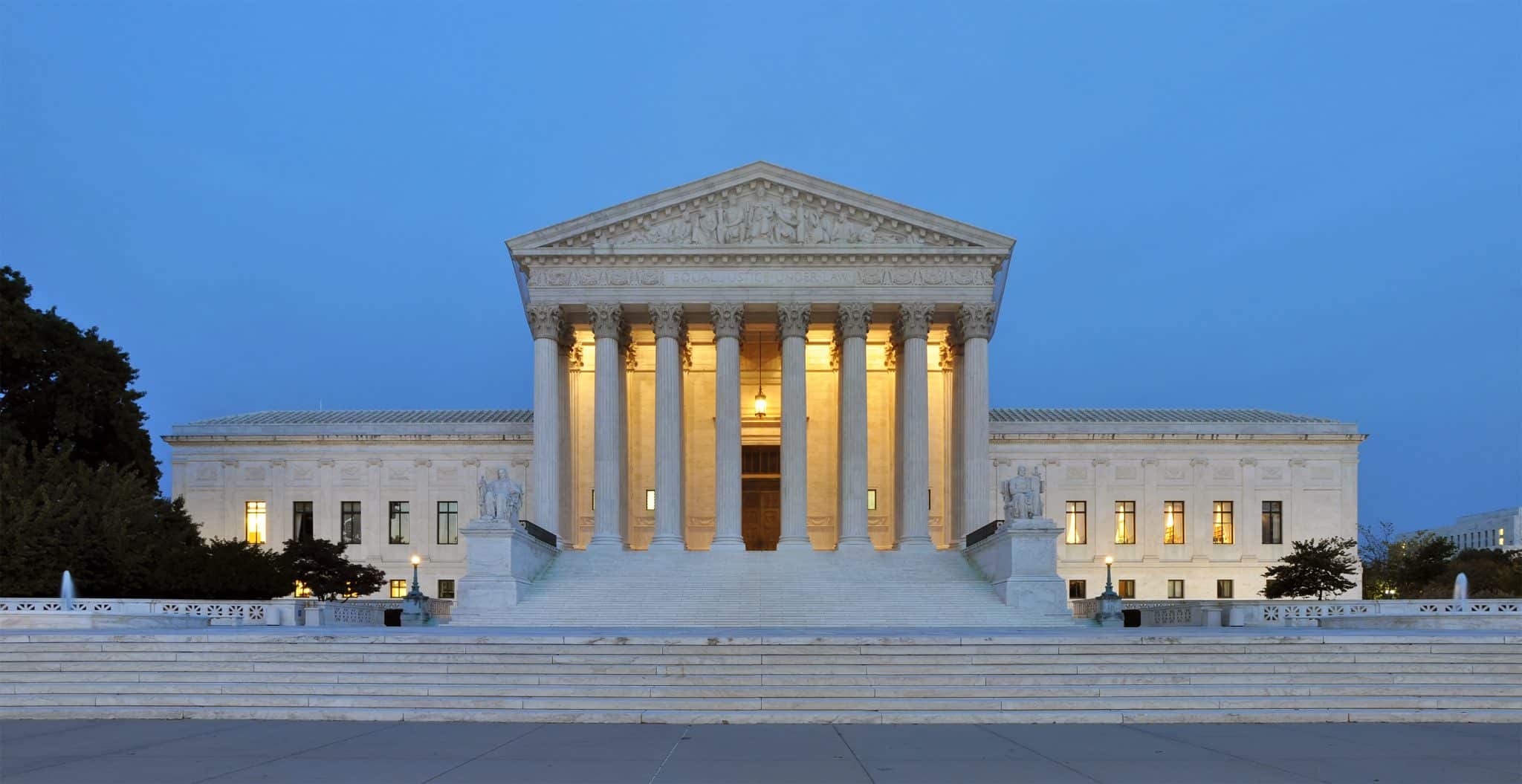
Towards the end of February, the Supreme Court struck down tariffs enacted by the Trump administration. The vote was 6-3 and generally the justices ruled that Trump exceeded the powers given to him by Congress under a 1977 law providing the President the authority to regulate commerce during national emergencies that are due to foreign threats. What was undecided at the time was what should happen to all of the money paid already due to the tariffs.

The U.S. Customs and Border Protection has told a Court of International Trade judge that it isn’t able to comply with an order to begin refunding the reciprocal tariffs. The CBP said in their response that the estimated amount related to the tariffs is “approximately $166 billion.” According to the filing over 330,000 importers have made over 53 million entries.

The court response, which you can read below, involves the CBP process and when things are go through it, focusing on “liquidation.” “Liquidation” is the finalization of the total tariff amount owed. Senior Judge Richard Eaton had ordered the CBP to liquidate unprocessed entries and reliquidate those that have been processed but not finalized.

The refund that has been ordered focuses on shippers who paid the IEEPA tariffs on imports that have not been finalized via liquidation, a process that can take around 300 days. You can read some thoughts on the complexity of the situation here.

The Trump administration has been sued by hundreds of corporations looking to be refunded for the tariffs that have been paid under the IEEPA.

What also remains unanswered is if consumers will see any relief either in money returned or retail prices going down. Corporations passed along the increased cost of doing business to consumers who saw price increases at the store and some have been hit with tariffs directly when ordering internationally.

Hasbro is Suing the Government Over the IEEPA Tariffs

Hasbro

Hasbro has joined hundreds of companies suing the Federal Government to get refunds for the tariffs paid due to President Trump’s “emergency trade measures.” Those tariffs were deemed illegal by the U.S. Supreme Court towards the end of February.

Hasbro did not disclose how much it has paid in IEEPA tariffs but it is requesting refunds along with interest. There’s more than 2,000 similar cases filed in the U.S. Court of International Trade since April.

In July 2025, Hasbro’s CEO warned that prices could rise due to the tariffs. Then did so in the second half of the year though it didn’t dent sales. Revenue for the company jumped 31% to $1.45 billion beating expectations. Its profit was $201.6 million for the last three months of 2025. The increase in retail prices varied resulting in an additional 10% to 20% to the cost of items.

At the end of February, the Supreme Court struck down the tariffs in a 6-3 vote. An estimated $200 billion has been paid due to them. Tariffs are a tax that is put on goods imported into the country. It could be raw materials or finished products.

In a report it was estimated that 90% or more of the tariff’s cost was paid by US firms and consumers with the average tariff in 2025 going from 2.6% to 13%. Corporations are unlikely to eat all of that cost, so it is then passed along to consumers in the form of paying for the tariffs directly or by increased prices.

In a recent order, it was increased by a little over $5 for me, about 10% of the pre-tax price of the item which was a toy. Retailers have had to raise their prices to consumers with many making statements they would be doing so.

There are numerous lawsuits against the government and Trump administration by corporations to recoup the money paid for tariffs, it’s unknown how this Supreme Court decision will impact that.

It’s also unknown if consumers will see any relief in prices due to this decision. It’s not common for corporations to lower prices once they have been raised, so it’s possible the increase retail prices will remain, especially in a continuing uncertain economic outlook.

GAMA releases a Statement regarding the Supreme Court’s Decision to Strike Down IEEPA Tariffs

GAMA: The Tabletop Game Association (GAMA)

On Friday, the US Supreme Court struck down President Trump‘s tariffs set under the International Emergency Economic Power Act. What this means for all of the tariffs already collected is unknown and the impact on retail prices are also unknown.

The decision was praised by numerous publishers and organizations within the geek and entertainment space. GAMA: The Tabletop Game Association released the below statement yesterday:

GAMA: The Tabletop Game Association applauds today’s decision by the U.S. Supreme Court which struck down the tariffs imposed by President Donald Trump under the International Emergency Economic Powers Act (IEEPA), ruling that he had exceeded his authority in doing so.

Trump promptly announced he would re-impose the tariffs through other methods.

The Supreme Court issued its 6-3 decision in the case of Learning Resources Inc. et al v Trump, which had been consolidated with the case Trump v V.O.S. Solutions. GAMA had filed an amicus brief in the case in support of Learning Solutions and V.O.S., challenging this presidential overreach. GAMA argued that in the IEEPA, Congress had never intended to delegate such sweeping economic powers to the executive branch. 

In his majority ruling, Chief Justice John G. Roberts Jr. agreed, writing: “The president asserts the extraordinary power to unilaterally impose tariffs of unlimited amount, duration, and scope. In light of the breadth, history, and constitutional context of that asserted authority, he must identify clear congressional authorization to exercise it.”

GAMA is interested in hearing from any members who would like to share their stories of how the illegal IEEPA tariffs impacted their business, so we can maintain a record of how the tariffs have hurt our industry. Click here to contact the GAMA Communications Team if you are interested. Please let us know if you are also willing to have your story shared on our social channels and in advocacy communications, which will help us put faces and names to the harm these tariffs have done and help amplify the message that Congress needs to take action against future efforts to impose similar tariffs. 

It may be possible for companies that paid tariffs to apply for refunds. U.S. Treasury Secretary Scott Bessent acknowledged last September on NBC’s “Meet the Press” that the agency would issue refunds if ordered to do so by the Supreme Court. GAMA is researching how businesses in our industry that paid tariffs could apply for refunds and will share information as we have it. 

GAMA’s support for Learning Resources and V.O.S. Solutions stems from a shared commitment to constitutional governance and economic stability. The unchecked use of IEEPA to alter tariffs threatened not only businesses but the very principle of separation of powers enshrined in Article I of the U.S. Constitution. 

GAMA continues to monitor the Trump administration’s actions regarding tariffs.

The Supreme Court Strikes Down Trump’s Tariffs

The economic situation has been tenuous at best and during President Trump’s second term, even more frightful with his focus on a tariff war with most of the world. The Supreme Court on Friday struck down those tariffs which Trump enacted through executive order. The vote was 6-3 and generally the justices ruled that Trump exceeded the powers given to him by Congress under a 1977 law providing the President the authority to regulate commerce during national emergencies that are due to foreign threats.

What is still undecided is what should happen to all of the money paid as tariffs already, an estimated $200 billion.

Tariffs are a tax that is put on goods imported into the country. It could be raw materials or finished products.

In a report it was estimated that 90% or more of the tariff’s cost was paid by US firms and consumers with the average tariff in 2025 going from 2.6% to 13%. Corporations are unlikely to eat all of that cost, so it is then passed along to consumers in the form of paying for the tariffs directly or by increased prices.

In a recent order, it was increased by a little over $5 for me, about 10% of the pre-tax price of the item which was a toy. Retailers have had to raise their prices to consumers with many making statements they would be doing so.

There are numerous lawsuits against the government and Trump administration by corporations to recoup the money paid for tariffs, it’s unknown how this Supreme Court decision will impact that.

It’s also unknown if consumers will see any relief in prices due to this decision. It’s not common for corporations to lower prices once they have been raised, so it’s possible the increase retail prices will remain, especially in a continuing uncertain economic outlook.

Funko announces Concerns and Uncertainty if It’ll Survive Another Year

Funko

Funko, once the 800lb gorilla in collectibles has painted a bleak picture and future after a recent filing with the Securities and Exchange Commission.

During the second quarter of 2025, Funko dropped $41 million from the previous quarter. It’s loss was just under $1 million in the third quarter but in the same period in 2024 the company saw an $8.9 million profit. The year over year revenue has dropped from $292.8 million to $250.9 million year-over-year. The losses are coming from the United State market, where the company once had its strongest customer base. It’s a stunning change in just one year.

In its SEC filing, the company said there was substantial doubt about its ability to continue for the next twelve months. The company has negotiated terms on multiple outstanding loans after earlier losses.

There is substantial doubt about our ability to continue as a going concern due to pressure on our financial covenants arising from the current tariff retail environment and potentially insufficient working capital and potential non-compliance with other covenants as defined within the Fourth Amendment, as defined herein.

In connection with preparing the unaudited consolidated financial statements for the three months ended September 30, 2025, management evaluated the Company’s future liquidity, forecasts of the expected effects of announced tariffs and other facts and conditions, and ability to comply with the covenants under the Credit Agreement, and determined that there is substantial doubt about the Company’s ability to continue as a going concern for the next twelve months from the date of issuance of these financial statements.

Multiple factors have been given as to the company’s troubles. The retail environment including a slowing of restocking, lower inventory levels, and orders being canceled. Tariffs have also impacted things and reduced net sales and margins. Tariffs have also cooled spending by consumers. Tariffs are mentioned 28 times in one of the filings consisting of 131 pages.

We are subject to risks related to the retail industry including, but not limited to, potential negative impacts of global and regional economic downturns, changes in retail practices, and our ability to maintain and further develop relationships with our retail customers and distributors.

The effects of recently implemented tariffs, and the potential imposition of modified or additional tariffs or export controls by other countries, continue to have an adverse effect on future net sales, margins and profitability. The Company anticipates continued supply chain challenges, cost volatility, and consumer and economic uncertainty due to these rapid changes in global trade policies.

Current macroeconomic factors remain very dynamic, including greater political uncertainty, new or increasing tariffs and general uncertainty over U.S. trade and tariff policies, unrest or instability in the United States, Central and Eastern Europe (including the ongoing Russia-Ukraine War), the Middle East (including the Israel–Hamas War), and certain Southeast Asia regions as well as financial instability, rising interest rates and heightened inflation that could reduce our net sales or have impacts to our gross margin (as defined below), net income and cash flows.

There’s also speculation the company has flooded the market with too many releases from too many properties. There’s only so much consumers can buy, stores can stock, and collectors can display.

Joe Simon, the company’s new CEO, did have a positive tone noting an improved third quarter with sales meeting internal expectations and gross margin exceeding projections. Simon highlighted the company’s Bitty Pop! line as well as the new strategy on rapid product launches to take advantage of trending pop culture moments. They are also focusing on growing markets not impacted by tariffs.

We are reviewing strategic alternatives. There can be no assurance that we will be successful in identifying or completing any strategic alternative, that any such strategic alternative will result in additional value for our stockholders or that the process will not have an adverse impact on our business.

Funko is exploring multiple options including the sale of the company as well as other changes to address its financial challenges.

  • Monitor the pricing strategy and minimize increasing costs.
  • Gain a positive cash flow through cost reductions and increasing the sales of higher margin products.
  • Raise additional cash through the issuance of equity or debt or assessing potential amendments.

The collapse of Funko might have a ripple effect as Gamestop has seen growth in its collectible vertical including Funko as well as numerous pop-culture stores which have relied on the product line. Gamestop saw a  63% year-over-year increase in Q2 2025 collectible sales.

Warlord Games Offers Credit to Ease US Tariff Increases

Warlord Games

President Donald Trump’s increase on tariffs and the removal of the “De Minimis” tariff exception are impacting consumers forcing companies to increase prices to pass along the increased cost of getting goods to the United States. The “De Minimis” exception meant that goods under a certain amount were not subject to tariffs at all. That of course is impacting the game industry where numerous companies are located outside of the United States and a lot of the manufacturing occurs in other countries as well.

Warlord Games, a British game publisher, has announced a plan to ease the burden on customers due to the “De Minimis” tariff removal and increased cost to consumers in the US. The company is moving to a “Delivered Duty Paid” service for US customers. That means tariffs will be calculated and charged at checkout which will help ease delivery times through customs.

Warlord Games has announced it is crediting accounts the value of the tariffs charged on Warlord Games products once the order has shipped.

An example they provided:

  • Order total: $120
  • Tariff: $12
  • Total with Tariff: $132
  • Credit in account to redeem once shipped: $12

While it’s never ideal to raise prices and this tax on consumers will increase costs for those in the US, it’s at least one way to ease the impact.

For those who had pre-ordered products that wouldn’t ship until after August 29, Warlord will send them Delivered Duty Paid at no addition cost. Warlord is eating the cost in those cases and customers won’t need to do anything more.

Super7 Makes a Statement about Layoffs and the Negative Impact of Trump’s Tariff Tax

Super7 logo

President Donald Trump’s tariff tax is impacting numerous companies forcing them to make tough decisions. The increased costs have cancelled projects or delayed delivery of others, increased prices, and forced some to lay off staff. Super7, a company focused on toys and collectibles, are one who have been negatively impacted.

The company sent out a very honest and frank email to their subscribers yesterday titled “To Our Valued Super7 Supporters” laying out their new reality. On April 24th the company instituted an 8% surcharge to all non-apparel items ordered from them due to the tariffs.

You can read it in its entirety below and it’s well worth it.

To Our Valued Super7 Supporters,

Last week was really hard.

As you may have heard, we had to make the difficult decision to let team members go. These are people who were doing the best work in the industry, none of whom deserved to be let go. I want to be clear that this reduction in staff is a direct result of the tariffs applied to our industry. The preceding six months before the tariff announcement had been Super7’s best since the inception of the company nearly 24 years ago. Then the landscape changed overnight.

Make no mistake, the tariff is a tax on American companies and the American consumer. The people who lost their jobs last week were Americans across 16 different states. The 145% tariff effectively shut our business down, bringing new inventory leaving the factory to zero, compounded by massive tariffs on pre-order product already on the water headed to consumers. This week’s change in tariff to 30%, is still a massive increase to this industry that requires significant change to work within.

So what does that mean for Super7? Well, it means we need to be smaller and focus on the core of our business while being very specific about what we make. This allows Super7 to be safe for the future and continue to deliver the awesome product we are known for.

We still believe in the joy that making toys brings to all of us. We believe that the future will be better, and we look forward to continuing to deliver on that joy for the future. We hope to see you there with us.

-Brian Flynn

Tariffs Between US and China Decreased for 90 Days While Negotiations Continue

Continuing to show that Trump’s “Art of the Deal” was all bullshit, the United States and China agreed to slash their tariffs while attempting to resolve differences during further negotiations.

The deal lasts for 90 days and the US will drop its 145% Trump tax to 30% while China will lower its tariff rate from 125% to 10%. So, in the end, consumers will still pay more than when all of this stupidity began. The US’s 30% tariff against China is a mix of the 10% tariff it has on most of the world and a 20% tariff to pressure China to do something about fentanyl entering the US.

The market improved in the news and but it might be too little and too late as ports around the country are seeing massive declines with some experiencing a 60% decrease in sailing from China and many seeing drops of over 40% in traffic.

The 90 day decrease might be good news for the toy and game industries which have been gravely impacted by the increased tariffs. Companies have already shut down, Kickstarters cancelled, and shipping has been delayed. With the 90 day window, we might see a rush to get product to the US shores, but it takes time to book ships and for those ships to travel. It may not be enough time, especially if product still needs to be printed/produced. Prices/additional charges have also been implemented by some stores to make up for the tariffs and it’s unknown if that might be adjusted due to the news as well.

As a whole, while the White House might be crowing about this, the US gains very little except increased costs that didn’t exist before and continued volatility in costs and consumer pricing.

We’ll see how/if this impacts the industry.

Trump Threatens 100% Tariff on Movies Not Made in the US

Once again, President Trump has made a economic decision with little thought at all. The President announced that he would penalize films made in foreign countries with 100% tariffs, which will of course be paid by consumers and not the studios or theaters. He authorized the commerce department to start the process to impose the tariffs. The reason for decision is due to the American film industry dying “a very fast death.” The industry hasn’t fully recovered since COVID-19 closed theaters and their eventual reopening.

2024 saw the domestic box office gross $8.6 billion, down 3.8% from the previous year’s $8.9 billion. In 2019, the industry saw $11.4 billion at the domestic box office, down from the high in 2018 of $11.9 billion. 2020, the year COVID hit, things dipped to $2.1 billion and then over doubled in 2021, increased 64.4% in 2022 and an increase in 2023 which was $8.9 billion.

Worldwide, 2024 grossed $24.9 billion, down from 2023’s $28.2 billion. 2019 saw a high of $39.1 billion before a drop to $8.6 billion in 2020 and then over doubling in 2021 to $19.5 billion with a steady increase the next two years.

During COVID, movie studios focused on streaming, releasing new films on digital platforms, which clearly changed habits that haven’t reverted back to pre-COVID viewing.

After his announcement Sunday, Trump softened his stance saying he’d meet with “the industry” to “make sure they’re happy.”

It’s unclear what would see a tariff.

  • Would a movie from a US studio filmed overseas be tariffed?
  • Would a movie from a US studio that films part of the movie overseas be tariffed?
  • Would movies from studios outside the US be tariffed? What if they were filmed in the US?
  • How do films on streaming services get tariffed?
  • Is it determined by how a movie is financed?
  • Would tickets now be different prices based on where a movie was made?

As usual, an announcement is made with little detail, thought, or logic.

« Older Entries