
The Point of Heroes in a Dark World
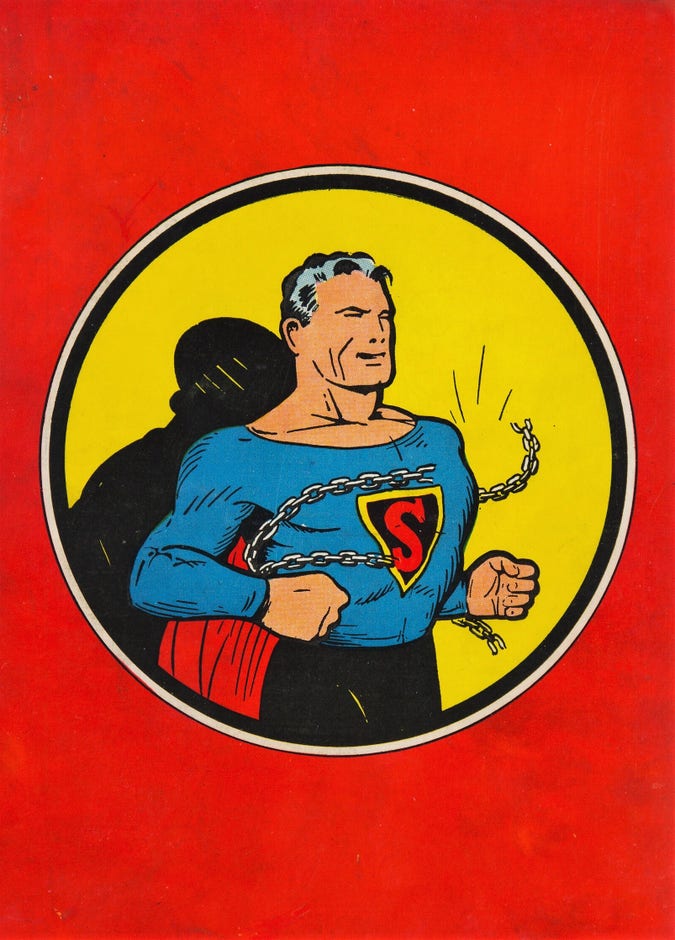
In the wake of the 2024 election, comics writer Mark Waid posted the following on BlueSky:
…I don’t believe in the basic goodness of my fellow Americans anymore, and without this, I cannot write superheroes. There’s no point.
Mark Waid is a writer for whom I have the greatest respect. His work on The Flash and The Fantastic Four with the late Mike Wieringo and others are essential reading. His despair is understandable but I hope that he can muster up whatever magic he needs to do the work in the wake of the horrific choice made by the majority of our countrymen. His stories do matter to a lot of people, never more so than now as the entire world begins a long, dark journey whose end is uncertain. Hope will be hard to find and we will often be unable to see the stars through the clouds.
Superheroes are not now and have never been figures of social realist fiction. Even Alan Moore and Dave Gibbons’ Watchmen revels in the absurdity of the genre. Perhaps the most unrealistic thread at the heart of the concept is the notion that a person gifted with an amazing power or great wealth will use it for the benefit of others and not themselves.
Human beings are deeply flawed creatures. We must constantly choose between good and evil while trying to thrive (or at least survive) in a dangerous world. Our humanity is the sum total of the choices we make throughout our lives and can be squandered and regained many times. There are certainly points of no return, but to view the voting booths of Pennsylvania and Georgia as the equivalent of the gas chambers of Auschwitz or the killing fields of Cambodia is not helpful at this point.
If good and evil exist in reality as opposite ends of a spectrum painted in shades of gray, then the superhero must exist in the brightest primary colors we can get onto paper or the digital screen. They are not a reflection of the facts of life but a refutation of it. They are visions of power conjured up by the maligned and the marginalized (Jews, immigrants, people of color, LGBTQIA+ and women) at a time of turbulence for the entire world that was almost as great as the one we face today. The fact that we can even conceive of an alien from another planet who came only to do good, proves that we have at least the seed of goodness beneath all of the excrement on which the foul weeds of Hitler, Stalin, and their modern descendants sprout. To lose that would be to abandon the best part of ourselves, to feed the human to the beast.
I don’t really believe in God, certainly not the kind, benevolent, one of my Catholic upbringing. If he does exist though, the best he was able to create was humanity: flawed, broken and bound to the Earth. We created a champion of truth and justice who is as indestructible as he is incorruptible and who can show us the stars as he takes his dog for a walk on the moon.
If you ask me, when it comes to creators, we’ve done God one better. He made us and we made Superman. Superman does good and doing so inspires us to do better. That’s the point.

 I first met Malachi Bailey nearly sixteen years ago through the magic of the internet, and he quickly became one of my closest friends; we’d sit up through the night talking about comics, life, the mysteries of the universe and, more often than not, writing fan fiction together. Although we did lose touch for almost a decade, through the magic of the internet our paths crossed again. I tell you this in the interest of full disclosure because Malachi Bailey has a way with words that will leave your jaw firmly on the floor. I’m not saying this because he’s an old friend, but because he’s a fantastic writer who has just published his debut novel Her.
 MB: I am afraid you guys are stuck with me. But yes if you love sci-fi and fantasy, if you are into action and self-empowerment, then HER is your story! What is it about? Imagine an immortal woman with so much to learn, has reincarnated for a millennia. A new face, new skillset, and sometimes a special power. But when she Awakens in her new life, her memory is scrambled. The thing is her memory holds incredible power. She must remember who she is because there is an ancient evil that is tracking her through time…
 GP: That’s awesome. You self-published the novel initially; what made you decide to take that path?
 GP: After the relaunch, what’s next for Mal Bailey and Mother One?
 This fall, the New-York Historical Society will share the untold history of comic books, a cultural phenomenon born in 1930s New York City that has since taken the world by storm. On view
  Upon entering the New-York Historical Society’s Central Park West entrance, visitors will be greeted by an original working Batmobile (1966), one of three cars created for the 1966-68 Batman television series. The first gallery will trace each character’s origins within the context of their creators and period events. A range of first-issue comic books will be displayed, including Superman’s Action Comics No. 1 (June 1938) and Batman No. 1 (Spring 1940). During World War II, many superhero stories channeled American concerns about the conflict and several of their creators also enlisted. Wartime issues of Captain America (1942) and an original drawing (ca. 2000) by Joe Simon—who served in the U.S. Coast Guard— will present Captain America as the ultimate patriotic warrior. Superman was also enlisted and lent his support in a range of U.S. Army and Navy training materials (ca. 1942-43). A drawing of Wonder Woman in an early version of her patriotic costume by H.G. Peter (ca. 1941) will be shown alongside a “Wonder Woman for President” issue (No. 7, Winter 1943).
