Tag Archives: reed richards

Fantastic Flops: The Fantastic Four: First Steps has a Decent Story and Charming Production Design

Fantastic Four: First Steps

Even though the Fantastic Four comics kickstarted the creation of the Marvel Universe, their film adaptations have been critically maligned. In the “Fantastic Flops” series, I’m going back and re-evaluating the four previous Fantastic Four films and seeing if they’re a “Flop”, “Bop”, or “In-Between”.

To get the obvious out of the way, after 31 years of struggles and not-so-close calls, we finally have a good live action Fantastic Four film in the clunkily named The Fantastic Four: First Steps. (Franklin Richards is incredibly crucial to this film so I get why they did it though.) Veteran television director Matt Shakman (Wandavision, It’s Always Sunny in Philadelphia) and writers Josh Friedman, Eric Pearson, Jeff Kaplan, Ian Springer, and Kat Wood turn in an engaging, retro-futurist standalone yarn that honors the spirit of those early Jack Kirby and Stan Lee comics while adding psychological and ethical dilemmas that come from some of the more contemporary runs like Jonathan Hickman’s work in the early 2010s.

The best thing that Fantastic Four: First Steps has going for it is the production design. Kasra Farahani crafts a world where in the 1960s Marvel Comics only published Fantastic Four comics for the first four years of its existence instead of immediately expanding its universe and bringing back old superheroes like Captain America. Shakman uses breezy news reel montages to establish a utopian world that would make New Deal Democrats, flower children, and sci-fi fanzine readers all smile in perfect harmony. There is a sheen, but also a lived-in feel to the technology used by the Fantastic Four on their various missions as well as the Baxter Building and downtown Manhattan. It’s a shiny, happy world, but there are some rough edges like when Ben Grimm (Ebon Moss-Bachrach) goes to his old neighborhood in Yancy Street to get black and white cookies and perform feats of strength for kids at the local Hebrew school. (The Thing’s Jewish heritage is very much intact in this film.) The attention paid to the brave old/new world helps keeps the stakes real when a regal, yet slightly melancholy Silver Surfer (Julia Garner) heralds the coming of Galactus (Ralph Ineson) and the end of this universe. As a cherry on top, Michael Giacchino’s score perfectly blends soaring heroism and sci-fi exploration.

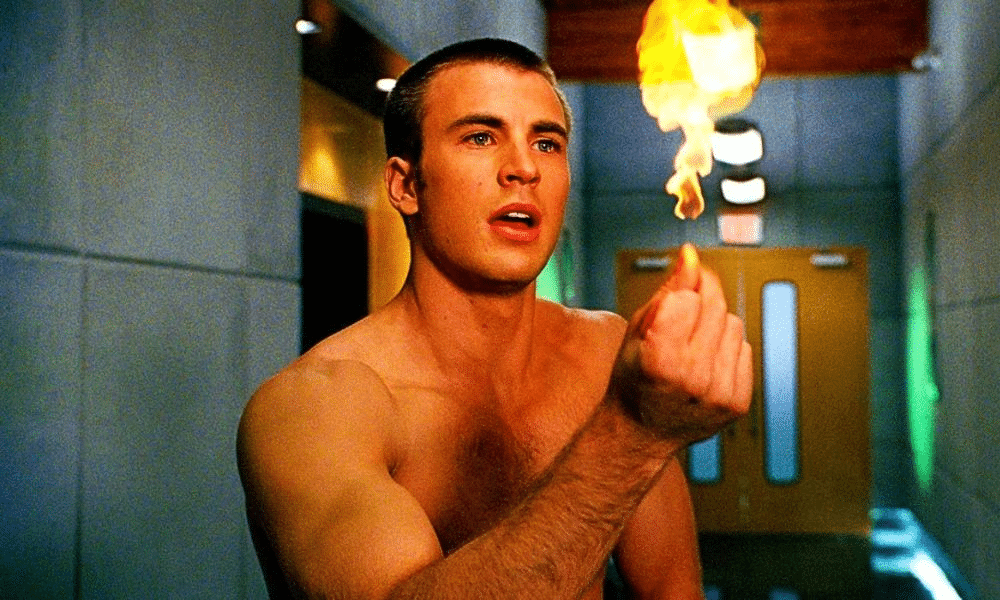
Let’s continue on to the casting. I didn’t love Joseph Quinn as Human Torch, and he doesn’t have the charisma that Chris Evans and Michael B. Jordan had in previous iterations of the character. Although charming in other roles, Pedro Pascal doesn’t quite pull off the universe’s smartest man, Reed Richards in the science speak sequences. This is really a difficult role to cast. I did find him endearing as a clueless, new dad and trying to override the part of his brain that treats everything like a problem to solve. Vanessa Kirby as Invisible Woman carries the film. She bring heart, humanity, diplomacy, and a mother’s love that turns a moment that could have been a deus ex machina, close the portal, and end the movie type sequence into something emotionally resonant. There’s a big “having it all”, second wave of feminism energy into the way that she’s written as Invisible Woman that fits the period as she is a mother, de facto team leader, and quite the diplomat as well. There’s a sequence where she smooths over a moral dilemma that should be required viewing in public relations courses.

So, if it only got the casting about half-right, then why does Fantastic Four: First Steps succeed where its predecessors failed? It is because Shakman and the writing team understands the Fantastic Four are at the best when they’re solving problems and not just punching bad guys. I love the impossible dilemma that is set for the team: choosing between giving Reed and Sue’s firstborn child to Galactus or giving the Earth to the Devourer. The preparation of Galactus’ invasion is actually one of the most underrated and engaging parts of the film. It’s entertaining watching Reed test all kinds of science and equations while Sue markets them to folks around the world. This is while Johnny Storm becomes a linguistics expert because he has a little crush on the Silver Surfer, and Ben Grimm has a crush of his own on Rachel (An always spectacular Natasha Lyonne) and connects with his neighborhood before the end of days. And when the initial plan fails, it’s fun to watch the team move and adjust on the fly. They’re like a well-oiled machine that’s been doing this for four years, helped usher in a utopian society, and of course, their next challenge is fighting God.

Another element that makes Fantastic Four: First Steps a successful film is the aura that Matt Shakman, the visual effects team, Garner, and Ineson give to the Silver Surfer and Galactus. As revealed in the trailers, the movie uses a comics-accurate design for Galactus, and I love how Ralph Ineson in both voice and motion capture plays the antagonist like a universal constant and force of nature, not a malevolent being. He really wishes he could stop doing this, but someone has to keep the scales balanced in the universe. It’s a similar situation with the tragic Shalla-Bal who acts as Galactus’ herald because she wants to keep her planet and children safe. I love the parallels that Shakman, the writers, Vanessa Kirby, and Julia Garner draw between the Silver Surfer and Invisible Woman, and the flashback scene is pure tragic poetry. It’s nice to see these iconic characters finally get their due in live action, and the writers wisely leave a door open for them to return. Also, hell yeah, the power cosmic!

Despite some less than stellar casting, jokes that unfortunately don’t land, and a return sequence from Galactus’ ship to Earth that drags on and on, The Fantastic Four: First Steps is an entertaining retro sci-fi blockbuster with clever world-building and memorable production design plus a multi-faceted lead performance from Vanessa Kirby as Susan Storm-Richards that makes up for the way the character was poorly written and portrayed in previous films. The battle against Galactus is fittingly epic, and it makes you want to pore over Jack Kirby splash pages or re-read those Jonathan Hickman trade paperbacks. Also, in a similar vein to its movie-mates Superman and Thunderbolts, it’s nice to have superhero films that tell a complete story and have decent character arcs instead of just trying to set up the next installment.

(P.S. I need a Disney Plus animated series in the style of the second post credits scene!)

Overall: 7.0
Verdict: Bop

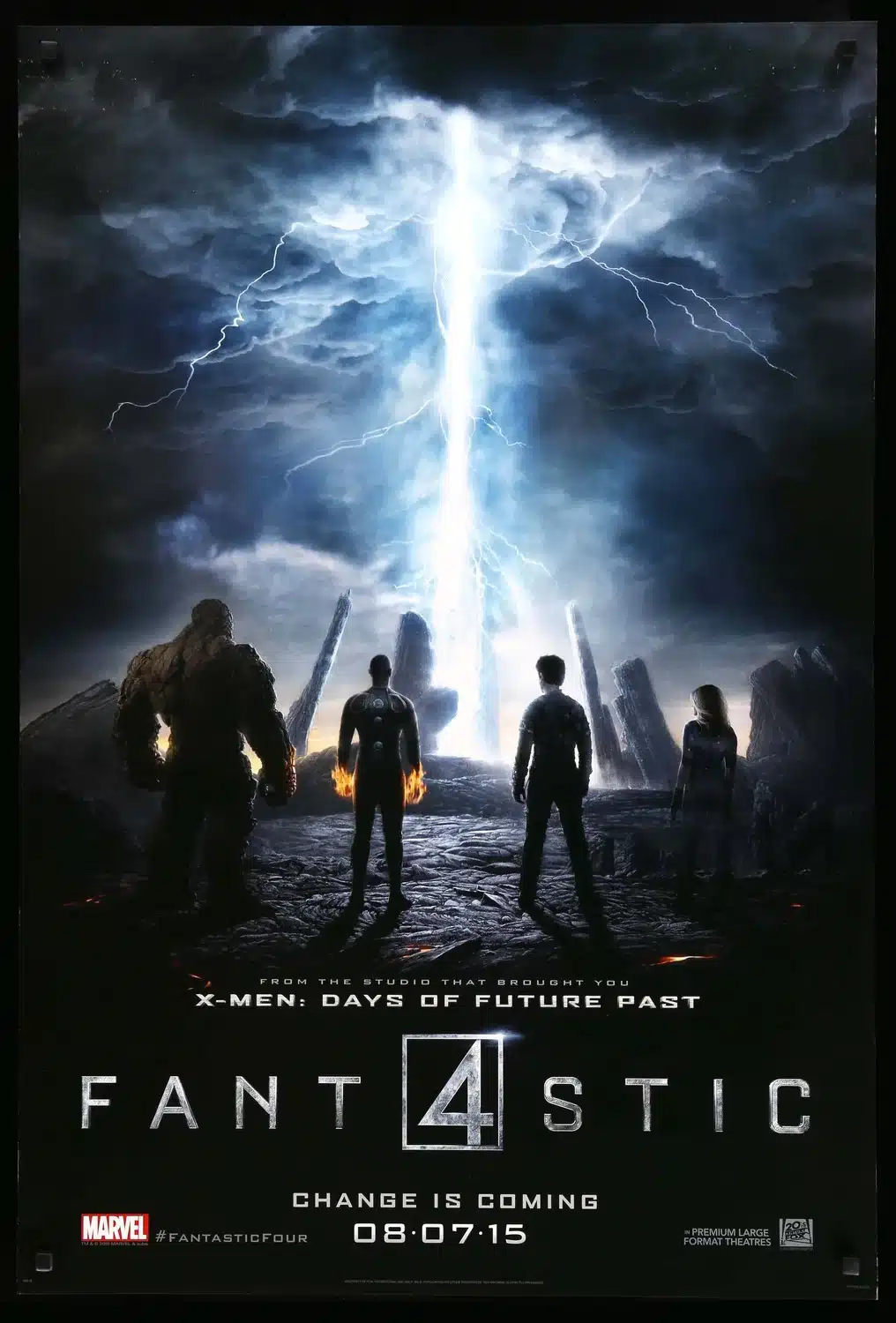
Fantastic Flops: Fantastic Four (2015) is a chemistry-averse attempt at a dark Elseworlds take on Marvel’s First Family

Even though the Fantastic Four comics kickstarted the creation of the Marvel Universe, their film adaptations have been critically maligned. In the “Fantastic Flops” series, I’m going back and re-evaluating the four previous Fantastic Four films and seeing if they’re a “Flop”, “Bop”, or “In-Between”.

Fantastic Four (2015)

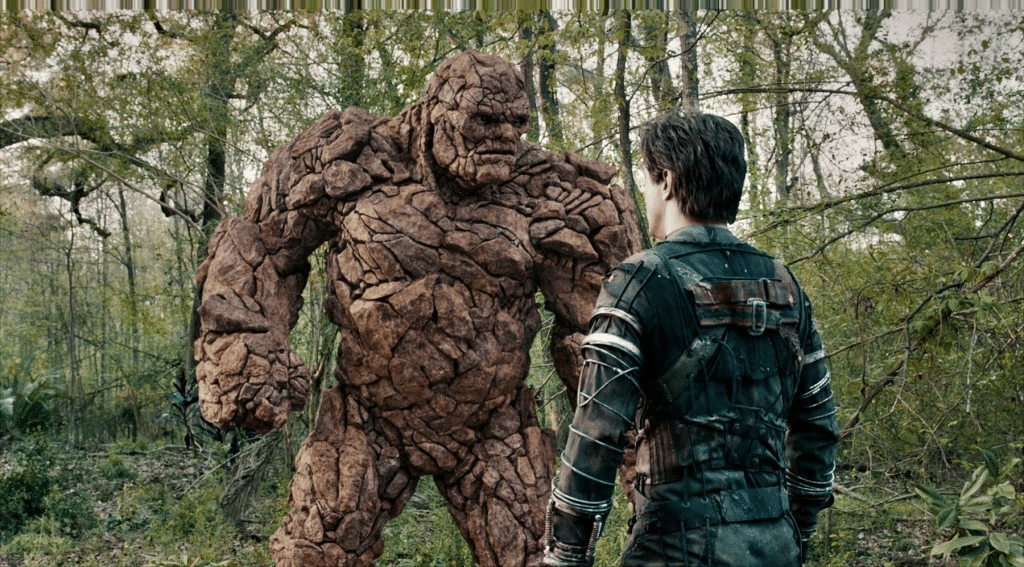
Thinking back to the mid-2010s, it seemed like every studio wanted to do a dark superhero yarn. You had the neck snapping, hero vs hero, nihilist Pa Kent antics of Man of Steel and Batman v. Superman: Dawn of Justice. More successfully, Fox decided go dystopian with X-Men: Days of Future Past before atoning for X-Men: The Last Stand and X-Men Origins: Wolverine with a hopeful ending that was immediately walked back in the final two X-Men films. Even the quippy world of Marvel went to some literal or tonally dark places with Thor: The Dark World, the conspiracy thriller-inspired Captain America: The Winter Soldier, and the collateral damage filled Avengers: Age of Ultron. Instead of providing counter-programming, Fantastic Four goes for a darker, more trauma-filled take on Marvel’s First Family. Even though I enjoyed his directorial debut Chronicle, director Josh Trank lacks even the visual style of Zack Snyder to make the film look memorable even if the tone is dour. However, what really sinks this film is the lack of spark and familial connection between the Fantastic Four even though Reg E. Cathey’s Dr. Franklin Storm does give a few speeches on the topic, and there’s a seemingly tacked on scene on the end to give their “team” a name.

Some tone deaf moments (“Clobbering time” being used by Ben Grimm’s abusive older brother.) and the complete lack of chemistry between Reed Richards (Miles Teller) and Sue Storm (Kate Mara) aside, I honestly don’t mind the beginning of Fantastic Four before they go into the other dimension. I love the scene where Dr. Franklin Storm (A thoughtful performance from the late Cathey) and Sue pluck Reed from the school science fair and let him unleash his passion for science and other dimensions at the Baxter Institute. It’s hilarious that working on an interdimensional transport is Johnny Storm’s (Michael B. Jordan) punishment for illegally street racing. Also, the motivation for their mission is sound as Harvey Allen (Tim Blake Nelson) wants to send trained NASA astronauts to another dimension instead of young science nerds. (He does have a point, but apparently, this Reed Richards is into wanting fortune and fame.)

However, the film really goes downhill after we get some genuinely interesting, if a little over-CGIed body horror and transformation takes on the Fantastic Four and Dr. Doom. The Storm siblings are lab rats, Ben Grimm (An unconvincing Jamie Bell) ends up being a super soldier for the US government, and Reed Richards is a fugitive attempting to build an interdimensional teleporter in a cave with a box of scraps. Fantastic Four‘s narrative momentum fizzles and springs back to life with the re-emergence of Von Doom, who has survived his green energy/laundry detergent bath and is extremely pissed off and nihilistic. He also has a death touch and uses it to take out characters played by beloved character actors, Reg E. Cathey and Nelson. (The ending is so rushed that the Storm siblings and Reed don’t even mourn for Dr. Storm before moving into their new space. Earlier, in the film, he had a bit of anti-authority streak, but that has turned into a desire to destroy our Earth and reign over the utter barrenness that is Planet Zero. This involves the cliched glowing portal in the sky, one of the most anti-climactic final superhero battles ever, and Reed Richards playing ring around the rosie with Dr. Doom before Ben Grimm punches him while repeating his abusive brother’s catch phrase.

Fantastic Four (2015)

Other than laughable fight choreography and special effects, the final fight scene in Fantastic Four doesn’t land because it’s Reed, Sue, Ben, and Johnny’s first time working together as a team because they’ve been fragmented throughout the entire film. Logically, Dr. Doom would kick their lackluster chemistry having butts and then portal off to run Latveria or whatever, and the team would come back stronger in the sequel. However, the entire fate of the world is on the line so, of course, they have to win with Trank adding a sliver of unearned hope at the end.

I have to give slight kudos to Josh Trank and writers Jeremy Slater and Simon Kinberg for attempting a different tone than the previous two Fantastic Four films. They draw heavily on the Mark Millar and Brian Michael Bendis Ultimate Fantastic Four, and a lot of the way the government treats folks with superpowers reminds me of the Ultimate Universe trying to find the latest super soldier and fight foreign wars for the United States. Like Chronicle, I think Trank was going for real world plus superhero vibes, but the Fantastic Four isn’t the property you do that with. Planet Zero could have been a Cronenberg-ian take on the “Negative Zone”, but it’s like Mordor in the Lord of the Rings if they got rid of the Orcs, giant Spiders, cool fortresses, and giant Eye and replaced it with the Ooze from Teenage Mutant Ninja Turtles. Characters talk about Planet Zero being this place that could change the fortune of the human race, but the visuals don’t live up to it. Also, the lack of connection between Grimm, Richards, Johnny Storm, and Victor Von Doom accentuates the emptiness of the landscape even more. (It’s so weird to me that Sue isn’t on that first mission, but you have to four sci-fi coffins on your teleporter machine in a Fantastic Four film.)

Fantastic Four (2015) tries to be a dark, Elseworlds-y take on Marvel’s first superheroes, but is crippled by a snooze of a second act, a stinker of a third act, and characters that feel more like co-workers whose shifts occasionally crossover rather than found family squandering the talents for four great young actors in Teller, Jordan, Mara, and Bell. (Casting a Brit as Ben Grimm is a misstep though.) I can definitely see why Stan Lee didn’t have a cameo in this as Trank and cinematographer Matthew Jensen drain the color and wonder out of one of his finest co-creations.

So, it sadly looked like all the previous Fantastic Four film adaptations were flops even though I was very close to ranking the 1994 one as “Mid”. Here is my ranking of all the Fantastic Four films so far, and I’ll be back next week with a review of Fantastic Four: First Steps

  1. The Fantastic Four (1994)
  2. Fantastic Four (2005)
  3. Fantastic Four: Rise of the Silver Surfer (2007)
  4. Fantastic Four (2015)

Overall Verdict: Flop

Fantastic Flops: Fantastic Four: Rise of the Silver Surfer is an undercooked mockery of some epic source material

Fantastic Four: Rise of the Silver Surfer

Even though the Fantastic Four comics kickstarted the creation of the Marvel Universe, their film adaptations have been critically maligned. In the “Fantastic Flops” series, I’m going back and re-evaluating the four previous Fantastic Four films and seeing if they’re a “Flop”, “Bop”, or “In-Between”.

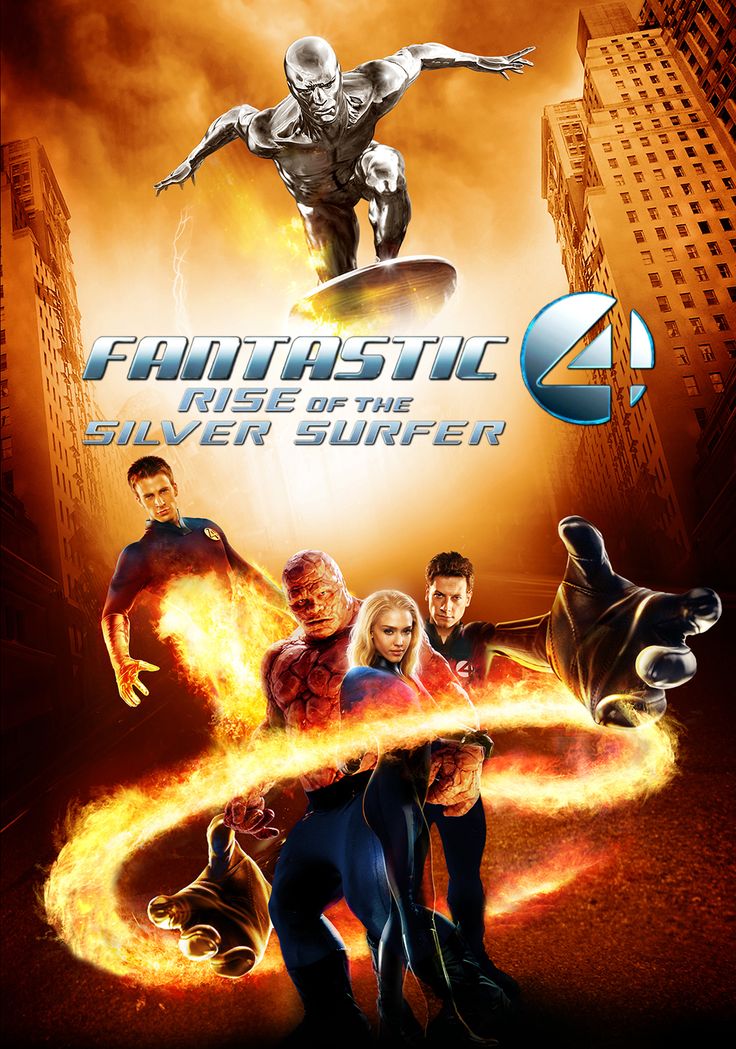
Fantastic Four (2005) did okay at the box office so 20th Century Fox decided to run it back with director Tim Story, co-writer Mark Frost, and the whole cast from the first film, including Julian McMahon as Dr. Doom and Kerry Washington as Alicia Masters. Frost is joined by Simpsons and My Super Ex-Girlfriend writer Don Payne and John Turman, who worked on Ang Lee’s Hulk. In the second and final film in this franchise, they attempt to adapt the iconic Stan Lee and Jack Kirby stories “The Wedding of Sue and Reed” and “The Galactus Trilogy” while also being influenced by the more recently published Ultimate Galactus Trilogy by Warren Ellis and various artists. This latter comic is why Galactus is a mute, amorphous cloud and not the godlike being he’s depicted as in the 616 Marvel Universe. Throw in a subplot where Johnny Storm (Chris Evans) becomes the Super-Skrull plus an appearance of future Herald of Galactus/Nova Frankie Raye (An unamused Beau Garrett), and it seems like Fantastic Four: Rise of the Silver Surfer took some big swings across the board, especially for a movie with a 90 minute run time. However, it’s all strikeouts except for a few funny moments, a cool design for the Silver Surfer (Motion capture by Doug Jones ; voice by Laurence Fishburne), and Ioan Gruffudd finding his backbone in a badass monologue directed at General Hager (Andre Braugher in a thankless role) and taken almost word for word from Ellis’ Ultimate Extinction where Mr. Fantastic uses it to call out Nick Fury.

The initial setup of Fantastic Four: Rise of the Silver Surfer does have some merit. Reed Richards and Sue Storm (Jessica Alba) want to get married, but the world is about to end so they don’t live happily ever after. However, their relationship is built on “Men are from Mars, women are from Venus” stereotypes as all the “will they, won’t they” tension from the first film is gone, and they’re the default couple in this one. In addition to the weakness of this key romance, the characters’ individual motivations are wonky, and their arcs are non-existent. Of course, Johnny Storm wants to be a rich, famous celebrity, and Reed Richards wants to do science, which consists of him fiddling with things that look like Game Boys and Xbox controllers and staring at screens. (We’re one year away from Iron Man, and science looking cool again.) However, Sue Storm just wants to be a trad wife even though she was a genetics researcher in the previous film and shows skills as a mediator and leader in being the first person on Earth to actually have a conversation with the Silver Surfer. There’s also Ben Grimm (Michael Chiklis) who is in a stable relationship with Alicia, and his monstrous nature is played for laughs. He also doesn’t get a lot to do in the action sequences with Human Torch (Thanks to special molecular shifting abilities given to him by the Silver Surfer.) and Invisible Woman running point in that department, and Silver Surfer handling the final fight by himself. It’s an unfortunate waste of a solid performer.

Fantastic Four: Rise of the Silver Surfer

Another character whose appearance in Fantastic Four: Rise of the Silver Surfer is even more unnecessary is Victor Von Doom. There are a couple, hastily edited sequences of him in the shadows tracking the Silver Surfer and then getting his face healed after being zapped by the Herald of Galactus. And, then, Frost, Payne, and Turman take a page out of fellow Fox superhero sequel X2‘s playbook by having the Fantastic Four team up with their worst enemy against an even bigger threat. However, X2 succeeds because Magneto is a sympathetic figure with a genuine friendship with Professor X. The Fantastic Four films hinted at a friendship/rivalry between Reed Richards and Victor Von Doom, but these are just two guys who hate each other and stare at computer screens while Doom gets in the U.S. military’s good graces enough to test the power cosmic and fly around on a surfboard pointlessly extending the run time of the movie. Unlike both the original and Ultimate Universe Galactus trilogies, there’s no plan for taking on the Destroyer of Worlds other than having the Silver Surfer fly at him and sacrifice himself. (Of course, he gets better because studios have been trying to get a Silver Surfer film greenlit since Terminator 2 figured out the cool silver CGI effects.) They’re bullshitting so much that there’s no time for Richards and/or Von Doom to demonstrate their genius beyond a too little, too late appearance of the Fantasticar. Dr. Doom is mainly a boring distraction in the film, and we know even less about Latveria and his connection to them.

Fantastic Four: The Rise of the Silver Surfer is a moronic reflection of both the family dramedy and cosmic sides of the Fantastic Four comics. Tim Story and the screenwriters go for broad punchlines instead of fun character-driven humor even though there are some fun moments like Mr. Fantastic and the Thing cutting it up on the dance floor, or Raye roasting the Human Torch. On the cosmic side, Silver Surfer and Galactus feel like plot elements in a Roland Emmerich film not Biblical, Kirby Krackle larger than life figures although there’s a fluidity to Jones’ mo-cap performance and a majesty to Fishburne’s voice acting. Also, this might be a side effect of 17 years of the Marvel Cinematic Universe, but its world feels hollow and lacks a sense of wonder. Evans and Chiklis definitely had potential in the roles of Human Torch and the Thing, but were ruined by obvious punchlines and plot developments as well as one dimensional villains. Both Fantastic Four films suffer from Story, the screenwriters, and editors William Hoy and Peter S. Elliott not letting scenes breathe and letting us have a chance to know and love these characters. It really needed more scenes like Johnny Storm and Ben Grimm throwing darts (and accidentally burning the dart board) while talking about how they feel about the end of the world.

However, for all the movie’s failings, that John Ottman theme for the Fantastic Four films is pretty epic though!

Verdict: Flop

Fantastic Flops: Fantastic Four (2005) think it’s too cool for school, but it’s actually kinda lame

Even though the Fantastic Four comics kickstarted the creation of the Marvel Universe, their film adaptations have been critically maligned. In the “Fantastic Flops” series, I’m going back and re-evaluating the four previous Fantastic Four films and seeing if they’re a “Flop”, “Bop”, or “In-Between”.

Fantastic Four

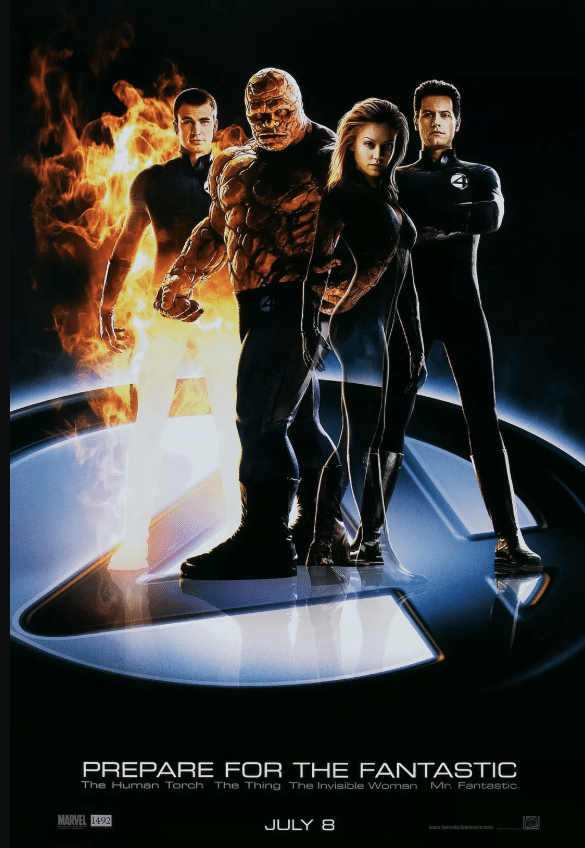
11 years after the first Fantastic Four film was unceremoniously rushed out, 20th Century Fox put out the first proper theatrical film starring Marvel’s first family. Featuring a $100 million budget, a screenplay co-written by Twin Peaks’ Mark Frost and a cast of young, up and coming actors (Chris Evans as Johnny Storm, Jessica Alba as Sue Storm) and steady supporting actors/TV veterans (Ioan Gruffudd as Reed Richards, Michael Chiklis as Ben Grimm, Julian McMahon as Victor Von Doom), Fantastic Four hoped to bring these classic heroes into the new millennium. However, the end product is a film that is ashamed of being a superhero movie and cribs and scenes from the contemporary Sam Raimi Spider-Man and Bryan Singer’s X-Men film while lacking the former’s heart and the latter’s social conscience.

My main takeaway from rewatching the 2005 Fantastic Four film is its derivative nature. Like in Spider-Man, there’s a big superhero action scene on a bridge, but it’s just going through the motions and bringing the team together instead of creating tension in a heroic journey. Explosions, super powers, and special effects just happen willy nilly, and it doesn’t add to the four leads’ character arcs at all. Also, I hate to say this, but McMahon’s Dr. Doom is a defanged, Xerox of a Xerox of Willem Dafoe’s Green Goblin. The scenes where he takes out the board members who denied his IPOs lack the menace and freak factor of similar scenes in Spider-Man. McMahon’s best moments as Von Doom are when he’s looking at his increasingly scarred visage showcasing his vanity, and this is all thrown by the wayside when he puts on the sadly not-so-iconic Dr. Doom mask. Also, Julian McMahon uses a basic, robotic voice for Dr. Doom that makes him seem like a cheesy villain of the week and not the Fantastic Four’s arch-nemesis. Unlike Chiklis, who imbues his performance as The Thing with a gravelly physicality and vocal performance, McMahon loses his edge right before the big superhero/supervillain showdown.

Turning Victor Von Doom into a tech mogul instead of the magic wielding monarch of Latveria really homogenizes the character even though the Doom/Sue Storm/Reed Richards love triangle is a quick, immediate source of conflict. Fantastic Four could be a film about an immigrant trying to assimilate into the United States by being the ultimate capitalist, but Von Doom’s Romani heritage is absent while Latveria only acts as a punchline and a hook for a sequel. Unlike the 1994 Fantastic Four film, the Richards/Von Doom relationship is quickly dashed out through dialogue so director Tim Story can go back to showing off the film’s CGI budget by having Mr. Fantastic turn into a surrealist painting or having lots of “cool” heads up displays as Richards looks for a cure for his and his friends’ conditions. The Von Doom doing corporate espionage on Reed Richards angle definitely plays up his portrayal as a slimy capitalist, but at no time, I felt like Richards was one of the smartest men of the room. Honestly, he reminded me more of early 2000s/married Peter Parker than Mr. Fantastic, but sans quips. Gruffudd doesn’t even get to do a British accent to make the science speak sound better.

Fantastic Four

The main positives of Fantastic Four are Evans and Michael Chiklis’ performances as Johnny Storm and Ben Grimm. Even before he gains the ability to burst into flames, Chris Evan oozes charisma and nails the role of douchebag heartthrob. He objectifies women, but does it with a smile and a sense of humor, especially when he’s pranking Grimm. Director Story and writers Frost and Michael France wisely tap into the early-2000s extreme sports zeitgeist with Storm’s character featuring two genuinely fun snowboarding and BMX sequences to show him struggling with his powers before he gains control while still being a show-off towards the end of the film. The nu metal/G-Unit soundtrack and product placement overload date the film while also making it wistfully nostalgic. But what isn’t dated is Chiklis bringing an everyman charm to the role of the Thing as he nails both the sadness of the role as well as Ben Grimm’s sense of humor. He earns the “It’s clobbering time.” moment, and early scenes show a real friendship between him and Richards until the movie designs to drop it for the chemistry-averse Reed/Sue romance. (Also, Grimm would never trust Von Doom even if he bought him a heaping plate of pancakes.

In Fantastic Four, Tim Story, Mark Frost, and France don’t know whether they want the film to be a dysfunctional family drama, straight up superhero film, unlikely heroes sci-fi film, or a glorification of early 2000s celebrity culture. The film feels like a patchwork of scenes and tones before wrapping up with a decent action sequence and a coda that is an homage to Johnny Storm making the Fantastic Four sign in the Stan Lee and Jack Kirby comics as well as a very rushed-seeming proposal from Reed to Sue right as they show a little actual chemistry. But it’s too little too late, and I wish we had more scenes of the team spending time together instead of rushing after each other or being isolated in different rooms. (After they save the day, the Ben Grimm cure plot/superpowers being treated as a disease is conveniently pushed aside and sent back over to the X-Men franchise.)

Looking back, I think the reason I liked this movie as a pre-teen were the aforementioned X-Games tie-ins, onslaught of So-Be product placement, and the attractiveness of Chris Evans and Jessica Alba.

Will the appearance of heavy hitters like Galactus and the Silver Surfer in the sequel improve the film or make it even more annoying, you’ll find out on next week’s “Fantastic Flops” covering this film’s 2007 sequel Fantastic Four: Rise of the Silver Surfer. (Hey, I can do pre-credits stingers too.)

Verdict: Flop

Fantastic Flops: The Fantastic Four (1994) is the scrappy underdog that couldn’t

Even though the Fantastic Four comics kickstarted the creation of the Marvel Universe, their film adaptations have been critically maligned. In the “Fantastic Flops” series, I’m going back and re-evaluating the four previous Fantastic Four films and seeing if they’re a “Flop”, “Bop”, or “In-Between”.

The Fantastic Four

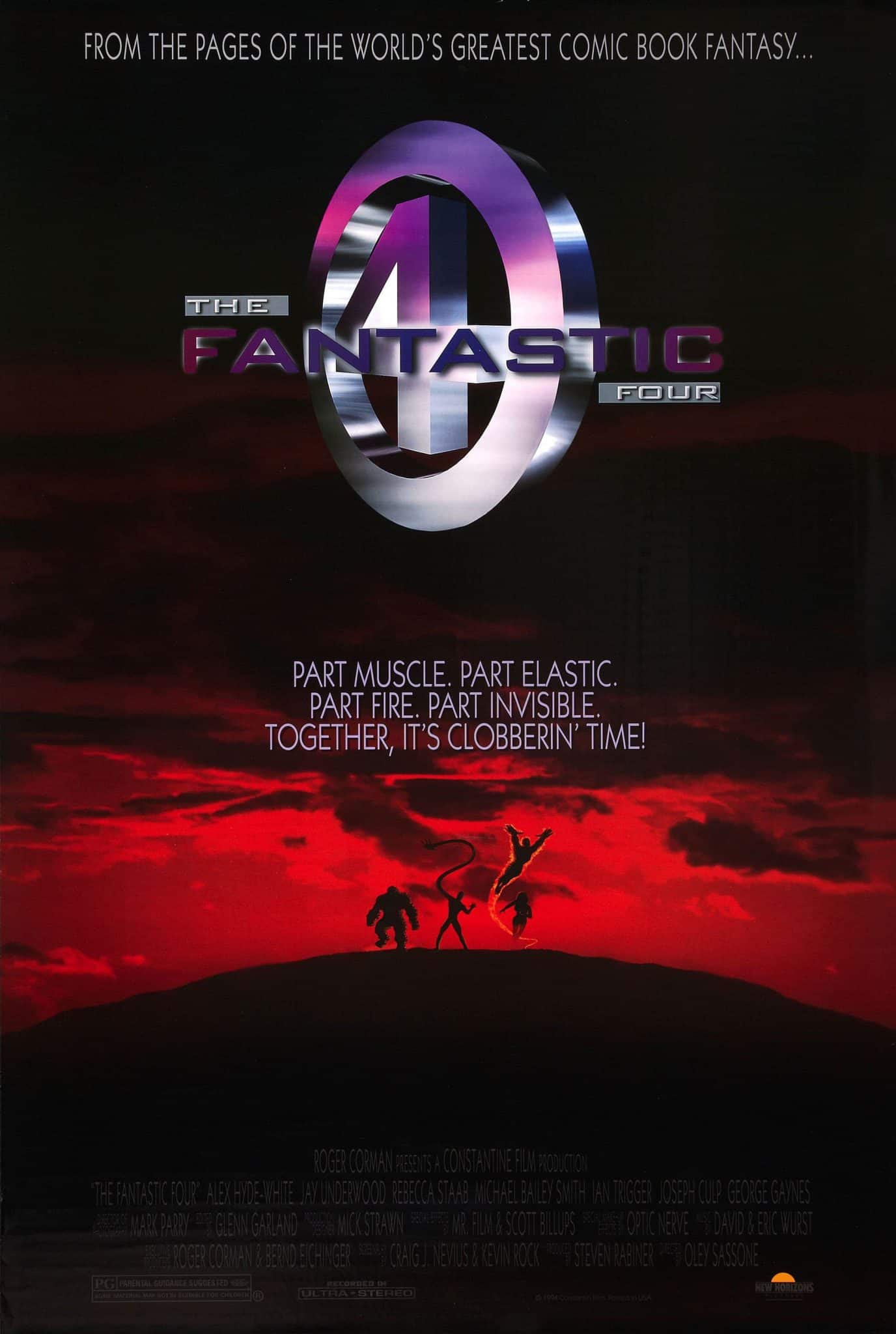
In 1994, German film company Constantin Film was set to release a live action Fantastic Four film that was executive produced by B-movie legend Roger Corman and directed by Oley Sassone, who had done music videos for Gloria Estefan, Eric Clapton, and John Lee Hooker among others. According to a 2005 issue of Los Angeles Magazine, the film was supposed to have a big premiere at the Mall of America, but without much fanfare, it was shelved. The Fantastic Four was never officially released, and reports vary on whether it was ever meant to be released or was hastily produced so that Constantin and executive producer Bernd Eichinger could hold onto the rights for a future film. There is a lot of information about The Fantastic Four’s production, including a feature length documentary, but how does the actual film hold up.

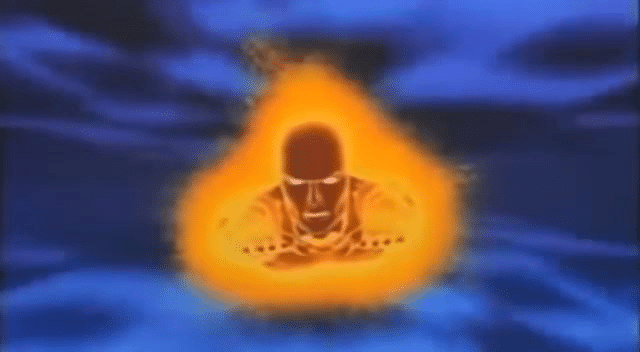
From the cheesy opening credits sequence featuring planets and astronomical phenomena, The Fantastic Four shows every bit of its estimated $1 to $1.5 million budget. Sassone and cinematographer Mark Parry use shoddy trick photography to show off Reed Richards’ (Alex Hyde-White) stretching ability including the film’s infamous final shot of his arm waving like the inflatable thingmajigs you see outside cellphone stores. More cleverly, they take a 1966 Batman approach to action with animated images of the Thing and punching sound effects filling the frame instead of actual fight scenes. Thankfully, invisibility is the lowest budget superpower ever, and I got some dark laughs from Sue Storm (Rebecca Staab) disappearing, and two henchmen shooting each other. Unfortunately, the Human Torch’s (A hyperactive and irritating Jay Underwood) big scene where he goes nova into Dr. Doom’s death laser is ruined by a patchwork hybrid of early CGI and animation. Honestly, a fun stylistic choice in this scene would be using the original Jack Kirby Human Torch illustrations and putting them into motion like the 1967 Fantastic Four cartoon. To end my special effects gripes on a positive note, I do adore the tactility and texture of the rubber suit that The Fantastic Four crafts for The Thing (Suit actor/stuntman Carl Ciarfalio)

The Fantastic Four Human Torch

Visual limitations aside, The Fantastic Four is fairly faithful to the spirit of the Stan Lee and Jack Kirby comics with each team member’s superpowers connecting to their personalities. The use of character actors instead of movie stars gives the film a down-to-Earth feel. Also, Fantastic Four are portrayed as accidents and monsters not superheroes like in their initial appearances. One of my favorite sequences in the film is The Thing wandering off and being shunned by regular people, but finding companionship and worship by the Jeweler’s (A very creepy Ian Trigger) minions. It drives home the point that while Reed, Johnny Storm, and Sue Storm can live fairly normal lives with their abilities that Ben Grimm’s (Michael Bailey Smith) life has irreversibly changed. However, his connection to Alicia Masters (Kat Green) still roots him in humanity so he doesn’t fall into villainy and arguably is the most heroic character of all in the film. This heroism is set up earlier in the film when Grimm risks burns to rescue Victor Von Doom (Joseph Culp) from an experiment gone wrong.

Culp probably gives the strongest performance in the film in the dual role of Victor Von Doom and Dr. Doom. He goes from a weird, slightly off-putting college student to the ultimate supervillain even if his voice is muffled by the comic book accurate Dr. Doom suit. (Ciarfalio has this issue as Thing too, which messes with the timing of his one-liners.) Oley Sassone does a lot of money-saving extreme close-ups on Doom’s face, but Joseph Culp exudes real menace, especially when he finally decides to get his hands dirty. I also love the hints of Doom as manipulator like when he lets the Jeweler sabotage the diamond that powers Reed Richards’ ship instead of committing his men to the fray, and how he shrinks from humanity when Richards tries to appeal to their own friendship. It reminded me a lot of Obi Wan and Darth Vader in a good way, which makes sense because Doom and Darkseid may have influenced George Lucas’ creation of Darth Vader. In both the portrayals of Doom and the Jeweler (A less scientific Mole Man with just a drop of Puppet Master.), Sassone and screenwriters Craig J. Nevius and Kevin Rock embrace the classic comic book villain without any attempt at irony.

The Fantastic Four Doctor Doom

Speaking of screenwriting, it’s the rushed nature of The Fantastic Four‘s storyline that drops the film from “In-Between” into “Flop” territory. A la David Lynch’s Dune, if you’re not familiar with the Fantastic Four, a lot of the moments in the story can be confusing like why Reed Richards’ landlady’s children are on the test flight with him and Ben Grimm, or why Grimm is in love with a woman that he awkwardly bumped into once on a flight of stairs. The Fantastic Four has a 90 minute running time, which leads to establishing scenes getting cut especially with the film having two villains, a flashback with Richards and Von Doom in college, telling the team’s origin story, and featuring the marriage of Reed and Sue. Nevius and Rock definitely should have included a scene showing Johnny and Sue connecting to Reed’s work (Instead of one of him being super creepy to an underage Sue, played by Mercedes McNabb aka Harmony Kendall from Buffy the Vampire Slayer.), one setting up Dr. Doom’s whole deal in Latveria, and maybe Thing and Alicia Masters getting to know each other at the Jeweler’s place instead of skipping straight to “I love you”. There’s definitely a feeling that the screenwriters want to get to the cool highlights of the Fantastic Four’s early career without the connective tissue that make these moments so memorable. At least, they didn’t try to shoehorn Silver Surfer or Galactus in the film.

Featuring scrappy character actors instead of Hollywood stars, a shoe string special budget, and a real love for the classic Stan Lee and Jack Kirby Fantastic Four comics, The Fantastic Four unexpectedly charmed me, especially since I have a soft spot for unpolished B and Z-films. However, the film’s rushed pacing and some truly moronic plotting decisions as well as the creepiness of characters like Reed Richards and the Jeweler keep it from being something I would ever revisit. I do love the similarities in the characters’ suits in The Fantastic Four and Fantastic Four: First Steps.

Verdict: Flop

Review: Fantastic Four #1

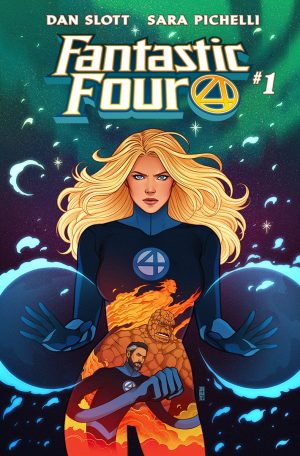
After a three year absence, the book that kicked off the Marvel Universe is back sort of in Fantastic Four #1. Dan Slott, Sara Pichelli, Elisabetta D’Amico, and Marte Gracia’s first issue doesn’t have Marvel’s First Family fighting Mole Man or the Trapster just yet and creates a slow build to the reunion. However, there is plenty of sweetness, comedy, and a little of bit of familial strife along the way as Slott and Pichelli play in-universe with reader expectations about the team reuniting and the oil and water dynamic of the Human Torch and the ever loving blue eyed Thing. They do have a quite funny flashback to a “forgotten” adventure of the Fantastic Four that asks as a proof of concept that shows that Slott call pull off all the voices of the bickering, yet loving sitcom family with superpowers. In addition to this, Slott, Simone Bianchi, and Marco Russo craft a Dr. Doom backup story that is a little more traditionalist than his recent appearances in Invincible Iron Man and Marvel Two-in-One,  and there’s also a super fun and quite metafictional one page backup drawn by Skottie Young and colored by Jeremy Treece.

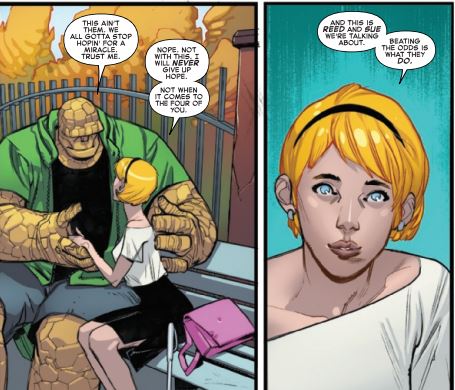
For her work on Fantastic Four #1, Sara Pichelli brings a looser, almost more playful art style that still shows emotions and body language in a fluid way with the help of inker Elisabetta D’Amico and colorist Marte Gracia. Even though he’s made of rocks, Pichelli’s take on The Thing is lively and utterly human. Beneath his ungainly movements, he’s a loving man, and the scene where he proposes to his long time girlfriend Alicia Masters is sentimental without being sappy. Dan Slott writes The Thing as maybe giving up on seeing Reed, Sue, Valeria, and Franklin ever again, but he still has a family in Alicia and Johnny. However, The Thing and the Human Torch aren’t always loving BFFs, and Gracia shows the subtle difference in the Torch’s flame when he’s going off in action and when he flies off the handle after Ben asks him to be his best man. This scene shows that there’s still tension in Ben and Johnny’s relationship in an organic, not drama for the sake of drama way and even builds off the way that Chip Zdarsky has written them in Marvel Two-in-One where Ben knows that Sue and Reed are lost forever while giving Johnny a false sense of hope that they’re somewhere in the multiverse.

Johnny still believes the Fantastic Four will reunite and immediately flames on to where their sign shoots off in the sky with a flare gun like in the original Fantastic Four #1. Of course, it’s just a prank, but it’s foreshadowing to a grander, earned moment all overlaid in a beautiful blue by Marte Gracia like hope in the midst of despair. And hope and family are major themes throughout Dan Slott and Sara Pichelli’s story in Fantastic Four #1. Even if Ben and Johnny don’t interact with Ben and Sue, they share plenty of moments with the “extended” Fantastic Four family, including Wyatt Wingfoot, Jennifer Walters, and the aforementioned Alicia Masters. Johnny and Wyatt take in a Mets game, and Slott engages in what is either queer subtext or queer baiting using the stadium kiss cam while Jen pops up later to flirt with Wyatt and also legally represent the Yancy Street kids who set off the false Fantastic Four flare. Slott modernizes the relationship between the Thing and what was formerly known as the Yancy Street gang making him kind of a community leader instead of the participant in an endless Itchy and Scratchy situation.

Other than the poetic ending, the best moment of Fantastic Four #1 is the flashback sequence where the Fantastic Four and supporting cast find their way back to New York City through the power of Johnny singing the Wayne Newton standard, “Danke Schoen”. It’s funny, cheesy, heartwarming, and adventurous all at once like the best Fantastic Four stories. This is thanks to some little details emphasized by Pichelli like the way Reed cranes his neck when explain the quantum science or whatever of this karaoke journey home situation and then immediately retracts when he doesn’t want to out and out say that Sue isn’t the greatest singer. There’s also time for some transcendent beauty in the midst of screwball comedy: a Marte Gracia colored cosmic flame in the deep blue night sky that even Alicia, who is blind, can see. This little adventure shows the Fantastic Four are about science as well as deep human wonder through the vessel of a family ensemble.

Slott, Simone Bianchi, and Marco Russo’s Dr. Doom backup story creates a different kind of wonder, and the baroque severeness of Bianchi’s art easily contrasts with the cosmic smoothness, yet expressive cartooning of Sara Pichelli and Elisabetta D’Amico. It’s a back to basics Doom story as one of his former subjects pays a visit to the half-abandoned Doomstadt (There’s lots of Doombots per usual.) and asks him to liberate Latveria from one of the many stop gap authoritarian regimes that have been in place since he left them to play hero/Iron Man. And the way Slott writes Doom and Bianchi draws him is the complete opposite of the “Infamous Iron Man” as his face is no longer pretty, and he’s ready to rule with an iron grip and an iron mask. Like the main story of Fantastic Four #1, the Doom backup is about hope and symbols, but it’s a dark and twisted mirror to Marvel’s First Family.

Fantastic Four #1 is nothing short of a triumphant return for Marvel’s first superhero team. Dan Slott hits a nice balance between tearing heart strings, broad humor, and the wonders of the universe in his script while also crafting an aura of mystery and terror in the Dr. Doom backup story with Simone Bianchi and Marco Russo. In the visual department, Sara Pichelli shows why she is one of Marvel’s best and versatile artists hitting all the smaller, yet very important character beats as well as the big spreads and “Flame on!” moments.

Whether you’ve been reading the title since 1961 or this is your first FF adventure, Fantastic Four #1 is definitely worth your $5.99.

Story: Dan Slott Pencils: Sara Pichelli Inks: Sara Pichelli with Elisabetta D’Amico
Colors: Marte Gracia Backup Art: Simone Bianchi, Skottie Young
Backup Colors: Simone Bianchi and Marco Russo, Jeremy Treece Letters: Joe Caramagna
Story: 9.0 Art: 9.5 Overall: 9.3 Recommendation: Buy

Marvel Comics provided Graphic Policy with a FREE copy for review

What Could Be Expected in Phase 4 of the Marvel Cinematic Universe

After its initial success with Iron Man, the Hulk, Captain America and Thor, Marvel Studios quickly realized that it had a formula for success on its hands and seemed ready to take advantage of it.  To do so though required a plan, and studio head Kevin Feige soon had broken down the movies into various phases, with the most recent Ant-Man signaling the end of phase 2.  Aside from the developments inside the movies, there have been some developments outside the movies which have affected the universe as well, chief among those the partial reversion of the rights to Spider-Man back to Marvel, or at least the use of Spider-Man inside the shared universe in a collaboration with Sony.

At the moment, we kn ow the entire lineup for phase 3, starting with Captain America: Civil War and continuing through two new Avengers movies and the Inhumans.  What might be expected in the next phase of the Marvel Cinematic Universe?  The release of the newest Fantastic Four might signal some of the changes which we can anticipate ahead (there are some spoilers below).

Ant-Man and Wasp

waspMany expected Ant-Man to be one of the bigger disappointments thus far in the MCU, due to its ongoing problems with the direction, after it passed from Edgar Wright to Peyton Reed.  It seemed as though the studio was not going to take any risks with the character as they could not even confirm his role in any future movies.  This presumably will all change now that the movie has been released.  Although it can’t compare to the financial success of the year’s other Marvel movie, Avengers: Age of Ultron, it also is noteworthy as being a better critical success, with a better rating at Rotten Tomatoes than Avengers.  With both financial and critical success it seems as though there will be more to come from these characters.  As was hinted at the end of the movie, there is still a lot of story left to tell as well, as the end hinted that Janet van Dyne might not be truly lost.  Furthermore Hope van Dyne was presented with a Wasp suit by her father.  There could be a lot of places to take the story of the two heroes, though one in particular might make the most sense …

Micronauts

micronautsThe Micronauts are a bit of an oddity in comics.  They started out as a line of toys, who were written into comics after in the 1970s after Marvel writer Bill Mantlo saw his son open a box of the toys.  The series started as somewhat of a standalone, but slowly was incorporated into the Marvel Universe, with appearances by some other mainstream characters.  While the rights for the characters do not presently rest with Marvel, there is a long publication history with the characters and as the rights rest with other smaller comic companies, it would likely not be too difficult to reacquire the rights.  Furthermore for the film studio that might try to replicate the runaway success of Guardians of the Galaxy, they might look smaller instead of bigger and find their next surprise hit there.  There would be some hurdles, but also there might be a few benefits, as Janet van Dyne disappeared into the smallest dimension, the Microverse.  This small universe is not in itself small, but the pathways to enter it are, and could give an explanation as to where the character disappeared.  They might find Janet in the Microverse, but they might also be able to find some other heroes there as well…

Fantastic Four

fantastic fourThe Fantastic Four is one of the best known Marvel properties that does not lie within the company’s grasp at the moment, instead being controlled by Fox.  While Fox has managed to control the X-Men franchise strongly enough with some decent movies, the Fantastic Four has mostly been a sequence of failures.  The first of the series was good enough to warrant a sequel, but this was before the wake of Marvel movies changed how fans expected superhero movies to turn out.  Marvel Studios was looking to be innovative, not just rehash generic action/sci-fi plots with superheroes thrown in.  The most recent attempt by Fox to revamp the Fantastic Four might have been an attempt to do the same, to get some new excitement into the mix, but it evidently did not turn out that way.  Critical response (and probably financial) will mean that the characters will have to be shelved for a while before the public has forgotten enough about them.  Using the Sony/Spider-Man approach, lending the characters back to Marvel Studios might be a wiser choice, one that would probably make more money for both, and one which would keep the fans happy.  By this point though, with two origin movies behind them, it might make sense to jump straight into the Fantastic Four with them already established as heroes.  They could exist in a similar sense to Hank Pym in the Marvel Cinematic Universe, unknown but still present.  More so, one of the places that is visited by the Fantastic Four is the Microverse, and if they were stuck there then it would be an easy bridge between Ant-Man and the return of Marvel’s first family.

Namor

namorIt is not entirely clear where the rights to Namor presently rest.  Kevin Feige has indicated that Marvel, if they desired, could make a Namor movie, but that there would be some “entanglements”.  Rights to the movie have rested with Universal, but seem to have at least partially lapsed.  What remains is speculated to be the same arrangement with 2008’s The Incredible Hulk, that Marvel creates but Universal distributes.  While it was not a problem when the Marvel Cinematic Universe was still nascent, it seems moving forward that Marvel likes to create and distribute, and to get rewarded financially at 100% for its efforts.  It might make exceptions for Spider-Man and the Fantastic Four but maybe less so for Namor.  Another factor to consider is what DC Comics will manage to do with its own movies.  The other of the big two comic companies is playing catchup, but also has the benefit of controlling the movie rights to nearly all of its characters.  They have already greenlit an Aquaman movie, but it remains to be seen just how well it will do.  Aquaman is after all a hero that is taken not so seriously in pop culture, but if DC can make it work, maybe it will give Marvel second thoughts about its own underwater hero.

Thunderbolts

thunderboltsThe fact that DC Comics is playing catchup in the movie game can also be to the advantage of Marvel.  Marvel has already taken its gambles and seen those pay off, as with Guardians of the Galaxy.  DC Comics, who are eager to catch up, are also taking their own gambles, and chief among those is the Suicide Squad.  Featuring a group of villains forced into a heroic role, it might catch on, or it might flop.  Fans certainly will not be very familiar with the concept, and the concept in itself is strange enough that it might not work.  On the other hand, it might work, and if yes then it could serve as a gamble that Marvel gets to witness the results of without gambling anything itself.  If popular it could use its own villain-turned-heroes team the Thunderbolts and catch the wave of people wanting more Suicide Squad before a sequel to the DC movie comes out.  If played right as well it could help quieten those that think that the MCU’s villains are the weakest part of the movies.

Defenders

defendersMarvel is already a long way along in its development of the Doctor Strange movie, and holds the exclusive rights to the Hulk as long as he is not the featured character in a movie.  A Namor movie could be forthcoming depending on the success of Aquaman, and if Fox sees the benefits of doing so, a collaboration might be in the works to return the Fantastic Four and associated characters to the MCU, which would include the Silver Surfer.  Those four make up the original four members of the Defenders.  For those that are getting a bit tired of seeing the Avengers over and over again on the big screen, it might be an excuse to feature this other Marvel team (although Marvel is working on a street level Defenders television show as well.)  One interesting aspect about this team is that as opposed to the Avengers that the original team is made up of all non-street level characters, meaning that the stakes could be higher and that bigger things might happen as a result, such as …

World War Hulk

wwhThis has been a long rumored development in the MCU, but also not one that has not yet come to fruition.  Marvel has been careful to include in story arcs from the comics, and it has made for some great connections for fans of both mediums.  Although World War Hulk is not necessarily the best all time Hulk story, it is up there, and would be a better vehicle for putting a new spin on the Hulk stories, more so than what we are seeing at the movies, with both Hulk movies fitting the same general pattern of the Hulk being hunted by the government after smashing up a bunch of stuff.  It would also allow the character to move beyond the Avengers, which is a connection that is not as strong in the comics.  Also if all the pieces fell into place, it would mean that a lot of the major players from the crossover might be able to make it into the movie, save for the X-Men.

Hawkeye

kateRumors abound that another major character will die in the upcoming Captain America: Civil War (especially that there are pictures from the set of a funeral sequence), and without any other way to verify this other than by seeing a movie that will not be released until 2016, it still seems likely that one of the characters that might be easiest to kill off would be Hawkeye.  He is among the less popular of the main characters in the MCU, and has been almost a footnote to the movies series, appearing to provide fans with another superhero, but also one that doesn’t really do much.  Even if he does not die in the movie, it is also worth noting that the character is one which is on the verge of retirement, being somewhat older than the other heroes and with responsibilities to his family.  This could leave open the possibility for a Hawkeye movie except not as we might expect.  As the movies expand in popularity it makes sense to be closer to four quadrant movies, and one way to do this is to introduce more female characters.  If Clint Barton were to retire on screen, it could open the door for Kate Bishop to step up, providing the MCU with another superheroine, and one with a lot more of an edge than Clint.

She-Hulk and Spider-Woman

shehulkOn that same note, if Marvel is looking to keep its female fans happy it might look to develop these characters as well.  Most of the main Marvel superheroines would be tied up elsewhere, with most of the major heroines being members of the X-Men, and other such as Sue Storm or Medusa mostly only operating as parts of teams.  Others such as Elektra and even Hellcat are tied to the television series, which mean that only a few major female characters would be left to get the big screen treatment.  She-Hulk and Spider-Woman could both be strong contenders to hold down their own movie, especially if Marvel did something unexpected and went off the script with the Spider-Gwen version of Spider-Woman.  It would also help to fill the ranks of the Avengers, a team which needs to be mixed up a bit from time to time to keep the roster fresh and the fans intrigued.

Ka-Zar

tigraKa-Zar is one of the longest running Marvel characters, but also one that has not had a very solid fanbase in modern years, although unquestionably popular among many.  Although Marvel is keen on taking risks, could it make the Savage Land work the same as it made Guardians of the Galaxy work?  The Savage Land is the source of many stories within the Marvel Universe, though most of them with the X-Men.  Why might the MCU be interested in the Savage Land?  It is a fantasy setting, and while it does not match up with other heroes, could still serve as an explanation for the re-appearance of some characters who also happen to be Avengers – Hercules, Tigra or even the Black Knight.  It might be a stretch, but Marvel will be looking for new blood for its Avengers as it moves forward, as is evident from the new roster after Age of Ultron.  Tigra especially might be interesting, as she not only is her own character, but is also indirectly responsible for the development of Hellcat, whose non-superpowered version is already set to be introduced in the Marvel television show Jessica Jones.

Iron Man 4

iron manThis is perhaps the biggest question to solve in phase 4.  A big part of what made the MCU so popular is that it based its hopes on the initial movie, Iron Man.  If this movie had failed so too would the plans for the shared universe.  Success would probably have still come the way of the studio, but it would have been a longer road.  Part of the runaway success of the original Iron Man was that Robert Downey Jr. was perfectly cast as Tony Stark, what some might say is not even really acting as he seems to be mostly playing himself.  That having been said, superheroes never really age but actors and actresses do.  While the studio can get a few more years out of Chris Hemsworth, Chris Evans and Scarlett Johansson (all in their early to mid 30s), and even a lot more out of Paul Bettany (whose character the Vision wears so much makeup as to be ageless) and Elizabeth Olsen (who is in her mid 20s), it can probably expect less out of Robert Downey Jr, who is now 50.  They might push him for a couple more movies, but eventually he will need to be replaced, and the biggest question would then be by who, as the character is one that is of highest importance to the MCU.  There might be no bigger question heading forward in the MCU than who will fill this role.

Push Comics Forward – The Female Super-Scientist

j4p4n_Scientist_Woman_(comic_book_style)Recently the head honchos at BOOM! Studios put out the idea that comics needs to change and to not be stagnant as a medium.  Long since dominated by superhero stories, the medium has indeed made a number of changed in the past couple of decades and the change is noticeable in some regards.  Equally though, comics are somewhat of a niche when it comes to their perception in popular culture.  Although there is an increasing amount of female readers, the medium is slower to make the changes to draw in fans of all backgrounds, and especially at the big two publishers instead still focuses on mostly a collection of characters who are both white and male.  While the interest in push comics forward doesn’t necessarily lie solely with the big two publishers, change has to happen there as elsewhere in order for the medium to evolve.

Science in comics was a bit of an x-factor until the onset of the silver age.  Until that point, science was usually grossly misapplied in order to move along a plot.  Gross inaccuracies were made and aspects of scientific knowledge would be presented, leaving what was actually used of the science to be misappropriated and simplistic.  As the silver age started, the focus on science is what rescued comics from being a medium for children, and instead allowed the medium to mature.  The changes first came at DC, though with the generally more god-like powers of the characters, the science was not as pertinent.  Hawkman and Green Lantern became intergalactic police, the Atom used White Dwarf matter to give himself powers, and the Flash became a scientist that gained powers by a scientific accident.  While the science was there, it was not until Marvel arrived that it redefined science in comics.  Although still unreal, the science was still presented in a way that it could be real, at least in our imagination.  Instead of characters that were either given or born with their powers, the new wave of heroes earned it the hard way, by building it themselves.  Not every Marvel hero was a scientist, but there were a few – Peter Parker, Bruce Banner, Tony Stark, Hank Pym, and Reed Richards.  While this did push the envelope forward for comics as a medium, what was left behind were the women.  The female leads to these heroes were still sometimes heroes, but they fell back into the template of having powers given to them.  Sue Storm was a college dropout, and Janet van Dyne was just an girlfriend.  They even did better than Betty Ross, Pepper Potts and Mary Jane Watson, who were often relegated to secondary status as damsels in distress (though Sue Storm also performed this role despite being a power superhero.)

lego women scientistsWhile there are perhaps more men than women in science still as a profession, there is no real clear reason why.  Women at younger ages are as adept as their male counterparts, and the interest for science is equally there.  Some consider it to be a genderized problem, that the “old boys club” of science discourages women from entering its field in some cases, and that women are taught gender roles by society to be less focused on science as opposed to other ventures.  While there is debate on these assertions, it is true that women have no more or less natural inclination to science than men do.  So why can’t there be a female version of a super scientist?  There are of course some very intelligent women in comics.  The female version of the Hulk is an accomplished lawyer, and others have shown an ability to pursue more academic fields than what is traditionally typified by their genders, but there is still a gap in terms of the heroes, and who can do what.  Female characters can still be powerful, but it is unlikely that their minds are capable of giving them those powers.  In fact a large portion of female characters derive their powers from either magic or the supernatural.

What has been an interesting and worthwhile development in the cinematic versions of comics, is that the women characters are presented in a way which is a lot more progressive.  Jane Foster is an astrophysicist and in the previous round of Fantastic Four movies, Sue Storm was shown to a be a scientific genius in her own right.  This is because as the characters move to a more popular medium, they are forced into a more acceptable presentation of the role that women play, more so than just damsels in distress, but also as able thinkers on their own.  So why is there no female superscientific genius yet in comics?  This comes back to the inherent idea behind #pushcomicsforward, that there can and should be such female characters, because the medium simply has not caught up yet to the reality of the world.  There is even maybe not a need for as many as Marvel has, but a character that is at least adept at science, and who knows the periodic table from the kitchen table.  There is no reason not to, as such a character wouldn’t even have to carry a series, but they could still be there, guiding the scientific discussion to a place that is more realistic.