
Review: The Wicked + the Divine #37
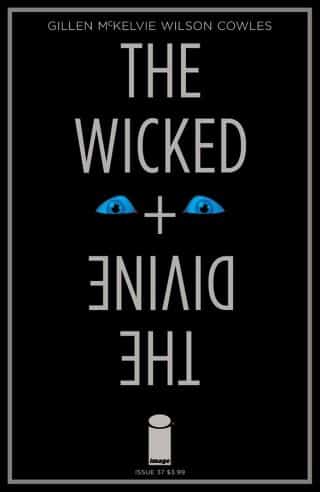 Like the previous issue, and perhaps in an even bigger contrast, The Wicked + the Divine #37 is a study in highs and lows of storytelling. There are ten pages of black squares arranged in a nine panel grid, and there is poignant, epic, tragic battle royale between Baphomet and Morrigan, Nergal and Badb, Cameron and Marian with the identities flowing in some of Jamie McKelvie and Matthew Wilson’s most brilliant visuals.Unlike the previous issue, which focused more on the sky gods, like Baal, WicDiv #36 is mainly concerned with the Underground and its king and queen, Morrigan and Baphomet, plus Persephone, who is also an underworld-connected deity and is kind of, sort of in a love triangle with them. There is a deep love between Morrigan and Baphomet as well as pain and abuse, and their relationship hits its climax in the big set piece in WicDiv #37.
But, before we get to all the compelling relationship, fight scene, and Luci, Tara, and Inanna having spoken dialogue stuff, there are flashbacks to 32nd century Egypt and 31st century Crete illustrating the death and rebirth cycle of the Pantheon. The choice of Egypt and a Greek island are interesting because Morrigan chose not to intervene in a battle between an Egyptian deity (Sakhmet) and a Greek one (Persephone) hoping the woman her partner in darkness cheated on ended up mauled to a bloody pulp. There is also a distinct visual similarity between the final page of the flashback and the comic. But, then, there are the ten pages of pure blackness showing the passage of time between Recurrence: ninety years to be exact. Gillen and McKelvie have a cool idea to show what the world’s like without the activity, inspiration, and general drama, decadence, and death of the Pantheon, but the execution plods along. There’s not even cool fashion to look at like the repetitive flashback in WicDiv #36, and it sidelines the comic’s momentum from the get-go. But, the full page, totally must have been a strain on Jamie McKelvie action sequences easily put the book back on track.
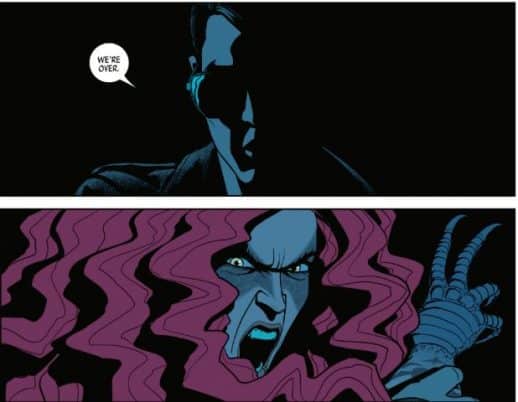
After the flashback, Kieron Gillen and Jamie McKelvie don’t immediately dive into Baphomet v Morrigan: Dawn of Cheating and Cheated On Chthonics and give a “regular” human POV on the events of Mothering Invention. It seems that even as Urdr, Cassandra still lives up to her Greek mythology namesake, and that regular Londoners are sort of non-plused by Pantheon members, like Dionysus, dying as long as the gigs are intense and on the edge. Even more so than the banter, I really enjoyed the almost documentary style approach that McKelvie took to panel transitions going from two gig goers chatting by the train tracks to the tunnel and finally progressing to Persephone catching up Baphomet on the bloody events of this arc. It’s a reminder of how recently they were the fans, Cameron and Laura, and Gillen writes them as being fairly honest and open about how they have no idea what the hell is going on. A Minerva/Ananke heads interlude aside, the moody is fairly light by late period WicDiv standards even if McKelvie and Wilson bathe the page in shadows. But, then, Morrigan cold cocks Persephone, and the rest is death match.
The fight between Morrigan (Mostly Badb) and Baphomet that is really the best chunk of WicDiv #37 doesn’t take place in the shadows, but in the lavish life with jagged panels of crows and flame flowing into monochromatic flashback panels of Cameron and Marian’s old life. McKelvie finds a new level of rage for Morrigan as she transforms her whole arm into a sharp bone blade and is about to cut Persephone’s throat when Baphomet intervenes and begins the one-on-one battle. Between the yelling, flame swords, and broken sunglasses, Gillen and McKelvie get to the core of their conflict. Morrigan feels like she’s losing control over the man that she pleaded with Ananke to make a god and wants to shape his fate instead of letting him choose healthier (definitely platonic) relationships like with the late Dionysus and potentially with Persephone. (That opens a can of worms though.)
The black and white illustrations of Cameron and Marian at the pub, dancing at the club, having sex, or playing Vampire: The Masquerade add an extra emotional layer to WicDiv #37. There’s a scene where Morrigan is crumpled on the ground, and Baphomet should easily be able to take her out with his flame sword when there’s a faint, flickering of a scene of them dancing and laying in bed together that causes him to hesitate. McKelvie shows this softening of feeling by having Baphomet open his eye a little wider in pity. Of course, the next page is all crows and chaos and red, yellows, and greens from Matthew Wilson to accentuate the violence. However, Morrigan has a moment of pity too as Gentle Annie makes her sole appearance, and there is a tiny slice of redemption for her. It’s only a sliver, though.
In a similar manner to the previous issue, and more effectively thanks to the epic sauce nature of the Jamie McKelvie and Matthew Wilson drawn battle between Morrigan and Baphomet and the teary eyed callbacks to their Leila Del Duca drawn showcase issue, WicDiv #37 works as a comic when it’s not trying to be experimental and abstract, but diving into its complex and flawed characters. Kieron Gillen has bestowed some of his best character voices to this doomed pair and cranks the feelings up to eleven in this issue to match the power of McKelvie and Wilson’s art and colors. It’s the final act in a tragically romantic, yet toxic relationship that burned hot in the beginning, led to one hell of a power couple, and fizzled out in conflict and utter sadness. (I can totally relate.)
P.S. This issue pairs well with Sisters of Mercy’s final single as a band, “Under the Gun”, and both Morrigan and Terri Nunn have fantastic eyeliner game.
Story: Kieron Gillen Art: Jamie McKelvie Colors: Matthew Wilson
Story: 7.5 Art: 8.5 Overall: 8 Recommendation: Buy
Image Comics provided Graphic Policy with a FREE copy for review
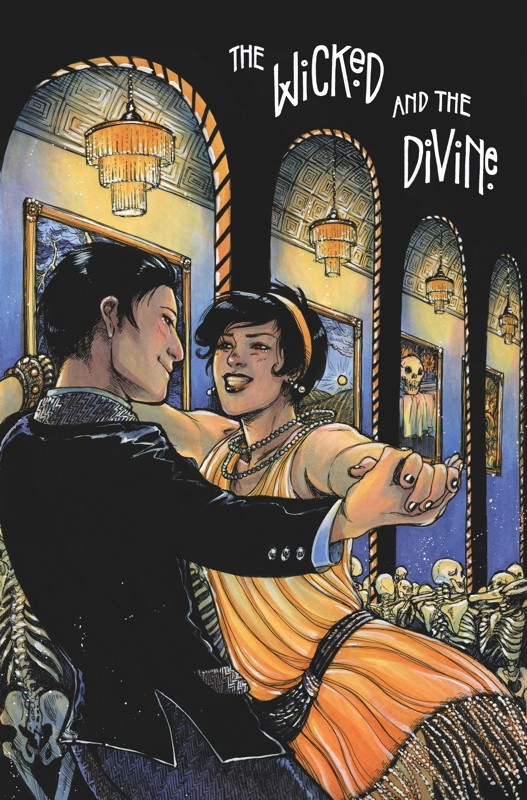 As The Wicked + the Divine starts to round its final bend, writer Kieron Gillen and guest artist Aud Koch (America) return to the literal beginning, namely, the Pantheon of 1923 that graced the first pages of WicDiv #1. In keeping with the modernist mood of the time period, Gillen and Koch experiment and tell a 56 page Agatha Christie (Ananke may or may not be a stand-in for her.) drawing room mystery featuring all of the Pantheon members, who have all stayed alive to this point. There’s also a lighthouse. Most of the comic book is Gillen’s prose, which is purple-y, atmospheric, and channels several of the great modern writers, including Ernest Hemingway, Virginia Woolf, James Joyce, possibly Langston Hughes, and T.S. Eliot, who is racist and pretentious as hell. Large sections of text are broken up by fantastic art from Koch showing the murders is better than telling us about them and end in a fine, kinetic tribute to one of the first motion pictures.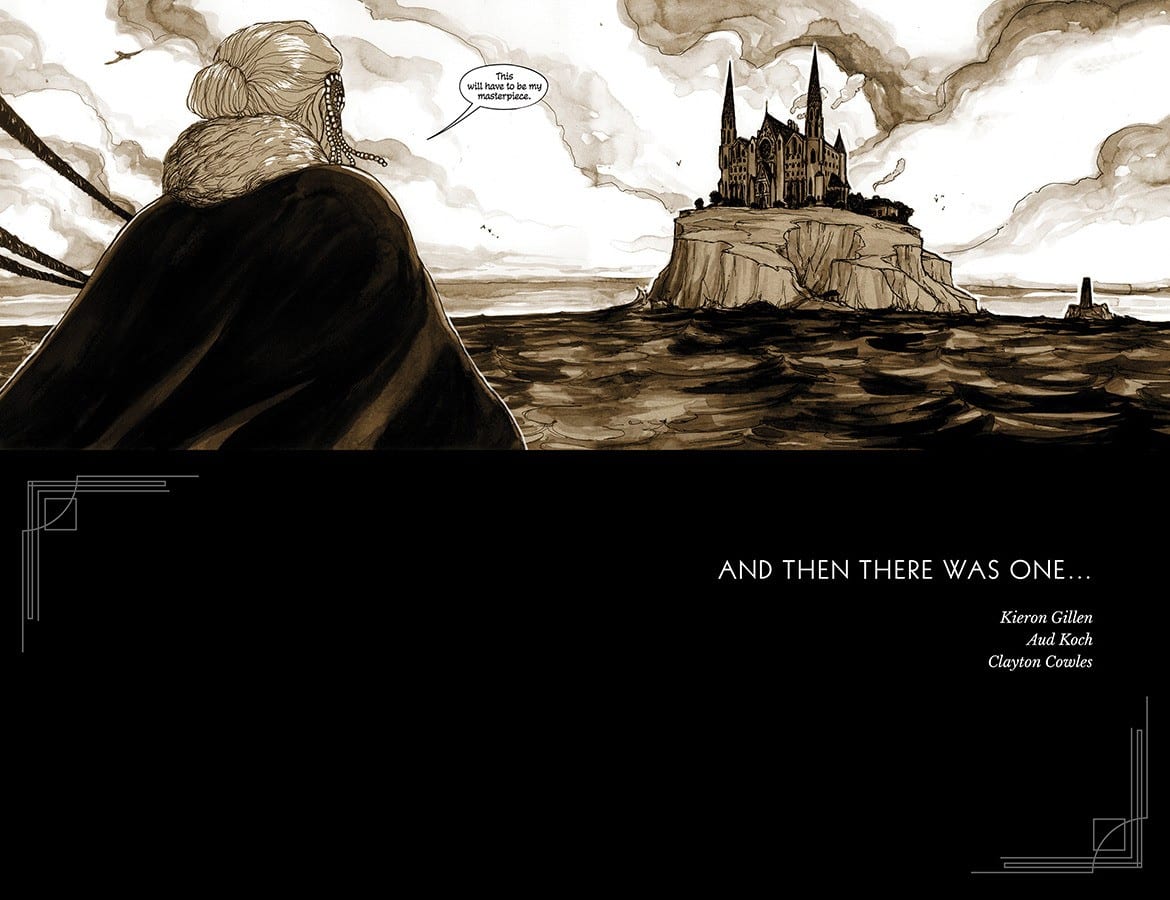
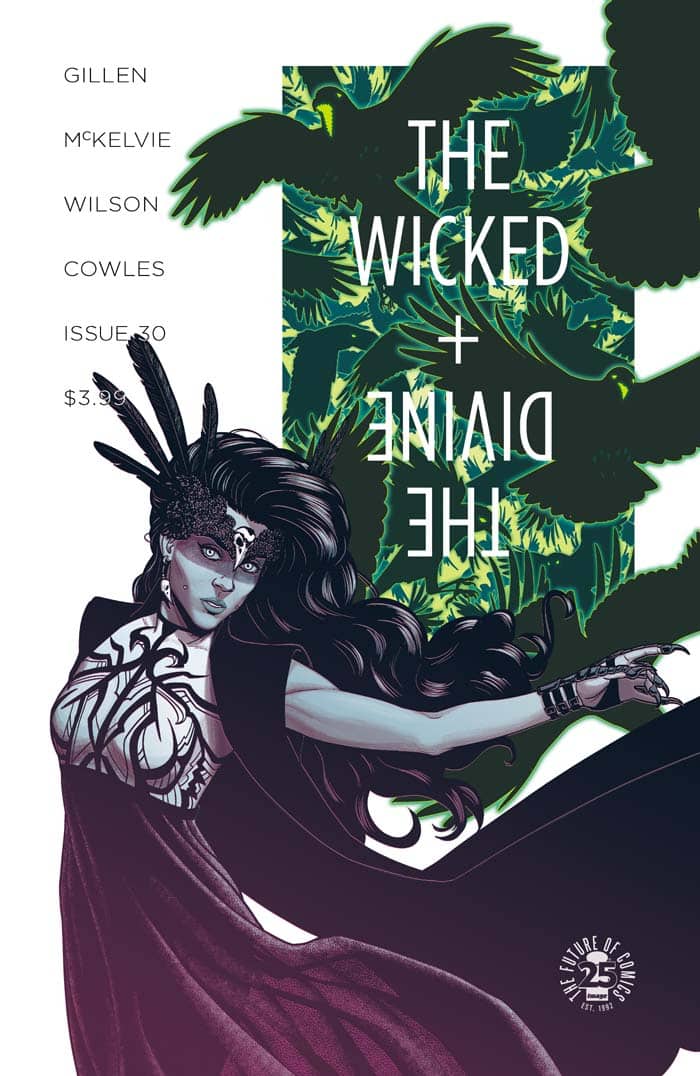 The Wicked + the Divine #30 is definitely a setting up the pieces on the game board issue from Kieron Gillen, Jamie McKelvie, and Matthew Wilson with unlikely allies Woden and Cassandra putting the finishing touches on their literal plot moving machine. However, most of WicDiv #30 is dedicated to Dionysus, Baphomet (finally), Morrigan, and other members of the Pantheon talking out their feelings. Gillen, McKelvie, and Wilson have built up these characters over several years, and it’s novel and nice to see new sides of them before all hell breaks loose.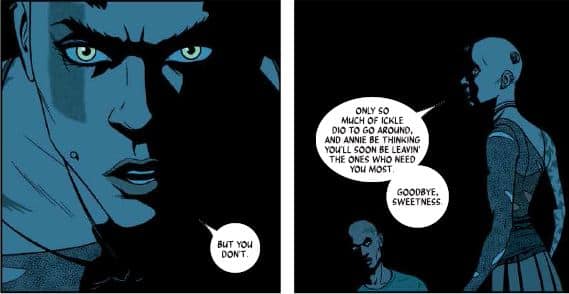
 Dysfunctional relationships are the bread and butter of The Wicked + The Div ine#29, which kicks off “Imperial Phase Part 2” in cringeworthy fashion with Persephone waking up next to a Luci look-alike. Jamie McKelvie‘s art is sultry, and colorist Matthew Wilson trots out a dusky palette for the underworld goddess, but then writer Kieron Gillen’s dialogue fills in the awkwardness that Persephone feels and the total embarrassment of the moment. It’s also a little tragic and toxic too, which is the tone of WicDiv as a series and much of issue 29, which manages to be relationship driven while driving the arc’s plot ahead in the hunt for Sakhmet.

 WicDiv #19 reads like the first skirmish in an epic war, but it’s an amusing skirmish indeed as writer Kieron Gillen provides a little more insight into the characters of Minerva and especially Dionysus, who gets his first substantial panel time since WicDiv #8. (What with him being a 24/7/365 dance floor.) His worshipers/ravers are so connected to him that even when he takes a five minute break for a soda and fries, they got wild so it’s safe to say that he’s a little irritated when Baphomet draws him into a battle between the Sky gods and Underground ones. Gillen writes him as peaceful in the mode of the late Inanna while artist Jamie McKelvie and colorist Matthew Wilson show that he is less than apt in the art of combat thanks to this pacifist nature.

 WicDiv #18 signals the beginning of the comic’s imperial phase with the triumphant return of artist Jamie McKelvie and colorist Matthew Wilson as they and writer Kieron Gillen drop the introspective character studies of the previous arc for some well-earned action sequences and magical musical explosions. It’s like when your favorite band stopped playing small clubs and intimate venues and started playing arena rock. But damn good arena rock, like Queen or Rush in the late 70s and early 80s, the Smashing Pumpkins on their Mellon Collie and the Infinite Sadness album, or Muse in this millennium. (Before they started putting songs on Twilight soundtracks.)

