One of the The Sandman‘s biggest strengths as both a show and a comic is its panoply of unique and well-developed characters, both in the Dreaming and the Waking World. Some might say it has a “deep bench”. This is because its lead character Morpheus/Dream of the Endless (Tom Sturridge) represents the collective unconscious and has been around since the beginning of time so the show can easily slot in historical time periods as well as our current world and beyond it. There’s room for the anthropomorphic personifications of death, desire, and despair as well as William Shakespeare, a knock-off Aleister Crowley, and a diner waitress, who wants everyone to have a happy ending in The Sandman saga to just name a few. This wide range of characters and settings keeps the show fresh just like the comic where readers could go from a performance of William Shakespeare’s A Midsummer’s Night Dream to the depths of Hell or from the reign of Augustus Caesar to a park bench in New York City all thanks to the imagination of Neil Gaiman and some of the most talented artists in comics at the time.
Without further ado, here are a few of Sandman‘s best side characters, who either showcase its strength as show or who I personally connected to through actors’ (or in one case) and visual effects artists’ performances.
5. Goldie
The Sandman floored me in its first ten minutes with its full realization of The Dreaming at its peak courtesy of director Mike Barker and a host of set designer and visual effects artists. The aerial shots coupled with close-up’s established a fleshed out fantasy world while also having an air of familiarity because dreaming is something that some of us do every night. There’s also wonderful nods to mythology like the gates of horn and ivory that first appeared in Homer’s Odyssey to signify true and false dreams.
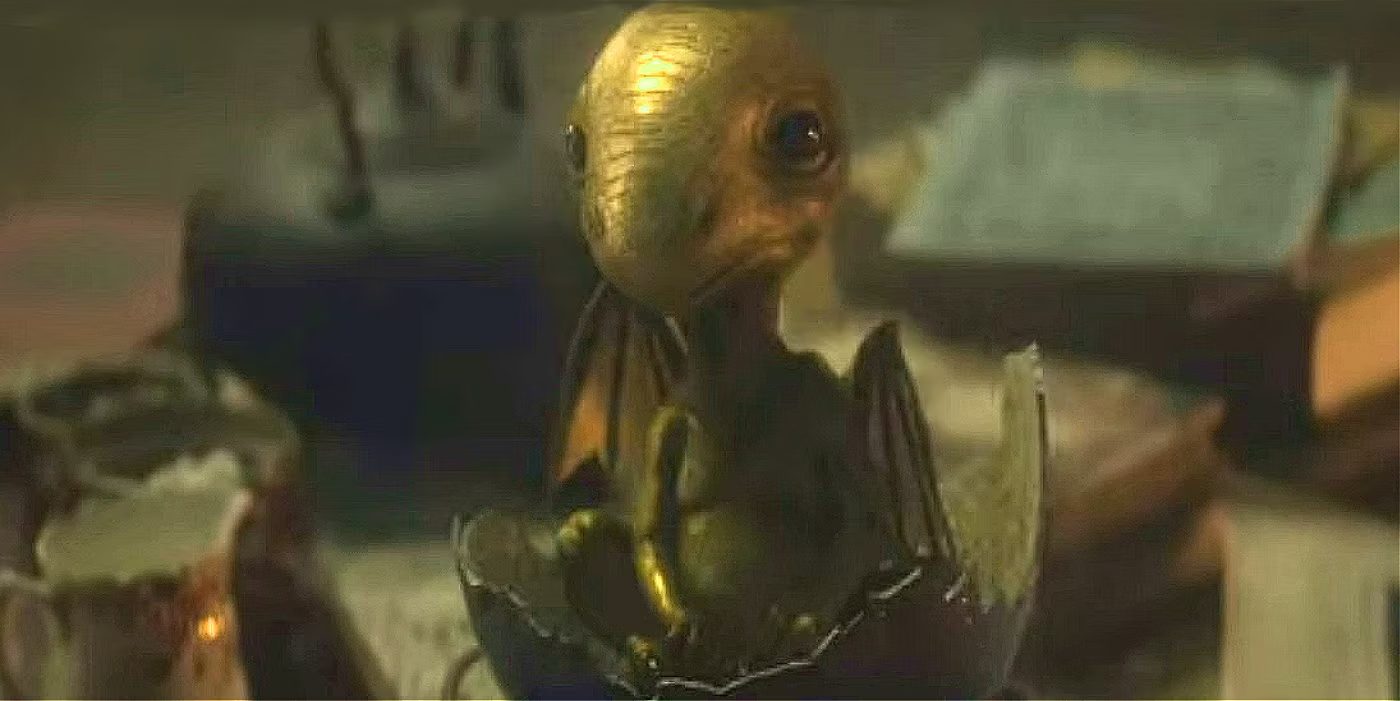
However, The Dreaming isn’t just splendor and budget flexing. It has its own sense of humanity and community even though it’s solely inhabited by dreams, nightmares, and other fantastic beings. Sandman‘s second episode “Imperfect Hosts” gives the most in-depth look at day to day life in The Dreaming as Morpheus and his librarian/major domo Lucienne (A dapper Vivienne Acheampong) take stock of how the realm has change since he was imprisoned for over a century by the magician Roderick Burgess. Morpheus sacrifices the gargoyle Gregory to summon the Three Fates to help find the missing instruments of his power. But he also gives Abel (Asim Chaudhry) an egg that hatches into a Goldie, a new gargoyle that is the first thing created in The Dreaming since Morpheus’ return.
Goldie barely appears in the show, but his cuteness rivals Grogu, and he represents The Sandman‘s recurring theme of change and shifting away from old narratives to build new ones. Cain (Sanjeev Bhaskar) might continue to replay the “oldest story” and kill his brother Abel over and over again, but there’s an adorable little gargoyle waiting for Abel when he comes out of his grave showing that there’s still life and vibrancy in The Dreaming. Also, kudos must be given to Chaudhry’s emotional connection with both Goldie and Gregory, and I could feel his pain when he lost the latter and the joy when the former’s egg hatched. All in all, Goldie is a great little creature who doesn’t wear out his welcome.
4. Hal Carter (John Cameron Mitchell)
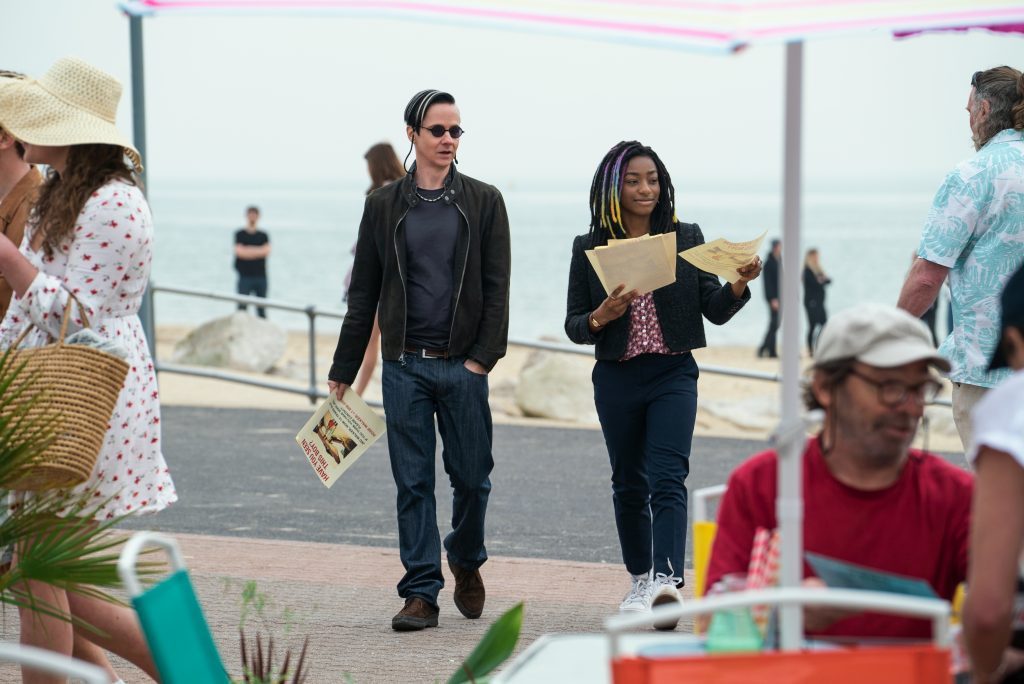
The second part of The Sandman Season One adapts the “Doll’s House” arc from the comics where mortal Rose Walker (Kyo Ra) becomes a dream vortex and threatens both The Dreaming and the waking world. Along the way, she looks for her missing brother Jed (Eddie Karanja) where she stays at Hal Carter’s bed and breakfast that features an eccentric range of lodgers, including a couple named Ken and Barbie and a polite gentleman, who loves his books, especially G.K. Chesterton (More about him later.)
Even though he plays a secondary role in Rose’s storyline, Hal has interests and dreams of his own. He performs as the drag queen Dolly and opens up to Rose about wanting to become a Broadway actor, but ending up opening his parents’ old house in Florida as a bed and breakfast. This conversation is quite ironic because Mitchell is a legendary stage actor probably best known for playing and creating genderqueer rock star Hedwig in Hedwig and the Angry Inch. Dolly’s drag show is the first time that Rose really experiences the boundaries breaking between the Dreaming and the waking world.
This sequence and other ones featuring Dolly are lit and shot in a similar way to scenes featuring Dream’s sibling Desire of the Endless (Played by nonbinary actor Mason Alexander Park) and subtextually show that the Dreaming is a metaphor for gender fluidity with Morpheus’ realm acting as a place where folks can experience new sides of their identities. (This in spite of Morpheus being a curmudgeon who doesn’t change.) In addition to this fluidity, Hal also acts as a grounding support for Rose and her friend Lyta as they search for Jed and even gets his own little happy ending towards the conclusion of the season. Hal could very much be that cool old nonbinary person you chat with at the local gay bar, but also is full of inspiration, light, and beauty. (P.S. John Cameron Mitchell seriously needs to be involved in an Invisibles TV show.)
3. Rosemary (Sarah Niles)
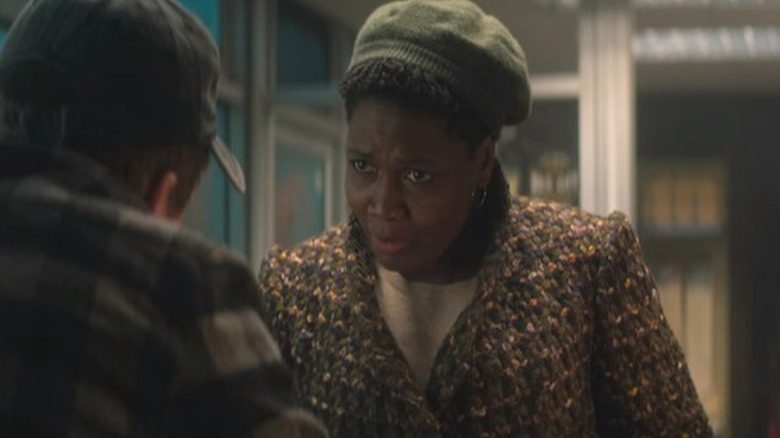
Rosemary is only in a single, solitary episode of Sandman and isn’t a god, gargoyle, or even a drag queen. She’s a regular person who gives John Dee (David Thewlis) a ride to pick up his ruby as the B-plot of “A Hope in Hell” after seeing him stumble around in a robe and slippers on a dark, wet night. Rosemary brings a listening ear and sense of kindness to the murderer and arsonist and even opens up about how her husband lied to her and her daughters about having another family in another city. When Dee reveals his crimes, she does end up trying to get a gas station clerk to call the police. However, after Dee’s protection amulet causes the clerk’s gun to ricochet, Rosemary completes the ride, and in a rare moment of humanity for the murderer, gets the amulet from Dee for getting him to the ruby.
One of Sandman‘s strengths as a story is how it centers ordinary, decent people in a fantastical world. Until he talks about murder and arson, Rosemary empathizes with John Dee and is the first person to do so after he’s abandoned by his father and moved from town to town by his mother Ethel, who uses Morpheus’ ruby and protective amulet to make money. Sarah Niles’ performance embodies “Good Samaritan”, and her body language displays active listening until she feels fear and subtly tries to call the police. (Her phone on the GPS mount makes this tricky in an incredibly relatable small sequence.) You can see the look of danger in her eye, and there’s no relief until the end of the episode when Dee gives her the protective amulet and runs off into the night.
Although she only appears in this one episode, Rosemary and actress Niles embody the perils and rewards of being a good person in an often inhospitable world. In the comic, Rosemary is shot and killed by John Dee, but writer Austin Guzman goes for a more hopeful ending with her before the utter nihilism and inhumanity of the following episode “24/7”.
2. Hob Gadling (Ferdinand Kingsley)
Hob Gadling is a character, who makes a single appearance in The Sandman Season One in what is easily the best episode of the show, “The Sound of Her Wings”. He is introduced as a confident soldier in a tavern, who claims that “Death is stupid”, and something that one can opt out of. Unbeknownst to him, Death of the Endless (A perfect Kirby Howell-Baptiste) is at the bar with her brother Dream and grants his wish with Dream visiting him at the same tavern every century to check in on him.
The meetings show how the world has changed over hundreds of years with Gadling going into the printing business and the slave trade, gaining and losing fortunes as well as families. Especially in regards to the slave trade, Gadling isn’t a good person, but he’s a human being, who refuses to die no matter if he’s a Tudor noble or a starving beggar. The costume designers, director Mairzee Almas, and writer Lauren Bello captures the changes that humanity has experience between each meeting as well as the similarities with the point being that people will always complain about poor people instead of rich exploiters and will always enjoy dirty jokes and alcohol.
Ferdinand Kingsley gives an earthy, yet wide-ranging performance as Hob Gadling as he can go from the depths of sorrow (When he loses all his money in 1689, when he thinks Morpheus snubs him.) to utter swagger when he buys racks of lamb and pints of ale and ignores the struggling writer Will Shaxberd, who gets a touch of inspiration from Dream of the Endless. It’s beautiful to see an immortal being like Dream cultivate a relationship with a regular mortal over the years, and there’s a cathartic feel to the last drink they share in the pub that Gadling has bought to save it from developers and gentrifiers. Gadling has gone from a curiosity to a true friend of Morpheus.
1. Fiddler’s Green/Gilbert (Stephen Fry)
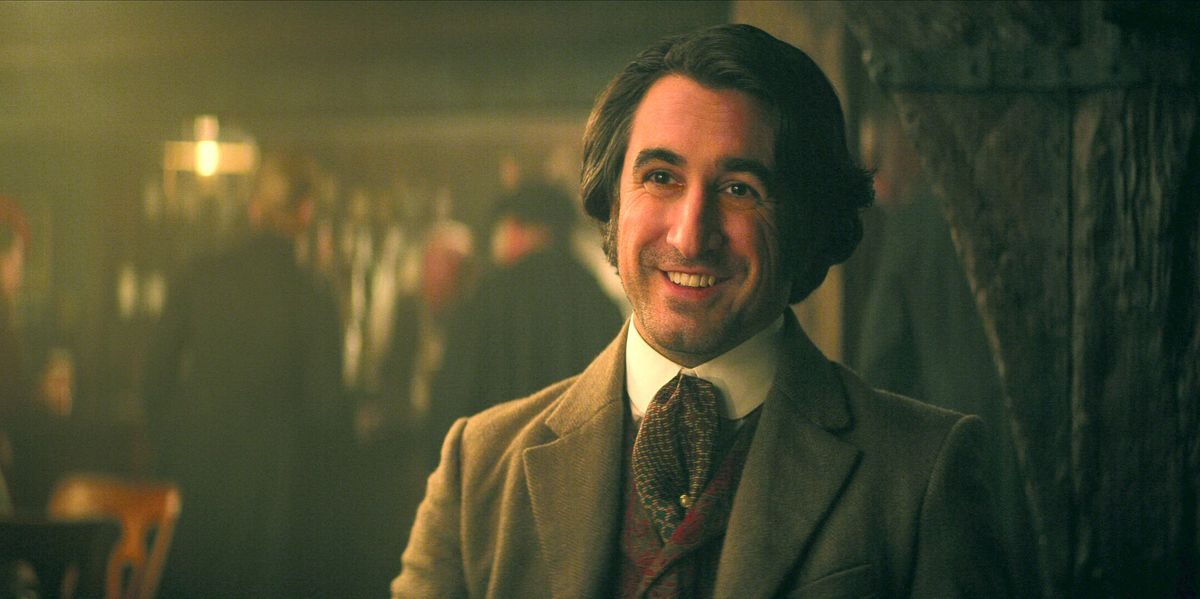
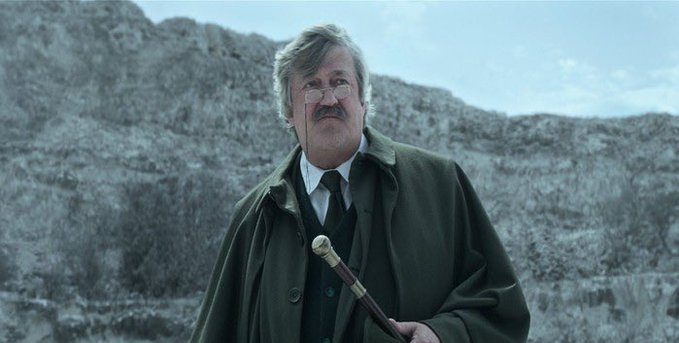
In the back-half of The Sandman Season One, Morpheus plays less of an active role in the plot instead using Rose Walker’s dream vortex to track down three citizens of the Dreaming, namely, the shapeshifter Gault, the nightmare Corinthian, and the enigmatic Fiddler’s Green. However, the reveal of the Fiddler’s Green isn’t until later, and instead, we get to meet a chivalrous and well-read gentleman named Gilbert, who is basically a less trad version of British author G.K. Chesterton known for his Father Brown detective stories, The Man Who Was Thursday, and a fixation on paradoxes. While on his way to Hal’s drag show, he rescues Rose Walker from attackers in an alleys with a sword-stick. He acts as a guardian to her and ends up driving her to the hotel where Jed is using his Father Brown-esque ability to see through appearances and innuendoes to deduce that there’s a serial killer convention in town and calling in Morpheus to rescue his charge and her brother.
Gilbert act as a foil to the Corinthian in The Sandman Season One as he finds the best in humanity unlike the Corinthian, who inspires their basest impulses. Every action he takes during the season is for the good of people, and Fiddler’s Green finds people and their ideas so inspiring that he lives in a boarding house and dresses and acts like his favorite writer, Chesterton. Also, Stephen Fry is a spot-on Patrick Stewart as Charles Xavier/Robert Downey Jr. as Tony Stark casting pick for this role capturing the intelligence, eccentricity, and empathy of this dream/man, who ends up becoming the hero at the end while reminding Morpheus that without humans dreaming, his realm wouldn’t exist. Also, kudos to the visual effects team for lovely work showing him transform back into the Fiddler’s Green, which wraps up Sandman‘s second arc in a refreshing way. Gilbert is a loving homage to Neil Gaiman’s influences, while also having his own character arc brilliantly brought to life by Fry.
Like the inhabitants of our own dreams, The Sandman has an enormous ensemble cast that explore the different aspects of being human or immortal as well as storytelling, change, and dozens of other lofty and relatable themes in settings as diverse as the pits of Hell to Cape Kennedy, Florida. The rich, wide-ranging cast of characters is what makes the comic, and now the show, worth revisiting to bask in their arcs, personalities, and the nuances of performances by talented performers.