Tag Archives: megacon

Fan Expo HQ signs Ghost Machine’s creators for exclusive appearances

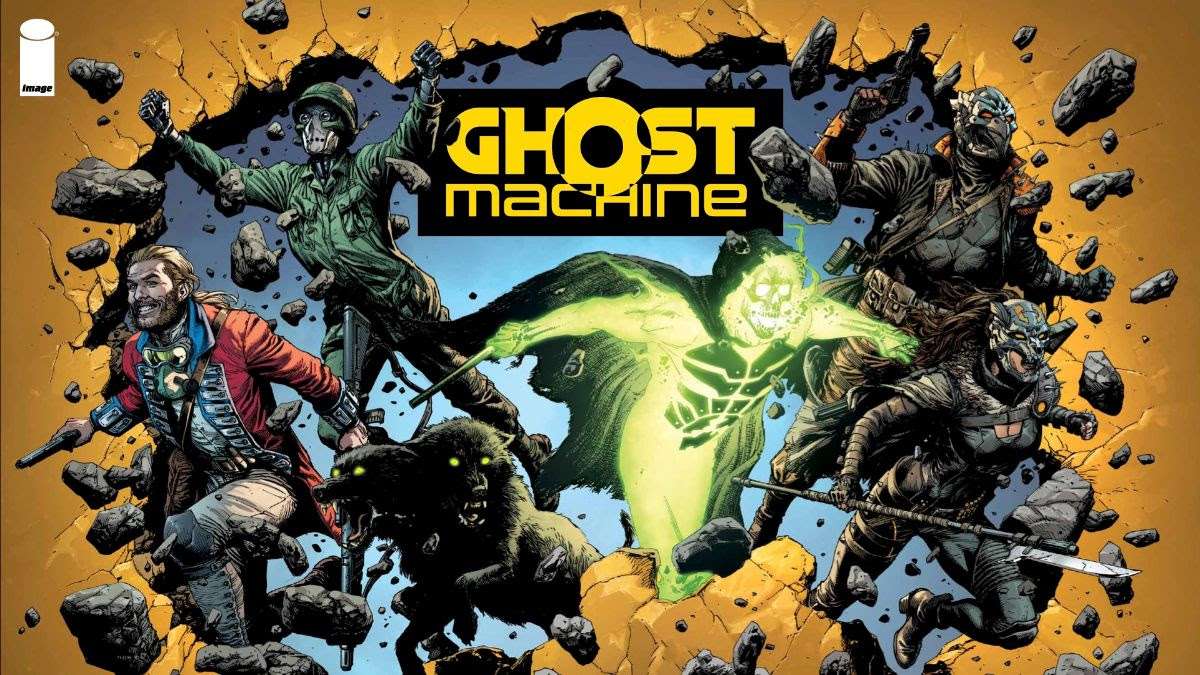
Fan Expo HQ and Ghost Machine—the recently launched creator-owned and operated media company from celebrated creators Brad Anderson, Jason Fabok, Gary Frank, Bryan Hitch, Geoff Johns, Rob Leigh, Lamont Magee, Francis Manapul, Brad Meltzer, Ivan Reis, Peter Snejbjerg, Peter J. Tomasi, and Maytal Zchut, published by Image Comics—has agreed to a series of exclusive appearances for the Ghost Machine creators at Fan Expo HQ’s upcoming 2024 North American conventions, including:

  • MEGACON Orlando – February 1-4, 2024
  • FAN EXPO Philadelphia – May 3-5, 2024
  • FAN EXPO Denver – July 4-7, 2024
  • FAN EXPO Chicago – August 16-18, 2024
  • FAN EXPO Canada – August 22-25, 2024

Under the exclusive appearance agreement, Ghost Machine will have a branded booth and a number of its creators will attend signings and other activities in the course of each aforementioned convention. Additionally, Ghost Machine will design one Fan Expo variant cover for each attended event which will retail exclusively at the Fan Expo Store.

Diamond announces a partnership with Fan Expo Dallas for the 2023 Retailer Summit

Diamond Retailer Summit 2023

Diamond Comic Distributors has announced that its 2023 Retailer Summit for comic book specialty retailers will take place Wednesday, June 7 through Friday, June 9 in Dallas, TX just ahead of Fan Expo Dallas, which is set to run from Friday, June 9 through Sunday June 11. Diamond also plans to host the 2024 Retailer Summit in conjunction with MegaCon Orlando as part of a two-year partnership with Fan Expo HQ.

The 2023 Retailer Summit will offer a wealth of entertaining, educational and informative activities, bringing together the industry’s retailers, publishers, key vendors, and Diamond staff for the 3-day trade-only event. The Retailer Summit will feature key supplier presentations, a trade-only Exhibit Hall, retailer workshops, publisher forums, and more events for comic book specialty retailers.

Diamond’s Retailer Summit is the leading annual event for comic book specialty retailers to meet with publishers and suppliers who come together to discuss the industry and their businesses. Top publishers sponsor the event and share exciting new projects, while retailers get the opportunity to network and learn about new and proven business practices to help them succeed in today’s retailing environment.

MegaCon 2023: Fall of X details revealed!

At the Marvel Comics: Fall of X Panel at MegaCon Orlando, fans got fresh insights into the X-Men’s upcoming new era, Fall of X! Senior Editor Jordan D. White was joined by a trio of X-Men talent—writers Gerry Duggan and Benjamin Percy and artist Joshua Cassara—to chat about some of the new series, stories, and shakeups in this exciting era.

Since 2019’s revolutionary House of X and Powers of X series, mutantkind has experienced unparalleled growth and prosperity on the island nation Krakoa – but can it really last forever? It all begins in July’s shocking X-Men: Hellfire Gala #1 one-shot where danger, conspiracy, and sacrifice threatens to shatter everything mutantkind accomplished on Krakoa. Revealed earlier today and showcased at the panel was a brand-new Fall of X teaser image by Bryan Hitch. The haunting image is accompanied by a list of Fall of X tie-in titles, some of which have yet to be announced! 

Below are additional upcoming titles and issues revealed at today’s panel:

  • Announced last month at Marvel Unlimited’s X-Men: 60 Uncanny Years Live Virtual Event, the devastating events of the Hellfire Gala and the tragic circumstances of Fall of X calls for the return of the Avengers’ Unity Squad in a new run of Uncanny Avengers written by Gerry Duggan and drawn by Javier Garrón! The new lineup will include Captain America, Rogue, Deadpool, Quicksilver, Psylocke, and Penance. This powerhouse new team must solve the mystery of who the new, murderous Captain Krakoa is — and stop his army of killers from igniting the fires of a new world war. Fans can check out the team on the newly revealed main cover of this highly-anticipated series!
  • Duggan will also continue to write X-Men throughout Fall of X. Following the Hellfire Gala, the title will see a cast shakeup with new additions such as the winner of this year’s X-Men fan vote and Kate Pryde. She’s been known as Kitty, Sprite, Ariel, Red Queen and Captain Kate. Now, as the X-Men finds their way through their darkest hour… SHADOWKAT emerges! Harkening back to the character’s ninja training, see the characters radical transformation in a new design sheet by visionary artist Peach Momoko.
  • Benjamin Percy’s run on X-Force has been delivering pulse-pounding action and thought-provoking drama since the Dawn of X, and now the stakes are higher than ever! Daniel Acuña joins as cover artist for this bold new era, and his X-Force #43 piece unveils new team leader Colossus on the frontlines with the squad…but where he leads them you will never expect!
  • Percy’s astounding work on Wolverine will also be kicked into high gear as the dire circumstances of Fall of X send Logan on the run and into a collision course with Ghost Rider! Alongside acclaimed artist Geoff Shaw, Percy will bring both his Wolverine and Ghost Rider runs together in a four-part epic: Ghost Rider/Wolverine: Weapons of Vengeance! A demonic serial killer is murdering innocent mutants. But what is it about this deadly new villain that forces our two heroes to team up? And what buried secret does he share with Wolverine and Ghost Rider’s never-before-seen very first meeting in the past? The crossover kicks off in August’s Ghost Rider/Wolverine: Weapons of Vengeance Alpha before unfolding in the pages of Ghost Rider #17 and Wolverine #36 and coming to a fiery conclusion in Ghost Rider/Wolverine: Weapons of Vengeance Omega.
  • Fans also got a peek at Tony Stark’s new stealth armor on the cover of Gerry Duggan and Juan Frigeri’s Invincible Iron Man #9. With Feilong in control of Stark Unlimited and using its resources to build Stark Sentinels, Tony Stark has proposed a new alliance with Emma Frost. Tony will play a key role during Fall of X and his latest solo title impacts mutantkind’s new status quo in surprising ways. 

Check out the covers now and stay tuned for more Fall of X announcements including news about titles launching this summer!

Diamond Cancels the 2020 Retailer Summit

Diamond Retailer Summit 2020

As the impact and spread of the Coronavirus (COVID-19) continues to evolve, Diamond Comic Distributors has the difficult decision to cancel the 2020 Retailer Summit scheduled to take place April 14-16, originally planned to be held in conjunction with MegaCon in Orlando, FL. They have done this out of an abundance of caution and with deep disappointment. The distributors is looking at options as far as planning a new conference date.

Diamond’s top priority in this decision is the health and safety of staff, business partners, conference attendees and colleagues.

We appreciate the efforts of the Informa team and the state and local authorities they are working with to provide a safe environment for fans and vendors, and support their goal of another fun, successful convention. MegaCon Orlando is part of an international organization with dedicated health, safety, security and travel experts who are monitoring developments, sharing relevant information and providing guidance on events. At this time, we cannot ask our sponsors and retailers to commit to travel plans while the Coronavirus’ impact is so uncertain.

More updates will be made in the upcoming coming months as they determine possible attendance at other events.

Diamond Heads to MegaCon Orlando for the 2020 Retailer Summit

Diamond Comic Distributors has announced that its 2020 Retailer Summit for comic book specialty retailers will take place Tuesday, April 14 through Thursday, April 16 in Orlando, FL ahead of MegaCon Orlando, which is set to run from Thursday, April 16 through Sunday, April 19 at the Orange County Convention Center. 

The 2020 Retailer Summit will offer a wealth of entertaining, educational and informative activities, bringing together the industry’s retailers, publishers, key vendors, and Diamond staff for the 3-day trade-only event. The Retailer Summit will feature key supplier presentations, a trade-only Exhibit Hall, retailer workshops, publisher forums, and more fun and informative events for comic book specialty retailers.

Diamond’s Retailer Summit is the leading annual event for comic book specialty retailers to meet with publishers and suppliers who come together to discuss the industry and their businesses. Top publishers sponsor the event and share exciting new projects, while retailers get to network and learn about new and proven business practices to help them succeed in today’s retailing environment.

Additional details and registration information to come.

Around the Tubes

The weekend is almost here and we’re heading to Otakon! We’re counting down the hours before we’re checking out anime and manga right here in Washington, DC! We’ll be Tweeting up photos from the con this weekend.

While you wait for that, here’s some comic news and reviews from around the web in our morning roundup.

Around the Tubes

The Outhouse – Megacon’s Love Is Love Events Raise $18K For Charity – Money that’ll do a lot of good!

DC – Breaking News: A Whale of a Black Lightning Villain – Who’s excited for this series?

The Mary Sue – Disney Store Adds Official Ms. Marvel Costume for Young Aspiring Heroes – So cool to see this!


Around the Tubes Reviews

Comic Attack – Black Road Vol. 1 Holy North

Newsarama – Brobots Vol. 2

Horror Geek Life – The Eyrie

Newsarama – Mega Princess

Talking Comics – Mister Miracle #1

Talking Comics – Redlands #1

Newsarama – Secret Empire #8

Talking Comics – Secret Empire #8

Megacon 2017: A Trip of Errors Part 4

Goodbye For Now, But Not Before Some Goodies

After the LGBT panel, I had just enough time to make it to the Publishing Comics In The Digital Age panel hosted by Benny Powell and David Campiti of Red Giant Entertainment. Before going into digital comics, Benny Powell told the audience his story of breaking into comics. The old way was that you had to go to a convention like Megacon, of which there were very few. If you were an artist, you needed a portfolio of your work, and it needed actual sequential pieces. Pin ups wouldn’t (and still don’t) cut it. Powell met legendary comics professional Archie Goodwin in a Dallas convenion looked through Powell’s portfolio and asked about one story he did, what script was it? Originally, you would base your sequentials on a currently published script provided by the publisher. Powell decided to take the oddball approach of using an original story.

Goodwin, in the best backhanded comment ever, told him, “you ever thought of becoming a writer instead?”

“Well, have do you become a writer?” asked Powell.

“Oh, it is infinitely harder. Typically, you get an internship which is unpaid, go to New York which is very expensive, do it through college, so you’re taking out loans to work for others. That takes you on the path to becoming an assistant editor. You work there for many years and try to submit some stories. You might make it to editor and hire writers to be assistant editors because that’s how they get the gigs.”

“Oh. Wow, how do you get started.”

“No, kid. I’m offering you an internship at DC.”

Even knowing what he would go through, Powell signed up for the internship and was set on leaving for DC during the Summer semester. Unfortunately, he developed a medical condition. Turns out Powell was allergic to the state of Oklahoma. He called up Goodwin saying he needed to go the Spring semester instead, only DC didn’t have one.

“You like Marvel, kid?” asked Goodwin.

“Um, yeah,” said Powell.

“Give me five minutes.”

Being a big name at both DC and Marvel, Goodwin was able to call up Marvel and they had a top internship available during the Spring semester. Powell took it and was surprisingly able to write stories while interning to become an editor. David Campiti’s story was similar except that the professional he met was Julius Schwartz and ended up writing for Superman. The point of their anecdotes was to illustrate to us the audience that we are infinitely luckier. Thanks to the Internet, comics publishing has expanded beyond publishing houses like DC, Marvel, etc. Anyone can make a comic as long as they have the dedication and talent.

Powell and Campiti started giving advice, the first to figure out what kind of creator you are. Writer? Artist? Both? Campiti said that don’t worry if you’re a traditional artist. You can make traditional art than scan it to put online. There is also 3D art, photography comics, digital painting, etc. At the same time, you have to determine if you want to do comics on your own or collaborate. Even if you’re not the best, you will improve by doing. And with digital, there’s nothing you can’t do.

Powell went into greater detail with collaboration. There are two types: 1) Work-for-hire where you own the property 100% while the hired person does the work you want them to do by paying them money out of your pocket. 2) A collaboration where you share ownership with someone else, whatever the percentage ends up being should be fair. Never do a pseudo work-for-hire where it’s like “if we make money, I’ll pay you.” If you have a pet project you don’t want to give up, put it aside and try a new project first. Make a second comi you don’t mind sharing as much. Never have just one thing. If you’re a writer, you should be bubbling with ideas.

Campiti added that, online, your stories can be about anything. There’s no big publisher editor deciding your story is not trendy enough for the market. Campiti read a wonderful webcomic about a teenage girl that got braces and her life went to hell in a handbasket because of it.

Gee, that sounds familiar.

Now, the question was where do you find someone to collaborate with? There are many websites for these things, but the two Powell suggested are Deviantart and Digital Webbing. Deviantart is well known as a site for artists of all mediums to post their work for free. I know that collaborations can happen this way because Tom King, in a previous article, told a panel about how he found Barnaby Bagenda, his artist on The Omega Men, via the site. Digital Webbing is an old school forum-based talent agency for comic creators. One time Powell posted a work-for-hire position, and he got back 56 replies from artists. He went with a team from China and produced over 25 issues of a series.

Campiti advised the writers in the room, including me, to be ready to work with artists that learn on the job. That means bracing yourself for mistakes they cannot fix. Your finished project might not be the best out there, another good reason to put those pet projects in the drawer for later. Besides, you will be making mistakes as writer. That’s okay though because you will learn, lessons on what to do and what not will be drilled into your head. The goal is making the comic.

On the subject of script writing, Campiti said there is no set format. On his website, Glass House Graphics, there is a section with 9 samples of plot and script format, plus action sequences. All of them are diverse, but the point is to communicate clearly with the artist. Do not show off on panel description, particularly details about a scene that will not be visible. No “the night is dark with the air of death and blood.” Just “the night is dark” will do fine.

Powell went on to talking about host sites for your webcomic. You can do your own, programs like Squarespace are available. But for beginners it is easier to go to a publisher house. There is Comics Genesis, Comics Spider, etc. Google “free webcomic publishing.” You can eventually move into your website once you get a hang of it. While publishing, pick a steady, consistent frequency to upload that works for you. Once, twice a week is good. Don’t go overboard or too slow. Working ahead of schedule also helps.

You should wait until you have at least 20-30 pages ready to go for exercise before sending it out in the world. That way you have enough content to publish. Then go to forums and start showing it off. You will find an audience. While doing that, Powell talked about using ad networks to help further expand your outreach. He suggested Project Wonderful which is an ad network program that only charges a few cents a day. You can even collect ad revenue, just keep in mind it won’t be much.

Another important part of webcomics is networking. Advertisement, posting on forums, social media are all important. Powell also suggested that inviting artists to do guest comics is a great networking tool and vice versa. Yes, it will probably be for free or work-for-hire, but it can draw a new audience.

Finally, the most important of all this: Money!

Powell said having an audience is great, it’s what drives in the money. There is monetizing through ads, but that only goes so far. Print collections of your webcomic can bring a ton of revenue. Kickstarter is a great way to fund such a project and you can pre-sale online. There are also publishers like Red Giant where webcomic creators come to them for printed versions. Don’t do it though until you have an established amount of content and an audience that will be willing to buy. You can also go to places like Comixology and Top Folio for digital revenue. Powell concluded by suggesting everyone check out Red Giant’s new imprint, Absolute Comics Group which is a way of finding and giving back to new creators with money.

The Q&A segment began afterwards. The first question was what webcomic host sites would Powell and Campiti recommend? They suggested Keemspot because they’re helpful bringing in a new audience. They send announcements to their registered readers recommending new webcomics to read. On the question of if it’s a good idea to use multiple sites to host your webcomic, they said to stick to one so it will be easier for an audience to find you. Also, you don’t have to wait a certain amount of days to wait to start putting up ads. Start on day one. As far as the idea print comics are declining, Powell said it’s more likely collected volumes will become more popular than single issues. We’re already seeing that right now. Campiti pointed out it will also depend on changing in distribution. The monopoly of Diamond Distribution on the direct market needs to end because it reduces the medium to a niche market. It used to be you could get comics in a lot of different places, but now it’s mostly comic shops you have to go to. Also, price needs to be reduced because $4 for floppies is too much.

I learned a lot from this panel. It’ll be good information to use when I venture into making my own comics online. Afterwards, I collected more autographs (I learned nothing) and checked out more small press comics. I also took pictures of cosplayers, two of my favorite being Mary Poppins Youndu

and myself with Death.

I didn’t get to Red Giants booth, but I’ll be sure to check them out online. I left the con an hour or so later and had dinner with my friends. We all had a busy, exhausting day, but were bummed the con would be over tomorrow.

Sunday, May 28th, last day of Megacon. There isn’t much to tell about this day. It was dedicated mostly to collecting last minute goodies and saying farewell to friends. I stopped by the booth for Famous Faces & Funnies, my favorite comic book store from Melbourne, Florida. The owner, Rick Shea, is a good friend of mine. We caught up and I purchased a few graphic novels. I found out from him that John McCrea was at the con. He is the artist of titles like Hitman and Section 8 with my favorite writer Garth Ennis. I quickly snatched the first trade to Hitman and got McCrea to sign it. We didn’t get to talk much, but he was a pleasant man. Afterwards, I headed up to the entrance of the con and waited for my friends. Jeff and Sean showed up a few minutes later. Matt was late, but only because he picked up a Blu Ray copy of Godzilla: Resurgence.

We checked out of the hotel, packed up, and travelled back to Jacksonville–with a segue to Boston Market. Megacon 2017 was an interesting trip despite all the mistakes I made. If anything, it’s just part of learning to be a better writer and comic journalist. I want to thank Matt Oldham, Sean Mckenzie, and Jeff Gwinnup for coming with me. I want to thank rising comic stars like Sorah Suhng and Tee Franklin for their friendliness and insight. Thanks to all the comic professionals for autographs and fun panels. Thank you to Megacon and the Orange County Convention for giving me a press pass and setting up this wonderful event. I don’t know if I’ll go back as a reporter next year, but this will continue to be the most excited time of the year for me.

Megacon: A Trip Of Errors Part 3

Too Much Of A Good Thing Can Be Bad

In reference to the subtitle above, I had two incidents where this was true. The first started in the morning with a hangover I hadn’t experienced since New Year’s of 2015, which is a bad thing considering that I was so drunk I threw up in a nice car and passed out in the bathroom with my pants down. This did not occur in the hotel room I shared with Sean, Matt, and Jeff. I was snugly in bed, but with a throbbing headache I might as well have slept on concrete.

With a headache, spinning vision, and nausea, I made my way slowly to the fridge, eating cherry tomatoes and drinking water in hopes it would curb the dryness of my mouth. Later, this would backfire as I regurgitated my snackings in the toilet. Forcing myself out of the John Wick suit, I replaced it with my John Constantine cosplay. I got “into character” and skipped showering. Hey, at least I brushed my teeth. Today was Saturday, the busiest day for any convention, and my plan was to get more signatures from comic pros, particularly Jason Aaron and Dan Slott. After that, I would stop by a panel about breaking into comics digitally.

Outside, the heavy trench coat added to my woes as I sweated like crazy due to the Florida heat. Combine this with my headache and sensitive eyes, I feared the trek to the Orange County Convention Center would be hell (Hey, that would also be in character). As though a God send, a taxi stopped by and picked up the gang. Well, me and Matt anyway. Sean and Jeff were smart enough to go on ahead without us. It was a complimentary ride from Megacon, and the driver was a very nice gentlemen, so the ride turned out pleasant.

At the con, I rushed onto the floor. Starting around 11:00 AM, Jason Aaron would be showing up for autographs. Aaron is best known right now as the writer of Thor, but I’m a bigger fan of his creator-owned works such as Scalped, Southern Bastards, and The Goddamned about crime and the effects of traumatic experiences on people. I brought a trade of The Other Side, his miniseries with Cameron Stewart about two men from opposite sides of the Vietnam war slowly driven insane by the chaos around them. I waited in line eagerly, but bad things were taking place inside me. I could feel bile rising to my throat. I was getting ready to puke, and the urge got stronger as I approached closer and closer to Aaron. The feeling reached its peak at the front of the line. The Megacon staff guy asked me if I was okay? I told him no, that I felt like I was going to be sick and if I could quickly step out of line real quick? He told me yes, but I would have to go to the back afterwards. I was mad. What the heck, dude? I wait all this time and you don’t have the courtesy to at least let me back in my spot? I was determined not lose it. I took several deep threats and stayed put.

I managed to make it to Jason Aaron without puking. I was hoping to chat him up a little, tell him how much his work means to me and how great The Other Side is with his interpretation of the Vietnam War as a Lovecraftian entity that drove the people experiencing it mad. Unfortunately, I was pretty pale and shaking. I think Aaron could tell and was weirded out, so he kept things brief. I managed to get my signature and not puke on my hero, but at the same time I felt embarrassed for getting into such a crummy state. The first error of the day, and the lesson I learned was not going crazy with alcohol.

After Aaron’s signature I headed over to my friend Sorah’s booth. She was working on commissions but had time to talk. I told her about the hangover of which she felt bad even though I promised it was my fault for not keeping track of the drinks. After we finished talking, I got in line for my next autograph with an eager, mischievous grin. The next comic pro was Dan Slott.

Aside from Graphic Policy, I also happen to write for a website called the Outhouse. If you’re new to comics journalism, the Outhouse are muckrakers that hunt down awful things happening in the industry and bring them to light, much to the bane of professionals and publishers alike. One of our sworn enemies is Dan Slott, current writer of Spider Man and Silver Surfer. He has received criticism for being abrasive on social media, going so far as name searching himself and arguing with strangers. At one point, Slott got tired of seeing our criticisms and decided to block everyone associated with the Outhouse, including me. This was no great loss to me. I’ve read his work and have a mixed opinion of it. His Spider Man writing is boring, Silver Surfer is okay but borrows heavily from Doctor Who, and the only work of his I’ve enjoyed is Renew Your Vows, a miniseries about Peter Parker being a loving father and husband. You know, what fans want to see him as instead of a Tony Stark clone. However, when I learned he was going to be at Megacon, I could not pass up the opportunity. As far as I knew, he had no idea who I was and blocked me randomly. So, I brought my copy of Silver Surfer sign for him to sign.

As it turns out, Dan Slott was a nice man in person. He greeted me with a smile and signed my copy of Silver Surfer. I mentioned how it read like Doctor Who, and instead of being mad admitted how much he borrowed from the franchise. In fact, he mentioned how producers of the Doctor Who television series were fans of the comic. We exchanged a handshake, took a photograph, and parted ways on a friendly note. I was pleasantly surprised by this exchange. Perhaps the impersonal nature of the Internet causes people to be nastier than they would in person. I showed the gang my signature and we got a laugh out of it, but they were also glad Slott turned out to be cool.

IMG_2481-1

Suddenly, I got a call from a friend of mine, Stephanie, who was attending the con. She told me that in 10 minutes there was going to be a panel on LGBT themes in comics. There was a similar panel the day before but I forgot to go. I decided this was something I wanted to attend and rushed over to the panel, just barely making it on time.

Leading the panel was Marc Andreyko, a comic book writer with quite the number of titles in his portfolio including Manhunter and Wonder Woman ‘77. He is also an openly gay man and the project organizer behind Love is Love, an anthology benefiting the victims of the Pulse nightclub shooting, America’s deadliest mass shooting in history that specifically targeted the LGBT community. Joining him were fellow LGBT comic creators, artist Cat Staggs ( artist of Crosswind, Womanthology), her wife, writer Amanda Deibert (Wonder Woman ‘77, John Carpenter’s Tales For A Halloween Night) accompanied with their baby daughter Vivian (so cute), artist/writer Phil Jimenez (Superwoman, Fairest), artist/writer Tana Ford (Silk, Duck), writer Tee Franklin (Nailbiter #27, Bingo Love), colorist Jose Villarubia (Sweet Tooth, American Chavez) and artist/writer Dee Fish (Finding Dee, The Wellkeeper).

After introductions were made, Marc Andreyko started the panel with mentions of the anthology’s success and how 7 foreign countries have asked for translated editions. Andreyko especially loved how there was next to no editing for each of the short stories. Yes, there were spell checks and typical tweaks like that, but no creative interference. The stories came directly from the creator’s hearts. Even so, Andreyko praised the editors on the book, two of whom volunteered for the book despite having 13-15 monthly titles on their plate. Without them, or the readers, the book would not exist.

The questions asked were kept short and simple, allowing the panelists to give some truly great answers. One young man talked about how he has to constantly argue with his LCS (local comic shop) to have more titles with women and queer characters in them. He asked if those types of characters are reasons certain segments of the market won’t buy them? Even though they hoped that isn’t the case, all the panelists agreed that those type of consumers shouldn’t matter. Andreyko stated that honesty matters the most, doesn’t matter if a character is gay or straight, black, Jewish, etc. If a story rings true to human experience, people will enjoy it. That’s why he doesn’t start with a social identity with a character. He figures out the type of person they are who so happens to be these other things. It’s also important to have diverse experiences for marginalized characters or they just become a cliche. He gave an example of a gay character from a show called Happy Endings who is socially awkward, overweight, and has trouble getting dates. He has friends that complain the character isn’t a role model, and Andreyko agrees but he relates to him so much. I believe his point is to write characters that are real and not negative stereotypes or didactic caricatures.

Tee Franklin jumped in on this conversation by discussing the creation of her graphic novel, Bingo Love about two grandmas that fall in love. A lot of questions asked of her on the creation of the book was “why?” With that kind of reaction, she knew it wouldn’t be published at Dark Horse or Image, so instead Tee took the idea online and was able to find an audience for the concept and get the book successfully funded via Kickstarter. “If someone doesn’t want the story, they don’t have to read it. I’m not making it for them, I’m making it for the people that want to read it. I’ve had people come up to my booth and cry because they say that their grandmothers are gay, or one girl said ‘I want to get your book but I can’t because I’m hiding from my mom who I am, and I’m afraid she’ll find it.’ You’ve got to know the people whom you’re writing this book for, and if someone doesn’t like it screw them, it doesn’t matter.”

Phil Jimenez brought up how human experience isn’t universal, so he tries to write about very specific experiences. Although you do find from those specific experiences some universal patterns: looking for love, for confidence, for family, somewhere to belong, etc. Sometimes it takes exploring a specific experience outside of what we regularly see in media for universality. He tries to fill his stories with as many different people from diverse backgrounds as he can and is lucky enough to have worked with creative executives who are looking for that kind of work.

Dee Fish brought up when she came out as trans in a Webcomic of her’s that is oriented to a younger audience, Dandy & Company. She did a scene where she came out to the main character, Dandy, and was afraid of what would the reactions were going to be. “It went amazing! I had more people reading the comic and became more deeply invested and tried more of my work because they learned more about me. And if there was anyone really angry at me about it, I never got a letter or anything about it.”

The subject of queer erotica came up and someone asked if it should be considered just as essential as other media or if it’s holding the community back. Andreyko stated yet again good work is good work, including smut. Also, just because a storyteller is mostly known for smut doesn’t mean they can’t branch out to other types of stories. He brought up the mangaka Gengoroh Tagame who is mostly known for explicit gay erotica but recently came out with an all ages book called My Brother’s Husband, about a single father who’s brother has died and his Canadian husband comes to live with him and his daughter in Japan.

Tana Ford admitted that she has mixed feelings on this subject. Can people who don’t want diversity point to gay erotica and keep queer people in a ghetto because “Oh, they’re disgusting.” On this point, Phil Jimenez says that queer comic creators should decide how much they want their work sexualized. Keep in mind, the term queer does not mean gay sex. He uses it as a broad umbrella term for people that are outside of cis and heteronormativity. He theorizes queer people internalize this fear of their sex lives because culturally there has been pushback of openly expressing them. “The interesting part about the title Love is Love for me is it’s not just about who we love but who we’re attracted to. Who we want to build lives with romantically but also want to be with sexually.”

Amanda Deibert chimed in this is why she’s pro gay smut. If straight people get to enjoy it, queer people damn well have a right to it. Not everyone enjoys smut, gay or straight, but they don’t have to read it and the queer community shouldn’t have to be responsible for the uncomfortable feelings of non-queer people over their sex lives. Besides, if they have those type of feelings then they’re already against LGBT rights. Jose Villarubia brought up how he learned that a good number of his female art students are into gay boy-on-boy romances. So, even then straight people can be into gay erotica as well. It all boils down to having good work no matter what it is.

The Q&A got serious when a young trans woman asked if all the different labels for various queer identities muddled things? The reason she asked is that she had a bad experience going to her LGBT council center. After coming out, she got 30 death threats, had a huge drop of friends, and, worst part, was turned away by a clerk at the center for not being gay or trans enough. Andreyko told her to found out who turned her away because what the clerk did was unacceptable and should be fired. He confessed to not having the same struggles too many LGBT have had on coming out because he had incredibly accepting family and friends. The thing to do is look for like-minded people offline and online. They are out there and you will find acceptance.

The final questions of the day came from my friend Stephanie who asked what tropes the panelists would like to see disappear from comics. This prompted Tee Franklin to laugh out loud. “Oh, we ain’t got time for all of them, sweetie.” What Tee wanted to see less of was the tendency to portray black people in constantly negative light such as crackheads and criminals. Tana Ford wanted the trope of killing of queer characters to stop. Let them live, please. Marc Andreyko wanted the gay stereotype of a witty gay man with no relationship but highly apt at fashion go away. For Phil Jimenez, the idea all queerness is through a white cis male’s perspective. POC queer characters shouldn’t exist as just the significant other of the white queer protagonist. Let there be POC couples. Amanda Deibert was happy that at least the trope of the lesbian going back to the man has seemed to disappear completely.

After the panel, many of the audience members went over to the young trans woman to comfort her and show their support. Andreyko went over to make sure she was all right. It was a great panel that reaffirmed my belief that diversity in comics is important. The one thing I regretted was not having focused more on Love is Love during my time here. In fact, Megacon had a big showcase of it, including an art display and party that night. I didn’t go because it would have cost too much money, but I still felt guilty I didn’t find more opportunities to write about it. I think this was because of my focus on autographs. Error #2: Focusing too much on autographs can lead to missed opportunities. Make sure to find other opportunities.


Megacon: A Trip of Errors Part 2

You Can’t Always Get What You Want

Friday, May 26th. The gang and I woke up and prepared for our second day of Megacon. Matt and I decided to cosplay, him as Jason Voorhees (leaving quite the mess of fake blood in the bathroom that hopefully did cause some poor hotel maid to faint). Lacking creative but making up in looks, I brushed my hair back with product, put on a suit, and went as John Wick armed with a handgun and stuffed doggie. As it would turn out, plenty of people knew Jason but were blanking out on Wick. It could’ve been my blond hair or nerds showing poor taste.

IMG_2436

As reporters, Jeff and I made plans to go to certain panels since those are where the really interesting stuff about comics are discussed. Jeff went to a lot more than I did because my goal that was to meet Tom King and ask for an interview. If you don’t know who Tom King is, clearly you’ve been living under a rock but I’ll get you up to speed. He is the critically-praised author behind brilliant series such as The Vision, The Omega Men, and Sheriff of Babylon. What has made him such a household name is the use of genre fiction for dark, thought-provoking subject matters such as war, family, and religion. He also co-wrote Grayson with Tim Seeley and showed off the character’s butt a lot because, you know, even the moodiest writer needs a spark of joy.

Recently, Tom King has gotten big due to his run on Batman. It’s a highly contested run, some finding it trying too be smart or confusing for its own good. I on the other hand think it’s an emotional run about Batman coming to terms with his darker elements and attempting to become emotionally open and available to his friends. You know, while shooting out of his car to stop a plane crash and breaking into Bane’s fortress to take out thousands of goons. High literature! In all seriousness, this run has made me care about Batman again, and I’ll die on a hill defending it. I brought with me the first trade and waited eagerly in line for his autograph. I was also hoping to get an interview with him discussing his approaches to the series and Vision.

Tom King was exceptionally nice and energetic, appearing to be genuinely excited to meet fans. He wondered who I was cosplaying and guessed right away that I was supposed to be John Wick. He signed my trade and took a photograph with me. When I asked about an interview, he said that unfortunately he was not allowed to do interviews, that I had to ask permission from a Twitter handle I forgot. After Megacon, I would later find at least one video on YouTube of Tom King being interviewed with Scott Snyder. I remembered that Megacon instructed we had to go to a media room for approval, but it was a good walk back to where I had attained my press pass. Instead of pursuing this, I gave up too early and decided to move on. I did not attempt any other interviews that weekend. I was too caught up in the idea of interviewing Mr. King to think of alternatives. I will say though that I did request an interview with him online when filling out my press pass but never got back a response.

IMG_2443

That day was marked by two errors: 1) Make sure to persist in an interview and find out all your options, 2) Be prepared with a backup plan. I do have to comment that last year, I was allowed to interview comic guests simply by asking their permission and doing it at a time that would not interfere with their signings. I managed to do this with both Gail Simone and Brian Azzarello, the latter of which was a high profile guest that year with his work on TDKIII: The Master Race with Frank Miller. I appreciate that Megacon was running the con more efficiently this year, but at the same time restrictions being put on the press in regards to conducting interviews were needlessly strict and complicated.

Since I was unable to interview Tom King, I decided to go see him at a panel called Writing Comics 101. Along with Tom King were Gail Simone (Clean Room, Red Sonja), Greg Rucka (Lazarus, Wonder Woman), and Jody Houser (Faith, Mother Panic). They discussed what it’s like writing for comcis as a living, both creator-owned and work for hire, giving personal anecdotes to how they learned each lesson ever on the job. The moderator of the panel asked a series of questions, and each guest took time to give thoughtful answers.


1) When did you first realize there was such a job as writing comics?

Jody Houser, went first, saying that she always knew she wanted to be a writer but thought you had to write a novel or stage play to get recognized for it. She had always read comics here and there, but Mad Love by Paul Dini and Bruce Timm was the first she read that made her think “Man, comics are really good.” She first started off making webcomics before getting offers at bigger companies. It’s only recently now that she has so many high profile projects that she considers seriously pursuing them.

For Tom King, he always wanted to be a comic book writer, but he couldn’t say what that moment was. He distinctly remembers during Christmas when he was reading both The Dark Knight Returns and a trade of Frank Miller’s Daredevil run. He had no idea at the time who the writers were, so when he read them he thought “Man, these guys really know their voices!” King grew up in L.A., a mecca for failed writers. His father was run, so the thought of becomign one seemed absurd. He jokingly said he only realized you could a year ago when his wife stopped asking him if he wanted her job.

With Gail Simone, it took her five years into writing comics before she realized it could be a career. She always knew she wanted to be a writer, she always told stories, and the first big reaction she got was from a story she wrote in third grade. Everyone liked it, but Gail’s family talked her out of it, saying it wasn’t a viable career. Gail went on to be a hair stylist, owned a hair salon, and stayed at that while writing until it made no sense to continue. It was a scary moment to let go, but she eventually felt relieved. “Yay, I”m a comic book writer now!”

Greg Rucka’s mother was a journalist and his father a worker’s comp attorney, so writing was always in the house, plenty of books everywhere. He distinctly remembers hearing his mother’s typewriter going at machine speeds followed by an occasional DING! There was no mystery to writing. He knew it was a thing people did. As for comics, the first time he realized there was such a thing as authorial power in the medium was age 14 or 15. He was part of a group of Marvel Zombies, reading the comics they did. One day, he found something different from all the X-Men books they were reading, and that was Frank Miller and David Mazzucchelli’s Daredevil: Born Again. He read it and described it as a book where you can’t know it’s not written. You could hear Frank Miller’s voice in the story. He didn’t fully comprehend the story, but it made him realize “Oh, wow. There are really people writing these things. That would be kind of cool.”


2) Who were writers that were touchstones for you, names that you started paying attention to and followed?

For Gail Simone, that was Steve Gerber, writer of Howard the Duck, who she found to be a genius with a boundless imagination and brave enough to do things that no one else did. She also read Alan Moore’s Swamp Thing, Garth Ennis’ Preacher, and other Vertigo titles. These writers made her comics could be literature. Even now, she finds that comics currently have the best writers and artists working.

Tom King hated to be cliche, but Alan Moore and Frank Miller’s work really inspired him. A good number of superhero works also influenced him, especially during his Marvel Zombie years reading Power Pack, New Mutants, X-Factor, and Roger Stern’s work on Avengers.

Jody Houser hated to be cliched as well, but Alan Moore and Frank Miller for her as well, especially Moore with his transitions as she described as having a rhythm like music. Ed Brubaker’s run on Captain America also was a huge influence. More recently, Jason Aaron and Mark Waid are influences, their books getting her back into Marvel. Oh, and of course everyone sitting at the panel.

For Greg Rucka, it was Dennis O’Neil. He tracked down everything that he wrote. When he started writing comic scripts, Rucka referenced Miller and Mazzucchelli’s Batman: Year One. Although he advised to pay attention to the structure of the book, NOT the actual script writing because it is radically different from how scripts are usually written. Also, do not do 18-something panels unless you have the right kind of artist, or else the artist you’re currently working with will kill you. He also remarked that on him being the oddball out not being a huge Alan Moore fan. He respects him, but doesn’t click with Moore’s work.


3) As I understand, sometimes working relations between writers and artists can be tricky in terms of communication. With creator-owned, it seems more direct. What have your artist collaborations taught you over the years?

Greg Rucka recounted how while a novelist, the communication was very direct. His editor was great and helpful even though she didn’t really like him. He would take 6 months to write a draft, send it to her, and she would give back notes on how to fix it. Even though they had a relationship where they stood in each other’s corners, they would communicate and see each other. It was easier to do that kind of relationship in novels than comics though when there are normally more than one person involved. When first starting at DC, there was a strict policy where writers couldn’t communicate with artists. Yeah, you could request a phone number, but usually the answer would be no. Everything went strictly through editors. Looking back at his old work, Rucka could see all the problems with it because of a lack of communication. Part of it was his failure to communicate clearly through the script, the other was editorial not giving a rat’s ass (his words, not mine). Things have evolved, fortunately. With social media, it’s easy to communicate with an artist and editorial is no longer as controlling.

Gail Simone said different projects come out differently. She always writes full scripts, so it is what it is. However, she understands things have to go through an editor. Each step, a little bit of the initial energy gets lost. When you’re working directly with your artist, there’s this energy on the page you cannot replicate if you have to go through ten people to get that message across. She finds that creator-owned work tends to have more of the original energy intake. Simone has also worked with artists whose second language is English. The frustration is that if she can directly talk to an artist, an issue is resolved in two days. If it goes through editorial, it can take two months. It’s important to have a good working relationship with an artist, one where they know what you’re saying and can do it without much instruction. It’s best when the editor of a project understands this and doesn’t feel the need to micro-manage so much.

Tom King had run a gauntlet of experiences. With Omega Men, Barnaby Bagenda (the artist) he never met him, never talked to him. He found Bagenda on Deviantart. He lives in Indonesia and has an agent that handles communication. He drew 11 issues perfectly, King did layouts which helped. The thing that is most important is to know your artist cares. If they don’t, that’s where you’re in a bad spot.

Tom King did his best not to curse at first, but when realizing the only child present was a baby let loose. Rucka informed the crowd that if they expected a room full of writers to not curse, they’re sadly mistaken. I can speak from personal experience as a writer. We curse like sailors. Worse than sailors, actually. So, like…demon sailors?

Going back to Tom King’s point about an artist caring, you need to know what they care about. Do they care about the project? Do they just want to reach a deadline, make some great pages for a portfolio? Hell, maybe they just want to draw scenes of hockey. That actually happened when King collaborated on Batman with Jason Fabok. Fabok is a Canadian and a big fan of hockey. So, that’s why in a recent issue of Batman, Bruce Wayne is watching hockey. King decided to attract Jason Fabok to the project by giving him hockey scenes he could draw. Point is, not matter what, just make an artist care enough to deliver good work.

Jody Houser was originally a screenwriter, and unfortunately got bad advice that comics were like that. They’re not. Houser’s original scripts were too sparse for an artist, and they had a zillion questions for her after reading them. It’s a balance between writing enough detail for your artist to have an idea of what to do but also room to do their own thing. Houser has only done work-for-hire so far in her career, so it all goes through an editor. However, there are projects like Mother Panic with rotating artists, so they’re all giving commentary on the scripts and art turned in, which Houser finds to be a cool process. There are other times where she likes to push an artist to draw something outside their boundaries, such as with Marguerite Sauvage on Faith. This artist is well known for her beautiful drawings, particularly with fashion. But Houser was happy on one issue of getting her to do horror-style art, since those are the kind of stories Houser likes best. Mixing things up is always a good idea.

There were many more questions like this, but to list them all would take too long. In summary, what I learned from this panel is to always have constant contact with artists, figure out what they like/don’t like to draw, sometimes push them outside their comfort zones, to always hope that you get a good editor and if not work around that. At one point, the audience lined up and asked questions for the writers. My question was:


4) When doing a creator-owned book, do you think while writing a story of a particular artist who will draw it because they fit the aesthetic you want? Even if it ends up a situation where you’re not going to know who the artist is until after some scripts are written because of, like, it’s a corporate work-for-hire thing, do you write your story to fit that artist’s style?

For Greg Rucka, creator-owned work tends to have more direct collaboration between writer and artist. Even then, you have to know what they don’t like to draw. Liam Sharp doesn’t like to draw cities or tech, but while on Wonder Woman, Rucka had to tell him to bite the bullet sometimes when it became necessary. Once he do this we’ll get to the stones and dancing demons, I prom. To me, story has to have primacy. The story must have primacy over comfortability. Michael Lark is another example because he hates almost everything Rucka asks him to draw and then will deliver it beautifully every time. He’ll be mad about it but also admit it looks good.

Gail Simone added that some of the best things come out when you’re uncomfortable. For her, it depends on the project. With Crosswind, she had Cat Staggs in mind. She approached her and Staggs made sketches and got the concept right away. She doesn’t worry much about it all after that point. With Walter Giovani whom she’s doing a creator-owned all ages project, they loved being a team on Red Sonja and wanted to work together again, so Simone sent Giovani some ideas and asked him which one was he most interested in. Giovani chose the all ages one because he has two young daughters and wanted to work on something they could read. Once she knows the artist and what they’re capable of doing, Simone likes to push it a little bit because she believes if you’re working on something and you’re comfortable, you should start over. You should be feeling uncomfortable whether it be anger, love, or horniness or whatever.

Speaking of his Batman collaborator Mikel Janin, Tom King said they have been working together for three years yet fundamentally disagree on how comic books should be done. King thinks comics should be in small boxes on a grid and read as a vertical medium. Mikel thinks of them as a horizontal medium, which means double page spreads. He’ll take King’s pages and smoosh them together. However, King sees Janin as a superior storyteller and trusts his judgment. In one issue, King did what Janin wanted and made an entire issue of just double-page spreads as revenge, and he ended up turning in his best work.

Last but not least, Jody Houser said it’s easier when you know who the artist is ahead of time and plan things out. That’s what’s going on with her current DC title Mother Panic. Each artist on the book has a distinct style, so each story is catered around to them.

Afterwards, I went back on the floor to pick up more comics from independent creators, including Cursed Pirate Girl by Jeremy A. Bastion. I also snagged mainstream books, such as a signed copy of Secret Six from Gail Simone.

IMG_2449

The final victory of the day was getting Scott Snyder to sign my trade of Wytches and compliments for Graphic Policy being fair and balanced in our reporting. Hot dog!

IMG_2447

The gang and I left the convention to go out for dinner. We stopped by an Asian restaurant where I picked up a mere salad. This would prove a mistake. I later joined up with my good friend Sorah Suhng and had cocktails with her. We had a pleasant about comics, the industry, music, etc. Unfortunately, Sorah was buying the cocktails and I was not keeping track of the amount of Maker’s Mark I drank. By the end of our conversation, I was very drunk. An uber back to the hotel prevented any roadside damage, but the swirling or the headache going on in my head. I went to bed feeling like I was tumbling through water. That would not be the end of my misery though.

MegaCon: A Trip of Errors Part One

Arrival and Forgetting

May 25-28, MegaCon was hosted in Orlando, Florida in the Orange County Convention Center. It’s the state’s largest annual convention, covering comics, scifi/fantasy, horror, animation, and video games. Despite the main focus of this year on the guest appearances of Tim Curry and many other cast members of Rocky Horror Picture Show (1975), there was a strong presence of the comics due to the attendance of industry superstars like Tom King, Jason Aaron, Skottie Young, Dan Slott, Amanda Conner, Gail Simone, etc. Also, the sponsorship of the Eisner-nominated Love is Love, an anthology in honor of the victims of the anti-LGBT shooting at the Pulse nightclub. For me, a comics journalist, this seemed like an opportunity to go check out. The adventure was interesting with a mixture of highs and lows, and most of all learning from quite a few mistakes I made.

It all started Thursday, May 25th. My good friends Sean Mckenzie, Matt Oldham, and Jeff Gwinnup (a writer for The Outhousers, a site I have written about MegaCon previously) joined me on this journey.

IMG_2419

With all our stuff packed and snacks at the ready, we drove off to Orlando. Jeff and Matt were in one car, Sean and I in another. All things considered, it was a pleasant trip that only got tricky when we made it to our destination. See, I had booked two rooms at the Rosen hotel where we stayed at last time. However, I made a mistake. There are two Rosen hotels. The one closest to the Orange County Convention Center, literally just a walk across a skyline to, was the Plaza. I booked us at the Center, at least a 15 minute walk or so from our destination. Not all bad, given there were free shuttles, but I still felt like an idiot not booking the right hotel. This proved a bit of a hassle when Sean and I arrived at the Center and had to wait for Jeff and Matt who ended up at the Plaza. This was my first mistake, and the lesson I learned from it was to make sure that the hotel you check into is EXACTLY the correct one you’re supposed to be at.

We checked into the hotel only to discover that the two rooms booked would be more expensive than everyone in the party could afford, so we bumped down to one, forcing Sean and I to share a bed while Matt and Jeff shared another. Mistake #2 and the lesson learned: Be exact with the price of the rooms and make sure it’s affordable for all parties. When we set up in our room, I discovered that my obsession of bringing the right comic books to get signed led to forgetting toothpaste, dental floss, and, more importantly, multiple pairs of underwear. Yep, that’s right I attended all four days of Megacon with only one pair of drawers. I washed it in the sink, but still. Bad on me to fall into the stereotype of a geek that can’t maintain proper hygiene. Mistake #3 and lesson learned: Make sure you have necessities packed correctly before the superficial crap.

The walk to the Orange County Convention Center wasn’t so bad, although in the summer heat, we sweated quite a bit. The convention center itself is a wonderful piece of architecture. While the interior was typical of convention centers I’ve been to, the exterior had some spectacular design to it.

IMG_2503

I like how the windows are large and sea shell-shaped. The interior, for all it’s blandness, is large and has plenty of space to move around in. Actually, this photo is just part of the entire center. There are many more sections, so huge it took up almost the entire chunk of land that we were on. I won’t bother to try and give you measurements. Take my word for how huge this place is.

We didn’t get to the center as a group. Jeff and I searched for the area to receive our press passes. Sean and Matt went their individual ways to get a scope of the convention. Jeff and I struggled to find our destination due to conflicting information from staff. I remember in the email I got from MegaCon that we were supposed to go to a room and pick up our passes. That’s how it worked when I attended last year, but this time we headed to the vast space where people lined up to pick up tickets. Imagine it like a Home Depot, made of gray concrete, big enough to contain a football stadium, and that’s pretty much what we were dealing with. It meant us walking a good distance to the booth, picking up our press passes, and trudging to the entrance. In total, it half an hour or so. I didn’t mind the walking, but confusion from the staff was bothersome. I will say that the booth attendants were friendly and helpful. They even gave us cookies.

The con floor consisted of sections separated by red and yellow curtains. One section dedicated to the media guests (anime, movies, animation, etc.) with a photo op next door. Beyond that was the main floor that squished retailers and artist alley together, and half a square for comic guests separating artist alley from the food court. I found this layout good but flawed. I appreciate that separation of areas were so heavily focused on. It forced a certain amount of crowd control, meaning that people had to funnel through openings into lanes designed for them. Most of the the time, it worked. However, for the alley containing artist’s alley, comic guests, and retailers, there were issues. Walkways for artist alley booths were narrow, making movement tricky. Another issue is that it became hard to find an artist’s booth you wanted to see because both the crowding and sensory overload of the experience made missing one easy, even if you walked right past them. Mind you, this is a large convention. No matter what you do, traffic is going to be difficult. Still, artist alley could have used more breathing room.

This day for me was all about scoping the area and pre-planning. I walked around the con, making sure I knew exactly where each creator I wanted to see would be and vendors selling cool stuff I wanted. I managed to meet familiar faces, including Sorah Suhng, Larry E. Watts, Walter Oslie, Roland Mann, Deonna Herrold, Caleb King, Carla Wyzgala, Gail Simone, and Rick Shea of Famous Faces and Funnies. It was fantastic seeing them again and catching up. I also got to meet new people, most notably Steve Horton and Tee Franklin, both of whom I only knew online at that point. I also got autographs from creators I wanted to meet. In fact, I believe that blind-sided me from other opportunities I could’ve taken at the con. Mistake #4 and lesson: Autographs aren’t everything. Diversify your experience.

IMG_2427

Me with Tee Franklin

There honestly wasn’t much else done or accomplished that day. Books were bought from the amazing people I mentioned above, but no panels or special events I wanted to attend. That is until my buddy Jeff informed me of a Q&A with Stan Lee. I remembered seeing him at a panel last year and how much fun it was. Given this would be Stan’s last MegaCon (allegedly), I sure as hell was going to be there.

Just like last year, Stan Lee’s Q&A was full of cheer and goodwill. The difference this time is that he ran late for 15 minutes. I would learn later from staff that Stan got lost for a bit, apparently misdirected to where he had to go. Well, that and he’s actually something of a troublemaker. Apparently, he likes to get away when he can and mess around on those wheel things you stand on and drive, whatever they’re called. Honestly, that made me smile because I can see why he would do it. Stan Lee is 90-something. He probably thinks “Screw it. I’m gonna have fun before I kick the bucket.”

When the Q&A finally started, it took off with a blast. Stan Lee’s personality boomed with joy and appreciation of his fans. He answered questions eagerly and honestly. The only issue was his hearing and each question had to be asked to him multiple times, mostly his handler Max repeating in closer range. Lee seemed particularly feisty this year, sometimes taking good-hearted jabs at fans. With asking questions, he asked them to keep it simple. If you can’t ask it in one sentence, make it simpler. There were times where I felt Stan Lee was a little too mean, but overall he kept it friendly.

Stan Lee’s handler brought up a story that was hilarious. Apparently, before going to the con, Stan really wanted to visit the Marvel section of Universal Studios. Mike made the call that he would be visiting, and everyone at the Marvel area freaked out, rushing to get things ready and keep it on the down low who was visiting. They arrived before the park opened, and a kid working inside where the comics are got a surprise.

Kid: “Oh my god! You’re–”

Mike: “Shh!”

After walking around and greeting everyone, Stan said he wanted to go on a ride.

Mike: “Which one?”

Stan: “The Hulk.”

Mike: “Stan, are you crazy?! You’re too old.”

Stan: “I want to!”

I don’t remember the rest of the story, but watching Stan and Mike exchange back and forth showed me that they had quite the camaraderie. Another anecdote I liked was Stan Lee’s talk of Jack Kirby’s art prowess, how he was the kind of artist that when working on a page, he didn’t need to do an outline. Just sat down, drew an image once then immediately inked it without a second thought. And it would always come out perfect.

The panel was running late and had to be wrapped up. Before leaving, Stan Lee thanked everyone for coming and stated earnestly how much he enjoyed being at the con, blown away that Marvel has become a cultural icon like he never dreamed of and had the fans to thank for that.

One last question was asked:

“Is this your last Megacon?”

Stan: “Oh, hell no.”

One can hope.

IMG_2432

Sorry about the fuzziness. Had to shoot a photo of a projection screen.

« Older Entries