Tag Archives: Marvel Comics

Fantastic Flops: Fantastic Four (1994) Season 1 is an Exercise in 90s Cheesiness

In a continuation of the “Fantastic Flops” series, I’m going back and re-evaluating the 1994 and 2006 Fantastic Four cartoon as well as the 1998 Silver Surfer seriesand various crossovers and seeing if they’re a “Flop”, “Bop”, or “In-Between”.

The 1990s are seen as somewhat of a golden age for superhero cartoons with such classics as Batman: The Animated Series and X-Men: The Animated Series as well as Superman: The Animated Series and Spider-Man: The Animated Series. One show that doesn’t seem to get as much love of these is the 1994 syndicated Fantastic Four cartoon that aired with episodes of Iron Man as part of The Marvel Action Hour. In fact, contemporary Fantastic Four comic book writer Tom DeFalco made fun of it in Fantastic Four #396 where replacement team member Scott Lang roasts the show while ribbing The Thing.

Fantastic Four‘s animation is nothing to write home about with the exception of some cool monster designs for Namor and Mole Man’s denizens as well as a very Jack Kirby-accurate Blastaar. Mr. Fantastic’s powers definitely will always look better in this medium. On the writing and story side, showrunner Ron Friedman and his cohorts Elwin Ransom (So cool that they have the same name as the protagonist of C.S. Lewis’ Space Trilogy) and Don Segall’s scripts fluctuate from poignant adaptations of the source material to chaotically humorous (See “The Mole Man”, especially Johnny Storm’s rap because voice actor Brian Austin Green wanted to have a hip hop career.) or intelligence insulting (Both Skrulls episode.) This is a show that jokes about Prince Charles dating Roseanne Barr and features guest spots from Dick Clark and Gary Owens in the two part pilot, but also the solution to defeating various villains comes up in unrelated conversations between Mr. Fantastic and other members of the team. It also loves a running gag and catch phrase, which makes sense for the team that brought you “Flame on” and “It’s clobberin’ time”, but I swear if I have to hear the Thing say “One for the money, two for the show”, I might cancel my Disney Plus subscription. (I do enjoy the Thing’s obsession with Wayne Newton, and how he fights with Johnny Storm when he tries to burn them up.)

The mediocre “Mask of Doom” three-parter is the Fantastic Four show in a nutshell. It begins with the Thing poorly following a TV yoga workout and follows with 2 episodes of he, Mr. Fantastic, and the Human Torch dodging various Dr. Doom death traps while he mansplains his origin story to the Invisible Woman. The third part is an anachronism-filled time travel caper set in 4th century BCE Greece that has big Bill and Ted energy, especially when the Human Torch romances a Greek oracle. The extended theme song, credits, and “previously on” recaps really eat into the runtime of the episode, and important plot points like Victor Von Doom’s relationship with Reed Richards as a college student is quickly glossed over so the team can run around in creepy passageways. Dr. Doom’s origin story should have been the A-plot, and the action hijinks should have been the B-plot, but Friedman and Ransom flip that dynamic. One thing I will say about the Fantastic Four cartoon is that your never more than a few minutes away from the Thing punching something and generally crashing out.
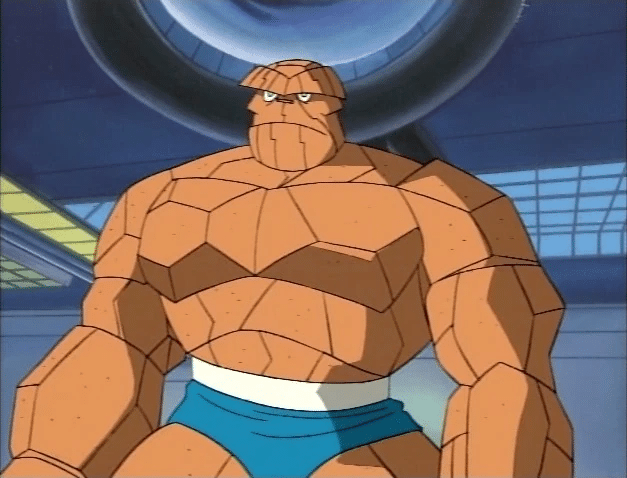
I briefly mentioned the two Skrulls episodes as being the low points of Fantastic Four, and they are along with “Behold the Negative Zone”, which shows that Annihilus and Blastaar are more interesting in their own world than on Earth. Despite having a vast invasion fleet and a warrior with all the powers of the Fantastic Four plus hypnosis, the Skrull never come across as a threat. Friedman, Ransom, and Segall would rather do a cheap imitation of basically Mars Attacks (Which hadn’t come out at the time of the cartoon.) than dig into Marvel’s rich cosmic tapestry. The most memorable moments from this episode are finding out that the Thing didn’t vote for Bill Clinton in the 1992 presidential election, and that he has bars. Seriously, he spends the entire “Super Skrull” episode trying to film a rap rock video for MTV, one of his many attempts throughout the season to capitalize on his fame as a member of the Fantastic Four to make money.

The high point of Fantastic Four other than the utter silliness of “Mole Man”, which also features Reed Richards and Human Torch/his spoiled girlfriend Melinda and Sue Storm and the Thing working as pairs, is the “The Silver Surfer and Coming of Galactus” two-parter. The scene where Alicia Master senses the Surfer’s humanity and kindness and compares it to Ben Grimms is played beautifully by Pauline Lomas and Robin Sachs. Also, Alan Oppenheimer and Shakespearean actor Tony Jay bring a real direness and grandeur to the episode as Uatu the Watcher and the Devourer himself with the Fantastic Four facing their greatest threat yet. And while this is going on, they’re facing eviction from their landlady Ms. Forbes in a take-it-or-leave-it performance from Joan Lee, who did a much better job as Madame Web in Spider-Man: The Animated Series. Dealing with every day struggles while facing the end of existence and finding the good in antagonists is Marvel at its finest, and these plus the YouTube clip of Johnny Storm rapping are the episodes of this series you should watch.

The framing narrative of the two-part pilot of Fantastic Four set at a Dick Clark telethon reminded me a lot of how Fantastic Four: First Steps told the team’s origin. Even though the film was set in the 1960s and the show was set in the 1990s, it hops right to the adventures with the Fantastic Four being a known entity with recurring foes, a relationship with the US government (And a nagging landlady), and as public figures. The 2025 film handles these elements in a much more interesting way, but it’s also a PG-13 blockbuster film and not hamstrung by the need to sell toys to cereal eating children and maybe a stoner or two. I really wanted to give a “Mid” score to Fantastic Four Season One, but am choosing to get a “Flop” instead because there is definitely potential for improvement as evidenced by a season finale that balances pathos (Silver Surfer must doing something heroic without his abilities.) and humor (A few meta jabs at their Action Hour compatriot Iron Man). If anything, the theme song is an ear worm!

Overall Verdict: Flop

Logan’s 10 Favorite Comics of 2024

After whatever the hell 2023 was, I got back into comics in 2024. The Absolute and Ultimate lines helped me get back into Marvel and DC’s output, and I also finally read some stone cold classics, both old and new, like Starman, Gender Queer, 20th Century Men, and Something is Killing the Children. I really love that I can get Silver Sprocket’s books from Comics Plus and Hoopla from my public library, and even though I’m not a New Year’s Resolution person, I definitely plan on reading more of their catalog in 2025 (Caroline Cash’s Peepee Poopoo calls my name!) as well as the back half of Starman, Planetary, finally finding out what actually happened to Krakoa in the X-Books, and keeping up with new titles. (Metamorpho and New Gods were two year end bangers!)

Without further ado, here are my favorite ten comics of 2024

10. Peepshow #15 (Fantagraphics)

One of the happiest surprises of 2024 was the release of one last issue of Joe Matt’s Peepshow a year after his untimely passing. This comic deals with Matt moving to Los Angeles to pitch a TV version of Peepshow to HBO and deals with similar subject matter as the previous decades of the book like his frugality, personal feelings of inadequacies, and yes, obsession with Asian women. However, occasional distasteful subject matter aside, Peepshow #15 shows a cartoonist’s cartoonist at the height of his craft with impeccably placed sweat beads and speed lines as Joe Matt has another existential crisis. It’s also a love letter to a comics medium with one of Matt’s friends entreating both him and the reader to pore over some of the comics taking up space in his apartment.

9. Absolute Batman (DC)

In the launch title for DC’s new Absolute line, Scott Snyder, Nick Dragotta, and Frank Martin rebuild and revise the Caped Crusader from the ground up. Absolute Batman takes elements from Frank Miller’s works, various Bat-films, and Snyder’s previous work with the character to create a beefy, working class Batman, who is currently bestie with what might later become his Rogue’s gallery. Scott Snyder and Dragotta take aim at school shootings, the prison industrial complex, and cryptocurrency while having entertaining action and chase sequences. They’re three issues into building a universe, and I’m excited to see where this book goes in 2025.

8. Grommets (Image)

Rick Remender, Brian Posehn, Brett Parson, and Moreno Dinisio’s Grommets is a semi-autobiographical love letter to 1980s skate and punk culture set in the Sacramento suburbs. Remender and Posehn draw on their own experiences as teenagers while Parson and Dinisio turn them up to eleven with detailed and period-accurate visuals that are something out of Mad Magazine. It’s fun to watch Rick and Brian’s misadventures and the ups and downs of their friendship, especially once a timer is put on it when Rick’s parents tell him they’re moving to Phoenix. The past few issues of the series have been literal bloodbaths as punks and jocks clash, and of course, the cops don’t take the jocks’ side. Grommets really captures how epic, hilarious, and occasionally sad growing up was.

7. “The Happy Art” (Self-Published)

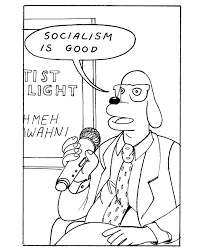
I read Sami Alwani’s Ignatz-winning “The Happy Art” on his Instagram, but it’s also available in the Pulping “Comics on Comics” anthology. “The Happy Art” is a quite meta comic about how hard it is to appeal to different audiences in comics and also about collective thinking, cancel culture, and all that jazz. Alwani portrays himself as a dog, and the story reaches new heights of absurdity with each page. I love the juxtaposition of Gen Z lingo with a fanatical love for comics as a medium, and how it changes styles and POV with each panel. Saehmeh is indeed based, and so is this very accessible comic.

6. Godzilla Valentine’s Day Special (IDW)

Zoe Tunnell, Sebastian Piriz, and Rebecca Nalty tell a cute queer love story against the backdrop of kaiju attacks in Godzilla Valentine’s Day Special. Kaiju romcom is kind of the perfect subgenre, and Tunnell gives the full progression of the relationship between unemployed burnout-turned-monster chaser Piper and Earth Defense Force soldier Tam from loathing to sweet loving. On the art side, Piriz gets to dig deep into Toho’s library of critters, including a battle royale between Godzilla and MechaGodzilla that shows that building bigger bombs and weapons doesn’t lead to peace, but just more war. It’s also interesting to see the portrayal of the King of Monsters change as the book progresses from something jarring and life-changing to just a reality of life. This could also be a metaphor for the progression of a romantic relationship as well.

5. Belly Full of Heart (Silver Sprocket)

Madeline Mouse’s Belly Full of Heart is queer softness, love, and desire in fluid comic book short story format. Mouse uses pomegranates, starfish, cars, Adidas slides, and more as visual metaphors for love. Their vignettes flow from page to page and color palette to palette in a way that feels like a warm hug multiplied by eleven. Belly Full of Heart throws plot out of the window and focuses on feelings and vibes instead. It’s also full of silly humor with “Kissin’ at the beach/Pissin’ at the beach” getting inducted into the kind of rhyming couplet hall of fame. Belly Full of Heart captures the feeling of being 100% yourself around another person as Madeline Mouse rejects rigid panel boundaries and embraces hand lettering to craft one of the most beautiful and gender euphoric comics of 2024.

4. Midnight Radio (Oni Press)

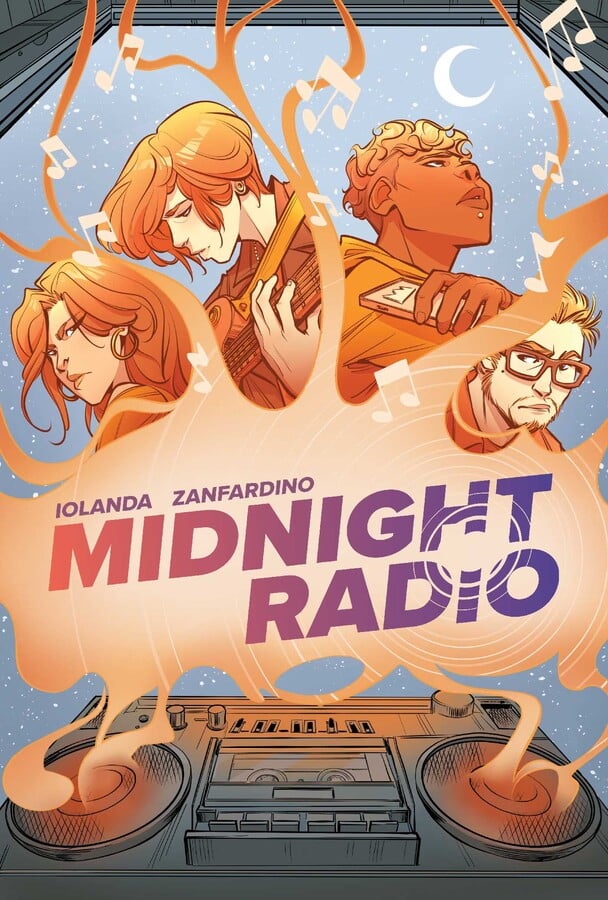
I know that Midnight Radio technically came out in 2019, but it got a special edition remaster from writer/artist Iolanda Zanfardino so it’s eligible for my “Favorite Comics of 2024” list. Using a distinct color palette for each protagonist, Midnight Radio follows the lives of a diverse cast of characters brough together by a mysterious radio message urging them to be their own authentic selves. There’s a plotline with a healthcare company being responsible for the deaths of many people that was painfully relevant last year, and Zanfardino explores even more social issues like racism, xenophobia, social media addiction, and violence against queer people throughout her story. However, the main draw of Midnight Radio for me was the characters breaking off the shackles of corporate jobs, corrupt cops, unwelcoming families, and societal pressure and finding fulfillment through a variety of types of art, including indie games, music, and more!

3. The Ultimates (Marvel)

Deniz Camp, Juan Frigeri, and Phil Noto’s Ultimates is anti-imperialist team superhero comic published by the world’s largest entertainment corporation that is also an ode to the single issue. As a collective unit, Ultimates builds to the assembling of Earth-6160’s mightiest heroes and the return of the Maker. However, Camp does the opposite of writing for the trade and gives each single issue its own flair. For example, Ultimates #4 is about Dr. Doom trying to bring the Fantastic Four back and can be read in five distinct ways to tell his tragic story with Noto channeling his inner Dave Gibbons and creating gorgeous symmetry. Deniz Camp and Frigeri connect new takes on She-Hulk and Hawkeye to the violence done towards the indigenous people of the Pacific islands and North America and breathe new life into old school anti-fascists Captain America and Jim Hammond’s Human Torch. Ultimates feels a lot like if Angela Davis wrote the Avengers, and that is a high compliment.

2. Public Domain (Image)

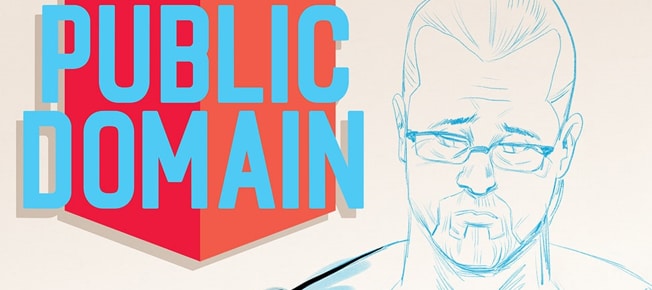
Influenced by comic book history as well as his own experiences as a cartoonist, Chip Zdarsky’s Public Domain is part love/hate letter to the medium and dysfunctional family drama. Public Domain #6-10 shows how the sausage is made with Dallas Comics trying to beat the clock and their new take on iconic superhero, The Domain. Along the way, there are old men arguing at bars, thinly veiled analogues for “star” comic book creators, and a look back at a love affair. Public Domain shows the difficulty of being creative under corporate constraints and also having a personal life while being caught up in the wringer of the comic book industry. It comes across as a real passion project for Zdarsky who crams each issue with visual gags, parodies, and of course, heartfelt moments.

1. Ultimate Spider-Man (Marvel)

Jonathan Hickman, Marco Checchetto, and David Messina’s Ultimate Spider-Man was twelve issues of comic book comfort food as Peter Parker gets his powers as a thirty-something and must learn how to use them in a world undergirded by evil and corruption. In opposition to certain other writers and editors, Ultimate Spider-Man shows that a married with children Spider-Man comic can be compelling. There’s nothing like struggling fighting the Shocker while one kid knows your secret identity, and the other doesn’t and is kind of besties with J. Jonah Jameson. Speaking of Jameson, the story that showcased him and Uncle Ben digging into the Kingpin and Oscorp might have been the single issue of the year as the two old school newspapermen show their work and speak truth to power. On the art side, Checchetto brings a sleek high tech sheen to the suits and fights while not losing that classic Spider-Man charm, and Messina does a good job of holding down the fort in his fill-in issues. All in all, Ultimate Spider-Man (2024) is the Spider-Man comic I needed at 31 like Ultimate Spider-Man (2000) was the Spider-Man comic I needed at 13, and I love that it wrapped up its first year with a dark, Empire Strikes Back type ending.

Underrated: The Bill Schelly Reader

This is a column that focuses on something or some things from the comic book sphere of influence that may not get the credit and recognition it deserves. Whether that’s a list of comic book movies, ongoing comics, or a set of stories featuring a certain character. The columns may take the form of a bullet-pointed list, or a slightly longer thinkpiece – there’s really no formula for this other than whether the things being covered are Underrated in some way. This week: The Bill Schelly Reader.


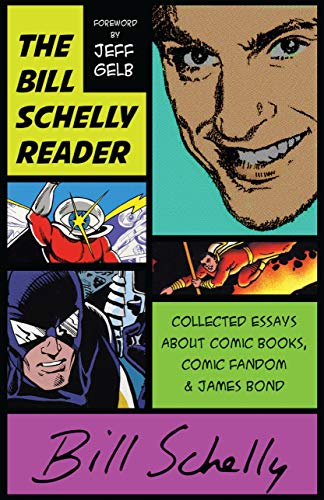
I’ve never been shy about my interest in comic book history, and it was when I was searching for some new books to scratch the itch, I came across The Bill Schelly Reader, a book by Bill Schelly that collects some of his finest prose work on the early history of comics and fandom.

Borrowing the text from the back of the book, because that’ll give you a better synopsis than anything I’ll write:

Bill Schelly has been writing about comics and fandom since 1965. In over 50 years one can do a lot of writing, and The Bill Schelly Reader includes some of the author’s best work on subjects ranging from the golden age of comic fandom to James Bond.

Schelly takes us back to the very beginnings of comic fandom with such articles as:

  • “Batmania”: a short history of the early 1960s fanzine (the first fanzine Bill Schelly ever read) credited for a resurgence of interest in Batman comics during a time of dwindling sales
  • “The First Comicons”: a retrospective on the first conventions organized by comics fans, from the Alley Tally Party to larger events in major cities like New York and Chicago
  • “It Started on Yancy Street”: an issue-by-issue look at the first fanzine devoted entirely to Marvel Comics, and why an unwelcome decision by Marvel led to its demise

In addition, book includes articles about the Silver Age Batman, Hawkman by Joe Kubert, the James Bond books by Ian Fleming, and an interview with the author. With dozens of vintage photos and images!

I’d never knowingly read one of Schelly’s essays before, though that’s mostly because I never got much of an opportunity to read Alter Ego where a lot of his essays were published. Over the course of The Bill Schelly Reader, Schelly dives into the early stages of comic fandom in the 1960’s, exploring the emergence of fanzines and the very first conventions. His essays are deep and incredibly interesting for those of us who want to learn more. A lot of the information that Schelly presents, while by no means the definitive history, paints enough of a picture so that you grasp what those days were like for fans. Remember this was long before any websites or even widely published magazine like Wizard, and so fanzines often had circulation numbers running at less than a thousand issues – and were put together by folks who also had other jobs (not unlike a lot of comics websites, but we don’t need to worry about publishing, printing and distribution of our content).

The essays run an average of ten pages or so each with a lot of additional images that add flavour to the text, and it’s amazing how much info Schelly crams into each one. There’s the odd moment where I found my interest waning, but for the most part the book held my attention from cover to cover (though I’d only read an essay or two a night).

If you’re at all curious about the early days of comic fandom, then I’d highly suggest you take a look at this book. Schelly’s literary work often goes out of print (well, as far as I know from my fifteen minutes of research, anyway), and then inevitably the prices spike. Grab this one if you’re at all interested.


Join us next week when we look at something else that is, for whatever reason, Underrated.

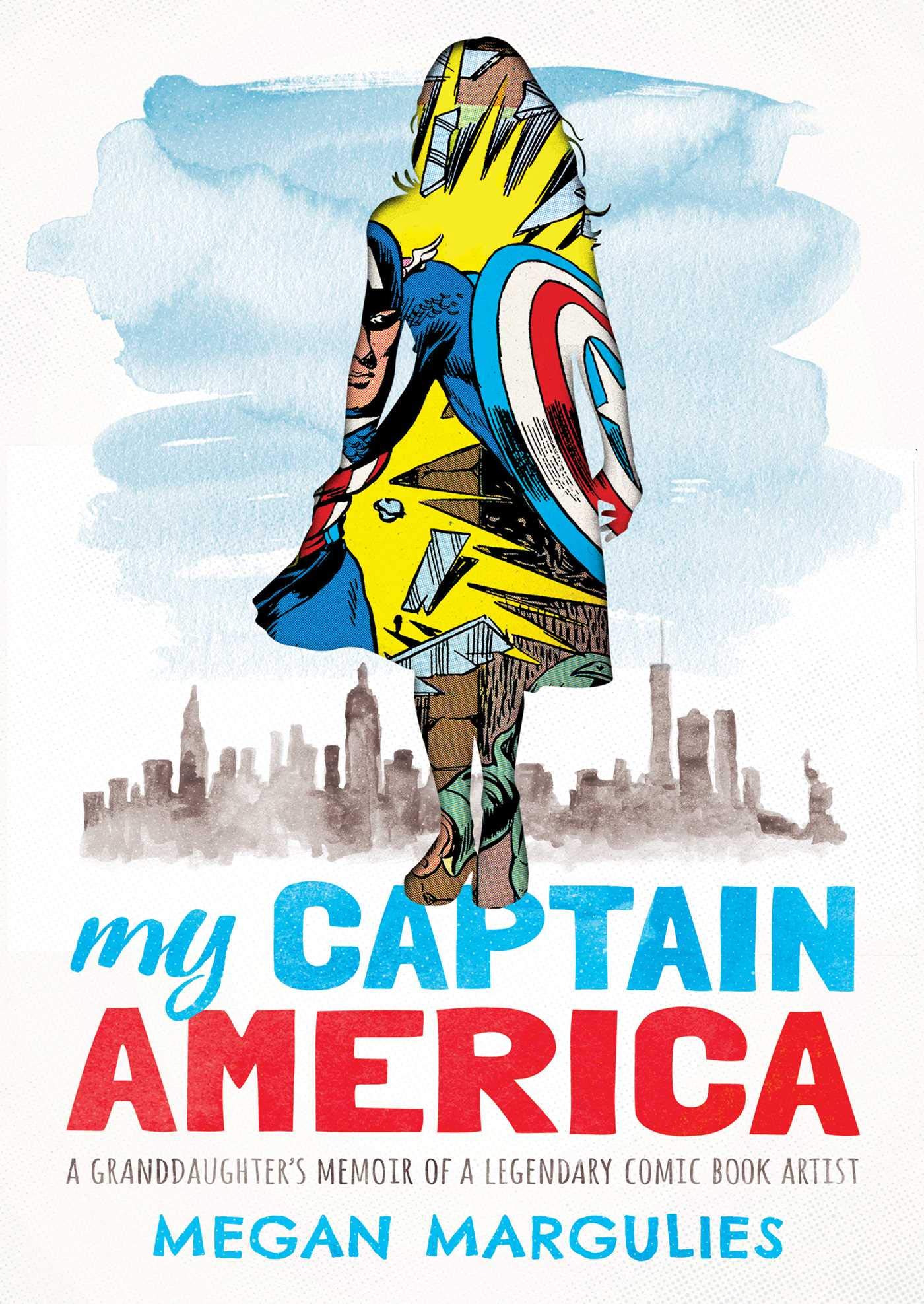
Underrated: MY CAPTAIN AMERICA: A GRANDDAUGHTER’S MEMOIR OF A LEGENDARY COMIC BOOK ARTIST EXPLORES THE WORLD OF JOE SIMON

This is a column that focuses on something or some things from the comic book sphere of influence that may not get the credit and recognition it deserves. Whether that’s a list of comic book movies, ongoing comics, or a set of stories featuring a certain character. The columns may take the form of a bullet pointed list, or a slightly longer thinkpiece – there’s really no formula for this other than whether the things being covered are Underrated in some way. This week: Captain America: A Granddaughter’s Memoir of a Legendary Comic Artist .


MY CAPTAIN AMERICA: A GRANDDAUGHTER'S MEMOIR OF A LEGENDARY COMIC BOOK ARTIST

In the 1990s, Megan Margulies’s Upper West Side neighborhood was filled with strife, and the small one-bedroom apartment she shared with her parents and two younger siblings was hardly a respite. Salvation arrived in the form of Megan’s spirited grandfather, whose midtown studio became a second home. His living room was dominated by the drawing table, notes, and doodles that marked him as Joe Simon the cartoonist. But for Megan, he was always Daddy Joe.

That was all it took for me to want to read My Captain America: A Granddaughter’s Memoir of a Legendary Comic Artist; it checked all the boxes of my interest – comic book history and the chance to learn more about a legend, Joe Simon. I’ll be honest in saying I can count on one hand the number of memoirs I’ve read (aside from graphic novel memoirs, I could probably use two fingers to count), because ultimately memoirs aren’t typically my thing. Megan Margulies book recounting her relationship with her grandfather, however, was a book that I thoroughly enjoyed.

Although Joe Simon, or Daddy Joe, features prominently in the book, My Captain America… is as much Margulies’ story as it is about Joe Simon.

We follow Marqulies story growing up in the upper west side of New York City in a one bedroom apartment, through the expansion of her family and her rebellious teenage years. Through it all, there’s Joe Simon He is the refuge in a tumultuous young life, the island of calm as the author’s life spirals through familial squabbles and the New York of the late 90’s.

This isn’t a historical record of everything Joe Simon did in his storied comic book career and Marqulies never presents it as such, only bringing up moments that are relevant to the events unfolding on the page. By doing this, she is able to give you an insight into who Joe Simon was, and the impact he had one those around him. Her tidbits also have the effect of being told from a very unique perspective; – and yes, there are certainly aspects of the comic legend that many will be learning about for the first time from this memoir.

You will read about the behind the scenes of Simon’s interviews, snippets of his reactions to events within comics, and even hear about his experience watching Captain America: The First Avenger.

For any fan of Captain America, this book is a must read.

Joe Simon passed away at 98 years old in December 2011. Even knowing that date is coming when reading this book, you can’t help but feel heartbroken when Marqulies peels back the layers of time. The grief we feel as readers is only a fraction of what his family felt, and I’m not ashamed to say that my eyes were more than misty reading those pages. Marqulies pulls on every heart string you have, and some you didn’t know about.

What I was expecting to be an exploration of a comic book legend from a perspective that we’ve never seen before quickly became an intimate look at the relationship between a grandfather and his granddaughter that it was an honor to share.


Purchase: BookshopAmazon (Hardcover)KindleAudiobook Audio CD


Join us next week where there will doubtless be another movie, series, comic or comic related thing discussed that is, for whatever reason, Underrated.

Underrated: Ultimate X-Men

This is a column that focuses on something or some things from the comic book sphere of influence that may not get the credit and recognition it deserves. Whether that’s a list of comic book movies, ongoing comics, or a set of stories featuring a certain character. The columns may take the form of a bullet pointed list, or a slightly longer thinkpiece – there’s really no formula for this other than whether the things being covered are Underrated in some way. This week:  Ultimate X-Men


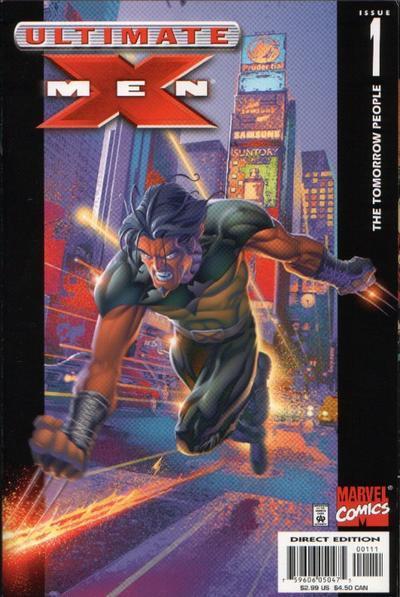
Ultimate_X-Men_Vol_1_1.jpgUltimate X-Men was a series launched under Marvel’s Ultimate Marvel imprint that aimed to do away with 40 years of so called convoluted continuity into a more modern and updated setting. The second title to launch after Ultimate Spider-Man, Ultimate X-Men was written by Mark Millar and drawn by Adam and Andy Kubert. Millar was largely ignorant of the storied history of the X-Men, and reinvented the characters with the 2000 X-Men  film as his primary reference. Millar has admitted in an interview with Sequential Tart that he knew bugger all about the characters before Joe Queseda and Bill Jemas asked him to pitch for X-Men, expecting them to use the script as toilet paper. Instead, because Millar knew next to nothing about the franchise, they decided that he should be the one to reboot the X-Men for Marvel’s Ultimate line of comics.
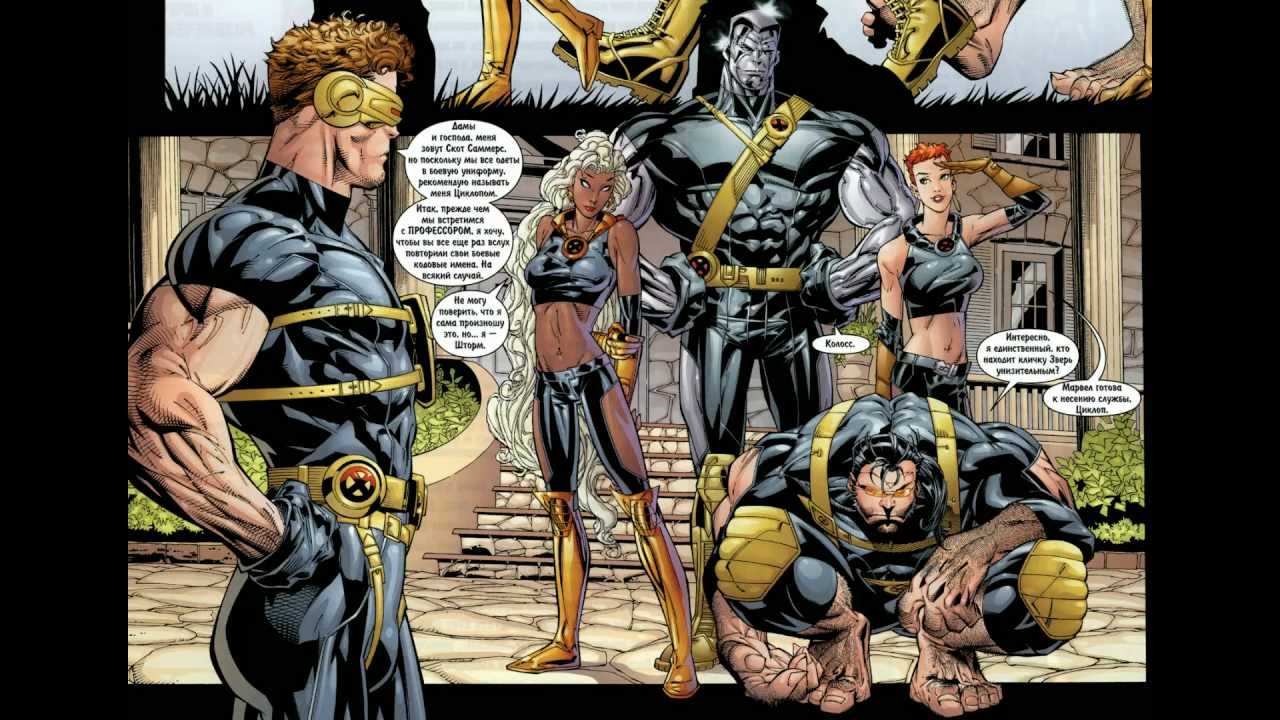
Free from the shackles of the past Millar set about crafting a new, and more modern universe for the X-Men to inhabit aimed to bring a return to the mainstream appeal the franchise enjoyed years before.

Launching in 2001, Ultimate X-Men was also part of Marvel’s “dot-comics” format, which was an early translation of print to digital using a slightly animated Flash format. Comic pages would appear on the screen showing a handful of panels at a time, and speech and thought bubbles hovering over the characters. The format would eventually pave the way toward Marvel Unlimited. Although not the first comic on the dot-comics format, it was one of the first that I read that way. Because the dot-comics were free to whomever had an internet connection and the patience to read the comics in their episodic form (if memory serves, five or so pages were uploaded every few days), they were a great way for people like myself to get introduced to a series that I otherwise would not have before.

Ultimate_X-Men_Vol_1 interior.jpg

Although I had previously dabbled in the X-Universe before, I was never a constant reader. Ultimate X-Men drew me into reading an ongoing series featuring Marvel’s merry mutants for the first time. The characters were familiar and yet felt fresh, the situations they were in reflected more of the world around them than the main Marvel universe characters did. Or at least that’s how it felt at the  time. It was here, with a newly discovered love of the characters that I truly became an X-Men fan and not just a Wolverine fan. At the time the irony that the series was being written by a man who knew bugger all about the characters was something I was unaware of, but the benefit of hindsight brings into sharp focus that provided one is a competent writer and has some understanding of the subject, then the essence of characters one is writing about shine through. And Millar, for the most part, had that understanding.

Running from 2001 until 2009 where it was cancelled at the conclusion of the critical and commercial failure of the Ultimatum crossover, Ultimate X-Men enjoyed nearly a decade as the fan favourite X-title. Although it was eventually relaunched as Ultimate Comics X-Men in 2011, the series never enjoyed the success of its pre-Ultimatum days.

Would Ultimate X-Men have worked had it been released today? Although we’ll probably never know, you can look at DC’s New 52 and to a lesser extent the successor to the Ultimate line (Ultimate Comics) to get an idea – although there are obvious faults with either comparison. The New 52 replaced DC’s continuity in its entirety, to much chatter from fans, and the Ultimate Comcs line tried to pick up after the failure of Ultimatum which had driven many fans away already. However you look at it, for nearly ten years Ultimate X-Men, and some of its companions under Marvel’s Ultimate line, were among the pinnacle of superhero comics. The reimagining of the characters, stripping them down to their core and putting them in a different world was a brave choice, but one that I, and thousands like me, fell in love with.

I grew up reading Ultimate X-Men, both as a comics fan and a human, and it hurts me a little to see people ignore it as an unimportant part of Marvel’s past because it’s not chronologically relevant in the X-Men’s story. It’s not, not really, but that doesn’t mean the stories told under the Ultimate X-Men banner remain among some of my most cherished to this day. If, for whatever reason, you haven’t read them then you can find the collected editions easily enough at your favourite online retailer (or, maybe your LCS can get them in for you).

That’s all we have for this week, folks. Come back next time  when there’s something else Underrated to talk about.


Underrated: Maverick #1-12

This is a very old rerun, inspired entirely from a comment on a recent episode of Those Two Geeks by the author. The comment meant a lot to me, and so I wanted to make sure this series got a little more love.

This is a column that focuses on something or some things from the comic book sphere of influence that may not get the credit and recognition it deserves. Whether that’s a list of comic book movies, ongoing comics, or a set of stories featuring a certain character. The columns may take the form of a bullet pointed list, or a slightly longer thinkpiece – there’s really no formula for this other than whether the things being covered are Underrated in some way. This week something a little different as we take a look at one of my favourite characters, and his twelve issue solo series from the late 90’s: Maverick.


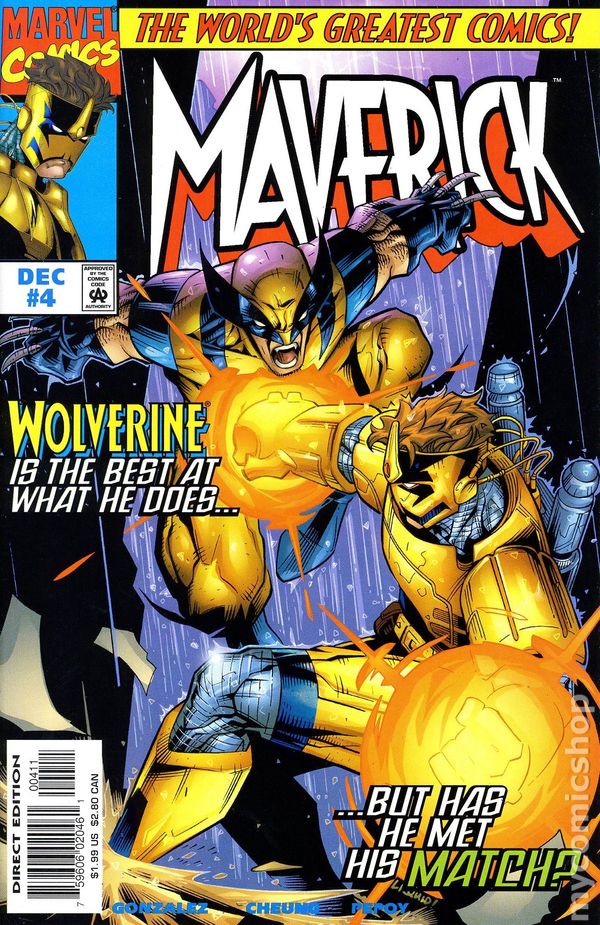
maverick 4.jpg

One of the first non-Wolverine comics I ever picked up was Maverick #4. Of course, the reason I picked it up was because Wolverine was on the front cover, so technically, the first non-Wolverine comic I picked up was Maverick #5.  As it turns out, I’d end up reading a lot about Maverick through the years because of Wolverine; Marvel UK’s Wolverine Unleashed was reprinting the original American comics.

Maverick is a product of the 90’s; his  first appearance in 1992’s X-Men #5 had all the hallmarks of the time;  giant shoulder pads, heavy guns, and  a half face mask that allowed his hair to fly free. Maverick would end the decade with a more streamlined version of his armour; sleeker and slightly less bulky for his solo series that ran for twelve issues beginning in 1997.  Although he’s had numerous guest appearances in a few X-Men based comics, Maverick has never really reached the level of popularity of certain other characters introduced during the same time frame, but he does have a very fond place in  this comic lovers heart.

Although Maverick is almost always featured in X-Men related titles, he is most closely associated with everybody’s favourite dead Canadian mutant, having been a significant part of Wolverine’s life before his skeleton was coated in adamantium. But it wouldn’t be fair to Maverick, though, to just write him off as that  mercenary friend of Wolverine’s; Maverick’s own history is a rich bed of potential, and it’s explored within this series.

Born in East Germany to parents who were either Nazi sympathizers or full blown Nazi’s, Christoph Nord was self-described idealist, and fought against the communist regime during the height of the Cold War, joining a West German black ops unit named Cell Six. During this time Nord met and fell in love with a nurse Ginetta Barsalini, whom he fell in love with and married. Not realizing he was a spy until it was too late, Nord was forced to shoot her inn self defense (unwittingly killing his unborn child in the process). Shortly after this Nord was recruited by the CIA, changed his name to David North and ended up on a team with Victor Creed and Logan.

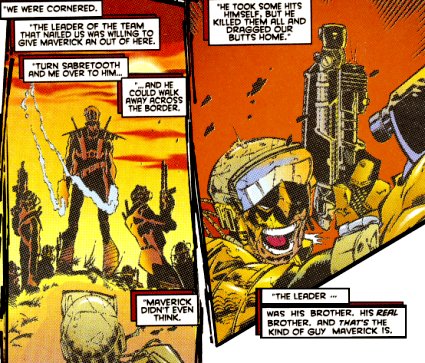
When the team was sent on a mission in East Germany, both Creed and Logan were badly injured. Rather than follow protocol and leave them, North dragged them to the extraction point where he was cornered by Andreas Nord, now an assassin, North saved his teammates the only way he could; killing his own brother in cold blood.

Maverick is a character rooted in tragedy; from his early years already recapped to his contracting a slow acting deadly disease that took his powers before killing him slowly (he was brought back to life moments after his death with some inventive CPR which also returned his powers), before becoming an executioner for a shady government organisation by way of brainwashing before losing his powers (again).

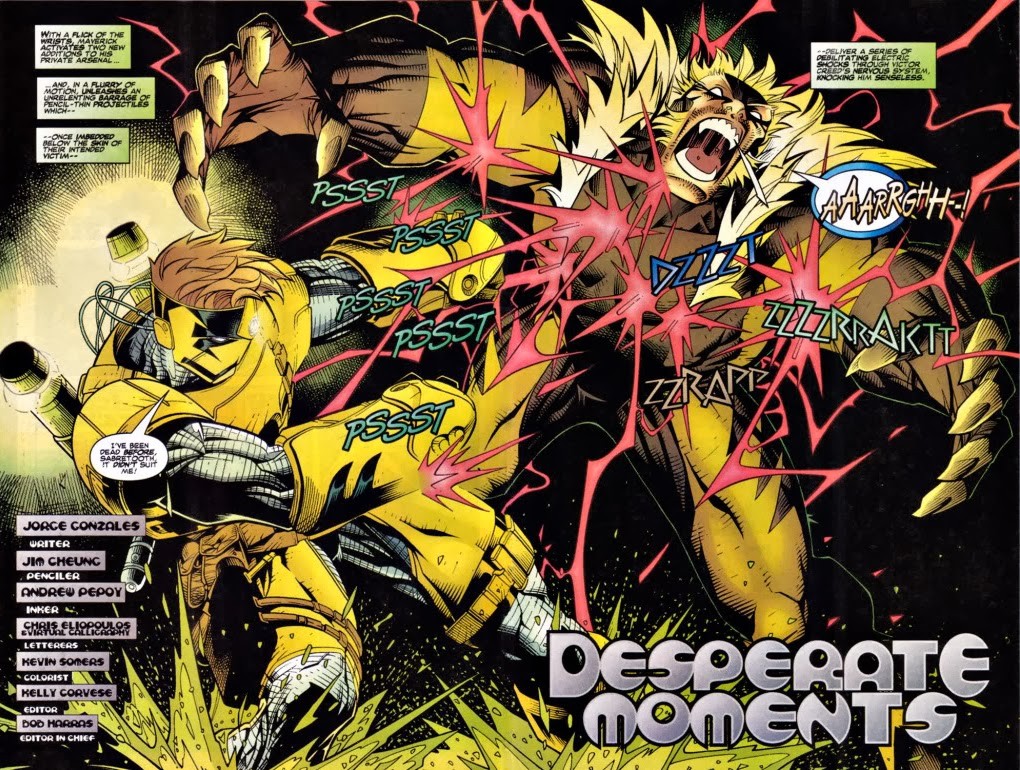
maverick spread

One of the most enjoyable twelve issue series I’ve ever read was Maverick Vol. 2; this run had me from the moment the protagonist died in the opening pages to the very end. It’s a series that has never been, and probably never will be collected into a trade paperback, which means that to read it you’ll need to track down the floppies. The series deals with some suddenly relevant again issues surrounding anti mutant attitudes, Russian gangsters and the struggle of being born to Nazi sympathizing parents, as well as what it’s like for a young facing certain death at the hands of the Legacy Virus. On top of that there’s a few guest stars, some pretty fantastic enemies (some new and some old), and some really great art and writing. Honestly, I tend to read this series on an almost yearly basis.

maverick03.jpg

Other than appearing in a few Wolverine stories that have been released as TPB’s and being a part of the ensemble cast of the 2002 Weapon X series that’s also been at least partly collected into TPB’s, finding Maverick comic appearances is largely a case of scouring the back issue bins at your local comic shop anyway. If you do that, and I highly recommend you do, then hunting for the Maverick #1-12 comics could be an easier (and cheaper) task than hunting for key issues of Deadpool or Wolverine because not many people are looking for them – which is a shame, but could work out to your benefit.

Do yourself a favour; find Maverick. You’ll not be disappointed.

Ultimate Spider-Man #3 continues to show the difficulty of doing good in a world undergirded by evil

In my capsule review of Ultimate Spider-Man #1, I described it as the Spider-Man I need at age 30, and it continues to be that in its third installment. Jonathan Hickman, Marco Checchetto, and Matthew Wilson continue to craft a Spider-Man comic book that is funny, poignant, action-packed, and has actual relationships between its characters while to continue to dig at (Not quite construct.) some annoying things about past Spidey comics and superhero books in general. The big, initial shocker in this series was that Uncle Ben is very much alive so this issue goes into his and J. Jonah Jameson’s journalism endeavor as they piece together evidence to take down the Kingpin with the kind of, sort of help of Peter Parker. Uncle Ben and Jameson are competent, driven writers, but they’re not business owners and are light years from taking down New York’s crime boss. This, along with Spider-Man continuing to get used to being Spider-Man and figuring out whether to keep his identity secret from certain people, creates a relatable through-line that being an adult is mostly faking it until you make it.

One great thing about Ultimate Spider-Man #3 is its deadpan comic time. Beneath all the charts and elaborate world-building, Jonathan Hickman is just a silly little guy who spends pages roasting different Spider-Man costumes (Via Peter’s daughter May) and showing how boring and ridiculous stake-outs are. Checchetto’s visuals add to the rhythm of the jokes with his spot-on renderings of the costumes and reaction shots from different characters. I died laughing at a silent beat panel of Uncle Ben and J. Jonah Jameson glaring at Peter when he vouched for the coolness of Spider-Man in a conversation about how the Green Goblin was taking down different Kingpin-owned properties. There’s lots of levity and verbal sparring through the book to go with the actual superhero action. It’s a fond reminder of the first volume of Ultimate Spider-Man and Brian Michael Bendis’ snappy patter although Hickman has a much different writing style and doesn’t cover the art with excessive word balloons.

Like the original Ultimate Spider-Man series, Hickman and Marco Checchetto introduce the Green Goblin as a potential threat for Spider-Man and intertwine him with the tragedy that made Peter Parker go from thirty-something family man to superhero. However, they depart from the typical hero/villain dynamic (This is foreshadowed in an earlier conversation between Uncle Ben, J. Jonah Jameson, and Peter.) and have them find common ground in a battle with Bullseye, who works for the Kingpin, but also maybe the Maker. Like the 616 version, this Bullseye is boastful and has wicked aim with a deck of cards in addition to being an unreliable narrator. Instead of the usual fight each other, then team-up, Jonathan Hickman and Checchetto let the battle flow naturally with Bullseye catching Green Goblin pumpkin bombing one of Kingpin’s properties while Spider-Man is on stake-out.

Initially, Spider-Man fights them both, but over the course of the fray, he realizes that he has a common enemy with the Green Goblin, and they make quite a team. Plus Spider-Man’s suit uses some of the same tech as Green Goblin’s cementing their connection. With the reveal of Green Goblin being Harry Osborn, it’s reminiscent of the team-up between New Goblin and Spider-Man in the Spider-Man 3 film, but with less angsty build-up. (There’s lots of Raimi Spider-Man trilogy in Ultimate Spider-Man‘s DNA, and I’m here for it.) Sure, there are bombastic fisticuffs with bright colors from Matthew Wilson and wide screen panels from Marco Checchetto, but the fight scenes also build the relationship between Peter Parker and Harry Osborn while also showing Spider-Man’s improvement as a superhero from the previous issue. (He kicks ass instead of having his ass kicked!) Also, on an emotional level, Peter and Harry are just two young men with extraordinary abilities and deep grief trying to do some good in this world, and it makes sense for them to have a bond instead of just being the arbitrary good guys/bad guys.

With well-timed jokes, flashy art, and fluid visual storytelling, Ultimate Spider-Man #3 continues to show the difficulty of doing good and helping people in a world that is literally undergirded by evil. The scenes with Peter and his family, former boss J. Jonah Jameson, and potential new friend Harry Osborn truly show that it takes a village to save the day and not in the cliched “Avengers assemble” kind of way. Although there’s hints at the Maker and larger Ultimate Universe narrative, Hickman and Checchetto keep the stakes and small and personal in this series, and it’s why this book is easily one of my favorite monthly ongoing superhero comics in recent years.

Story: Jonathan Hickman Art: Marco Checchetto 
Colors: Matthew Wilson Letters: Cory Petit
Story: 8.6 Art: 8.9 Overall: 8.8 Recommendation: Buy

Marvel provided Graphic Policy with a FREE copy for review


Purchase: TFAW – Zeus Comics – Kindle

Underrated: The Wolverine

This is a column that focuses on something or some things from the comic book sphere of influence that may not get the credit and recognition it deserves. Whether that’s a list of comic book movies, ongoing comics, or a set of stories featuring a certain character. The columns may take the form of a bullet pointed list, or a slightly longer thinkpiece – there’s really no formula for this other than whether the things being covered are Underrated in some way. This week: The Wolverine.


A little while ago on Underrated, I took a look at one of the most reviled movies in the X-Men Franchise, X-Men Origins: Wolverine. This week I wanted to take a look at the sequel to that movie because, ending aside, I think it’s a pretty good movie – no, really, take that cyborg thing out of the equation, and I’d give the movie a sold 8.5 or so out of 10. Obviously the cyborg drops the rating some, but I still really enjoyed the movie. And yes, I did see the movie recently.

The funny thing about The Wolverine, at least for me, is that I only recently realized that people weren’t quite as fond of it as I was. Whether that’s because I was so desperate for a great Wolverine movie that I overlooked a lot of the flaws when I first saw it, or that I just simply enjoyed it more than the folks who had a bone to pick with the film. Obviously, I watched this after having seen Logan, which was exactly the Wolverine movie that I, and many others, have always wanted. Does The Wolverine still hold up after the sequel, or is it really as average as people have been saying?

I genuinely don’t think it is, so allow me to give you a few reasons why.

  • The Opening Sequence
    In this case I’m talking about the entire sequence set in the Canadian wilderness. Hugh Jackman pulls off the broken former hero role incredibly well, and much like the prequel I could have happily watched an entire movie centered around a broken Logan on the outskirts of society. Wait.
  • It’s a great homage to Wolverine’s first solo series
    Look I know that the ending is butchered almost entirely by the mechanized Silver Samurai, but once you get beyond that The Wolverine is a brilliant homage and reinterpretation of the Claremont/Miller series from the 80’s with an updated twist. The hallmarks of the series are there, albeit in a slightly modified form in most cases, as the movie does its level best to pay tribute to that classic four issue miniseries.
  • The choreography
    With this movie having a softer rating than its sequel, you’d be forgiven for wanting more of the brutality from that movie to show up in The Wolverine, but considering the rating I think the choreography of the fight scenes is done very well – yes, a lot is left to your imagination regarding the results of said action, but this is still a movie about a violent mutant and you do get a sense of that… even if it is done in a PG13 way.
  • The story 
    Despite struggling at the final hurdle, the movie’s plot is actually better than a lot of popcorn action flicks. It’s certainly no Logan but it’s a better overall product than both of its immediate prequels.

Yes, the movie has its problems, especially with how it fits (or used to fit depending on who you’re talking to) into the X-Men movie franchise, and how it treats certain characters, but when you look at it as a standalone movie that follows one character after the events of X-Men: The Last Stand… it’s actually pretty good; like I said, I’ve always enjoyed this movie, and that’s why it’s the subject of this week’s Underrated. Plus, without this movie then we’d never have had James Mangold back for the sequel

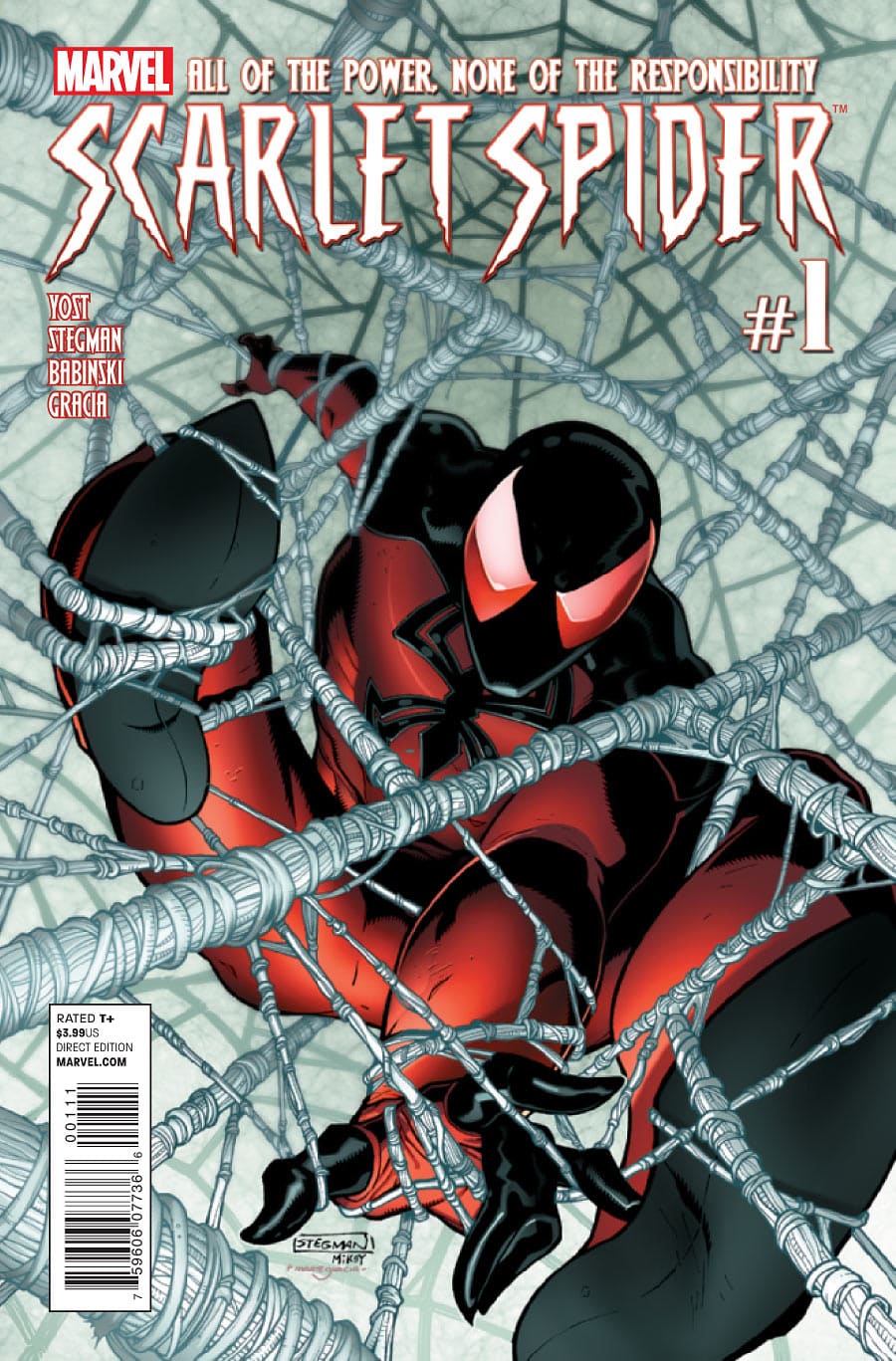
Underrated: Scarlet Spider (2012)

Scarlet Spider has always been one of my favourite Spier-Man sub characters, and even more so when his former enemy (and clone) Kaine took up the mantle. However unwillingly. I recently reread the series, and so, as you can see, wanted to revisit an old column.

The series more than holds up.


This is a column that focuses on something or some things from the comic book sphere of influence that may not get the credit and recognition it deserves. Whether that’s a list of comic book movies, ongoing comics, or a set of stories featuring a certain character. The columns may take the form of a bullet pointed list, or a slightly longer thinkpiece – there’s really no formula for this other than whether the things being covered are Underrated in some way. This week: The 2012 Scarlet Spider run.


Scarlet_Spider_Vol_2_1

I have always enjoyed stories about villains becoming heroes, struggling to atone for or come to terms with their actions; I’m a sucker for a good redemption story, I’ll admit. There’s something about somebody striving to earn forgiveness when surrounded by people who don’t believe in them I’ve always enjoyed.

With 2012’s Scarlet Spider we get almost the exact opposite of that. A man who just wants to disappear surrounded by those who inexplicably believe in him.

I originally added this to my pull list with its first issue way back in 2012, I had assumed that the Scarlet Spider in question was Ben Reilly in a new costume, and not Kaine. I’m sure had I been reading the Spider-Man comics at the time I’d have known better, but I figured this was a good place to jump on board – and I wasn’t wrong in that sense, but I was wrong about who was wearing the costume. So I settled in to enjoy a story about Spider-Man’s clone, and as I hoped I ended up loving the series.

But not for the reasons I expected. Instead of a heroic story featuring Ben Reilly, Scarlet Spider delivered something I wasn’t expecting – and ended up loving more than I thought I would given my initial expectations of who I was going to be reading about.

The story starts with Kaine trying to get to Mexico, having recently been cured of the cellular degeneration he was suffering as a clone (it’s a whole thing that’s explained in multiple stories and other resources), he’s seeking a chance to finally live his life free of the constant agony he used to suffer. But, as with any good story featuring a Spider, things inevitably get in the way of that and Kaine gets stuck in Houston, quickly becoming the city’s own resident super hero. The series was written by Chistopher Yost, who was joined by a variety of hugely talented pencillers, inkers and colourists throughout the series 25 issue run (there were also  couple of specials and tie-in issues that bulk up the issue count if you want the whole story).

The full run remains one of my favourite Spider stories, in part because of the redemptive nature, but also because it’s just really good. But like all series that features a lesser known character it was cancelled because of low sales – though Kaine still pops up as the Scarlet Spider from time to time, and I will always try to grab those issues as and when I can. Scarlet Spider is a brilliant alternate to Spider-Man as we see a hero with, as the tag line so eloquently puts it, “all of the power, and none of the responsibility.” But Kaine is still a Parker, and as he begrudgingly accepts the responsibility of being the Scarlet Spider, we get to see a villain slowly change into (well, almost) a hero. However reluctantly.

This is a fantastic run, easily one of my favourite parts of my collection, but it’s one I don’t see getting the love it deserves – that’s why the book is Underrated.


Join us next week when we look at something else that is, for whatever reason, Underrated.

Underrated: The Bill Schelly Reader

This is a column that focuses on something or some things from the comic book sphere of influence that may not get the credit and recognition it deserves. Whether that’s a list of comic book movies, ongoing comics, or a set of stories featuring a certain character. The columns may take the form of a bullet-pointed list, or a slightly longer thinkpiece – there’s really no formula for this other than whether the things being covered are Underrated in some way. This week: The Bill Schelly Reader.


I’ve never been shy about my interest in comic book history, and it was when I was searching for some new books to scratch the itch, I came across The Bill Schelly Reader, a book by Bill Schelly that collects some of his finest prose work on the early history of comics and fandom.

Borrowing the text from the back of the book, because that’ll give you a better synopsis than anything I’ll write:

Bill Schelly has been writing about comics and fandom since 1965. In over 50 years one can do a lot of writing, and The Bill Schelly Reader includes some of the author’s best work on subjects ranging from the golden age of comic fandom to James Bond.

Schelly takes us back to the very beginnings of comic fandom with such articles as:

  • “Batmania”: a short history of the early 1960s fanzine (the first fanzine Bill Schelly ever read) credited for a resurgence of interest in Batman comics during a time of dwindling sales
  • “The First Comicons”: a retrospective on the first conventions organized by comics fans, from the Alley Tally Party to larger events in major cities like New York and Chicago
  • “It Started on Yancy Street”: an issue-by-issue look at the first fanzine devoted entirely to Marvel Comics, and why an unwelcome decision by Marvel led to its demise

In addition, book includes articles about the Silver Age Batman, Hawkman by Joe Kubert, the James Bond books by Ian Fleming, and an interview with the author. With dozens of vintage photos and images!

I’d never knowingly read one of Schelly’s essays before, though that’s mostly because I never got much of an opportunity to read Alter Ego where a lot of his essays were published. Over the course of The Bill Schelly Reader, Schelly dives into the early stages of comic fandom in the 1960’s, exploring the emergence of fanzines and the very first conventions. His essays are deep and incredibly interesting for those of us who want to learn more. A lot of the information that Schelly presents, while by no means the definitive history, paints enough of a picture so that you grasp what those days were like for fans. Remember this was long before any websites or even widely published magazine like Wizard, and so fanzines often had circulation numbers running at less than a thousand issues – and were put together by folks who also had other jobs (not unlike a lot of comics websites, but we don’t need to worry about publishing, printing and distribution of our content).

The essays run an average of ten pages or so each with a lot of additional images that add flavour to the text, and it’s amazing how much info Schelly crams into each one. There’s the odd moment where I found my interest waning, but for the most part the book held my attention from cover to cover (though I’d only read an essay or two a night).

If you’re at all curious about the early days of comic fandom, then I’d highly suggest you take a look at this book. Schelly’s literary work often goes out of print (well, as far as I know from my fifteen minutes of research, anyway), and then inevitably the prices spike. Grab this one if you’re at all interested.


Join us next week when we look at something else that is, for whatever reason, Underrated.

« Older Entries