Logan’s Favorite Comics of 2021
Even though it was a shitty year overall, I found some great comics to enjoy in 2021, both old and new. Beginning with its “Future State” event, DC easily shot up to become my favorite mainstream publisher thanks to its renewed focus on different visual styles instead of a Jim Lee-esque art style and its emphasis on LGBTQ+ characters even after Pride Month. Vault and Image continued to be the homes of both my favorite creators and SF stories, and AWA, Dark Horse and even Black Mask and Archie had titles that surprised me even if they didn’t make the cut on this list. Finally, continuing a trend that I jumped on in 2020, I continued to read or revisit classic comics (Both old and new) in 2021, like Copra, Invincible, The Umbrella Academy, Alan Moore’s Swamp Thing, Wonder Woman: True Amazon, The Invisibles, Peter Milligan and Mike Allred’s X-Force, Hawkeye, and Black Bolt among others.
So, without further ado, here are my ten favorite comics of 2021
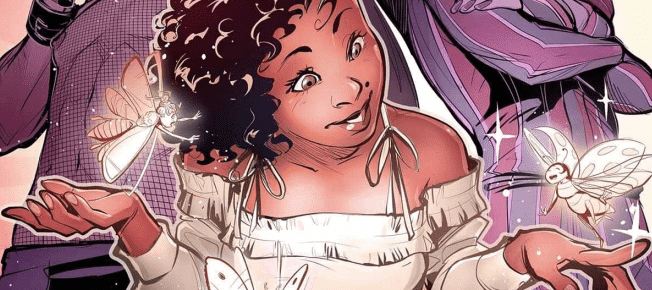
10. Alice in Leatherland (Black Mask)
Alice in Leatherland is a wholesome, sexy, and hyper-stylized slice of life romance comic from the creative team of Iolanda Zanfardino and Elisa Romboli. The book is about Alice, a children’s book writer, who leaves her small town for San Francisco when her girlfriend cheats on her and captures the fear and adrenaline of taking a big step in your life. The series explores sex and love through an expansive cast of LGBTQ+ characters that I wanted to spend more than five issues with. Romboli uses fairy tale style visuals as a metaphor to examine Alice’s feelings and self-growth throughout the series, and she excels at depicting both the hilarious and erotic. Alice in Leatherland is an emotional, funny read with well-developed queer characters and made me immediately add Zanfardino and Elisa Romboli to the list of creators I’ll read anything by.

9. The Autumnal (Vault)
The Autumnal by Daniel Kraus, Chris Shehan, and Jason Wordie was the most unsettling comic I read in 2021. The book follows Kat Somerville and her daughter Sybil as they leave Chicago for the town of Comfort Notch, New Hampshire. However, this town isn’t a rural oasis, but incredibly creepy. Kraus’ script unravels the foundation of blood that the town is built on while Shehan and Wordie create tension with the fall of the leaf or a crackle of a branch. I also love how fleshed out Kat is as she deals with being an outsider in what turns out to be an unfriendly space with her parenting style and approach to life being critiqued by her neighbors. Finally, The Autumnal is the finest of slow burns beginning with NIMBY/Karen-like behavior and then going full-on death cult. It’s a must read for anyone who has lived or experienced a place where time seems to stand still, or who thinks a NextDoor app post could be the basis of a good horror story.
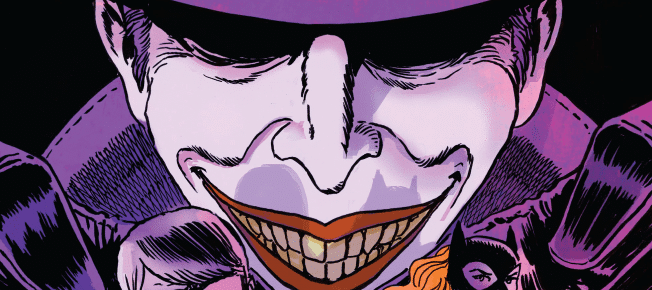
8. The Joker (DC)
Contrary to its title, James Tynion, Guillem March, Steffano Rafaele, Arif Prianto, and others’ The Joker isn’t a comic looking at the Clown Prince of Crime’s inner psyche, but is a globe-trotting P.I. type story featuring Jim Gordon trying to capture the Joker for some folks that looks shadier and shadier as the story progresses. Tynion and (predominantly) March show the effect Joker has had on Gordon’s life and his family while also showing him discover himself outside the bounds of Gotham and its police department. As the series progresses, The Joker shows the impact that Batman and his rogue’s gallery have had on the rest of the world, and the ways governments, intelligence agencies, and more nefarious organizations deal with threats of their ilk. Along with a crime novel set in present time, James Tynion, Matthew Rosenberg, and the virtuosic Francesco Francavilla created several flashback comics showing the development of Jim Gordon’s relationship with the Joker over the years, and how it effected his family life and career almost acting as a “Year One” for Gordon as Francavilla’s art style shifts based on the era the story is set in. Plus most issues of Joker feature colorful backup stories with Harper Row trying to bring Joker’s newest ally Punchline to justice in and out of prison from Tynion, Sam Johns, Sweeney Boo, Rosi Kampe, and others.
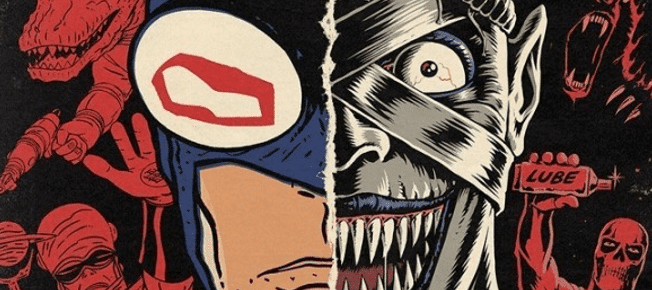
7. Kane and Able (Image)
Kane and Able is a dual-cartoonist anthology featuring work by British cartoonists Shaky Kane and Krent Able. Kane’s stories flow together in a Jack Kirby-meets-David Lynch kind of way blurring the lines between fiction and metafiction, reality and unreality while also acting as an opportunity for him to draw cool things like dinosaurs, space women, aliens, the King of Comics, and even himself. Able’s stories have more of a grindhouse, body horror quality to him as a chainsaw-wielding Bear Fur battles a boom box wielding cockroach woman, who flesh bonds everyone in a listless, major city. Both creators have delightful, distinctive styles and put their own spin on genres like sci-fi, exploitation, and superhero. Kane and Able is free-flowing, clever, and most of all, fun and is tailor made for the larger page format of treasury editions.
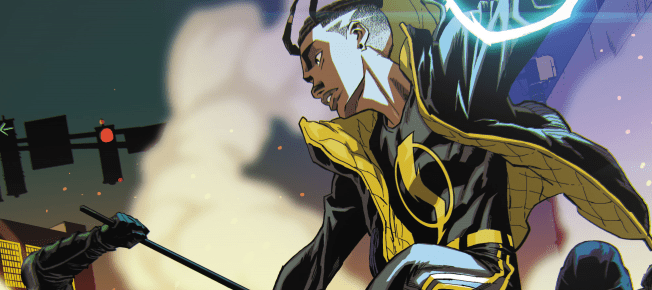
6. Static Season One (DC/Milestone)
As far as pure visuals go, Static Season One by Vita Ayala, Nikolas Draper-Ivey, and ChrisCross was easily one of the best looking books on the stands in 2021. This was in addition to reinventing the iconic Black superhero through the lens of contemporary social movements, like Black Lives Matter and protests against police brutality in summer of 2020. Static Season One doesn’t merely pay homage to the classic Milestone series, but brings it into 2021 with fight sequences straight out of the best shonen manga and a three dimensional supporting cast that holistically explore the Black experience in the United States while also being a coming of age and superhero origin tale. Draper-Ivey’s character designs are sleek as hell, and his high energy approach to color palette adds intensity to fight and chase scenes. I’m excited to see what the talented creative duo of Ayala and Nikolas Draper-Ivey bring to Static’s journey as Season One wraps up and Season Two (hopefully) begins in 2022.
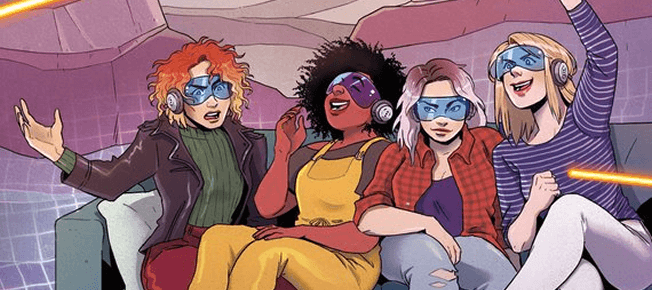
5. Renegade Rule (Dark Horse)
Renegade Rule is an original graphic novel from Ben Kahn, Rachel Silverstein, and Sam Beck that is a perfect fusion of a sports manga and a queer romance story set in the world of competitive video games. Even if you’re like me and have only attempted to play Overwatch a single time, Renegade Rule and its world are quite accessible via things like hypercompetitiveness, sexual tension, and breathtaking fight choreography. The in-game sequences are almost like musical numbers and use shooting, sniping, and various acrobatics to make characters’ unspoken thoughts real. Renegade Rule is like if your favorite sports movie and romantic comedy had a gay baby who loved kicking ass at video games, and I pumped my fist every time the Manhattan Mist overcame adversity or overwhelming odds and smiled when certain characters ended up with each other…
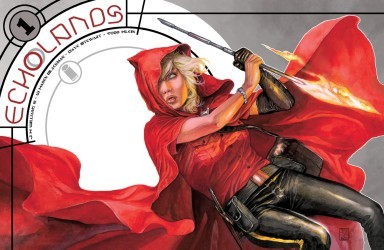
4. Echolands (Image)
After a four year absence from interior art, co-writer/artist J.H. Williams III didn’t mess around with Echolands, a love letter to both genre fiction and double page spreads. Done in collaboration with co-writer Haden Blackman and colorist Dave Stewart, Echolands is an epic fantasy quest loaded up with all kinds of genres and art styles leaking off the page and was one of the most immersive comics I read in 2021. It has a sprawling cast and world, but Blackman and Williams know when to slow down and dig into Hope Redhood and her allies and antagonists’ motivations and when to drop in a multi-page underwater or underground chase sequence. With its unique landscape layouts and all the details in J.H. Williams and Stewart’s visuals, Echolands is definitely a book worth picking up in physical format and has backmatter that both humorously and seriously adds to the worldbuilding.
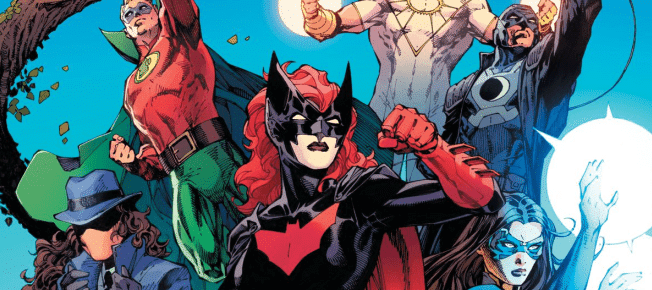
3. DC Pride (DC)
In honor of Pride Month, DC Comics put some of its most talented LGBTQ+ creators on its most iconic LGBTQ+ characters in a super-sized celebration of overcoming adversity, being yourself, and loving whoever you want to love. DC Pride covered a spectrum of sexual and gender identities from a fast-paced date night story featuring the non-binary Flash, Jess Chambers, to James Tynion and Trung Le Nguyen’s fairy tale influenced story of Batwoman’s younger days and even the first appearance of transgender superhero Dreamer (From the Supergirl TV show) in the comics. Depending on the character or creative team, the different stories could be adventurous and flirtatious, heartfelt and emotional, or a bit of both. This book shows that superhero comics have come a long way since the stereotypes of the 1980s and 1990s, but there’s still room for improvement as many of the characters featured in this anthology are relegated to backup stories or are supporting cast members of cisgender, heterosexual heroes.
2. Barbalien: Red Planet (Dark Horse)
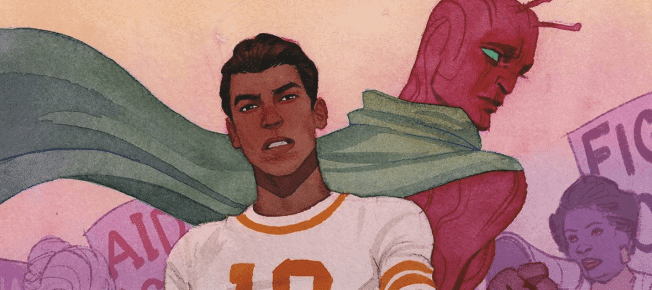
Barbalien: Red Planet is a masterfully crafted, queer rage infused superhero/sci-fi comic from Jeff Lemire, Tate Brombal, Gabriel Walta, and Jordie Bellaire. It understands subtext is for cowards and draws parallels between Barbalien coming out as gay and a Martian with his new friend/potential lover Miguel, who is a Latino activist fighting for the US government to do something about the AIDS crisis in the 1980s. Barbalien: Red Planet pays homage to the Black and Latinx activists who fought for queer liberation and is also an emotionally honest character study for Barbalien, who is easily my favorite character in the Black Hammer universe. Lemire, Brombal, and Walta use the superhero and sword and planet genres to explore the conflict between queer folks and power structures as Barbalien struggles with trying to fit into Spiral City as a white cop or being his true, gay Martian self. And to get personal for a second, Barbalien: Red Planet inspired me to speak out against my city’s Pride organization’s open support of police even though it led to me resigning as chairperson of my work’s LGBTQ+ employee affinity group. It’s both a damn good superhero book and a story that had a huge impact on my life in 2020-2021.
1. Die (Image)
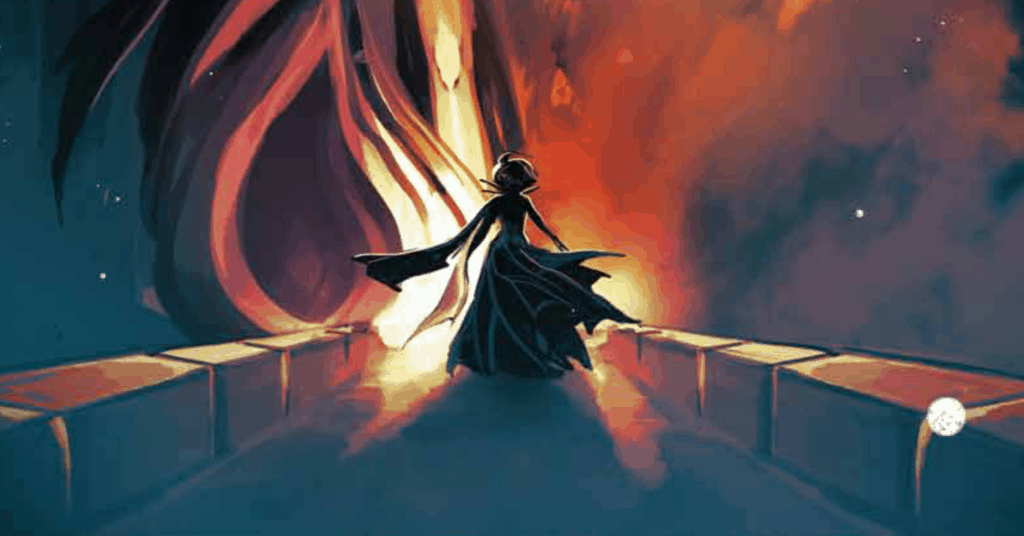
My favorite comic of 2021 was Die by Kieron Gillen and Stephanie Hans that wrapped up with the mother of all quest arcs. But beyond having cool fantasy landscapes and wrapping up each party member’s arc, Die nailed the importance of stories, whether games, comics, films, prose, TV shows etc., to change how we view and interact with the world in both a heightened and realistic manner. Most of the realism came in Die #20 where the main characters escape the world of the game into our reality with the COVID-19 pandemic in full swing and have emotional reunions with loved ones or just hang out by themselves. However, the final arc of Die also is full of existential nightmares courtesy of Hans’ visuals as well as awakenings and self-realization, especially in Die #19 where Ash comes out as non-binary and discusses how games and fiction shaped their identity. The final issues of Die is a double-edged look at the power of narrative and games to shape us done in both glorious and surprisingly intimate fashion, and I felt I really knew Ash, Matt, Angela, Isabelle, Matt, Chuck, and Sol in the end.
Honorable Mentions: Casual Fling (AWA), Nightwing (DC), Made in Korea (Image), Barbaric (Vault), Superman and the Authority (DC), Catwoman: Lonely City (DC/Black Label)
 Batman #50 is an epic capper on the ten part “Superheavy” arc that closes out Scott Snyder and Greg Capullo’s almost five years on the title as Bruce Wayne returns as Batman and with the help of Jim Gordon, Duke Thomas, and even Geri Powers banishes Mr. Bloom and the people he has infected from Gotham City. In the issue, Snyder reiterates the theme of a family and community approach to heroism that has echoed throughout his run from Batman’s mistakes in “Death of the Family”, his growing relationship with Jim Gordon and Alfred Pennyworth in “Zero Year”, and finally in “Superheavy” where it’s the aging, dying ex-police commissioner, who saves the day using the literal power of the people, and not the superhero at the peak of his powers. (This is because the dionesium that revived Batman healed all his scars and wounds from his crime fighting career in a clever bit of plotting from Snyder.)


