Tag Archives: eric drooker

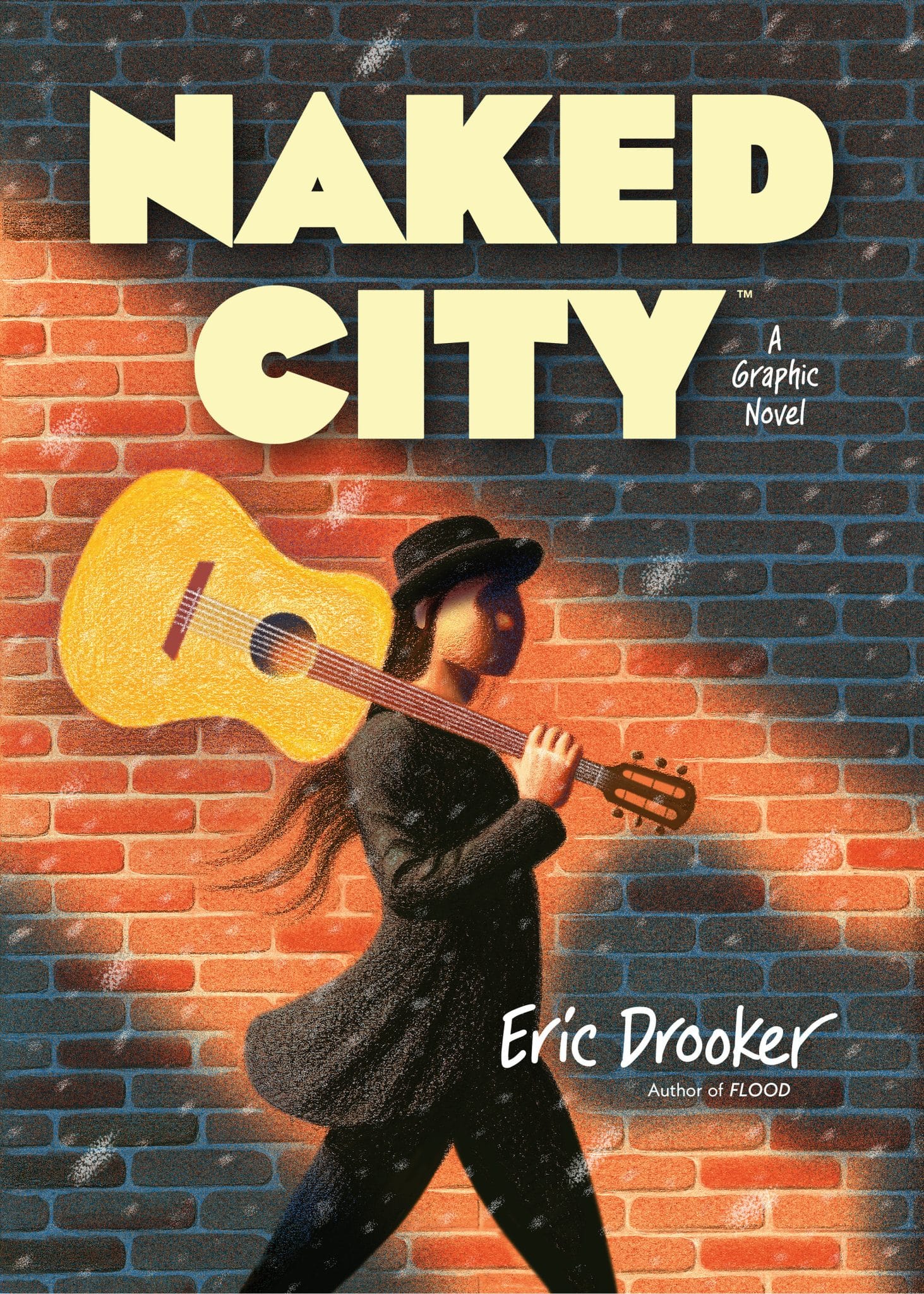
Naked City: A Graphic Novel is an interesting comic about art and success with beautiful visuals

In this long-awaited graphic comedy from an esteemed illustrator and storyteller, three bohemians struggle to answer the question: “Is it possible for an artist to survive in the 21st Century?”

A young singer poses for a painter who has shifted from landscapes to nudes, and both of them learn a thing or two about the purpose of art and the meaning of success. The original graphic novel Naked City takes us inside the head of native New York artist, Eric Drooker (frequent cover artist for The New Yorker).

Story: Eric Drooker
Art: Eric Drooker

Get your copy now! To find a comic shop near you, visit http://www.comicshoplocator.com or call 1-888-comicbook or digitally and online with the links below.

Bookshop
Amazon


Eric Drooker/Dark Horse provided Graphic Policy with a FREE copy for review
This post contains affiliate links, which means that if you click on one of the product links and make a purchase, we’ll receive a percentage of the sale. Graphic Policy does purchase items from this site. Making purchases through these links helps support the site

Get a glimpse into what it means to create in the modern era in Eric Drooker’s Naked City: A Graphic Novel

Arriving this fall, Dark Horse Books presents Eric Drooker’s long-awaited third original graphic novel, Naked City: A Graphic NovelNew York Times Editor’s Choice creator Eric Drooker brought comic book fans into an entirely new world with his award-winning Flood and Blood Song, and now expands on these with a new epic meditation on art and life. Blood Song is soon to be a major motion picture, and longtime fans or new readers alike can now explore the story-in-pictures style of Drooker’s expressionist, politically conscious storytelling in a new volume.

In this long-awaited graphic comedy from celebrated New Yorker cover artist, Drooker, three bohemians struggle to answer the question: “Is it possible for an artist to survive in the 21st Century?” A young singer poses for a painter who has shifted from landscapes to nudes, and both of them learn a thing or two about the purpose of art and the meaning of success. The original graphic novel Naked City takes us inside the head of native New York artist, Eric Drooker.

Naked City: A Graphic Novel will arrive in hardcover (6.25″ x 8.75″, 336 pages) on bookstore shelves October 8, 2024 and comic shops October 9, 2024. Pre-order at your local comic shop, bookstore, Amazon, or Barnes and Noble for $29.99.

Naked City: A Graphic Novel

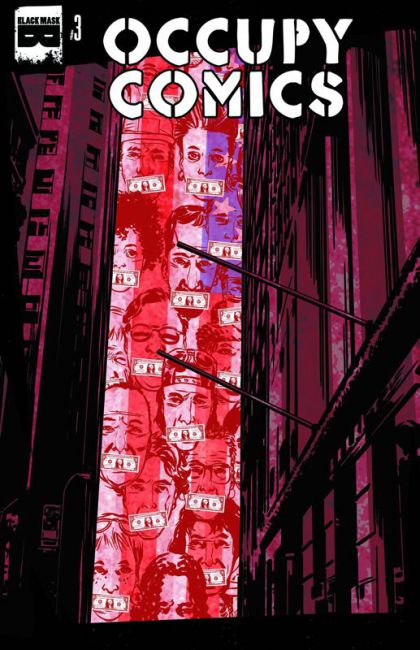
Review: Occupy Comics #3

OccupyComics 3 CoverThis week sees the final issue of the Kickstarter funded, Black Mask Studios published Occupy Comics. With the third issue, we get a solid final entry full of though provoking cartoons, editorials and a great history lesson from Alan Moore. The Occupy Comics trilogy is a once-in-a-lifetime collaboration of more than 50 comics pros is a celebration of Occupy and a time-capsule of the movement’s themes. The organizers and creators are donating all their revenue after costs to Occupy-related efforts and initiatives as well.

This issue features the talents of the before mentioned Moore, Molly Crabapple, Joshua Dysart, Caleb Monroe, Kevin Colden, Swifty Lang, Salgood Sam, Brea and Zane Grant, Shannon Wheeler and Charlie Adlard. If you’re a fan of any of these creators, this is a must get as far as comics.

The stories vary in quality and length with every one at least good and a few in the great category. Overall, there’s an air over the issue, since is the last one. A few entries reflect on the fleetingness of the Occupy movement, but also could be used as commentary on a series that I wish would go on for longer.

Occupy Comics is a perfect combination of comics and politics with a great balance of education, fairness and not being too preachy. Even though it’s labelled as Occupy, it never really takes on side or the other about the movement as each creator ads their own voice and thoughts about it. To have an anthology that allows this political thought and expression go is a loss for the comics community and I wish we could see more of it.

No matter your take on the Occupy movement as a whole, this issue, and the two that proceeded it, is a nice look at a political movement that fizzled quickly and whose long lasting contributions will be debated for some time to come. To get first hand accounts, and opinions, about what it all meant and why it happened is important in in the historical sense but also the educational. This series acted as a voice for creators to reflect and be free with what they say without corporate interference, much like the movement itself. It’s voice is one we need and one I hope we see more of down the road.

Story: Caleb Monroe, Mark L. Miller, Zane Grant, Bea Grant, Patrick Meaney, Joshua Dysart, Kelly Bruce, Alan Moore, Kevin Colden, Swifty Lang, Shannon Wheeler Art: Molly Crabapple, Theo Ellsworth, Mark L. Miller, Jonathan Spies, Jenny Gonzalez-Blitz, Eric Zawadzki, Allen Gladfelter, Salgood Sam, Matt Bors, Jerem Morrow, Frank Renoso, Eric Drooker, Charlie Adlard
Story: 8 Art: 8 Overall: 8 Recommendation: Buy

Black Mask Studios provided Graphic Policy with a FREE copy for review

A Decade Ago, Eric Drooker Drew about a New York City in Physical and Moral Crisis with FLOOD!

Nicole is our newest contributor. She regularly writes at her own blog Ad Astra Per Aspera. The below is reposted from that site with permission.

Title: FLOOD! A Novel in Pictures
Author: Eric Drooker
Published: 2001, by Dark Horse Comics, Inc.
Bought this Copy: @ Hairy Tarantula Comics, Toronto
For More Info: Check out Eric Drooker’s Website

It’s been argued into a cliché that one is the product of their surroundings—and to say as much about Eric Drooker would be an acknowledgement that his artwork is as much about New York City as himself. Maybe more. The images he depicts in such stark contrast—whether it’s the linocut, scratchboard, or stencil art, all of which he’s known for—all present the same city, seemingly, at war with itself, constantly and eternally.

Eric Drooker was probably one of the first political artists that I discovered. I was 13-ish when Rage Against the Machine put out their single, The Ghost of Tom Joad, and the artwork of that album is Eric Drooker – from the graphic novel, FLOOD!, to be precise.

After that single came out, I looked for more of his stuff. Something in the pictures had a real distinct emotion and humanity behind it–I would say everything in his work had soul. I bought a book of posters and other “street art” by him (this was the late 90’s, back in the days before “guerrilla art/marketing” was a household term, and work by Bank$y wasn’t being bought for $1 million by the world’s rich and famous). Eric Drooker’s art centered around the issues that the people of the city—the city itself—struggled with: police brutality, poverty, affordable housing and tenants’ rights, the freedom to assemble, etc.

In this story, Drooker depicts the epic story of a man struggling for a modest existence with only a handful of text. On most of his journey, he finds little more than bad options after he is laid off. From there, life in the city becomes a downward spiral; he seemingly bounces off of its edges as he falls, the rain pouring harder and harder in the streets. He wants work but can’t find anything that pays enough or is within his skill-set. He wants to feel comfort and love from another human being, but in the night only finds human beings more emotionally starved than himself.

The panel sequence that I find most powerful is when he finds his troubles compounding—bad news over and over and over again. The panels get smaller and smaller, the graphics more and more crude. It’s the perfect depiction of when a bad day just keeps piling up with unfortunate events, until you sit down and try to vent to a friend or in writing… and by then, so much garbage has piled up that it all feels petty.

FLOOD! sharpens the over-arching message that Drooker presents to us in all of his work depicting New York City:  It’s not just about one or another character and his or her stories–morality–or soul, as I mentioned earlier. Fundamentally, the “soul” in question appears to be the city itself. By the end of this story, you feel convinced of this idea that New York (and maybe all of our hometowns) have souls, and somewhere in the Heavens of the ether is a grand scale, precariously balancing all of the good (community, humanity, love, compassion, potlucks, free concerts in the park, dogs and cats, children playing in their neighborhood) with the bad (muggings, eviction notices, police violence, drug rings, gangs & crime syndicates, alienation, selfishness, and all that noise, noise, NOISE!). We wait in hoping that, should it ever be finally and resolutely judged, the number of good deeds will outweigh the bad.

… One can’t help but think about these things, especially when the streets of New York City really are a-flood. Even atheists and agnostics can’t avoid the mental exercise of imagining a natural disaster as an ethical and artistic expression of causality–from divine intervention, to karma, to some other simple form of poetic justice.