Category Archives: Reviews

Movie Review: Sissy

Sissy

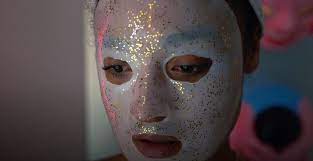
There’s a curious contradiction at the center of social media. For an idea that seems to put heavy stock on the importance of socializing, the very act of doing so online can be a very lonely affair. As such, the image we create online is often severely curated, a sanitized version of ourselves that purges the less appealing aspects of our personas. Writer/director duo Hannah Barlow and Kane Senes’ satirical horror movie Sissy puts this contradiction front and center to dissect our relationship with social media and what happens when our online profiles become scrutinized in the real world. Turns out a lot of blood can be spilled on the topic.

Sissy follows Cecilia (brilliantly played by Aisha Dee), a successful mental health influencer that creates mindfulness content. One day she runs into her childhood friend Emma (played by Hannah Barlow) and is reluctantly thrust into in-person socializing with her and her new group of friends. Tensions arise when we learn there’s a deeply rooted traumatic event that made the two friends drift apart when they were kids, an event that involves another girl who used to bully Cecilia but is now Emma’s bestie.

Things get complicated when Cecilia is invited by Emma to join her fiancé and a few friends to go to a cabin in the woods to celebrate their bachelorette party. Once there, Cecilia learns the cabin belongs to the same girl, now grown up, that used to bully her when she was little. What was originally meant to be an opportunity to reconnect with a lost friend quickly becomes a darkly comic descent into trauma, social media identities, and deaths both accidental and intentional.

Sissy

The movie is, in essence, a clever deconstruction of Cecilia, a slow unraveling of her real self and of her influencer self. It’s made obvious quite early that each version of Cecilia is at odds with the other. Whereas Cecilia the influencer comes off as a calm and collected person that’s emotionally mature and stable, offline Cecilia is a quiet and somewhat awkward person that keeps to herself and only socializes via her phone. Content creation isn’t just her job, it’s her life. Emma’s presence disrupts this as it forces the real Cecilia to get behind the wheel, traumas and anxieties laid bare for all to see.

Sissy succeeds at showing how current generations live in a constant exchange of personalities that are then equally scrutinized both online and offline. The message hits hard thanks to Aisha Dee’s performance, an emotionally nuanced showcase that presents audiences with the darkly funny consequences of bringing digital behaviors into the real world.

As Cecilia’s traumas are forced to the surface by her childhood bully, the mental health influencer starts to show the cracks on her own psyche. It’s an idea that frames online content creators as the spiritual successors of Dr. Jekyll and Mr. Hyde, substituting the classic horror character’s mysterious transformation elixir for social media platforms. Cecilia makes it clear throughout that she values her digital presence more than her real one. Harlow and Senes use this to lay the breadcrumbs that guide the story towards its very funny and clever deaths.

Sissy

Sissy sneaks up on you with what it decides to make fun of and illicit laughs from. Each of the characters Cecilia interacts with is pushed to a point just shy of caricature to make them embody the least pleasant parts of social media interactions. It’s as if they were walking like/dislike buttons, offering opinions on Cecilia’s character with the scorn of an anonymous troll in a comments section. They become the things that are wrong with the internet, in part, with Cecilia being the troubled but also troubling victim at the center.

On a quick note, I was glad to see the movie not give in to 80’s horror nostalgia. At points, I expected a neon-soaked homage to the slashers of yesteryear, but the story has a wider vision that isn’t content to simply settle on genre references and Easter eggs. The same can be said of its score (by Kenneth Lampl) and musical selection. It’s all set to capture the present rather than a modernized version of the past.

Barlow and Senes have one of the best horror movies of the year on their hands with Sissy, led by an astonishing performance by Aisha Dee. It puts social media, woke stereotypes, and digital anxieties in full display to satirize them in a way that invites discussion. I for one keep coming back to it, thinking about Cecilia and all the chaos that she brought with her by the simple fact of having an online presence that hides her traumas and presents an entirely different person than the one that walks among real people. Goes to show just how much horror lies in the things that we leave out of our social media profiles.

Sissy is currently streaming on Shudder.

Movie Review: Dark Glasses

Dark Glasses

Dario Argento is considered by many to be one of horror’s great directors, an icon that serves as the face of the giallo subgenre (along with Mario Bava and Lucio Fulci). What pushed the Italian director into that sphere of recognition lies in his ability to produce highly stylized horror sequences involving very intimate and gruesome murders, often at the expense of story and narrative coherence. Seldom has Argento sacrificed an elaborate kill scene, which are more often than not soaked in neon or solid reds and blues, for the sake of logic. And yet, his films carry a distinctive signature that make them unique, that make them Argento.

The director’s new movie, Dark Glasses (now streaming on Shudder), is a surprising departure from the excesses of the genre. It’s more an exercise in restraint than in self-indulgence, something that can’t easily be said about the rest of his films, and it’s one of the reasons why it succeeds so convincingly even as an example of giallo. In a way, Dark Glasses is giallo stripped of its messy storytelling bits, finely tuned to get at the things the subgenre can do well if given the chance.

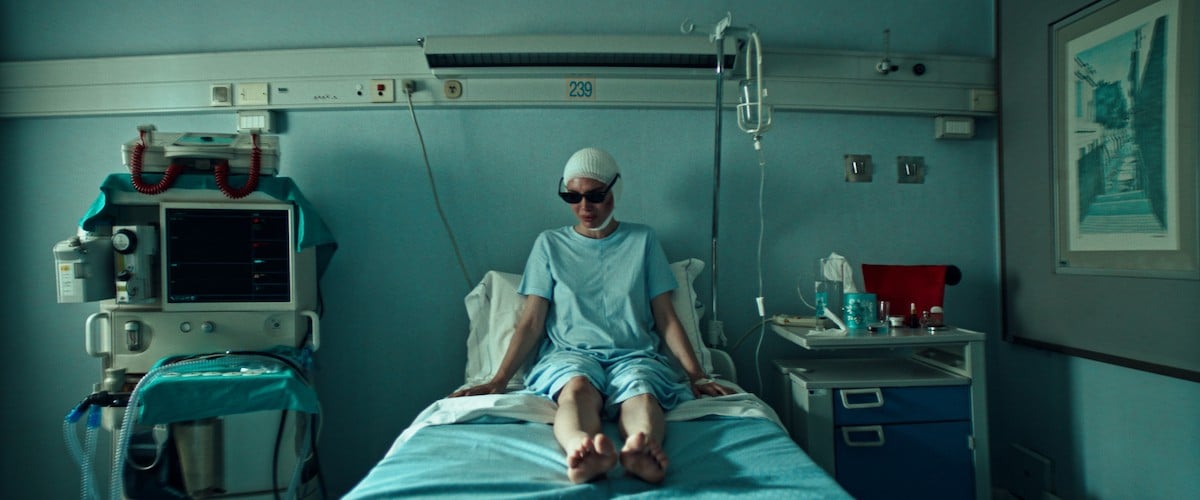
Dark Glasses follows Diana (played by Ilenia Pastorelli), a highly successful escort that becomes the target of a serial killer that’s preying on sex workers. The reason for the killings is kept a mystery, as is the case in most giallos, but it does lead early on to an intense car chase where the killer slams into Diana’s vehicle and causes a violent crash, resulting in Diana losing her sight. A third car is caught up in the violence, belonging to a Chinese family. A boy is left orphaned as a result, complicating matters further for Diana. The kid, called Chin (Andrea Zhang), later decides to seek out Diana and help her as she navigates her new reality as a blind person, perhaps because he feels a connection to her given their shared experience in loss. This dynamic ends up being one of the film’s greatest strengths.

Dark Glasses

Diana and Chin make for an unusual pairing in a giallo, which leads to them being such a unique set of characters within that context. Their relationship is one of companionship and mutual protection, standing opposed to the usual lonely investigator on the trail of the killer. They very clearly need each other, one due to the loss of a crucial sense and the other due to the loss of his core family unit. This allowed Argento to build his characters, to develop a bond between them and then put it to the test in tense scenarios.

Ilenia Pastorelli’s Diana becomes one of Argento’s strongest and most imposing leading ladies thanks to this welcome focus on character development. Her performance relies heavily on her struggle to accept and understand her new condition and she leans heavily on the character’s frustrations to project that sensation on screen. It’s easy to feel her anger and desperation in the movie’s most intense sequences, especially as she fights against her condition to try and get an advantage over the killer.

Zhang also commits to his role, especially in terms of the range of emotions his character has to go through after the crash. He’s vulnerable in moments when his family is being discussed, especially his future without them, but his resourcefulness as Diana’s guide when trying to the escape the killer shines bright thanks to the all the character work Argento puts in beforehand. It’s a tender and delicate show of friendship that rarely gets the time to grow in these types of movies.

Dark Glasses

On the traditional giallo violence side of things, Argento goes for a measured touch that prioritizes quicker shots of gore over extended stays on open wounds and severed limbs. Each kill is still elegantly shot in a way that achieves the kind of macabre beauty featured in his other films, but in Dark Glasses he favors teasing the audience with the idea of brutality and cruelty rather than linger on it. Whereas in other films the violence comes off as gratuitous and sensationalized, here it carries weight while also building up the terror the killer carries with him.

Dark Glasses is the kind of Argento I’ve always wished we’d gotten more of. He crafts a memorable female character with Diana, one that avoids falling into the oversexualized and oversimplified characterizations of the past. There’s enough giallo here to please hardcore fans, too, but it’s in the twists and tweaks to the formula that the movie finds a life of its own. Argento should be commended for offering a blueprint for future forays into giallo with Dark Glasses. Goes to show, masters of horror always have a movie in their back pockets that can remind fans why they’ve earned the title.

Movie Review: Pearl is a masterfully crafted origin for a new female slasher

Pearl

The decision to reveal the origins of a new killer within the slasher genre incurs a lot of risk. A botched attempt can result in a slasher with diminished presence and mystique. Rob Zombie’s 2007 Halloween remake comes to mind. The movie has its high points, especially in terms of how it adds another layer of violence and cruelty to the myth of Michael Myers, but to explain the source of his evil and the reasons why he kills robbed him of the mystery that made his very existence so unsettling in the John Carpenter original.

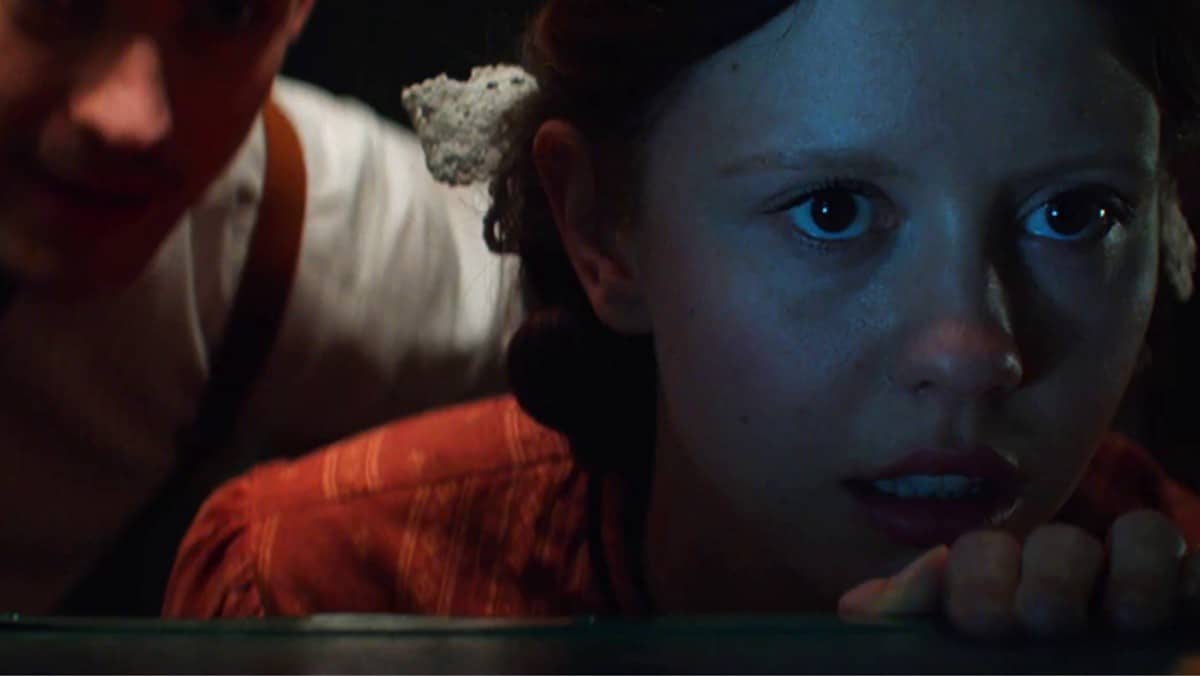
Ti West’s Pearl manages to avoid all this by making sure the story behind the titular slasher is strong enough to warrant exploration. The bad things that turn Pearl into a killer make for a fascinating watch as they’re put on a more intimate and emotional path that mixes violence and tragedy in the service of sculpting a new horror icon with an identity all her own. Its success is owed to a stellar performance from Mia Goth, who takes the character into places largely reserved for established movie monsters and murderers. It’s impressive enough to flirt with the idea of several nominations for the actress in the upcoming awards season.

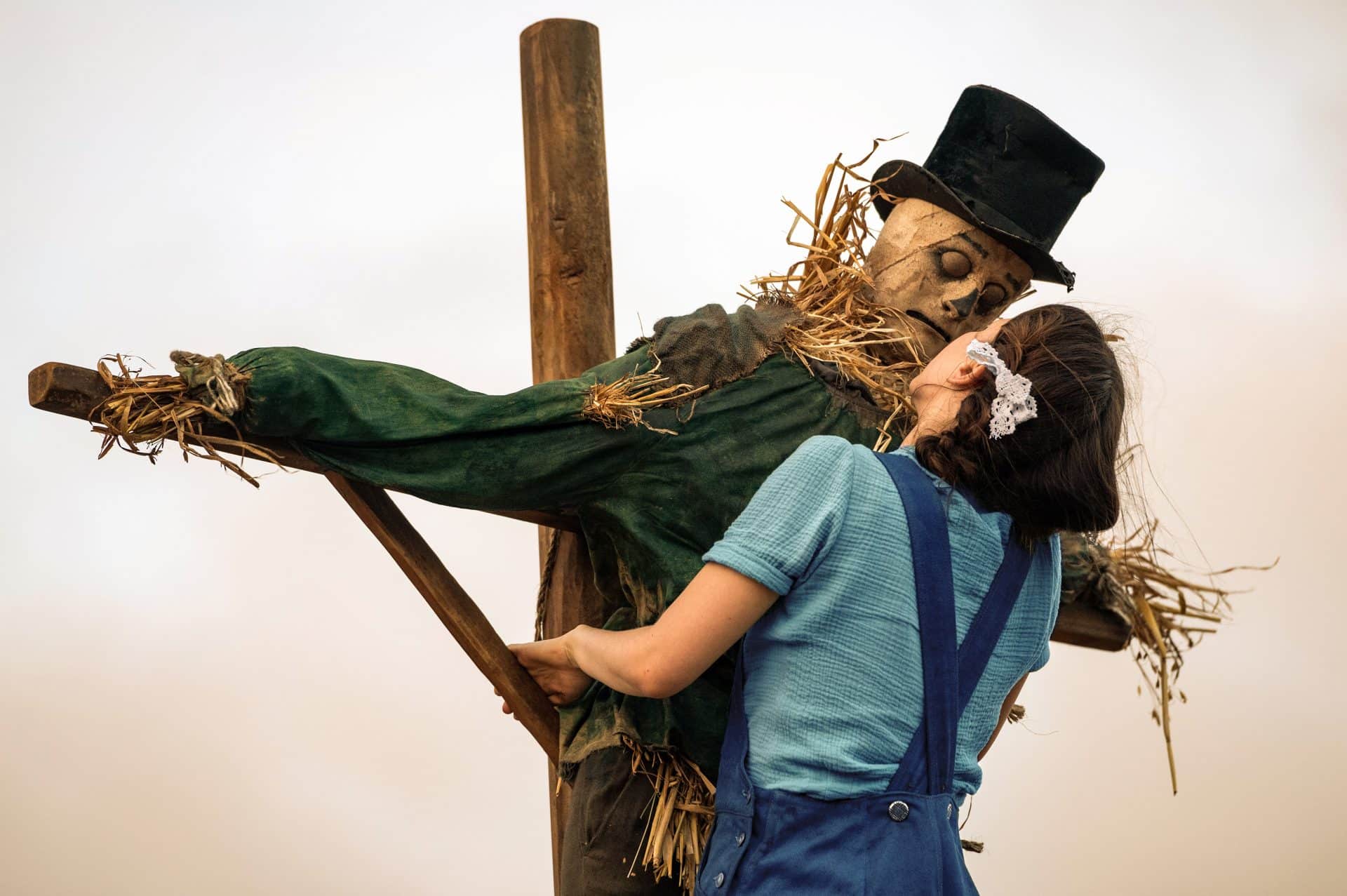
Pearl is the second part in West’s “X” trilogy, which began with 2021’s X, a movie about a small group of porn actors and filmmakers that rent out a small cabin in a remote farm deep in Texas only to find the old couple they rented it from are vicious killers. Pearl, played by Goth in heavy prosthetics that make her look very old (and who also plays the younger character of Maxine in the movie), is one of the two aging killers. Pearl is a prequel, set in 1918 with the intention of looking at the killer’s younger days, when she was but a mere farmer’s daughter with a secret love for musicals (and an even more secret urge to kill and feed her victims to an alligator in a pond near her house).

Pearl

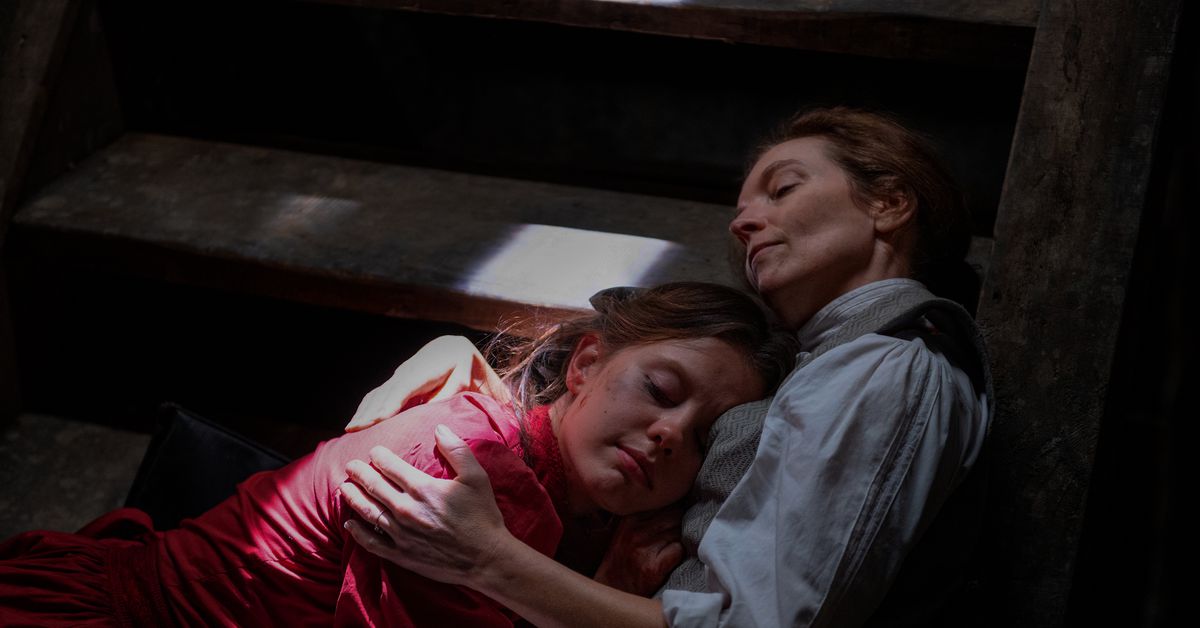
Pearl’s mother and wheelchair-stricken father (played by Tandi Wright and Matthew Sunderland respectively) stand in her way, a tragic pair whose circumstances interfere with the development of their daughter’s true potential (at least in Pearl’s mind, that is). It’s a theme that runs throughout the entire movie. Pearl desperately wants to avoid the fate her parents embody the entire time they’re onscreen, which points to a lifetime of regrets and dullness in relative isolation.

It doesn’t help matters that it’s revealed quite early that Pearl is married to a man who is currently overseas, dug in the trenches of World War I. Every aspect of her life, every decision she’s made or has been made for her, further pushes her into the future she dreads. Her killer side takes form within the confines of that.

It’s easy to see how much tragedy envelops Pearl at a mere glance. Goth and West don’t set out to turn her into evil incarnate. On the contrary, she’s portrayed as an ambitious young woman that’s constantly reminded of all the things she’ll never manage to achieve. The movie takes to a slower pace because of this, letting the world around Pearl breath organically to better allow audiences to step into the character’s shoes.

Goth takes all this and channels it into a performance that is wholly committed only to then take it a step further. She doesn’t just deliver every single line with conviction and belief, she also brings every possible facial expression into it to fully become and define the character. Goth’s face twists, turns, contorts, and flexes in ways that give the character a sense of physicality that makes her presence intensely magnetic and endlessly watchable.

Pearl

Much of Pearl’s story revolves around the slow psychological breakdown of the character, her descent into a life of murder. Goth compartmentalizes her expressions, saves some of them for the character’s later stages, when her world is teetering on the edge of existential collapse. She can go from sweet and naïve to angry and murderous at a moment’s notice, making her face a powerful source of horror. It’s quite simply spectacular, a treat to witness as it evolves throughout the movie. Goth gives audiences one of the best performances in horror movie history.

Then come the movie’s influences and how they contrast with the first entry of the “X” trilogy. Where X drew comparisons to The Texas Chainsaw Massacre (1974) for its approach to setting and violence, Pearl finds its look in the Hollywood classics of the 1920’s and 1930’s, in the age of Technicolor. Movies like The Wizard of Oz (1939) take the lead here, but with a generous coat of blood and body parts added to the mix. This is where West’s directing skills come in to elevate the story and give Goth the best chance possible to shine.

Classic movies tend to have a kind of shiny and well-defined visual style that was lighted in a way that accentuated the actors’ features and draped shots with carefully constructed shadows that made each scene pop. West achieves the same with Pearl. Each scene vibrates with life, sound, and color, all of which combine for a very different type of slasher horror styling that no other recent movie in the genre can lay claim to. It’s not played for laughs or even irony. Pearl is a serious story and it is treated as such every step of the way.

Pearl

The same applies with Tyler Bates and Timothy Williams’ score. It captures the sounds of early 20th century classics with a measured treatment of strings that can get quite sinister when Pearl is at her scariest. The first trailers might’ve suggested a musical take that would homage the movie’s influences while also poking some fun at it, but the end result is way more thoughtful and meaningful. It’s perfectly captures the hopes and dreams Pearl holds dear right down to the disappointment and rage that take over as the story plays out. It’s another well-oiled component in a movie that’s very cleverly constructed.

Pearl is a new horror classic. It’s propelled by a masterful performance from Mia Goth that creates a new titan in the field of the horror slasher and an equally masterful directorial showing by Ti West. It’s the kind of movie that sets new standards, that creates new possibilities and dares future filmmakers to push themselves creatively. Succeeding in this can bring about the creation of new horror icons and classics. Pearl has already achieved this, in both regards.

Movie Review: Speak No Evil

Speak No Evil

It takes a good horror movie to make audiences not question why the characters onscreen don’t just simply run away from the very dangerous situations they find themselves in. Movies like The Conjuring and It Follows never let the audience settle on the question because the answer is clear: whatever’s haunting the people in the story is inescapable (or requires a considerable amount of money to move out, as is the case in some haunted house movies).

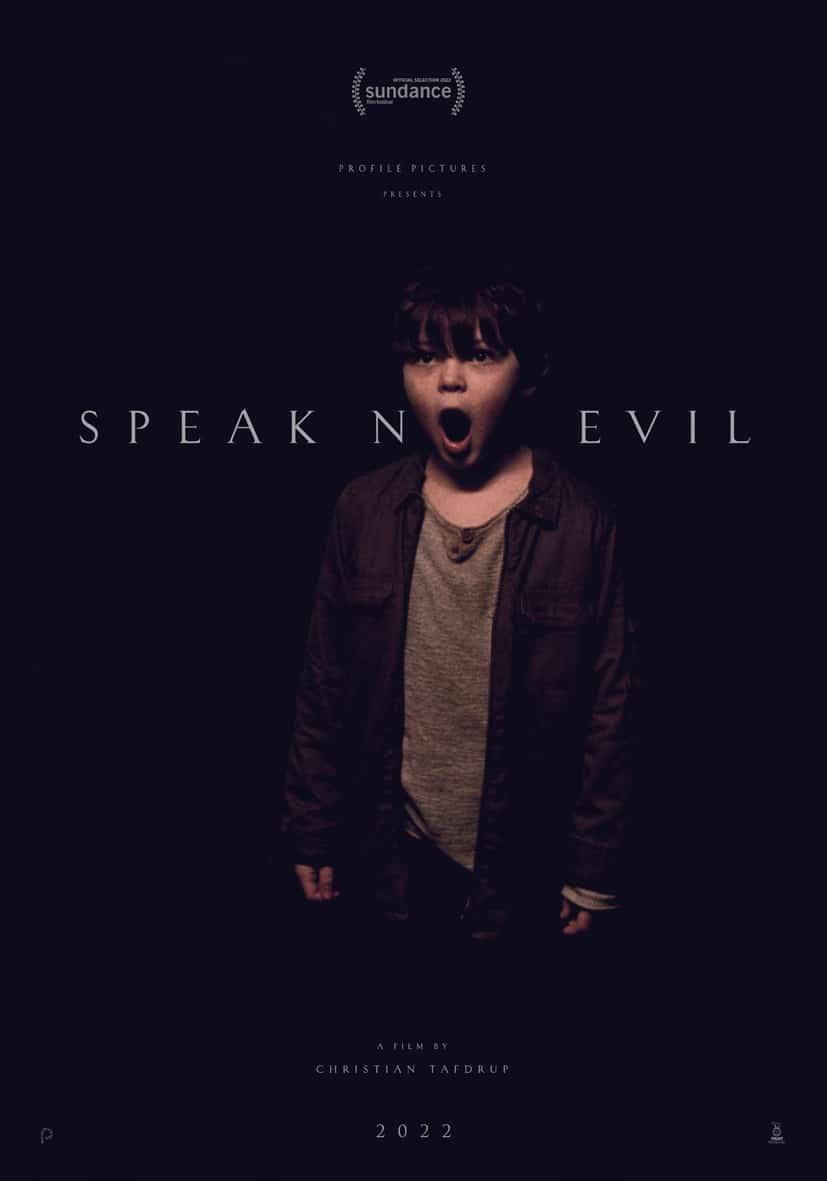
Danish director Christian Tafdrup’s Speak No Evil, now streaming on Shudder, opts for inviting the question. It wants audiences to ask themselves why the family at the center of it doesn’t just leave terrible place they’re in and the horrible people inhabiting it. The reason? Because he’s found an answer that might explain why we as people resist fleeing when the bad starts stacking up, and it’s not for any noble reason. Tafdrup’s deeply disturbing and brutal film makes his characters suffer extensively for staying and it makes for a visceral experience.

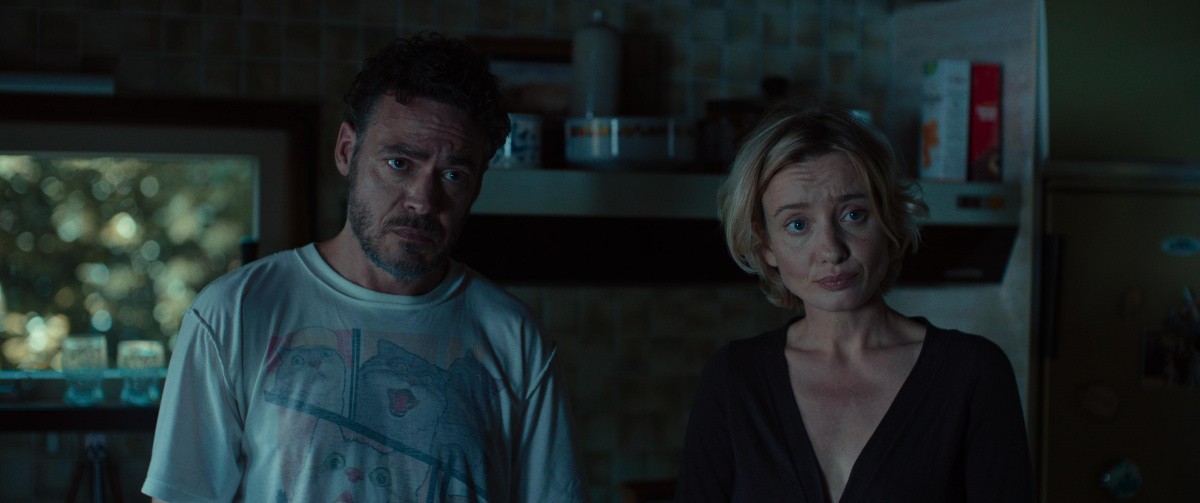
Speak No Evil follows a Danish family (Morten Burian and Sidsel Siem Koch with Liva Forsberg playing the young daughter role) as they take up an invitation to visit a family from Holland (Fedja van Huêt and Karina Smulders with Marius Damslev playing the role of their son) who they met while vacationing in Italy. The Danish family are a bit unsure about spending a weekend with this Dutch family because they’re basically strangers despite the time they spent together during the trip. They decide to accept their invitation but very quickly find out the Dutch family carry a very particular kind of strange with them. From then on, it’s a slow but fascinating descent into a hell of anxiety, politeness, and other people.

Speak No Evil

I want to make special mention of Sune Kølster’s score for the movie before discussing anything else. It can best be described as an exercise in creating an atmosphere of impending apocalypse. It’s expertly used in key sequences that don’t necessarily lead to moments of intense terror. Instead, it’s used as an announcement of absolute doom and its inevitability. It serves to keep the audience unsettled and concerned for the Danish family given the more outright horror parts of the movie are reserved for the very end of the story.

The rest of the movie, up to just before the final act, is essentially a series of nuanced events that peel back the layers of discomfort and awkwardness between the two families. The fact they know so little of each other starts to become very apparent, and there’s something off about the Dutch family. This forces the Danish family down a path of strained political correctness and forced politeness to try and avoid as much unpleasantness as possible. They fail at it, and watching it all devolve into an awkward mess of social pleasantries makes for an uncomfortable watch that is consistently fascinating.

It brings it all back to the question of why anyone would stay put in a place that’s so obviously not right. As the movie progresses, the answer to that question is fear of coming off as impolite. The Danish family’s unconscious commitment to not breaking the rules of social interaction and the expectation of it essentially imprisons them in a home that hides some truly sinister secrets behind the façade of familial normalcy.

In a way, the story finds its horror in the cages we build for ourselves by making decisions designed not for one’s own safety and security but for the sake of the perception others might have of us, or the opinions they might formulate about us based on how willing we are to avoid confrontation.

Speak No Evil

The idea blooms onscreen thanks in large part to the performances of the entire cast. The Danish couple, especially, put in the work to project physical discomfort to the point it hurts to watch them flail about emotionally to keep things under control without imposing their wills. For instance, Morten Burian (who plays the Danish father figure) has what seems like a permanent forced smile on his face for almost the entire movie, showing a kind of desperation to abide by the codes of conduct without ruffling feathers or inconveniencing anyone.

There’s a scene where Sidsel Siem Koch’s character, the Danish mother figure, is offered a piece of meat after having explicitly told the other family she’s a vegetarian. She reluctantly accepts the meat to keep the peace while her husband tries to brush the tension away with a smile. From there, the slights and the clashes just escalate until real evil starts seeping out.

Fedja van Huêt and Karina Smulders, who play the Dutch couple, dive into their performances with a rawness that makes the viewing experience itself come off as a test of endurance. They emotionally torture the other family with a false sense of kindness that casts doubt as to whether they are actually evil or if they’re just a very different an odd kind of family.

Director Tafdrup sets up the proverbial game board perfectly for a finale that shocks with its brutality. Once the design is laid bare, the implications of every decision made by the Danish family start to unravel, making the already painful process of seeing a family try so hard to please people that aren’t returning the favor become even more excruciating.

Speak No Evil

The finale is a descent into hell unlike any other. The audience is invited to think about the ‘what ifs’ of the many decisions not made before it got the point of no return. It’s not so much a punch to the gut as it as a cruel stabbing of the senses that leaves the audience broken and hopeless.

Revealing more would be doing Speak No Evil a disservice. It’s such a finely tuned piece of horror filmmaking that it just demands to be watched, experienced, and felt. The darkness slowly burrows itself under the skin as the story unfolds, and when its finally ready to show its ugly face it proceeds to do so with malicious intent. There’s a lesson in there too. When it looks like things are taking a turn and your senses tell you to flee, screw politeness and run as fast as you can.

Review: Shudder’ s 101 Scariest Horror Movie Moments of All Time

Horror Movie

Lists and rankings concerning the best of anything are bound to be controversial by their very nature. Some might argue against the inherently subjective dimensions of the premise itself, saying it invalidates the entire exercise altogether. Others find validation through them, a way to dole out a few “told you so’s” in a debate. For me, lists aren’t about any of that.

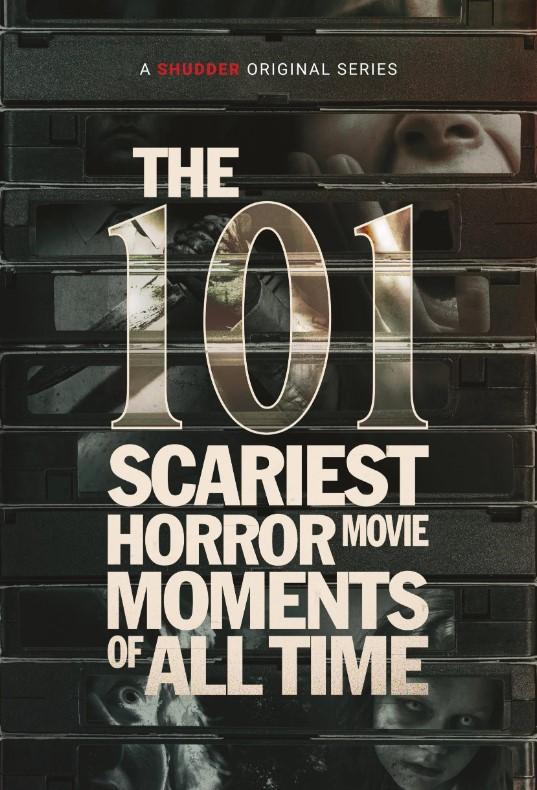
A good list offers a service, a good excuse to go through the things being discussed by either engaging with them for the first time or getting reacquainted with them to test out the premise of the list. Shudder’s 101 Scariest Horror Movie Moments of All Time does precisely that. It’s not interested in laying down the law in the field of horror in an inflexible way (despite what the series’ title blatantly implies), instead it’s all about giving viewers more than enough reasons to indulge in well-crafted scares or to get reacquainted with old haunts with a fresh set of eyes.

The horror streaming service’s new series is basically a spiritual successor to Bravo’s 2004 miniseries The 100 Scariest Movie Moments, an influential production in its own right that gave horror fans material to debate and revisit once it aired. The first episode of the Shudder series, which is currently available to stream, goes from entries 101-89, stopping on each one to give a general idea of what the film is about and why it’s memorable as a whole before finally landing on its scariest moment.

Horror movie
It Follows

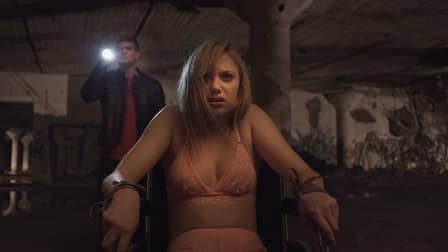
I’m not going to spoil the whole list here, but I will reveal entry #101 as it sets the tone well and signals a desire to not just go over the same horror classics that have dominated these kinds of countdowns before. David Robert Mitchell’s It Follows (2014) kicks things off fast and intense in what I took as a kind of statement. It had that “this isn’t your parents’ best of horror list” feel to it and it imbued the following entries with a surprising sense of anticipation.

Part of what also made the first entry so exciting was how it presented the format for the series, especially when it comes to its commentators. Instead of going for a mashup of quick edits and cuts of speakers giving bite-sized observations on the movie, each segment focused largely on one leading voice supported by shorter horror expert interventions, which included directors, journalists, scholars, experts, actors, and celebrity fans. The tone was celebratory but focused, not interested in quick quips or in making fun of the movie (something that Bravo, E!, and VH1 would go on to do in their own countdown-type shows).

An impressive cast of commentators graces the screen throughout, too. Tananarive Due, Mick Garris, Joe Dante, Tom Holland (the director of Fright Night and Child’s Play, not Spider-Man), Tony Todd, Brea Grant, and Gigi Saúl Guerrero are among the experts brought in to dissect each scary moment and their insight is the stuff of horror nerd dreams.

There’s a good mix of veteran industry names and newer or emerging voices within the community to make each discussion come off as fresh. Nothing feels recycled, giving every movie a chance to be seen through a different lens. This seems to be the aim of the series, to favor new interpretations and to dare consider films that haven’t had the chance to get much of a spotlight elsewhere.

Mulholland Drive

For instance, I never expected David Lynch’s Mulholland Drive (2001) to be one of the selections, but its inclusion was not only welcome but given the treatment it deserves as a unique film that freely indulges in horror in its storytelling. Mario Bava’s Black Sabbath (1963) follows close enough to make the ranking come off as modern and not tied down by tradition or cannon.

I was also pleased to see the range of time periods on display as newer lists tend to add newer productions at the expense of older ones despite their relevance and overall filmic impact. On the contrary, the show goes lengths to reassure fans the old and the new can coexist and elevate each other. There’s even recognition of a previous selection’s influence on a movie that comes further down on the list.

All of this to say that The 101 Scariest Movie Moments of All Time is shaping up to be an invaluable piece of horror content, especially in getting viewers to watch more horror. It’s a fun, non-combative celebration of the genre that invites appreciation rather than contentious debate over which movie should come first or last. Give it a watch and then go and get scared watching the movies that made it into the list.

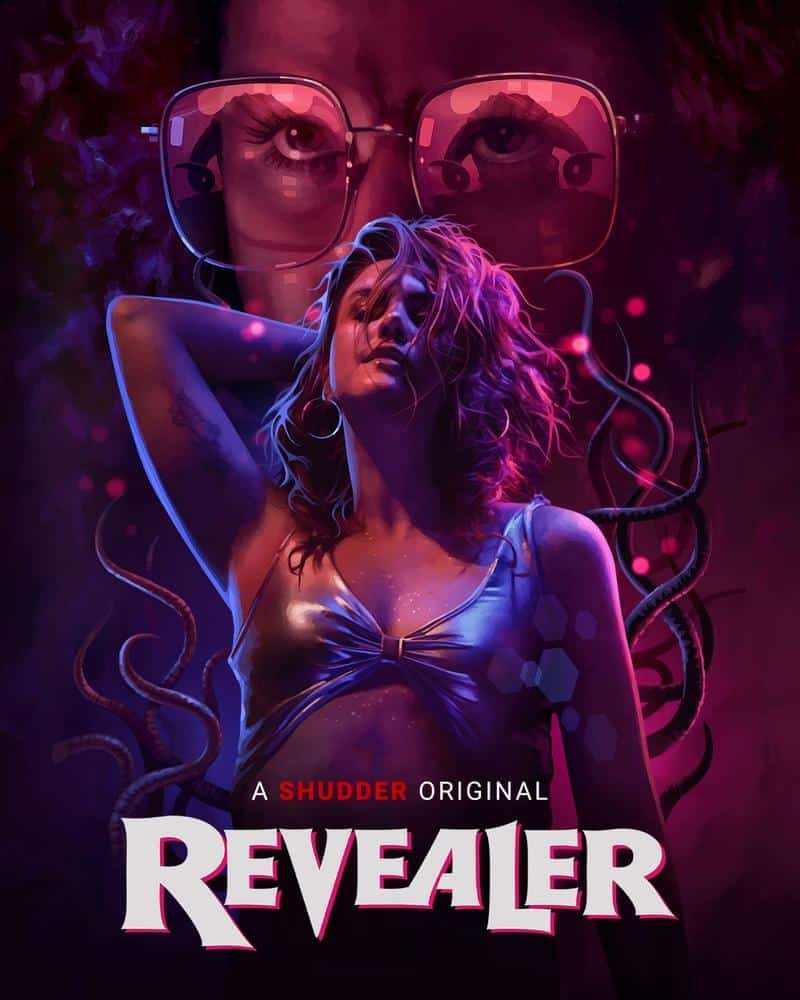
Movie Review: Revealer sends a stripper and a religious protester to the end of the world

Revealer

Stripped down to its bare essentials, the Apocalypse is ultimately an overblown shaming session levied against humanity. Trumpets signal the new stages of shaming scheduled throughout the event and demons spew out from their underground caverns to give everyone a taste of their disdain. That it’s also known as Judgment Day is just icing on the cake.

Director Luke Boyce’s Revealer, currently streaming on Shudder, certainly takes this to heart as it forces a tense pairing of personalities with firm convictions on morality just as the Apocalypse unleashes its opening salvo. It’s a movie that seems to become more relevant every single day after it’s very recent release, especially in terms of dividing lines and Supreme Court decisions.

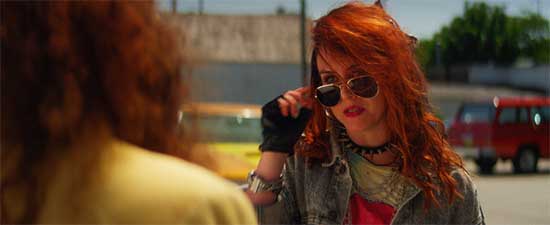
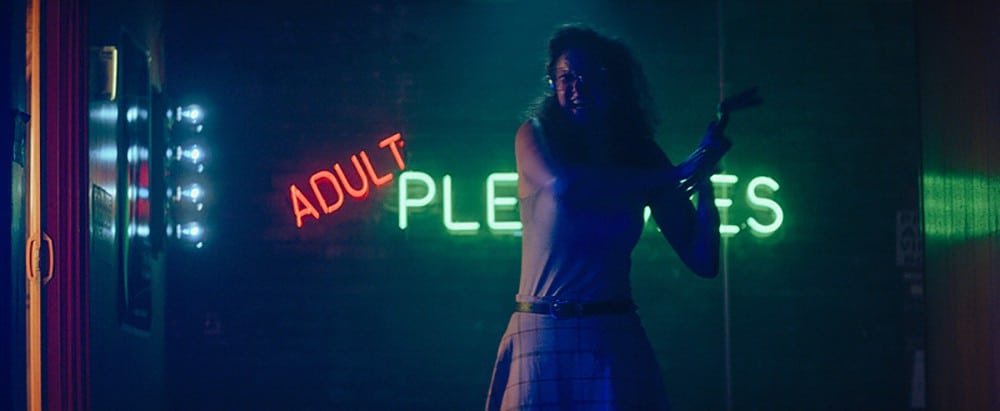
Revealer follows a stripper called Angie (Caito Aase) and a religious protestor called Sally (Shaina Schrooten), both stuck in a peepshow booth as the world ends outside. They each stand on opposite sides of a spectrum that’s divided groups of people since time immemorial: religion. Their anticipated animosity towards each other is present from the very beginning and has no qualms about being as brutal and piercing as possible every time any type of judgment is levied against the other, even after an unsteady alliance forms between them as demons and devils start making their way into the sex shop they’re held up in.

Comic fans should have a vested interest in this movie given the resumés of the screenwriting duo behind it, Tim Seeley and Michael Moreci. As two of the most versatile voices in the industry, Seeley and Moreci bring a finely tuned and honest sensibility to character creation that features the same approach to economical but precise dialogue writing present in comic book storytelling. This is perhaps most present in how the movie contemplates the idea of passing judgment onto others, on what lies in the very act of it and how difficult it is to let go of prejudices even when good intentions guide the conversation.

Revealer

The story’s success largely depends on Angie and Sally’s interactions and how genuine they feel as the Apocalypse threatens to burst their respective bubbles. The movie doesn’t only achieve this but does so by never allowing one of the characters to overpower the other with their worldviews.

Seeley and Moreci inject a fair amount of nuance into their dysfunctional pairing, promoting understanding rather than moral superiority. It’s not about whose worldview reigns supreme. It’s about finding a way to understand each other while also being able to challenge preconceived notions of right and wrong.

Boyce does a good job of giving these two characters enough unencumbered space for their conversations to take place while also creating a strong sense of dread as one particular devil sets its eyes on their souls. The story essentially takes place in just a handful of locations, all enclosed and claustrophobic. It’s theatrical in its approach and it maximizes the use of the limited budget in outstanding ways, putting the focus on character rather than on fire and brimstone. The Apocalypse is ever-present, but it’s mostly unseen. What’s impressive is that it is always felt. Therein lies the success of Revealer.

Caito Asse and Shaina Schrooten as the stripper and the religious protestor, respectively, melt into their roles and give each other more than enough emotion to play off each other. They go from total dislike for each other to brief bouts of understanding constantly and the effect is one that their performances carry through well.

Revealer

Given how heavy handed the script is though, mostly for good, the performances do sometimes fall into exaggeration and it can play against them. The humor doesn’t always hit the mark either, but not enough to distract from the story. It should be said that the movie isn’t an exercise in realism, but that some exchanges between Angie and Sally could’ve been reigned back a bit for more impact.

What we do get see of the Apocalypse, almost entirely in the form of demonic creatures, is memorable and plays to the fears and worries Angie and Sally argue about in their conversations. One particular creature stands out as a kind of Pinhead figure from the Hellraiser movies in its sense of presence and serious menace, and it helps propel a fair bit of tension and fear in what’s a very dialogue-heavy script. Other lesser demons also give Angie and Sally a few horror scenes that help to build their characters in surprising ways.

Revealer came out just as the American Supreme Court overturned Roe v. Wade, the landmark 1972 ruling went on to protect the freedom of choice on abortions. In its wake, the national divide has widened, bringing to light more forceful forms of disagreements that aren’t that dissimilar from the kinds explored in the movie. This might be a small note that definitely requires further exploration, but the context in which the movie finds itself in does turn it into an urgent watch. It offers different ways to go about contemplating the things that keep us apart and to better gauge the impact of our moral judgments. It’s something to think about and Revealer definitely helps.

Revealer

Boyce, Seeley, and Moreci have a very confrontational horror movie in Revealer. It has two compelling characters that drive home a debate that seems more necessary with each passing day. It might just be that the Apocalypse is exactly what we need to put things into perspective and come together.

Movie Review: The Sadness holds up a mirror to show how ugly humanity can be

The Sadness

Horror produces some of the strongest, most visceral metaphors for humanity’s self-destructive bent across genres. Be it to comment on our near-cannibalistic drive towards consumerism in a capitalistic society (George Romero’s Dawn of the Dead) or to address harmful misconceptions about aggressive diseases that deteriorate our very bodies (David Cronenberg’s The Fly). There’s little to no contest. Horror does it better.

And yet, there are times when human behavior can be so ugly, so brutal, that metaphors might not be the adequate vehicle for getting a message across. Sometimes you need to hold a mirror up and just show the ugliness, blood and guts intact. Taiwanese horror movie The Sadness, directed by Rob Jabbaz, does exactly that to produce one of the most gut-wrenching horror experiences to date on our reactionary and selfish behavior during a pandemic. Brutal doesn’t even begin to cover the type of violence this movie manages to put on screen.

The Sadness (currently streaming on Shudder) sees Taiwan very quickly collapse under the strains of a highly contagious virus that turns the infected into ultraviolent killers unburdened by morality and possessed by a sexual rage that makes them even more repulsively dangerous. They represent an irreparable tear in the social fabric and they get plenty of opportunities to enact their darkest urges to show what total societal collapse can look like.

The story is driven by a couple living in the city as the pandemic breaks out. One of them is at home, Jim (played by Berant Zhu) and the other is at work, Kat (played by Regina Lei), just as things take a turn for the worse. Each one witnesses the different forms of violence the infected are capable of, guiding the viewer from shock to shock to build tension while also obliterating any sense of safety the characters can have as it progresses.

The Sadness

Fans of Avatar PressCrossed series (co-created by Garth Ennis and Jacen Burrows) will find themselves in familiar territory with The Sadness as the basic premise is pretty much the same as the comic’s. In Crossed, a pandemic breaks out that causes the infected to shed their morals and go on mass killing sprees interspersed with sexual violence. The exchange of bodily fluids created more crossed, named as such because of the red cross-shaped rash that appears on their faces. A similar thing happens in The Sadness. A change in eye color (from the original to a sickly dark red) that covers the entire eyeball separates the infected from the not infected.

Upon reading Crossed for the first time, I remember thinking that there was no way in Hell an American or even a British movie studio would ever dare adapt the comic into film. Until I’m proven wrong, The Sadness is as close as we’re getting to a Crossed movie.

Director Jabbaz’s decision to make the violence say its piece so close up to the camera, in many of the movie’s death sequences specifically, ends up playing to the story’s strengths, namely its intention to lay bare the levels of depravity people will willingly descend to if allowed. The movie is a gorehound’s dream, but it’s not exploitative or celebratory of gore for the sake of it. It’s meant to unsettle, to become a mirror of us at our worst.

The camerawork on display during the more violent sequences accentuates this. It’s structured in the service of making the audience feel repulsed by it. It differs from the Crossed comic in this regard, if only a bit. Ennis and Burrows tend to go over the top in their story for a very dark comedic effect that puts shock first and commentary second. This isn’t a knock on the comic, it’s just a difference worth pointing out.

The Sadness

It was also surprising to see a fair amount of restraint in the instances of sexual violence. What’s put on the screen regarding it is meant to further complicate the reflection the infected cast upon us, but it never outstays its welcome and what we get of it is focused and purposeful. Crossed is on the opposite side of the spectrum. It prefers to attack the senses by digging into all that’s horrible about the infected.

One standout performance comes from one of the infected, a business man who’s trying to flirt (very awkwardly) with the Kat character and gets infected during an intense train scene in which the infection starts spreading from passenger to passenger. The business man is played by Tzu-Chiang Wang and he represents the current strain of sexist male behavior that argues men are justified in expressing their desires towards women without fear of rejection or consequence. Men who act in accordance with this mindset view themselves as the victims of “female arrogance” and “female oppression” and thus argue that they’re being shunned or unjustly made out to be the villains.

This character ends up being one of the most malignant expressions of the virus, a stand-in for gender violence. The movie doesn’t hit viewers on the head with the message so much as it puts it front and center as a warning of how bad things can get in this particular subject if left unchecked. Other infected act accordingly, representing a behavioral fear that’s just unpleasant to think about, much less to look at.

The Sadness

Human cruelty and sadism have consistently proven to be some of fiction’s most powerful forms of terror. The Sadness operates like the unplugged version of these human traits. It’s a hard watch that confronts viewers with their potential to do serious social damage should certain conditions allow for it. Pair it with a reading of Crossed and you’ll find yourself having a tough time mustering even an ounce of hope for humanity.

Movie Review: We’re All Going to the World’s Fair

We’re All Going to the World’s Fair

Social isolation stories are a dime a dozen in film, especially those coupled with ‘coming of age’ themes set within broken family scenarios. We’re All Going to The World’s Fair certainly taps into all of this, but it does so in a uniquely disquieting way that disturbs just as much as it breaks your heart. That it achieves this using the language of horror, in subtle ways, makes it all the more outstanding.

Written, edited, and directed by Jane Schoenbrun, We’re All Going to The World’s Fair follows a girl called Casey as she takes on a social media challenge called “the World’s Fair.” It’s a combination of Creepypasta urban legend stuff with TikTok-like content creation sensibilities. The challenge is supposed to cause bizarre bodily changes (as if it were more of a gradual takeover of the body) while also warping the subject’s own sense of reality.

Casey (played by Anna Cobb) starts experiencing the challenge’s symptoms, but whether this is all imagined or not depends on how credible a shared online horror experience can be. This is made more complicated by Casey’s home situation, which the audience only gets flashes of. It’s up to them to piece it together, but it’s clear things don’t bode well in her house.

Going to The World’s Fair is a difficult movie to classify. The viral challenge aspect carries a mystery that gives just enough to put the story in horror territory, but it’s not the driving force behind it. It’s a vehicle for the movie’s intimate portrayal of Casey’s psyche. Her isolation from any meaningful human interaction that’s not filtered through a computer is where the movie truly finds ways to unsettle. Some might be tempted to call it a ‘coming of age’ yarn with light horror elements, but this also doesn’t do it justice. I settled on isolation horror, a kind of genre expression that looks at an individual psyche to explore the things that scare us when we’re left almost completely alone.

We’re All Going to the World’s Fair

Anna Cobb’s performance is the reason why this works so well. Cobb makes Casey’s mental anguish and frustrations constantly bleed through her body language. She looks haunted in very single frame she’s in. The social media element accentuates this thanks to Schoenbrun’s decision to establish a kind of distance between Casey and the videos she sees on her computer. She’s never just hunched over a computer screen. She’s usually lying in bed, watching videos from a short distance. It creates the sensation she’s peering into someone else’s life rather than actively engaging with them online.

There’s an interesting wrinkle added to this in the form of a character called “JLB” (played by Michael J. Rogers) that pushes Casey further down the digital rabbit hole. His interactions with her are also weird, fractured even, and do a lot to further establish Casey’s isolation. His unstable presence, along with the viral challenge’s influence, managed to keep me on the lookout for something terrible or somewhat supernatural lurking in the background. I never found anything of the sort, but that was because all I needed was to stay in the situation with Casey, to embrace the painful proximity we have with her based on how close she can be to the camera.

In a sense, the horror on display here is of the same type more indie/arthouse productions go for, meaning there’s nothing outright revealed as supernatural. The door is always open to interpretation, to varying degrees depending on the story. Fans of movies like Toad Road (2012) will find a lot to love here. In that movie, a group of relatively young characters embroiled in the excesses of drugs are paired with a dark urban legend that flirts with the idea that Hell or a hidden realm filled with terrible sights can be reached by walking a particular path deep in the woods.

While this movie does commit more to the supernatural than Going to The World’s Fair, there’s a similar sensation regarding the horrors of reality versus the horrors of myths that turn out to be true. Those looking for more of this type of horror should go watch Toad Road. When things descend into outright terror, it gets really dark. It shares that haunting quality that permeates throughout World’s Fair.

We’re All Going to the World’s Fair

Going to The World’s Fair also boasts a remarkable soundtrack, created by Alex G, that plays with synth and retro sounds to best capture the digital horror world Casey traverses. There’s purpose behind each piece and they color certain sequences in ways that make them stand out individually. It’s as if Alex G gave every phase of the challenge a different theme that identifies or signals some change in it. It’s hard to think about the movie without thinking about the music that weaves itself through it.

Jane Schoenbrun crafts a sad tale of a girl struggling with loneliness in a world where social media doesn’t just isolate people but also puts them on a path that might or might not trap you inside another state of consciousness dictated by horror. It impresses in its subtlety, in its ability to foster the strange without losing sight of character. We’re All Going to The World’s Fair is haunting. I would even argue it’s intentions is to actually haunt viewers. It achieved that with me, and I won’t soon be forgetting it.

Film Review: The Northman

Content warning: mention of sexual assault

The Northman is the two-headed offspring of a black metal cover of “Immigrant Song” and a copy of Hamlet with half the pages torn out to be used as fuel for a funeral pyre for one of the many characters that die in this gory two hour Viking epic from writer/director Robert Eggers (The Lighthouse) and co-writer Sjon (Icelandic poet/musician/Bjork collaborator). With the exception of an interesting bit of subtext becoming text towards the film’s last act, The Northman is a stylish, yet straightforward revenge yarn done in the mode of an Icelandic saga with all kinds of other elements from classic genres, like epic, tragedy, odyssey, and maybe even a bit of sword and sorcery, served up in a wintry, eye-gouging, psychedelic slurry where Willem Dafoe going goblin mode and playing a scene-stealing and narrative-furthering Lear’s Fool is only the tenth or eleventh most interesting thing about the film.

The film’s plot follows the bloody path of Amleth (Alexander Skarsgard), a Scandinavian prince who sees his father Aurvandill (Ethan Hawke) murdered by his uncle Fjolnir (Claes Bang) in front of his own eyes. Afterwards, he sees Fjolnir carrying his mother Gudrun (Nicole Kidman) off and generally taking possession of the kingdom. This series of events causes Amleth to go into exile and join a warring band of Viking berserkers. While raiding a Rus settlement, he meets the enigmatic sorceress Olga (Anya Taylor-Joy), who is part of a shipment of slaves being sent to Fjolnir in his new home of Iceland. Amleth joins them, and vengeance ensues with a side of wolves, he-witches, Valkyries, and a kind of proto-rugby game that is more Blood Bowl than World Cup.

From the opening narration featuring a wide shot of one of Iceland’s volcanoes, Eggers and his cinematographer Jarin Blaschke set The Northman in the epic mode invoking Odin, the Norns, and Valhalla and setting up the film’s big themes of revenge versus love and fate versus free-will. There are also supernatural elements, like various prophets and seers (Including one played by a strikingly costumed Bjork that sets up the last half of the film), a magic sword, Valkyries, and barrow-wights, that are predominantly played straight as the characters try to make sense of the world around them and their purpose in life. Robert Eggers and Sjon use gods and prophecies as background elements like how William Shakespeare adding spooky bits to Hamlet and his other plays, or even reaching further back in time when Homer used them as capricious game players in his poems. The inclusion of rituals like blood sacrifices, or Amleth and Aurvandill howling like wolves while belching and farting gives The Northman an alien feel in a similar manner to the use of dialect in Eggers’ first film The Witch.

Along with trippy, magick-filled bits, The Northman features visceral fight sequences that showcases Skarsgard’s physical approach to the role of Amleth as he is grounded down as the film progresses. After an extended underground ritual/mead hall sequence, Eggers and editor Louise Ford kick into thriller mode with arrows zipping right into Aurvandill’s body. His assailants are masked at first, but then, it’s revealed to be Fjolnir, and the story really starts to take off. Eggers and Ford use long takes to show the sheer violence of the world, and this can be seen most clearly in the raid on the Rus, or when Amleth basically becomes 9th century Iceland’s Punisher (or Zodiac killer) as a night fight sequence is shown from the POV of one of Fjolnir’s henchmen who couldn’t kill Amleth as a kid. The camera lingers on Alexander Skarsgard’s face and body as he exerts his way through carnage and labor for a chance at avenging his father, rescuing his mother, and reclaiming his kingdom even though he finds out his original home belongs to Harald of Norway in a darkly humorous exchange with a slave trader.

 The Northman

Although, much of the film is bloody spectacle, The Northman does carve out some quiet, intimate moments, and Robert Eggers and Sjon create a believable romance between Amleth and Olga that is helped a lot by the physical chemistry between Skarsgard and Taylor-Joy as well as the soft light and less dreary/hellish palette used by Blaschke. At the beginning, Olga seems like just another woman, who will be enslaved and raped, but she and Amleth basically bond over their weirdness with her pointing out that he’s a literal wolf in sheep’s clothes when he stows aboard the slave ship. He can drop his guard around her, and she plays the role of co-conspirator when he’s hatching his plan of vengeance. However, The Northman isn’t a romantic comedy, and their relationship ends up being much more strained and complicated than hanging out in an Icelandic hot spring.

The Northman is the cinematic equivalent of the Old Norse-derived words in the English language, including muck, dirt, skull, knife, and depending on the linguist, piss and shit. Alexander Skarsgard shows the physical strain of the quest for revenge and brings an animalistic energy to the fight sequences where he’s a wolf like the one he befriends in one of the film’s rare cute scenes. In both his storytelling techniques and meticulous attention to detail, Robert Eggers and collaborators like the aforementioned Jarin Blaschke and costume designer Linda Muir, create an immersive time capsule into a long forgotten time that may leave some wincing and flinching and others intrigued by a display of humanity at our most primal that is gently and later violently deconstructed towards the end of the film. Think Conan the Barbarian has an existential crisis…

Overall Verdict: 9.0

Movie Review: The Long Walk

It takes a delicate touch to cross genres, to marry them and then keep them in harmony to get at something different. Mattie Do’s The Long Walk achieves this in truly impressive ways, finding success in the subtleties of the horror and sci-fi genres she uses for her story rather than in their loudest components. The film—a Laotian production—truly is an achievement, and it does something movies in general should aspire to do more of: broaden the scope of storytelling.

The Long Walk is essentially a ghost story that’s in league with time travel. An old man (played by Yannawoutthi Chanthalungsy) is followed around by a young female ghost (Noutnapha Soydara) that can take him fifty years into the past to when his mother died a slow a very painful death in their house in rural Laos. The old man starts interacting with his younger self (Por Silatsa) with good intentions at heart, but the consequences of meddling in one’s own past turn out to bear a high and strange cost.

It’s a slow burn of a story that gives viewers time to consider the old man’s actions, especially in how well-intentioned he seems to think they are. Given how heavily it focuses on the old man and his younger kid version, the experience is profoundly personal. The audience spends a lot of time with the character at his most intimate and it makes for a study that feels intensely raw but always honest.

It’s important to note that the movie offers no clear answers and offers no real path to judging its main character. As we become aware of what the old man’s intentions are, new questions start claiming their stake in the story, all while making the unique situation the character is in become progressively disturbing.

It’s fortunate, then, that the performances are so good. Chanthalungsy and Silatsa never stop being fascinating to watch. They make the most with the pacing of the story by taking their time to methodically develop the emotional arcs that get tangled together throughout the movie.

I appreciated how uncomplicated the whole time travel component was. There are no hard sci-fi concerns here regarding paradoxes or collapsing universes. A change in the past is a change in the present. What it all means, though, is where the game’s at. Mattie Do accentuates this visually with changes to the old man’s house as markers of time manipulation.

The house itself functions like a character in its own right, or an extension of the old man’s spirit and personality. We spend enough time in it to get a good sense of its secrets. Any change to the things in it are important, adding layers of consequence to the old man’s decisions.

There’s definitely more of an interest in the ghost part of the equation rather than the sci-fi one. If anything, the time travelling is more a means to an end, a vehicle for the ghost story to reach alternate destinations within the narrative. One thing that stuck out was the decision to set the story in a not too distant future. It takes an approach to the future much like the one the movie Logan (2017) takes with its focus on small futuristic leaps instead of full macro shifts in society. Technological progress is evident but measured.

The Long Walk’s Laos is not governed by holograms, lasers, or spaceships. Its sci-fi elements are in the little things, the kind that make a dent in everyday life. Watches, bank accounts, and other functions, for instance, are integrated into human bodies through chips and are displayed on the skin. Solar energy is forced unto the countryside as well, which frames technology as an imposition that threatens established ways of life that might not need the upgrade.

Mattie Do has put a very complex, unique, and important film out into the world. The Long Walk offers a flexible blueprint for new storytelling possibilities and it should be discussed for the things it does with the genres it plays with. If the future holds more movies like this, then horror and sci-fi will be ushered into a whole new age of story.

« Older Entries Recent Entries »