Author Archives: Ricardo Denis

Movie Review: The Sadness holds up a mirror to show how ugly humanity can be
The Sadness

Horror produces some of the strongest, most visceral metaphors for humanity’s self-destructive bent across genres. Be it to comment on our near-cannibalistic drive towards consumerism in a capitalistic society (George Romero’s Dawn of the Dead) or to address harmful misconceptions about aggressive diseases that deteriorate our very bodies (David Cronenberg’s The Fly). There’s little to no contest. Horror does it better.

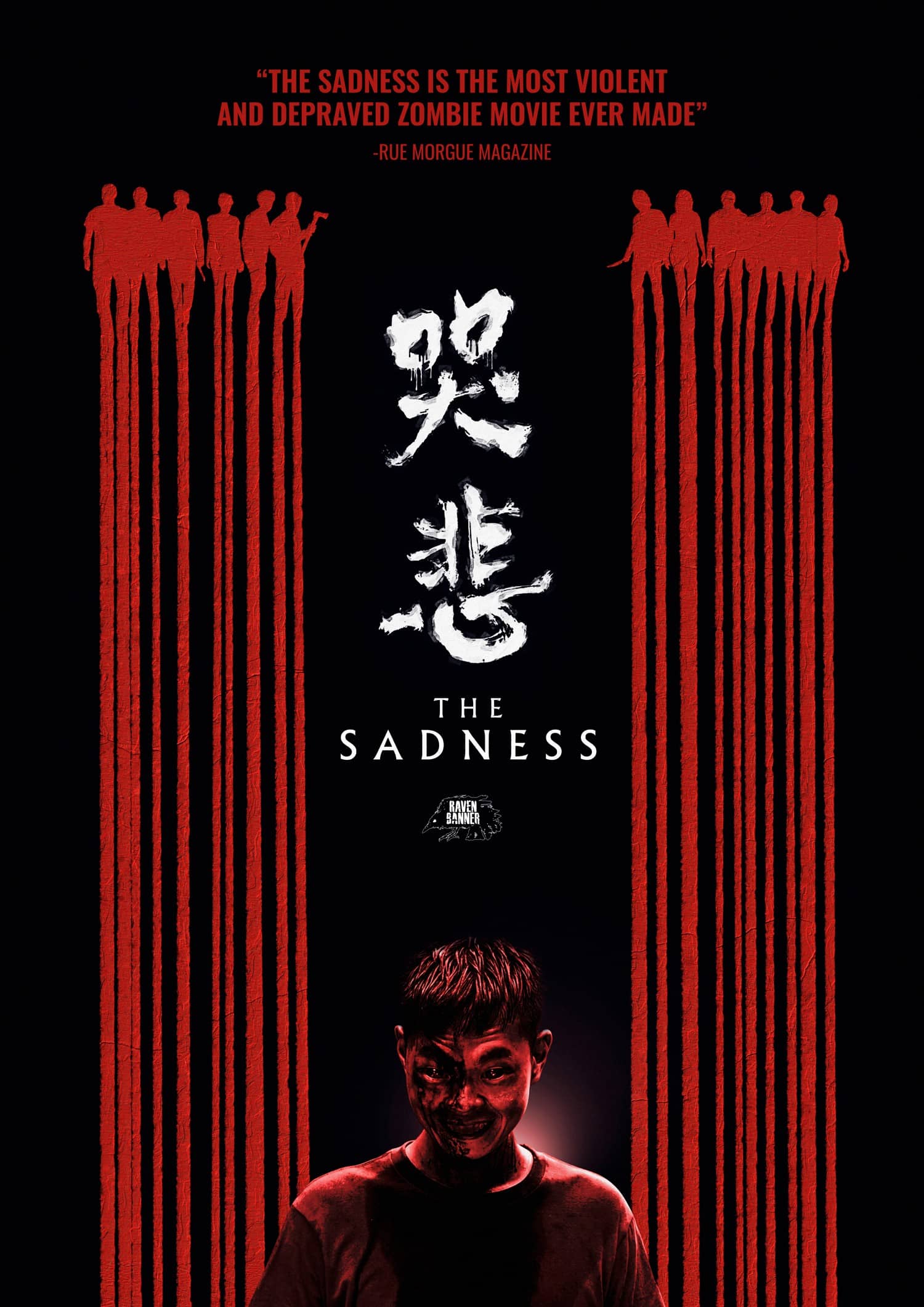
And yet, there are times when human behavior can be so ugly, so brutal, that metaphors might not be the adequate vehicle for getting a message across. Sometimes you need to hold a mirror up and just show the ugliness, blood and guts intact. Taiwanese horror movie The Sadness, directed by Rob Jabbaz, does exactly that to produce one of the most gut-wrenching horror experiences to date on our reactionary and selfish behavior during a pandemic. Brutal doesn’t even begin to cover the type of violence this movie manages to put on screen.

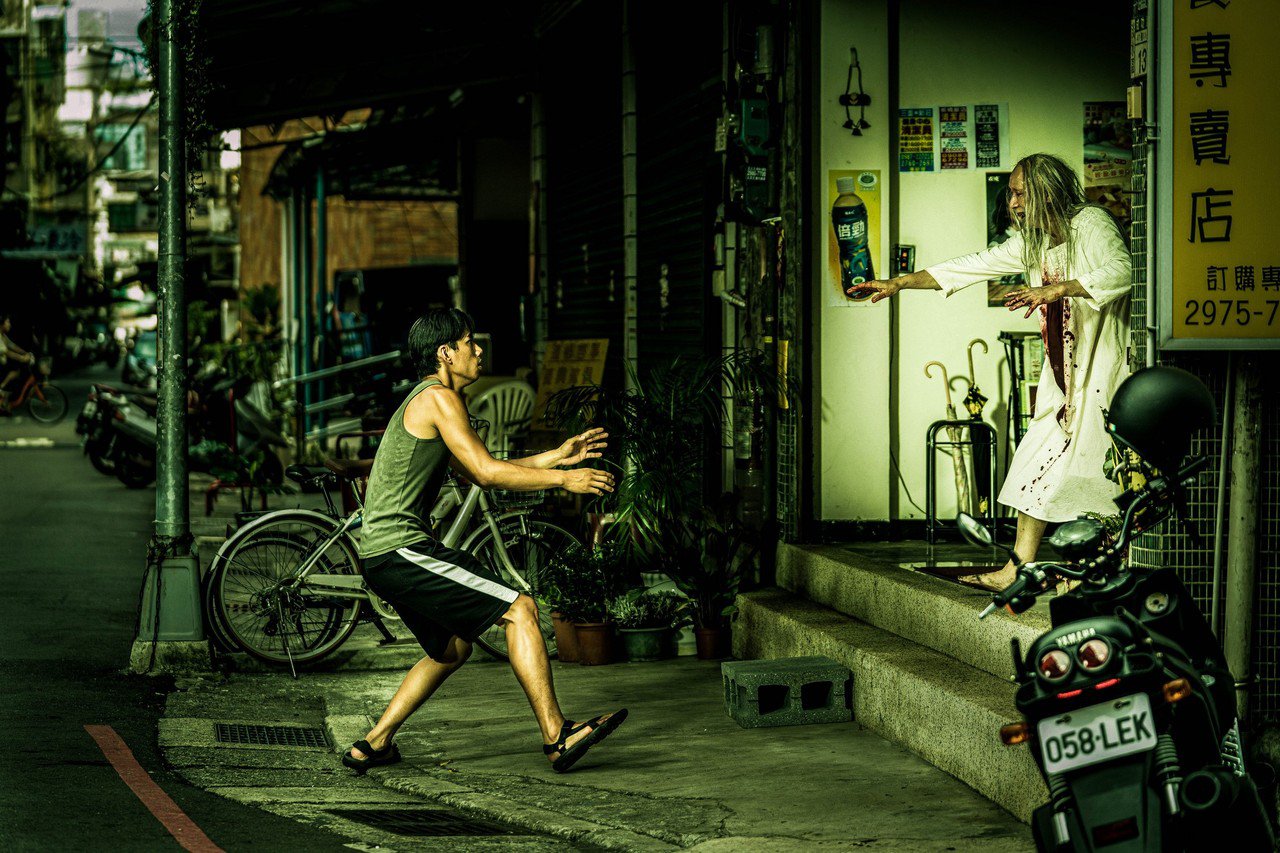
The Sadness (currently streaming on Shudder) sees Taiwan very quickly collapse under the strains of a highly contagious virus that turns the infected into ultraviolent killers unburdened by morality and possessed by a sexual rage that makes them even more repulsively dangerous. They represent an irreparable tear in the social fabric and they get plenty of opportunities to enact their darkest urges to show what total societal collapse can look like.

The story is driven by a couple living in the city as the pandemic breaks out. One of them is at home, Jim (played by Berant Zhu) and the other is at work, Kat (played by Regina Lei), just as things take a turn for the worse. Each one witnesses the different forms of violence the infected are capable of, guiding the viewer from shock to shock to build tension while also obliterating any sense of safety the characters can have as it progresses.
The Sadness

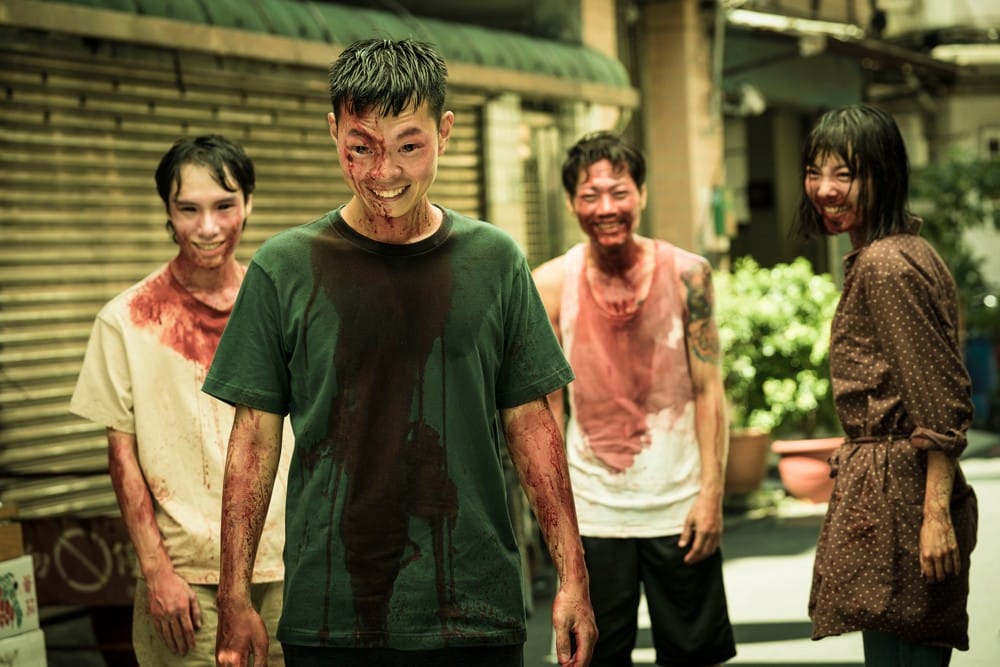
Fans of Avatar PressCrossed series (co-created by Garth Ennis and Jacen Burrows) will find themselves in familiar territory with The Sadness as the basic premise is pretty much the same as the comic’s. In Crossed, a pandemic breaks out that causes the infected to shed their morals and go on mass killing sprees interspersed with sexual violence. The exchange of bodily fluids created more crossed, named as such because of the red cross-shaped rash that appears on their faces. A similar thing happens in The Sadness. A change in eye color (from the original to a sickly dark red) that covers the entire eyeball separates the infected from the not infected.

Upon reading Crossed for the first time, I remember thinking that there was no way in Hell an American or even a British movie studio would ever dare adapt the comic into film. Until I’m proven wrong, The Sadness is as close as we’re getting to a Crossed movie.

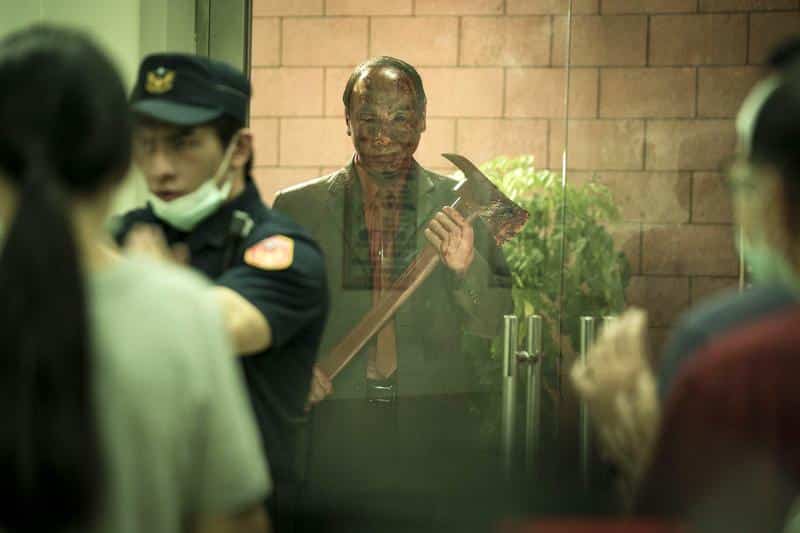
Director Jabbaz’s decision to make the violence say its piece so close up to the camera, in many of the movie’s death sequences specifically, ends up playing to the story’s strengths, namely its intention to lay bare the levels of depravity people will willingly descend to if allowed. The movie is a gorehound’s dream, but it’s not exploitative or celebratory of gore for the sake of it. It’s meant to unsettle, to become a mirror of us at our worst.

The camerawork on display during the more violent sequences accentuates this. It’s structured in the service of making the audience feel repulsed by it. It differs from the Crossed comic in this regard, if only a bit. Ennis and Burrows tend to go over the top in their story for a very dark comedic effect that puts shock first and commentary second. This isn’t a knock on the comic, it’s just a difference worth pointing out.
The Sadness

It was also surprising to see a fair amount of restraint in the instances of sexual violence. What’s put on the screen regarding it is meant to further complicate the reflection the infected cast upon us, but it never outstays its welcome and what we get of it is focused and purposeful. Crossed is on the opposite side of the spectrum. It prefers to attack the senses by digging into all that’s horrible about the infected.

One standout performance comes from one of the infected, a business man who’s trying to flirt (very awkwardly) with the Kat character and gets infected during an intense train scene in which the infection starts spreading from passenger to passenger. The business man is played by Tzu-Chiang Wang and he represents the current strain of sexist male behavior that argues men are justified in expressing their desires towards women without fear of rejection or consequence. Men who act in accordance with this mindset view themselves as the victims of “female arrogance” and “female oppression” and thus argue that they’re being shunned or unjustly made out to be the villains.

This character ends up being one of the most malignant expressions of the virus, a stand-in for gender violence. The movie doesn’t hit viewers on the head with the message so much as it puts it front and center as a warning of how bad things can get in this particular subject if left unchecked. Other infected act accordingly, representing a behavioral fear that’s just unpleasant to think about, much less to look at.
The Sadness

Human cruelty and sadism have consistently proven to be some of fiction’s most powerful forms of terror. The Sadness operates like the unplugged version of these human traits. It’s a hard watch that confronts viewers with their potential to do serious social damage should certain conditions allow for it. Pair it with a reading of Crossed and you’ll find yourself having a tough time mustering even an ounce of hope for humanity.
John Carpenter’s PRO-LIFE turns abortion into a pro-choice horror story that is still relevant

Pro-Life

It’s been around 50 years since the landmark case of Roe v. Wade was decided in the Supreme Court, where it was ruled that the Constitution of the United States protects a woman’s right to have an abortion. An aggressively controversial point of contention since, it has once again stoked the fires of discord after Justice Samuel Alito’s draft opinion on a potential repeal of the decision was leaked to the public. The abortion rights forecast is looking grim, based on Alito’s draft, and America is getting ready for a big blow to women’s rights that will undoubtedly change the social, economic, and cultural landscape for years to come.

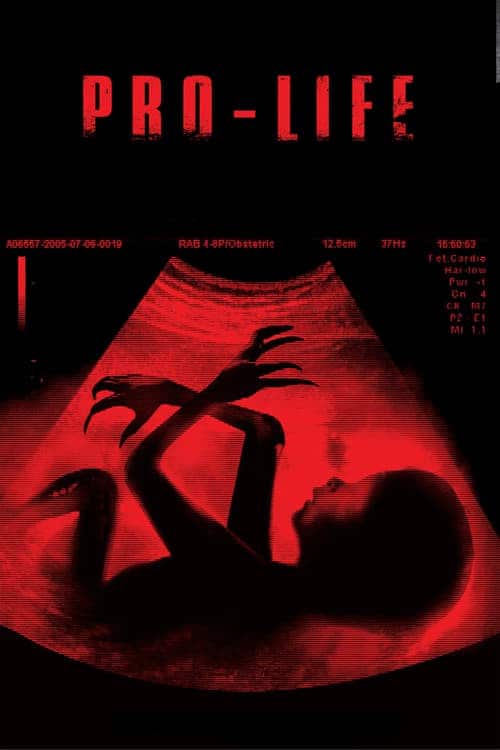
Horror thrives in these historical moments. There’s still nothing quite like substituting social fears with monsters that represent the chaos people can wreak upon themselves while defending or attacking something they hold so dear to their being. In the case of abortion, one need look no further than John Carpenter’s Pro-Life (2006), the legendary director’s second entry into the Masters of Horror anthology series that aired on Showtime.

Pro-Life centers on an abortion clinic that receives an emergency patient (played by Caitlin Wachs) whose pregnancy is revealed to have been the result of a demonic rape. The young woman is desperate for an abortion. The baby starts to grow at an alarmingly rapid pace, an affront to nature and all that’s expected of a standard pregnancy.

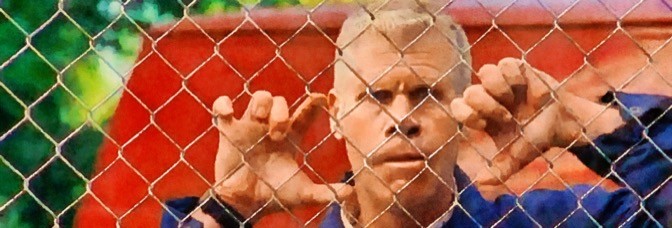
The patient’s name is Angelique Burcell, later to be revealed as the daughter of resident religious fanatic Dwayne Burcell (a menacing presence interpreted by Ron Perlman). Dwayne has a history of protesting outside the clinic and is shown to be a staunch supporter of American gun rights as well.

Pro-Life

Dwayne hears a Biblical voice, a voice of authority and force, that compels him to protect his daughter’s baby. He takes it as God calling to him to enact His will. The voice’s origin, though, might be coming from the side that stands opposite to holiness. In comes the horror metaphor for abortion.

Based on a script by Drew McWeeny and Scott Swan, Carpenter takes good care of the pieces he sets up to help get the point across. The movie’s abortion clinic setting carries a certain visual charge that immediately turns the location into a political battlefield. The place is locked up behind a gate and it’s overlooked by a security guard, all imagery that communicates the constant threat of extreme religious violence.

That threat is felt the moment Dwayne Burcell arrives at the clinic, with his daughter’s armed brothers riding in the back of his vehicle. Ron Perlman puts every available ounce of religious malice into his character in the service of presenting a man that’s been blinded by his faith to the point of confusing having control over someone for good intentions. The contradiction he upholds lies in his self-argued need for guns to do God’s work, which flies in the face of his own beliefs on the sanctity of human life.

Perlman’s cold and calm demeanor brings this unstable set of principles to the fore in a commanding way that exalts his misguided goal regarding human life. In his mind, taking someone else’s life is justified if it’s to guarantee a new life gets a chance.

Pro-Life

The voice Dwayne hears becomes more important in this context. In certain decisive moments, where doubt rears its ugly head, a deep and not so angelic voice is heard saying “protect the baby.” Dwayne lets it guide his sons, and his gun, into the clinic. The metaphor here doesn’t really need that much heavy lifting in terms of making itself clear as the politicization of abortion has already been well documented.

Pro-Life uses what the audience already knows to provide a more terrifying look into the consequences of subscribing to the entire anti-abortion discourse. It doesn’t treat its audience as ignorant on the issues. It just turns to horror to add a sense of urgency to the problem and why it still deserves our attention. Sometimes, simplicity is scary enough.

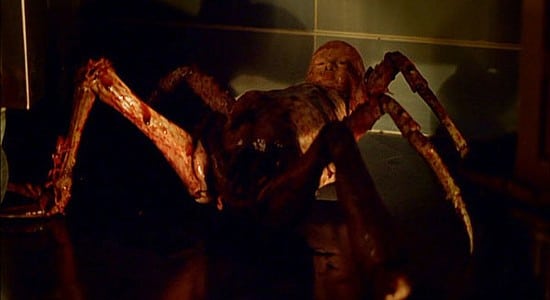
The pregnancy itself follows suit, with the baby revealed to be a spider-like demon that makes a considerably strong case for being terminated well before it came to term. Carpenter takes the opportunity to show how unsustainable the pregnancy is for Angelique, the mother. The demon baby thrashes around inside her belly, all but guaranteeing the mother’s death upon birth. It’s a detail that contrasts well with Dwayne’s bent on ending several lives inside the clinic to save one new life. In this case, the demon baby’s grandfather has accepted the potential death of his daughter for the survival of the baby, meaning he gets to decide who lives and who dies between the two.

Pro-Life

This might be where the movie’s metaphor hits the hardest. Carpenter tugs on every story strand and pulls every character arc together to show there is no such thing as pro-life. The very act of creating life, in whatever context, is founded on the concept of choice. In cases where a pregnancy can prove fatal to the mother, a choice between who lives and dies must be made.

In essence, Dwayne becomes the embodiment of the right to choose. And he chooses the demon baby.

There’s a lot left to say about Pro-Life. Dwayne’s beliefs contrast heavily with current discussions on whether abortions should be allowed for victims of rape or for risky pregnancies that put the mother at risk. This is a very delicate part of the debate and it seems to be leaning in favor of the pro-life sector. The presence of Angelique’s brothers also complicate the scenario as they decide to participate in the same violence Dwayne partakes in to “protect the baby.” It puts into question the role family plays in creating a religious identity infected by partisan politics and how damaging it can be when the relationships within the unit are so unequal (especially in terms of the rights available to them). Pro-Life invites discussion and relishes in it well after the movie’s over. As the American Supreme Court seemingly prepares to override Roe v. Wade, John Carpenter’s Pro-Life becomes an unconventional ally in the fight for women’s rights. It proves that sometimes it necessary to go to Hell and back to better appreciate our most important freedoms.

Movie Review: We’re All Going to the World’s Fair

We’re All Going to the World’s Fair

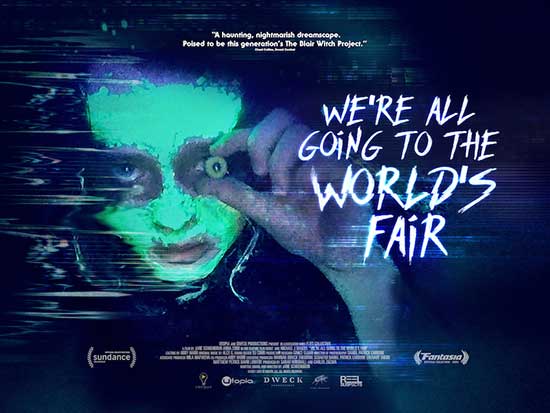
Social isolation stories are a dime a dozen in film, especially those coupled with ‘coming of age’ themes set within broken family scenarios. We’re All Going to The World’s Fair certainly taps into all of this, but it does so in a uniquely disquieting way that disturbs just as much as it breaks your heart. That it achieves this using the language of horror, in subtle ways, makes it all the more outstanding.

Written, edited, and directed by Jane Schoenbrun, We’re All Going to The World’s Fair follows a girl called Casey as she takes on a social media challenge called “the World’s Fair.” It’s a combination of Creepypasta urban legend stuff with TikTok-like content creation sensibilities. The challenge is supposed to cause bizarre bodily changes (as if it were more of a gradual takeover of the body) while also warping the subject’s own sense of reality.

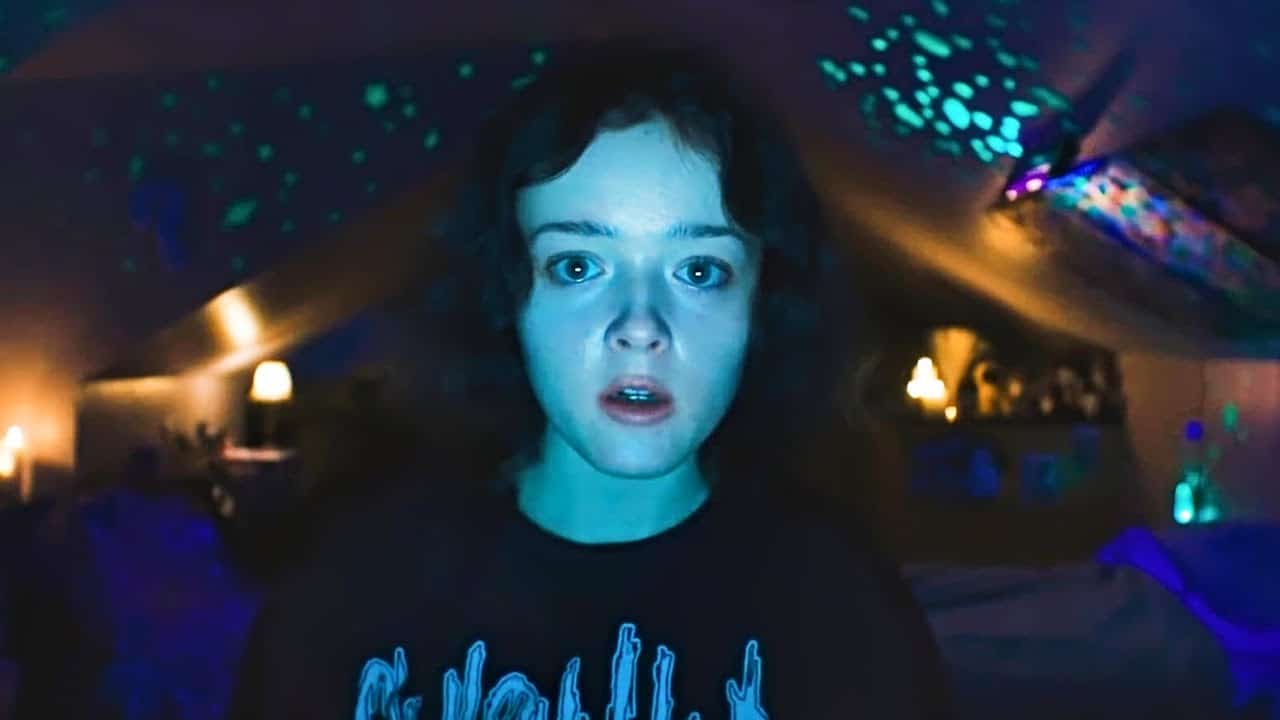
Casey (played by Anna Cobb) starts experiencing the challenge’s symptoms, but whether this is all imagined or not depends on how credible a shared online horror experience can be. This is made more complicated by Casey’s home situation, which the audience only gets flashes of. It’s up to them to piece it together, but it’s clear things don’t bode well in her house.

Going to The World’s Fair is a difficult movie to classify. The viral challenge aspect carries a mystery that gives just enough to put the story in horror territory, but it’s not the driving force behind it. It’s a vehicle for the movie’s intimate portrayal of Casey’s psyche. Her isolation from any meaningful human interaction that’s not filtered through a computer is where the movie truly finds ways to unsettle. Some might be tempted to call it a ‘coming of age’ yarn with light horror elements, but this also doesn’t do it justice. I settled on isolation horror, a kind of genre expression that looks at an individual psyche to explore the things that scare us when we’re left almost completely alone.

We’re All Going to the World’s Fair

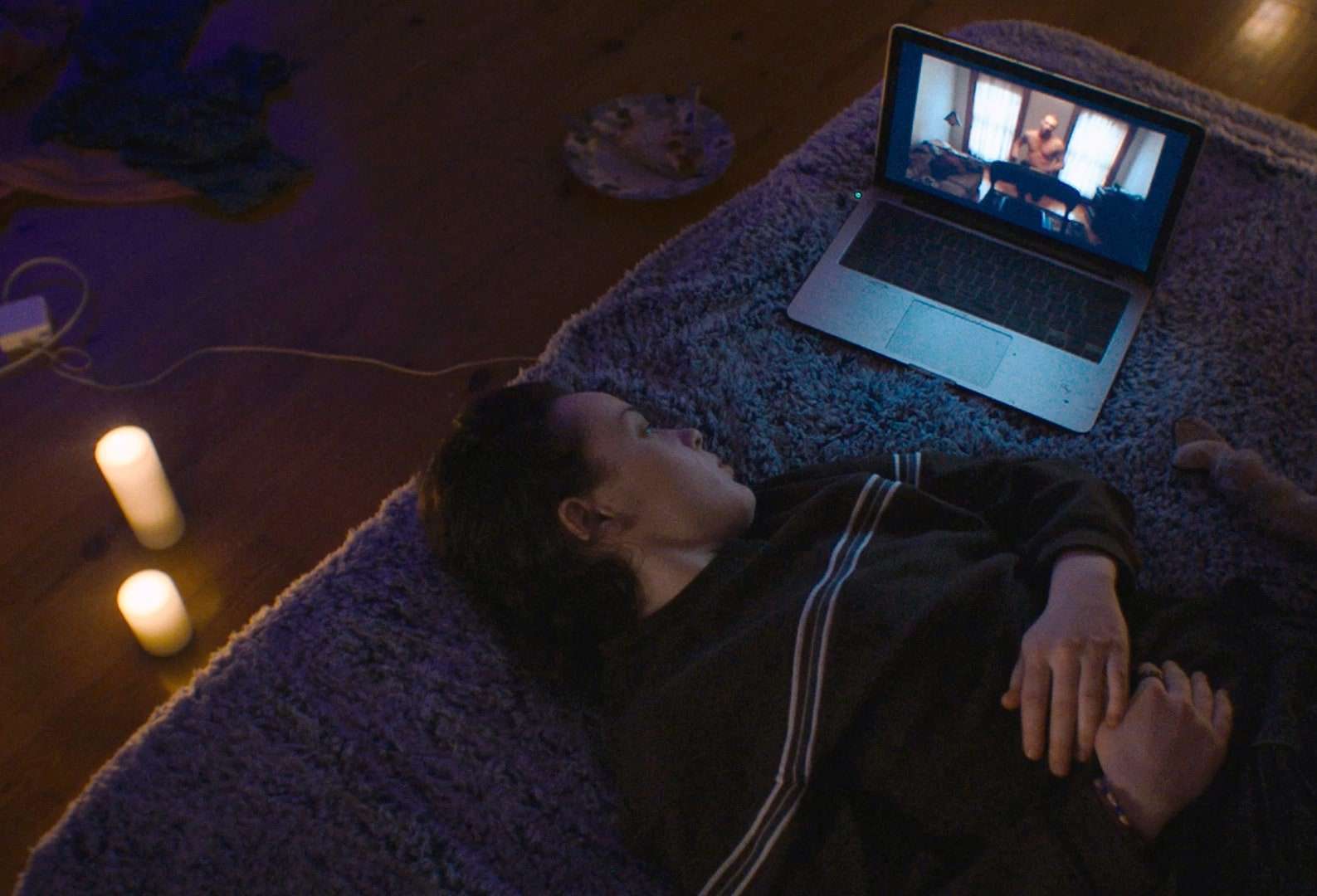
Anna Cobb’s performance is the reason why this works so well. Cobb makes Casey’s mental anguish and frustrations constantly bleed through her body language. She looks haunted in very single frame she’s in. The social media element accentuates this thanks to Schoenbrun’s decision to establish a kind of distance between Casey and the videos she sees on her computer. She’s never just hunched over a computer screen. She’s usually lying in bed, watching videos from a short distance. It creates the sensation she’s peering into someone else’s life rather than actively engaging with them online.

There’s an interesting wrinkle added to this in the form of a character called “JLB” (played by Michael J. Rogers) that pushes Casey further down the digital rabbit hole. His interactions with her are also weird, fractured even, and do a lot to further establish Casey’s isolation. His unstable presence, along with the viral challenge’s influence, managed to keep me on the lookout for something terrible or somewhat supernatural lurking in the background. I never found anything of the sort, but that was because all I needed was to stay in the situation with Casey, to embrace the painful proximity we have with her based on how close she can be to the camera.

In a sense, the horror on display here is of the same type more indie/arthouse productions go for, meaning there’s nothing outright revealed as supernatural. The door is always open to interpretation, to varying degrees depending on the story. Fans of movies like Toad Road (2012) will find a lot to love here. In that movie, a group of relatively young characters embroiled in the excesses of drugs are paired with a dark urban legend that flirts with the idea that Hell or a hidden realm filled with terrible sights can be reached by walking a particular path deep in the woods.

While this movie does commit more to the supernatural than Going to The World’s Fair, there’s a similar sensation regarding the horrors of reality versus the horrors of myths that turn out to be true. Those looking for more of this type of horror should go watch Toad Road. When things descend into outright terror, it gets really dark. It shares that haunting quality that permeates throughout World’s Fair.

We’re All Going to the World’s Fair

Going to The World’s Fair also boasts a remarkable soundtrack, created by Alex G, that plays with synth and retro sounds to best capture the digital horror world Casey traverses. There’s purpose behind each piece and they color certain sequences in ways that make them stand out individually. It’s as if Alex G gave every phase of the challenge a different theme that identifies or signals some change in it. It’s hard to think about the movie without thinking about the music that weaves itself through it.

Jane Schoenbrun crafts a sad tale of a girl struggling with loneliness in a world where social media doesn’t just isolate people but also puts them on a path that might or might not trap you inside another state of consciousness dictated by horror. It impresses in its subtlety, in its ability to foster the strange without losing sight of character. We’re All Going to The World’s Fair is haunting. I would even argue it’s intentions is to actually haunt viewers. It achieved that with me, and I won’t soon be forgetting it.

Comics 420: Bluntman and Chronic, the heroes weed deserves

Bluntman and Chronic
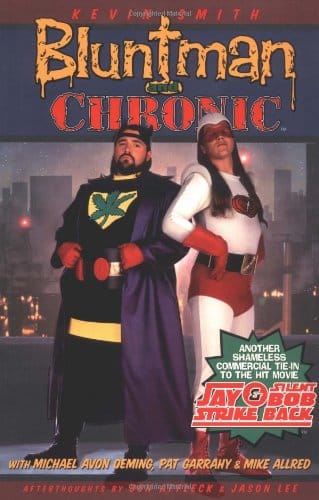
Bluntman and Chronic TPB cover

Growing up in the 90’s meant Jay and Silent Bob were going to be around one way or another. As a kid who listened to grunge (mostly thanks to my brother), saw weird movies, and went to schools that were basically encased in giant clouds of marihuana smoke, Kevin Smith’s own Jersey stoners were a kind of guide through the ganja mists. They taught me not to demonize weed and not to judge those who partook in it, to ignore the exaggerated fears politicians manufactured for campaigning purposes. They taught me how to wade through the bullshit.

Alas, I never became a weed smoker nor a master roller of blunts (for reasons entirely my own) which might make me the wrong person to write about Jay and Silent Bob. Regardless, I do want to celebrate them this 4/20 for their contributions in making me be at ease around marihuana enthusiasts at a young age, for helping me to never discriminate against righteous stoners who freely exercised their right to get high. Weed’s dynamic duo would make sure I became lifelong friends with them and, for the most part, I can gladly say I still am. They also got me to enjoy the raunchiest of jokes, in any situation (no matter how sacrilegious).

In comes Kevin Smith’s Jay and Silent Bob Strike Back movie tie-in comic, Bluntman and Chronic, a comic that can do for many what the movies did for me.

Published by Image Comics in 2001 (the same year Jay and Silent Bob Strike Back had its theatrical run), Bluntman and Chronic was written by Smith and illustrated by Michael Avon Oeming with a backup story drawn by Michael Allred (who designed Jay and Silent Bob’s superhero costumes). Well, in reality they were written and illustrated by Banky Edwards and Holden McNeil, if you’re in the know (meaning you’ve seen the movies). Chasing Amy fans will know this to be correct, but that’s a debate for another time.

Bluntman and Chronic

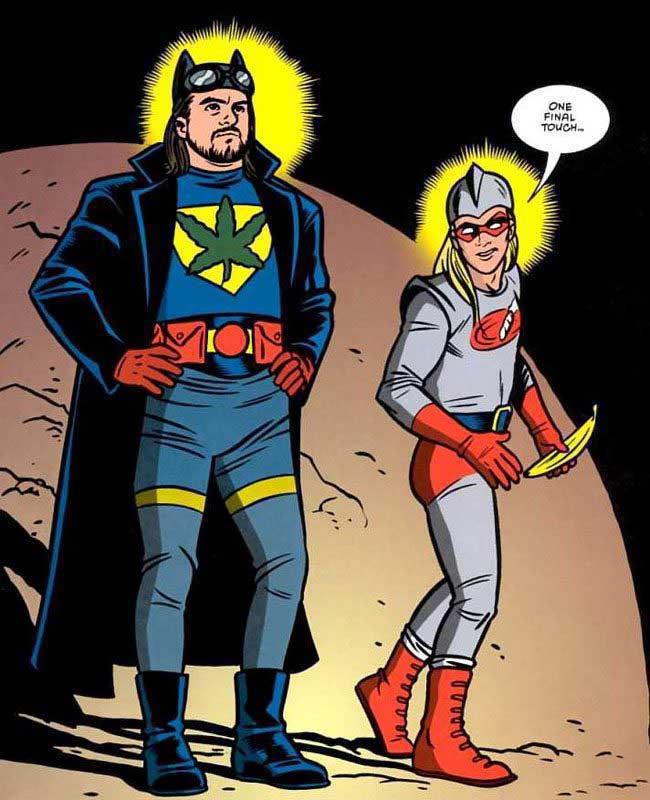
The comic follows Jay and Silent Bob’s transformation into the titular superheroes and their subsequent encounter with the evil League of Shitters, composed of the duo’s rogues gallery. Among those villains is Cock-Knocker (played by Mark Hamill in Strike Back), the Joker to Jay and Silent Bob’s Batman and Robin.

Initially, Chronic (Jay) decides he can use his new vigilante status to steal industrial amounts of Viagra and limited edition copies of valuable comics to sell on Ebay while Bluntman (Silent Bob) tags along in disbelief and confusion. The rogues find their origin stories here, in these acts of “vigilantism.” Their supervillain identities are owed to accidental brushes with the duo in which conveniently placed vats of acid change their bodies and give them some kind of penis power or an annoying internet blogger-related appendage to enact their dark and horny intentions. Dickhead, for instance, is a villain that got his head turned into a dick after falling into one such vat. He can get too excited and erupt, like any god-fearing penis is supposed to.

I can go on forever picking apart all the details behind this while enjoying every minute of it, but I won’t. You’re probably on your fourth, fifth, sixth (and beyond) blunt by now and the munchies must be hitting hard. I’ll get to the point.

Bluntman

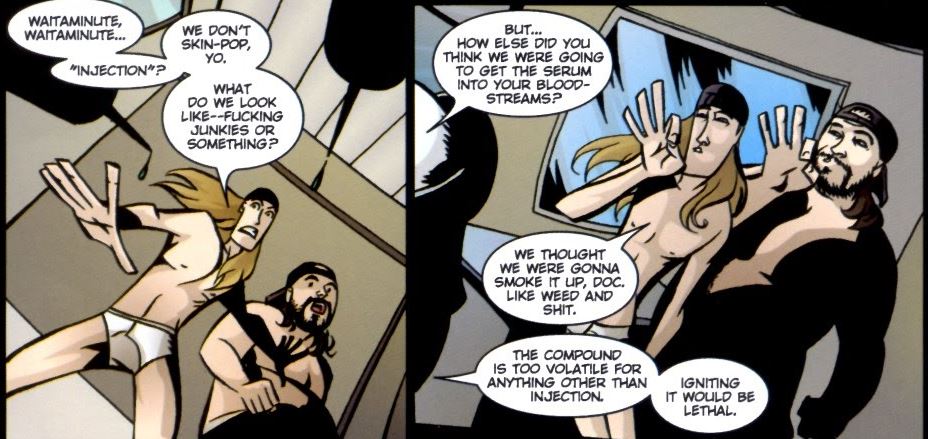
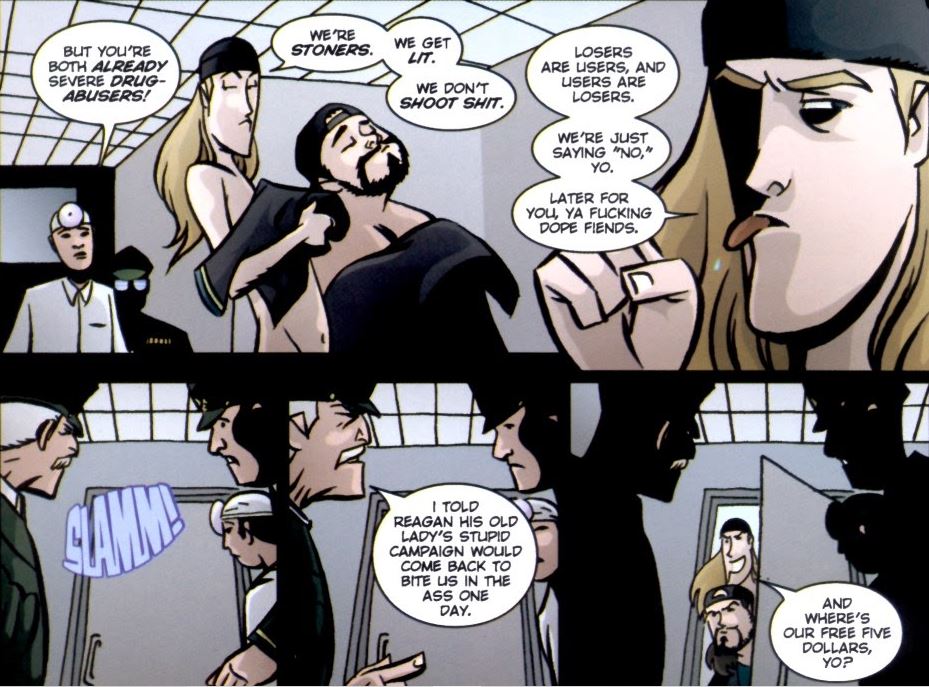
In issue #1 of the comic, Jay and Silent Bob are put through a gauntlet of potential origin stories that are taken straight out of Marvel and DC Comics. They range from Jay ignoring the ring of a dead Green Lantern to Jay killing a radioactive spider that was on its way to give Silent Bob powers that required some kind of responsibility, or whatever. After going through a few of them, they land on a drug trial for the creation of super soldiers. Here’s where stuff gets interesting.

Jay and Silent Bob, eager to get all of $10 for their participation in the trials, realize the drug comes only in the form of an injection. In other words, it can’t be smoked. That’s not good. The serum doesn’t really mesh with their preferred form of bliss and, on top of that, you can’t roll it into a joint.

It is at this moment that Jay makes one of the most important statements in comic book history, perhaps in all of fiction. “We’re stoners. We get lit. We don’t shoot shit. Losers are users, and users are losers. We’re just saying ‘no,’ yo. Later for you, ya fucking dope fiends.”

Simple but oh so fucking powerful. Weed’s not bad, and it’s definitely not worse than shooting up poison into your veins. There’s a line to be drawn in the enjoyment of highness and dope is where the buck stops. The answers lie in the smoke, in the puff that comes from within after taking a hit from a freshly rolled blunt. It that moment, Jay and Silent Bob became Bluntman and Chronic. The rest is up in smoke, off to the land of myths and legends.

In a sense, Jay and Silent Bob have always represented the infinite powers of weed, their mind-altering abilities. Not unlike Doctor Strange’s Eye of Agammoto, a source of mystical power capable of making stoners into wizards of the real and the unreal. Or just something that turns a regular hangout into a funnier one. And isn’t that enough?

Bluntman

Because of scenes like these in the comics and in the movies, Jay and Silent Bob turned something potentially scary into something mystical to be either enjoyed directly or peripherally (in my case). They do the opposite of demonization. Instead, they open the door to acceptance, to embracing the gift of nature’s own version of ambrosia for mortals. Do not fear the blunt. Become the blunt. Or at the very least, support it.

Review: The Secret History of The War on Weed

The Secret History of The War on Weed

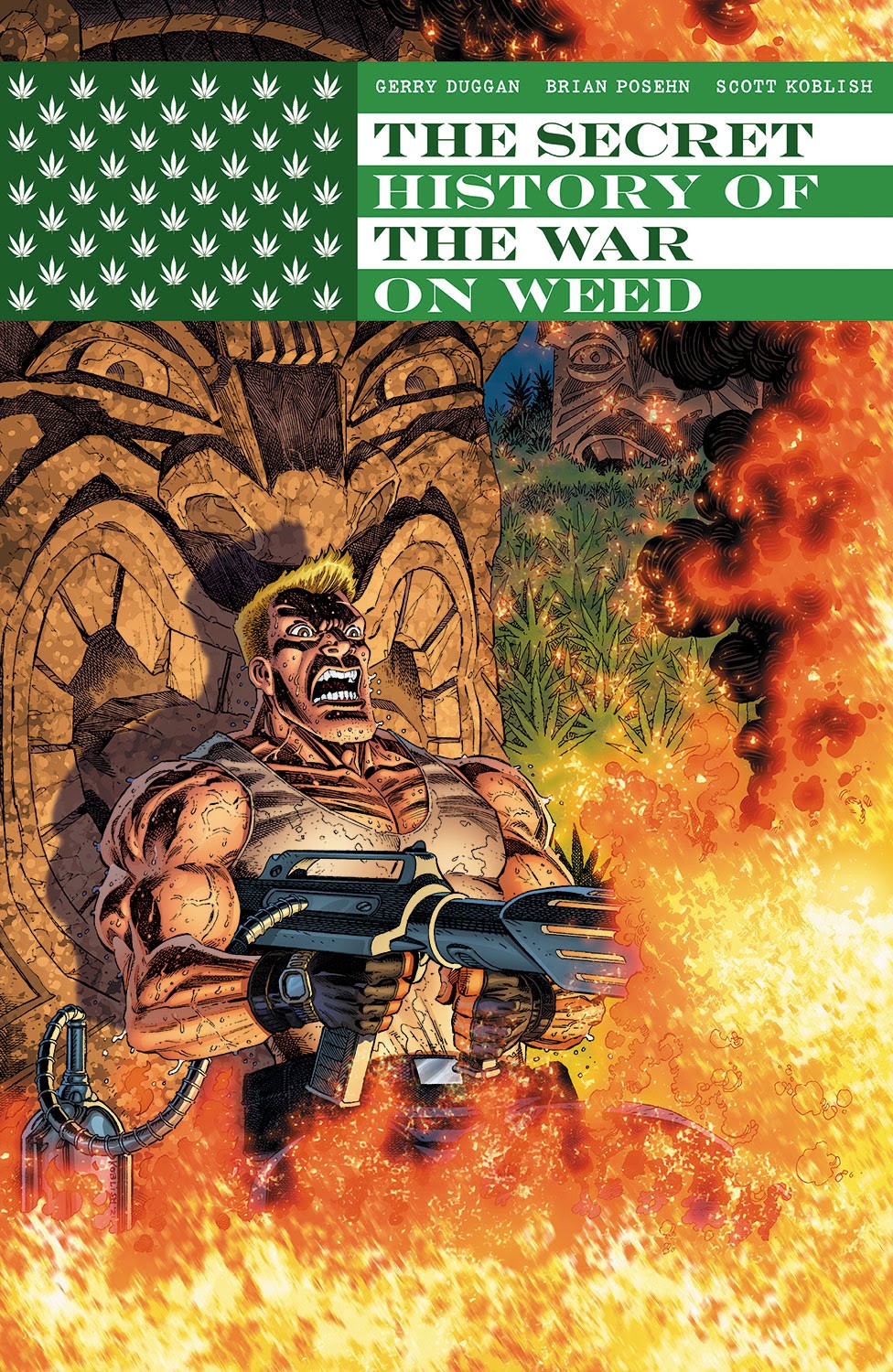
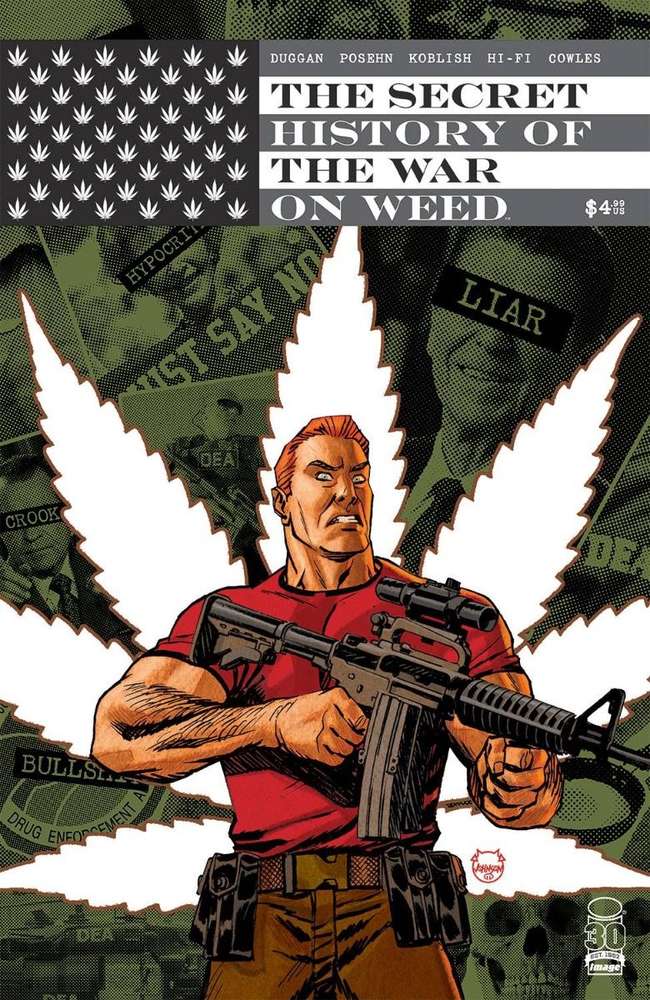
I wouldn’t be surprised if it’s an actual legal requirement to be high when writing a story about weed, be it fiction or nonfiction. The creative team behind Image Comics´ The Secret History of The War on Weed seemed to be well in compliance with this when they put this comic together, and it’s all the better for it. It at least explains why lizard people and horny presidents are part of this hilarious, ridiculous, smart, and even heartfelt comic about the war on ganja and how backwards it is.

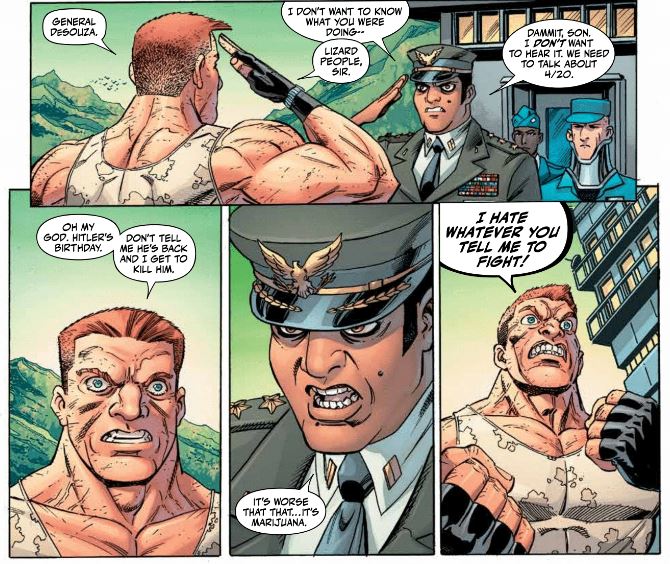
Writers Gerry Duggan and Brian Posehn along with illustrator Scott Koblish set their alternate history in 1980’s America. The President is a cross between Ronald Reagan and Margaret Thatcher that sees in marijuana a poll-raising opportunity to get the country behind her administration. To wage this war, she sends the story’s unlikely hero, Scotch McTiernan (an Arnold Schwarzenegger-type commando that’s all of the 80’s action movies rolled into one) to jumpstart the conflict.

The story takes a turn when Scotch McTiernan gets high himself and sees how unnecessary the war is and how damaging it can be to enforce the prohibition of something that has been proven not to be a major problem in its effects. In the process, Duggan, Posehn, and Koblish get the chance to comment on how America creates wars to keep the military industrial complex rolling, how misguided policies can create criminals that then have to suffer the system, and how politicians can spin narratives to create evils engineered for campaigning purposes.

There’s a lot packed into this one-shot comic, but Duggan, Posehn, and Koblish keep the action on the highest volume setting, preferring mayhem over quiet ruminations on the subject matter. It succeeds because of how sharp and funny the story is.

The Secret History of The War on Weed

Dialogue is a highlight, with puns and snappy punchlines driving the messages and metaphors home through laughs. This isn’t a mere parody of the 1980’s, though. It’s a smart critique of it and the policies it enacted, especially as they pertain to our current appreciation of weed consumption.

The War on Weed takes on the culture war that was waged against marijuana in the 80’s to explain how people formulated negative ideas about it and then how those same ideas could be traced back to certain special interests that wanted to antagonize the product for reasons that didn’t have the public’s interest at heart.

The Secret History of The War on Weed

Koblish’s art reinforces this argument by referencing so many pop culture elements per page, per panel even, that it becomes impossible to separate weed from the things people still look back on in a positive light. There was a lot of damage done in the 1980’s due to how irresponsible and prejudiced its war on drugs was, but it was also the decade a lot of people started smoking weed (where it grew outside the Counter-cultre/hippie identity it carried). Koblish accounts for this in different ways, being both visually indulgent and confrontational as the story develops. It’s always funny as well, so repeat readings are encouraged. This is a book you’ll want to comb through for hidden visual gags and references.

The Secret History of The War on Weed sees nothing wrong in laughing at serious things, especially if it’s in the service of getting a message across. The message here is one of fairness. By decriminalizing weed, America does better by those who could potentially go to jail for an offense that should never have been an offense in the first place. In a way, The War on Weed is a great companion book to Box Brown’s Cannabis: The Illegalization of Weed in America (2019), which also uses humor to get its point across about the problems that haunt America’s politics on weed (albeit in a more measured manner).

Duggan, Posehn, and Koblish do more than enough to keep the conversation going on what is still a hotly debated topic. They condemn bad practices while making an honest plea to eliminate a problem that has no business being considered a crime in our times. For the benefit of all, they enlist lizard people, 80’s action heroes, and a weed version of Swamp Thing to lend a hand in fighting the good fight.

Story: Gerry Duggan and Brian Posehn Art: Scott Koblish
Story: 9.0 Art: 9.0 Overall: 9.0 Recommendation: Buy and read while high for added effect

Image Comics provided Graphic Policy with a FREE copy for review


Pre-order: comiXology/KindleZeus Comics

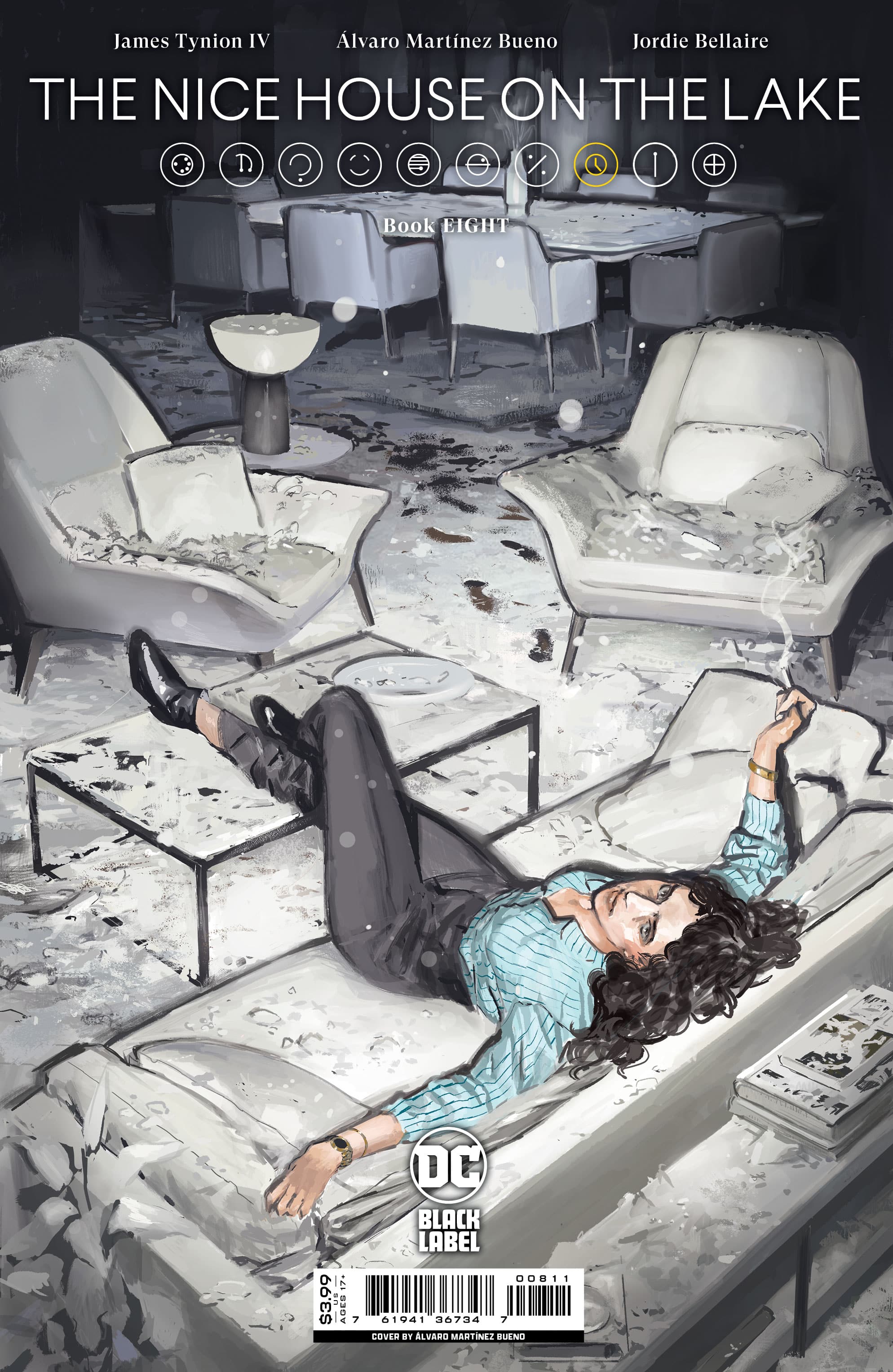
Review: The Nice House on The Lake #8

The Nice House on The Lake #8

The Nice House on The Lake’s eight chapter asks a question we love to bring up at parties: who would you spend the end of the world with? It’s a fun question, a great conversation starter. But take it as a real, serious question for a moment. Who’d be on your list? What would make someone worthy enough to be on that list? James Tynion IV and Álvaro Martínez Bueno explore this in their latest issue, and the answers seem to lie in more questions. Then again, there are signs of things finally getting some light shed on them.

Nice House #8 sees the group playing around with the idea of acceptance, perhaps even complacency. Plans are starting to pop up concerning new areas to either build up or section off to better settle into their new reality. As this happens, the issue’s focus character considers loneliness and what it means to be surrounded by people who already know each other. There’s a lot of inequality to consider in that situation and Tynion and Martínez Bueno do a phenomenal job of isolating some of their characters to explore that even as they’re physically surrounded by the entire group.

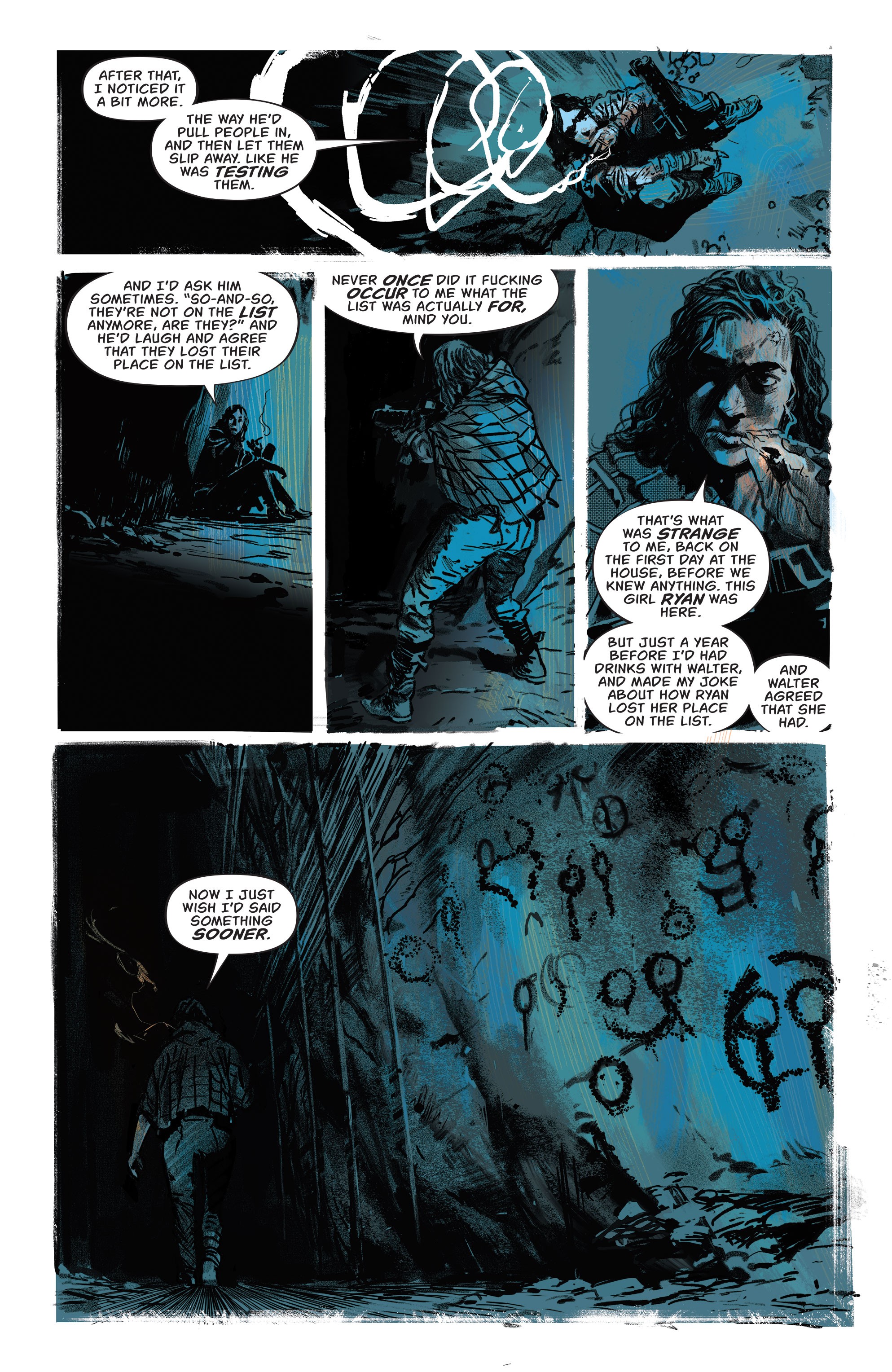
Martínez Bueno goes for uncomfortably intimate paneling in his pages, each shot captured as if by a hidden camera that’s peeking in just beyond the point of visibility. As a reader, you get the feel you’re eavesdropping, listening in on private conversations meant only for the ears of those present in the panels. Characters bear their souls in these talks and we get a front row seat to this intensely sheltered experience that’ not meant for the group. It’s one of the comic’s strengths and not a single beat is missed.

The Nice House on The Lake #8

Tynion’s script, once again, successfully teases answers to longstanding mysteries without letting his foot off the break entirely. Whatever lies in the shape of things still requires a bit more patience on the reader’s part, but this issue does put into motion certain events that will undoubtedly bring the story past a point of no return.

When it comes to the role Walter is playing, the being of (as of yet) unknown origin or identity that’s behind everything, Tynion and Martínez Bueno opt for an even deeper sense of secrecy about his intentions. That said, this character feels ready to burst from all the things he’s hiding within him. These next few issues should prove utterly terrifying once it all comes spilling out, especially given his seemingly desperate need to be recognized as someone doing good by those around him.

This observation makes me wonder whether Walter is more of a lost god or magical being that can bend reality when it comes down to his purpose. His behavior does not necessarily signal scientific curiosity (which means he doesn’t come off as an alien manipulating with test subjects). Walter is driven by emotion, up to a point, and it signals a more complex kind of reasoning behind the selection process for the people who were allowed to stay at the Nice House. Could this all be a selfish plan by a lonely god that wants to be accompanied or worshipped by a select few he can count as friends? Is he a demon or a supernatural being from the future that wants to change some aspect of the past to counteract his need for attention in his time? We shall see.

It’s incredible to think that Nice House can still add more questions to the central plot this late in the game. And yet, that’s exactly what it does. There’s a hint things will come crashing down hard soon, but it looks like there’s still time to deepen the mysteries Tynion and Martínez Bueno have left unclear thus far. Opening the mystery box, though, will be quite the event when we finally get the chance to.

Story: James Tynion IV Art: Álvaro Martínez Bueno
Color: Jordie Bellaire Letterer: Andworld Design
Story: 10 Art: 10 Overall: 10
Recommendation: Buy and go over your list of people to bring to the apocalypse with

Graphic Policy was provided with a FREE review copy by the publisher


Purchase: comiXology/KindleZeus ComicsTFAW

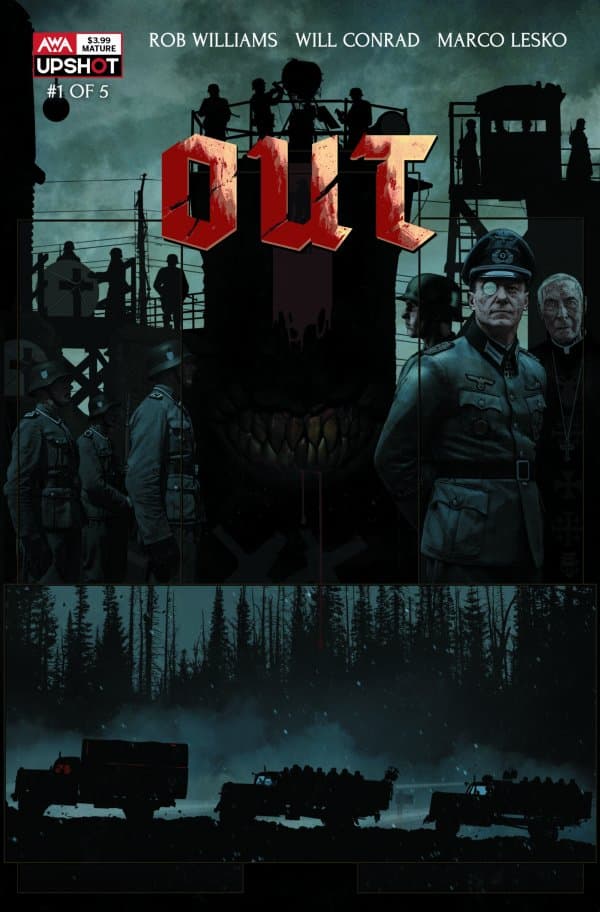
Review: Out #1

Out #1

Comics are a particularly fertile medium for different interpretations of the vampire mythos. From Vertigo’s Vamps, about a female biker vamp gang that spills the patriarchy’s blood wherever they go, to Image’s Dracula, Motherfucker!, a pulpy reinterpretation of the original vampire’s bloodsucking brides, there’s no shortage of examples about the storytelling possibilities the classic monster can still hold.

Rob Williams and Will Conrad’s Out, published by AWA Studios, is another great foray into vamp territory, but what makes it stand out is how well it tweaks the monster’s foundational myths to produce a more nuanced but infinitely more terrifying version of it. There’s enough classic horror here to satisfy veteran vampire fans with enough variation to keep those hungry for new blood well fed.

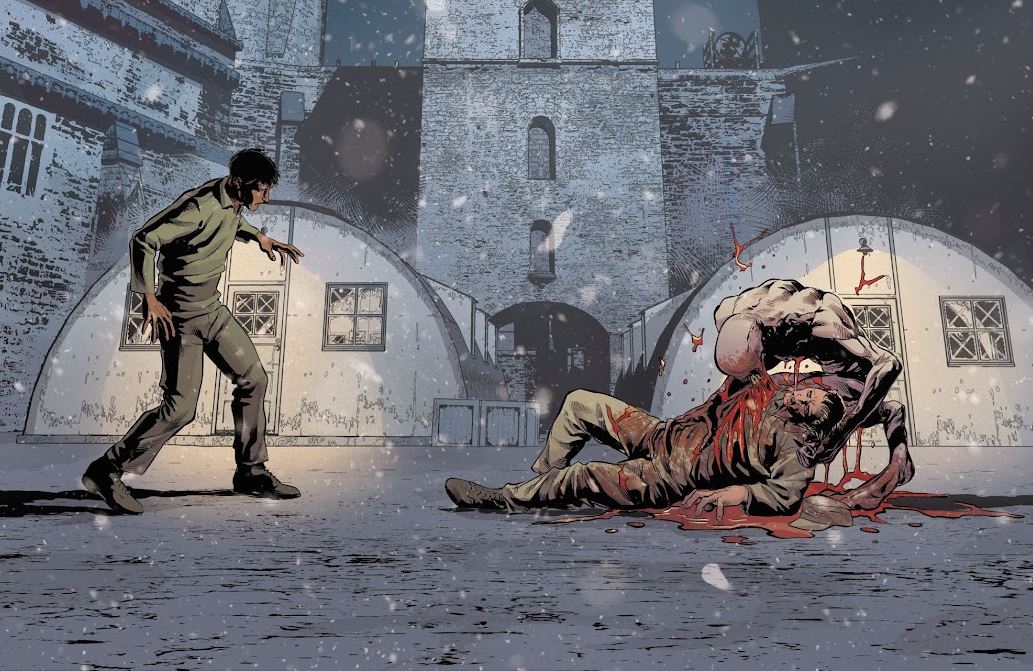
Out is essentially a prisoner of war story (P.O.W. for short) set in the final days of the Second World War, with the Allies quickly gaining on the Nazis in their home turf. Like any good POW story, the comic focuses on a small group of captured Allied soldiers that are being kept in a massive castle located deep in the mountains of Czechoslovakia. Dark priests and strange rituals are taking place inside the castle and they end with prisoners being fed to something that thirsts for blood, something ancient.

Out #1

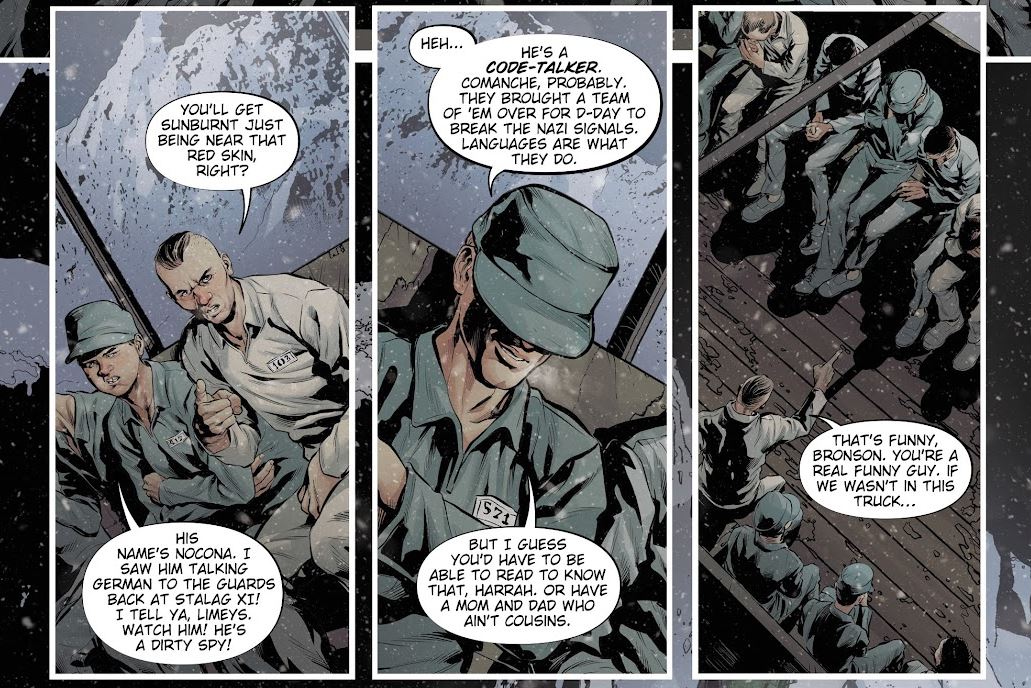
A Native American soldier called Nocona emerges as the main character in all this, a code-talker that speaks several languages and that represents a whole group of First Nations servicemen that the American military enlisted to transmit coded messages during the war (codes the Germans didn’t know how to crack). His knowledge of languages figure greatly into the story and it’s one of the things that help make the vampire a deeper and more frightening character.

Without giving too much away, Nocona’s interactions with the vampire (who’s trapped by the Nazis in an effort to turn a losing war in their favor) are fascinatingly terrifying because of the character’s ability to speak in the same tongue as the creature. This allows Williams and Conrad to flesh out the monster beyond snarls, growls, and hisses.

Conrad creates a horrifying vamp here, bat-like in parts and almost alien-like in others, but William’s scripting choice to allow him to attempt communication means there’s more room afforded to its development as a multidimensional character. The comic shines in this regard.

Usually, vampire characters that are in a permanent bat monster mode rarely get the chance to speak or to add nuance to their personality. Williams and Conrad challenge this by doing the opposite, and it works well enough to set their vamp apart from the ones already out there in the field.

Nocona’s presence, though, isn’t just relegated to vampire whisperer. He’s also trying to help other POWs in the castle escape. It’s here that he meets a soldier that represents a level of attraction beyond any call of duty. His and Nocona’s interactions are among Out’s strongest and they help further differentiate this horror tale from the rest, especially in terms of how naturally it unfolds. Nothing is ever forced or propped up for shock value. It’s an organic type of development and it adds layers of emotion that pay off in the end.

Out #1

In a sense, it’s not unfair to describe Out as a cross between Dracula and The Great Escape. The elements of a POW escape yarn are firmly present and a lot of the tension Williams and Conrad produce comes from the same sense of urgency war movies of this iteration are known for. In turn, the horror elements turn the narrative two-tiered, a ‘busting out of captivity’ scenario paired with a creature feature that makes the need for escape all the greater. It’s smart and it makes for compulsive reading.

Out is a great example of how to take tradition and twist it into something that can appeal to more current sensibilities. It’s a classic horror story that reads like a POW war narrative with key adages and permutations that elevate it into more compelling forms of storytelling. Williams and Conrad came up with a clever and violently emotional exploration of war, death, and everything in between. In the process, they might also suggest learning other languages can be the deciding factor in some life and death situations. You never know when you might need to talk down a blood-sucking creature from using your head as a wine glass in its native tongue.

Story: Rob Williams Art: Will Conrad
Color: Marco Lesko Letterer: Sal Cipriano
Story: 9.0 Art: 9.0 Overall: 9.0 Recommendation: Buy and learn an ancient language or two.


Purchase: comiXology/KindleTFAW

The Lake teaser trailer signals the return of practical effects for giant movie monster creation

The Lake

There’s no denying that CGI has revolutionized the giant monster movie, and it has some prime examples of the kind of horror it’s capable of producing on the big screen. Cloverfield comes to mind as not only one of the best big monster movies in recent times but also one of the scariest. The monster’s design, the set pieces, and the mystery behind the creature’s presence all converge to produce a very unsettling experience unlike anything seen before in the genre.

And yet, for my money, nothing beats Jurassic Park’s T-Rex animatronic as the most impressive giant movie monster in film history. There’s just something special about knowing the creature that’s trying to eat the movie’s characters is actually there, especially during the first encounter when it slaughters the goat and breaks out of its paddock. That the actors aren’t just reacting to a guy in a green suit holding a dinosaur prop head as a marker for the subsequent CGI work gives the sequence a uniquely horrifying feel that heightens the tension in unprecedented ways (even though CGI was used in some scenes to for the T-Rex).

The new big budget Thai/Chinese production The Lake is aiming for the same thing that made Jurassic Park so impactful, bringing the practical effects monster back into the fold with a giant creature designed by Jordu Schell, the artist behind the Cloverfield Monster, Starship Troopers, The Thing, Men in Black, Planet of the Apes, and Predators.

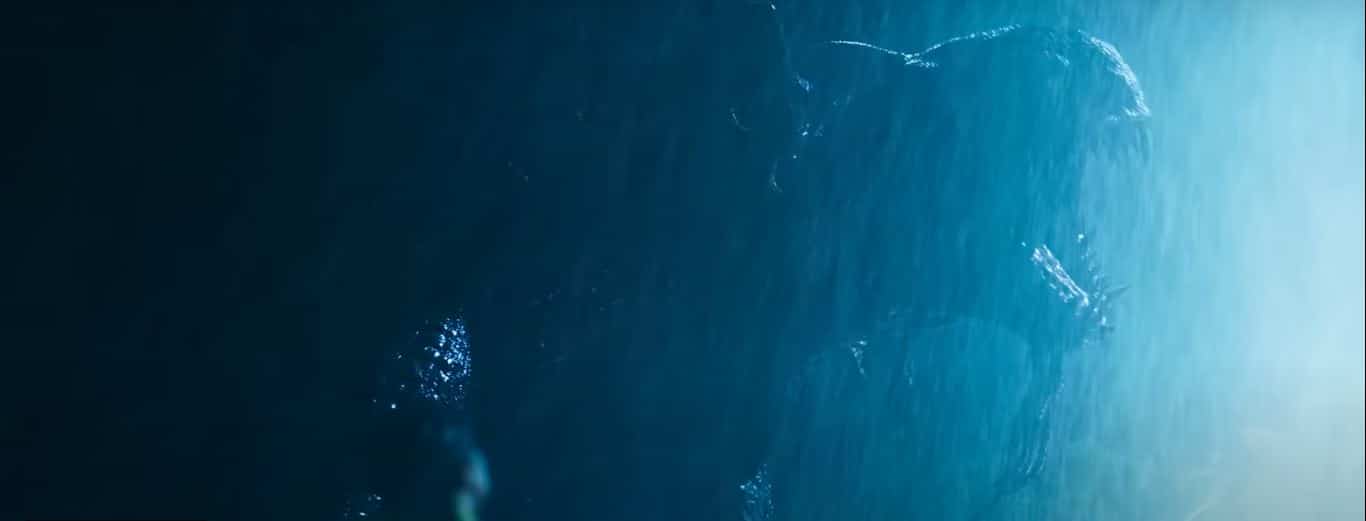
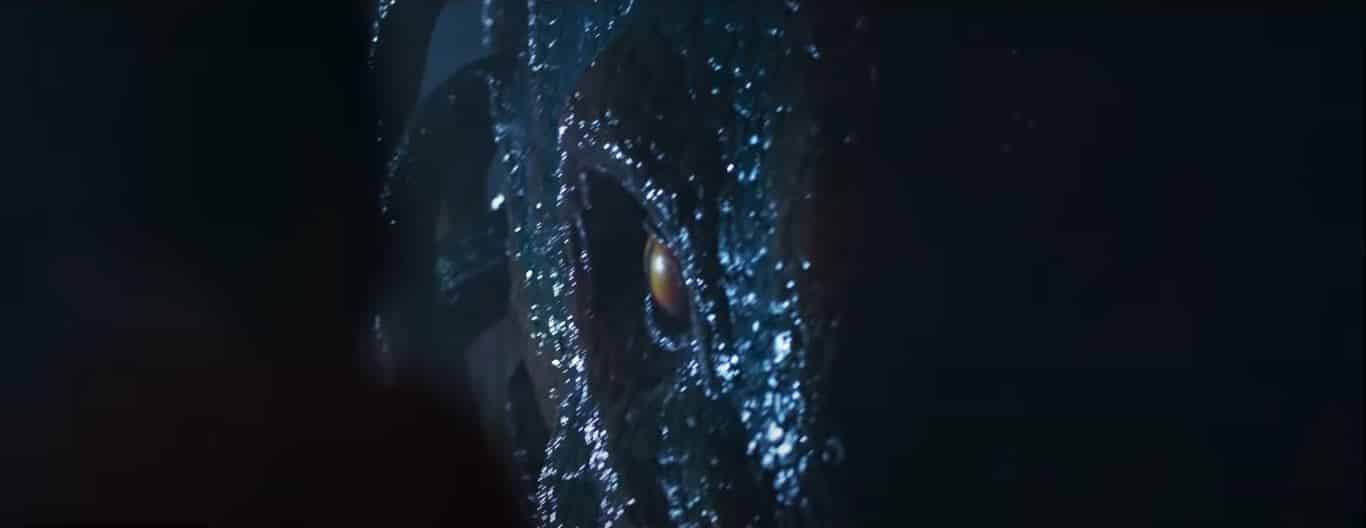
The film looks to tap more into horror than fantasy for its giant monster story. The teaser trailer keeps things pretty light on details, preferring to offer a generous set of hints as to the threat the human characters will be facing instead of the reasons why there’s a monster attacking people in the first place. It’s highly effective at hyping up the threat, though. The glimpses we get of the monster suggest its design will feature classic giant creature elements along with key tweaks the trailer doesn’t entirely give away.

There are also instances in which the possibility of smaller creatures are hinted at, but not definitively. This is, after all, a teaser and its purpose is to foster an air of mystery that surrounds the creature’s origins. The shots of the monster do look impressive and showcase the prowess of practical effects in storytelling. There’s an overwhelming sense of presence to the creature and it helps make it look supremely dangerous and deadly.

Schell’s monster design, what’s shown of it, is downright disturbing. It compares to his design for Cloverfield by favoring horror over sci-fi on a visual level. Regardless of what its origin ends up being, one thing’s already certain: the creature will leave an impression. The production looks ambitious and the settings varied enough to guarantee the action won’t just focus on big cities or densely populated areas. In this regard, The Lake somewhat reminds of Bong Joon-Ho’s 2006 The Host, another monster movie that aimed for being different within the genre. It explored other environments and spaces to great effect, preferring to keep some distance from the all-too-common skyscraper-dominated areas that populate these type of movies. That’s on top of having a unique creature that still invites close observation to fully appreciate.

the lake

The Lake is slated for an August, 2022 release in Thailand. There’s no information yet on when it’ll reach our shores and whether it’ll go for an initial theatrical run or if it’s headed straight for a Video on Demand release. Whatever the case may be, this new giant creature feature deserves attention for bringing practical effects back to the table and hopefully introducing the form to a new generation of movie-goers.

TV Review: Cursed Films kicks off season 2 with the dark myths behind The Wizard of Oz

Cursed Films

The first season of Shudder’s Cursed Films turned the tables on what its own title seemed to suggest, that it was going to be about the supernatural elements at play in the making of certain horror films. Instead, it went for a more noble goal. It sought to debunk the myths and conspiracy theories that haunt certain movies afflicted by a history of tragedy, irresponsible filmmaking, and superstition. Season two of the docuseries is a continuation of this, and it decided to go for one of Hollywood’s (and cinema’s) most treasured films for its opening episode: The Wizard of Oz.

A cursory online search about the supposedly dark secrets contained within the original cuts of 1939’s The Wizard of Oz (dir. by Victor Fleming) will yield a hefty volume of grim hits that promise to reveal the “truth” behind deep backlot rumors concerning hanging munchkins and abusive Hollywood producers that took turns in abusing the movie’s star, Judy Garland, while on set.

Cursed Films 2 employs the same approach that made season one such a compelling watch. It goes for an aggressive deconstruction of the very idea of what a cursed film is and why reality, and not superstition, offers the best explanations for the mysteries that’ve latched on to it. Taken as a whole, season one ultimately suggests that films become cursed thanks to fans who want to explain production woes and accidents via the same lore that’s in the content of the movies in question.

Weird noises on the set of The Exorcist? It had to be the devil. It’s what the movie is about in the first place. You can’t really blame anything that happened during its production on a vampire, for instance. The movie is not about undead bloodsuckers. It’s about a possessed girl who, in one scene, claims to be the devil. The same goes for the other movies explored in the docuseries.

Cursed Films

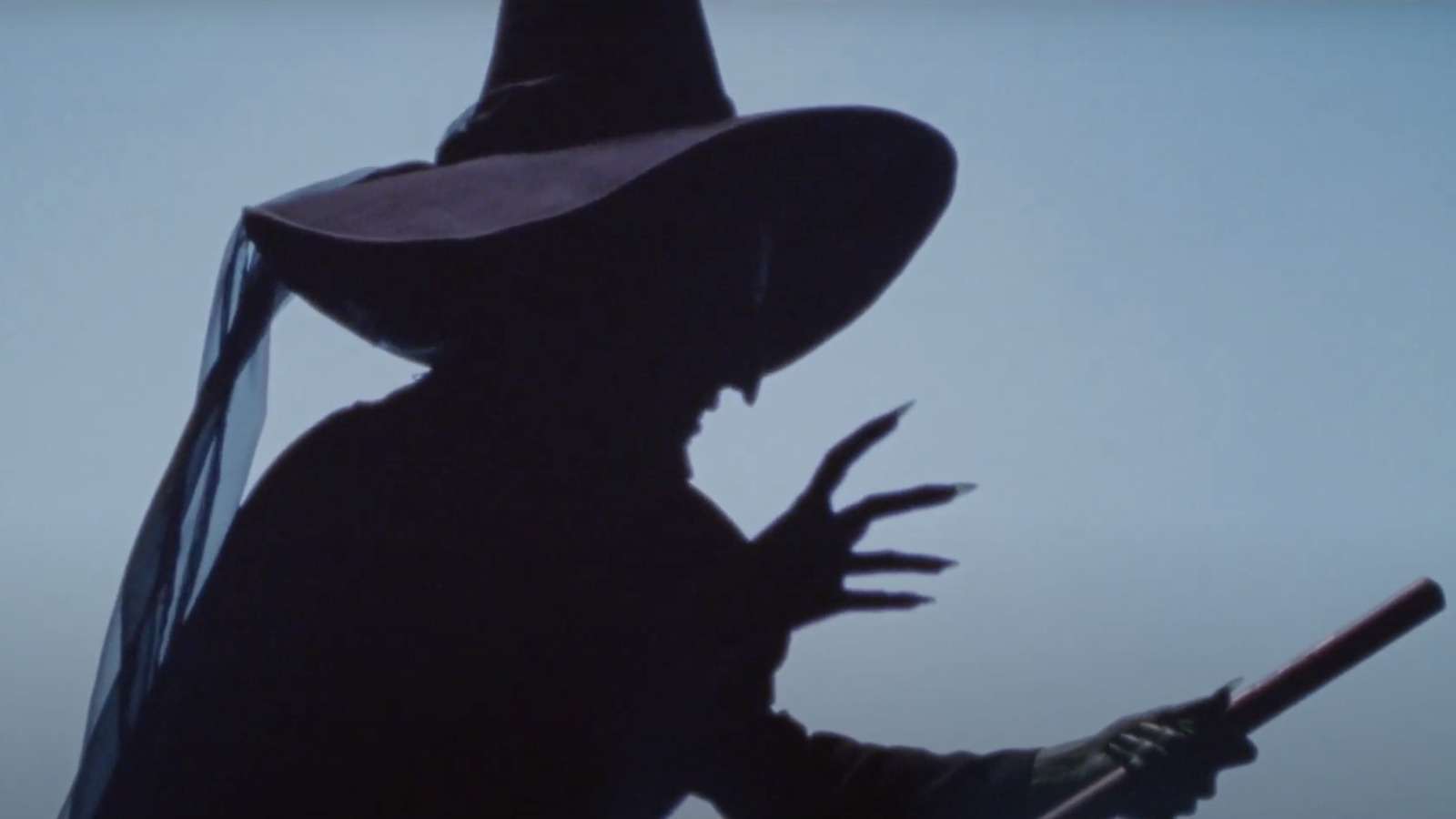
The Wizard of Oz, the show suggests, becomes a cursed film for its position in American film history and how it stands to represent the spirit of Hollywood, a place that is as classy and fantastic as it is ugly and corrupt. Add in the internet’s message board community culture, plus its conspiracy-heavy leanings, and you’ve got a cursed film.

The episode is well-scripted and researched, featuring interviews with surviving family members of the movie’s cast along with other commentators, such as Mythbusters’ own Adam Savage (brought in to discuss the case of the Tin Man’s original aluminum-based makeup and how it nearly killed the first actor that was cast to play him). Surprises are plentiful throughout, especially when it comes to the rumors that swirled around the actors who played the munchkins in the movie. This part of the episode is one of its strongest and is sure to give viewers something to talk about.

Perhaps one of the most effective components of the episode comes in the form of incident reenactments. They possess a haunting quality that strengthens the show’s idea on reality being dark enough on its own without requiring curses to explain away the strange happenings. They’re presented with a grainy filter that heightens the events they recreate while adding context and texture in the process. It’s a very successful approach and I hope the remaining episodes feature them as well.

The decision to open a new season of Cursed Films with a staple of classic American filmmaking is a daring one, and a resounding success at that. It can even be viewed as a statement on the controversial practice of declaring . Cursed Films goes to the land of Oz to say that no myth is safe, that they can be exposed as distorted truths for all to see. The upcoming episodes include Rosemary’s Baby, Stalker, Cannibal Holocaust, and Wes Craven’s The Serpent and The Rainbow (the one I’m looking forward to the most). You should expect them to scare you with what actually happened rather than with demonic forces that hold grudges against troubled Hollywood productions.

TV Review: Moon Knight S1E1

Moon Knight

It’s not unfair to say that as good as the Marvel movies and TV series are, they’re all very much governed by a formula that makes them come off as predictable. Well, predictable up to a point. I can’t in good conscience say they’re merely copy and paste versions of the same story, but there are commonalities. The hero, or heroes, find themselves conflicted with the roles they’ve either played before or are going to play, they’re put on a path that confronts them with a villain that will eventually help them recalibrate their identities, and then they accept and embrace their hero status.

Disney+’s Moon Knight goes for different, at least as far as the first episode is concerned. It comes off as a kind of companion to WandaVision in terms of concept, being that it approaches the idea of fragile realities in an intimate manner. Magic, horror, and psychology take precedence over action and political intrigue. Whether it’ll sustain this or not remains to be seen, but it at least results in a very refreshing first episode.

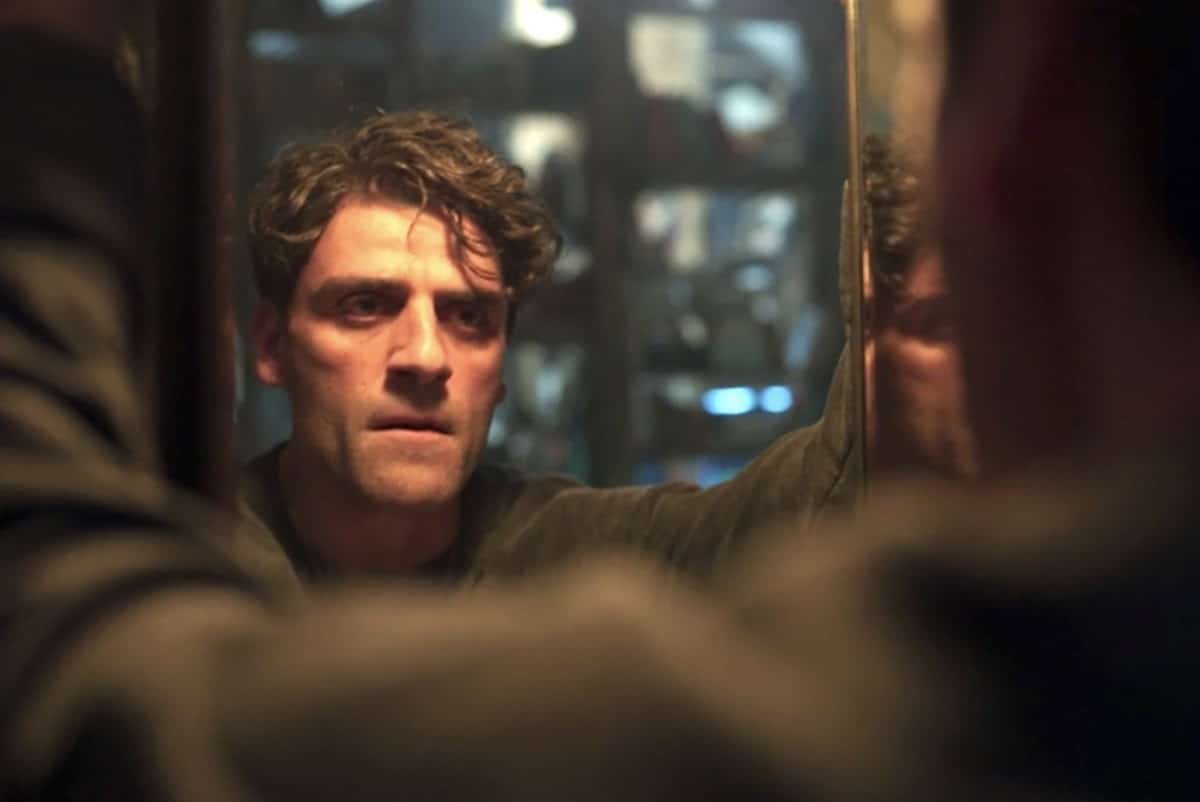
Moon Knight follows Steven Grant (played by Oscar Isaac), a museum shop clerk that suffers from intense and violent dreams, blackouts, and an invading personality that the comics the series is based on have often treated as a kind of supernatural dissociative identity disorder (DID for short). Steven starts to get haunted by a booming and authoritative voice (supplied by the great F. Murray Abraham) that will reveal itself to be the entity that endows him with the power to become Moon Knight.

Moon Knight

Ethan Hawke plays Arthur Harrow, a cult leader-like figure that is looking to harness the entity that has taken over Steven Grant. He gets to see the very British Steven become the very violent mercenary Marc Spector. It all leads up to Steven becoming Moon Knight to fight off the villain while trying to untangle his multiple personalities.

Isaac and Hawke on their own justify the watch. Isaac in particular plays a very emotionally convincing man that’s being tormented by his mind and how it disrupts his notions of reality and identity. It makes the Steven Grant character instantly likeable and relatable, not unlike Dan Stevens’ character in Fox’s own comic book series Legion (named after the titular character).

In Legion, the main character sees his powers in heavy contrast to schizophrenia, a condition that in Legion’s case blurs the lines between metahuman abilities and psychiatric symptoms. It remains to be seen how the DID aspects of Moon Knight’s character unspool, but so far it’s presented as key story element that builds the character sensibly.

Hawke complements Isaac by approaching his character as a kind of twisted spiritual guide that disarms people through words first and violence second. It makes for a very menacing display of villainy, one I’m eager to see develop as the show progresses.

Moon Knight

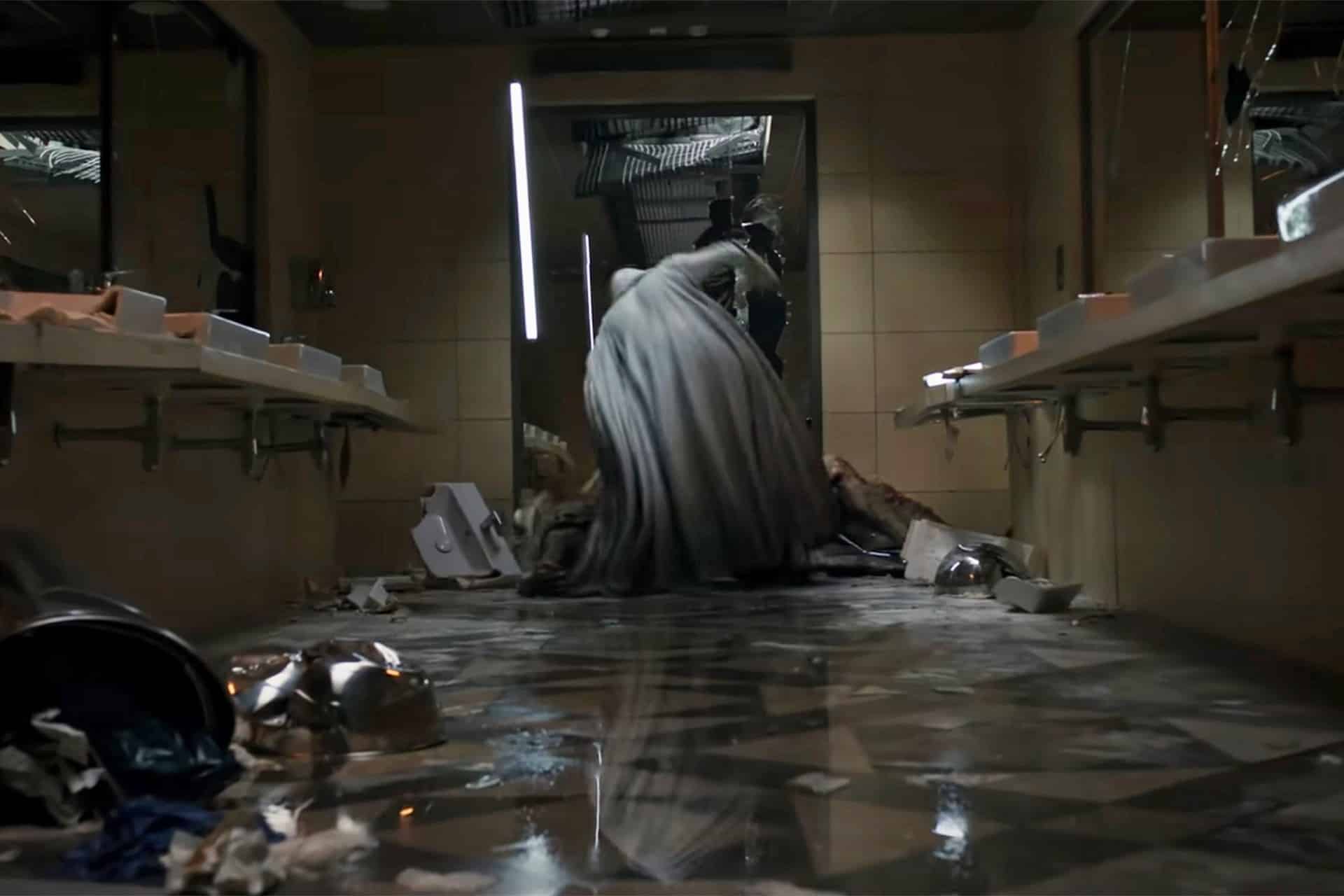
The first episode’s director, Mohamed Diab, also shines, especially in how inventive his approach is to the show’s action sequences. Initially, we’re presented with a Steven that epitomizes defenselessness in the face of insurmountable odds. When put in a life-threating situation, though, Steven blacks out and reawakens instantly to see he has solved the situation he was in with a lot of spilt blood as evidence of his handiwork.

The fight sequence itself isn’t shown. Instead, Diab goes clever editing and quick cuts to make these segments play out like fractured instances of violence that demand viewers fill in the blanks the blackouts leave behind. It builds Steven’s character while in the middle of the action, especially in the bits not shown, and it’s something I hope the series explores more.

If the first episode of the series is any indication, Moon Knight has a lot left to impress us with. The performances elevate the material to impressive heights and make the wait for the following episode that much harder. This series might be the one to break with the MCU TV formula and come up with something different, if only just a bit.

« Older Entries Recent Entries »