Author Archives: Ricardo Denis

Review: A Righteous Thirst For Vengeance #6
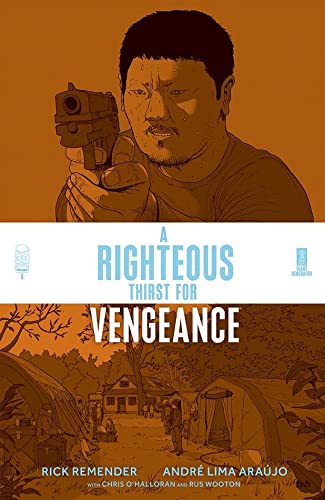
A Righteous Thirst For Vengeance #6

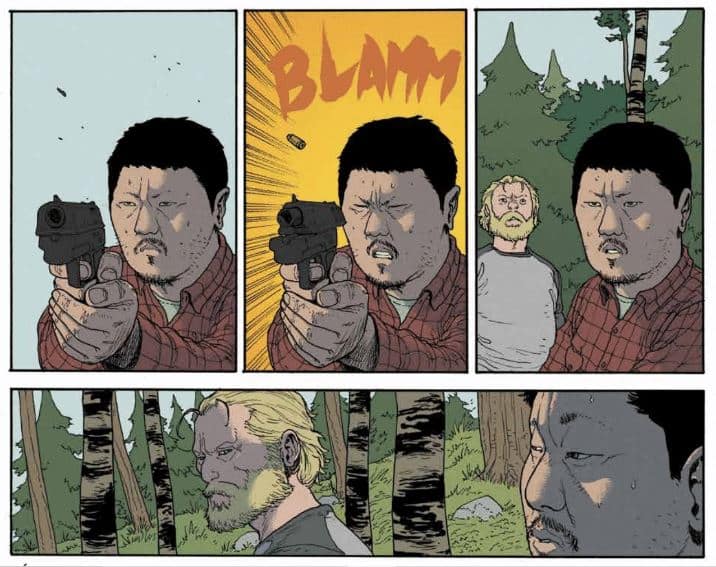
Rick Remender and André Lima Araújo’s A Righteous Thirst for Vengeance is as much an exercise in pacing as it is in volume. Comics have an abstract sense of sound about them that range from blockbuster levels of loud to subtle drama levels of soft. An Avengers comic, for instance, doesn’t “sound” like a Batman comic, which in turn doesn’t have the same acoustics as a Saga or Criminal comic. There are a lot of variations in volume to be found in the medium. A Righteous Thirst for Vengeance has been a strong example of this and how it can impact storytelling. Issue #6 continues to expand on it.

The latest issue of the series keeps the volume low, so to speak, as Sonny finds himself living off the grid in a small makeshift encampment that’s as far away from technology as possible. The people who are after him live in a world where GPS pings and sign-in alerts make everyone easy to track, frighteningly so.

As a result, and after the events of the previous issue force Sonny and a small kid to go on the run, Remender and Lima Araújo decide to catch up with their characters with a kind ‘calm before the storm’ sensibility that sets up some potentially very bad things to come.

Remender and Lima Araújo do an excellent job of capturing the quietness that characterizes living in a vacuum of technology. This is what I mean when I refer to sound in the comic. There’s an intention behind capturing this kind of silence as it serves the story’s pacing and tone. It slows down the narrative so that the reader can consider the things that led up to Sonny’s current predicament without the distractions associated with our digital-heavy lifestyles.
A Righteous Thirst For Vengeance #6

The comic was already paced in a kind of moment-to-moment manner that kept things intimate and intense. Issue #6 lets us breath a little before getting back to the methodically tense chase that’s been taking place since issue #2 of the series.

The script, as has been the case so far, sticks to brief dialogue exchanges to keep things from devolving into longwinded sequences that deviate from the matter at hand. A Righteous Thirst is a very focused comic, something it has to be if it wants to sustain the different elements at play in its storytelling.

Lima Araújo’s art is equally focused and it’s where the comic plays the most with sound. Pages are never static and feature quick cuts to vistas, objects, and animals present in the environment that help populate the story with personality, not unlike how slower-paced movies are edited to create a contemplative atmosphere. It establishes a strong sense of place and it allows the reader to appreciate the settings the comic’s characters inhabit, down to the sounds that color the locations. Not many comics can lay claim to finding success in this and it has been quite the experience watching it all grow into deeper and more complex forms issue after issue.

A Righteous Thirst for Vengeance #6 is confirmation that the series is still on the right track and riding high. Each entry has been a surprise unto itself and #6 is no exception. It’s a comic that demands to not just be read, but also to be listened to.

Story: Rick Remender, Art: André Lima Araújo
Color: Chris O’Halloran Letters: Rus Wooton
Story: 9.0 Art: 9.0 Overall: 9.0

Recommendation: Read and then go watch some Criterion films for good measure.
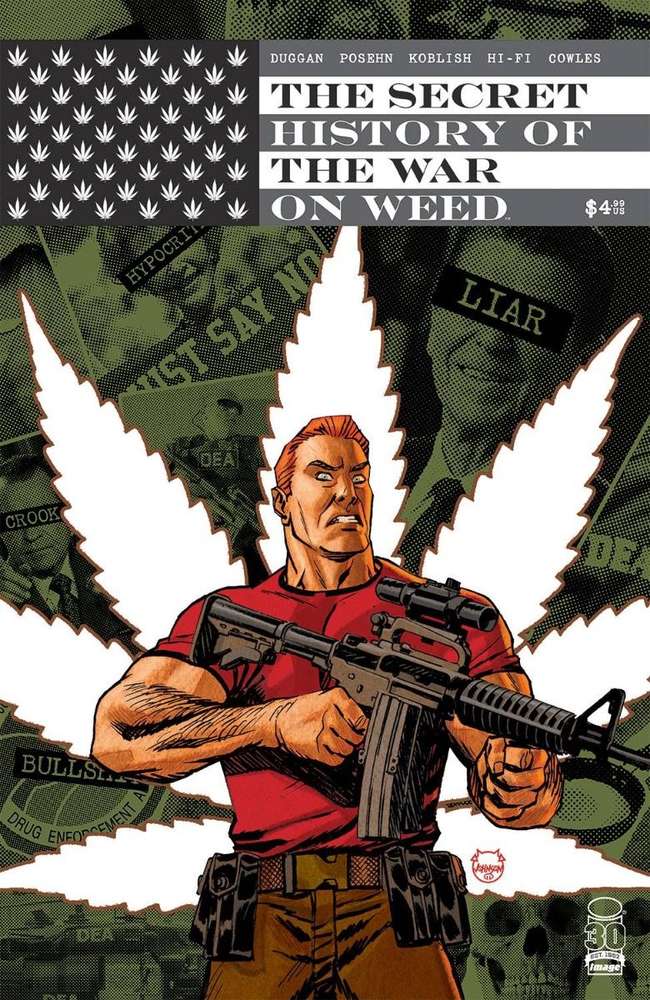
Advance Review: The Secret History of The War on Weed

The Secret History of The War on Weed

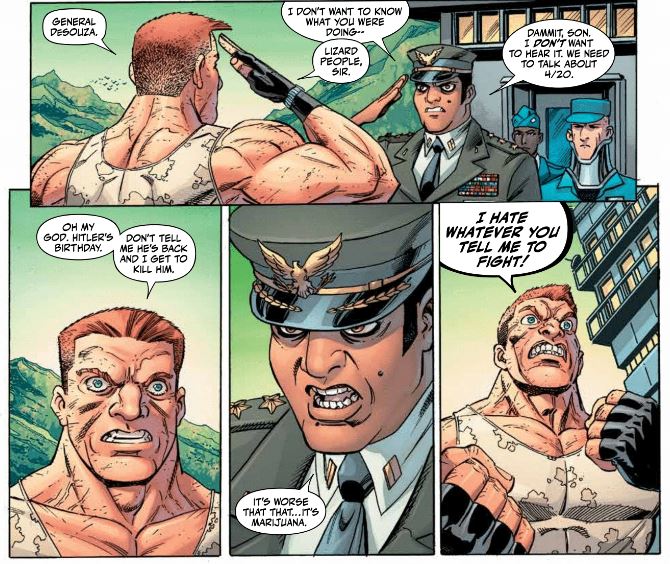
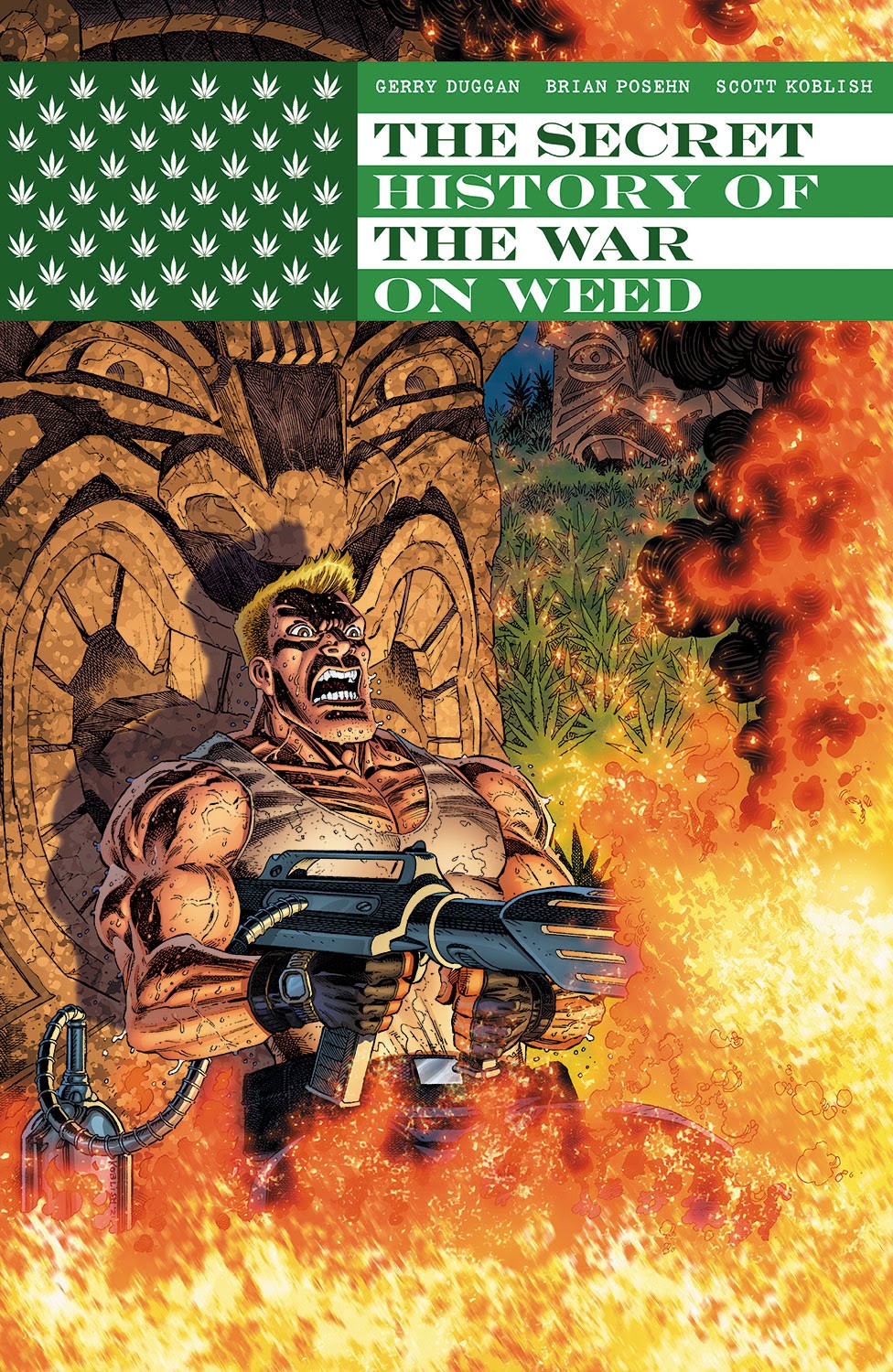
I wouldn’t be surprised if it’s an actual legal requirement to be high when writing a story about weed, be it fiction or nonfiction. The creative team behind Image Comics´ The Secret History of The War on Weed seemed to be well in compliance with this when they put this comic together, and it’s all the better for it. It at least explains why lizard people and horny presidents are part of this hilarious, ridiculous, smart, and even heartfelt comic about the war on ganja and how backwards it is.

Writers Gerry Duggan and Brian Posehn along with illustrator Scott Koblish set their alternate history in 1980’s America. The President is a cross between Ronald Reagan and Margaret Thatcher that sees in marijuana a poll-raising opportunity to get the country behind her administration. To wage this war, she sends the story’s unlikely hero, Scotch McTiernan (an Arnold Schwarzenegger-type commando that’s all of the 80’s action movies rolled into one) to jumpstart the conflict.

The story takes a turn when Scotch McTiernan gets high himself and sees how unnecessary the war is and how damaging it can be to enforce the prohibition of something that has been proven not to be a major problem in its effects. In the process, Duggan, Posehn, and Koblish get the chance to comment on how America creates wars to keep the military industrial complex rolling, how misguided policies can create criminals that then have to suffer the system, and how politicians can spin narratives to create evils engineered for campaigning purposes.

There’s a lot packed into this one-shot comic, but Duggan, Posehn, and Koblish keep the action on the highest volume setting, preferring mayhem over quiet ruminations on the subject matter. It succeeds because of how sharp and funny the story is.

The Secret History of The War on Weed

Dialogue is a highlight, with puns and snappy punchlines driving the messages and metaphors home through laughs. This isn’t a mere parody of the 1980’s, though. It’s a smart critique of it and the policies it enacted, especially as they pertain to our current appreciation of weed consumption.

The War on Weed takes on the culture war that was waged against marijuana in the 80’s to explain how people formulated negative ideas about it and then how those same ideas could be traced back to certain special interests that wanted to antagonize the product for reasons that didn’t have the public’s interest at heart.

The Secret History of The War on Weed

Koblish’s art reinforces this argument by referencing so many pop culture elements per page, per panel even, that it becomes impossible to separate weed from the things people still look back on in a positive light. There was a lot of damage done in the 1980’s due to how irresponsible and prejudiced its war on drugs was, but it was also the decade a lot of people started smoking weed (where it grew outside the Counter-cultre/hippie identity it carried). Koblish accounts for this in different ways, being both visually indulgent and confrontational as the story develops. It’s always funny as well, so repeat readings are encouraged. This is a book you’ll want to comb through for hidden visual gags and references.

The Secret History of The War on Weed sees nothing wrong in laughing at serious things, especially if it’s in the service of getting a message across. The message here is one of fairness. By decriminalizing weed, America does better by those who could potentially go to jail for an offense that should never have been an offense in the first place. In a way, The War on Weed is a great companion book to Box Brown’s Cannabis: The Illegalization of Weed in America (2019), which also uses humor to get its point across about the problems that haunt America’s politics on weed (albeit in a more measured manner).

Duggan, Posehn, and Koblish do more than enough to keep the conversation going on what is still a hotly debated topic. They condemn bad practices while making an honest plea to eliminate a problem that has no business being considered a crime in our times. For the benefit of all, they enlist lizard people, 80’s action heroes, and a weed version of Swamp Thing to lend a hand in fighting the good fight.

Story: Gerry Duggan and Brian Posehn Art: Scott Koblish
Story: 9.0 Art: 9.0 Overall: 9.0 Recommendation: Buy and read while high for added effect

Image Comics provided Graphic Policy with a FREE copy for review


Pre-order: comiXology/Kindle

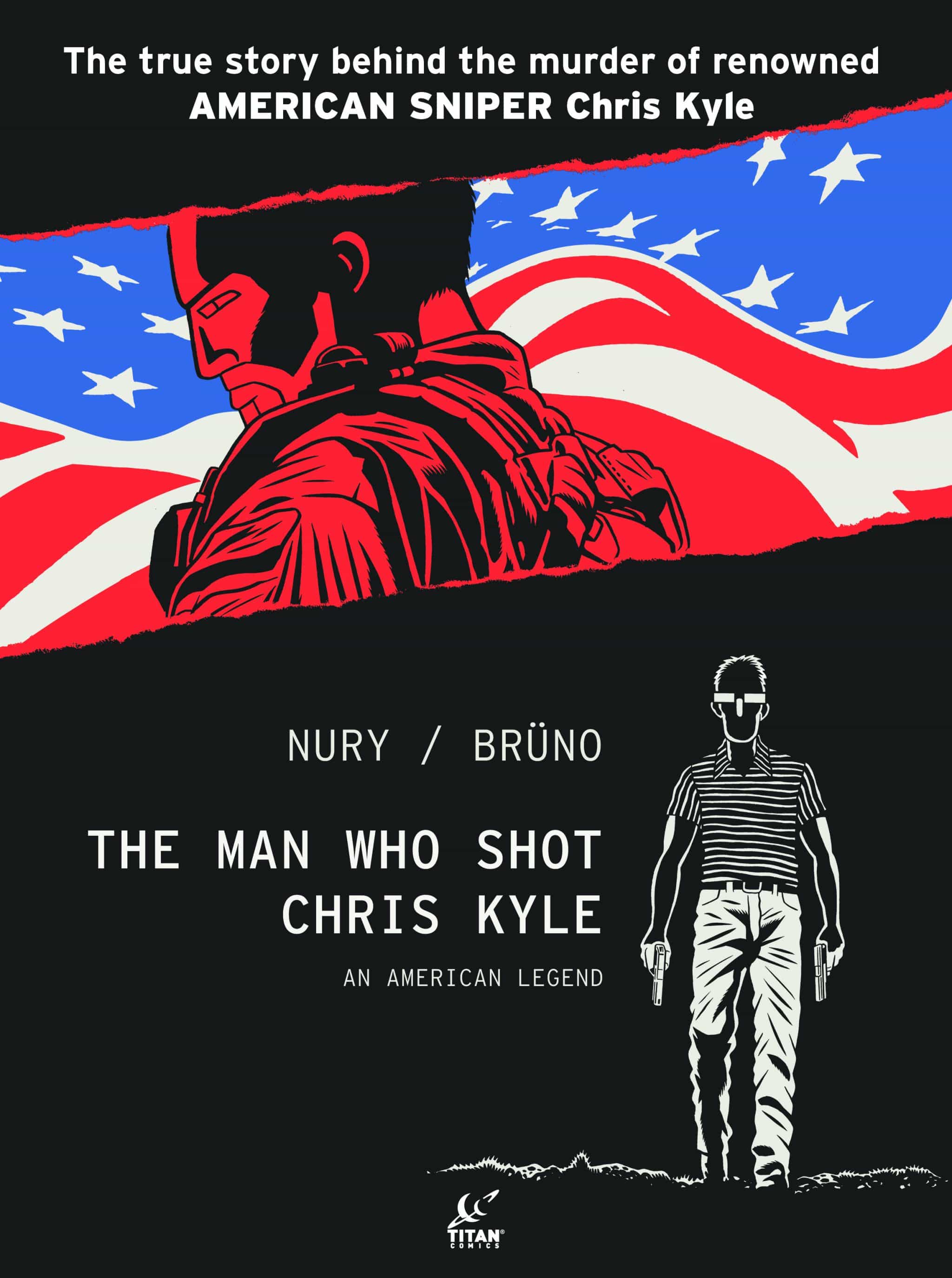
The Man Who Shot Chris Kyle takes a measured approach to the story of a murdered American veteran

The Man Who Shot Chris Kyle

Fabien Nury and Brüno had a difficult task ahead of them when they decided to tackle the story of renowned sniper Chris Kyle, the subject of the Clint Eastwood-directed movie American Sniper. Books about real soldier experiences can be quite rough, difficult to digest even. There’s the temptation to expose and judge the soldier solely based on his actions, context be damned. In cases such these, though, context matters. Military training comes with a very specific set of experiences that blur the lines between duty and morality, both during and after a war.

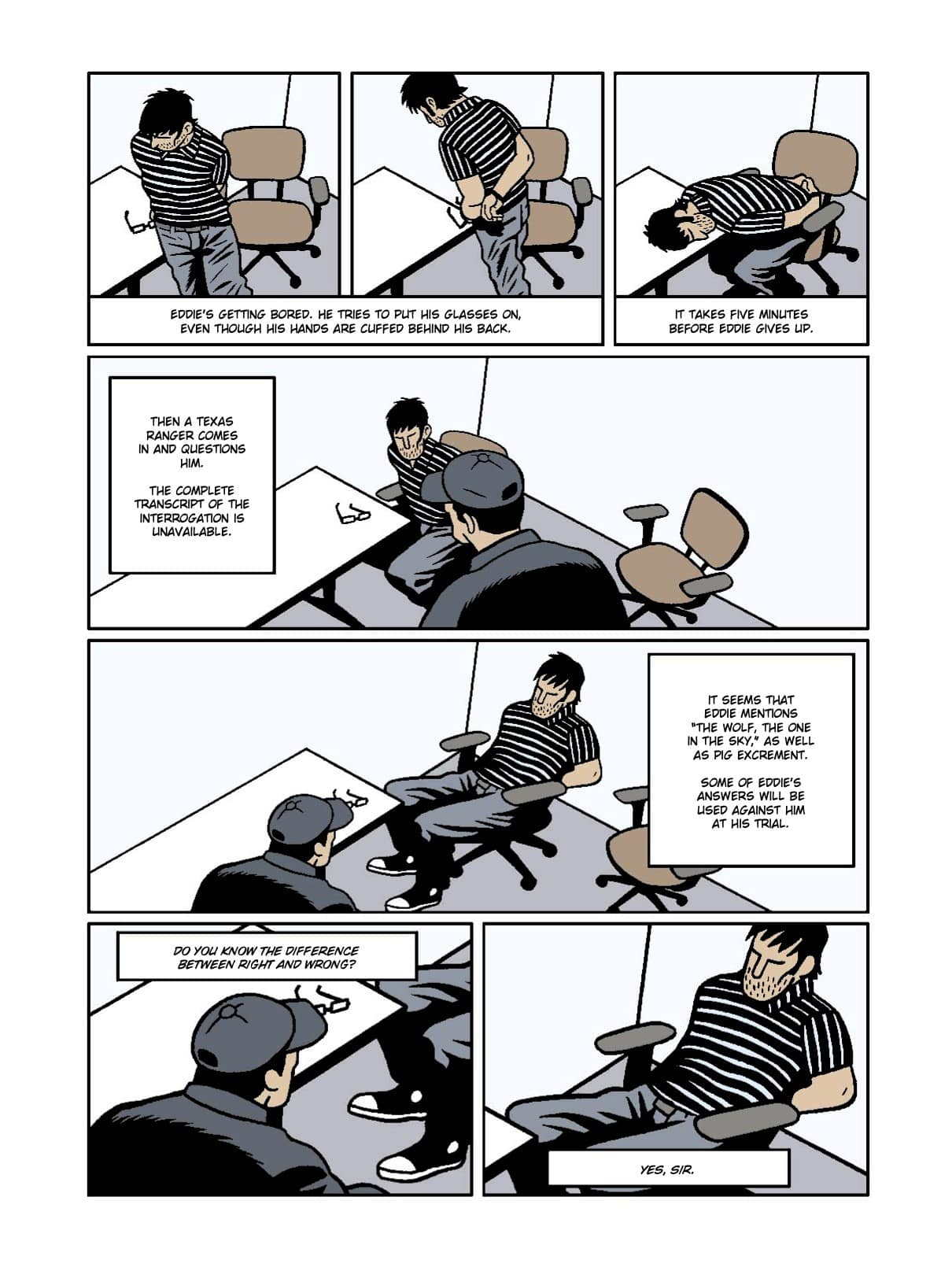
The Man Who Shot Chris Kyle: An American Legend is a graphic novel documentary (and I use this word intentionally) that goes beyond the subject alluded to in the title. It explores Chris Kyle’s life post-military service, the events that led up to his murder by the hands of Eddie Ray Routh, and how his wife Taya took over her husband’s businesses while also being the face of his estate.

Kyle is known as one of the most effective snipers in American military history, having more than 150 confirmed kills in his service record along with several commendations for “acts of heroism” in combat (most notably during The Iraq War). To argue against the man’s resumé is an exercise in futility. Kyle fulfilled his duty and did so in a fashion that earned him the nickname “The Legend.”

The Man Who Shot Chris Kyle

Here’s where things start to get complicated. Upon the release of his autobiographical book American Sniper: The Autobiography of the Most Lethal Sniper in U.S. Military History (co-written by Scott McEwen and Jim DeFelice), and especially during the book’s promo tour, it came to light that Kyle used to refer to enemy combatants in Iraq as “savages”. He never held back in affirming his position on that, although he did clarify that the term was only applied to the enemy soldiers he engaged with in the battlefield due to their treatment of the general populace.

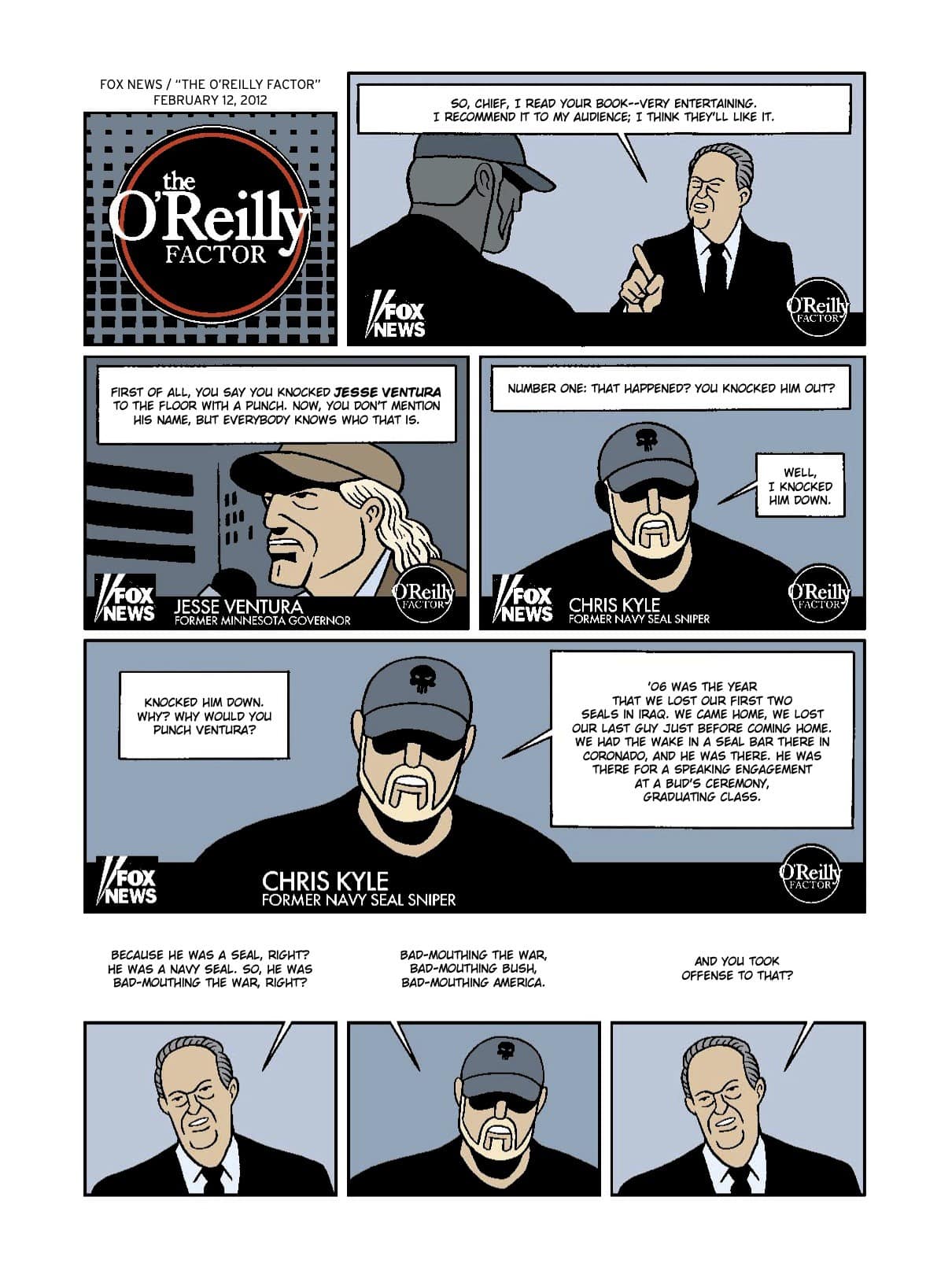
Nury and Brüno decided to approach this part of Kyle’s mentality by letting Kyle do most of the talking. They did so by adopting extensive recreations of TV interviews where Kyle explains his word choice and how it shaped his understanding of the role he fulfilled in the military. Specifically, Nury and Brüno adapted an interview with Fox NewsBill O’Reilly in which the American Sniper book was being promoted to address the language Kyle used to refer to the enemy.

Nury’s script makes sure the segment doesn’t condemn or support Kyle’s views. They’re just allowed to become a part of the graphic novel documentary, there for the reader to process and think on. Whatever political musings make it to the surface are left entirely to the dialogue exchanges contained within the sequence.

The Man Who Shot Chris Kyle

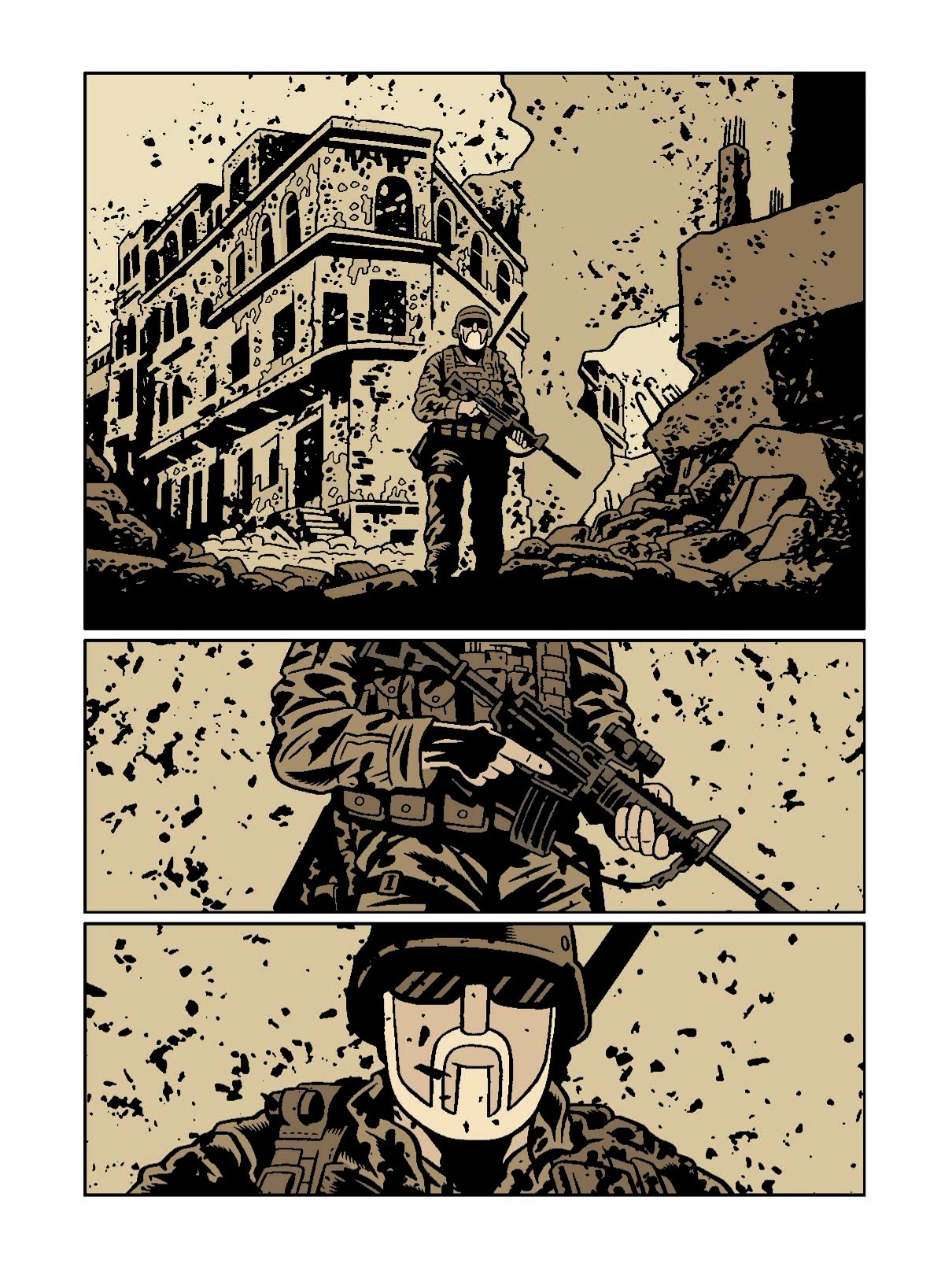
In adopting this approach, the book projects an unbiased quality that lets the reader come to their own conclusions as to Kyle’s worldview. This is also evident in how Nury and Brüno treat Kyle’s enthusiastic appreciation of guns and his support of gun rights. For instance, Brüno doesn’t go out of his way to take special of care of every minute detail usually afforded to guns shown in this type of story.

Guns in The Man Who Shot Chris Kyle are part of the culture Kyle was immersed in. The become an interesting counterpoint to the book’s treatment of the man who shot and killed Kyle and his friend Chad Littlefield, Eddie Ray Routh. Nury and Brüno’s psyche profile of Routh, who was also in the military, is given all the complexity it requires to get to the reason why he turned to murder.

In a sense, Routh is the antithesis of Kyle. His military experience is that of a person at odds with the things he expected from Army life. There’s doubt as to whether he killed anyone while in service or if he ever truly adjusted to life as a soldier. We’re told he admired Kyle and that he perhaps might’ve felt there was some kinship between them based on certain commonalities found in the military experience. Ultimately, though, their lives could not have been more different.

The Man Who Shot Chris Kyle

Again, the focus falls on the presentation of as much information as possible for the purpose of understanding the man and his actions. In a sense, Nury and Brüno take as much care not to turn Routh into a classic villain as they do in not making Kyle come off as a heroic martyr. There’s some commentary on gun violence and how it’s at the center of Kyle’s legend and Routh’s crime, but again, they are presented without approval or condemnation.

The Man Who Shot Chris Kyle subscribes to the idea of understanding the events that transpired among the people involved in its story and how they led to the tragedy that transpired in February 2013. Nury and Brüno recognize their story is full conflicts and contradictions, but they don’t try to clean it up. They lean into the messiness and try to portray it sensibly. It’s a delicate balance that needs to be struck for this kind of exercise to be successful, but the creative team achieve it by leaving as much as possible in the reader’s hands.

Netflix reveals blood-soaked posters for its live-action Resident Evil series

Resident Evil has become a pop culture giant, and now it aims to become even bigger with its first ever live-action series slated for release on Netflix this coming July 14th. Actor Lance Reddick (The Wire, Bosch, Horizon: Zero Dawn) is attached to the project and will be playing the role of Albert Wesker, the sunglasses-wearing embodiment of government conspiracies and clandestine machinations.

Netflix has released a summary for the series. It reads:

“2036 – 14 years after a deadly virus caused a global apocalypse, Jade Wesker fights for survival in a world overrun by the blood-thirsty infected and insane creatures. In this absolute carnage, Jade is haunted by her past in New Raccoon City, by her father’s chilling connections to the Umbrella Corporation but mostly by what happened to her sister, Billie.”

Judging by the main character’s name, it’s safe to assume the story is hedging its bets on Wesker’s history being compelling enough to build an entire series on. I’d say it is. His place in the RE universe can be compared to that of the Cigarette Smoking Man’s in The X-Files tv show. He’s the shadowy observer, the backstage manipulator whose limitless knowledge of everything secret turns him into the very essence of what makes ‘deep background’ character types so easy to obsess over.

The focus on a future setting is surprising, even if the time jump is little more than a decade from our own time. In the context of COVID, going for a post-pandemic scenario might allow the story to look back into recent events and comment on the many missteps we took as a people from all corners of society. Of course, you take all that and add zombies to it to get that special RE flavor.

Netflix has also released three teaser posters that reassure fans the basic elements of the game’s universe will transfer over into the series. One of them, for instance, shows a vial that contains a blood sample marked positive for the T-Virus. Another presents an Umbrella Corp pill covered in blood that carries the name of JOY. It’s all in the details and the posters make sure any first impressions ramp up fan excitement.

For those eager to jump into the RE extended universe, Netflix already has a solid animated series called Resident Evil: Infinite Darkness. It follows an international investigation led by Leon and Claire as new signs of the same zombie outbreak that descended upon them in Raccoon City start to surface once more. It’s a digital animation that plays out much like an extended cinematic sequence ripped straight from one of the games but with a serviceable storyline and well-choreographed action moments to round out the experience.

With the Netflix series on the horizon, expect to see more information to pour out in the coming weeks. A trailer drop should be imminent. The biggest question surrounding the show is how faithful it will be to the source material. The Milla Jovovich-ledResident Evil movies have a fanbase, but they were quick to ditch the games after a few entries. Netflix has a chance to set a new standard for the license. In an already crowded zombie arena, Resident Evil has a unique chance to rule the land. It has to make sure it gets the zombies and the monsters right, though.

Review: Playthings #1

Playthings #1

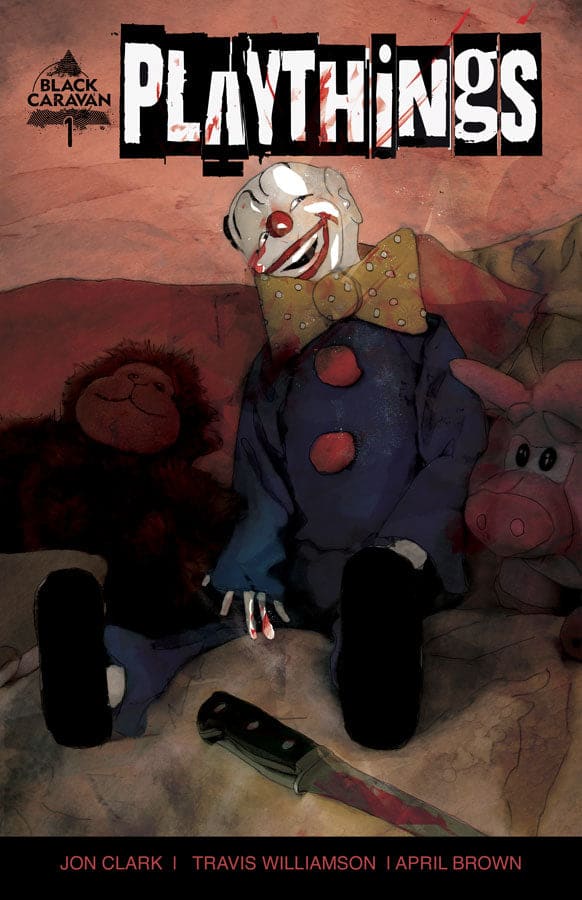
Scout Comics is becoming a legitimate voice in the field of horror comics, and Playthings #1 is shaping up to be another great example of what the publisher is capable of. The new series, written by Jon Clark and illustrated by Travis Williamson (the team behind the amazing Black Friday), finds its scares in the realities of a broken family with shared custody problems. The mother figure ends up being the target of this story’s haunting, but the first issue is bizarre enough that it keeps things unpredictable. This is a good thing.

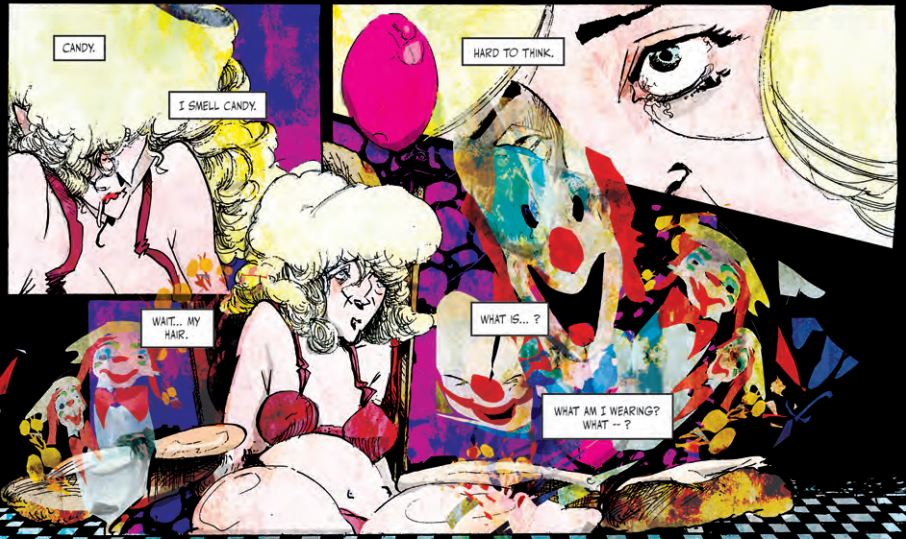
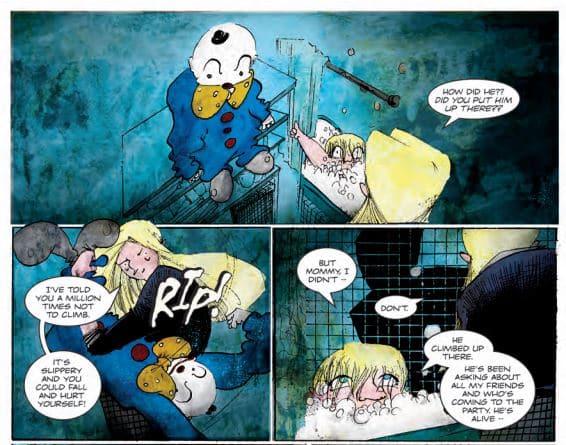
Playthings opens with bright, poppy colors juxtaposed with inky blacks and dark shades. Clown faces huddle around a woman tied to a chair, her hands (or something resembling hands) bound in licorice. As the woman surveys the room she’s in, a kind of anti-funhouse explodes around her. The woman realizes she’s somewhere that’s not entirely within the realm of reason, a place with a child-like sensibility and a whole lot of violence hanging over it.

The woman is revealed to be the mother of a small girl and it is made apparent quite quickly that she has a very strained relationship with her ex-husband. The girl’s birthday is coming up and a strange box has appeared out of thin air with a creepy clown doll inside it. As can be expected with anything clown-related, chaos unfolds in relentless fashion.

Playthings #1

Clark and Williamson let the readers know that whatever’s coming after the clown is out of the box is going to be intricately disturbing. The setting and the characters all feel as if ripped straight out of a dark fairy tale, of the kind early Vertigo comics were known for. The story has a kind of 1990’s weird fiction vibe to it, especially in how it displays familial dysfunction early in the story to then transition into more terrifying things. It works well and it signals a very focused set of ideas that the creators are eager to get to as quickly as possible.

Williamson’s art style is perfect for the type of story Clark scripted out. It often reminds of Sam Keith’s own takes on the dark fairy tale aesthetic while also offering enough variation to make it its own. Clark also colors the comic and he adds a notable layer of story through his chosen color palette. Both creators showcase an appreciation for loud and discomforting imagery in Playthings and it makes the horrors they conjure up leave an impression.

The decision to go for a dark fairy tale-style of storytelling allows Clark and Williamson to keep their metaphors and messages at the fore. For Playthings, the focus is on divorce and the hells it can create when there’s a child involved. The mother, for instance, is presented as a tightly wound and angry person that lets her emotions spill unto her innocent kid. The trials of being a single parent are on full display and the haunting the toy clown is intent on making the mother sit through looks to be aimed at turning the scenario into a cautionary tale, the kind fairy tales are well-known for.

Playthings #1

Playthings #1 should please fans of classic horror, fairy tales, and 1990s fantasy comics. It establishes a dark event with terrifying potential, full of painful promises that readers can engage with in more ways than one. Issue #2 should satisfy both readers with dark sensibilities and readers who quite simply enjoy a good story. Keep this one on your radar.

Story: Jon Clark Art: Travis Williamson Lettering: April Brown
Story: 9.0 Art: 9.0 Overall 9.0
Recommendation: Read and look out for clown dolls that weren’t in the room with you before.


Purchase: Scout Comics

Movie Review: The Long Walk

It takes a delicate touch to cross genres, to marry them and then keep them in harmony to get at something different. Mattie Do’s The Long Walk achieves this in truly impressive ways, finding success in the subtleties of the horror and sci-fi genres she uses for her story rather than in their loudest components. The film—a Laotian production—truly is an achievement, and it does something movies in general should aspire to do more of: broaden the scope of storytelling.

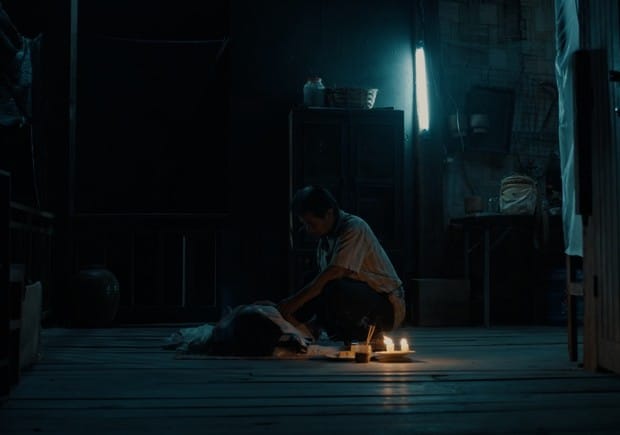
The Long Walk is essentially a ghost story that’s in league with time travel. An old man (played by Yannawoutthi Chanthalungsy) is followed around by a young female ghost (Noutnapha Soydara) that can take him fifty years into the past to when his mother died a slow a very painful death in their house in rural Laos. The old man starts interacting with his younger self (Por Silatsa) with good intentions at heart, but the consequences of meddling in one’s own past turn out to bear a high and strange cost.

It’s a slow burn of a story that gives viewers time to consider the old man’s actions, especially in how well-intentioned he seems to think they are. Given how heavily it focuses on the old man and his younger kid version, the experience is profoundly personal. The audience spends a lot of time with the character at his most intimate and it makes for a study that feels intensely raw but always honest.

It’s important to note that the movie offers no clear answers and offers no real path to judging its main character. As we become aware of what the old man’s intentions are, new questions start claiming their stake in the story, all while making the unique situation the character is in become progressively disturbing.

It’s fortunate, then, that the performances are so good. Chanthalungsy and Silatsa never stop being fascinating to watch. They make the most with the pacing of the story by taking their time to methodically develop the emotional arcs that get tangled together throughout the movie.

I appreciated how uncomplicated the whole time travel component was. There are no hard sci-fi concerns here regarding paradoxes or collapsing universes. A change in the past is a change in the present. What it all means, though, is where the game’s at. Mattie Do accentuates this visually with changes to the old man’s house as markers of time manipulation.

The house itself functions like a character in its own right, or an extension of the old man’s spirit and personality. We spend enough time in it to get a good sense of its secrets. Any change to the things in it are important, adding layers of consequence to the old man’s decisions.

There’s definitely more of an interest in the ghost part of the equation rather than the sci-fi one. If anything, the time travelling is more a means to an end, a vehicle for the ghost story to reach alternate destinations within the narrative. One thing that stuck out was the decision to set the story in a not too distant future. It takes an approach to the future much like the one the movie Logan (2017) takes with its focus on small futuristic leaps instead of full macro shifts in society. Technological progress is evident but measured.

The Long Walk’s Laos is not governed by holograms, lasers, or spaceships. Its sci-fi elements are in the little things, the kind that make a dent in everyday life. Watches, bank accounts, and other functions, for instance, are integrated into human bodies through chips and are displayed on the skin. Solar energy is forced unto the countryside as well, which frames technology as an imposition that threatens established ways of life that might not need the upgrade.

Mattie Do has put a very complex, unique, and important film out into the world. The Long Walk offers a flexible blueprint for new storytelling possibilities and it should be discussed for the things it does with the genres it plays with. If the future holds more movies like this, then horror and sci-fi will be ushered into a whole new age of story.

Review: The Hellbound, Vol. 1

The Hellbound, Vol. 1

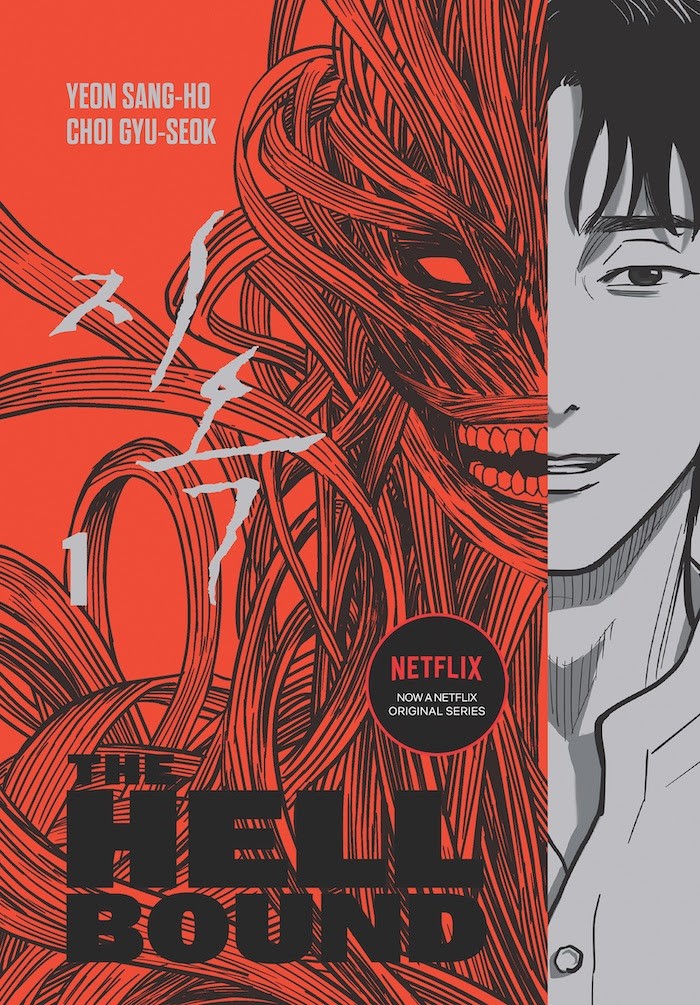
Yeon Sang-Ho and Choi Kyu-Seok’s manhwa, The Hellbound, tells the story of a new world phenomena, history-altering by its very nature: the confirmation of the existence of Hell.

It features hulking monstrosities that hunt people down and take them to Hell once they’ve been judged by an angel that also offers the time and date of their deaths. It’s terrifying on different levels, but where it cuts deepest is in its unwavering commitment to exploring how human behavior changes when confronted with this information. It poses questions that disturb our own sense of reality, casting doubts on whether our actions come out of the pureness of our hearts or out of self-interest in securing our place in the afterlife.

Some might recognize this manhwa for its Netflix adaptation first, which was developed by Sang-Ho, the director of the modern Korean zombie classic Train to Busan (2016). But the story doesn’t even start with the manhwa. Its origins are found in two animated shorts called The Hell (Two Kinds of Life), developed using the rotoscope technique and focusing on the same core ideas described above with certain key variations.

The manhwa comes after the animated movies and was originally published as a Webtoon comic. It was adapted so faithfully to live-action, panel for panel at times, that it can basically be taken as a fully detailed storyboard version of the story. It gives the impression that it had its sights set on becoming a six-part television series since its inception.

The Hellbound, Vol. 1

As it goes in the tv adaptation, The Hellbound starts with the brutal killing of a man that was damned to Hell by an angel and then sent there courtesy of a mysterious pack of creatures that appear at a specific date and time to collect the subject’s soul (mainly by beating the person to a pulp first and then burning his or her body to extract their soul from the charred remains).

People all over South Korea are trying to process the meaning of this very public horror, slowly coming to the realization that those who are visited by the angel and its monsters have a history of sinful life choices weighing them down. It’s what makes them potential marks for damnation.

A widowed detective working through the trauma of losing his wife to violent crime, a skeptical lawyer looking out for the best interests of those trying to take advantage of this new Hell business, and a shady religious leader supporting what he proclaims to be God’s work all drive the story forward in the first volume of the manhwa. They each represent a different aspect of faith, morality, and justice, offering readers various entry points into the problem of having what seems to be concrete and reliable affirmation that God exists and that he is watching us.

Sang-Ho and Kyu-Seok set up these characters as metaphors on the fragility of social structures when confronted with the idea that morality could actually be as simple as good and evil, black and white. Just how we come to an objective definition of what’s good and what’s evil is where the book’s genius truly lies.

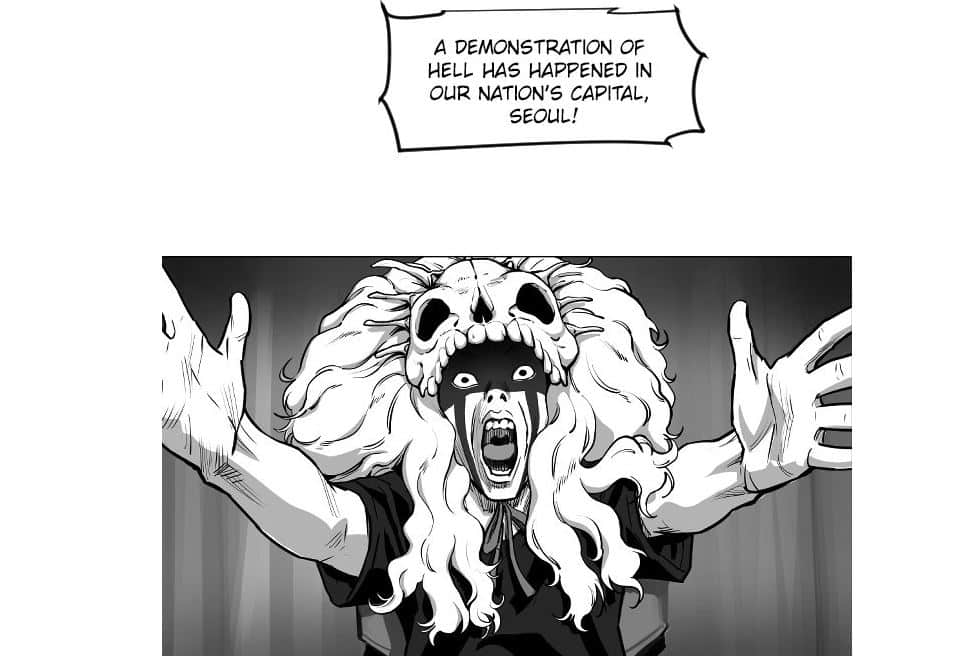
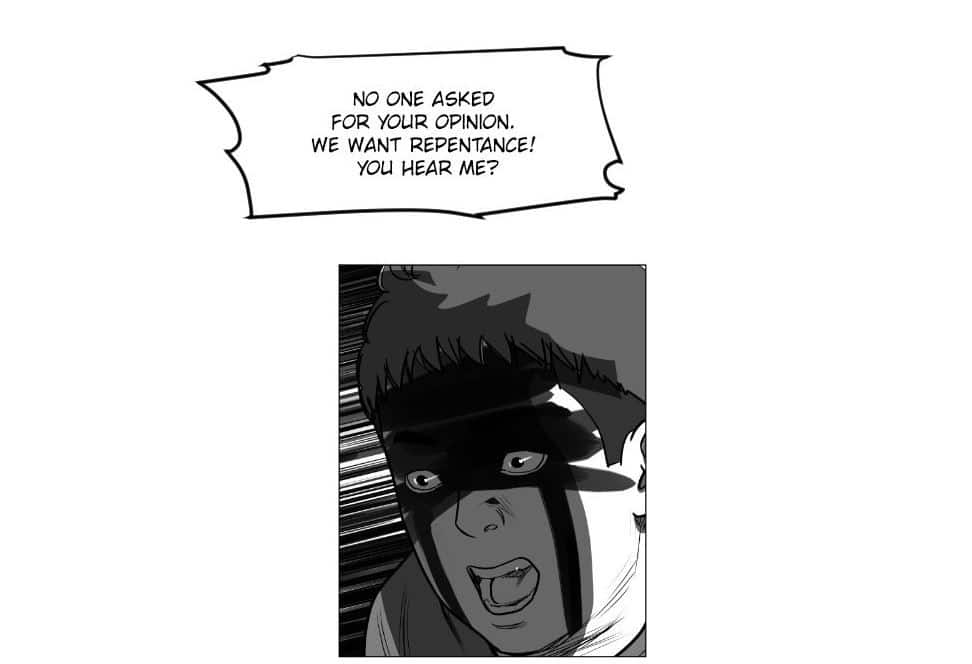
The story features a conspiracy-obsessed internet personality that represents a group of violently fanatic youths known as the Arrowhead. This group stands to represent how dangerous digital influencers and commentators can be when they speak to a moral duty to conform to the new status quo, which involves the recognition of what the group eventually calls demonstrations of Hell. The story’s at its most frightening when it shows this brainwashed group blindly pledging their allegiance to something that’s not only unprecedented in human history but also complicated to untangle and make sense of.

In this regard, The Hellbound is a treatise on the dangers of aggressive and targeted influencing, and it mines some of society’s darkest elements in the process to tell a story that’s part mystery, part religious philosophy, and all horror. The online radicalization of younger people plays a big role in this and it sets the story on a considerably more complicated path in terms of a people’s tendency to approach big changes with a mob mentality.

Sang-Ho’s script is airtight, surgical in its focus but also interested in meaningful character development. The story is eager to engage readers with its ideas, but it doesn’t lose sight of the things that make for good storytelling. Every character struggles with a looming sense of doom, coupled with a generous helping of dread, that makes their perspective on the events vary wildly. It helps keep the story urgent and stimulating throughout.

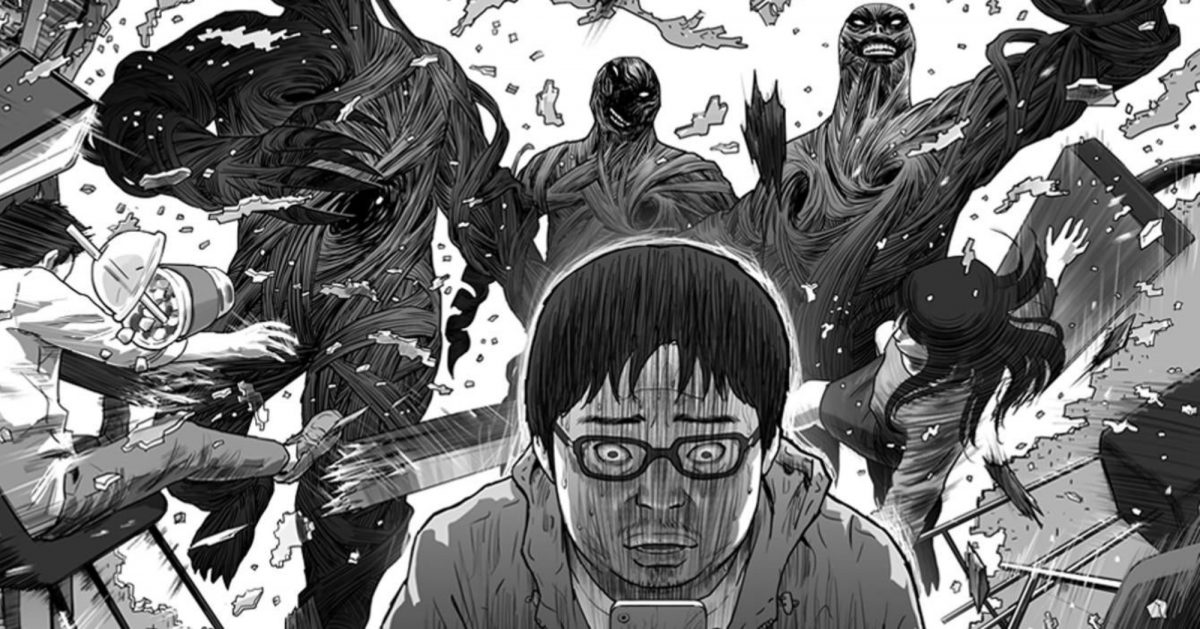
Kyu-Seok’s art aims for a very palpable sense of realism that gets thrown around and pummeled into submission once the monsters start claiming the souls of the damned. The creature designs stand out on account of them being so unlike anything classically biblical. In fact, it’s not even clear just exactly what it is they are or which side they represent. Are they angelic servants sent from the heavens or demonic entities carrying out Hell’s orders? All the reader knows is that they are cruelly violent brutes that seem to exist only to inflict pain. Their black, tightly-wound tendril bodies leave more questions than answers in their wake, amplifying the terror they instill into an existentially rattled populace.

The Hellbound, Vol. 1

The Hellbound settles for nothing less than to shake its readers to their cores, all the way down to their beliefs. It’s a nerve-wracking read at points and it’s unafraid to drop readers into very uncomfortable situations to get at more serious questions about religion, social influence, and morality. It deserves to be read, consumed as a tv series, and seen as a pair of short animated movies. It’s a dark world that Sang-Ho and Kyu-Seok have crafted, one where the prospect of Hell is shaped by very human choices.

Story: Yeon Sang-Ho, Art: Choi Kyu-Seok
Story: 10 Art: 10 Overall: 10 Recommendation: Read and dust off the old Bible just in case

Dark Horse provided Graphic Policy with a FREE copy for review


Purchase: Amazon

LILY C.A.T. celebrates its 35-year anniversary and it still shows we’ve much to learn from it

Lily C.A.T.

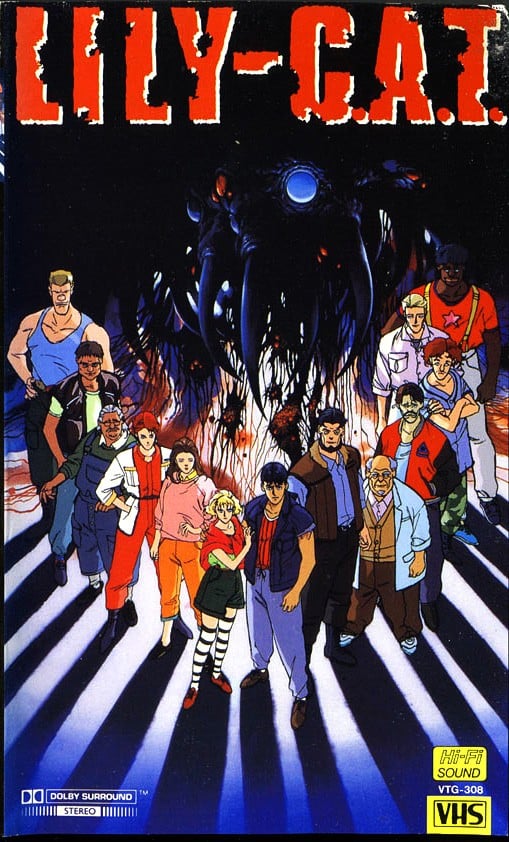
When I first started reading up on Lily C.A.T. online I came across a description of it that showed up way too often: an anime version of Alien (1979) where the monster is a cat. It doesn’t really do it justice.

The setup does resemble Alien in that it takes place in a spaceship and that there’s a foreign entity wreaking havoc on its crew. Its kind of science fiction, like Alien as well, leans more towards horror than actual sci-fi, but the movie is quick to shed that comparison in favor of something that mixes other classic movies in for a surprisingly deep story about time, the fear of becoming obsolete, and the dangers of progress. And yes, it does have a cat, but it’s no mere monster (although it can be quite frightening).

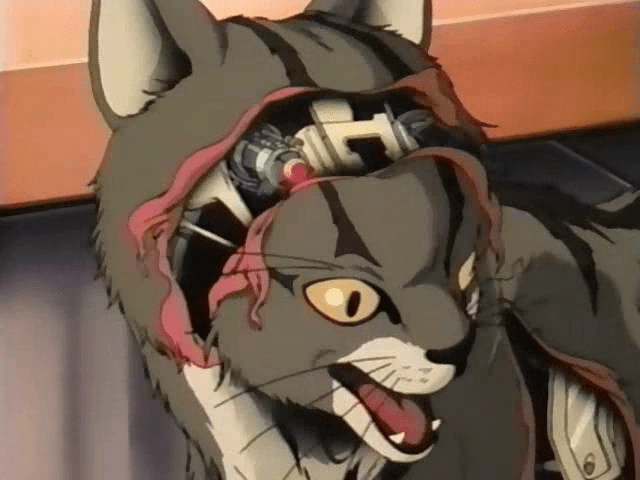
Lily C.A.T. is the creation of Hisayuki Toriumi, one of the minds behind the classic Gatchaman. Released in 1987, the movie, set in the 23rd century, follows the men and women (and cat) of space cruiser Saldes, a ship that was hired out by the Syncam Corporation to take surveyors into a new planet with unique mining possibilities. The trip reaches its destination, but before the crew has the chance to get off the ship and survey the planet, strange deaths and disappearing corpses keep them in place until they can figure out what’s caused this nightmare scenario just as they reach the end of their first 20-year cryosleep journey.

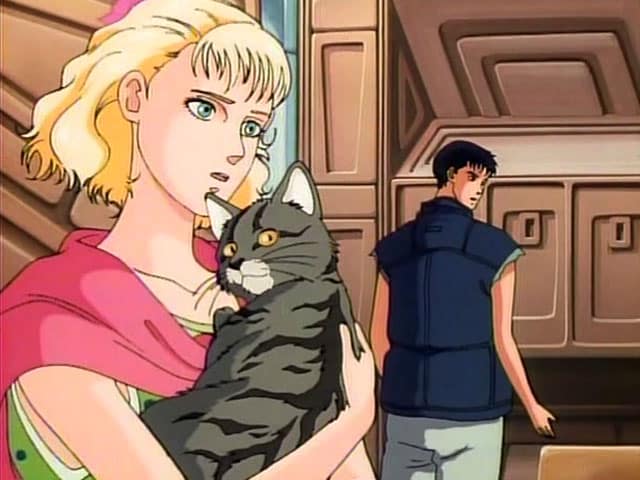
In comes the cat, a creature that might be a clone or copy (or something else) of another cat that travelled with one of the crew members. Her name’s Lily and it’s quickly established something isn’t entirely feline underneath all her fur. It doesn’t take long for a hulking monster to reveal itself, it’s presence offering part of the explanation as to why the crew is being consumed and what the cat’s role is in all this.

Lily C.A.T.

One of the main attractors of the movie is Yoshitaka Amano’s character and creature designs. Amano, known for his work on Vampire Hunter D, Final Fantasy, and Speed Racer, creates a monstrous mass of horror that seems inspired more by John Carpenter’s The Thing (1982) than H.R. Giger’s designs for Alien. It’s a brutal manifestation of hunger that holds a certain mystery as to its killing methods and why it consumes the bodies of those it kills.

This is where comparisons to Alien stop. As the ship’s crew starts to dig into the events that are taking place on the Saldes, character motivations and trust issues start revealing deeper concerns afflicting its crew. For a movie that’s just over an hour long, there’s a fair amount of existential dialogue taking place and they range from thoughts on humanity being overtaken by technology, ideas on how time becomes obsolete when travelling in space, and the importance of fulfilling one’s duty despite being presented with the possibility very little of it matters given the circumstances. Here it veers into 2001: A Space Odyssey territory.

Lily C.A.T.

As the movie progresses, it becomes evident that its central computer might be seeing the monster and its biochemical components as a rare find that could benefit the Syncam Corporation’s bottom line if brought back to Earth. The crew slowly realizes that their presence at this point is mostly superfluous given the computer is capable of navigating the ship by itself and of containing the creature to certain areas for a long trip back home with the new cargo.

The realization inspires the ship’s captain, Mike Hamilton (played by Mike Reynolds in the English dub version), to reexamine his decision to dedicate his life to space travel and he sacrificed in its pursuit. He goes on to provide one of the movie’s most existentially unsettling monologues. Hamilton speaks to the price space travelers pay in terms of time, framing it as a pursuit that is appreciated on a very lonely stage.

Undergoing twenty, thirty, or forty-year time jumps for deep space travel means those left behind continue aging naturally while the traveler artificially extends his or her life span. It means travelers sacrifice a lot for a system that, at the same time, is trying to eliminate human input entirely at every turn. The insight Captain Hamilton provides in his monologue allows for a more complex type of questioning when it comes to tried and true sci-fi tropes. It leaves an impression and promotes the further exploration of genre ideas that we’ve seemingly taken for granted way too often.

Lily C.A.T.

There’s a subplot concerning criminals that make their way into spaceships to go on illegal time jumps to avoid arrest for serious offenses. Again, time is a factor that puts into question the entire notion of duty, especially if we think about it as something that runs on an invisible timeline we’ve never thought necessary to consider before.

These and other variations on the sci-fi formula are what make Lily C.A.T. such an impressive and important example of classic anime. Toriumi’s vision considers a profound worry for the things humans sacrifice in service of progress, especially how our limited foresight can put us on a road towards obsolescence. The movie offers a warning that’s as prescient now as it was when it came out, perhaps more so given what’s come to pass since its original release. Give it a watch and don’t get too distracted by the cat. There are other things to worry about when humans venture deeper into space.

Review: The Nice House on the Lake #7

Nice House

Fans of heavyweight boxing know that 12-round fights carry moments of measured action, of throwing just enough punches to win a round without spending all energy reserves in case it goes all the way. James Tynion and Álvaro Martínez Bueno are in round seven of their terrifyingly cryptic mini-series The Nice House on the Lake and they’re looking for a successful entry that sets up the intensity for the remainder of the story.

Last we saw the people of the Nice House, new discoveries were making their way to the fore with some disconcerting revelations changing the entire dynamic of the group and the place they’ve been stuck riding out the apocalypse at. The person or thing responsible for bringing everyone together, Walter, appeared and gave a vague explanation of what’s really happening, but nothing too definitive that it solves the mystery of the house.

Well, Walter’s back in a strange way and it’s making things even more difficult to piece together this late in the game.

Tynion’s script doesn’t seem interested in taking its foot off the gas just yet with the secrets surrounding the situation. It continues adding layers to the mystery and complicating the relationships between those in the group. Issue #7 is a special one in this regard.

As has been the case with every issue, the story gets to focus on one character out of the bunch at a time to look at how they relate to Walter, how he’s affected them. This entry’s focus character is one of its most fascinating: Norah, a trans character with a desperate need to vent, and rightly so. The way Tynion and Martínez Bueno approach Norah, though, makes for one of the most emotionally charged entries in the series yet. A lot of it is due to how her place in the group is portrayed as on a visual standpoint.

Nice House
The Nice House on the Lake #7

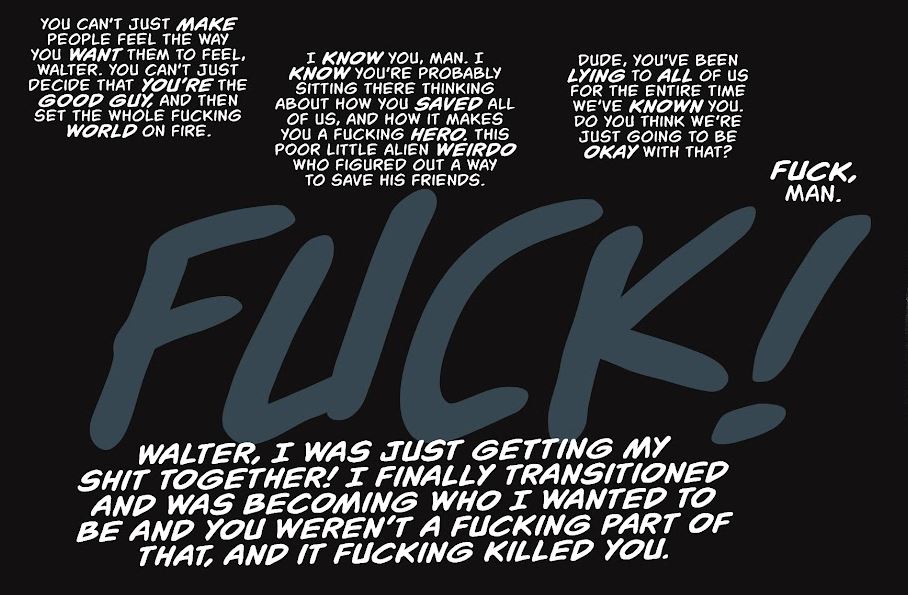
Tynion and Martínez Bueno present Norah as one of the most isolated people in the group, a person who’s not just struggling with the end of the world but her role in it as well. She’s feeling betrayed, especially by Walter, and the way this is presented is in a series of almost full-black spreads featuring a subtle outline of Norah with her inner monologue hanging over her. It creates a very raw sense of anger and indignation pertaining to how some people assume to know her and her struggles based on her self-identity process. It’s another highlight in a series full of memorable moments that take readers outside their comfort zones.

The Nice House on the Lake #7 is further confirmation we’re seeing the makings of a classic horror comic as it develops. What’s surprising is how much of the story is still in the process of revealing itself. Less meticulous creators would’ve probably given most or the entire mystery away by now. Tynion and Martínez Bueno are still in the secret keeping business and it’s making the looming finale feel like a massive event ready to change the very definition of horror.

Story: James Tynion IV Art: Álvaro Martínez Bueno
Color: Jordie Bellaire Letterer: Andworld Design
Story: 10
Art: 10
Recommendation: Reread issue #6 first and then dive into issue #7 headfirst.

DC Comics provided Graphic Policy with a FREE copy for review


Purchase: comiXology/KindleZeus ComicsTFAW

Brian Augustyn’s epic vampire comic CRIMSON will make you want to read more comics

Crimson

The passing of any great creator always prompts a revisiting of the works they leave behind. Upon hearing about the unexpected death of author and editor Brian Augustyn (the writer of the classic Gotham by Gaslight) at the age of 67, I was immediately reminded of one of the first series I ever followed as a kid: Crimson.

Crimson is a vampire book steeped in lore and guided by a deep love for the vamp movies and TV series of the late 1980s, The Lost Boys and Near Dark (both released in 1987) chief among them, along with a bit of Buffy: The Vampire Slayer (1997) and Kindred: The Embrace (1996) added for flavoring.

The series follows a newly turned vampire called Alex Elder as he learns to live as a new fanged creature while also struggling with the prospect of being some kind of chosen one. The first three issues run on pure vengeance and denial. Alex wants to find the vampires that killed his friends on the same night they also turned him against his will, but he goes about this resisting his new reality. After that matter is settled, though, the story veers into vampire politicians, a centuries old war between the original vampires and angels, and what it means to be a vampire in New York City.

Crimson ran from 1998 to 2001, with the first seven issues originally published by Image and the remaining 17 by DC/Wildstorm. The story concept was developed by Humberto Ramos, Oscar Pinto, and Francisco Haghenbeck. Ramos served as the series’ artist. Augustyn was brought in to script the story.

The comic is a visual marvel. Ramos illustrates a dangerous and unhinged version of New York governed by a laissez-faire attitude that still manages to capture the brightness of its nightlife and the seediness of its darkest corners. Knowing vampires roam the city at night serves to remind us of the amount of chaos each street can dole out at any given moment, and how deadly walking them at night could be.

Augustyn’s scripts made sure all that chaos had some well-developed characters at the center of it. Alex Elder starts out as an angsty teen that would’ve fit in perfectly in any Nirvana music video, but he’s never allowed to be static. Augustyn keeps his character in a constant state of evolution, forcing him to grow up fast without sacrificing any of the growing pains that come with the process.

Alex’s place in the coming struggle against all vampires moves at a breakneck pace as well. Once the doors to the world of undeath are opened, you’re not so much ushered in as you’re kicked in with the expectation you hit the ground running. This goes for the comic’s grand sense of mythology.

The very first issue of the series starts with an extensive and detailed explanation of the creation of humanity and how vampires came out of it in defiance of that process. It’s quite indulgent and does ask for a bit of patience in getting through the initial lore dump, but the narration is never dull and, once it wraps up, readers are left with a sense of big things to come. From that point on, Augustyn and Ramos flex their storytelling muscles in every way imaginable to produce a world that lives and breathes magic, culture, and violence.

While the story does possess many classic horror elements, the overall narrative finds a larger piece of its identity in the realm of fantasy. Augustyn’s approach to this sprawling world of magic and blood sucking creatures is more interested in how a potential war between different factions of vampire hunters, angelic forces, werewolves, and vamps will come about rather than staying on the more intimate aspects of the characters’ lives one expects from classic horror stories.

Augustyn’s character work shines in this regard, especially with Alex’s core unit: a Mexican Indian vampire called Joe who acts as his street mentor and guide, a vampire hunter called Scarlet, and an ancient vampire (who is also the source of all vampirism) called Ekimus. They each form a vital part of what can essentially be called of fellowship, complete with their own roles to play in the final confrontation.

Joe is a particularly well written character that helps readers understand the world and its rules. In a way, Joe is Sam to Alex’s Frodo, if Sam were wiser and with a more adventurous thirst for life. Their exchanges are a highlight and remain fresh throughout the series.

Having come across Crimson when I was kid, I can’t think of another vampire comic that pulled me into the medium as completely as this one did. Ramos’ art and Augustyn’s words were a perfect storm then and, upon rereading the series for this piece, they’re a perfect storm still.

I’d still recommend Crimson to anyone who asks what makes comics so special. Not many creators get to leave a book behind with such a strong gravitational pull. Brian Augustyn has Crimson, and now is as good a time as ever to give it a read.

« Older Entries Recent Entries »