Author Archives: Ricardo Denis

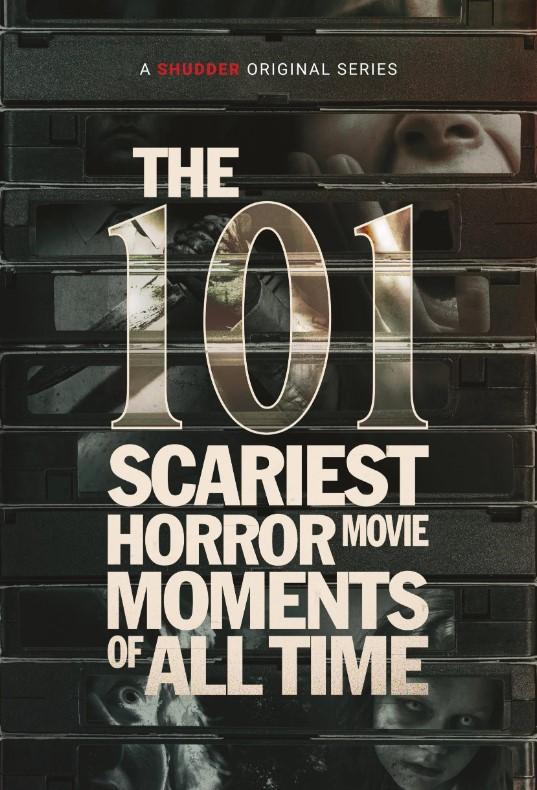
Review: Shudder’ s 101 Scariest Horror Movie Moments of All Time
Horror Movie

Lists and rankings concerning the best of anything are bound to be controversial by their very nature. Some might argue against the inherently subjective dimensions of the premise itself, saying it invalidates the entire exercise altogether. Others find validation through them, a way to dole out a few “told you so’s” in a debate. For me, lists aren’t about any of that.

A good list offers a service, a good excuse to go through the things being discussed by either engaging with them for the first time or getting reacquainted with them to test out the premise of the list. Shudder’s 101 Scariest Horror Movie Moments of All Time does precisely that. It’s not interested in laying down the law in the field of horror in an inflexible way (despite what the series’ title blatantly implies), instead it’s all about giving viewers more than enough reasons to indulge in well-crafted scares or to get reacquainted with old haunts with a fresh set of eyes.

The horror streaming service’s new series is basically a spiritual successor to Bravo’s 2004 miniseries The 100 Scariest Movie Moments, an influential production in its own right that gave horror fans material to debate and revisit once it aired. The first episode of the Shudder series, which is currently available to stream, goes from entries 101-89, stopping on each one to give a general idea of what the film is about and why it’s memorable as a whole before finally landing on its scariest moment.
Horror movie
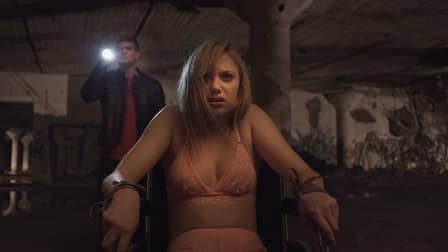
It Follows

I’m not going to spoil the whole list here, but I will reveal entry #101 as it sets the tone well and signals a desire to not just go over the same horror classics that have dominated these kinds of countdowns before. David Robert Mitchell’s It Follows (2014) kicks things off fast and intense in what I took as a kind of statement. It had that “this isn’t your parents’ best of horror list” feel to it and it imbued the following entries with a surprising sense of anticipation.

Part of what also made the first entry so exciting was how it presented the format for the series, especially when it comes to its commentators. Instead of going for a mashup of quick edits and cuts of speakers giving bite-sized observations on the movie, each segment focused largely on one leading voice supported by shorter horror expert interventions, which included directors, journalists, scholars, experts, actors, and celebrity fans. The tone was celebratory but focused, not interested in quick quips or in making fun of the movie (something that Bravo, E!, and VH1 would go on to do in their own countdown-type shows).

An impressive cast of commentators graces the screen throughout, too. Tananarive Due, Mick Garris, Joe Dante, Tom Holland (the director of Fright Night and Child’s Play, not Spider-Man), Tony Todd, Brea Grant, and Gigi Saúl Guerrero are among the experts brought in to dissect each scary moment and their insight is the stuff of horror nerd dreams.

There’s a good mix of veteran industry names and newer or emerging voices within the community to make each discussion come off as fresh. Nothing feels recycled, giving every movie a chance to be seen through a different lens. This seems to be the aim of the series, to favor new interpretations and to dare consider films that haven’t had the chance to get much of a spotlight elsewhere.

Mulholland Drive

For instance, I never expected David Lynch’s Mulholland Drive (2001) to be one of the selections, but its inclusion was not only welcome but given the treatment it deserves as a unique film that freely indulges in horror in its storytelling. Mario Bava’s Black Sabbath (1963) follows close enough to make the ranking come off as modern and not tied down by tradition or cannon.

I was also pleased to see the range of time periods on display as newer lists tend to add newer productions at the expense of older ones despite their relevance and overall filmic impact. On the contrary, the show goes lengths to reassure fans the old and the new can coexist and elevate each other. There’s even recognition of a previous selection’s influence on a movie that comes further down on the list.

All of this to say that The 101 Scariest Movie Moments of All Time is shaping up to be an invaluable piece of horror content, especially in getting viewers to watch more horror. It’s a fun, non-combative celebration of the genre that invites appreciation rather than contentious debate over which movie should come first or last. Give it a watch and then go and get scared watching the movies that made it into the list.
Review: Shock Shop #1

Shock Shop #1

Horror seems to thrive in anthologies. Their short story-heavy forms guide creators down a more urgent path to terror and the weird given the space given to each individual tale. It’s a whole different animal. Compare Stephen King’s short stories with his novel-length (plus a thousand pages more) work and you’ll find one might even become a different storyteller in the process of scaring readers with less pages.

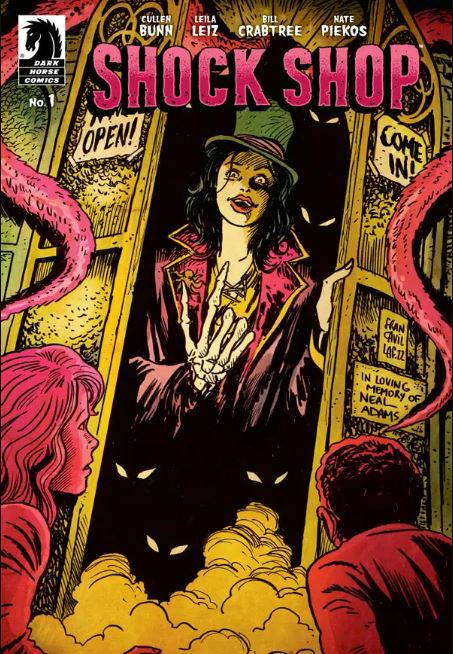
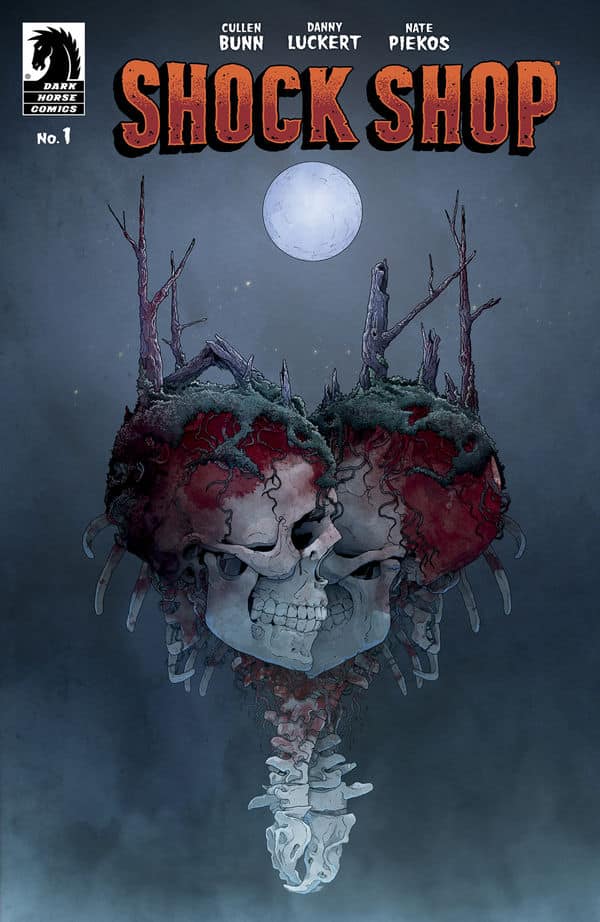
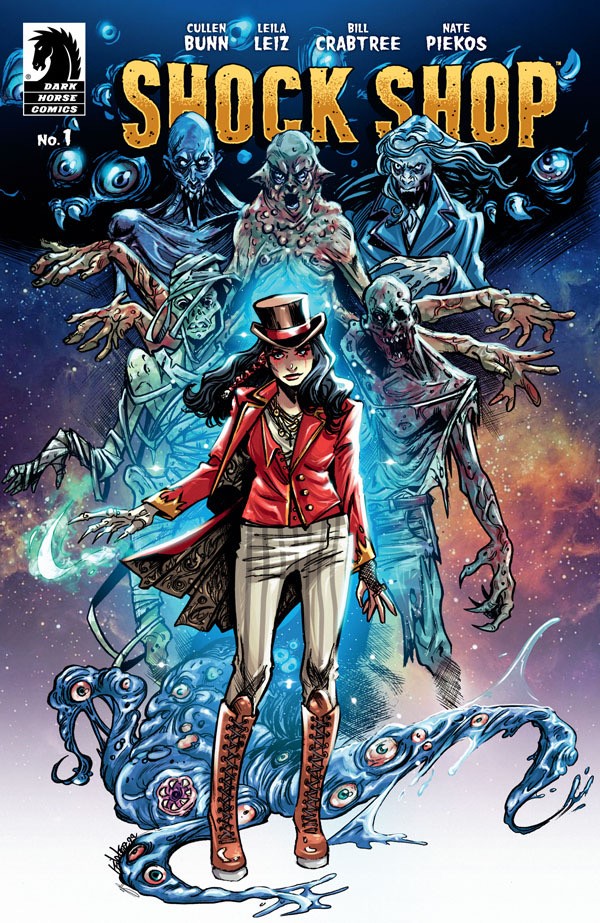
Cullen Bunn’s Shock Shop is the latest example of this creative phenomenon, a flip horror comic that sees the writer go for a kind of ongoing double-feature that celebrates the anthology format while adding a special horror comic twist to the classic ‘crypt keeper’ figure that guides readers through the book.

Shock Shop tells two separate stories presented by Desdeamona Nimue Moreau, the proprietor of a comic book/horror collectibles shop that bears the name of the comic itself. She introduces each story in classic Tales From the Crypt fashion, but looks more like a magician than the iconic Crypt Keeper. The stories reunite Bunn with two creators he’s worked with before: Danny Luckert (Regression) and Leila Leiz (The Last Book You’ll Ever Read). Nate Piekos letters both stories.

The first story, “Something In the Woods, In the Dark” (illustrated by Luckert) follows a group of friends who organize a hiking trip so that a married couple within the group can hopefully find a way through their recent problems. An insidious being filled with violence starts haunting the group, possessing a link to them that might be more profound than initially thought.

Shock Shop #1

The second story, “Familiars” (illustrated by Leiz), follows a father that moves into what seems to be a friendly haunted house. Once his kids come to visit and join in on the fun with the playful spirits, the house starts revealing its true face.

When it comes to anthologies, one eventually starts to consider which story is the best from the bunch. In the case of Shock Shop, both stories are equally strong and enticing. A lot of it is owed to the character work. Bunn’s scripts come with a cast of imperfect people that are as interesting as the things that mean to hurt them. The have a personal history that’s palpable and they speak volumes both in conversation and in their lonesome.

Short though these entries may be, the intention is clear when it comes to the Bunn’s character development. In just a few pages each, every character feels layered and lived in. There’s space for the human aspect to unravel and room for growth. They’re not mere avatars for a metaphor or message. They live and breath and scream, just like real people.

Luckert and Leiz squeeze as much character as possible from both casts of characters, respectively, giving them each a look and feel that doesn’t come off as disposable or superfluous. Luckert goes for expressive facial gestures that tell their own stories and reveal a lot about their personalities. Leiz produces more kinetic work, capturing the energy and excitement of the dad and his kids only to make you feel dread as the house pulls the curtains back on its more sinister aspects.

Shock Shop #1
Shock Shop #1 variant cover by Francesco Francavilla

Piekos’ lettering does an excellent job of keeping the horror SFX under control, expertly capturing sounds without overplaying the effects. Some horror comics try to go big with these parts of the text to simulate a kind of jump scare sensation or to startle the reader. In Shock Shop, the SFX creeps in, letting the reader adjust the volume and intensity. It’s a smart approach that promotes participation in the creation of mood and ambiance.

In an uncommon twist on the anthology formula, especially when it comes to horror comics, neither story ends in this first issue (this is uncommon, not non-existent). They will be continued in issue #2 and it doesn’t look like things will come to a close then. I appreciated the commitment to the stories, in this regard, to let them play out without compromising the anthology format. It makes the deal sweeter. Month after month we’ll be getting two great horror stories in one flip comic.

Shock Shop #1 sets the stage for a pair of horror tales that are of equal quality, presented via a refreshingly twisted comics retailer that I hope we get to see more of. The haunted comic shop setup is brilliant and deserves to be explored a bit further, perhaps leaning into metafiction to get at some other kinds of dark happenings as the series progresses. Regardless, the terror on this display in Shock Shop is expertly crafted and is sure to become a mainstay for horror fans that faithfully tuned in either to their favorite anthology show week after week or to went out late at night for the old school double-feature show at the local movie theater.

Script: Cullen Bunn Art: Danny Luckert and Leila Leiz
Colors: Danny Luckert, Bill Crabtree Letterer:
Nate Piekos
Story: 10 Art: 10 Overall: 10

Recommendation: Buy and write letters to publishers for more flip comics!

Dark Horse Comics provided Graphic Policy with a FREE copy for review


Purchase: TFAWZeus ComicscomiXology/Kindle

HELLRAISER’s new Pinhead looks ready to deal her own kind of Hell while honoring legacy

Pinhead is the kind of horror icon that is recognizable even to those who might not have seen a single Hellraiser movie. A head full of nails and an elegantly dark and leathery costume design that finds a sense of twisted beauty in pain and suffering proved the right combination to achieve this during Doug Bradley’s tenure as the Hell priest.

Now it’s actress Jamie Clayton’s turn to push the iconic role into new territory in the David Bruckner-directed Hellraiser reboot set to premier on October 6 on Hulu. It’s not an easy task, that which lies ahead of the movie, but the recent teaser and photo reveals show considerable promise.

Hellraiser
Jamie Clayton as the new Pinhead

Created by master of horror Clive Barker, and based on his 1986 novella The Hellbound Heart, Hellraiser is a story of power and pleasure and the horrors they create when absolute self-indulgence and sexual greed lead people to worship at the altar of terrible things. Pinhead is the head of the Cenobites, demons that reward those seeking to experience a higher form of physical gratification through delicately intricate sessions of pure suffering for all eternity.

The Cenobites have been portrayed as living tributes to sadomasochism that are terrifying pieces of art unto themselves. You can’t quite stop looking at them and the ways they embody pain. Of course, there’s an erotic energy coursing through them that makes their brand of suffering unique. So far, their designs combine flayed flesh wrapped over leather and plastic, making it seem as if the mere act of existing comes at the price of a chunk of flesh for even the smallest movement. Wrapped inside all that is the idea that pain equals pleasure, which turns Hell into a place of decadent torment.

Based on the new images published through Entertainment Weekly and Clayton’s social media, the new Hellraiser seems to be doubling-down on the flayed flesh aspect. Clayton’s Pinhead carries the classic full head grid cut with long thin nails sprouting from its cleanly segment sections, but her neck is peeled back and held in place via strips of flesh organized into gruesome patterns.

Like Doug Bradley’s Pinhead, Clayton’s has black eyes, but they hold a deeper stare that clearly unsettles given how much darker they are than the original’s. These changes, nuanced in parts but still clearly identifiable already add a considerable amount of character and presence to the new Pinhead, things that I believe must be present to guarantee the success of this reboot. So far, looks like we’re on the right track.

Hellraiser
The Masque, Hellraiser (2022)

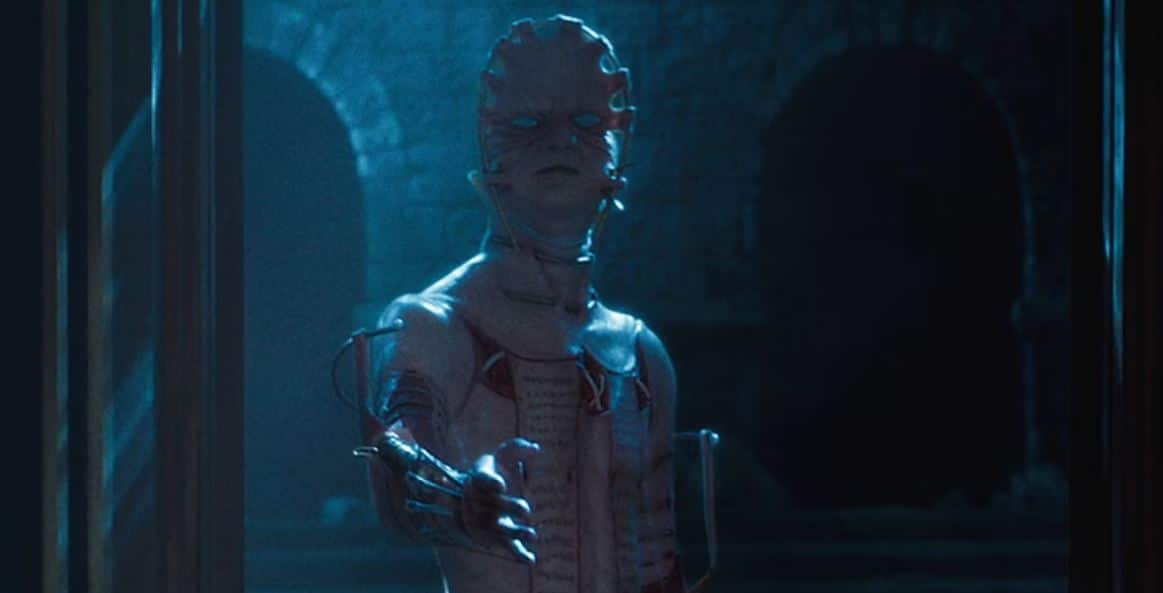
Another Cenobite was revealed called The Masque, a pale white being with a human face stretched over a metal frame with flaps of skin and carefully placed cuts adorning the body and creating their own violent patterns. If The Masque is indication of anything it’s of the care and thought that’s also gone into Pinhead’s band of deranged demons (or angels to others). The original movies featured this as well, with The Chatterer, Butterball, and Angelique among the most beloved by fans. That’s another box the reboot seems to be ticking as well.

The only teaser that’s been released reveals very little, but it does show a bit of Clayton’s Pinhead in the flesh (no pun intended). Will the Lament Configuration (the box that allows the Cenobites to crossover in search of whoever opened it) get its own redesign? Will the story journey into the Cenobites’ realm as it did in Hellraiser II or stay mostly within our reality as it did in the first movie?

These are all questions that a forthcoming trailer will surely shed more light on, but for now we have a genuinely unsettling and creepy new Pinhead to enjoy along with a glimpse of the other horrors that’ll accompany her. The sights provided do more than enough to peak anyone’s curiosity. We’ll soon know just how many nightmares they’ll inspire in an eager audience.

Review: End After End #1

End After End #1

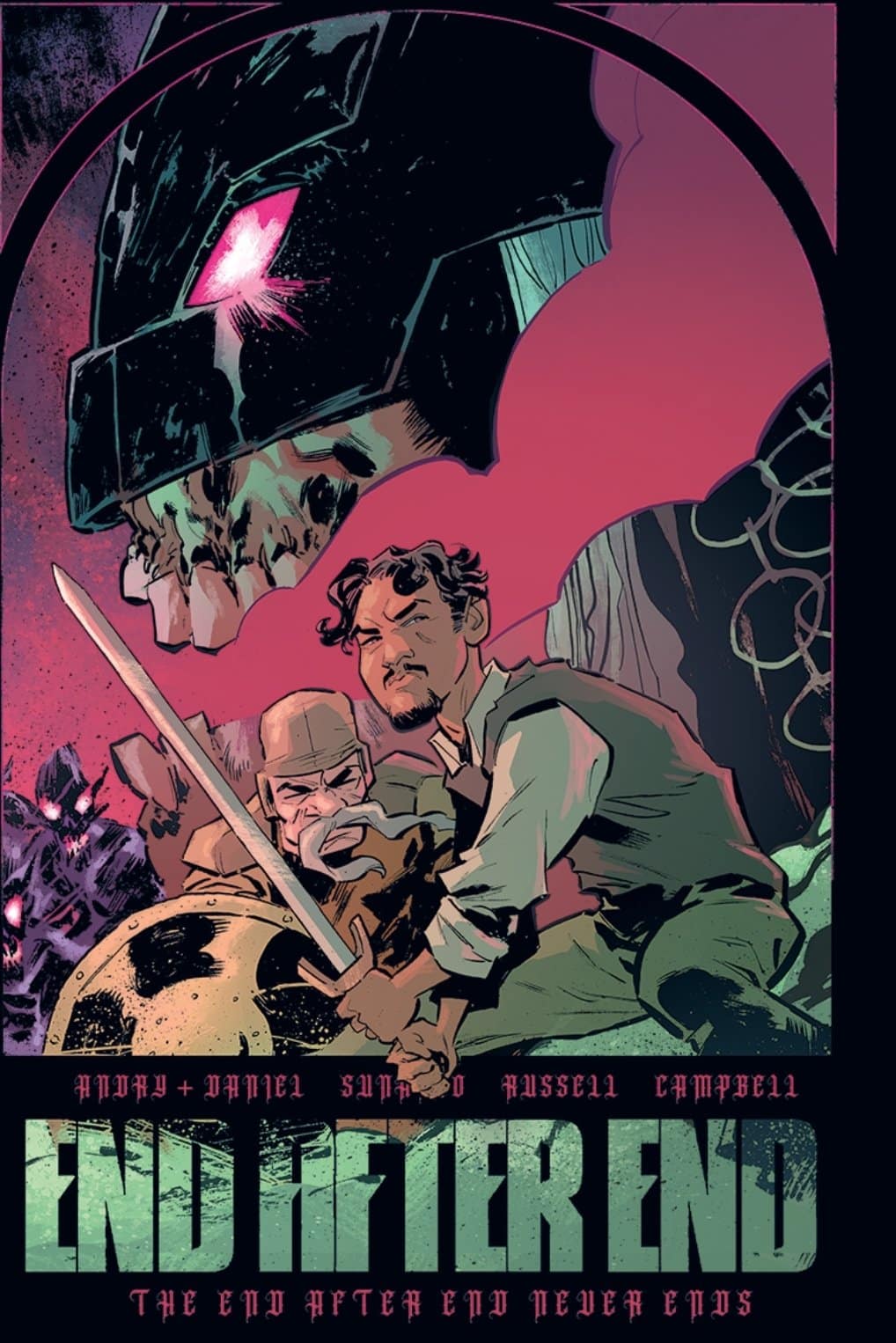
A man called Walter Willem seemingly dies, hit by a train. In an instant, he finds himself in the middle of a war straight out of Tolkien’s mind fought by warriors and soldiers from different eras. It’s an anachronistic bash against dark creatures that are after a fearless and beautiful warrior who seems to be the best of the bunch from the side of good. All is explained by a flying guide that leaves out a lot of key information for someone who just made it into the battlefield.

And that’s it. This is as much as you know, in broad strokes, about Vault’s new comic End After End in its opening issue. It’s one of the many strengths of this first chapter of the story and it’s smartly put together within a sea of questions that’ll surely but slowly reveal their answers in subsequent entries.

Written by Tim Daniel and David Andry with art by Sunando C and colors by Kurt Michael Russell, End After End finds a powerful narrative force in the concept of vagueness, in doing away with exposition so the reader can feel the same kind of confusion and displacement the main character does. The story, as summed up above, presents itself as an adventure playing out in real time without the customary time jumps we’ve come to expect to get from point A to point B. If anything, it stays in point A and makes the reader live in the story’s moment.

End After End #1

It’s a curious thing, time and pacing in comics. Volumes of information can be contained within a single panel, with or without words, but the presence of expository text can keep one from taking in all the things in them. Intentionally playing into vagueness, then, can put a requirement upon the reader to dig even further into each element present in the comics page to find any sort of clue as to the many questions the narrative puts in place. This is the genius of End After End. Daniel, Andry, and Sunando C manage to keep complete control of the pacing of the story by promoting a full reading of each page to hunt for any possible of hint as to what the hell the war at the center of it all is about.

In the absence of information, Daniel, Andry, and Sunando C offer characters with an abundance of personality that anchor the story’s perspective. There’s a palpable sense of discovery that main character Walter embodies that helps to heighten the setting’s sense of scale, doing an impressively quick job of placing us in a grand fantasy war scenario that’s yet to be fully revealed. A lot of this is owed to Walter’s guide, Grink.

An unreliable old man with fairy wings that thrusts a sword and shield into the new foot soldier’s hands, Grink helps to set the tone and sprawling nature of the event early on by being constructed as a pragmatic and urgent voice that offers a lightning fast introduction to the conflict at hand. Sunando C’s design for Grink has a sense of Dungeons & Dragons to it that makes the character come off as familiar and reliable. It’s a great example of how much weight characters are given so they can push the story into different places without being heavy handed.

End After End #1

The same applies for the protagonist and the other soldiers fighting in the background. Everything that’s present in a panel feels necessary to it, purposeful. It invites repeat readings in the hopes certain details missed on the first read become more visible the second or third time around. I would suggest to pay special attention to the soldiers fighting the war and the time periods they represent. It might be crucial to unlocking a few secrets as new issues come along.

Kurt Michael Russell’s colors are surprisingly restrained in parts and explosive in others, creating an environment that is fantastically nightmarish. Big set piece sequences benefit from this as they capture the realness of war despite the fantasy setting. There’s a very real sense of danger here and it makes you fear for Walter and his guide’s safety. Essentially, the colors do more than their part to help tell the story and add even more storytelling dimensions.

In a way, End After End #1 feels like the introductory level of a big budget AAA video game. It drops you right in the middle of the action so you can figure everything out as you go along. The creative team are all on the same page for this, producing a finely tuned narrative that begs to be expanded upon. All of this to say that, for a first issue, End After End #1 is a masterclass in how to start a new series.

Script: Tim Daniel and David Andry Art: Sunando C Colors: Kurt Michael Russell
Story: 10 Art: 10 Overall: 10
Recommendation: Buy and read several times. Then sit back and think about it.

Vault Comics provided Graphic Policy with a FREE review copy


Purchase: TFAWZeus ComicscomiXology/Kindle

Early Review: Shock Shop #1

Shock Shop #1

Horror seems to thrive in anthologies. Their short story-heavy forms guide creators down a more urgent path to terror and the weird given the space given to each individual tale. It’s a whole different animal. Compare Stephen King’s short stories with his novel-length (plus a thousand pages more) work and you’ll find one might even become a different storyteller in the process of scaring readers with less pages.

Cullen Bunn’s Shock Shop is the latest example of this creative phenomenon, a flip horror comic that sees the writer go for a kind of ongoing double-feature that celebrates the anthology format while adding a special horror comic twist to the classic ‘crypt keeper’ figure that guides readers through the book.

Shock Shop tells two separate stories presented by Desdeamona Nimue Moreau, the proprietor of a comic book/horror collectibles shop that bears the name of the comic itself. She introduces each story in classic Tales From the Crypt fashion, but looks more like a magician than the iconic Crypt Keeper. The stories reunite Bunn with two creators he’s worked with before: Danny Luckert (Regression) and Leila Leiz (The Last Book You’ll Ever Read). Nate Piekos letters both stories.

The first story, “Something In the Woods, In the Dark” (illustrated by Luckert) follows a group of friends who organize a hiking trip so that a married couple within the group can hopefully find a way through their recent problems. An insidious being filled with violence starts haunting the group, possessing a link to them that might be more profound than initially thought.

Shock Shop #1

The second story, “Familiars” (illustrated by Leiz), follows a father that moves into what seems to be a friendly haunted house. Once his kids come to visit and join in on the fun with the playful spirits, the house starts revealing its true face.

When it comes to anthologies, one eventually starts to consider which story is the best from the bunch. In the case of Shock Shop, both stories are equally strong and enticing. A lot of it is owed to the character work. Bunn’s scripts come with a cast of imperfect people that are as interesting as the things that mean to hurt them. The have a personal history that’s palpable and they speak volumes both in conversation and in their lonesome.

Short though these entries may be, the intention is clear when it comes to the Bunn’s character development. In just a few pages each, every character feels layered and lived in. There’s space for the human aspect to unravel and room for growth. They’re not mere avatars for a metaphor or message. They live and breath and scream, just like real people.

Luckert and Leiz squeeze as much character as possible from both casts of characters, respectively, giving them each a look and feel that doesn’t come off as disposable or superfluous. Luckert goes for expressive facial gestures that tell their own stories and reveal a lot about their personalities. Leiz produces more kinetic work, capturing the energy and excitement of the dad and his kids only to make you feel dread as the house pulls the curtains back on its more sinister aspects.

Shock Shop #1
Shock Shop #1 variant cover by Francesco Francavilla

Piekos’ lettering does an excellent job of keeping the horror SFX under control, expertly capturing sounds without overplaying the effects. Some horror comics try to go big with these parts of the text to simulate a kind of jump scare sensation or to startle the reader. In Shock Shop, the SFX creeps in, letting the reader adjust the volume and intensity. It’s a smart approach that promotes participation in the creation of mood and ambiance.

In an uncommon twist on the anthology formula, especially when it comes to horror comics, neither story ends in this first issue (this is uncommon, not non-existent). They will be continued in issue #2 and it doesn’t look like things will come to a close then. I appreciated the commitment to the stories, in this regard, to let them play out without compromising the anthology format. It makes the deal sweeter. Month after month we’ll be getting two great horror stories in one flip comic.

Shock Shop #1 sets the stage for a pair of horror tales that are of equal quality, presented via a refreshingly twisted comics retailer that I hope we get to see more of. The haunted comic shop setup is brilliant and deserves to be explored a bit further, perhaps leaning into metafiction to get at some other kinds of dark happenings as the series progresses. Regardless, the terror on this display in Shock Shop is expertly crafted and is sure to become a mainstay for horror fans that faithfully tuned in either to their favorite anthology show week after week or to went out late at night for the old school double-feature show at the local movie theater.

Script: Cullen Bunn Art: Danny Luckert and Leila Leiz
Colors: Danny Luckert, Bill Crabtree
Letterer: Nate Piekos
Story: 10 Art: 10 Overall: 10
Recommendation: Buy and write letters to publishers for more flip comics!

Graphic Policy was provided with a free copy of the comic from Dark Horse for review.


Pre-order: TFAWcomiXology/Kindle

Review: ARE YOU AFRAID OF THE DARK ‘GHOST ISLAND’ offers an intelligently mature look at death and ghosts

Nickelodeon’s Are you Afraid of the Dark revival has been a surprisingly refreshing take on YA horror that is unafraid to conjure up a fair bit of darkness to get its story across modern audiences. The first season, for instance, centers on a carnival that kidnaps children and turns them into zombie-like carnies, leaving a trail of broken communities and the threat of real harm in its path. It’s chockfull of horror references that fans of the genre can point to and say ‘that’s from [insert classic horror film or director],’ but it never strayed from its intentions of honoring the original 90’s show celebration of sitting around a campfire and telling scary stories.

Season 3, subtitled “Ghost Island,” aims to further the revival’s American Horror Story-like anthology approach with another self-contained story that’s as welcoming to newcomers as it is to fans of the original series and of horror in general. Having said that, and as far as the first episode of the new season is concerned, “Ghost Island” might be Afraid of the Dark’s most mature entry yet.

A lonely tropical island serves as the setting for the story, a place that carries the name of Ghost Island due to the legend of its haunted hotel. The legend is explored quite a bit in the first episode and it seems to center on room 13 of the building, the place guests never check out from. Whatever haunts this room makes anyone who steps inside disappear, leaving only tortured ghosts and disembodied voices as the only trace they were ever there.

As was the case with the previous two seasons, the driving force behind the series is the group of kids that make up the latest version of the Midnight Society (the club that opened each episode of the original series with a story around a campfire deep in the woods). Kayla (Telci Huynh), Max (Conor Sherry), Leo (Luca Padovan), Summer(Dior Goodjohn), and Ferris(Chance Hurstfield) make up the group, all enthusiasts of supernatural storytelling.

The reason behind their trip to Ghost Island is tied to the death of one of the original members of the club. She wanted her friends to specifically go and stay in the haunted hotel (so it seems) for reasons that will surely be revealed as the story progresses. The loss of this member is felt throughout the first episode with an intensity that gives it a serious tone, funereal in parts even. This Midnight Society is trying to come to terms her absence, with the death of someone they never thought they’d just lose forever. It raises the emotional stakes of the story and signals an interest in exploring the ways death manifests itself among kids, how it lingers.

Ghost Island
Are You Afraid of the Dark: Ghost Island

It succeeds at this thanks to the performances of the main cast, with Telci Huynh leading the pack as Kelly, the member who seems to be taking the loss the hardest. Huynh showcases a very nuanced interpretation of the character with an emotional range that captures how overwhelming someone’s death can be while trying to enjoy the early years of one’s life, where the expectation is fun and carefree-ness.

The rest of the cast stays the course, a mix of youthful energy and melancholy that jumps off the screen to entice its viewers with enough reality to say something meaningful even as ghosts threaten to bring the group into the others side.

The hotel’s manager, played by Julian Curtis, is another standout. He plays his part with a snark that’s all too familiar in these kinds of stories, but there’s a hidden element to the character that always makes itself known to great effect. Curtis doesn’t go for the classically annoying and oblivious authority figure. Instead, he feels like a key component of the mystery and is given the necessary presence to make him an important character.

What glimpses we get of the horrors in room 13 are brief but effective. Great care seems to have been afforded to the makeup effects for the ghosts that bleed through to the side of the living. Some of it is best appreciated in the opening sequence of episode 1, where we get a taste of how the haunted room disappears its guests. It’s among one of the revival’s most intense opening sequences and it features a nod to certain iconic visuals from movies such as Nightmare on Elm Street (1984) and The Frighteners (1996).

Are You Afraid of the Dark: Ghost Island

JT Billings’ script and Dean Israelite’s direction expertly combine for a story that has elements of The Shining (1980) and another haunted hotel movie called 1408 (released in 2007), both based on the works of Stephen King. It’ll be interesting to see how these influences will inform the remainder of the 4-episode season, but what’ll potentially be most compelling for longtime fans of the original series will be spotting the references to classic AYAOTD episodes scattered throughout. Like the first season, a lot of thought is being put into the things the revival wants to homage and identifying them as they pop up is uniquely gratifying.

With the first episode of “Ghost Island” already up in YouTube for eager fans to see ahead of the premiere (July 30th), there’s no reason why you shouldn’t dive into this impressive and deep exploration of horror at a young age. Are You Afraid of the Dark: Ghost Island starts off with a genuinely creepy and unsettling haunting that means to contemplate serious themes and age-specific fears. Thus far, it stands to be further confirmation that Are You Afraid of the Dark isn’t just one of the best YA horror shows currently on air but one of the best straight up horror productions on television, period.

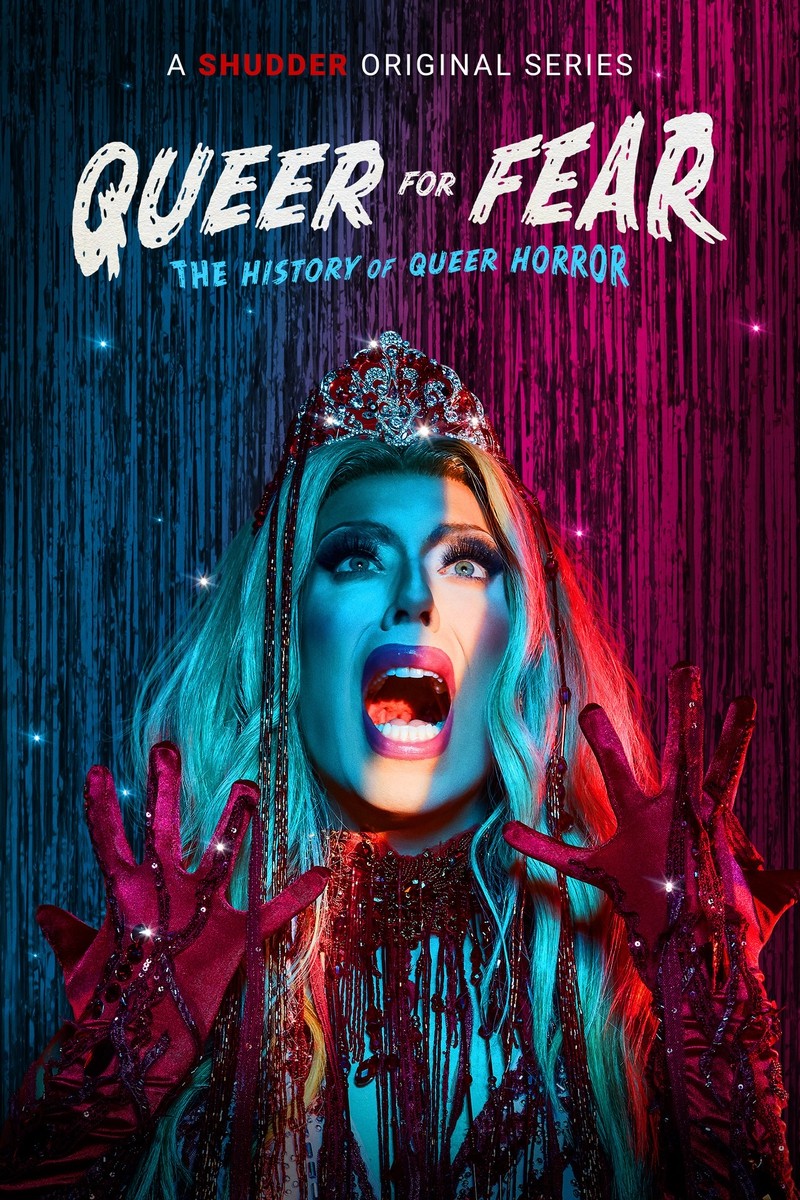
SHUDDER’s new four-part documentary QUEER FOR FEAR aims to celebrate LGBT horror cinema

Queer for Fear

Horror has a very complicated history with queerness. At times it’s been the genre that’s turned queer stereotypes into evil monsters or gratuitous victims of extreme violence (think Sleepaway Camp). In others, it’s the genre that’s created iconic monsters and killers that cast a reflection on society’s fears and those groups that don’t conform to the status quo (Psycho’s Norman Bates, for instance). And yet, their place in the history of queer representation is not static. Some of the most ‘problematic’ queer horror films for instance, have been reclaimed as examples of resistance and confrontation in mass market spaces (a good example of this is A Nightmare on Elm Street 2: Freddy’s Revenge, which has its own Shudder documentary).

Shudder’s new four-part documentary Queer for Fear: The History of Queer Horror looks to be just what audiences need to untangle this complex story and look at the many shifts and changes queerness has experienced in horror. The streaming service took to San Diego Comic-Con to reveal an extended sneak peek of the docuseries, which is executive produced by Hannibal’s Brian Fuller.

According to Shudder’s description of Queer for Fear, the docuseries will stretch as far back as the 19th century to look at literary origins (including the influences and subtexts present in the works of authors like Bram Stoker, Mary Shelley, and Oscar Wilde), the 1920-30’s ‘pansy craze’ (the rise in popularity of drag performers that had been gathering steam since the New York masquerades balls of the 1890s), all the way to the ‘lavender scare’ of the 1950s, the 1980-90’s AIDS crisis, and the present.

Given how adaptable horror is to the realities of any given context, Queer for Fear is sure to become further confirmation of the genre’s ability hold up a mirror to society in an attempt to scare them into realizing just how terrifying discrimination, Othering, and violence predicated on hate can be.

As is the case with any attempt at capturing the history of something, I’m curious to see what films make it into the story and how much importance is ascribed to them. The extended sneak peek clip Shudder shared seems to present Psycho as a kind of watershed moment in queer horror cinema, for instance. Finding out what other films manage to reach that iconic quality is just one of the reasons viewers will keep coming back for all four episodes.

Nightbreed

I for one hope Clive Barker’s work shines through, especially Nightbreed (1990). As a metaphor for the importance of community for ‘outsider’ groups, Nightbreed stands as one of the British author/director’s most impressive and compelling films. Based on Barker’s own novel Cabal, the story follows a man called Aaron Boone as he searches for the mythical underground city of Midian, a place where monsters live without the pressures of being exposed and judged in the outside world. A murderous psychopath learns of Midian and seeks to destroy the monsters’ refuge.

It was a commercial and critical failure for reasons that fit into the common thread of other queer horror films: it was misunderstood and promoted as something that it was not. In Nighbtbreed’’s case, trailers and other promotional material hinted at a slasher movie rather than a dark queer fantasy experience. It should go without saying, Queer for Fear will have a lot of these type of examples to pull from to explain how so many of these horror films fell into cult status and obscurity because of studio interference in the process of building up a film’s identity.

Queer for Fear is set to premiere on September 29th on Shudder and it’s already looking like a crucial piece of horror history that fans and newcomers should definitely take the time to learn about. It follows in the footsteps of Horror Noire: A History of Black Horror (2019), which also premiered on Shudder, in its intention to promote visibility and champion representation. To say it’s one of the year’s most important releases is quite simply an understatement.

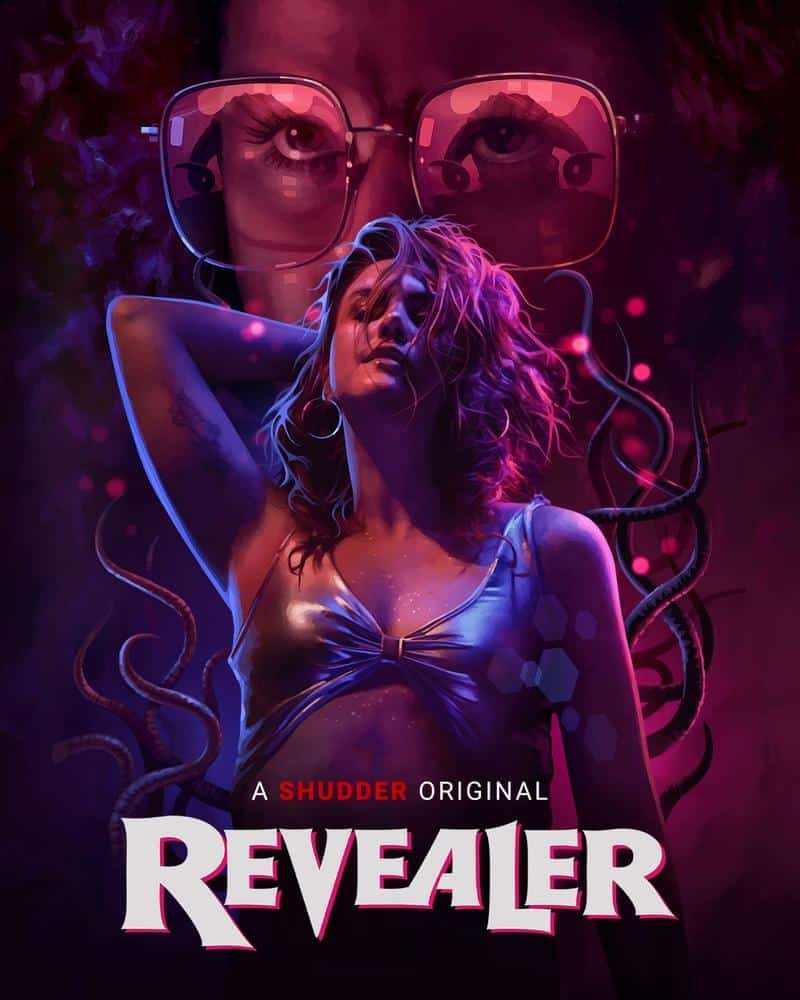
Movie Review: Revealer sends a stripper and a religious protester to the end of the world

Revealer

Stripped down to its bare essentials, the Apocalypse is ultimately an overblown shaming session levied against humanity. Trumpets signal the new stages of shaming scheduled throughout the event and demons spew out from their underground caverns to give everyone a taste of their disdain. That it’s also known as Judgment Day is just icing on the cake.

Director Luke Boyce’s Revealer, currently streaming on Shudder, certainly takes this to heart as it forces a tense pairing of personalities with firm convictions on morality just as the Apocalypse unleashes its opening salvo. It’s a movie that seems to become more relevant every single day after it’s very recent release, especially in terms of dividing lines and Supreme Court decisions.

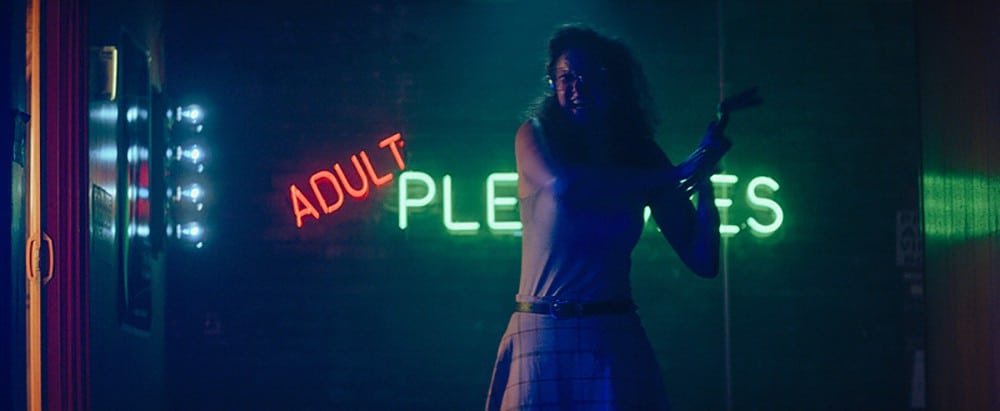
Revealer follows a stripper called Angie (Caito Aase) and a religious protestor called Sally (Shaina Schrooten), both stuck in a peepshow booth as the world ends outside. They each stand on opposite sides of a spectrum that’s divided groups of people since time immemorial: religion. Their anticipated animosity towards each other is present from the very beginning and has no qualms about being as brutal and piercing as possible every time any type of judgment is levied against the other, even after an unsteady alliance forms between them as demons and devils start making their way into the sex shop they’re held up in.

Comic fans should have a vested interest in this movie given the resumés of the screenwriting duo behind it, Tim Seeley and Michael Moreci. As two of the most versatile voices in the industry, Seeley and Moreci bring a finely tuned and honest sensibility to character creation that features the same approach to economical but precise dialogue writing present in comic book storytelling. This is perhaps most present in how the movie contemplates the idea of passing judgment onto others, on what lies in the very act of it and how difficult it is to let go of prejudices even when good intentions guide the conversation.

Revealer

The story’s success largely depends on Angie and Sally’s interactions and how genuine they feel as the Apocalypse threatens to burst their respective bubbles. The movie doesn’t only achieve this but does so by never allowing one of the characters to overpower the other with their worldviews.

Seeley and Moreci inject a fair amount of nuance into their dysfunctional pairing, promoting understanding rather than moral superiority. It’s not about whose worldview reigns supreme. It’s about finding a way to understand each other while also being able to challenge preconceived notions of right and wrong.

Boyce does a good job of giving these two characters enough unencumbered space for their conversations to take place while also creating a strong sense of dread as one particular devil sets its eyes on their souls. The story essentially takes place in just a handful of locations, all enclosed and claustrophobic. It’s theatrical in its approach and it maximizes the use of the limited budget in outstanding ways, putting the focus on character rather than on fire and brimstone. The Apocalypse is ever-present, but it’s mostly unseen. What’s impressive is that it is always felt. Therein lies the success of Revealer.

Caito Asse and Shaina Schrooten as the stripper and the religious protestor, respectively, melt into their roles and give each other more than enough emotion to play off each other. They go from total dislike for each other to brief bouts of understanding constantly and the effect is one that their performances carry through well.

Revealer

Given how heavy handed the script is though, mostly for good, the performances do sometimes fall into exaggeration and it can play against them. The humor doesn’t always hit the mark either, but not enough to distract from the story. It should be said that the movie isn’t an exercise in realism, but that some exchanges between Angie and Sally could’ve been reigned back a bit for more impact.

What we do get see of the Apocalypse, almost entirely in the form of demonic creatures, is memorable and plays to the fears and worries Angie and Sally argue about in their conversations. One particular creature stands out as a kind of Pinhead figure from the Hellraiser movies in its sense of presence and serious menace, and it helps propel a fair bit of tension and fear in what’s a very dialogue-heavy script. Other lesser demons also give Angie and Sally a few horror scenes that help to build their characters in surprising ways.

Revealer came out just as the American Supreme Court overturned Roe v. Wade, the landmark 1972 ruling went on to protect the freedom of choice on abortions. In its wake, the national divide has widened, bringing to light more forceful forms of disagreements that aren’t that dissimilar from the kinds explored in the movie. This might be a small note that definitely requires further exploration, but the context in which the movie finds itself in does turn it into an urgent watch. It offers different ways to go about contemplating the things that keep us apart and to better gauge the impact of our moral judgments. It’s something to think about and Revealer definitely helps.

Revealer

Boyce, Seeley, and Moreci have a very confrontational horror movie in Revealer. It has two compelling characters that drive home a debate that seems more necessary with each passing day. It might just be that the Apocalypse is exactly what we need to put things into perspective and come together.

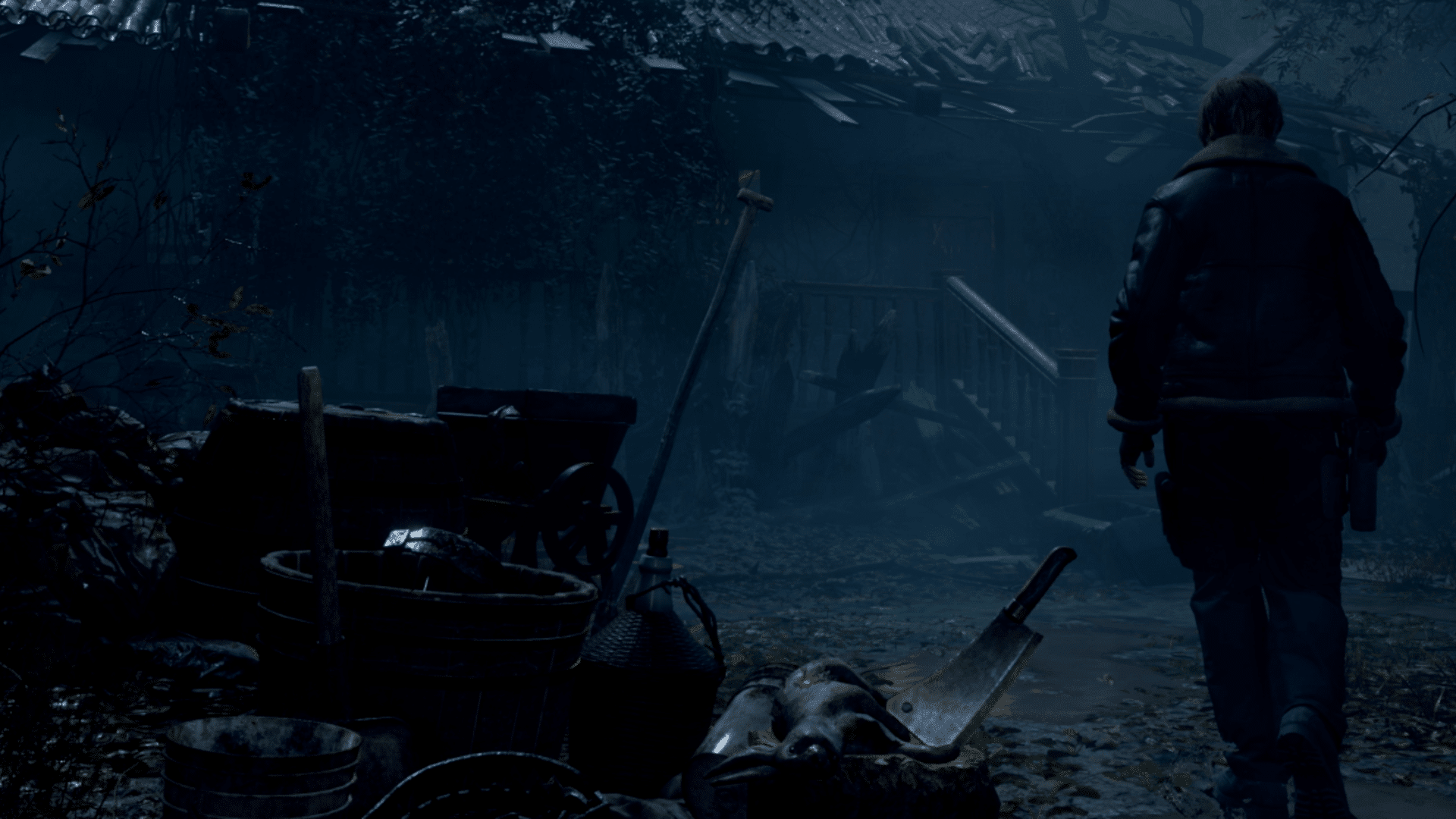
How do you remake Resident Evil 4 while honoring its legacy?

When news first broke of a potential Resident Evil 4 remake by Capcom it wasn’t uncommon to see articles asking whether the game actually needed to be remade. The original game was released on GameCube in January 2005 to critical acclaim, hailed as the next evolutionary step not just in the field of survival horror but in video games as a whole. Given this, it all begged the question, why update a classic that’s still influencing games as we speak. Furthermore, how do you upgrade or rework something so groundbreaking for a new audience to appreciate without undoing the things that made it special to being with?

Looks like we’ll be having answers to these questions soon as Capcom formally announced the March 24th, 2023 release date for the Resident Evil 4 remake during Sony’s recent State of Play event. It’ll be coming to consoles and PC with all the bells and whistles expected of a next-gen game along with new gameplay mechanics to help it better fit in with today’s gaming sensibilities.

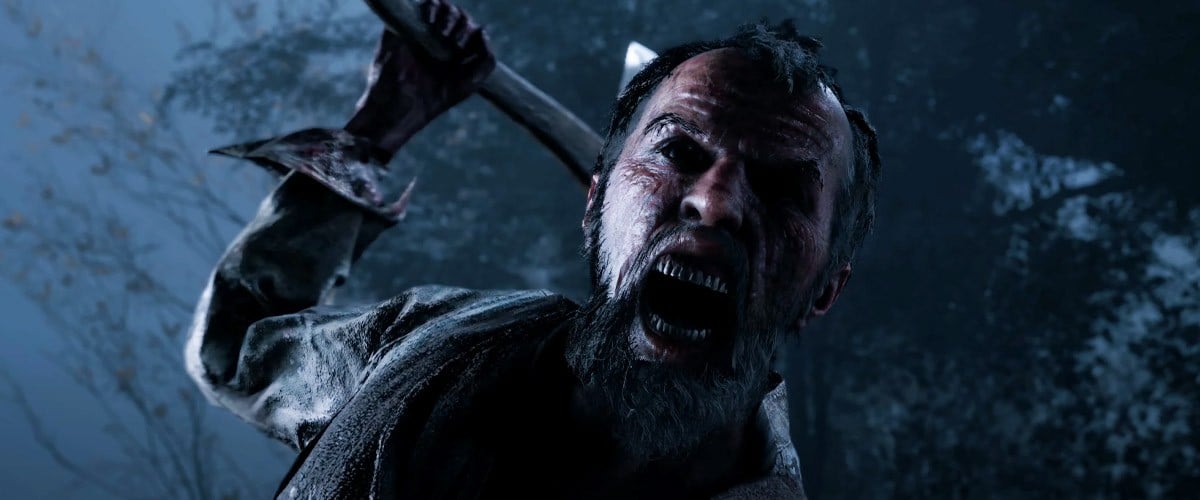
Bits of gameplay were shown in a trailer made for the event, showcasing highly detailed character models and environments not unlike those seen in the Resident Evil 2 and 3 remakes in terms of design and overall polish. What little we see of the Ganado (the now iconic infected Spaniards out for Leon’s head) looks terrifying, and opening village segment seems more claustrophobic and denser. If anything, it’s easier to compare now with Resident Evil: Village, especially in terms of color palette. It all bears a more gothic sense of horror, as was the case in RE8.

It’s not unfair to state that RE4 marked a watershed moment in gaming, of the kind that strikes a dividing line between the ‘pre’ and ‘post’ times of a game’s release. RE4’s over-the-shoulder camera angle, for instance, has basically become the standard for third-person experiences, seen in games such as Gears of War (2006), Dead Space (2008), and 2018’s God of War, extending as far as the most recent Resident Evil remakes (albeit with more modern mechanics featured as part of the update, such as the ability to aim while walking rather than having to stand still to do so as was the case in RE4).

The same goes for targeted limb damage, which wasn’t so much created by RE4 as it was equipped with more layers of gameplay mechanics thanks to the precise aiming controls and the well-rounded the weapon upgrading system. Running foes could be shot in the legs to stop them in their tracks while axe-wielding enemies could get their murder weapons knocked out of their hands by well-placed shots. Dead Space picked up on this with its own limb dismemberment system while The Evil Within series stuck more closely to RE4’s combat stylings (down to the weapon upgrades).

If the trailer for the RE4 remake is any indication, it’s fair to assume the trip to back to Spain will result in a celebration of these contributions to gaming. And yet, it does invite questions as to how much of what made the game so revolutionary will carry over into the final product. This makes the existence of the remake exciting beyond all expectations, especially when one considers what current gamers are used to when engaging with the latest offerings and whether they make RE4 come off as outdated or not.

I for one consider RE4 to have aged quite well. Upon revisiting it, the only thing I find myself taking time adjusting to is having to stop in my tracks to then be able to aim my weapon. It’s nothing that requires much wrangling from my end to get used to again, but it’s a noticeable shift.

It doesn’t compare to the amount of work I have to do to get back into the swing of things with the Playstation 1 line of Resident Evil games, which extends to the GameCube remakes. The tank controls require tapping into muscle memory you were already glad to be rid of (meaning the use of a single d-pad or analog stick to both turn and move backward and forwards as opposed to the first-person controls-inspired scheme that came later).

Resident Evil 4 didn’t do away entirely with the classic survival horror control scheme, but it made it infinitely more flexible when compared to what came before. Remakes post-RE4 would use that game as a map for their comebacks.

I’m not holding my breath for this, but I do hope there’s a classic mode that keeps the original controls in place for an experience that comes closer to what so many of us experienced when Resident Evil 4 first came out (if only for the sake of recognizing its contributions to gaming). I also hope the context specific actions Leon could pull off if he staggered an enemy crossover as well. I want to be able to roundhouse kick the infected after I’ve shot them enough to make them trip over their feet.

Resident Evil 4 quite simply broadened the scope of an entire industry, opened its eyes to change. It’s curious that the franchise has found so much success in remakes that update their classic entries by not only giving them very generous facelifts but also by changing the gameplay of the originals into something that plays more like Resident Evil 4. That’s how important this game is. It looks to update the past while still offering a viable blueprint for future games. Now it’s a matter of seeing how well the Resident Evil 4 remake captures the original Resident Evil 4.

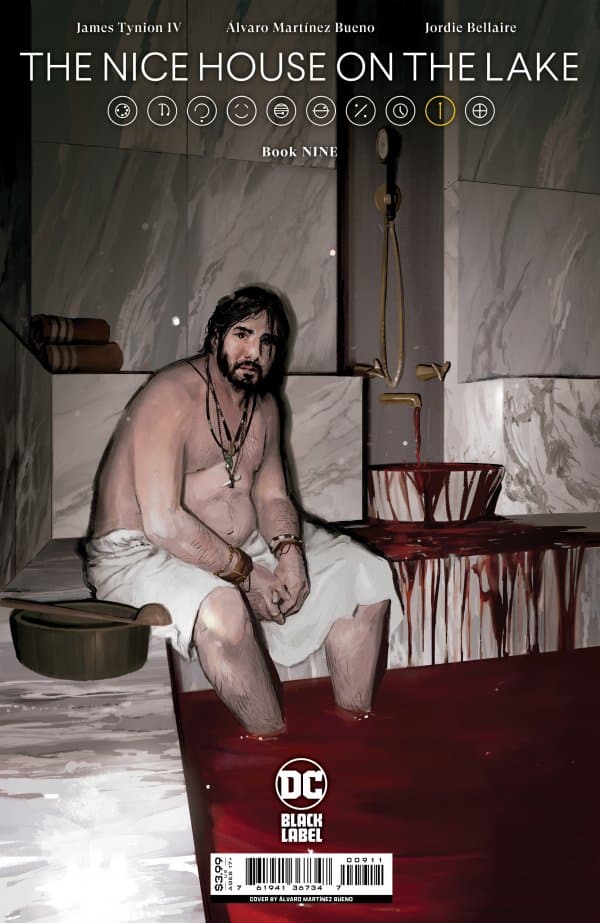
Review: The Nice House on the Lake #9

The Nice House on the Lake #9

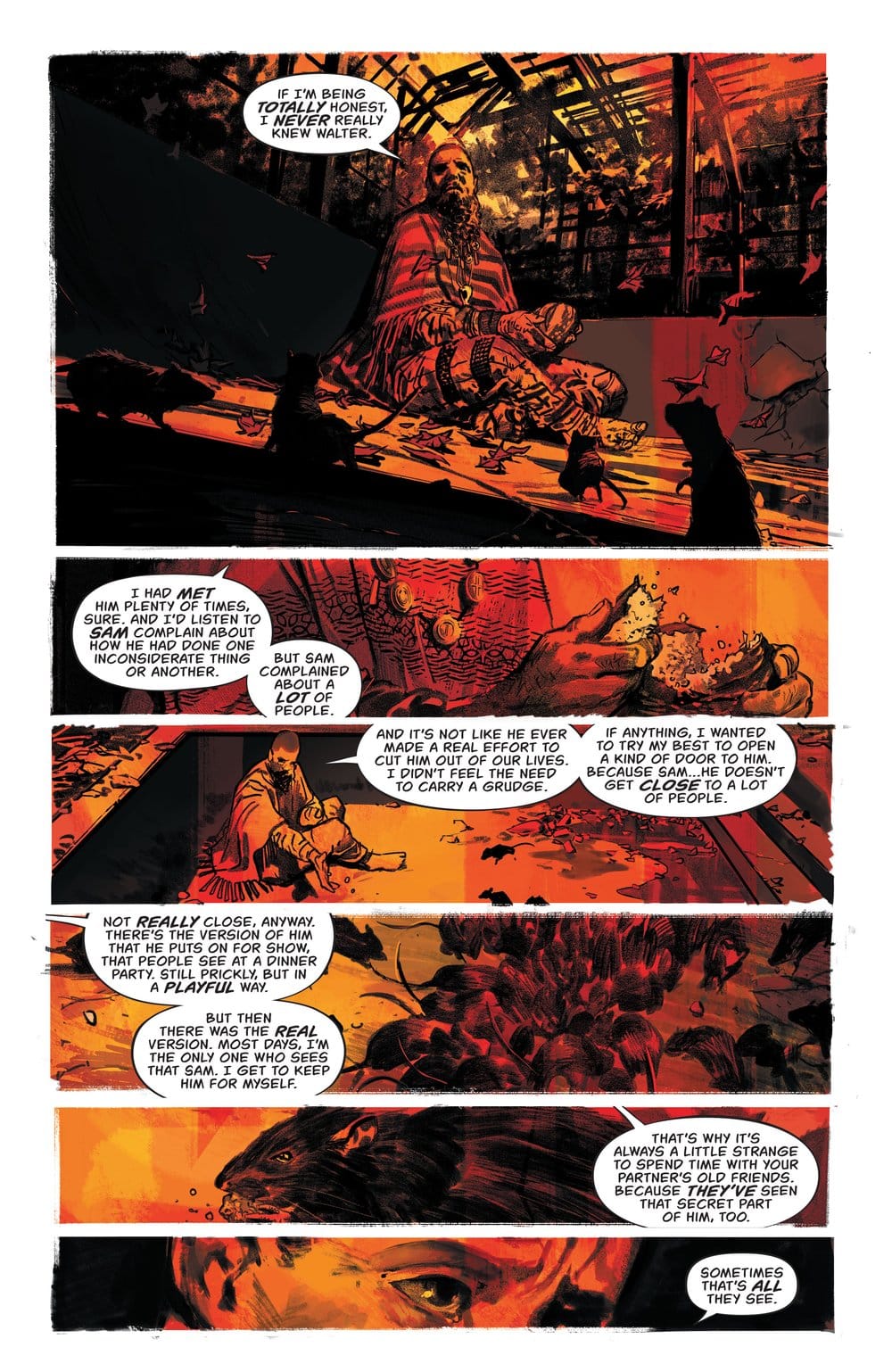
It shouldn’t come as a surprise by now that James Tynion and Álvaro Martínez Bueno’s The Nice House on The Lake reveals parts of its jigsaw puzzle-like plot one tiny piece at a time. Issue #9 is no different. We’re still getting glimpses of possible answers, but we’re still very much at the mercy of ambiguous tidbits of information. Some big moments do set certain things in motion, but patience is the ideal virtue when it comes to this horror comic. Something wicked is certainly on the horizon, though, and this issue might just be the calm before the storm we’ve been at the heels of.

The latest chapter of Nice House sticks closer to the character of Arturo, who’s knowledgeable in the ways of acupuncture (something that carries more importance than I initially thought). The people at the house are trying to take on big projects to both explore the space they’re allowed to exist in and perhaps uncover more about the outside world. Unfortunately for them, things take an intense turn when certain realities about their physical conditions and of Walter’s role in the group come to the fore.

While character work is still the driving force behind the story, this issue does put plot progression ahead of strict character development (at least more than in previous issues). Tynion’s script lets his characters converge on a singular mission and keep them focused on it, all of which signals the coming of the end. While we’ve reached supposed ‘points of no return’ before, this time it feels like a crucial line is about to be crossed from which there truly is no turning back.

The Nice House on the Lake #9

Martínez Bueno continues to impress with character expressions and ominous environmental designs. Every new structure the group builds and shows off looks like an architectural marvel and it helps build the world around them in unprecedented ways. Aspiring artists have a lot to learn from Martínez Bueno in terms of visual worldbuilding from this series.

Jordie Bellaire’s colors make the story even more distinctive, with a fairly varied color palette that makes the Nice House and its surroundings feel like a cruel paradise. Keeping in mind that each character is basically a totem of stress and anxiety, the colors become an affront to their emotional states. It’s as if it were wrong to not surrender to the situation and enjoy the beauty Walter has created for everyone at the Nice House.

We’re closing in on the end, which means the comic’s central mystery is running out of places to hide. Very soon, things will have to come out into the light. Fortunately for us readers, the process has been nothing short of spectacular, even though it’s getting harder and harder to wait for the remaining issues to drop.

Story: James Tynion Art: Álvaro Martínez Bueno Colors: Jordie Bellaire
Story: 10 Art: 10 Overall: 10 Recommendation: Read and then take inventory of your Doomsday stash

DC Comics provided Graphic Policy with a FREE copy for review


Purchase: comiXology/KindleZeus ComicsTFAW

« Older Entries Recent Entries »