Author Archives: Ricardo Denis

Review: Dead Seas #1
Dead Seas #1

Haunted ships aren’t exactly a new thing in the horror genre. They are, in essence, floating haunted houses made even more isolated, and perhaps crueler, by virtue of being placed miles away from land, thus making it pretty hard for anyone inside them to escape. It’s mostly the same idea behind stories that take place inside haunted spaceships or monster-infested cargo ships. There’s no escape, no one to really hear you scream, and no one to call for a quick save (all things that make movies like Alien and Event Horizon so utterly terrifying).

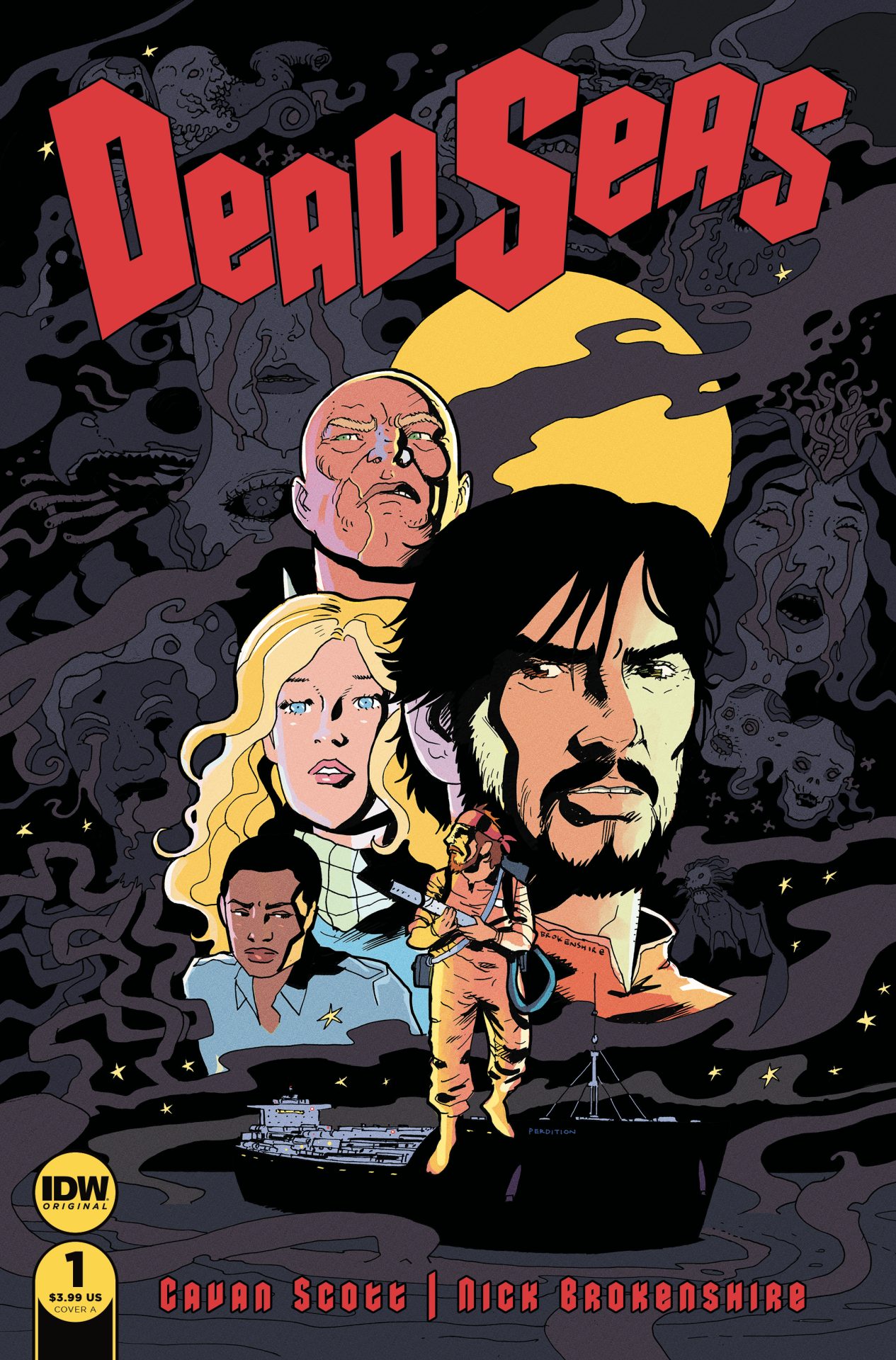
A floating prison ship that recruits inmates to work on the highly dangerous task of extracting ectoplasm from the ghosts that are being held in it, though, adds a few wrinkles to that old formula. There just aren’t a lot of these kind of ships in horror. This fact alone opens new doors into terror, and it is precisely what writer Cavan Scott and artist Nick Brokenshire decided bet on for their new IDW Originals series Dead Seas.

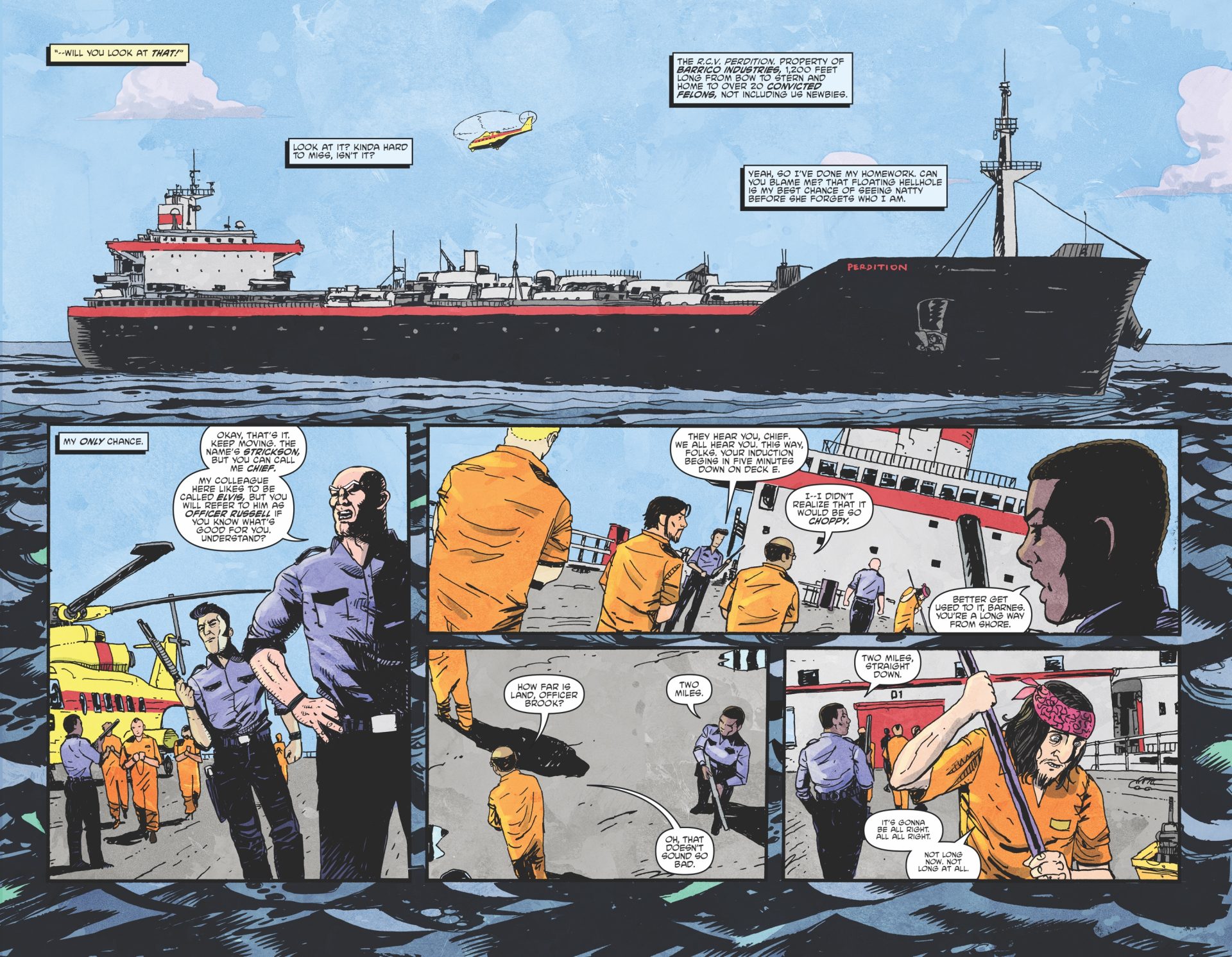
Dead Seas follows Gus, an inmate who is being flown into the prison ship Perdition to work on ectoplasmic collection, an entirely new field of work that’s still in its experimental phase. The world, one character explains early on, has been wrestling with a ghost problem for going on ten years, forcing a new status quo and new opportunities to exploit. Water, it’s been found, can hurt ghosts, a discovery that’s led to the capture and holding of spirits at sea to study the ooze they secrete and their potential medical benefits. Of course, it doesn’t take long for technical difficulties and human error to cut the experiment short and put every living soul on the ship on the path towards paranormal activity.
Dead Seas #1

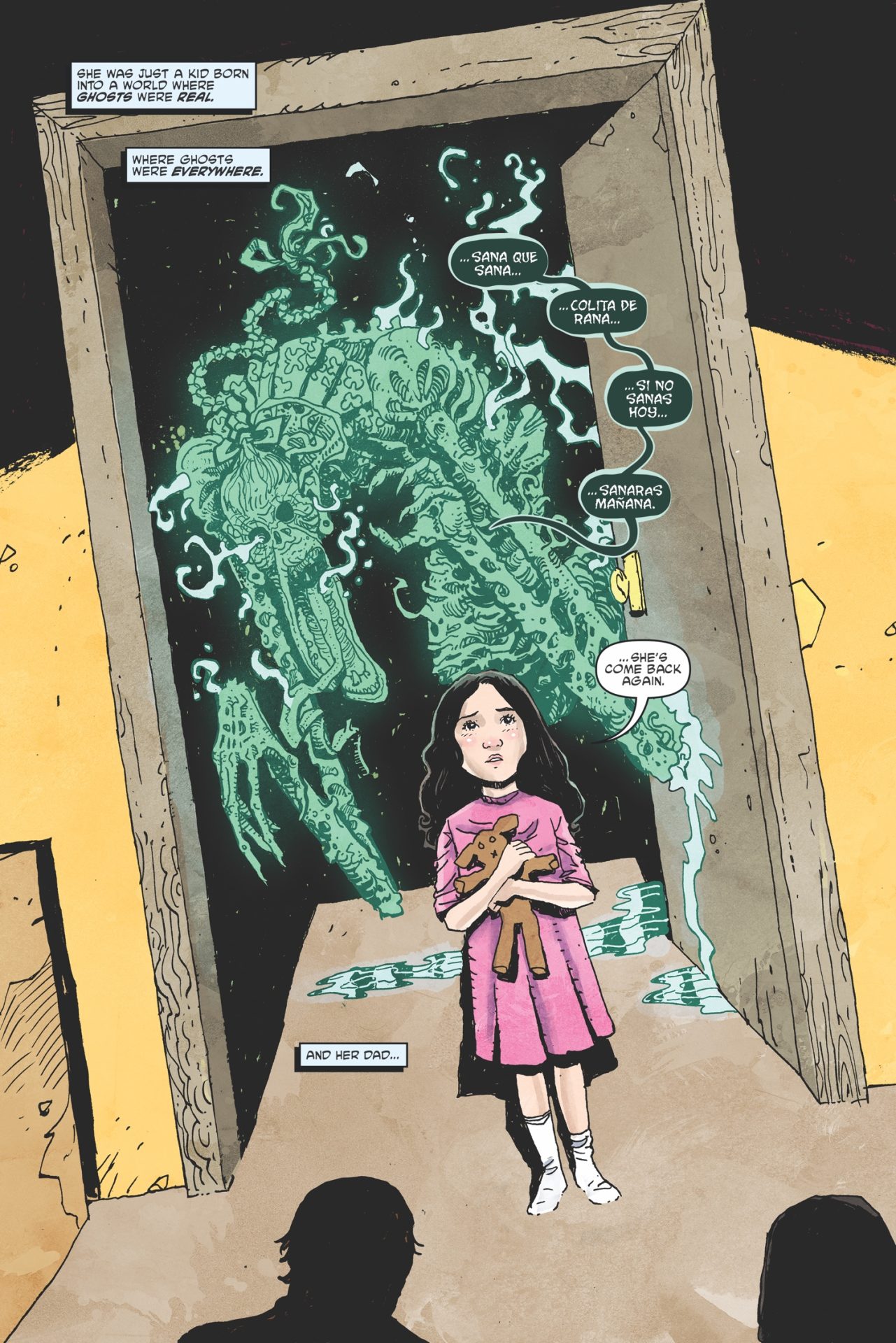
There are a few influences at play in the story, more as flavoring rather than dominating ingredients. Fans of the 2001 Thirteen Ghosts remake, for instance, might appreciate some of the ways in which Scott and Brokenshire present their ghosts and the vessels they’re trapped in. Spirits are found in short supply in Dead Seas #1, but what’s shown hints at an interest in exploring their more monstrous aspects (like those in the film I mentioned). These aren’t transparent outlines of deceased relatives or hazy visions of regular people. They’re nightmarish, things that look and feel dangerous, insidious, and tortured.

Ghosts are only as good as the people they haunt, though, and Dead Seas starts strong in this department. Scott and Brokenshire surround Gus with a cast of inmates and scientists with complex personalities, each carrying their personal histories on their bodies for all to see. Brokenshire’s character design does an excellent job of making each one feel like a unique person, with qualities both seen and unseen making it across in a very nuanced visual style.

Scott’s dialogue and carefully orchestrated exposition segments prioritize character work first. It’s the reason why issue #1 is lighter on ghosts, which isn’t a knock against it. Scott lets conversations play out as needed so that readers can get a good sense of their personas, especially as it pertains to their anxieties and fears. Every prisoner is there for a reason, mostly to get some benefit in exchange for their service as it pertains to their prison sentences. The stakes run high as the promise of freedom is dangled in from of them so they can overlook the risks and do the job.
Dead Seas #1

One thing the first issue could’ve done a bit better with was pacing. Scott and Brokenshire do an admirable job of worldbuilding and character development, but it all happens fast. There’s barely any breathing room to process what we learn about Gus and Perdition’s ghost operation. The story is rich enough that I would appreciate a slower pace to savor the smaller details in it.

This complaint, however, does little to detract from this impressive and refreshing horror series debut. The promise of things to come is more than enough to warrant attention and further reading. It’s hard not to love stories that tinker with traditions and expectations within genre to arrive at something new. Dead Seas falls squarely on that category and I can’t wait to see what horrors await us in Perdition.

Writer: Cavan Scott Art: Nick Brokenshire Letter: Shawn Lee
Story: 9.0 Art: 9.0 Overall: 9.0
Recommendation: Read, then research how much damage water can actually inflict on ghosts.

IDW Publishing provided Graphic Policy with a FREE copy for review


Purchase: Zeus ComicscomiXology/Kindle
Christopher Nolan’s Oppenheimer promises wonder and fear of the atomic bomb

The atom bomb has a troubled history in Western cinema. It’s been mostly relegated to specific sequences that play out in dream sequences about the fate of humanity (Terminator 2: Judgment Day) or in impossible action sequences that are made to feel more dangerous due to the threat of a nuclear explosion (True Lies, Indiana Jones and the Kingdom of the Crystal Skull). In most cases, it’s a narrative device, the thing that explains why the world is in a state of decay or why humanity is living in a post-apocalyptic scenario. Christopher Nolan’s new movie, Oppenheimer, has something else in mind.

A new, full trailer has been released for the movie and it is quick to communicate its intention to consider the creation of the atom bomb in a bid to understand the enormity of it and how it effectively altered the course of global history. It’s about a thing we’ve feared since its inception (no pun intended) and how its creation reshaped reality as we knew it.

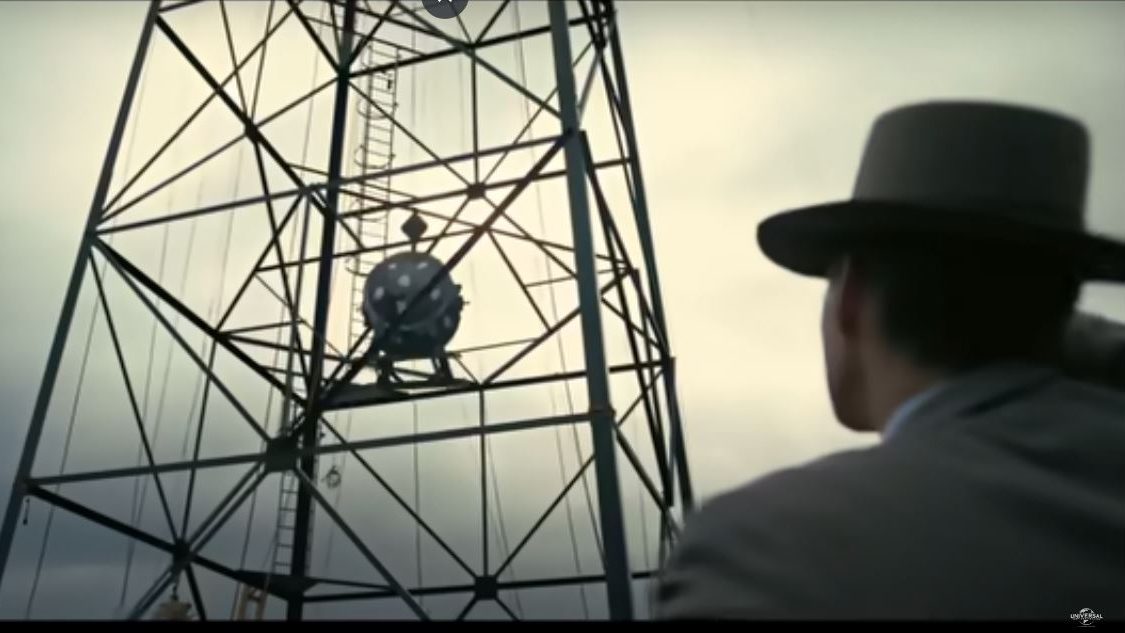
The movie will center on J. Robert Oppenheimer, played by Cillian Murphy, and his role in the creation of the atom bomb as part of the Manhattan Project. Recent reports have been hyping up Nolan’s decision to recreate atomic explosions using practical effects rather than CGI, something that should warrant the price of admission alone. We should expect an intense and visually stunning Trinity Test sequence thanks to this, showing the first time a nuclear weapon had been detonated (which happened on July 16, 1945).

The trailer has a similar feel to that of Interstellar’s, a science fiction movie that imbued space travel with a sense of wonder mixed with fear of the unknown and the uncharted. It seems to be a sensation wants to capture with Oppenheimer as well, just in a more somber manner. A lot of this can be extracted from one of the trailer’s most interesting quotes, spoken by the titular scientist in voice over: “We imagine a future, and our imaginings horrify us. They won’t fear it until they understand it. And they won’t understand it until they use it.”

The words are spoken over glimpses of the work that went into building the bomb, of human ingenuity on display. As much as it was a watershed moment in weapons development, it was also a breakthrough in the field of science. This can be seen as a play between opposites, one that requires we navigate in grey areas rather than in the fickle safety of blacks and whites.

This captures quite well the sentiment that followed the end of World War II after the atomic bombings of Hiroshima and Nagasaki on August 6 and 9, 1945. Victory had come in spectacular fashion and global war had been finally put to rest, but the destructive capabilities of the bomb and the lasting effects of its infernal destruction didn’t convince many that victory over the Japanese was “clean” or ethical. It didn’t help that the nuclear age that followed stoked the fires of paranoia more than it did of hope. A fear of mutually assured destruction overtook the world, and with it came the Cold War.

Looking at the man at the center of this, who also witnessed the very first atom bomb explosion in history (which led him to consider the Hindu Bhagavad Gita quote “Now I am become death, the destroyer of worlds” after the test was done), can put all of this into context and offer a very sobering kind of perspective. It’s one of the things that makes Oppenheimer one of my most anticipated films of 2023.

The figure of Oppenheimer himself is a controversial one, though. He’s been oddly kept at a distance given his views on the results of the Manhattan Project and the worries that sprang from it. Nolan’s take on the character is based on the Pulitzer prize winning biography American Prometheus, written by Kai Bird and Martin J. Sherwin. The book paints a complicated portrait of Oppenheimer that brings his ethical concerns on the bomb’s use and the necessity behind the Nagasaki bombing to the fore, things that left him ostracized by many in the science and military communities who wanted to look at the bombings and the work that went into them as a justified examples of military action and scientific innovation.

Cillian Murphy has a compelling character in his hands with J. Robert Oppenheimer and the trailer goes as far to show that the actor might have one of the most impressive performances of his career under his belt here. He already has the look down, that of a serious man burdened by the consequences of applying science in such a manner that creates new forms of death. Oppenheimer stands to be one of the most important films of 2023, perhaps the decade. This first full trailer is indication that fear and wonder aren’t necessarily strange bedfellows when it comes to world-altering historical events.

Ghostface goes to New York in Scream VI for what could be an homage to city slashers

The Big Apple is no stranger to sadistic slashers, both real and imagined. New York City has quite simply proven fertile ground for gratuitous violence, often amplified by its dark history. The city is, after all, home to some of America’s most vicious serial murderers, among them the Torso Killer, the Son of Sam, and Albert Fish (also known as The Brooklyn Vampire and The Werewolf of Wysteria). In the horror world, it has hosted slasher icon Jason Vorhees (in 1989’s Jason Takes Manhattan), Maniac’s gory mannequin collector Frank Zito (1980), and Reno Miller the Driller Killer (from the 1979 movie of the same name, directed by Abel Ferrara).

It’s now Ghostface’s turn to carve up the city as is revealed in the new teaser trailer for Scream VI, in which the survivors of the previous instalments leave Woodsboro, California behind for the promise of new terrors in the sprawling metropolis.

The teaser focuses on a subway train ride filled with people in masks and costumes, seemingly on Halloween night, as returning cast members Jenna Ortega and Melissa Barrera Martínez realize a man dressed like Ghostface is staring at them. It’s an unsettling development that is made worse by the presence of more than one passanger dressed as Ghostface. How many of them are just morbid fans of the real one and how many are actual killers remains a mystery, something we’ll definitely be looking at more closely in the movie.

The move to another location is a welcome one. There’s only so much metafictional horror storytelling you can do in the same place. In a way, Woodsboro has given everything it possibly could and it’s now time for a change of scenery. Setting swaps in franchise horror movies can be tricky to pull off. You don’t want the story to fall victim to gimmick by giving a tourist’s view of the new place with key stops in fresh crime scenes. In a sense, the movie’s success will hinge on how well it captures the feel of New York, on how well it can make Ghostface adapt to its surroundings.

It might do well to avoid all of the pitfalls that the infamous Jason Takes Manhattan movie falls so hard into. The movie’s jump from summer camp into a big city proved to be a massive flop and it quickly became the least liked entry in the Friday the 13th franchise (it also tanked at the box office). For one, the movie wasn’t shot in New York and it shows. It was filmed in Vancouver, with additional photography in Times Square and Los Angeles, and very rarely does it even resemble the place it features in its very title.

One of the scariest components of city horror is how it considers the concept of anonymity. This alone brushes aside the relative safety of small-town scenarios seen in more traditional slashers. In Woodsboro, the suspect pool is limited mostly to the town’s residents or a stranger from elsewhere. In a city, the suspect list numbers in the millions. The possibilities are near endless.

Fear ramps up under this condition, an element that makes Maniac’s Frank Zito (played by Joe Spinell), for instance, such an unsettling slasher. Maniac, it should be noted, deals in serial killings from a resident, not an outsider. The killer is homegrown, not a transfer from somewhere else. And yet, what makes him so scary still offers lessons on how to make slashers work in cities.

Frank Zito’s motivations, for instance, point to the frustrations of a very lonely and mentally disturbed man that is ignored by city folk whose attention spans are severely limited to the people they interact with on a daily basis. They don’t have time for strangers. In fact, they avoid them at all costs, a luxury that’s on short supply in small towns. Scream VI might not have the time to laser-focus on Ghostface that Maniac has, but it does present a detailed blueprint for the creation of a terrifying city location.

Maniac excels in putting victims in real places anyone could run into and trap themselves in. It portrays the darkest corners of the city as places where people can die without anyone ever finding out. A shout for help might not even help as a city of millions doesn’t stop for just one scream. Again, anonymity. Whatever’s happening to a victim somewhere is no one else’s business in an urban environment.

In a sense, the city slasher creates its own fear state, thrusting an entire city into panic and paranoia. They turn cityscapes into killing floors where anyone is a potential victim. Whereas the small town slasher makes killing personal to those looking from the outside, the city slasher makes it impersonal. The net this kind of fear casts is wider, deadlier, and more unpredictable.

Scream VI steps into a very special kind of slasher territory by making the jump to NYC. The history, the culture, the social indifference attributed to it by principle of overpopulation all combine for a cruel playground that killers can run amok in. Ghostface’s sixth outing stands to gain quite a lot if it knows how to use New York to its advantage, to find horror among the masses who more often than not look the other way.

Scream VI premieres in theaters on March 10th, 2023.

Movie Review: Sissy

Sissy

There’s a curious contradiction at the center of social media. For an idea that seems to put heavy stock on the importance of socializing, the very act of doing so online can be a very lonely affair. As such, the image we create online is often severely curated, a sanitized version of ourselves that purges the less appealing aspects of our personas. Writer/director duo Hannah Barlow and Kane Senes’ satirical horror movie Sissy puts this contradiction front and center to dissect our relationship with social media and what happens when our online profiles become scrutinized in the real world. Turns out a lot of blood can be spilled on the topic.

Sissy follows Cecilia (brilliantly played by Aisha Dee), a successful mental health influencer that creates mindfulness content. One day she runs into her childhood friend Emma (played by Hannah Barlow) and is reluctantly thrust into in-person socializing with her and her new group of friends. Tensions arise when we learn there’s a deeply rooted traumatic event that made the two friends drift apart when they were kids, an event that involves another girl who used to bully Cecilia but is now Emma’s bestie.

Things get complicated when Cecilia is invited by Emma to join her fiancé and a few friends to go to a cabin in the woods to celebrate their bachelorette party. Once there, Cecilia learns the cabin belongs to the same girl, now grown up, that used to bully her when she was little. What was originally meant to be an opportunity to reconnect with a lost friend quickly becomes a darkly comic descent into trauma, social media identities, and deaths both accidental and intentional.

Sissy

The movie is, in essence, a clever deconstruction of Cecilia, a slow unraveling of her real self and of her influencer self. It’s made obvious quite early that each version of Cecilia is at odds with the other. Whereas Cecilia the influencer comes off as a calm and collected person that’s emotionally mature and stable, offline Cecilia is a quiet and somewhat awkward person that keeps to herself and only socializes via her phone. Content creation isn’t just her job, it’s her life. Emma’s presence disrupts this as it forces the real Cecilia to get behind the wheel, traumas and anxieties laid bare for all to see.

Sissy succeeds at showing how current generations live in a constant exchange of personalities that are then equally scrutinized both online and offline. The message hits hard thanks to Aisha Dee’s performance, an emotionally nuanced showcase that presents audiences with the darkly funny consequences of bringing digital behaviors into the real world.

As Cecilia’s traumas are forced to the surface by her childhood bully, the mental health influencer starts to show the cracks on her own psyche. It’s an idea that frames online content creators as the spiritual successors of Dr. Jekyll and Mr. Hyde, substituting the classic horror character’s mysterious transformation elixir for social media platforms. Cecilia makes it clear throughout that she values her digital presence more than her real one. Harlow and Senes use this to lay the breadcrumbs that guide the story towards its very funny and clever deaths.

Sissy

Sissy sneaks up on you with what it decides to make fun of and illicit laughs from. Each of the characters Cecilia interacts with is pushed to a point just shy of caricature to make them embody the least pleasant parts of social media interactions. It’s as if they were walking like/dislike buttons, offering opinions on Cecilia’s character with the scorn of an anonymous troll in a comments section. They become the things that are wrong with the internet, in part, with Cecilia being the troubled but also troubling victim at the center.

On a quick note, I was glad to see the movie not give in to 80’s horror nostalgia. At points, I expected a neon-soaked homage to the slashers of yesteryear, but the story has a wider vision that isn’t content to simply settle on genre references and Easter eggs. The same can be said of its score (by Kenneth Lampl) and musical selection. It’s all set to capture the present rather than a modernized version of the past.

Barlow and Senes have one of the best horror movies of the year on their hands with Sissy, led by an astonishing performance by Aisha Dee. It puts social media, woke stereotypes, and digital anxieties in full display to satirize them in a way that invites discussion. I for one keep coming back to it, thinking about Cecilia and all the chaos that she brought with her by the simple fact of having an online presence that hides her traumas and presents an entirely different person than the one that walks among real people. Goes to show just how much horror lies in the things that we leave out of our social media profiles.

Sissy is currently streaming on Shudder.

Advance Review: Dead Seas #1

Dead Seas #1

Haunted ships aren’t exactly a new thing in the horror genre. They are, in essence, floating haunted houses made even more isolated, and perhaps crueler, by virtue of being placed miles away from land, thus making it pretty hard for anyone inside them to escape. It’s mostly the same idea behind stories that take place inside haunted spaceships or monster-infested cargo ships. There’s no escape, no one to really hear you scream, and no one to call for a quick save (all things that make movies like Alien and Event Horizon so utterly terrifying).

A floating prison ship that recruits inmates to work on the highly dangerous task of extracting ectoplasm from the ghosts that are being held in it, though, adds a few wrinkles to that old formula. There just aren’t a lot of these kind of ships in horror. This fact alone opens new doors into terror, and it is precisely what writer Cavan Scott and artist Nick Brokenshire decided bet on for their new IDW Originals series Dead Seas.

Dead Seas follows Gus, an inmate who is being flown into the prison ship Perdition to work on ectoplasmic collection, an entirely new field of work that’s still in its experimental phase. The world, one character explains early on, has been wrestling with a ghost problem for going on ten years, forcing a new status quo and new opportunities to exploit. Water, it’s been found, can hurt ghosts, a discovery that’s led to the capture and holding of spirits at sea to study the ooze they secrete and their potential medical benefits. Of course, it doesn’t take long for technical difficulties and human error to cut the experiment short and put every living soul on the ship on the path towards paranormal activity.

Dead Seas #1

There are a few influences at play in the story, more as flavoring rather than dominating ingredients. Fans of the 2001 Thirteen Ghosts remake, for instance, might appreciate some of the ways in which Scott and Brokenshire present their ghosts and the vessels they’re trapped in. Spirits are found in short supply in Dead Seas #1, but what’s shown hints at an interest in exploring their more monstrous aspects (like those in the film I mentioned). These aren’t transparent outlines of deceased relatives or hazy visions of regular people. They’re nightmarish, things that look and feel dangerous, insidious, and tortured.

Ghosts are only as good as the people they haunt, though, and Dead Seas starts strong in this department. Scott and Brokenshire surround Gus with a cast of inmates and scientists with complex personalities, each carrying their personal histories on their bodies for all to see. Brokenshire’s character design does an excellent job of making each one feel like a unique person, with qualities both seen and unseen making it across in a very nuanced visual style.

Scott’s dialogue and carefully orchestrated exposition segments prioritize character work first. It’s the reason why issue #1 is lighter on ghosts, which isn’t a knock against it. Scott lets conversations play out as needed so that readers can get a good sense of their personas, especially as it pertains to their anxieties and fears. Every prisoner is there for a reason, mostly to get some benefit in exchange for their service as it pertains to their prison sentences. The stakes run high as the promise of freedom is dangled in from of them so they can overlook the risks and do the job.

Dead Seas #1

One thing the first issue could’ve done a bit better with was pacing. Scott and Brokenshire do an admirable job of worldbuilding and character development, but it all happens fast. There’s barely any breathing room to process what we learn about Gus and Perdition’s ghost operation. The story is rich enough that I would appreciate a slower pace to savor the smaller details in it.

This complaint, however, does little to detract from this impressive and refreshing horror series debut. The promise of things to come is more than enough to warrant attention and further reading. It’s hard not to love stories that tinker with traditions and expectations within genre to arrive at something new. Dead Seas falls squarely on that category and I can’t wait to see what horrors await us in Perdition.

Writer: Cavan Scott Art: Nick Brokenshire Letter: Shawn Lee
Story: 9.0 Art: 9.0 Overall: 9.0
Recommendation: Read, then research how much damage water can actually inflict on ghosts.

IDW Publishing provided Graphic Policy with a FREE copy for review


Pre-order: Zeus ComicscomiXology/Kindle

Review: The Nice House on the Lake #11

The Nice House on the Lake #11

The Nice House on the Lake is one issue away from wrapping everything up and I’m not entirely sure everyone will be left with the answers they’re expecting. Walter’s origins are still vague and his grand design remains somewhat of a mystery. While it’s not looking like answers will be served on a silver platter in the final issue, it does look like a some sort of finality will settle over matters. This is in no way indication of the comic having lost a step or having failed to live up to expectations. On the contrary, it has managed the anticipation well and it’s all thanks to the ability of creators James Tynion and Álvaro Martínez Bueno to push the narrative in different directions every issue.

Issue #11 is crucial to the landing of the big finale. In a sense, it’s the last chance the story has to line up its landing trajectory, to calibrate its descent into darkness as smoothly as possible. This certainly comes through here as Walter’s chosen see the rules of their existence in the Nice House absolutely shattered. It feels like a point of no return has been reached and that the remaining time we have in the world Tynion and Martínez Bueno have built is fated to be spent in death, betrayal, and collapse.

The Nice House on the Lake #11

Without incurring in spoilers, it seems fair to say that not every single question posed in the book will be met with an answer. The true nature of Walter’s being remains vague, even with the amount of information revealed as to his hopes with the group of friends he roped together in the house. Some characters are dealing with returning memories while others are struggling with the decision to either safeguard Walter’s secrets or expose them.

It’s all leading to the group being put in a position to choose a side, to either perpetuate the lies Walter has used to manipulate them into accepting their place in the house or to break free from his influence and deny his living arrangements. It speaks to the book’s interests in pulling apart the dynamics of friendship and how people lock themselves in terrible situations because of them.

The house at the center of the story is metaphorically built on human connections that should’ve been reevaluated way before things got to the point where they’re at in the series. It questions our ability to sever ties that can compromise our mechanisms for self-preservation as to the amount of support we should offer people that hide behind friendship to further their dependence on others. It’s about how friendship can become a transaction built on often unrealistic expectations.

The Nice House on the Lake #11

Walter’s generosity (i.e. complying with every material desire the group might have), for instance, puts pressure on the group to return the favor in kind. Being available and present at a moments notice becomes a “reasonable” given this, which can also be forced upon friends as coerced expressions of gratitude. Just how much of that is fair and how much of it is manipulation is where the comic finds its source of tension and horror, especially when you consider the friend in question seems to be an otherworldly being that hasn’t been entirely honest with anyone.

Tynion and Martínez Bueno remain as they have throughout the entire series, laser-focused on character work. Martínez Bueno’s character are all in a state of emotional distortion and his approach to illustrating that on a basis of body language and facial expressions makes every bit of existential anguish and pain come through. Tynion’s dialogue continues to dig deeper into the depths of each character’s motivations and identities. It has all led to the creation of a delicately unpredictable situation that’s sure to make the final issue one that won’t be easy to shake off.

It’s all down to a single final issue. The end is finally upon us. We might even get to know why every chapter starts with one character talking a bit about themselves surrounded by fire and ruin (the remnants of the Nice House perhaps). Now’s a good time to reread the series in full to prepare for what’s coming. Until then, enjoy the time you have left in the Nice House. It’s possible it won’t be there a few pages into issue #12.

Story: James Tynion IV Art: Álvaro Martínez Bueno
Color: Jordie Bellaire Letterer: Andworld Design
Story: 10 Art: 10 Overall: 10 Recommendation: Read and then reevaluate your friends.

DC Comics provided Graphic Policy with a FREE copy for review


Purchase: TFAWcomiXology/Kindle

Evil Dead Rise looks to keep its Deadites as menacing as possible in latest movie still

Sam Raimi’s Evil Dead franchise comes with a certain level of expectation that makes experimentation a very tricky thing to pull off. Bruce Campbell, for instance, crafted a horror legend with his interpretation of Ash, especially in the sequels, making him synonymous with the brand. The cabin in the woods, the catchphrases, the stylized and often slapstick humor, the dark fantasy, it all combines to create that which we call Evil Dead. Stepping away from those things can very easily compromise its identity, which is something the upcoming Evil Dead Rise has to contend with being that it takes place in an apartment building instead of a cabin and that Bruce Campbell will not be appearing in it.

deadites
A glimpse of what the Deadites from Evil Dead Rise will look like

Thankfully, the first image that WB/New Line decided to release promoting the next entry (releasing on April 21, 2023) does feature something that firmly puts the film in Evil Dead territory: a psychotic Deadite with a sinister smile plastered on its face. For context, the fifth film in the franchise (directed by Lee Cronin) will follow two sisters that find what could be the Necronomicon in the basement of their apartment building. This inevitably leads to a potentially accidental summoning of demons that puts the sisters and their three kids in immediate danger, propping up a discussion on motherhood and the nightmares that can tag along with the role.

The picture does a good job of putting fans in a familiar place, in an Evil Dead headspace. Raimi’s demonic entities are perhaps one of the most recognizable elements of the Dead formula and they can be enough to set different types of stories within its world. They’re sarcastic, loud, they utterly enjoy verbally oppressing their victims, and they turn those they possess into hellish minions that relish every single moment they spend trying to eat your soul.

That last detail sets these possessed monstrosities apart from the rest, giving them that special Deadite quality. They’re usually overtaken by a dark euphoria as they enact their evil deeds. Nothing about them subtle. Deadites turn possession and soul eating into a cruel game they visibly revel in. They laugh, sneer, and contort their bodies in impossible ways. They’re nasty and they stand out for it. The Deadite in the Evil Dead Rise image hints at this type of characterization, especially by spotlighting its twisted smile and expressive bloodshot eyes. In this department, Rise looks very much like an Evil Dead movie.

deadites
One of the Deadites from the original 1981 Evil Dead

The 2013 Evil Dead remake, directed by Fede Álvarez (Don’t Breathe), for instance, is a fine horror movie with some effective nods to both the original and its formula, but it does go for a more serious tone that keeps its Deadites from fully embodying the things that make them unique. The same applies for the type of horror that ended up on the screen. It has the cabin, a very loose interpretation of the Ash character (very different in personality and presence), and the demons, but it missed out on their nuances to really help it stand as an Evil Dead movie. Sometimes covering things in the broadest sense doesn’t translate to capturing the spirit of the source. At least it did result in a truly unnerving and vicious horror movie.

The picture shared by the studio behind Rise does show promise, and I am of the belief that an honest to god Deadite can bring out the best in the Evil Dead franchise. The new setting and focus on family rather than on a group of friends on a trip to the woods might cause doubt among fans, but sometimes it’s more about how the little things combine to create an experience worthy of the name its flying under. For now, the new Deadite is looking mighty impressive and very, very Evil Dead.

Movie Review: Dark Glasses

Dark Glasses

Dario Argento is considered by many to be one of horror’s great directors, an icon that serves as the face of the giallo subgenre (along with Mario Bava and Lucio Fulci). What pushed the Italian director into that sphere of recognition lies in his ability to produce highly stylized horror sequences involving very intimate and gruesome murders, often at the expense of story and narrative coherence. Seldom has Argento sacrificed an elaborate kill scene, which are more often than not soaked in neon or solid reds and blues, for the sake of logic. And yet, his films carry a distinctive signature that make them unique, that make them Argento.

The director’s new movie, Dark Glasses (now streaming on Shudder), is a surprising departure from the excesses of the genre. It’s more an exercise in restraint than in self-indulgence, something that can’t easily be said about the rest of his films, and it’s one of the reasons why it succeeds so convincingly even as an example of giallo. In a way, Dark Glasses is giallo stripped of its messy storytelling bits, finely tuned to get at the things the subgenre can do well if given the chance.

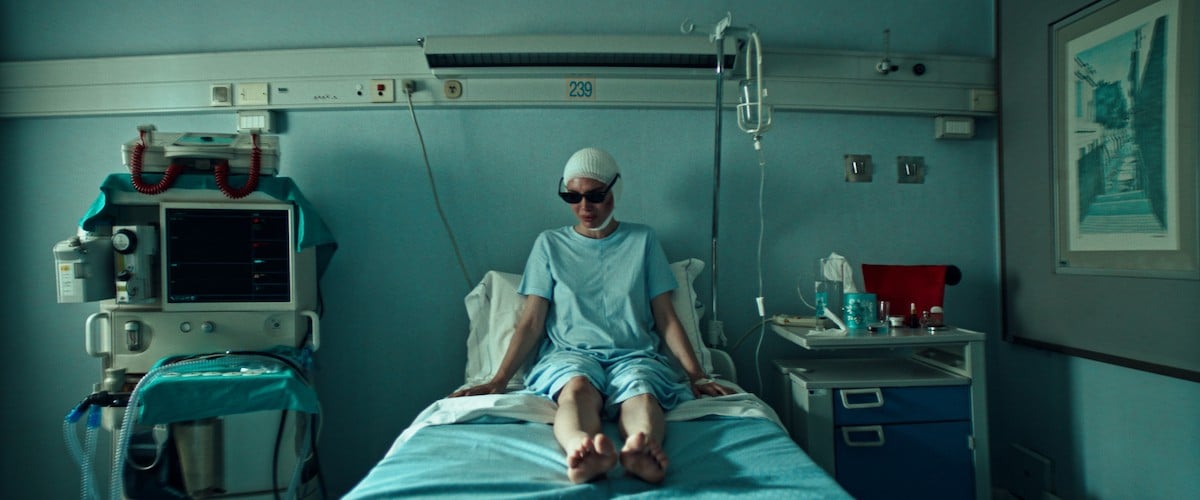
Dark Glasses follows Diana (played by Ilenia Pastorelli), a highly successful escort that becomes the target of a serial killer that’s preying on sex workers. The reason for the killings is kept a mystery, as is the case in most giallos, but it does lead early on to an intense car chase where the killer slams into Diana’s vehicle and causes a violent crash, resulting in Diana losing her sight. A third car is caught up in the violence, belonging to a Chinese family. A boy is left orphaned as a result, complicating matters further for Diana. The kid, called Chin (Andrea Zhang), later decides to seek out Diana and help her as she navigates her new reality as a blind person, perhaps because he feels a connection to her given their shared experience in loss. This dynamic ends up being one of the film’s greatest strengths.

Dark Glasses

Diana and Chin make for an unusual pairing in a giallo, which leads to them being such a unique set of characters within that context. Their relationship is one of companionship and mutual protection, standing opposed to the usual lonely investigator on the trail of the killer. They very clearly need each other, one due to the loss of a crucial sense and the other due to the loss of his core family unit. This allowed Argento to build his characters, to develop a bond between them and then put it to the test in tense scenarios.

Ilenia Pastorelli’s Diana becomes one of Argento’s strongest and most imposing leading ladies thanks to this welcome focus on character development. Her performance relies heavily on her struggle to accept and understand her new condition and she leans heavily on the character’s frustrations to project that sensation on screen. It’s easy to feel her anger and desperation in the movie’s most intense sequences, especially as she fights against her condition to try and get an advantage over the killer.

Zhang also commits to his role, especially in terms of the range of emotions his character has to go through after the crash. He’s vulnerable in moments when his family is being discussed, especially his future without them, but his resourcefulness as Diana’s guide when trying to the escape the killer shines bright thanks to the all the character work Argento puts in beforehand. It’s a tender and delicate show of friendship that rarely gets the time to grow in these types of movies.

Dark Glasses

On the traditional giallo violence side of things, Argento goes for a measured touch that prioritizes quicker shots of gore over extended stays on open wounds and severed limbs. Each kill is still elegantly shot in a way that achieves the kind of macabre beauty featured in his other films, but in Dark Glasses he favors teasing the audience with the idea of brutality and cruelty rather than linger on it. Whereas in other films the violence comes off as gratuitous and sensationalized, here it carries weight while also building up the terror the killer carries with him.

Dark Glasses is the kind of Argento I’ve always wished we’d gotten more of. He crafts a memorable female character with Diana, one that avoids falling into the oversexualized and oversimplified characterizations of the past. There’s enough giallo here to please hardcore fans, too, but it’s in the twists and tweaks to the formula that the movie finds a life of its own. Argento should be commended for offering a blueprint for future forays into giallo with Dark Glasses. Goes to show, masters of horror always have a movie in their back pockets that can remind fans why they’ve earned the title.

Movie Review: Pearl is a masterfully crafted origin for a new female slasher

Pearl

The decision to reveal the origins of a new killer within the slasher genre incurs a lot of risk. A botched attempt can result in a slasher with diminished presence and mystique. Rob Zombie’s 2007 Halloween remake comes to mind. The movie has its high points, especially in terms of how it adds another layer of violence and cruelty to the myth of Michael Myers, but to explain the source of his evil and the reasons why he kills robbed him of the mystery that made his very existence so unsettling in the John Carpenter original.

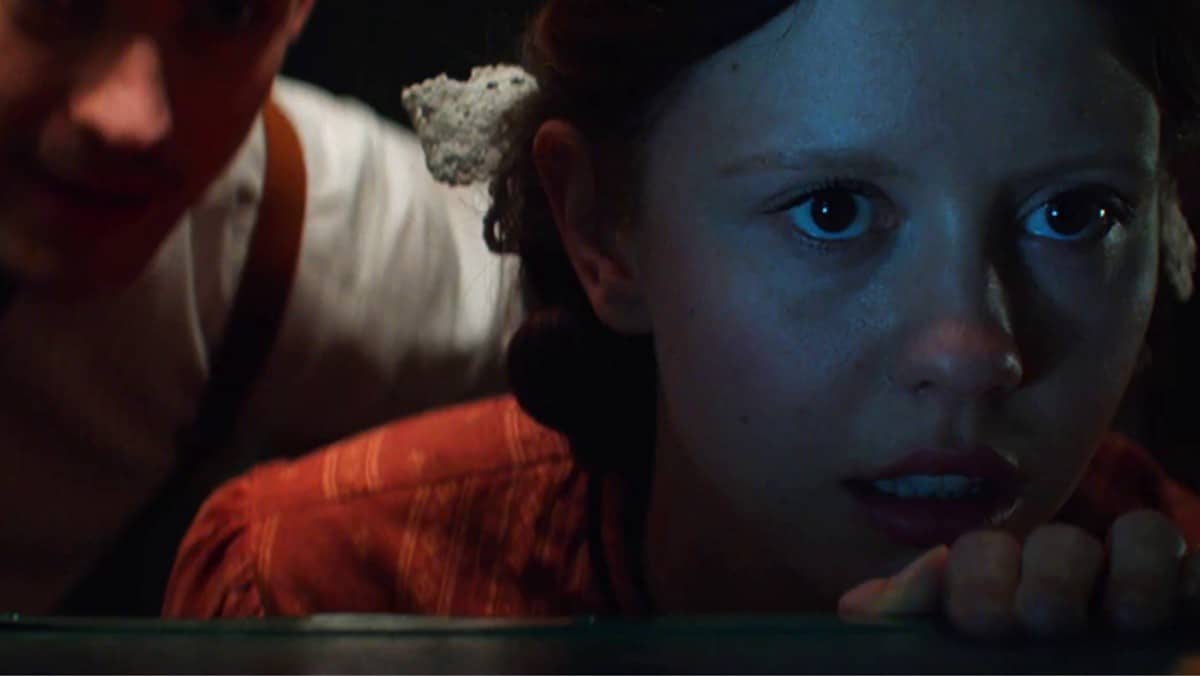
Ti West’s Pearl manages to avoid all this by making sure the story behind the titular slasher is strong enough to warrant exploration. The bad things that turn Pearl into a killer make for a fascinating watch as they’re put on a more intimate and emotional path that mixes violence and tragedy in the service of sculpting a new horror icon with an identity all her own. Its success is owed to a stellar performance from Mia Goth, who takes the character into places largely reserved for established movie monsters and murderers. It’s impressive enough to flirt with the idea of several nominations for the actress in the upcoming awards season.

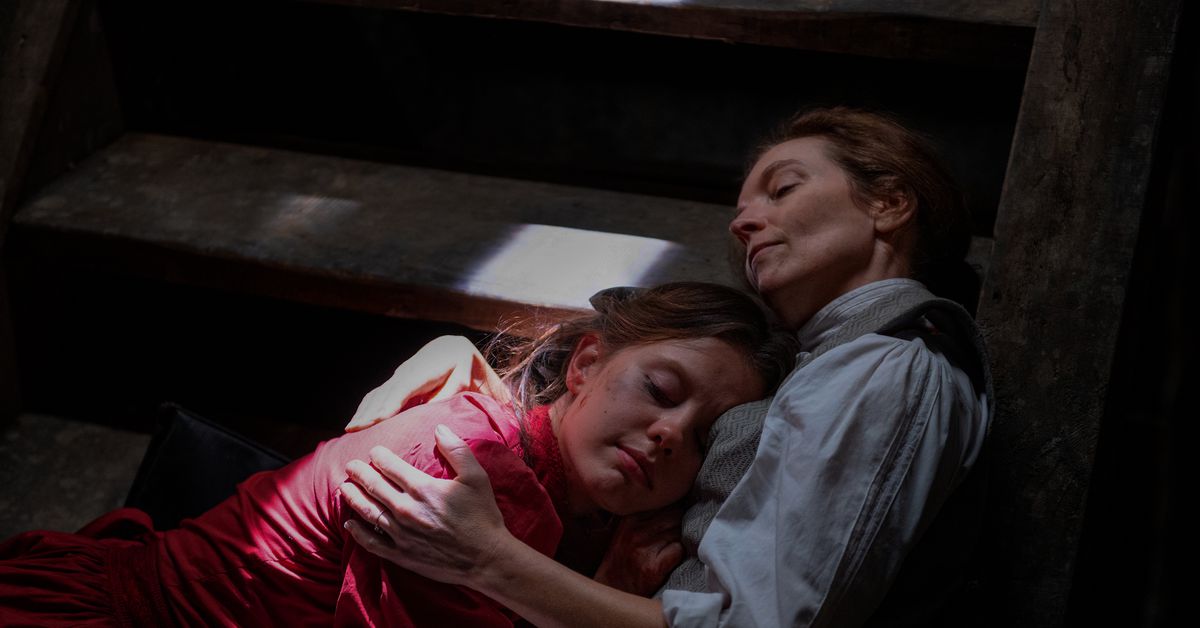
Pearl is the second part in West’s “X” trilogy, which began with 2021’s X, a movie about a small group of porn actors and filmmakers that rent out a small cabin in a remote farm deep in Texas only to find the old couple they rented it from are vicious killers. Pearl, played by Goth in heavy prosthetics that make her look very old (and who also plays the younger character of Maxine in the movie), is one of the two aging killers. Pearl is a prequel, set in 1918 with the intention of looking at the killer’s younger days, when she was but a mere farmer’s daughter with a secret love for musicals (and an even more secret urge to kill and feed her victims to an alligator in a pond near her house).

Pearl

Pearl’s mother and wheelchair-stricken father (played by Tandi Wright and Matthew Sunderland respectively) stand in her way, a tragic pair whose circumstances interfere with the development of their daughter’s true potential (at least in Pearl’s mind, that is). It’s a theme that runs throughout the entire movie. Pearl desperately wants to avoid the fate her parents embody the entire time they’re onscreen, which points to a lifetime of regrets and dullness in relative isolation.

It doesn’t help matters that it’s revealed quite early that Pearl is married to a man who is currently overseas, dug in the trenches of World War I. Every aspect of her life, every decision she’s made or has been made for her, further pushes her into the future she dreads. Her killer side takes form within the confines of that.

It’s easy to see how much tragedy envelops Pearl at a mere glance. Goth and West don’t set out to turn her into evil incarnate. On the contrary, she’s portrayed as an ambitious young woman that’s constantly reminded of all the things she’ll never manage to achieve. The movie takes to a slower pace because of this, letting the world around Pearl breath organically to better allow audiences to step into the character’s shoes.

Goth takes all this and channels it into a performance that is wholly committed only to then take it a step further. She doesn’t just deliver every single line with conviction and belief, she also brings every possible facial expression into it to fully become and define the character. Goth’s face twists, turns, contorts, and flexes in ways that give the character a sense of physicality that makes her presence intensely magnetic and endlessly watchable.

Pearl

Much of Pearl’s story revolves around the slow psychological breakdown of the character, her descent into a life of murder. Goth compartmentalizes her expressions, saves some of them for the character’s later stages, when her world is teetering on the edge of existential collapse. She can go from sweet and naïve to angry and murderous at a moment’s notice, making her face a powerful source of horror. It’s quite simply spectacular, a treat to witness as it evolves throughout the movie. Goth gives audiences one of the best performances in horror movie history.

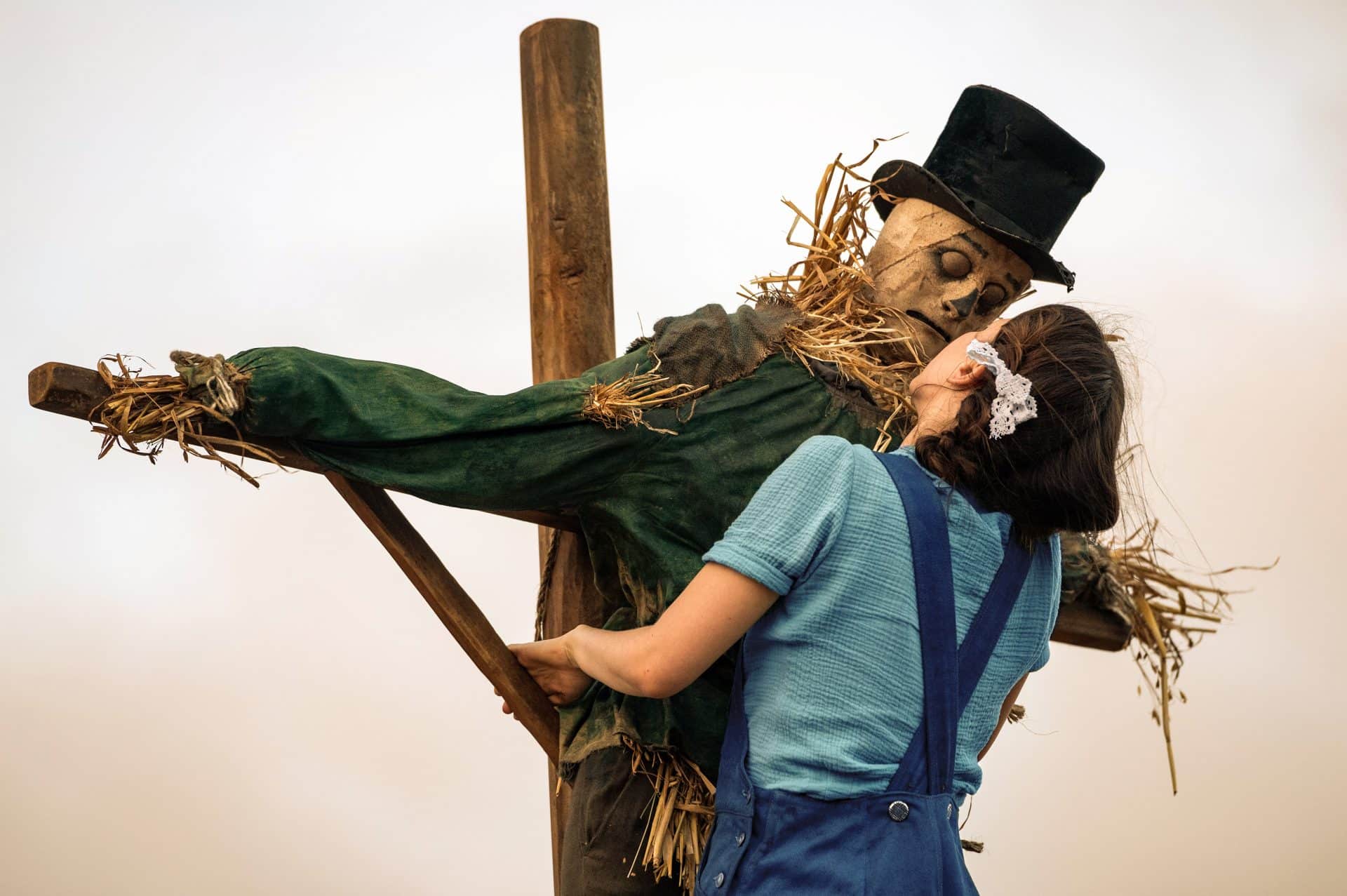
Then come the movie’s influences and how they contrast with the first entry of the “X” trilogy. Where X drew comparisons to The Texas Chainsaw Massacre (1974) for its approach to setting and violence, Pearl finds its look in the Hollywood classics of the 1920’s and 1930’s, in the age of Technicolor. Movies like The Wizard of Oz (1939) take the lead here, but with a generous coat of blood and body parts added to the mix. This is where West’s directing skills come in to elevate the story and give Goth the best chance possible to shine.

Classic movies tend to have a kind of shiny and well-defined visual style that was lighted in a way that accentuated the actors’ features and draped shots with carefully constructed shadows that made each scene pop. West achieves the same with Pearl. Each scene vibrates with life, sound, and color, all of which combine for a very different type of slasher horror styling that no other recent movie in the genre can lay claim to. It’s not played for laughs or even irony. Pearl is a serious story and it is treated as such every step of the way.

Pearl

The same applies with Tyler Bates and Timothy Williams’ score. It captures the sounds of early 20th century classics with a measured treatment of strings that can get quite sinister when Pearl is at her scariest. The first trailers might’ve suggested a musical take that would homage the movie’s influences while also poking some fun at it, but the end result is way more thoughtful and meaningful. It’s perfectly captures the hopes and dreams Pearl holds dear right down to the disappointment and rage that take over as the story plays out. It’s another well-oiled component in a movie that’s very cleverly constructed.

Pearl is a new horror classic. It’s propelled by a masterful performance from Mia Goth that creates a new titan in the field of the horror slasher and an equally masterful directorial showing by Ti West. It’s the kind of movie that sets new standards, that creates new possibilities and dares future filmmakers to push themselves creatively. Succeeding in this can bring about the creation of new horror icons and classics. Pearl has already achieved this, in both regards.

Movie Review: Speak No Evil

Speak No Evil

It takes a good horror movie to make audiences not question why the characters onscreen don’t just simply run away from the very dangerous situations they find themselves in. Movies like The Conjuring and It Follows never let the audience settle on the question because the answer is clear: whatever’s haunting the people in the story is inescapable (or requires a considerable amount of money to move out, as is the case in some haunted house movies).

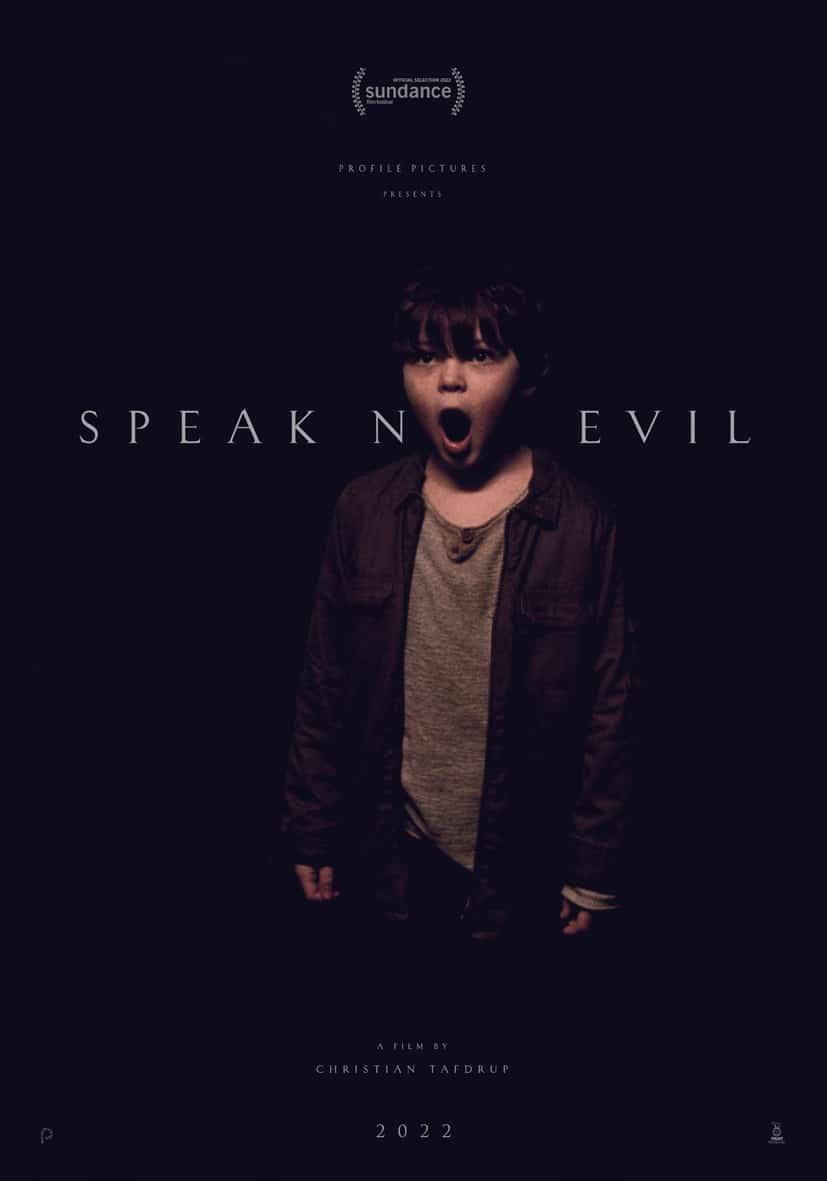
Danish director Christian Tafdrup’s Speak No Evil, now streaming on Shudder, opts for inviting the question. It wants audiences to ask themselves why the family at the center of it doesn’t just leave terrible place they’re in and the horrible people inhabiting it. The reason? Because he’s found an answer that might explain why we as people resist fleeing when the bad starts stacking up, and it’s not for any noble reason. Tafdrup’s deeply disturbing and brutal film makes his characters suffer extensively for staying and it makes for a visceral experience.

Speak No Evil follows a Danish family (Morten Burian and Sidsel Siem Koch with Liva Forsberg playing the young daughter role) as they take up an invitation to visit a family from Holland (Fedja van Huêt and Karina Smulders with Marius Damslev playing the role of their son) who they met while vacationing in Italy. The Danish family are a bit unsure about spending a weekend with this Dutch family because they’re basically strangers despite the time they spent together during the trip. They decide to accept their invitation but very quickly find out the Dutch family carry a very particular kind of strange with them. From then on, it’s a slow but fascinating descent into a hell of anxiety, politeness, and other people.

Speak No Evil

I want to make special mention of Sune Kølster’s score for the movie before discussing anything else. It can best be described as an exercise in creating an atmosphere of impending apocalypse. It’s expertly used in key sequences that don’t necessarily lead to moments of intense terror. Instead, it’s used as an announcement of absolute doom and its inevitability. It serves to keep the audience unsettled and concerned for the Danish family given the more outright horror parts of the movie are reserved for the very end of the story.

The rest of the movie, up to just before the final act, is essentially a series of nuanced events that peel back the layers of discomfort and awkwardness between the two families. The fact they know so little of each other starts to become very apparent, and there’s something off about the Dutch family. This forces the Danish family down a path of strained political correctness and forced politeness to try and avoid as much unpleasantness as possible. They fail at it, and watching it all devolve into an awkward mess of social pleasantries makes for an uncomfortable watch that is consistently fascinating.

It brings it all back to the question of why anyone would stay put in a place that’s so obviously not right. As the movie progresses, the answer to that question is fear of coming off as impolite. The Danish family’s unconscious commitment to not breaking the rules of social interaction and the expectation of it essentially imprisons them in a home that hides some truly sinister secrets behind the façade of familial normalcy.

In a way, the story finds its horror in the cages we build for ourselves by making decisions designed not for one’s own safety and security but for the sake of the perception others might have of us, or the opinions they might formulate about us based on how willing we are to avoid confrontation.

Speak No Evil

The idea blooms onscreen thanks in large part to the performances of the entire cast. The Danish couple, especially, put in the work to project physical discomfort to the point it hurts to watch them flail about emotionally to keep things under control without imposing their wills. For instance, Morten Burian (who plays the Danish father figure) has what seems like a permanent forced smile on his face for almost the entire movie, showing a kind of desperation to abide by the codes of conduct without ruffling feathers or inconveniencing anyone.

There’s a scene where Sidsel Siem Koch’s character, the Danish mother figure, is offered a piece of meat after having explicitly told the other family she’s a vegetarian. She reluctantly accepts the meat to keep the peace while her husband tries to brush the tension away with a smile. From there, the slights and the clashes just escalate until real evil starts seeping out.

Fedja van Huêt and Karina Smulders, who play the Dutch couple, dive into their performances with a rawness that makes the viewing experience itself come off as a test of endurance. They emotionally torture the other family with a false sense of kindness that casts doubt as to whether they are actually evil or if they’re just a very different an odd kind of family.

Director Tafdrup sets up the proverbial game board perfectly for a finale that shocks with its brutality. Once the design is laid bare, the implications of every decision made by the Danish family start to unravel, making the already painful process of seeing a family try so hard to please people that aren’t returning the favor become even more excruciating.

Speak No Evil

The finale is a descent into hell unlike any other. The audience is invited to think about the ‘what ifs’ of the many decisions not made before it got the point of no return. It’s not so much a punch to the gut as it as a cruel stabbing of the senses that leaves the audience broken and hopeless.

Revealing more would be doing Speak No Evil a disservice. It’s such a finely tuned piece of horror filmmaking that it just demands to be watched, experienced, and felt. The darkness slowly burrows itself under the skin as the story unfolds, and when its finally ready to show its ugly face it proceeds to do so with malicious intent. There’s a lesson in there too. When it looks like things are taking a turn and your senses tell you to flee, screw politeness and run as fast as you can.

« Older Entries Recent Entries »