Author Archives: Ricardo Denis

Review: Made in Korea #1

Made in Korea #1

George Schall’s cover for Made in Korea #1 has to be considered one of the best in 2021. It’s what made me stop scrolling through the list of upcoming comics I was scanning, looking for my next fix. Once I saw Jeremy Holt was involved, the writer behind Skip to the End and Southern Dog, I knew the quality of the story would match the grotesque wonders of the cover.

Made in Korea centers on a couple that’s debating whether to bring a child into their family. Thing is, the child in question is a kind of ultra-realistic android that’s programmed to behave like a real son or daughter. As is the case with technological innovation, the android kid is expensive and seemingly available only to those privileged enough to have easy access to the required funds.

The title’s manufacturing reference isn’t there for show either. The android children are actually made in Korea, which allows Holt and Schall to add an entirely different but interconnected story thread that, in this case, sees a Korean programmer trying to crack a code that could have an effect in android behavior.

Holt’s script is quite naturalistic, presenting well-rounded characters that feel genuine. Everyone is infused with personality and I appreciated how opinionated they were when commenting on the small but meaningful changes their world has gone through.

Made in Korea #1
Made in Korea #1

Those small details will make any fan of Phillip K. Dick proud as they build up a sci-fi world that thrives on complex subtleties without letting big ideas get too watered down in the process. There’s a delicate balance struck between character moments and big plot events that keeps things moving at a quick but measured pace.

A few pages are also borrowed from the movie Logan in terms of the comic’s worldbuilding, in which the subtle bits of sci-fi that are shown also develop the setting and the characters’ place in it. The near future of Made in Korea is a place that’s taken noticeable steps in technological evolution without making it come off as overwhelming and all-encompassing.

Made in Korea #1
Made in Korea #1

Holt and Schall also find the time to bring up conversations about artificial intelligence, the capacity advanced tech has to adapt and perhaps surpass humanity, and technological co-dependence. There’s even a reference to Dick’s famous novel Do Androids Dream of Electric Sheep?, thrown in to establish the kind of sci-fi Made in Korea is going for.

Schell’s art perfectly captures the shine that’s often associated with certain idealized versions of the future. It’s crisp, clean, and sleek, as if the future is obsessed with keeping things in their right place, if only for appearances sake. Schell doesn’t go for the dirty, gritty sci-fi look of Blade Runner, Akira, and Brazil, where trash and rundown high-rises color the environment. Instead, he goes for visuals that contain hidden dangers buried deep within suburban standards of life.

Made in Korea #1
Made in Korea #1

Made in Korea packs a lot into its first issue. The six-issue miniseries is ambitious and expansive, worthy of the topic it settled on. There’s something lurking in its pages that looks like it’ll blow up in later issues concerning the questions that come with adopting a child among couples that can’t conceive. Just how much that’ll figure in the story remains to be seen, but what’s here is already enough to make for an exceptional comic.

Made in Korea #1 will be released in comic shops on May 26, 2021.

Story: Jeremy Holt Art: George Schall Letters: Adam Wollet
Story: 10 Art: 10 Overall: 10

Recommendation: Buy and make sure your robotic appliances aren’t becoming sentient


Purchase: comiXologyZeus ComicsTFAW

Review: Far Cry: Rite of Passage #1

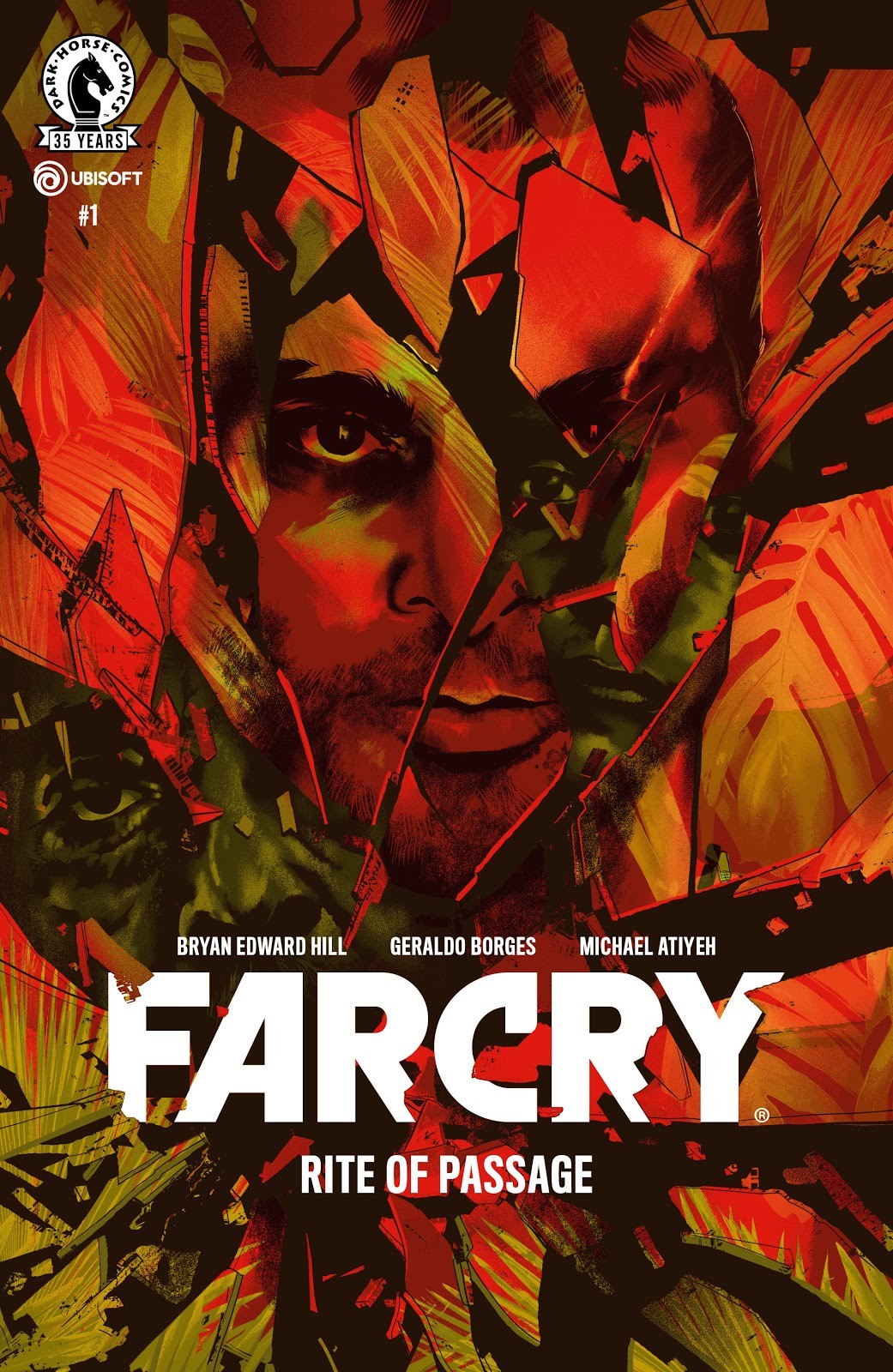
Far Cry: Rite of Passage #1

Ubisoft’s Far Cry franchise possesses a curious history in terms of how its narrative has evolved throughout each game. The first two, while top-tier sandbox fps games, were relatively light on story, letting the action and highly flammable environments take the lead. When Far Cry 3 came out in 2012, the franchise discovered its true identity: signature sandbox gameplay with a deep sense of narrative complete with an iconic villain, Vass Montenegro in this case. This is the format subsequent games adhered to and it’s what Dark Horse’s new Far Cry comic sets out to celebrate.

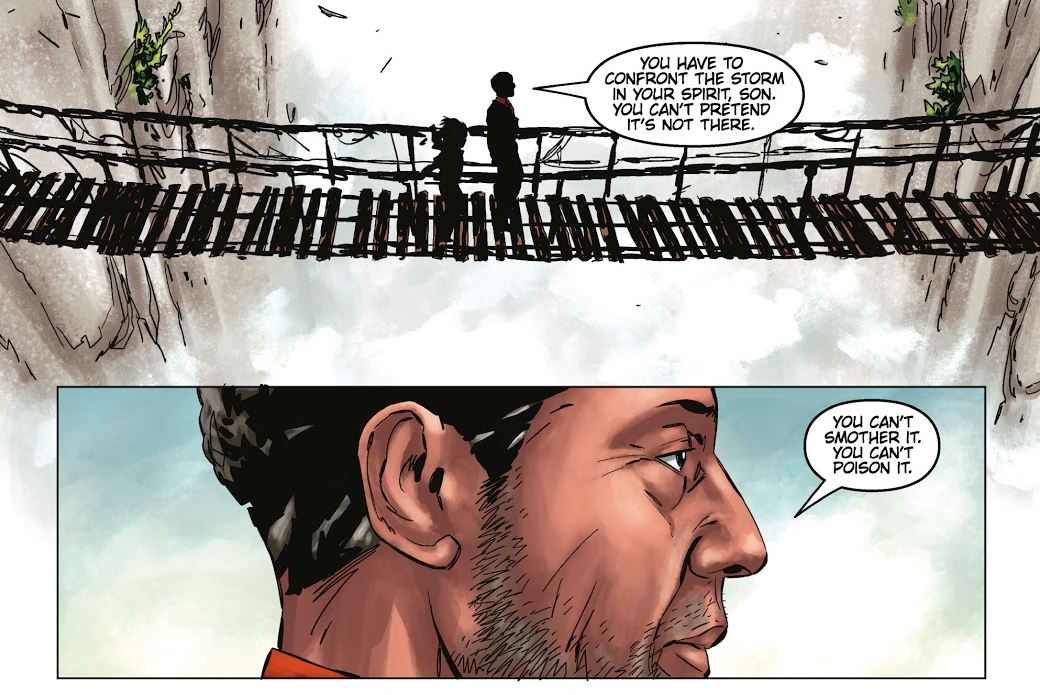
Far Cry: Rite of Passage #1, written by Bryan Edward Hill and illustrated by Geraldo Borges, sets out to establish the father/son relationship that seems to be at the center of Far Cry 6, the newest yet-to-be released entry in the franchise, in which a dictator named Anton Castillo tries to prepare his son Diego on the day of his thirteenth birthday for the things he must do when he grows up.

Issue 1 tries to establish a lineage of villainy for the Far Cry universe and it starts with Anton telling his son the story of Vaas Montenegro, a man that represents a kind of aspirational but cautionary tale about how morality can shackle power. Vaas’ trajectory is laid out like a triumph of self-determination that led to self-destruction after underestimating the challenges he met during the third game’s story.

Far Cry: Rite of Passage #1

The way Vaas’ story is laid out positions him as an imperfect example to follow, but an example nonetheless. The setup works beautifully as Anton’s narration comes off as an extension, in weight and tone, of the narrative trailer Ubisoft released for Far Cry 6. As of the writing of this review, details on the actual game and its characters are scarce, so Rite of Passage is a much needed look at what FC6 might end up being about, especially for fans.

Anton is played by Giancarlo Esposito in the game and the comic manages to capture the measured intensity the Breaking Bad actor brings to the character. Borges gets Esposito’s likeness most of the time and it helps the reader see the trailer and the comic as both being part of a whole. The same goes for Vaas, who is played by Michael Mando in FC3. His likeness is also a highlight and helps differentiate the two Far Cry stories from each other.

Hill’s script succeeds in creating an environment that isn’t just a mere transfer of the game into the comics page. He’s not afraid to lean heavy on narrative at the expense of action. Rite of Passage isn’t a retread of past games nor is it a giant action set-piece. It’s all character development and character study. Hill goes out of his way to give Far Cry ‘s villains the attention they deserve.

The remaining entries of Far Cry: Rite of Passage will each take on one of the main bad guys from parts four and five of series. The next issue will focus on FC4’s Pagan Min, with Joseph Seed being the focus of issue #3.

Far Cry: Rite of Passage #1

Seed presents the possibility of controversy as his characterization in FC5 responds to American gun worship and cult politics. Previous villains feel distanced enough from the American experience that they can be taken as foreign threats in foreign lands, thus a reflection of crime and corruption elsewhere. Seed casts a more complex reflection of American behavior and the country’s relationship with fringe groups. Issue #3 has the potential to really explore some dark themes.

Far Cry: Rite of Passage is an ambitious character study of bad people. Hill and Borges treat the subject matter with the seriousness it deserves while also celebrating Far Cry’s rogues gallery. It’s a strong companion to the game series and even deepens our understanding of the sandbox world Far Cry presents gamers with. Hill and Borges make it a treat to get up close and personal with evil men.

Writer: Bryan Edward Hill Artist: Geraldo Borges
Colorist: Michael Atiyeh, Letters: Cover: Matt Taylor
Story: 9.0 Art: 9.0 Overall: 9.0
Recommendation: Buy and make sure to brush up on your survival skills.


Purchase: comiXologyAmazonKindleZeus ComicsTFAW

Advance Review: Made in Korea #1

Made in Korea #1

George Schall’s cover for Made in Korea #1 has to be considered one of the best in 2021. It’s what made me stop scrolling through the list of upcoming comics I was scanning, looking for my next fix. Once I saw Jeremy Holt was involved, the writer behind Skip to the End and Southern Dog, I knew the quality of the story would match the grotesque wonders of the cover.

Made in Korea centers on a couple that’s debating whether to bring a child into their family. Thing is, the child in question is a kind of ultra-realistic android that’s programmed to behave like a real son or daughter. As is the case with technological innovation, the android kid is expensive and seemingly available only to those privileged enough to have easy access to the required funds.

The title’s manufacturing reference isn’t there for show either. The android children are actually made in Korea, which allows Holt and Schall to add an entirely different but interconnected story thread that, in this case, sees a Korean programmer trying to crack a code that could have an effect in android behavior.

Holt’s script is quite naturalistic, presenting well-rounded characters that feel genuine. Everyone is infused with personality and I appreciated how opinionated they were when commenting on the small but meaningful changes their world has gone through.

Made in Korea #1
Made in Korea #1

Those small details will make any fan of Phillip K. Dick proud as they build up a sci-fi world that thrives on complex subtleties without letting big ideas get too watered down in the process. There’s a delicate balance struck between character moments and big plot events that keeps things moving at a quick but measured pace.

A few pages are also borrowed from the movie Logan in terms of the comic’s worldbuilding, in which the subtle bits of sci-fi that are shown also develop the setting and the characters’ place in it. The near future of Made in Korea is a place that’s taken noticeable steps in technological evolution without making it come off as overwhelming and all-encompassing.

Made in Korea #1
Made in Korea #1

Holt and Schall also find the time to bring up conversations about artificial intelligence, the capacity advanced tech has to adapt and perhaps surpass humanity, and technological co-dependence. There’s even a reference to Dick’s famous novel Do Androids Dream of Electric Sheep?, thrown in to establish the kind of sci-fi Made in Korea is going for.

Schell’s art perfectly captures the shine that’s often associated with certain idealized versions of the future. It’s crisp, clean, and sleek, as if the future is obsessed with keeping things in their right place, if only for appearances sake. Schell doesn’t go for the dirty, gritty sci-fi look of Blade Runner, Akira, and Brazil, where trash and rundown high-rises color the environment. Instead, he goes for visuals that contain hidden dangers buried deep within suburban standards of life.

Made in Korea #1
Made in Korea #1

Made in Korea packs a lot into its first issue. The six-issue miniseries is ambitious and expansive, worthy of the topic it settled on. There’s something lurking in its pages that looks like it’ll blow up in later issues concerning the questions that come with adopting a child among couples that can’t conceive. Just how much that’ll figure in the story remains to be seen, but what’s here is already enough to make for an exceptional comic.

Made in Korea #1 will be released in comic shops on May 26, 2021.

Story: Jeremy Holt Art: George Schall Letters: Adam Wollet
Story: 10 Art: 10 Overall: 10

Recommendation: Buy and make sure your robotic appliances aren’t becoming sentient


Pre-Order: comiXologyZeus ComicsTFAW

Review: Eve #1

Eve #1

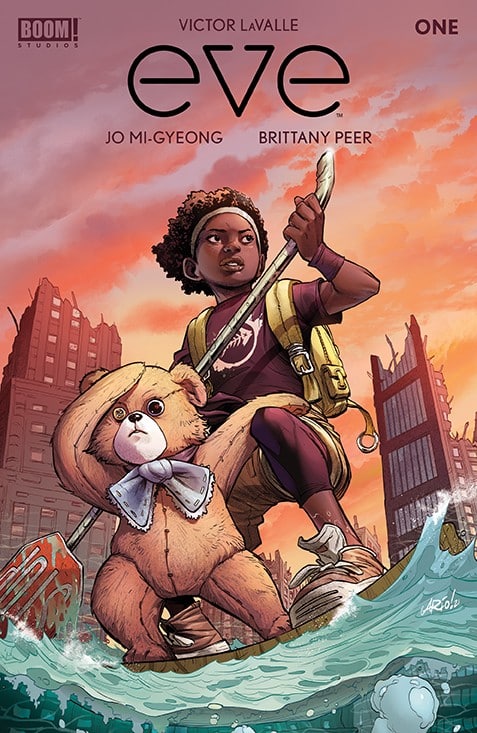
The idea that kids will inherit our battles and will be forced to fight them is not a new one. It appears enough in fiction to be considered a deeply rooted generational fear about how humanity is authoring its own destruction and thus needs to be rescued by its youngest members. BOOM! Studios new series, Eve, considers this same set of circumstances, but the devil’s in the details, and writer Victor LaValle has made sure things shine enough in that department to set itself apart from the rest.

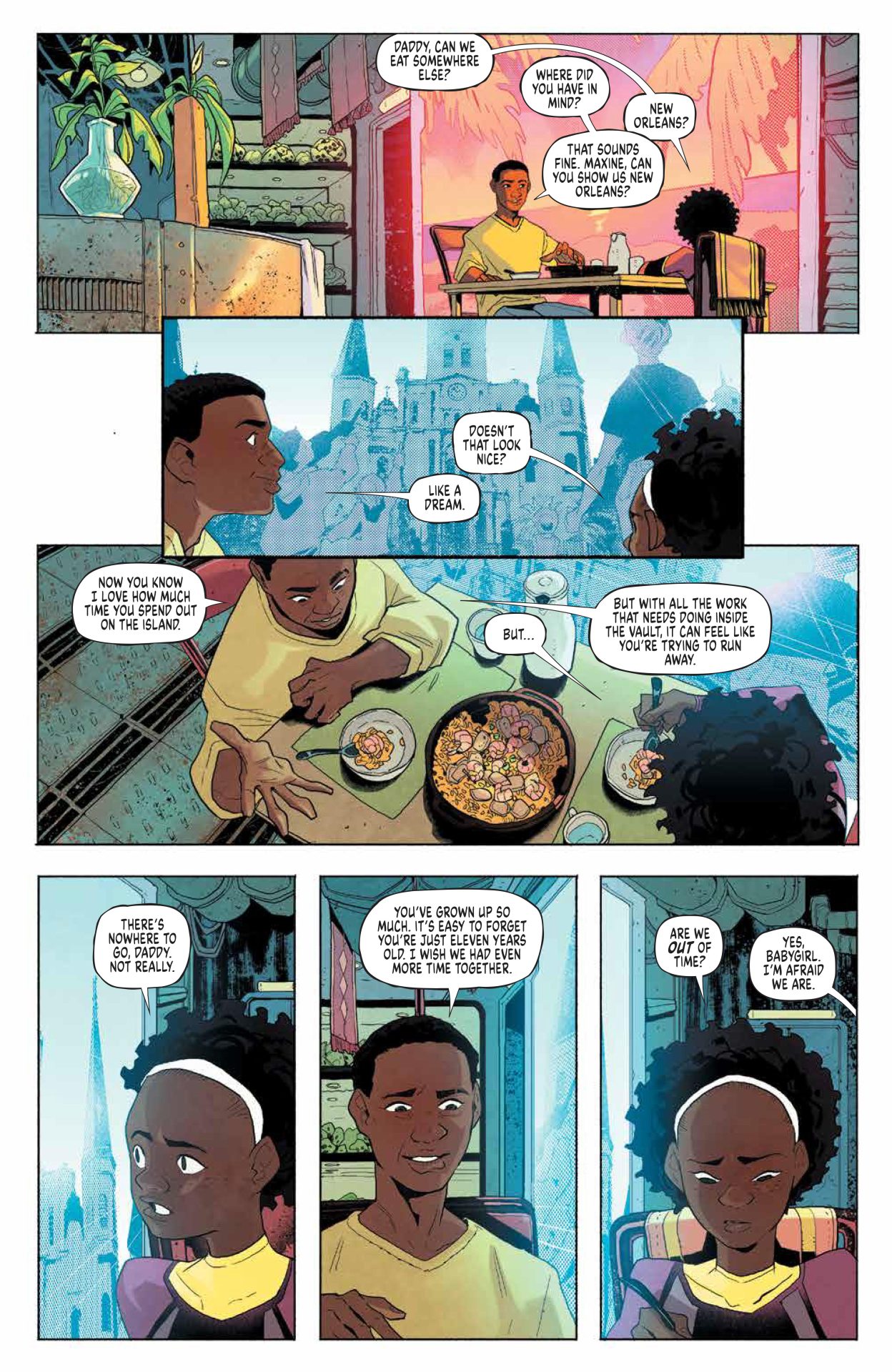
Eve tells the story of a young black girl who emerges from a stasis tank only to meet an android teddy bear called Wexler that tells her she has to save the world after it was ravaged by global climate change. And that’s just the beginning.

Vibrantly illustrated by Jo Mi-Gyeong, the comic goes on to set up global devastation as the new normal, but not a permanent one if Eve and Wexler have anything to say about it. There’s a very lived-in feel to the setting in Eve. Every panel is given the chance to substantially add to the worldbuilding and Mi-Gyeong’s clever inclusion of everyday objects strewn around the environment gives everything a layered sense of story.

Brittany Peer’s colors are surprisingly restrained and do an excellent job of keeping the environmental aspect of the story seem grounded in reality, especially during its most sci-fi moments. Even Wexler comes across as a semi-realistic invention that occupies a plausible physical space along with Eve. It’s truly an accomplishment considering the book has a YA look about it that initially gives it a cartoony vibe.

Eve #1

LaValle’s script seems interested in allowing Eve to actually embody the idea of salvation in regards to our broken planet. Unlike other post-apocalyptic tales of this kind, Eve presents its Earth-saving mission as a real possibility, one that can bring about change and harmony between humanity and nature if the former learns how to take care of the latter.

I would be making the new comic a disservice if I didn’t mention that Wexler, the android teddy bear, is likely to burrow into readers’ hearts and never leave. Unless this is all a ploy to later reveal he’s an evil character or that he’s going to sabotage Eve, Wexler’s design and the amount of emotion it allows him to express is sure to help him become a fan favorite. Issue #1 already presents him as a character that one hopes survives all the way to the end.

Eve herself is also easy to root for. She’s very aware of her emotional state and comes across as mature beyond her age. LaValle makes her and Wexler’s dialogue transpire in a serious manner as well. The book isn’t afraid to make readers interact with big ideas that require a higher degree of thought. It’s never inaccessible, but nothing is sacrificed for the sake of simplicity.

With a final page that’s sure to get readers excited about what’s coming next, Eve #1 is the start of what looks to be an entirely different kind of environmental storytelling. Its characters are instantly likable and the setting carries enough visual flair to distinguish it from some of the other stories on the market. Eve is the type of comic you open a subscription box for.

Story: Victor LaValle Art: Jo Mi-Gyeong
Color: Brittany Peer Letterer: Andworld Design
Story: 9.0 Art: 9.0 Overall: 9.0 Recommendation: Buy

BOOM! Studios provided Graphic Policy with a FREE copy for review


Purchase: comiXologyKindleZeus ComicsTFAW

The Conjuring prequel comic will usher in the new ‘DC Horror’ label

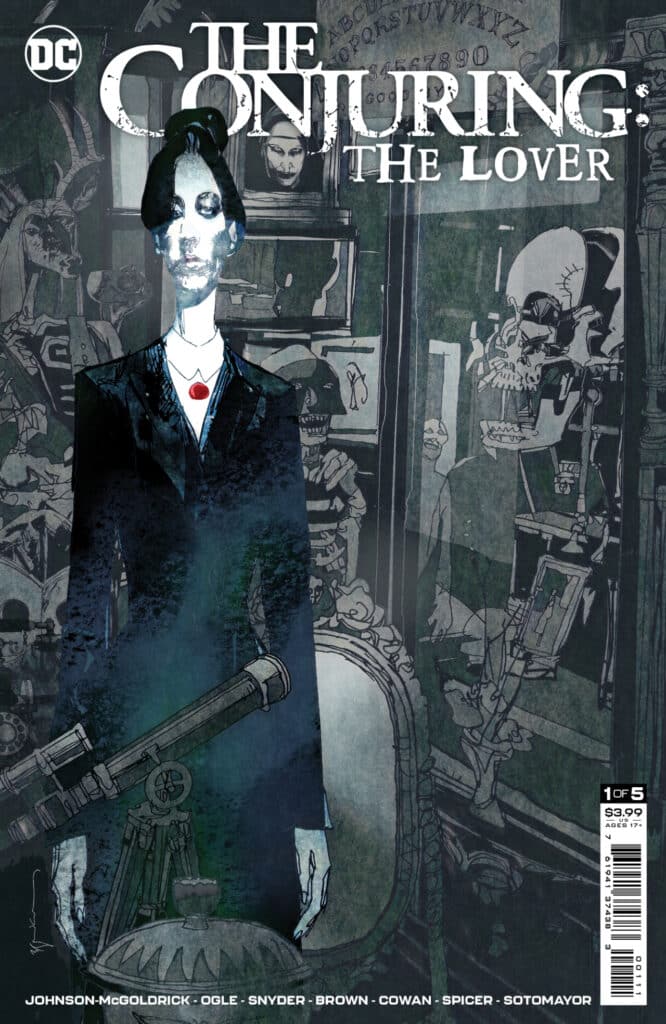
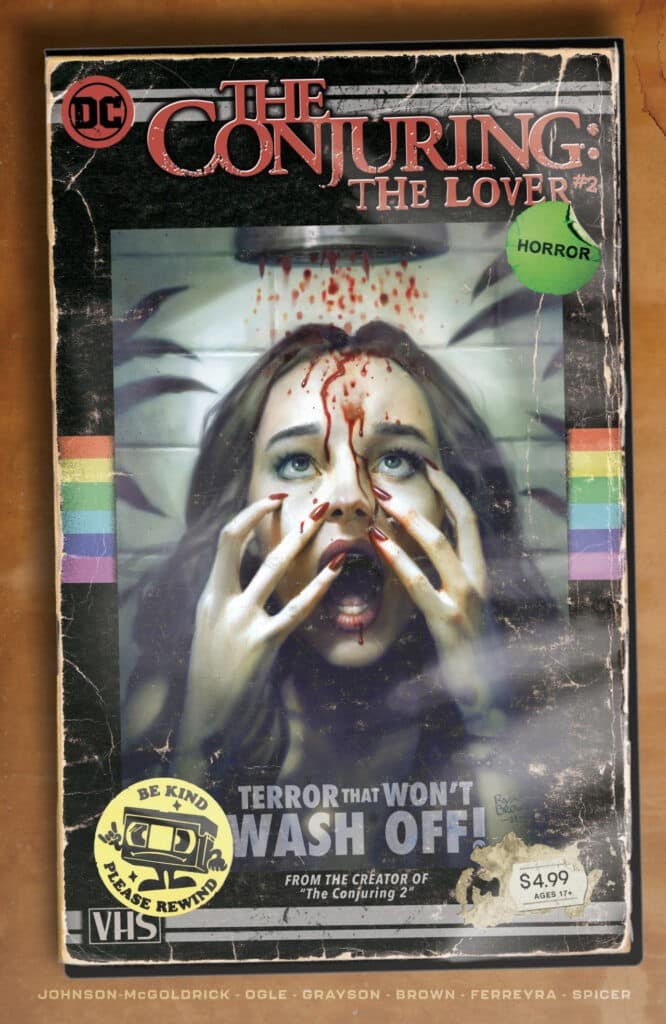
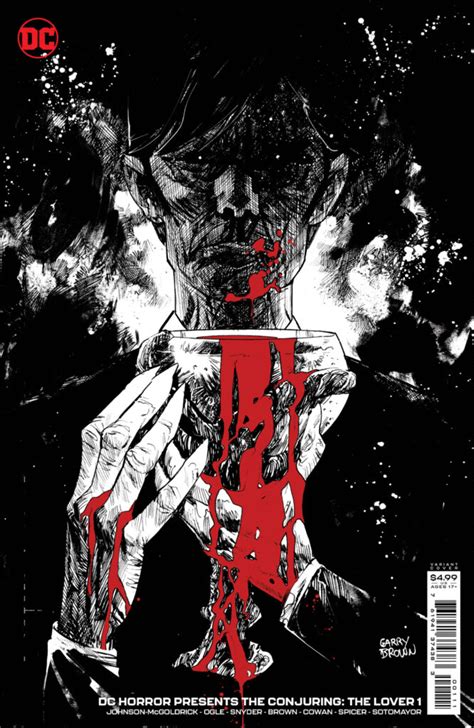
The Conjuring: The Lover

With The Conjuring having its feet firmly planted in its own universe, it’s only natural comics got the opportunity to flesh out the franchise’s particular brand of terror. DC Comics has answered the call to do so with the launch of a new imprint called ‘DC Horror,’ which will premiere with a prequel comic to the latest entry in The Conjuring franchise subtitled The Devil Made Me Do It.

The series, titled The Conjuring: The Lover, will run for five issues and will set up the events that lead into The Devil Made Me Do It. It’s co-written by the film’s screenwriter David Leslie Johnson-McGoldrick and author Rex Ogle (Death of Wolverine: Life After Logan), with art by Garry Brown (Babyteeth) and colors by Chris Sotomayor.

The story follows Jessica, a college freshman, returning to campus after winter break, that’s dealing with the anxieties of mounting schoolwork and grades, a sexual encounter with a guy she’s now regretting, and the odd feeling she’s being watched by something.

The idea shares some elements with that of The Exorcism of Emily Rose movie, in which the titular character starts manifesting “possession” symptoms while in college, throwing every single aspect of her life into disarray. In a sense, it’s fitting that the story echoes that of the aforementioned movie given its basis on real events, something it shares with The Devil Made Me Do It.

The Conjuring: The Lover

The third entry in The Conjuring series is based on the first legal case in American history to have a defendant claim innocence due to demonic possession at the time of the crime. The Exorcism of Emily Rose, on the other hand, is also based on the true story of Annaliese Michel, who underwent 67 exorcism rites in a year, which eventually led to her death. The cause of death was attributed to malnutrition. Her parents and the priest that conducted the exorcism were convicted of negligent homicide in the case.

How much of this case actually inspired (or not) The Conjuring: The Lover remains to be seen, but the premise promises a story worthy of the name that graces its cover. Additionally, The Lover will feature short back-up stories written by some of horror comics most popular creators, including Scott Snyder, Juan Ferreyra, Che Grayson, and Denys Cowan. These stories will focus on the haunted objects that resided in Lorraine and Ed Warren’s infamous artifact room (which is where they kept the Annabelle doll).

It bears mentioning that this new horror imprint might be riding on the shoulders of Joe Hill’s own recent horror imprint, Hill House Comics, which was headlined by Hill’s own Basketful of Heads comic, illustrated by Leomacs. The series that were published as part of the imprint received mostly universal praise and felt as if they belonged in the same habitat as DC’s classic House of Mystery comics.

The Conjuring: The Lover

DC editor-in-chief Marie Javins seems to be aware of this connection. In a statement she released on the new horror imprint, Javins said that “DC has always been the home of great horror comics and characters. DC Horror continues this tradition with new frightening tales from both well-known and new storytellers that will keep fans spooked and entertained.”

With The Conjuring possessing a well-established horror universe and DC recognizing the weight horror carries within its company’s history, it looks like this year is shaping up to be a good one for both veteran and emerging horror fans. The potential behind the new imprint for pulling in new readers, especially in the wake of Hill House’s success, seems to lean favorably towards success.

One thing’s for sure, if this move inspires other publishers to invest in their own horror imprints, they’ll be able to say ‘DC made me do it.’

The Conjuring: The Lover arrives in comic book stores and on participating digital platforms the same day as the U.S. release of The Conjuring: The Devil Made Me Do It—Tuesday, June 1, 2021, with issue #2 available on July 6, 2021. 

Review: MPLS Sound

MPLS Sound
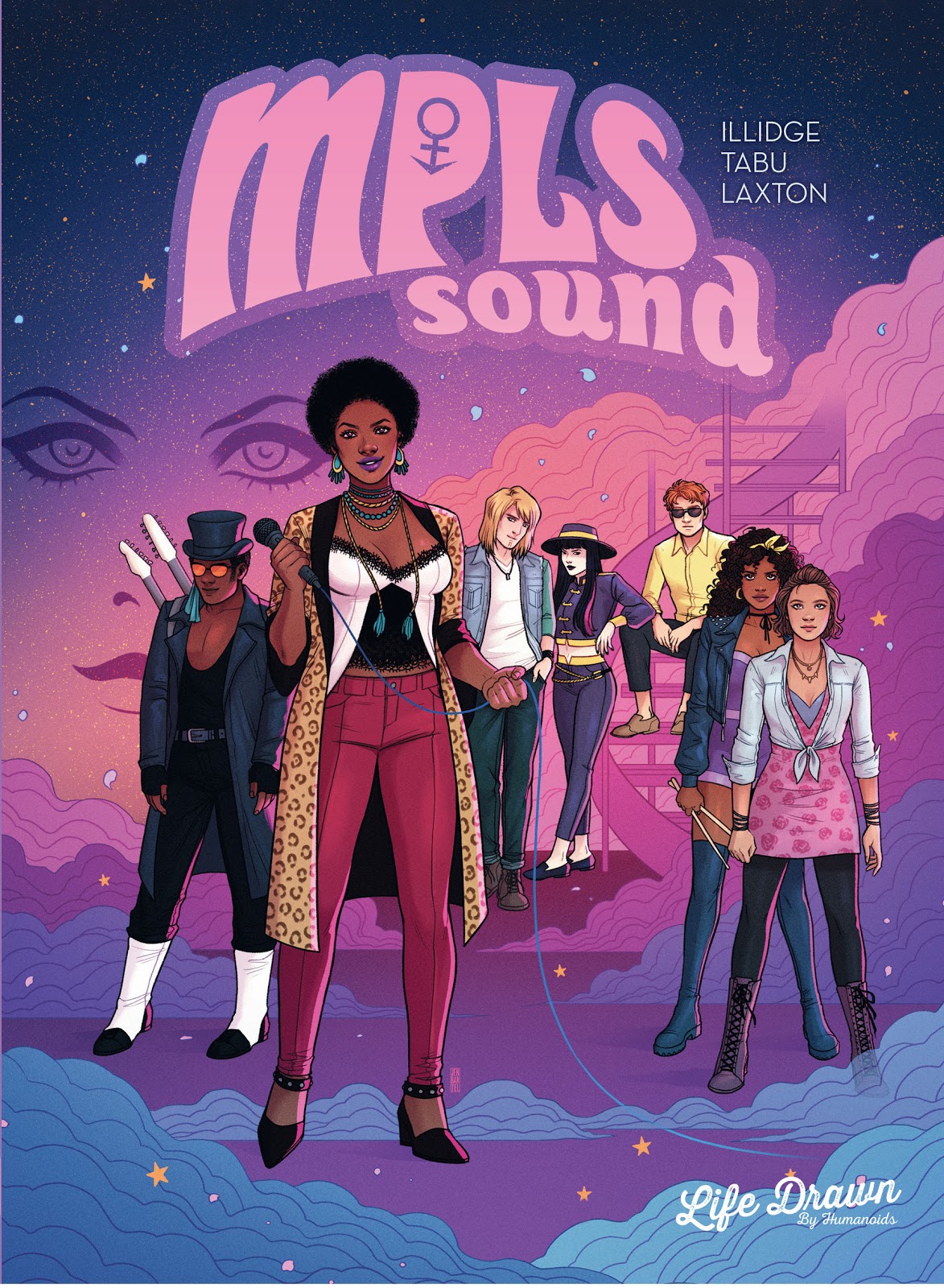
Cover by Jen Bartel

The phrase “put in the work” is often thrown around as an end-all/be-all take on success. What it actually entails, what it looks like, isn’t always clear. Joe Illidge, Hannibal Tabu, and Meredith Laxton’s MPLS Sound, a book about a fictional band trying to contend with the presence and influence of musical icon Prince, offers a good example of what that phrase means.

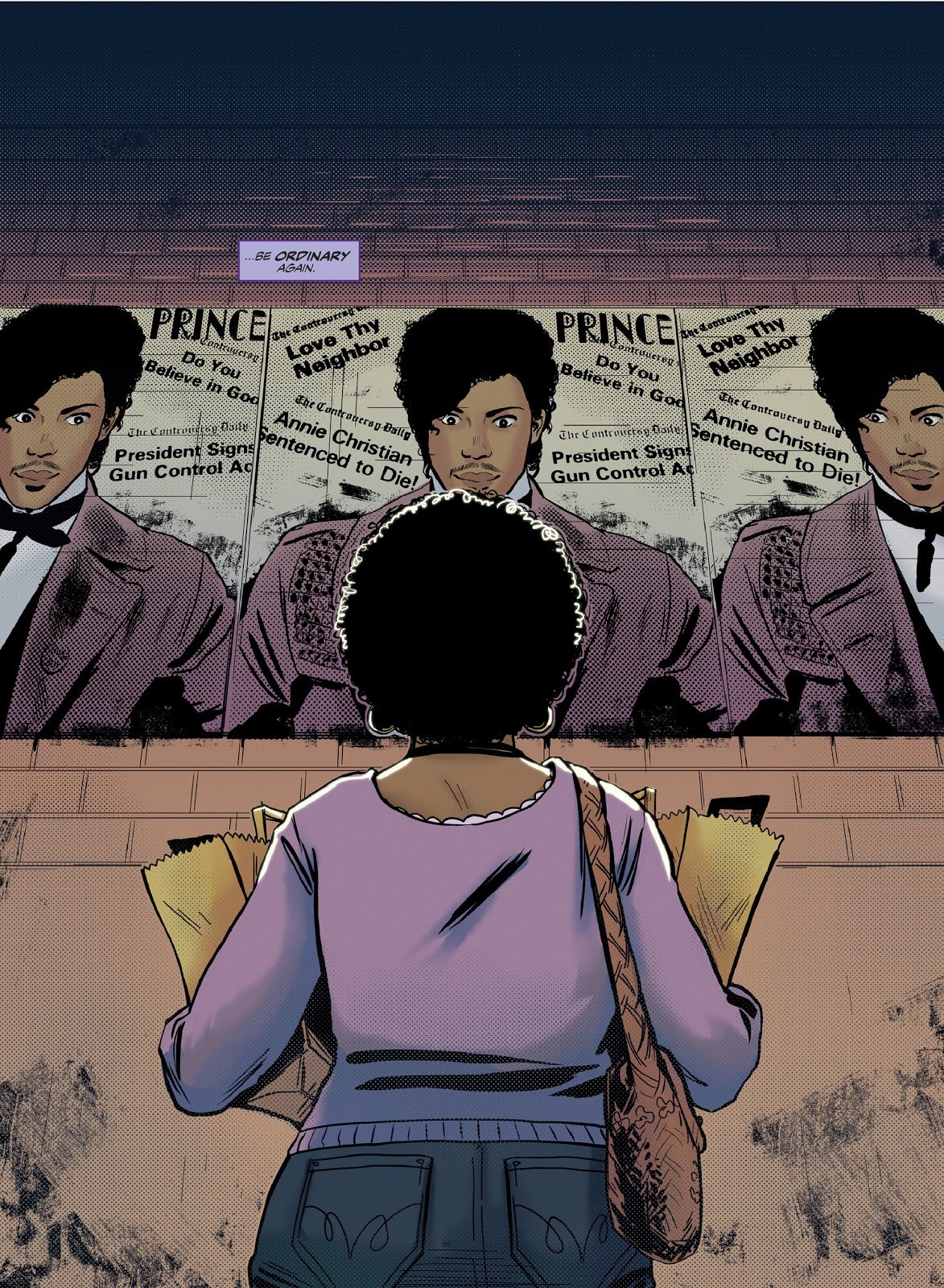
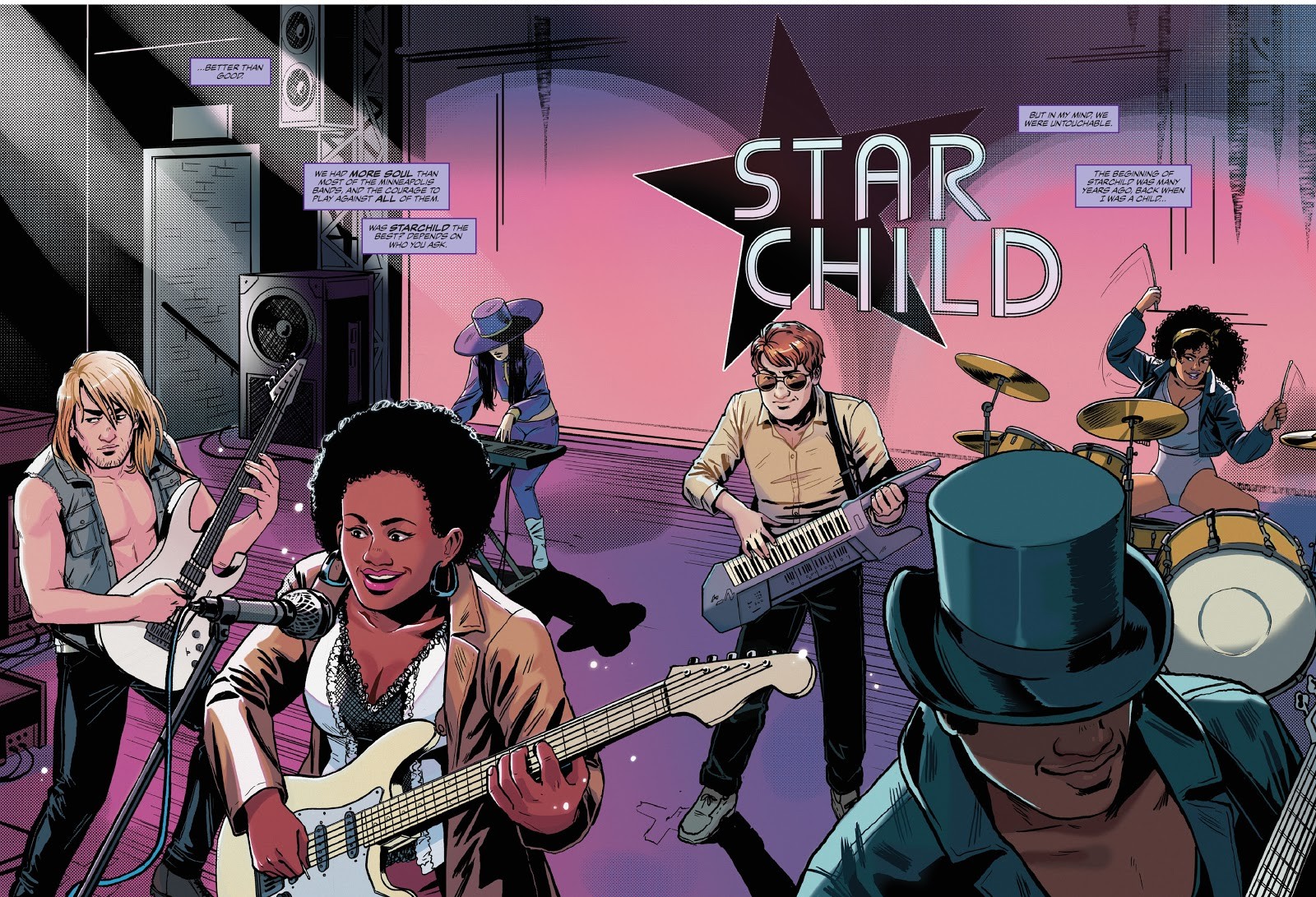
The book follows Theresa Booker and her Prince-inspired funk band Starchild as they rise through the Minneapolis music scene while also finding their place in it. Should Prince be an inspiration or a mold to shape one’s self into? What’s identity in music and how does one honor a legacy without being devoured by it? These questions follow Theresa and the band throughout the fast but contemplative story.

While not a requirement, having some background knowledge on the life and legend of Prince guarantees a more enriching reading experience. Some stops along the road of Theresa’s musical career are ripped straight out of Prince’s story.

The expectations of growing up the child of a musical family (if only on one side), demo recording at an early stage, a burning desire to make it big quick, dealing with the label of musical genius, among other things help fans connect the dots on just how much more of a Prince book MPLS Sound truly is.

This isn’t to say Theresa’s character mimics Prince entirely, but there’s a spiritual connection that’s hard to ignore. In fact, the book leaves you no choice other than to get sucked into the funkadelicness of that connection, especially with Laxton’s recreation of key musical spots in the the Minneapolis scene, including the Capri Theater and Sam’s (where he played to a sold-out hometown crowd in 1981). The locations are imbued with a sense of grandeur and magic that one can instantly recognize as belonging to Prince.

MPLS Sound

Illidge and Tabu’s script does a fantastic of adding historical flair to the storytelling, helping Laxton conjure up the required magic such places accrued as their legends grew. Tan Shu’s colors keep to a palette that celebrates purple in its various forms and all its glory, adding to the mystique of Prince’s presence all throughout the book.

An important note, though. Those expecting Prince to be a constant physical present as the plot progresses in the book might not be happy to hear the Artist’s ‘screen time’ is limited. Now, this doesn’t mean he isn’t present in every page.

The Prince character is more a vibrant and ever-present force that reminded me of the power Dracula holds in the classic Bram Stoker novel. Dracula’s interventions are limited in the book, but his presence can be felt in every page, often influencing character behavior and even the decisions they make. Prince plays almost the same role, being both inspirational and overwhelming at the same time.

Theresa and Starchild pose a lot of questions as to what’s expected of them being that Prince’s influence can either make of break the band’s identity. Of course, this is where Illidge and Tabu’s script takes the opportunity to focus on the value of going through the process, of putting in the work.

MPLS Sound

MPLS Sound presents the band’s growing pains as not only necessary but also as a kind of test to see how well the connective tissue between the band members holds when tensions arise. It’s all about the music, but that doesn’t mean it’s the only thing a band has to work on. As the creative team puts all of story elements together, the idea of hard work becomes this multidimensional endeavor that demands one’s commitment entirely. Nothing comes easy, a sentiment Prince both embodied and conquered.

Any excuse to pop in a Prince album and get lost in the sounds of his unique brand of funk is a good one. MPLS Sound doesn’t just give a good reason to do that, it gives the perfect reason to do so. The book invites a deeper understanding of music, craft, and of legendary musicians themselves, but also never at the expense of fun and excitement. What’s here possesses the stuff that makes certain comics go beyond greatness, an accomplishment worthy of the Artist that inspired it.

Script: Joe Illidge and Hannibal Tabu Art: Meredith Laxton
Story: 10 Art: 10 Overall: 10 Recommendation: Buy, along with the entire Prince discography

Humanoids provided Graphic Policy with a FREE copy for review


Purchase: comiXologyAmazonKindleBookshop

Review: Beta Ray Bill #1

Beta Ray Bill
Beta Ray Bill #1

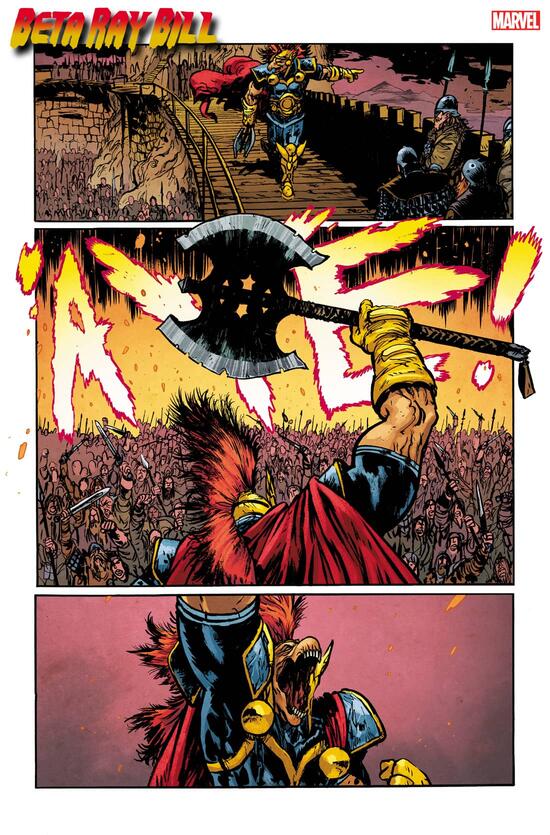
There’s a lot of emotion wrapped up in Daniel Warren Johnson’s new Beta Ray Bill mini-series. In fact, it’s what stands out despite a giant set-piece fight in Asgard against a Fin Fang Foom bearing the mark of the King in Black. What’s at the heart of this comic is a very aesthetically charged look at beauty and self-worth, one that takes place amidst perfectly chiseled Vikings and Norse gods.

Beta Ray Bill #1 is basically a character study of the titular Korbinite (whose origin story sees the character transformed into the cybernetic creature he is today after the destruction of the Burning Galaxy by the hands of Surtur). Set within the events of The King in Black, Beta Ray Bill is tasked with protecting Asgard as its Master of War, wielding every weapon available to him except Stormbreaker, his iconic hammer. Thor broke Stormbreaker during a disagreement with Bill.

The story is adamant on getting to Bill’s insecurities and frustrations quick. Without spoiling much, his battle with Foom doesn’t go all that well and he’s upstaged by Thor. Bill thinks he’s at a disadvantage in these cosmic battles given Stormbreaker isn’t available to him, which makes him feel somewhat unprepared, inadequate even, to uphold the title given to him by Thor.

Daniel Warren Johnson, who also scripted the comic, portrays Bill like an exposed nerve, a powerful being that—regardless of being considered one of the strongest heroes in the galaxy—is still destined to lead the life of an outsider based on the way he looks. Johnson takes full advantage of this characterization to set him almost completely apart from the Asgardians, all of which are gloriously sculpted to physically embody the very concept godhood. Bill, on the other hand, looks uncomfortable in his own skin, self-aware. The comic points to making this type of self-perception the crux of its narrative, seemingly with the intent to challenge it.

Along with Mike Spicer on colors, Johnson’s art is outstanding. The energy he brings to all his stories have a deeply metal feel to it, almost as if you could hear Iron Maiden or Dio blasting in the background as the story unfolds. Beta Ray Bill is no exception. If anything, the book forms a certain kinship with another of Johnson’s books: Murder Falcon.

Beta Ray Bill
Beta Ray Bill #1

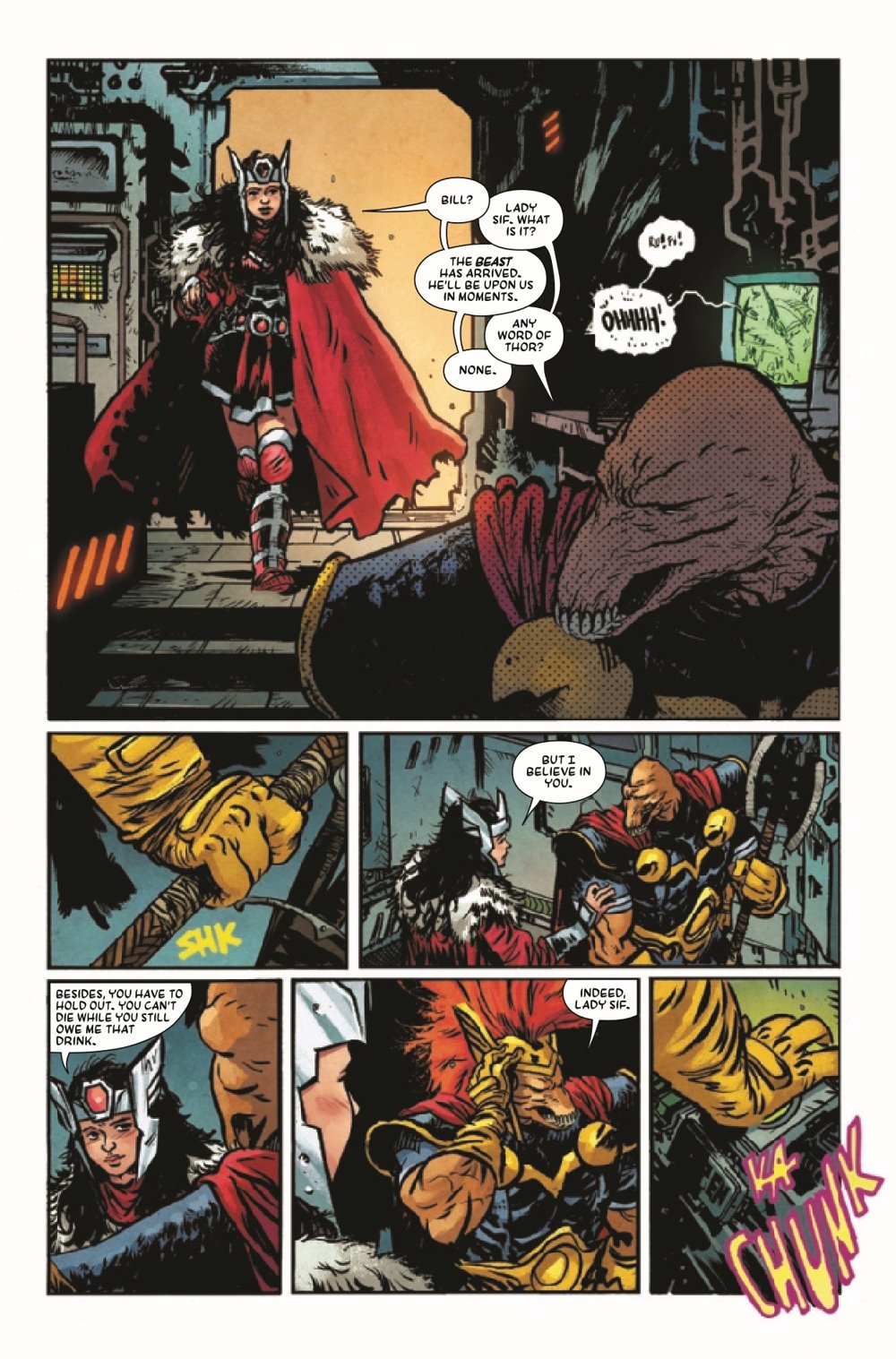
In Murder Falcon, heavy metal and giant monsters clash in a story that’s also about the emotional composition of a person’s sense of self, about how people feel in terms of regret, time, and death. That story’s approach to raw emotion seems to carry over somewhat to Beta Ray Bill, as does its contemplation on relationships and how they can be both restorative and destructive. For Bill, this aspect comes up with through his relationship with Lady Sif.

This is where the comic finds its most heart-wrenching moments. The degree of honesty behind them result in a series of emotionally harrowing sequences that make Bill questions his feelings as to his place in Asgard, among those he’s either befriended or expressed a more intimate kind of love to. By the end of my first read of this first issue, I felt my heart give a heavy pound or two as certain intimate things came to the fore. It’s a testament to how well-crafted Johnson’s script is and how good he is at capturing emotions in his comics.

Beta Ray Bill #1 is primed to be an emotional adventure with a mind to keep things cosmic both inside and outside its main character. To say that it’s exceptionally illustrated and colored is to state the obvious. Johnson and Spicer are a formidable storytelling team and if there’s one guarantee in all this is that the comic’s visuals will settle for nothing less than unforgettable. While that is special in itself, it’s the story’s heart where new narrative possibilities spring forth to entice readers. Expect this journey to tap into your entire emotional spectrum and remember to take your time enjoying each panel. Wondrous things abound in every one of them.

Script/Art by Daniel Warren Johnson Colors by Mike Spicer
Story: 9.0 Art: 9.0 Overall: 9.0 Recommendation: Buy and keep a box of Kleenex close by.

Marvel provided Graphic Policy with a FREE copy for review


Purchase: comiXologyAmazonKindleZeus ComicsTFAW

Movie Review: The Vigil turns Jewish folklore into claustrophobic horror

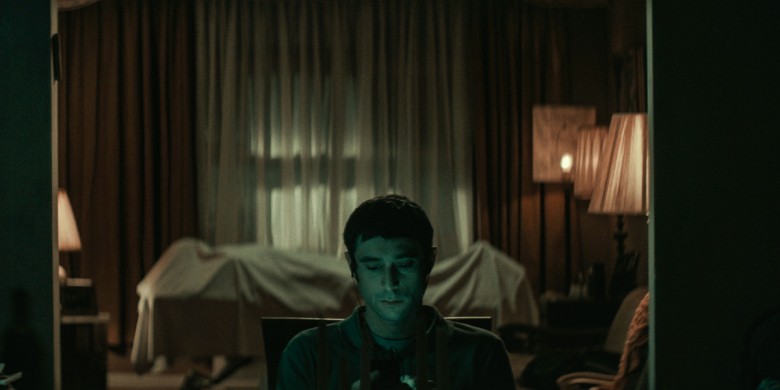
Much has been said about how The Vigil ventures into Jewish folklore to create a truly genuine Jewish horror story. The movie accomplishes this convincingly and it’s nothing short of impressive, especially when one considers how much of it happens almost exclusively in a small house setting.

The Vigil is a very focused horror movie. It takes place in a small Hasidic household that hides more secrets than one thought possible along with a Jewish entity known as the Mazzik (from the Hebrew word mazikeen which translates into “damager” or “destroyer”). A member of the Orthodox Jewish community has passed away and a man called Yakov Ronen (played by Dave Davis) is asked to become the body’s shomer from midnight to early morning, a religious responsibility that entails acting as the deceased’s watchman. He’s supposed to care for the dead man’s soul as it crosses over.

The Vigil
The Vigil

Complications arise as we learn Yakov has recently left the Hasidic community after a traumatizing experience. In the process, his faith has been broken, leaving him somewhat isolated while in the process of dealing with his separation from the life he’s always known.

Director Keith Thomas, who also wrote the film’s script, decided to cram as much as possible into the story to create a fully realized nightmare specific to the Jewish experience. The intention is to get at the terror behind trauma, memory, and the unknown.

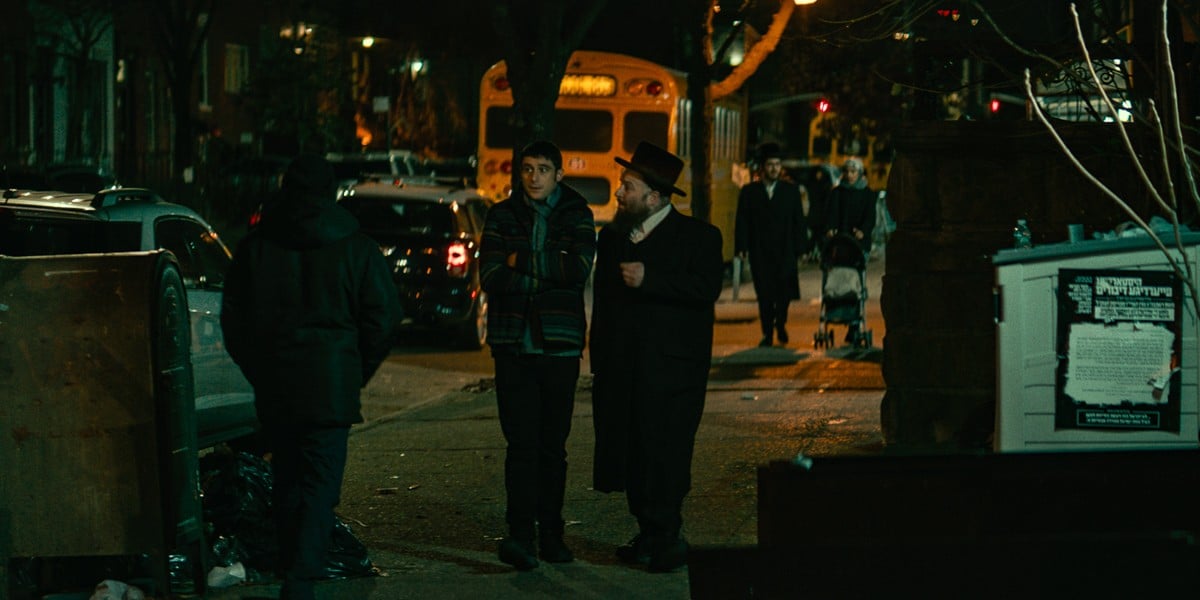
It all speaks to Thomas’ ambitiousness and drive to create an authentic Jewish horror film by fully committing to the culture behind its subject matter. The film goes as far as shooting on location at Williamsburg and Borough Park, two places known for their Hasidic populations, to capture as much as possible from the community that hovers around the main character.

Horror
The Vigil

Despite these elements being put firmly in place for maximum narrative effect, what makes The Vigil intriguing is its decision to keep to an enclosed place as it makes Yakov relive his traumas just as the house’s cursed memories start spilling out.

The small, two-story house the story takes place in carries itself like an old and bruised place, overtaken by shadows that seem to only recede in dimly lit spots. Light sources themselves are tinged with opaque reds and greens, making everything seem somewhat shapeless. It makes for a location that comes across as ill-intentioned, persistent in boxing in its chosen victim with no escape in sight.

Thomas uses this to his advantage and amplifies it by keeping the camera close to Yakov. And yet, there’s always enough space left over to peer into the background and see if something unnatural moves closer to him. It allows for a heightened sense of tension and dread to build up and it results in some great scares.

Dave Davis makes the entire experience work with his measured and tortured performance as Yakov. His fear is palpable, but so is the pain he carries. The house and its entity put Yakov inside a black hole of fresh wounds and traumatic memories, all concerning his decision to leave the community he’s currently back in for the night, in spite of his best efforts.

Davis lets the viewer in on his character’s suffering and makes him infinitely relatable, even in the face of his character’s specific cultural traits. The house’s lack of big open spaces creates the eerie sensation one is also trapped inside it with Yakov, making us feel the same claustrophobic terror he’s engulfed in.

Jewish horror
The Vigil

In this regard, The Vigil reminded me in parts of Scott Derickson’s Sinister. That movie’s demon also turned the house setting into a place where memories and hard life choices became things an evil entity could feed on. It exposed them and turned them into nightmares of their own. The Vigil showcases a similar approach to its horror, basically turning the house into a representation of the character’s fractured psyche.

In the middle of all this, the movie also finds a way to comment on antisemitism—from the Holocaust all the way to more modern forms of it—but not in a way that feels heavy-handed or forced. It’s presented as a constant that doesn’t need to rear its head on-screen to remind viewers of its existence, but it’s present enough to also play a role in creating its own sense of claustrophobia for whose who are victims of it.

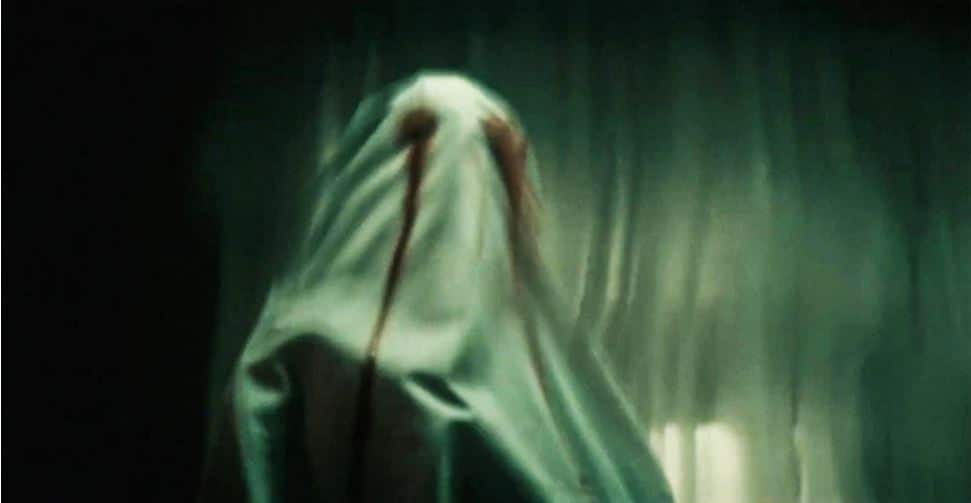
The entity that attacks Yakov, both spiritually and mentally, is cleverly allowed to be seen in key moments so as to not allow the film to be solely consumed by its metaphors. The Vigil has a lot of things to say, but they don’t get in the way of making sure the movie also gives its audience a proper horror experience. The Jewish demon is memorable and is given the full weight of myth and history to have it embody a kind of evil that is ancient but still relevant.

The Vigil
The Vigil

The Vigil succeeds at making each story beat and horror sequence correspond organically with its Jewish folklore influences and elements. The demon, the house’s haunted memories, and the trauma are all specific to the Jewish experience, but they never close the door on audiences from other cultural backgrounds so they can relate to the horrors on display. It’s claustrophobic and it actively tries not to make anyone feel safe within its story, all attributes of a great horror movie.

Review: Two Moons #1

Two Moons #1
Two Moons #1

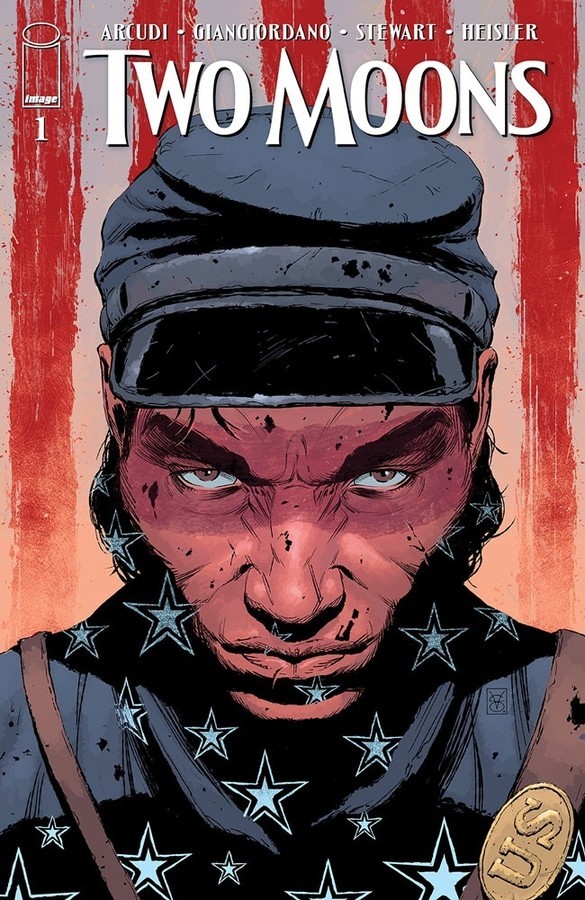
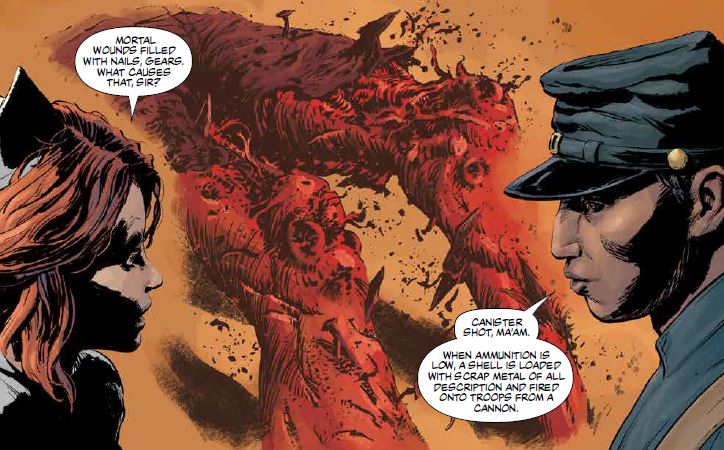
War is never short on metaphors for violence, especially in terms of being represented as something that is literally monstrous. John Arcudi and Valerio Giangiordano’s Two Moons #1 is very aware of this, but the monsters that populate their version of the American Civil War seem to have been called in to help carry some deeper metaphors into the story. Surprisingly enough, what makes it through is largely concerned with the violence that always seems to follow identity and assimilation.

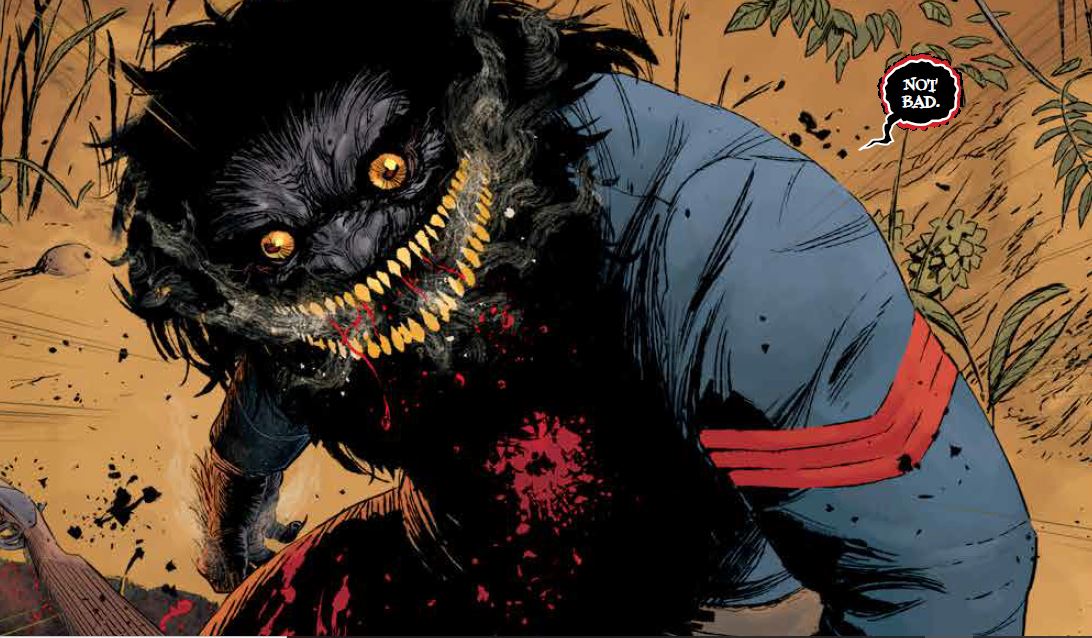
Two Moons #1 introduces readers to Virgil Morris, born of the Pawnee Nation and originally given the name of Two Moons. Virgil is presented as an assimilated American, a man that left his roots behind only to see them come back to claim him. Virgil starts seeing monsters, spirits, and dead men who won’t stay quiet as he fights for the Union during the Civil War. The things he sees might be all in his head, but the comic is leaning hard on making them feel very real to him.

Arcudi and Giangiordano appear to be gearing up for a slow burn of a story centered on the resurgence of Virgil’s Pawnee heritage and how it intends to remind him of who he is and who he should be, that is if it’s proven that he can trust both the mystic aspects of his process and himself, for that matter.

Giangiordano illustrates the story’s version of America as a place that’s always thirsty for blood, a place that thrives in war. The characters are presented as forces of nature that, to an extent, make them look like walking manifestations of anger and violence. This extends to the overall setting of the story, which sticks mostly to the American wilderness. Locations come off as unwelcoming and uncooperative, as places eager to be turned into battlefields.

Two Moons #1’s script focuses on introducing Virgil’s struggle with his Pawnee identity to readers, but Arcudi also takes the opportunity to introduce another character that’s coming to terms with identity and what it means to be an outsider in America: Nurse Frances Shaw, an Irish immigrant.

Two Moons #1
Two Moons #1

Nurse Frances is forming her opinion on what America is and what it stands for during one of the most unstable and uncertain moments in its history. The soul of the nation was quite simply fractured. The idea that the Civil War was a bloody and merciless fight between brothers was something people were constantly reminded of.

Negotiating one’s identity in the midst of all this inviting chaos into one’s own sense of belonging. Arcudi’s script is approaching it in a smart and intriguing way. In addition, her inclusion in the story serves as a good counter balance to Virgil’s own journey.

And then there are the monsters and all the other things that roam the wild. Giangiordano imbues each creature design with a considerable amount of storytelling. There’s a lot one can learn about them just by scanning their bodies. On a side note, they also look like they could effectively work in a film adaptation of the comic through practical make-up effects. Their designs are nightmarish but strangely realistic. They’re instantly memorable.

Two Moons #1
Two Moons #1

Two Moons is a new series with a lot of promise. It’s in a position to offer an appropriately confrontational take on what makes an American and if it’s even possible to identify anyone as such. The art is exceptional and it takes command of the story in unexpected ways. The book welcomes questions, demands thought, and values different angles. Come ready into the story or it will sneak up on you with its dark intricacies.

Script: John Arcudi Art: Valerio Giangiordano Colors: Dave Stewart
Story: 9 Art: 9 Overall: 9.0 Recommendation: Buy and dust off your old Civil War History books!

Image Comics provided Graphic Policy with a FREE copy for review


Purchase: comiXologyAmazonKindleZeus ComicsTFAW

Movie Review: Saint Maud offers a disturbing portrayal of faith and loneliness

Saint Maud
Saint Maud

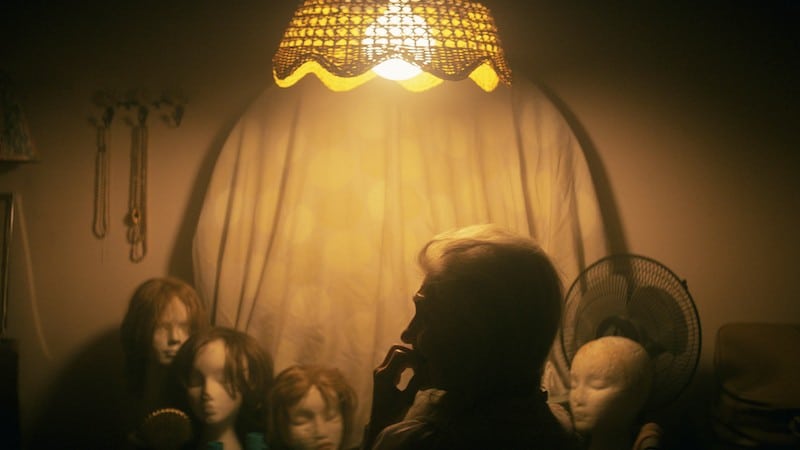
Pay attention to the title of the movie Saint Maud. Really think about what it is that makes someone a saint. In fact, if you look up some of the key saints from Christianity you’ll find the path to sainthood is often paved in blood. Be it through obscure instances of violence or culpable sin, the title of saint is still considered as an undertaking of absolute faith with the good grace of God standing as its ultimate reward.

Rose Glass Saint Maud looks at all this through a different lens, employing psychological horror to produce one of the most disturbing explorations of faith, devotion, and mental illness in recent memory.

Written and directed by Glass, Saint Maud follows a young, pious nurse called Maud as she comes to terms with the meaning of her relationship with God. In essence, Maud lives to answer the question of what God wants with her. As she looks for answers, she’s assigned to take care of a woman dying of cancer. Maud believes she can save the troubled woman’s soul, but God seems to have a harder test in the works for her.

The movie’s most resounding successes rest on the shoulders of actress Morfydd Clark, who plays Maud. Clark masterfully captures the title character’s tug and pull with being both hopeful and lost at the same time. Clark plays Maud as a young woman constantly teetering between a full-blown mental breakdown or a divine revelation.

Maud is given brief but revealing bits of internal dialogue that keeps viewers informed on the latest developments on what she thinks God is asking of her. Morfydd’s narration does a great job of showing Maud’s frustrations with her lack of understanding, always aware of the mounting pressure she faces while trying to make sense of her situation.

Saint Maud plays a bit with what’s real and what’s inside the main character’s head, but it prefers the less ambiguous approach to what’s actually happening. There’s more evidence of Maud suffering from a severe mental illness rather than a fundamental crisis of faith. And yet, it’s her faith that wins out as the thing that guides her in this new phase of life as a recent convert. Maud wasn’t always religious. There’s an obscure trauma at play that the movie cleverly keeps pretty much under wraps. It’s what might explain how God has so completely taken a hold over her.

Saint Maud
Saint Maud

The manifestations of her faith do one very unique thing here that not many other horror movies can claim to do. It makes the movie unfold as a kind of possession story where God is the invading spirit. Maud’s religious devotion plays a central role here as her decision to give in to faith keeps her isolated from almost everyone else.

Glass’ script is careful not to overindulge with the supernatural elements, but whenever something gives the appearance of being otherworldly, the horror gets ramped up considerably. Glass does an excellent job of playing with shadows and dark corners without stripping a single scene of all color. In fact, the movie contains a very clear and solid color palette that serves to heighten the terror at the heart of Maud’s process.

This figures into Glass’ decision to put Maud in big open spaces that aren’t exactly crowded with people. Quite the opposite. Maud seems to live in a world devoid of meaningful human contact. This becomes an especially powerful source of pain while in the presence of male characters, none of which see Maud as someone worth being treated with care or respect. Maud’s world is hostile and even God is suspect.

Saint Maud has a lot of moving parts, each made more complex and disturbing thanks to the fact the element of faith serves as its source of horror. Clark’s performance elevates the story’s focus on the consequences of unchecked piousness with an eye to question not just religious behavior but also the effects it can have on a troubled mind. As far as explorations into these matters are concerned, Saint Maud stands as one of its greatest.

« Older Entries Recent Entries »