Author Archives: Ricardo Denis

Review: The Conjuring: The Lover #3
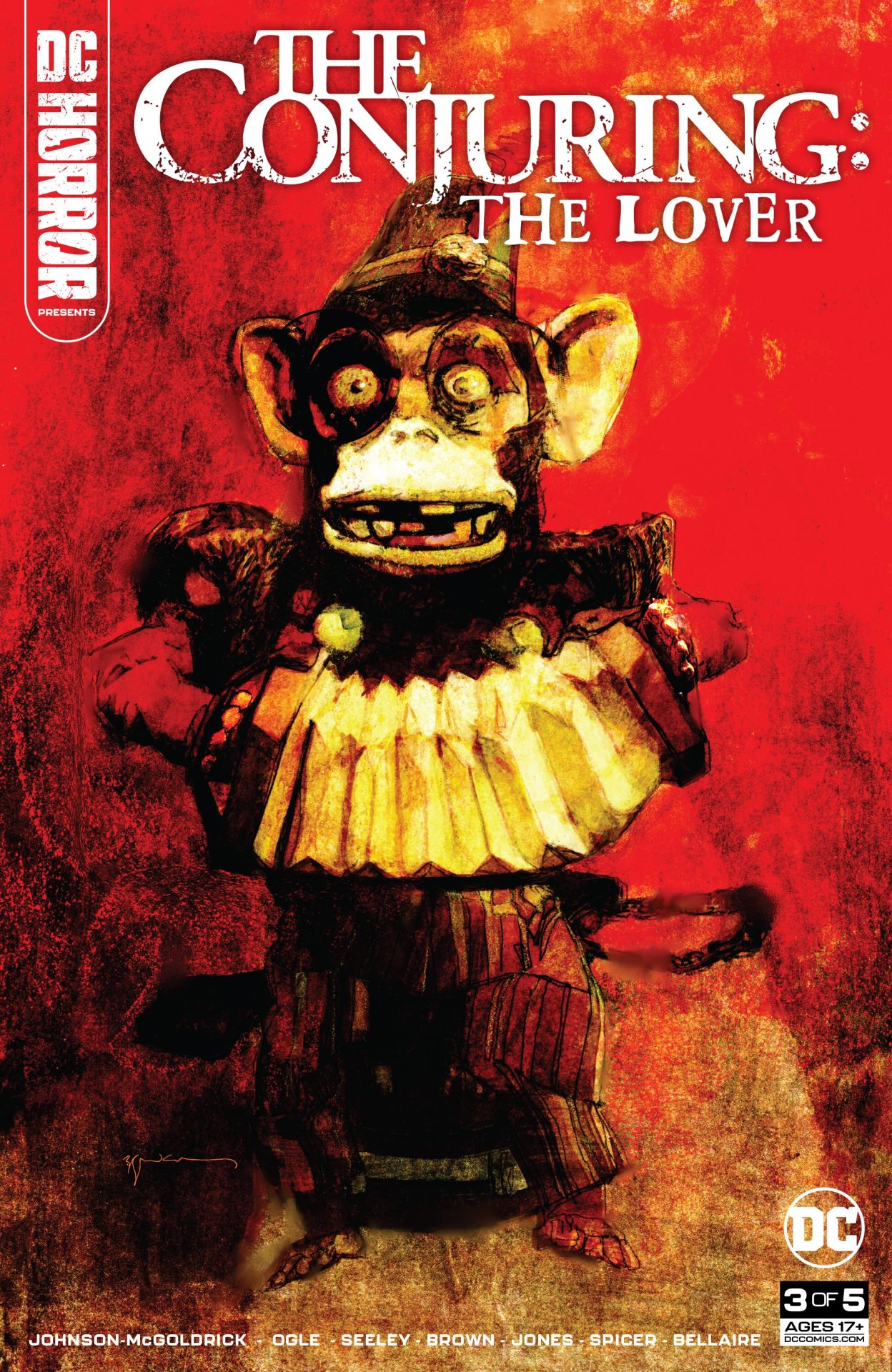
The Conjuring: The Lover #3

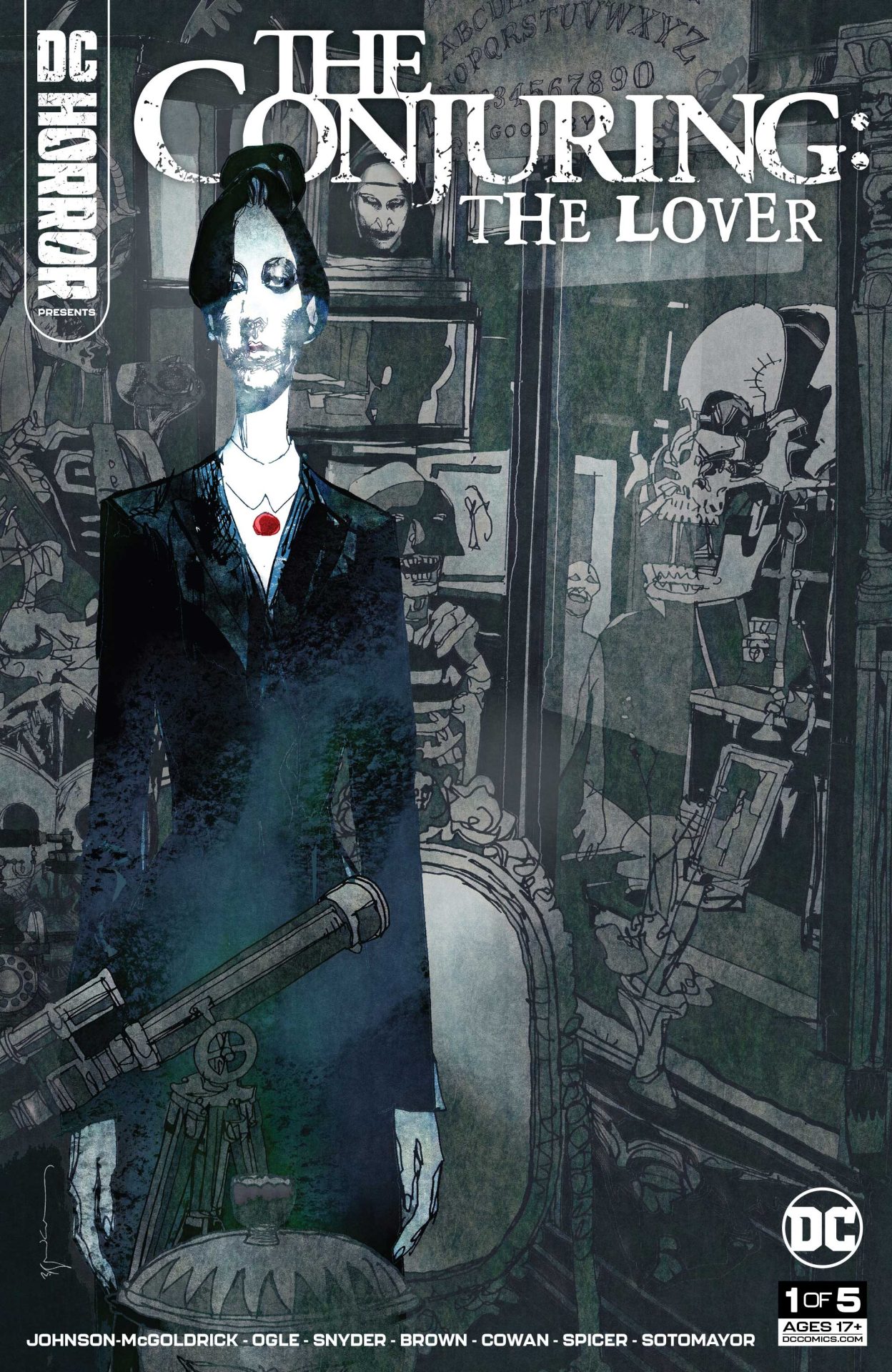
The Conjuring: The Lover #3 has finally put its main character, Jessica, on a straight path to the source of her haunting, and things are getting diabolically tense. The third entry of this horror series seems to be eyeing its endgame quite closely and is thus moving its pieces towards a terrifying finale where evil might actually prevail should Jessica not find a way to rid herself of the mysterious Satanist behind it all.

The Lover has been an immensely fun ride. It thrives on a sense of claustrophobia by keeping the focus close on Jessica and how the thing that’s haunting her further isolates her from friends and any chance of complete salvation from the situation. Issue #3 ramps up the haunting, isolating the character to the point of constant oppression, tricking her friends into believing her behavior stems from good old-fashioned madness.

In this sense, the story reminds me even more of the movie The Exorcism of Emily Rose (2005), in which a female college student struggles with behavior that her family thinks can be attributed to demonic possession when the evidence more directly points to mental illness (based on the true case of Annaliese Michel, who underwent 67 Catholic rites of exorcism that ultimately led to her death).

While the comic leaves less space open to interpretation as to the origin of Jessica’s haunting, it nonetheless resorts to similar storytelling elements to show just how this haunting disconnects someone from the world. It’s been a steady build to this since issue #1 and it’s paying off quite well here.
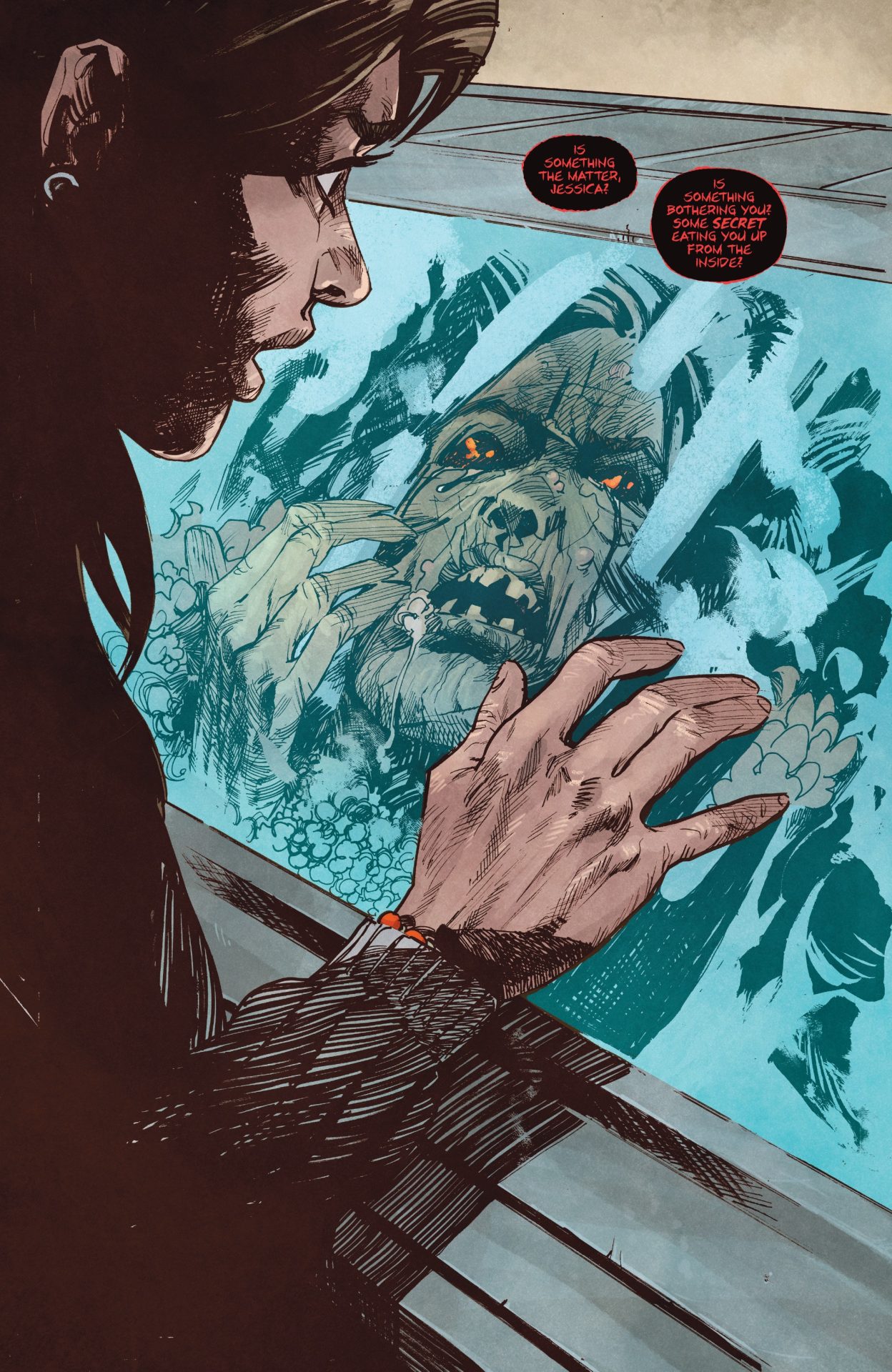
The Conjuring: The Lover #3

Garry Brown’s art is especially effective in portraying Jessica’s own sense of dread as she gets pulled away from the people that can help her the most by the person enacting the horror that’s latched on to her. Each panel feels claustrophobic, enclosing Jessica deeper within her environment. At points, it feels as if the panels themselves are attacking the character, pushing into even more uncomfortable spaces.

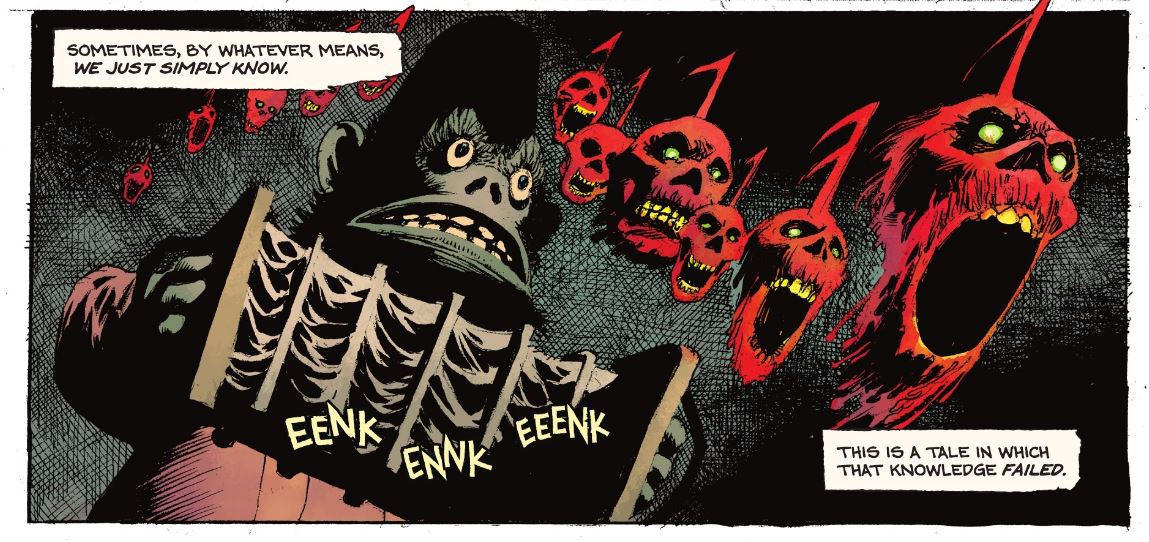
As has been the case in the previous two entries, this issue contains a back-up story featuring a haunted item from the Warren’s Artifact Room, and this issue’s tale might be it’s best yet. It looks at the now infamous Accordion Monkey and it’s written by Tim Seely with art by horror master Kelley Jones and colors by Jordie Bellaire.

It’s a tale that has a 1970’s horror vibe to it in that the inner workings of the haunted object contains a healthy dose of madness, violence, and insidiousness. The horror put on display has no qualms painting a bleak picture for those involved and it savors the idea that darkness tends to have a better chance at prevailing in cases such as this.
The Conjuring: The Lover #3

Seely’s script is tight and smartly gruesome when it needs to be, but Jones’ art is what seals the deal on this one. It’s a great reminder of why Jones deserves to be among the best horror illustrators in the business. It feels classic EC Horror to an extent, but it looks to be more than just an homage to horror’s past. It truly is a treat getting this story right after a solid entry of The Lover.

Things aren’t looking so good for Jessica and the next issue is shaping up to be an intense encounter with the dark forces that have decided to torment her. We can only hope the Warrens make a surprise appearance to save the day, but the way things are going, that doesn’t seem like it’s going to be the case.

Story: David L. Johnson-McGoldrick & Rex Ogle, Art: Garry Brown Color: Jordie Bellaire
Story: 8.0 Art: 9.0 Recommendation: Buy and always have a friend that believes you see ghosts.


Purchase: comiXologyKindleZeus ComicsTFAW

Review: The Nice House on the Lake #3

The Nice House on the Lake #3

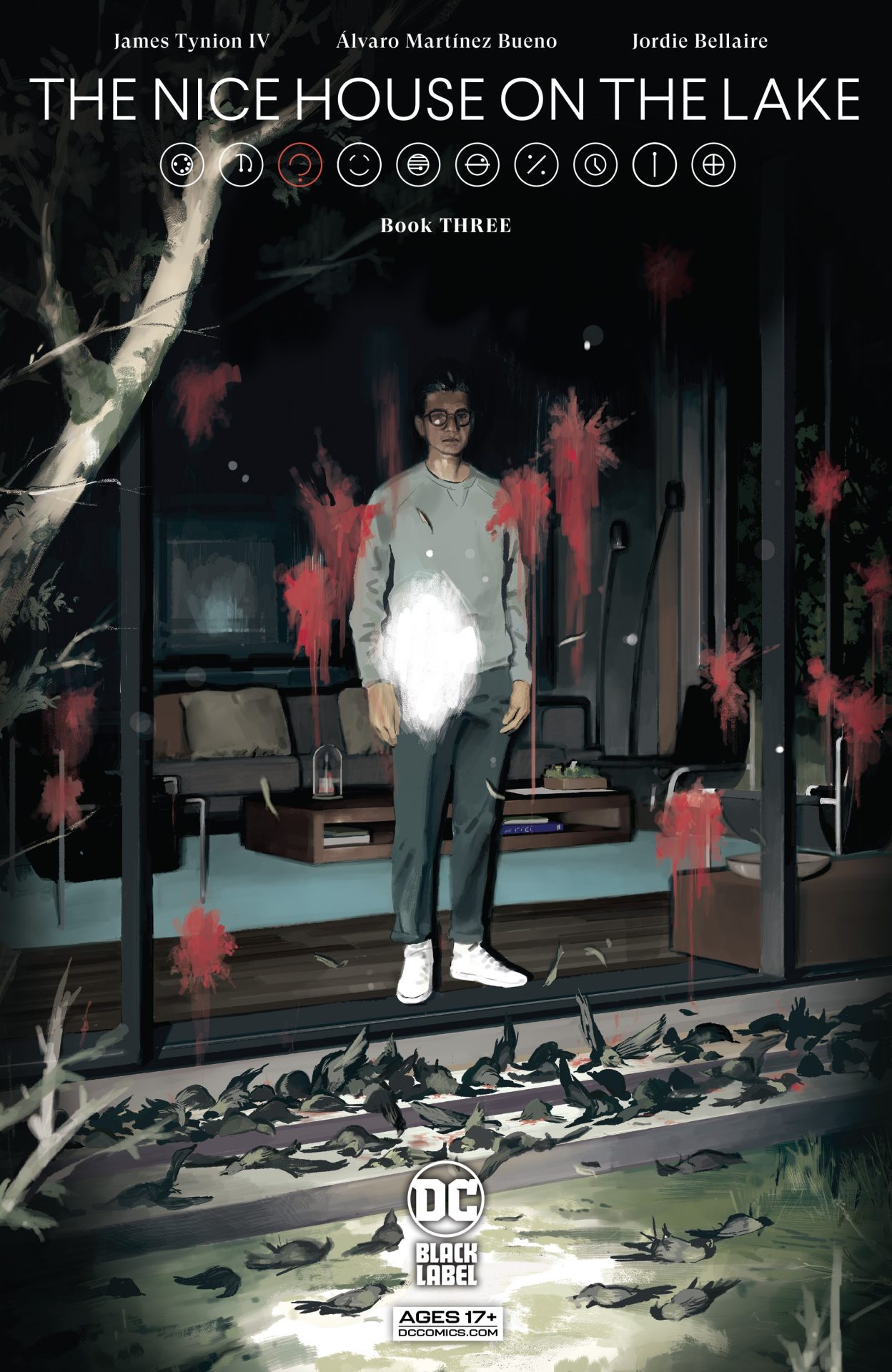
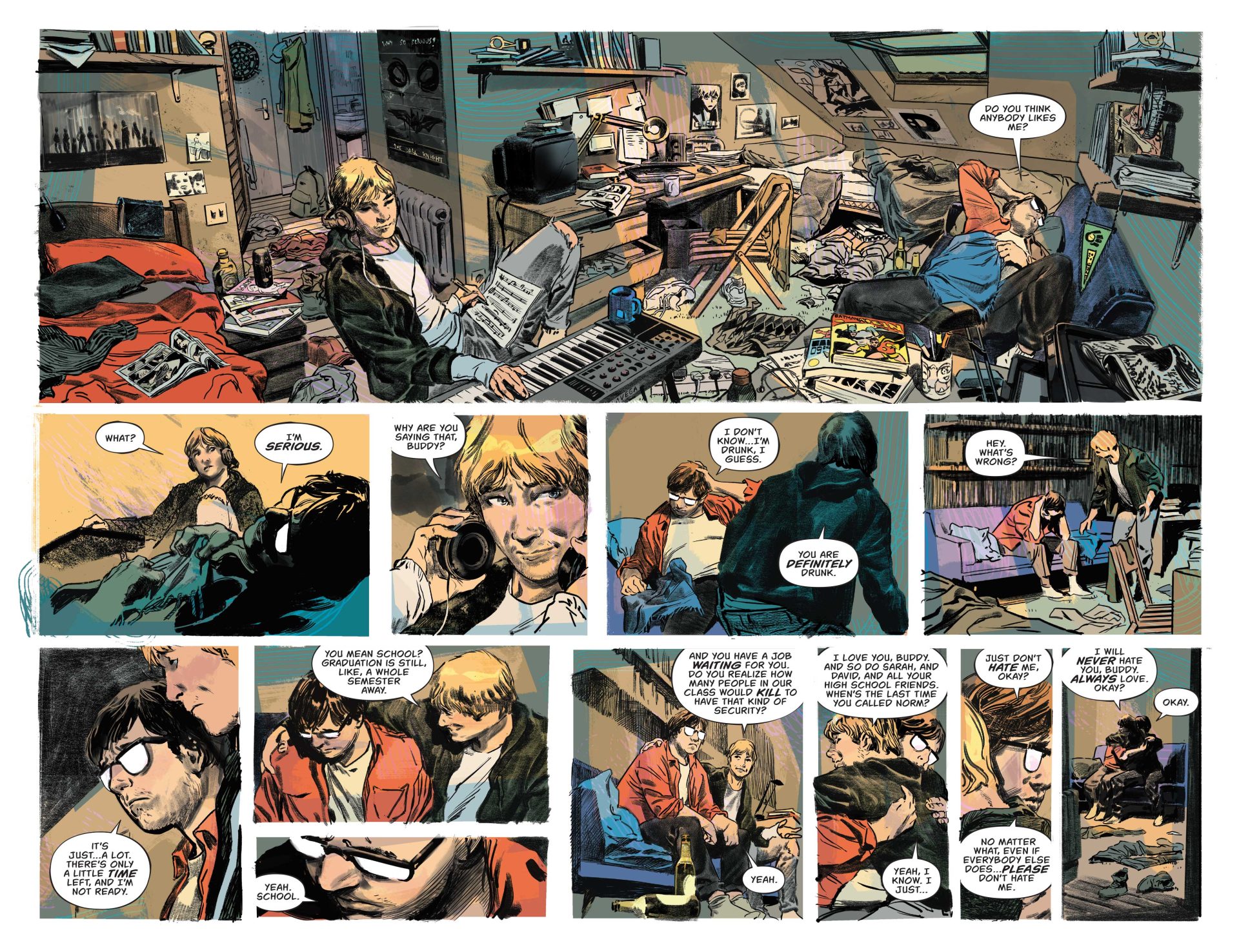
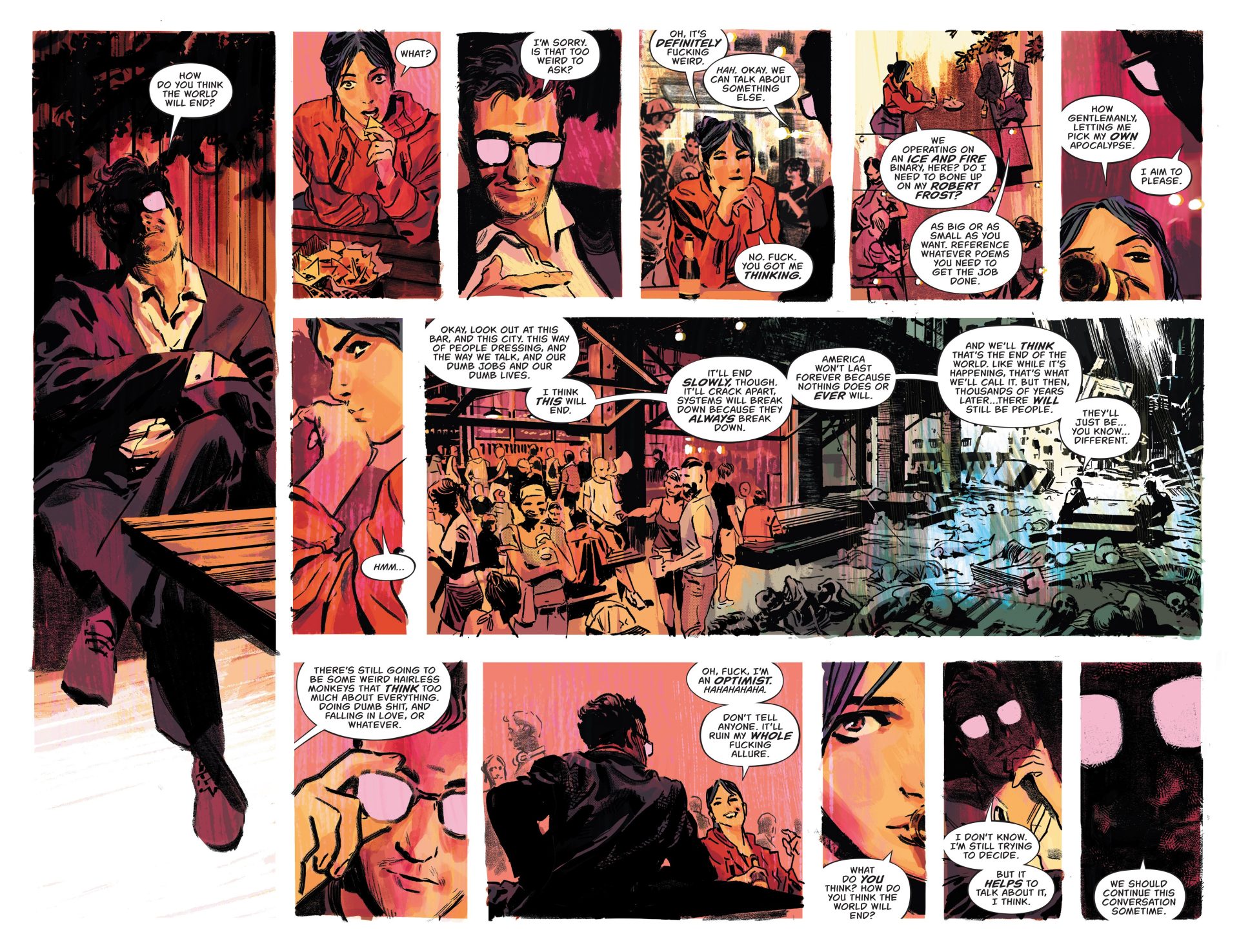
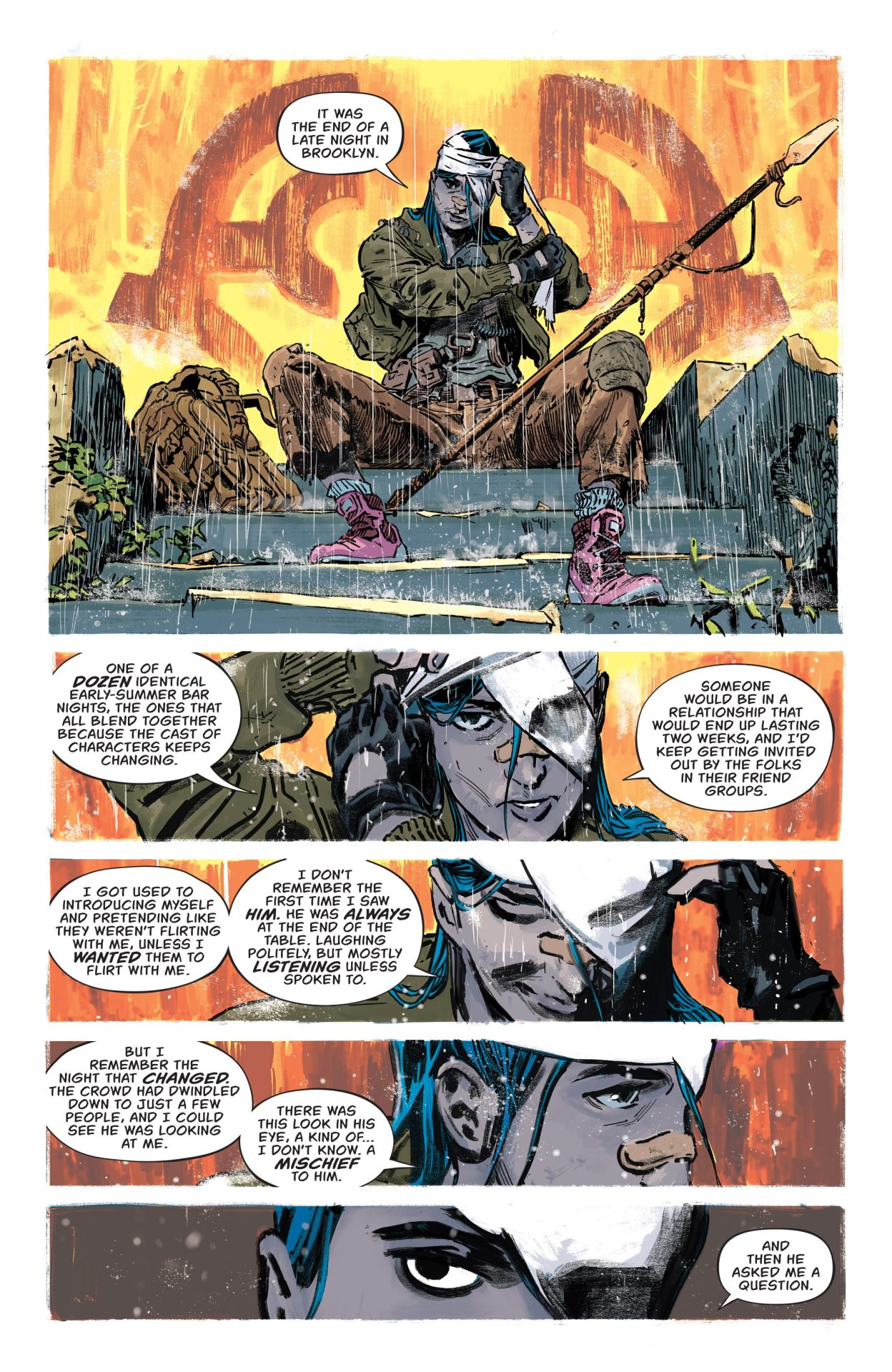
James Tynion IV and Álvaro Martínez Bueno try to tame the urgencies of the end of the world in The Nice House on the Lake #3 to look at a specific character and how everything affects just one person in a group that’s stuck together. While the tension’s still running on high, this character-centric issue is one that nonetheless helps deepen the mystery behind the apocalypse and the role Walter, the person responsible for the house on the lake, plays as one of its agents.

Issue #3 centers on Sam, a queer character that reveals Walter was the first person he came out to and how he felt a kind of unstable duty to please this friend that only appeared at certain moments throughout his life. As the group tries to create some kind of routine or distraction to deal with the situation at the house, Sam decides it’s too early to settle and accept the new normal. Instead, he goes out to explore the limits of the land surrounding the house.

This part of the story finds great success in holding the idea of post-apocalyptic life over the group’s collective thought. While some might be more inclined to try and find comfort in distraction, others will find there’s no hope of acceptance when so many questions are yet to be answered. Tynion and Martínez Bueno latch on to this dynamic to great effect to set up what will eventually lead to rifts within the group.

The Nice House on the Lake #3

Martínez Bueno finally has the opportunity to let loose with the overall weirdness found on the land surrounding the house, especially with the strange geometry of the sculptures lying around. As Sam explores further, we get to see strange things hiding beyond the house and they do a great job of turning an already terrifying situation into a more disturbing one. I can’t wait to see what other hidden horrors await in the coming issues, and how Martínez Bueno will bring them to life.

Tynion’s focus on Sam shows that each character in Nice House has a continent’s worth of story in them. Not only should we expect more of these single-character studies in the future, but they might also become the some of the best parts of the whole series. It’s getting harder and harder to wait for the next installment of The Nice House on the Lake and it’s looking like it has no intention of letting up on that.

Story: James Tynion IV, Art: Álvaro Martínez Bueno
Story: 10 Art: 10 Overall: 10
Recommendation: Buy and remember to bring your own snacks to the end of the world


Purchase: comiXologyAmazonKindleZeus ComicsTFAW

Review: Not All Robots #1

Not All Robots #1

The robot takeover doomsday scenario, where humanity gets replaced by the machines they created, has been the basis for many a sci-fi story, but the aftermath is rarely given time to shine. Just what is life under robotic law and what does the new day-to-day look like after humanity’s gone extinct? Say Ultron finally gets one over the Avengers, what’s next? Aren’t robots near-perfect beings with infinite knowledge? Museums and libraries would become obsolete as robots store everything in their memory and can access it at a moment’s notice, not to mention grocery stores and bars. Well, maybe not bars.

Mark Russell (Prez, Billionaire Island) and Mike Deodato’s new AWA Studios comic, Not All Robots, offers readers an answer: the robots will eventually become more like us. Once you get to the top of the food chain, it’s possible that the only way forward is to downgrade. That is, unless they’re content with being static automatons surfing their own databases without a need to move around or physically engage with anyone.

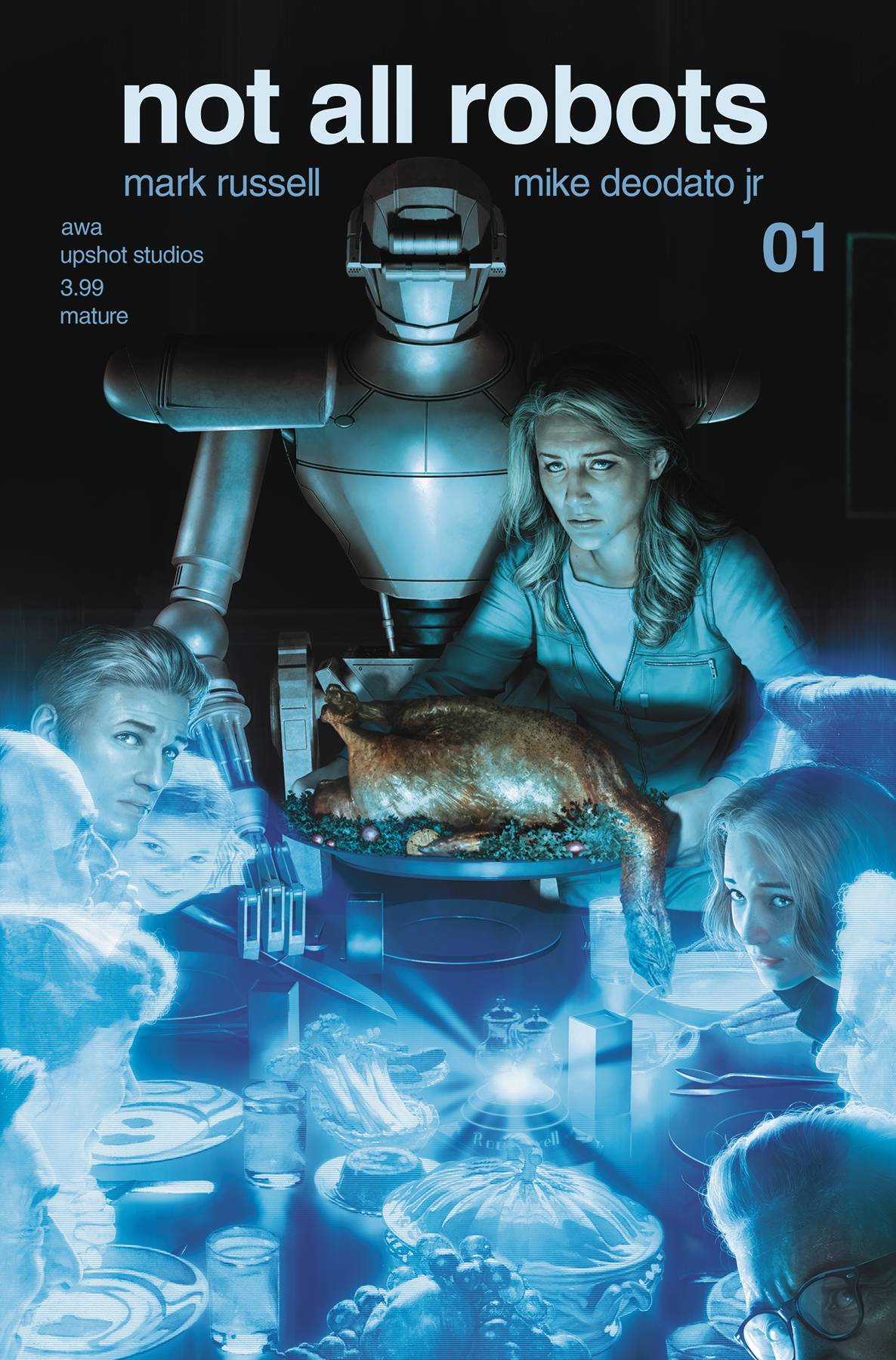
Not All Robots is another great Mark Russell satire on the ridiculousness of existence and the things we do with our existential dilemmas. Humanity, what’s left of it, is very quickly becoming obsolete as worker robots have become the sole providers of living families by completely taking over the workforce. Humans are quite simply redundant at this point and robots are catching on to the fact of how superfluous they’ve become. There’s even a talk show within the story called Talkin’ Bot that puts everything into perspective and I am one-hundred percent certain this show will actually exist a few years from now.

The comic centers on a house bot called Razorball. He’s the main provider for the Walters, the family that owns him. Razorball has become a disenchanted worker, cynical at every turn. He complains about life, the monotony of it, and his disdain for all the unnecessary things he has to do at work.

Deodato (Marvel’s Original Sin, The Resistance) illustrates Razorball as a somewhat outdated and clunky machine, in need of an update or to be updated by a newer model. That’s where the Mandroids come in, robots that can easily be confused with humans given the quality of their build. In other words, the future.

Not All Robots #1
Not All Robots #1

It’s hard not to confuse Razorball with the average Joe, an unhappy guy that hates his life and his job and feels unappreciated by society. Russell’s genius, though, comes in how he takes that archetype and injects classic Asimov-like science fiction ideas into the story to not let the metaphor consume the narrative entirely. The associations are easy to make between Razorball and his human counterparts, but there’s a real sci-fi heart beating at the center of it.

Deodato crafts a universe’s worth of worldbuilding into the story with futuristic vistas and designs that firmly place the story within the realm of plausibility. It keeps the characters grounded and the story human. Deodato’s panel layouts and overall page structure—which has evolved throughout his career and stands as one of his signature skills as an artist—keeps things busy too, as if the new standard of life is governed by on-going activity carried by the never-ending stamina of a well-oiled machine.

Russell, on the other hand, isn’t just content with making fun of humans through worker robots. The idea that machines have forced people into a sedentary lifestyle echoes current debates on how technology is eliminating jobs people used to do by hand and got paid for. The robots act as living cautionary glimpses into what our reality could turn into if progress is allowed to continue pushing forward unfettered. Also how disenchanted robots will get once they realize how mundane human existence actually was.

Not All Robots is a funny, scary, and plausible take on humanity’s self-authored descent into obsolescence. Readers will laugh hard the entire way through, but they’ll also have no choice but to think about the consequences of our exponential growth into a machine-dominated world. The kicker, though, is that regardless of how advanced these robots turn out to be, they might not have a choice but to become a bit human to find some meaning in the new status quo.

Story: Mark Russell, Art: Mike Deodato
Story: 9.0 Art: 9.0 Overall: 9.0 Recommendation: Buy and maybe consider throwing your iPhone into the ocean

AWA Studios provided Graphic Policy with a FREE copy for review


Purchase: comiXologyKindleZeus ComicsTFAW

Review: The Nice House on the Lake #2

The Nice House on the Lake #2

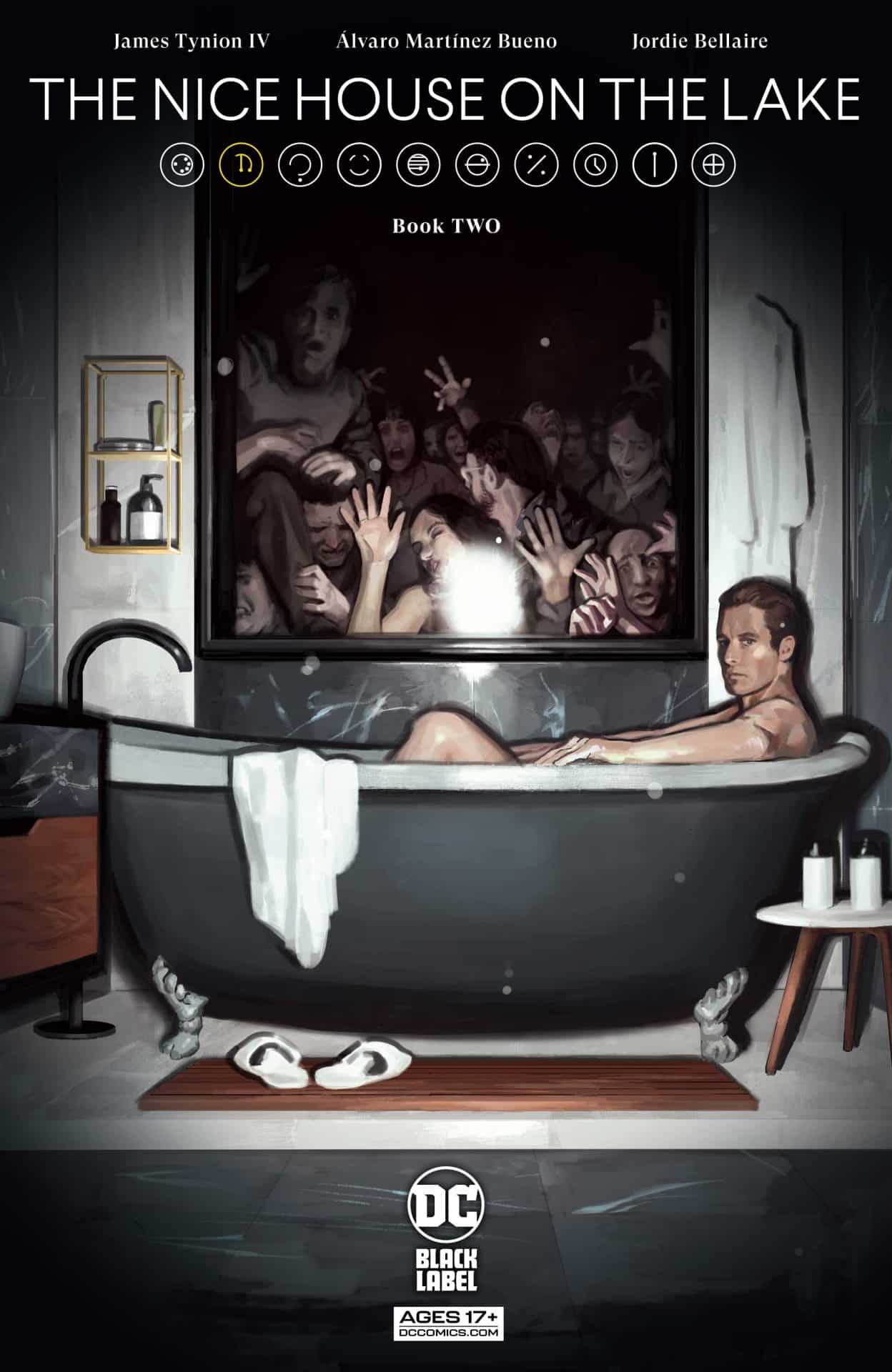
The first issue of James Tynion and Álvaro Martínez Bueno’s The Nice House on the Lake set up an end of the world scenario with a huge cast and a mysterious host at the center of it, all of them weathering the apocalypse inside a well-stocked house. The people who were spared the final moments of human existence are all in shock come issue #2 of the series, and they’re in a mad scramble for answers.

Us readers can only be certain of one thing once the second part of the story has reached its final page: Tynion and Martínez Bueno are still on their way to give us one of the best new comic series of the year.

The Nice House on the Lake #2 puts its cast of characters through the wringer as they try to make some sense of how the world just decided to self-combust and melt almost everyone not on the house with them. Emotions run high and there’s a sense of disconnection among the guests. Reality as they knew it just stopped and anything that comes after the event is now going to be post-apocalyptic. Not an easy realization to come to.

Tynion and Martínez Bueno employ a few different techniques to the storytelling here to shake things up while also building the world their characters inhabit. For instance, the comic contains several pages that unravel as an official log of things said during certain moments immediately after the world seemingly ended. This presents the possibility some kind of secret group or organization is behind it all, perhaps torturing or experimenting with the people at the house for reasons unknown.

This is one of the series’ strong suits, guiding readers to make dark assumptions on what’s actually happening. In a sense, the horror on display in the comic is being driven by elements more commonly found in the Mystery genre. There’s a bit of a “whodunnit” at play here and it helps make the comic an even richer and more complex mystery box in the process.

Martínez Bueno’s art continues to impress in issue #2, presenting everything and everyone in a kind of haze that just deepens the horror being experienced by everyone in the house. It helps that Martínez Bueno also proves to have complete control over the characters’ body language. It’s theatrical, to a point, in terms of making the reader take everything into account to get a better sense of the story.

The Nice House on the Lake #2

The Nice House on the Lake is an intoxicating read, period. It’s hard to stop pouring over each panel, each line of dialogue trying to figure everything out. Issue #2 gives readers enough story to keep them hooked while also teasing so much more horror to come. The monthly wait is starting to get difficult, and I can only see it getting harder to hold out till the next chapter.

Story: James Tynion, Art: Álvaro Martínez Bueno, Colors: Jordie Bellaire Publisher: DC Black Label
Story: 10 Art: 10 Overall: 10 Recommendation: Buy, read, read it again, come up with multiple theories, repeat


Purchase: comiXologyKindleZeus ComicsTFAW

Review: Werewolves Within pokes fun at American politics and sneaky lycans, in that order

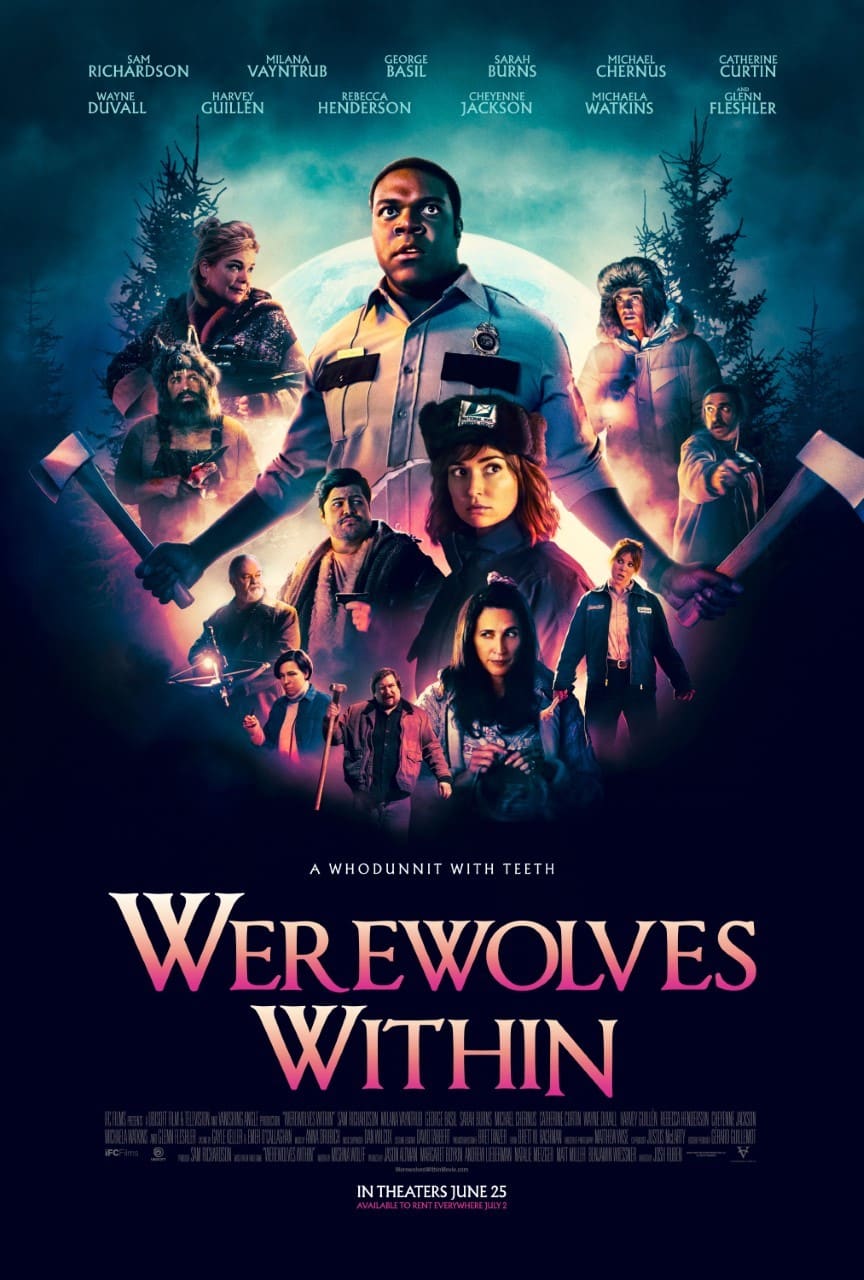
Werewolves Within
Werewolves Within poster

Imagine a werewolf story where the coming of the full moon is the least of the main character’s worries given he’s surrounded by a group of people more invested in the construction of a pipeline than the prospect of being torn to shreds by a lycanthrope. That, in a nutshell, is Werewolves Within, directed by Josh Ruben and written by Mishna Wolff.

Based on the VR game of the same name, Werewolves Within centers on a group of people forced to stay together under a single roof, during a snowstorm, just as a series of grizzly happenings have scared everyone into thinking a werewolf is loose on the small town of Beavertown.

The story unravels like a game of Clue, where every character is a suspect, only in this case the suspicion revolves around the identity of the werewolf. And yet, the movie takes a sharp turn into oddball political paranoia, in which each suspect is a unique caricature of American politics that makes them as predictable as they are dangerous. It’s as if everything is split between party lines, right down to the way the group should go about solving the mystery.

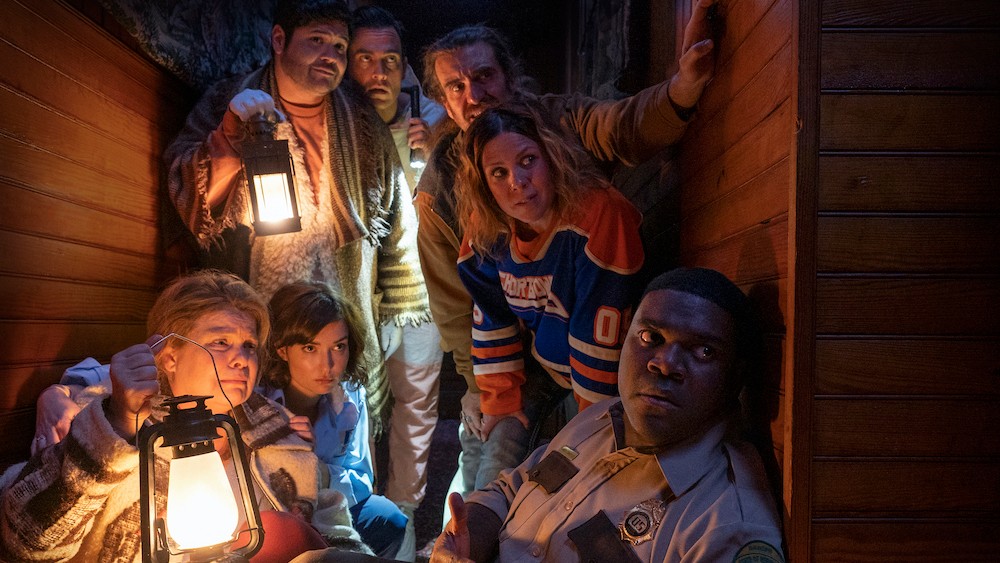
The main divide that pits each character against each other is the potential construction of a pipeline through the natural beauty that surrounds Beavertown. A bullyish, macho oil man is all for the pipeline and is trying to get as many residents to his side as possible while an environmentalist, a forest ranger, a mailperson, the owner of the local inn, and a rich gay couple stand it total opposition to it.

Werewolves Within
Werewolves Within

A woman with small business aspirations (and a cute small dog called Chachi), her creepy grabby husband, and a money-hungry couple are all for the pipeline. Alliances are drawn from each side’s prejudices against the other and that’s where the movie finds its groove.

Werewolves Within’s two main leads, Finn and Cecily (played by Sam Richardson and Milana Vayntrub respectively), are the glue that keeps everything together. Finn is Beavertown’s new forest ranger and Cecily is the town’s mailperson. Their chemistry carries an undeniable pull that immediately places them as people worthy of trust in case of a werewolf crisis. They’re easy to root for, which makes all the violence around them bite that much harder.

What’s smart about the two leads is that they function as balancing agents, towing the line between the left-leaning suspects and the pro-pipeline right-wingers. To be clear, I don’t believe the movie is a right-wing bashing free-for-all where the more liberal camp comes out as the clear winner. Each side is a caricature of itself and the movie invites making fun of everyone.

You might’ve already noticed I haven’t mentioned the werewolf that much. There’s a reason for that, but I’ll let the movie do the talking on that front. I’ll say this, the direction they take it in is whip-smart and well worth the many twists and turns the movie throws at its audience at nearly every turn.

Werewolves Within is a remarkable satire of our current political climate and it uses horror conventions just as well as it subverts them to make it stand out. It serves a higher purpose and it’s all the better for it. It has quite a few tricks up its sleeves, and you’ll laugh hard through each one as you try to figure who is and who isn’t an asshole. I mean, who is or who isn’t a werewolf.

New CANDYMAN trailer teases a whole hive of angry Candymen

For a villain as iconic as Candyman, whose status remains in effect thanks to Tony Todd’s timeless performance, finding a new actor to play the character is a daunting task. The challenge lies in finding someone that can honor and add to the iconic status of the character while also embodying him. Jackie Earle Haley, for instance, tried his hand at it by becoming Freddy Krueger in the 2010 reboot of Nightmare on Elm Street. While Haley turned in a great performance, the movie itself didn’t live up to expectations and the new Freddy seemed to become dimmer in the process, not to mention that there was something missing about the updated version.

Nia DaCosta’s 2021 interpretation of Candyman looks like it’s eager to avoid comparisons and unrealistic expectations by not sticking to a single manifestation of the monster. Instead, it’s going for several manifestations of the character at once by placing black victims of police violence and brutality as potential candidates for the now shared title.

The movie’s latest trailer goes as far as to confirm that the idea is to turn the monster into a kind of vessel that finds its life source in the people American culture has wronged the most. Much like the original 1992 movie, the new Candyman comes as a dark response to the racial conditions of its time.

For the ‘92 Candyman, it was the lack of support for the more “urban” sections of cities and then the misrepresented idea that illegal activity was a legitimate and natural character trait of low-income black neighborhoods.

The 2021 Candyman seems to be powered by a Black Lives Matter perspective that frames police misconduct as the primary creator of Candymen. That, in itself, does enough to put the latest iteration of the story in a spot where the original concept is allowed to continue coursing through the movie’s veins while also injecting a healthy dose of new horrors to turn the experience into something different.

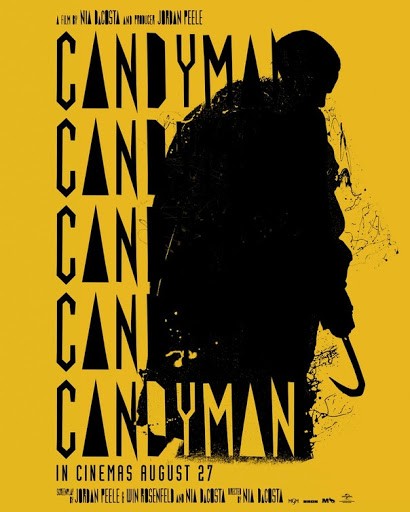
Candyman
Candyman poster

As a horror fan, this has to be one of the anticipated horror movies in recent years. It has a world of possibilities riding on it and it can inspire a new generation of black horror that can continue to challenge the bad things that turn victims into dark forces of retribution.

Candyman opens in theaters on August 27, 2021.

Advance Review: Not All Robots #1

Not All Robots #1

The robot takeover doomsday scenario, where humanity gets replaced by the machines they created, has been the basis for many a sci-fi story, but the aftermath is rarely given time to shine. Just what is life under robotic law and what does the new day-to-day look like after humanity’s gone extinct? Say Ultron finally gets one over the Avengers, what’s next? Aren’t robots near-perfect beings with infinite knowledge? Museums and libraries would become obsolete as robots store everything in their memory and can access it at a moment’s notice, not to mention grocery stores and bars. Well, maybe not bars.

Mark Russell (Prez, Billionaire Island) and Mike Deodato’s new AWA Studios comic, Not All Robots, offers readers an answer: the robots will eventually become more like us. Once you get to the top of the food chain, it’s possible that the only way forward is to downgrade. That is, unless they’re content with being static automatons surfing their own databases without a need to move around or physically engage with anyone.

Not All Robots is another great Mark Russell satire on the ridiculousness of existence and the things we do with our existential dilemmas. Humanity, what’s left of it, is very quickly becoming obsolete as worker robots have become the sole providers of living families by completely taking over the workforce. Humans are quite simply redundant at this point and robots are catching on to the fact of how superfluous they’ve become. There’s even a talk show within the story called Talkin’ Bot that puts everything into perspective and I am one-hundred percent certain this show will actually exist a few years from now.

The comic centers on a house bot called Razorball. He’s the main provider for the Walters, the family that owns him. Razorball has become a disenchanted worker, cynical at every turn. He complains about life, the monotony of it, and his disdain for all the unnecessary things he has to do at work.

Deodato (Marvel’s Original Sin, The Resistance) illustrates Razorball as a somewhat outdated and clunky machine, in need of an update or to be updated by a newer model. That’s where the Mandroids come in, robots that can easily be confused with humans given the quality of their build. In other words, the future.

Not All Robots #1
Not All Robots #1

It’s hard not to confuse Razorball with the average Joe, an unhappy guy that hates his life and his job and feels unappreciated by society. Russell’s genius, though, comes in how he takes that archetype and injects classic Asimov-like science fiction ideas into the story to not let the metaphor consume the narrative entirely. The associations are easy to make between Razorball and his human counterparts, but there’s a real sci-fi heart beating at the center of it.

Deodato crafts a universe’s worth of worldbuilding into the story with futuristic vistas and designs that firmly place the story within the realm of plausibility. It keeps the characters grounded and the story human. Deodato’s panel layouts and overall page structure—which has evolved throughout his career and stands as one of his signature skills as an artist—keeps things busy too, as if the new standard of life is governed by on-going activity carried by the never-ending stamina of a well-oiled machine.

Russell, on the other hand, isn’t just content with making fun of humans through worker robots. The idea that machines have forced people into a sedentary lifestyle echoes current debates on how technology is eliminating jobs people used to do by hand and got paid for. The robots act as living cautionary glimpses into what our reality could turn into if progress is allowed to continue pushing forward unfettered. Also how disenchanted robots will get once they realize how mundane human existence actually was.

Not All Robots is a funny, scary, and plausible take on humanity’s self-authored descent into obsolescence. Readers will laugh hard the entire way through, but they’ll also have no choice but to think about the consequences of our exponential growth into a machine-dominated world. The kicker, though, is that regardless of how advanced these robots turn out to be, they might not have a choice but to become a bit human to find some meaning in the new status quo.

Story: Mark Russell, Art: Mike Deodato
Publisher: AWA Studios

Story: 9.0 Art: 9.0 Overall: 9.0 Recommendation: Buy and maybe consider throwing your iPhone into the ocean

AWA Studios provided Graphic Policy with a FREE copy for review


Pre-Order: TFAW

Review: The Nice House on The Lake #1

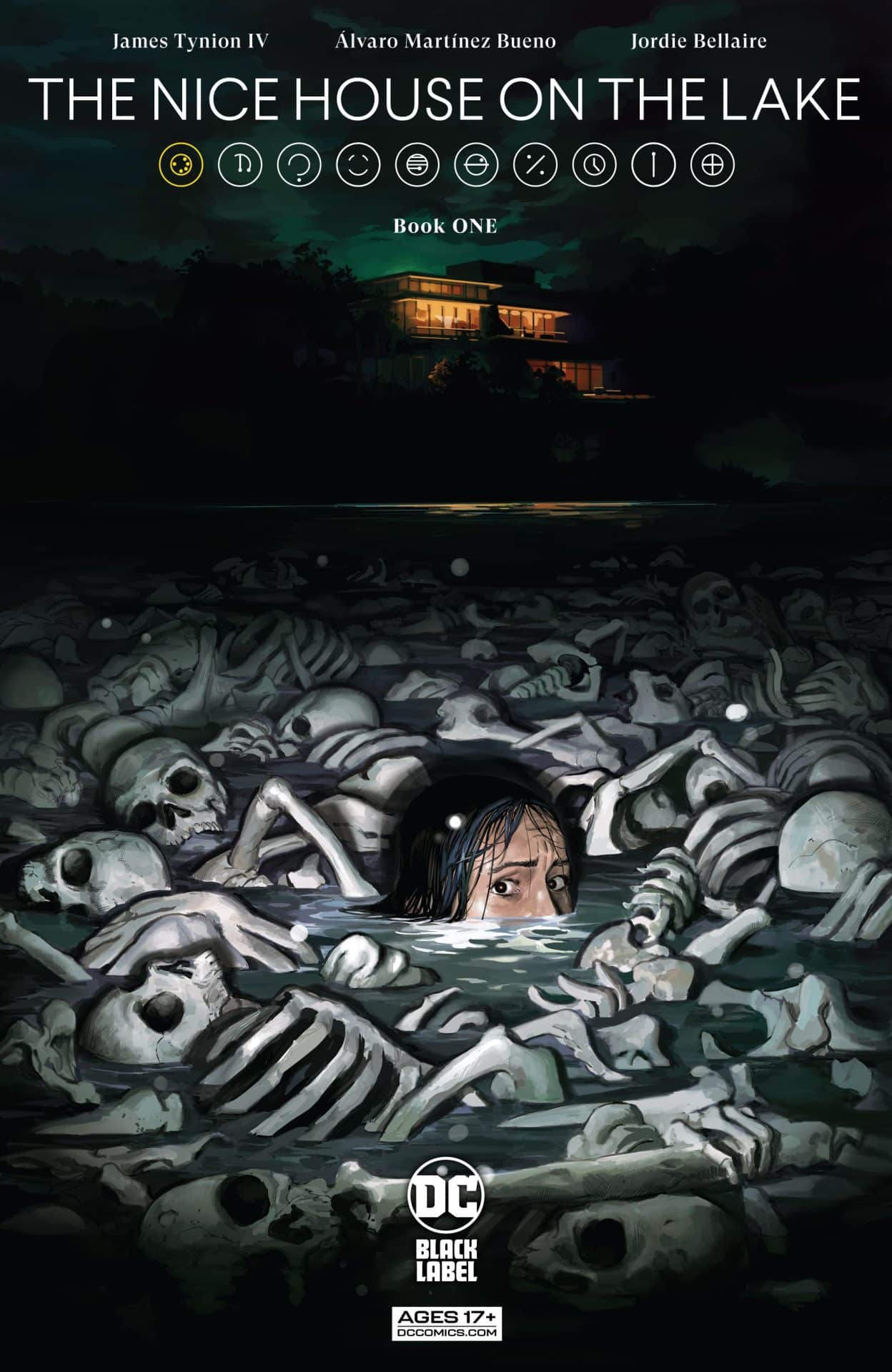
The Nice House on the Lake #1

James Tynion IV has been doing career-defining horror work as of late, with books like Something is Killing The Children, his self-published horror anthology Razorblades, and The Department of Truth standing as prime examples of what the idea of “new horror” should truly stand for. Among those books, though, it’s his most recent one, The Nice House on The Lake, that might end up being his most unsettling. It could even result in becoming his greatest work should the entire story capitalize on the dark promises made in its first issue.

Co-created with artist Álvaro Martínez Bueno, The Nice House on The Lake concerns itself with a group of eleven people who have been invited to a luxurious house by a mysterious figure called Walter that’s acquired their friendship and acquaintance over the years. It’s supposed to be a long weekend, but something will keep them in place for a long time.

Walter is obsessed with the end of the world. Not the why, necessarily, but the how. With that macabre interest leading the way, what transpires in the story’s first chapter is the culmination of Walter’s apocalyptic desires and the beginning of a terrifying new status quo that marks a point of no return for humanity. That is, except for the select few currently staying at the house.

There’s a substantial amount of story packed into this first issue. Not only do Tynion and Martínez Bueno set up the conditions through which the end of world becomes a reality, it introduces a large cast of characters all with their own distinct look and personality. There’s a sense of purpose to each character’s presence as well, as if they’re meant to play a special role in the proceedings.

Each character is presented via title card that includes their assigned role—be it The Writer or The Painter—and the specifics of their first encounters with Walter. The style in which this is presented reminded me of Dungeons & Dragons character creation cards, minus the stats. Eleven characters might feel like a lot, but the cards are quite helpful in keeping tabs on everyone and I suggest you keep the first issue handy while reading upcoming issues to stay on track with what everyone’s doing.

The Nice House on the Lake #1

While there are more than enough clues as to where the story will go in future instalments, The Nice House on The Lake does seem to be settling in for an extended stay in the titular house. Martínez Bueno wastes not a single panel producing stunning images of the house and its surroundings. There’s an air of House on Haunted Hill (1959) about it and how it stands alone overlooking everything below it. Martínez Bueno imbues the structure with a heavy sense of dread that’s as inviting as it is ominous, excessive as it is threatening.

Fans of the exceptionally sinister horror movie The Invitation (2015) will find a lot to love here as well. Directed by Karyn Kusama, the movie follows a man who’s invited to a friendly get-together only to discover there’s a violent agenda shared among some of the guests. It’s one of the most disturbing movies in recent years and its isolated house of horrors setup shares certain similarities with Tynion and Martínez’s story. I highly recommend The Invitation, especially as a good companion piece to the comic in terms of how it manages to capture an acute sense of dread that’s also present in The Nice House on The Lake.

The Nice House on the Lake #1

The Nice House on The Lake has arrived with the intent of reaching deep within our souls in search of that primal fear that entertains the end of the world. Surprises abound and new horror concepts push the comic into uncharted waters. The first issue alone carries enough fear to scare readers into following the entire series all while questioning just how they would react knowing the end of the world has finally left the realm of imagination and violently entered the confines of reality.

Writer: James Tynion IV Art: Álvaro Martínez Bueno Colors: Jordie Bellaire Letterer: AndWorld Design
Script: 10 Art: 10 Overall: 10

Recommendation: Buy, watch The Invitation, and start prepping your doomsday stash


Purchase: comiXologyAmazonKindleTFAW

Review: The Conjuring: The Lover #1

The Conjuring: The Lover #1

The closest thing Horror has to a Marvel Universe, as of the time of this writing, is The Conjuring universe. It’s a fascinating development, how a horror franchise that claims to be based on true events has carved a space for itself in the crowded shared universe arena. From Annabelle to The Nun, each film adds to the number of evil entities that inhabit its world while showing how they can later influence future hauntings. Naturally, each new nightmare requires its own story, a circumstance that led to the horror series’ first foray into comics in the form of The Conjuring: The Lover.

Written by David Leslie Johnson-McGoldrick and Rex Ogle, with Garry Brown (Babyteeth) on art, The Conjuring: The Lover #1 follows a college student named Jessica that is struggling to make her college grades match her mother’s expectations while also dealing with romantic frustrations, loneliness, and a dark entity that’s taken an interest in her. Clearly, Jessica isn’t having much fun in college.

Whether it’s an actual person conjuring evil spirits to oppress Jessica or an inhuman thing out to make her suffer remains to be seen, but the comic captures that sense of dread horror can excel at by presenting Jessica as an already conflicted character that’s ripe for the taking by someone or something that wants to corrupt her.

The script is smart enough to pace the scares out accordingly, without leaning too heavy on the terror in this first issue. There’s the promise of paranormal activity, but just what it is that’s lurking in the shadows isn’t revealed yet and it makes for a more engrossing read. It helps that Jessica’s own personal demons are ever-present as well. Her fears and anxieties feed into the atmosphere the comic creates and offers a kind of hint as to what will latch onto her very being.

Garry Brown’s pencils prove to be adept at capturing the finer details in horror so as to allow the power of suggestion to guide readers into filling in the dark spaces. It invites close inspection of the comics page. I was always on the lookout for a ghost hand creeping around a corner or a set of yellow eyes dimly glowing deep within the shadows. Brown is flexing all the right muscles here and is letting everyone know he can do horror with the best of them.

The Conjuring: The Lover #1

The Conjuring: The Lover #1 also includes a back-up story written by Scott Snyder and illustrated by Denys Cowan centered on one of Ed and Lorraine Warren’s old cases, titled “The Ferryman.” It’s a brief but well executed homage to classic horror that follows a boy that steals a coin from the corpse of an old woman during a funeral service. By violating the unwritten rules of an ancient practice that secures a dead person’s passage into the afterlife, the character goes through the motions of a lifelong haunting that stands as a lesson to readers on the dangers of messing with the business of the dead.

And then there are the short fake ads for haunted and possessed items. They resemble the ads found in old horror magazines, but they’re given here a darkly comedic twist in which the punchline lies not just in the sales pitch but also in the fine print. They’re illustrated by Dave Johnson and are so fun to read that I wish Johnson would make an entire book based on these fake ads.

The Conjuring universe has a very successful first outing in its hands with “The Lover.” It comes off as an organic extension of the franchise and its own brand of horror. There’s a lot to look forward to in each issue knowing just how much is squeezed into one comic. It’s quite the horror package and it feels as if it can’t wait to show us even more terrible things for our viewing pleasure.

Writers: David Leslie Johnson-McGoldrick, Rex Ogle, Scott Snyder
Art: Garry Brown, Denys Cowan, Dave Johnson
Story: 9.0 Art: 9.0 Overall: 9.0
Recommendation: Buy and pray that demon Nun doesn’t go to the same church as you do.


Purchase: comiXologyKindleZeus Comics

The Conjuring: The Lover #1

Kentaro Miura’s BERSERK carries a legacy of blood, Guts, and great manga

Berserk Vol. 1
Berserk, book 1

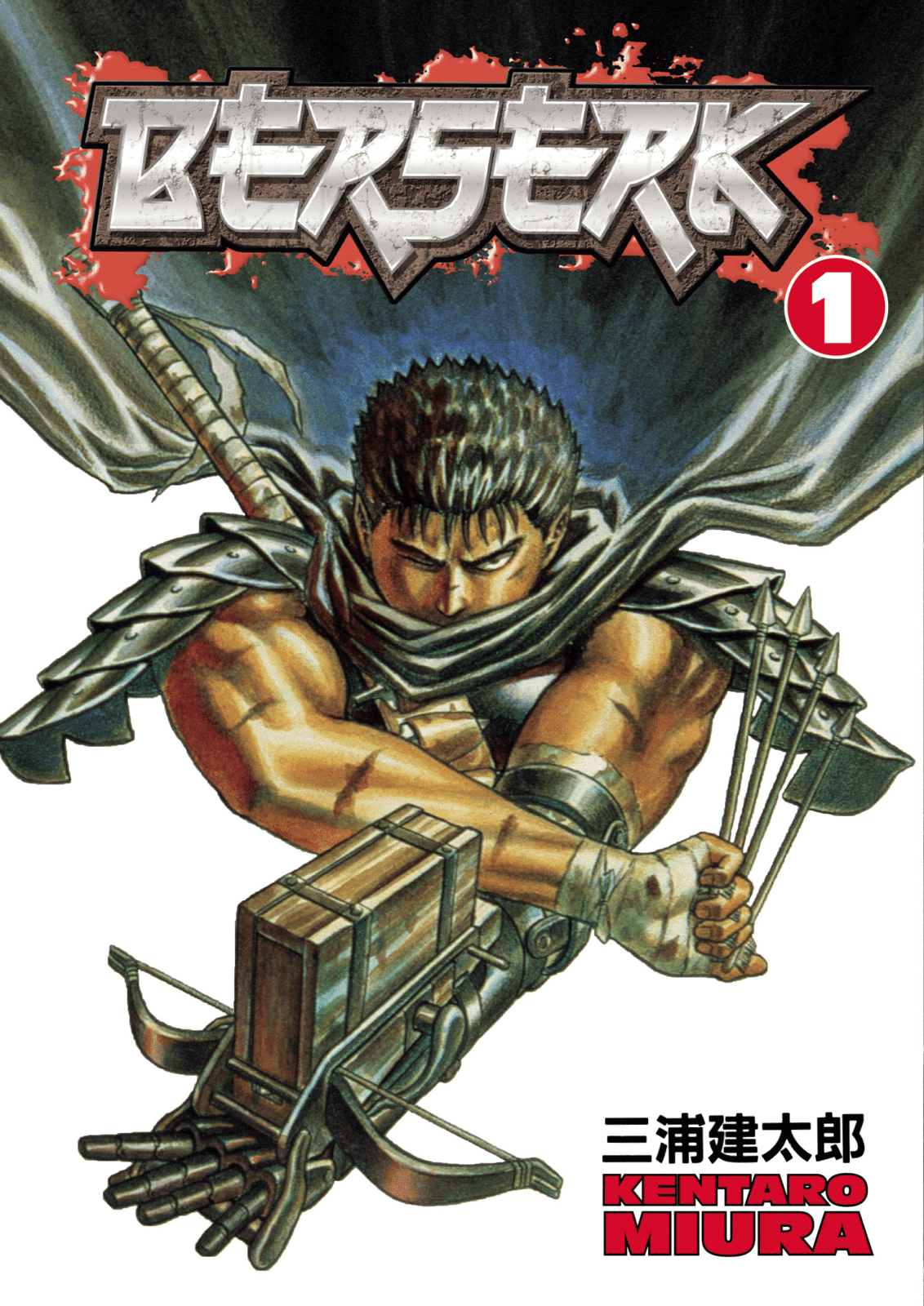
The passing of legendary manga writer/artist Kentaro Miura will either get veteran fans of his Berserk series revisiting the dark fantasy world he created for his giant sword-wielding warrior, Guts, or new fans looking to finally take the plunge into the sprawling epic.

Whichever the case, engaging with the first book of the series means experiencing a brutal read with monsters and other creatures that’ll make you readjust your fingers at the edges of the page so as not to touch the horrors Miura committed to it. This is certainly the case with the first pages of Berserk book 1, in which Guts is having sex with a woman that quickly turns into a monstrosity that looks like something straight out of an H.R. Giger nightmare and tries to kill him. It sets the tone for the type of story Berserk while tell.

Berserk follows the now iconic Guts, also known as the Black Swordsman, as he embarks on a journey fueled by revenge. Guts is branded with a symbol that attracts murderous demons towards him, forcing him into a life of isolation. The revenge aspect of the story centers on a character named Griffith that might or might not be responsible for Guts’ supernatural affliction.

Miura presents Guts to readers, in the first book, as the perfect man to deal with the violence and chaos that governs his medieval Europe setting. It’s a dark state of affairs that is overwhelmingly ugly and ever present. Death and gore is the status quo, which explains why Guts carries a giant broadsword that cuts people into pieces after a single swipe. The weapon is a reflection of how bad things are, and in Berserk’s case, things are quite bad.

Berserk
Berserk

We get a taste of this in the events that follow the aforementioned sex scene that opens the story. Almost immediately after the incident, Guts is faced with a group of bandits and soldiers that are throwing knives at a Pisky elf called Puck for their own deranged amusement.

Guts makes a bloody mess of the corrupt men for what seems to be a righteous motive, but it ends up being about sending a message to their leader, a humanoid snake demon that ends up giving Guts a particularly gruesome fight as he reveals his true form.

This is all meant to establish Guts as a kind of antihero character. His mission is purely personal and his commitment to the innocent people he meets along the way initially hinges on personal gain. Guts isn’t a hero here. He’s a hardened, near maniacal force of visceral violence that responds to his cursed reality in kind.

I characterize Guts as maniacal for the bleak outlook he has towards life, its worth, and how individuals who die on his watch are more a reflection of their own flaws rather than his. The Black Swordsman has little tolerance for weakness and takes no responsibility for the deaths of those who fall in combat around him. In some instances, he even laughs while explaining this, showing little regard for the misguided moral expectations others decide to put on him.

What’s impressive about how Miura introduces Guts to readers is that a considerable portion of his character development comes through violence rather than expository text. We get to know this man through the carnage he rains down on his enemies, and it’s not all done for the sake of bloodletting.

Berserk

There’s a kind of sadness to his existence knowing he doesn’t fight for glory or for the safety of others. By fighting for revenge, Guts is put on a road of no return, and he seems to be aware of it. Ruin is sure to follow and we as readers are given the necessary story elements to be able to foresee this and think on the cruelties of fate. It’s just awe-inspiring how Miura manages to achieve this level of storytelling through action rather than dialogue or narration.

Kentaro Miura’s Berserk has one of the best first books of a series in the history of manga and it does an admirable job of setting up a world and a main character that have no choice other than being iconic. Forget about the reasons you need to experience this book, just make sure you do and know that there’s a lot more waiting for those brave enough to stay the path.

« Older Entries Recent Entries »