Author Archives: Ricardo Denis

Review: MIDNIGHT MASS masterfully turns religion into a matter of blood and devious faith
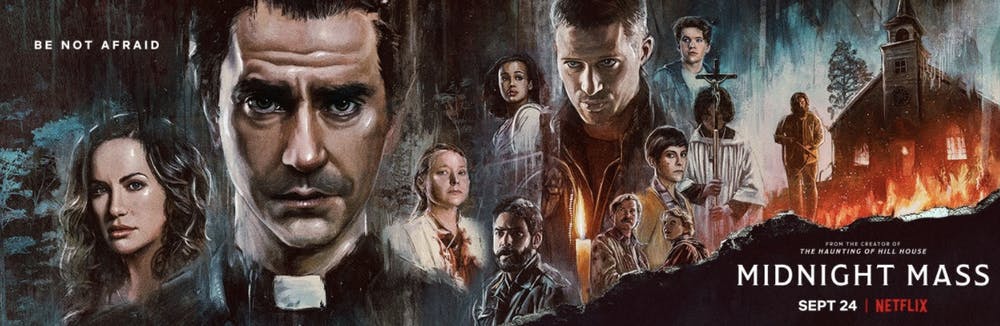
Midnight Mass

Religion and horror have never been known to be strange bedfellows. In fact, it can be argued they’re both cut from the same cloth, or at the very least that one can’t exist without the other. Mike Flanagan seems to find refuge in this idea as his latest Netflix series, Midnight Mass, turns to some of the Bible’s most terrifying passages to craft a 7-part story about how faith can turn the religiously devoted into desperate monsters trying to find meaning and purpose.

Midnight Mass is set in Crockett Island, a small piece of land separated from the mainland with a very reserved and quietly weary populace that has embraced their isolated experience. It’s the kind of place where despair and small-town politics breed a kind of people that can be easily manipulated by a charismatic enough figure. The island’s only saving grace is the common ground most of the inhabitants share on Sunday mornings: St. Patrick’s, a small catholic church.

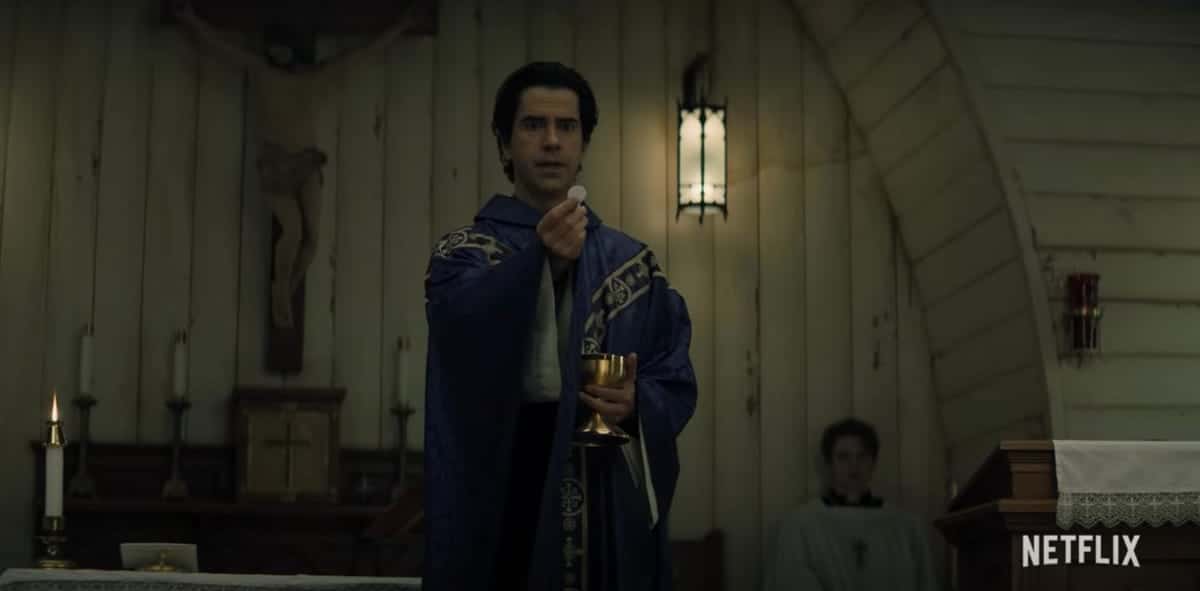
Enter Father Paul (played by Hamish Linklater), a young and impassioned priest that’s ready to do whatever’s needed of him to bring more people into church, capital sins included. Problem is, Father Paul has brought something with him to the island, something monstruous, and it hungers.

While the series’ true north lies in the dangers of religious manipulation dressed as honest devotion, it isn’t content with just settling on the spiritual ailments plaguing the island’s residents. The story also explores grief, loss, the trials of being an outsider in a closed-off community, and alcoholism as problems religion can either alleviate or unintentionally replace with other addictions.
Midnight Mass
Hamish Linklater as Father Paul

Who says people can’t get intoxicated by the promise of receiving God’s most coveted blessings? The metaphor’s there and it’s expertly woven into the fabric of the horror at the series’ core.

Flanagan, who directs each episode and either fully scripts or co-writes them, is largely successful at turning religion into Midnight Mass’ primary source of terror by resorting to fiery Bible verses to create powerful connections between the horrible things that happen on the island and the contents of the holy book.

Father Paul’s sermons invite literal interpretations of some of Catholicism’s most potentially gruesome practices, if taken word for word. Deciphering this allows viewers to slowly piece together some of the story’s secrets and makes for some truly satisfying sequences where horror unfolds in new and inventive ways, especially when it comes to communion.

The setup and the character driven tempo of the story is where Midnight Mass excels. The island’s inhabitants only have themselves to contend with and it’s their willingness to either give in to the church or to question it that establishes the fear and tension surrounding Father Paul’s interest in turning Crockett Island’s inhabitants into fervent servers of God.

Midnight Mass
Samantha Sloyan as Bev Keane

One thing sometimes gets in the way of Midnight Mass’ already dialogue-heavy plot: individual character monologues. People familiar with Flanagan’s work, especially those that saw The Haunting of Hill House (2018), know that the director likes his horror to be sentimental, heavy-handedly so. To achieve that, Flanagan resorts far too often to long-winded monologues about faith, life after death, and the many philosophical meanings of life and they can grind the story to a halt.

In Midnight Mass, monologues surrounding Father Paul’s sermons or those of a particularly sinister character called Bev Keane (played by Samantha Sloyan), a zealous Catholic that can give the Old Testament a run for its money, are particularly interesting and intense. They’re some of the best parts of the story. Monologues relegated to what happens after death or about making amends are the opposite. They make their points early on and then they just keep going.

They open different avenues of conversation and feature some genuinely interesting ideas, but they’re too involved for their own good and they definitely overstay their welcome. Thankfully, the performances behind the characters delivering these monologues are excellent and they help sustain interest as the dialogue stretches on.

Rahul Kohli, who plays Sherrif Hassan, a practicing Muslim that has to navigate the town’s racism while also being the only resident that’s not Catholic in Crockett, does an admirable job of delivering each line with a force that commands attention. The rest of the cast follows suit, but they only alleviate some of the problems inherent in these monologues.
Midnight Mass
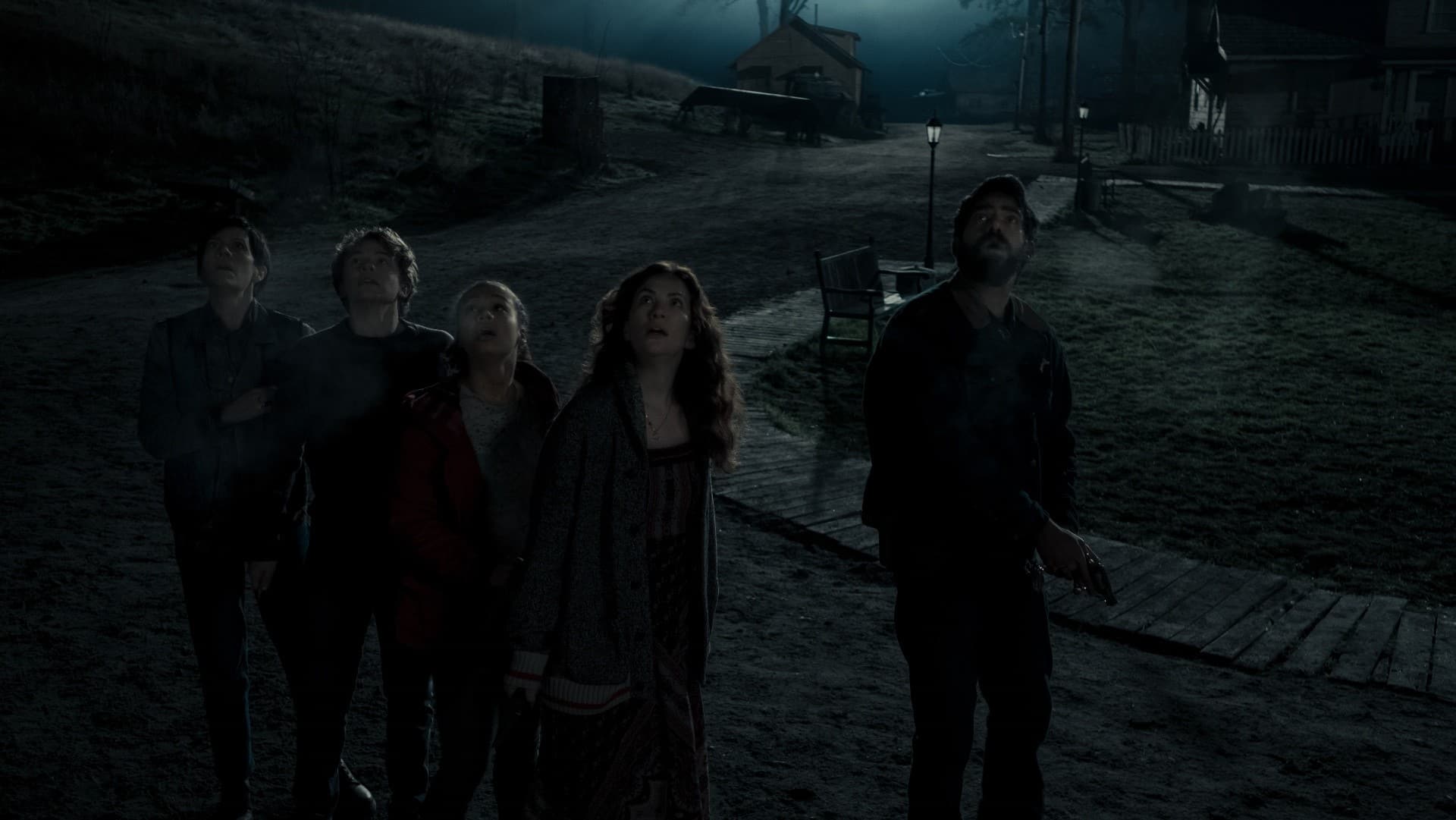
(From left to right) Annabeth Gish, Igby Rigney, Annarah Cymone, Kate Siegel, and Rahul Kohli

The story’s reveals, on the other hand, make each development feel monumental and prop up some of its most interesting characters for a series of profoundly heart-wrenching moments that are sure to stick around well after the credits have rolled on the final episode.

Taken in as a whole, Midnight Mass can more accurately be described as a work of horror drama. Flanagan isn’t afraid to spend time with his characters exploring themes that aren’t rooted in terror every step of the way. He prefers his horror slow-cooked, but once certain pieces have been set and the time comes to let the darkness take over, very few filmmakers can conjure up horror as unsettling or as disturbing as the kind in Midnight Mass.
Review: Impossible Jones #1

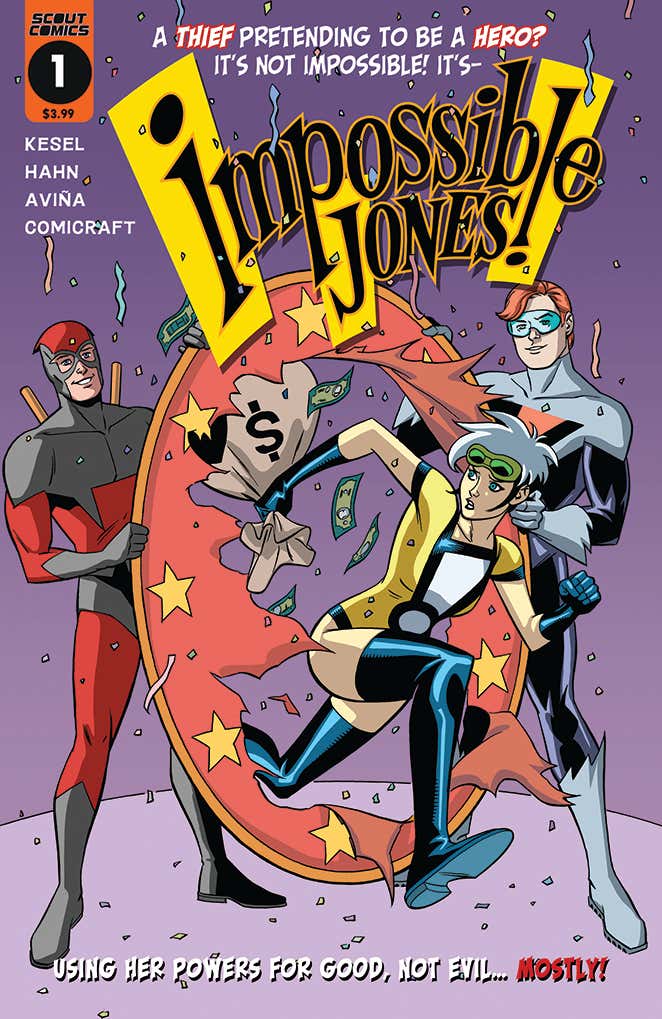
Impossible Jones #1

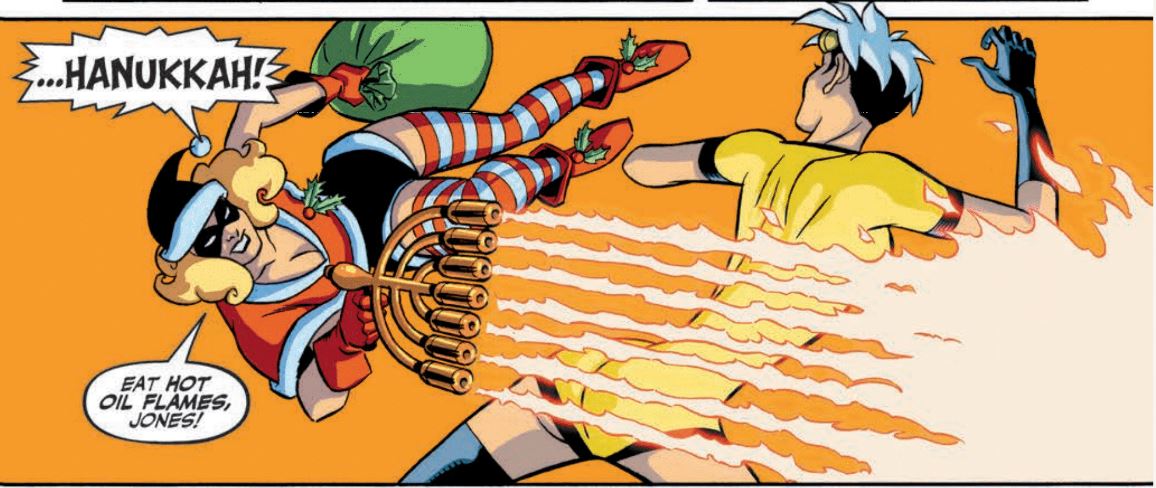
Karl Kesel and David Hahn seem to be quite fond of 90’s cartoons. Their new comic, Impossible Jones, is often just a panel away from full motion and you can just see its world and characters being broadcast on TV screens, alongside the likes of Batman: The Animated Series and The Tick.

Impossible Jones isn’t just a love letter to those cartoons, though. It’s a comic with an edge that uses nostalgia as a springboard to come up with an inventive story about an accidental superhero that’s hiding a lot of bad under her secret identity.

Impossible Jones #1 kicks off the story of the titular character, a thief that acquires impossible powers—mainly elasticity, but also shadow manipulation and perhaps other skills yet to be revealed—and passes off as a superhero as she looks for her crew, the ones responsible for leaving her behind during the heist that led to her current predicament.

Kesel’s script does a great job of populating Impossible Jones’ universe with a well-rounded cast of characters that already feel storied, familiar enough to help the story move at a brisk pace without having to stop and dump copious amounts of exposition on readers. There’s a fair amount of fun poked at superhero conventions here as well, especially when it comes to character names (which include Holly Daze, Even Steven, and Polecat, all winners in my book).

Impossible Jones #1

The dialogue is kept snappy and agile, helping the story get to where it needs to without getting tangled up with specifics. It’s an economical approach not unlike that employed in individual cartoon episodes, in which the story bustles with activity but not at the expense of worldbuilding. It all unravels smoothly as the narrative progresses, providing just enough character development and plot to feel like a good chunk of story was provided. Fans of Kesel’s previous work, namely Section Zero, will find a lot to like here.

Hahn’s art is completely in sync with the grandiose aspect of the story and its pacing. His previous work on Batman ’66 makes this type of story play to his strengths and not a panel is wasted getting the most out of character interactions and action sequences. Tony Aviña’s colors make everything pop with a larger-than-life feel that captures the more fantastical elements of the story.

Hahn’s character designs also help with the fast and furious storytelling approach Impossible Jones brandishes. Each one wears a part of their story on their proverbial sleeves, another element that’s very present in cartoons given the short runtime the usually have per episode.

Something that surprised me from Impossible Jones’ origins, so to speak, was how much it reminded me of Dr. Manhattan’s in Watchmen. It’s a clever play on the character’s lab accident sequence that, whether intentional or not, made for a particularly memorable part of this first issue. It was good fun associating something as fast and furious as Impossible Jones with something as serious as the Alan Moore and Dave Gibbons book.

Impossible Jones #1

Impossible Jones #1 is a blast, in every sense of the word. It will satisfy readers searching for not-too distant nostalgia in their comics and readers looking for a creative alternative to the usual superhero offering on the shelves these days. To sum it all up, it’s a crowd pleaser.

Story: Karl Kesel Art: David Hahn Colors: Tony Aviña
Story: 9.0 Art: 9.0 Overall: 9.0

Recommendation: Buy and then go dust off those 90’s cartoons you recorded on VHS.

Scout Comics provided Graphic Policy with a review copy


Purchase: Zeus ComicsTFAW

Review: Primordial #1

Primordial #1
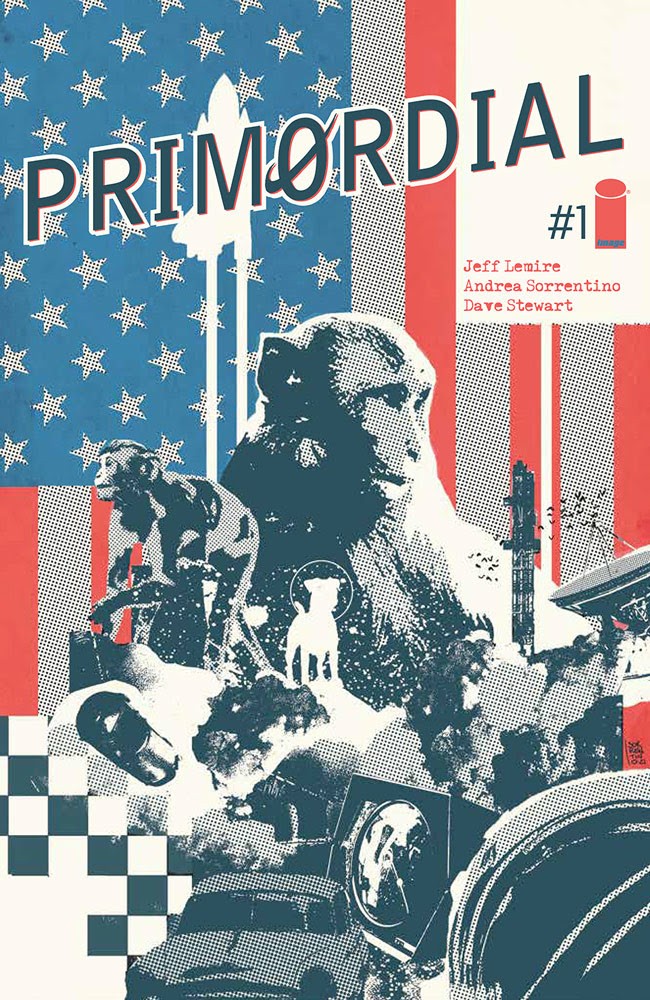
Primordial #1, cover by Andrea Sorrentino

The Space Race between the Soviets and the Americans during the 1960s has always been fertile ground for conspiracy-centric storytelling, ripe with classic sci-fi concepts and ideas informed by a long tradition of weird fiction. Jeff Lemire and Andrea Sorrentino’s new book, Primordial, is firmly set within that tradition, but what it’s managed to produce on the visual front is what truly stands out as special.

Primordial follows a black electrical engineer from MIT called Dr. Pembrook, a man who’s interest in an American space mission where monkeys were shot into space to test travel by shuttle leads him to a secret report about the operation’s hasty cancellation that questions whether the alleged failure of the project was fact or an elaborate fiction to cover something up.

Pembrook’s discovery pushed him down the rabbit hole into conspiracy territory, led by a question that instantly makes the story take a whole new spin: what if the animal shuttle flights revealed something that scared everyone into not pursing further travel?

Lemire’s script perfectly captures the nail-biting paranoia that tends to be a staple in these types of stories, but when things get cosmic, it’s Sorrentino who steps up and steals the spotlight. It works because Lemire allows the plot to unravel in two spaces, if you will, in which Pembrook’s side is allowed to develop on its own while the animals’ flight is also given room to present its trajectory.

Primordial #1
Primordial #1

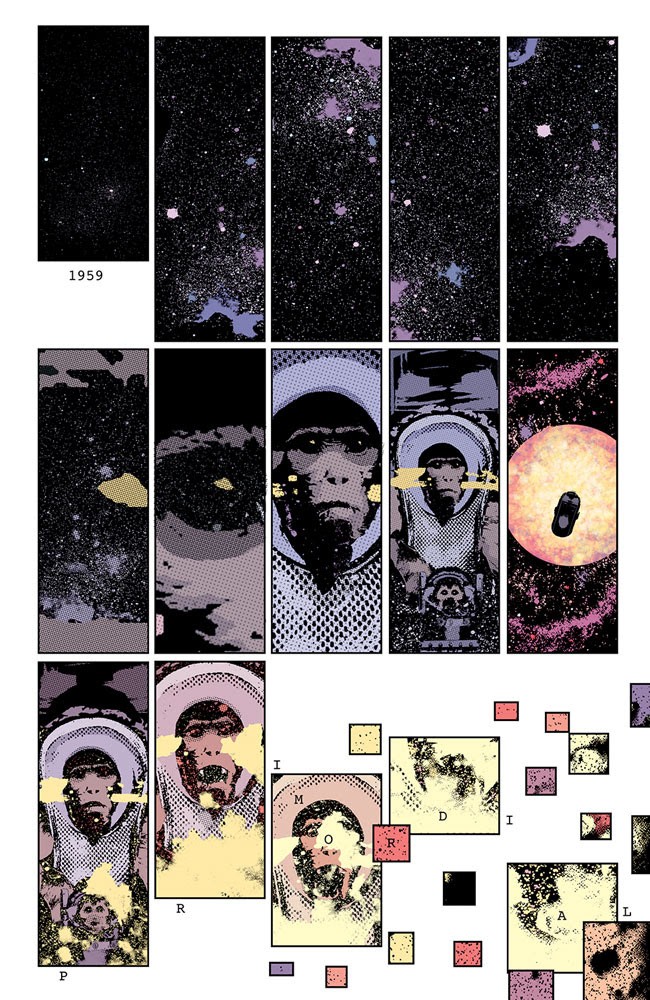
The more traditional, almost spy-thriller aspects of the story belong to Pembrook while the all-out sci-fi part of the equation is afforded to the animals. Sorrentino capitalizes on the setup to let loose in what can only be described as pure and unfiltered creativity, especially when it comes to the space travel sequences.

Panel work in these sections of the book break with structure and form to reach a higher level of visual play that ranges from panel collisions to colors flying off into unexpected parts of the page. It all combines to create a sense of wonder and even fear that frames the animals’ experience as a complete transformation of the rules of physics that will transport them to uniquely unknown places.

It tips its hat to Jack Kirby sci-fi, but it also borrows from classic rock and prog album cover art to breath life into many of the surprises the book viscerally throws at its readers as the story’s pacing picks up. In other words, Primordial is a visual marvel, a feast for the eyes that’s hard not to get lost in.

Dave Stewart’s coloring is largely responsible for the visuals’ triumphs as well. The book is bright and it captures the kind of naïve optimism that tends to characterize attempts at space travel. It makes for an experience in which the unknown is given a chance to reveal itself and to pose questions that go beyond what’s seen. Stewart’s work elevates that idea and gives it new dimensions.

Primordial #1 possesses a very exciting and intense sense of discovery and exploration that rests on the notion that secrets and conspiracies can generate quite a set of sense-shattering images. It’s a supreme example of what can be achieved with visual storytelling and how comics can offer narrative possibilities other mediums can only hope to imagine.

Story: Jeff Lemire Art: Andrea Sorrentino Colors: Dave Stewart
Story: 9.0 Art: 10 Recommendation: Read and make sure to give comics to space animals for their voyages

Image Comics provided Graphic Policy with a FREE copy for review


Purchase: comiXologyKindleZeus ComicsTFAW

Review: The Conjuring: The Lover #4

The Conjuring: The Lover #4

The Conjuring: The Lover is reaching its end and its fourth and penultimate instalment puts main character Jessica in the worst possible spot for the devil to do his dirty work. I use ‘devil’ here metaphorically as the comic does have an actual living agent of evil that’s orchestrating the haunting of Jessica’s life and turning her into a tragic victim of satanic power. Watching the third movie of The Conjuring universe, subtitled “The Devil Made Me Do It,” sheds more light on this, making this a great prologue/companion piece to it.

Writers David L. Johnson-McGoldrick and Rex Ogle along with Garry Brown on art have already crafted an oppressive and dread-filled environment for Jessica to traverse in, and not to her benefit. Her college life hangs in the balance and last issue’s cliffhangers will seal the deal on that front. If The Lover can be boiled down to a fight for Jessica’s soul, this issue sets up the knockout punch.

The evil that’s operating behind the scenes is making its biggest moves here and all roads lead to oblivion. It makes for a tough read as the main character is basically being tortured at an existential level with no hope of things getting better in sight. This doesn’t mean the story is banking on pain for the sake of it, but I’m curious to see what all this emotional suffering is leading up to in the coming final issue.

The Lover #4’s faux horror ads are still a highlight, this time bringing in some familiar demons into the ghoulish fun. It pays off to be a fan of the Conjuring universe here. There’s a lot to look through and artist Dave Johnson looks like he’s thoroughly enjoying putting them together along with Johnson-McGoldrick, who writes the ads.

The Conjuring: The Lover #4

This entry’s back-up story, from the Warren’s haunted artifact room, comes courtesy of Ray Fawkes and Christopher Mitten and it puts the spotlight square on the strange music box from the first Conjuring movie. It’s a quick but fierce punch of a story that manages to pull as much horror from the music box as possible. The setup is instantly identifiable, but it adds different levels to its mystery to make it a darkly profound story that aims to deceive.

The Conjuring: The Lover has managed to maintain a formidable degree of terror throughout the series and it looks like the finale will leave an impression, or a bloody handprint, once it closes shop. We might need to get used to the idea that sometimes evil can have its way and that we are powerless to stop it. Scary thought, huh.

Story: David L. Johnson-McGoldrick and Rex Ogle, Art: Garry Brown
Colors: Mike Spicer, Letterer: Becca Carey
Story: 9.0 Art: 9.0 Overall: 9.0 Recommendation: Read with a bottle of holy water nearby

DC Comics provided Graphic Policy with a free copy for review.


Purchase: comiXologyKindle Zeus ComicsTFAW

Review: The Nice House on The Lake #4

The Nice House on The Lake

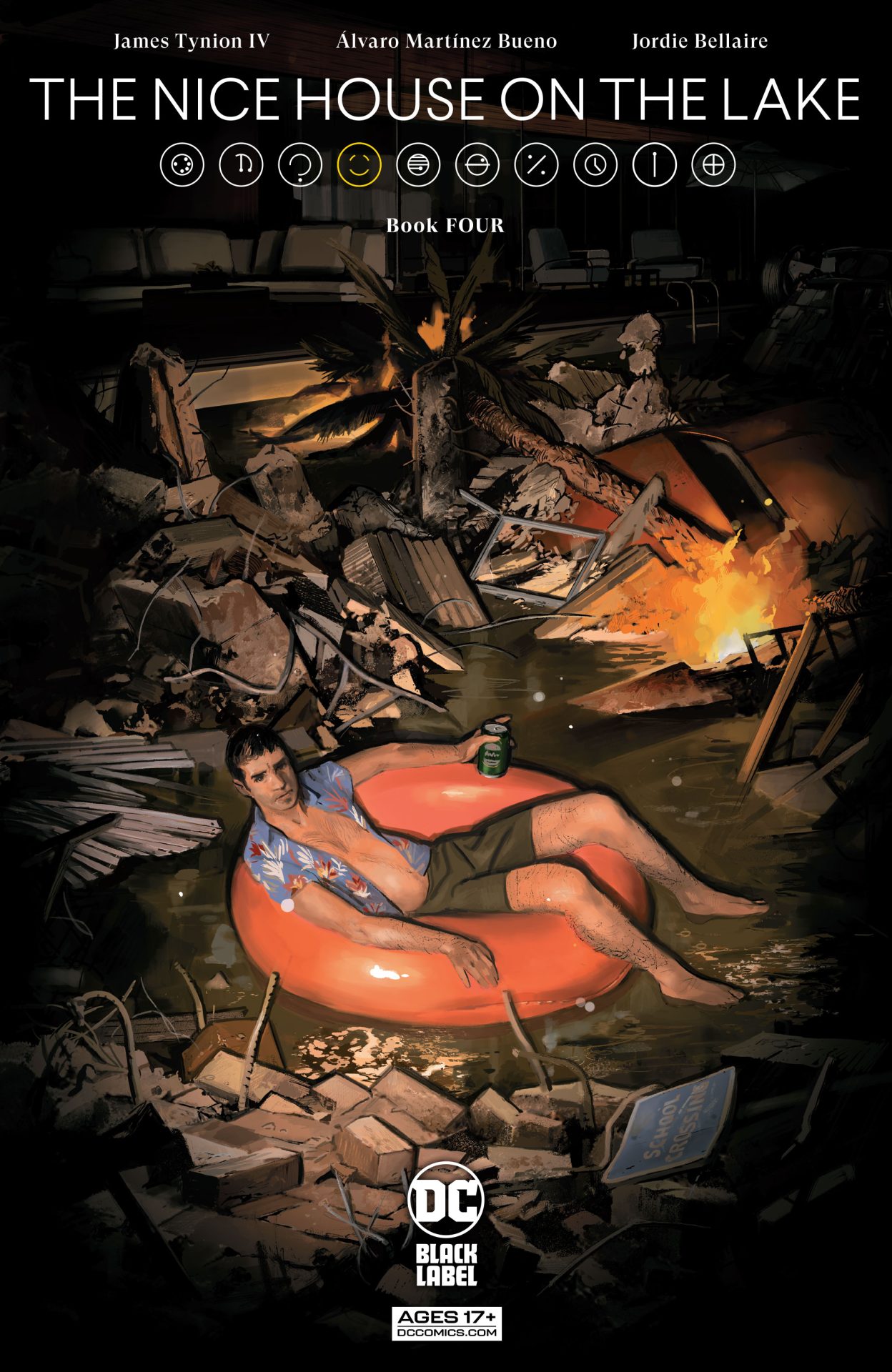
Big feasts are often great opportunities for dark revelations to come forth and sour what every character hoped would be a chance for bonding and relaxation. Everyone’s disarmed in a feast, their guards down by the promise of a good time with friends and friends to be. The Nice House on The Lake leads up to a lot of this in its 4th issue and the results are, once again, terrifying.

This time the focus is on David, an upbeat jokester that tries to hide his fears and insecurities behind laughter. Not everyone is in the mood for his attempts at levity, but he’s interesting enough to be one of those characters that readers can easily root for.

Álvaro Martínez Bueno and James Tynion IV pour a lot character development into David and it pays off by the end of the issue as readers can feel they’ve gotten to know him quite well in the leadup. It’s great to have a character that steps a bit away from the doom and gloom to color the situation somewhat differently. It makes all the new bits of information we get in this issue hit harder, but also hit in unexpected ways given the how David’s point of view is laid out for readers.

Some of the discoveries made in this issue truly change up the narrative and take the comic into new directions. They’re getting increasingly bizarre and adding more questions to the mystery of the house on the lake. Whatever Martínez Bueno and Tynion are cooking, it’s getting several new ingredients thrown into the mix for added unpredictability.

The Nice House on The Lake #4 changes the ballgame for the characters involved and deepens the horror that binds them together. It makes a great argument for why some comics do justify a monthly schedule. The anticipation behind each new entry gets more intense each time and I can’t wait to see what’s in store for us come issue #5.

Script: James Tynion IV, Art: Álvaro Martínez Bueno
Color: Jordie Bellaire Letterer: Andworld Design
Story: 9.0 Art: 9.0 Overall: 9.0 Recommendation: Read and make sure you have a plan B for any feast.

DC Comics provided Graphic Policy with a free copy for review


Purchase: comiXologyKindleZeus ComicsTFAW

Review: Deadbox #1

Deadbox #1

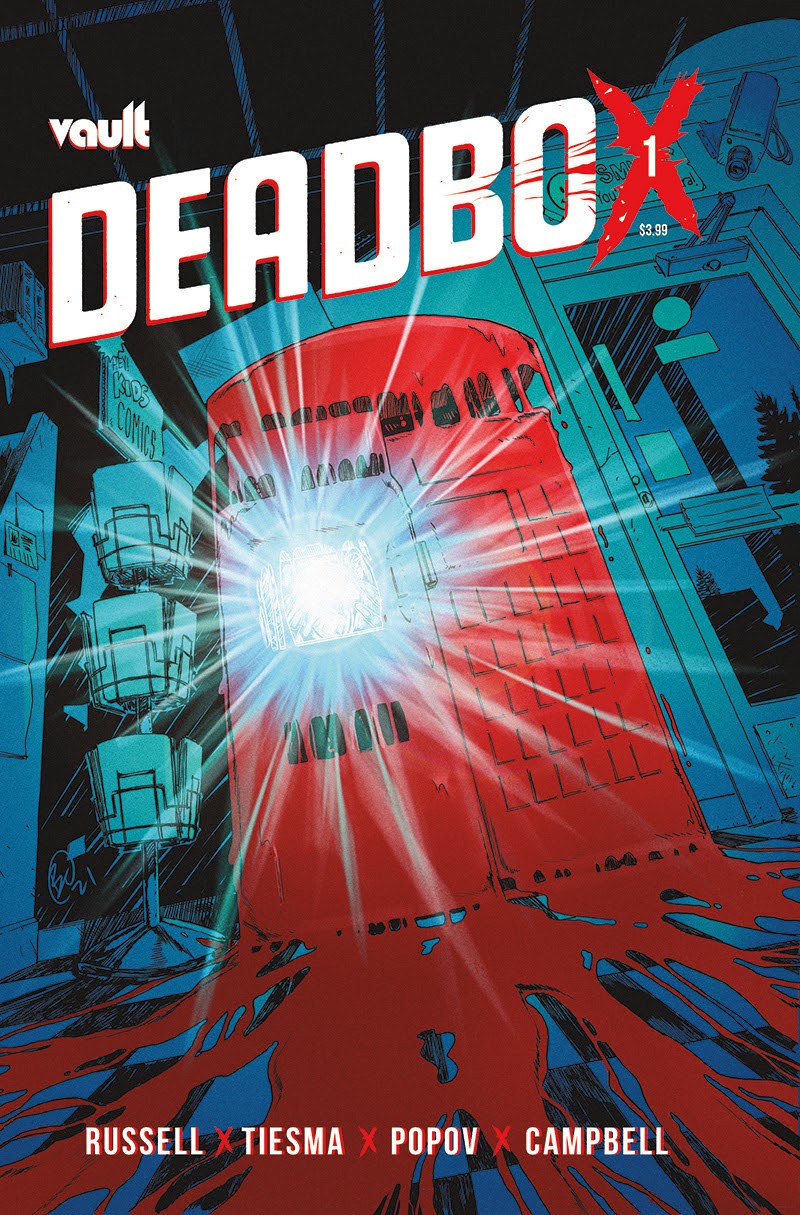
We are the stories we tell ourselves, no matter how stupid they are. This is but one of the sentiments that orbit the satire at the heart of Vault’s latest comic book series, Deadbox. Accompanying that brutally accurate idea is the thought these stories we collectively decide to support can also be cursed. Author Mark Russell and illustrator Benjamin Tiesma tap into the core stupidities of our national narrative, both foundational and current, and come up with a story that’s as funny as it is worrying.

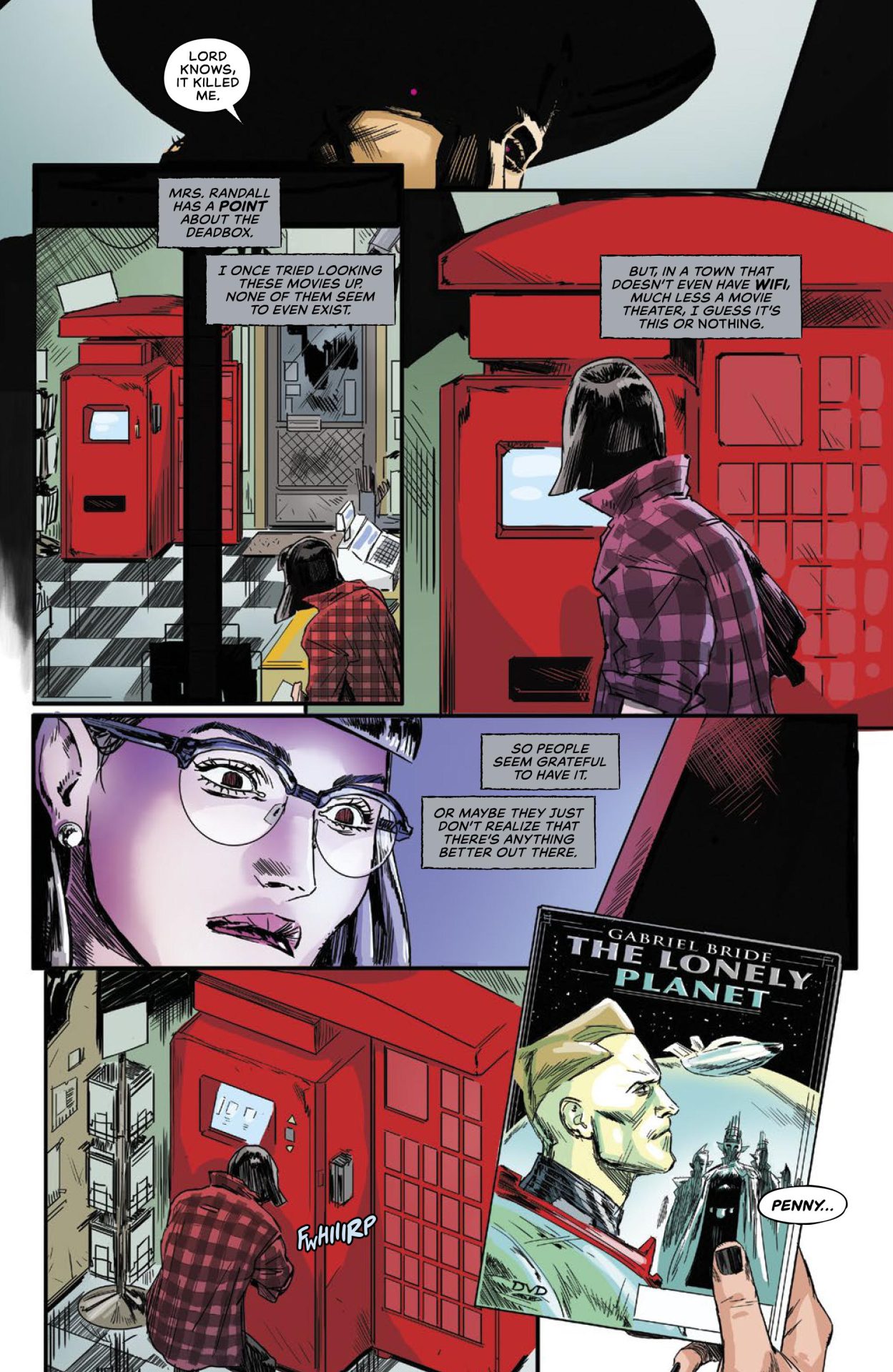
Deadbox follows a woman called Penny who owns a convenience store in a dead-end town called Lost Turkey, a town that also worships freedom as if it were its own god. The town and its people poke fun at Libertarian ideals and conservative thought to create an environment that’s contradictory in every social facet of life. Lost Turkey’s only source of entertainment, as the book says, is a DVD machine that looks like one of those Redbox vending machines where people could rent movies and video games from.

Problem is, the movies in the machine are haunted. Some can only be found in that Lost Turkey’s rental machine and nowhere else. Russell and Tiesma hang on to this detail to create a kind of ‘story within a story’ dynamic where the movie becomes a reflection of the things that are happening in the town, or that are happening to it.

Russell has built quiet a body of work on his own brand of satire. His stories are aware of the commentary he’s putting forth, subtlety be damned in some cases. It makes his comics come off as meta a lot of the times and he’s largely successful at it. Deadbox is another notch on that belt in this regard.

As the story develops, we learn that Penny’s dad is seriously ill and that her choice to rent a movie from the machine will foretell some of the things that ail and will end up ailing the character. This is where Russell’s skill with creating parables and metaphors shines, turning the movie’s sci-fi story of humanity making first contact with an alien civilization into a contemplation on a people’s dreams of progress, what old age means, and how entitled we can come off as while settling in new places.

Lost Turkey itself is a combination of elements that make it a kind of conservative utopia guided by contradictions that celebrate unfettered freedoms regardless of consequence. Gun lovers, safety-defying bikers, and small town political leaders with delusions of grandeur populate this place and each one offers a chance to think about the backwardness of our political culture.

Deadbox #1

Tiesma’s art makes sure the script’s satire never skips a beat by leaning into caricature in his portrayal of the townspeople and the characters that appear in the story’s movie segments. Body language and panel transitions are imbued with a theatrical flair that rewards careful observation and close reading. The humor’s in the details in this one and Tiasma capitalizes on every chance he gets to dial it up.

Deadbox is an incredibly smart comic that finds a lot to be scared of in stupidity, but also a lot to laugh at. The first issue of the series stands on the strength of its sharp wit and its visual comedy. There’s a lot of stupid in the world right now and Deadbox is here to make fun of it.

Story: Mark Russell Art: Benjamin Tiesma,
Colors: Vladimir Popov, Letterer: Andworld Design
Story: 9.0 Art: 9.0 Overall: 9.0 Recommendation: Read and try not to do stupid things.

Vault provided Graphic Policy with a free copy of the comic for review


Purchase: comiXologyKindleZeus ComicsTFAW

Earl Review: Deadbox #1

Deadbox #1

We are the stories we tell ourselves, no matter how stupid they are. This is but one of the sentiments that orbit the satire at the heart of Vault’s latest comic book series, Deadbox. Accompanying that brutally accurate idea is the thought these stories we collectively decide to support can also be cursed. Author Mark Russell and illustrator Benjamin Tiesma tap into the core stupidities of our national narrative, both foundational and current, and come up with a story that’s as funny as it is worrying.

Deadbox follows a woman called Penny who owns a convenience store in a dead-end town called Lost Turkey, a town that also worships freedom as if it were its own god. The town and its people poke fun at Libertarian ideals and conservative thought to create an environment that’s contradictory in every social facet of life. Lost Turkey’s only source of entertainment, as the book says, is a DVD machine that looks like one of those Redbox vending machines where people could rent movies and video games from.

Problem is, the movies in the machine are haunted. Some can only be found in that Lost Turkey’s rental machine and nowhere else. Russell and Tiesma hang on to this detail to create a kind of ‘story within a story’ dynamic where the movie becomes a reflection of the things that are happening in the town, or that are happening to it.

Russell has built quiet a body of work on his own brand of satire. His stories are aware of the commentary he’s putting forth, subtlety be damned in some cases. It makes his comics come off as meta a lot of the times and he’s largely successful at it. Deadbox is another notch on that belt in this regard.

As the story develops, we learn that Penny’s dad is seriously ill and that her choice to rent a movie from the machine will foretell some of the things that ail and will end up ailing the character. This is where Russell’s skill with creating parables and metaphors shines, turning the movie’s sci-fi story of humanity making first contact with an alien civilization into a contemplation on a people’s dreams of progress, what old age means, and how entitled we can come off as while settling in new places.

Lost Turkey itself is a combination of elements that make it a kind of conservative utopia guided by contradictions that celebrate unfettered freedoms regardless of consequence. Gun lovers, safety-defying bikers, and small town political leaders with delusions of grandeur populate this place and each one offers a chance to think about the backwardness of our political culture.

Deadbox #1

Tiesma’s art makes sure the script’s satire never skips a beat by leaning into caricature in his portrayal of the townspeople and the characters that appear in the story’s movie segments. Body language and panel transitions are imbued with a theatrical flair that rewards careful observation and close reading. The humor’s in the details in this one and Tiasma capitalizes on every chance he gets to dial it up.

Deadbox is an incredibly smart comic that finds a lot to be scared of in stupidity, but also a lot to laugh at. The first issue of the series stands on the strength of its sharp wit and its visual comedy. There’s a lot of stupid in the world right now and Deadbox is here to make fun of it.

Story: Mark Russell Art: Benjamin Tiesma,
Colors: Vladimir Popov, Letterer: Andworld Design
Story: 9.0 Art: 9.0 Overall: 9.0 Recommendation: Read and try not to do stupid things.

Vault provided Graphic Policy with a free copy of the comic for review


Pre-Order: comiXologyKindleZeus ComicsTFAW

Fear of the Known: Lovecraftian classic Cromwell Stone goes beyond the unknown to find terror

Cromwell Stone

Whenever a book, a movie, or a comic book claims to be a work of Lovecraftian horror, certain storytelling worries and expectations crop up. Will it open with the overused Lovecraft quote on the oldest and strongest fear of mankind being fear of the unknown? Does it look like it’s bound to be an affair between tentacled monstrosities and madness? Or will it be about a single person living in a house that’s located on the exact coordinates where cosmic horror lies buried?

One would think that the extent of Lovecraftian horror lies within those questions, but for French comics auteur Andreas (born in Germany and then relocated to France) the very core of this kind of horror lies beyond the unknown. Instead, it might lie in the realization that what we truly fear is what we can’t understand, and whether our attempts at understanding it will ever bear fruit.

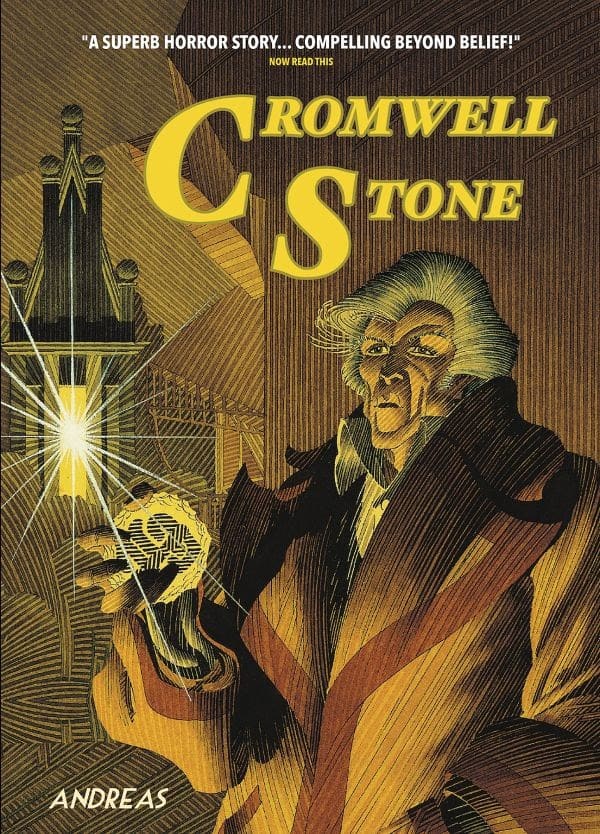
This is what Andreas contemplates in his classic horror trilogy Cromwell Stone, a story about strange objects and old gods that might be too alien for our minds to comprehend but must still be studied and pursued. The real danger is in the discovery process for Andreas and his main character is the vessel through which we come to this realization.

Cromwell Stone can currently be found in a collected edition containing all three volumes of the story—the opening entry titled Cromwell Stone (1986), followed by The Return of Cromwell Stone (1994) and The Testament of Cromwell Stone (2004). This edition was published by Titan Comics in 2019.

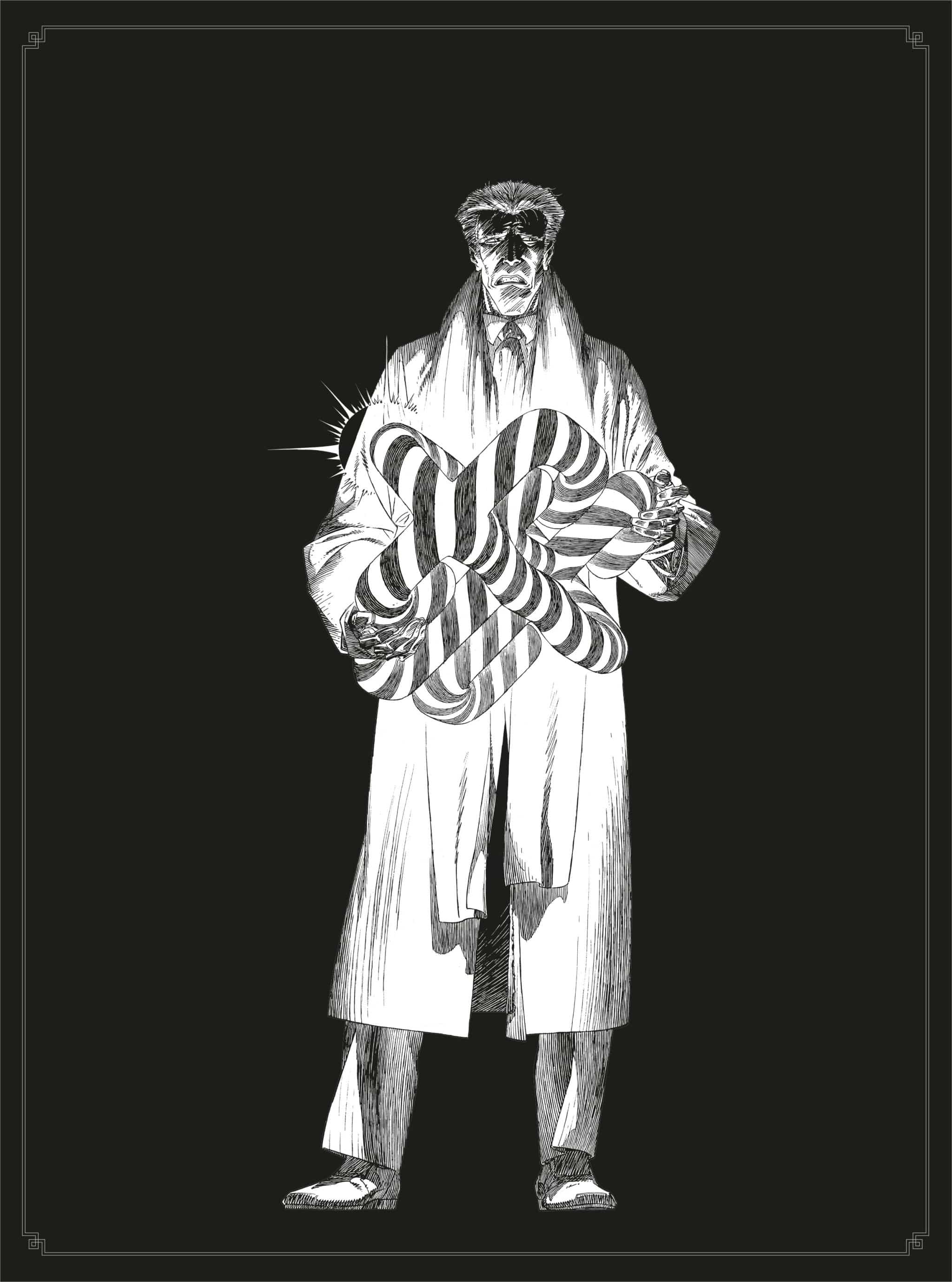
The story sticks close to Lovecraft in focusing on a select group of characters that might or might not be trying to lead the titular character into otherworldly places not meant for humans. It starts with Cromwell searching for a friend that suddenly stopped corresponding with him after years of consistently doing so. The existence of a key-like object that has the capacity to change some aspect of reality among those who possess it guides Cromwell in his search. The entire saga gravitates around the effects the key generates.

Cromwell Stone

Were this a very strict Lovecraftian story, Cromwell’s search would slowly progress towards an encounter with a race of strange creatures or old gods whose mere presence signifies a violent change on the very concept of reality. Life can never be the same again once we realize things that weren’t meant to exist actually do.

In The Call of the Cthulhu, for instance, gazing into the mountainous monstrosity that is Cthulhu means either death by shock or being entirely consumed by madness. The mind quite simply breaks.

The unfortunate ones that get to witness this get their entire worldview shattered and they know that nothing will ever help put the pieces back together. In other words, once the unknown reveals itself, there’s very little left to hold on to for those who were in its presence. Reality becomes a slippery thing.

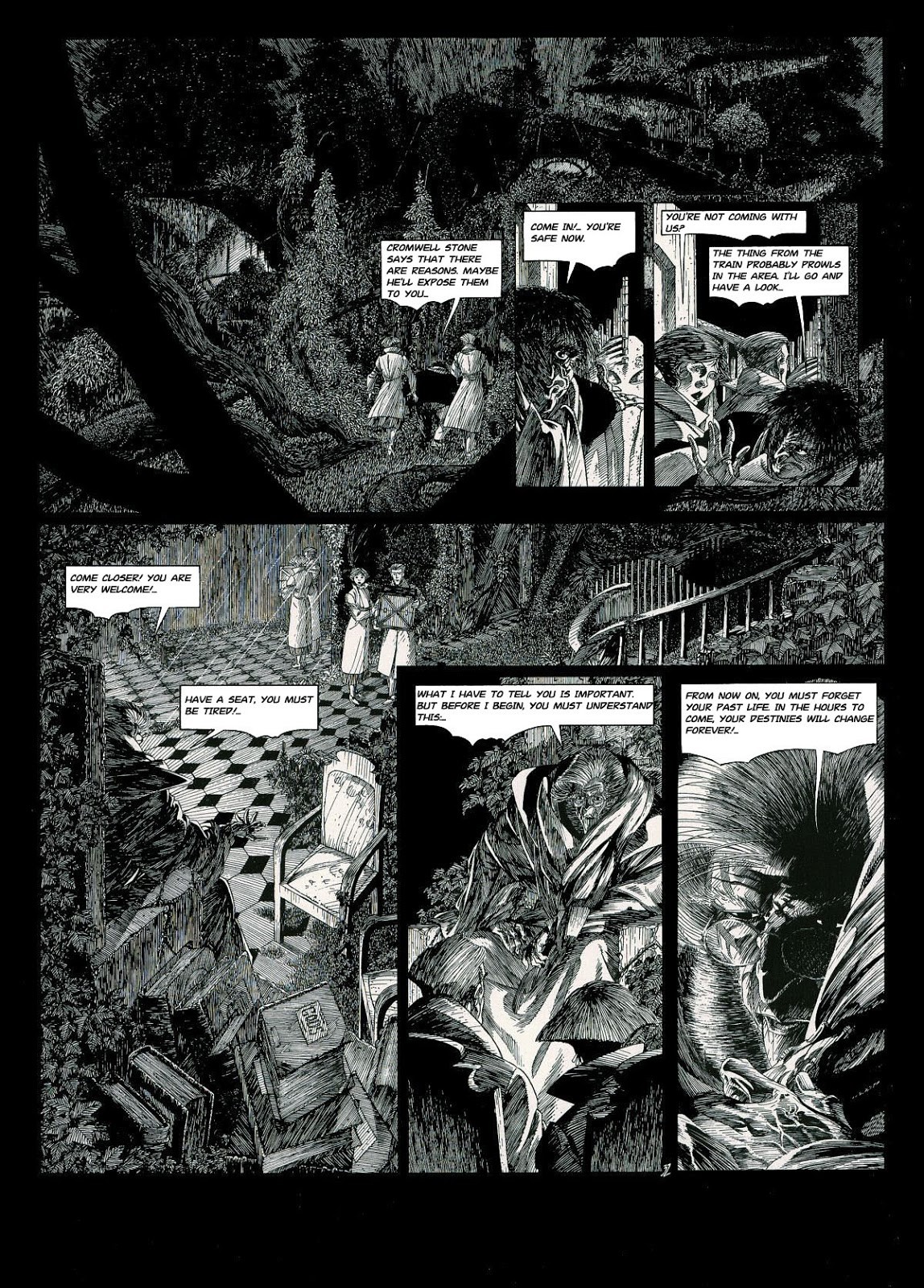
Cromwell Stone adds a considerable wrinkle to the formula. In Andreas’ story, being confronted with the unknown does not mean the end for those involved directly with it. Instead, the unknown becomes a doorway that pulls those closest to it in, offering an assortment of strange questions without guarantee any answers lie at the end of anything. The questions, though, are exquisitely enticing and demand nothing short of obsession over the particulars from those that seek answers.

Cromwell Stone

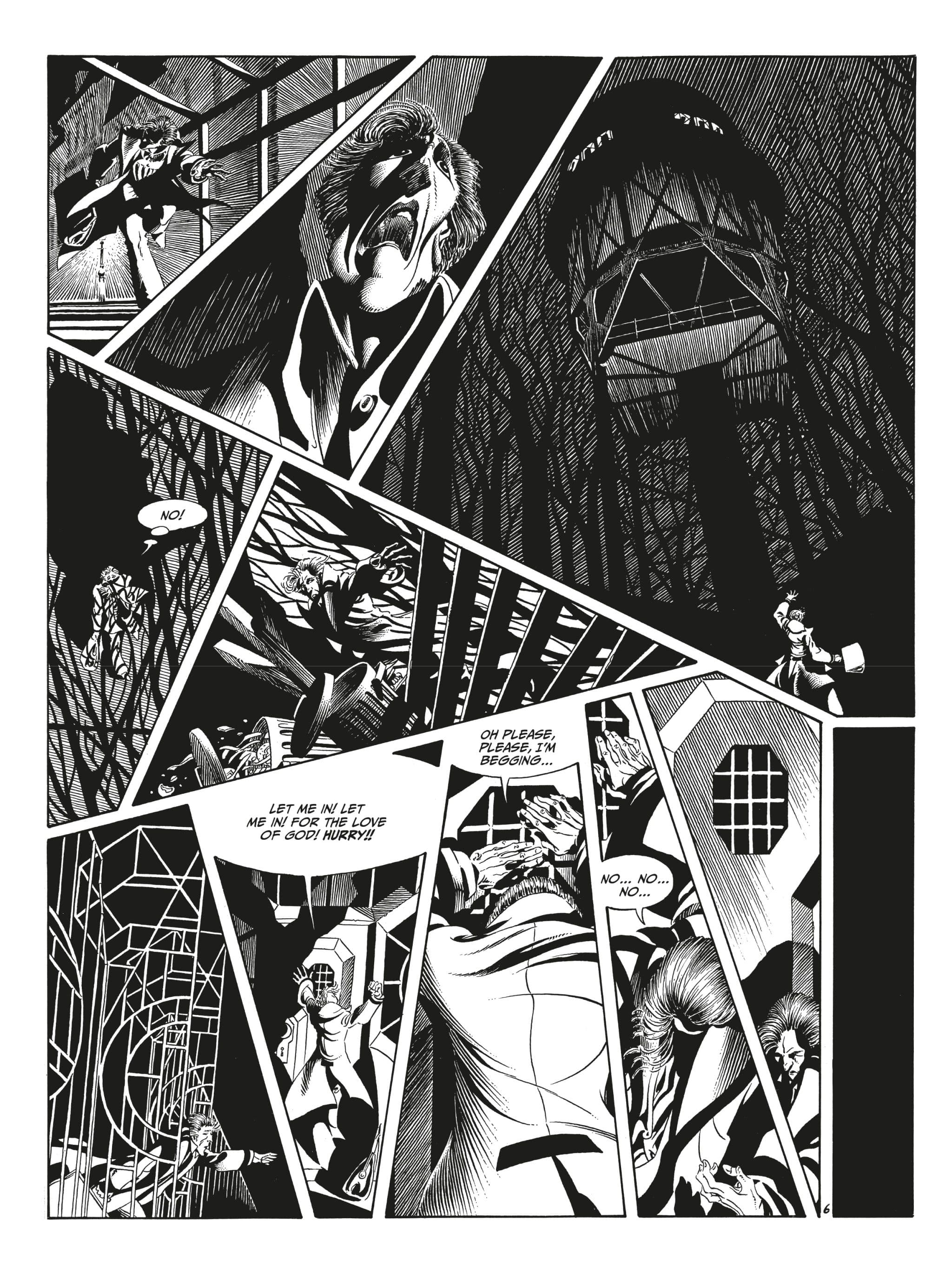
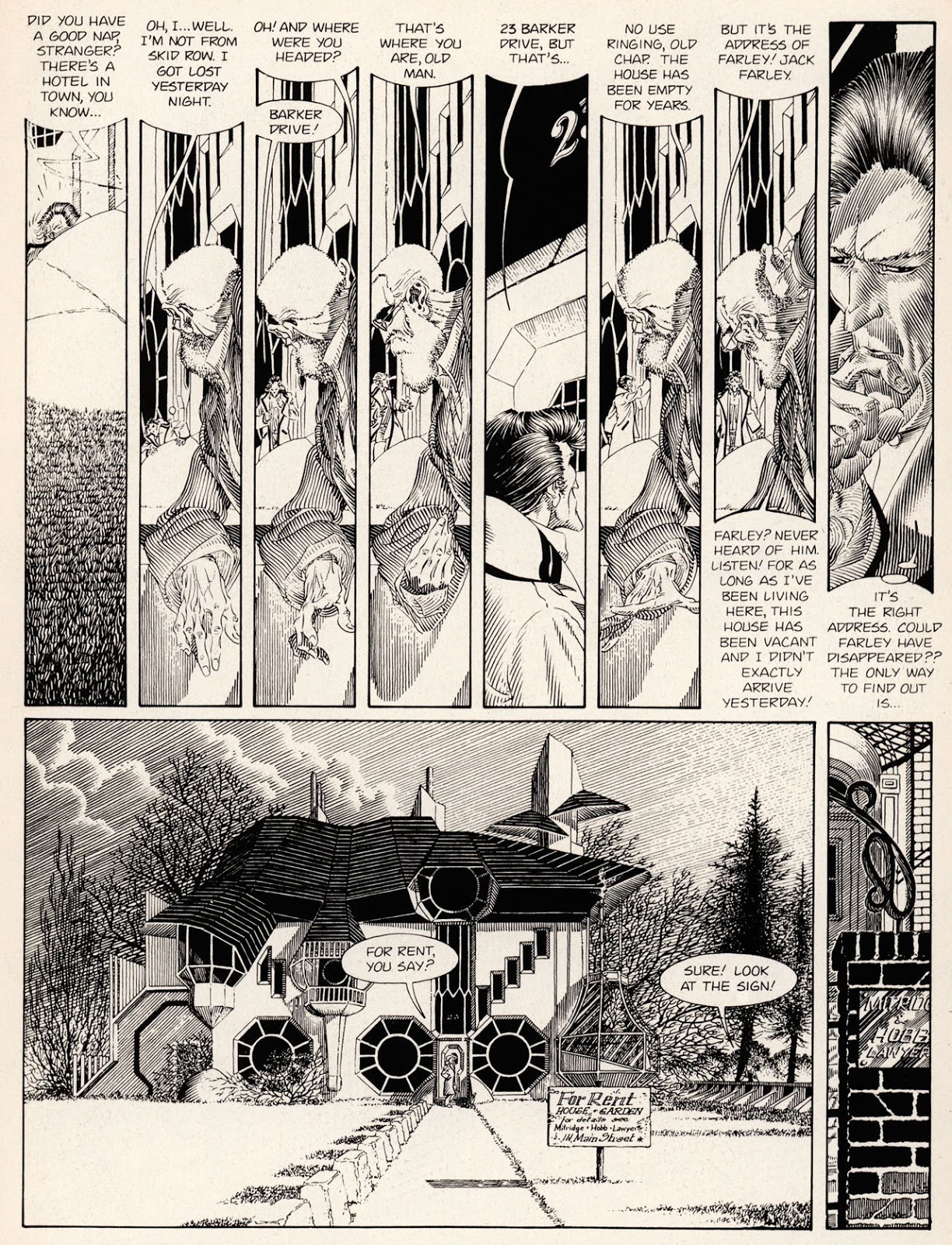
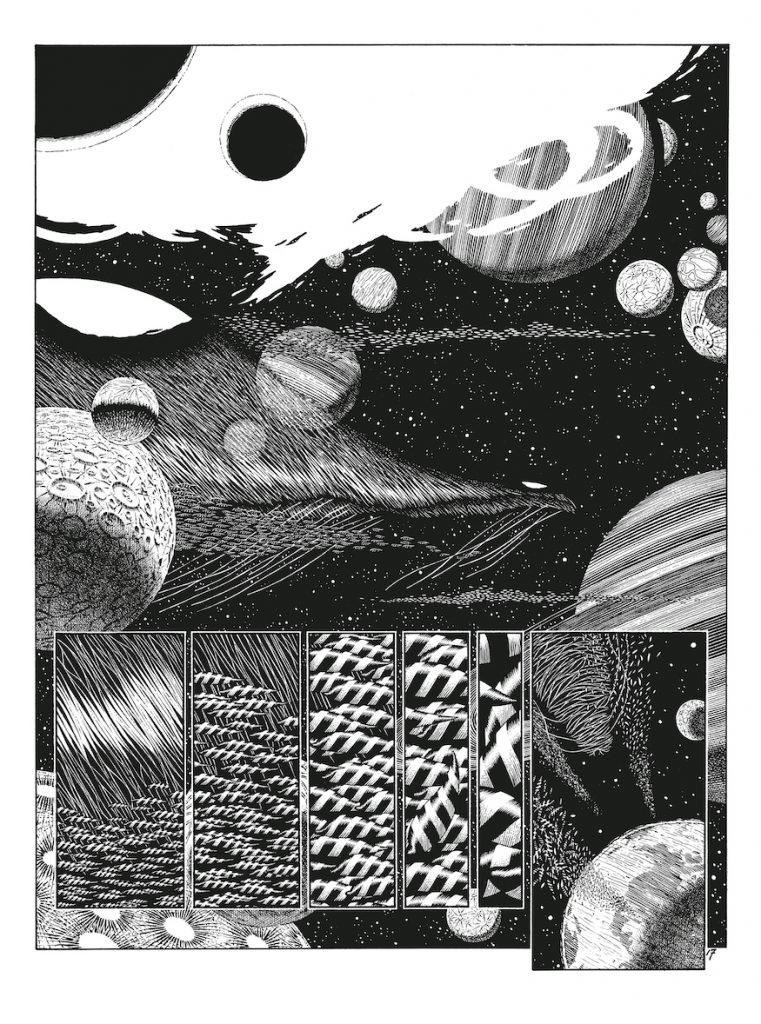
Andreas makes sure this attempt at understanding the unknown isn’t just relegated to dialogue and narration. In fact, the process is at its most impressive and challenging in its visual component. There are very few pages throughout the entire saga that offer a clearly delineated and rigidly structured environment for a characters to move around in. There’s a weird geometry that engulfs the story and its characters and it turns each panel into a reflection of the complexities of the mysteries at its core and how difficult they are to make sense of.

For Andreas, living with the knowledge of cosmically terrifying things means a complete transformation of the world and how one perceives it. It turns the book into a puzzle that requires one also obsess over details to decipher its possible meanings.

The first Cromwell story, for instance, contains a massive house that changes its physical dimension just enough to cast doubt on reality. And yet, Andreas doesn’t shy away from recognizing the veracity of such changes among his characters. Instead, it becomes a phenomenon that deepens the mystery and demands further descent into the unknown. Everyone involved is in on the proceedings and gets consumed by them.

Cromwell Stone

Andreas makes each become more claustrophobic as the story unfolds, as if the weight of the new things he discover are overwhelming enough to box Cromwell deep within his mind with little to no chance of escape. Sharp lines cut vertically and diagonally in key sequences and become a new burden upon those whose minds are attuned to the secrets of the universe.

Fans of Bernie Wrightson will find a lot to appreciate in these scenes. Andreas’ attention to detail is, not unlike Cromwell, obsessive, but it’s all at the service of creating a deep sense of existential dread within the story’s world. One is left with little choice other than to be consumed by the worlds contained in each panel. In the process, we come to better understand the toll it takes to pursue even a base understanding of things infinitely more complex than we are. The result is a kind of horror that hypnotizes its subjects rather than drive them away.

The second volume of the series focuses on a voyage at sea that reveals crucial information as to the existence of ancient gods, but theirs is not an existence purely bred for the destruction of humanity. Their presence in relation to humanity can even be framed as a matter of inconvenience due to accidental clashes of energy that ground drive these beings into our planet and imprisons them.

Cromwell Stone

The story takes a step away from popular Lovecraftian ideas by giving these beings a less defined physical shape. They are not the squid-like, tentacled horrors of the source material. They are somewhat more symbolic in nature and also invite more complex questions to be lobbed at their behavior.

By the third story, Cromwell himself is presented as tragically illuminated with forbidden knowledge. He’s more concerned with his findings and whether others will take up his never-ending search for answers, knowing future candidates will most assuredly be destined to become tragic scholars of the forbidden who will never be satisfied with what they find. As such, they would take up the burden of learning a fraction of the mysteries of the universe and then hope others continue their work.

Cromwell Stone

This obsessive search for answers, despite the horrors that hide in the questions, is not entirely divorced from Lovecraft’s own idea of fear, but Andreas does give the concept a more complete and convincing shape. For Lovecraft, all roads lead to madness. For Andreas, some roads lead to dangerous knowledge.

These two destinations aren’t meant to be mutually exclusive, but Andreas’ story suggests there are more terrifying things beyond the unknown. Instead, searching for answers to try and explain the impossible is where true terror resides.

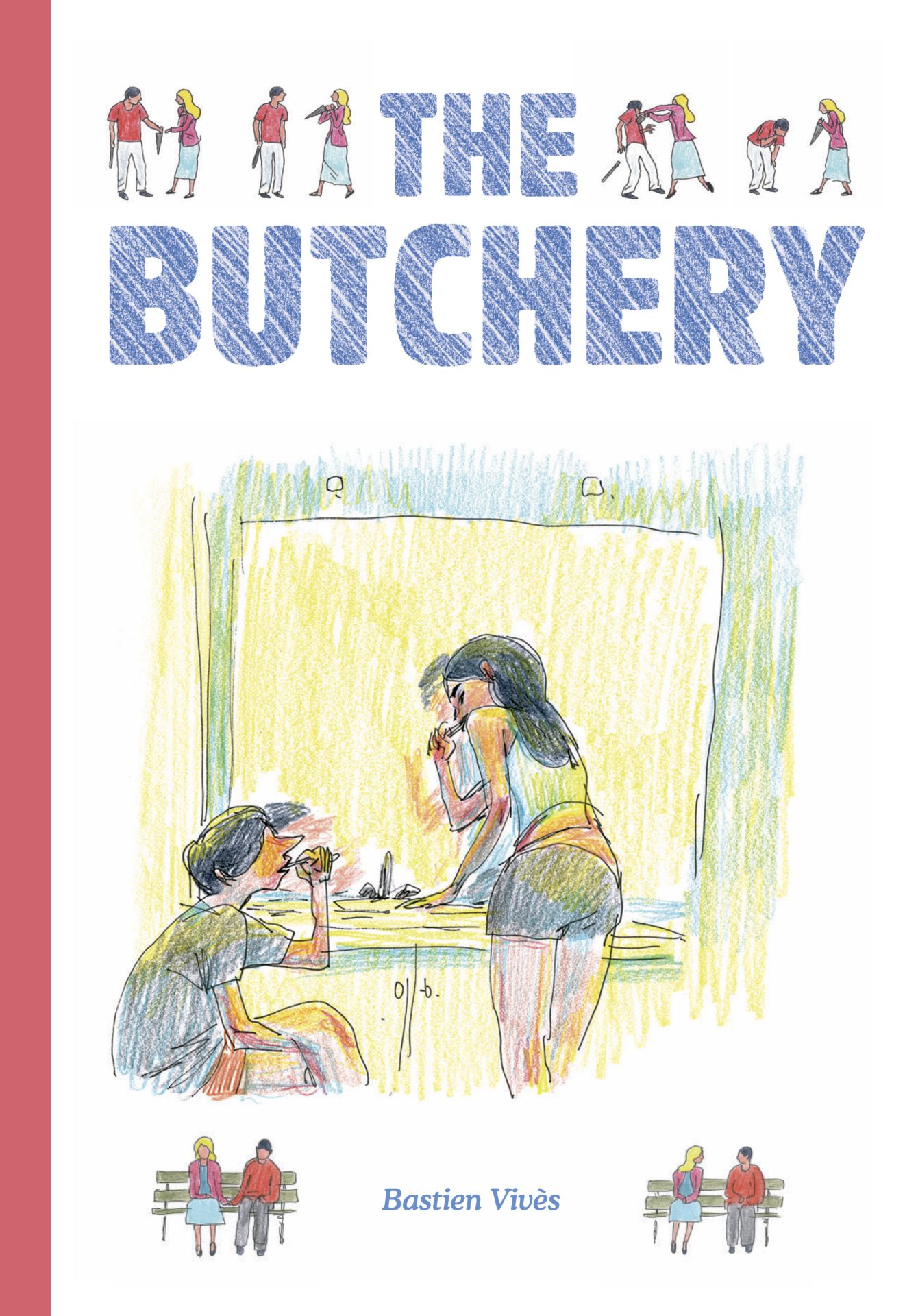
Review: The Butchery

The Butchery
The Butchery, Fantagraphics

The press release for French cartoonist Bastien Vivès contains an interesting phrase that perfectly sums up what his new book, The Butchery, is about: “the emotional bloodbath of a romance gone awry.” It’s beautiful in its description and cruel in its promise of delivering a story about how happiness and sadness cannot exist independently from one another.

The Butchery, published by Fantagraphics, centers on a couple that’s experiencing the commonly natural life and death cycle of a relationship. It’s lyrical in its pacing and poetic in its visuals, which come to us as hazy memories of the couple’s pivotal moments. They’re subtle and they show love at its most blissful stage and pain at its most cutting phase.

Reading The Butchery requires reflecting on the unique wounds love and romance have left behind, some wide open and still pulsating, and contemplating just how much of the good and the bad is shared between one’s personal experience and that of the characters in the book. Having a history in failed relationships heightens the range of the book’s emotional spectrum, but there’ something to learn along the way no matter the life experiences brought to the reading.

Vivès keeps to an economical but precise approach to the amount of text in the story. Being that it’s a book the reader is meant to feel, the visuals are given free reign to linger as much as they want while leaving more questions than answers in their passing. Each page only contains about two or three images at most and they’re not bound by panels or any other connecting tissue.

The Butchery

This changes when the book turns into a more metaphorically playful space with its subject matter. After certain events transpire, Vivès resorts to darkly funny, comic strip-like sequences where the results of a fight or a disagreement play out in a way that’s directly in opposition to the vague realities of feelings and communication reserved for the main story.

These interventions go from blunt reactions to bad news to how confusion can manifest in a fantasy of violence and cruelty that one can’t avoid laughing at (if only to keep the tears at bay). They offer a nice break from the all-too real aspects of the relationship’s trials and tribulations and they end up being some of the book’s most memorable sequences.

The Butchery

The Butchery lives up to its title and expands upon the preconceived definitions of the word that gives the book its name. Vivès goes to well-traversed territory regarding love and loss, but he brings a different tool set to explore where our minds often go to when experiencing such things. It’s designed to make readers feel every emotion known to humans in love or who have loved and it leaves you no choice but to keep reading.

Story/Art: Bastian Vivès Translation: Jenna Allen
Overall: 10 Recommendation: Read and get ready for pain…necessary pain
.

Fantagraphics provided Graphic Policy with a free review copy. The Butchery is on sale now wherever books and comics are sold.


Purchase: comiXologyAmazonKindleBookshopTFAW

Early Review: Primordial #1

Primordial #1
Primordial #1, cover by Andrea Sorrentino

The Space Race between the Soviets and the Americans during the 1960s has always been fertile ground for conspiracy-centric storytelling, ripe with classic sci-fi concepts and ideas informed by a long tradition of weird fiction. Jeff Lemire and Andrea Sorrentino’s new book, Primordial, is firmly set within that tradition, but what it’s managed to produce on the visual front is what truly stands out as special.

Primordial follows a black electrical engineer from MIT called Dr. Pembrook, a man who’s interest in an American space mission where monkeys were shot into space to test travel by shuttle leads him to a secret report about the operation’s hasty cancellation that questions whether the alleged failure of the project was fact or an elaborate fiction to cover something up.

Pembrook’s discovery pushed him down the rabbit hole into conspiracy territory, led by a question that instantly makes the story take a whole new spin: what if the animal shuttle flights revealed something that scared everyone into not pursing further travel?

Lemire’s script perfectly captures the nail-biting paranoia that tends to be a staple in these types of stories, but when things get cosmic, it’s Sorrentino who steps up and steals the spotlight. It works because Lemire allows the plot to unravel in two spaces, if you will, in which Pembrook’s side is allowed to develop on its own while the animals’ flight is also given room to present its trajectory.

Primordial #1
Primordial #1

The more traditional, almost spy-thriller aspects of the story belong to Pembrook while the all-out sci-fi part of the equation is afforded to the animals. Sorrentino capitalizes on the setup to let loose in what can only be described as pure and unfiltered creativity, especially when it comes to the space travel sequences.

Panel work in these sections of the book break with structure and form to reach a higher level of visual play that ranges from panel collisions to colors flying off into unexpected parts of the page. It all combines to create a sense of wonder and even fear that frames the animals’ experience as a complete transformation of the rules of physics that will transport them to uniquely unknown places.

It tips its hat to Jack Kirby sci-fi, but it also borrows from classic rock and prog album cover art to breath life into many of the surprises the book viscerally throws at its readers as the story’s pacing picks up. In other words, Primordial is a visual marvel, a feast for the eyes that’s hard not to get lost in.

Dave Stewart’s coloring is largely responsible for the visuals’ triumphs as well. The book is bright and it captures the kind of naïve optimism that tends to characterize attempts at space travel. It makes for an experience in which the unknown is given a chance to reveal itself and to pose questions that go beyond what’s seen. Stewart’s work elevates that idea and gives it new dimensions.

Primordial #1 possesses a very exciting and intense sense of discovery and exploration that rests on the notion that secrets and conspiracies can generate quite a set of sense-shattering images. It’s a supreme example of what can be achieved with visual storytelling and how comics can offer narrative possibilities other mediums can only hope to imagine.

Story: Jeff Lemire Art: Andrea Sorrentino Colors: Dave Stewart
Story: 9.0 Art: 10 Recommendation: Read and make sure to give comics to space animals for their voyages

Primordial #1 will be available at comic shops on Wednesday, September 15.


Pre-Order: comiXologyKindleZeus ComicsTFAW

« Older Entries Recent Entries »