Author Archives: Logan Dalton

Review: My Riot

My Riot

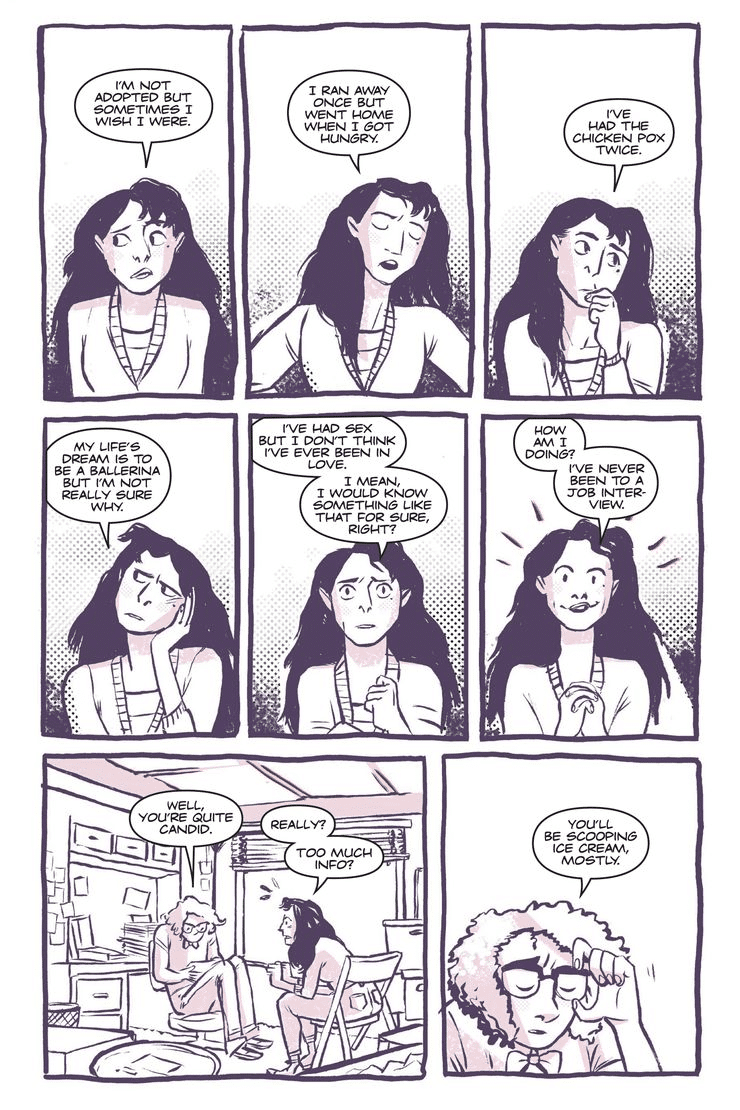
What if the “she” of Avril Lavigne’s 2002 hit “Sk8er Boi” was both a punk and did ballet? Rick Spears and Emmett Helen succeed in answering this question in their upcoming riot girl personal narrative My Riot. My Riot is about a teenager named Valerie, who has lived a pretty regimented life up to this point. Her parents are fairly conservative, and she dances ballet and works an after school at an ice cream shop. Her only acts of rebellion are sometimes fooling around with guys and smoking cigarettes to “make weight” for the ballet’s performance of Swan Lake. However, witnessing a riot changes her life, and she ends up going to punk rock shows with her new friends Kat and Rudie (Who gets some of the book’s funniest lines) and starts a band ironically called The Proper Ladies even though she can’t play an instrument. There are love triangles, arguments, pitfalls, and yes, triumphs along the way as Spears and Helen tell a coming of age story through the trappings of early 1990s punk rock.

Throughout My Riot, Emmett Helen matches the energy of his artwork to the emotions that Valerie is feeling at any given time. He uses light lines and washed out, monochromatic baby blues in the beginning of the story as Valerie goes through the motions of ballet. She loves to dance, but hates the control that her teacher has over her body weight and shape and the cruel comments she makes. Helen’s palette stays sickly and suburban until he shows Valerie’s first meeting with Kat, who is vandalizing a teacher’s house and then swipes one of her cigarettes. This darker color palette and more chaotic line work shows up later when rioters throw a brick in the window at Valerie’s work and rise to a peak at Valerie’s punk rock show where she realizes she’s attracted to Jake, the sex negative, straight edge guy that talked shit to her for drinking soda with artificial sweetener. With its minimal color, Ben-Day dots, and “glued together” grid layouts, sometimes My Riot feels like one of the zines that The Proper Ladies’ fans bring to their show and exchange with other fans of riot girl music.

Emmett Helen’s art gets even more intense whey he depicts The Proper Ladies’ first gigs, and he has a real knack for iconic imagery, like Valerie’s perfect stage dive, or the venom and agency she has when she calls out some audience members for their sexist behavior. However, Rick Spears doesn’t rush to the fun, drama-filled rock star part and shows the bumps and bruises of learning how to play guitar, cohere as a band, and win over an audience. There’s an added degree of difficulty with Valerie being grounded by her parents as she learns chords from Jake at school and then jams with Kat over the phone. However, there is a real passion in these early sessions that contrast with the listlessness of her ballet practice even though she thinks her partner, Danny is kind of cute.

A major theme of My Riot is Valerie is taking control of her own life through music, and Rick Spears’ lyrics for The Proper Ladies echo her emotions and earlier events in the comic. For example, she has a real napalm strike of a song called “Fucking” that is connected to how her mom acts when she finds condoms in her room and also how Jake feels when she tells him that she’s not a virgin. Religion and purity culture aren’t mentioned in this book, but the male characters especially are firm followers of the Madonna/whore complex. However, Spears’ characterization of Valerie’s parents is balanced; they’re strict, but not Amish even though she has to work around them to start the band and use some fake sleepovers as excuses for their first tour dates. He and Emmett Helen even include scenes where they talk about how they might be too hard on her, and this friendly, yet complicated, and very relatable relationship gets some real emotional payoff in the back end of the book.

Rick Spears and Emmett Helen dig deep and capture the epic emotions of growing up through the language of spot colored, ink slinging punk rock comics in My Riot. Valerie is a well-developed protagonist with a complex web of relationships that directly bleed into her music and lyrics. It’s really beautiful to see her journey from simply being to becoming as some very un-punk philosophers would say.

Story: Rick Spears Art/Colors: Emmett Helen
Story: 8.5 Art: 9.0 Overall: 8.8 Recommendation: Buy

Oni Press provided Graphic Policy with a FREE copy for review


Purchase: comiXologyKindleAmazonZeus Comics

Comics Deserve Better Episode 11: Interview with Zoe Thorogood (The Impending Blindness of Billie Scott)

After a short hiatus, Comics Deserve Better is back and ready to cover your favorite indie comics! In this episode, Brian and Logan interview talented writer/artist Zoe Thorogood about her debut graphic novel, The Impending Blindness of Billie Scott. They chat about everything from color palettes and character designs to the power of art to inspire and even video games! Later, Darci joins the fun to talk about the indie comics Bang!, The Citric Arc, Getting It Together, We Live, Stillwater, and The True Lives of the Fabulous Killjoys: National Anthem.

(Episode art by Zoe Thorogood.)

Review: True Lives of the Fabulous Killjoys: National Anthem #1

TRUE LIVES OF THE FABULOUS KILLJOYS: NATIONAL ANTHEM #1

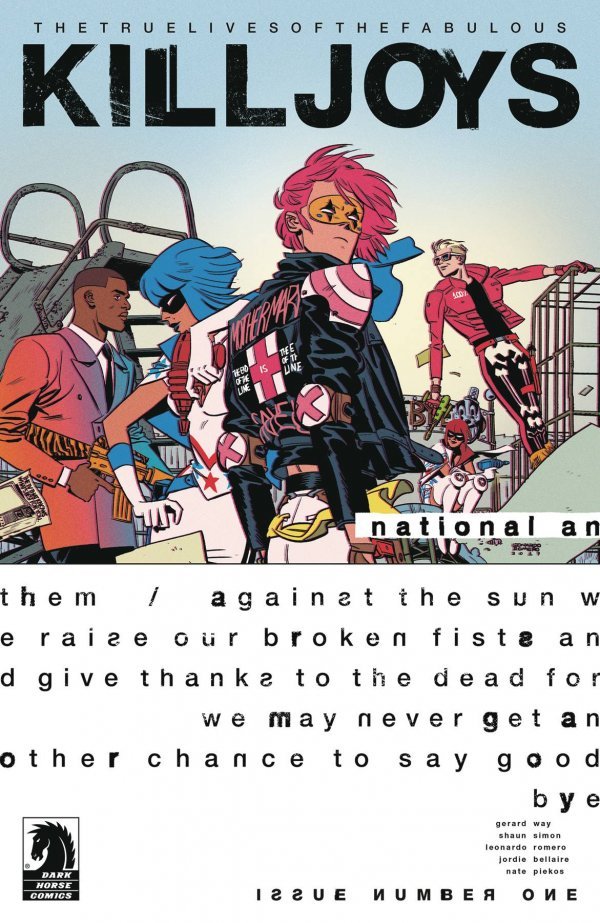
Set in the world sung about in My Chemical Romance’s fourth studio album Danger Days, True Lives of the Fabulous Killjoys: National Anthem #1 tells the story of the original Killjoy, Mike Millimeter. He’s been hinted at in concept art since 2008, but finally, writers Gerard Way and Shaun Simon, artist Leonardo Romero, and colorist Jordie Bellaire tell his epic and tragic narrative. In National Anthem #1, Way and Simon juggle twin narratives with one showing Mike at his peak, rocking a cool car, ray gun, a mask, and a crew of Killjoys and the other one showing his life in a dystopia that has homogenized everything from breakfast cereal to Ramones records. And, of course, Mike rebels against “the Man” even if it means his death.

One of Gerard Way’s most underrated talents is artist curation. For example, take a look at the artist lineup for the sadly dormant Young Animal imprint and see how Nick Derington was born to be a star penciler and nail both the adventure of Batman and the weirdness of the Doom Patrol. His curation skills strike again in National Anthem #1 as Leonardo Romero’s storytelling styles perfectly fits the duel between conformity and non-conformity from crashing on the couch and vegging out to nationalistic television to starting a revolution anew. He uses lots of small panels to show little interactions between characters or memorable moments like Mike thinking back to his abusive childhood. Jordie Bellaire’s color palette adds emotion to this and other scenes with strong color choices like yellow pages for the abuses of the past or a vomit green as Mike grows sick of life as stock shelver with an encyclopedic knowledge of the Ramones.

Gerard Way and Shaun Simon go for a drinking at a fire hydrant style of scripting and plotting that is similar to Way’s work on Umbrella Academy and Doom Patrol although they predominantly focus on Mike Milligram as a character with supporting players acting as window dressing, obstacles, plot points, or getting him to act. Just like the Danger Days album, National Anthem #1 scratches the surface of a futuristic world that is similar to ours with megacorporations and surveillance states, but a bit quirkier. For example, there’s a gang of books on tape addicts in National Anthem #1, and they are one of several gangs that get into one hell of a shootout in the middle of the comic.

This extended setpiece showcases Romero eye for action as he breaks down each gun fight into manageable chunks using smaller panels before going widescreen for a big plot point or a car chase. For the most part, Bellaire uses primary colors for the Killjoys to make sure that readers can see what they’re up to in the middle of the fray. It matches the yellow pops of their ray guns and the red of blood and guts that streak across the panel and even into the gutters as Mike loses control of the situation. There’s a reason why he’s slumped on the couch while the U.S. National Anthem plays on his television, and Romero and Bellaire use visual similarities to transition to this future timeline like a film editor, who wants to make their cuts memorable and appealing and not give the audience a headache.

True Lives of the Fabulous Killjoys: National Anthem #1 has futuristic, punk rock worldbuilding with a stellar sense of style. It is also the first chapter of a compelling story arc for Mike Milligram, who goes from revolutionary leader to sad sack cog in a corporate machine. (But there’s yet hope for the masked man with the cool car.) Gerard Way and Shaun Simon’s Burroughs-esque word play, Leonardo Romero’s high energy pencils, and the Jordie Bellaire’s eye popping colors bring it all to life in magical, music video fashion. This one is for the MCRmy, Timothy Leary followers, aging crust punks in cubicle prisons, folks who prefer vinyl to streaming, and anyone who wants to give the middle finger to the current status quo.

Story: Gerard Way and Shaun Simon Art: Leonardo Romero
Colors: Jordie Bellaire Letters: Nate Piekos
Story: 8.0 Art: 9.0 Overall: 8.5 Recommendation: Buy

Dark Horse Comics provided Graphic Policy with a FREE copy for review


Purchase: comiXologyAmazonKindleZeus Comics

Review: Commanders In Crisis #1

COMMANDERS IN CRISIS #1

“When all our hope is gone, we have to hold on”- Nine Inch Nails, “We’re In This Together”

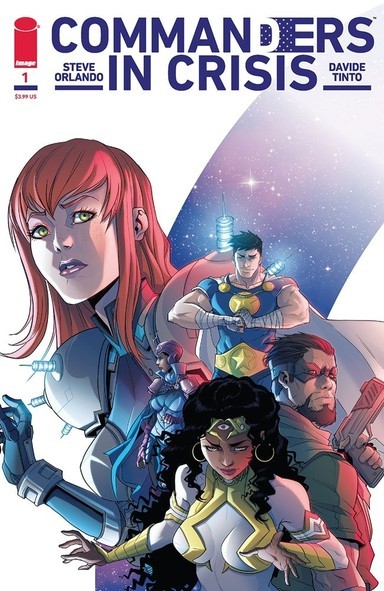
Like master alchemists, writer Steve Orlando, artist Davide Tinto, and colorist Francesca Carotenuto turn in a comic that is part “crisis” crossover, part high concept superhero story, and just a whole lot of fun with side of intrigue. Commanders in Crisis #1 also features a truly diverse and multicultural cast of superheroes, who have unique abilities and personalities that aren’t stereotypes. Frontier, Prizefighter, Originator, Sawbones, and Seer might remind you of characters that appear in comics written by creators like Grant Morrison and Kurt Busiek and drawn by Frank Quitely and George Perez, but Orlando and Tinto weave these visual and verbal influences into a wonderful, new multiversal tapestry.

Commanders in Crisis has blockbuster stakes, but Orlando and Tinto seed in personal and human moments for their team of heroes aka the Crisis Command, who get introduced with a double page splash and bold lettering from Fabio Amelia. After a drab, mystery tinged start, colorist Carotenuto pours a metaphorical Jelly Belly machine of colors onto the page as the Crisis Command springs into action against the aptly named Mind Muggers. The name of the baddies alone show the blend of street-level and cosmic action that Commanders in Crisis brings to the table. Whether your ideal superhero story is Final Crisis or the bits in Spider-Man 2 where Peter Parker has no powers and isn’t in costume, this comic has a moment, page, or panel for you. There’s cool, complicated parts, parts that makes you feel, and parts that makes you feel like you’re a kid watching Saturday morning cartoons or picking a book off the spinner rack again.

Commanders in Crisis #1 also does what some of my favorite superhero stories do: it uses eye-popping and memorable things like punching, flying, or something more conceptual like using the power of language to save the day to stand in for abstract ideas like truth, justice, and all that stuff. But, mostly, hope. There is hope in the fact that Prizefighter (aka my new favorite queer superhero) immediately goes from a world-ending team battle to a solo excursion to save a burning building. And Steve Orlando and Davide Tinto create similar hopeful moments from the other members of Crisis Command while building up a formidable opponent that made me instantly want to know what happened in issue two. I would definitely read a long-running series with this team.

Hope also comes through Davide Tinto and Francesca Contenuto’s visuals as well as Orlando’s scripting in Commanders in Crisis #1. Tinto turns in clean, iconic superhero poses while also drawing emotionally open facial expressions when the team is “off the clock”. (I can definitely get into a superhero comic that addresses work/life balance.) His designs hint at the inspirations for each member of Crisis Command while also making something memorable, novel, and connected to their personality. As mentioned earlier, Carotenuto’s varied color palette contributes to their memorable nature. These are characters I would definitely buy merch or action figures of, and I also care deeply whether they live or die.

Commanders in Crisis #1 reads like the comic book equivalent of a doctorate dissertation in superhero comics from writer Steve Orlando and star-making turn for artists Davide Tinto and Francesca Carotenuto. It’s the first chapter in an epic saga that doesn’t neglect character in the midst of its multiversal scope and also leaves room for fluid action, clever concepts, and moments that will make you smile or shudder. This is while basking in the glow of a cast that is truly inclusive, who I can’t wait to see overcome monumental challenges in subsequent issues.

Story: Steve Orlando Art: Davide Tinto 
Colors: Francesca Carotenuto Letters: Fabio Amelia
Story: 9.0 Art: 8.5 Overall: 8.8 Recommendation: Buy

Steve Orlando/Image Comics provided Graphic Policy with a FREE copy for review


Purchase: comiXologyKindleZeus Comics

Review: American Ronin #1

American Ronin #1

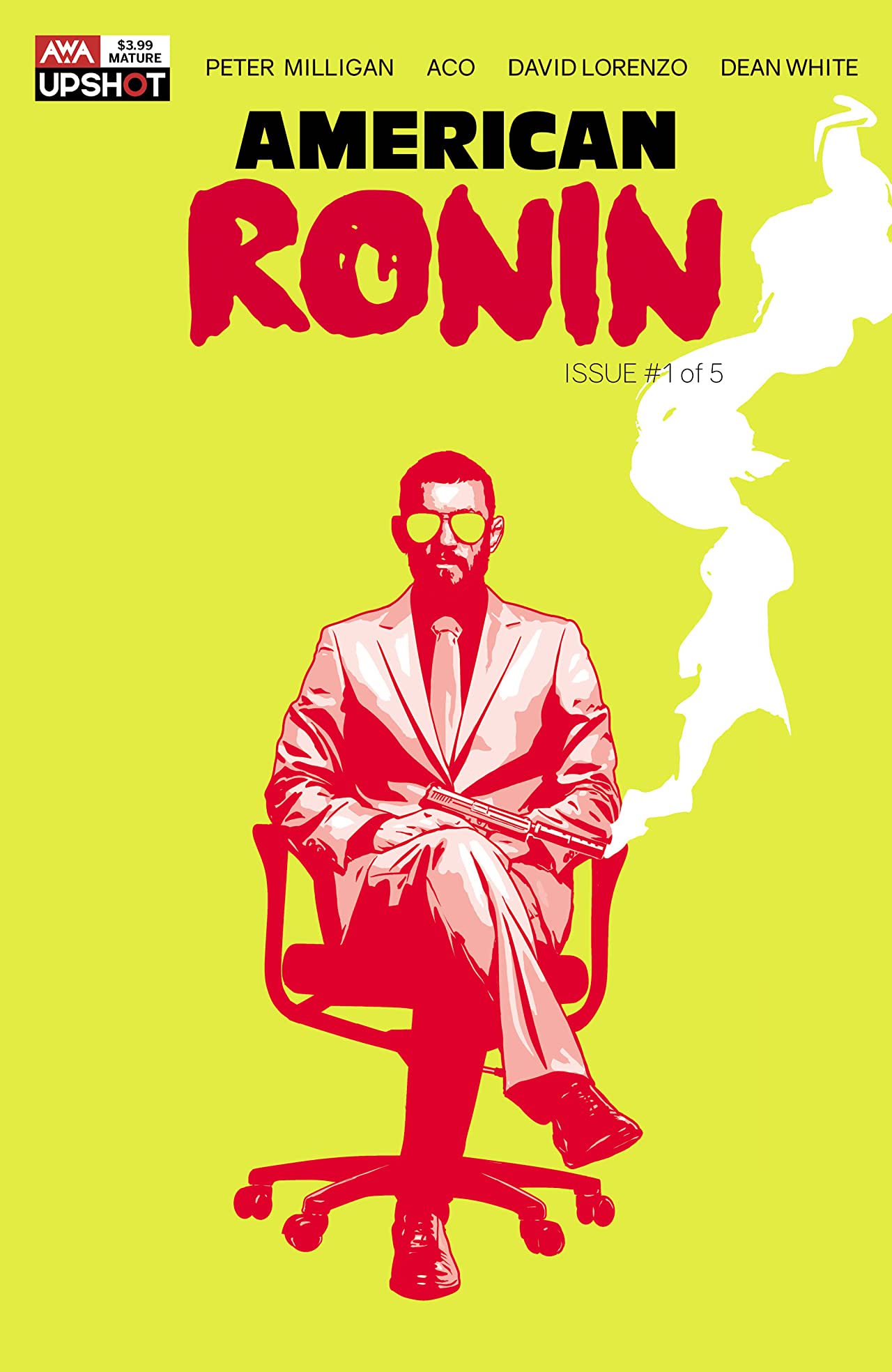
At times, American Ronin #1 is quite the cathartic read. Basically, a cold, sunglasses wearing asshole takes out rich assholes by psychologically manipulating them in addition to the other, more traditional action hero skills like hand to hand combat and motorcycle chases through Hong Kong. Peter Milligan‘s elegant, yet brutal writing balances Aco’s zoom panels, grids, and decadent, mayhem-filled layouts. And then Dean White’s colors adding a finishing touch of atmosphere along with Sal Cipriano’s stern, straightforward letters. They all team up to tell the story of a day in the life of a very badass assassin.

Unlike his previous work on Midnighter and Nick Fury, Aco, for the most part, doesn’t use his grids, close-ups, and inset panels to show rapid-fire action. Instead, he uses these storytelling techniques to show the protagonist do his social engineering thing on the utterly empty and pathetic corporate billionaire Barrett Cornell and his cheekier counterpart, the billionaire heiress Gigi Lo, whose foot fetish and cheetahs on a leash are straight out of a Lana Del Rey music video. Aco frames Cornell and Lo in close-up as she teases and emasculates him and makes one of the most powerful men in the world suck her toes. Maybe a little kink shame-y, but Milligan and Aco do a good job building on it as they expand on Cornell’s emptiness. He might have wealth, power, sex workers at his beck and call, and an army of highly trained bodyguards, but this is meaningless because he’s just a pawn for a corporation. So, he just wants to die, and our protagonist has every intention of granting Cornell his wish.

For the most part, Peter Milligan and Aco find a happy medium between mind and body, or psychic and traditional action moments in American Ronin #1. Conversation is also a weapon in our protagonist, Lo, and by extension, Milligan’s hands. It’s a nice bit of schadenfreude to see Cornell go from holding court in a mansion or helicopter to falling on the ground in front of Lo, or having a breakdown as the protagonist (With a help of a DNA injection.) whispers his deepest, darkest thoughts at him. Aco channels a psychological horror director in this sequence with all kinds of ghoulish panels of Cornell’s eyes or the sweat and pills that surround him, and the openness of his penthouse that show how lonely he really is. It really works in tandem with Milligan’s dialogue and captions that cast him as a man in pain, who just wants release from his corporate overlords, but without a little psychic push from the protagonist, he would have continued to live his life of luxury.

Although, it is full of violence, both of the physical and mental variety, American Ronin #1 is actually a slice of life comic. The life of a special kind of enhanced and enigmatic assassin though. But, honestly, I give kudos to Peter Milligan for showing the ronin in action before peeling away layers of backstory or involving him in some mystery master plot. He has a simple job: get a very wealthy man to give into his suicide fantasies, and we get to see him execute this job throughout the first issue. It establishes the ronin’s competence and his role as a rugged individualist in a world that’s run by corporations, not nation states. And as far as individualists, our protagonist is more John Wick than John Galt. He’s not afraid to make a quick friend like Lo to get closer to his real target.

Also, it would be a waste of Aco and Dean White’s visual talents to have them draw just talking heads even though some of the dialogue sequences in American Ronin are more intense than the action ones. I do have one criticism of the art, and that is that it seems Aco is holding back as far as the scale and epicness of some of his layouts, especially in the action sequences, but that might just be him holding something in reserve for a big set piece in issue 3 or 4. The ballet of violence and viscera that he throws down in the last few pages are especially promising and show that the ronin isn’t as control of things as he seems.

American Ronin #1 is a fairly visual interesting action/assassin comic from Peter Milligan, Aco, and Dean White that isn’t weighed down by unnecessary exposition. Except for the last few pages, the book is fairly standalone and has a grindhouse (But slicker.) or darkly humorous tone. If you like John Woo movies, but also want to guillotine Jeff Bezos, then American Ronin is worth checking out.

Story: Peter Milligan Art: Aco
 Colors: Dean White Letters: Sal Cipriano
Story: 7.5 Art: 8.2 Overall: 7.9 Recommendation: Buy

AWA/Upshot provided Graphic Policy with a FREE copy for review


Purchase: comiXologyKindleZeus Comics

Review: The Dreaming: Waking Hours #3

The Dreaming: Waking Hours #3

The Dreaming: Waking Hours #3 continues to play a fantastic, two world balancing act as single mom/struggling academic Lindy tries to solve the Shakespeare authorship question in the Dreaming surrounded by different versions of the Bard of Avon while Ruin, Jophiel, and the sorceress Heather try to get her out of there. G. Willow Wilson, Nick Robles, and Mat Lopes take what were personally my favorite bits of Sandman (The Shakespeare appearances/historical flashbacks) and put their own compelling spin on it through the addition of their original creations, Lindy and Ruin, who is nightmare that doesn’t want to scare anyone and came to the waking world to be with the man he loves.

Depending on the setting (Shakespeare’s part of The Dreaming, Box of Nightmares, New Jersey), Nick Robles and Mat Lopes switch up their art style and color palette. This makes for engaging reading. These stylistic shifts also mirror plot points and how characters are feeling, especially in the Dreaming which can go from Lindy giving an earnest soliloquy about her decision process into becoming a single mom and struggles into academia to a laid back, double page spread of her enjoying a world that’s just different versions of Shakespeare hanging out, making out, and enjoying life. Lindy’s name drop of Aristophanes’ The Clouds in this scene isn’t just G. Willow Wilson flexing her literary knowledge, but acts as a kind of warning to our protagonist to not get caught up in the theoretical and lose sight of being reunited with her child and, ugh, her thesis in the Waking World.

The art goes from idyllic, even semi-utopian to intense and terrifying when Wilson, Robles, and Lopes check in on The Dreaming: Waking Hours‘ plotlines that don’t involve Lindy and the Shakespeares. Heather has the bright idea of sneaking Jophiel and Ruin through Faerie to get to the Dreaming, but as anyone who has read any classic fairy tales or Vertigo comics, this backfires on them thanks to her ineptitude with magic. (For example, Jophiel was originally summoned because of a spelling error.) In keeping with the Shakespearean theme, Nick Robles does a pure horror take on the mischievous Puck from A Midsummer’s Night Dream, and Mat Lopes uses hot greens and blues to show how close they are to losing control over him. Getting back to the Dreaming isn’t so easy, and the method of their return is Wilson and Robles’ current hook for upcoming issues.

This is reinforced by a watercolor interlude set in the Box of Nightmares that connects directly to plot points in Sandman and gives a glimpse into how Daniel, Morpheus’ successor as Dream of the Endless, runs things. This sequence also features some of Nick Robles’ and Mat Lopes’ most gorgeous art that shows the dark and otherworldly nature of this region, and its rigidity compared to the light and airy cartooning in the other parts of the comic. It’s more Dave McKean than Bill Sienkiewicz, for sure, and re-establishes the seriousness of what Lindy, Heather, Jophiel, and Ruin are going up against.

Nick Robles using watercolors versus pen and ink also acts as a kind of visual metaphor for the theme of chaos versus order that undergirds The Dreaming: Waking Hours #3, and by extension, all human life. Most folks can’t plan out their entire lives or adhere rigidly to one role like some of the more compliant nightmares in The Dreaming. They are more like Lindy or Ruin, who have to deal with issues like an unexpected pregnancy, the terrible academic job market, or dealing with a job they don’t fit in at. (Being a nightmare in this case.) Robles’ art style matching the content and themes of The Dreaming: Waking Hours makes it even more compelling and adds depth to the main characters beyond G. Willow Wilson’s excellent, insightful dialogue. (I love her comparison of adjunct/visiting professor work to monastic life.)

The Dreaming: Waking Hours #3 features magic, even more chaos, surprise cameos, and a visually striking look at human problems through angels, anthropomorphic embodiments, witches, fairies, and dead authors. G. Willow Wilson, Nick Robles, and Mat Lopes have crafted both memorable characters and settings, and I care equally as much about Lindy, Ruin, Jophiel, and even Heather as I do about their take on the Shakespeare authorship question and additions to the Sandman mythos.

Story: G. Willow Wilson Art: Nick Robles
Colors: Mat Lopes Letters: Simon Bowland
Story: 8.0 Art: 9.0 Overall: 8.5 Recommendation: Buy

DC Comics/DC Black Label provided Graphic Policy with a FREE copy for review


Purchase: comiXologyKindleZeus Comics

Early Review: My Riot

My Riot

What if the “she” of Avril Lavigne’s 2002 hit “Sk8er Boi” was both a punk and did ballet? Rick Spears and Emmett Helen succeed in answering this question in their upcoming riot girl personal narrative My Riot. My Riot is about a teenager named Valerie, who has lived a pretty regimented life up to this point. Her parents are fairly conservative, and she dances ballet and works an after school at an ice cream shop. Her only acts of rebellion are sometimes fooling around with guys and smoking cigarettes to “make weight” for the ballet’s performance of Swan Lake. However, witnessing a riot changes her life, and she ends up going to punk rock shows with her new friends Kat and Rudie (Who gets some of the book’s funniest lines) and starts a band ironically called The Proper Ladies even though she can’t play an instrument. There are love triangles, arguments, pitfalls, and yes, triumphs along the way as Spears and Helen tell a coming of age story through the trappings of early 1990s punk rock.

Throughout My Riot, Emmett Helen matches the energy of his artwork to the emotions that Valerie is feeling at any given time. He uses light lines and washed out, monochromatic baby blues in the beginning of the story as Valerie goes through the motions of ballet. She loves to dance, but hates the control that her teacher has over her body weight and shape and the cruel comments she makes. Helen’s palette stays sickly and suburban until he shows Valerie’s first meeting with Kat, who is vandalizing a teacher’s house and then swipes one of her cigarettes. This darker color palette and more chaotic line work shows up later when rioters throw a brick in the window at Valerie’s work and rise to a peak at Valerie’s punk rock show where she realizes she’s attracted to Jake, the sex negative, straight edge guy that talked shit to her for drinking soda with artificial sweetener. With its minimal color, Ben-Day dots, and “glued together” grid layouts, sometimes My Riot feels like one of the zines that The Proper Ladies’ fans bring to their show and exchange with other fans of riot girl music.

Emmett Helen’s art gets even more intense whey he depicts The Proper Ladies’ first gigs, and he has a real knack for iconic imagery, like Valerie’s perfect stage dive, or the venom and agency she has when she calls out some audience members for their sexist behavior. However, Rick Spears doesn’t rush to the fun, drama-filled rock star part and shows the bumps and bruises of learning how to play guitar, cohere as a band, and win over an audience. There’s an added degree of difficulty with Valerie being grounded by her parents as she learns chords from Jake at school and then jams with Kat over the phone. However, there is a real passion in these early sessions that contrast with the listlessness of her ballet practice even though she thinks her partner, Danny is kind of cute.

A major theme of My Riot is Valerie is taking control of her own life through music, and Rick Spears’ lyrics for The Proper Ladies echo her emotions and earlier events in the comic. For example, she has a real napalm strike of a song called “Fucking” that is connected to how her mom acts when she finds condoms in her room and also how Jake feels when she tells him that she’s not a virgin. Religion and purity culture aren’t mentioned in this book, but the male characters especially are firm followers of the Madonna/whore complex. However, Spears’ characterization of Valerie’s parents is balanced; they’re strict, but not Amish even though she has to work around them to start the band and use some fake sleepovers as excuses for their first tour dates. He and Emmett Helen even include scenes where they talk about how they might be too hard on her, and this friendly, yet complicated, and very relatable relationship gets some real emotional payoff in the back end of the book.

Rick Spears and Emmett Helen dig deep and capture the epic emotions of growing up through the language of spot colored, ink slinging punk rock comics in My Riot. Valerie is a well-developed protagonist with a complex web of relationships that directly bleed into her music and lyrics. It’s really beautiful to see her journey from simply being to becoming as some very un-punk philosophers would say.

Story: Rick Spears Art/Colors: Emmett Helen
Story: 8.5 Art: 9.0 Overall: 8.8 Recommendation: Buy

Oni Press provided Graphic Policy with a FREE copy for review


Out October 21, Pre-Order: comiXologyKindleAmazon

Review: The Department of Truth #1

The Department of Truth #1

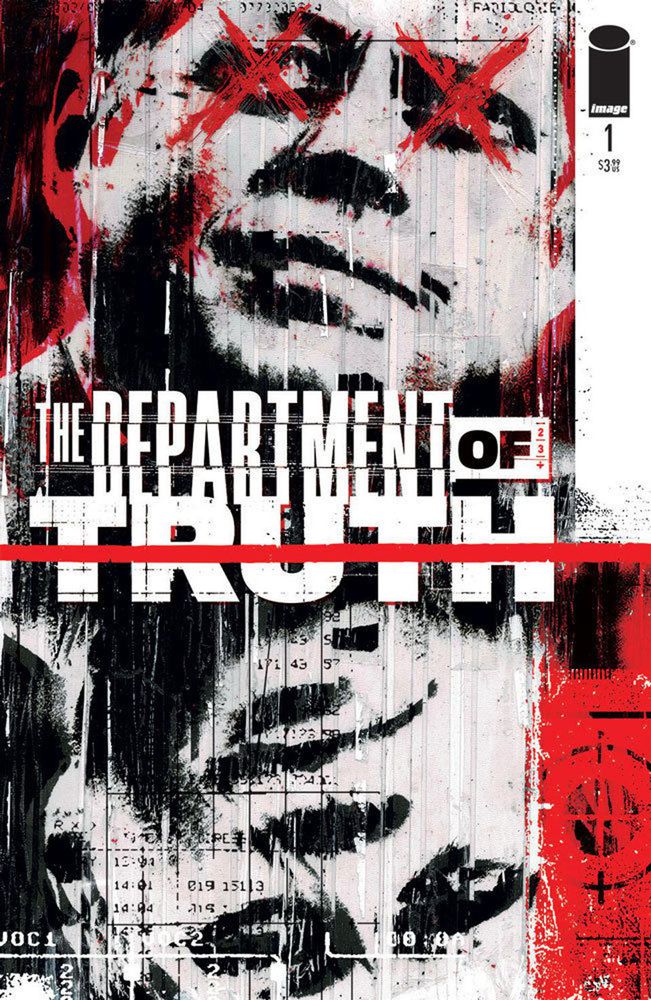
The Department of Truth #1 opens on November 22, 1963, the fateful day in Dallas when President John F. Kennedy was assassinated with Martin Simmonds’ artwork evoking fuzzy video coverage like shots of cryptids or a second shooter on that grassy knoll. As the comic progresses, Simmonds’ visuals and James Tynion IV’s larger premise for the series come into sharper focus, but in the end, there are still more questions than answers. And, honestly, that’s what you want out of an ongoing monthly comic, especially one driven by conspiracies within conspiracies within, well, conspiracies.

A key reason that I enjoyed The Department of Truth #1 was Martin Simmonds’ art. He marries grid layouts with the fully painted art style of Duncan Fegredo and Paul Johnson’s work in the early 1990s or even the panache of David Mack and Bill Sienkiewicz. However, it’s not just pretty pictures or cool compositions but has motion and storytelling weight too. Simmonds can also be a vicious caricaturist, like in his drawing of the Flat Earth Society members that match the dry, snarky narration that Tynion writes for the protagonist, Cole.

You can tell he doesn’t have a high opinion of most of these characters, and it drives his line art and color palette to new heights like a blood red composition of a couple of rich, conspiracy-mongering assholes through Cole’s shades. Everything is more memorable from the perspective of sunglasses, and that goes for both film and comics. Martin Simmonds’ layout choices match the story’s pace with lots of small, skinny panels during interrogation sequences to big splashes for reveals or when he and Tynion want to touch on a big picture theme. I enjoyed Martin Simmonds’ work on the Punks Not Dead comics for IDW as well as his fill-in issue of Immortal Hulk, but Department of Truth is a true level up for him as a cartoonist with him crossing into Sienkiewicz-esque territory with his depiction of corruption, deceit, and maybe once or twice, truth.

Unlike the 1990s when conspiracy theories seemed fun and quirky (Think X-Files.), they have become scarier thanks to folks like QAnon, who bundle their outlandishness and useless misdirection with plenty of white supremacy and anti-Semitism. Tynion is aware of that and bakes in conspiracy’s current right-wing nature while also making references to its let’s say, cuddlier, past starting with the JFK assassination. This conflict and need for finding a happy medium feeds into the book’s underlying theme and also makes it seem more relevant with characters popping up that you might Google to see if they’re not some obscure far-right commentator on one of those websites or premium cable news channels that make Fox almost seem (Emphasis on the almost) fair and balanced. While the plot begins to unfold and the premise is established, James Tynion and Martin Simmonds also delve into the mindset of the conspiracy theorist, and why it’s so attractive. Think Grant Morrison’s Invisibles, but in the age of Pizzagate and 8chan.

The Department of Truth #1 is an engaging debut issue with James Tynion tapping into the expansive worldbuilding of his previous titles like Memetic and its sequels while Martin Simmonds shows that painted art can have a few, new tricks up its sleeves in 2020. They also introduce some actually compelling mysteries and tap into our fearful zeitgeist where believers and spinners of harmful conspiracies have entirely too much power.

Story: James Tynion IV Art: Martin Simmonds Letters: Aditya Bidikar
Story: 8 Art: 9 Overall: 8.5 Recommendation: Buy

Image Comics provided Graphic Policy with a FREE copy for review


Purchase: comiXologyKindle

Review: Brooklyn Gladiator #1

BROOKLYN GLADIATOR #1

Brooklyn Gladiator #1 doesn’t really have its narrative hook until the last few pages of the first issue, but writers Dan Fogler and Andrew Harrison and artist/comics legend Simon Bisley go full cyberpunk and craft a world controlled by government surveillance, souped-up android cops, and drugs that keep you compliant. Or if you’re protagonist, John Miller, they show you freaky imagery, hold conversations entirely telepathically, and have visions of the future. Brooklyn Gladiator is an extended version of an establishing shot of the film as Fogler and Harrison’s pulpy, yet wry narration and Bisley’s crazy-ass, very Heavy Metal-meets-no-holds-barred-2000 AD visuals set up a future world and our entry point to it before letting shit hit the fan on the final page.

Simon Bisley’s art is the real draw of Brooklyn Gladiator #1 and honestly the sole reason I picked up the book. And it’s safe to say that he is still at his Slaine and Lobo levels in this title even if Fogler and Harrison navel gaze a bit at times. From the opening page, he crowds his pages with over-the-top bloody, sexy, or grotesque imagery that capture this fucked up dystopian world better than any dialogue or narrative captions. Bisley does his usual Suicide Girl-esque, inked attractive woman deal with Johnny’s neglected love interest (Actually, more of a fuck buddy) Cassandra. She definitely doesn’t pass the “sexy lamp” test and is there to emphasize that Johnny yearns for a long lost woman (cloyingly) named Hope from the past. It’s par for the course for Bisley’s biker club/tattoo convention aesthetic sense like Blade Runner, but set at the local titty bar that obnoxiously advertises itself on the album-oriented rock radio station.

However, Bisley’s more memorable work is with the Blob, a character who lives a life of ease and unlimited drug/food/fluid use in return for the government using him as a blood bag. Blob and Johnny have unrelenting contempt for each other. Blob sees Johnny as a throwback, a lost cause, and an analog man in a beyond digital era, which connects with the art’s little homages to old school action heroes like John McClane crawling through ventilation shafts. On the other hand, Johnny sees Blob as obviously corpulent and disgusting and even hallucinates him speaking in Huttese. Dan Fogler and Andrew Harrison craft an entirely pragmatic relationship between them with Johnny getting Blob access to better drugs while Blob is his fixer for gladiator matches. Their interactions contain some of the writer duo’s best and funniest dialogue coming across as a cyberpunk stoner comedy at times with Blob yearning for the day of rolling blunts among other pleasures.

Simon Bisley’s designs for the “nannies”, or authoritative police of futuristic Brooklyn, are void of all humanity and fit the snarky insults that Fogler and Harrison have Johnny hurl at them. There are definite anti-fascist and ACAB vibes to Brooklyn Gladiator, which is refreshing and even cathartic at times especially as Johnny’s unique, basically EMP abilities void their surveillance abilities. Because of the drug addled, shifting POV of this issue, I didn’t get a full handle on his powers, but Bisley drawing cops short out while Johnny figures out who ratted on him is pure fun to look at. Bisley’s chase scenes have real energy and super charged, organic colors with body parts and bits of machinery flying everywhere. I can’t wait to see his takes on actual gladiatorial combat in upcoming issues.

If you’re a Simon Bisley fan and want to see him strut his storytelling stuff on something more than a (solid) Lobo/Harley Quinn crossover comic, then Brooklyn Gladiator #1 is the book you’re waiting on. It’s has all his virtues and vices filtered through a dystopian/exploitation movie lens. Story-wise, the comic isn’t 100% up to snuff, but Johnny Miller has an almost charming underdog streak to go with drug habit and futuristic stoner philosophizing. I really just wanna see him kick some more cop and Nazi ass as this first issue is really only an appetizer.

Story: Dan Fogler and Andrew Harrison
Art:
Simon Bisley Colors: Simon Bisley Letters: Crank!
Story: 7.0 Art: 8.5 Overall: 7.7 Recommendation: Read

Heavy Metal provided Graphic Policy with a FREE copy for review


Purchase: comiXologyKindle Zeus Comics

Comics Deserve Better Episode 10: Corpus – A Comic Anthology of Bodily Ailments

In the Comics Deserve Better Season 1 finale, Brian, Darci, and Logan talk about the end of Stumptown (The TV show) and Lumberjanes as well as Brian Stelfreeze‘s new creator-owned title. They also cover selected stories from the graphic medicine masterpiece, Corpus: A Comic Anthology of Bodily Ailments and talk about their personal connections to them. The episode and season wraps up with previews of Seen: True Stories of Marginalized Trailblazers, TrunglesThe Magic Fish, and Steve Orlando and Davide Tinto‘s Commanders in Crisis plus all of the hosts’ favorite comic of the season! (Episode art by Mark Wang)

« Older Entries Recent Entries »