The amazing Rebecca Hart joins Logan, Brian, and Darci to chat about the first volume of the queer, British YA comic Breaks by Malin Ryden and Emma Vieceli. They also break down the latest indie comics (or comics adjacent) news like Umbrella Academy‘s Elliot Page coming out, a new Witchblade creative team, and David Lee Roth‘s foray into the world of graphic novels (And VR?) Other comics mentioned on the show, include Porcelain,Legend of Zelda by Hand Drawn Games, Gunnerkrigg Court, Grind Like A Girl, Ind-Xed, Home Sick Pilots, Stillwater, and Gorillaz Almanac. (Episode art by Emma Vieceli)
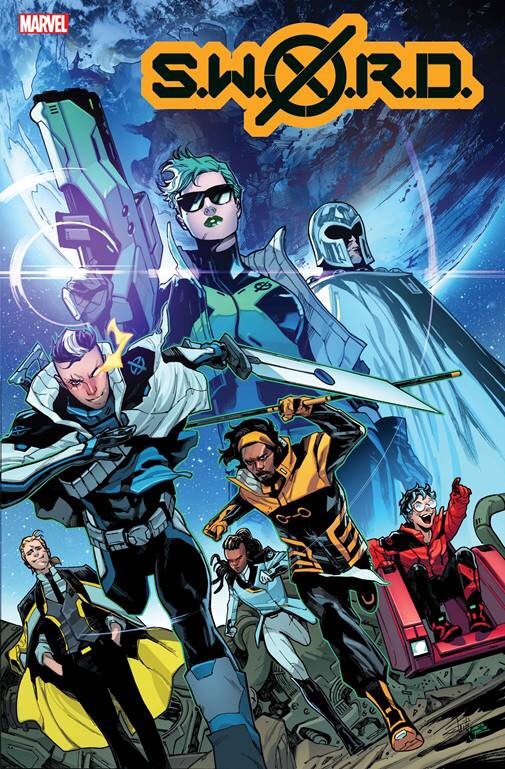
In SWORD #1, writer Al Ewing, artist Valerio Schiti, and colorist Marte Gracia add a little hazy cosmic jive to the X-Books. Let’s just say that the Krakoan space program is a lot more than sending probes or even astronauts to Mars. Ewing has some fun and uses Magneto (On loan from Jonathan Hickman and X-Men.) as a POV character with Abigail Brand taking him around the Peak Station, introducing him to the cast of the book, and then giving him and the readers just enough info about their “mission” to bring both mutantkind and inhabitants of the solar system into the future. It very much has a tone of checking in, but Ewing’s dialogue is sharp and entertaining even if you don’t know your Acolytes from Alpha Flight.
If the X-line (and the Marvel Universe as a whole) is a toy box, then Ewing and Schiti are kind kids, who add cool new action figures into the box, polish up old ones from the 1980s and 1990s, and then come up with imaginative games for them. (Even if you don’t know all the rules yet.) SWORD #1’s plot, or hook, doesn’t kick into the last third of the comic, but the first two-thirds are really enjoyable and chock-full with intriguing character interactions as Ewing introduces the sprawling cast of the book. Even if he’s not a traditional, “relatable” viewpoint character, Magneto does create a reaction out of everyone he encounters from sparring over SWORD’s actual relationship to Krakoa to geeking out over Wiz-Kid and “the Six”, who are the main mission of Peak. Then, there’s his interactions with SWORD protagonist/team leader, Abigail Brand, who challenges a man that is used to being either despised, revered, or fawned over. With her past experiences working with organizations like SHIELD, Alpha Flight, and even the X-Men, she has a different perspective on running a team and its role compared to what Magneto wants.
It’s not super plot relevant, but there’s a richness to his relationship with the former Acolyte Frenzy, who is the ambassador, on board and is introduced by sparring with the Kree/Skrull Alliance envoy, Paibak. There’s a real physicality to Valerio Schiti’s layouts in this scene as he cuts from Magneto and Brand verbally sparring to Frenzy laying out Paibak on the training floor. This is followed by some aggressive eye contact and a very charged interaction as Krakoa’s ill-treatment of Scarlet Witch (See Empyre: X-Men) has led to them making enemies with the Kree/Skull Alliance because she is their emperor’s mother-in-law. Ewing effortlessly weaves in the results of a story that I unfortunately haven’t read to create more conflict in his current story and show that SWORD might have some more conventional threats to deal with in addition to their “uni/multiversal far-retrieval circuit” work.
Speaking of this circuit, Al Ewing uses some very Hickman-esque charts in SWORD #1 to lay out the mechanism of how it works via a strategic combination of mutant powers that reminded me a lot of the complementary combo super-attacks in Marvel Ultimate, but on steroids. SWORD #1 is also a natural outgrowth of the resurrection protocols and very beautiful to see in action although I’m sure that there were be consequences. (That Dr. Doom epigram at the end doesn’t bode well and gave me serious Secret Wars vibes.) Schiti, Gracia, and letterer Ariana Maher, who lays the text directly on the page/art work together on some gorgeous, light-filled spreads that evoke the feeling of something great, cosmic, and unknown even if I can’t exactly get my finger on what the team is doing. It’s a study in harmony just like the balance Magneto created by moving the
While Valerio Schiti excels at drawing cosmic landscapes (For example, the opening double page establishing shot of the Peak station moving away from Earth), his character acting is more middle of the road leaving Ewing to pick up the slack with his dialogue. Even though his art is in that Marvel house style, middle ground between cartoon-y and photorealistic, Schiti takes his facial expressions up to 11, and it’s hard to mine any subtler emotions and even sarcasm from his work. (I think that Magneto is just humoring his old Brotherhood short timer/member, Peepers, but it’s hard to really tell from art.) Again, Ewing is there to save the day with his perceptive dialogue and a smart writing move, which is revealing character’s personalities by how they basically react to a living legend. In this case, it’s Magneto. For example, Fabian Cortez totally sucks up to him, which shows he’s a go-with-the-flow sycophant while Wiz-Kid gives him insight into how he uses his powers to interface with technology showing that he has actual potential.
SWORD #1 is an interesting addition to the X-line of the books with its “spacer” (As Abigail Brand calls herself in contrast with “earthers” like Magneto.) perspective on both Krakoa and the Marvel Universe. Al Ewing and Valerio Schiti are in full spinoff pilot episode with Magneto playing the role of familiar character from the previous show giving readers insights into the cast of the book as well as the mysteries and conflicts they face. There are a few pitfalls on the visual side and more questions than answers (This isn’t bad at all), but it’s nice to have an outsider/literal big picture perspective on the world of Krakoa from Abigail Brand and her team in SWORD.
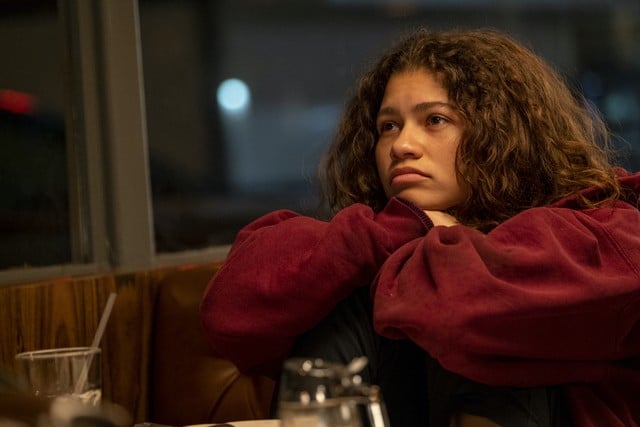
Because of restrictions due to the Covid-19 pandemic, writer/director/creator Sam Levinson gets creative and crafts an episode of Emmy-Award winning show Euphoriathat is stripped down of its usual visual, costuming/makeup, and musical flair. “Rue” begins with a dream sequence of Rue (Zendaya) living her ideal life with Jules (Hunter Schafer) complete with lots of kissing, cute conversations, and not having to sneak out of the window because Jules is in art college, and they share an apartment. However, reality floods in as Rue snorts pills and relapses. This leads to her meeting with her sponsor Ali (Colman Domingo) at a diner on Christmas Eve. They talk for the remaining 50 minutes of the episode about life, addiction, loss, their families, faith, and “real shit” until he gives her a ride home in the rain while Euphoria composer Labrinth sings a gorgeous cover of “Ave Maria” that is definitely going on the holiday playlist.
“Rue” reveals that Euphoria has a hell of a lot of substance underneath. Domingo is a veteran theatre actor, and he and Zendaya embody the old adage that “acting is reacting” in this episode. Because she is high, Zendaya plays Rue in a heightened way at the beginning of the dinner as she slurs her way through talking about how she’s a functioning addict. However, Ali is a great listener, asks good questions, and finds out that when Rue does drugs, she doesn’t want to kill herself. He responds to this with empathy about addiction is a disease, and that while some people want to keep folks like them out of sight and mind, that he knows what she’s been through. Ali even reveals to Rue that he has been clean for seven years, not 20 telling her that he had a relapse after being clean for 13 years.
Sam Levinson doesn’t really play any of the dinner between them for melodrama, but Zendaya’s delivery becomes a little less flat as they launch into a fascinating conversation about the role of faith and a higher power in Narcotics Anonymous. Levinson does a great job connecting both Ali and Rue’s current life situations to the larger world around them in a more organic way than, say, Euphoria’s pilot, which strung together Rue’s birth, the beginning of the universe, and 9/11 in a frenetic opening sequence. Ali is a devout Muslim, which Rue finds out when she wonders why he said his name used to be Martin in a quick bit of comic relief before she sarcastically defines “higher power” as something in nature or an Otis Redding. But the real reason that she doesn’t want to believe in God or a higher power is because of her father’s death because she’s tired of hearing survivors of tragic events say that God “saved them for a reason” when her dad had the purpose of raising her and her younger sister.
This scene hits a real emotional vein and also exhibits Ali’s emotional intelligence as he kiboshes the religious angle and gives a stirring, almost in character monologue about the life of Malcolm X and the Civil Rights movement. He wraps it up with a personal anecdote about Nike’s “Our Lives Matter”, and how they co-opted the Black Lives Matter movement and the work of activists like Colin Kaepernick to sell expensive shoes made by Chinese Muslim slaves. Domingo’s passion comes out in this dialogue, and Levinson crafts a study in contrasts between him and Rue, who is too busy dealing with the shit in her own life and how she can’t forgive herself, to pursue activism or revolution, which he says is “spiritual”.
And this “busyness” flows nicely into their side conversation with Miss Marsha (Marsha Gambles), who shares Gambles’ own story of recovering from addiction and being clean from 17 years while telling Rue (Who got a “Miss you” text from Jules while Ali smoked and called his daughter, Imani) that she needs to focus on her sobriety before getting into a relationship. And speaking of relationships, the chat that Ali and Rue have about her relationship with Jules shows a tiny bit of a generation/communication gap as Rue thought she was exclusively dating Jules because they kissed a lot, said they loved each other, and wanted to get matching inside lip tattoos. However, they didn’t have an actual conversation about their relationship status and instead reveled in the messiness, which can be fun, but usually ends in heartbreak and drama like Jules getting on a train and leaving Rue behind at 1 AM. Storywise, it’s really satisfying to have Rue open up about how she feels about Jules and the connection to her addiction to a third party that is unaware of the utterly fucked up reality of her high school. (See everything about the whole Nate Jacobs situation.)
One of my favorite parts of “Rue” is the “interlude” I mentioned earlier where Rue listens to the thematically relevant “Me in 20 Years” by Moses Sumney and sees a text from Jules while Ali goes outside and tries to reconnect with his daughters (Who Rue asked about earlier) while taking a smoke break. This short scene does a good job of fleshing their characters as Rue retreats to the sanctuary of her music, and Ali tries to show his daughters that he’s a good person even though they witnessed him assaulting their mother when he was high in the past. Rue is at the stage of her life and addiction where she just wants to retreat and try to feel good for her last few years while Ali is trying to make amends. Colman Domingo really nails both sadness and emotional honesty in this scene, and this grief is why they have a strong connection and “like talking to each other” like they both say towards the end of the episode.
With clear shots of both Rue and Ali’s faces, Sam Levinson shows that this isn’t just a polite truism, but they actually like having someone that they can basically empty all their darkest thoughts, saddest feelings, and sometimes, brightest hopes around. They are both characters that are not into bullshit (Unless Rue is skirting a talk about her addiction.) and small talk, and this episode reveals this in a beautiful way with some lived-in performances from Domingo and Zendaya. Levinson also shows detractors that Euphoria isn’t just a flashbang show meant to scare mommy blogs and pearl clutchers, but is deeply invested in the emotional lives of its characters.
In “Rue”, Sam Levinson doesn’t lump Rue’s relapse with a dozen other plots, but he puts it into full, bloody focus. This allows viewers to understand the nature of her addiction, and how it personally affects her and her relationships with her family, Jules, and yes, Ali. Zendaya’s delivery and scrunched up facial expressions enhance this intense character study (Give her a second Emmy already!), and I’m intrigued to see how Euphoria Season 2 explores her addiction, depression, emotions, and relationships.
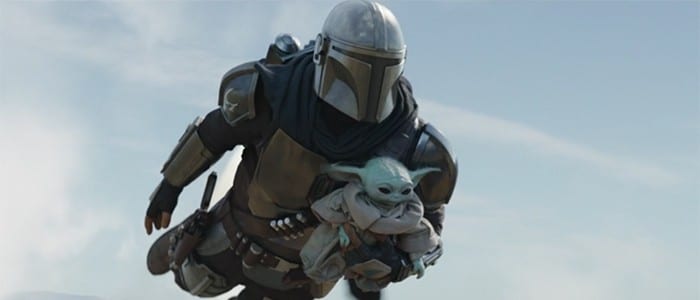
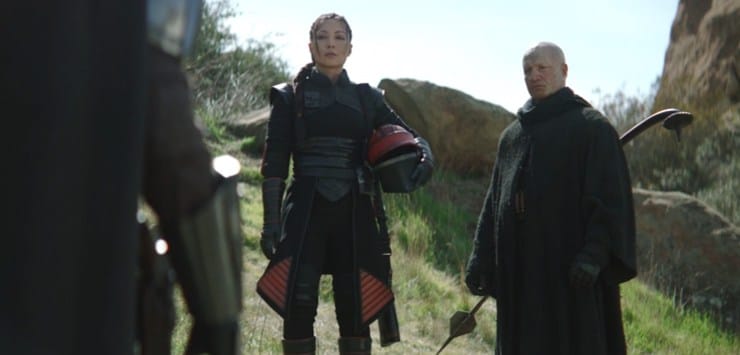
After staging a cold open that is entirely Mando and Grogu being adorable and exuding father/son vibes as they descend upon the mysterious planet of Tython, you know that director Robert Rodriguez and writer Jon Favreau are ready to tear viewers apart in “Chapter 14: The Tragedy“. But, before getting to the super emotional bits, they tug on a plot thread from “The Marshal” with our old buddy, Slave I, careening through space as Grogu starts to commune with the force. Emerging from the Lego set I never got as a child is Boba Fett (Temuera Morrison) and Fennec Shand (Ming-Na Wen), the assassin from last season, who is back from the dead with the help of some cybernetics. In true Rodriguez style, this leads to a Mexican standoff with Fett wanting his Beskar armor back in return for helping Mando protect The Child from the other folks in the galaxy, who are out to get them.
And speaking of these folks, two shiploads of stormtroopers land on Tython, and the episode turns into a shoot ’em up. Mando is incapacitated for most of the fight as he keeps trying to run into the capital-F force field to nab Grogu so Fennec and Boba Fett do the lion’s share of the fighting. Robert Rodriguez digs into the oldest of action/Western tropes with two outlaws firing away against a neverending legion of feds as the stormtroopers bring in space-Gatling guns and rocket launchers to take them out so they can get to Grogu. Boba Fett wields a Fijian totokia in a series of brutal close combat sequences where he takes out all the pain that the Republic, Empire, Rebellion, and basically, the world has brought him on some hapless stormtroopers. Morrison plays the anguish-filled badass really well and his big return with his father’s Mandalorian armor is a true stand up and clap moment and guaranteed that Boba Fett will be venerated by yet another generation of Star Wars fans. I mean, his knee pads are a lethal weapon.
However, in this moment of triumph, Rodriguez and Jon Favreau pull an Empire Strikes Back and bring back Moff Gideon (Giancarlo Esposito) and his Darktroopers to snatch up Grogu, who is passed out after communing with the Force. They destroy the Razor Crest so Mando ends up hitching a ride with Fennec and Boba Fett, who have promised to keep Grogu safe, to Nevaro where he gets information from Cara Dune about the whereabouts of Season 1 character, Mayfeld, a former Imperial sharpshooter, who can help them find Moff Gideon and Grogu. A prison break could be on its way. (Or not because of the truncated, killer, no filler length of some of these episodes.)
I geeked out on Robert Rodriguez’s action filmmaking as his fights are more brutal and violent than anything seen in The Mandalorian this season thanks to Fennec’s dead eye accuracy and Boba Fett taking things real personal. However, he builds a real connection between Mando and Fett as family men, who adhere to a code of honor and make every word count. In another brilliant moment of intertextuality, Fett nearly quotes his father Jango’s famous line from Attack of the Clones, “I’m just a simple man trying to make my way in the universe.” There’s a little more weariness in his delivery than in the 2002 film, and when Mando and Boba Fett drop the weapons and actually communicate, they find common ground as a foundling and son/clone of a foundling. Mando immediately allows Fett to keep the Beskar and reminisces about Jango’s service during the Mandalorian Civil War. They have a lot of similarities, and Pedro Pascal and Temuera Morrison imbue their characters with a dry sense of humor that will fit nicely as they continue to travel together. I’m glad that Boba Fett’s appearance won’t just be a cameo and a one-off because Morrison explores different sides of the character like his utter look of fear when he flies the Slave I close to Gideon’s ship and realizes that his old employers, the Empire, are very much still in play years after the destruction of the second Death Star.
Visually, The Mandalorian is always a show that looks good and seamlessly feels like a part of the Star Wars universe even as Jon Favreau and Dave Filoni follow the rhythms of Golden Age of Television genre storytelling (Big Bad, monster/planet of the week) while paying homage and adding to a memorable piece of 20th and 21st century American mythmaking. Robert Rodriguez takes thing up a notch by blending his Mariachi-style filmmaking with Star Wars iconography like ships in flight, stormtroopers being bad shots, and even the Force. He sets most of the action on a rocky stretch of land perfect for big time heroics like Fennec shooting her cover so that it can wreak havoc on the legion of stormtroopers Raiders of the Lost Ark style, and then having Mando use his Beskar armor to take blaster bolts that would be the end of her. Obviously, the shoot outs look cool, especially when Boba Fett finally gets to do his thing, but it also creates a brothers and sister in arm kind of bond between Mando, Fennec, and Fett that makes their decision to travel together more organic.
Even though he still doesn’t get a lot of screen time, Giancarlo Esposito gets to show a little more range as Gideon in this episode as he plays a darker version of the doting dad and shows Grogu the Darksaber after he observes him Force-choking his stormtrooper guards. However, they have no real relationship even in master/apprentice way, and Grogu is instantly clapped into irons so he can be used in Dr. Pershing’s experiments. Favreau and Rodriguez aren’t afraid to tap into the darker side of Grogu and show that the trauma that Ahsoka Tano mentioned in the previous episode and lack of proper training has him using the Force in ways that no Jedi would. Through expressive puppetry and the physical acting and dialogue timing of Pedro Pascal as Mando plus those snatches of backstory last episode, Grogu has transformed from a MacGuffin into a fully fleshed out character. It’s a wise move for Jon Favreau to make him the emotional crux of The Mandalorian’s ongoing plot as goes into its final two episodes because Grogu’s relationship with Mando, not Favreau and Dave Filoni’s lore-welding and building is this show’s biggest strength and hook.
Full disclosure: I decided to do weekly reviews of The Mandalorian once it was announced that Robert Rodriguez would be directing an episode because I have a soft spot for auteur directors going into big shared universes/mythologies and putting their own visual stamp on it. He, Jon Favreau, and Temuera Morrison show once and for all that Boba Fett is an incredibly cool and compelling character while also nailing a big moment in the relationship between Mando and Grogu. Throw in some menacing baddies and gun battles with bite, and “Chapter 14: The Tragedy” continues The Mandalorian’s momentum as it reaches the conclusion of its second season.
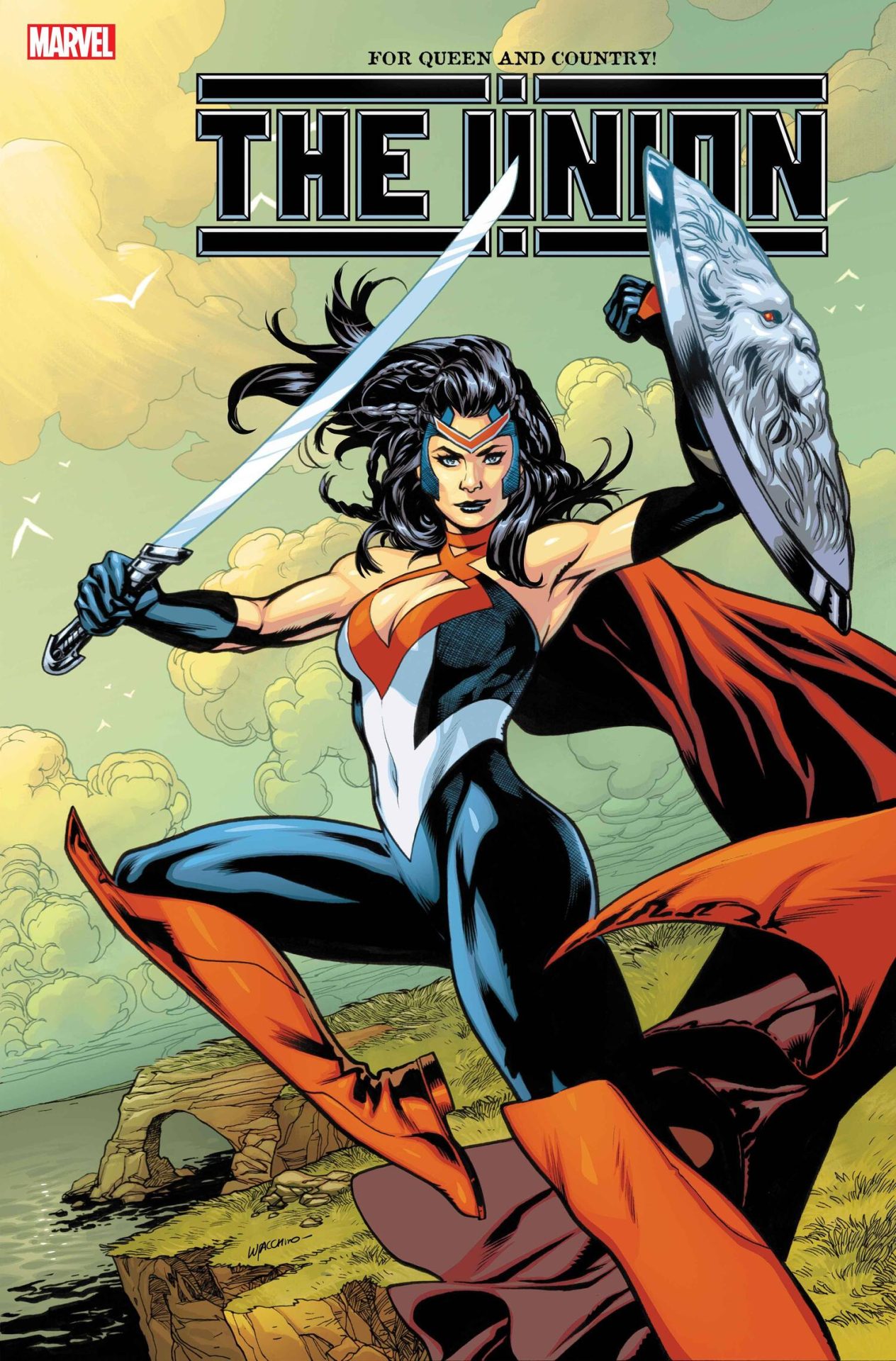
I was familiar with Paul Grist’s work from his work with Grant Morrison on the underrated (And, at the time, highly controversial) 1989 British indie comic St. Swithin’s Day where a disaffected youngster sets out to assassinate Margaret Thatcher. With the exception of the first page that is both written and drawn by Grist in a cheeky cartoonish style, The Union #1 lacks this book’s satirical edge and dark humor and introduces a fairly generic team of UK-themed superheroes to fight some fairly generic symbiote types connected to the King in Black crossover. The visuals from Andrea Di Vito, Drew Geraci, Le Beau Underwood, and Nolan Woodard are decent and have some decent energy any of The Union members use their abilities like Kelpie masquerading as a puddle in a training session against British soldiers. I also liked the recycled Phonogram: Rue Britannia plot point though.
I’m a big Anglophile and was really looking forward to a new team of British Marvel heroes in The Union #1, but boy, was I disappointed. There are the seeds of some good ideas in the book with Grist and Di Vito establishing from the get-go that the team is a big media stunt complete with making sure that England, Wales, Northern Ireland, and Scotland are each represented by a team member. They also establish a media pecking order with everyone wanting to speak to Britannia, and Union Jack, who has appeared in comics for the past four decades and even had his own series several times, getting out and out shooed by the breakfast TV host parodies, Phil and Suzanne. It’s kind of funny because Union Jack is really the only character in the book with any kind of personality even if his narrative captions are pretty basic commentary on being a hero for a long time (Yay sliding timelines!) and the legacy of British imperialism. The other team members, Snakes, Kelpie, and The Choir also get to showcase their unique powers and be generally sassy towards their government handlers. This sounds like a superhero book, I could get into, like Justice League International with a UK flavor.
However, character development and the dynamic between The Union, the British government, and corporate sponsor Steve Darwin is all thrown aside for an editorially mandated King in Black crossover that will last all five issues of the miniseries. Paul Grist and Andrea Di Vito really get into generic superhero team-up beats complete with hapless bystanders falling under some form of mind ,er, symbiote control and a telegraphed taking out of a main character before you have a chance to really get to know them (Again, think Phonogram.). There’s also the ol’ team rallying together in a big team pose instead of a cliffhanger that makes me want to pick up the second issue. (I will because I’m a softie for British superheroes, and with his reputation, Grist deserves another chance.)
As I mentioned earlier, Andrea Di Vito, Drew Geraci, LeBeau Underwood, and Nolan Woodard’s art is probably the less egregious part of The Union #1. For example, Woodard uses deep blacks for the symbiotes against the cloyingly bright palette of the Somerset to show how silly all the media prattle seems against a real threat. In the same scene, Di Vito, Geraci, and Underwood channel medieval compositions when Britannia goes against a symbiote dragon while quipping about St. George not actually being British, which is a nice bit of satire about the emptiness and historical inaccuracy of nationalist symbolism from Paul Grist. If only the rest of the comic could have synthesized wit and action like these pages. However, I didn’t have many complaints about the art. It’s easy to follow, and each team member has a distinct design and power set even if their personalities aren’t as fleshed out yet.
Paul Grist, Andrea Di Vito, Drew Geraci, LeBeau Underwood, and Nolan Woodard introduce a new British superhero team in The Union #1, but the novelty of new characters (and the return of an old one) is soon overwhelmed by one-dimensional characterization, predictable plot beats, and the burden of having to be an origin story and event tie-in. Also, Grist’s script lacks the bite of his U.K. indie work even though he gets a couple of licks in. I’m really curious to see how much of his original vision was “editorialized” out.
Story: Paul Grist Pencils: Andrea Di Vito with Paul Grist Inks: Drew Geraci, LeBeau Underwood with Paul Grist Colors: Nolan Woodard Letters: Travis Lanham Story: 6.0 Art: 7.0 Overall: 6.0 Recommendation: Pass
Marvel provided Graphic Policy with a FREE copy for review
After a week off for Thanksgiving, Brian, Darci, and Logan are back to talk about indie comics. They discuss the announcement of the upcoming Houghton Mifflin graphic novel The Worst Ronin, the remastering of Mike Grell‘s legendary Jon Sable, Freelance series. and maybe dig into yaoi manga a little bit too much. Then, they chat about Andi Watson‘s 2020 comic The Book Tour, the black and white saga of an author who can’t sell a single copy of his book and keeps getting put up in worse and worse hotels and ends up in a quite conundrum and wrap up things up by mentioning what they’re thankful for in 2020. Other comics mentioned on the show include A Girl Walks Home Alone At Night, Fake, I Walk with Monsters, Lumberjanes: End of Summer, Trese, and Kill A Man.
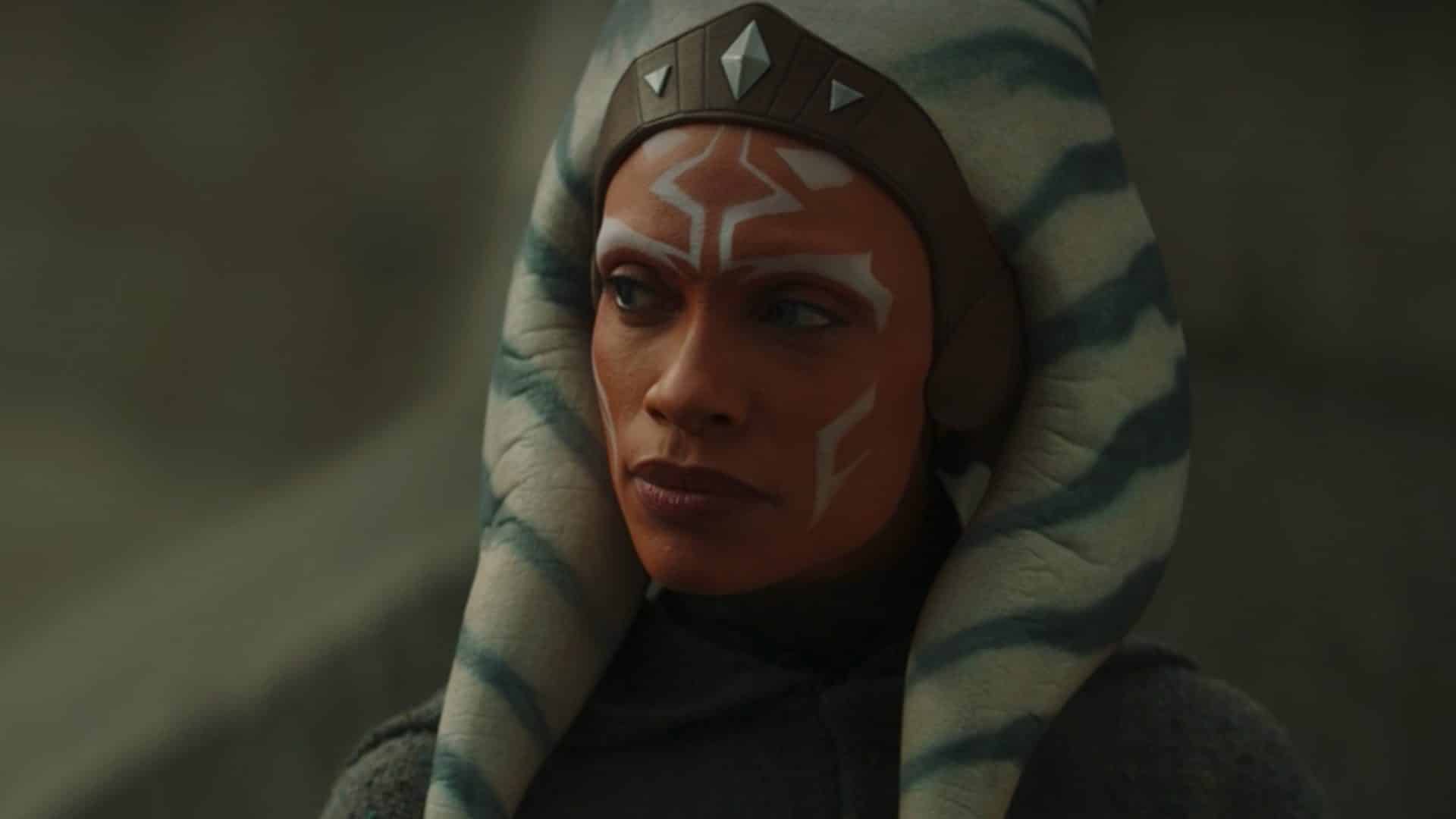
Writer/director Dave Filoni begins “The Jedi,” the fifth episode of the second season of The Mandalorian on a dark, bare landscape with trees and walled city. Dystopia is in the air, for sure. And, then, instead of holding her back for a teaser at the end of the episode, Ahsoka Tano (Rosario Dawson) emerges from the darkness dual-wielding lightsabers and takes down the goons of the magistrate Morgan Elsbeth (Diana Lee Inosanto). It’s one of many beautifully choreographed action sequences in “The Jedi” and a worthy live-action introduction for this popular character from Star Wars: The Clone Wars. The scene also sets the episode’s stakes: either Ahsoka Tano leaves Corvus, or Elsbeth will start executing her own people that she tortures in front of her own bonsai tree/koi pond sanctuary.
Of course, Mando and The Child are utterly unaware of the situation on Corvus when they land in the middle of the aforementioned woods with giant creatures idly grazing around them. They get some tense questions at the city gate (Mando smartly conceals The Child/treats him like a pet.), don’t get any answers or conversation at all from the inhabitants of Corvus, and are finally brought before Elsbeth, who offers Mando a staff of pure Beskar to kill Ahsoka Tano and gives him her coordinates. Mando and Ahsoka Tano have a short fight, but she immediately knows that The Child is Force-sensitive and communicates with him telepathically in a touching silent sequence. She also learns his real name, Grogu, and a bit of backstory, including that he was trained on the Jedi Temple on Coruscant, escaped after the Great Purge, and has been wandering the galaxy and suppressing his true origins ever since.
The next day, Ahsoka Tano tests Grogu in his Force abilities, but he is held back by his anger, pain, and attachment to Mando, who uses a part of his ship to coax him to use his telekinesis. Because of all these factors, Ahsoka Tano refuses to train Grogu, but ever the deal-maker, Mando gets her to change her mind if he helps her liberate Corvus from Morgan Elsbeth and her hired gun, Lang (Michael Biehn). This leads to some great stealth action, a heavy dose of anti-fascism, and a thrilling duel between a Beskar staff-wielding Elsbeth and Ahsoka Tano. Inosanto is a highly-skilled martial artist and Bruce Lee’s granddaughter so her stances and moves are fluid and realistic.
Because she is his own co-creation and also integral to the overarching plot of The Mandalorian, Dave Filoni spends a lot of time with Ahsoka Tano, and she even gets her own mini-storyline apart from Mando and The Child that features yet another a nerdy Easter Egg and makes it seem like “The Jedi” is a backdoor pilot for a show with her as protagonist. Dawson plays Ahsoka Tano with a fierceness and also a sense of sad nobility as she is one of the last Jedi in the universe and had to watch her mentor, Anakin Skywalker, go to the Dark Side. Anakin’s name is never mentioned in the episode, but every time she mentions “anger” and “attachment” in the context of Grogu, you can tell that it’s not the usual Jedi line. She wants Grogu to have a good, long life and not follow the road down to the Dark Side. Maybe, he just wants to be a cute kid and not the next hope of the Jedi as one of only three members of Yoda’s (He finally gets a name drop.) species that have appeared in Star Wars canon.
Even though Ahsoka Tano (and honestly Morgan Elsbeth) steal the show, I love the character work that Filoni does with Mando in “The Jedi”. Every named character thinks that he will act according to traditional ways/factions, but he surprises them. Morgan Elsbeth gives him a little speech about the traditional rivalry between Mandalore and the Jedi and thinks that will sway him to work for her, but in actuality, he’s smuggling a little Jedi under his cloak. Later, in the episode, Lang sees him as a fellow gunslinger, appeals to his pragmatism to abandon a lost cause, and go home. However, this doesn’t work on Mando, who as we’ve seen throughout The Mandalorian, is an altruistic person, especially in regards to his relationship with Grogu. Filoni takes time to show Mando free the prisoners with the help of the old magistrate and make sure that they’re safe inside before he begins his fight with Lang while Ahsoka Tano duels with Elsbeth.
Mando isn’t a traditional hero, but he helps those who he feels are exploited by the very complicated post-fall of the Second Death Star society. However, with the torture and executions, Elsbeth is a pretty obvious baddie and a total fascist and war profiteer, who was able to afford her pure Beskar staff thanks to exploiting planets to make ships for the Imperial fleet. Seeing Ahsoka Tano kick her ass is quite satisfying, and there is real tension in the fight scene as Elsbeth disarms her and even gets a staff to her throat. Tano and Mando really have to use tactics to retake the city like the old faking his death so he sneak in and occupy the assassin droids and other goons while she quickly infiltrates Elsbeth’s sanctuary.
“The Jedi” really feels a lot like classic Star Wars with a plot about resistance against an authoritarian government with a side dish of fate, destiny, free will, and all that other stuff. But, maybe, Grogu has (silently) experienced so much trauma in his life that he doesn’t want to follow the traditional, Joseph Campbell monomythic path. Thankfully, Ahsoka Tano has experienced similar trauma over the years, and because of this and the bond she can see between Grogu and Mando, she reneges on her promise while giving them intel on a planet where Grogu can choose his fate once and for all. On the surface, it seems like a cop out to have Ahsoka Tano show up, be cool, and not end up training Grogu, but it’s grounded in her character and her experiences even if it continues The Mandalorian‘s RPG plot structure.
Finally, it would be a big omission to not praise the visuals and shot choices of director Dave Filoni and cinematographer Baz Idoine (He did second unit work on Rogue One.), who make Corvus an utterly hopeless and closed off place with its light brown, smoky color palette. Whenever Ahsoka Tano’s lightsabers ignite, it’s like just a glimpse of hope, and Filoni and Idoine linger on the post-liberation celebration like it’s a mini-version of the big one at the end of The Return of Jedi. The mist combined with the training that Ahsoka Tano does with Grogu also create shades of Dagobah and Empire Strikes Back where Luke Skywalker faced his own doubts and didn’t respond to Yoda’s teaching very well. These little visual and sound cues have been a fun part of The Mandalorian Season 2 as the different writers and directors have used them to comment on Mando and Grogu’s journey, not just as fanboy Easter Eggs.
With its insights into Grogu’s emotions and backstory, a fierce, yet vulnerable performance from Rosario Dawson as Ahsoka Tano, and operatic storytelling from writer/director Dave Filoni, “The Jedi” is the strongest hour of The Mandalorian Season 2 yet even with an ending that’s a little rocky. It puts the to-this-point self-contained relationship between Mando and Grogu in the context of the larger Star Wars mythos as well as being a crowd-pleasing good versus evil story with unlikely heroes, who traditionally would hate each other’s guts.
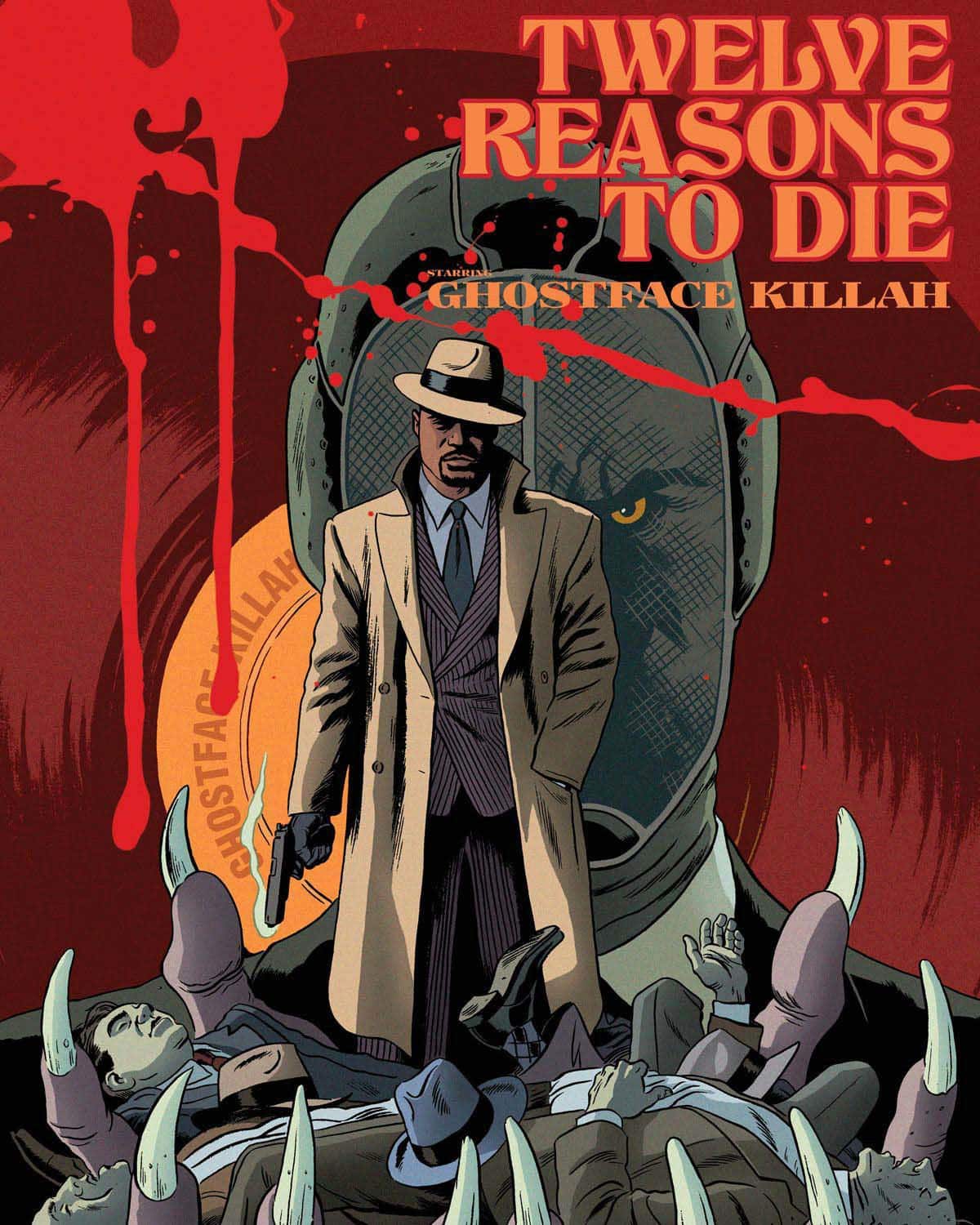
Twelve Reasons to Die acts as the source material for the 2013 concept album of the same title by Wu-Tang Clan member Ghostface Killah, and the record’s producer/composer Adrian Younge and executive producer RZA even get story and writer credits respectively on this comic, which is finally being released as a collected edition.A pre-4 Kids Walk Into A Bank/Marvel Matthew Rosenberg and Patrick Kindlon handle the brunt of the scripting though. The comic is a multi-generational crime saga in the mold of such classics like The Godfather Part II, Goodfellas, and Once Upon A Time in America with a horror spin. With the exception of the final one, each issue tells two parallel stories. The first is about the rise of African-American gangster Tony Starks (One of Ghostface Killah’s aliases.) from muscle for the DeLuca family to a kingpin in his own right, and it is drawn predominantly by artist Breno Tamura. Gus Storms handles the other story which features “crate digger” Michael Migdal looking for 9 rare records for Lucraze, the don of the DeLuca crime family, because he feels like they’re cursed and wants to destroy them.
The parallel structure of Twelve Reasons to Die allows Rosenberg, Kindlon, RZA, Tamura, Storm, colorist Jean-Paul Csuka, and the various guest artists to play with different genres, art styles, and palettes like Younge and Ghostface Killah play with different beats, instrumentation, samples, and deliveries on the album. Starks’ story is a crime saga while Migdal’s story is more horror, and both use elements from the blaxploitation genre. This really shows up in the artwork with Tamura’s work being looser with scratchy inks and Bronze Age era Ben-Day Dots while Storms’ art is softer and more grotesque with the mysterious “Ghostface Killer” lurking around the edges like something out of a bad dream waiting for the needle to drop and to bring vengeance.
The different guest artists, like Nate Powell, Joelle Jones, Edwin Huang, and Riley Rossmo, meld well with Storms and Tamura while bringing extra flair to key scenes like Starks torturing a racist DeLuca made man and framing him for having an affair with the boss’ wife, Logan (Who Starks is actually sleeping with.) or several night club and murder sequences. Csuka’s colors really tie everything together and control the mood of each sequence whether that’s the sleazy red and blue of the strip club where Starks gets his first assignment from the DeLuca (and later runs) to the pop art pink of a “masqua-rave” that Migdal goes to get one of the records from a DJ, who decides to play the record and gets devoured by ravers turned into insects. It’s a Kafka-esque acid trip that shows the decadence of the DeLuca “social club” (They’ve filed off the serial numbers of their criminal enterprises.), and of course, there’s a panel where Migdal vomits.
Twelve Reasons to Die doesn’t shy away from showing the racism that Tony Starks faces from his employers, the Delucas, who bar him from becoming a made man because of the color of his skin and hurl slurs and stereotypes at him throughout the entire comic. Starks gets passed over for the mob equivalent of a promotion even though he has killed, tortured, and general gone above and beyond the call of duty because of the color of his skin. Eventually, this causes him to band together with his colleagues from the Black community to take over the DeLucas’ turf and even have some DeLuca foot soldiers work for him. There’s a dark, cathartic glee to watching him topple an empire in twelve months that had been established 30+ years ago. (See the prologue featuring Mussolini, mainland Italy vs. Sicily, and double page map spreads.) Starks’ ruthlessness is magnetic, yet frightening as he goes from possibly negotiating with one of the DeLuca’s made men to pistol whipping him in an alley and then tying his neck to the back of a car and having him dragged. This comic definitely uses torture creatively a la “Method Man” from Wu-Tang Clan’s classic album, 36 Chambers.
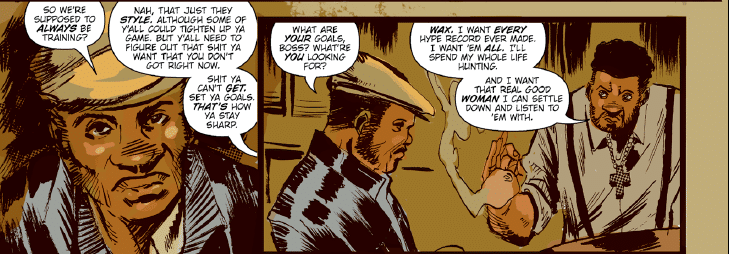
However, Rosenberg, Kindlon, and RZA also take time to develop Tony Starks’ softer and more vulnerable side through his relationship with Logan, who he genuinely cares about and basically uses as a spy for the DeLucas (Although she betrays him because femme fatale trope.) and especially for his love of records. There’s a touching scene where Starks says that his only dream is to get his hands on the most “hype” records, and he uses his organized crime money to build a factory where he can press his own wax. This is why his demise in that same factory is so tragic, and his vengeance via the drop of a needle is so satisfying as the Ghostface Killer slays the men who betrayed him in new and fucked up ways, or just a single page beheading. (I guess that’s pretty messed up though.) The exception is the noble fencer Batiato, who gets an epic sword fight complete with Ghostface in samurai armor and some fun, blocky cartooning from Edwin Huang.
I haven’t really touched much about Migdal in this review, and initially he seems quite distant from sex, violence, and racism-tinged world of Tony Starks and the DeLucas. He’s just a guy with a sarcastic sense of humor, who you’d see digging through the crates at your local record store, probably every day. However, as he continues to be treated like shit by the aging DeLuca crime bosses and see more horrific things, Migdal seems more attuned to this grindhouse movie of a world even though he doesn’t lose his innocence making the high energy Chris Hunt-drawn finale have a tinge of sadness. He really just wants to get paid so he can buy more records.
Even though it has an entire restaurant of chefs in its proverbial kitchen, Twelve Reasons to Die is a damn good fusion of the crime and horror genre with a charismatic protagonist and a social conscience in the midst of all the schlock. However, it never gets preachy. For three decades, Ghostface Killah has been one of hip hop’s best storytellers, and his vision translates really well to the comic book page thanks to Matthew Rosenberg, Patrick Kindlon, RZA, Breno Tamura, Gus Storms, Chris Hunt, Jean-Paul Csuka, and the guest artists that are the visual equivalent of that perfect drum sound or soul sample that raises a track from skippable to total earworm. Finally, and it goes without saying, but this comic pairs really well with the 12 Reasons to Die album.
Story: Ghostface Killah, Adrian Younge, C.E. Garcia Story/Script: Matthew Rosenberg, Patrick Kindlon with RZA Art: Breno Tamura, Gus Storms, Chris Hunt Guest Art: Kyle Strahm, Joe Infurnari, Tim Seeley, Nate Powell, Tyler Crook, Toby Cypress, Joelle Jones, Edwin Huang, Russell Roehling, Ryan Kelly, Riley Rossmo Colors: Jean-Paul Csuka Letters: Jim Campbell and Nic J. Shaw Story: 8.0 Art: 8.7 Overall: 8.4 Recommendation: Buy
Black Mask Studios provided Graphic Policy with a FREE copy for review
Mando checks in with some old friends, The Child heads to (pre) school, there’s a couple twists on some old Star Wars set pieces, and honestly, everyone ends up in worse trouble in The Mandalorian Season 2, Episode 4 ” Chapter 12: The Siege“, written by Jon Favreau and directed by Carl Weathers. With its planet/adventure of the week plot structure, The Mandalorian doesn’t have an ensemble cast, but it does have a couple of interesting recurring guest actors. Weathers and Favreau use them nicely in this episode and also provide more commentary on the post-fall of the Empire universe as the New Republic struggles to connect with the Outer Rim (Even though its greatest hero is from there!) and the remnants of the Empire engage in a very Star Wars form of eugenics to try to get back in power.
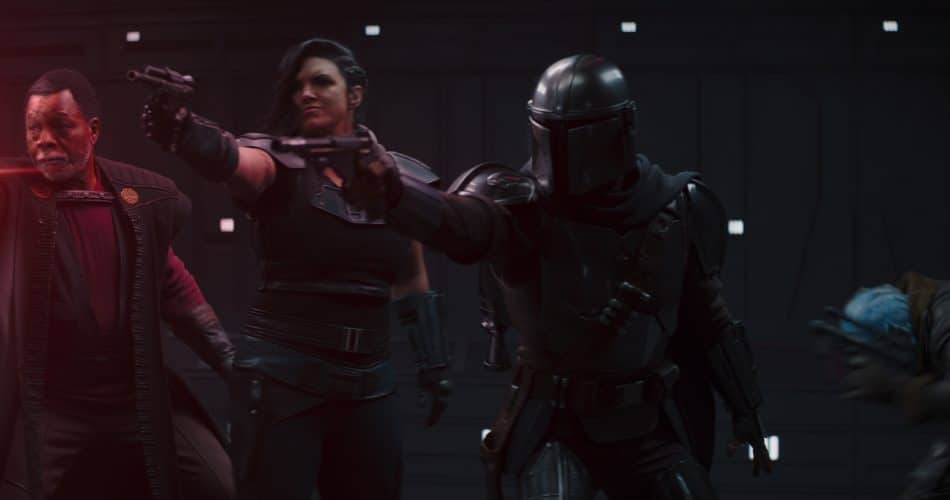
In this episode, Mando goes to the planet Navaro (Where the pilot and a bit of the previous season took place.) to finally get the Razor Crest repaired and travel to Corvus to meet the last scion of the Jedi, Ahsoka Tano. These days, Navaro is pretty law abiding thanks to Marshal Cara Dune (Notable transphobe, anti-masker and general conspiracy theorist Gina Carano) and Magistrate Greef Karga (Weathers). There’s a school, commerce, and Karga has even employed former Mando bounty, Mythrol (Horatio Sanz) as his accountant to work of his debts. (Think Suicide Squad, but number crunching.) However, on the other side of the planet, there’s an Imperial base with a lot of heavy weaponry, and while Mando is waiting for his ship to be fixed, Dune and Karga rope him into blowing its reactor and bringing peace to the planet with Mythrol acting as hacker, lockpick, and getaway driver.
Mythrol’s getaway driver status is short lived when the team discovers that the base isn’t your run of a mill, but a lab where Imperial scientists are running very unethical tests and experiments on subjects using The Child’s blood. However, they’ve run out and need to recapture him again so this episode becomes a lot more complicated than blowing up a base over a lava pit and going home. As soon as Mando hears The Child is in danger, he jets off to protect him while Dune, Karga, and Mythrol end up in a speeder chase in the Star Wars equivalent of a Ford F-150. You can feel Weathers and cinematographer Matthew Jensen‘s glee in this sequence, which goes full Grand Theft Auto and escalates to TIE fighters and wraps up in a very A New Hope way.
My favorite part of “The Siege” was the adrenaline-filled third act where Imperial scout troopers actually behaved cleverly for once and may have actually gotten the upper hand if they weren’t so fanatical. (See last episode’s cyanide pill popping.) However, Carl Weathers and Jon Favreau spend the first bit of the episode showing the change and growth that Mando, Dune, Karga, and even Mythrol have gone through since last season. Dune has gone from a mercenary and prize fighter to a sheriff, who can keep the peace with her blaster and physical combat skills while Karga is back to his old respected government job ways instead of running numbers and bounties. However, he’s got a little bit of edge as evidenced by making Mythrol take all the big risks during the Imperial Base caper. Mythrol is still cowardly and wants to make an extra buck, but his new job keeps him in line. Dune and Karga’s goals have gone from trying to make a buck and forget about their more traditionally noble or heroic pasts to helping others and creating a safe “green zone” on where folks can live a life free from New Republic policing and bureaucracy and Imperial fascism.
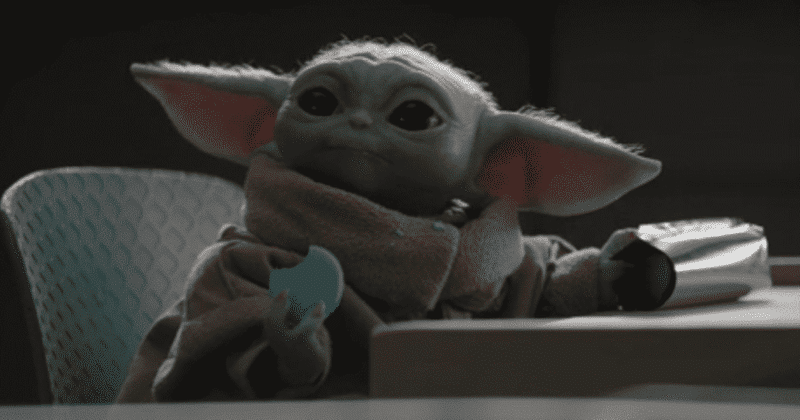
And Mando has changed the most. He’s gone from treating the Child like a bundle, nuisance, or McGuffin to straight up treating him like a son. For example, in the beginning of “The Siege”, Mando tries to walk The Child through fixing something on Razor Crest because the little cutie can fit in tight spaces. However, this is a little advanced for him, and honestly, Mando should have just let him do the sci-fi western equivalent of holding the flashlight. Weathers and Favreau even riff on the dread “first day of school” when Karga tells Mando to drop him off at the classroom while they go on their mission. Weathers inserts a lingering shot of him looking away as The Child immediately gets into mischief and uses The Force to steal a classmate’s snack. Mando’s motivation is keeping The Child safe, happy, and hopefully one day, reconnected with others like him. This is a hell of a thing to build a TV show around and demonstrates why so many folks have emotionally connected with The Mandalorian.
The Mandalorian Season 2 continues to be in conversation with previous iterations of Star Wars, and after last week’s detour to Clone Wars and Rebels, we’re back to the original trilogy. Carl Weathers and Jon Favreau go full fanboy (But not in a toxic way.) and insert in all kinds of goodies like the aforementioned speeder bike chase, blowing up a reactor a la Endor, the classic gunner heads up display used in Vader’s TIE fighter and the Millennium Falcon, and in a touching moment even though Carano doesn’t quite sell the emotion, Alderaan. The inclusion of these elements create a nostalgic reaction in viewers that helps some of the themes that Favreau is exploring go down easier like the Rebels transformation into New Republic beat cops. I mean, we go from Han Solo and Wedge Antilles to some protocol spouting guy in an orange jacket using the death of all of Dune’s friends and relatives on Alderaan to recruit to “join the force”. I find the politics and tension of this era of Star Wars history really fascinating, especially when Favreau gives us this boots on the ground view although the information about Mandalorians is interesting too and places Mando in a larger context beyond “lone badass with a soft spot for a cute, occasionally bratty kid.”
“Chapter 12: The Siege” has a tense chase scene, a pleasant performance from Carl Weathers as Greef Karga and continues to show the bond between Mando and The Child in a sweet, occasionally funny way as it’s interesting to see Pedro Pascal change his body language and movements from sharing some soup with him to gunning down stormtroopers and pulling off crazy maneuvers in good-as-new Razor Crest. However, Jon Favreau undercuts this fancy flying and uses the last moments of the episode to have Giancarlo Esposito’s Moff Gideon raise this season’s stakes with a slight eyebrow movement. He’s a great villain, Mando knows he’s alive now, and I can’t wait for their rematch down the road.
On this episode of Comics Deserve Better, Brian and Logan geek out about the darkly comedic, crime comic 4 Kids Walk Into A Bank by Matthew Rosenberg, Tyler Boss, and Thomas Mauer.
They break down the cast of annoying, yet endearing middle-school-aged characters, their favorite sequences, and the connections that this Black Mask Studios masterpiece has to other works of pop culture. Brian and Logan also discuss the latest indie comics news, including Graham Coxon‘s comic Superstate from Z2, the announcement of Vault‘s queer monster love story Hollow Heart and Geoff Johns and Gary Frank‘s creator-owned series Geiger, and a new ordering format from Scout Comics. They also talk about the upcoming Black Hammer: Visions and their dream creators on the miniseries. Other comics mentioned on the show are We Only Find Them When They’re Dead, Getting It Together, A Girl Walks Home Alone at Night, and 12 Reasons to Die. (Episode art by Tyler Boss)