Author Archives: Logan Dalton

Logan’s Favorite Comics of 2020

2020 definitely felt like a year where I embraced comics in all their different formats and genres from the convenient, satisfying graphic novella to the series of loosely connected and curated one shots and even the door stopper of an omnibus/hardcover or that charming webcomic that comes out one or twice a week on Instagram. This was partially due to the Covid-19 pandemic that shut down comics’ traditional direct market for a bit so I started reviewing webcomics, trade paperbacks, graphic novels and nonfiction even after this supply chain re-opened. I also co-hosted and edited two seasons of a podcast about indie comics where we basically read either a trade every week for discussion, and that definitely meant spending more time with that format. However, floppy fans should still be happy because I do have a traditional ongoing series on my list as well as some minis.

Without further ado, here are my favorite comics of 2020.

Marvels Snapshots: X-Men #1 – But Why Tho? A Geek Community

10. Marvels Snapshots (Marvel)

Curated by original Marvels writer Kurt Busiek and with cover art by original Marvels artist Alex Ross, Marvels Snapshots collects seven perspectives on on the “major” events of the Marvel Universe from the perspectives of ordinary people from The Golden Age of the 1940s to 2006’s Civil War. It’s cool to get a more character-driven and human POV on the ol’ corporate IP toy box from Alan Brennert and Jerry Ordway exploring Namor the Submariner’s PTSD to Evan Dorkin, Sarah Dyer, and Benjamin Dewey showing the real reason behind Johnny Storm’s airhead celebrity act. There’s also Mark Russell and Ramon Perez’s take on the classic Captain America “Madbomb” storyline, Barbara Kesel’s and Staz Johnson’s sweet, Bronze Age-era romance between two first responders as the Avengers battle a threat against the city, and Saladin Ahmed and Ryan Kelly add nuance to the superhuman Civil War by showing how the Registration Act affects a Cape-Killer agent as well as a young elemental protector of Toledo, Ohio, who just wants to help his community and do things like purify water. However, the main reason Marvels Snapshots made my “favorite” list was Jay Edidin and Tom Reilly‘s character-defining work showing the pre-X-Men life of Cyclops as he struggles with orphan life, is inspired by heroes like Reed Richards, and lays the groundwork for the strategist, leader, and even revolutionary that appears in later comics.

9. Fangs (Tapas)

Fangs is cartoonist Sarah Andersen’s entry into the Gothic romance genre and was a light, funny, and occasionally sexy series that got me through a difficult year. Simply put, it follows the relationship of a vampire named Elsie and a werewolf named Jimmy, both how they met and their life together. Andersen plays with vampire and werewolf fiction tropes and sets up humorous situations like a date night featuring a bloody rare steak and a glass of blood instead of wine, Jimmy having an unspoken animosity against mail carriers, and just generally working around things like lycanthropy every 28 days and an aversion to sunlight. As well as being hilarious and cute, Fangs shows Sarah Andersen leveling up as an artist as she works with deep blacks, different eye shapes and textures, and more detailed backgrounds to match the tone of her story while not skimping on the relatable content that made Sarah’s Scribbles an online phenomenon.
8. Heavy #1-3 (Vault)

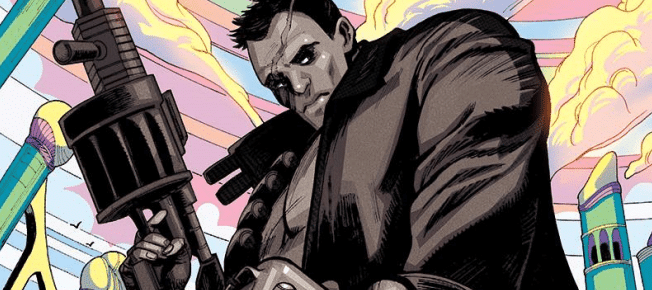
I really got into Vault Comics this year. (I retroactively make These Savage Shores my favorite comic of 2019.) As far as prose, I mainly read SF, and Vault nicely fills that niche in the comics landscape and features talented, idiosyncratic creative teams. Heavy is no exception as Max Bemis, Eryk Donovan, and Cris Peter tell the story of Bill, who was gunned down by some mobsters, and now is separated from his wife in a place called “The Wait” where he has to set right enough multiversal wrongs via violence to be reunited with her in Heaven. This series is a glorious grab bag of hyperviolence, psychological examinations of toxic masculinity, and moral philosophy. Heavy also has a filthy and non-heteronormative sense of humor. Donovan and Peter bring a high level of chaotic energy to the book’s visuals and are game for both tenderhearted flashbacks as well as brawls with literal cum monsters. In addition to all this, Bemis and Donovan aren’t afraid to play with and deconstruct their series’ premise, which is what makes Heavy my ongoing monthly comic.

Amazon.com: Maids eBook: Skelly, Katie, Skelly, Katie: Kindle Store

7. Maids (Fantagraphics)

Writer/artist Katie Skelly puts her own spin on the true crime genre in Maids, a highly stylized account of Christine and Lea Papin murdering their employers in France during the 1930s. Skelly’s linework and eye popping colors expertly convey the trauma and isolation that the Papins go through as they are at the beck and call of the family they work almost 24/7. Flashbacks add depth and context to Christine and Lea’s characters and provide fuel to the fire of the class warfare that they end up engaging in. Skelly’s simple, yet iconic approach character design really allowed me to connect with the Papins and empathize with them during the build-up from a new job to murder and mayhem. Maids is truly a showcase for a gifted cartoonist and not just a summary of historical events.
6. Grind Like A Girl (Gumroad/Instagram)

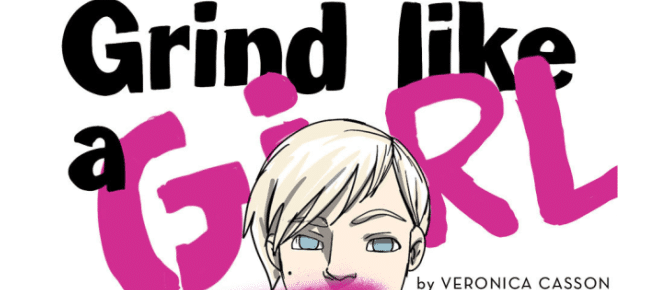
In her webcomic Grind Like A Girl, cartoonist Veronica Casson tells the story of growing up trans in 1990s New Jersey. The memoir recently came to a beautiful conclusion with Casson showing her first forays into New York, meeting other trans women, and finding a sense of community with them that was almost the polar opposite of her experiences in high school. I’ve really enjoyed seeing the evolution of Veronica Casson’s art style during different periods of her life from an almost Peanuts vibe for her childhood to using more flowing lines, bright colors, and ambitious panel layouts as an older teen and finally an adult. She also does a good job using the Instagram platform to give readers a true “guided view” experience and point out certain details before putting it all together in a single page so one can appreciate the comic at both a macro/micro levels. All in all, Grind Like A Girl is a personal and stylish coming of age memoir from Veronica Casson, and I look forward to seeing more of her work.
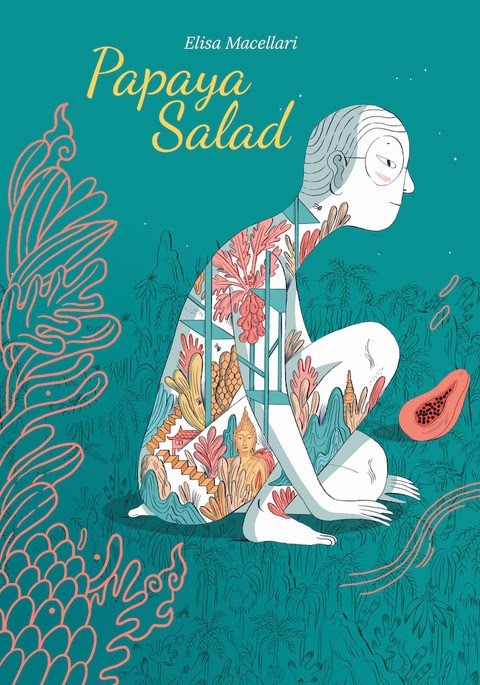
5. Papaya Salad (Dark Horse)

Thai/Italian cartoonist Elisa Macellari tells an unconventional World War II story in Papaya Salad, a recently translated history comic about her great uncle Sompong, who just wanted to see the world. However, he ended up serving with the Thai diplomatic corps in Italy, Germany, and Austria during World War II. Macellari uses a recipe for her great uncle’s favorite dish, papaya salad, to structure the comic, and her work has a warm, dreamlike quality to go with the reality of the places that Sampong visits and works at. Also, it’s very refreshing to get a non-American or British perspective on this time in history as Sampong grapples with the shifting status of Thailand during the war as well as the racism of American soldiers, who celebrate the atomic bomb and lump him and his colleagues with the Japanese officers, and are not shown in a very positive light. However, deep down, Papaya Salad is a love story filled with small human moments that make life worth living, like appetizing meals, jokes during dark times, and faith in something beyond ourselves. It’s a real showcase of the comics medium’s ability to tell stories from a unique point of view.

4. Pulp (Image)

Ed Brubaker and Sean Phillips (with colorist Jacob Phillips) are two creators whose work has graced my “favorite comics” list many times. And this time they really outdid themselves with the graphic novella Pulp about the final days of Max Winters, a gunslinger-turned-Western dime novelist. It’s a character study peppered with flashbacks as Phillips and Phillips use changes in body posture and color palette to show Max getting older while his passion for resisting those who would exploit others is still intact. Basically, he can shoot and rob fascists just like he shot and robbed cattle barons back in the day. Brubaker and Phillips understand that genre fiction doesn’t exist in a vacuum and is informed by the historical context around it, which is what makes Pulp such a compelling read. If you like your explorations of the banality of evil and creeping specter of fascism with heists, gun battles, and plenty of introspection, then this is the comic for you.
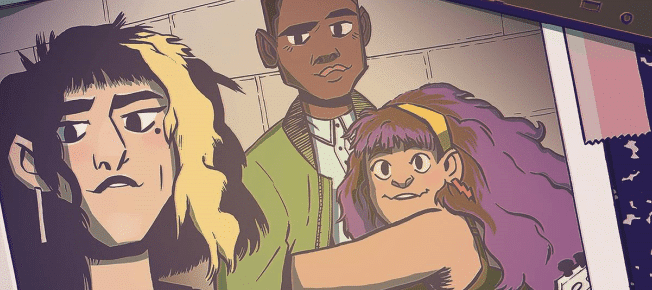
3. My Riot (Oni Press)

Music is my next favorite interest after comics so My Riot was an easy pick for my favorite comics list. The book is a coming of age story filtered through 1990s riot girl music from writer Rick Spears and artist Emmett Helen. It follows the life of Valerie, who goes from doing ballet and living a fairly conservative suburban life to being the frontwoman and songwriter for a cult riot girl band. Much of this transformation happens through Helen’s art and colors as his palette comes to life just as Valerie does when she successfully calls out some audience members/her boyfriend for being sexist and patronizing. The comic itself also takes on a much more DIY quality with its layouts and storytelling design as well as how the characters look and act. My Riot is about the power of music to find one’s identify and true self and build a community like The Proper Ladies do throughout the book. Valerie’s arc is definitely empowering and relatable for any queer kid, who was forced to conform to way of life and thinking that wasn’t their own.

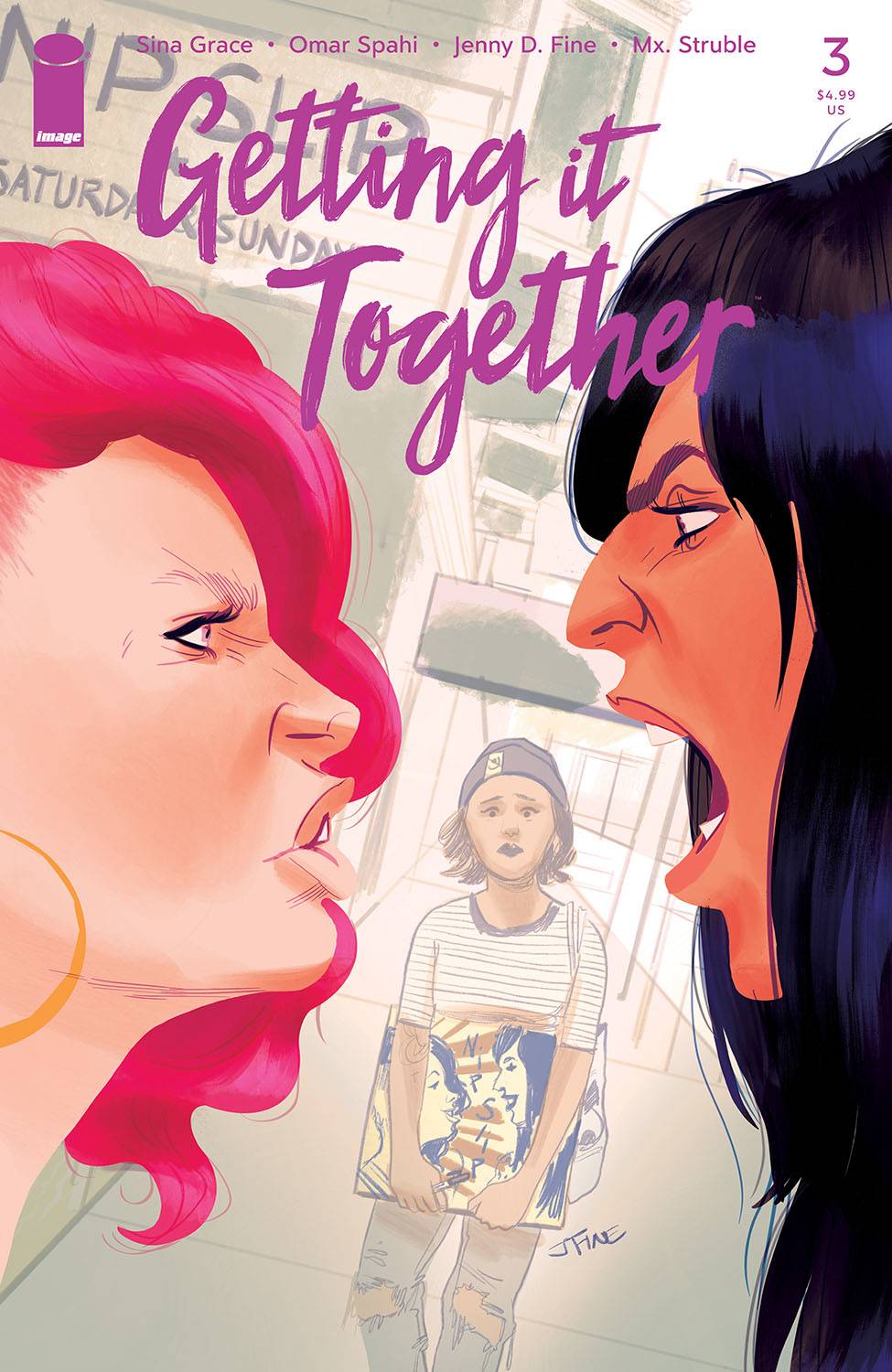
2. Getting It Together #1-3 (Image)

I’ll let you in on a little secret: slice of life is my all-time favorite comic book genre. So, I was overjoyed when writers Sina Grace and Omar Spahi, artist Jenny D. Fine, and colorist Mx. Struble announced that they were doing a monthly slice of life comic about a brother, sister, and their best friend/ex-boyfriend (respectively) set in San Francisco that also touched on the gay and indie music scene. And Getting It Together definitely has lifted up to my pre-release hype as Grace and Spahi have fleshed out a complex web of relationships and drama with gorgeous and occasionally hilarious art by Fine and Struble. There are gay and bisexual characters all over the book with different personalities and approaches to life, dating, and relationships, which is refreshing too. Grace, Spahi, and Fine also take some time away from the drama to let us know about the ensemble cast’s passions and struggles like indie musician Lauren’s lifelong love for songwriting even if her band has a joke name (Nipslip), or her ex-boyfriend Sam’s issues with mental health. I would definitely love to spend more than four issues with these folks.
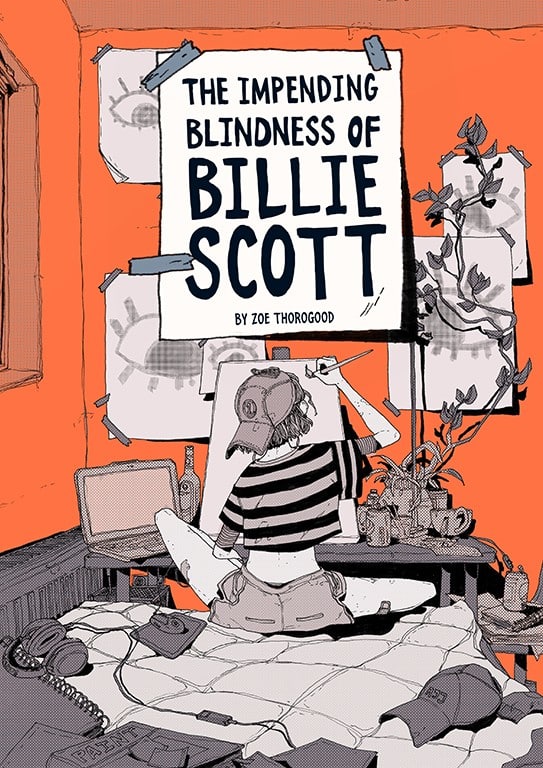
1. The Impending Blindness of Billie Scott (Avery Hill)

My favorite comic of 2020 was The Impending Blindness of Billie Scott , a debut graphic novel by cartoonist Zoe Thorogood. The premise of the comic is that Billie is an artist who is going blind in two weeks, and she must come up with some paintings for her debut gallery show during that time period. The Impending Blindness of Billie Scott boasts an adorably idiosyncratic cast of characters that Thorogood lovingly brings to life with warm visuals and naturalistic dialogue as Billie goes from making art alone in her room to making connections with the people around her, especially Rachel, a passionate folk punk musician. The book also acts as a powerful advocate for the inspirational quality of art and the act of creation. Zoe Thorogood even creates “art within the art” and concludes the story with the different portraits that Billie painted throughout her travels. The Impending Blindness of Billie Scott was the hopeful comic that I needed in a dark year and one I will cherish for quite some time as I ooh and aah over Thorogood’s skill with everything from drawing different hair styles to crafting horrific dream sequences featuring eyeballs.
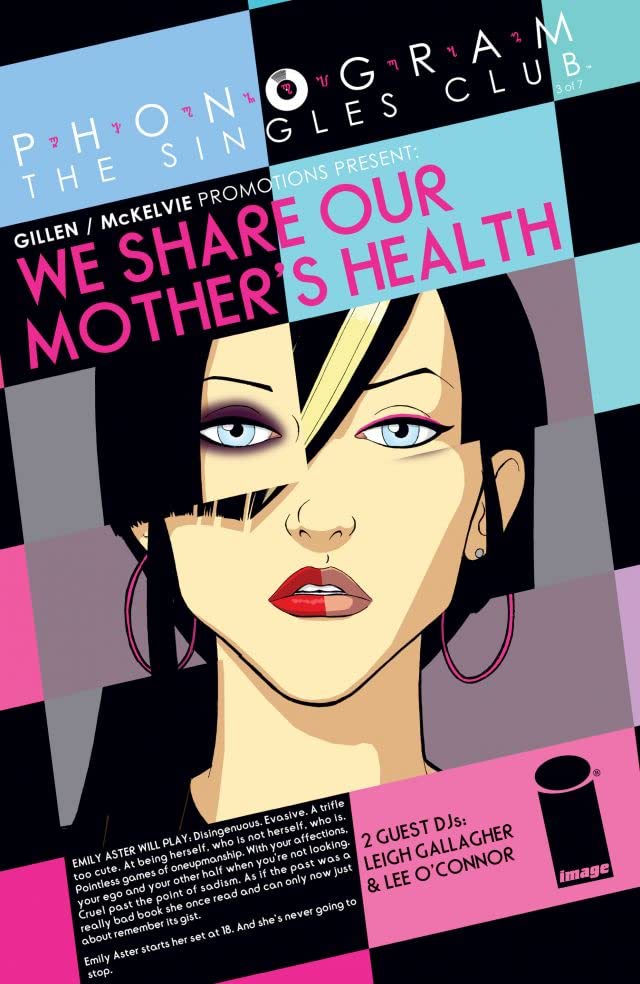
Phonogram: The Singles Club #3 shows the impossibility of Escaping Past Insecurities

“Oh, make me over! I’m all I want to be. A walking study in demonology.”- “Celebrity Skin” by Hole

Content warning: self-harm mentions

PHONOGRAM: THE SINGLES CLUB #3

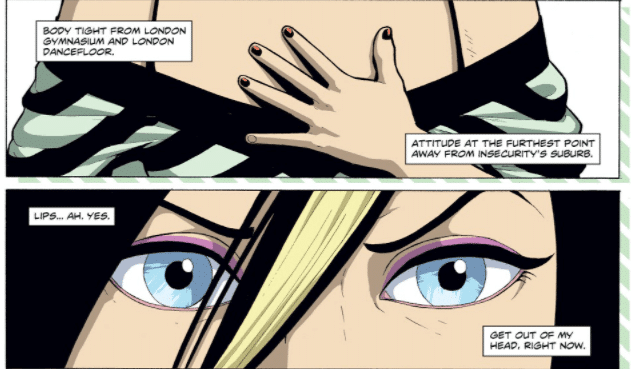
Asymmetrical haircut, perfect quip at the ready, timeless sense of fashion, and an air of superiority. Emily Aster is the epitome of “cool girl”, and she even makes inhaling carcinogens indoors look cool. She rules the roost in Phonogram: The Singles Club #3 where Kieron Gillen, Jamie McKelvie, and Matthew Wilson show an indie night at a club in Bristol from her perspective. The story begins with her admiring her “reflection” in the mirror (We later learn that, like a vampire, she doesn’t have one.) and wraps up with her having mindless casual sex with Kid-with-Knife, who would much rather be dancing to Wu-Tang Clan than Elastica. Along the way, she imposes her ego on every person she comes into contact with at indie night from frenemy David Kohl to the DJs Seth Bingo and Silent Girl plus Laura Heaven in one panel, and most spectacularly, an old friend from high school, who knew her as a self-harming sad girl named Clair, who was more into The Smiths than taking over a dance floor.

Thematically, Gillen and McKelvie follow a similar throughline in Phonogram: The Singles Club #3 as the previous issue with Emily Aster, like Marc, being haunted by a specter of her past. However, Emily’s specter is herself. It’s not until page ten until we find out that she doesn’t have a reflection, but Gillen and McKelvie hint at the reveal through dialogue and art placement. Emily basically breaks the fourth wall and shows the audience’s perception of herself. She immediately switches to second person in her narrative captions, and McKelvie draws her from different angles and never straight on like looking in a mirror. Gillen’s writing exudes confidence until we get a close-up and a “Get out of my head, right now”, which is a recurring theme as Emily tries to run away from Claire as quickly as possible.

If you have to say you’re not insecure, you probably are. (Sorry, them’s the breaks.)

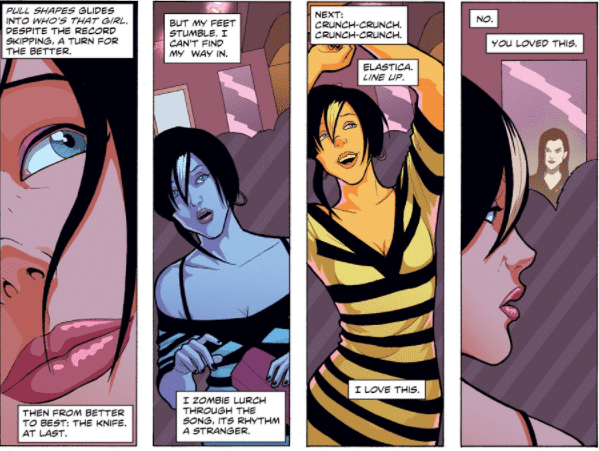
In her mind, Emily has no past just a present and future. This is why she scoffs at the whole concept of “indie night” and being into music from the 1970s, 1980s, and 1990s like David Kohl, and especially, Indie Dave, who really hasn’t moved beyond Joy Division and the Manchester sound of that time and appeared in the previous volume as well as The Singles Club‘s B-sides. Later, in the issue, Emily starts energetically dancing to an Elastica song with Matthew Wilson’s palette capturing the glow of nostalgia. But, in the very next panel, she sees the reflection of Claire, there’s a repetition of “get out of my head”, and she leaves to do the most un-Claire thing possible: have a one night stand with Kid-with-Knife. Even though Emily’s dialogue is full of punch and ego and her posture is self-assured, everything she does is to piss off her past self. She might think that she has put that behind her, but her near-photographic memory of events that happened when she was a teenager shows that it still matters to her.

Phonogram: The Singles Club #3

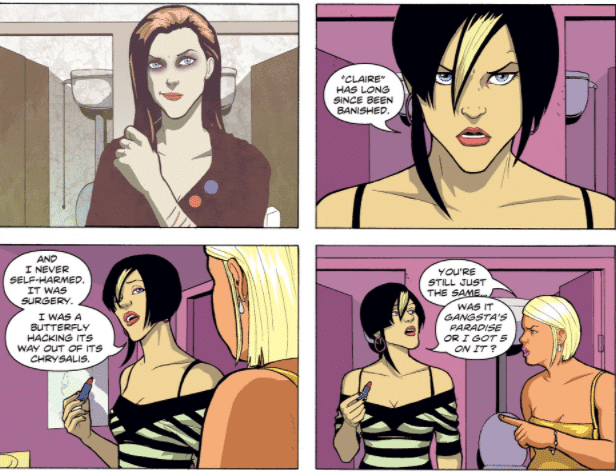
And speaking of near-photographic memory, Emily’s most devastating and sadistic moment happens in the bathroom just before Penny B enters it to cry about Marc not dancing with her. Even though Emily denies knowing her, she runs into a high school classmate, who knew her as Claire the self-harmer. (In a bit of dark, deadpan humor, Jamie McKelvie draws Claire showing the scars on her arm.) Emily starts serious with metaphors for self-harm helping her transform into the woman she is today before reeling off an eight-panel monologue about the classmate’s car accident that took her brother’s life. McKelvie draws Claire casually re-applying lipstick and even includes a beat panel to show her pursing her lips to see if it looks good. However, Gillen’s dialogue is anything but casual and is utterly cruel as Emily forces this woman from her past to relive the saddest moment of her life in a club bathroom sandwiched between remarks about 1990s hip hop one-hit wonders. She really is a bad person with great taste in records, and this bathroom encounter with Claire/high school acquaintance ends up being the engine of the story that is Phonogram: Immaterial Girl where Emily totally loses control over her current self-identity.

In the end, Emily doesn’t have a good night at the club as her egotism (What she hypocritically accuses Seth Bingo of being.), casual cruelty, and fixation on past insecurities ruin the one song she wanted to dance to (And this issue’s song/cover): “We Share Our Mother’s Health” by The Knife. There is a fluidity to Emily’s movements when she’s having a good time with Kohl and Kid-with-Knife for exactly one panel, but McKelvie draws her a little more rigidly when The Knife track comes on and Wilson uses shadowy colors instead of the intense (or ethereal) ones he uses for most dancing scenes. This is because Emily is “… living proof that sometimes friends are mean” and is too busy being smug and showing how much she has changed since the indie nights of the past to have a good time. Of course, she blames Kohl for the night sucking and turns her back on him, but from her actions throughout the comic, we know it’s her fault.

Phonogram: The Singles Club #3

As someone who has has played around with different identities, personas, and occasionally even looks, (See Emo Nite 2018) I can relate to Emily Aster (Uh oh!) and empathize with her even though she’s really a terrible person and crossed all the lines in her bathroom chat/monologue. I hate talking about and thinking about my past self and live in fear of running into someone I knew from high school now that I’ve moved back to that area thanks to a great career opportunity. So, I understand the deep insecurity that is connected to “coming home” (Even if “home” was never actually home), and by extension, Emily’s perspective in Phonogram: The Singles Club #3. I hate to say it, but I agree with Seth Bingo that she’s “the most evil woman in the world”.

However, he really doesn’t have much of a leg to stand on. Honestly, Kieron Gillen via Emily Aster put it best when he wrote “Everyone I know is a bad person with great taste in records”. This is an apt descriptor for basically the entire cast of Phonogram, who definitely introduced me to some great tunes (I owe my standom of Manic Street Preachers and Robyn to the series.), but is chockfull with some interpersonal toxicity as illustrated in my past, present, and future essays on Phonogram: The Singles Club.

Comics Deserve Better Episode 20: Klaus by Grant Morrison, Dan Mora, and Ed Dukeshire

It’s the Comics Deserve Better Season 2 finale, the last episode of 2020, and Logan’s last episode as co-host/editor. Brian, Darci, and Logan get into the spirit of the holiday season and discuss Grant Morrison, Dan Mora, and Ed Dukeshire‘s “Santa Claus Year One” story, Klaus, its magical art, mythological themes, and how it fits into Morrison’s body of work. They also chat about various news items, including a couple of indie comics Humble Bundles you can support, Fantagraphics publishing its first translated-from-Polish comic, a new BOOM! series from Grant Morrison that isn’t Klaus, and Vault teasing their 2021 slate of creative teams. Other comics mentioned on the show are Overwatch-Tracer: London Calling, The Way of the House Husband, Barbalien: Red Planet, Gideon Falls, BL Metamorphosis, and Edgar Allan Poe’s Snifter of Blood. Have a great holiday, and we’ll see you in 2021! (Episode art by Dan Mora)

Phonogram: The Singles Club #2 is a Saga of Curse Songs and Sadboys

“Staring at you from across the room/Patagonia shirt and some fucked up shoes/He might try to talk to you about bands…”- “Kill Your Local Indie Softboy” by Izzy Camina

Trigger warning: brief self-harm mention

Phonogram: The Singles Club #2

Reading Phonogram: The Singles Club at the end of 2020 is a nostalgic experience in both a personal and universal way. Universally, it creates nostalgia for the indie and pop music of the mid-2000s as well as indie nights at clubs, bars, and pubs, which have been able to take place safely since the Covid-19 pandemic. Personally, it’s sort of creates nostalgia for the person I was in 2014 when I first read Singles Club fresh off travels in England and ready to fuck up a small liberal arts university’s English department with an undergrad thesis on the still uncollected The Wicked + the Divine, but still so clueless, shy, and guilt/angst-ridden. Nostalgia can be a warm hug or the metaphorical equivalent of returning to an earlier stage of evolution, but it also can be a curse.

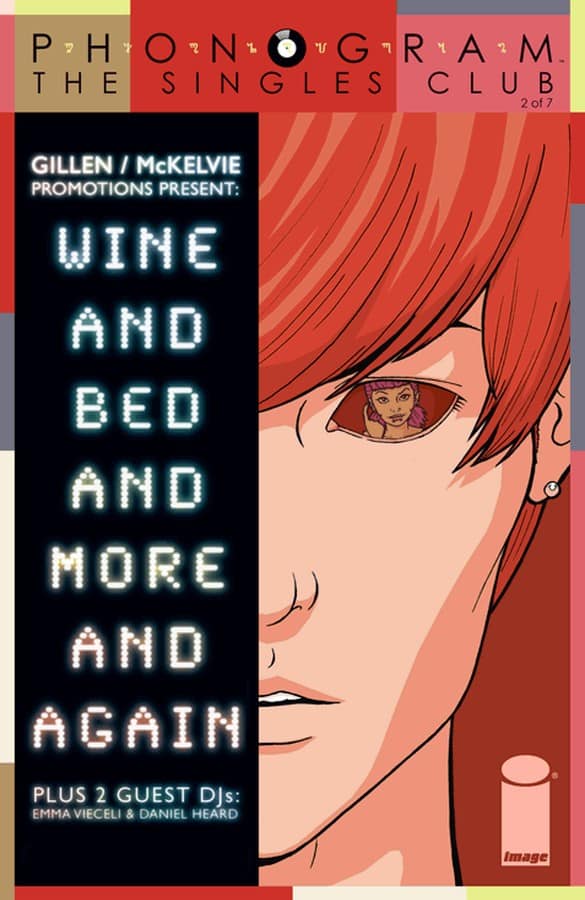
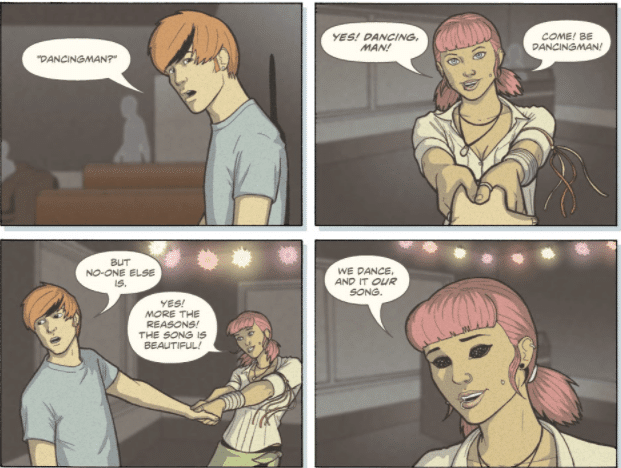
Or in the case of Phonogram: The Singles Club #2 and its POV character, Marc (Or Marquis to some.), a curse song. Basically, the premise of this issue is that Marc doesn’t want to go to the indie night at this Bristol club because it reminds him too much of an expat girl that he had a fling with in the past. And before this fling happened, they danced to “Let’s Make Love and Listen to Death from Above” by Brazilian indie rock band CSS so he can’t listen to that song without physically doubling over in pain and reliving the experience over again in faded tones from artist Jamie McKelvie and colorist Matthew Wilson while writer Kieron Gillen spit roasts him with his dialogue via this free-spirited girl who calls this specimen of the arms slumped, back of the venue, hipster boy set, “dancingman”.

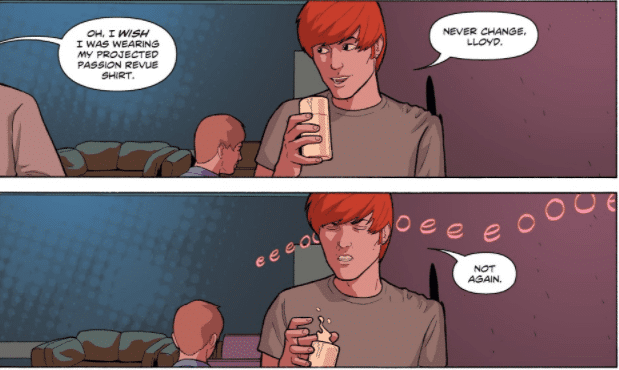
However, before the extended flashback sequence, Gillen and McKelvie put some meat on the bones of the relationship between Marc and Lloyd (But he wishes you’d call him Mr. Logos) and Penny B and Laura Heaven. Lloyd is just as self-absorbed as Penny B was in issue one, but he’s all about theory and not praxis as he monologues to a half-listening Marc about his concept of his 1960s girl group revival band with “hyper-lewd post-spank rock sex lyrics”. Also, apparently, Laura has a thing for Marc too and flirts with him using song lyrics and the classic asking for a lighter move. Like Penny B, she is attracted to the cute indie boy, but also can’t make any kind of connection with him beyond reciting lyrics verbatim and using the stalest of pickup lines. However, McKelvie draws Marc as turned away from Laura as he goes in, gets a couple beers, and heads back to Lloyd. Lloyd does commiserate with him about the last time he was at the club, but for a single panel as he goes back to talking about his band concept and then fanboys over David Kohl, who shows up in the back of, again, a single panel. So, the girl is right when she tells Marc in a flashback that his friends “are nothing but bullshits with bad record collections.”

Phonogram: The Singles Club #2

Most of Phonogram Singles Club #2 happens in Marc’s head as he recreates the moments and conversation he shared with this unnamed expat girl at this club in the past. Matthew Wilson’s colors are toned compared to, say, the previous issue, but Jamie McKelvie’s art is animated is as ever with all kinds of gestures, hand motions, and dance moves before the past and present collide in a nine-panel grid makeout session. Instead of hiding behind phonomancy like Marc’s other friends, this girl lives like an open book and is blunt about her feelings towards Marc and the music that’s playing instead of posturing with arms crossed and commenting on The Long Blondes. She isn’t afraid to touch, tease his “reserved” (or “boring”) British nature, and make masturbation jokes about dancing. The 8 panel grid that McKelvie gives a nice screwball rhythm to their interactions as well as capture the beat of “Let’s Make Love and Listen to Death from Above” and its ode to hedonism, not being a fucking hipster.

Phonogram and its three volumes are filled with characters, who are defined by their taste and relationship to music, for better or worse. Unnamed expat girl isn’t one of these characters, and Kieron Gillen seems to be having a really good time with her dialogue that also doubles as self-reflection for Marc. She understands that each connection that we make, whether for one night or for a lifetime, has good and bad, or “It is just a things” in her words. It’s okay to feel bad, but you also have to move on and not being controlled by past relationships or decisions. (A lesser author would have named the girl “Carpe Diem” or some banal nonsense.) The girl demonstrates this through both her words and actions. For example, instead of standing off to the corner and complaining about the DJ’s taste in music, she decides to make a move on the cute boy she was dancing with earlier and enjoy his presence even if she never sees him again.

Marc doesn’t feel this same way and fixates on their interaction instead, which is why she calls him the “emperor of whine” and calls him an emo boy, a big insult for mid-2000s indie boys although both genre of artists still make sad songs about women. This term didn’t exist in 2009, but Marc is a textbook “sad boy” or maybe “softboy”. (The semantics are tricky so correct me if I’m wrong.) His life is centered around his music taste even though it doesn’t make him happy as evidenced by his terseness in comparison to Lloyd, Laura, and even Penny B’s overflowing of language and geekery. Also, he’s very sensitive and filled with emotions as shown by the vividness of the flashback he has with “Let’s Make and Listen to Death from Above” creating a whole Sherlock Holmes memory palace of feelings for this time in his life. It’s overwhelming for him and also sucks that he’s surrounded by friends who would rather talk about bands than his feelings.

Phonogram: The Singles Club #2

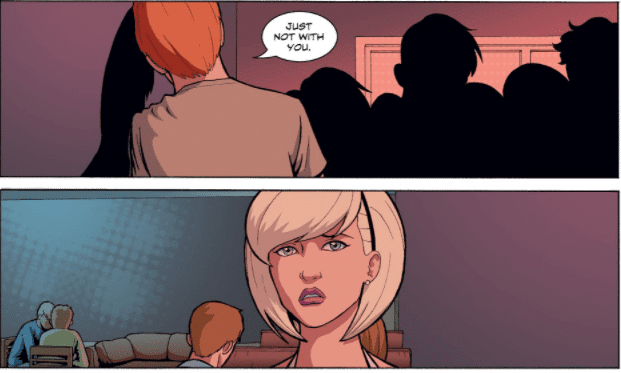
Marc has to break the “curse” of this song himself, but he isn’t willing to even though Penny B is ready to join him on the dance floor. Jamie McKelvie draws the “Just not with you” sequence from issue one from Marc’s POV this time, and with the added context of this issue and the flashback, we understand why he’s doubled over in pain, and there’s a single tear in his eye. Of course, Penny B ignores this. It’s a smart story move from Gillen and McKelvie to have Marc not experience some kind of big epiphany about moving on, but continue to sulk and see a VHS-static image of him and the girl from the past on the dance floor.

Marc is definitely the wallowing type, and hey, I’ve been there, but maybe it’s time to dance yrself clean, buddy. Breakups are really painful and feel like a withdrawal from drugs, but speaking from experience, you eventually get over him. However, I am not a licensed social worker, and my coping mechanism may or may not work for you. For example, my last one involved a manic episode, self-harm relapse, driving to Kentucky to hang out platonically with another ex, and starting a podcast.

Please don’t try that home, and dance to a fun song instead. I definitely recommend the one that Phonogram: The Singles Club #2 is centered around, which as mentioned earlier is “Let’s Make Love and Listen to Death from Above.”

TV Review: The Mandalorian S2E8 “Chapter 16: The Rescue”

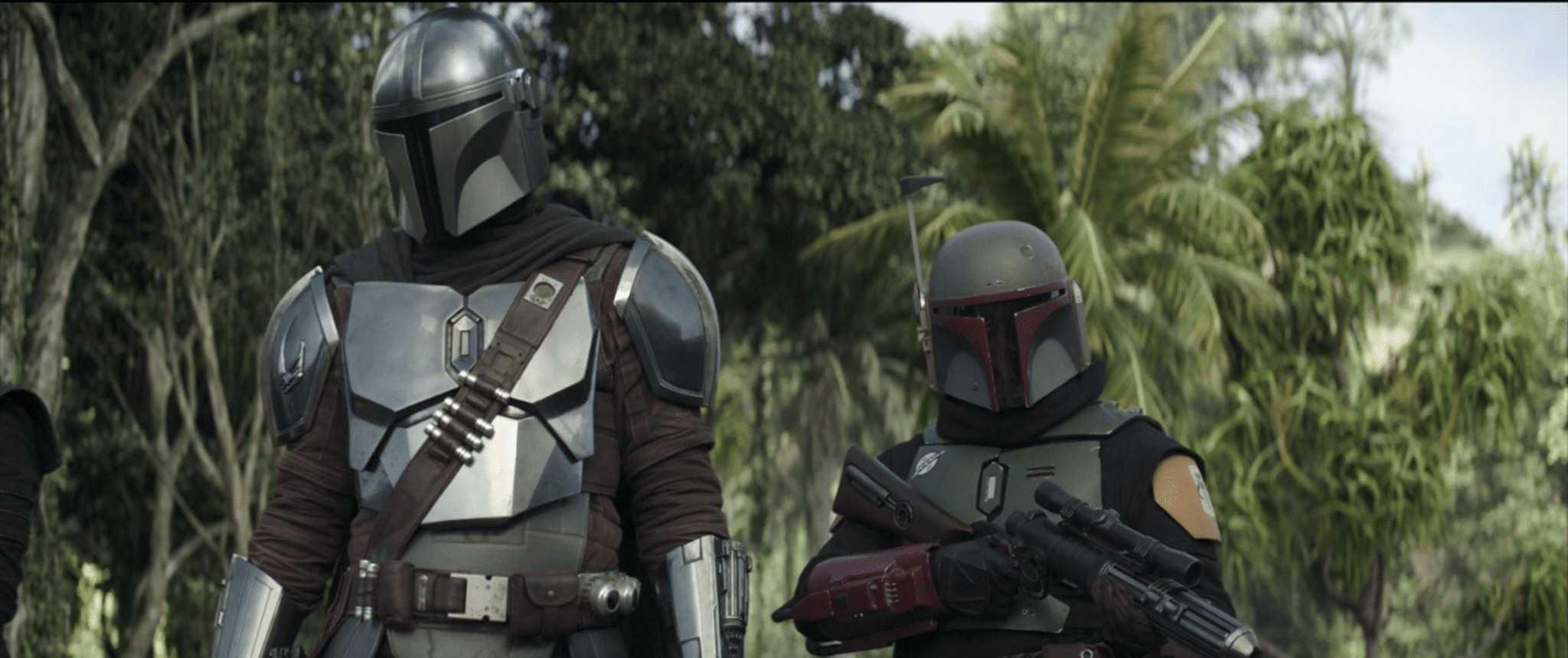
After last week’s trash talk ending, the long-awaited showdown between Mando and Moff Gideon has come in The Mandalorian Season 2 finale “Chapter 16: The Rescue“. Director Peyton Reed and writer Jon Favreau conclude Mando and Grogu’s quest and father/son arc nicely while setting up some tensions for upcoming seasons thanks to the return of the Mandalorians Bo-Katan (Katee Sackhoff) and Koska Reeves (Sasha Banks) and the general slipperiness of Moff Gideon. Honestly, Giancarlo Esposito’s performance is so damn entertaining as he projects menace and power while having multiple guns to his head and being in shackles. You can’t kill off a character like that yet, and The Mandalorian writers know that and show that he is even better as a master manipulator who knows everything about everyone than as a duelist.

“Chapter 16: The Rescue” opens with Slave I chasing an Imperial shuttle in flight. These ships both appeared in Return of the Jedi, and Reed and Favreau make multiple visual, verbal, and plot references to this film. This isn’t a bad thing though and comes across more as a leit-motif than fanservice with “side character” Mando (Even though Mandalorians have their own lore.) suddenly finding himself in the middle of an operatic adventure. The pursuit quickly ends in boarding with Cara Dune shooting an Imperial in the head when he taunts her about the destruction of Alderaan, and they find out the whereabouts of Grogu and Moff Gideon from Dr. Pershing, who has run experiments on the little guy to potentially clone him.

With the shuttle in hand, Boba Fett and Mando go to a bar on an refinery planet to recruit Bo-Katan and Koska to help them out. Like the previous episode in which “restore the glory of Mandalore” folks appeared, things are a bit tense between them with Bo-Katan not liking that a clone wears the armor of her people. However, they agree to join the team with the promise of getting Moff Gideon’s light cruiser after they rescue Grogu. Then, Bo-Katan goes into command mode (and Sackhoff channels a little bit of Starbuck from Battlestar Galactica) and sets up a plan where they will a fly the cruiser in the TIE fighter tube with Slave I giving chase. Then, the rest of the team will create a diversion and take the bridge of the ship while Mando stealthily recaptures Grogu. The one spanner in the works is the Dark Troopers, who kidnapped Grogu two episodes ago and are revealed by Dr. Pershing to be droids. Battle droids have definitely come a long way since the Trade Federation’s “Roger, roger” types in The Phantom Menace.

To start out, the plan goes off without a hitch, and Reed’s experience doing clever action sequences on the two Ant-Man really comes in handy as he homages the small ships take on the cruiser sequence in Return of the Jedi with Slave I taking out TIE fighters with the greatest of ease, and the best getaway driver/pilot Boba Fett taking his bow. Then, Fennec Shand, Cara, Bo-Katan, and Koska demonstrate their competence by running a gauntlet through the ship while Moff Gideon immediately calls on the Dark Troopers. Peyton Reed shoots a variety of action sequences from Ming-Na Wen demonstrating her chops and doing unarmed takedowns plus headshots as Fennec to Bo-Katan and Koska using their jetpacks to flank some hapless stormtroopers. While this is going on, Mando runs into the Dark Troopers’ cryo cells and gets physically knocked around by the one that escape his enclosure. However, his cleverness comes in handy, and he ends up besting the Dark Trooper by mixing a flamethrower with an oxygen tube and then a spear to the head while letting the rest

Mando makes it to the brig, and of course, runs into Moff Gideon holding the Darksaber over Grogu. They chat for a bit, and Gideon explains the Darksaber’s significance. (It’s basically the Excalibur of Mandalore.) Mando doesn’t care about the Darksaber and just wants Grogu so they decide to go their separate ways until, of course, Moff Gideon stabs in the back. What ensues is an epic Darksaber on Beskar spear duel with Pedro Pascal demonstrating the spear fighting moves he picked up while playing Oberyn Martell (RIP) in Game of Thrones. Because he’s a good guy, Mando disarms Gideon, puts him in chains, rescues Grogu, and hauls him up to the bridge where Moff Gideon is super-manipulative about the Darksaber. He basically says that Bo-Katan has to defeat Mando in combat to get the weapon and be a true candidate to the throne of Mandalore. While this is going on, the Dark Troopers come back from space, and Moff Gideon tries to escape and shoots at Bo-Katan, but is physically incapacitated by Cara Dune before he can put a bullet in his brain for the glory of the empire.

The Mandalorian Chapter 16: The Rescue

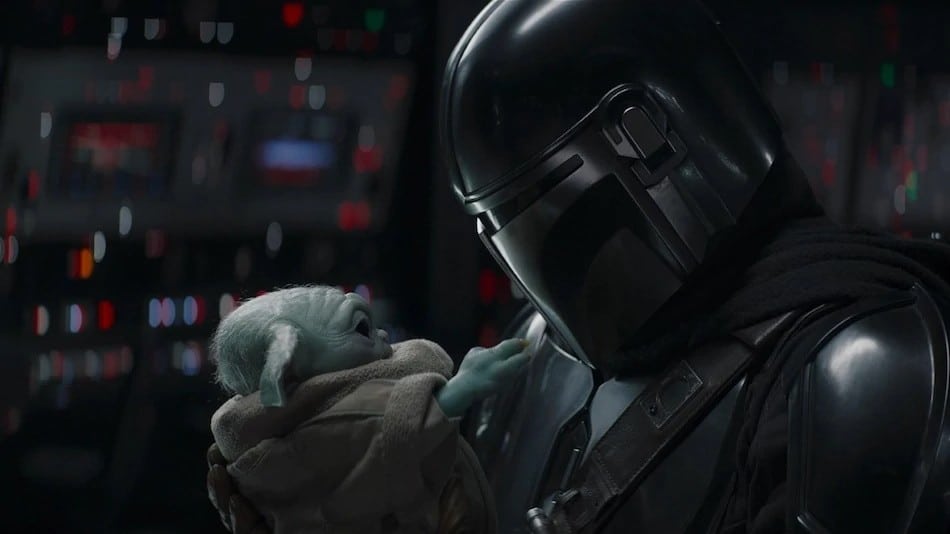
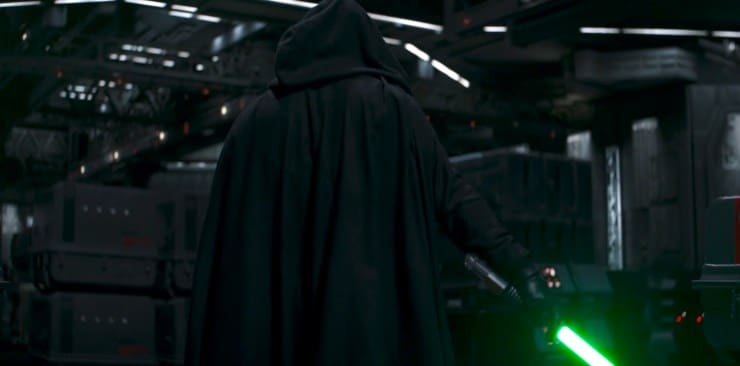
Even after this failure, Moff Gideon is still gloating about how he and Grogu will be the only ones to survive the Dark Trooper assault when a single X-Wing flies into the ship. Grogu’s little ears perk up, and he turns to the monster and watches a hooded figure with a lightsaber take out the Dark Troopers showing that his meditation on Tython paid off. Peyton Reed does an homage to the Darth Vader hallway scene in Rogue One by shooting a tight, close-up of the Jedi skillfully taking out the Dark Troopers. When the Jedi reaches the bridge, everyone except Mando is wary as he removes his hood and reveals himself to be none other, but Luke Skywalker (A CGI de-aged Mark Hamill). Luke, Grogu, and Mando have a chat with Grogu asking for Mando’s permission to go with him. In a touching moment, Mando removes his helmet and lets Grogu touch his face before he goes off to get training with Luke and R2-D2 in a reversal of his scenes with Yoda in Empire Strikes Back and Return of the Jedi. This is the end of the episode, but there’s a cool post-credits scene where Boba Fett and Fennec raid Jabba the Hutt’s palace with Fett shooting Bib Fortuna in the head and then sitting on Jabba’s throne setting up a new show in December 2021 called the Book of Boba Fett.

“Chapter 16: The Rescue” is a really exciting ensemble action episode with Jon Favreau giving each member of Mando’s “impressive fire team” a different motivation for being on the mission while still having them be utter badasses except when Cara’s big gun jams. They end up rescuing Grogu and taking over Moff Gideon’s light cruiser, but Favreau makes it clear that they’re not all BFFs as evidenced by their different responses to Luke coming in at the end. (The Jedi are the ancient enemies of the Mandalorians.) Also, Boba Fett gets treated really badly by Bo-Katan and Koska at the bar, who are still doing the sales pitch about re-taking Mandalore, and thankfully, their self-interest and Mando’s intersect for this episode. In the bridge scene, Katee Sackhoff plays off Giancarlo Esposito really well when he talks about her actually having to defeat Mando in combat, and her usually confident, quippy self is quiet for once. There are whole plotlines waiting to happen in that silence.

Even though Luke Freaking Skywalker shows up, and for the first time in live action Star Wars, we get to see him in his prime and not as a learner or old man, it’s Giancarlo Esposito’s performance as Moff Gideon that will stick with me the most. From the get-go, there is a calmness to his line delivery as he overrides his flailing subordinates and sends out TIE fighters to fight Slave I. There’s a glimpse where you can tell that he knows the ship is pulling its punches, and that the Imperial shuttle isn’t a friendly so he immediately gives the order for the Dark Troopers. Even imprisoned, Moff Gideon is a matter of sowing discord between allies as evidenced by his earlier remarks about the Darksaber. Also, Esposito does a good job of making everything seem like it’s all part of the plan with Grogo being of no use to him because Gideon and his scientists already extracted a blood sample. He is best for now, but Jon Favreau and Peyton Reed understand they have an interesting villain on their hands: part fascist fanatic (“glory of the empire”/the almost suicide) and part cool chess player so they keep him alive for now.

I guess that it’s time to talk about the Luke Skywalker reveal. It definitely seems like a Deus Ex Machina because the episode has shown that without his Beskar that Mando would have been killed by one Dark Trooper (Who get a catchy dubstep theme from Ludwig Goransson), and he and his team would have been annihilated by a platoon. However, the scene is payoff for Grogu’s actions on Tython as well as his and Mando’s interactions with Ahsoka Tano with there needing to be some kind of Jedi or Jedi-adjacent character showing up for Grogu to choose to either train with the Force or just hang out with Mando some more. Plus there’s this season’s overarching plot of Mando returning Grogo to his people (While also kind of having a reunion with his too via Boba Fett, Koska, and Bo-Katan.) so there needed to be a reveal like this to have a satisfying end to his journey.

However, I have a slight criticism of Luke’s appearance in “Chapter 16: The Rescue” other than the wonkiness of the de-aging CGI. (It’s less creepy that bringing back the deceased Peter Cushing for Rogue One.) One of the great parts of The Mandalorian, especially in Season One, was that it was finally a Star Wars story not about the Skywalker line with Mando and Grogu going on Lone Wolf and Cub-style adventures around the galaxy and commenting on the post-Second Death Star destruction turmoil. However, Jon Favreau couldn’t help himself and connected Mando to this larger story and legacy, which is honestly par for the course with familiar Clone Wars and Original Trilogy characters like Bo-Katan, Ahsoka Tano, and Boba Fett popping up this season.

The Mandalorian Chapter 16: The Rescue

It definitely makes some of the fans happy, and it’s interesting to see the different flavors of Mandalorian when Mando, Fett, Bo-Katan, and Koska interact, but it also shows that Star Wars still isn’t 100% interested in getting out of this Skywalker shadow as shown by J.J. Abrams undoing all of Rian Johnson’s work to break the cycle of Hero’s Journey and just retell old stories in Rise of Skywalker. Thankfully, Favreau and his writing room are better storytellers than Abrams and set up the Luke reveal via Grogu’s actions and interactions in previous episodes instead of announcing Palpatine’s return via Fortnite. There is also a real sweetness to Grogu and Luke’s interactions with Peyton Reed shooting from Gogu’s POV as he meets and hits it off with R2-D2 as the astromech droid helps calm him and begin to heal his Purge-induced trauma. Of course, they have to be friends.

Speaking of friendship, Jon Favreau and Peyton Reed do make the cathartic move of having the last moments of the season finale be interactions between Mando and Grogu. There’s a minimal dialogue (“I’ll see you again” is nice.), and Reed squarely places the camera on Pedro Pascal’s helmetless face as he lets Grogu be one of the first people in years to touch his face because they’re really just a couple of foundlings out in a great, big galaxy. There’s a real sadness/your kid going off to college or some educational institution vibe to this scene, and it also shows that Mando has grown with a character as he has forsaken the apparently fanatical (According to Bo-Katan earlier this season.) ways of his Mandalorian offshoot to have a real connection with Grogu. He takes the helmet of his own free will instead of doing it for pragmatic reasons like in the previous episode, and it demonstrates real growth. I’m definitely going to miss Mando and Grogu’s interactions and hope they truly do get to meet again down the road.

“Chapter 16: The Rescue” has multiple fun setpieces from Mandalorian jetpack on stormtrooper action to Mando dueling both Moff Gideon and a Dark Trooper and finally, Luke Skywalker mowing down battle droids like his father before him in a similarly shot manner. However, its use of the Skywalker saga as a safety valve aside, it features an eye-catching and unsettling performance by Giancarlo Esposito as Moff Gideon, nails those emotional beats between Mando and Grogu even if they don’t share a lot of screen time, and wraps up his quest storyline in a satisfying way. Finally, it also sets up future tension between Mando and the other Mandalorians, and the episode’s stinger shows a tantalizing glimpse at Boba Fett and Fennec Shand starring in their own show.

Overall Verdict: 8.8

Review: Barbalien Red Planet #2

BARBALIEN RED PLANET #2

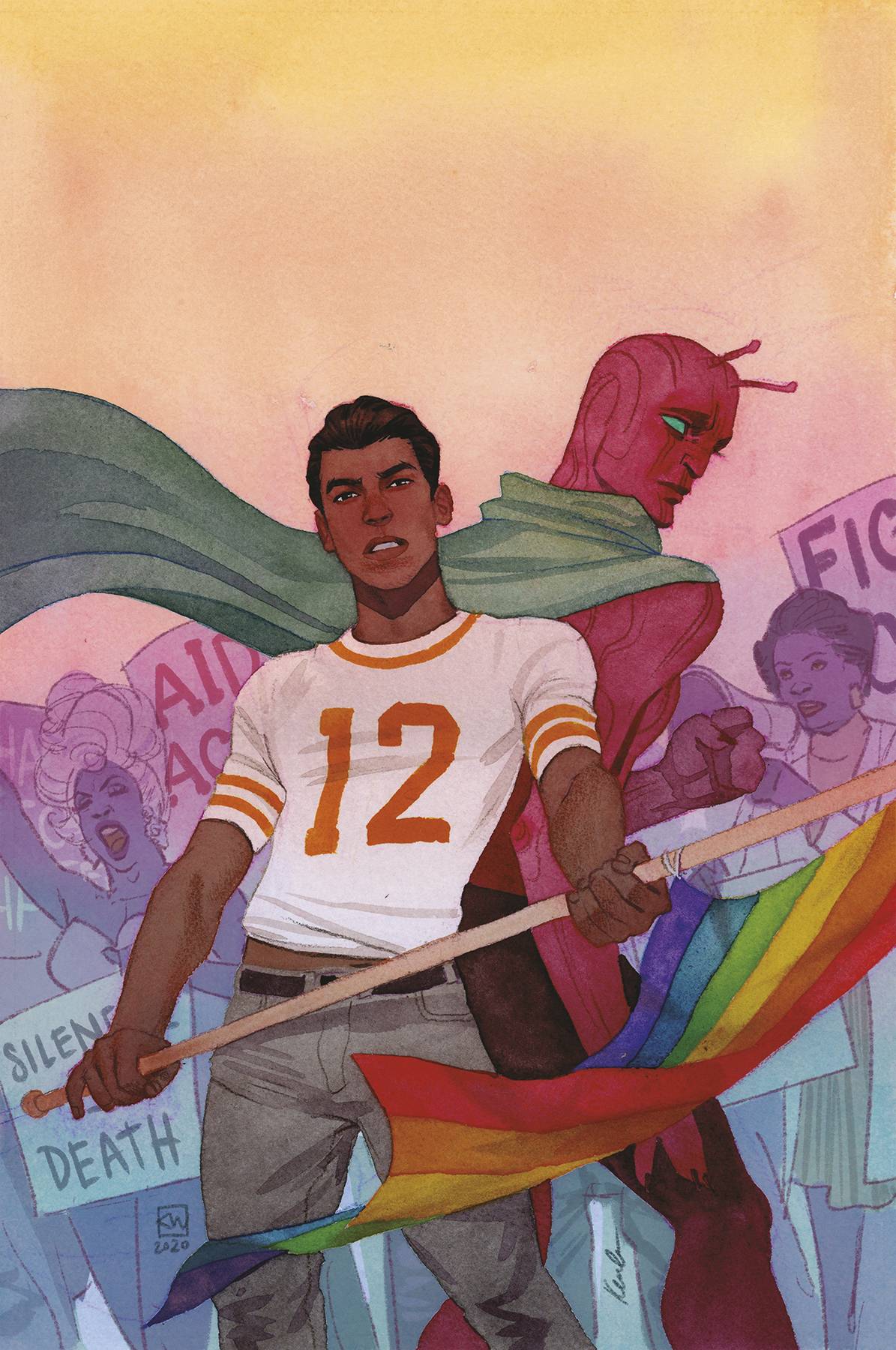
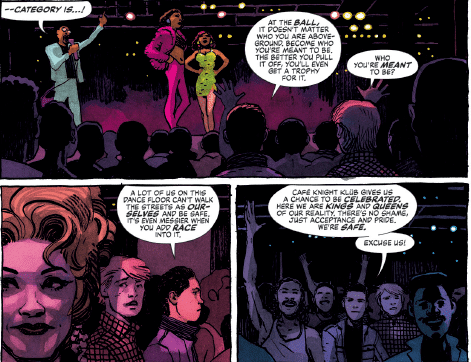
In Barbalien: Red Planet #2, writers Tate Brombal and Jeff Lemire, artist Gabriel Hernandez Walta, colorist Jordie Bellaire, and letterer Aditya Bidikar use the Black Hammer Universe sandbox to show the danger, tension, and yes, joy of being a queer man in the 1980s during the AIDS crisis. The first half of the comic is an homage to ball culture as Miguel, the young Latinx gay activist that Barbalien saved last issue, shows Mark Markz (Disguised a closeted, blond gay man named Luke) around an underground gay club until it is raided by the police. The dark, yet welcoming colors from Bellaire create a vibrant space that is interrupted by the jarring reds of the homophobic cops, their night sticks, and slurs. These are Markz’s colleagues on the force, and throughout the comic, he grapples with his different identities and roles in society: Martian, gay man, and police officer and tries to reconcile them while using abilities to be different things to different people.

Barbalien: Red Planet has done an excellent job of showing how difficult life was for my queer elders. Nowadays, I can go on Yelp and find a decent gay bar or queer-friendly space. Coming out was personally difficult, but being queer is something that is mostly tolerated by members of American society unless you’re a piece-of-shit Republican or Trumper. Rainbow capitalism is a thing, cops show up at Pride, well-meaning, yet tone-deaf corporate grocery stores think that “ally” is part of the LGBTQIA spectrum, and Ru Paul is a fracker. There is an assimilationist streak going on in the queer community (i.e. Lesbian couples throwing gender reveal parties.) where folks try to fit in with our late-capitalist, neoliberal, and fuck it, white supremacist kryriarchal society instead of resisting it. They applaud a racially profiling medium town mayor for being the first LGBTQ cabinet member in the administration of a right of center groper and a gender essentialist TERF and amuse themselves by watching annoying, heterosexual late-night TV hosts act out queer male stereotypes before a bloviating audience. (Aka fuck Pete Buttigieg, Joe Biden, Kamala Harris, James Corden, and Prom.)

However, Barbalien: Red Planet #2 doesn’t do any of this and centers on the BIPOC who were critical in the struggle for LGBTQ rights and trying to get the U.S. government to acknowledge the AIDS crisis. In Barbalien: Red Planet #2, Brombal, Lemire, and Walta introduce readers to the Black drag queen, Knight Klub, who is drawn, colored, and even lettered in a larger than life manner. She is an inspiration to queer men like Miguel, who spins stories of her being at Stonewall and assaulting a police officer at the White Night Riots. And Knight Klub lives up to the hype in the comic as she reads one of the raid cops and gives Miguel and Luke a chance to run away into the Spiral City night. The tension between direct action and trying to lay low continues towards the end of the book when Miguel’s friend Rafael channels his inner Marsha P. Johnson and throws a brick into a police station where the cops are planning to “shut down homosexual spaces”. He is angry that the police grabbed his partner Devon, who is HIV positive, and was inspired by Miguel hanging up a Pride flag at the courthouse. However, this is also just plain dangerous even with Markz mediating and trying to make none of his new friends are arrested or hurt. Because I live in an ostensibly more tolerant society, I can’t 100% relate to what happens in this comic, but I definitely have decided to not publicly come out as nonbinary because of pushback and constantly dealing with being misgendered. (I’m using he/they pronouns for now, but really prefer they/them.)

Barbalien: Red Planet #2

These atmosphere of activism and the characterization that Tate Brombal gives to Miguel, Rafael, and Devon are like the velvet to the emotional diamond that is Luke’s coming out story. This is technically his second coming out because Barbalien was exiled from Mars for being gay, sympathetic toward humans, and a peaceful man in a warlike society as shown in his previous stories. Luke is new to being around people like him, being called slurs, and even dancing and definitely comes across like a deer in headlights. However, to Miguel, it looks like he is giving off mixed signals, and Walta does a wonderful job of showing his frustration when Luke shrinks away from a kiss. He is exploring his identity during a volatile time, but there are some peaceful moments like Barbalien hanging out next to a Pride flag in Spiral City’s gay village.

These are the moments to savor between cop raids/attacks, and the most typical superhero/sci-fi part of this comic, which is a basically smartphone-wielding Martian bounty hunter tracking Barbalien down to make him pay for his “crimes” against Mars. The bounty hunter is a fairly straightforward protagonist, but Bombral, Lemire, and Walta draw some ghastly parallels between how he treats human beings and the police treat queer men and don’t pull any punches. They’ll kick down the doors just like the bounty hunter will blast them away with a similar intense color palette from Jordie Bellaire, who does a wonderful job gauging the emotion of each panel from peace to awkwardness and even sadness in a silent sequence where Luke looks at the sleeping Miguel, pictures of him with his partner, and then looks down at his police badge as he tries to reconcile his desire for peace and to do good with his true identity as a gay alien.

Two issues in, and Tate Brombal, Jeff Lemire, Gabriel Walta, Jordie Bellaire, and Aditya Bidikar’s Barbalien: Red Planet is easily my favorite story set in the Black Hammer universe (Black Hammer ’45 is fantastic too.). It’s the one I’ve been able to personally connect to. It’s a soul-searing character study for Barbalien/Mark Markz/Luke, and how he struggles with his identity and place on Earth/Spiral City while also centering the role of BIPOC in LGBTQ+ activism during the 1980s and telling their stories as well. And it does all of this with a superhero secret identity/shapeshifting twist.

Script: Tate Brombal Story: Jeff Lemire and Tate Brombal
 Art: Gabriel Hernandez Walta
Colors: Jordie Bellaire Letters: Aditya Bidikar
Story: 9.0 Art: 9.4 Overall: 9.2 Recommendation: Buy

Dark Horse Comics provided Graphic Policy with a FREE copy for review


Purchase: comiXologyAmazonKindleZeus Comics

Comics Deserve Better Episode 19: Papaya Salad by Elisa Macellari

On the penultimate episode of Comics Deserve Better Season 2, Brian, Darci, and Logan discuss the historical fiction/biography/magical realism comic Papaya Salad by Elisa Macellari. This 2020 release is a Thai/Italian comic about Macellari’s great-uncle as he goes from rural Thailand to serving in the military in Europe on the eve of World War II and gives a unique perspective on this historical conflict. Also, there’s the usual news chatter including new Image comics by Guillem March and James Harren, upcoming books Brindille and Chef’s Kiss, and Dan Rather working on a graphic novel. There’s also a discussion of Grant Morrison doing an origin story for Atomahawk, more R-rated Teenage Mutant Ninja Turtles, and finally, an obituary for legendary cartoonist, Richard Corben. Other comics mentioned on the podcast were Homunculus, Gonzalo, Minotaar, Cry Wolf Girl, Under the Dead Oak Tree, Karmela Krimm, Phonogram: Singles Club, Ronin Island, The Picture of Everything Else, and Reckless. (Episode art by Elisa Macellari)

Phonogram: The Singles Club #1 shows the Beauty and Agony of Dancing on Your own

Phonogram The Singles Club

“I just wanna dance all night/And I’m all messed up, I’m so out of line, yeah.”- “Dancing on my Own” by Robyn

If there’s one Kieron Gillen and/or Jamie McKelvie trade paperback volume that I recommend to folks, it’s Phonogram: The Singles Club. Technically, it’s Phonogram’s second volume, but it’s much more accessible than Rue Britannia (Unless you’re a huge Brit Pop fan). Singles Club is structured around a single night (December 23, 2006) at an indie club in Bristol, England told from the perspective of eight different phonomancers in seven comic book issues with seven accompanying songs that you can find on this playlist. (In short, a phonomancer uses music to create magic.) It’s like hipster Rashomon without murder and is a real treat for fans of character-driven writing with McKelvie and colorist Matthew Wilson bringing out unique storytelling tricks and color stories for each POV character.

Full disclosure: I wasn’t reading comic books when Phonogram: Singles Club dropped in 2009-2010 and read both it and Rue Britannia in 2014 during an arc break for The Wicked + the Divine, a comic that I covered at length during its epic 5 year run. However, it’s one of my favorite books by my favorite creative team, and I’m excited to cover it, especially during a time where the closest I can get to indie night at the club is dancing in my living room to a Bluetooth speaker so Singles Club has been a real comfort for me.

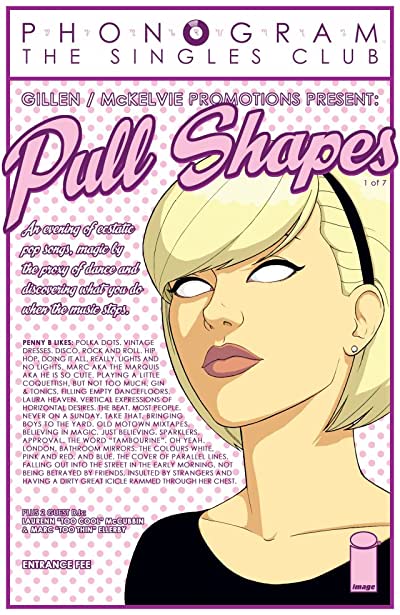
Phonogram: The Singles Club #1 focuses on the phonomancer, Penny B. She’s 19 years old, loves to dance, and has a crush on the emotionally distant Marquis, who looks like if Justin Bieber went indie instead of misappropriating Black culture. The song she really wants to dance to is “Pull Shapes” by The Pipettes, a British all-female indie pop group that had a few hits in the 2000s and were at the height of their fame around the time of this book’s setting. Basically, they’re a 1960s close harmony, girl group transported to 2006 with an all-male pop rock backing band, and “Pull Shapes” is an ode to the dance floor with everything else fading into the background. McKelvie and Wilson nail this feeling with their visuals by dropping out the background art and dropping in flat colors and polka dots (Like the outfits the Pipettes wear) so it’s just Penny and the music.

And when it comes down to it, music and dancing is all that Penny cares about, which is why she ends up dancing on her own in this final pages on the issue. There’s a real dissonance between the dialogue Kieron Gillen writes for her, and the reactions that Jamie McKelvie draws for her “friends” and fellow clubgoers. Supposedly, Laura is Penny’s best friend, but she never really talks to her except when she wants something like a gin and tonic. For example, on the bus ride to the club, Penny speaks directly to the reader/audience while Laura rolls her eyes, looks pensive, and smokes in the background. No wonder Penny has to pay for the drinks. The only time they really make eye contact and get in a conversation is when Laura says that the DJ is playing Blondie. This causes her to flip her drink to Laura as soon as she’s got it and hit the dance floor in an energetic display of McKelvie’s skill with motion and body movement as she breaks one of the rules of the night, which is “No magic”. (You can tell because her eyes go black and polka dot.)

Phonogram: The Singles Club

The throughline of ignoring people for music continues when she tries to chat up Marquis, but Gillen and McKelvie reveal no reason for there to be a connection between them except for his attractiveness. She starts to chat him up and put her hand on his arm, but then immediately she runs to the dance floor while remarking on his cuteness. Then, there’s pages of her arguing and honestly being gate-kept by the DJ (Who we later find out is named Seth Bingo) about the Pipettes. This is a sidebar from her trying to dance with Marquis, and she finally asks him and is completely and utterly rejected. Wilson uses a drab color palette while McKelvie draws Marquis from the back and doesn’t even have him make eye contact with her as he tells her, “Just not with you.” to the dance request. Penny is definitely self-centered and incredibly bad at listening, but you have to really feel for her it in this moment, mostly, because McKelvie gives her the saddest, forlorn puppy dog face ever.

Kieron Gillen, Jamie McKelvie, and Matthew Wilson show Penny B spiraling into even more loneliness as Phonogram: Singles Club #1 progresses. She tries to find Laura in the restroom, but her “best friend” would rather hide behind a door than comfort her. Then, she runs into Marquis’ buddy Lloyd, who doesn’t have the social restraint of the other characters, and puts in words what they’ve all been thinking. Gillen writes cruelty really well, but he and McKelvie give Penny a way out as white musical notes fill the panels, and she realizes that Seth has relented and is playing “Pull Shapes”. It really captures the emotion of music as an escape as she doesn’t want to be in this conversation and just wants to dance to her favorite song.

Phonogram: The Singles Club

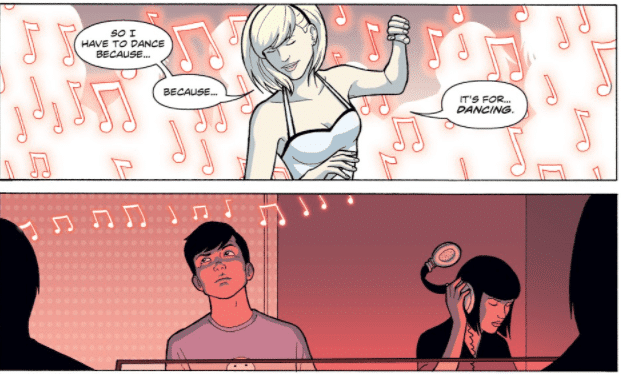
So, at the end, we get the two pages that really cemented Kieron Gillen, Jamie McKelvie, and Matthew Wilson as a superstar collaborative team. Gillen writes one hell of a monologue for Penny as she finally realizes that she can just enjoy truly dancing by herself and enjoying her songs for the sake of it instead of running after some boy, trying to salvage a friendship beyond saving, or arguing with some hipster DJ. McKelvie’s storytelling is sharp as he cuts between Penny dancing and the other characters of Singles Club observing her. She’s truly in her own little world for a moment. The background figures disappear and are replaced by pure white sound and musical notes from McKelvie and Wilson, whose colors are truly magical in the sequence. It captures the feeling of truly being enveloped in a song that it defines you for the next three or four minutes or maybe your whole life, and Gillen, McKelvie, and Wilson explore this theme in the final issue of Singles Club. (Come back in six weeks for that.)

Before wrapping up and putting some tunes on the ol’ faithful Bluetooth, I’d like to conclude by commenting on Penny’s last words and the final words of this issue, “I knew you’d understand” as she looks directly at the reader. Even though Penny is immature and quite annoying, anyone who loves music, pop or otherwise, can definitely relate to her need to get to the dance floor. Like this conversation is lovely, but the drop for “Dance Yrself Clean” by LCD Soundsystem is about to happen, and I need to be in the action when it goes off. In some cases, this is definitely impolite or socially unacceptable, but in the words of an artist who I won’t name, “At the end of the day, music is all we got.” Penny should definitely be nicer to her friends though and get to know people she has crushes on.

TV Review: The Mandalorian S2E7 “Chapter 15: The Believer”

The penultimate episode of The Mandalorian Season 2 does do its job and sets up the final confrontation between Mando and Moff Gideon. However, “Chapter 15: The Believer” is also a damn good anti-imperialist, anti-fascist heist story from writer/director Rick Famuyiwa. Famuyiwa is most well known for his 2015 indie dramedy Dope, but he also directed “Chapter 6: The Prisoner” from the previous season of The Mandalorian that was about a heist go wrong and introduced the ex-Imperial sharpshooter and general smartass/asshole Mayfeld (Bill Burr). This episode acts as a companion to that episode and continues/wraps up Mayfeld’s arc while also kind of being a heist gone right story. It definitely seems more like a Mandalorian Season 1 episode with more of a focus on what life is like after the fall of the Empire and during the rise of the New Republic instead of adding Jedi/animated series lore even though Boba Fett is one hell of a getaway driver.

Famuyiwa kicks off “The Believer” with some grim, handheld shots of prisoners doing the equivalent of turning big rocks into smaller rocks, which is making TIE fighter wrecks into smaller wrecks. Without a word of explanation, Cara Dune uses her powers as a Marshal of the New Republic to recruit Mayfeld to help find Moff Gideon’s ship where Grogu is being held because he still has Imperial credentials. Not much can be worse than Mayfeld’s current situation, but it gets worse when he sees he’ll be on this mission with Mando, who left him to be arrested by the New Republic in the previous season. The crew of Dune, Mando, Mayfeld, Boba Fett, and Fennec Shand go to the mining planet of Morak, which has an Imperial base and more importantly an Imperial terminal where Mayfeld can find the location of Gideon’s cruiser.

What follows is a typical heist setup with Mando and Mayfeld hijacking a mining vehicle carrying rhydonium, an explosive mineral used to make weapons of mass destruction while Cara Dune and Fennec provide sniper support and Boba Fett and Slave I stand by for extraction. Even though they hate each other, Mando ends up riding in the vehicle with Mayfeld because he’s the only crew member not wanted by the Imperial Security Bureau. (Or the template for Clone troopers in a wryly delivered line from Temuera Morrison.) What follows is a study in microaggressions as Burr (Honestly playing himself.) gives Mando crap for taking off his Beskar armor and replacing it with Shoretrooper armor, talking about how the New Republic and Empire are basically the same for most folks in the galaxy. Famuyiwa drives this point home by having a long, lingering shot of the indigenous inhabitants of Morak and reminding viewers that despite all the corporatization and IP strip mining, Star Wars is a really a story about imperialism and interventionism with five of the six George Lucas films coming out during the Cold War and War on Terror.

The Mandalorian Chapter 15: The Believer

But Rick Famuyiwa also knows when to make Mayfeld shut the hell up as he does Speed with a Star Wars spin. If Mayfeld drives too fast (He’s definitely one of those guys who always goes 20 over on the highway.), the rhydonium goes boom. Plus there are pirates with thermal detonators, and Mando’s Imperial-made blaster runs out of bolts pretty quickly so he has to use his spear fighting and close combat skills to ward them off. Thankfully (?), some Imperial TIE fighters and stormtroopers finish off the remaining pirates, and Mando and Mayfeld are greeted with cheers by the garrison. All they have to do is go to the terminal in the officer Easy, peasy, pumpkin pie.

But, of course, it’s not that easy as Mayfeld recognizes his old commanding officer, Valin Hess (A frightening Richard Brake) in the mess hall. So, Mando ends up sacrificing his personal beliefs for the greater good of rescuing Grogu and removes his helmet so the terminal will work and get the information on Gideon’s ship. This is followed by a really gross interaction with Hess, who doesn’t recognize Mayfeld, and tries to make Mando say his Stormtrooper callsign. However, they end up getting drinks thanks to their transport being the only one to get through that day. There is more discomfort as Mayfeld basically grows a spine and confronts Hess for his actions that got 10,000 Imperial soldiers killed. Hess brushes this off and goes into a fascist diatribe about how people want “order”, not freedom.

This leads to Mayfeld shooting Hess in the head and a really intense fire fight as stealth goes out the window, and there’s a mad scramble to the roof and the extraction point. But this situation allows Fennec, Cara Dune, and especially Boba Fett to demonstrate what cool customers they are as they skillfully take out cannons, troopers, and even a couple TIE fighters in the end. Mayfeld also demonstrates his redemption as he goes from saluting Imperial officers and thinking that “Oh, the Empire wasn’t so bad.” to shooting the rhydonium stores so that the Empire can’t terrorize other planets. This shot leads Dune letting him go free on Morak while everyone else gets ready to confront Moff Gideon.

Helmet on or off, “The Believer” features some of Pedro Pascal‘s best acting of the season as he truly shows the discomfort he feels when he has to take off his Mandalorian armor and helmet. In most situations, he’s quick with a dry one-liner or a blaster, but he is almost speechless in the presence of Hess. Pascal plays against type and is almost anti-charismatic even though he is still quite pretty. He just wants to complete the task and get out of there and has no grasp of Imperial hierarchies and protocols. Thankfully, Mayfeld is there to do what he and Bill Burr do best: talk bullshit. There is a loose, almost improvised manner to the way that Burr delivers his lines about past campaigns and concocts a backstory for Mando being hard of hearing, and it shows that he might just be a little appreciative that Mando stuck his neck out for him to go to the terminal. They’re definitely not buddies, but at the end of the episode, Mayfeld has respect for Mando and his beliefs and practices and even turns his body away from Mando when he puts the Shoretrooper helmet back on.

The scene where the TIE fighters and legions of stormtroopers come in and mow down the pirates is one of the most thought provoking in recent Star Wars memory with Rick Famuyiwa adding to the derangement with a slow tracking shots of salutes, clapping, and back pats as Mando and Mayfeld successfully deliver their cargo of civilian casualty batter. This combined with the Imperial officers basically hanging out in the break room humanizes them and creates a kind of “banality of evil” effect that is quickly ripped to shreds when Hess reminds us that Imperials are truly monsters, who don’t care about things like civilian casualties, only power, order, and control like they have over Morak with their big base and TIE fighters and battalions.

Famuyiwa makes a good parallel between American imperialism and foreign policy and the Empire in “The Believer”. As Slave I descends into Morak, there’s a wide shot that shows it’s a nice little forest planet not unlike our previous indigenous resistance metaphor planet, Endor. However, Morak also has rhydonium (I.e. oil in the Middle East), which makes it valuable to the Empire’s efforts at re-establishing itself so it gets ruled with an iron fist. And it’s also the reason that those shipments keep getting hit. Rick Famuyiwa keeps the personalities of the pirates pretty ambiguous and doesn’t pass judgment on if they’re terrorists or freedom fighters.

This storytelling decision makes sense because ambiguity and grey areas seem to be the status quo of The Mandalorian where devout bounty hunters become father figures who are willing to compromise, mercenaries become cops that are okay with bending the rules occasionally, and Imperial snipers join whatever Morak’s version of #resistance is. It shows humans aren’t fixed in their ways, and that change is truly possible while shedding the Manichaean dualism of the Star Wars original trilogy. “The Believer” explores these dichotomies and contradictions in a suspenseful manner as Famuyiwa creates tension through both dialogue and action. Honestly, I was more stressed (and proud) when Mayfeld was confronting Hess for his actions as a commander during the Galactic Civil War than during the ensuing shoot out, which is basically a style plate for how competent and badass Mando’s crew/found family is, and why Moff Gideon is screwed next episode.

Even though there are no lightsabers, flashy namedroppers, and Boba Fett is just the getaway driver (Which is still pretty damn awesome), Rick Famuyiwa turns in the most thought-provoking and tense episode of The Mandalorian Season 2 yet with “The Believer”. He uses the canvas of the Star Wars universe to comment on fascism and imperialism. He gives Mayfeld a three-dimensional story arc and lands some huge moments for Mando’s journey thanks to a heart-rending and vulnerable performance from Pedro Pascal. Plus he pulls off one hell of a chase scene!

Overall Verdict: 9.2

Review: Getting It Together #3

Getting It Together #3

Sina Grace, Omar Spahi, Jenny D. Fine, and Mx. Struble continue to escalate the storyline, definitely balance the arc of an ensemble of characters, and generally continue to create that premium queer, slice of life goodness in Getting It Together #3. This issue is centered around a big set piece, which is protagonist Lauren’s band Nipslip opening for Wish Me Luxembourg. It also deals with the fallout of the friend breakup between Sam, who is Lauren’s ex, and Jack, who is Lauren’s brother and their various coping mechanisms. There’s lots of drama (and drug use), but there’s also visual flair and creativity from Fine and Struble while Grace and Spahi continue to give readers more insight into this cast of characters.

Grace, Spahi, Fine, and Struble goes into fun, daily webcomic mode to show how Lauren, Sam, and Jack deal with the loss of folks they confide in. Sam’s page is structured like a zine-meets-choose your own adventure that all ends up in him on the couch playing video games as a coping mechanism for his depression, which is explored by Sina Grace, Omar Spahi, and artist Erika Schnatz in this issue’s one page backup story. Jack’s coping mechanism is mindlessly swiping through Tinder, which is definitely relatable to me, especially during the isolation of the pandemic. Like he says in the captions, there really is something “self-soothing” to the swiping motion whether that’s on a dating app or something else like Tik Tok. Finally, Lauren’s coping mechanism is basically straight to business as Fine and Struble draw a series of text messages she has with her bandmate Annie, who made out with Sam last issue. This led to drama in both her personal and creative life, and tonight’s gig has a “now or never” feel as Nipslip’s performance will determine whether they continue as a band, or Lauren goes solo.

I definitely think it’s the latter as they round out the show with Lauren performing a solo song that he wrote years ago in a Sina Grace-drawn flashback. This combined with a full page of Wish Me Luxembourg’s frontwoman Mai talking about how such an inspiration Lauren was to her really is a bit too much too handle. Thankfully, Sam’s friend Tim is there with molly, and Jenny D. Fine and Mx. Struble turn in a drug trip that’s visually fun and also reveals a lot about the characters’ feelings for each other. In his mopey period, Jack has stumbled into a poly relationship with his ex and another man that on a surface seems like good, cuddly fun, but it actually makes him feel alone. Fine definitely shows this with her art with an earlier inset panel showing how uneasy Jack is at the show, and later on, she uses a liquid horror art style on the other two guys to show that this relationship isn’t a free “lots of love” poly situation, but more like a “succubi” situation as Sam and Tim call it.

Even though they barely interact and the gay world is a mystery to him, Sam still looks out for Jack by basically stage a drug-fueled intervention, and hopefully, they can patch things up in the end. Jack is definitely on the cusp of an epiphany by the final chaotically drawn and colored Fine and Struble page. Just like the drug trip sequences have a super charged energy, they heighten the connections and tension between characters in Getting It Together #3. The complete and utter Fleetwood Mac-esque sloppiness of Nipslip is definitely on display with Lauren making a pass at Mai and being high as hell. (Spahi and Grace’s dialogue for this sequence is hilarious.) Then, Mai ends up hooking with Ashton, who slept with Lauren in the first issue and basically kickstarted the plot of this comic when her boyfriend Sam got jealous even though they were in an open relationship. Jenny D. Fine and Mx. Struble’s art is messy and beautiful just like the connections between these talented and deeply flawed folks.

Getting It Together‘s main focus is on the friendship and emotions between Lauren, Jack, and Sam with some ongoing subplots like Nipslip, Jack’s bad taste in men, and Sam’s depression. However, in this issue, Sina Grace and Omar Spahi provide some insightful, non-judgmental, and at times, humorous commentary on the complex nature of poly relationships through the wisdom of drug dispensing, closet Jubilee cosplayer Tim. Even if you’re a “secondary partner”, you should never feel that way, and poly relationships should be beneficial for everyone. The deal that Jack has with his ex-boyfriend and his ex’s current partner isn’t that at all, and Grace, Spahi, and Fine illustrate this through his body language as well as Tim’s “tough love” speech at the end. I might be biased because we have similar taste in libations (vodka crans, Jameson, PBR), but he adds some wisdom, comedy, and loads of fun to the issue as well as playing the plot-necessary role of go-between for Sam and Jack.

Getting It Together #3 continues the dramatic escalation of the previous issues while providing insight into Lauren’s creative drive, Jack’s relationship issues, and Sam’s mental health. Sina Grace and Omar Spahi’s writing continues to be sharp as ever, and they hit that drama/comedy sweet spot. Jenny D. Fine and Mx. Struble continue to provide expressive, DIY style visuals while experimenting with layouts and finally descending into utter madness and fluidity during the drug trip sequence. Struble adds that extra bit of emotion to the musical performances in Getting It Together #3, which was a skill that they demonstrated in on their previous work with Grace on Lil Depressed Boy even if this book doesn’t have any AJJ or Childish Gambino cameos.

Story: Sina Grace and Omar Spahi 
Art: Jenny D. Fine and Sina Grace
Colors: Mx. Struble Letters: Sean Konot
Story: 8.5 Art: 9.5 Overall: 9.0 Recommendation: Buy

Image Comics provided Graphic Policy with a FREE copy for review


Purchase: comiXologyKindleZeus Comics

« Older Entries Recent Entries »