Tag Archives: LGBTQ

2015 Queer Press Grant Now Accepting Submissions

Prism Comics have announced that they are now accepting submissions for this year’s Queer Press Grant. The Queer Press Grant is specifically awarded to independent queer comic book creators. The grant was established by Prism Comics in 2003 to assist in the publication, and promotion of lesbian, gay, bisexual, and transgender comics.

Comic books, comic strips, webcomics, and graphic novel projects are all eligible. Entries are judged first and foremost by artistic merit, followed by concerns such as financial need, proposal presentation, and the project’s contribution to the LGBT community.

The submission deadline for the QPG is March 10th, 2015, with the recipient announced during Wondercon Anaheim, April 3-5th. Applicants can submit online now at prismcomics.org/grant.

The $2000.00 Queer Press Grant is funded by donations from comic book professionals, readers, and the fundraising efforts of Prism Comics members. For those interested in donating to the Queer Press Grant you may do so here.

queer press grant

The Queer Press Grant Moves to WonderCon

queer press grantPrism Comics are shaking things up a bit, and moving their Queer Press Grant award ceremony to WonderCon. The 2015 Annual Award Ceremony will take place at WonderCon Anaheim on the weekend of April 3-5, 2015.

In the past, the award has been presented in the fall, but this move will bring “more opportunities for the Queer Press Grant to help LGBTQ comics creators.”

The Queer Press Grant is a financial grant of $2000.00 that assists one LGBTQ comic book self publisher get their comic, web-comic, or graphic novel printed, and into the hands of readers. Since its inception in 2005, the Queer Press Grant  has been awarded to fourteen outstanding comics creators who have gone on to contribute greatly to the queer comics community.

Submissions for the 2015 Prism Comics Queer Press Grant will begin January 1, 2015 and end on March 10, 2015.   The recipient will be announced at one of Prism Comics’ panels at WonderCon. Which panel will be announced in the spring.

The grant is entirely funded by donations. You can do so here.

Submissions for the Queer Press Grant are Now Open

Queer_Press_Grant_QPG_Logo_mail_chimpPrism Comics, the leading non-profit organization supporting LGBT comics, graphic novels, comics creators and readers, has announced the opening of submissions for the 2014 Prism Comics Queer Press Grant, Prism’s annual grant to LGBT comics self-publishers.   The deadline for proposals is Monday, September 1, 2014. The Award is to be announced at the Alternative Press Expo in San Francisco October 4-5, 2014.

prism comicsPrism Comics offers an annual financial grant to help aspiring LGBT comics creators publish and promote their comics. The Queer Press Grant is funded by donations from readers, established creators with the desire to help those just starting out, and fans who want to see more LGBT stories get published.

Prism Comics will be exhibiting at San Diego Comic-Con July 24-27, 2014 (Booth #144). In addition to promoting and raising funds for the Queer Press Grant, Prism Comics will be presenting panels and offering portfolio review by noted comics professionals for comics creators and those interested in submitting for the Queer Press Grant.   Please check the Prism website in early July for a list of comics creators who are scheduled to do portfolio review and appear at the Prism Comics booth.

Young Avengers, Glaad Outstanding Comic Book

This past Saturday saw the 25th Annual GLAAD Media Awards at the Beverly Hilton Hotel in Los Angeles. While Marvel‘s Young Avengers saw it’s latest run come to an end recently the comic was honored as an “Outstanding Comic Book” by the organization. The awards honor outstanding portrayals of the gay, lesbian, bisexual and transgender communities in various media. The comic’s final issue revealed the team had an almost all gay or bisexual roster.

Other nominees this year included Batwoman, The Fearless Defenders; Husbands and Life With Archie.

Hopefully we’ll see a return of Young Avengers soon to the Marvel U and it can keep up the diverse cast.

You can check out the full list of winners here.

YoungAvengers_1_Cover

Oni Press Stands Up for Marriage Equality

In an open letter posted to their Twitter account, comic publisher Oni Press “fired” their office and shipping supply company ULine over the issue of marriage equality. ULine’s CEO has been helping fund Family-PAC, an organization that describes itself as “pro-family, anti-tax political action committee in Illinois.”

The organization has been campaigning against SB10, which legalizes same sex marriage in Illinois. The legislation has passed and the hatemongers PAC have vowed to continue to fight for “Christian values” and against marriage equality as it says on their site, much like the fight against abortion has continued even after the Supreme Court’s decision (their comparison).

Sigh…

Congrats to Oni for doing the right thing and speaking with their dollars. Hopefully comic fans will reword them by speaking with theirs and purchasing a few more of their comics.

Gay Manga Finds a New Home at Fantagraphics Books

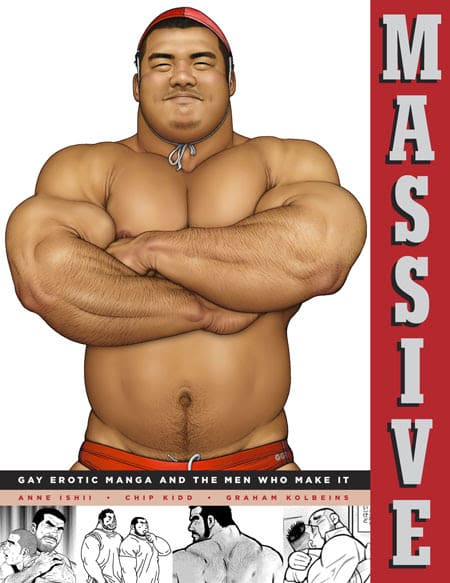
Fantagraphics Books is thrilled to welcome the team behind The Passion of Gengoroh Tagame to the family. Massive: Gay Erotic Manga and the Men Who Make It is due out October 2014. This is the most recent entry in Fantagraphics’ queer comics lineup, which also features the anthology No Straight Lines, the graphic novels 7 Miles a Second and Bread & Wine, and manga by Moto Hagio and Shimura Takako.

The Massive anthology showcases Japan’s most talented and influential gay manga artists, including Gengoroh Tagame, Jiraiya, Seizoh Ebisubashi, Kazuhide Ichikawa, Gai Mizuki, Takeshi Matsu, Fumi Miyabi, and Kumada Poohsuke. In Massive, many of these artists’ works are featured in English for the first time; this collection offers an intimate, in-depth look at a criminally overlooked component of Japanese queer culture. In addition to comics and illustrations, Massive features photographs of the artists and their workspaces; cultural and historical context; and interviews with the creators about what it’s like to be a gay erotic artist in Japan.

Edited by Anne Ishii and Graham Kolbeins, and designed by Chip Kidd, this unprecedented survey of manga “made by gay men for gay men” is an essential addition to the queer comics canon; it will introduce the genre often referred to as “bara” (a misnomer for gay manga that has taken on new meanings online) to a new, international audience.

Massive was originally scheduled as a PictureBox Spring 2014 release until its publisher, Dan Nadel, announced that he is ceasing operations.

MASSIVE GAY EROTIC MANGA AND THE MEN WHO MAKE IT

“Comics are Gay!” A Flash History of LGBTQ in Comics

Originally posted at The Mass Media. Cross-posted with their permission.

It’s no secret that Nerd culture is generally hostile to anyone non-white and non-male. Attempts to challenge the sexualization of women in games and comics, for example, have long met with vocal opposition, some violent. But not all of Nerdom and Geekery are as heteronormative as the mainstream media reports.

In fact, LGBTQ characters and themes have long held a place in the comics industry — not always securely, and certainly on the margins, but as our social and legal culture is growing to recognize LGBTQ rights, so too are comics embracing homosexual, bisexual, transgendered, and queer lives.

The-Lavender-Menace-452x700In 1954, German-born Fredric Wertham published “Seduction of the Innocents,” a direct attack on the comics industry. Werthem argued that comics of the late 1940s and early 1950s were corrupting children’s psychiatric health and causing delinquency. His book led to U.S. Senate hearings and ultimately the creation of the Comics Code Authority, a censorship board for the comics.

Homosexuality was among Wertham’s many targets. He believed, for example, that Wonder Woman comics expressed BDSM themes and that she was a lesbian. Additionally, Wertham labeled Batman and Robin’s crime-fighting partnership gay. In an era when homosexuality was considered a mental health issue, the government was particularly afraid of its presence in children’s reading material, and the Comics Code Authority banned any mention of homosexuality or gay themes.

But nerds always find a way. As the underground comix scene exploded in the late 1960s and 1970s amid the potted-up counterculture movement and racial strife of the period, LGBTQ themes found a home. By the mid-1970s gay and lesbian comix became a medium for discussing LGBTQ rights, culture, and sex in a safe space. Comix like “Gay Heart Throbs” and “Gay Comix” were a hidden means of cultural and sexual expression that gave voice to LGBTQ communities, but which still remained largely hidden from the mainstream.

The 1980s and 1990s saw a shift in the acceptability of LGBTQ comics. American culture in general opened itself to incoming Japanese influences, which heavily shaped the gaming and comic book media. Long accepted in Japan, “yaoi,” “yuri,” and “bara” manga with explicit homosexual themes were now available in the United States.

The 1990s also saw the creation of comic book publishers like Image, Dark Horse, Malibu. Unlike DC and Marvel, these new companies gave their creators more artistic freedom, challenged and ultimately abandoned the Comic Code Authority, and led an industry-wide rise in depiction of violence, gore, sexuality, and other themes deemed “immoral” by the Code. Not surprisingly, DC and Marvel followed this trend, and it became more common for gay, lesbian, transgendered, and queer readers to see familiar faces and themes in the panels of their favorite comics.

This is not to say that things have completely opened up for LGBTQ readers of mainstream comics. Controversies still abound, like the recent announcement by Dan DiDio of DC that marriage will no longer be allowed in DC’s comics — conveniently, this announcement came some three issues after the lesbian character Batwoman became engaged to her partner — or the narratively awkward announcement in “Batgirl #19” that Barbara’s roommate is transgendered (at least I felt it was awkward, not because of the addition of a transgendered character, but because it felt like an LGBTQ easter egg thrown into the middle of Barbara’s traumatic storyline).

STK613253LGBTQ characters continue to fight crime in the pages of comics while challenging heteronormativity in American culture. But superheroes aren’t the only ones with LGBTQ lives in comics: Indie, alternative, and non-superhero comics also support and feature LGBTQ casts and themes. Archie Comics, which has been around since 1939, added the openly gay Kevin Keller to their cast in 2010, and in August 2013 issue 10 of his eponymous series became the first Archie-world comic to feature a gay kiss — and was the first Archie Comics issue to ever sell out.

LGBTQ characters, themes, and creators have long held a place in the comics industry. At times marginalized to underground movements after the backlash of moral panic, gay, lesbian, transgendered, and queer characters continue to gain recognition among the major publishers, fans, and even at their own presses, like Northwest Press.

The growth of widespread availability of “gay” comics in the U.S. and internationally signals a positive cultural turn toward the recognition of LGBTQ rights, while detailing the particular struggles of queer people and communities worldwide.
Recent Entries »