Tag Archives: independent comics

Small Press Expo Announces the 2018 Ignatz Award Nominees

The Small Press Expo (SPX), the preeminent showcase for the exhibition of independent comics, graphic novels and alternative political cartoons, is pleased to announce the 2018 nominees for the annual presentation of the Ignatz Awards, a celebration of outstanding achievement in comics and cartooning.

The Ignatz, named after George Herriman’s brick-wielding mouse from his long running comic strip Krazy Kat, recognizes exceptional work that challenges popular notions of what comics can achieve, both as an art form and as a means of personal expression. The Ignatz Awards are a festival prize, the first of such in the United States comic book industry.

The nominees for the ballot were determined by a panel of five of the best of today’s comic artists, Mita Mahato, Carolyn Nowak, kevin czap, Leila Abdelrazaq, and Taneka Stotts.

Congratulations to all our nominees!, with the votes cast for the awards by the attendees during SPX. The Ignatz Awards will be presented at the gala Ignatz Awards ceremony held on Saturday, September 15, 2018 at 9:30 P.M.

Ignatz image by 2017 Promising New Talent winner Bianca Xunise.

Outstanding Artist
  • Yvan Alagbé – Yellow Negroes and Other Imaginary Creatures
  • Ivy Atoms – Pinky & Pepper Forever
  • Tommi Parrish – The Lie and How We Told It
  • Richie Pope –  The Box We Sit On
  • Sophie Standing – Anxiety is Really Strange
Outstanding Collection
  • Beirut Won’t Cry – Mazen Kerbaj
  • Blackbird Days – Manuele Fior
  • Language Barrier – Hannah K. Lee
  • Sex Fantasy – Sophia Foster-Dimino
  • Super Late Bloomer: My Early Days in Transition – Julia Kaye
Outstanding Anthology
  • La Raza Anthology: Unidos y Fuertes – ed. by Kat Fajardo & Pablo Castro
  • Comics for Choice – ed. by Hazel Newlevant, Whit Taylor and Ø.K. Fox
  • Ink Brick #8 – ed. by Alexander Rothmans, Paul K. Tunis, and Alexey Sokolin
  • Bottoms Up, Tales of Hitting Rock Bottom – ed. by J.T. Yost
  • Lovers Only – ed. by Mickey Zacchilli
Outstanding Graphic Novel
  • Why Art? – Eleanor Davis
  • Run for It: Stories of Slaves Who Fought for Their Freedom – Marcelo D’Salete
  • Uncomfortably Happily – Yeon-sik Hong
  • The Lie and How We Told It – Tommi Parrish
  • Anti-Gone – Connor Willumsen
Outstanding Series
  • Ley Lines – Czap Books
  • Nori – Rumi Hara
  • Bug Boys – Laura Knetzger
  • Gumballs – Erin Nations
  • Frontier – Youth in Decline
Outstanding Minicomic
  • Dog Nurse – Margot Ferrick
  • Greenhouse – Debbie Fong
  • Common Blessings & Common Curses – Maritsa Patrinos
  • Mothball 88 – Kevin Reilly
  • Say It With Noodles: On Learning to Speak the Language of Food – Shing Yin Khor
Outstanding Comic
  • Recollection – Alyssa Berg
  • Hot to Be Alive – Tara Booth
  • Hot Summer Nights – Freddy Carrasco
  • Whatsa Paintoonist – Jerry Moriarty
  • Baopu – Yao Xiao
Outstanding Online Comic
  • Woman World – Aminder Dhaliwal
  • The Wolves Outside – Jesse England
  • A Fire Story – Brian Files
  • Lara Croft Was My Family – Carta Monir
  • A Part of Me is Still Unknown – Meg O’Shea
Promising New Talent
  • Yasmin Omar Ata – Mis(h)adra
  • Tara Booth – How to Be Alive
  • Xia Gordon – The Fashion of 2004, Harvest
  • Rumi Hara – Nori and The Rabbits of the Moon
  • Tommi Parrish – The Lie and How We Told It
Outstanding Story
  • Yellow Negroes and Other Imaginary Creatures – Yvan Alabge
  • Why Art? – Eleanor Davis
  • Rhode Island Me – Michael DeForge
  • How the Best Hunter in the Village Met Her Death – Molly Ostertag
  • The Lie and How We Told It – Tommi Parrish

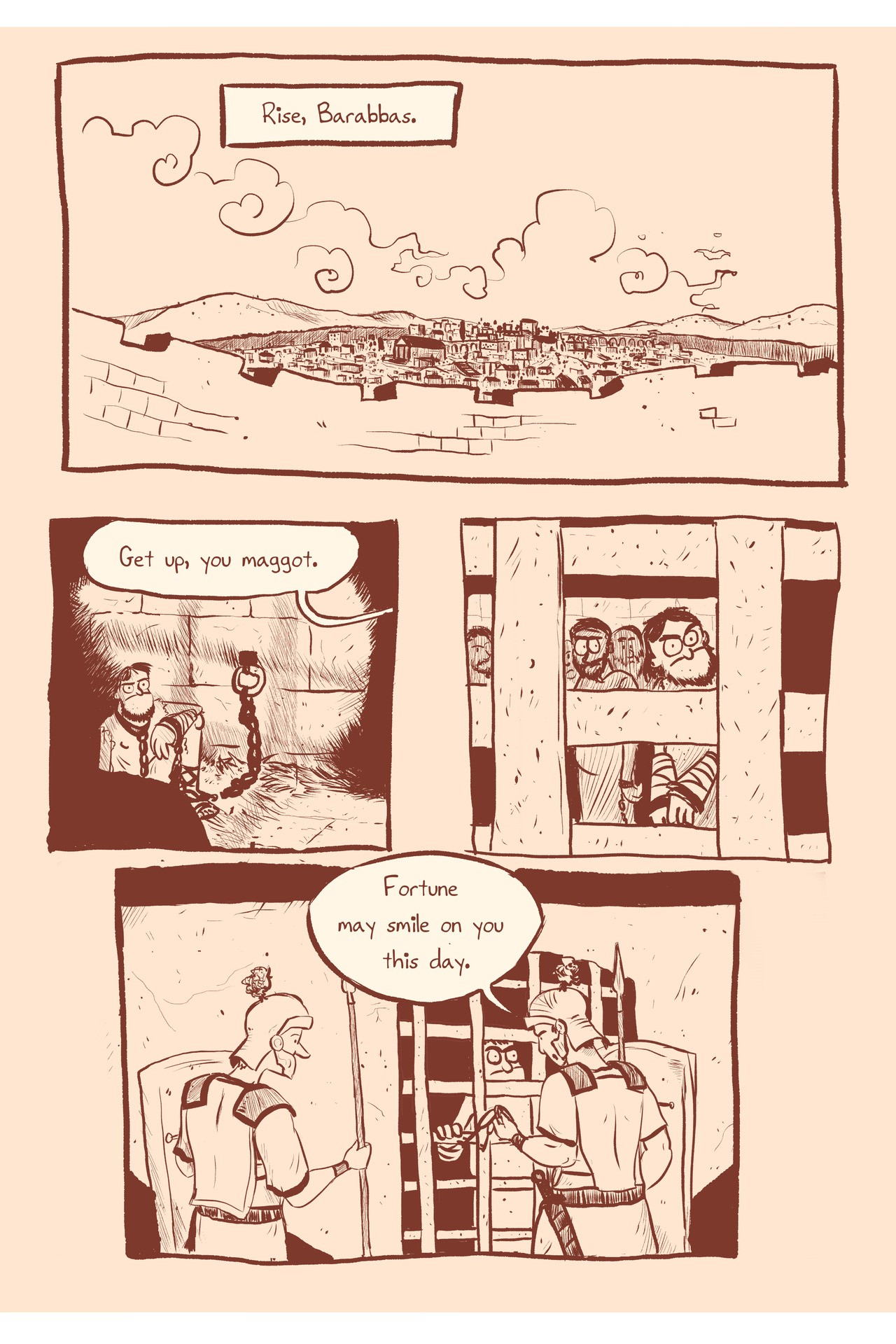
Those Two Geeks Special: Release Barabbas

On the docket this week: Alex chats with Liam McKenna, the creator of Release Barabbas, a webcomic detailing the life of Jesus Barabbas after he was release from Roman captivity in place of Jesus of Nazareth. You can find a sample of the webcomic below, and can find the rest at the link above.

Release barabbus 1.jpg

As always, the Alex and Joe can be found on twitter respectively @karcossa and @jc_hesh if you feel the need to tell them they’re wrong individually, or @those2geeks if you want to yell at them together on twitter or email ItsThose2Geeks@gmail.com.


SPX Has Announced its Graphic Novel Gift Program Recipients

The Small Press Expo (SPX), the preeminent showcase for the exhibition of independent comics, graphic novels, and alternative political cartoons, has announced that the Allegany County Library and the Ruth Enlow Library of Garrett County are the 2018 recipients of the Small Press Expo Library Gift Program.

This program, the first of its kind in the United States, is an outright gift of comics and graphic novels to the libraries as selected by their collections specialists, who this year selected 186 titles comprising 224 individual books.

There was a formal presentation of the books to the libraries by Small Press Expo Graphic Novel Gift Program Director Catherine Fraas on Saturday, August 11.

The books were selected by the libraries from the offerings of publishers Adhouse, Fantagraphics, Top Shelf, Drawn & Quarterly, Cartoon Books, and Koyama Press, all of whom support this program.

Ericka Lugo designed a special bookplate that has been placed in all of the books donated by SPX.

SPX’s Graphic Novel Gift Program is an expansion of the philanthropic and charitable endeavors that are part of its corporate charter, and is in addition to SPX’s annual support to the Comic Book Legal Defense Fund. The targets of this program are public and academic library systems in the Washington, D.C. Metropolitan area as selected by the Small Press Expo.

The goals of this program are:

  • to facilitate the availability of graphic novels to readers of all ages utilizing public and school libraries,
  • to promote learning and literacy through the availability of graphic novels at local libraries, and
  • to provide library systems with additional resources by which they can purchase graphic novels and comics.

SPX will be held Saturday, September 15 from 11am-7pm and Sunday, September 16, 12-6pm at the North Bethesda Marriott Convention Center in North Bethesda, Maryland. Admission is $15 for Saturday, $10 for Sunday, and $20 for both days.

Indie Comics Review Roundup #5: Imagine That!

Welcome to Graphic Policy’s Indie Comics Roundup where we take a look at a handful of indie comics and try to work out just how accessible they are for new readers. Where possible we’ll also be providing  recap of sorts for the relevant story beats up until the issue in question in order to help you figure out if the series is something you’re interested in, assuming we’ve read any part of the story thus far.

Each comic will receive a both a rating of Friendly or Unfriendly as well as a score out of ten. The former is based upon how easy it was for new readers to pick the issues up; expect miniseries or first issues to be rated as friendly by default. For second or third issues, more consideration regarding the comic’s accessibility will be given for the specific issue being read rather than the series overall, but if reading a back issue will help, then that will be mentioned. The score out of ten is Graphic Policy’s typical ten point scale, which is there to help you pick between issues if you only want to check out one or two.

We’d rather feature comics from smaller publishers, but from time to time you may notice an Image, Dark Horse or Dynamite book here. Ultimately it depends on what catches our eye, but we’ll always aim to spotlight lesser known comics.

All comics were provided for review purposes unless otherwise noted.


There’s a few first issues this week, so assume that those comics are all Friendly unless otherwise noted.

It Came Out On A Wednesday #1  (Alterna)  For $2 you get an incredible amount of value in this double sized anthology. This anthology is a lot of fun and well worth looking up. I’d happily pay twice the price for it. Rathing: 8.4

Konunda #1 (Statix Press) Step into the world of fantasy and forget what you thin great comic book art is. A beautifully illustrate book with a story that isn’t too punishing to follow as you’re swept along for near 50-odd pages. If you like your fantasy comics with some mythical beasties, grab this, sit down and enjoy Rating 8

The Last  Siege #1 (Image) Fantasy style comics, or at least those with a sword involved, seem to be the theme of the week – albeit quite unintentionally. Still, Image’s penchant for producing high quality fantasy comics continues, and the scene is set for a true David and Goliath battle in the coming issues while exploring the roles of women in the middle ages. I’m looking forward to the rest of this. Rating: 8.3

Magic Order #1 (Image) A secret society of magicians exists to protect us, but somebody is killing them off one by one. A beyon standard set up, but the comic is writtten with Millar’s usual flare  (though is considerably less gruesome than some of his other work. Far from a bad issue, it’s just not the strogest, either. Rating: 7.8


Indie Comics Review Roundup #4: Superpowered Infections and Demon Fuelled Zombie

Welcome to Graphic Policy’s Indie Comics Roundup where we take a look at a handful of indie comics and try to work out just how accessible they are for new readers. Where possible we’ll also be providing  recap of sorts for the relevant story beats up until the issue in question in order to help you figure out if the series is something you’re interested in, assuming we’ve read any part of the story thus far.

Each comic will receive a both a rating of Friendly or Unfriendly as well as a score out of ten. The former is based upon how easy it was for new readers to pick the issues up; expect miniseries or first issues to be rated as friendly by default. For second or third issues, more consideration regarding the comic’s accessibility will be given for the specific issue being read rather than the series overall, but if reading a back issue will help, then that will be mentioned. The score out of ten is Graphic Policy’s typical ten point scale, which is there to help you pick between issues if you only want to check out one or two.

We’d rather feature comics from smaller publishers, but from time to time you may notice an Image, Dark Horse or Dynamite book here. Ultimately it depends on what catches our eye, but we’ll always aim to spotlight lesser known comics.

All comics were provided for review purposes unless otherwise noted.


Brilliant Trash #6 (Aftershock) Deciding to pick this comic up because of the cover alone, I had no idea what I was getting. That said, the entire issue reads like a flashback or recap designed to bring new readers into the series – and in my case it worked. I want to read more about a world where super powers are a disease. Obviously, this is a Friendly comic.  8.5

Pestilence: Son Of Satan #1 (Aftershock) In a surprise (to me) Aftershock double bill, the new volume of Pestilence, the comic that reimagines the bubonic plague of the 14th century as a zombie outbreak, kicks off and things immediately get worse for the living. Roderick Helms has hung up his sword, but he’ll need it soon enough. A curse heavy comic (not the magical kind) which could bother some, but one that’s a fantastic change of pace from the spandex crowd. A Friendly comic, that doesn’t spoil the first volume. 8.2

Fighting American #4 (Titan) The last issue of a miniseries is never the smartest place to start reading, but I’ve never claimed to be a bright person. That being said, despite this being the conclusion, it is still a surprisingly Friendly comic – assuming you read the recap page and approach it as if it’s a Golden Age hero in modern times. Because that’s exactly what this is. A hugely enjoyable comic with plenty of retro-fun for everyone who wants to take the plunge. 8.5

Brother Nash #1 (Titan) A first issue in a three part miniseries is always Friendly (or should at least hope to be). Thankfully, this one is, and the supernatural tale of a trucker with a past is engaging and well presented. Hunt this down and you won’t regret it. 8.5

Teenage Mutant Ninja Turtles #83 (IDW) Can you pick up a series 83 issues in? Yeah. Kinda. The main thing is that even though I had no idea what was going on when I opened the cover, I could largely follow along fairly seamlessly. Certainly well enough to consider this a Friendly comic. Ultimately my main TMNT knowledge comes from the 90’s cartoon, and so where there is unfamiliarity in the comic it doesn’t help when the characters aren’t the same from an old cartoon to a modern comic. Still, an enjoyable read. 7.8

Valiant High #1 (Valiant) In a standalone four issue miniseries that has no bearing on the main Valiant universe, we get what is essentially Valiant meets Archie. You don’t need to know the characters to enjoy this Friendly comic, but the more you do know Valiant, the more you’ll get out of this.  7


Goblins, Trees And Hope: Talking Farlaine The Goblin With Pug Grumble

Pug Grumble, the pen name for the mysterious creator behind one of the most effortlessly charming series you’ll ever come across, would rather your attention be on his creation rather than himself, which is fine because his creation is wonderful. Farlaine is a book about a goblin shaman desperately searching for a home for his best friend, the tree Ehrenroot. With the sixth book en route very soon, Graphic Policy  recently sat down for a quick chat about the on going creator owned book series.
farlaine banner.pngGraphic Policy: For those who haven’t heard of, or read, Farlaine the Goblin before, can you tell us what it’s about?
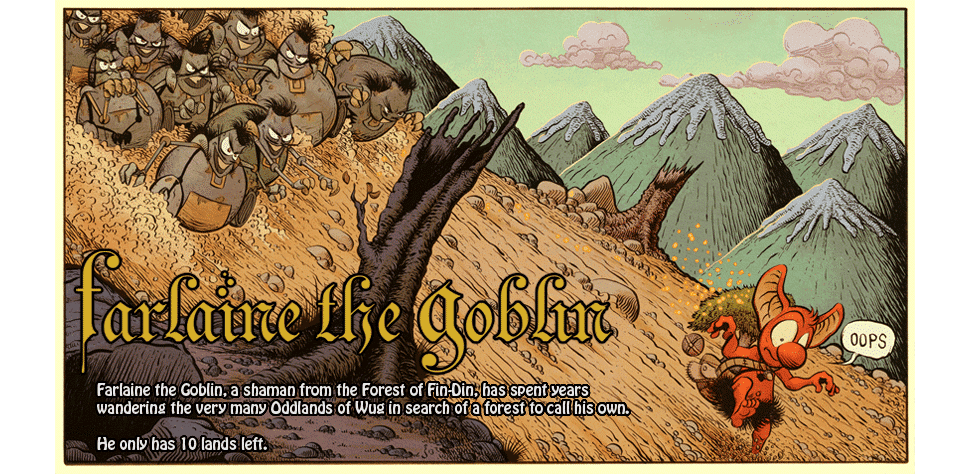
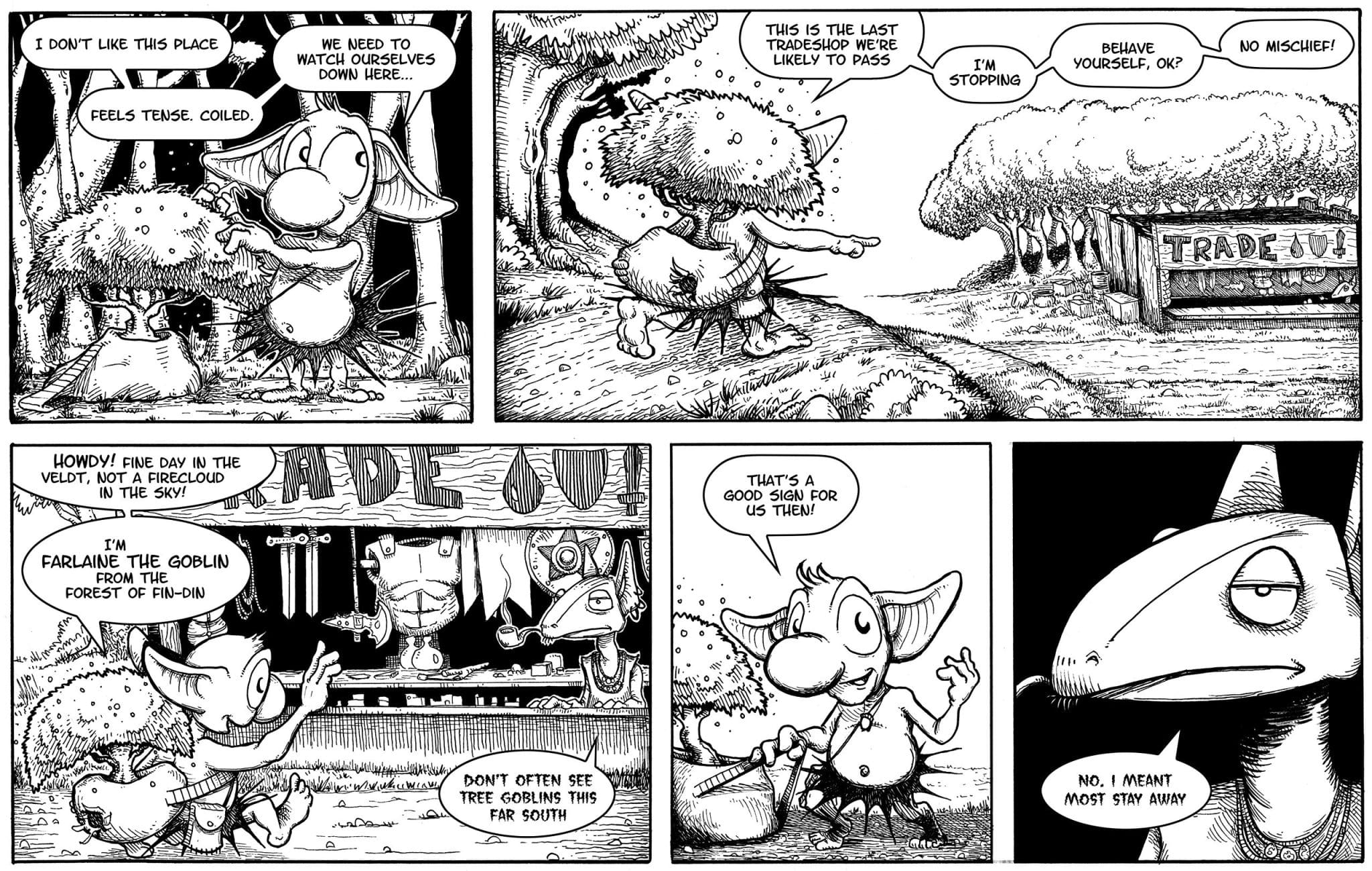
Pug Grumble: Sure! Farlaine the Goblin is a story of a little tree goblin shaman named Farlaine who’s been searching for a forest to call his own for a looong time. He’s been searching for years, has gone through hundreds of lands, and is down to his final 10 lands left to explore. His only companion on this journey is his best tree Ehrenwort, who he carries in a pouch on his back. Ehrenwort is from his parents forest where Farlaine grew up, which means Ehr provides a conduit back home to the magic of that forest. This magic lets him make seeds grow really, really fast!
The series is 7 books long and each book is a self-contained story about one of those lands. And they’re all weird lands! In The Saltlands everything is made of salt, even the people. In The Racelands you need to race everywhere you’re going or get stuck in an invisible box. The Twistlands is full of twisters and tornadoes of every shape and size. The idea being – there’s a reason he hasn’t found his own forest yet!
GP: Where did the idea for the story come from?
PG: It all started with a drawing. I started doodling this big ogre/troll with big horns and a grass skirt and all these skulls and potions on his belt. He was casting a spell and was a very scary looking dude! But I also gave him an empty backpack that I didn’t know what to put in. I did the rest of the drawing first, and while pondering what to put in the backpack it suddenly clicked – a tree! If this guy was a shaman, that’s what he’d carry with him if he went on vacation. He’d take a tree so he could cast spells away from home!
It seemed perfect. I labeled the drawing “shaman from another land”.From there I started to ponder him and draw him more. He just stuck in there, and over the next year or two he became more polished, his personality emerged, and a story started to take shape. Finally, I got to a point where I really wanted to bring this character to life and read his story myself. So I did :)GP: The story has a very all ages feel to it without being overly kid like, which is wonderful. Do you find it more challenging to write in a style that appeals to both young and old kids? 

PG: When I first started writing the series I wrote it entirely for myself. There was no plan to write for any specific audience; I just wrote what I wanted to read.

After I finished the first three volumes and started showing it to people I began hearing the phrase ‘all-ages’ bandied about and realized I’d accidentally written a book that appealed more broadly than I’d guessed. I think I just have a silly view of life that accidentally translated well :)
After I made that discovery I tried to keep it in mind going forward. There were some stories where I might have thrown in a swear word or made something a little more adult, but intentionally toned it back down to avoid crossing the line I’d accidentally set up. I still remember one book where I wrote “helluva”, thinking nothing of it, and had a reviewer complain it wasn’t a kid-friendly word. In my mind I was using a word common enough to be found on a brand of cheese, but to some, it was too adult. I changed that word for subsequent printings and made sure to now read for those kinds of perspectives.
I also tried hard to simplify some of the wording and length, especially after Book 3 where I felt I got too wordy and over-explained things. I tried to use less words, tighten things up, and be ready to break apart panels or add pages if it made for an easier read.
Even now I still overwrite a page or scene and find myself chopping out and rewriting dialogue to keep things within reason. I never want to talk down to kids, but I also don’t want to intimidate them with word balloons :)
farlaine pageGP: Personally, I’d never have considered “helluva” to be a crass word, but then I’m probably less offended by certain words than most. That being said, I think the all ages tag line lends a much purer feeling to the book; I couldn’t imagine the story any other way at this point. How long does it take you to create each issue? Can you talk us through the process?

PG: Yeah, I can’t really fault the original comment too much. If you’re reading the book to a 5 year old it could force a tricky explanation for a parent. And in general, it probably helped send me down a safer path going forward :)

WARNING: Rambling Ahead!

The books have taken me more and more time as I’ve gone, pretty much the opposite of what I was expecting when I began!

When I first started I’d left a job and had some savings and unemployment to last me a year. I had the first book written before I started and had the plot and story well defined for books 2-3, so I had a good sense of where I was going with those first 3. Those 3 books I finished drawing in 9 months, roughly 110 pages of art.

But from there things slowed down dramatically. I had to go back to a desk job and a long commute, so the next year was spent editing the first three books, drawing the covers, pitching to publishers, and finally designing and printing copies of Book 1 in order to submit it to Diamond so I could get in their catalog and into stores.

When Diamond accepted me I then had to do all the publishing work of releasing 3 books, getting reviews, hitting conventions, etc. It was a lot of work to fit around the day job, so by the time I started writing Book 4 it had been a year since I’d finished drawing Book 3.

My goal was always to tell the best stories I could and not focus on a release schedule, so even though I knew it wasn’t great to have huge gaps, I tried to think longterm about the quality of the finished series. In my mind Farlaine had potential as a fairy tale that could appeal to audiences for decades.

Starting with Book 4 the stories weren’t set in stone, which meant a lot more time building the stories out. The process for Books 4-7 has been different from those original 3.

Book 4 I wrote and drew while working a full time job, so it took me more than a year to complete. I realized at that rate it would take me 5 years to finish the series, so I saved up some money and left the job with an eye on finishing Books 5-7 in one run.

Which finally brings me back to your original question – how I work now.

First I collect ideas for months, throwing story ideas, tidbits, lines of dialogue, plot points, world building, and everything else into a bunch of text files in a folder. Once I collect enough ideas and reach critical mass, I start to coalesce them down to a real story. I spend a lot of time on the plotting and writing side of things to try to not do obvious stories or repeat things I’ve already read. My hope is to come up with something a little different that I haven’t read before.

It usually takes me a month or two to write an issue of Farlaine, with my focus mainly on the dialogue and overall plot points and not as much on the visuals.

Once I finish the script I start drawing, but it’s almost like a different part of my brain, so I just print off a page or two at a time and draw what’s on that page. I don’t memorize it or look ahead, letting myself be surprised by things I forgot.

I generally draw one page at a time. For me layouts get boring and lose a lot of their enjoyment and creativity if I plan too far ahead. I prefer surprises and giving ideas the space to grow as I go. I often end up drawing things that weren’t in the script but came to me as I was working. I like that organic aspect a lot.

I also draw really slow. Most guys in comics seem born with a pencil in their hand – I didn’t start drawing until I was 15. So I’m slow and need to figure things out. What I discovered by issue 3 of Farlaine was an approach I stole from David Petersen of Mouse Guard. I started drawing pencil versions of all the characters and angles on separate pieces of paper, then scanning them in and Photoshopping them together with the dialogue onto a template page, which I’d then print out and lightbox. This allowed me to manipulate the sizes I drew characters and move them around to fit the dialogue properly. In that first issue or two you can see a lot of places where the proportions are off, the dialogue is covering art, body parts are randomly arranged or cut off. Most of that was my weak spots showing through:)

So once I started the ‘layout and lightbox’ approach I think the art got a lot better, but also took a lot longer. These days I usually spend one day on all those layout drawings, scanning them in, and printing off that 11×17 rough template. It then takes another day to re-pencil the page, tighten things up, add backgrounds, and finally ink it. I work traditionally with a nib and bottles of ink, so it adds time for ink to dry, pencils to be erased, etc.

From there I scan the finished art back in, do some digital whiteout, and letter the page, before finally printing off the next page of the script and moving on.

In general, I average about 2-3 pages of finished art/week when I’m in a groove. If I get caught up with publishing duties or the rest of life, sometimes that dwindles to a page or less in a week.

Since my stories are now ranging between 40-50 pages each, this means a single volume can take me 6+ months to write and draw, as opposed to those early ones that were cranking along in about 3 months!farlaine page 2.jpg
GP: It sounds like you prefer a very fluid process when creating the comic. Have you ever found that the art can take you in a different direction than the original script?
PG: Yes, for sure. That’s a large part of the reason I try to keep it fluid. Many times I’ve overwritten what can fit on the page and need to consolidate it down, which can lead to creative solutions. Other times I’ve had ideas on one page that completely altered the next few that followed it. I’ve even had a few characters that grew organically out of what I was drawing. A good example would be in the third issue, The Racelands. I didn’t have a lot established for the other race participants in the original script. I knew one was going to be the pirate mushroom and another the timberjack, but little else. As I was drawing the book I really enjoyed drawing the pirate mushroom, so I tried to not only include him more, but tweak part of the end of the story to incorporate him.The fungal end of that story came from that fluid approach. And now he’s popping back up in Book 7, which I’m drawing right now. Originally, he was just a background character for a few pages.
GP: So it’s safe to say that the way you create the comic keeps the essence of Farlaine’s creativity?
PG: Yeah, I think of Farlaine as a fairly creative character, often having to think his way out of situations, and the comic is certainly similar. It’s a lot of writing or drawing yourself into a corner and then having to figure out a way out of it that works and feels authentic to the story and characters. There have been a few times I’ve certainly cornered myself and then spent a month trying to figure out how to get out of it!!

I’m sure there are a lot of parallels between the story and the creation of the book :).


Farlaine
is available for purchase here.

Indie Comics Review Roundup #3: Space Marines And Boarding Schools

Welcome to Graphic Policy’s Indie Comics Roundup where we take a look at a handful of indie comics and try to work out just how accessible they are for new readers. Where possible we’ll also be providing  recap of sorts for the relevant story beats up until the issue in question in order to help you figure out if the series is something you’re interested in, assuming we’ve read any part of the story thus far.

Each comic will receive a both a rating of Friendly or Unfriendly as well as a score out of ten. The former is based upon how easy it was for new readers to pick the issues up; expect miniseries or first issues to be rated as friendly by default. For second or third issues, more consideration regarding the comic’s accessibility will be given for the specific issue being read rather than the series overall, but if reading a back issue will help, then that will be mentioned. The score out of ten is Graphic Policy’s typical ten point scale, which is there to help you pick between issues if you only want to check out one or two.

We’d rather feature comics from smaller publishers, but from time to time you may notice an Image, Dark Horse or Dynamite book here. Ultimately it depends on what catches our eye, but we’ll always aim to spotlight lesser known comics.

All comics were provided for review purposes unless otherwise noted.


Warhammer 40,000: Deathwatch #1 (Titan) The world of Warhammer 40,000 is deep and full of history, characters and technology that simply can’t be explained in a recap page to open a four issue miniseries. Likewise there is no way someone unfamiliar to the franchise can ever hope to catch up just to read this comic, so don’t worry about it; you will feel a little confused, and maybe a touch lost, but never so much that you won’t enjoy this comic. It is just about accessible enough to newcomers to earn a Friendly rating, and it’s also a pretty interesting read to boot. Rating: 7.2

Fence #6 (Boom! Box) Funnily enough, not a comic about fences.  Fence follows a group of boys at a boarding school trying to make the fencing team. One is a prodigy, one is full of raw talent with minimal training, one is a playboy sleeping his way through the team and another is the All American athlete. Each of the characters feel fully realized, and there’s a surprisingly accurate fencing backdrop to the boys competing with each other to make the team. Even six issues in, this is still Friendly. Rating: 8

Relay #1 (Aftershock) The first issue of a new science fiction based series that seems to be positioning the traditional villains, those who assimilate worlds and cultures, as the protagonists. Relay is an interesting beast from the outset, but the comic seems to struggle as it both establishes the universe it is set in, the characters and the plot within the first issue. That said, this is still a series that has a tremendous amount of promise, and is one you really should be reading. Friendly, because it’s the first issue. Rating: 7

Grimm Tales Of Terror Volume 4 #2 (Zenescope) A single issue story in the vein of the classic horror comics of yesteryear, this is by it’s nature a Friendly comic. If you’re into b-movie style horror stories then this’ll be right up your alley. With a knife. Waiting for you…. Rating: 6.8


Indie Comics Review Roundup #2: Fresh Starts

Welcome to Graphic Policy’s Indie Comics Roundup where we take a look at a handful of indie comics and try to work out just how accessible they are for new readers. Where possible we’ll also be providing  recap of sorts for the relevant story beats up until the issue in question in order to help you figure out if the series is something you’re interested in, assuming we’ve read any part of the story thus far.

Each comic will receive a both a rating of Friendly or Unfriendly as well as a score out of ten. The former is based upon how easy it was for new readers to pick the issues up; expect miniseries or first issues to be rated as friendly by default. For second or third issues, more consideration regarding the comic’s accessibility will be given for the specific issue being read rather than the series overall, but if reading a back issue will help, then that will be mentioned. The score out of ten is Graphic Policy’s typical ten point scale, which is there to help you pick between issues if you only want to check out one or two.

We’d rather feature comics from smaller publishers, but from time to time you may notice an Image, Dark Horse or Dynamite book here. Ultimately it depends on what catches our eye, but we’ll always aim to spotlight lesser known comics.

All comics were provided for review purposes unless otherwise noted.


There’s a few first issues this week, so to avoid a repetitive statement at the beginning of each blurb, just assume they’re all Friendly.

A Walk Through Hell #1 (Aftershock) Be prepared for a comic that  has heavy societal undertones and an underlying sense of dread that permeates from each and every page. This issue won’t knock your socks off, but it will bring you back for more – this series promises to be a slow burn into a fantastic story. 8/10

Coda #1 (Boom!)  In a fantasy world where magic has dwindled, there’s a lot of story here, and the pervading feeling that there is a lot more going on than the surface story alludes to. The immortal, yet decaying dragon, the pentacorn, and an odd sense of order within the chaos are just a handful of the reasons to pick this up. It’s a comic with layers that will reward those who have the patience to spend a half an hour or more within the comic’s pages. 8.3/10

Kino #5 (Catalyst Prime) Don’t be fooled by the fifth issue moniker, here. You can pick this Friendly issue about a man trapped within his own mind and enjoy it more than you’d expect. I sure did. 7.6/10

Survival Fetish #1 (Black Mask) An interesting start to a new story, and one that is nothing like I expected. Going into this comic expecting a horror story, I left after a twenty odd pages of expositionary dialogue and plot but nary a traditional horror trope in mind. That said, this is still an uncomfortable read, and one you should at least thin about picking up. 6.8/10

Wasted Space #1 (Vault Comics) Another first issue, another comic that is as Friendly as you’re going to get to start reading a series, but is this a comic you should be reading? Too bloody right it is. An opening that follows a lot of the typical science fiction and fantasy tropes of a man who ha a past and wants to be left alone… and yet it never once feels like a rehash of other stories. A wasted space this certainly isn’t. 8/10


Indie Comics Review Roundup #1: Pirates & Paperboys

Welcome to Graphic Policy’s Indie Comics Roundup where we take a look at a handful of indie comics and try to work out just how accessible they are for new readers. Where possible we’ll also be providing  recap of sorts for the relevant story beats up until the issue in question in order to help you figure out if the series is something you’re interested in, assuming we’ve read any part of the story thus far.

Each comic will receive a both a rating of Friendly or Unfriendly as well as a score out of ten. The former is based upon how easy it was for new readers to pick the issues up; expect miniseries or first issues to be rated as friendly by default. For second or third issues, more consideration regarding the comic’s accessibility will be given for the specific issue being read rather than the series overall, but if reading a back issue will help, then that will be mentioned. The score out of ten is Graphic Policy’s typical ten point scale, which is there to help you pick between issues if you only want to check out one or two.

We’d rather feature comics from smaller publishers, but from time to time you may notice an Image, Dark Horse or Dynamite book here. Ultimately it depends on what catches our eye, but we’ll always aim to spotlight lesser known comics.

All comics were provided for review purposes unless otherwise noted.


The Last Paper Route #2 (Decent Comics) Having read the first issue quite some time ago (which I had picked up at a convention), I’m relatively unfamiliar with the comic. Thankfully, it’s easy to pick up what’s happening in a comic that reads like a classic 80’s action movie. It’s cheesy, over the top and far from subtle read, but The Last Paper Route is very enjoyable. You’ll love this if you want to escape for a few minutes (plus there’s a bonus or two in the last ten pages that ramp up the value for money). A Friendly second issue that is well worth looking up. 7.8

Sea Of Thieves #2 (Titan) Pirates hunting for treasure is the easiest way to sum this up, and assuming you’ve seen Pirates Of The Caribbean  then you’ll be familiar with the madcap craziness on offer here. Although the comic can be read by those who missed the first issue, expect to just go with the flow before you get the gist of what’s going on. Technically a Friendly comic, and it’s not half bad. 6.8

This Is A Taco An illustrated book more than a comic,and some would say it’s a book for kids upon first flicking through it, and they’d not be too wrong. Obviously a Friendly book, this was a very quick and beautifully illustrated read for all ages about a squirrel named Taco. 7.0

Supermansion #1 (Titan Comics) Another Titan published comic, Supermansion is a Friendly yet utterly stupid comic. Hovering the line between funny and offensive, this superhero piss-take isn’t a comic for kids, and depending on your humour preferences it may not be for you. I’m not sure if the comic is trying to cross the line because it thinks its funny, or it is trying to be funny and is accidentally crossing the line. Either way this isn’t anything I’ll be rushing to read again.

Webcomics Weekly: Hyper Epics

Welcome to Graphic Policy’s spotlight on webcomics, where we take a look at one of the many comics available on the web: Webcomics Weekly (you shouldn’t be fooled by the “weekly” part of the title, however, the feature may happen more or less frequently than that). We’re defining webcomics as any comics published online for free consumption by the general public that doesn’t require a  subscription service.

This week we’re taking a look at Hyper Epics, a website that hosts multiple different three page stories. The folks behind the site were kind enough to answer a few questions for us about the webcomic below.

Graphic Policy: In a nutshell, can you tell us what the strip’s about?

Tom Hoover: Hyper Epics is home of the 3 page sagas, where each story is brief yet memorable and has some level of scope (and original music!).  In an age where it often takes several months to tell a complete storyline, we took on the challenge of creating epic tales that are complete and stand on their own in just 3 pages.  Thus, it serves as a destination where readers can come to and be inspired without having to invest their time and money for a prolonged period of time.   

We tackle a number of genres, timeless themes, and sometimes take detours simply for a bit of madcap fun.  

Readers can also expect an experience that is acceptable for nearly all age groups, as we do not promote excessive violence, nudity, or vulgar themes in our stories.  There is enough of this elsewhere and in ample numbers.   

Thomas Tuna: One of the goals of our website that was outlined by Tom Hoover right from the start–and one I heartily embrace–is to simplify the comic-book experience for a whole new generation of comic book enthusiasts. I, perhaps, have a better empathy for the “Golden and Silver Ages” of Comics, simply by being older and having a first-hand appreciation for what it once meant to plunk down a shiny dime (yes, all that four-color magic for just 10 cents!) back in the early ’60s.

Comic book stories were magical then, with the creators striving for a real emotional connection to their readers. We’re doing this again here and now with our three-page Hyper Epics. It’s a real challenge for our writers and artists to tell a compelling story within this framework. But it’s also so rewarding when the job is done right and someone out there enjoys it.  hyper epics sc.PNG

GP: How often do you update?

TH: We typically add new stories 1 to 2 times a week, and we also have other areas of content that we maintain, such as interviews with industry veterans, our Hyperspace column, and more.  This frequency will increase as we add more staff and hopefully some level of funding.

GP: How long have you been producing the strip?

TH: We launched in January of 2018 and have already posted an impressive lineup of diverse and engaging stories since our debut.  The passion in which we have taken this on is evident by the outpouring of creativity we have produced in such a short time.  Our talented artists and composers have really stepped up and are delivering on time and with originality.

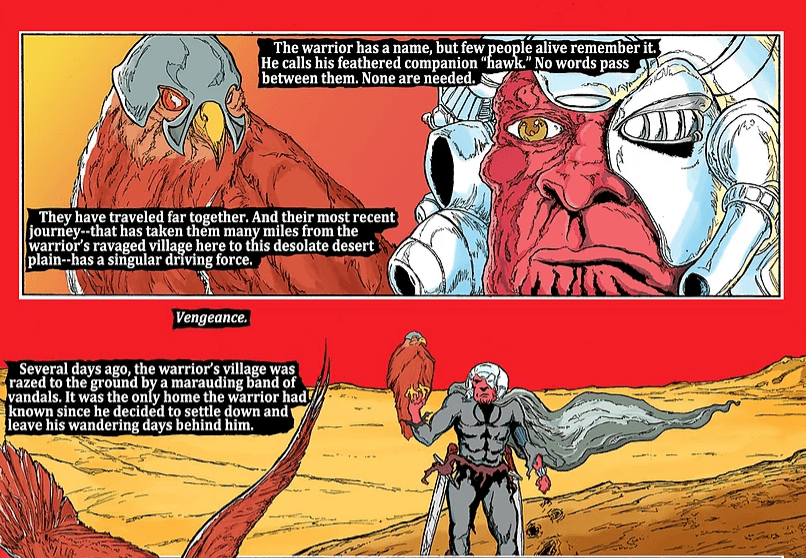
hyper epics hawk.PNG

GP: Where did the idea for the strip come from?

TH: Perhaps I had grown weary with the lack of morality tales in our pop culture.  Or maybe it was that I found many of our entertainment choices were too aggressive and laden with their own agendas.  However it came to be, the spark formed for a destination of adventure and inspiration, where heroes continue their eternal struggle against the evil forces of the universe. I think it is important, especially for younger readers, to see that not everything in our realm is wrapped in shades of gray.   It’s a vision that not everyone may embrace due to what they have grown conditioned to, but for those that do appreciate it, the hard work will be well worth it.  

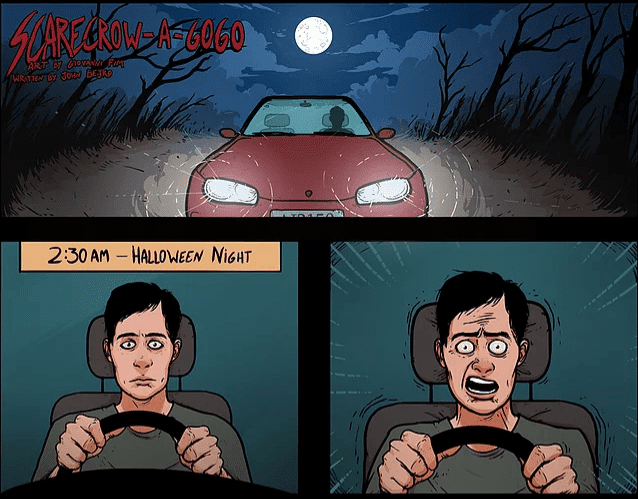
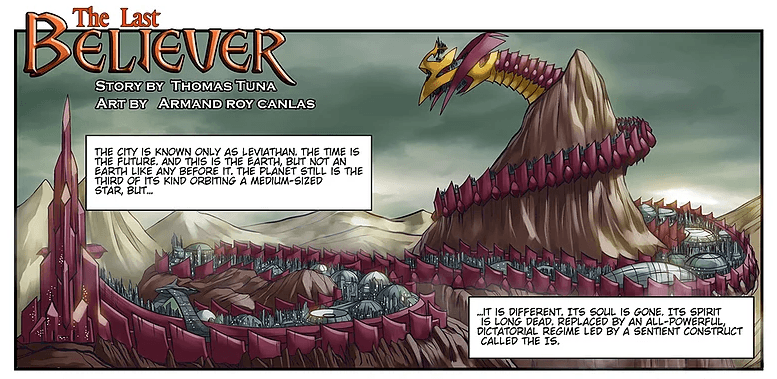
Below you’ll find another example of one of the comics posted to the site, The Last Believer. Click on any of the images in this feature to be taken to the rest of the comic.

hyper epics tb.PNG


If you’d like to have your webcomic featured here, then drop us an email.

« Older Entries Recent Entries »