Tag Archives: comic book

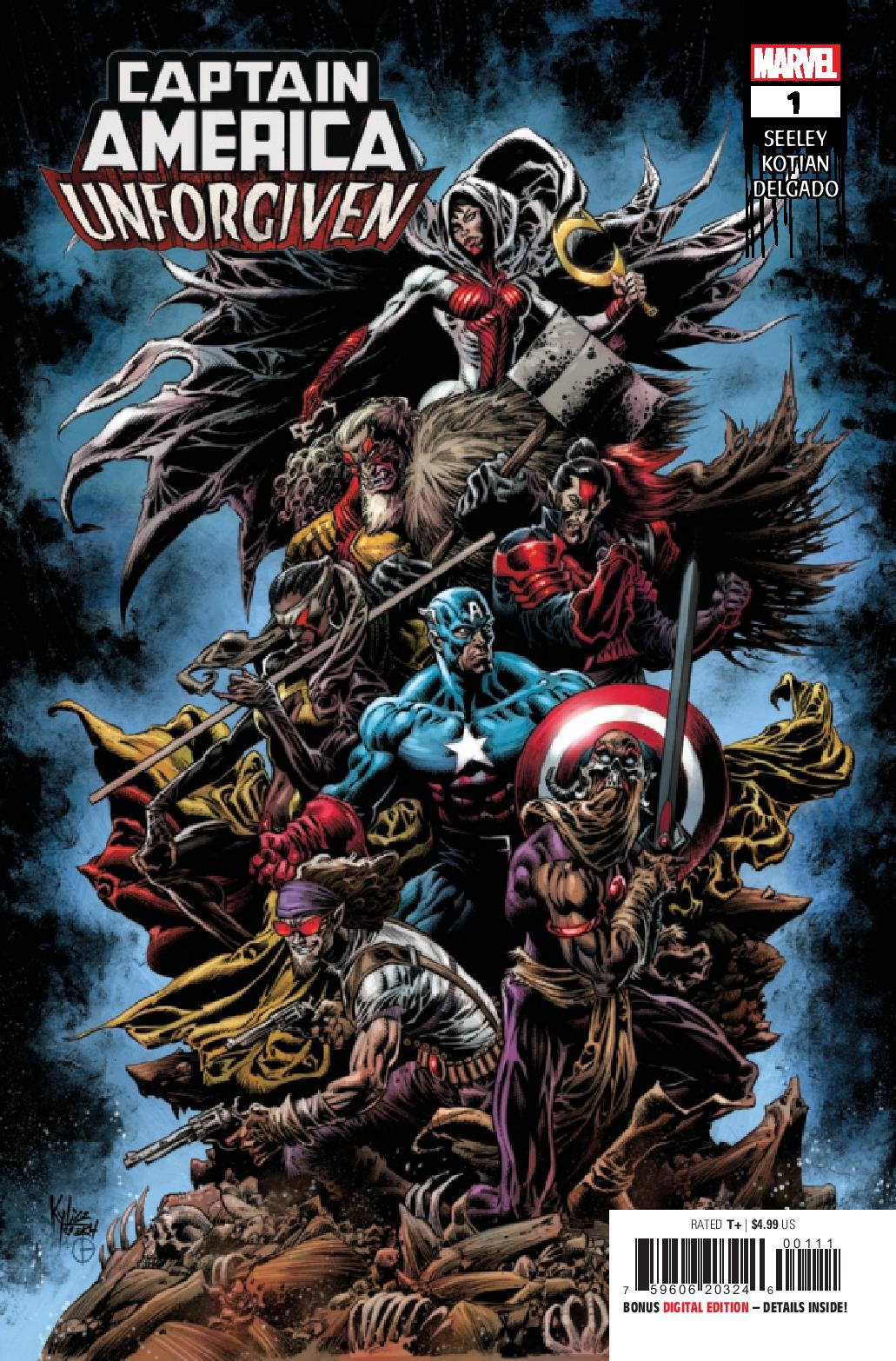
Preview: Captain America Unforgiven #1

Captain America Unforgiven #1

(W) Tim Seeley (A) Sid Kotian (CA) Kyle Hotz
Rated T+
In Shops: Apr 19, 2023
SRP: $4.99

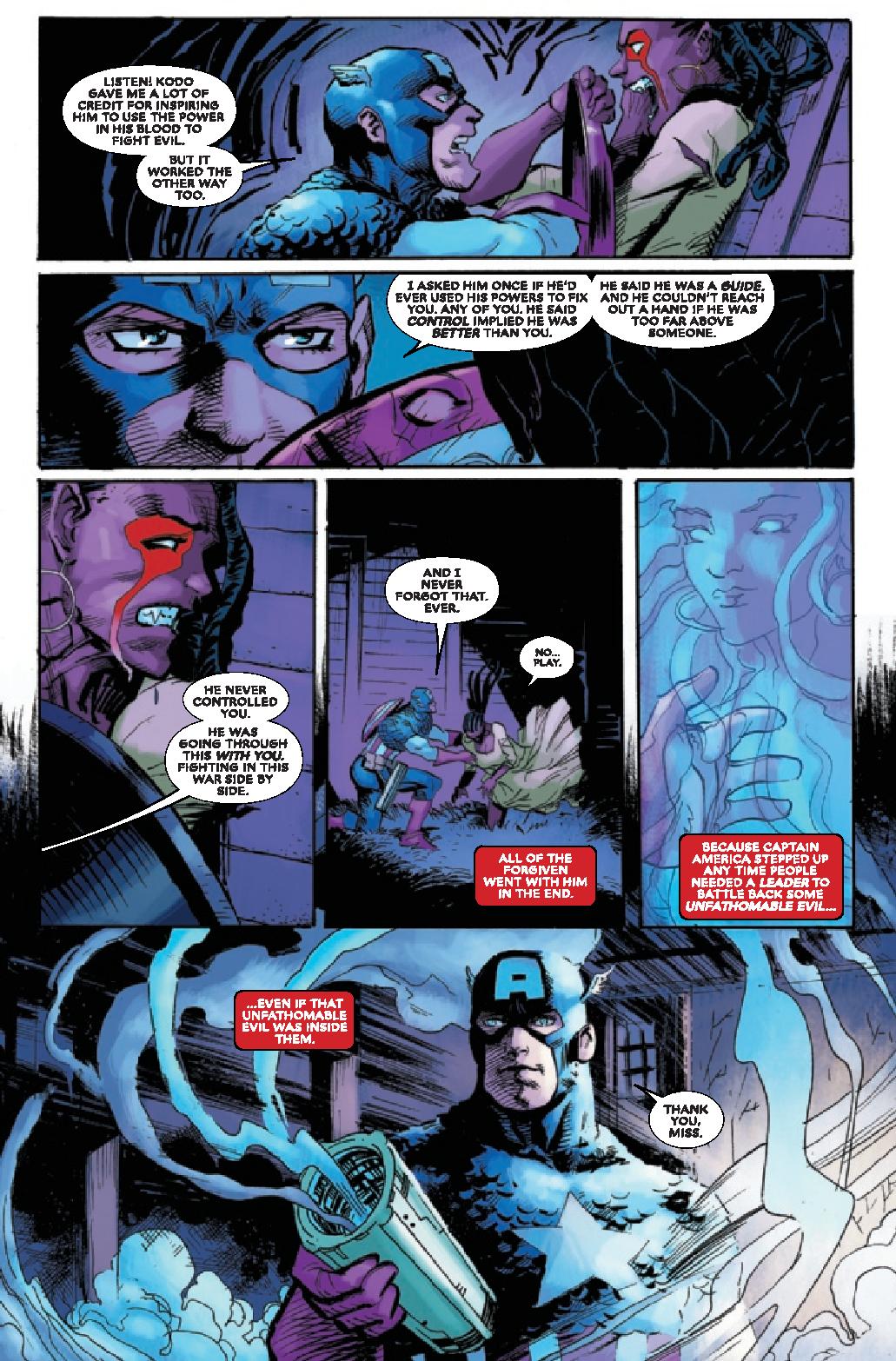
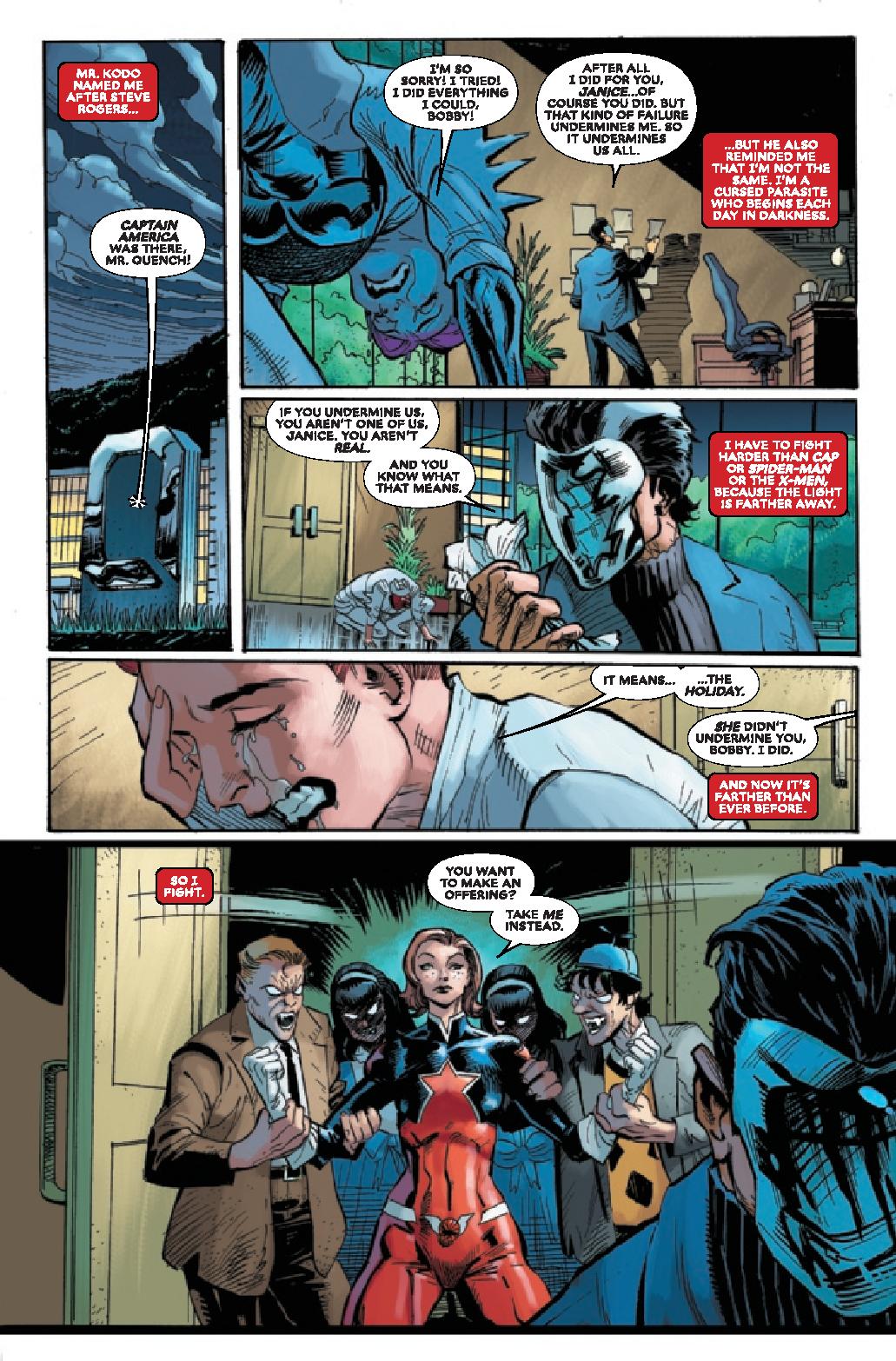
CAPTAIN AMERICA: VAMPIRE HUNTER?
The FORGIVEN have lost their way – defeat after defeat has made them bitter and bloodthirsty… and they’re starting to like it!
Can CAPTAIN AMERICA bring them back into the light? Or will they give in to their darker natures?
Witness the thrilling conclusion to the UNFORGIVEN saga-if you dare!

Captain America Unforgiven #1

Preview: Warlock: Rebirth #1 (of 5)

Warlock: Rebirth #1 (of 5)

(W) Ron Marz (A/CA) Ron Lim
Rated T+
In Shops: Apr 19, 2023
SRP: $3.99

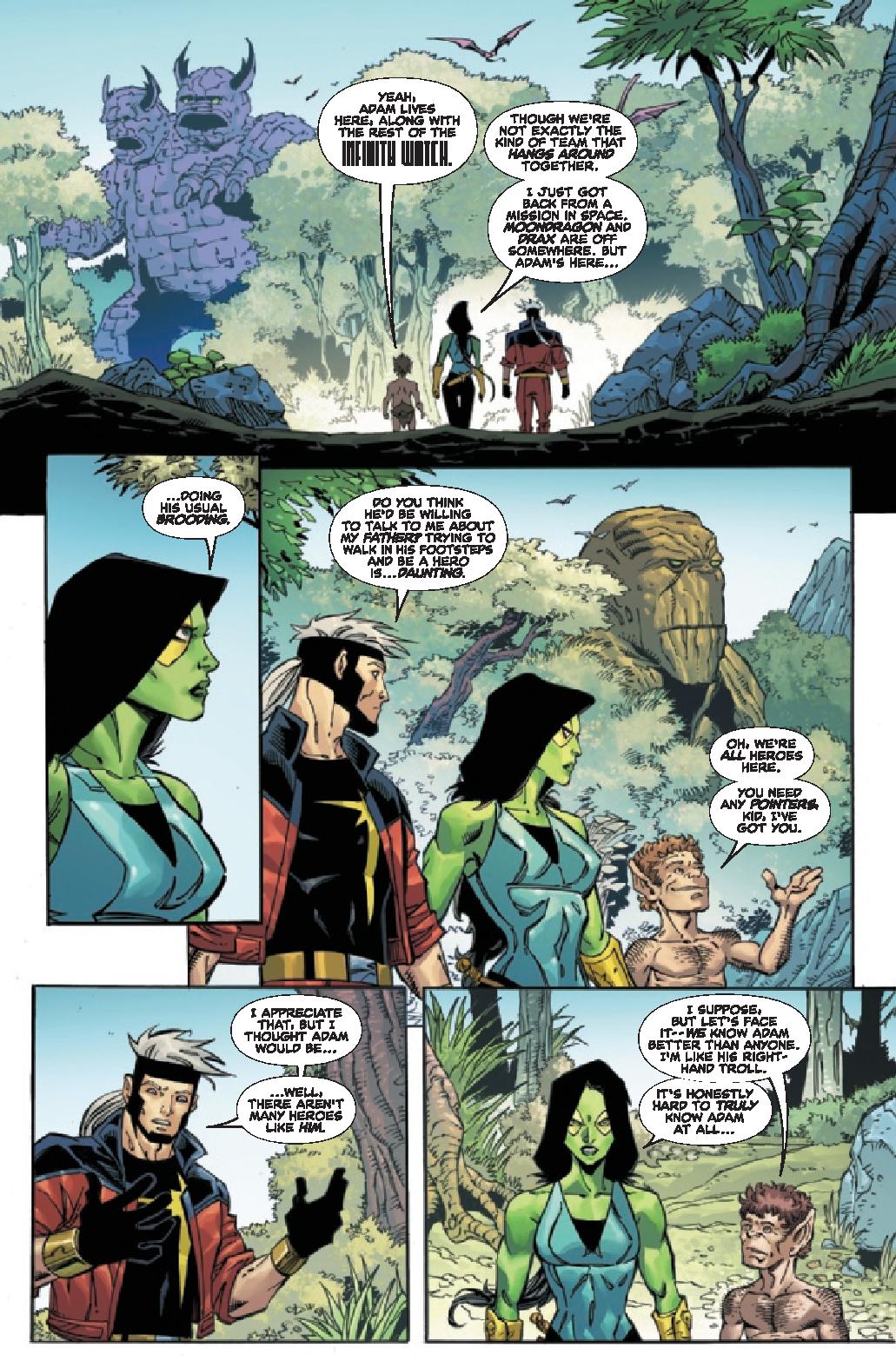
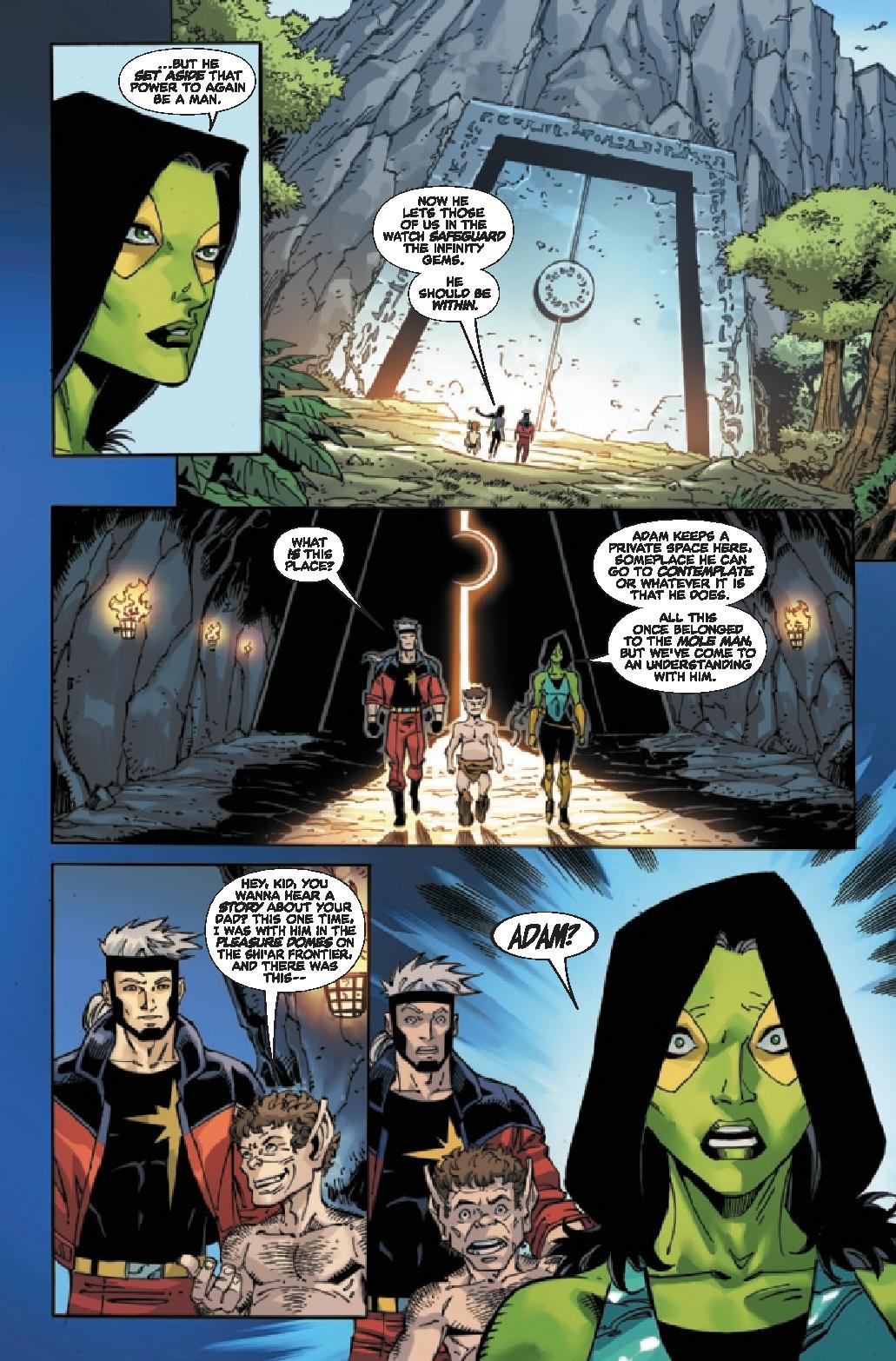
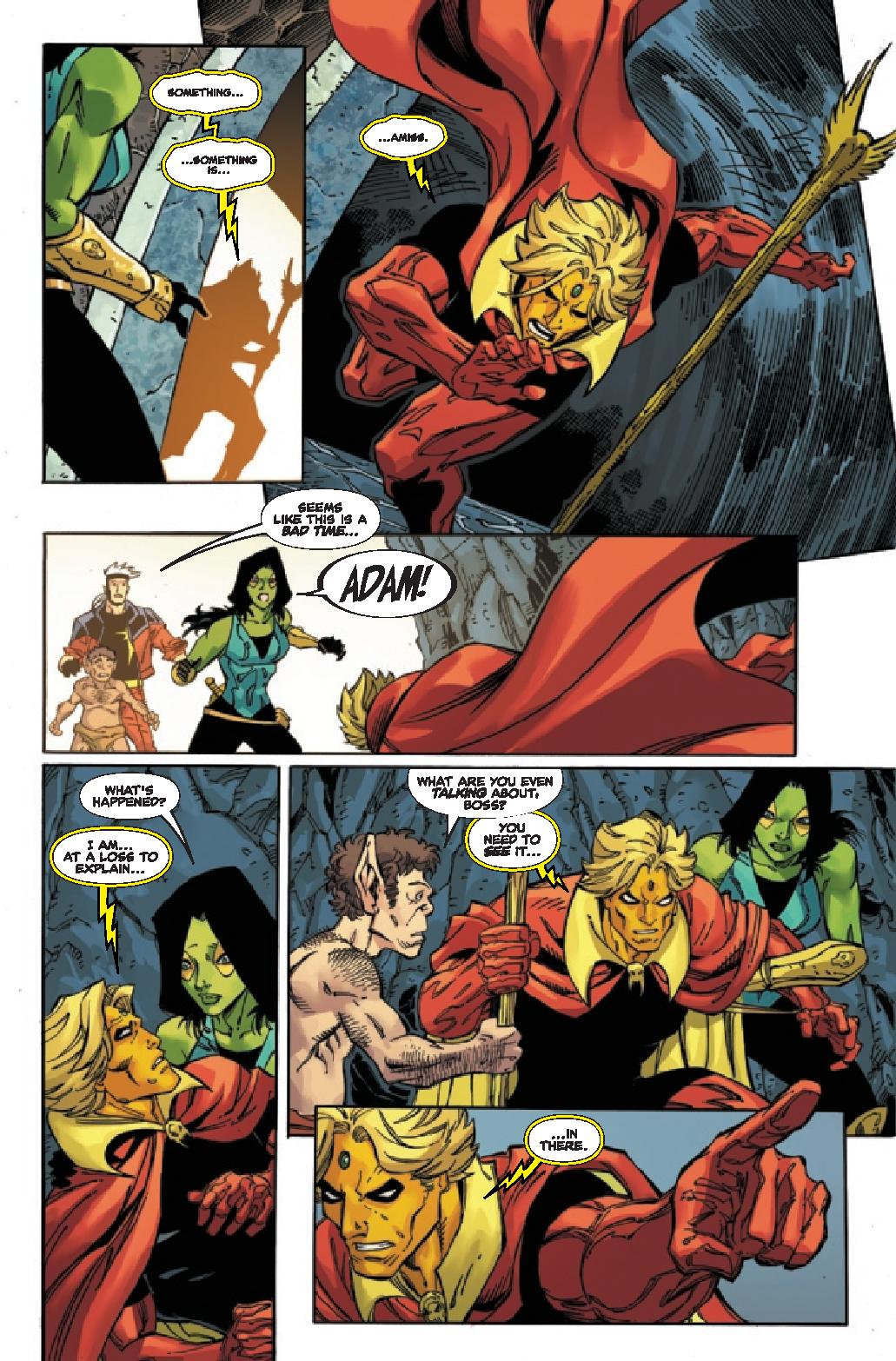
Adam Warlock was created to be the perfect human specimen. Since then, Adam has gone on to be a cosmic savior, defending the galaxy from the likes of Thanos, the Universal Church of Truth and the Magus. But what will happen when the next evolution of Warlock emerges? Someone who is stronger, faster and smarter than Adam? Don’t miss this untold story of Adam Warlock and the Infinity Watch as Ron Marz and Ron Lim (SILVER SURFER: REBIRTH) introduce a new character that will forever impact Warlock’s legacy!

Warlock Rebirth #1 (of 5)

Underrated: Voracious: Appetite For Destruction

This is a column that focuses on something or some things from the comic book sphere of influence that may not get the credit and recognition it deserves. Whether that’s a list of comic book movies, ongoing comics, or a set of stories featuring a certain character. The columns may take the form of a bullet pointed list, or a slightly longer thinkpiece – there’s really no formula for this other than whether the things being covered are Underrated in some way. This week: Voracious: Feeding Time.


Markisan Naso, Jason Muhr and Andrei Tabucaru have a new comic coming out in 2021, By The Horns. Because of the fact that these three have created one of my all time favourite series, I’m going to revisit the three volumes over the next couple of months. You can find the first column on Diners, Dinosaurs & Dives here, and the second on Feeding Time here.

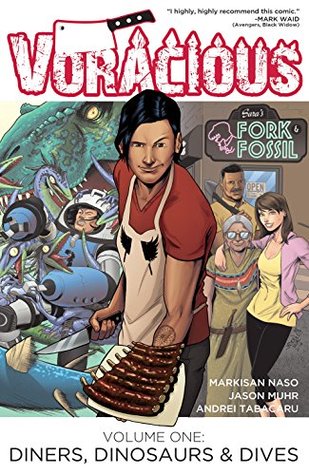
Published by Action Lab, Voracious: Appetite for Destruction is written by Markisan Naso and drawn and lettered by Jason Muhr, with the co-creators being joined by colourist Andrei Tabucaru. The series can usually grab your attention with the shortest of descriptions: “time travelling chef makes dinosaur sandwiches.”

It sounds awesome, right? Well, that’s because it is. But there’s a lot more to the series, including dinosaur cops, giant monsters and a strangely relatable dilemma throughout the series.

The first trade introduced the concept of time travel and dinosaur hunting, the second volume introduced us to dinosaur cops and an entirely new world as we learn that our hero wasn’t time travelling but hopping dimensions. The third brings everything together as we add a giant flying monster into the mix as the story hurtles to a remarkable conclusion.

Again, it sounds like it shouldn’t work as a story progression, but the comic never feels as though it’s out of hand; Markisan Naso has an excellent grasp on pacing and weaving the tale through some genuinely heart warming and wrenching scenes that continuously serve to keep the more science fiction aspects of the story feeling as though they’re perfectly natural occurrences.

Whereas the last trade effectively established the time travelling dimension hopping chef Nate as the villain in the story, Naso never quite lets you dislike the character; his action were and remain entirely sympathetic, and his desire to do the right thing even as he acknowledges his mistakes echoes across the page. Of course, the right thing in this case is stopping a significantly enlarged dinosaur as it rampages through Nate’s hometown of Black Fossil, a small desert town with a single cop who just happens to hold a massive dislike for our hero. Familial ties are a massive part of the entire story, but especially volume three as the shit hits the fan in ever increasing ways you see certain characters’ bonds deepen as they try not to fall apart.

I’ve yet to mention the artwork; Jason Muhr and Andrei Tabucaru step up their game from the last volume, and there are some great silent panels as Naso literally lets the pictures tell a thousand words in conversation and character development. Although the high octane scenes are brilliant, it’s the subtle moments when the art shines brightest; the gradual fading of Gus’ memories, the pastel infused flashbacks and those previously mentioned silent conversations help elevate this volume into must read territory.

Voracious is one of the few series where I own both the floppy issues and the trades as, like I said in the last two columns:

“I put my money where my mouth is because Voracious is a wonderful breath of fresh air in an industry that has been choking on relaunches and rehashes; the five issues that make up Feeding Time are some of the highest scored comics that I have reviewed for Graphic Policy.

If you’re tired of reading about superheroes fighting each other and you want a story to take you across the emotional spectrum without the use of glowing rings then you need look no further. While the comic is about a time traveling, dinosaur hunting chef, it’s also a powerful look into what makes us who we are and how. It’s a story about mistakes and loss, and most importantly coping with those things.

If you want more Voracious, then you can check out the episode of GP Radio where we talked all about the dinosaur sandwiches with both Markisan Naso and Jason Muhr. The new book, by the same team, will be launching February 28th.


Unless the comics industry ceases to exist this week, Underrated will return next week.

Underrated: Voracious: Feeding Time

This is a column that focuses on something or some things from the comic book sphere of influence that may not get the credit and recognition it deserves. Whether that’s a list of comic book movies, ongoing comics, or a set of stories featuring a certain character. The columns may take the form of a bullet pointed list, or a slightly longer thinkpiece – there’s really no formula for this other than whether the things being covered are Underrated in some way. This week: Voracious: Feeding Time.


Markisan Naso, Jason Muhr and Andrei Tabucaru have a new comic coming out in 2021, By The Horns. Because of the fact that these three have created one of my all time favourite series, I’m going to revisit the three volumes over the next couple of months. You can find the first column on Diners, Dinosaurs & Dives here.

Published by Action Lab, Voracious: Feeding Time is written by Markisan Naso and drawn and lettered by Jason Muhr, with the co-creators being joined by colourist Andrei Tabucaru. The first volume can usually grab your attention with the shortest of descriptions: “time travelling chef makes dinosaur sandwiches.”

It sounds awesome, right? Well, that’s because it is. But it’s also so much more than just that elevator pitch. The second volume is better than the first, but it also takes a left turn when the dinosaur cops Owen and Gus are introduced. You see while Nate may have been travelling back in time to hunt dinosaurs, our assumption was always that they’d be wiped out by an asteroid so no biggie, right? Only Nate hadn’t just been bouncing back in time, but rather into an alternate dimension/timeline where dinosaurs would evolve into intelligent beings.

As you can imagine, hunting the dinosaurs that would eventually evolve is having a disastrous effect on the future of that world as people disappear and are forgotten as their ancestors are turned into burgers and steaks.

It’s a stunning reversal in the story when you realize that Nate, the sympathetic lead of the first volume is also an accidentally diabolical villain in this volume. Or he would be if Naso wasn’t able to continue weaving a tale where you want Gus and Owen to stop the man responsible for Gus’ wife’s disappearance but you also want to make sure that Nate’s business doesn’t go under.

Voracious: Feeding Time has one of my favourite comics within it (issue three) – the entire volume is brilliant, but it certainly peaks around the third issue with the combination of art and writing reaching a height that Voracious hadn’t yet seen. This was the issue when I realized the creative team were destined to write some fantastic comics together. Voracious: Feeding Time is an absolute joy to explore as we witness the series transition from the first volume’s fun to a deep treatise about memory and the importance of cherishing those in your life.

Voracious is one of the few series where I own both the floppy issues and the trades as, like I said in the last column:

“I put my money where my mouth is because Voracious is a wonderful breath of fresh air in an industry that has been choking on relaunches and rehashes; the five issues that make up Feeding Time are some of the highest scored comics that I have reviewed for Graphic Policy.

If you’re tired of reading about superheroes fighting each other and you want a story to take you across the emotional spectrum without the use of glowing rings then you need look no further. While the comic is about a time traveling, dinosaur hunting chef, it’s also a powerful look into what makes us who we are and how. It’s a story about mistakes and loss, and most importantly coping with those things.

If you want more Voracious, then you can check out the episode of GP Radio where we talked all about the dinosaur sandwiches with both Markisan Naso and Jason Muhr. The new book, by the same team, will be launching February 28th.


Unless the comics industry ceases to exist this week, Underrated will return next week.

Underrated: Voracious: Diners, Dinosaurs & Dives

This is a column that focuses on something or some things from the comic book sphere of influence that may not get the credit and recognition it deserves. Whether that’s a list of comic book movies, ongoing comics, or a set of stories featuring a certain character. The columns may take the form of a bullet pointed list, or a slightly longer thinkpiece – there’s really no formula for this other than whether the things being covered are Underrated in some way. This week: Voracious: Diners, Dinosaurs & Dives.


Markisan Naso, Jason Muhr and Andrei Tabucaru have a new comic coming out in 2021, By The Horns. Because of the fact that these three have created one of my all time favourite series, I’m going to revisit the three volumes over the next couple of months starting with the one that kicked it all off: Diners, Dinosaurs & Dives.

This is an older column from 2017, but seeing as how I stand by what I wrote then, I’m rerunning it.

This week I wanted to take a look at a series that I think epitomizes what this column is about: a great comic book series or story that too few people have read. Published by Action Lab, Voracious is written by Markisan Naso and drawn by Jason Muhr, with the co-creators being joined by colourist Andrei Tabucaru, and can usually grab your attention with the shortest of descriptions: “time travelling chef makes dinosaur sandwiches.”

It sounds awesome, right? Well, that’s because it is.

In an ideal world, that’s really all you would need to rush out and buy the two trade paper back collections (Diners, Dinosaurs & Dives and Feeding Time), but it can be tough to buy two trades wholly on those words – I get that. I really do. Look, it’s no secret that Voracious is one of my favourite series to come out in the last couple of years (you can find the reviews for most of the comics in the two miniseries under this search),  and it’s one of the few that I’ll buy in floppy form after reading the review copies – and it’s the only one that I also buy the TPBs as well.

You see, I put my money where my mouth is because Voracious is a wonderful breath of fresh air in an industry that has been choking on relaunches and rehashes; the five issues that make up Feeding Time are some of the highest scored comics that I have reviewed for Graphic Policy. Voracious does have an awesome elevator pitch, but that’s not what draws me into the series (though it certainly helped).

After only nine comics (technically ten, but the first issue was a double sized comic) Markisan Naso has become one of Those writers who has earned my complete and utter trust; I will probably buy anything that he puts out from this point on. Aside from having an excellent music taste, Naso has an ability to give a unique voice to his characters that when combined with Jason Muhr’s artistic ability allows you to understand all you need to know about a character within a page or two at most. Yes, there are deeper layers to the people you’re watching navigate their lives on the page, and they’re expertly revealed as the series progresses in a way that you’re never really subjected to an-out-of-left-field moment that takes you out of the story because of a character’s actions because of how well developed they are; you won’t be shocked at the actions of the people in the comic because it all seems so in character for them once you understand their motivations.

As with any well written story featuring time travel you hope the visuals measure up to the intricacies of the story, and oh boy do they ever.Voracious_02-8

Jason Muhr is a brilliant visual story teller; there are so many brilliant double page spreads where his talents shine, and yet some of my favourite moments are the ones where Muhr focuses in on the emotions playing across the face of the character he is drawing; obviously I want to avoid significant spoilers so I’m not showing you as many pages from later issues, which is a disservice to both you and Muhr because as the series progressed he really found his groove.

If you’re tired of reading about superheroes fighting each other and you want a story to take you across the emotional spectrum without the use of glowing rings then you need look no further. While the comic is about a time traveling, dinosaur hunting chef, it’s also a powerful look into what makes us who we are and how. It’s a story about mistakes and loss, and most importantly coping with those things.

Voracious is the best comic you’ve never read, so change that. I haven’t heard a singe person I’ve made read the book complain in anyway. This story is what comics are all about; a masterpiece of visual story telling that couldn’t be told any other way even half as effectively as it is in comic form.

Now, excuse me while I go and read both trades again.

If you want more Voracious, then you can check out the episode of GP Radio where we talked all about the dinosaur sandwiches with both Markisan Naso and Jason Muhr.


Unless the comics industry ceases to exist this week, Underrated will return next week.

Regarding the Matter of Oswald’s Body turns the JFK conspiracy into a neo-Western

Regarding Oswald's Body
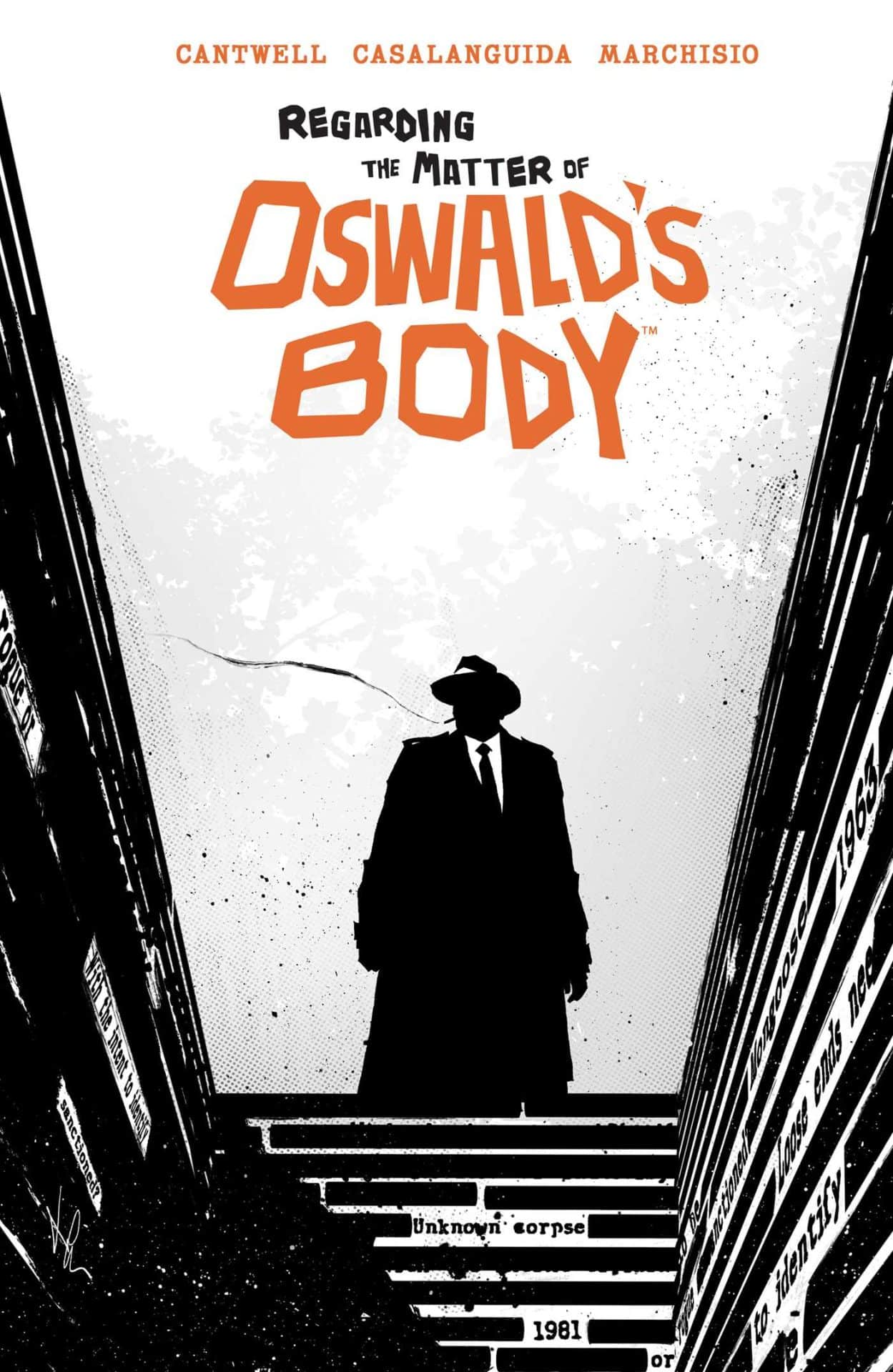
Regarding the Matter of Oswald’s Body #1, cover

The JFK assassination holds a very strange place in conspiracy theory history. It’s perhaps one of the most documented cases of its kind, a lot of it owed to the official story that came out of the Warren Commission, the group responsible for investigating the killing of the President on November 22nd, 1963. The commission’s conclusion placed the blame entirely on a single individual, a man named Lee Harvey Oswald. He was a US marine that had at one point defected to the Soviet Union and that, according to his wife Marina, had serious delusions of grandeur. The report couldn’t pin down the motive behind the shooting, though. For the express purposes of the official story, Oswald took that information to the grave.

Christopher Cantwell and Luca Casalanguida’s comic Regarding the Matter of Oswald’s Body exhumes Oswald’s body, quite literally, to question that narrative and entertain other possible versions of the truth to try and make sense of the absurdity behind the assassination of John F. Kennedy. It goes the way of the neo-Western to do so, a mix of Western genre conventions and noir beats with arthouse sensibilities sprinkled throughout (though this last ingredient is less present in Cantwell and Casalanguida’s comic).

The comic follows a makeshift posse composed of a bank robber, a car thief, a Civil Rights protester, and a failed G-man put together by the combined element of the mafia and a secret government operative that tasks them with kidnapping a man that is the spitting image of Lee Harvey Oswald.

It’s immediately apparent that, for readers who possess at least a passing knowledge of the conspiracy, the task represents a crucial piece in the assassination’s design and that the group of archetypal losers chosen for it are going to play a part that might shorten their life expectancy considerably. Of course, Oswald is a nobody in this part of the story, so the posse underestimates the mission’s importance by thinking they’re just working towards a generous retirement plant.

Regarding Oswald's
Regarding the Matter of Oswald’s Body

While the story is accessible, though it doesn’t make any promises to hold the reader’s hand, those who’ve seen a documentary or two on the assassination will catch on quicker to the mysteries of Oswald’s place in it. I’d even suggest watching Oliver Stone’s JFK (1991) to get a primer on the conspiracy and all the theories that surround it, especially on the enigma of Oswald’s multiple sightings in gun ranges all over the US and even Mexico within impossible timeframes. It’s a fascinating story.

What sets Cantwell and Casalanguida’s comic apart from the countless books, movies, and even video games that deal in JFK’s killing in Dallas, at Dealy Plaza to be exact, is how expertly it adapts Western/cowboy movie elements to that history without sacrificing the highly unsettling aspects of a hushed political assassination in the process.

The haphazard group of criminals that gets forced into the giant conspiracy in Regarding the Matter of Oswald’s Body is burdened by the same moral complications of countless other cowboy characters that feature in American Westerns. They are guided by the promise of financial security to last them a lifetime, they seem hardened but are then unsure of the ethics behind the tasks they’ve been given, and then they question their actions in the grander scheme to reach a conclusion that might end in the kind of bloodshed that’s predicated on the principle of “doing the right thing.”

Without spoiling too much, the story essentially becomes an examination of flawed but regular people who go up against certain interests knowing their chances of success were already low from the moment they accepted the job. The noir elements come up in Cantwell and Casalanguida’s decision to shroud the main characters under the veil of secrecy, to the point where they’re seen as cogs in a machine much bigger and important than just the four of them. They the unlucky victims of history, obscure footnotes that’ll only be relevant to a very select few that already didn’t care much about them to begin with.

Regarding Oswald's
Regarding the Matter of Oswald’s Body

Then comes the matter of Oswald’s actual body, the one that was buried in Shannon Rose Hill Cemetery under a lonely grave marker adorned with his last name and nothing else. Just who is buried there if not the real Oswald? This question might as well be same one made about the bird statue’s value in The Maltese Falcon (1941) or what was inside the case that John Travolta and Samuel Jackson were after in Pulp Fiction (1994). In essence, Oswald’s corpse is the forbidden object that often becomes the source of everyone’s troubles and misfortunes once they’ve been hired to retrieve it.

The combination of all these elements result in a truly absurd and compelling piece of storytelling that puts proverbial cowboys in an environment where shadow agencies deceive common criminals into committing national tragedies. The posse at the center of Regarding the Matter of Oswald’s Body, though, doesn’t fight a greedy landowner or a dirty politician. They instead fight a corrupt system hoping to make a dent in it rather than tearing it all down. They know not to deceive themselves with the prospect of a happy ending. In the end, and to Cantwell and Casalanguida’s credit, it was a matter of placing cowboy-like criminals in front of people they’ve been all too familiar with: bad men with bad ideas and the means to execute them.

Review: Playthings #1

Playthings #1

Scout Comics is becoming a legitimate voice in the field of horror comics, and Playthings #1 is shaping up to be another great example of what the publisher is capable of. The new series, written by Jon Clark and illustrated by Travis Williamson (the team behind the amazing Black Friday), finds its scares in the realities of a broken family with shared custody problems. The mother figure ends up being the target of this story’s haunting, but the first issue is bizarre enough that it keeps things unpredictable. This is a good thing.

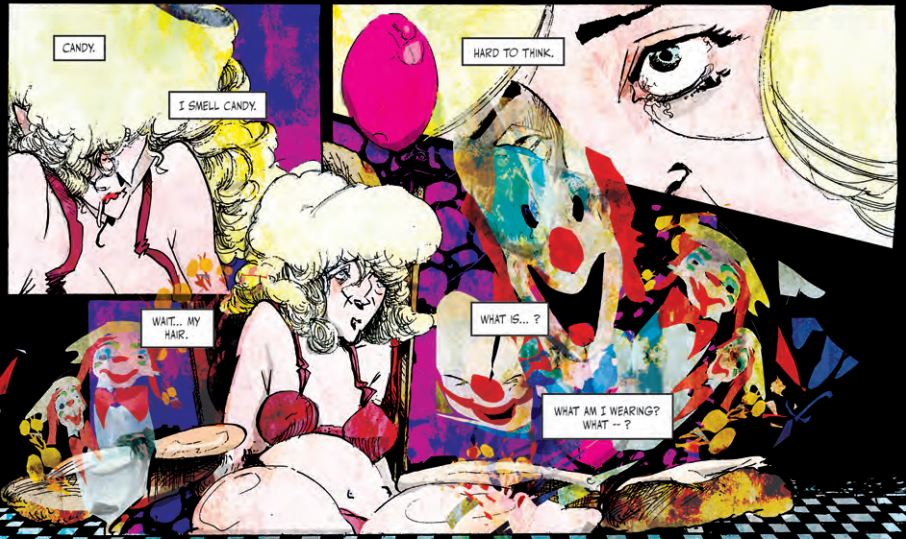
Playthings opens with bright, poppy colors juxtaposed with inky blacks and dark shades. Clown faces huddle around a woman tied to a chair, her hands (or something resembling hands) bound in licorice. As the woman surveys the room she’s in, a kind of anti-funhouse explodes around her. The woman realizes she’s somewhere that’s not entirely within the realm of reason, a place with a child-like sensibility and a whole lot of violence hanging over it.

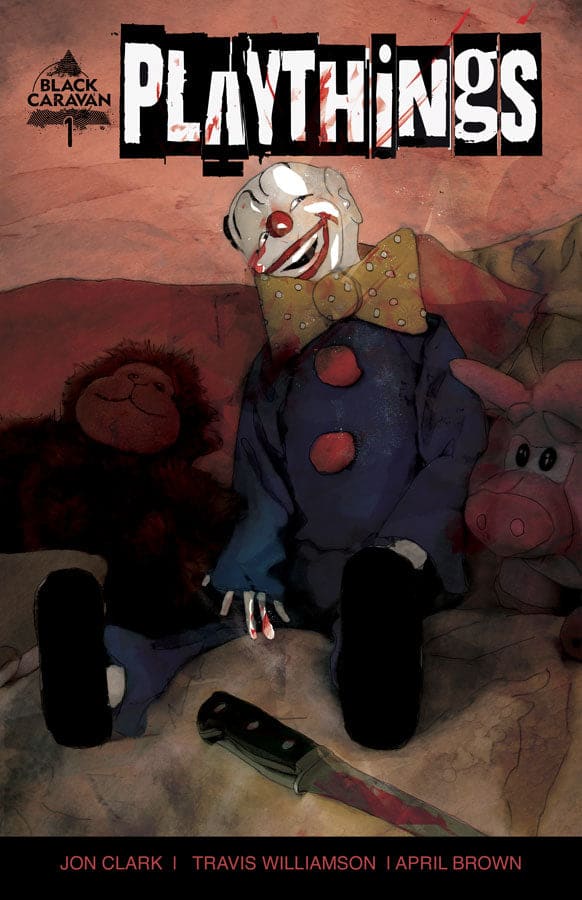
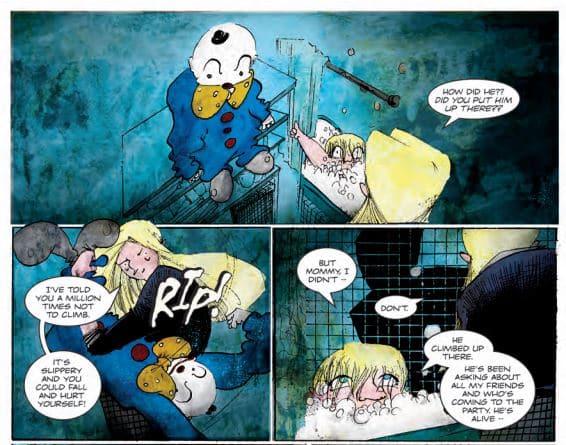
The woman is revealed to be the mother of a small girl and it is made apparent quite quickly that she has a very strained relationship with her ex-husband. The girl’s birthday is coming up and a strange box has appeared out of thin air with a creepy clown doll inside it. As can be expected with anything clown-related, chaos unfolds in relentless fashion.

Playthings #1

Clark and Williamson let the readers know that whatever’s coming after the clown is out of the box is going to be intricately disturbing. The setting and the characters all feel as if ripped straight out of a dark fairy tale, of the kind early Vertigo comics were known for. The story has a kind of 1990’s weird fiction vibe to it, especially in how it displays familial dysfunction early in the story to then transition into more terrifying things. It works well and it signals a very focused set of ideas that the creators are eager to get to as quickly as possible.

Williamson’s art style is perfect for the type of story Clark scripted out. It often reminds of Sam Keith’s own takes on the dark fairy tale aesthetic while also offering enough variation to make it its own. Clark also colors the comic and he adds a notable layer of story through his chosen color palette. Both creators showcase an appreciation for loud and discomforting imagery in Playthings and it makes the horrors they conjure up leave an impression.

The decision to go for a dark fairy tale-style of storytelling allows Clark and Williamson to keep their metaphors and messages at the fore. For Playthings, the focus is on divorce and the hells it can create when there’s a child involved. The mother, for instance, is presented as a tightly wound and angry person that lets her emotions spill unto her innocent kid. The trials of being a single parent are on full display and the haunting the toy clown is intent on making the mother sit through looks to be aimed at turning the scenario into a cautionary tale, the kind fairy tales are well-known for.

Playthings #1

Playthings #1 should please fans of classic horror, fairy tales, and 1990s fantasy comics. It establishes a dark event with terrifying potential, full of painful promises that readers can engage with in more ways than one. Issue #2 should satisfy both readers with dark sensibilities and readers who quite simply enjoy a good story. Keep this one on your radar.

Story: Jon Clark Art: Travis Williamson Lettering: April Brown
Story: 9.0 Art: 9.0 Overall 9.0
Recommendation: Read and look out for clown dolls that weren’t in the room with you before.


Purchase: Scout Comics

The Secret X-Men Must Save the Daughter of Professor X and Lilandra!

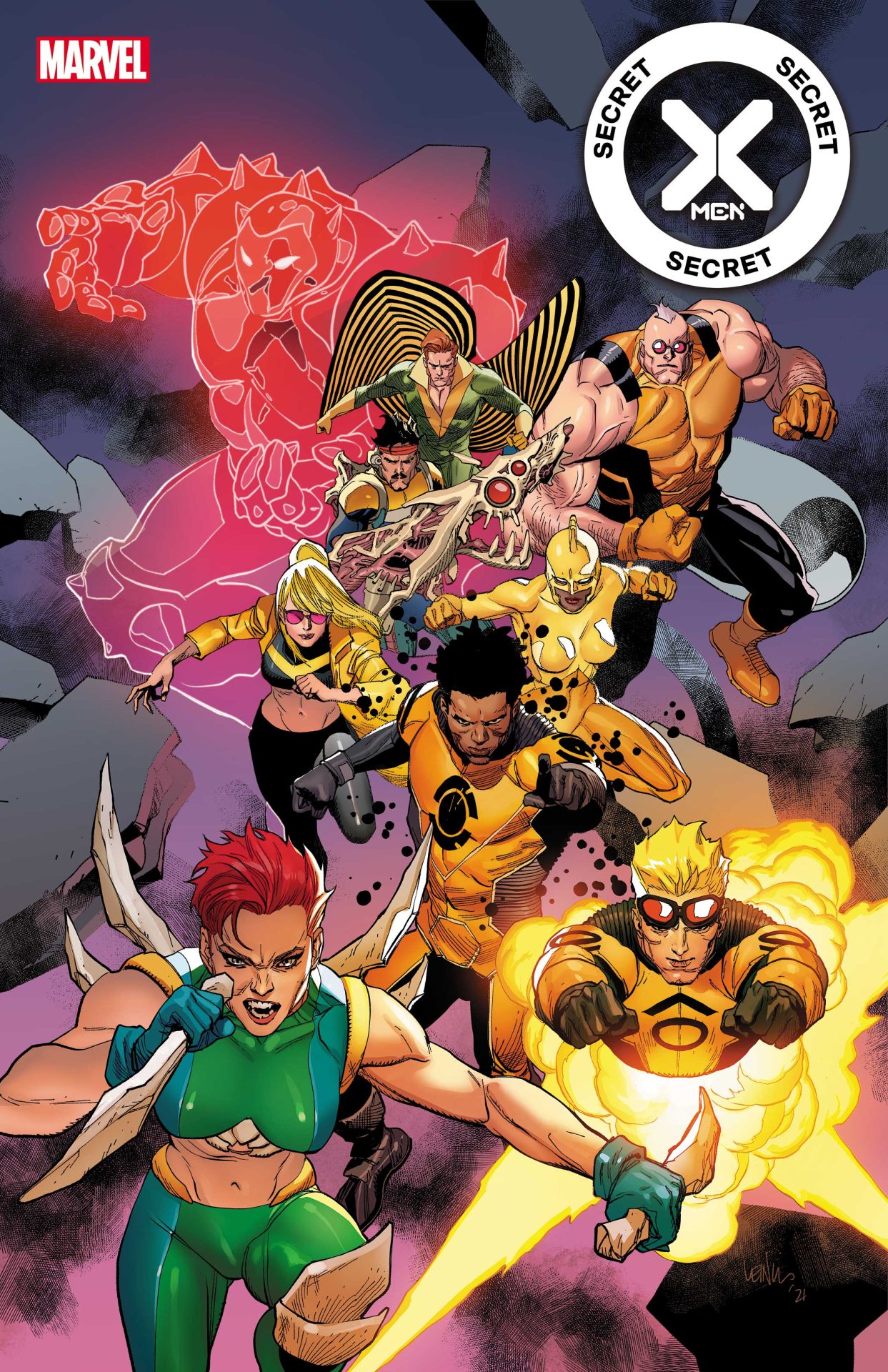
Sunspot. Cannonball. Marrow. Boom-Boom. Tempo. Forge. Banshee. Strong Guy. Armor. Earlier this year, these X-Men characters were choices in the mega popular X-Men Vote! While they ultimately weren’t chosen as the final member of the Krakoan Age’s first team of X-Men, the vote took social media by storm with passionate fans campaigning fiercely for their favorites. And this February, fans can relive the excitement of this pivotal moment in X-Men history by seeing their chosen candidates in action in Secret X-Men #1! This special one-shot written by Excalibur and X of Swords scribe Tini Howard and drawn by Daredevil artist Francesco Mobili will bring all nine of these mutant heroes together for a secret mission to the stars!

When the Shi’ar Empire faces an unexpected threat, they must call upon the X-Men. Team co-captains Sunspot and Cannonball will lead Marrow, Tempo, Forge, Banshee, Strong Guy, Armor, and Boom-Boom on a dangerous mission to save a figure of paramount importance—the daughter of Professor X and empress of the Shi’ar: Xandra! 

See the team assemble on Leinil Francis Yu’s cover below and be there when SECRET X-MEN #1 hits stands on February 9!

Secret X-Men

Underrated: Comic Book Video Games

This is a column that focuses on something or some things from the comic book sphere of influence that may not get the credit and recognition it deserves. Whether that’s a list of comic book movies, ongoing comics, or a set of stories featuring a certain character. The columns may take the form of a bullet pointed list, or a slightly longer thinkpiece – there’s really no formula for this other than whether the things being covered are Underrated in some way. This week: Comic book videogames.


It’s been a long time since I wrote any kind of list for this column, and after finishing up my first playthrough of Spider-Man: Miles Morales yesterday (and my subsequent return to the original PS4 Spider-Man‘s DLC), I wanted to take a trip down memory lane with some games that aren’t as fondly remembered as perhaps they should be amongst the greats like the aforementioned Spider-Man games and Batman: Arkham Asylum/City/Knight. Games that were fun, but may not have been as critically acclaimed or rated as high as others released around the same time; often, super hero games are either overlooked as cheap movie cash-ins (for good reason, honestly), or they’re overlooked in favour of games that have generated more of a buzz. It wasn’t really until the Arkham games cam about that superhero based videogames really gathered any traction; the combat system from that game has inspired countless others over the years – and for good reason.

So, here’s a few gems from yesteryear that are worth circling back to if you’re looking for a bout of nostalgia fueled superhero action.

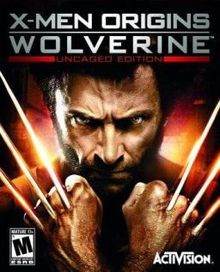
X-Men Origins: Wolverine (PS3/Xbox 360)
A videogame adaptation that was far better than the movie, this game was a blast to play from start to finish. It’s certainly not the best action game around, but it is one of the best superhero movie tie-in games around, and it’s a hell of a lot of fun watching Wolverine getting sliced to pieces and then watching as his healing factor starts to kick back in and rebuild his flesh over his skeleton. Despite it being a very linear game, there’s a hell of a lot to enjoy even today (I’m not holding out hope for a sequel or remake any time soon, but I am very fond of the game even now).

X2: Wolverines Revenge (PS2/Xbox/Gamecube)
If you’re sensing a theme here, it’s probably not accidental. This game was, technically, a tie in to the second X-Men film, but it was also a compelling stealth adventure where the use of Wolverine’s powers were implemented in cel-shaded awesomeness. Fun, though maybe not the greatest game, it’s one that still holds fond memories for me.

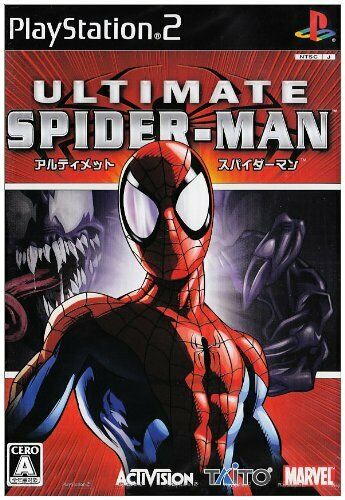
Ultimate Spider-Man (PS2/Xbox/Gamecube)
The second time we got to play as Spider-Man in an open world. Visually, the game holds up fairly well because of the cel-shaded comic style art, though the gameplay may feel a touch dated to those who have become accustomed to the PS4 offerings. The story picks up after the Venom arc from the Ultimate universe’s version of the comics, and so we get to play as both Spider-Man and Venom across Manhattan and Queens (which may have been the last time we saw Queens in the games).

Spawn: In The Demon’s Hand (Dreamcast)
Think Dynasty Warriors meets Spawn. It’s fun, especially with friends, but don’t expect a super deep experience.

Batman Begins (PS2/Xbox/Gamecube)
Look, being completely honest, this isn’t as good as the Arkham games; not even close. But that’s not to say this is a terrible game – it’s just not the best, either. I enjoyed the game, enjoyed the terror mechanics where you’d have to hide from enemies and gradually terrify them into submission (you’ll see this in the Arkham games, but with a much more subtle excitation). Worth a play if you’re curious, but I wouldn’t rush for it.

There’s a lot of 2D games that I didn’t include on the list – games from the Sega Genesis era that were mainly action beat ’em ups – that are all fantastic (though admittedly harder than expected), but what I’d have to say would fall around the same thing: “a solid game that has a lot of vintage nostalgia value, but doesn’t hold up as well as you’d expect – which is the case for a lot of vintage games in many ways. The mechanics of yesteryear take some getting used to, but once you do there’s a lot to love.”


Unless the comics industry ceases to exist this week, Underrated will return next week.
Underrated: Dragonfly and Dragonfly Man

This is a column that focuses on something or some things from the comic book sphere of influence that may not get the credit and recognition it deserves. Whether that’s a list of comic book movies, ongoing comics, or a set of stories featuring a certain character. The columns may take the form of a bullet pointed list, or a slightly longer thinkpiece – there’s really no formula for this other than whether the things being covered are Underrated in some way. This week: a prequel to The Wrong Earth, Dragonfly and Dragonfly Man


I initially stumbled over The Wrong Earth because the first issue of the second volume caught my eye. I enjoyed it, a lot, and decided to circle back and order the trade of the first volume. After loving that, I found the prequel book that details the parallel lives of the Dragonfly and Dragonfly Man.

So what is the book about? Well to tackle that, first we need to grasp the nature of Wrong Earth for those who either haven’t read it or missed my previous column on that story. So because I don’t see the need to rewrite the publisher’s blurb for Wrong Earth, I’ll paste it below.

“On dark, gritty Earth-Omega, masked vigilante Dragonfly punishes evil maniacs and evades corrupt authorities. On sun-splashed Earth-Alpha, costumed crook-catcher Dragonflyman upholds the letter of the law. Now they’re trapped on each other’s worlds, where even the good guys don’t share their values!”

If the idea of the Silver Age Batman or the Adam West Batman and Frank Miller’s Dark Knight switching places sounds awesome, to you, well, that’s because it is. But it’s also so much more than just that elevator pitch. But if you want to know more about why that book is awesome, check out the Underrated where I talk about that, because here we’re looking at Dragonfly and Dragonfly Man.

Written by Tom Peyer, featuring art by Peter Krause, Russ Braun, with finishes provded by Juan Castro and Leonard Kirk and colours provided by Andy Troy and Paul Little with Kelly Fitzpatrick. Rounding out the creative team is letterer Rob Steen, who’s contributions to the comic are often subtle until you catch the sound effects giving you a nostalgic Silver Age smile in Earth Alpha. The book is published by Ahoy, a publisher that I’ve become increasingly more aware of as I notice their logo on books I’ve been thoroughly enjoying.

This book essentially takes the same story and tells it twice; once with the Silver Age sensibilities of Earth Alpha, and once with the Modern Age darkness. Because they’re told concurrently, you get to see how the two versions of the same hero react to very similar situations – the dichotomy of the two worlds emphasizes the fish out of water scenario that Wrong Earth deals with, and yet you get to see just how similar the heroes are despite the differences in their respective worlds. The story, essentially, focuses on how Dragonfly and Dragonflyman deal with the threats of Tommygunner and Devil Man, and Peyer captures the spirit of their respective eras very well. I find myself increasingly drawn to the Silver Age shenanigans’ of Earth Alpha; I won’t lie, it’s stirring an urge to find more Silver Age Batman comics/stories to enjoy as the escapism is more refreshing than I’d have expected it to be.

I know that Peyer is currently writing the sequel to Wrong Earth, but I really want to explore more tales told in this fashion to expand upon the universe.

As with Wrong Earth, I’ve only really scratched the surface with this book, because a lot of it you’ll benefit from going in as blind as you can and spotting the similarities between Earth Alpha and Omega, and also the similarities between the two eras of Batman’s past. This series has fallen below far too many radars, and every person to whom I have shown the trade has been thoroughly engrossed and intrigued in the trades.

Seriously, this is well worth checking out.

With the potential richness in the Wrong Earth universe, and the quality of Peyer’s writing and the artistic team’s collaborations, I’ve definitely found one of those comics that I’ll be reading for a long time. You can read this book without having read Wrong Earth, and still find it just as enjoyable – perhaps if you do that you’ll end up with a lot more context in Wrong Earth and its sequels. Go find this underrated gem at your favourite retailer now.


Unless the comics industry ceases to exist this week, Underrated will return next week.

« Older Entries Recent Entries »