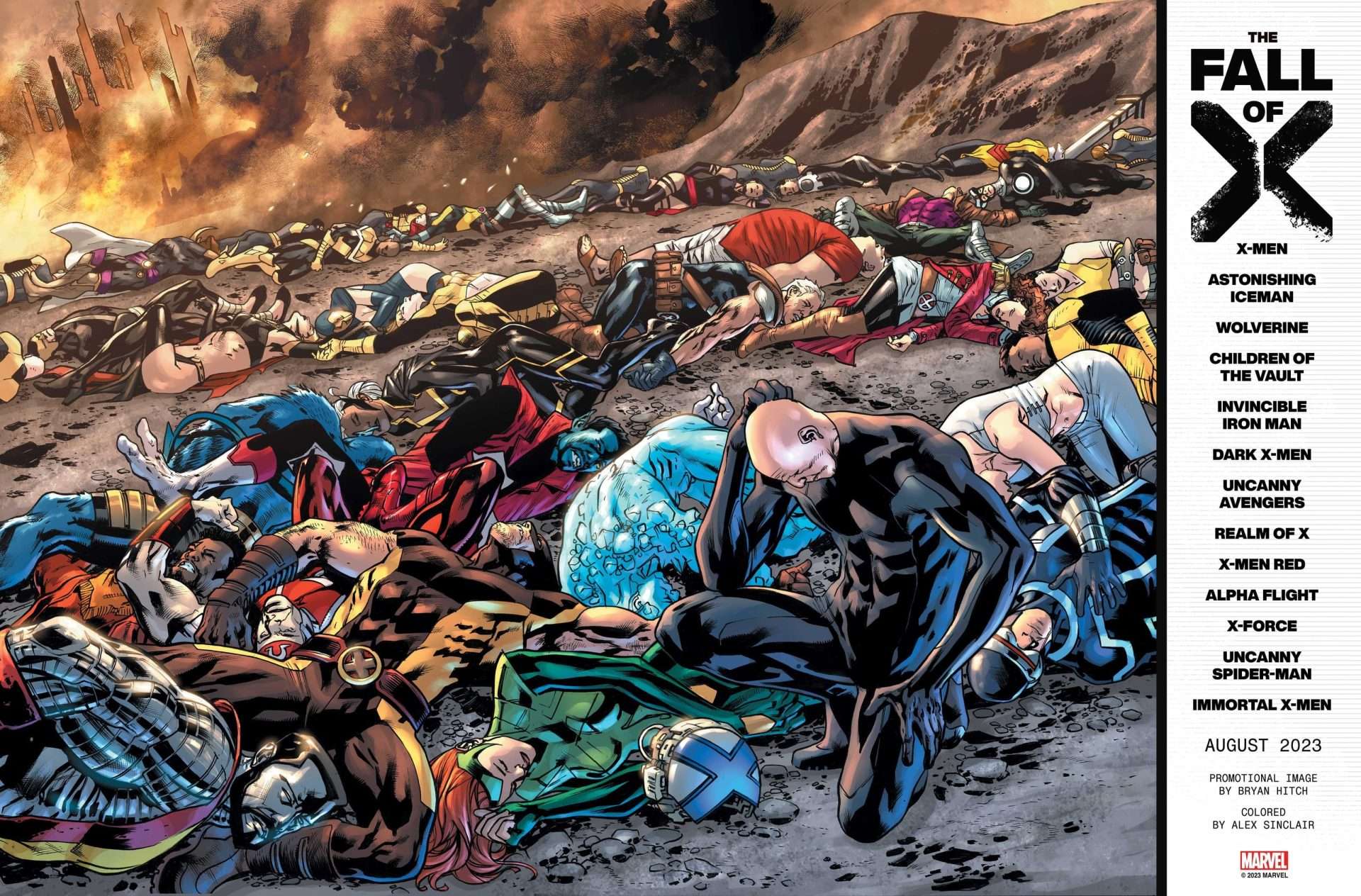
I’ve seen a lot of chatter online about theFall Of X and what it means for the Krakoa era of the X-Men line. A lot of those discussions have been pretty doomsaying. A lot of fear that this means the end of the Krakoa era ushered in by Jonathan Hickman in House Of X/Powers Of Xthat has been ongoing since 2019, which united the Mutants on the living island nation of Krakoa. It revolutionized the franchise and breathed fresh new life into the long stagnating X-Men line.
I’m excited for the Fall Of X. One of my favorite things in comics is being able to put brackets around a run. A run is a consecutively told story usually headed by the same creative team the entire way through. One example of a run is Tini Howard’s Captain Britain comprisingExcalibur, X Of Swords, Knights Of X, and Betsy Braddock: Captain Britain. Together these books tell a complete overarching story by a single writer.
The thing about the X-Men line since Hickman soft rebooted it, is the collaborative nature of the office. Storylines ebb and flow from one title to the next. It’s harder to put brackets around individual runs because they all contribute to an overarching narrative. If this is the end of the Krakoan era then I don’t necessarily think that’s a bad thing. Stories have endings, and this has been an exceptionally well told story. If the ending is satisfying, I’m happy to see the whole era tied together with a nice little bow.
Even then, I don’t necessarily think Krakoa is going away forever. We know the X-Men are off the island and scattered across the globe for the Fall Of X. But for all we know we might be back on Krakoa by the start of next year! However, even if Krakoa is going back into the box for good, the writers who crafted this brilliant era aren’t. I’m sure we’ll continue to see the collaborative storytelling continue long into the X-Men’s future. Even if Krakoa ends, the spirit of this era will live on.
I have been aware of tabletop role-playing games (TTRPGs) for most of my life but became fully immersed in them when I joined my first Dungeons and Dragons group while in college. Although I have not strayed outside of that specific game, TTRPGs have not only provided a space where I have made several friendships but a place where I can experiment and explore concepts that I cannot typically do in my everyday life. Because of this, Kieron Gillen‘s and Stephanie Hans‘ Diefelt like a series perfectly crafted for me. Outside of being a Gillen superfan, I connect strongly to his work due to the presence of well-rounded queer characters and deeply personal narratives. I often connect deeply with his titles; Die hits me on a much more primal and subatomic level. More notably, though, in Die, the character of Ash struck a vital emotional nerve not only with their arc but how their experiences with TTRPGs and exploration of gender and queerness mirrored my journey while playing Dungeons and Dragons.
In the 20-issue series, a group of six kids got transported to the fantasy-roleplaying game Die in the 1990s only five came back two years later. Now as adults, they get sucked back into the world of Die, where they discover their former friend who has become the game master and ruler of the world. While the eventual endgame lies in the party returning home, most of the story follows each character tackling their issues and problems while dealing with the aftermath they left behind years ago.
A key element of TTRPGs lies in the fantasy element of its gameplay. By fantasy, I do not mean elves, orcs, or magic but the imagination component of its world-building. The game does not take place in a “physical place” but in one created by the dungeon master (DM) or game master (GM) and players. While some games may be played within established IP or utilize pre-made modules, there are still bespoken elements to make it personal and different for each group. Because of this, it allows the DM to craft their world and narrative for the players to explore and experience. Outside of world-building, another critical element of the fantasy lies in the player’s character. Essentially players have freedom in creating their character from their appearances, gender identity, and backstory to their classes and role within the party. Aside from the system and rules of the TTRPGs, players are not limited in crafting their player character.
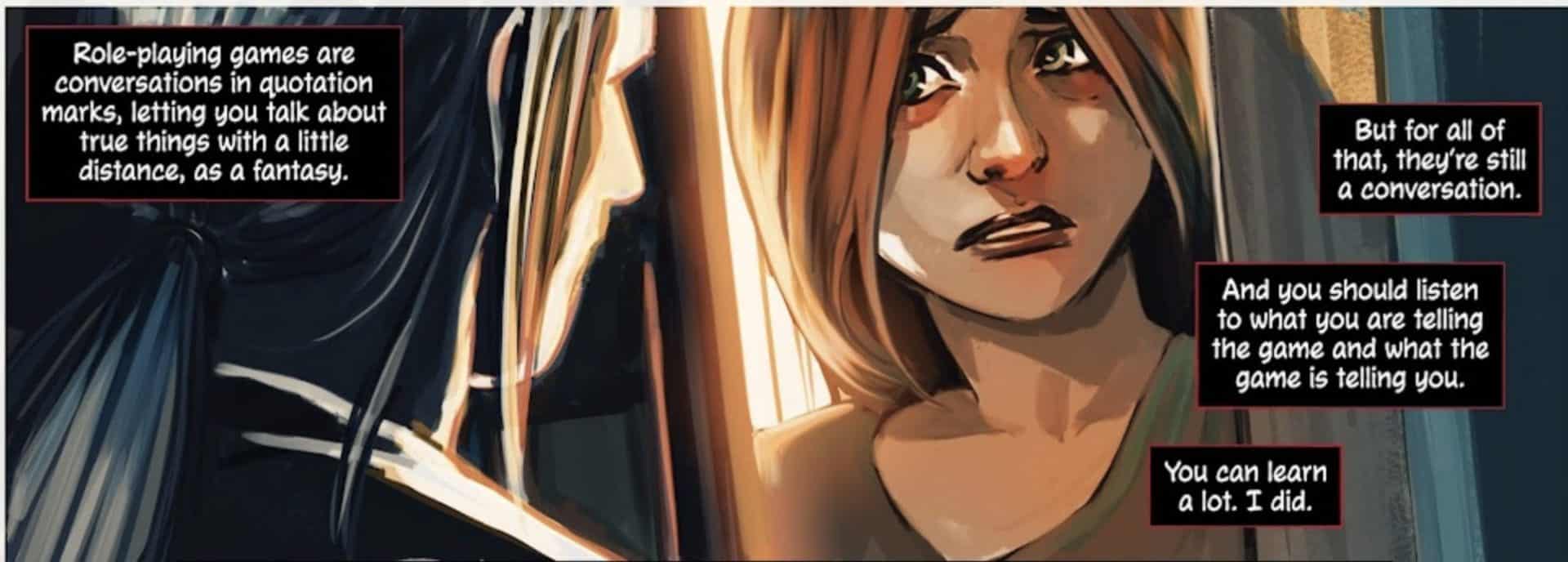
At the beginning of Die, the characters are given specific classes based on their character ideas, said to their game master Solomon. More notably, though, in the game world, almost all players choose to play as the same gender as they identify in the real world, except for Dominic Ash, who plays as a woman. Although this aspect is rarely brought up in the first couple of issues, this decision for Ash to identify as a different gender in the TTRPG brings up the critical question if the world of Die exists as a more truthful reality for Ash and the real world is just a fantasy they live in. Is the honest Ash who they are in the real world or who they identify as in the TTRPG? Granted, not every person who plays a character of a different sexuality or gender identity in a TTRPG means they are secretly queer or transgender, but it still rings true to many. Outside of me, many other players in the group I play with have had similar discoveries while playing Dungeons and Dragons. Clearly stated by Ash in issue 20, “Role-playing games are conversations in quotation marks, letting you talk about true things with a little distance, as a fantasy.”
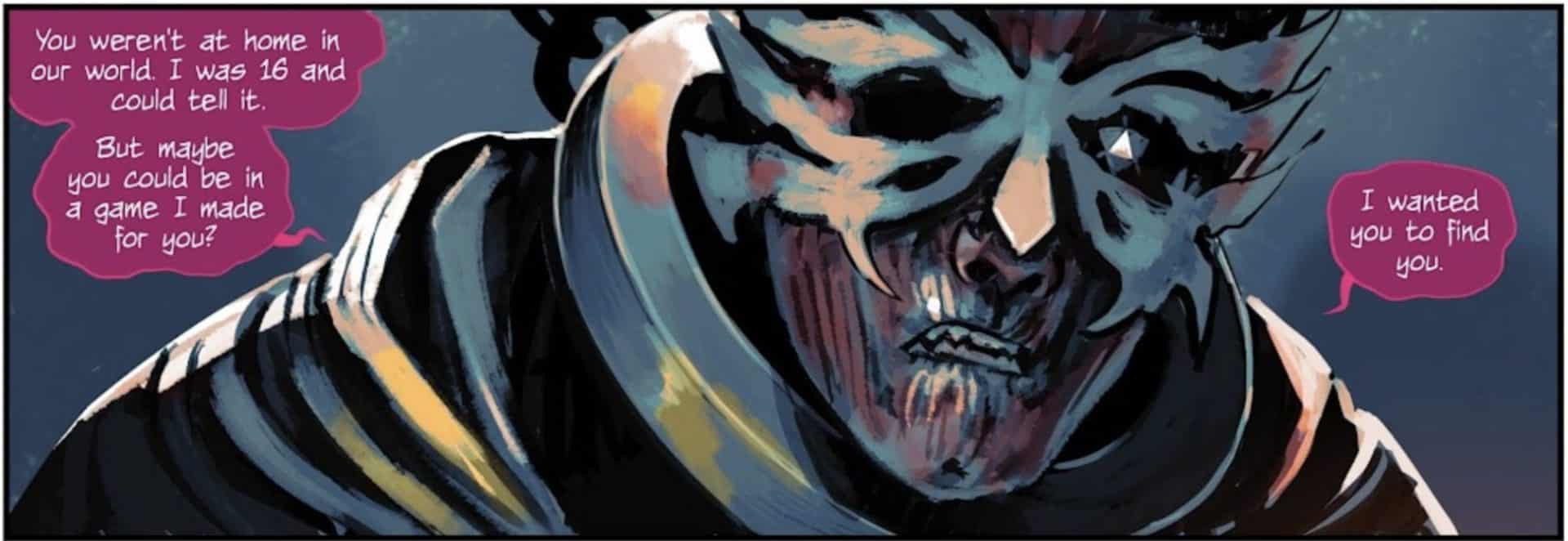
A notable thing about TTRPGs lies in the communal narrative structure of the medium. It is not the DM or GM dictating a story to the players but the group working together to tell a story. Ash’s arc in both the story and Die lies in them coming to terms with their gender identity. When they return as adults, Sol tells Ash, “You weren’t at home in our world. I was 16 and I could tell it. But maybe you could be in a game I made for you? I wanted you to find you.” Often the disconnect between physical and internal identities for LGBTQ+ people occurs around the teenage years. Compounding this frustration and fear is that Ash was a teenager in 1991 England when homophobia and transphobia were still widespread and frequent. With the TTRPG, Sol hoped to help them break out of their shell and feel more comfortable. In one layer, this speaks about Ash’s journey as a player and their personal one. Ash’s overall quest in the game and the real world is for them to come to terms with their gender identity.
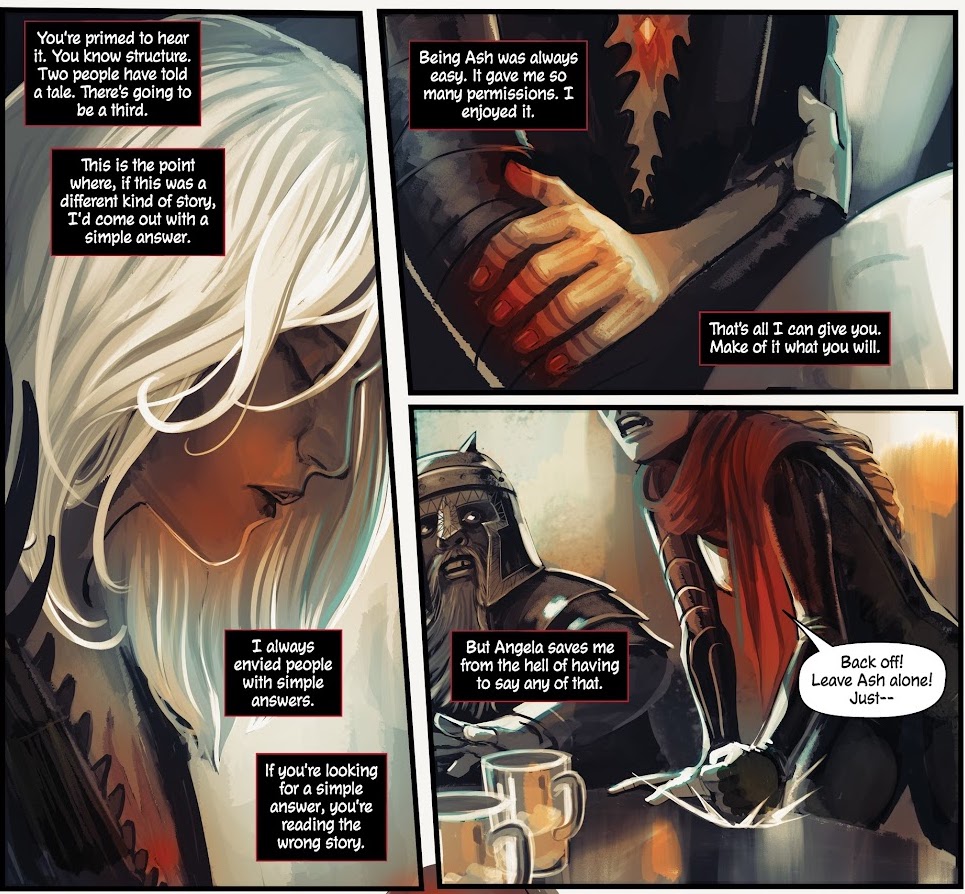
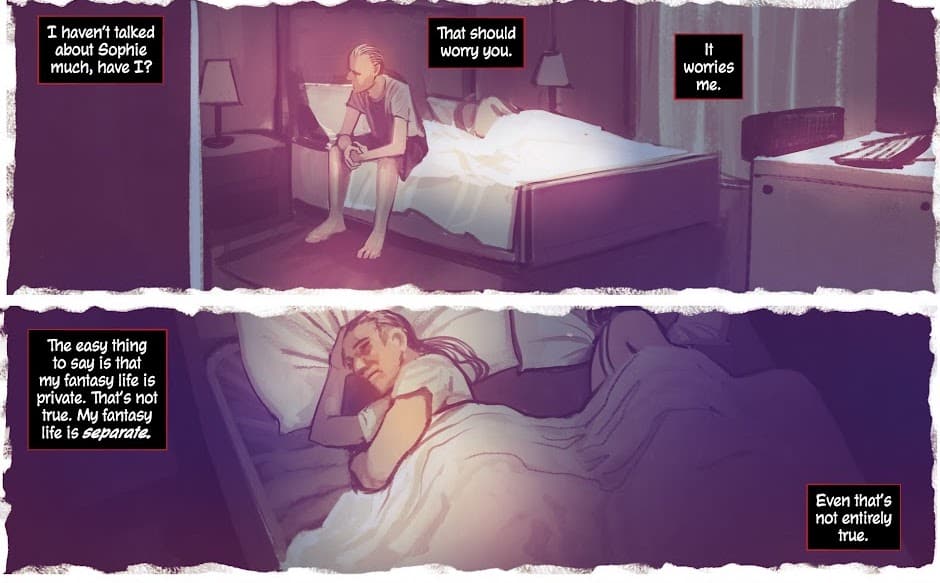
Following their return to the real world as kids, Ash gets married and is expecting a baby. Despite their best attempt to move on from Die, they still feel it is haunting them. While lying in bed next to their wife, Ash thinks, “The easy thing is to say that my fantasy life is private. That’s not true. My fantasy is separate.” Being unable to speak about their childhood experiences mirrors their feelings about being in the closet. Ash believes they have to keep that part of their life compartmentalized and not burden it with their wife. Compared to reality, “Being Ash was always easy. It gave me so many permissions. I enjoyed it.” Gillen and Hans are not making Ash’s desire to be their persona in the game a fetish or view it as a negative thing. It’s an escape to who they genuinely identify as. Being closeted is akin to wearing someone else’s clothes that don’t fit while trying to be “normal.” The desire and the longing to be another person always existed within them, but they were afraid to broach the subject. “But here, everything gets blurred. The real and the not real. Every whim or thought is dragged out of me. I figure…safer to lock it all away” they explain to the party regarding their decision to remain closeted. But the closet can only keep things contained for so long before it bursts wide open.
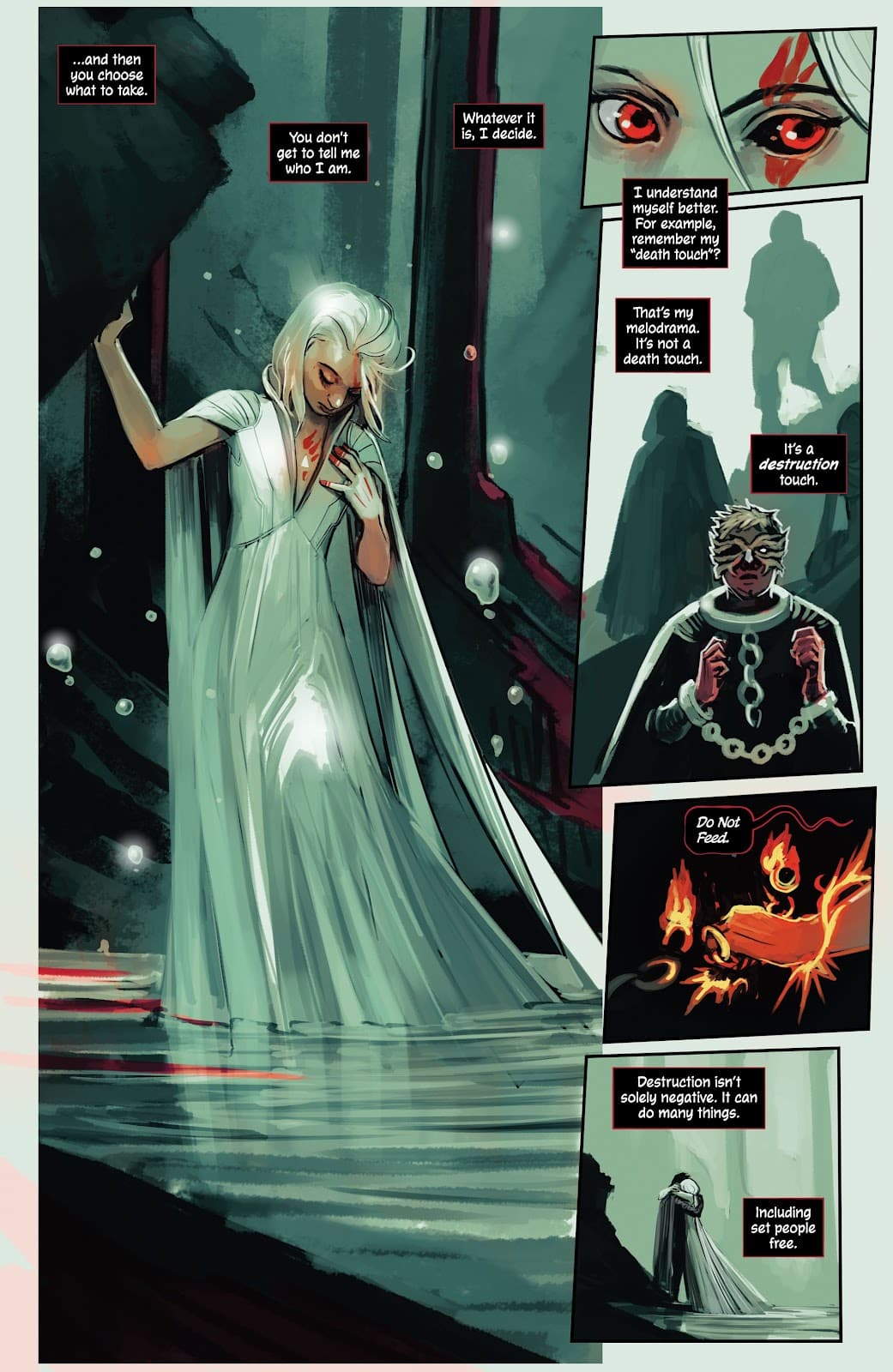
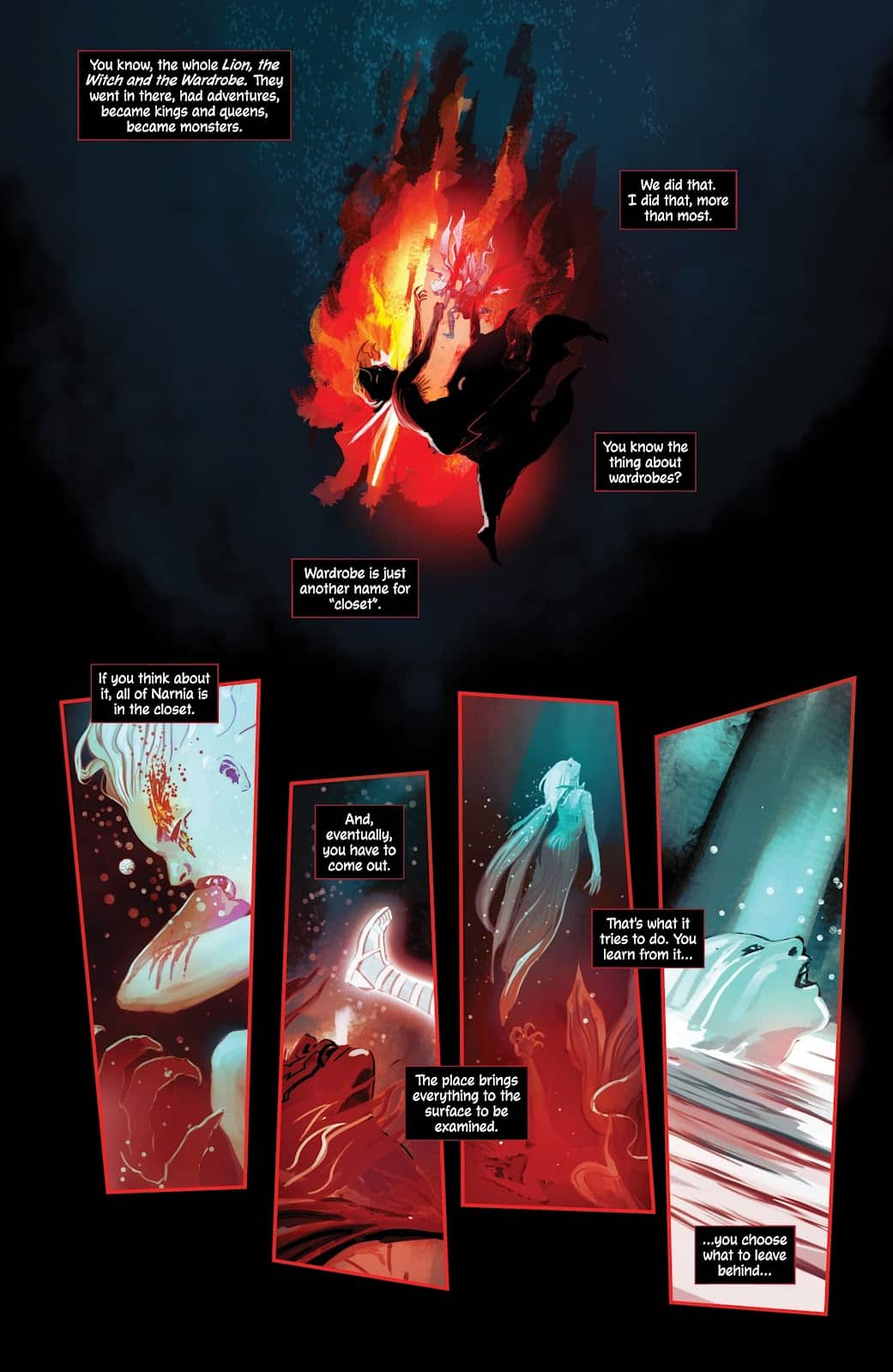
At the climax of the series, Ash must contend with the fears and anxieties that have been building inside them. Before facing the final boss, they come clean to the party about their struggles with being genderfluid. An adventuring party in a TTRPG is akin to a support network where each player character can rely on others for help instead of struggling on their own in both combat and social aspects of the game. I would consider my DND friends to be some of the people I am closest and most honest with. Honesty and authenticity lead to a more cohesive group and stronger relationships. After defeating the boss and arising from the water, Ash thinks, “The place brings everything to the surface to be examined. That’s what it tries to do. You learn from it…you choose what to leave behind…and then choose what to take. You don’t get to tell me who I am. Whatever it is, I decide.” Deciding to reclaim your identity from your innermost pain and trauma is not only complicated but powerful. I often hate the phrasing that it’s “brave” to live as your authentic self, but there is an element of bravery. Considering that decade has passed since the first time the group played Die. When they returned as adults in 2018 and escaped in 2020, homophobia and transphobia were and are still prevalent, so I would say for Ash; it’s not solely brave but the only way they authentically live their life.
Most of all, I am incredibly grateful to Gillen and Hans for centering the story around a flawed and human queer character. Ash feels extremely real due to being allowed to have flaws, dreams, and fears. More importantly, to have Ash be an adult in their 40s and figure out their gender and sexuality. After they tackle the boss over the ledge, they think about The Chronicles of Narnia and how “If you think about it, all of Narnia is in the closet. And eventually, you have to come out.” A common phrase I tell people is that coming out is never a one-time thing. It’s a constant choice one makes where you must leave behind the closet to live as your true self. Outside of this, it is refreshing to frame the journey of discovering one’s queer identity as a lifelong experience and that it is never too late to come out. “When we were young, we didn’t have words for these complexities.” You don’t always have the correct words or methods to describe yourself when you’re young. Sometimes it takes time. TTRPGs appear to be quite complex on the surface, but it’s pretty simple once you understand the language and the system of it.
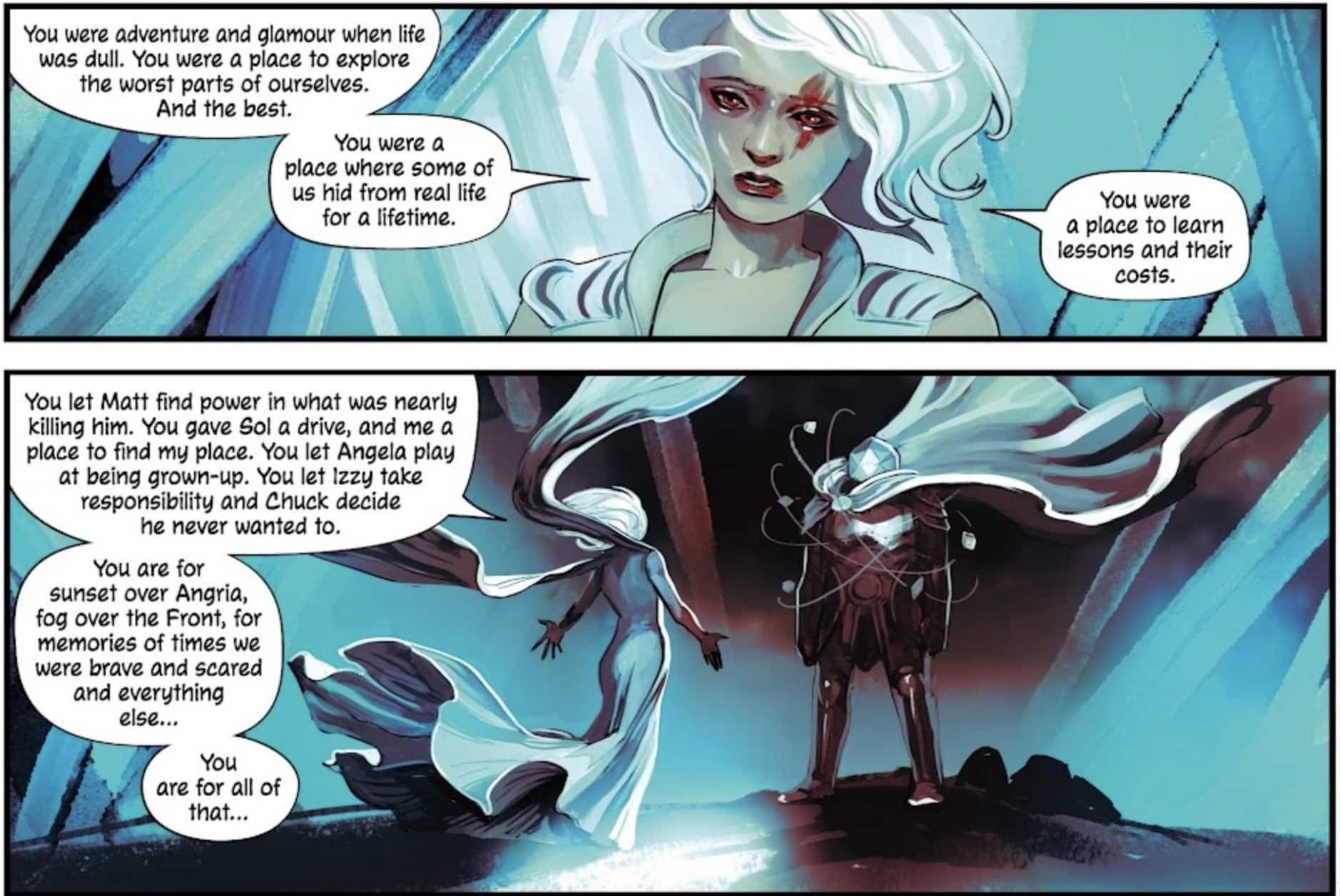
Perfectly said by Ash, “You were adventure and glamour when life was dull. You were a place to explore the worst parts of ourselves. And the best. You were a place where some of us hid from real life for a lifetime.” Outside of providing an outlet for my creativity, TTRPGs gave me a space to grow, develop my identity, and discover who I am. A TTRPG is a personal thing, and what it means significantly differs on who is viewing it. I am thankful for Die capturing and displaying what drives me to play them. Much like the game of Die, it is hard, to sum up how much of an impact DND has had on me. It’s more than a game or an outlet; but is a place where I let go of my walls and be my true self.
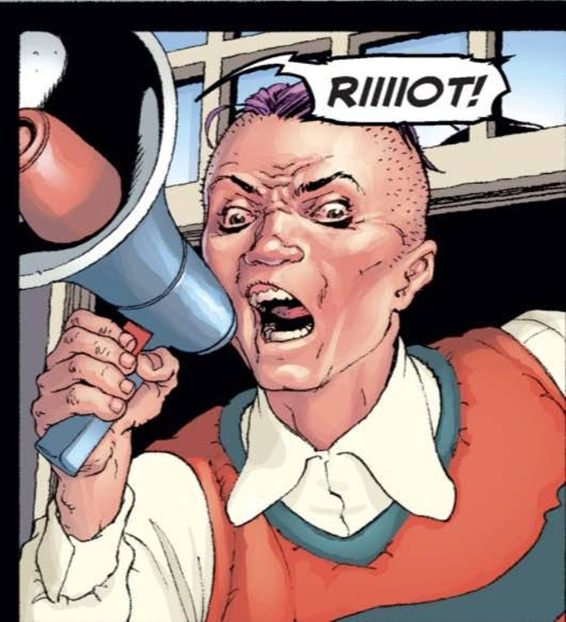
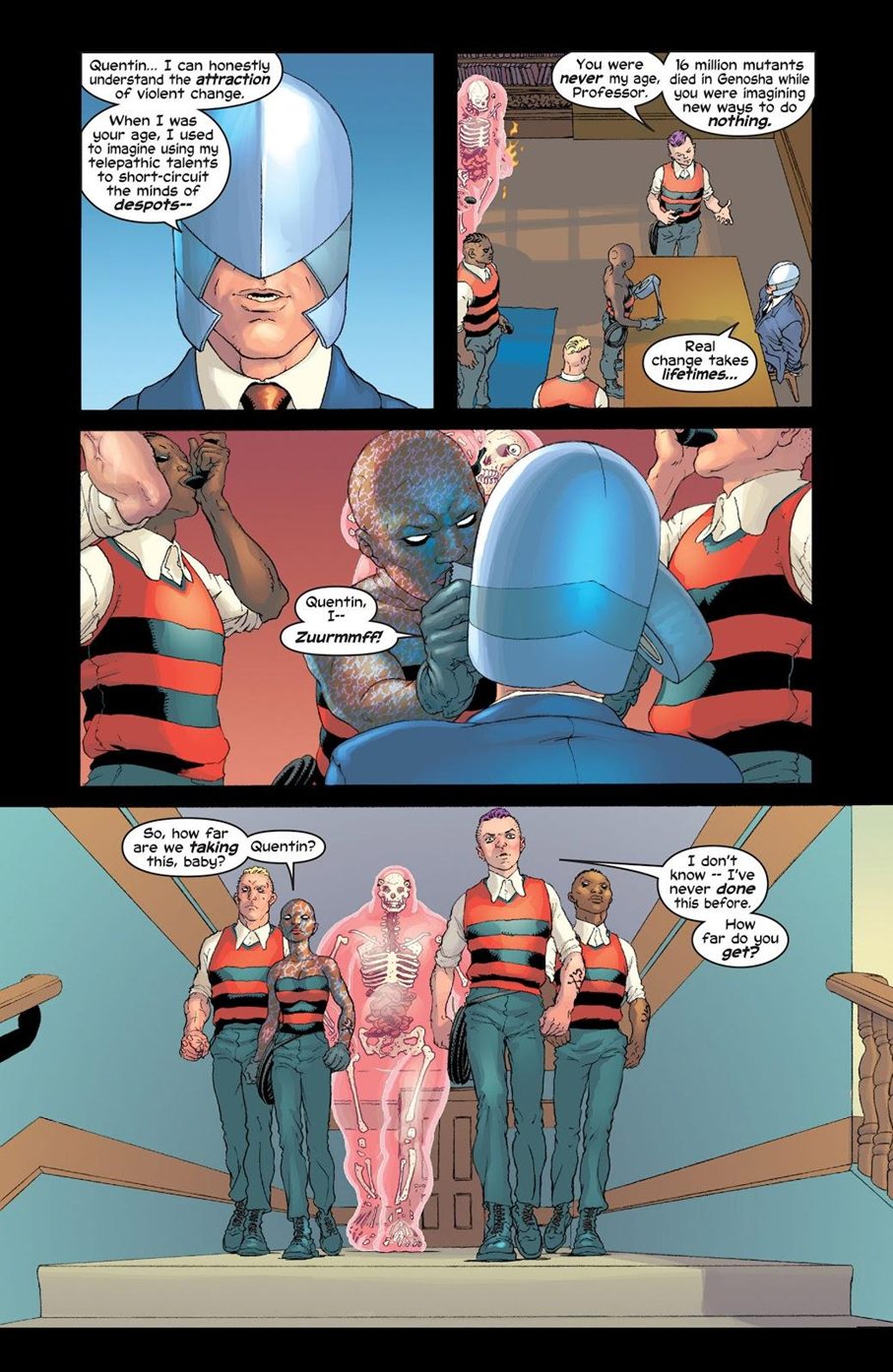
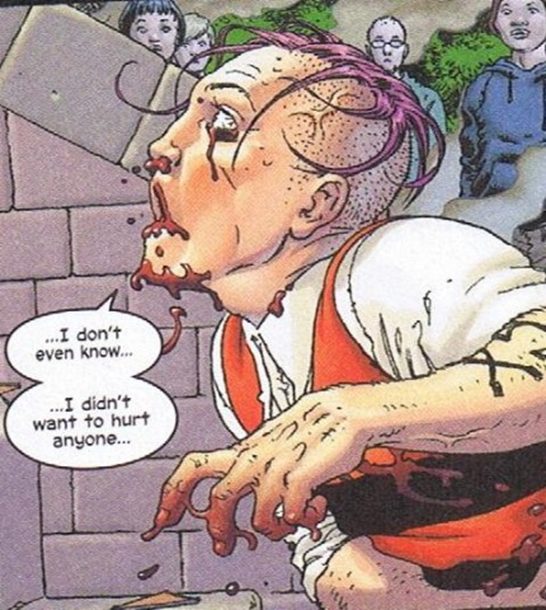
“You were never my age professor. 16 million mutants died in Genosha while you were planning new ways to do nothing.”
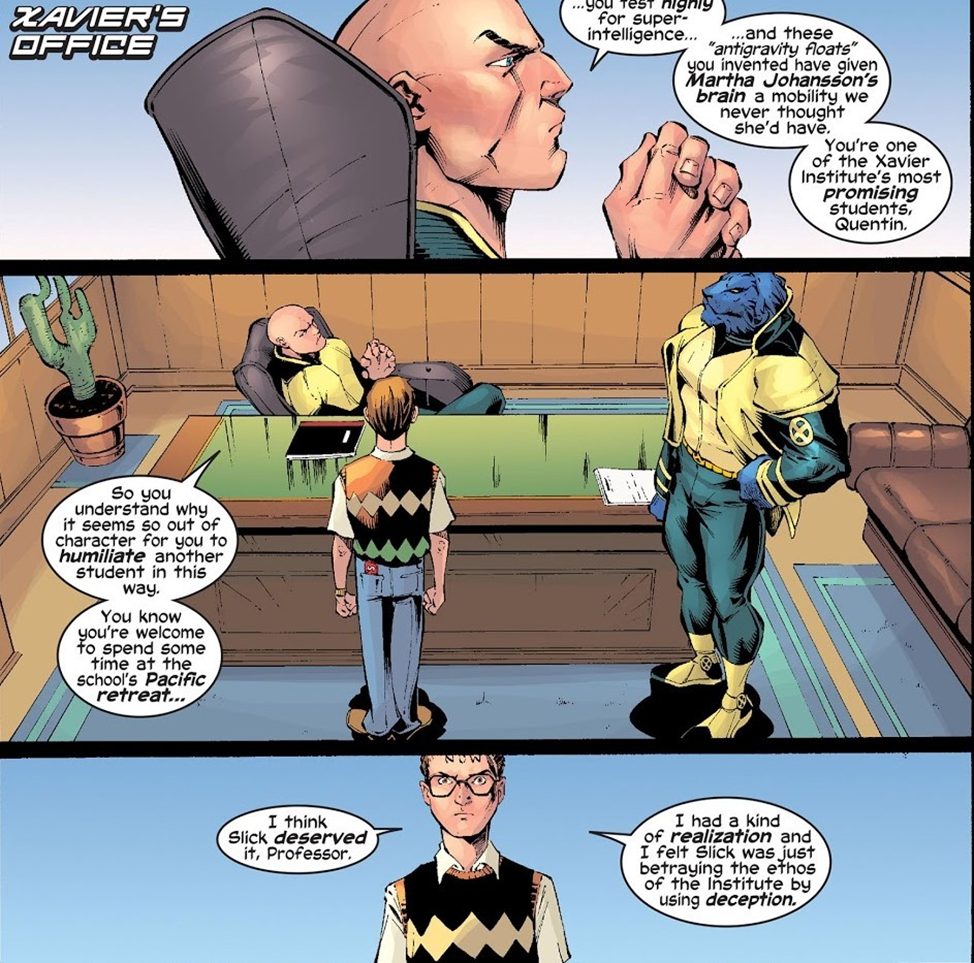
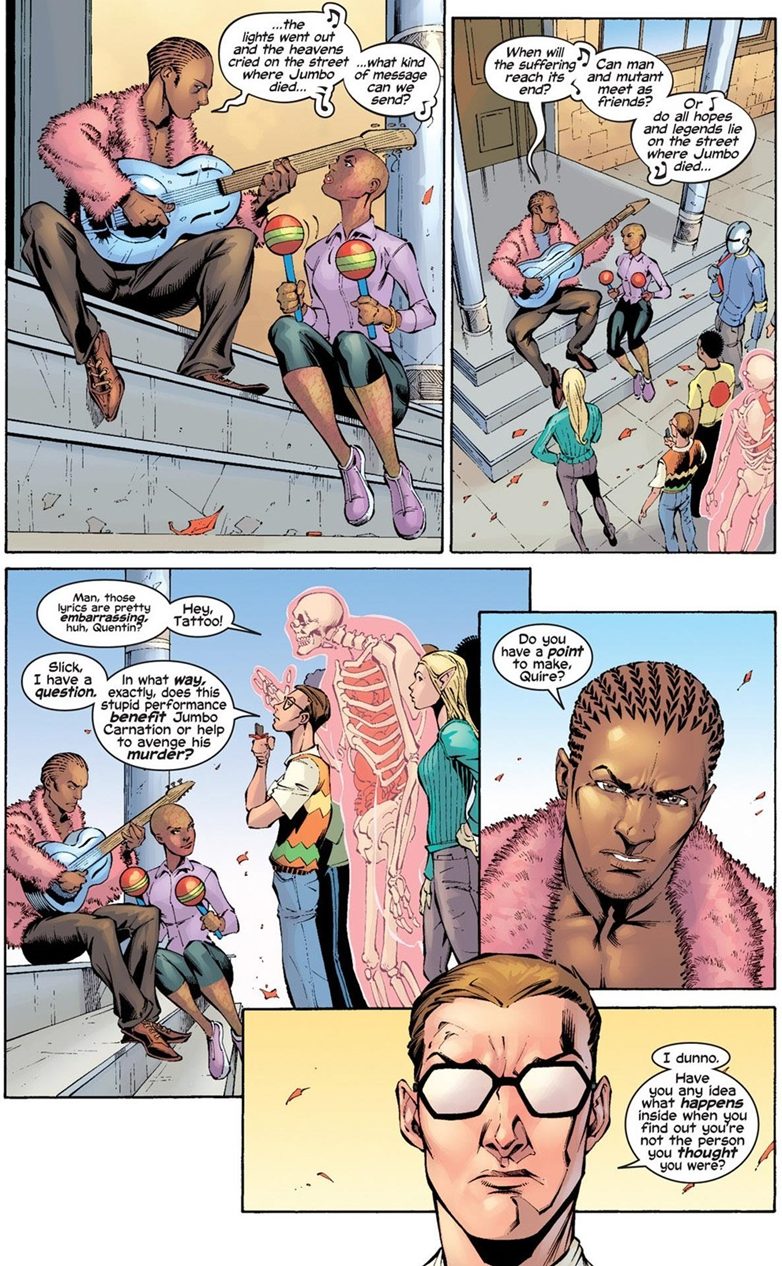
All images are taken from “Riot at Xavier’s” New X-Men #135-138 (2002), Written by Grant Morrison, Pencils by Frank Quitely, Inks by Tim Townshend and Avalon Studios.
I’ll admit, for a time I was delighted at Quentin Quire’s many deaths in the modern era. Even if I understand where his pain is coming from, he still expresses it like a little shit. I credit working with writer, critic, calligrapher, knitter-for-good, and all around amazing human Jay Edidin, for helping me pivot my frustrations with the character to a curiosity. In our prep for our Flame Con Panel “We Hope You Survive the Experience: The Mutant Metaphor and Youth Advocacy”, we returned to the Morrison era a few times.
It was hearing Jay talk about this character through the lens of seeing Quire not as a “school-shooter” as many fans reductively label the character, but as a traumatize minority youth, that opened the door for this re-reading of Riot at Xavier’s. Of course Quentin Quire is a little shit, he was never allowed to be anything else. If anybody adult had approached him as something more than a nuisance, perhaps the Riot could have been avoided. If Prof. Xavier had made him feel seen and heard, if Xavier had celebrated Quentin’s commitment to defending the mutant community instead of passing judgment on the methods of a child, maybe Quentin would have been kept from going to the extremes he did. Xavier though is not a good man. He’s not even a good educator. So…the riot happened. People got hurt. Someone died.
Let’s set up the pins of Quentin Quire’s breaking point.
Genocidal Violence Enacted on the mutant community in the attack on Genosha
The world’s institutions of power respond by ultimately increasing hostility towards mutants
Xavier only doubles down on his neo-liberal, almost centrist, “both sides” narrative, going so far as to invite humans to this mutant safe space
Quentin Quire finds out he is in fact adopted, and thus “neglected” by his biological parents.
Jumbo Carnation is thought to have been killed in an anti-mutant hate crime.
Quentine Quire, desperately seeks the protection of the leaders of his mutant community, only to be continuously written off and mocked
Quentin Quire, feeling helpless turns to substance use to offset these feelings of powerlessness
Quentin Quire did not fail the Xavier School, it failed him. If you focus too much on the riot itself, and not the contextualizing story around it, you may not see it that way. I’d like to make an argument for curiosity and empathy. Not just for this character, but for every real life Quentin Quire. For the children who are written off, pathologized, and neglected because of the pain they feel and their inability to process that pain in ways that did not cause others’ harm. There are many Quentin Quires in my community, people who were failed by their communities, their families, by the institutions of power in the world that we’re told should protect us.
Given that most of this legislation falsely claims to being attempt to protect children’s normative reproductive “ability”, it’s easy and accurate to call this a campaign of eugenics. This coordinated attack on youth is no accident. It’s known that when you withhold gender affirming care from people, their mental health declines. I need not quote suicide rates here. Trust that this legislative campaign will result in the deaths of trans people, and categorically is an act of genocide. And trans people? We’re left to just cope, as our allies continuously fail to stand up for us in material ways big & small. ( author’s note: in the weeks since writing the initial draft of this piece multiple states have begun to push and in some case have passed bills forcibly detransition trans folks up age 25 and criminalizing gender affirming care. I tried to track it all to keep updated links, but the tragedy is that would be a daily task. You need only do a quick google to see the rising waves of anti trans eugenics legislation.)
I reread Riot at Xavier’s feeling like the page and the world outside my window are not that different. Trans people are in pain. We feel hopeless, we feel despair, we feel rage; we cry out in agony while our “allies” could barely rally enough to retweet an article, let alone read it. We’re forced to clock into work, where the pain we’re feeling is painted-over and suppressed to keep ourselves safe. Trans rage has no place in a cisnormative society and we face being demonized if we let slip even a sliver of that rage in the wrong space, to the wrong people. Our government fails to meaningfully intervene, despite promises that they’ve “got our back”. We’re watching our own genocide be debated like a conversation about how you take your coffee. As I watch comics spaces online rage on with discourse after discourse about the most inane and trivial bullshit, I feel Quentin’s pain.
Almost every trans person I know finds themselves grappled in a loop of psychic agony and the dissonance of the passive reactions of those in their environments. We have been failed by those who continue to claim to protect us. To see leaders who are supposed to protect us talk about “ peaceful resistance” or “patience” while you know the lives of everybody like you are being threatened. When people who should have kept you safe fail you, what options do you really have?
I know there is an aesthetic of pro-fascism present in this story about Quentin Quire. But are Quentin’s actions those of a reactionary? No. Not if you’re using the term in its correct context. Quentin’s politics are radical for sure, but reactionary politics are typically in service establishing a return to tradition or fundamentalist framings, often conservative aligned framings.
Quentin is not a reactionary. He is radical and extremist in methods and separatist in his leanings. It’s a politics of insurrectionism, though poorly executed. Or more accurately, it executed commensurate to Quentin’s emotional capacity, as one caught between several overlapping dynamics of privilege and marginality. Quentin’s actions are dangerous, violent, misplaced, and ultimately lethal, but the values that underpin his actions are not those traditionally understood as “reactionary” values. They are a temper tantrum; they are an attempt to utilize the means of communication one has to seek out a means to fulfill their emotional needs. Quentin has been systematically let down and written off by everybody he trusted to protect him. He is dealing with feelings of rage, abandonment, and powerlessness. Well… hurt-people hurt people. That is what this story is trying to say.
It takes work to reframe this story. You have to believe that there are no bad kids, there are only kids whose needs are not being met. You need to have a sense of how minority stress is one of the leading catalysts of intra-community harm. You need to get curious, not judgemental. I spend a lot of time surrounded by therapists, ones particularly with an abolitionist, anti-carceral framework to their approach. Through these lenses, I see the callous and violent actions undertaken by Quentin not as a supremacist movement, but a literal minority grappling with an immense amount of pain, fear, and disappointment.
Being a minority is messy, messy stuff when the world is trying to wipe out everybody like you. You will not react “rationally” to anything you encounter, especially if what you encounter is more pain. When the story opens, we find Quentine Quire as the recipient of some world shattering news; Quentin Quire was adopted. And we see him struggling to process this in the very next scene. Like the hurt child he is, Quentin immediately turns to lashing out at those around him. Quentin does not have a support system, and so he processes his pain in one of the only ways he understands, by making somebody else feel his pain. It may not be fair or “right”, but emotions aren’t clean and tidy, nor are the people feeling them. We have all had experiences like this: somebody hurt us and we attempt to process that pain by inflicting it outside of ourselves, to attempt to regain a sense of control over one’s life and environment.
When he is brought before Xavier and Beast, instead of getting curious about the root of his behavior, they get judgemental. They even go so far as to literally pathologize Quentin’s emotional state. They handwaive away his concerns about Xavier’s endangering liberalism and they side-step the pain he is feeling over finding out he was adopted. His pain is written off as the result of his brain “burning sugar fifteen times faster than normal.” In this moment, they don’t approach Quentin as caretakers in an emotional sense, they act as school administrators, and poor ones at that. This encounter, rather than de-escalating Quentin’s feelings of alienation, only pushes him further down the path towards his breaking point.
On the very next page we see Quentin taking “kick”, a fictional drug that not only elevates one’s abilities but also seems to provide feelings of emotional power & control. It’s an elevating drug, very appealing to somebody who, like Quentin, feels increasingly powerless inside. In a moment of reflection, Quentin takes a puff. Immediately after, three strangers cruelly kick through the flowers left at Jumbo’s site of death on the sidewalk. Quentin continues to see a world that not only hates mutants, but makes a mockery of the pain trans people— I mean mutants, are communally feeling.
Trans youth’s inclination towards substance-based-coping strategies is increased when these youth do not have the support of their parents or caretakers. There is nobody looking out for Quentin Quire’s emotional needs and few people will make an earnest effort until Jubilee and Chamber lead the next Generation X team. It is no surprise that Quentin, and so many marginalized youth like him, turn to substance use and this coping mechanism is arguably one of the leading catalysts to Quentin’s actions, second only to the following scene.
The scene where Quentin, Charles, and Emma intellectually spar is a fascinating one to me. Remember that everybody who Quentin is seeking validation and support from is in this room. He’s expecting Xavier to support his emotional needs, he’s expecting validation from his peers, and in some ways Quentin is trying to establish himself as their caregivers. He is trying something that many adults grow to do, expressing love and care in the ways they wished that they had received love and care.
Quentin rightfully takes issue with Xavier’s “non-confrontational” liberalism, which leads him to invite humans to school in a performative piece of stunt politics referred to as “Open Day”. Consider that the school is positioned to students as a safe-haven and many come to this school looking to escape the trauma inflicted on them by an inherently anti-mutant society. Many of the children here can be assumed to have been victims to anti-mutant violence within their previous environments. You are essentially granting access for the oppressor class, to the oppressed class by way of turning this safe-space into a thought experiment. Quentin says as much within the scene, posing the question very explicitly to Xavier. Xavier plainly side-steps Quentin’s critique and instead plants his flag in addressing the classroom to discuss the legitimate though, less relevant here, dangers of “Kick”.
Quentin makes a final attempt to press his concern, citing the recent murder of Jumbo Carnation. There is a reveal in the later story that will reframe Jumbo’s death, but keep in mind that at this moment Quentin and much of the mutant community believe he was the victim of a violent anti-mutant assault.
We scroll social media: child protective services is investigating the families of trans children, a bill is being pressed that would make providing gender affirming care a felony, a Black trans woman was murdered in cold blood, another state is banning trans children from sports, another trans person is murdered in in a “trans-panic” killing, a major new outlet platforms another bigot to turn trans lives into a thoughts experiment, another trans person murdered. It’s an endless loop that we do not escape. Mix that up with the apathy of our cis “allies”, who ignore it all at or at best “send love” or offer empty affirmations of how they “see” us. Know this, allies: being seen isn’t the problem your inaction is. We don’t need “allies”, we need accomplices”.
How any trans person stays sane and balanced during these times is a mystery to me. I can’t help but see Quentin through that lens. Rather than being systemically disenfranchised, he has actual power through his mutations and the mutations of others and so, he uses what he has to do what he sees as right. Now, we could attempt to further dissect the concept of “what is right ” for a traumatized minority teenager dealing with personal & communal trauma, alongside substance abuse or we could lead with empathy.
Quentin’s actions are dangerous, they are violent, and they are largely unproductive as a path towards building collective power for mutants. He in fact, is really only endangering mutants with his actions. This is his tragic irony at the end of the story. Bleeding from every orifice on the steps of the school at the moment the bubble bursts, we see the scared and hurt child. We see a child who lacked a support system to safely de-escalate his actions through curiosity and compassion. We see a child who was ignored, whose pain was ignored and who is so clearly seeking out any course of action that will give him a sense of control. I’m not asking anybody to excuse the character’s actions, instead I’m asking that we understand them within their context.
There is a narrative that Quentin is a “reactionary”, which as we’ve touched on, is not an accurate use of the term. Instead of demonstrating a fundamentalist or “supremacist” ideology, he’s more in line with a sort of violent sepratist thinking. There is also a narrative of Quentin as a “proto-fascist”, which I believe really has its roots in aesthetics. If you drop Quentin’s look into our own world, he closely resembles a proud-boy wannabe, or what I refer to in my Marauder’s essay as “pin-stripe fascism”. Those aesthetics however, were not as widely associated with far-right movements during the time this story was released. I suspect though, that even if they were, Morrison would be utilizing them to play on our conceptions of fasci-aesthetics. I think these ways of seeing Quentin are valid, especially if you’re not sympathetic to Quire’s character.
Riot at Xavier’s (for me) will always be a cautionary tale about the unchecked rage produced by minority stress, compounded with the neglect felt from those we expect to care for us. I’ve been there and I’ve lost things and people along the way. But, I keep trying. I put in a lot of effort to try to learn from my failures and to do better in the future. It can be hard to convey that at the source of all my rage and anger, there burns a deep love for all in my community. I like to believe that we’re all more than our worst day. We’re all more than what systems of neglect and oppression have turned us into. We can always come back and we can always heal.
I didn’t know if I’d ever write this piece, but there are a lot of trans folks I know, who look at this story and see reflections of our own pain. I don’t know, but suspect other marginalized communities may as well. In leftist communities, we have a tendency towards disposability that can be truly, truly toxic. I’ve seen it destroy careers, lives, and relationships, because for some reason it’s easier for us to permanently ostracize community members for their failures, rather than building communities that cradle failures and heal from them.
I see this in the text of Quentin’s story, I see this in how the character is discussed, and I see it in the ways we navigate our own communities. Perhaps that’s what hit me about this story. It’s seeing a kid at their lowest and wishing for something better for them. It’s the prayer that we can fuck up and be understood as human rather than “bad” or “dangerous” or any of the other labels we throw at people when they fail us.
There is no easy conclusion to had. This story and this character is messy and there are really justifiable and nuanced reasons to stand on either side of it. There’s just as much reason to straddle the story with suspicious appreciation.
This is a traumatic story, with a literal body count and like all those who do harm, it’s about cycles of trauma that are too complex to easily untangle. Another notable facet is that it was written by a closeted non binary author in the early 2000’s. That alone is a set of relationships that could easily warrant another 3000 words. Maybe one day I’ll write that essay, but not here.
I’m not expecting anybody to leave my essay having had their entire view of Quentin Quire shifted, nor am I defending the characters choices or the author’s in constructing them. I hope though, that I’ve added a question-mark to your thoughts in this story and engendered a lens of curiosity into a character who is often too easily written off. Because that has stakes in the real world, to allow for the pain and suffering of masculine folks and those who are or are culturally read as men, to have space to be understood rather than sublimated.
As somebody who spent 25 years being read as a man, I’ve seen the way people reacted to my pain, which only became culturally “ valid” when I revealed the truth of my identity to that ignorant world. It reframed what everybody thought they knew about my pain. This is also an experience that continues on well after I’ve come out, due to much of the cultural transmisogyny, that leads many to still read me ( a trans women who does not pass ) incorrectly as a man. This is something that plagues many AMAB trans folks, and particularly targets AMAB people of color; as the ideals of feminine beauty that trans women and trans femmes are held to, is a Eurocentric mode of beauty that is rooted in whiteness. As a result trans feminine people of color, are exponentially more targeted by transmisogyny than white trans feminine folks.
The lens of how racial identity informs our response to an individual’s pain and frustration is absent from this story. In fact the few people of color in the story are victimized and exploited by Quire. Perhaps, if this lens’ presence is felt by the reader, it is in a marked ignorance of this lens, which informs Quire’s racist actions, particularly the way he disempowers characters of color.
I’d begun this essay sometime in the early spring months of 2022, and I’m here wrapping it up in Fall. A lot is different and a lot is the same. The attacks on the trans community are becoming more and more alarming. Threats of violence against hospitals that provide gender affirming care, fascists storming community events, politicians and writers openly discuss “the transgender question” in the media. New legislation keeps being proposed, in the hopes of wiping out trans people, all the while we fail to see our “allies” even acknowledge the existence of the threat let alone its scope.
Along the way, I’ve been doing a lot of trauma-work. I’ve confronted the sad, angry, shivering Quentin Quire within, desperate for anybody at all to take them seriously. Balancing familial trauma with the CPTSD of living in a world actively lobbying for the genocide of everybody like you…Well, it’s a lot.
Quentin’s “riot” has become even clearer to me. He’s not rebelling against Xavier as a figurehead or even the school’s faculty. He’s rebelling against hopelessness & apathy in the face of genocide. He’s rebelling against a culture of internalized liberalism that declaws the mutant population at the moment where they’re most vulnerable. I see that fear behind every word-bubble of his in this story.
This essay turned into something else here at the end. Or maybe it didn’t, maybe it was always about addressing the cultural gaps in structures of caretaking for the emotional needs of those who we have written off previously. Quentin Quire is not a villain. He is a victim. He is hurt; and hurt people hurt people.
By night, Sinead Kinney is a trans rights activist, patient advocate, comic writer, artist, dungeon master, major dyke, and comics journalist.
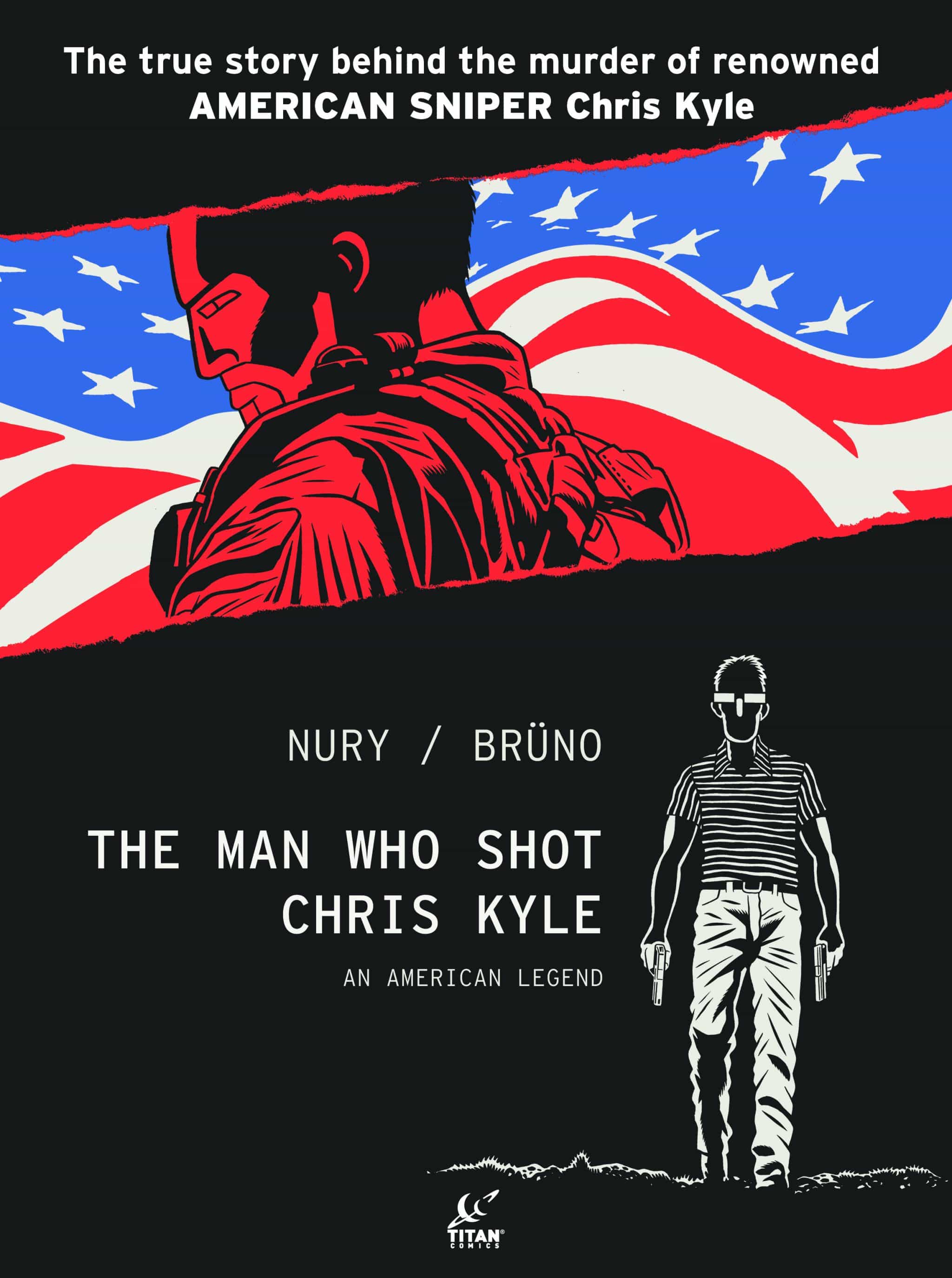
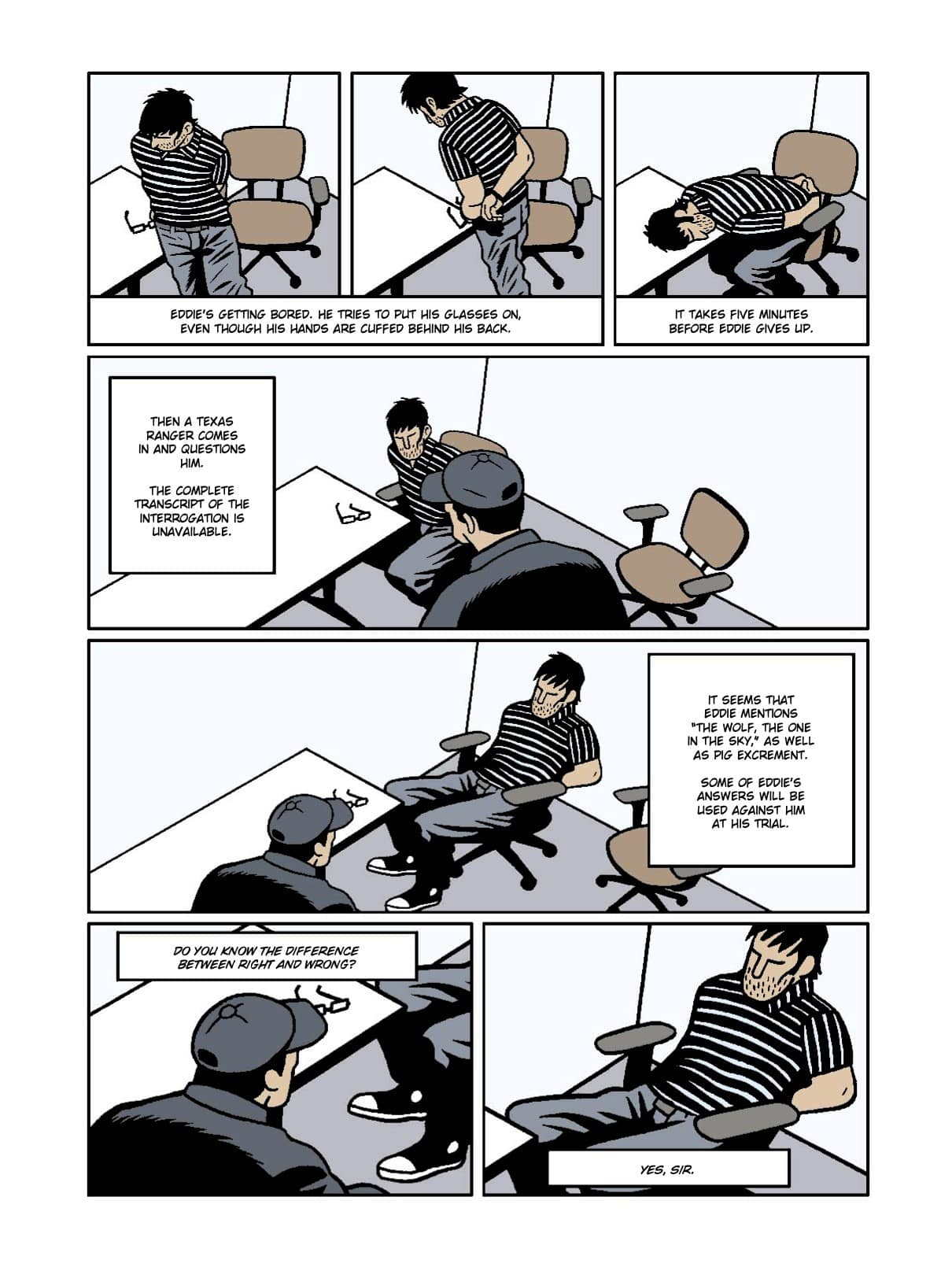
Fabien Nury and Brüno had a difficult task ahead of them when they decided to tackle the story of renowned sniper Chris Kyle, the subject of the Clint Eastwood-directed movie American Sniper. Books about real soldier experiences can be quite rough, difficult to digest even. There’s the temptation to expose and judge the soldier solely based on his actions, context be damned. In cases such these, though, context matters. Military training comes with a very specific set of experiences that blur the lines between duty and morality, both during and after a war.
The Man Who Shot Chris Kyle: An American Legend is a graphic novel documentary (and I use this word intentionally) that goes beyond the subject alluded to in the title. It explores Chris Kyle’s life post-military service, the events that led up to his murder by the hands of Eddie Ray Routh, and how his wife Taya took over her husband’s businesses while also being the face of his estate.
Kyle is known as one of the most effective snipers in American military history, having more than 150 confirmed kills in his service record along with several commendations for “acts of heroism” in combat (most notably during The Iraq War). To argue against the man’s resumé is an exercise in futility. Kyle fulfilled his duty and did so in a fashion that earned him the nickname “The Legend.”
Here’s where things start to get complicated. Upon the release of his autobiographical book American Sniper: The Autobiography of the Most Lethal Sniper in U.S. Military History (co-written by Scott McEwen and Jim DeFelice), and especially during the book’s promo tour, it came to light that Kyle used to refer to enemy combatants in Iraq as “savages”. He never held back in affirming his position on that, although he did clarify that the term was only applied to the enemy soldiers he engaged with in the battlefield due to their treatment of the general populace.
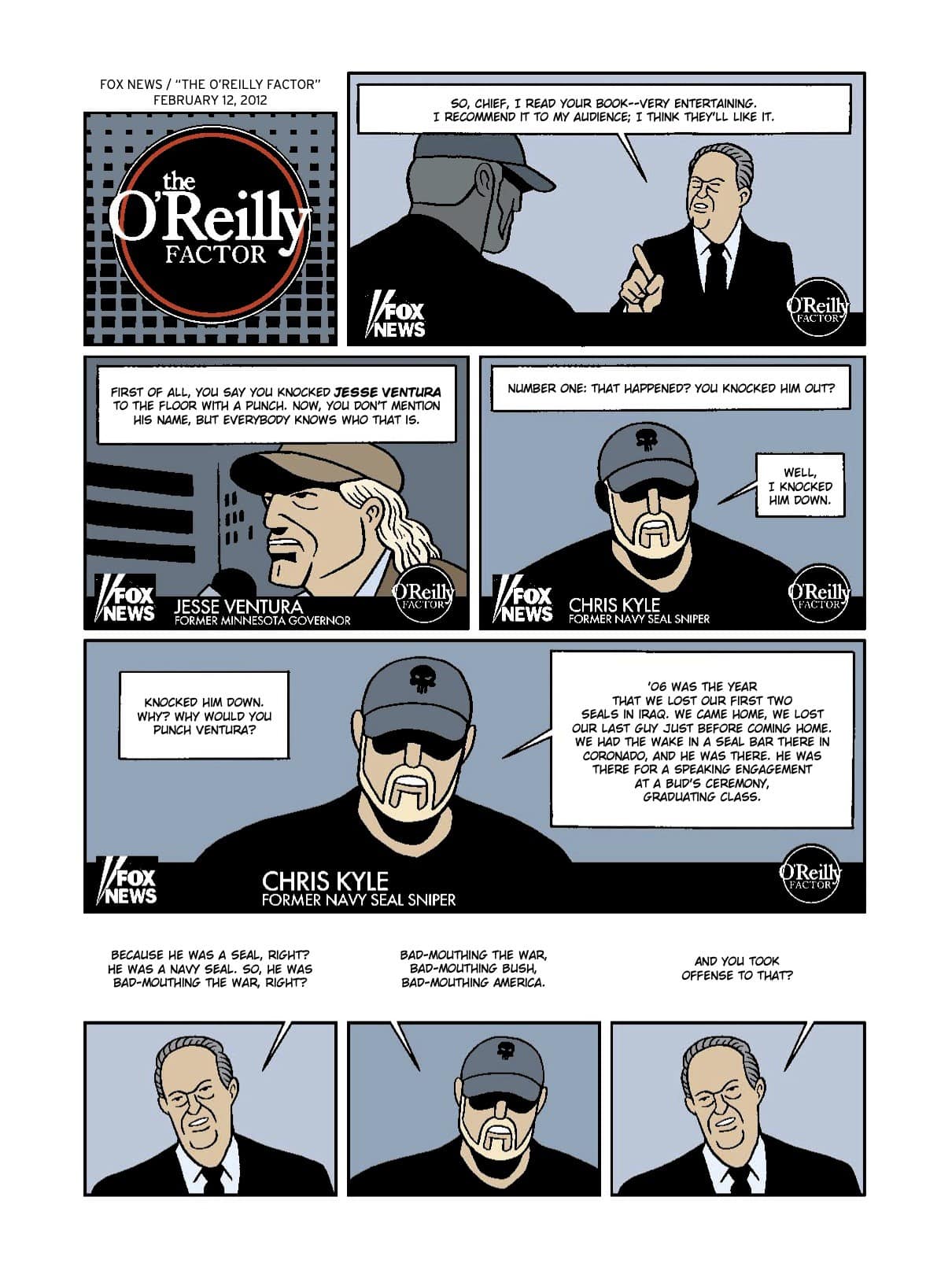
Nury and Brüno decided to approach this part of Kyle’s mentality by letting Kyle do most of the talking. They did so by adopting extensive recreations of TV interviews where Kyle explains his word choice and how it shaped his understanding of the role he fulfilled in the military. Specifically, Nury and Brüno adapted an interview with Fox News’ Bill O’Reilly in which the American Sniper book was being promoted to address the language Kyle used to refer to the enemy.
Nury’s script makes sure the segment doesn’t condemn or support Kyle’s views. They’re just allowed to become a part of the graphic novel documentary, there for the reader to process and think on. Whatever political musings make it to the surface are left entirely to the dialogue exchanges contained within the sequence.
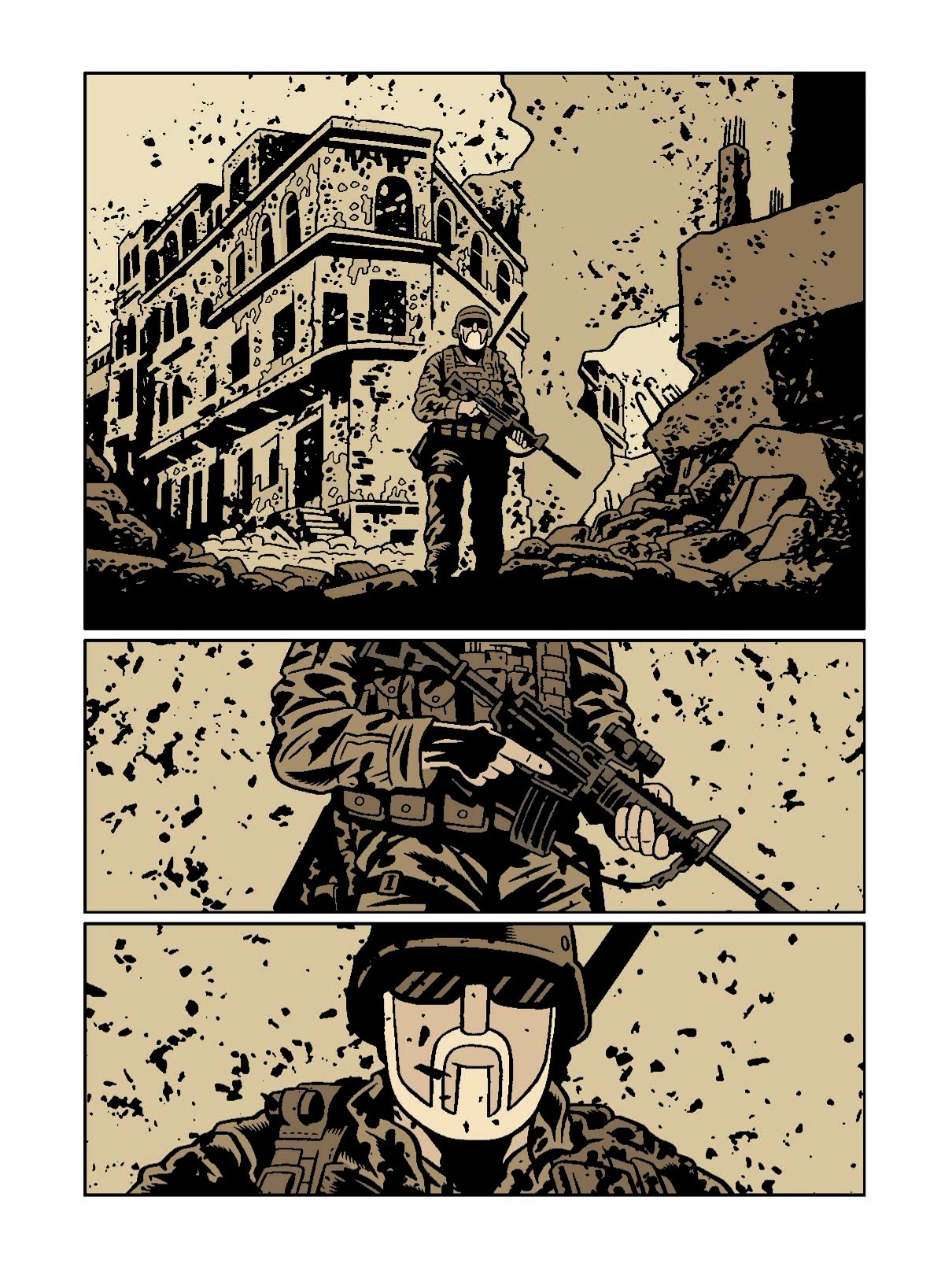
In adopting this approach, the book projects an unbiased quality that lets the reader come to their own conclusions as to Kyle’s worldview. This is also evident in how Nury and Brüno treat Kyle’s enthusiastic appreciation of guns and his support of gun rights. For instance, Brüno doesn’t go out of his way to take special of care of every minute detail usually afforded to guns shown in this type of story.
Guns in The Man Who Shot Chris Kyle are part of the culture Kyle was immersed in. The become an interesting counterpoint to the book’s treatment of the man who shot and killed Kyle and his friend Chad Littlefield, Eddie Ray Routh. Nury and Brüno’s psyche profile of Routh, who was also in the military, is given all the complexity it requires to get to the reason why he turned to murder.
In a sense, Routh is the antithesis of Kyle. His military experience is that of a person at odds with the things he expected from Army life. There’s doubt as to whether he killed anyone while in service or if he ever truly adjusted to life as a soldier. We’re told he admired Kyle and that he perhaps might’ve felt there was some kinship between them based on certain commonalities found in the military experience. Ultimately, though, their lives could not have been more different.
Again, the focus falls on the presentation of as much information as possible for the purpose of understanding the man and his actions. In a sense, Nury and Brüno take as much care not to turn Routh into a classic villain as they do in not making Kyle come off as a heroic martyr. There’s some commentary on gun violence and how it’s at the center of Kyle’s legend and Routh’s crime, but again, they are presented without approval or condemnation.
The Man Who Shot Chris Kyle subscribes to the idea of understanding the events that transpired among the people involved in its story and how they led to the tragedy that transpired in February 2013. Nury and Brüno recognize their story is full conflicts and contradictions, but they don’t try to clean it up. They lean into the messiness and try to portray it sensibly. It’s a delicate balance that needs to be struck for this kind of exercise to be successful, but the creative team achieve it by leaving as much as possible in the reader’s hands.
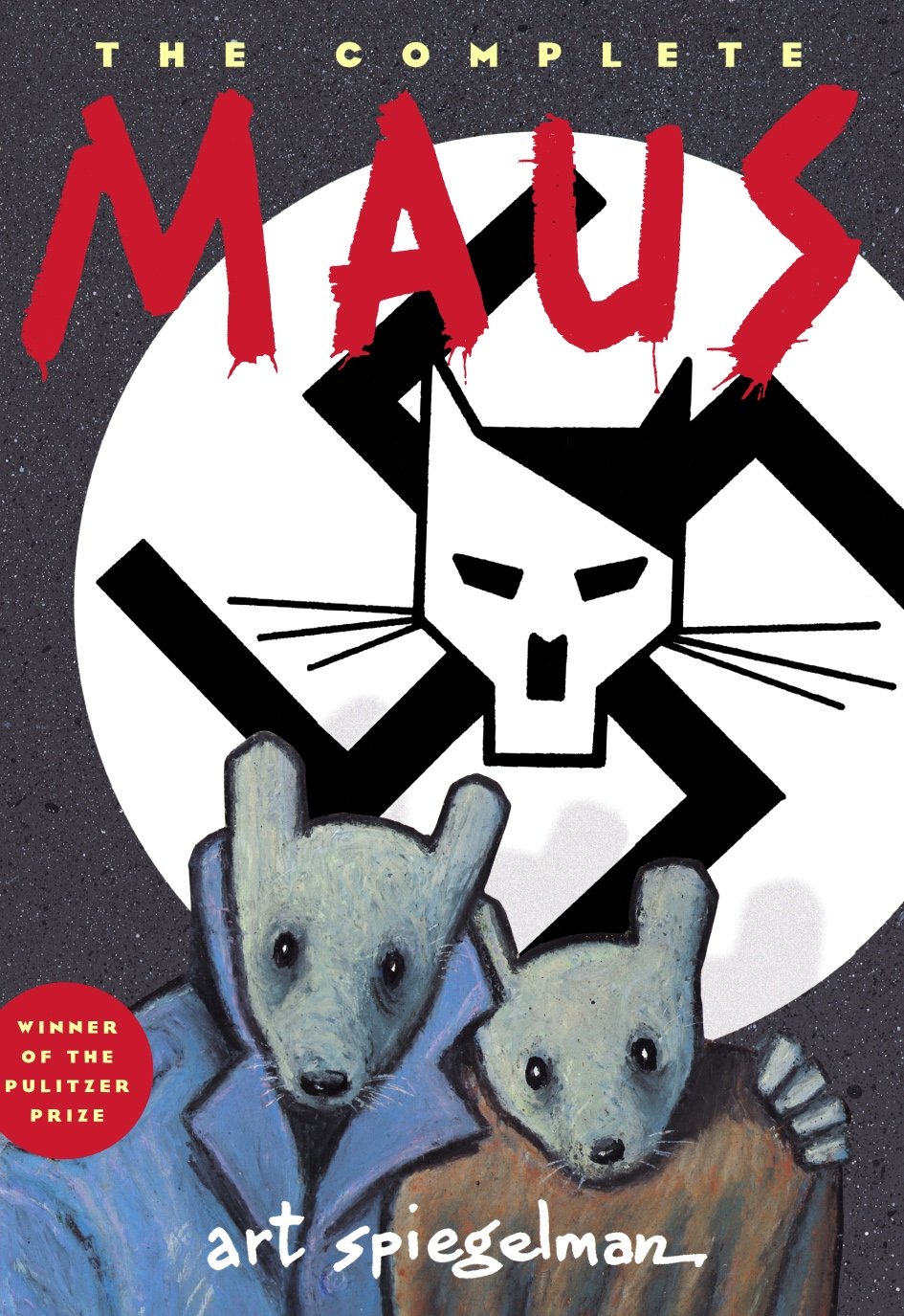
Today is International Holocaust Remembrance Day and inappropriately timed is news that a Tennessee school board has removed, aka banned, Maus from the curriculum due to “language and nudity” concerns.
Maus is the Pulitzer Prize-winning graphic novel by Art Spiegelman about the experiences of Holocaust survivors. The Tennessee school board of McMinn County voted 10-0 to remove the book from the curriculum to be replaced by another book that didn’t feature “objectionable” content. Maus is based on Spiegelman’s parents in 1940s Poland, their experiences of anti-Semitism, and their internment in Auschwitz. Jewish people are depicted as mice and Nazis as cats.
McMinn County Director of Schools Lee Parkison stated:
The values of the county are understood. There is some rough, objectionable language in this book and knowing that and hearing from many of you and discussing it, two or three of you came by my office to discuss that.
The word “damn” was brought up as an example of an objectionable word.
I’m trying to, like, wrap my brain around it. …I moved past total bafflement to try to be tolerant of people who may possibly not be Nazis, maybe… They’re totally focused on some bad words that are in the book. I can’t believe the word ‘damn’ would get the book jettisoned out of the school on its own.
I think they’re so myopic in their focus and they’re so afraid of what’s implied and having to defend the decision to teach ‘Maus’ as part of the curriculum that it lead to this kind of daffily myopic response.
English language arts instructional supervisors spoke out at the meeting explainging why the book was used in the curriculum.
Board member Tony Allman showed further ignorance by stating:
We don’t need to enable or somewhat promote this stuff. It shows people hanging, it shows them killing kids, why does the educational system promote this kind of stuff? It is not wise or healthy.
Allman apparently is more offended of reminding people about the six million murdered than the six million murdered. One wonders what Allman thinks about teaching the reality of slavery, and Jim Crow in the United States which also saw hangings and kids being killed.
An instructional surpervisor responded:
I was a history teacher, and there is nothing pretty about the Holocaust, and, for me, this was a great way to depict a horrific time in history.
Mr. Spiegelman did his very best to depict his mother passing away, and we are almost 80 years away. It’s hard for this generation. These kids don’t even know 9/11. They were not even born. For me, this was his way to convey the message.
Board member Mike Cochran stated in the meeting:
I went to school here 13 years. I learned math, English, reading and history. I never had a book with a naked picture in it, never had one with foul language. … So, this idea that we have to have this kind of material in the class in order to teach history, I don’t buy it.
We highly doubt that was reality and sure Cochran has no issue with the violence, rape, and murder that is depicted in the Bible.
The issue isn’t as it stands isn’t about dropping Maus for another text to teach about the Holocaust. It’s calling it “obscenity”, a slippery slope of a claim. Even the preacher of Footloose realized their mistake and what a slope that claim is. It should also be noted that no text has been suggested to replace Maus showing that part of the argument is dubious at best.
This is the latest example of book banning that is being pushed by right-wing provocateurs to make gains politically by stoking “culture wars”.
As has been shown, a dark money network is funding campaigns against “Critical Race Theory”, something not being taught in schools. This book banning is an off-shoot of that showing these pushes are about as natural as an oral bowel movement. The “movement” is being used as a wedge issue to whip up voters and by the right since they have nothing else to run on. It pits parents vs. bureaucrats (and teachers), a match that’s pretty easy to get traction on. The movement has been working for decades and continues the right-wing push to take over at the local level, first at the state and now even lower to get their regressive agenda passed.
The controversy and backwards thinking has just shined a greater spotlight on Maus causing it to sell out and rocket to #1 in numerous lists.
The below is a guest post courtesy of Priya Saxena exploring the choice by Kitty Pryde to become an X-Man. Priya enjoys reading comics and writing about comics. She hopes to one day own every single issue of the original New Mutants series (except #98, because screw Deadpool) Follow Priya on Twitter.
In the world of the X-Men, one becomes a mutant through birth – arbitrarily – but one must make the conscious choice to become an X-Man. This is the choice that 13-year-old Kitty Pryde is forced to wrestle with soon after she learns that she is a mutant. In Uncanny X-Men #129-131, Kitty becomes entangled in the Hellfire Club’s plot to capture and eliminate several members of the X-Men. This series of issues is well known for kicking off the Dark Phoenix Saga, the storyline in which Jean Grey, known as Phoenix, taps into the dark, destructive side of her recently acquired cosmic powers after discovering she has been manipulated by Mastermind of the Hellfire Club. For this reason, critical examinations of these issues tend to focus on Jean, her descent into Dark Phoenix, and the effects this has on the characters surrounding her. However, these issues also serve as the heroic origin of Kitty Pryde. Although Kitty doesn’t formally join the X-Men until Uncanny X-Men #138, it is in issue #129 that she first truly chooses to be one of the X-Men – a choice she will continue to make again and again throughout her history.
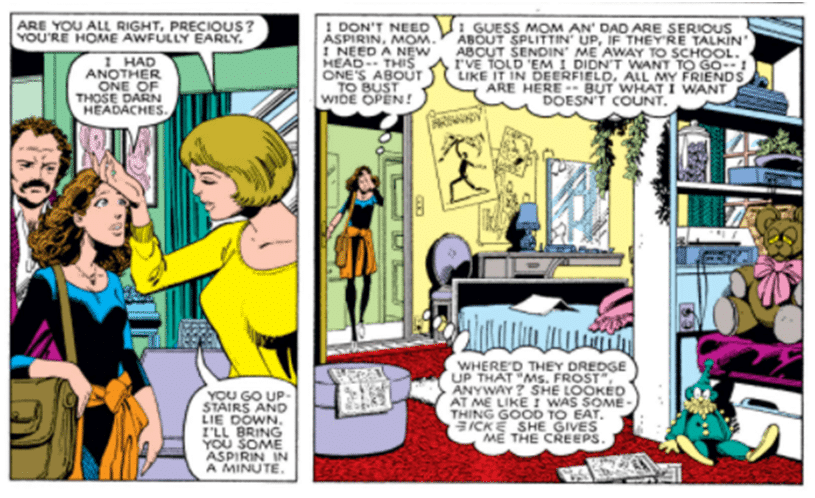
When we’re first introduced to Kitty in #129, she’s got a lot on her plate. She’s 13, her parents are splitting up, they’re looking to send her to boarding school, and she has been experiencing awful headaches. These headaches, we soon discover, have been brought on by Kitty’s emerging mutant power, something that has caught the attention of both the X-Men and the Hellfire Club. From the moment we meet her, it’s clear that Kitty is in a stage of her life that is full of change and upheaval. Equally clear is the fact that she is not happy about it. All she wants is for her life to go back to the way it was, before her parents began talking about divorce and before she starting getting these headaches.
It is no coincidence that we are introduced to Kitty as a teenager here. Many of her woes are related to the adolescent state she’s in, as someone who is not quite a child anymore but not yet an adult. Her parents’ impending divorce and their attempts to send her to boarding school signal the fracturing of her family and the end of her childhood. The emergence of her mutant power occurs at puberty, which previous X-Men comics have established is common for mutants. But the aches and fatigue which accompany the onset of her power are new to X-Men lore, and are rather reminiscent of menstruation symptoms – something else that arises at puberty. Initially, Kitty is frightened by these changes and resistant to them. But like it or not, she must accept the way that her life is changing. Her story across these three issues of Uncanny X-Men is the story of an adolescent who is forced to choose who she is going to grow up to be.
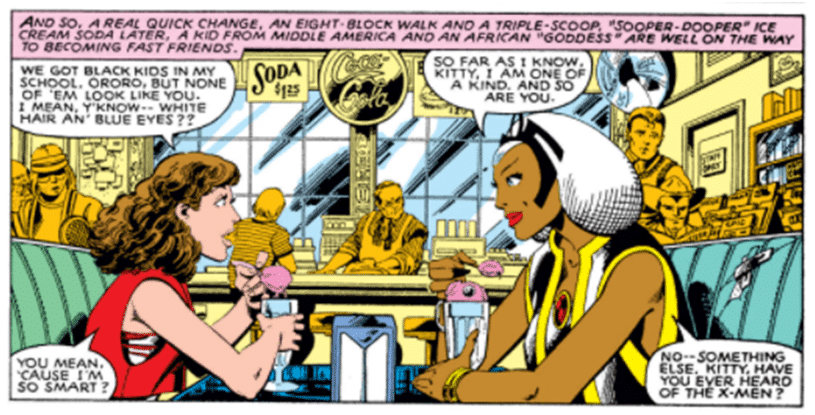
In #129, Kitty comes home from dance lessons to find her parents talking with Ms. Emma Frost, representative of a school in Massachusetts and, unbeknownst to Kitty or her parents, the White Queen of the Hellfire Club. Even though Kitty doesn’t know about Frost’s villainous background, she immediately dislikes the woman. Right after Frost departs, the Pryde household is visited by Charles Xavier and several of his X-Men. Like Frost, Xavier seeks to convince Kitty’s parents to allow her to attend his school. But unlike Frost, Xavier’s intentions are good; while Frost intends to recruit Kitty into the Hellfire Club for nefarious purposes, Xavier wants her to join the X-Men so she can learn to control her powers and defend herself. While Xavier talks with Kitty’s parents, Kitty goes to the malt shoppe with the other X-Men. She decides she likes Ororo Munroe, known as Storm, as instantly as she had decided she disliked Frost.
Emma Frost and Storm are very clear parallels here. For Kitty, they represent the two possible paths she could take, although she doesn’t yet know just how drastically they are opposed to each other. She could go with Frost and become initiated into the Hellfire Club, deceiving and manipulating others for personal gain. Or she could go with Ororo and join the X-Men, protecting humanity from mutant threats and working to achieve Xavier’s dream of a world where humans and mutants are equal. Looking at Kitty’s amazed expression as Ororo tells her that she and the others are X-Men while they chat and have milkshakes together, it seems obvious that Kitty will choose Ororo and the X-Men over Emma and the Hellfire Club. However, the attack and abduction of the X-Men by the Hellfire club soon complicates things.
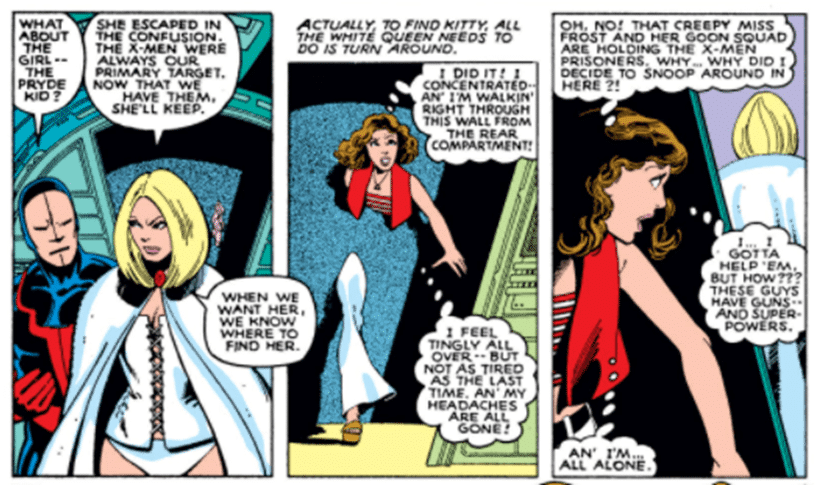
In the mayhem of the attack in the malt shoppe, Kitty accidentally uses her mutant power to escape, phasing outside the building. The X-Men fend off some of their attackers, but a telepathic attack from Frost, now in her White Queen attire, takes them down. Frost and some Hellfire goons load the unconscious X-Men onto their hovercraft. The final page of the issue shows Kitty sneaking onto the hovercraft using her phasing power and observing Frost and her lackeys rendering the X-Men defenseless. Kitty is horrified by this sight. She feels obligated to help the X-Men, but also recognizes that she is way out of her depth.
Uncanny X-Men in this era is very interested in choices and their repurcussions. At the end of the Dark Phoenix Saga, Jean Grey makes the choice to sacrifice her life in order to stop Dark Phoenix from causing more death and destruction. A few issues later comes the Days of Future Past storyline, which imagines a grim, dystopian future for the X-Men that came about as the result of anti-mutant legislation in response to mutant terrorism. In both of these situations, it is the actions of one person or a small group of people at a particular point in time that have drastic effects on the rest of the world – the rest of the universe, even.
At the end of #129, Kitty is faced with a choice: whether or not to help the X-Men. The outcome may not be world-shattering, but it is nevertheless crucial for Kitty as a character. One option would be for her to simply turn around and leave the way she came, phasing through the back of the hovercraft and abandoning the X-Men. Neither the White Queen nor the X-Men would even know she had been there. She could allow the X-Men to meet whatever horrific fate the Hellfire Club has in mind for them, and wait at home for Ms. Frost to contact her family about boarding school again.
The other option is the more life-threatening one. Kitty could stay and try to help the X-Men escape. In doing so, she would be making an enemy of Emma Frost and the Hellfire Club. Given the Hellfire goon’s weapons and the White Queen’s psychic powers, Kitty could be caught, injured, or even killed. But at least she wouldn’t be turning her back on her newfound friends. Also, if she helps the X-Men, then they might be able to help her avoid the clutches of the Hellfire Club.
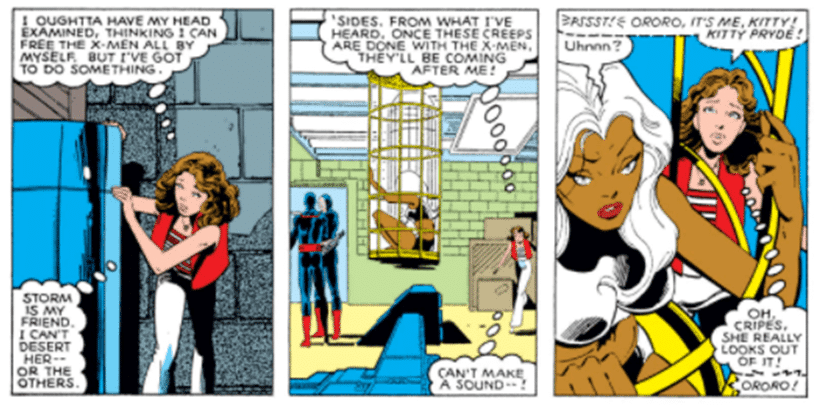
In #130, Kitty makes her choice. Hiding in the industrial complex where the White Queen has imprisoned the X-Men in cages, Kitty thinks, “I oughtta have my head examined, thinking I can free the X-Men all by myself. But I’ve got to do something. Storm is my friend. I can’t desert her—or the others.” In the next panel, as she sneaks toward the cage holding Storm, she thinks, “’Sides, from what I’ve heard, once these creeps are done with the X-Men, they’ll be coming after me!”
In this moment, Kitty choses Storm over the White Queen. She chooses the X-Men over the Hellfire Club. In sneaking over to help Storm, she shows her allegiance to Storm and the rest of the X-Men. Although Kitty is well aware of the danger, she tries to help Storm anyway because of the friendship she feels toward her. This friendship causes her to feel a responsibility to help Storm and the other X-Men. Her desire for the X-Men to protect her from the Hellfire Club factors into her decision to help them, but it is secondary to her need to stand by her friends.
In a larger sense, this is Kitty taking her first step into her new life. Now that she has shown her allegiance to the X-Men, her life will be forever changed. In #130-131, she helps the X-Men by calling Xavier’s mansion for backup and, as Cyclops instructs, sneaking back into the compound and freeing Wolverine from his cage. It is frightening for her, this teenage girl who discovered her powers and met the X-Men only a few hours earlier. But Kitty and all the X-Men make it out safely, and it’s all thanks to Kitty’s help.
At the end of #131, Kitty returns home to her worried parents. But she won’t be staying there for too much longer. Kitty’s parents decide to send her to Xavier’s school (albeit in part due to Phoenix’s mental manipulation), and she shows up on the steps of the mansion in #138. From there on out, she begins training with the X-Men, learning to control her powers and becoming better acquainted with the other members of the team. She leaves her old family behind and integrates herself into a new one, all because of her decision to help the X-Men instead of fleeing. She takes this essential step in determining what kind of adult she is going to be and what kind of life she is going to live.
The X-Men are often described as a family, and that’s what they are to Kitty. In this tumultuous time in her life, with her parents splitting up and her powers emerging, she craves a stable core of people who will love and support her. She finds this in the X-Men. Not only do they welcome her onto the team, they nurture and guide her, both in the use of her powers and in her moral and psychological development.
The X-Men provide the sort of care that Kitty needs in this stage of her life as she transitions from child to adult. Kitty’s parents wouldn’t have been able to nurture Kitty in this way, because they are humans and because she has outgrown them for the time being. The Hellfire Club would have nurtured her in a very different way, perhaps grooming her to become evil just like them. So it is something very unique and valuable that Kitty Pryde receives from her time with the X-Men. Clearly she made the right and necessary choice for her personal development. Who she becomes going forward – X-Men member, Excalibur co-founder, X-Men schoolteacher, Marauders leader – can be traced back to this very crucial moment early on in her publishing history, where she chooses compassion and growth over cowardice.
Jane Cleaver: “It’s words. It’s a game. You say whatever it takes to win.”
David Murch: “Well, maybe that’s the problem.”
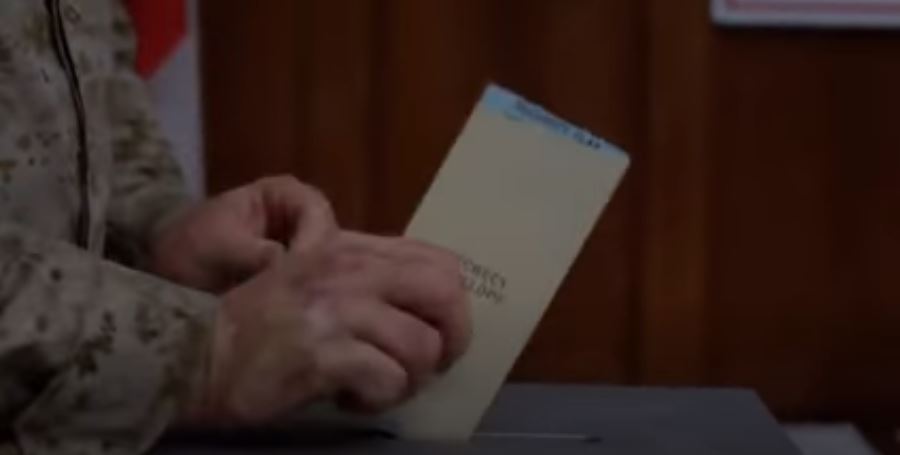
This dialogue exchange happens early in Homecoming (dir. Joe Dante), a strange but unique zombie story from the Masters of Horror anthology series created by director Mick Garris (The Stand). It serves as a preamble for what’ll come soon after the two conversations between the two characters ends, which flips the zombie formula on its head with bravado. An army of undead war veterans rallies from beyond the grave for one final mission: to vote against the president that sent them to war based on a lie. A lie that killed them.
The episode came out in 2006, two years into George W. Bush’s second term as president, at a point where the ‘weapons of mass destruction’ excuse used to justify the War on Terror was wearing off and being heavily portrayed as the lie that got the US stuck in the Middle East (and the reason why dead soldiers come back to vote in Homecoming).
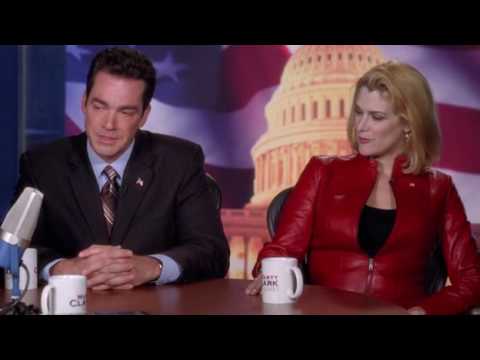
Homecoming follows a White House speech writer called David Murch as he navigates Bush’s reelection with a team of public relations pundits hellbent on winning the election, by any and all means necessary. During a televised panel discussion, Murch is confronted by the mother of a dead soldier who’s protesting the war, which inspires the conflicted speech writer to sincerely wish her son could come back and tell the world why he died for his country. He gets his wish, only it comes with a battalion of undead combatants desperate to fulfill their civic duty.
Watching it now, just as Americans are casting their ballots on the Biden v. Trump election, it’s unsettling how relevant this story still is, if only for its discussion on how politics is ultimately a game of words. As Murch and his team pick up on the fact zombie votes are leaning towards the other side, a mad dash for control of the narrative takes place. What was first scene as an act of patriotism—rising from the grave to vote—becomes an un-American rebellion looking to steal the election from the living.
Homecoming
While Homecoming is firmly rooted in the context of the Bush presidency, it comments enough on the dangers of political storytelling to effectively turn its metaphors on the politics of today. Murch will struggle with his own morality throughout most of the episode, always hesitant as to how and when to use the undead as part of the campaign. Here’s where Jane Cleaver comes into play.
Basically a stand-in for Ann Coulter, Cleaver becomes the right-wing commentator that puts on her radical pro-America persona when in front of a camera only to later admit she’ll say anything to secure her party’s victory. She basically stands as the unethical extreme of public discourse. The game, as Cleaver puts it, is won by the best storyteller. Homecoming does a magnificent job of proving this point through her, with the other PR people acting as her chorus, encouraging her to further spread her warped political views.
There are a lot of parallels between Cleaver’s philosophies and Kellyanne Conway’s media performances (which she had to put on as the former counselor to the President), especially when she was asked to explain or defend Trump’s comments on most about everything. There’s a scene in Homecoming, after the soldiers have revealed who they’re voting for, where Cleaver doubts the legality of undead voting after previously championing it. She supported the undead vote before she knew the problem it posed to her party. Conway’s “alternative facts” statement comes to mind here, which was uttered when asked to comment on the actual number of people that attended Trump’s inauguration. It’s as if you can trace a solid genealogical line, if you will, from Bush era politics to Trump era politics. The side with the best spin on information wins the crowd, and potentially their vote.
Homecoming
It should come as no surprise to Joe Dante fans that this movie is as blatantly political as it is. As Homecoming’s director, Dante pulls out every trick in his book to make each metaphor land. Be it the violent nature of American politics (seen in his werewolf movie The Howling) to a people’s inability to keep chaos at bay by following simple instructions (Gremlins), Dante likes to put his movies’ messages in full view, covered in blood if he has to. Homecoming is no different.
During a televised Presidential rally, Murch and Cleaver ruminate on Bush’s ability to command an audience. Cleaver asks just what it is about the President that makes people adore him. Murch responds, “He’s not stupid. He has a way to make stupid people feel like they’re just as smart as he is.” A bit crude, but it speaks to the power of storytelling. In Bush’s America, militaristic values were the way to win hearts and minds, especially after 9/11. There was an appeal to patriotism that the Bush administration took and turned into a party value. As a result, to criticize the war was to criticize the need to protect America, to badmouth its soldiers. Being anti-war meant being un-American.
Homecoming
In Trump’s America, the idea is to show America as a place that’s been robbed of greatness by liberal policies that see their own country as the problem. The principle is the same. It’s just a matter of taking outdated story elements out and putting new ones in. By then, it’s a race of two stories and it all boils down to the side that tells it better.
Homecoming is a horror story with a call to action. It’s not cynic in its entirety but it’s not entirely hopeful either. It’s about awareness. Stories are never one thing or another in the world of politics. They’re in constant spin and can spiral out at any moment to the benefit of those who can harness their power best. It might take zombie voters to come back and put us all in our place for things to get better. Until then, it’s up to the living to make sure we don’t screw up so bad this time.
A little over a week ago, Dynamite Entertainment found itself in hot water after the publisher’s involvement with the harassment group Comicsgate was fully unraveled. What started as anger over covers turned into a revelation the involvement was much deeper. The comic publisher had been releasing variant covers with CG involved individuals for some time now and it was revealed after things had boiled over that Dynamite founder Nick Barrucci had been working with Comicsgate ringleader Ethan Van Sciver in various capacities.
Comicsgate is a harassment campaign presented as a consumer revolt. A conservative, regressive backlash to the world moving forward with equality and generally growing up. You can read more about it here.
Dynamite has officially released a statement regarding their involvement and the fallout from it.
Dynamite Entertainment is a partner in the fight for equality and inclusion. Our company was founded on these core values more than 15 years ago and they are essential to the creative process – the work of visionary artists and entrepreneurs – that we are passionate about. Intolerance has no place in our company or our industry. The impulse behind this brief association was that of helping a friend of many decades and his family, and not how that assistance could potentially affect our valued colleagues, partners, and friends. That association is behind us and this time has strengthened our resolve to continue working with the most diverse talent in creating the best comics possible.
It’s a statement…
What the statement glosses over is the publisher, and more importantly Barrucci’s, actual involvement with the movement that has been ongoing for years. Were they instrumental in getting EVS up and running? Did they connect and hire creators? What other services did they provide? These are all unanswered questions that will haunt the publisher until it comes clean. While being involved with Comicsgate the publisher at the same time was hiring rather progressive creators, some of whom have been targets of CG. It feels like a poor attempt to have their cake and eat it too.
The initial reaction to the statement has been one of skepticism and a general consensus that it’s a weak attempt at a response.
Dynamite and Barrucci need to sit down and answer hard questions to get behind the situation and come clean with their involvement and more importantly show through action their values. As a saying goes, deeds not words, and it’s a saying they should be focusing on as a publisher.
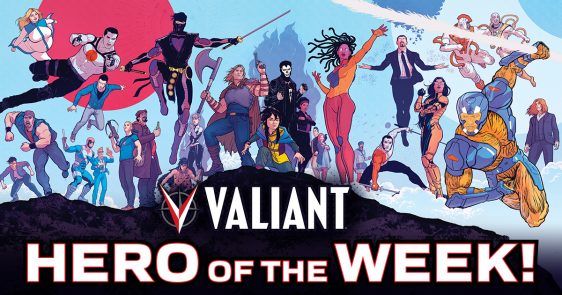
Every Monday for the next few weeks, Valiant Entertainment is running a poll on their Twitter feed to provide fans with some escapism while new comics are in short supply. The poll allows Valiant fans the opportunity to select the Hero Of The Week from four choices – this week, the poll features Ninjak, Doctor Mirage, Quantum & Woody and Animalia. That week’s hero will then be the focus of free pdfs featuring the character, videos from Valiant staff, giveaways, and more.
Which superhero would make the best professional chef: Animalia, Quantum & Woody, Divinity, or Doctor Mirage?
Vote here to decide the Hero of the Week, and make sure to tell us what you think in the replies! Signature dish? Restaurant name? Location?#ValiantAndQuarantine
At Graphic Policy, we’re going to be running a spotlight on the winning character all week through various features depending on the character, but at the very least you’ll see our favorite covers and stories.
But Valiant has a lot of great characters, and it’d be a shame to not let you know which stories to read to get to know some of them a little more in case they don’t end up winning the fan vote. This week’s characters are a prime example of this, and the exact reason that we wanted to shine a little light on all four ahead of the week.
Below you’ll find a brief snapshot of the character and a trade paperback or two to check out. For fun, I’ll also note who I think is most likely to win (bear in mind this is being written on Sunday).
Doctor Mirage
Who is she? Shan Fong. A woman who can communicate with the dead, including her late husband Hwen (who is the Doctor Mirage from the original Valiant run that began in the 90’s). She is also a former reality television star and a woman versed in magic. If there’s a supernatural threat, then Doctor Mirage is going to be the first person that the general public turn to.
What should you read?
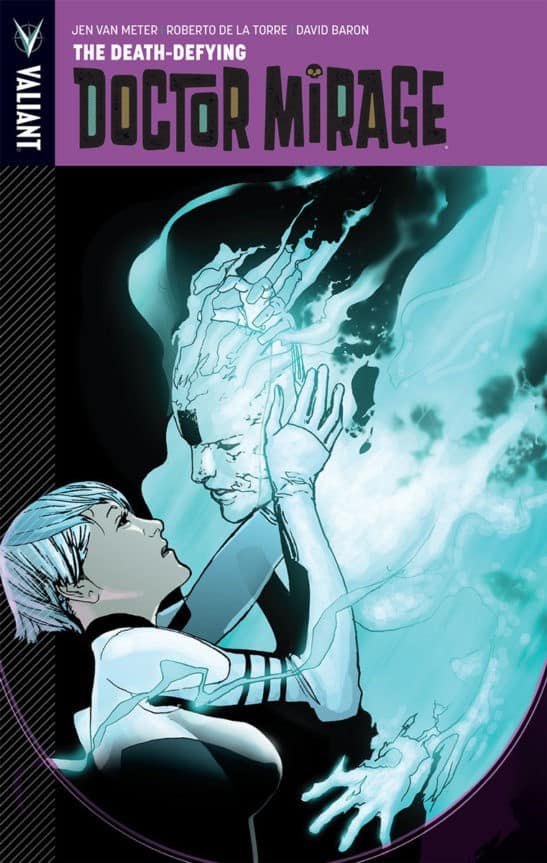
The Death-Defying Doctor Mirage
Doctor Mirage talks to the dead…but the only spirit Shan Fong can’t find is that of her late husband, Hwen. Instead, America’s favorite semi-retired paranormal investigator is haunted and raw, using her gift to solve homicides and bring peace to the recently bereaved. But when a big-time occultist with a classified military past hires her for a special job, Shan discovers a lead that might close the greatest mystery she’s ever tackled – how to get Hwen back. Now, Doctor Mirage must enter the undiscovered country and cross all the realms of the underworld, if she has any hope of rescuing the man she loves…or be forever lost beyond the earthly plane.
I copied the above directly from Valiant’s website because I couldn’t remember much about the book other than I really enjoyed the story, which is great because this also happens to be a great place to pick up the character’s story.
Who is he? One of the three most powerful beings in the Valiant universe, Divinity was a Russian Cosmonaut who gained phenomenal power, and can manipulate reality as he sees fit. Essentially a man who has become a god. Fortunately, he is also a pacifist and just wants to be left to himself. You can imagine how that ends up.
What should you read?
Divinity
At the height of the Cold War, the Soviet Union – determined to win the Space Race at any cost – green lit a dangerously advanced mission. They sent a man farther into the cosmos than anyone has gone before or since. Lost in the stars, he encountered something unknown. Something that…changed him.
Long thought lost and erased from the history books, he has suddenly returned, crash-landing in the Australian Outback. The few that have been able to reach him believe him to be a deity – one who turned the scorched desert into a lush oasis. They say he can bend matter, space, and even time to his will. Now the rest of the world’s powers must decide for themselves – will the enigmatic Divinity offer his hand in friendship, or will Earth’s heroes find themselves helpless against the wrath of the divine?
The above text, again taken from Valiant’s website, describes a four-issue miniseries that introduces the character, and is an example of some of the best stuff Valiant put out. Divinity kicks off a four-part epic encompassing the Divinity trilogy and culminating in Eternity. Regardless of whether Divinity wins the poll this week or not, I highly recommend you reading the books.
Who are they? Yes, they. While one can wonder about the technicality of including two characters as one, Quantum and Woody are inseparable. Including one and not the other would make as much sense as playing football without a ball. It’s just not the same. Quantum and Woody are adoptive brothers who must touch the golden bracelets on their arms once every 24 hours or they’ll explode into nothingness – potentially taking the planet with them. That the brothers are polar opposites only makes the comics even better; Eric Henderson, aka Quantum, hides his identity to protect those around him because he wants to be a hero. Woody Henderson doesn’t. He’s all about the fame.
What should you read?
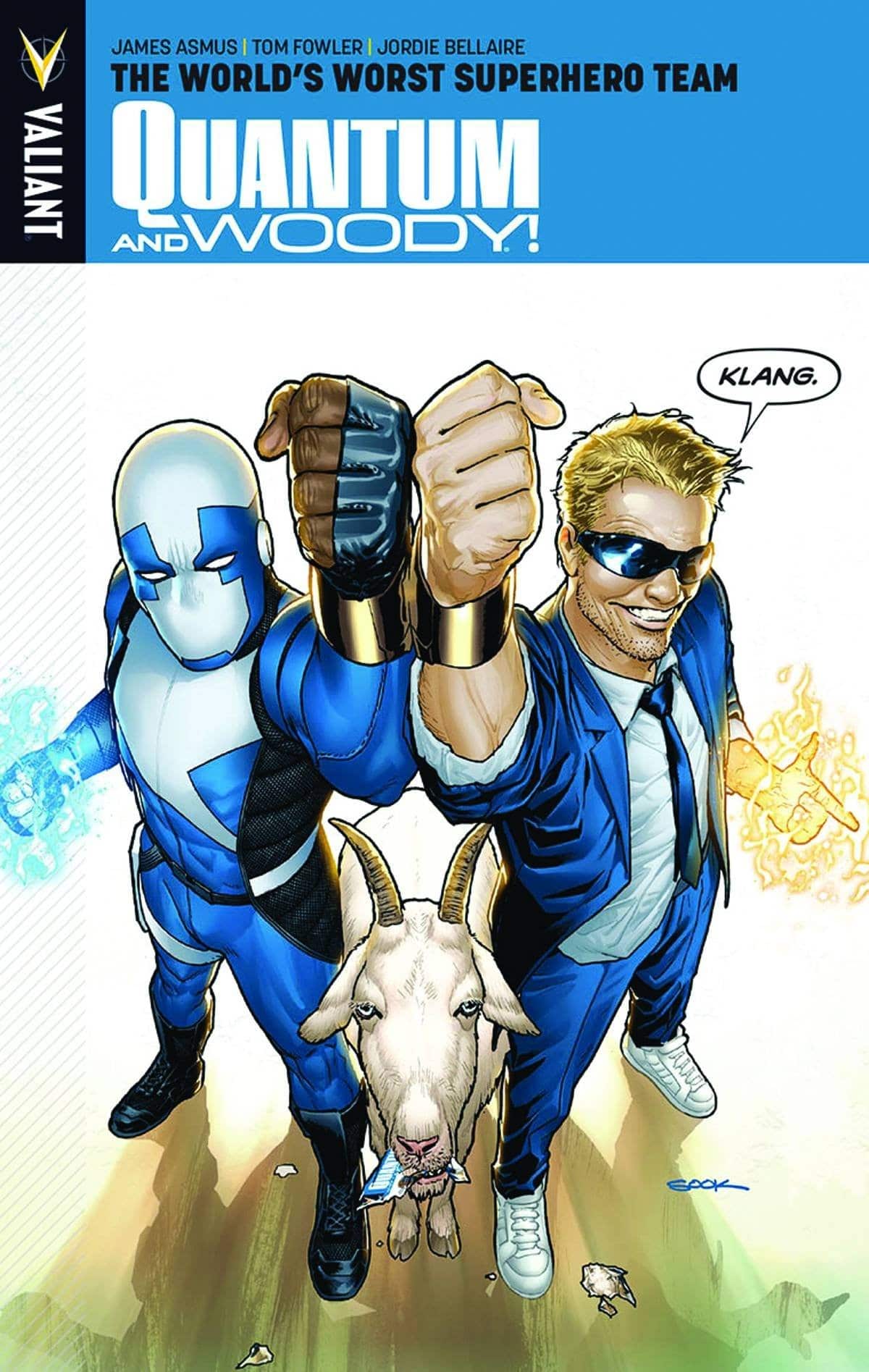
Quantum And Woody: The World’s Worst Superhero Team
Honestly, the Quantum and Woody story I’m the most taken with is the one being released currently. However, that’s not ideal for you if you’re looking to check them out now because the last two issues will be released…. eventually. Instead, then, I’ll point you to Quantum And Woody: The World’s Worst Superhero Team because it’ll introduce these guys to you in the most honest way possible. The title alone should give you an idea as to what you should expect; this book isn’t dark and moody but is injected with humor as it deals with the estranged brother’s relationship and their new place in the world.
Who Is She? A former child soldier for Project Rising Spirit, Animalia was one of the psiots rescued by Bloodshot during the first Harbinger Wars. Her psiot abilities allow her to create constructs of animals (real or imagined), which in turn grant her incredible strength and durability and flight (though within the construct she is still vulnerable).
What Should You Read?
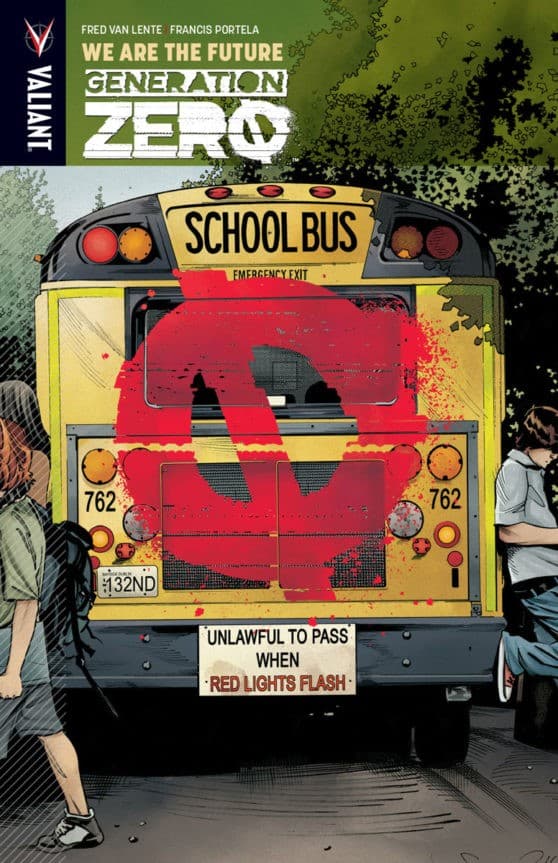
Generation Zero: We Are The Future
Generation Zero: We Are The Future may not be her first appearance, but since that has been recommended numerous times across the Bloodshot, Peter Stanchek and Toyo Harada, rather than recommend Harbinger Wars and the final volume of Harbinger, I think that this volume is also worthy of a look.
The Generation Zero story has the young psiots that were rescued from Project Rising Spirit offering up their services to other kids who are being downtrodden, who need help, and have nowhere to go. It’s kinda like the Littlest Hobo meets the X-Men, and it works better than you’d expect.
This post contains affiliate links, which means that if you click on one of the product links and make a purchase, we’ll receive a percentage of the sale. Graphic Policy does purchase items from this site. Making purchases through these links helps support the site
When you look at the typical comic book bad guy, there is often a clear cut case of black and white. Hero and villain. Good verses evil. This is never clearer when it comes to the Joker, or Sabretooth (although that has been known to be more in flux over the last half decade or so). However with some antagonists it can be a bit murkier, sometimes a villain’s motivations are almost understandable when you take a moment to remove yourself from the hero’s narrative. When you look at the antagonist’s motivation removed from the protagonist’s story you can begin to see that when experienced from a different angle, these characters wouldn’t be seen as villains.
The Thin Line Between Good And Evil aims to take a look at the characters traditionally portrayed as villains within the world of nerd culture, primarily comics, and explore if it were their story we were reading, whether the villain would instead be seen as a hero.
This month, in honour of Valiant’s Hero Of The Week event, we’re taking a look at Toyo Harada.
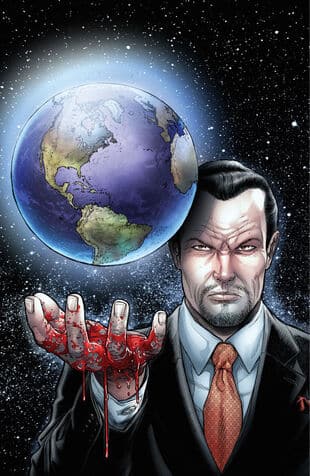
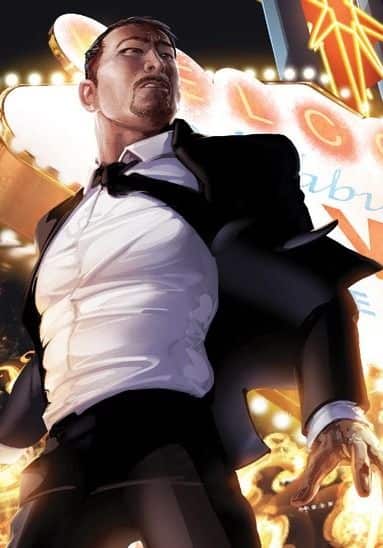
At first glance, you could be forgiven for thinking that Toyo Harada is just your standard evil overlord/CEO, but that would be doing a huge disservice to the character. Instead, it’d be slight more accurate to suggest he’s a blend of Professor Xavier and Magneto, but only in broad strokes.
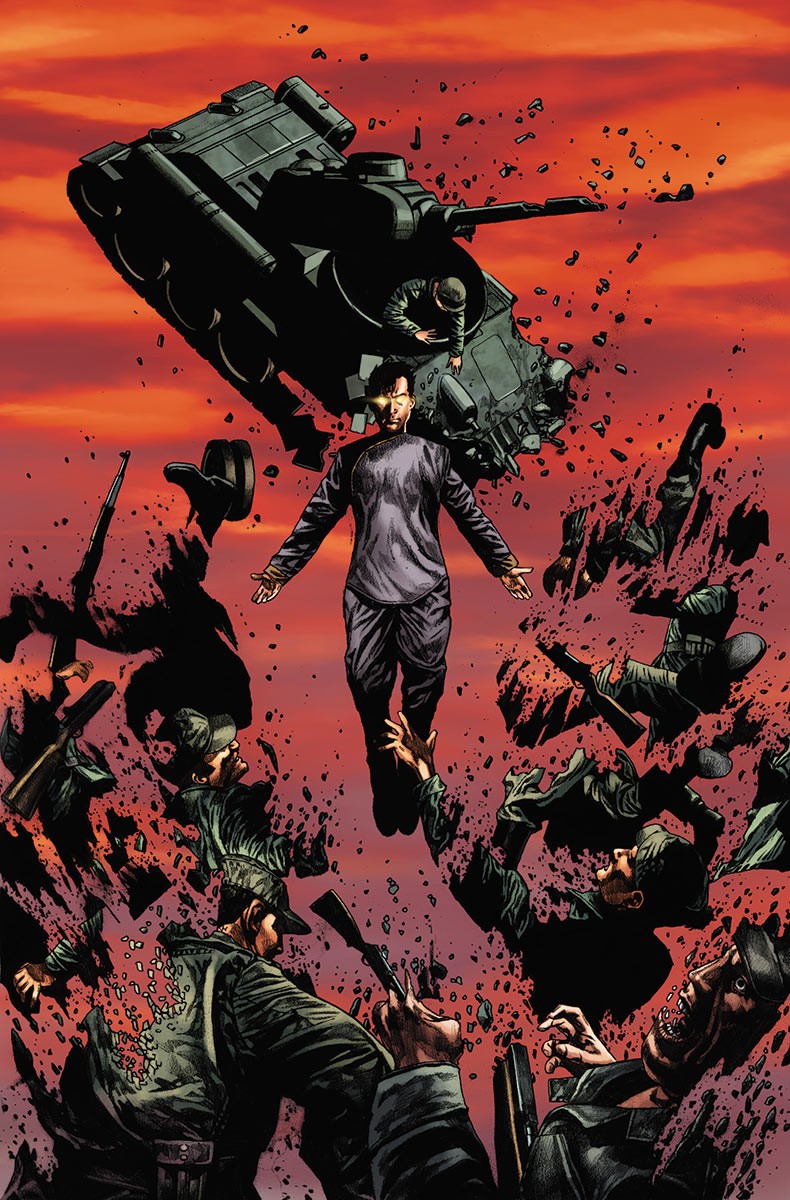
Harada is a rare psiot born with incredible telepathic and telekinetic powers; within the Valiant Universe, most psiots are dormant until they’re activated – usually by an incredibly painful and risky procedure – but very few, often the most powerful, are born with their abilities activated. Harada’s abilities were activated by the nucleor weapon dropped on Hiroshima, and this understandably shaped a lot of the man he would become (explored in detail during The Life And Death Of Toyo Harada, though it is touched upon in Harbinger and Imperium briefly).
Toyo Harada is arguably one of Valiant Entertainment’s more complex characters. He is a Psiot using his incredible telekinetic and telepathic powers in order to shape the world into a better place for everyone by using his company’s immense wealth for philanthropic efforts. Harada’s methods haven’t always been perfectly angelic, and he exemplifies the phrase “the end justifies the means.” But his heart has always been in the right place.. his end goal is to end war, to which he conquered a small country… and then tried to turn it into a Utopian free state (in Imperium).
The more you learn about Toyo Harada, the more you realize that he’s far from an evil man. He spent decades trying to influence political policy, gradually and gently nudging the world in the direction of a Utopian future while gathering and training the smartest minds and craftspeople of their generation to further the technologies that humanity will come to rely on.
Only for some ungrateful little drug addict that wants to start to tear down everything you’ve worked for (which you can read all about in Harbinger). Now it wasn’t all Peter Stanchek’s fault; circumstances didn’t quite favour Harada. He’d spread himself too thin, and eventually the final straw landed upon his back and things started to fall apart, but one has to wonder whether things would have been different if not for Stancheck. Whether Harada could have continued to guide the world in the shadows rather than forcibly showing governments how to create a self sustaining society.
But this column isn’t about recapping the man’s history; there’s a great resource here if that’s all you want to know, or you can check out the links below with the first volume of Harbinger, which kicks the saga off.
Instead, we’re here to look at why Toyo Harada is considered a villain, and I genuinely think it’s because of how he’s been framed in stories. When reading Harbinger, you’re following the story of Peter Stanchek and the Renegades. In X-O Manowar and Unity you’re naturally rooting for X-O because of Harada’s desire to acquire the armour whilst also preventing a cataclysmic confrontation.
If it wasn’t for that, and his penchant for making some questionable decisions in pursuit of (what he believes to be) the greater good, then I’m sure I wouldn’t be alone in viewing Toyo Harada as Valiant’s greatest hero. He’s doing what he feels he needs to do to save the world, despite our best efforts to the contrary. He’s been working for decades to make the world a better place, and in the grander scope of things he forms the question: can we save ourselves, even if we wanted to?
That’s what this really comes down to; as a global society, are we really capable of lifting the most unfortunate and desperate members up and coming together to save ourselves? Toyo Harada clearly doesn’t think so, and I’m inclined to agree with him. Toyo Harada is the villain we need to save our world.
This post contains affiliate links, which means that if you click on one of the product links and make a purchase, we’ll receive a percentage of the sale. Graphic Policy does purchase items from this site. Making purchases through these links helps support the site.