Tag Archives: World War II

Uber Volume 1 will simultaneously intrigue and horrify readers

In advance of Kieron Gillen and Caspar Wjingaard’s upcoming comic The Power Fantasy, we’re revisiting some of Gillen’s previous creator-owned work.
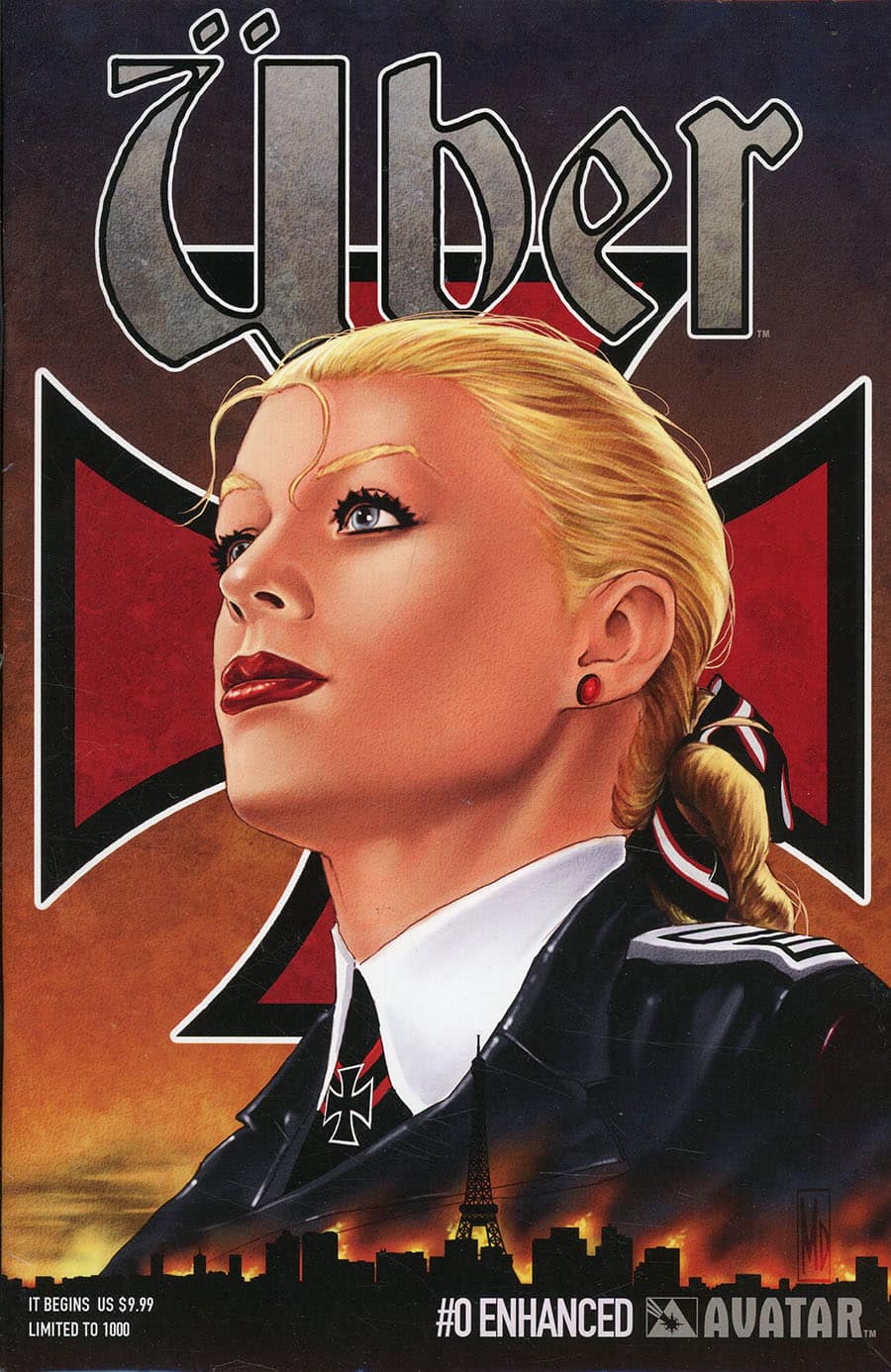
Uber Volume 1

Uber has been on my “to-read” list for the better part of a decade. It’s an alternate history/superhero comic from Kieron Gillen, Canaan White, Keith Williams, and Digikore Studios set in World War II where the Germans are on the edge of surrender (Hitler literally has a gun in his mouth.), but then they have a breakthrough with superhumans, who are of course called “Ubermensch”, drive the Soviet Red Army back, and prolong the war beyond its actual historical end. The first volume introduces this brave new world with a huge ensemble cast, including actual historical figures like Winston Churchill, Heinz Guderian, and of course, Adolf Hitler, and shows the superhuman arms race between Nazi Germany and the Allies, predominantly the United Kingdom. White and Williams’ visuals marry Bryan Hitch’s widescreen visuals (Especially when the superhumans use their abilities.) with the grit, grime, and entrails of Darick Robertson’s work on The Boys. Uber reads like an intelligent, blockbuster war film or miniseries, but the ultraviolence and “equal time” given to both Nazis and Allies means that it would probably not be greenlit so it’s nice to see its creators use the creative freedom provided at a small publisher like Avatar Press to tell a story that is both well-researched (Gillen wrote a 30,000 word series bible.) and visceral.

Although English spy Stephanie is a total badass and provides the few hopeful moments of the series when she steals the Nazi formula for creating superhumans as well as copies of the books with information about enhancing humans, Uber isn’t constrained by a typical hero/villain narrative. But this action is tempered by her torturing and experimenting on participants in the German superhuman programs. Gillen and Canaan White cut between the Allies, Germans, and Soviets and almost journalistically show their motivations, strategies, and moral failings. The Nazis have the most, of course, like when Hitler overrides his generals and tells the superhumans to kill almost one million Soviet prisoners. Moments like this along with Allied characters dropping like flies throughout the volume adds a tone of menace and fear, especially in the climactic battle where the German female superhuman Klaudia aka Sieglinde eviscerates the British superhuman, the American-born O’Connor revealing that this isn’t going to be a Marvel MAX Captain America comic.

The horrific side effects around the testing and creation of superhumans whether Ubermensch or His Majesty’s Humans (HMH) are a heightened version of real life eugenics projects done during World War II and shows that everyone involved has blood on their hands except for the test subjects themselves. Uber really is more of a horror comic than a superhero one. For example, what in most superhero media would be a run-of-the-mill training montage of a superhuman lifting a car ends up having intestines flying everywhere because an HMH recruit pushed his limits a little too early. Also, the combat in Uber is more war movie and less stylized action with Kieron Gillen’s captions setting up strategies and troop deployment while White, Williams, and Digikore’s visuals show the utter destructive capability of the superhumans as well as their weaknesses. In fact, Gillen sets up a pecking order of superhumans with human tanks acting as enhanced foot soldiers while the battleship class ones like the aforementioned Klaudia are the obliterate entire armies/cities power level. This keeps the action from turning into a retread of Miracleman and leaves room for actual military tactics like any time Guderian is involved. However, for all of Heinz Guderian’s contempt for Hitler and skill at setting up tank assaults, he’s still a fascist and never pulls a Claus von Stauffenburg or even Erwin Rommel because he wants an armistice and to simply not lose the war.

Another interesting aspect of Uber Volume 1 is how Kieron Gillen pokes holes into the “great man” theory of history in his portrayal of Winston Churchill. His perspective on the beloved prime minister/imperialist stooge fits somewhere in between those two extremes as Churchill is open to new ideas like the fact that the Germans have superhumans, but also wants the Cliff’s notes of Stephanie’s intel on the Ubermensch and to immediately have her head up the British superhuman project although she’s traumatized from working deep cover with the Germans. Gillen gently roasts his obsession with the perfect turn of phrase in some of his interactions with different generals and officials while also showing his take-charge attitude that was the opposite of Neville Chamberlain’s appeasement approach to Hitler and Nazi Germany. But the most haunting scene is the final page of the comic where he opens a desk with a handgun and bullets showing that, like Hitler, he would rather die than be captured. The gun stays in the drawer showing that he still has some hope for the war although Paris lost major landmarks like the Eiffel Tower and Notre Dame cathedral in the battle at the end of the volume. It sets up a tense race between Germany and the Allies with the Nazis having the better superhumans while the United Kingdom has the chemical compound that creates them as well as skilled codebreakers like Alan Turing to figure out how to use them more effectively in battle.

Beginning with a paradigm-shifting opening issue that showcases the awe-inspiring power of the Nazi superhumans, Uber is a heightened look at the horrors of war and genetic experimentation set during the last “good war”. It’s not thrilling in a traditional sense, but Kieron Gillen, Canaan White, and company give the story solid narrative momentum, especially when the British build their own superhumans to counter the Germans. I’m simultaneously intrigued and horrified by Uber and definitely plan on seeing how it diverges from actual history, especially in the upcoming issues that look at other fronts of World War II.

Story: Kieron Gillen Pencils: Canaan White
Inks: Keith Williams Colors: Digikore Studios Letters: Kurt Hathaway
Story: 8.8 Art: 7.8 Overall: 8.3 Verdict: Buy
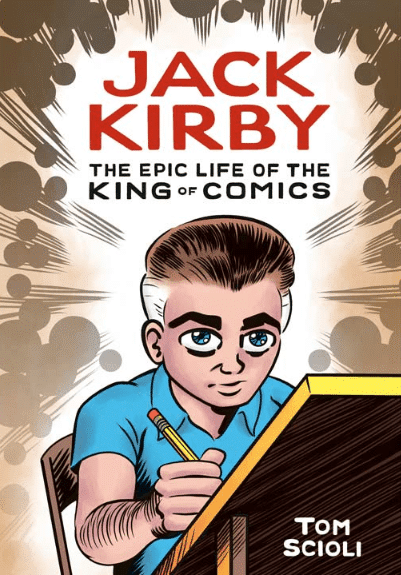
Review: Jack Kirby – The Epic Life of the King of Comics

Jack Kirby: The Epic Life of the King of Comics

Coming off his work on Fantastic Four Grand Design as judging by his art style and themes in comics like Super Powers, Godland, and American Barbarian, cartoonist Tom Scioli is an excellent choice to write, draw, color, and letter a graphic biography of Jack Kirby, who co-created Captain America, Hulk, the Avengers, the Fantastic Four, New Gods, and characters too numerous to mention. In Jack Kirby: The Epic Life of the King of Comics, Scioli tells the story of Kirby’s life using a first-person narrative device drawing on a backlog of interviews and magazine articles about him while occasionally shifting the narrator to his beloved wife, Roz Kirby, and his collaborator/rival/general pain in the ass, Stan Lee to show their sides of Kirby’s life.

The main takeaway I got from Jack Kirby: The Epic Life of the King of Comics was that his life and vivid imagination were almost always linked, and Scioli shows this by drawing Kirby wide-eyed, almost like Astro Boy compared to his more realistic portrayals of the characters around him. There ends up being a big, emotional payoff to this technique, and it’s interesting to see Scioli’s art style shift with the time that Kirby was living in from the classic adventure and humor strips that took him away from gloomy New York to the power and pain of his war days where he escaped death so many times. This is followed up by the chameleon days of the 1950s where Kirby and Joe Simon tried to keep up with the latest trends in the industry like crime and Westerns and even invented a new one: romance, the 1960s where Kirby turned monsters into superheroes and created pop culture icons, the 1970s where he was freed from dialogue balloon fillers-in and could create a new mythology that was both epic and personal.

Finally, the story concludes in Kirby’s twilight years where he finally got things like health insurance and paid days off to take a trip to Israel with Roz and spend more time with his family while working in animation, getting royalties for his New Gods characters, and getting his greatest paycheck yet when the Image Comics founders inked some of his old, unpublished art to create Phantom Force. After Kirby’s death, Scioli does away with his usual six panel grid and uses smaller screens with photorealistic drawings of everything from Frank Miller eulogizing him to photorealistic style panels of stills from movies from 2000’s X-Men to the upcoming Eternals and New Gods, which draw almost solely from his vision.

But for every great idea or creation, there’s a reversal with Jack Kirby spending as much time in heated arguments in offices and occasionally court rooms as at the drawing board creating stories and worlds. However, Tom Scioli spends plenty of time showing Jack Kirby in the act of penciling or plotting comics drawing on everything from a documentary about Easter Island to the personality differences between conniving Stan Lee and affable Larry Lieber (Who was huge fan of Kirby’s Captain America as a kid) to develop the first bad guys in Journey into Mystery (And later, Thor.) as well as the relationship between Thor, Loki, and Odin. From early pages where Kirby is sprawled out with the full color Sunday comics section on his building’s fire escape, Scioli portrays him as sponge for stories and pop culture of all kinds, especially mythology and speculative fiction.

Jack Kirby: The Epic Life of the King of Comics

Instead of being a nerd and hoarding comics or toys in his room, Kirby combined these rich stories with his experiences as a member of a youth gang in New York or as a soldier in World War II to create stories that are both relatable and full of wonder even if a few like Stuntman and True Divorce Stories didn’t get made or got less hype than Captain America or Fantastic Four. Every movie, conversation, or story told to him became fodder for Kirby’s own work, and those around him realize this before him. For example, in the 1970s, DC Comics wanted him to do a horror story in the vein of Swamp Thing, which wasn’t his favorite genre, so after a pep talk from his assistants Mark Evanier and Steve Sherman, he created Etrigan the Demon by riffing off a scene in Prince Valiant where the protagonist disguises himself as one. Scioli’s grid darts from inspiration or conversation to penciled page and then success. (Or sometimes failure) However, that success is undercut by the exploitation that is a running theme throughout the comic, and it’s almost cathartic when the Ruby-Spears animators treat Kirby reverently as he works on the Thundarr the Barbarian cartoon.

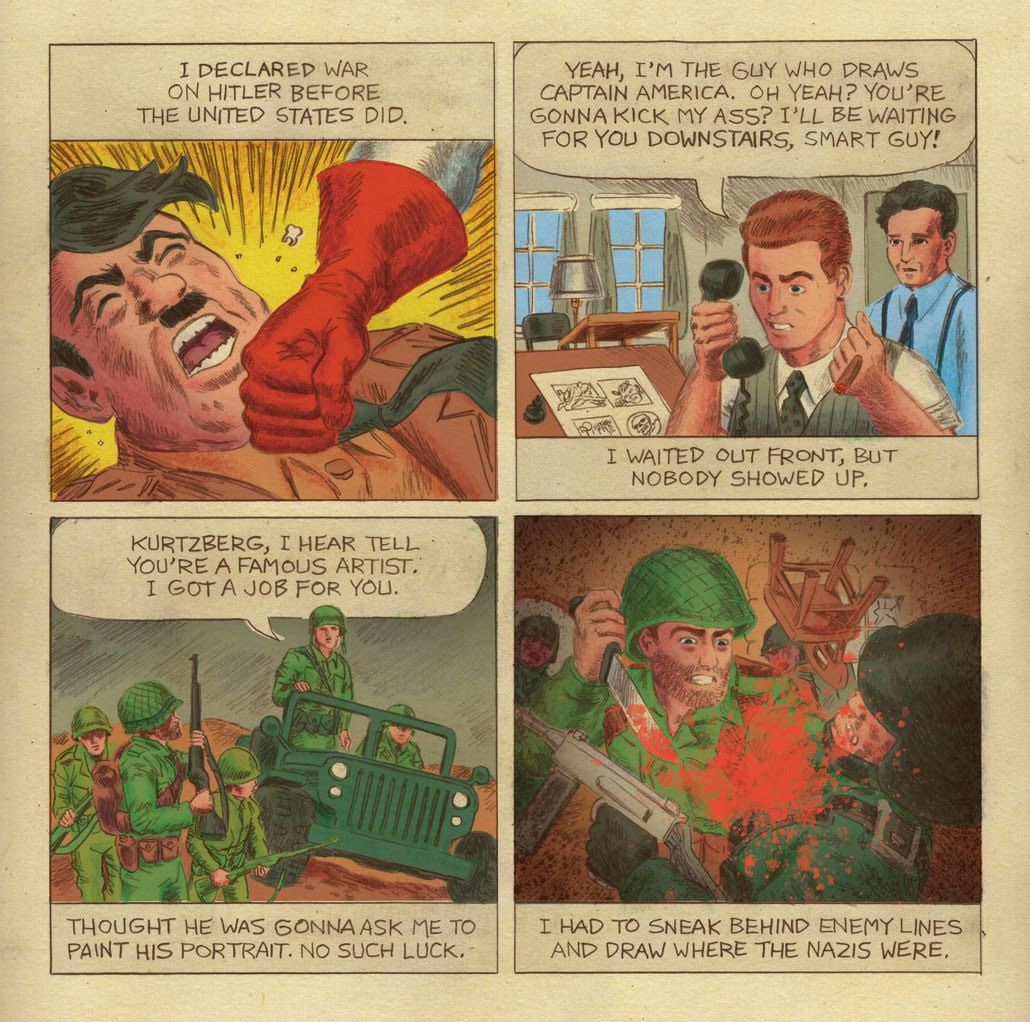
Tom Scioli’s most visually compelling sequences in Jack Kirby are the portrayal of his war days where he acted as a scout going through enemy territory and using his talents that he previously lent to Captain America or Boy Commandos to maps of Nazi positions. There’s the uncertainty of the early days of training in Georgia and hiding out in buildings in France before being immediately drawn into combat during the heady post D-Day battles. Scioli’s bright or neutral palette goes dark or red as he realizes that his unit is basically on a suicide mission, and this tension continues to Kirby’s days as a scout with lots of lots of scarlet when he kills Nazis with a knife taken from an SS officer. It’s not dynamic and powerful like Jack Kirby’s superhero action stories; it’s just war. Kirby was just fighting to stay alive for another day and get home to see his wife, Roz. The most searing scene of all is when Kirby helps liberate a concentration camp, and Scioli draws a survivor like a living skeleton.

Kirby’s resistance towards fascism from basically telling the German American Bund that he would beat their asses if they showed up at Timely’s (Later Marvel) offices before World War II to his actions during the war and finally through some of his comics like Nick Fury and The Losers, which were based on his military service and the Fourth World saga, which was about freedom and resisting tyranny on a larger more epic level that would influence later creators like George Lucas. (Jack and Roz Kirby watching Star Wars and Empire Strikes Back together in theaters is one of the comic’s most smile inducing moments.) These Star Wars sequences are one of many ways that Tom Scioli looks at the bigger picture of the comics industry, pop culture, and current events to add background color and context to Jack Kirby’s life and work. For example, a depiction of JFK’s assassination immediately bleeds into Mr. Fantastic lying as if dead on the ground as part of Kirby’s big Hulk vs Thing epic in Fantastic Four. He immediately turned his emotions about this tragic event into great art.

Look Inside The Epic Life of the King of Comics and See the Early ...

In a more of an inside baseball way (And honestly, the comics industry of the Golden and Silver Ages is begging to be turned into a Mad Men-esque prestige TV show.), Tom Scioli traces the relationships between Jack Kirby and various comics industry figures over the years. Obviously, Stan Lee takes up most of the space, but there are also some smaller moments like Kirby having a friendly relationship with Bob Kane as yet another freelancer for the Eisner/Iger studio to seeing him as arrogant and obnoxious or the tension between him and his various inkers like Vince Colletta (Who showed his DC pages to Marvel staffers), Mike Royer (Who drew Big Barda like Cher and got chewed out), and Joe Sinnott (Who shows up for one panel with Kirby and a Thing cosplayer). Tom Scioli is interested in both the art and commerce side of making comics, and it shines through the loving touches he gives to both Kirby at his drawing table and Kirby in a shouting match with Stan Lee about credits on their books. His prose is zippy, and Jack Kirby’s dry as a bone humor comes out in his dialogue.

Jack Kirby: The Epic Life of the King of Comics is a carefully crafted, appreciative feast of a biographical comic. Tom Scioli cites his sources in the back but focuses more on trying to get in the mind of Jack Kirby and think about how he would react to everything from his parents’ deaths to another guy trying to date Roz or even Stan Lee trying to slyly steal his Mister Miracle concept art to use in Fantastic Four. With Kirby’s expressive eyes as a kind of spirit guide, the book is a heartbreaking, yet empowering experience, and by the end of the book, I thought that not only would this website not exist without Jack Kirby, that I probably wouldn’t either. And now I’m off to actually finish his Fourth World saga!

Story: Tom Scioli Art: Tom Scioli
Story: 9.0 Art: 10.0 Overall: 9.5 Recommendation: Buy


Purchase: AmazonKindle

Midnight Front is Mission Impossible meets Harry Potter

Known primarily for his extensive work with a specific Space Traveling franchises, David Mack takes a creative detour to bring us a shadow war of mystics set during World War II in his novel Midnight Front.
After losing his parents Cade Martin, a magical prodigy with a hidden secret, becomes part of this clandestine group of mystics and learns how to control magic to join the Allies fight against their evil Nazi counterparts during the war.

If you’re not familiar with Mack’s other works he is a pro at entertaining readers, and Midnight Front is no exception. Here he takes the hero’s journey and elevates it into an engaging thrill ride in the shadows of wartime Europe, from the Holocaust to the Invasion of Normandy and the bombing of Dresden, he intertwined his characters into this period of history like master.

The framework that Mack creates for their use of magic, or the Arts as they call it, is intense in its details and he’s one of those writers who isn’t afraid to torture or even kill a character, trust me I know. And the characters are a diverse group that doesn’t come off as two dimensional stereotypes, they’re fleshed out people that deal with the adverse effects of handling magic with smoking and drinking. I love that his characters recognize the need to beat evil but not at the cost of their core, fighting for what’s right.


On a personal note, Mack through Midnight Front doesn’t pull any punches with his chapters that take place in the Concentration Camps, at first I was overwhelmed and wondered why so much time was spent at the Camps, but then it occurred to me that was the point, to show the depth of the crime that happened during the war. Midnight Front puts a spotlight on the Nazis, their supporters, the atrocities that they committed and remind us that they are an evil that needs to be fought and eradicated in any time period. He also doesn’t flinch at the homophobia that forced people to hide their orientation, the hypocritical racism of the US and its willingness to acquire power by any means.

If you like magic, military thrillers or historical fiction Midnight Front is the book for you. Available in different formats, Midnight Front is the first book in the Dark Arts series from Tor Books.


George Carmona 3rd is an Artist/Writer, former Milestone Media Intern, former DC Comics paper pusher, current book lover, and lifelong comic geek who’s been killed off in a Star Trek Book by David Mack. You can find his work at FistFullofArt.com or follow him on twitter at GCarmona3.


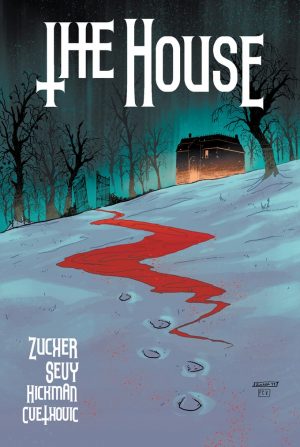
Advance Review: The Collected The House

In their Comixology Submit (And soon to be published in physical format.)  The House, writer Phillip Sevy, artist Drew Zucker, and colorist Jen Hickman whip up tasty and gory blend of the war and horror genres as Allied soldiers in Luxembourg find themselves in a haunted house while taking a German prisoner of war back to camp. What begins as a sanctuary from a winter storm captured in its all its fury with blistering white space from Zucker and Hickman turns into a Hammer horror haunted house flick. This team of soldiers is used to making a plan, taking orders, and executed it, but it turns all topsy turvy in the primal evil of The House.

Sevy and Zucker set up the almost cosmic stakes of The House in a riveting cold open of mostly silent sequences of The House juxtaposed with the diary of a man named Ethan Wilde, which was discovered in 1976. There’s a montage of panels ranging from prehistoric time to the Middle Ages and finally the 20th Century. The House wisely doesn’t use its World War II setting to tell a simplistic “Allies are good, Nazis are evil” story and goes for a more psychological approach with flashbacks of Allied officers shooting prisoners, and the medic character King continually being wracked by the responsibility for his brother’s automobile accident death. Zucker and Hickman bring a pretty epic and widescreen approach to guilt with pages that simulate a descent into Hell for him. As a medic, King feels a great responsibility to keep the men alive and takes each accidental gunshot wound or death personally.

This is a slight negative, but The House works better as a adrenaline ride thriller than a character piece even though the scenes of characters being haunted by the ghosts of civilians they gunned down are a chilling reminder of how terrible war is. Sevy uses these “big picture” moments sparingly as a kind of raw commentary after an extended chase sequence and as a reminder that even the “good guys” did morally reprehensible things. Most of The House is a roller coaster ride that rarely lets up and even has a few “false endings” like when a group of soldiers think they are back to being stranded in the cold, but then a door suddenly appears, and the tension continues. Its film influences are The Shining (The snow, outbursts violence, and blurred lines between real and supernatural.) and classic haunted house films like The House That Dripped Blood. However, the immersive nature of The House with its page turn reveals and plot structure of ghostly specters eventually evolving into a more solid blood red opponent reminded me of horror video games. The comic starts out as Wolfenstein or possibly Medal of Honor with its more straightforward action and then transforms into classic Resident Evil when it was pure haunted house survival horror for the PS1.

The soldiers’ attempts to get out of “the House” are an exercise in futility as everything from foolhardy shooting up the study or at windows to more sensible using a rope to keep track of their path all fail because this place is pure evil. Sometimes, Phillip Sevy’s plot seems padded to keep the soldiers trapped, but then he and Drew Zucker cook up new terrors like ghosts wandering without a bullet chunk out of their head or feral children that render a grid layout all, but useless. Jen Hickman is always there with the traditional horror reds and black and sometimes an even more unsettling blue tone that she transfers from certain characters’ eyes to their surroundings. It adds that extra freaky factor to Zucker’s choppy figures, ever shifting landscapes, and occasional EC Horror homages like a full page spread featuring an eyeball close-up.

Even though it has a smidgen of spooky worldbuilding, The House is a solid standalone thriller that melds the horror and war genres. Sevy, Zucker, and Hickman turn what is usually the creepy, yet cozy home of horror comic prologues into the antagonist and a kind of conduit that reminds humanity of the worst inside of them. The tone of the comic runs from subtle to bombastic, but all in all, it’s a reminder that comics can be frightening sometimes, and some of the guilt inducing ghouls that Drew Zucker will be seared in my brain for at least a few days.

Story: Phillip Sevy Art: Drew Zucker Colors: Jen Hickman
Story: 7.9 Art: 8.3 Overall: 8.1 Recommendation: Buy 

Sucker Productions provided Graphic Policy with a FREE copy for review