It’s a new week and we have a lot coming at you. Let’s get things going with some news and reviews from around the web in our morning roundup.
Legacy – James McGinty Obituary – Our thoughts are with the family, friends, and fans of Ian. He will be missed and was great to see at conventions. A massive talent lost at such a young age.
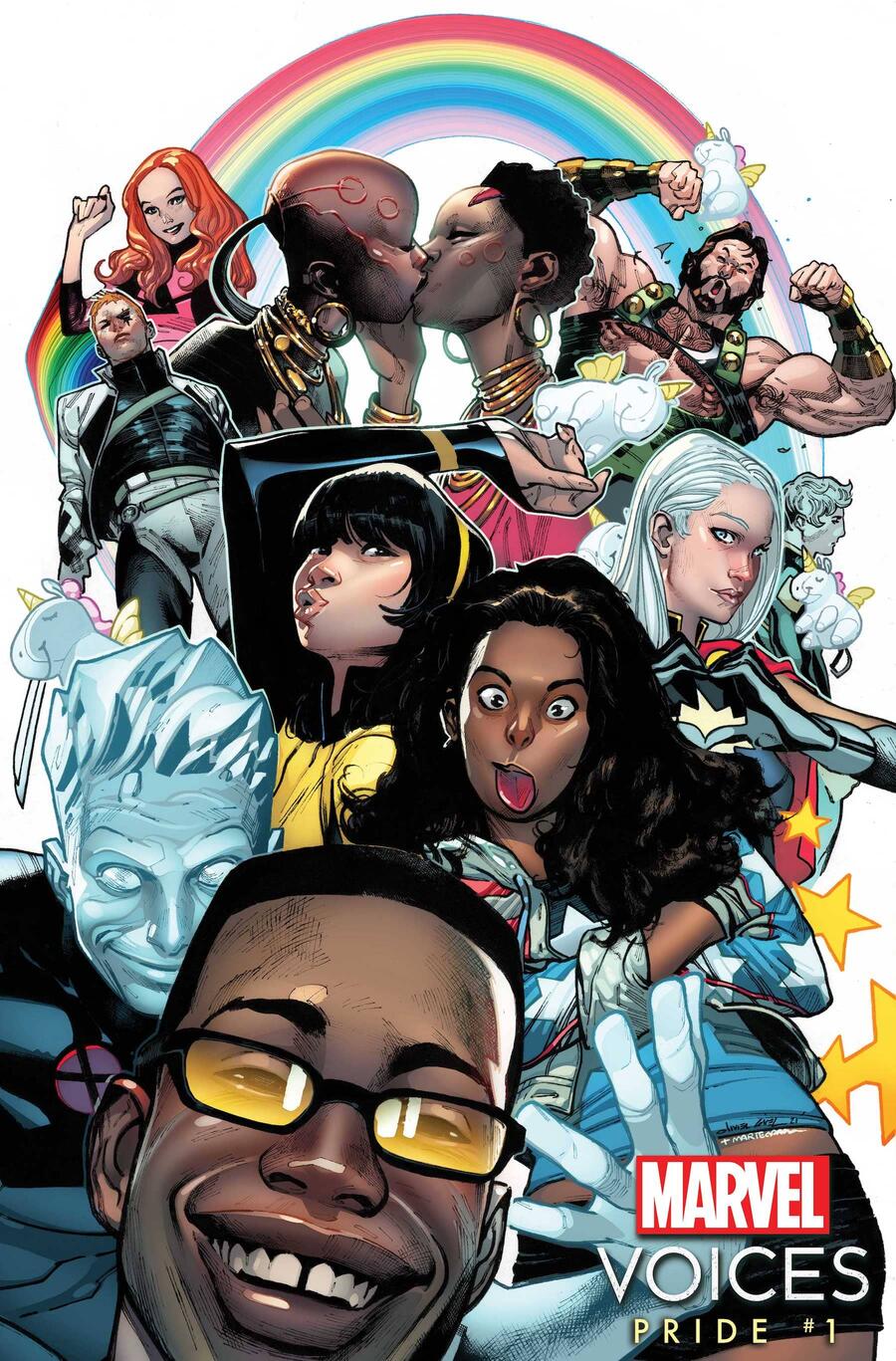
In honor of Pride Month, Marvel Comics dropped a big 84 pages one-shot celebrating both its LGBTQ+ creators and characters. Beginning with a story from Luciano Vecchio that’s not sure if it’s telling the story of queer characters in the Marvel Universe from an in-universe or more of a real-world documentary perspective,Marvel Voices Pride #1 sputters with a story that basically says aliens and shapeshifters brought the idea of being non-binary, genderqueer, or gender nonconforming to this world followed by a text-heavy Allan Heinberg/Jim Cheung Young Avengers reunion. However, it catches its footing with a cute Karolina Dean/Nico Minoru story, and for the most part, it provides a wide spectrum of LGBTQ+ representation with a special focus on the mutant/X-Men side of the Marvel Universe, who have acted as a mostly metaphorical representation to queer fans like myself. However, it’s nice to see characters like Anole, Prodigy, Destiny, Karma, and Jessie Drake get the spotlight along with more prominently featured cis male gay characters like Northstar (His coming out story in Alpha Flight #106 is reprinted at the end) and Iceman. But fans of non-mutant/Runaways/Wiccan and Hulkling characters may be disappointed as characters like Angela, Sera, Hercules, and America Chavez don’t appear except in small cameo roles.
Marvel VoicesPride #1 kicks off with a journey through the LGBTQ+ history of the Marvel Universe from writer/artist Luciano Vecchio. Even though many of his adult characters look like teens, Vecchio has a beautiful art style and color palette. However, my issue with this first story isn’t the form, but the content. As mentioned earlier, this introductory story isn’t sure if it’s being told from the perspective of the real world or Earth-616 even though it’s narrated by Prodigy. It also has a very self-congratulatory, back-patting tone, especially for a company that recently cancelled a book starring many of its queer characters (X-Factor) and mentions characters like Angela and Sera that haven’t been barely heard or seen from since getting their own title in 2015. Even though Vecchio is a queer creator, there’s big “ally” energy in this first story with a heterosexual character, Captain America getting the spotlight, and the implication that non-binary identities came from aliens and shapeshifters. He does successfully lay out what ended up being a thesis for the anthology, which is the connection between mutants and queer identity.
This story is followed by a one page Young Avengers creator reunion as Allan Heinberg, Jim Cheung, and Marcelo Maiolo chronicle Hulking and Wiccan’s wedding vows. Heinberg’s writing is tender, but this feels like more of a prose piece than a comic. Heinberg and Cheung’s inclusion seems like more stunt-casting to get older queer Marvel fans interested in the one-shot rather than being any kind of substantial addition to their work on Young Avengers. However, Marvel Voices: Pride rights the ship (Pun fully intended.) in its next story featuring two members of Marvel’s other prominent 2000s teen superhero team, the Runaways. Mariko Tamaki, Kris Anka, and Tamra Bonvillain turns in three pages of sweet glances, chatter, and a super adorable kiss as Nico Minoru and Karolina Dean think about what they would tell people if they asked how they met. The long line out of the venue reminded me of the pre-pandemic days when I would wait in line for hours to get a good spot to see artists like Carly Rae Jepsen and Robyn with my fellow queer folks, and Bonvillain’s summery color palette matches Anka’s skill with facial expressions. This story is like the cherry on top of the sundae that he helped build when he was the artist on Runaways and finally put Karolina and Nico in a relationship together.
The next story in Marvel Voices Pride is the first one to feature a trans protagonist, Dr. Charlene McGowan from Immortal Hulk. The plot of Lilah Sturges, Derek Charm, and Brittany Peer is about some “hilarious” misunderstandings when Lady Daredevil aka the artist formerly known as Elektra Natchios and some Z-list, rapping supervillains raid McGowan’s lab when they think she’s producing mutant growth hormone when when she’s actually working on a way to get trans women’s bodies to produce progesterone without taking pills. What follows is Trans 101 with a little bit of ass kicking courtesy Charm, who is in his Bronze Age element with the cheesy costumes and dark shadows. However, other than the fact that’s she a scientist who sometimes makes jokes, we don’t learn anything about Dr. McGowan except that she’s surprisingly cool with microaggressions from A-List Marvel heroes. Kudos to Marvel Voices‘ editorial for getting a trans writer in Sturges to pen this story, but the whole thing feels reductive and geared towards fanboys who know every member of Daredevil or Hulk’s rogues gallery and have never interacted with a transgender person.
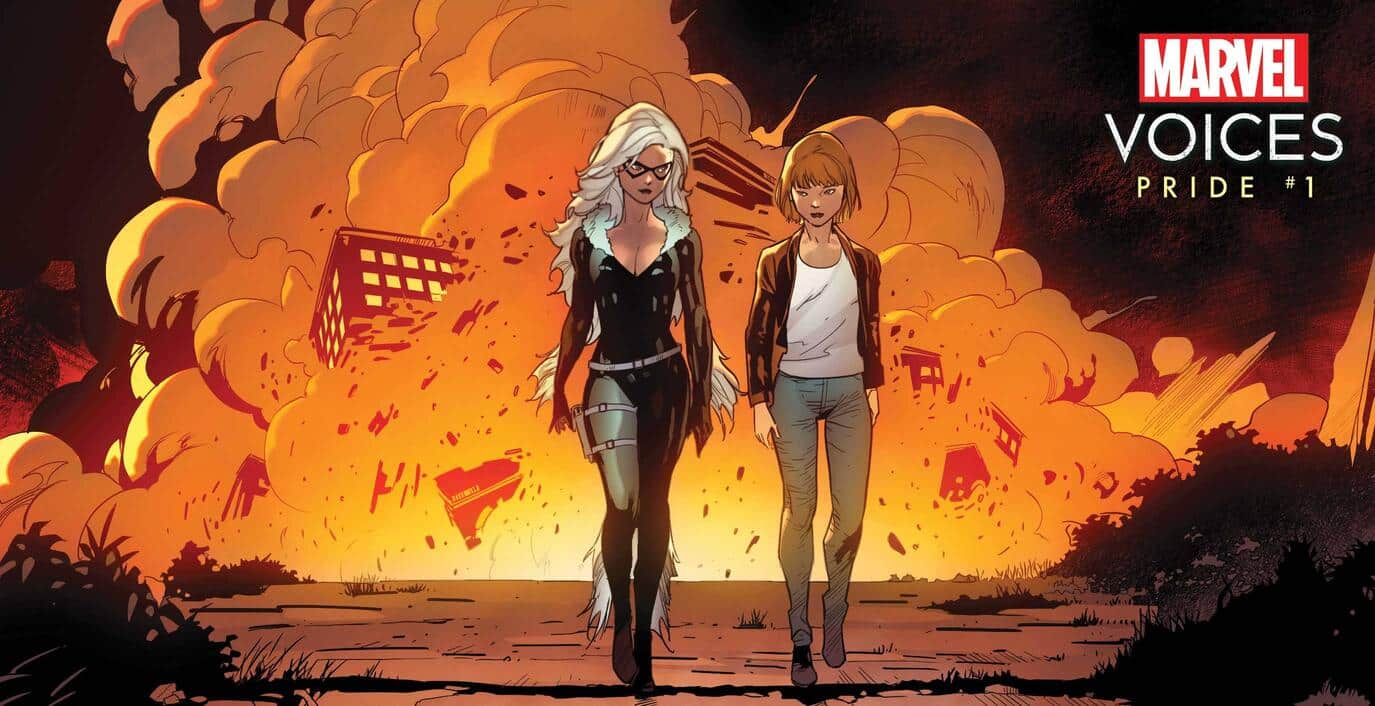
In contrast, Leah Williams, Jan Bazaldua, and Erick Arciniega re-introduce Marvel’s first transgender character, the mutant Jessie Drake in a thrilling manner as she appears in her first comic in 27 years. However, Black Cat is the protagonist of this story and is tracking down Steel Raven, a villain who’s been impersonating her, pulling some sloppy heists, and ruining her reputation. Williams’ quippy writing style works well for the fast-paced short story as Black Cat and Jessie meet, flirt, and figure out their next move in catching Steel Raven. Bazaldua plays with space and transforms what would normally be your run of the mill villain warehouse into something more surreal. She and Williams do succeed in building a connection between Jessie and Black Cat as well as showing off Jesse’s empathy-based abilities, but this is just a teaser for a bigger cat and mouse game. Hopefully, there’s room for more batting of eyes, power showcasing, and insight into the character of Jessie Drake, both in her own series or in Black Cat’s current ongoing, which has been a sneaky good read.
Continuing this positive trend is Crystal Frasier, Jethro Morales, and Rachelle Rosenberg telling a wonderful She-Hulk and Titania. But there’s a twist as Jennifer Walters doesn’t appear, but Jennifer Harris, who was inspired by her to come out as trans and cosplay her at a copyright friendly version of New York Comic Con. As someone who came out as bi around the same time Prodigy did in Young Avengers or when Iceman came out as gay in All-New X-Men, I can definitely connect to the inspirational power of fictional characters like Jennifer did with She-Hulk. She and Titania also have some nice banter, and Frasier and Morales also remind readers that She-Hulk was the original fourth wall breaker with some jokes and exploding layouts.
After the She-Hulk story is probably my favorite story of Marvel Voices Pride #1, which is a Prodigy and Speed one from Kieron Gillen, Jen Hickman, and Brittany Peer as Gillen returns to both the X-Men and Young Avengers franchises. The dialogue between Speed and Prodigy sparkles, and Hickman shows off their chops as a storyteller working in eating pizza, stealing glances at Colossus, and empathizing with Kitty Pryde as Prodigy basically tells his bisexual origin story. His story also acts as a critique of how the mutant books have been good about metaphorical queer representation, but not actual queer representation. This is timely because the book that Prodigy was a main cast member in is getting cancelled. However, this is really a lovely story full of hilarious and insightful writing from Kieron Gillen and pitch-perfect images and comedic timing from Hickman as Speed teases Prodigy for having a crush on Colossus when he ran with the New Mutants. Prodigy is true overthinking, chaos bisexual representation, and I’m personally glad to see him get a spotlight in this story even if it’s only a few pages long.
The anthology takes a break from comics for a bit and features an interview with Christian Cooper, one of the first queer editors at Marvel, and he talks about his experiences at the company and the impact comics have had on his life. After this, there’s a timeline of big LGBTQ+ moments in Marvel Comics. It’s followed up with a cute Anole story from Terry Blas, the wonderful Paulina Ganucheau, and Kendall Goode. Blas connects the idea of Krakoa being a mutant utopia to things like Pride, and the ability to unwind at the Green Lagoon with folks who understand your struggles being the goal of all this hard work and fighting. However, it’s not all big metaphors as he and Ganucheau probe into Anole’s body issues leading to him not wanting to date along with his friendship with Jonas Graymalkin. It all ends on a fabulous final page, and this story is worth checking out for Ganucheau and Goode’s soft, colorful takes on the different mutants.
Sticking with the mutant theme, Anthony Oliveira, Javier Garron, and David Curiel go all in with the mutant as gay metaphor in an Iceman story set during the time period of the original five X-Men. They play on the fact that Magneto was played by a gay man in four of the X-Men films and find a real connection between Bobby and Magneto, who takes a break from the missiles to provide a listening ear to this young man struggling with his identity. Oliveira writes Iceman as having a crush on Angel, and Garron nails the longing glances that he throws at the majestic mutant that turn into words when Magneto sits down to chat with him. They take the subtext (For example, Bobby not being interested in Jean Grey when she joins the team.) of these Silver Age text and transform them into glorious text while also showing off the sweeter side of Magneto, a man who would one day break down when he realized that his crusade almost led to the death of an innocent child, Kitty Pryde.
This story is followed up by one focusing on the relationship between Northstar and his husband, Kyle Jinadu from writer/artist J.J. Kirby. It’s touching to see what Northstar is like away from the cameras and public, and what Kyle loves about them. However, Kirby’s 1990s-style artwork with modern, digital coloring is a mismatch for the story, and I spent most of the time wondering why Northstar looked like a vampire or a block of ice instead of the events of the story. Luckily, the misstep is remedied by a thrilling riff on Sherlock Holmes vs. Professor Moriarty from Tini Howard, Samantha Dodge, and Brittany Peer featuring Mystique and Destiny. The story is adventurous filled with wits matching, chess games, and lover’s embraces and shows how iconic a couple these two are while also showing what a big deal it was for them to be open with their love in a time period where being queer got you thrown in jail. Plus it’s a reminder that queer people have always existed in history. (Or fiction.)
Vita Ayala, Joanna Estep, Brittney Williams, and Brittany Peer continue the theme of both mutants and queer women in a Karma story set during the Hellfire Gala after party where Magik gives her a pep talk to dance (and maybe even smooch) Elle, who as far as I can tell is a new, queer mutant created for this anthology. Karma truly gets the spotlight this story and gets to work out some of her issues with her powers and emotions as she’s afraid that if she asks Elle out that she’ll use her abilities to mess with her free will. However, this doesn’t happen, and we get to see a mutant who has been screwed over so many times be happy for once and get the girl in a beautiful sequence from Ayala, Estep, Williams, and Peer.
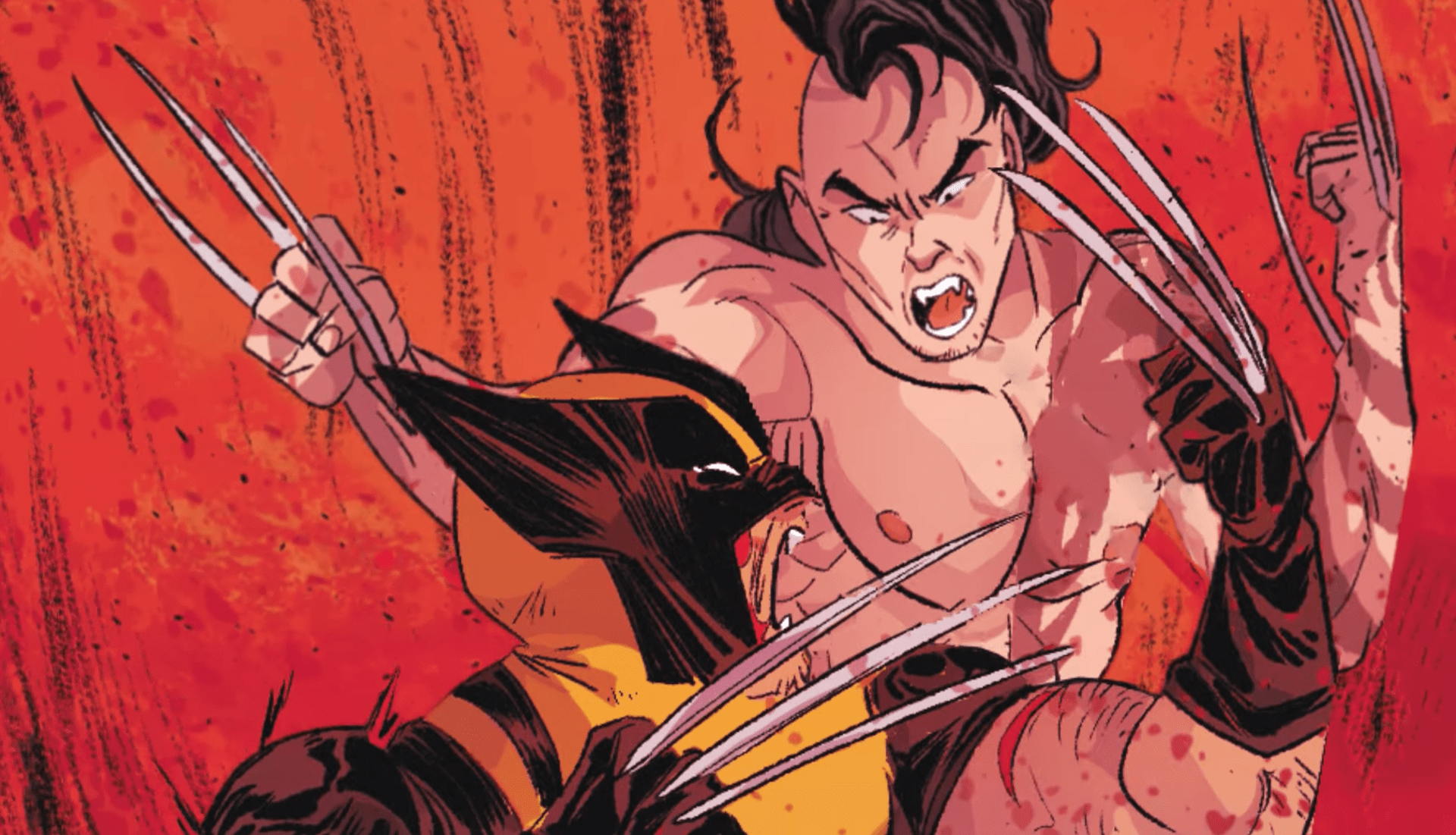
The final story in Marvel Voices Pride #1 again shows that Steve Orlando is perfect for writing violent, queer characters with a sensitive side as he and Claudia Aguirre tell the story of Daken and Somnus, a new character who can make one night seem like a life time together. He used this power on Daken back in the day during a one night stand and then ended up living a long life without him even though he didn’t divulge his oneiromantic mutant abilities to everyone. However, Krakoa and its resurrection protocols are all about second chances, and Daken gives him one in this story. As well as digging deep into Daken’s emotions, Orlando and Aguirre also use this story to remind readers of queer elders, who because of society’s hate, never came out or came out later in life, and this is what makes Somnus’ second chance so special. Also, his abilities are pretty cool and bring a little Vertigo into the X-Books.
Marvel Voices Pride #1 is definitely an up and down ride. Some of the stories mishandle nonbinary and gender nonconforming identities (Also, there are no nonbinary lead characters in this anthology.) or seem to pander heavily to allies while others have issues with their art or storytelling style. (Northstar/Kyle, Wiccan/Hulkling) But, for the most part, it’s nice to see queer creators and queer characters get the spotlight for once instead of being hidden behind things like the mutant metaphor, which is usually Marvel editorial’s approach. Time will tell if we see them beyond this anthology, but most of the creators in Marvel Voices Pride work on books in Marvel’s main line or have had consistent success at other companies or even television in Allan Heinberg’s case so, at least, that’s something they have going for them.
Story: Luciano Vecchio, Allan Heinberg, Mariko Tamaki, Lilah Sturges, Leah Williams, Crystal Frasier, Kieron Gillen, Terry Blas, Anthony Oliveira, J.J. Kirby, Tini Howard, Vita Ayala, Steve Orlando Art: Luciano Vecchio, Jim Cheung, Kris Anka, Derek Charm, Jan Bazaldua, Jethro Morales, Jen Hickman, Paulina Ganucheau, Javier Garron, J.J. Kirby, Samantha Dodge, Joanna Estep with Brittney Williams, Claudia Aguirre, Jacopo Camagni Colors: Marcelo Maiolo, Tamra Bonvillain, Brittany Peer, Erick Arciniega, Rachelle Rosenberg, Kendall Goode, David Curiel Letters: Ariana Maher Story: 8.0 Art: 8.6 Overall: 8.3 Recommendation: Buy
Marvel Comics provided Graphic Policy with a FREE copy for review
Larissa Zageris and Kitty Curran’s new illustrated book of essays/biography/fan fictionFor Your Consideration: Keanu Reeves doesn’t come out until October, but my reading of it timed perfectly with the announcement of the fourth Matrix film and the end of filming Bill and Ted Face the Music. Keanu Reeves is the Internet’s boyfriend, has three film franchises (Matrix, Bill and Ted, John Wick), and resisted Disney/Marvel’s siren call. So, it’s the perfect time to look back at his career, see why he was loved and derided, and maybe even why he is more aspirational than any self-help guru.
Zageris and Curran structure For Your Consideration: Keanu Reeves like a series of essays looking at different aspects of Keanu Reeves’ career with fun extras like trivia and a quiz about which character named “John” played by Reeves you are (I was John Constantine.). There’s also a spaghetti Western-style fan fiction about what he was up to in the two year gap between Devil’s Advocate (1997) and The Matrix (1999), and best of all, a pitch for a romantic comedy/musical spinoff of John Wick set in Paris and co-starring Charlize Theron and Winona Ryder.
The five essays cover a range of topics from how Reeves’ vulnerable approach to acting clashed with some critics and endeared fans, his identity as Asian-American/Canadian man, his hard-working approach to his acting craft, his collaborations with both actors and business partners, and finally, one about his roles that fall on the “evil” side of the spectrum. A repeated theme is how Reeves’ main goal as an actor is to create a pocket reality for audiences to project themselves on them. He does this by working tirelessly at different skills his characters have (The eight months of kung fu training for The Matrix, surfing dangerous areas in Kauai for Point Break.) and also actively listening to his scene partners and not having his performance overwhelm theirs. Zageris and Curran state that this quality is why actresses like Sandra Bullock and Winona Ryder want to work with him multiple times, and Bullock saying his kindness to her and rapport in Speed helped ease her into the world of show business.
However, what makes For Your Consideration go beyond just a blow by blow recap/analysis of Keanu Reeves’ 30+ year career is Larissa Zageris and Kitty Curran using him as a vehicle to explore American society’s changing ideals of masculinity, the role of the Internet and celebrity, and how Reeves may have even paved the way for Asian-American representation in pop culture though he mainly plays white-passing roles. They discuss about how Reeves’ body is filmed like a female actor in some of his movies, and the similarities of how critics talk about his acting like assuming just because he played an airhead slacker in the Bill and Ted films that he was one and focusing on his looks and not his ability. As far as action movies, Zageris and Curran write about how Reeves’ earnest approach and emotional openness in films like Point Break and Speed set him apart from the machismo and smartassery of actors like Arnold Schwarzenegger and Bruce Willis.
At times, For Your Consideration: Keanu Reeves veers from being a work of cultural and film criticism with jokes to being almost a straight-up, self-help book with Keanu Reeves being held up as an example of how we should be. This goes beyond his characters’ mantras of “Be excellent” and Internet memes of calling people breathtaking and warm, vulnerable stories about how he uses Shakespeare monologues to stay calm and would rather read a book than be a celebrity.
Some of the self-help bits pop up in the chapter about collaboration that discusses how Reeves acts as if he’s in a supporting role even he is a leading man and praises his co-stars in interviews instead of talking about himself. The chapter also shows that he isn’t afraid to pursue his passions like bookmaking and motorcycle design and that his approach to these businesses mirrors his work with Chad Stahelski, who went from being his stunt double on The Matrix to directing him in all three John Wick films. There is a quote about Reeves’ dedication to learning fight choreography, gunplay, etc so that Stahelski has a full range of creative choices instead of cutting around him. (Basically, he was throwing shade on the Taken movies.)
Even if there isn’t enough space to go into detail of each and every Keanu Reeves role, Larissa Zageris and Kitty Curran perform an excellent close reading of Keanu Reeves the actor and human being with funny spot illustrations like a “human evolution” chart from Theodore Logan to John Wick, bearded badass. It isn’t a total hagiography with some critiques of Reeves’ accent work and deadpan descriptions of some of his “weirder” film choices like Bad Batch and Knock Knock, which I want to track down. However, it’s an appreciation of actor, who wants to take audiences on heroic (or anti-heroic) journeys into the world with him not just as a guide, but as someone they can identify with and walk out of the theater playing air guitar, doing kung fu, killing a man with a pencil, or maybe just hugging one’s beloved pooch a little tighter.
Overall Rating: 8.0
Quirk Books provided Graphic Policy with a FREE copy for review