Tag Archives: romance

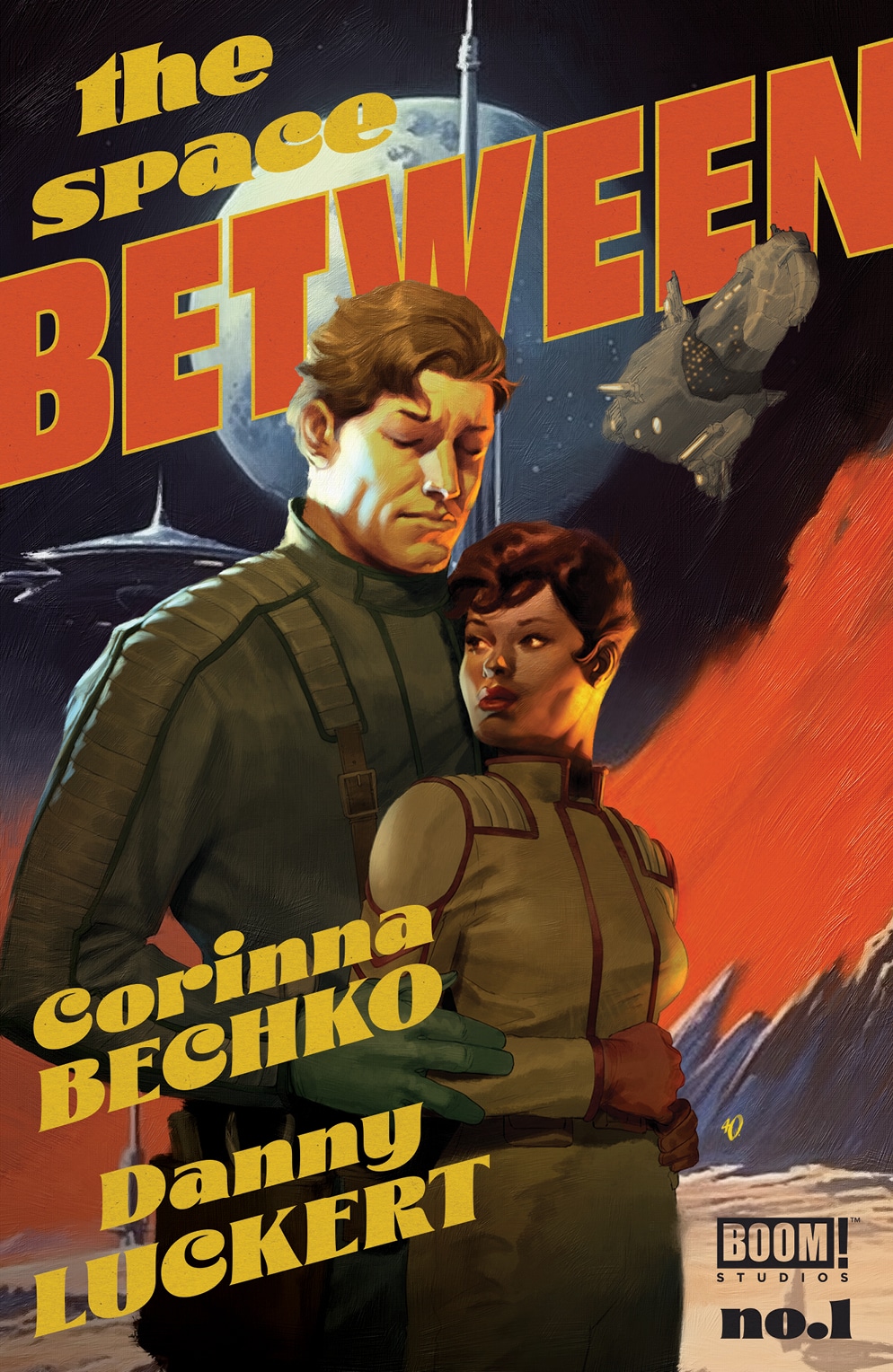
Why you should be reading The Space Between
The Space Between

Good science fiction makes readers want to visit the worlds they contain, to explore them first-hand as a kind of traveler. The best science fiction, though, makes readers want to be the protagonists in them. The Expanse comes to mind as a recent example, a story that considers class and intergalactic warfare from various points of view, each an entry point into a larger conflict that’s hard not to put ourselves into. Star Wars does it by leaning into the promise of adventure inherent in the Hero’s Journey, of becoming a Jedi. Corinna Bechko and Danny Luckert’s The Space Between inspires this by making its sci-fi feel urgently timely and consequential, presenting conflicts that can be overcome despite the odds. You should be reading this comic.

The Space Between sees what’s left of humanity living aboard a massive starbound ark called the Dodona, a place that’s deeply segregated between upper tier citizens and pilots and lower tier workers who are prohibited from traveling from their living spaces below up to the top floors of the vessel. In the series’ first issue, a pilot called Revla finds herself on the lower decks by accident following a controversial flight that’s put her career on the line. While in the lower levels she meets Les, a worker from lower caste who helps her navigate the area. Through him, Revla experiences just what the class divide truly means and what kind of injustices it actually furthers and so decides to rebel and fight the system that sustains this division. In an interesting twist, that fight is also the result of a blossoming romance between the two characters, representing a union that transcends class and expectations.

This alone is plot enough for a whole sci-fi series, but that’s only issue #1. Subsequent entries (the series is three issues in as of the time of this writing) sees a new generation of protagonists continue the plight through different mutations of the same problems. Some of these characters are related to those found in previous issues, but new characters are also introduced. In the process, The Space Between transforms into a political space epic with a unique take on romance and social responsibility that never neglects the elements that make for great science fiction.

The Space Between

Bechko and Luckert succeed, in an impressive manner, in never making new issues feel like retreads of previous ones. It isn’t a kind of sci-fi Groundhog Day with a new pair of characters each time taking on the exact same problems. It’s a natural continuation of struggles that keep the class perspective firmly in place to track the evolution of the situation aboard the Dodona. Progress is certainly logged, but so are the changes in strategy from those who seek to cosign on reverting back to the days of segregation.

Luckert adds subtle but important touches per issue to communicate the jump in time and the changes in living conditions brought upon the results of key struggles. It makes Bechko’s characters more believable in the process as part of a social and political ecosystem that’s consistently being put in contentious spots that threaten to undo progress.

The romance aspect of the story is especially refreshing. It’s obvious from the covers to the story’s focus on a pair of protagonists primed for love per issue that an emotional connection can be as strong a unifying force as a political philosophy. Love isn’t on display merely as an excuse to get two characters to meet within a story. Instead, the intention is to show how it can generate a level of empathy that espouses understanding. Bechko and Luckert leave nothing to chance. It’s all carefully orchestrated with a sense of purpose that imbues the story with consequence. It makes everything feel genuinely honest.

The Space Between

The Space Between is the type of science fiction that comes along to remind readers of the power and influence of the genre, of its potential to look beyond trends to find something that sparks different kinds of conversations. It certainly earns a spot among some of the best comics of 2023, if you ask me, and it is a must-read. It possesses an energy that can turn casual readers into lifelong fans of science fiction. It’s that good.
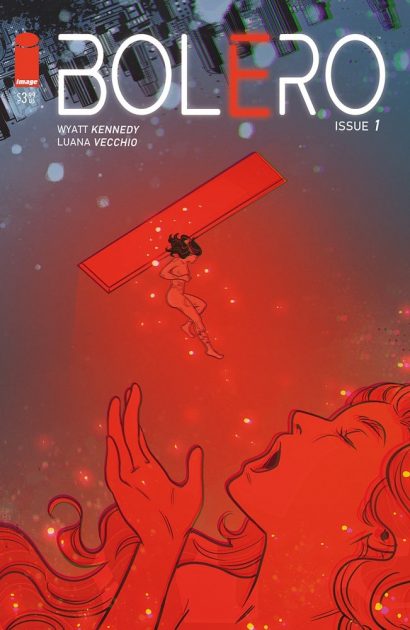
Review: Bolero #1

Bolero #1

The elevator pitch for Wyatt Kennedy and Luana Vecchio’s Bolero goes something like Eternal Sunshine of the Spotless Mind meets Locke & Key. If that doesn’t sell a comic, what does? But to lay claim to that comparison means setting expectations sky high. Fortunately, the comic more than lives up to the stories it namedrops.

Bolero #1 follows Devyn “Dagger” Dagny, a tattoo artist that gets her heart very, very broken—shattered, even—by Natasha, the person that Devyn will go through a whole multiverse to either get back with or forget.

By multiverses I mean literal multiverses. Devyn is given the opportunity to travel precisely 53 universes using a mother key, given to her by a very curious and cuddly creature, that allows her to move between them. A set of rules comes with the mother key, all which are basically set up to be broken later on. These range from not speaking to the being that offers the key to not traveling beyond the number of universes agreed upon.

Kennedy, who scripts the story, takes most of the first issue to lock the emotional hooks in place for Devyn’ multiversal journey, in which she’ll experience the different possibilities and forms her relationship with Natasha could take. The jumps in time, space, and bodies the comic promises is in short supply in this first entry, but the premise is well put together and shows no signs of letting up on the emotions-shattering rollercoaster ride Kennedy hopes to take us on in future issues.

Bolero #1

Vecchio’s art possesses a dream-like quality to it that lends itself perfectly to the type of universe-hopping experience Bolero is aiming for. Characters move across the comics page with a floaty sense of rhythm that imbues the storytelling with a kind of musicality to it that makes everything come together beautifully. Moments of bliss are magical, whereas moments of pain feel like someone is prodding inside you with a cold and indiscriminate medical apparatus without anesthesia. Vecchio’s work is quite simply a marvel to behold in Bolero.

The art is given an extra bump in the magic department with a similarly dreamy and light approach to the lettering, made possible by Brandon Graham. Dialogues unspool like memories one plays over and over again in their mind after a particularly bad breakup. Graham takes the concept and applies it with a careful use of hazy lines and unstable word balloons that capture the raw emotions that hang over every word. It’s a highlight of the book and it shows deep consideration for the vision of the story.

Bolero #1 is a primer on love, pain, and loss that prepares readers for a deeply intimate and rough story that is sure to connect on many levels. It’s a world of possibilities I can’t wait to dive into, no matter how hard things will most definitely get for Devyn and Natasha as they go through 53 variations of their doomed relationship.

Story: Wyatt Kennedy Art: Luana Vecchio Lettering: Brandon Graham
Story: 10 Art: 10 Overall: 10 Recommendation: Buy along with a box of Kleenex and a bucket of ice cream.

Image Comics provided Graphic Policy with a FREE copy for review


Pre-order: comiXologyTFAW

Early Review: Bolero #1

Bolero #1

The elevator pitch for Wyatt Kennedy and Luana Vecchio’s Bolero goes something like Eternal Sunshine of the Spotless Mind meets Locke & Key. If that doesn’t sell a comic, what does? But to lay claim to that comparison means setting expectations sky high. Fortunately, the comic more than lives up to the stories it namedrops.

Bolero #1 follows Devyn “Dagger” Dagny, a tattoo artist that gets her heart very, very broken—shattered, even—by Natasha, the person that Devyn will go through a whole multiverse to either get back with or forget.

By multiverses I mean literal multiverses. Devyn is given the opportunity to travel precisely 53 universes using a mother key, given to her by a very curious and cuddly creature, that allows her to move between them. A set of rules comes with the mother key, all which are basically set up to be broken later on. These range from not speaking to the being that offers the key to not traveling beyond the number of universes agreed upon.

Kennedy, who scripts the story, takes most of the first issue to lock the emotional hooks in place for Devyn’ multiversal journey, in which she’ll experience the different possibilities and forms her relationship with Natasha could take. The jumps in time, space, and bodies the comic promises is in short supply in this first entry, but the premise is well put together and shows no signs of letting up on the emotions-shattering rollercoaster ride Kennedy hopes to take us on in future issues.

Bolero #1

Vecchio’s art possesses a dream-like quality to it that lends itself perfectly to the type of universe-hopping experience Bolero is aiming for. Characters move across the comics page with a floaty sense of rhythm that imbues the storytelling with a kind of musicality to it that makes everything come together beautifully. Moments of bliss are magical, whereas moments of pain feel like someone is prodding inside you with a cold and indiscriminate medical apparatus without anesthesia. Vecchio’s work is quite simply a marvel to behold in Bolero.

The art is given an extra bump in the magic department with a similarly dreamy and light approach to the lettering, made possible by Brandon Graham. Dialogues unspool like memories one plays over and over again in their mind after a particularly bad breakup. Graham takes the concept and applies it with a careful use of hazy lines and unstable word balloons that capture the raw emotions that hang over every word. It’s a highlight of the book and it shows deep consideration for the vision of the story.

Bolero #1 is a primer on love, pain, and loss that prepares readers for a deeply intimate and rough story that is sure to connect on many levels. It’s a world of possibilities I can’t wait to dive into, no matter how hard things will most definitely get for Devyn and Natasha as they go through 53 variations of their doomed relationship.

Story: Wyatt Kennedy Art: Luana Vecchio Lettering: Brandon Graham
Story: 10 Art: 10 Overall: 10 Recommendation: Buy along with a box of Kleenex and a bucket of ice cream.

Image Comics provided Graphic Policy with a FREE copy for review


Pre-order: comiXologyTFAW

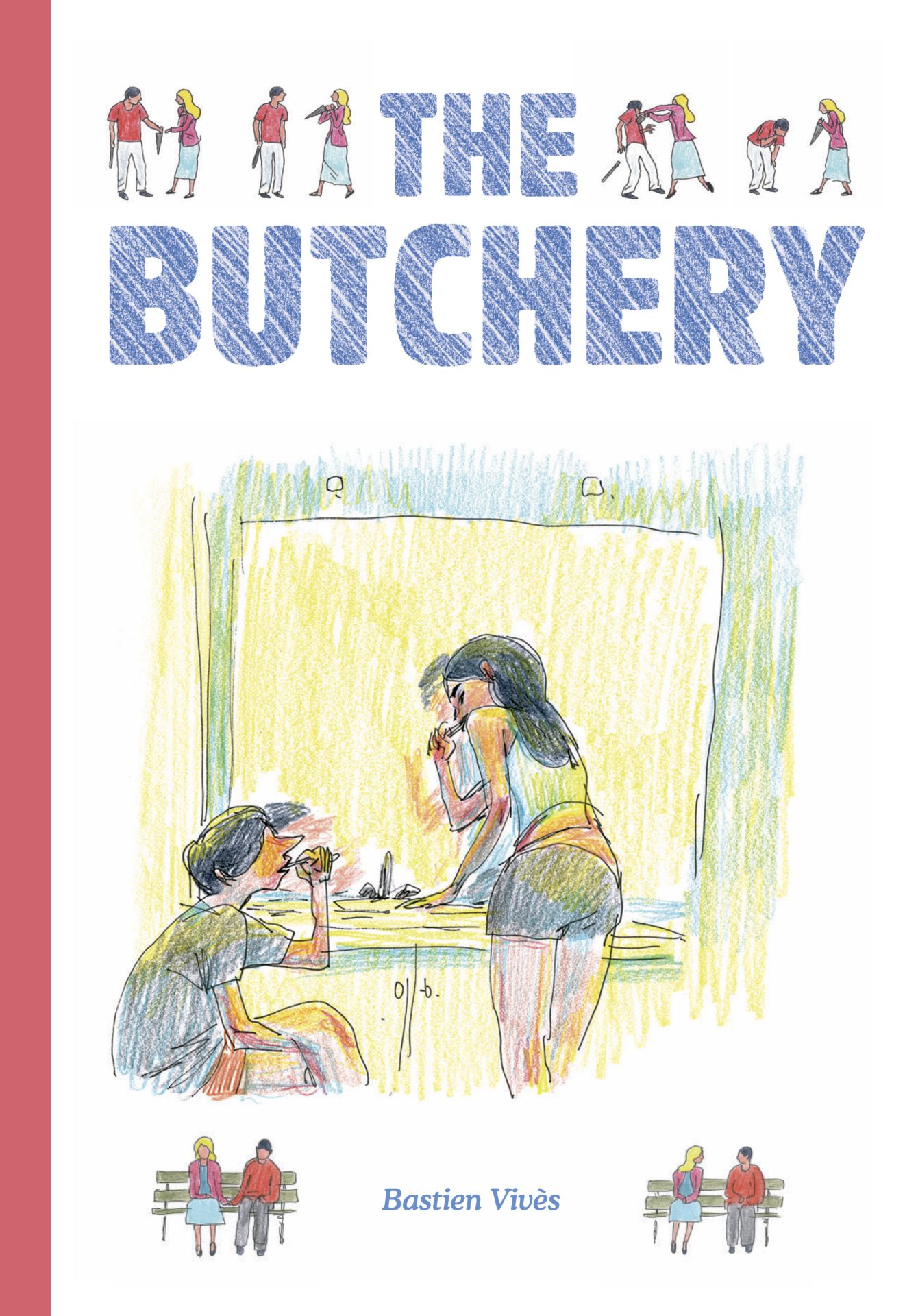
Review: The Butchery

The Butchery
The Butchery, Fantagraphics

The press release for French cartoonist Bastien Vivès contains an interesting phrase that perfectly sums up what his new book, The Butchery, is about: “the emotional bloodbath of a romance gone awry.” It’s beautiful in its description and cruel in its promise of delivering a story about how happiness and sadness cannot exist independently from one another.

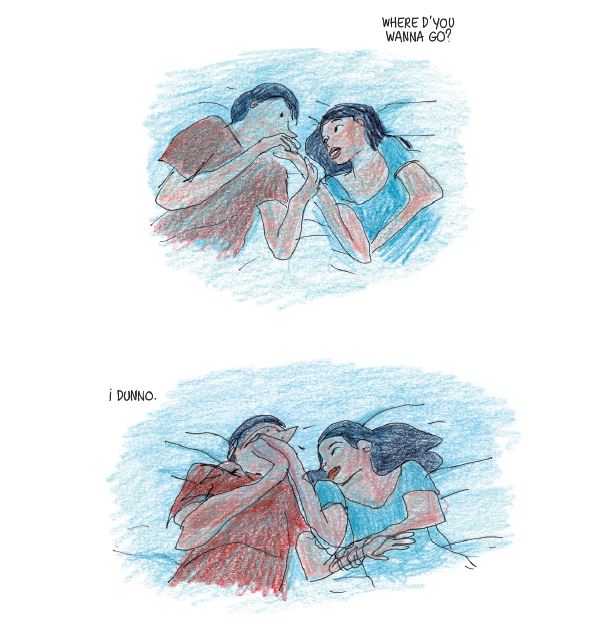
The Butchery, published by Fantagraphics, centers on a couple that’s experiencing the commonly natural life and death cycle of a relationship. It’s lyrical in its pacing and poetic in its visuals, which come to us as hazy memories of the couple’s pivotal moments. They’re subtle and they show love at its most blissful stage and pain at its most cutting phase.

Reading The Butchery requires reflecting on the unique wounds love and romance have left behind, some wide open and still pulsating, and contemplating just how much of the good and the bad is shared between one’s personal experience and that of the characters in the book. Having a history in failed relationships heightens the range of the book’s emotional spectrum, but there’ something to learn along the way no matter the life experiences brought to the reading.

Vivès keeps to an economical but precise approach to the amount of text in the story. Being that it’s a book the reader is meant to feel, the visuals are given free reign to linger as much as they want while leaving more questions than answers in their passing. Each page only contains about two or three images at most and they’re not bound by panels or any other connecting tissue.

The Butchery

This changes when the book turns into a more metaphorically playful space with its subject matter. After certain events transpire, Vivès resorts to darkly funny, comic strip-like sequences where the results of a fight or a disagreement play out in a way that’s directly in opposition to the vague realities of feelings and communication reserved for the main story.

These interventions go from blunt reactions to bad news to how confusion can manifest in a fantasy of violence and cruelty that one can’t avoid laughing at (if only to keep the tears at bay). They offer a nice break from the all-too real aspects of the relationship’s trials and tribulations and they end up being some of the book’s most memorable sequences.

The Butchery

The Butchery lives up to its title and expands upon the preconceived definitions of the word that gives the book its name. Vivès goes to well-traversed territory regarding love and loss, but he brings a different tool set to explore where our minds often go to when experiencing such things. It’s designed to make readers feel every emotion known to humans in love or who have loved and it leaves you no choice but to keep reading.

Story/Art: Bastian Vivès Translation: Jenna Allen
Overall: 10 Recommendation: Read and get ready for pain…necessary pain
.

Fantagraphics provided Graphic Policy with a free review copy. The Butchery is on sale now wherever books and comics are sold.


Purchase: comiXologyAmazonKindleBookshopTFAW

The Lipstick Incident and a Short History of Lipstick in Comics

lipstick003

Captain Marvel, maybe wearing “Cherries in the Snow” or “Toast of New York”?

Lipstick is one of the strangest objects when it comes to comic book characters, specifically its female characters.  If one looks at an average female character, the color of their lips is almost always one which could be achieved by women in the real world only with lipstick.  On the other hand, the modern female character almost never actually applies any lipstick, or at least is not seen to be.  Normal lipsticks would be at least smeared in basic fistfights, and would be subject to all kinds of weird forces from other superpowers.  Imagine Captain Marvel flying at super speeds while wearing lipstick.  Lipstick is basically a thick wax or oil applied to the lips, and it is hard to imagine that anything resembling a liquid oil which would stay put at that speed and pressure, even if it was designed to be somewhat sticky or to stay in place.  The only times that some superheroines might be seen to be applying lipstick (or any cosmetics for that matter) is if they are going out, usually for a night on the town, under the guise of their alter egos.  These moments are rare enough though, and don’t really have any bearing on the superheroics.  The only other uses of lipstick are those as poison, primarily through the Joker and Poison Ivy.  Strictly put lipstick does not exist in comics except as it applies to something else, and never to superheroics.  It is always on but never put on.

lipstick001There is an exception to the lipstick question in comics though, and that is through the role of romance comics.  This is perhaps the flip side of the argument, because as opposed to being rarely shown, it is quite often shown.  In the old time comics, lipsticks were often shown, but more so their application was used as a setting in themselves, as many lovestruck girls wondered into their vanity mirrors whether they should be date Darren or Brad, or whether Tom next door would ever find the courage to ask them out.  The role of romance comics was so strong as to infiltrate even superhero comics, as the Lois Lane series from the 1960s was primarily focused around the same concepts as romance comics.  Romance comics have obviously come and gone from the mainstream of the comic medium, even if there seems to be a minor resurgence underway.  The last major romance comics with any following were the major holdovers from the earlier days into the early to mid 1970s, with series such as Young Romance or Secret Hearts holding out until the end that a resurgence was coming.  The only remaining stalwart in the romance department has been Archie Comics, who have managed to continue their long run in romance by infusing it with a healthy dose of humor.  Nonetheless lipstick has often shown up in these comics in modern years, as they often have a feminine enough approach while also focusing on the romantic side of teenage life.

lipstick004This all ties together to make the new Archie series all the more interesting.  After a long run it was finally decided to reboot Archie with a new look and modified background into a new series.  Apparently gone is the focus on humor, to be replaced instead with a focus on storytelling.  Things are not looking as good for some of them, as Archie and Betty are facing a rocky road after a long time dating.  What made them break up?  No one knows yet, not the characters inside the book, nor the readers outside, but there is one clue, which is incidentally one which the company has cleverly used to create its own buzz, #lipstickincident.  It is not exactly clear what this is, although there are several mentions of the incident throughout the issue, as various characters react to the news and and speculate as to reasons and meanings.  While it is interesting as a hashtag, it is also interesting as it throws an otherwise unknown or ignored item to the forefront of comic books, at least for a short time.  It might not be as engaging as trying to guess the identity of Thor, but lipstick is being used to explain the tumultuous times in a relationship for two of comics’ longest running sweethearts.