Alex and Joe talk about the released images from the Crow reboot, movie casting and internet reactions.
You can reach Alex and Joe can be found on Twitter/X respectively @karcossa and @FirstRonin4 if you feel the need to tell them they’re wrong individually, or by email at ItsThose2Geeks@gmail.com.
Alex and Joe try and keep each topic to ten minutes. So what do we talk about? Music, toys, wrestling, comics and movies. Did we succeed? Did we fail? What do you think?
Of course we bloody failed.
But we did get music, wrestling and toys checked off!
You can reach Alex and Joe can be found on Twitter respectively @karcossa and @FirstRonin4 if you feel the need to tell them they’re wrong individually, or by email at ItsThose2Geeks@gmail.com.
Alex and Joe have no plan whatsoever, no idea what they’ll talk about and less time than normal because Joe’s on the road. What happens? We recorded an hour before I wrote this and still don’t remember.
You can reach Alex and Joe can be found on Twitter respectively @karcossa and @FirstRonin4 if you feel the need to tell them they’re wrong individually, or by email at ItsThose2Geeks@gmail.com.
Alex and Joe chat about Star Wars Galaxy’s Edge theme park land, the closure of the Galactic Star Cruiser, the Star Wars movies, and then some more movie talk. And some toys.
You can reach Alex and Joe can be found on Twitter respectively @karcossa and @FirstRonin4 if you feel the need to tell them they’re wrong individually, or by email at ItsThose2Geeks@gmail.com.
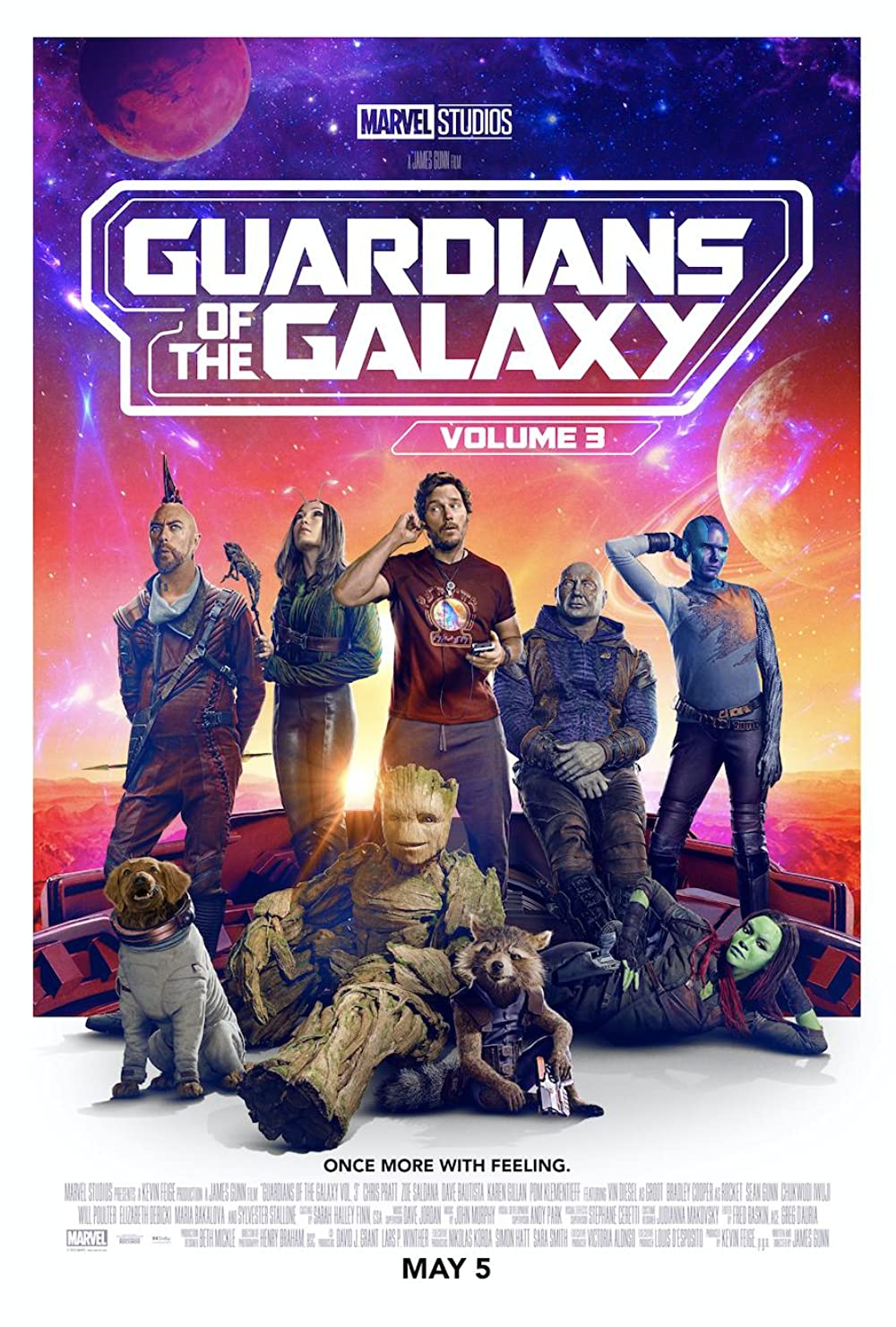
Let’s be real: it feels like the once-mighty MCU now really needs a hit. Phase 4 has been, to be kind, uneven. And so, can James Gunn bring some magic back before heading off to DC? Yes. Good news, true believers! Guardians of the Galaxy, Volume 3 is a good movie! You will laugh, you will cry (believe me, you will CRY), you will believe a living talking tree can fly? Ok, well, maybe not that far, but it is a solid movie.
That being said, it is missing some of the magic of previous outings. But it does deliver a satisfying end to the trilogy of films focused on our special band of a-holes. Rocket builds stuff. Drax and Mantis banter. Groot takes new forms. Star-lord is… just sort of there (which is good if you, like many, are at the end of your tolerance for Chris Pratt). But returning supporting characters also get some great work, like Kraglin and Cosmo. Cosmo is a very good dog. Cosmo is maybe the best dog. Good dog, Cosmo.
Our story involves Rocket’s origins and his ties to new villain The High Evolutionary (Chukwudi Iwuji), who is desperately searching for Rocket, deploying every resource at his disposal. This includes returning baddies The Sovereign and their new experiment teased in the after-credits of Guardians of the Galaxy, Volume 2: Adam Warlock (Will Poulter). Some comic book nerds are going to be very upset at Adam Warlock’s portrayal in this film as it is incredibly divorced from its comics lore. Just sit tight and wait to the end and what this portends for the future of the character, and forgive the film for needing a Big Bad who is actually a match for our Guardians of the Galaxy.
After an initial fight with Warlock leaves Rocket mortally wounded, Peter and the rest of Guardians have to undertake a desperate heist to save their friend. And through this we learn about Rocket’s origins and his previous life with other experiments of the High Evolutionary Lylla, Teefs, and Floor. And this is the section of the movie that will make you cry and should probably come with a content warning.
Guardians of the Galaxy is a series that has massive kid-appeal. Your kid loves Rocket and Groot, right? Well, this film contains scenes of implied animal torture and experimentation that is incredibly upsetting both for children and adults. While the intent is obviously to create pathos, it is maybe the most disturbing thing so far in the relatively anodyne MCU.
The High Evolutionary is also abusive: the way he speaks to Rocket and treats him is steeped in patterns any kid who grew up in a verbally and emotionally abusive home will immediately recognize. Again, this might be traumatic for people, so go in eyes open and maybe have a therapy session scheduled soon after, just in case.
And while the film focuses a lot on Rocket, its greatest strength is in providing something for every other single team member to do. Everyone gets a true superhero moment, and even better, several team-up moments where we see our gang of misfits fighting together. A hallway battle late in the third act is a symphony of teamwork and gonzo filmmaking only James Gunn could deliver.
Explosions? Yes. Guts and bodily fluids of various colors spraying everywhere? (It’s ok MPAA, they’re aliens and creatures, get it?) You know it! Laser blasts, punches, kicks, impalements, bisections, Groot showing what he can do with his various forms? Oh, HELLS yes.
And, again, everyone gets a hero moment. Mantis has a particularly fun one late in the film that I will simply call her Paul Atreides moment. But it is that same sort of heroic epic moment usually only given to single protagonists, and every. single. member. of the team gets one. It’s obvious James Gunn is leaving everything out on the field in his likely final entry into the MCU, and the last cinematic outing for this particular team of the Guardians of the Galaxy.
The themes from past films of found family continue to shine through. There’s also a strong potential queer/trans allegory in a lot of this, as The High Evolutionary obsesses over “his creations” needing to be “perfect” in his eyes. (Again, the abuse shown and implied here.) But as Rocket and his fellow experiments choose their own names and do things beyond his designs, they are further abused and rejected.
There is also a story of liberation here that comes at a time when basic human rights, from reproductive freedom to state governments bullying trans kids (and even legislators), are increasingly under attack. Guardians of the Galaxy continues to be a series for those of us who are misfits, but have a strength — when we fight together — that rivals any Avengers lineup.
It’s nowhere close to a perfect film. But it earns a space as one of my favorite films of Phase 4. And its message comes at a time when we couldn’t possibly need it more.
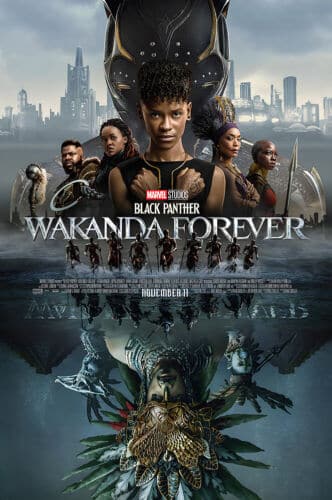
Black Panther: Wakanda Forever presents a mirror image of two warring nations and how they are reflected in each other
Wakanda Forever! This is cry we’ve been making ever since Ryan Coogler’s Black Panther hit in February of 2018, smashing box office records and changing the cultural zeitgeist. This is a worthy sequel, even if it doesn’t fully live up to the first film (what movie could?!?) Dedicated to “Our Friend Chadwick Boseman,” the film deals with his loss and absence by literally becoming about his loss and absence. Can we go on? How do we find the strength? How do we deal with the legacy and expectations? And how do we step out of that very large shadow that he cast to make our own way– to continue the legacy in a way that honors him and honors what he fought for?
Perhaps the smartest thing this Black Panther movie does is make it not about being the Black Panther. With no heart-shaped herb, Wakanda has lost its protector. So each person closest to T’Challa has to find their own way. So this is Queen Ramonda’s story. This is Shuri’s story. This is Okoye’s story. This is Nakia’s story. This is M’Baku’s story. It is a true ensemble effort — despite trying (somewhat unsuccessfully) to unify around Shuri’s journey.
The first major problem with this approach is exactly that. It’s trying to push Shuri’s story. No slight to Letitia Wright, but given the talent of the rest of the cast, it is hard for her to shine the brightest. Given Boseman’s absence, it is really unfair to ask her to have that same sort of unifying presence. Luckily, the film takes that theme and runs with it. Misgivings about Letitia Wright’s ability to anchor a blockbuster? Meet the theme of misgivings about Shuri’s ability to lead her nation in T’Challa’s absence. Smart move. And while Wright may be the least compelling in the major cast, the performances by others shine even brighter.
Angela Bassett, for example, is the best. Nominate her for an Oscar for this role. I’m totally serious. She is absolutely amazing. The nuance and depth she brings to this role is formidable and probably the best acting we’ve seen by any person in the history of the MCU. She is a sovereign trying desperately to hold her country together, to hold her family together, while she deals with the depths of grief of losing another loved one. She is pitch perfect, and she delivers another stunning performance, reminding another of her children, “Show them who you are.”
Playing off of her in one pivotal scene is Danai Guirra, who gives a career best performance as Okoye. She goes on a journey in this movie, and her performance is amazing. In a particularly meaningful and emotionally fraught scene between Okoye and Queen Ramonda, the way Guirra and Bassett play off each other is a master class of the acting craft.
Equally as strong is Lupita Nyong’o as Nakia. She has some of the most pivotal and emotional scenes in the film. No spoilers, but she is holding on to some secrets with her grief. A scene where she describes why she couldn’t come to T’Challa’s funeral is so heartbreaking. And it illuminates one of the main themes of the film of how we each process grief and tragedy differently.
Not to be outdone is her Us costar Winston Duke, who provides a lot of the jokes needed to cut through the sadness, but also adds some wisdom to the film’s dialogue. Who would have predicted that a character as problematic in origin and story (and nickname) in the comics as M’Baku would become so pivotal?
The best thing about this film is that each of these characters grows and has their own individual arc and resolution to it, all of which play to the film’s larger themes. The downside is that this causes the film to be a bit overstuffed as it is really trying to tell 8 different stories at once. Wait, 8, you say? But you only mentioned 5. And who are the others?
Well, Riri Williams, for one. She is everything we could have hoped for, and also gets to play the sort of macguffin of the movie in the same way America Chavez got to in Doctor Strange and the Multiverse of Madness. We also get returning champ CIA Agent Everett Ross, once again played affably by the charming Martin Freeman. And oh boy, does he have some backstory that leads to an extended guest appearance by an increasingly important MCU character.
Oh, and speaking of unexpected cameos… don’t let anybody spoil this for you. And don’t spoil it for anyone else. You’ll know what I mean when it happens. And it’s the best scene of the entire movie.
And then we finally have Black Panther: Wakanda Forever‘s villain. Ok, so he’s not actually a villain. Antagonist? Anti-hero? None of those labels really seem to fit the first appearance of Namor in the MCU. He is absolutely something else, and Tenoch Huerta is a gift.
The original Black Panther‘s villain — Eric Killmonger — was so epic he’s hard to top. This movie doesn’t try to. It instead presents someone who in another film would be considered the hero. Like Killmonger, he has a moral justification and a point. But unlike Killmonger, Namor is not unnecessarily brutal nor particularly angry. He is simply a mirror image of the Black Panthers of the past.
Remember the poster? Let’s look at it again. This image — Wakanda and its warriors mirrored underwater — is the best encapsulation of the spirit of this movie.
And while he does rain down vengeance on a 16th century conquistador plantation that had brutally enslaved his kinsmen, he is completely justified in these actions and merely doing what must be done to protect his people– not unlike how Dora Millaje in an opening scene take down soldiers who would try to steal vibranium.
In this version, director Ryan Coogler smartly changed Namor’s city from Atlantis to Talokan. Instead of a Greco-Roman design associated with the myth of the lost city as written about in Plato and Herodotus, instead the city is based on Mayan and other Meso-American Indigenous cities that existed prior to the arrival of conquistadors. It is beautiful and it is brilliant. If Wakanda is Afro-futurism– a “what-if” of if Europe hadn’t pillaged Africa’s culture and resources through colonization– then Talokan is the same sort of Indigenous Meso-American culture… but under the sea! Somebody get James Cameron on the phone and tell him he and Avatar 2 are officially on notice.
So if Namor and Talokan aren’t the villains, who are? The colonizers. The people and countries who want vibranium for themselves. Wakanda and Talokan find themselves fighting merely about how far they should go to protect their secrets from the outsiders. And one of the only shames of this film is in a movie where the villains are the white people, we see two beautiful civilizations — one African, one Meso-American — pitted against each other. Yikes.
Despite that, Tenoch Huerta is amazing in this film. He is charming, but can also be harsh and strident. We’re going to want more Namor in future MCU films, and this potentially sets up for that. He also name-checks a few ideas and concepts that will certainly be a giant tease for a lot of Marvel fans.
So doesn’t that sound like a lot? It is. And despite its 2 hour 40 minute runtime, it actually feels shorter. But it’s still a lot. It’s overstuffed, to be sure, like one of those giant burritos that only exist to see if you can eat it on a dare. But what it’s stuffed with is pretty tasty.
Black Panther: Wakanda Forever will be a lasting, fitting tribute to Chadwick Boseman. There were moments in our screening where everything went silent. Moments of reverence like this are usually reserved for church or other spiritual practices. Instead, we get the now-familiar page-flip Marvel graphic exclusively of clips of Boseman as T’Challa. And there are moments in this film that will make you cry. And while it may not fly to the heights of its previous installment, it sits head and shoulders above every other film in the MCU’s Phase 4.
It’s not unfair to say that as good as the Marvel movies and TV series are, they’re all very much governed by a formula that makes them come off as predictable. Well, predictable up to a point. I can’t in good conscience say they’re merely copy and paste versions of the same story, but there are commonalities. The hero, or heroes, find themselves conflicted with the roles they’ve either played before or are going to play, they’re put on a path that confronts them with a villain that will eventually help them recalibrate their identities, and then they accept and embrace their hero status.
Disney+’sMoon Knightgoes for different, at least as far as the first episode is concerned. It comes off as a kind of companion to WandaVision in terms of concept, being that it approaches the idea of fragile realities in an intimate manner. Magic, horror, and psychology take precedence over action and political intrigue. Whether it’ll sustain this or not remains to be seen, but it at least results in a very refreshing first episode.
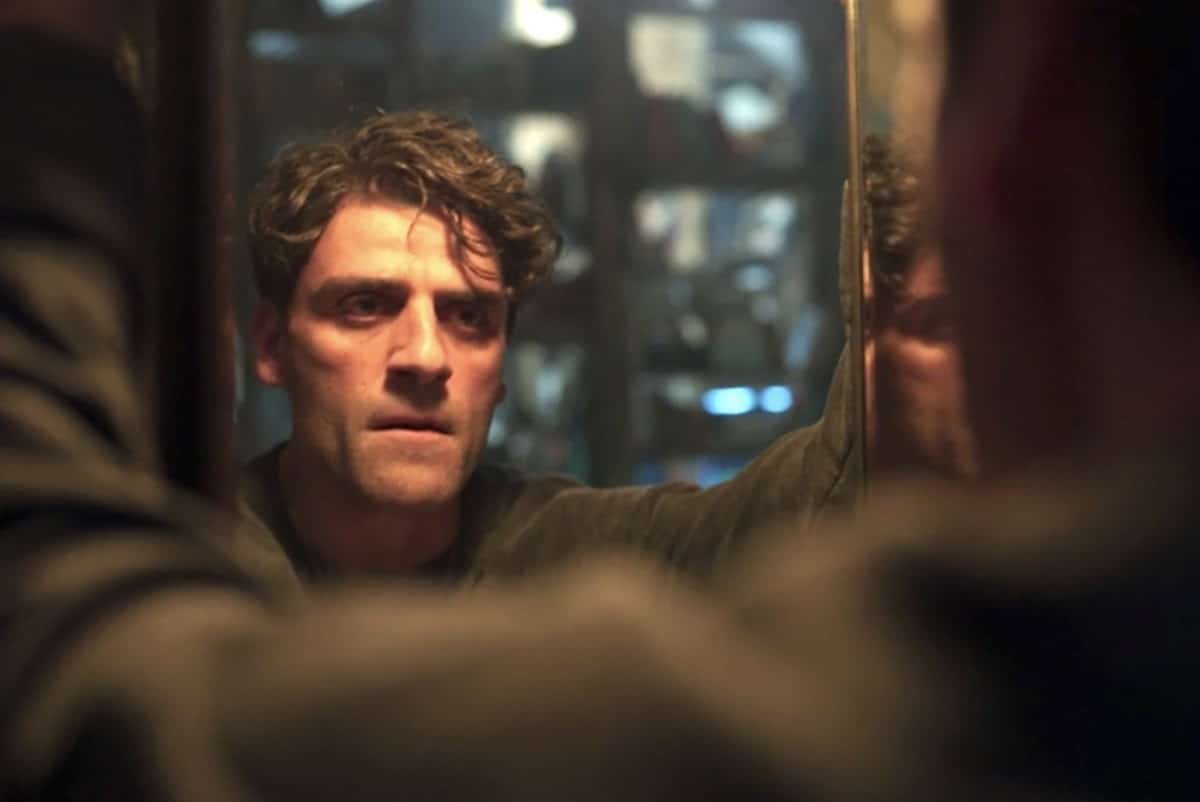
Moon Knight follows Steven Grant (played by Oscar Isaac), a museum shop clerk that suffers from intense and violent dreams, blackouts, and an invading personality that the comics the series is based on have often treated as a kind of supernatural dissociative identity disorder (DID for short). Steven starts to get haunted by a booming and authoritative voice (supplied by the great F. Murray Abraham) that will reveal itself to be the entity that endows him with the power to become Moon Knight.
Ethan Hawke plays Arthur Harrow, a cult leader-like figure that is looking to harness the entity that has taken over Steven Grant. He gets to see the very British Steven become the very violent mercenary Marc Spector. It all leads up to Steven becoming Moon Knight to fight off the villain while trying to untangle his multiple personalities.
Isaac and Hawke on their own justify the watch. Isaac in particular plays a very emotionally convincing man that’s being tormented by his mind and how it disrupts his notions of reality and identity. It makes the Steven Grant character instantly likeable and relatable, not unlike Dan Stevens’ character in Fox’s own comic book series Legion (named after the titular character).
In Legion, the main character sees his powers in heavy contrast to schizophrenia, a condition that in Legion’s case blurs the lines between metahuman abilities and psychiatric symptoms. It remains to be seen how the DID aspects of Moon Knight’s character unspool, but so far it’s presented as key story element that builds the character sensibly.
Hawke complements Isaac by approaching his character as a kind of twisted spiritual guide that disarms people through words first and violence second. It makes for a very menacing display of villainy, one I’m eager to see develop as the show progresses.
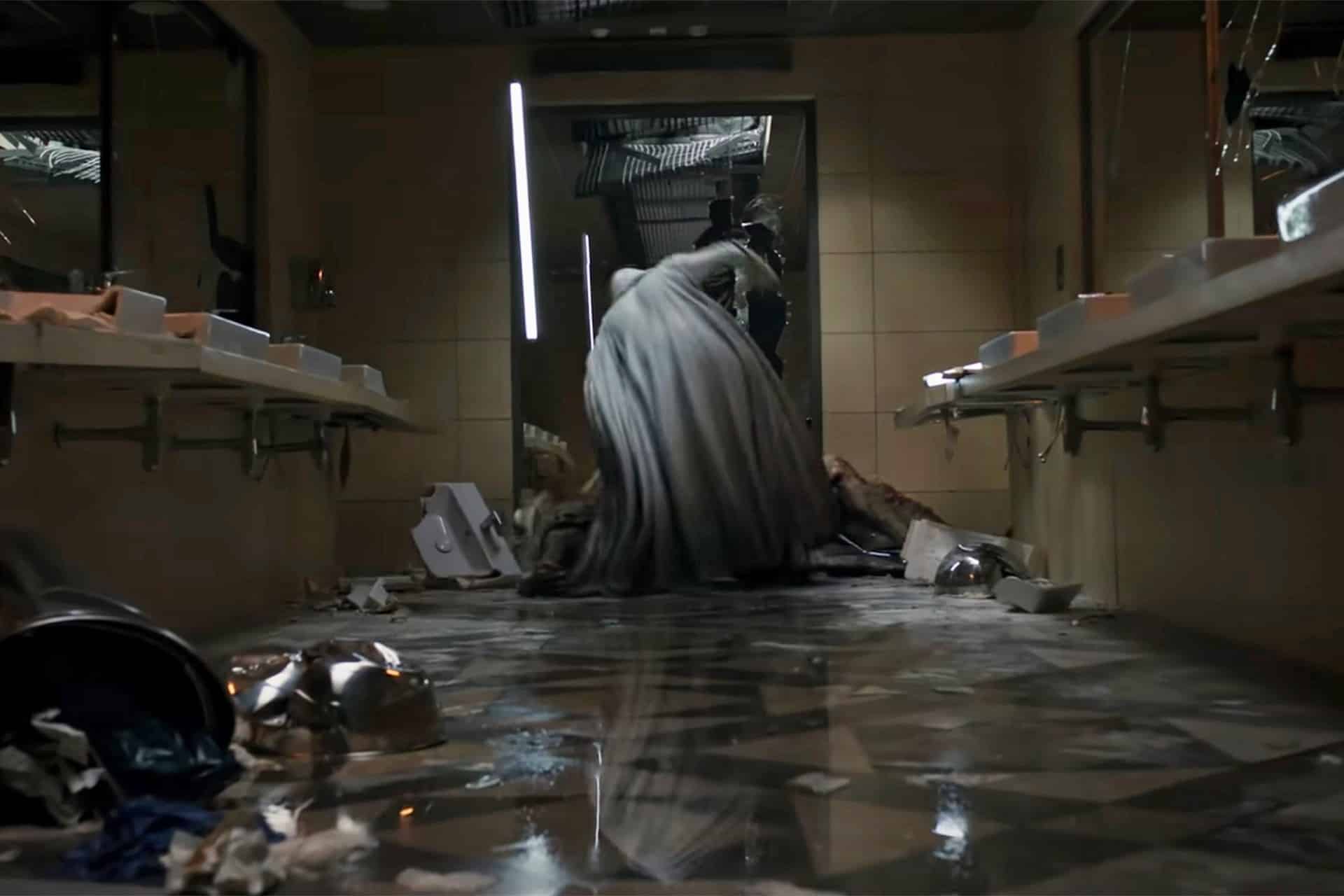
The first episode’s director, Mohamed Diab, also shines, especially in how inventive his approach is to the show’s action sequences. Initially, we’re presented with a Steven that epitomizes defenselessness in the face of insurmountable odds. When put in a life-threating situation, though, Steven blacks out and reawakens instantly to see he has solved the situation he was in with a lot of spilt blood as evidence of his handiwork.
The fight sequence itself isn’t shown. Instead, Diab goes clever editing and quick cuts to make these segments play out like fractured instances of violence that demand viewers fill in the blanks the blackouts leave behind. It builds Steven’s character while in the middle of the action, especially in the bits not shown, and it’s something I hope the series explores more.
If the first episode of the series is any indication, Moon Knight has a lot left to impress us with. The performances elevate the material to impressive heights and make the wait for the following episode that much harder. This series might be the one to break with the MCU TV formula and come up with something different, if only just a bit.
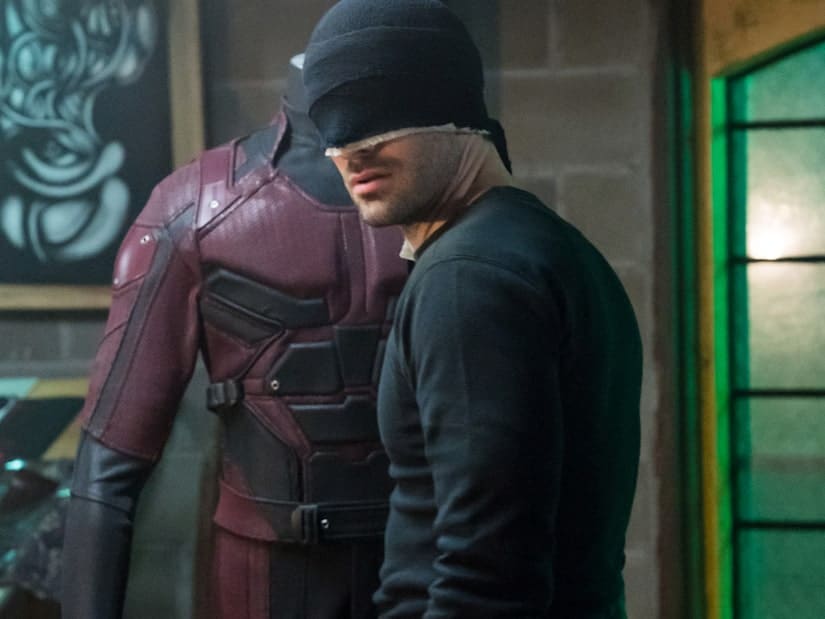
This is a column that focuses on something or some things from the comic book sphere of influence that may not get the credit and recognition it deserves. Whether that’s a list of comic book movies, ongoing comics, or a set of stories featuring a certain character. The columns may take the form of a bullet pointed list, or a slightly longer thinkpiece – there’s really no formula for this other than whether the things being covered are Underrated in some way. This week: Charlie Cox as Daredevil.
I’ve been rewatching the Netflix Daredevil and The Defenders shows recently because I wanted to remind myself of just how good they were, and something stuck in my mind during the sixth episode of The Defenders, and that’s just how consistently good Charlie Cox has been throughout his tenure at Matt Murdock. It’s no secret at this point that Cox has returned to the role, much to the joy of fans – this one included – and I wanted to look at some of the subtler things in his performance in way of celebration of the actor returning to the role.
Cox has been lauded for his role as Matt Murdock across the three seasons of Daredevil and the lone Defenders offering, so I’m not going to focus on all the reasons that fans wanted to see the actor return, but rather on a couple of the more subtle things he does as Matt Murdock that I didn’t notice on the first viewing of the series.
What I found most impressive was the way Cox’s eyes don’t move; there’s a constant far away look in his eyes, and they remain unfocused on anything throughout the series. Obviously the character is blind, and while there are definitely times that Cox’s eyes are covered by glasses or a mask, the actor is never actually caught looking at anything. Seriously, next time you watch a scene where his eyes are exposed, watch them. Then pay attention to the way he cocks his head when masked to pick up the different sounds in the environment elevates the actor’s portrayal of the character; watching him processing the audio of the environment he’s in is something I took for granted, and it wasn’t until I’d been able to watch the show for the third time that I really clued in to the nuances of the performance.
The only downside (and I say that with a giant asterisk) was in watching Cox deliver such a strong performance as Daredevil and contrasting that to the more average portrayal of Iron Fist in Defenders. I’m not sure that Iron Fist will carry the same casting choice to the Marvel Cinematic Universe, but it would surprise me if we didn’t see the character recast.
Charlie Cox as Daredevil is right up there with Robert Downey Jr. as Tony Stark and Hugh Jackman as Wolverine for my money. I can’t wait to see him return to the character again.
Join us next week where there will doubtless be another movie, series, comic or comic related thing discussed that is, for whatever reason, Underrated.
Alex and Joe talk about their fantasy Marvel Legends Spider-Man wave, followed up by a bit on Falcon And The Winter Soldier and Spider-Man: No Way Home.
As always, Alex and Joe can be found on twitter respectively @karcossa and @jcb_smark if you feel the need to tell them they’re wrong individually, or @those2geeks if you want to yell at them together on twitter, or by email at ItsThose2Geeks@gmail.com.
Alex and Joe spend an entire episode without a plan, and so can’t deviate from their lack of plan. I guess that’s something?
As always, Alex and Joe can be found on twitter respectively @karcossa and @jcb_smark if you feel the need to tell them they’re wrong individually, or @those2geeks if you want to yell at them together on twitter, or by email at ItsThose2Geeks@gmail.com.