Tag Archives: Joseph Mawle

TV Review: Rings of Power S1E6 “Udun”
Udun

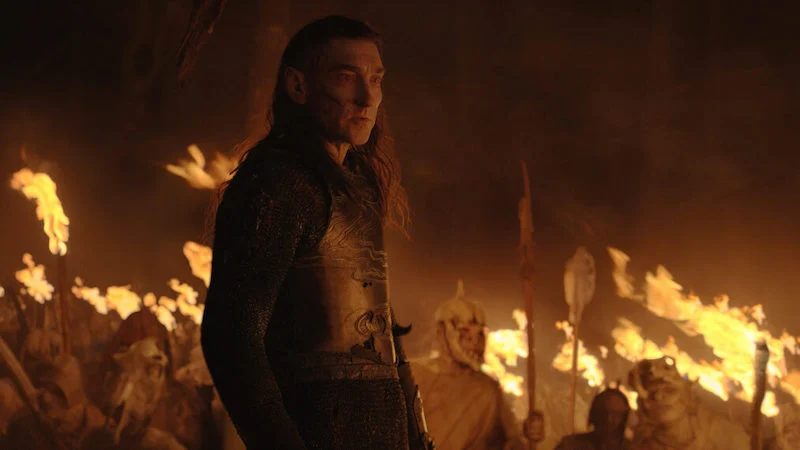
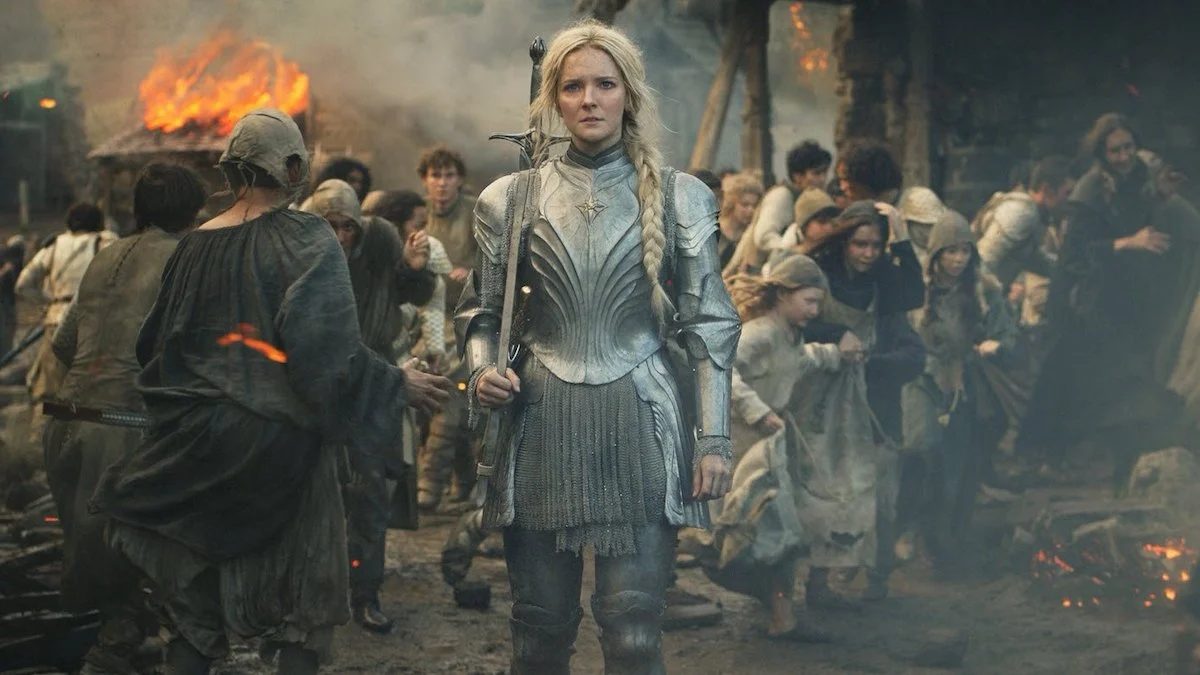
Although it’s not as single-location focused as some of the battle episodes of another certain fantasy show, writers Nicholas Adams, Justin Doble, J.D. Payne, and Patrick McKay center “Udun” around the battle between the humans of the Southlands and Adar (Joseph Mawle) and his Orcs plus a last minute save from the Numenoreans and Galadriel (Morfydd Clark). At times, “Udun” feels like a cover version of Lord of the Rings: The Two Towers, but it distinguishes itself from other Tolkien adaptations by giving psychological depth to one of the Orc characters and its use of the television medium for stronger characterization and long-form mythmaking beyond a feature film. For better or worse, it’s blows Rings of Power‘s storyline wide open and confirms that evil is something that infects the bones of Middle Earth as well as the hearts

Although, at times, he feels like a hybrid of Aragorn and Legolas, Ismael Cruz Cordova continues to nail both the role of action hero and romantic lead with his performance as Arondir throughout the episode. For example, he gets to be part of the big, yet poorly lit opening setpiece where he shoots a flaming arrow and brings down the Elven watchtower. Then, almost immediately he shares a tender moment with the quite badass Bronwyn (Nazanin Boniadi) where they bond over planting a special kind of seed before the battle with the Orcs and save the other seeds for after the battle. This symbolizes them having a future after the war ends. I love that the writers give Brownyn and Arondir a love of growing things in common, and it makes their relationship more organic and believable instead of the usual “crisis bond” in these kinds of movies/TV shows a la Keanu Reeves and Sandra Bullock’s characters in Speed.

Before they become the literal cavalry saving the day, Adams, Doble, Payne, and McKay use some of “Udun’s” running time to explore the relationship between Galadriel, Elendil (Lloyd Owen), and Isildur (Maxim Baldry). In contrast with the darkness covering the Southlands at the open and close of the episode, the scenes with the Numenorean ships coming to Middle Earth is bathed in the rosy fingers of dawn courtesy of director Charlotte Brandstrom as Galadriel watches Isildur sneak out and look at his first glimpse of land. They have a real general/younger soldier moment with Galadriel reminding him to be humble and the difference between current and idealized Numor. Then, she and Elendil share a terser exchange. The meter of Rings of Power‘s dialogue can be all over the place, but the writers and Owen really nail Elendil’s grief about his wife when asked about her by Galadriel, he mumbles “She drowned”. For now, Elendil is focused on the task at which is liberating the Southlands and installing a quite noble and less roguish Halbrand (Charlie Vickers) as king.
Udun

Although, “Udun” excels at the quiet character moments, it falls back on devices and scenarios that appeared in previous Tolkien adaptations. Basically, with the exception of the Orcs dressing up the men of the Southlands as Orcs and using them as cannon fodder and up to the confrontation between Adar and Galadriel, the battle is kind of a Wish.com Battle of Helm’s Deep with a much more TV-budget friendly location and less characters to root for and connect with. For example, Bronwyn telling Theo (Tyro Muhafidin) to protect those who can’t fight is basically verbatim the conversation Theoden has with Eowyn in The Two Towers except Eowyn is a compelling hero, and Theo is a craven brat. And like Gandalf and Eomer, the Numenorean cavalry comes in and saves the day and looks good doing it. The charge isn’t Peter Jackson levels of epic, but Brandstrom does a solid job showing an empire that’s not quite at its peak, yet still pretty glorious. Think the opening battle scene between the Romans and Germans in Gladiator showing the last gasp of imperial power before the decline and fall begins with Marcus Aurelius’ son Commodus.

However, “Udun’s” most powerful scene isn’t a chase scene, cavalry charge, or multi-volcano eruption (Mt. Doom Origins!). It’s an interrogation sequence between Galadriel and Adar where Clark digs into a darker side of her character, and Mawle finds a more sympathetic side of his until it’s undermined by the aforementioned mass murder and environmental destruction. Adar reveals that he was part of the first generation of Elves turned into Orcs by Sauron, but prefers to be called an “Uruk” and still says that he should be treated like humans and Elves instead of something twisted or evil. He just wants a homeland for Uruks while Galadriel wants to exterminate his entire race so maybe she’s the bad guy. The conversation grapples with the problematic aspect of Orcs being “Other” and their one-dimensional characterization throughout the works of Tolkien and its adaptations, but the writers end up back-pedaling once the flames start falling and the episodes wrap up. Still, by the end of “Udun”, Adar is a three-dimensional character who is crafty, yet a father figure to his Uruks and not just a walking fan theory or Sauron Jr. I’d love to see him share a beer with Killmonger, Magneto, and Shylock from Merchant of Venice if he survived the volcanic eruption.

Although not a perfect episode, “Udun” shows that Rings of Power is at its strongest when it digs beneath its surface-level good vs evil conflict and looks at the light and darkness in each major player from revenge-driven Galadriel to unlikely king Halbrand and even Uruk daddy/postcolonial theorist Adar. But, when lit properly (Aka when the Numenoreans arrive), it succeeds on a spectacle/action level as well, especially in its fiery closing moments.

Overall Verdict: 8.0
TV Review: Lord of the Rings – Rings of Power S1E4 “The Great Wave”

The Great Wave

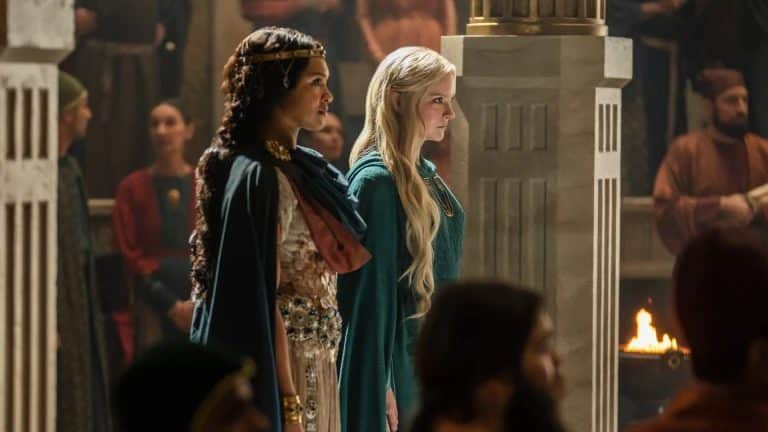
Lord of the Rings: Rings of Power hits the midway point with portents of doom and unexpected alliances in “The Great Wave”. Writers Stephany Folsom, J.D. Payne, and Patrick McKay continue the focus on the kingdom of Numenor beginning with a powerful, opening dream sequence where the queen regent Miriel (Cynthia Addai-Robinson) sees the island destroyed by the titular giant wave while she is blessing babies in the palace. Although she jails Galadriel (Morfydd Clark) for sedition, she is more open to working with the Elves and being faithful to the gods of Middle Earth, the Valar, then she initially let on leading to a surprising conclusion to this episode. As well as spending time in Numenor, “The Great Wave” turns its eye to how the humans of the Southlands are faring and offers a first glimpse at the mysterious Adar (Joseph Mawle) plus a return to Elrond’s (Robert Aramayo) visit to the Dwarves. The episode is chock-full with references that fans of the J.R.R. Tolkien-penned source material will appreciate, but lacks the visual wow factor and emotions of the previous episode as it sets up the back half of the season.

Miriel’s decision to either side with Galadriel and help the humans of the Southlands or continue an isolationist stance is at the center of “The Great Wave”. Galadriel might have great power, but she’s a terrible diplomat and gets a lesson in interpersonal communication from her cellmate Halbrand (Charlie Vickers). The characterization is a little condescending and feels like the writers needed some conflict to spin their wheels until the real reason why Miriel decides to help the Elves comes into play. Clark does get to show off Galadriel’s sheer presence and unyielding presence when she handles a palantir (A magic, seeing stone that can see far-off locations/possible futures) like a champ impressing Miriel, who is revealed to be barely hanging on by a thread because of her sick father Tar-Palantir. As regent, she’s very much an interim head coach, who wants to keep the country/team sailing smoothly and not tear everything down and start a new status quo. It takes an unsettling portent in a moment of visual splendor from director Wayne Che Yip to disrupt this.

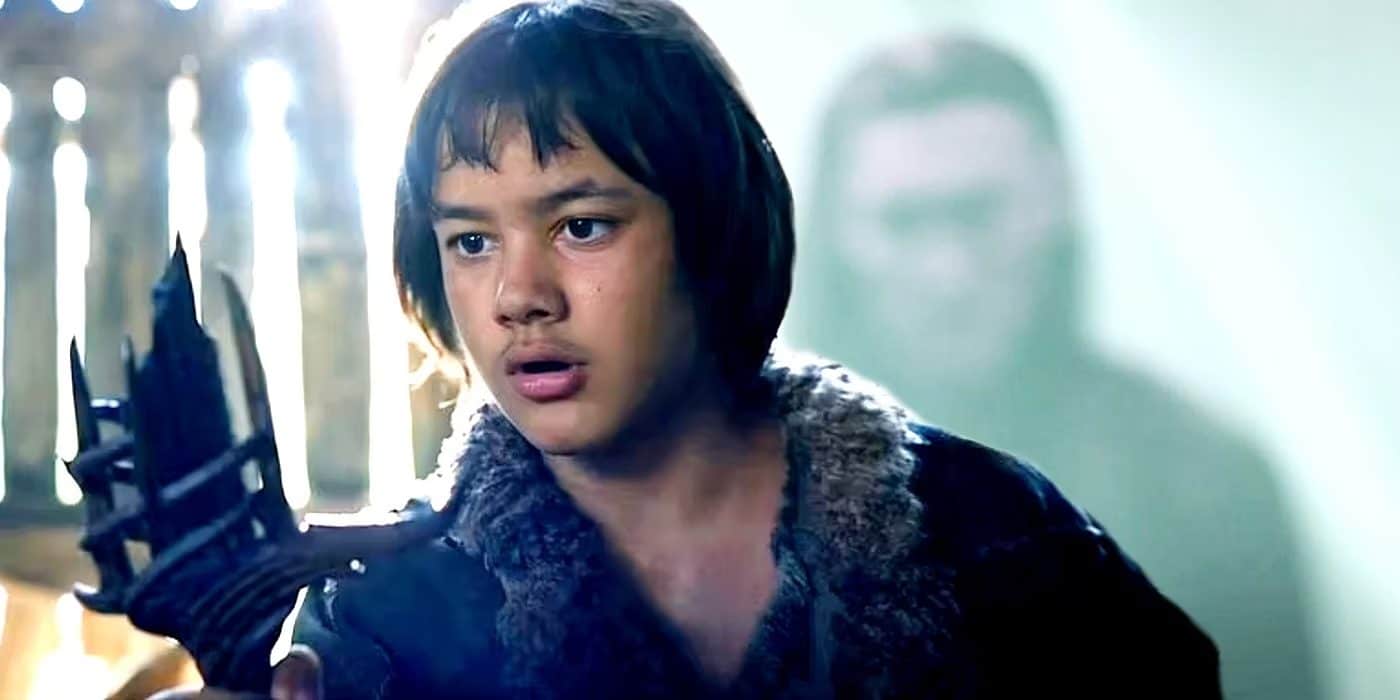
The Southlands’ scenes explore the effects of the supernatural on Middle Earth’s status quo from a different perspective. Building off last week’s fog-obscured character reveal, Folsom, Payne, and McKay stay mystery-shrouded around the character Adar letting makeup and costume design shows that he’s been through some hard time and has an affinity to the Elves, hence, the name. These visual touches cause Arondir to freak out a little bit and have spawned even more fan theories. Mawle plays Adar with unyielding authority offering no terms except surrender to Arondir, who is to run the message to the humans of the Southlands. However, the real supernatural stuff comes from Bronwyn’s (Nazanin Boniadi) son Theo (Tyroe Muhafidin) and his Morgul blade as he and his friend/bad influence Rowan (Ian Blackburn) go to the village to get supplies for the starving Southlanders.

The Great Wave
this kid is so fucking annoying for no reason…

However, I have mixed feelings about the Theo storyline. The inclusion of the blade and the namedropping of Sauron from tavern owner Waldreg (Geoff Morrell nails the creepy old man vibes.) add an air of menace and a connection to what’s going on with Galadriel and Numenor. Theo himself doesn’t get much characterization beyond being a scared, annoying brat, who has the plot armor to get around a legion of Orcs and return to the tower of Ostirith where the people of the Southlands are taking shelter. There’s a point about the seductive nature of power in his hunger to hold onto the blade, but mostly, I think the cool, evil sword is wasted on him. The final chase sequence does add to Brownyn’s mom of the year case as she runs through hails of arrows to find Theo with Arondir (A potential future step-dad?) in tow doing cool slow-mo ducks and dodges and tricks worthy of another heartthrob Silvan Elf (Legolas). I like that the writers and Yip keep showing how vulnerable the Orcs are to light, which could come in handy down the road.

Definitely compared to my reviews of the first three episodes, I’ve been a bit negative of this one, but “The Great Wave” wasn’t in a total wash, and lot of that was thanks to a return to Khazad-Dum. Elrond thinks there’s something secret going on in the mines and doesn’t buy Prince Durin IV’s (Owain Arthur) wife Disa’s (Sophia Omvete) excuses and ends up going on a mini-adventure through Khazad-Dum finally finding out that the dwarves have discovered a new metal named mithril. However, this series of events is more than just an origin story for the metal that corrupted the dwarves and saved Frodo’s life in Fellowship of the Ring, but further develops Prince Durin and Elrond’s friendship that they must balance with duty.

Both Elves and Dwarves think that they’re spying on each other, but Elrond also helps with Prince Durin’s strained relationship with his taciturn, my way or the high way father King Durin III (Peter Mullan) by saying that he wishes that he could have had one last conversation with his father, Earendil. Earendil didn’t actually die, but was placed in the stars by the Valar so Elrond has to basically relive the grief every time he sees the night sky. This anecdote isn’t just fan service for Silmarillion, but adds a dimension of grief to Elrond’s character, especially when he tells Durin IV to just have a conversation with his dad: something he could never have again. However, despite Prince Durin IV giving Elrond mithril as a token of friendship, or Disa’s gorgeous song to save the caved-in miners, there’s a darker edge to wrap up this plot as Durin IV basically comissions Durin III as a spy on the Elves. Duty comes before friendship yet again.

Even though it doesn’t do it in the most entertaining way with time-filling arguments and focuses on one-dimensional characters like Theo, “The Great Wave” gets Rings of Power to its mid-point goal with the Elves and humans of Nuemnor allying to fight evil in the Southlands. Thankfully, it’s not all sunshine and roses with some of the humans of the Southlands being followers of Sauron plus the whole vision of Numenor underwater, its feeble king Tar-Palantir, and Pharazon using the military expedition for political opportunism promising his men that they’ll be giving the Elves orders. However, hopefully, later episodes have more of a personal or emotional connection like the scenes with Durin IV and Elrond aren’t just focused on getting from narrative point A to point B.

Overall Verdict: 7.6