Tag Archives: jenette kahn

The Folio Society To Publish DC: Superman, Presenting a Dozen of the Greatest Superman Comics of All Time, Curated and Selected by Former DC Comics President Jennette Kahn

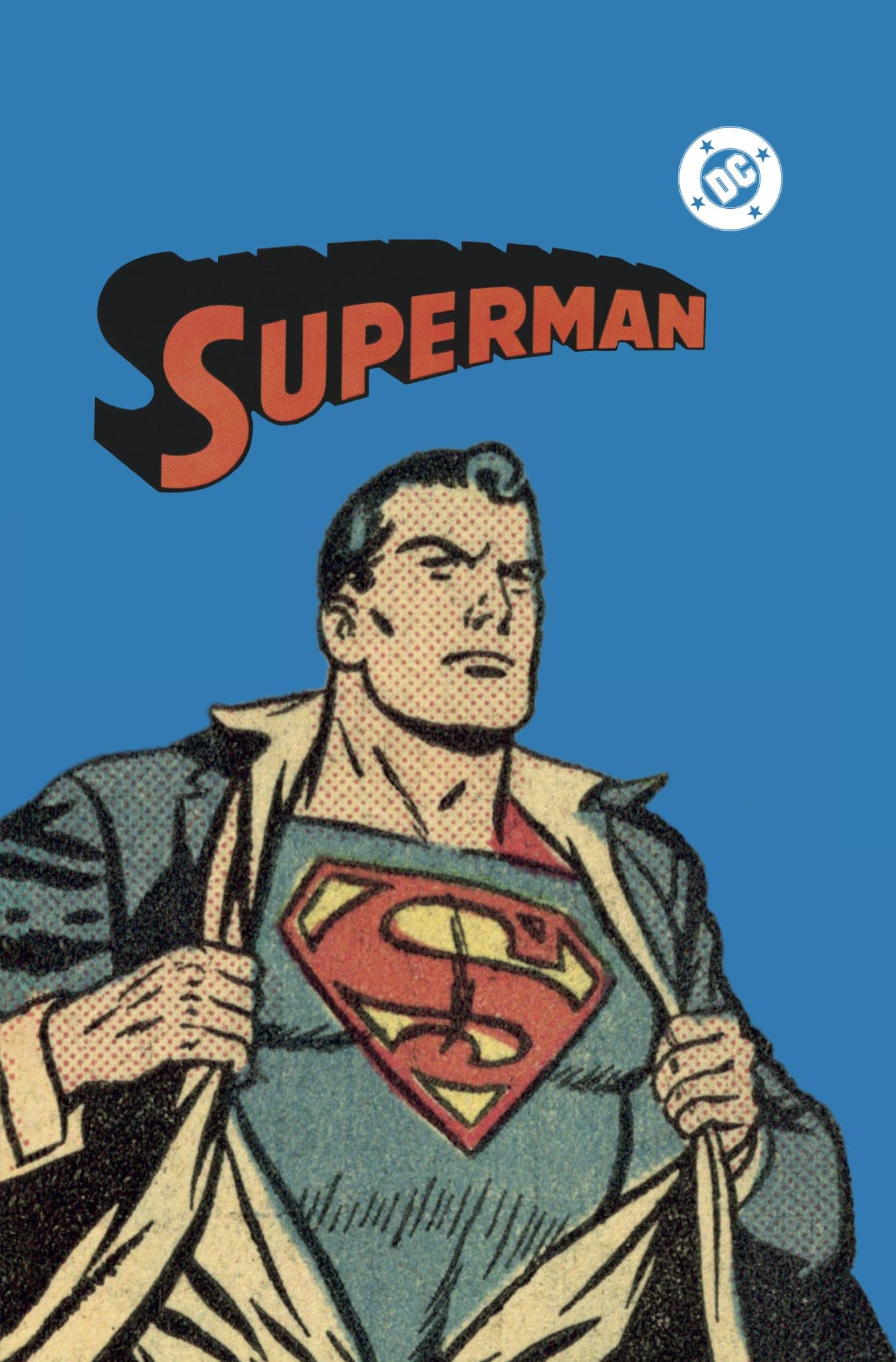
DC: Superman

The Folio Society will celebrate the legacy of the Man of Steel with the publication of DC: Superman, a collectible compilation featuring twelve seminal comics by a host of iconic writers and artists, including Jerry Siegel and Joe Shuster, Curt Swan, Marshall Rogers, Alan Moore, John Byrne, Dan Jurgens, Paul Dini, and Alex Ross. These classic stories — all selected and introduced by Jenette Kahn, the former DC President, Publisher and Editor-in-Chief of DC, and published in collaboration with DC — form a collection of the best and most significant Superman stories from the 20th century. 

Along with the 312-page one-of-a-kind deluxe book, DC: Superman comes with a stand-alone replica copy of Superman #1, one of the most valuable comics in the world, scanned from an original copy held in the DC Archives. DC: Superman also features a rarely seen letter written by Jerry Siegel in 1934, detailing the original character ideas for Superman four years before the character first appeared in Action Comics’ historic debut issue, as well as all-new foreword by Marjorie Liu, the Eisner Award-winning writer of Monstress and The Night Eaters. As Liu writes in her personal essay, “If there is one superhero who will remain immortal, passed down from generation to generation, it will be Superman.”

DC: Superman includes:

  • Action Comics #36 (May 1941) – ‘Fifth Columnists’ by writer Jerry Siegel, artists Wayne Boring and Joe Shuster, and cover artist Fred Ray.
  • Superman #30 (October 1944) – ‘The Mysterious Mr. Mxyztplk!’ by writer Jerry Siegel, artist Ira Yarbrough and Stan Kaye, and cover artist Jack Burnley.
  • Superman #96 (March 1955) – ‘The Girl Who Didn’t Believe in Superman!’ by writer Bill Finger, artists Wayne Boring and Stan Kaye, and cover artist Al Plastino.
  • Superman #149 (November 1961) – ‘The Death of Superman’ by writer Jerry Siegel, artists Curt Swan and George Klein, and cover artists Curt Swan and George Klein.
  • Superman #400 (October 1984) – ‘The Living Legends of Superman – Chapter Four’ by writer Elliot S. Maggin, artist Marshall Rodgers and Terry Austin, and cover artists Howard Chaykin and Frank Miller.
  • Action Comics # 583 (September 1986) – ‘Whatever Happened to the Man of Tomorrow?’ by writer Alan Moore, artists Curt Swan and Murphy Anderson, and cover artists Curt Swan, Murphy Anderson, and Anthony Tollin.
  • Superman Vol. 2 #2 (February 1987) – ‘The Secret Revealed’ by writer John Byrne, artists John Byrne, Terry Austin and Keith Williams, and cover artist John Byrne.
  • Superman Annual #2 (August 1988) – ‘Love’s Labors …’ by writer Roger Stern, artists Ron Frenz and Brett Breeding, and cover artist Ron Frenz.
  • The Adventures of Superman #462 (January 1990) – ‘Homeless for the Holidays’ by writer Roger Stern, artists Dan Jurgens and Art Thibert, and cover artists Dan Jurgens, Brett Breeding, and Tom Ziuko. 
  • Superman #75 (January 1993) – ‘Doomsday!’ by writer Dan Jurgens, artists Dan Jurgens and Brett Breeding, and cover artists Dan Jurgens and Brett Breeding.
  • Peace on Earth (January 1999) by writer Paul Dini and artist Alex Ross.

The release of DC: Superman has been made according to The Folio Society’s exceptional production standards, with a slipcase and cover design which are taken from vintage DC artwork. Scanned from original copies held in the DC archives, the comics have been reproduced in 10” x 7” treasury format. 

The Folio Society edition of DC: Superman will be available for £70 / US $100 from 4pm UK time (11am EST, 8am PT) on February 4, 2025 exclusively from the Folio Society.

The Folio Society To Publish DC: Batman

The Folio Society, independent publisher of beautifully illustrated hardback books, in collaboration with DC, will celebrate the 85th anniversary of the first comic book appearance of DC’s Dark Knight Detective with the release of DC: Batman. Created by Bob Kane with Bill Finger, Batman first appeared in 1939’s Detective Comics #27 and since then the Dark Knight has stood as a symbol of determination, courage and justice to generations of fans for over 80 years. Batman is one of the most iconic fictional characters in the world, and is a self-made Super Hero, notable not for his super powers, but for his intelligence, determination, and tech savvy.

This collectible compilation includes twelve seminal comics, by a host of iconic writers and artists— including Bill Finger, Bob Kane, Jerry Robinson, Denny O’Neil, Neal Adams, Marshall Rogers, Frank Miller, Dave Mazzucchelli, Alan Moore, Brian Bolland and Kelley Jones—all selected and introduced by former DC President, Publisher and Editor-in-Chief of DC, Jennette Kahn. Along with the 320-page one-of-a-kind deluxe book, DC: Batman also comes with a stand-alone replica copy of Batman #1. Scanned in its entirety from an original 1940 copy, the replica copy of the Batman #1 comic book, which includes the original back-up strips and vintage ads and introduces DC’s Clown Prince of Crime, aka The Joker, and The Cat, who would come to be known as Catwoman.

DC: Batman includes:

Facsimile: Batman #1 (Spring 1940)
Writer: Bill Finger
Cover artists: Bob Kane, Jerry Robinson
Artists: Bob Kane, Sheldon Moldoff
Editor: Whitney Ellsworth

The Bat-Man
Detective Comics #27 (May 1939)
Writer: Bill Finger
Artist: Bob Kane
Editor: Vincent Sullivan

Batman and Green Arrow: The Senator’s Been Shot!
The Brave and the Bold #85 (September 1969)
Writer: Bob Haney
Cover artist: Neal Adams
Penciler: Neal Adams
Inker: Dick Giordano
Letterer: Ben Oda
Editor: Murray Boltinof

The Dead Yet Live
Detective Comics #471 (August 1977)
Writer: Steve Englehart
Cover artists: Marshall Rogers, Terry Austin, Tatjana Wood, Gaspar Saladino
Penciler: Marshall Rogers
Inker: Terry Austin
Colorists: Marshall Rogers
Letterer: John Workman
Editors: Julius Schwartz, E. Nelson Bridwell

Batman: Year One—Chapter One: Who I Am—How I Come to Be
Batman #404 (February 1987)
Writer: Frank Miller
Artist: Dave Mazzucchelli
Colorist: Richmond Lewis
Letterer: Todd Klein
Editor: Dennis O’Neil

The Last Arkham (Part One)
Batman: Shadow of the Bat #1 (June 1992)
Writer: Alan Grant
Cover artist: Brian Stelfreeze
Penciler: Norm Breyfogle
Inker: Norm Breyfogle
Colorist: Adrienne Roy
Letterer: Todd Klein
Editors: Scott Peterson, Dennis O’Neil

Robin—the Boy Wonder
Detective Comics #38 (April 1940)
Writer: Bill Finger
Artists: Bob Kane, Jerry Robinson
Editor: Whitney Ellsworth

The Crimes of Two-Face!
Detective Comics #66 (August 1942)
Writer: Bill Finger
Artists: Jerry Robinson, George Roussos
Letterers: Ira Schnapp
Editor: Whitney Ellsworth

Daughter of the Demon
Batman #232 (June 1971)
Writer: Dennis O’Neil
Cover artist: Neal Adams
Penciler: Neal Adams
Inker: Dick Giordano
Letterer: John Costanza
Editor: Julius Schwartz

The Dark Knight Returns
Batman: The Dark Knight Returns #1 (June 1986)
Writer: Frank Miller
Cover artists: Frank Miller, Lynn Varley
Penciler: Frank Miller
Inker: Klaus Janson
Colorist: Lynn Varley
Letterer: John Costanza
Editors: Dick Giordano, Dennis O’Neil

Batman: The Killing Joke (July 1988)
Writer: Alan Moore
Cover artists: Brian Bolland, Richard Bruning
Artist: Brian Bolland
Colorist: John Higgins
Letterer: Richard Starkings
Editors: Dennis O’Neil, Dan Raspler

Knightfall Part 1: Crossed Eyes and Dotty Teas
Batman #492 (May 1993)
Writer: Doug Moench
Cover artists: Kelley Jones, Bob LeRose
Penciler: Norm Breyfogle
Inker: Norm Breyfogle
Colorist Adrienne Roy
Letterer: Richard Starkings
Editors: Scott Peterson, Jordan B. Gorfinkel, Dennis O’Neil

The release of DC: Batman is the second release in the Folio Society publishing program with DC, following the release of the acclaimed DC: The Golden Age. DC: Batman has been made according to The Folio Society’s exceptional production standards. Scanned from original copies held in the DC archives, the comics have been reproduced in 10” x 7” treasury format. An anti-scratch laminated hardcover features Batman’s signature silhouette, with titles foil-embossed in yellow and midnight blue, the book itself cowled in a pitch-black slipcase bearing the famous Bat-Signal. A compendium of gothic artwork and Batarang-sharp storytelling, DC: Batman is an unmissable investigation into the adventures and pathology of one of the world’s most famous – and most troubled – DC Super Heroes. DC: Batman will be available from the Folio Society on February 20, 2024.

The Folio Society edition of DC: Batman, selected and introduced by Jenette Kahn, will be available for £65 / US $100 on February 20, 2024.  

Graphic Policy Celebrates Women’s History Month: Our Favorite Women in Comics

patsy walker aka hellcat 1 featuredLogan: Kate Leth, Brittney Williams, Megan Wilson, and Rachelle Rosenberg’s Hellcat has been a joyful celebration of superheroes, young people, and queerness. I will miss its humor, chibi style art, and especially my bi bae Ian Soo when it ends in a couple months.

faith-8-feat

Alex: Faith (Valiant) I really can’t understate just how enjoyable this series is. There have definitely been some issues stronger than others, but each and every one in the ongoing series (and preceding miniseries) has been nothing short of a pleasure to read.

Jody Houser, Marguerite Sauvage and the revolving cast of artists have taken Faith to stunning heights in an effortlessly charming and warm series that will make you fall in love with comics all over again.

black-panther-world-of-wakanda-4-featured

Shay: Gail Simone brings me LIFE! As does Roxane Gay! And I’m really loving Amanda Conner and her hubby’s direction for Harley Quinn! Also, loving Marguerite Bennett for the realistic portrayal of lesbians in Batwoman!

animosity3

Joe: One of the best titles in the last year is Animosity from Aftershock. This fantastic story is written by Marguerite Bennett who has taken the comic book world by storm lately, and drawn by Rafael de Latorre. Basically, society has collapsed when animals can talk and decide to take over the world from humanity. Instead of a boy and his dog adventure like we’ve seen so many times, we get a girl and her dog. Jesse and her hound, Sandor are not only an awesome pair, but the story is about Jesse’s growth into womanhood without a mother figure. Sandor knows he cannot help like her mother could, but he learns to rely on the other female animals to guide her. It’s brilliant, and everyone should be reading it.

nocenti-daredevil

Patrick: Ann Nocenti’s run on Daredevil blew my mind when it was coming out. It was so different from what I’d been used to seeing from Denny O’Neil and Frank Miller – a strange urban poetry that was as close to magic realism as I’d ever seen in mainstream comics. With an off-kilter humor – the Human Torch showing up in a tight t-shirt reading “Bad!” – twisted romance, and psychodrama. Her writing was like nothing else on the stands.

A huge thanks to the editors and publishers behind the scenes who made a ton of great comics happen: Jenette Kahn, cat yronwode, Diana Schutz, Louise Jones/Simonson, Ann Nocenti, Shelly Bond, Alisa Kwitney, and most especially the inestimable Karen Berger.

Troy: It was a bit short lived, but I think there was a Defender’s title by Cullen Bunn about Valkyrie being tasked with assembling Midgard’s Valkyrie. Fear Itself the Fearless was kind of the prelude series to that. I really would have loved to see this series fleshed out.

monstress #5 featured

Madison: It’s no secret that I’m obsessed with Monstress and Bitch Planet. They’re not for everyone, but they’re two of my go-to recommendations for people who love science fiction or fantasy. Elizabeth Breitweiser, Rachelle Rosenberg, and Jordie Bellaire consistently blow me away with their incredible colors.

Brett: I’m slightly obsessed with M. Goodwin’s Tomboy which is published by Action Lab: Danger Zone. The series follows a teenage girl whose best friend is murdered in a corrupt cop/conspiracy and she gets posessed by an avenging ghost in a way. Think Kick-Ass but a teenage girl in the lead and a manga influence to it all. An amazing mix of horror, action, and manga the hero Addison is a teenager that can kick ass and get some vengeance.

Review: She Makes Comics

she-makes-comicsAs a literary critic and cultural historian with both feminist and queer-ally persuasions, I am often frustrated by the type of historical revisionism that provides the history of a marginalized group by telling their story as adjunct or incidental to “mainstream” or “normative” history. Such scholarship marginalizes the narratives of oppressed groups in the very attempt to recover their histories.

I was thankfully relieved, then, to enjoy the hour-plus-long documentary She Makes Comics, directed by Marisa Stotter and made by Sequart Organization in association with Respect! Films. This documentary does what very little of comics scholarship (and journalism) has been able to achieve: it narrates the story of women comics creators, editors, and readers through dozens of personal interviews (see a list of interviewees below), incorporating them as central to the history of the comics industry while highlighting individual creators’ push toward greater inclusion and respectability in a medium largely controlled by men.

She Makes Comics begins with an opening montage of interviews in which creators Kelly Sue DeConnick, Chondra Echert, Wendy Pini, Gail Simone, and others speak to the importance of the comics medium for female creators and readers. Particularly powerful is DeConnick’s declaration that “representation in comics is absolutely vital,” followed by the injunction that “we need to celebrate the women who work in comics and who have always worked in comics, and we need to go back and find their stories and bring them to the fore” (00:55-01:07). DeConnick bring an absolute necessity to the project of reclaiming the history of women in comics.

DeConnick’s spirited call drives Stotter’s She Makes Comics as it traverses the editorial bull-pens, creator biographies, convention floors, retail spaces, and four-color universes that make up the world(s) of comics. The documentary begins by establishing the medium’s long history of female readership in comics strips of the late 19th century and the early 20th century, pointing at the same time to the generous number of female comics strip creators, including Jackie Ormes and Nell Brinkley. Trina Robbins reminds us that “nobody at that time thought, ‘Oh how unusual! She draws comics!'” Despite the comparative preponderance of women in comics in the early 20th century, a cultural moment that abounded in strong women heroes and adventurers (and with a 55% female readership!), the “comics crusade” of the early 1950s began by Frederic Wertham resulted in the Comics Code Authority. The CCA significantly reduced the type and quality of comics produced, and the documentary makes the very brief argument that the “sanitization” of comics led to a boom in the masculinity-celebrating superhero genre and a subsequent decline in female readership.

The documentary then tracks the work of Ramona Fradon at DC and of Marie Severin at Marvel in the 1960s, transitioning rather quickly to the misogynist, cliquey underground comix scene of the 1960s and 1970s, where creators such as Trina Robbins and Joyce Farmer carved out a feminist space for comics. As Robbins recalls, “if you wanted to do underground comix [with the male creators] you had to do comics in which women were raped and tortured. You know, horrible things!” But in the pages of feminist comix and zines creators were allowed the freedom to depict women from women’s point of view—points of view that occasionally had legal repercussions.

The remainder of She Makes Comics focuses heavily on the history of women creators in comics from the mid-1970s to the present, owing both to the interviewees’ considerable experiences in the period following the late 1970s and to the growing visibility of female readers and creators. Particular highlights include the description of early comic book conventions and the fan scene, which Paul Levitz describes as 90/10 men/women. Creators and fans like Jill Thompson and Wendy Pini bring their personal fan and creator experiences to bear on this unique moment in comics fandom history. Wendy Pini’s entrance into fandom via her (in)famous Red Sonja cosplaying is historicized and linked directly to her entrance into the comics industry as writer and, later, creator of Elfquest. For those with an interest in cosplay, Pini’s Sonja is marked as the beginning of an opening up of convention competitions to women, and the documentary subsequently details the critical importance of cosplay to fandom, to female fans, and to creators.

The documentary also gives considerable attention to Chris Claremont’s run on Uncanny X-Men, uniquely noting the considerable influence of Louise Simonson and Ann Nocenti as Claremont’s editors on one of the most famous runs in comic book history. Interviews by female fans, creators, editors, and retailers highlight the importance that Claremont’s X-Men saga had to marginalized groups, with a number of interviewees describing the “mutant metaphor” as particularizable to women’s experiences in geek culture.

The documentary also gives attention to particular auteurs such as Kelly Sue DeConnick and Gail Simone, as well as the editor Karen Berger, who founded DC’s Vertigo imprint at a fairly young age in the early 1990s. She Makes Comics points especially to the rise of the independent comics scene in the 1990s and its boom in the contemporary moment, especially in the form of Image’s new-found success, as a meter for the rising prominence of women comics creators and a female (but also queer and non-white) comics readership. Anyone who reads Image comics regularly knows that its creators do not shy away from feminist themes even while Wonder Women is avowedly “not feminist.”

She Makes Comics ultimately signifies that a change in the comics industry has occurred, albeit slowly, in favor of greater inclusion and representation of women and other oppressed minorities. Despite this, the documentary comes dangerously close to assuming that all the good that needs doing, has been done, asserting a stance that suggests a triumphant growth of women in comics (or as readers) as a victory over patriarchy. While I do agree that strides have been made, as my articles on Wonder Woman and Neko Case show, I don’t think we can ever be complacent. She Makes Comics reifies “women” as a singular, almost non-intersectional category and in doing so creates a narrative of emerging possibilities for that monolithic category without discussing the many and complex factors that continue to challenge, harangue, and complicate both women’s participation in comics and women’s representation. There is, in fairness, a brief moment in which Marjorie Liu speaks about using her position to empower women of color, though its importance is overshadowed by its anecdotal treatment.

She Makes Comics has very few shortcomings and is ultimately a treasure trove of information that is otherwise spread across thousands of online or print media articles, books, and interviews. Marissa Stotter and her crew, in collaborations with a riot (isn’t that what mainstream media calls a gathering of political dissenters?) of talented creators and fans, have made a unique contribution to the history of women in comics. I challenge academics and journalist, myself included, to heed Kelly Sue DeConnick’s introductory injunction with a critical eye to the politics of representation. If we could get a few books about gender politics in comics that aren’t solely about masculinity, that’d be a start.

Interviewees listed in the order that I happened to write them down (after I realized it would be good to write them all down): Marjorie Liu, Nancy GoldsteinTrina Robbins, Ramona Fradon, Janelle Asselin, Heidi MacDonald, Paul Levitz, Michelle Nolan, Alan Kistler, Karen Green, Ann Nocenti, Chris Claremont, Colleen Doran, Joyce Farmer, Wendy Pini, Jackie Estrada, Jill Thompson, Lauren Bergman, Team Unicorn, Chondra Echert, Jill Pantozzi, Kelly Sue DeConnick, Gail Simone, Colleen Coover, Holly Interlandi, Blair Butler, Louise Simonson, Jenna Busch, Amy Dallen, G. Willow Wilson, Tiffany Smith, Jenette Kahn, Shelly Bond, Karen Berger, Joan of Dark, Brea Grant, Joan Hilty, Lea Hernandez, Christina Blanch, Liz Schiller (former Friends of Lulu Board of Directors member), Andrea Tsurumi, Miss Lasko-Gross, Molly Ostertag, Hope Larson, Amy Chu, Nancy Collins, Ariel Schrag, Raina Telgemeier, Miriam Katin, Felicia Henderson, Carla Speed McNeil, Shannon Watters, Jennifer Cruté, Nicole Perlman, Kate Leth, Portlyn Polston (owner of Brave New World Comics), Autumn Glading (employee of Brave New World Comics), and Zoe Chevat.

You can purchase She Makes Comics on Sequart’s website for as low as $9.99. If you ask me, it’s a fantastic deal.

Sequart Organization provided Graphic Policy with a free copy for review.