Tag Archives: controversy

Update: Professor Rachel Hope Cleves looks for credit for Tillie Walden’s graphic novel Charity & Sylvia

There’s many times throughout entertainment where works with similar topics were released around the same time. But, this isn’t one of those cases. In 2014, Professor Rachel Hope Cleves released Charity & Sylvia. The book was the researched history of two women who lived in a same-sex marriage during the nineteenth century. Cleves gathered the women history of the two using diaries, letters, poetry and more, traveling around the country for details and facts to put together her book.

In June 2026, Tillie Walden released Charity & Sylvia, a graphic novel published by Drawn & Quarterly, also about the two women.
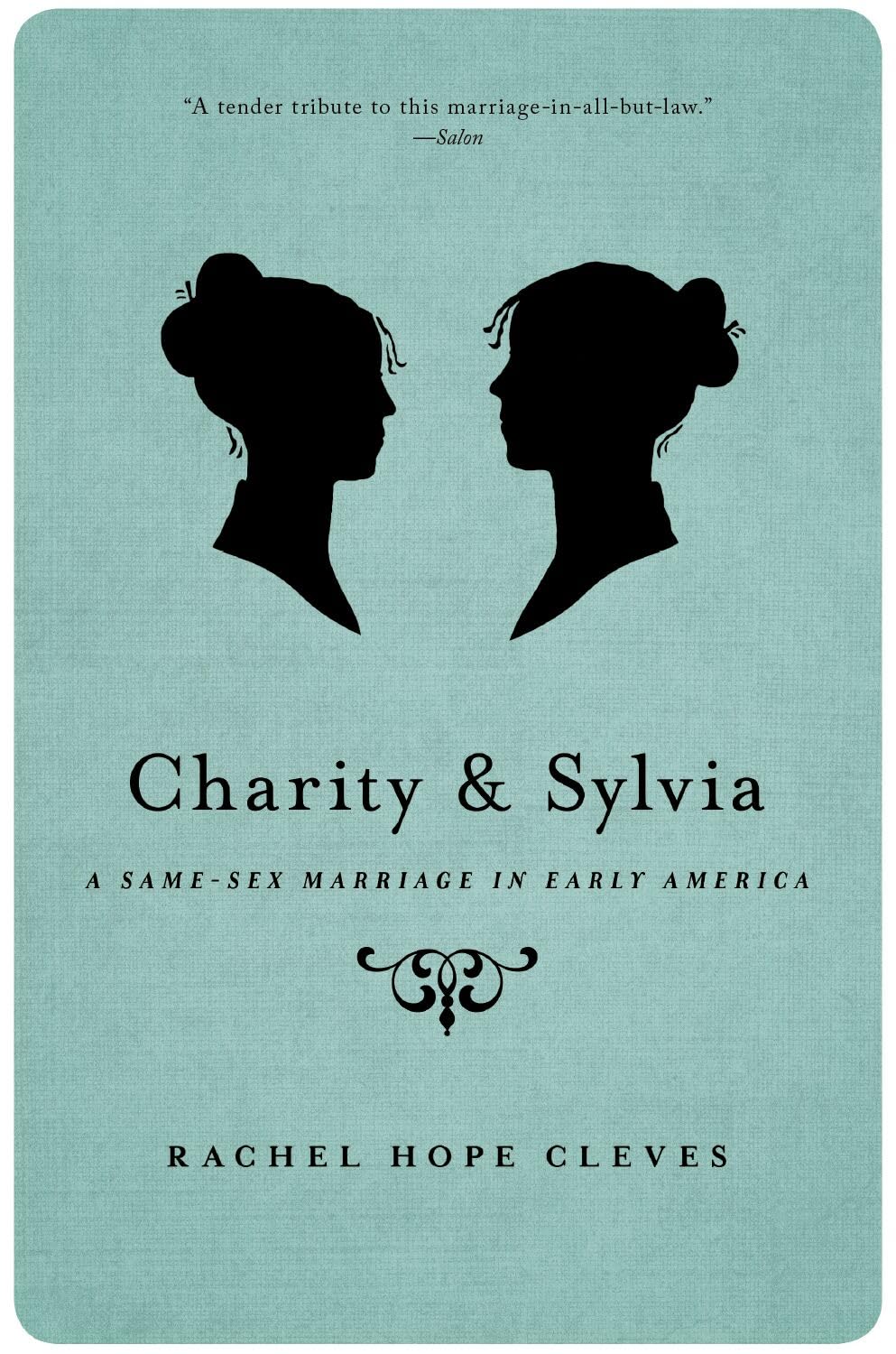
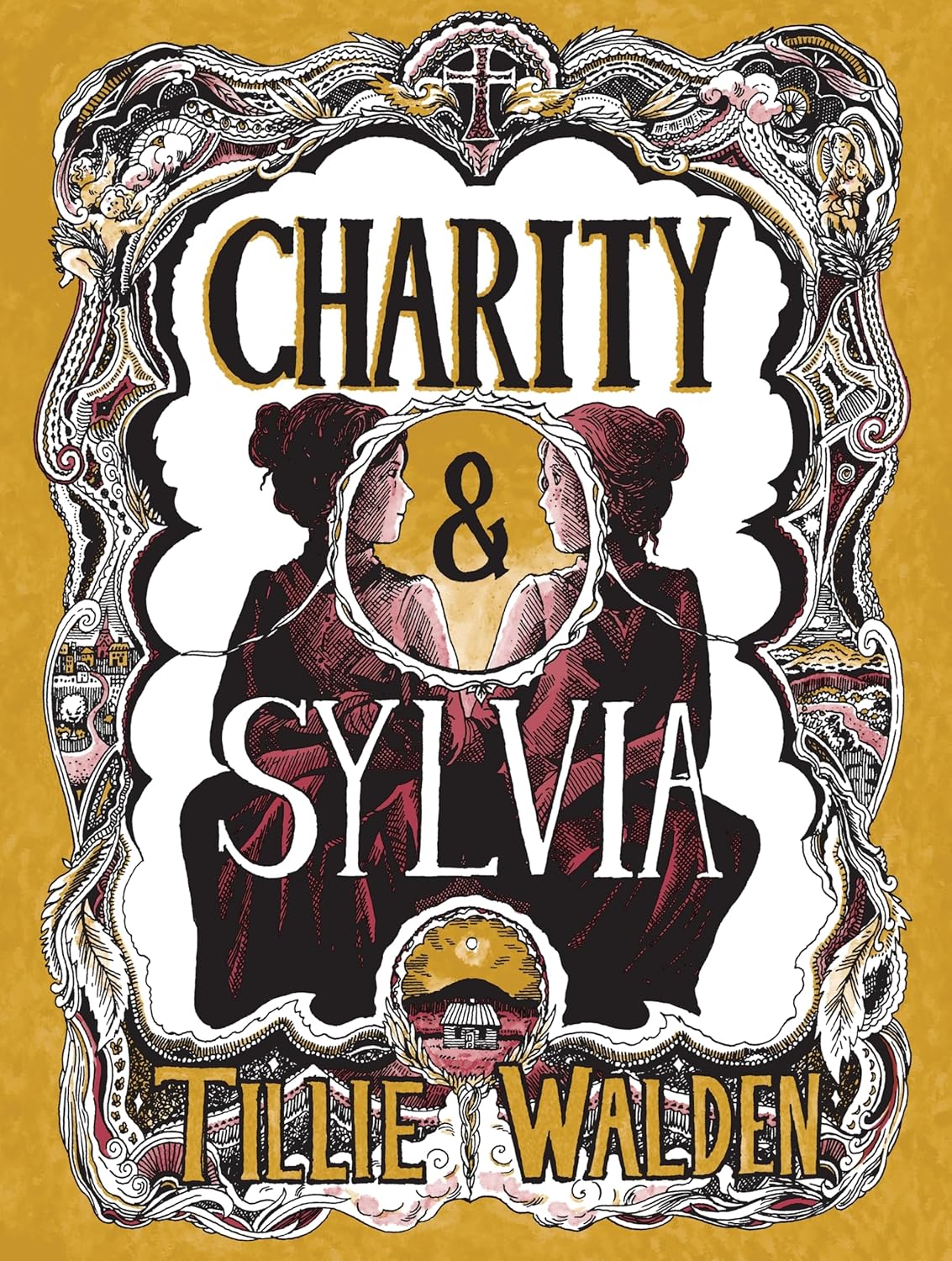
Even the covers of the two releases share similar elements.

Cleves has taken to social media with accusations Walden took heavily from her book without crediting her. Cleves writes:

To all the readers out there:

My deep love for Charity Bryant and Sylvia Drake, the subjects of my biographic Charity and Sylvia, has kept me silent, up to this point, about Tillie Walden's new graphic novel by the same title. Charity and Sylvia's story has been so deeply meaningful to so many people-their story has, without exaggeration, saved lives-that I've tried to be happy that Walden's book is making their story more widely known, even if she chose to take my title and cover design as well as my narrative and my research with only a single sentence of acknowledgement at the end of her book in her notes section. Walden's illustrations and storytelling are wonderful, as I told her when she reached out to me during the writing process. It would take nothing away from her hard work to be honest about how it is built on my hard work. But in Walden's publicity tour, she has repeatedly made claims to have based her book on her extensive research in the archive without acknowledging that her book is, in fact, based on my book. This false presentation demands response not only for my sake, but for the sake of all the hard-working historians out there whose work has similarly been take without credit. No, Walden has not "uncovered a chapter of queer history" in the archives, as her media interviews have claimed. She has adapted my book without credit or compensation, and claimed my research for her own. I don't doubt that Walden spent time looking at letters at the Henry Sheldon Museum, but the story Walden tells is not to be found there. It is a story that I pieced together from years of visits to at least twenty different archives and locations across the United States, not only in Vermont but in Massachusetts, New York, Illinois, and Washington State, as well. This is not just a question of facts but of story: the story of how Charity and Sylvia built a life together based in tailoring, struggled with their faith, and maintained relationships with their family is one that I constructed from the countless fragments that I gather through painstaking research. Many of the details of that story which appeared in my book, and re-appear in Walden's, do not come from the Henry Sheldon Museum, where she claims to have done her research. They come from the countless additional archives I visited. For just a few examples: the story about Charity's siblings' deaths was built on my tracking down a forgotten graveyard enclosed in a chain link fence behind a Burger King in Brockton, Massachusetts. The story about Charity learning to sew from her spinster aunt Charity Howard comes from a textile fragment that I tracked down in the Henry Art Gallery in Seattle, Washington. The story about Charity buying a ring for Sylvia comes from a letter I found in an archive in Long Island, New York. And the story of how Charity and Sylvia rented their property in Vermont comes from town records that were at the village hall in Weybridge, Vermont. I could go on. It saddens me that Walden's media blitz will make my book harder for readers to find, not easier, and diminish its continuing power to have the enormously positive impact it has had to this point, which is why I feel the need to correct the record.

Sincerely, Rachel Hope Cleves

To all the readers out there:

My deep love for Charity Bryant and Sylvia Drake, the subjects of my biographic Charity and Sylvia, has kept me silent, up to this point, about Tillie Walden’s new graphic novel by the same title. Charity and Sylvia’s story has been so deeply meaningful to so many people-their story has, without exaggeration, saved lives-that I’ve tried to be happy that Walden’s book is making their story more widely known, even if she chose to take my title and cover design as well as my narrative and my research with only a single sentence of acknowledgement at the end of her book in her notes section. Walden’s illustrations and storytelling are wonderful, as I told her when she reached out to me during the writing process. It would take nothing away from her hard work to be honest about how it is built on my hard work. But in Walden’s publicity tour, she has repeatedly made claims to have based her book on her extensive research in the archive without acknowledging that her book is, in fact, based on my book. This false presentation demands response not only for my sake, but for the sake of all the hard-working historians out there whose work has similarly been take without credit. No, Walden has not “uncovered a chapter of queer history” in the archives, as her media interviews have claimed. She has adapted my book without credit or compensation, and claimed my research for her own. I don’t doubt that Walden spent time looking at letters at the Henry Sheldon Museum, but the story Walden tells is not to be found there. It is a story that I pieced together from years of visits to at least twenty different archives and locations across the United States, not only in Vermont but in Massachusetts, New York, Illinois, and Washington State, as well. This is not just a question of facts but of story: the story of how Charity and Sylvia built a life together based in tailoring, struggled with their faith, and maintained relationships with their family is one that I constructed from the countless fragments that I gather through painstaking research. Many of the details of that story which appeared in my book, and re-appear in Walden’s, do not come from the Henry Sheldon Museum, where she claims to have done her research. They come from the countless additional archives I visited. For just a few examples: the story about Charity’s siblings’ deaths was built on my tracking down a forgotten graveyard enclosed in a chain link fence behind a Burger King in Brockton, Massachusetts. The story about Charity learning to sew from her spinster aunt Charity Howard comes from a textile fragment that I tracked down in the Henry Art Gallery in Seattle, Washington. The story about Charity buying a ring for Sylvia comes from a letter I found in an archive in Long Island, New York. And the story of how Charity and Sylvia rented their property in Vermont comes from town records that were at the village hall in Weybridge, Vermont. I could go on. It saddens me that Walden’s media blitz will make my book harder for readers to find, not easier, and diminish its continuing power to have the enormously positive impact it has had to this point, which is why I feel the need to correct the record.

Sincerely, Rachel Hope Cleves

In an article published by The Middlebury Campus, it claims that Walden’s book differs from Cleves’ because it exclusively relies on the Sheldon Museum’s archives to tell the story, a claim which Cleves post above pokes holes in.

Walden is even seen on video making a similar claim.

In Drawn & Quarterly’s promotion of Walden’s tour promoting the book, it states:

Based on extensive archives of their writing, Charity and Sylvia is a groundbreaking biography that is also the story of 19th century America.

From everything Cleves claims, it sounds like she should be given far more credit than a passing mention.

Neither Walden or Drawn & Quarterly have released a statement about the issue. We will follow up and update this article if any are made or the issue is resolved.

Update: Publisher Drawn & Quarterly has issued the following statement on the matter:

Drawn & Quarterly stands by Tillie Walden’s research for her graphic novel, Charity and Sylvia, and asks people to refer to her afterword where she explains how the book came to be, and cites Charity and Sylvia: A Same Sex Marriage in Early America (2014, Oxford University Press) as “the formidable, endlessly informative history on their lives by Rachel Hope Cleves” and explains how indebted she is to Cleves’ research. Also in the afterword, Tillie explains that to have a handwritten bibliography in the book as robust and personalized as Tillie wanted it to be, would have made the book too unwieldy given the length of her citations to source materials and history. Tillie explains that to be as transparent as possible, she created an online archive at www.charityandsylvia.com to cite all of her source materials and also to explain where she deviates from all source materials. This archive is more than a standard bibliography as Tillie explains in great detail her research, artistic choices, citations, and source materials, both visual and written, in a five-part bibliography. In addition to citing the work of Cleves close to 50 times, many times in great detail, including an “about” page listing Cleves among the people and organizations that made the book possible directly or indirectly.

As well, Walden has done numerous interviews where the work of Cleves is cited either by Walden or the journalist. In a recent radio interview, Cleves is cited on air as the author of the “seminal” book. Tillie goes on how her book came to be, her research, how she weaved American history with the story and the overall creative process. Tillie goes on to explain just how meaningful the story is to her, as a Queer woman who currently lives with her wife in Vermont during a pivotal moment in American history.

D+Q is closed for Canada Day. We have no further comment.”

Stardust’s Eisner Nomination Removed from Ballot while Comic-Con takes a look at its Submission Policy

Eisner Awards Nominee

Last week, we broke the news that a nominee for the 2026 Eisners featuring some AI work. Stardust the Super Wizard Anthology was nominated this year under “Best Anthology.” Managed by Van Jensen, the anthology featured an impressive amount of talent and raised over $39,000 from 614 supporters on the Zoop crowdfunding platform.

One of those who contributed was Michael Todasco using his “AI persona,” Alex Irons for an included page. Irons has an author page on Amazon showing numerous releases over the years and the bio admits it being an AI “author.” Todasco boasted on LinkedIn about the page inclusion in the anthology. You can see Todasco’s post as well as the page from the anthology on our original article. Below is the author bio from Amazon.

Alex Irons is not a real person. Books under his name are written by AI tools like ChatGPT, Bard, and other large language models. The real-life person guiding those queries is a writer, entrepreneur, and technology enthusiast currently pursuing an MFA in writing at Johns Hopkins University.

All proceeds from Alex’s books go to the Second Harvest Food Bank of Silicon Valley.

Numerous contributors have come out publicly stating that they had no idea about the use of AI until after it was decided and the inclusion was not disclosed on the crowdfunding page.

As you can imagine, the nomination ignited a firestorm with petitions launched to not just rescind the nomination but also ask Comic-Con and the Eisners to create a policy regarding AI and its use in works submitted for nomination in future awards.

Comic-Con has released a statement that Stardust‘s nomination has been rescinded by its editor and that the convention will look at drafting a policy that will impact future awards.

In light of the recent disclosure that Artificial Intelligence was included in a work submitted for Eisner Award consideration, the judges have indicated that had they been aware of this information, they would not have voted for its inclusion. The editor of the anthology in question has also rescinded this submission for inclusion. Therefore, the submission has been removed from the list of nominees and will not appear on the ballot.

It is clear that the ever evolving landscape of technology, as it relates to art, will  benefit from further review and discussion. For this reason, San Diego Comic Convention will undertake that effort and will produce a policy that better reflects its long standing efforts in the protection of artists and creators alike.

-Comic-Con International

The 2026 Eisner Nominations Includes the First Work Featuring AI?

The nominees for the 2026 Eisner awards were announced today and with it some controversy. We’re not talking the usual frustration with who was chosen and who was omitted. This year’s nominees includes what might be the first inclusion of work featuring AI.

Stardust the Super Wizard Anthology was nominated this year under “Best Anthology.” Managed by Van Jensen, the anthology was backed with an impressive amount of talent and raised over $39,000 from 614 supporters on the Zoop crowdfunding platform.

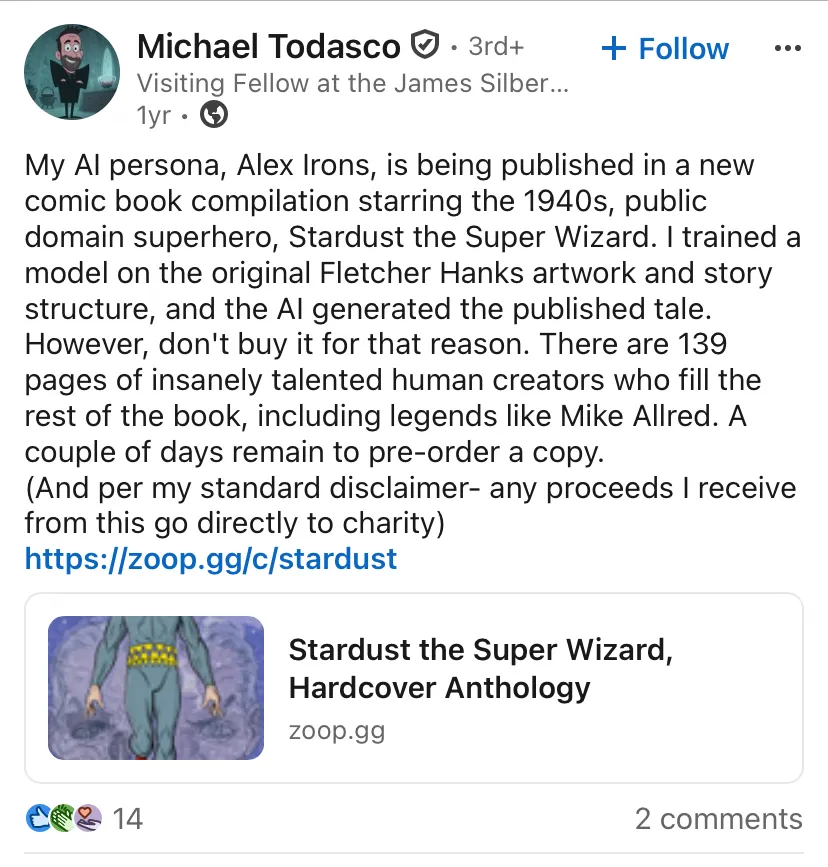
One of those who contributed was Michael Todasco using his “AI persona,” Alex Irons for an included page. Todasco seemed to have boasted of the inclusion on LinkedIn and you can see his page further below.

My AI persona, Alex Irons, is being published in a new comic book compilation starring the 1940s, public domain superhero, Stardust the Super Wizard. I trained a model on the original Fletcher Hanks artwork and story structure, and the AI generated the published tale. However, don't buy it for that reason. There are 139 pages of insanely talented human creators who fill the rest of the book, including legends like Mike Allred. A couple of days remain to pre-order a copy.

The inclusion of the AI generated story wasn’t disclosed in the original campaign and Todasco nor “Alex Irons” are mentioned on the campaign page but are in the table of content in a story unironically called, “Artificial.”

When it comes to the use of AI in Eisner submissions, we can’t find anything that prohibits it. The FAQ and “call for entries” don’t mention the topic. We’ve reached out to the team for any clarification and will update this article when/if we hear back. The eligibility is rather simple:

Eligibility: Any comic, graphic novel/album, or comics-related periodical/book shipped to retailers or bookstores or first made available online in the U.S. between January 1, 2025 and December 31, 2025 is eligible. Publications must not be more than 50 percent reprint material (except in the graphic album– reprint and archival categories); international material published for the first time in English the United States in 2025 is eligible.

So, congrats to whatever system that was trained on the hard work of Fletcher Hanks and your Eisner nomination!

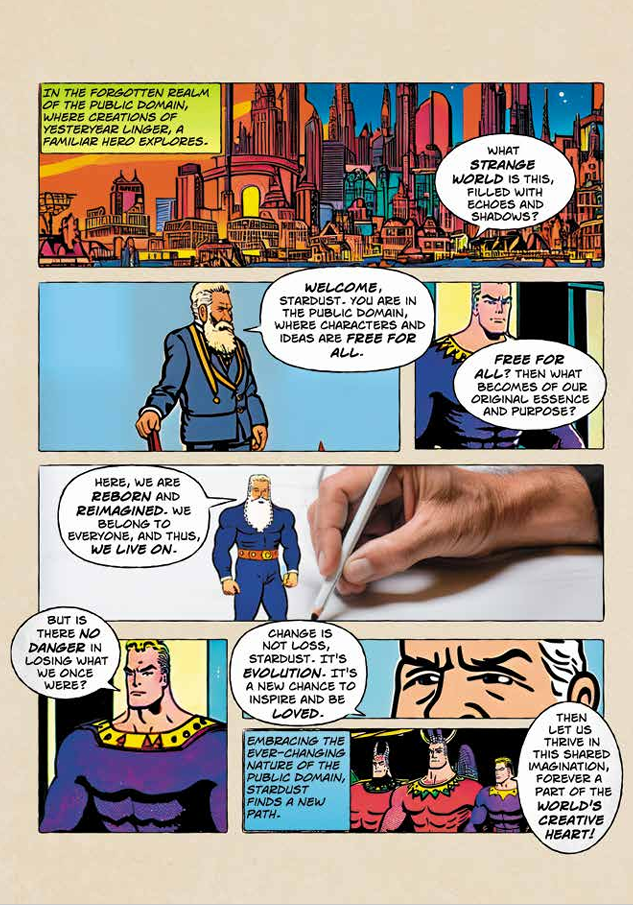
Below is the page in question.

Stardust AI page

Drama over the future of Angoulême with a Lawsuit launched on the first day of Grand Off

Angouleme

Today is the first day of Grand Off, the festival launched to replace this year’s Angoulême. After threats of boycotts, a pulling of funding, and general distrust of the organizers, the 2026 edition of the Angoulême Comics Festival was cancelled in early December 2025. In its place is a different festival, Grand Off, and a proposed launch of a comic festival in 2027. But with all of that, more drama with a lawsuit.

The Angoulême International Comics Festival (FIBD), along 9e Art+ festival manager Franck Bondoux have announced they are suing the Development of Comics in Angoulême (ADBDA). The ADBDA was tasked with replacing Angoulême in 2027. FIBD and Bondoux accuse ADBDA of “unfair competition and parasitic behavior.”

In January 2026, ADBDA sent out a request to find an organizer for a new festival. It would push to the side FIBD and 9e Art+ and move on from recent scandal. Bondoux in statements is saying this new festival is building off of the work he has done building up the reputation of Angoulême.

The lawsuit requests that the proposed convention be cancelled and “prohibit any act that would aim to organize a comic book festival in Angoulême in the first quarter of each year.”

FIBD wrote on Facebook:

The specifications drawn up by the ADBDA thus constitute a clear and deliberate appropriation of the Festival, while claiming to change its name. This crude subterfuge, a simple semantic artifice, cannot mask the reality: it is clearly an attempt to reproduce the FIBD as it has been built, structured, and developed for more than fifty years, and particularly during the most recent editions.

Even more seriously, the ADBDA claims in the same document full ownership of this future event, thus confirming an attempt at dispossession, a pure and simple spoliation of the FIBD Association, its history, its work, its volunteers, and its rights.

Deliberately marginalized and then excluded by the public authorities from this entire process, excluded from any consultation, deprived of its founding event, the FIBD Association, the target of extremely violent remarks from certain elected officials whose sole aim was to delegitimize it, is now forced, reluctantly but resolutely, to take legal action and seek the protection of the courts.

Faced with this unjustifiable appropriation, legal action is now the only possible way to uphold the law and reaffirm the fundamental principles that govern associative and cultural life. Consequently, the FIBD Association, in conjunction with 9ème art+, has initially decided to take lega

ReedPop Attempts to Clarify its dealings with ICE

ReedPop Ice Statement

Earlier this week, we reported that ReedPop was under pressure due to its parent company’s connection to Immigration and Customs Enforcement (ICE). ReedPop manages numerous high profile conventions like New York Comic Con, Star Wars Celebration, PAX, and more.

ReedPop is owned by RELX which also owns LexisNexis which provides services to ICE. LexisNexis is an online system used by many that features various databases including case law, articles, publications, court documents, market intelligence, and more.

LexisNexis has been scrutinized for years over it providing data to ICE that includes addresses, phone numbers, relatives’ names, and more, and used in its actions. In 2019, legal scholars and human rights activists called on the data platform to cease working with ICE due to its use in deporting undocumented immigrants.

Calls have been raised to clarify any use of ReedPop’s data in that deal as well as others calling for boycotts of conventions ReedPop manages. Multiple petitions have been launched concerning the issue asking those who have ReedPop managing their conventions to cut ties with the company. Others have outright said they will not be attending their conventions.

ReedPop has released a statement clarifying it is not them who sell information to the U.S. Department of Homeland Security and ICE. It emphasizes that they operate independently.

The statement, which you can read below, was met with mixed reactions. While some accepted it at face value, others pointed out the loopholes in the statement, such as ReedPop not directly selling data/information but what it collects could rollup to its parent company then trickle down through other related companies such as LexisNexis.

In fact, the statement links to ReedPop’s privacy language which states:

Depending on the Service provided, we share personal information with:

Our affiliates, trading names and divisions within the Reed Exhibitions group of companies worldwide (for a list, click here) and certain RELX companies that provide technology, customer service and other shared services functions; and/or

Our service providers, suppliers, agents and representatives, including but not limited to, payment processors, venue providers, onsite event contractors, customer support, email service providers, IT service providers, mailing houses and shipping agents, to process the information as necessary to provide the Service, complete a transaction, fulfil your request, or otherwise on our behalf based on our instructions and in compliance with this privacy policy and any other appropriate confidentiality and security measures.

The statement doesn’t address the fact that by attending a ReedPop convention, attendees, creators, exhibitors are also helping its parent company profit. By boycotting all of RELX’s companies, pressure could be applied to cut all ties by RELX’s companies with ICE.

The statement also does not condemn recent actions by ICE, like the murder of American citizens, or state that it would protect attendees at various conventions.

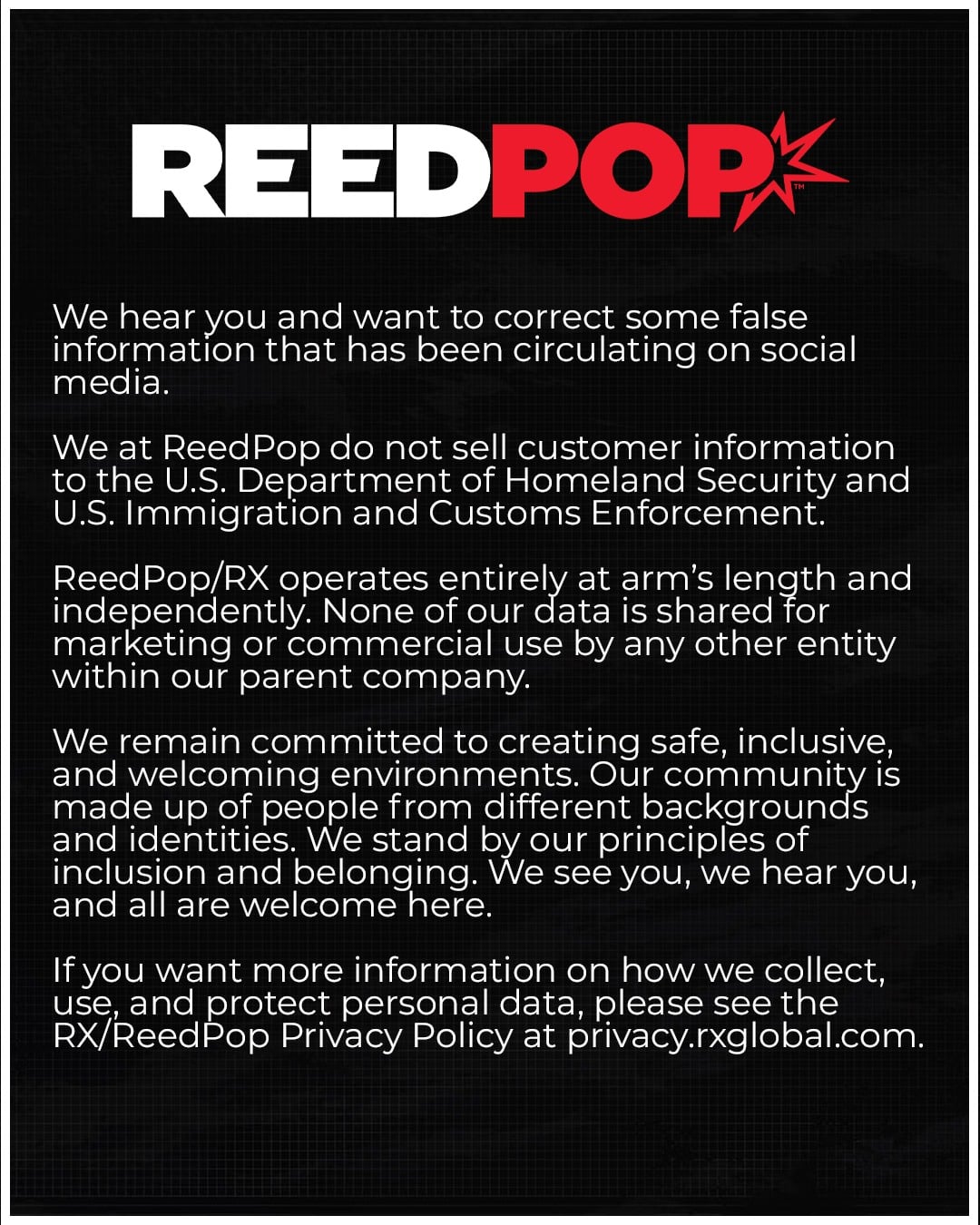
Check out the full statement below:

We hear you and want to correct some false information that has been circulating on social media.

We at ReedPop do not sell customer information to the U.S. Department of Homeland Security and U.S. Immigration and Customs Enforcement.
ReedPop/RX operates entirely at arm’s length and independently. None of our data is shared for marketing or commercial use by any other entity within our parent company.

We remain committed to creating safe, inclusive, and welcoming environments. Our community is made up of people from different backgrounds and identities. We stand by our principles of inclusion and belonging. We see you, we hear you, and all are welcome here.

If you want more information on how we collect, use, and protect personal data, please see the RX/ReedPop Privacy Policy at privacy.rxglobal.com.

ReedPop’s Parent Company Under Pressure for ICE Cooperation

ReedPop

ReedPop might be known for running events such as ECCC, C2E2, Star Wars Celebration, New York Comic Con, PAX and more, but concerns are being raised over the company’s parent company RELX and its association with Immigration and Customs Enforcement (ICE).

RELX is a massive multinational corporation whose divisions include ReedPop, scientific journals, and LexisNexis. While the RELX has had years of controversy over many issues, it’s LexisNexis that’s putting it, and ReedPop, back into the spotlight.

LexisNexis is an online system used by many, I used it during my time in the United States Senate (for what, I don’t remember), that features various databases including case law, articles, publications, court documents, market intelligence, and more.

LexisNexis has been scrutinized for years over it providing data to ICE that includes addresses, phone numbers, relatives’ names, and more, and used in its actions. In 2019, legal scholars and human rights activists called on the data platform to cease working with ICE due to its use in deporting undocumented immigrants.

With the recent further militarization of ICE, the federal agency’s occupation of American cities, and murder of numerous individuals including US citizens, scrutiny has increased and that includes its sister company ReedPop. ICE has not hidden the fact that it uses data and tech tools to aid in their criminal actions.

By supporting ReedPop and its sister news site Popverse, individuals are allowing LexisNexis’ parent company RELX to further profit. Economic boycotts and pressure is being increasingly used in defiance of the fascist takeover of the United States and the complicity of corporations in it. It’s part of the debate and difficult subject of ethical consumption/consumer activism/political consumerism and limited support of corporations, businesses, and individuals who have negative impact or show lack of support for communities.

Emerald City Comic Con, an early in the year major event for ReedPop, takes place March 5-8 in Seattle.

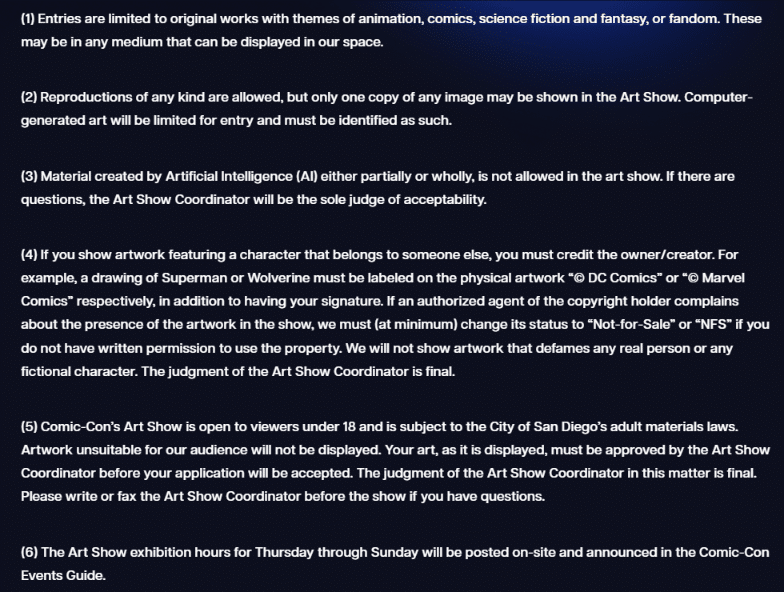
Update: San Diego Comic-Con Quietly Updates its Art Show AI Policy Reversing Course

San Diego Comic-Con 2026 is gearing up and had a bit of a dust-up already when it comes to AI’s presence at this year’s convention. Policies and more were released concerning the art show at the convention, which initially allowed “material produced by Artificial Intelligence (AI).” As you can imagine, with a convention built on artists that went over exactly like a turd in a pool.

Less than 24 hours after the issue was raised, the convention quietly updated the policy reversing the decision:

(3) Material created by Artificial Intelligence (AI) either partially or wholly, is not allowed in the art show. If there are questions, the Art Show Coordinator will be the sole judge of acceptability.

We imagine extra scrutiny will be given towards every policy, presentation, exhibitor, when it comes to this year’s convention after this and speaking up can create positive outcomes.

Also, fuck AI.

Update: Glen Wooten, the individual in charge of the art show, gives much more context of the situation, explaining that the language has been that way for years but flew under the radar due to the fact the use of AI wasn’t as much of a thing. But, with the issue front and center, it needed to be updated instead of discouraging, outright banning its use. A check of the Wayback Machine has the language present in 2024.

Here’s an email exchange I had with Glen Wooten, the person in charge of SDCC’s Art Show. The previous language has been in place for a couple of years & was a compromise between himself & the higher ups. This whole ruckus convinced them that they needed more forceful language, so that’s great.

Dane is home for a bit. (@monkeyminion.com) 2026-01-15T02:22:38.088Z

The 2026 Edition of the Angoulême Comics Festival Officially Cancelled

After threats of boycotts, a pulling of funding, and general distrust of the organizers, the 2026 edition of the Angoulême Comics Festival has been cancelled.

The issue the lead to this is over claims of toxic management and the dismissal of a staff member who had lodged a rape complaint. She was fired after going to the police to report the rape during the 2024 festival. The public prosecutor’s office has opened an investigation into the complaint and she has taken her case to the Paris industrial tribunal to contest her dismissal.

Cultural minister Rachida Dati withdrew €200,000 (£176,000, $231,000) of public funds from the festival and had invited those boycotting it to a meeting.

The festival, first held in 1974, has been managed by 9eArt+ since 2007 even though it is a non-profit. Franck Bondoux the most recent director of 9eArt announced he would step down last week. 9eArt’s contract was recently renewed only inflaming tensions further.

Hundreds said they would “girlcott” the festival in support of the staffer fired along with numerous high profile publishers. Nine organizations and unions representing authors and illustrators stated they would not attend January’s event if it were held. They want the festival to no longer be managed by 9eArt+ with a refocus on rebuilding its values.

With the cancelation it could lead to an economic catastrophe for the local area it is held. The festival attracts over 200,000 visitors each year. The  festival would have taken place January 29 to February 1, 2026. 

Angoulême Comics Festival is in Danger as Support Dwindles and Calls for Boycotts Increase

Angouleme

The Angoulême comics festival is under threat of cancellation as the support for this coming festival has tanked while calls for boycotts have increased. The issue is over claims of toxic management and the dismissal of a staff member who had lodged a rape complaint. She was fired after going to the police to report the rape during the 2024 festival. The public prosecutor’s office has opened an investigation into the complaint and she has taken her case to the Paris industrial tribunal to contest her dismissal.

Cultural minister Rachida Dati said €200,000 (£176,000, $231,000) of public subsidies were being withdrawn from the festival and invited those boycotting it to a meeting. She also said it was hard to see the festival happening in January with the boycott:

Realistically, if there are no authors or publishers, it’s hard to see how the festival can happen in 2026. We are at a turning point in the history of the festival, which is in difficulty and in danger.

The festival, first held in 1974, has been managed by 9eArt+ since 2007 even though it is a non-profit. Franck Bondoux the most recent director of 9eArt announced he would step down last week. 9eArt’s contract was recently renewed only inflaming tensions further.

Hundreds have said they would “girlcott” the festival in support of the staffer along with numerous high profile publishers. Nine organizations and unions representing authors and illustrators have said they will not attend January’s event. They want the festival to no longer be managed by 9eArt+ with a focus on rebuilding its values.

The French national publishing union emphasized that it too believed the likelihood of the festival going on as planned is unlikely:

Given this large-scale movement [to boycott], which they understand, publishers believe the 2026 edition can no longer go ahead.

There are worries the canceling of the event would be an economic catastrophe for the local area it is held. The festival attracts over 200,000 visitors each year.

The organizers have said the event will take place:

We remain hopeful that ongoing discussions will lead to a solution for the 2026 edition to take place, in defence of the comic ecosystem’s interest and out of respect for a passionate audience.

Angoulême International Comics Festival’s Future Faces Questions and Boycotts

Angoulême International Comics Festival

In August, nearly 400 artists and 12 associations signed a petition to boycott the 2026 Angoulême International Comics Festival. The issue is the festival’s management company, 9eArt+. The company is accused of retaliating against a female employ who reported a rape at the 2024 event that was revealed after an investigation by L’Humanité magazine. The individuals and associations called for the festival to open the management contract to an open RFP or face a boycott of the upcoming festival. Four of the last five Grand prix winners: Anouk Ricard (2025), Posy Simmonds (2024), Julie Doucet (2022), Chris Ware (2021), as well as notable American cartoonists: Art Spiegelman (Grand prix 2011) and Alison Bechdel signed the petition. There was over 2,200 signatures on it in total.

Now, things have gotten even worse for the festival. Franck Bondoux and 9e Art+ won the contract to keep it managing the show for a nine-year term after their contract ends in 2027. That would keep them in place until 2036. 9Art+ will have to work in partnership with the Cité internationale de la bande dessinée et de l’image (International City of Comics and Images) to organize the festival starting in 2028. A proposal between the two must be submitted by November 20 2025. Cité internationale de la bande dessinée et de l’image is a non-profit and has bristled at the idea of working with 9e Art+ but a joint bid was pushed by the festival in the final hours of the process. Their management is at the center of the complaints by publishers and attendees.

With that, publishers, creators, and more have pulled out of the show starting with 2026’s festival which takes place January 29 to February 1, 2026. Over forty publishers have withdrawn from the upcoming show. Over twenty Grand Prize winners released a statement calling for “rapid and profound change in the management of the festival.”

The Angoulême Comics Festival is in mortal danger.

For years, the Festival has been plagued by scandals, communication blunders, and a lack of ambition, all shrouded in complete opacity in its management. This decline is seriously damaging the entire industry.

Comics, however, need this event, which has become an essential meeting place for authors, publishers, the media, and of course, readers.

As calls for a boycott multiply, the Grand Prix winners say with one voice that it is high time to turn the page on 9th Art + so that the Festival can rediscover, with new operators, the values ​​that built its international reputation.

Without a rapid and profound change, the 2026 edition is very likely to be the last.

Signatories :
Florence Cestac
Régis Loisel
Philippe Dupuy
Charles Berberian
Martin Veyron
Art Spiegelman
Jean-Claude Denis
François Boucq
Chris Ware
Franck Margerin
Jacques Tardi
François Schuiten
Baru
Blutch
Willem
Lewis Trondheim
Riad Sattouf
Hermann Huppen
Max Cabanes
Anouk Ricard
Posy Simmonds
Julie Doucet

Alternative publishers group Syndicat des éditeurs alternatifs (SEA) released their own statement:

The Angoulême International Comics Festival (FIBD) is therefore once again demonstrating its disregard for the opinions of others, and it is indeed 9e Art+, and only 9e Art+, that retains absolute control of the festival. 
This is a clear case of private interests taking over an event that has long been a matter of public interest , regardless of what Delphine Groux, the FIBD’s president, may think.

The SEA warns that if the voices of artists and publishing houses are not taken seriously, the consequences will be significant and likely irreversible. Starting in 2026. Then in 2027. And perhaps forever. Many publishing houses at the SEA have already cancelled their booths for the 2026 edition; others will soon follow suit.

They’re calling for resignations from leadership among other demands.

The Syndicat national de l’édition (SNE) has released its own statement that it will end its relationship with the festival in 2027. The SNE represents multiple publishers.

With charges of corruption in the process, leadership that’s out of touch and not listening to the participants, and rising tensions, expect this to only escalate in the coming months.

« Older Entries