
Tag Archives: Alex Hyde-White

Fantastic Flops: The Fantastic Four (1994) is the scrappy underdog that couldn’t

Even though the Fantastic Four comics kickstarted the creation of the Marvel Universe, their film adaptations have been critically maligned. In the “Fantastic Flops” series, I’m going back and re-evaluating the four previous Fantastic Four films and seeing if they’re a “Flop”, “Bop”, or “In-Between”.
The Fantastic Four

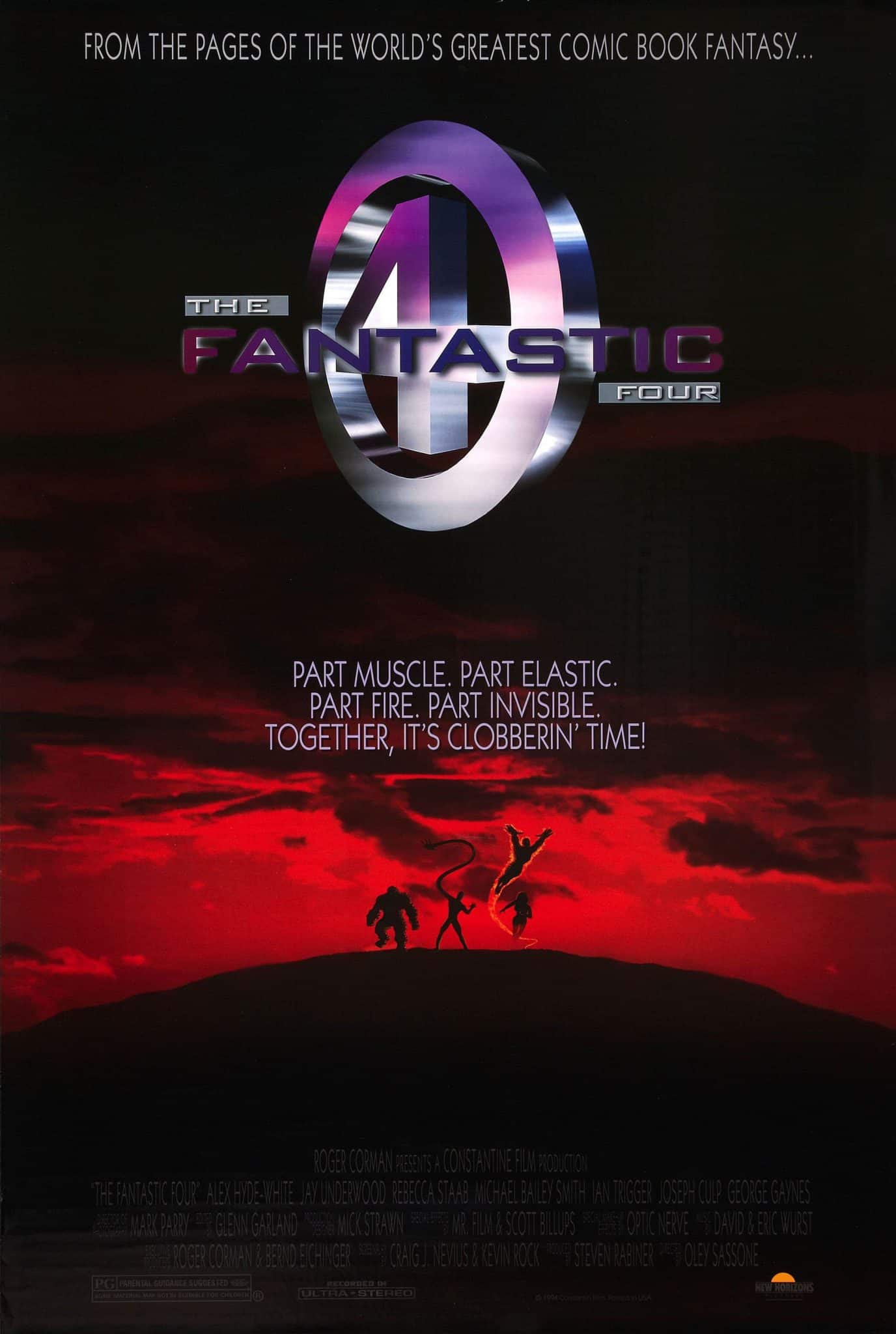
In 1994, German film company Constantin Film was set to release a live action Fantastic Four film that was executive produced by B-movie legend Roger Corman and directed by Oley Sassone, who had done music videos for Gloria Estefan, Eric Clapton, and John Lee Hooker among others. According to a 2005 issue of Los Angeles Magazine, the film was supposed to have a big premiere at the Mall of America, but without much fanfare, it was shelved. The Fantastic Four was never officially released, and reports vary on whether it was ever meant to be released or was hastily produced so that Constantin and executive producer Bernd Eichinger could hold onto the rights for a future film. There is a lot of information about The Fantastic Four’s production, including a feature length documentary, but how does the actual film hold up.

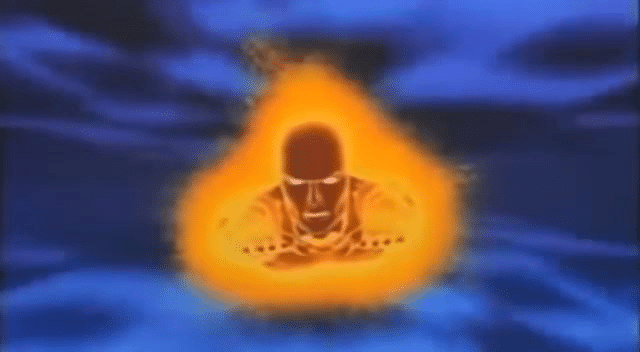
From the cheesy opening credits sequence featuring planets and astronomical phenomena, The Fantastic Four shows every bit of its estimated $1 to $1.5 million budget. Sassone and cinematographer Mark Parry use shoddy trick photography to show off Reed Richards’ (Alex Hyde-White) stretching ability including the film’s infamous final shot of his arm waving like the inflatable thingmajigs you see outside cellphone stores. More cleverly, they take a 1966 Batman approach to action with animated images of the Thing and punching sound effects filling the frame instead of actual fight scenes. Thankfully, invisibility is the lowest budget superpower ever, and I got some dark laughs from Sue Storm (Rebecca Staab) disappearing, and two henchmen shooting each other. Unfortunately, the Human Torch’s (A hyperactive and irritating Jay Underwood) big scene where he goes nova into Dr. Doom’s death laser is ruined by a patchwork hybrid of early CGI and animation. Honestly, a fun stylistic choice in this scene would be using the original Jack Kirby Human Torch illustrations and putting them into motion like the 1967 Fantastic Four cartoon. To end my special effects gripes on a positive note, I do adore the tactility and texture of the rubber suit that The Fantastic Four crafts for The Thing (Suit actor/stuntman Carl Ciarfalio)
The Fantastic Four Human Torch

Visual limitations aside, The Fantastic Four is fairly faithful to the spirit of the Stan Lee and Jack Kirby comics with each team member’s superpowers connecting to their personalities. The use of character actors instead of movie stars gives the film a down-to-Earth feel. Also, Fantastic Four are portrayed as accidents and monsters not superheroes like in their initial appearances. One of my favorite sequences in the film is The Thing wandering off and being shunned by regular people, but finding companionship and worship by the Jeweler’s (A very creepy Ian Trigger) minions. It drives home the point that while Reed, Johnny Storm, and Sue Storm can live fairly normal lives with their abilities that Ben Grimm’s (Michael Bailey Smith) life has irreversibly changed. However, his connection to Alicia Masters (Kat Green) still roots him in humanity so he doesn’t fall into villainy and arguably is the most heroic character of all in the film. This heroism is set up earlier in the film when Grimm risks burns to rescue Victor Von Doom (Joseph Culp) from an experiment gone wrong.

Culp probably gives the strongest performance in the film in the dual role of Victor Von Doom and Dr. Doom. He goes from a weird, slightly off-putting college student to the ultimate supervillain even if his voice is muffled by the comic book accurate Dr. Doom suit. (Ciarfalio has this issue as Thing too, which messes with the timing of his one-liners.) Oley Sassone does a lot of money-saving extreme close-ups on Doom’s face, but Joseph Culp exudes real menace, especially when he finally decides to get his hands dirty. I also love the hints of Doom as manipulator like when he lets the Jeweler sabotage the diamond that powers Reed Richards’ ship instead of committing his men to the fray, and how he shrinks from humanity when Richards tries to appeal to their own friendship. It reminded me a lot of Obi Wan and Darth Vader in a good way, which makes sense because Doom and Darkseid may have influenced George Lucas’ creation of Darth Vader. In both the portrayals of Doom and the Jeweler (A less scientific Mole Man with just a drop of Puppet Master.), Sassone and screenwriters Craig J. Nevius and Kevin Rock embrace the classic comic book villain without any attempt at irony.

The Fantastic Four Doctor Doom

Speaking of screenwriting, it’s the rushed nature of The Fantastic Four‘s storyline that drops the film from “In-Between” into “Flop” territory. A la David Lynch’s Dune, if you’re not familiar with the Fantastic Four, a lot of the moments in the story can be confusing like why Reed Richards’ landlady’s children are on the test flight with him and Ben Grimm, or why Grimm is in love with a woman that he awkwardly bumped into once on a flight of stairs. The Fantastic Four has a 90 minute running time, which leads to establishing scenes getting cut especially with the film having two villains, a flashback with Richards and Von Doom in college, telling the team’s origin story, and featuring the marriage of Reed and Sue. Nevius and Rock definitely should have included a scene showing Johnny and Sue connecting to Reed’s work (Instead of one of him being super creepy to an underage Sue, played by Mercedes McNabb aka Harmony Kendall from Buffy the Vampire Slayer.), one setting up Dr. Doom’s whole deal in Latveria, and maybe Thing and Alicia Masters getting to know each other at the Jeweler’s place instead of skipping straight to “I love you”. There’s definitely a feeling that the screenwriters want to get to the cool highlights of the Fantastic Four’s early career without the connective tissue that make these moments so memorable. At least, they didn’t try to shoehorn Silver Surfer or Galactus in the film.

Featuring scrappy character actors instead of Hollywood stars, a shoe string special budget, and a real love for the classic Stan Lee and Jack Kirby Fantastic Four comics, The Fantastic Four unexpectedly charmed me, especially since I have a soft spot for unpolished B and Z-films. However, the film’s rushed pacing and some truly moronic plotting decisions as well as the creepiness of characters like Reed Richards and the Jeweler keep it from being something I would ever revisit. I do love the similarities in the characters’ suits in The Fantastic Four and Fantastic Four: First Steps.

Verdict: Flop

Roger Corman’s Fantastic Four: A Brief History of Futility

Fantastic-four-movie-posterWith all the buzz about the new Fantastic Four movie, (especially at how terrible it is) there’s a lot of comparison to the “original” Fantastic Four movie. You know: the one released in 2005 with Chris Evans in it. But it isn’t the original. Not by a long shot. The original was created in 1993 as a way for the studio to retain the rights to franchise, and was never meant to be released. This is a brief history of that film.

This all started with a man by the name of Bernd Eichinger. You probably haven’t heard of him before. That’s okay. Most producers are happy to stay behind the scenes. Back in the late 70s, he founded Neue Constantin Films, which later became just Constantin. This is the studio that brought us The Neverending Story, The Name of the Rose, and all those Resident Evil movies. Bernd’s interest in Fantastic Four started in 1983, and he wanted to do a movie based on that IP. He met with Stan Lee to discuss an option for the film, but it wasn’t going to be available until 1986.

Now, keep in mind that at the time, Marvel wasn’t doing all that well financially. They were just kind of selling their IPs to studios like a cut rate ice cream truck to a pack of uninterested children. This is why Marvel’s various IPs ended up going kind of all over the place, and why we have the mess that it’s in, now. As a prime (and relevant) example, Marvel couldn’t option the Fantastic Four in 1983, because they had already sold the rights to The Human Torch (without the rest of the Four) to Universal back in 1977, and that option wasn’t up until 1986. This is why Eichinger had to wait until 1986 to option the film for a paltry sum of  $250,000. (That’s about half a million in today’s economy.)

Eichinger shopped around for a company to help his studio produce the film, but the proposed budget made the bigger studios balk at the prospect. The option on the franchise was set to expire at the end of the year of 1992, and, frantic, Eichinger asked Marvel to extend it, but they didn’t. So the only way he could hang onto the option was to make a movie.

thethingEnter Roger Corman, B Movie King. Roger Corman is kind of the Kevin Bacon of the film industry, but you only have two or three degrees of separation between him and everybody else. He was known for being able to shoot a movie for $5000 and in under a week, and he had this down pat. A lot of people got their started and learned a lot about movie making by working under the man (Francis Ford Coppola, Martin Scorsese, Ron Howard, and Jonathan Demme just to name a few.) So, in September of 1992, he hired Roger Corman to make a Fantastic Four movie for just $1 million (That’s about $1.7 mil in today’s money. Hooray Inflation.)

This is the most amount of money Corman was ever given to make a film, and by God he was going to do this thing right.  He got Oley Sassone to direct, Alex Hyde-White as Reed Richards, Jay Underwood as Johnny Storm, Rebecca Staab as Sue Storm, Michael Bailey Smith as Ben Grimm, and Joseph Culp as Dr. Doom. They weren’t exactly the most high profile of actors, but for $3,500 a week, it’s not like you could afford Tom Cruise. Everybody was excited to be involved in what they thought would be a high profile superhero film. Keep in mind that in the past few years prior we had Batman Returns, Darkman, Teenaged Mutant Ninja Turtles, and The Rocketeer. The superhero genre wasn’t in the state as it is today, but it was trying hard as hell to be, thanks to the success of 1989’s Batman starring Michael Keaton. While most of these may not have been critical successes, they were financial successes, and our actors knew that if they did this film right it would be very good for their careers.

Fantastic Four Group ShotThe film was shot in 21 days, including crash-landing the four’s spaceship in Agoura, and blowing up the lab on the Loyola Marymount campus. Just so you understand how compressed this timeline was, the latest Fantastic Four film was shot in 72 days, and had a budget of $122 million in comparison.  The level of dedication, love and work  that was put forth on this film was far more than what you’d expect for a Corman production. Reve Richards, the costume designer, went to a comic book shop to buy as many of the FF books as he could find to make sure he could be faithful to them. Carl Ciarfalio, who wore the rubber Thing suit worked closely with Michael Bailey Smith so that their mannerisms would match. Even David and Erik Wurst, the composers,  personally spent $6,000 to make sure that they would have a 48 piece orchestra for the soundtrack. Hell, even Stan Lee himself visited people on the set to encourage them.

In the summer of 1993, the promotional part of production had started. Trailers of it were playing on other Corman videos and in movie theatres. Cast members did a promotional tour, worked the con circuit, and even brought the Thing’s head with them. The film itself was screened at SDCC that year, and it was covered in many movie and scifi magazines. The film was slated to premiere for January 19th at the Mall of America.

The movie, however, was not going to be released. The crew started hearing rumors that all their hard work was going to be for naught, and Sassone received a call from Eichinger, explaining to him what the situation was. “He explained it the best way he could,” Sassone said, “I mean, look, he knew that we had all worked our asses off on this thing. Frankly, I think they thought it was just going to be this piece of shit… so I think it kind of unnerved them when it wasn’t.”

So what had happened? There’s still a lot of debate surrounding the film’s fate. The cast started hearing rumors that it was never intended to be released in the first place, that it was an ashcan copy. Stan Lee confirmed this in 2005 stating, “That movie was never supposed to be shown to anybody…. It was never supposed to be seen by any living human beings.” Corman and Eichinger, however, had a different story. “We had a contract to release it,” said Corman, “and I had to be bought out of that contract.” Eichinger stated, “That’s definitely not true. It was not our intention to make a B movie, that’s for sure, but when the movie was there, we wanted to release it.” Regardless, Marvel executive Avi Arad bought the film for a couple of million dollars cash, and ordered the prints be destroyed.

Most agree with Stan Lee and the cast, that Eichinger had deliberately created this version of the film so that he could retain the rights to the option. The fact that he started preproduction on a big budget version of the film in 1996 (which would eventually become the 2005 version) would lend credence to this version of events. At this point in time this remains the only movie Roger Corman never released, and the production has gone down in movie infamy.

Doomed Movie PosterCopies of the film are still floating about here and there. I had bought a bootleg copy on VHS back in 1995 at NorWesCon, and I still have it today, having watched it far too many times to count (though right now it’s sitting in a box somewhere in my closet). There’s several copies that have been uploaded to the internet, and if you really want to watch it.  There’s even a documentary in the works called Doomed! The Movie and it’s something that i’m looking forward to seeing be released as well, since we’ll get a more personal account as to what happened.

As for the movie itself, how does it stack up? if you like arbitrary numbers, Rotten Tomatoes has it listed at 33%, compared to the 2005 version at 27% and the 2015 version at a whopping 9%. I’ve only ever watched the first two version (I, honestly, have no intention of watching this latest train wreck) and I think the numbers are fair. Neither are particularly good films, but the later suffers from being, at best, unmemorable. However, like other Corman works, the 1993 version it doesn’t put on any airs of being anything other than what it is. It’s a fun, lighthearted superhero film, best watched with friends. If you plan on seeing the latest release, well, all I can say is that you’re probably better off saving yourself some money and hunting down a copy of this.