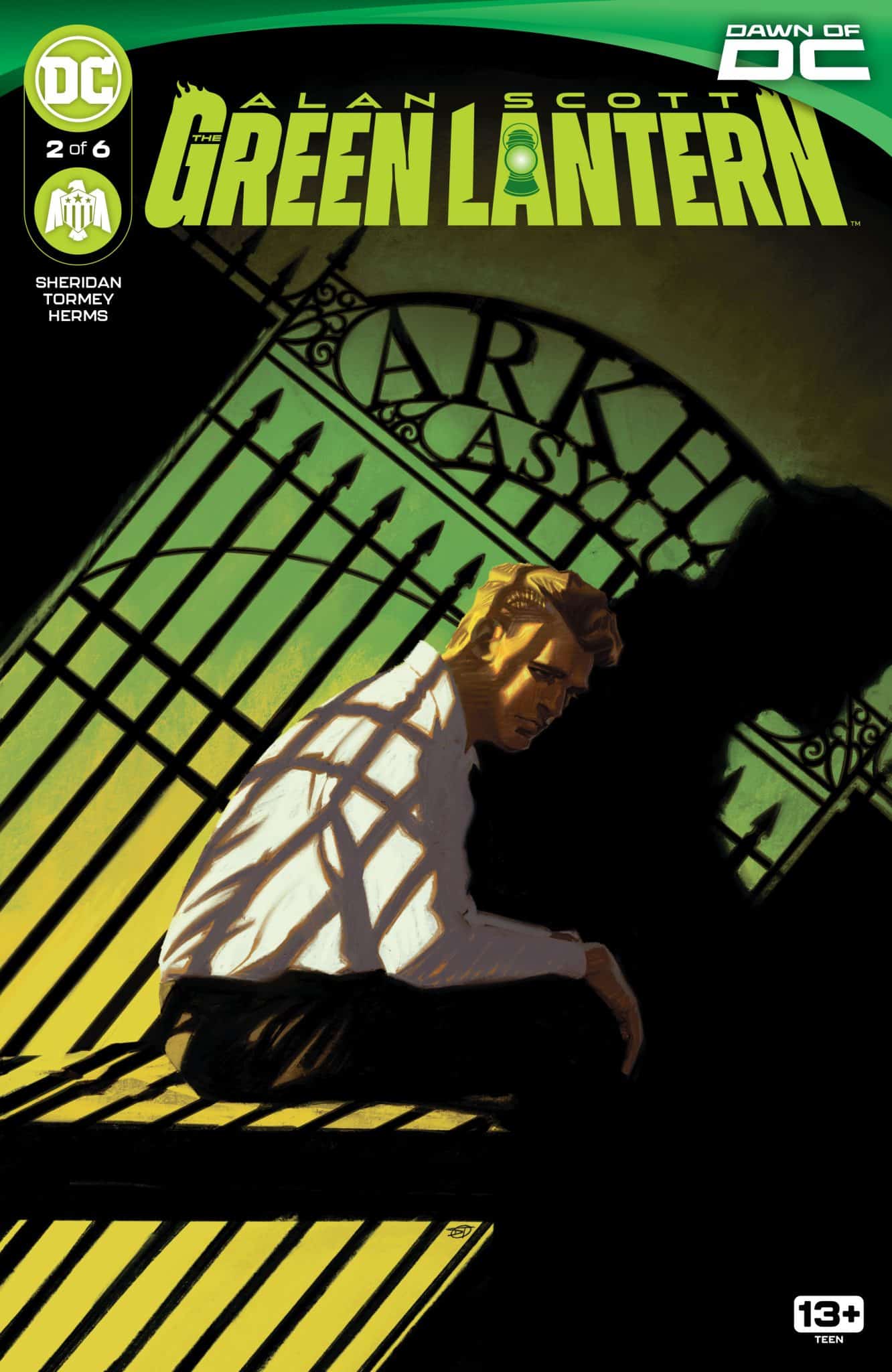
Alan’s search for the killer framing him continues! But why are the murder victims people from Alan’s past, and how does this connect to his brief stint in Arkham Asylum?! Teased at the end of the debut issue, Alan Scott: The Green Lantern #2 delivers the tragic story of Scott’s time in Arkham!
1973, that was the year that the American Psychiatric Association voted to remove homosexuality from a list of mental disorders. It wasn’t until 1987 until homosexuality completely fell out by them. But even then, the World Health Organization didn’t remove homosexuality from its international classification of disease until 1992. Aversion therapy, like in the famous scene from A Clockwork Orange, was used through the 1950s and 1960s. We tortured a group of individuals because of who they loved. This torture isn’t from some distant past, it’s within many of our lives.
Writer Tim Sheridan uses that history as Alan Scott finds himself in Arkham Asylum surrounded by other members of the LGBT+ community delivering an issue that’s a reminder of the shame we all share in our past and continuing to tell the origin of a hero’s origin and rise. Alan Scott: The Green Lantern #2 is a tragic tale but also one of love and rising up against the forces of hate and eventually accepting who you are. Sheridan adds to Scott’s story delivering layers that make the character feature more depth, more nuance, and honestly a more heroic origin. Despite that hatred and torture he has faced, he still chooses to do what’s right.
The art by Cian Tormey is fantastic. With Matt Herms on color and Lucas Gattoni on lettering, Alan Scott: The Green Lantern #2 is beautiful and tragic to look at. There’s something about the art that’s both beautiful and hard to look at. It’s a style that the torture that Scott goes through feels emphasized in ways. Something beautiful with a horror underneath. Tormey and the team capture the sadness of it all but deliver a comic that pops in the traditional comic/superhero sense.
Alan Scott: The Green Lantern #2 is a fantastic issue that delivers a tragic origin while adding a dose of real history into it all. It takes Alan’s continued evolution as a character to the next level creating even more motivation to his actions and setting up what should be an intriguing villain to come.
Story: Tim Sheridan Art: Cian Tormey Color: Matt Herms Letterer: Lucas Gattoni Story: 8.35 Art: 8.4 Overall: 8.35 Recommendation: Buy
DC Comics provided Graphic Policy with a FREE copy for review
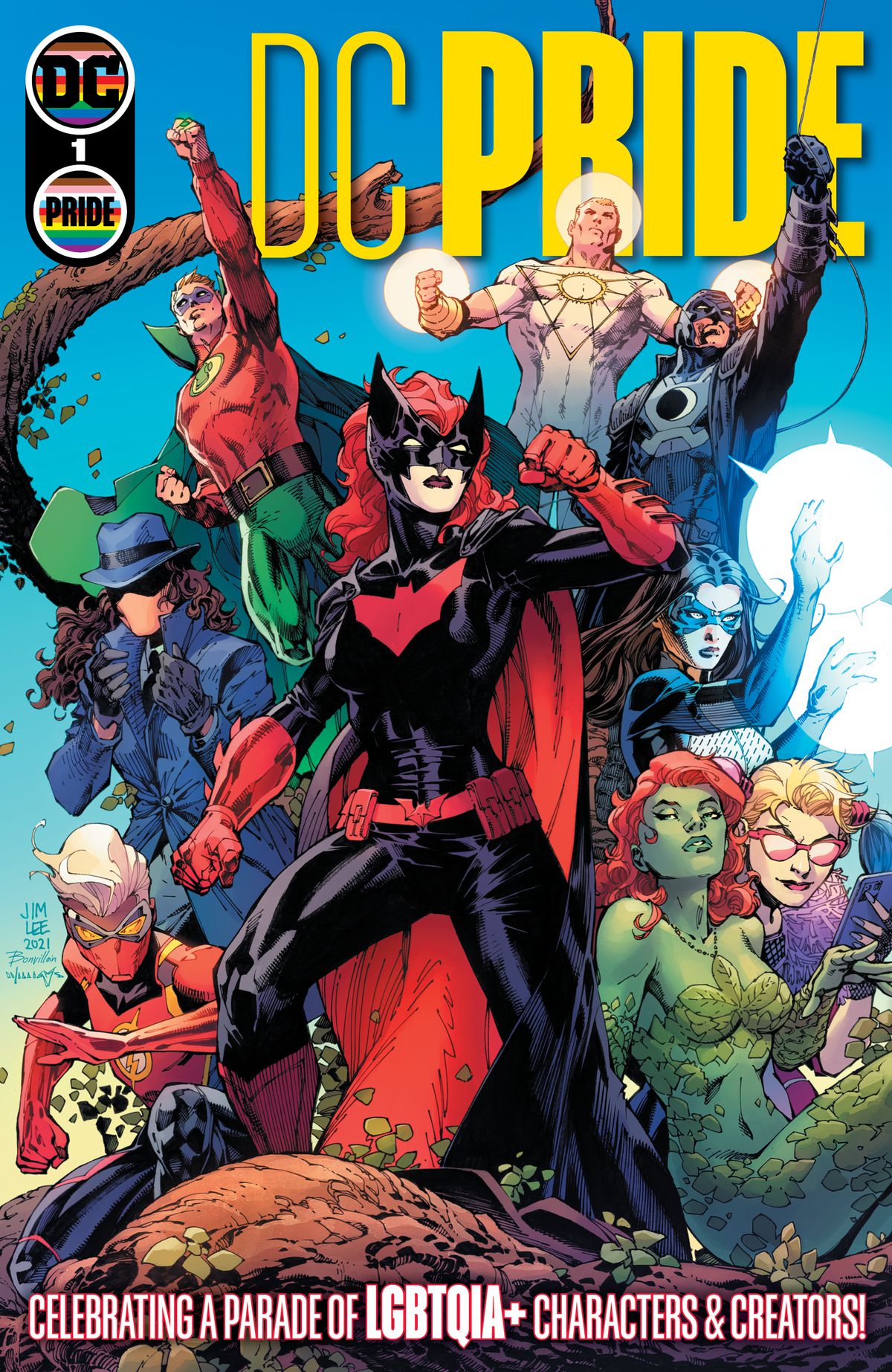
In honor of Pride Month, DC Comics dropped DC Pride #1, an 80 page anthology featuring short stories with LGBTQ+ characters by mainly LGBTQ+ creators. In addition to the stories, there’s an introduction by prominent gay comics writer Marc Andreyko (Manhunter, Love is Love) and pinups by some of the best LGBTQ+ artists (and artists period) like Sophie Campbell, Nick Robles, and Kevin Wada. The overall tone of the anthology is celebratory, but one story definitely made me tear up. I really enjoyed how DC Pride touched all corners of the LGBTQ umbrella and its exploration of how our differences make us stronger and really hope that one day all the characters featured in the book can have their own comic.
After the aforementioned introduction by Andreyko and a vibrant pinup of queer Teen Titans Aqualad, Bunker, Traci-13, and Crush from Travis Moore, DC Pride #1 leads off with a Batwoman story from James Tynion and Trung Le Nguyen. It starts with a look back at Kate Kane’s childhood, and how she didn’t conform to traditional gender roles and desires beginning with the games she would play with her sister Beth (Now the supervillain Alice) where they would pretend to be dolls complete with makeup, frilly dresses, and the accoutrements of traditional femininity. There’s almost a fairy tale cadence to both Tynion’s writing and Nguyen’s art as Kate grows up, finds love in the arms of a variety of women, and forges an identity as the superhero, Batwoman. Trung Le Nguyen’s flat reds and blacks punctuate these changes while James Tynion’s script takes a macro-level to the theme of pride as they show a montage of various queer heroes in the DC Universe fighting their battles and being themselves. This opening story is a fine encapsulation of Batwoman’s character journey and also is an ode to embracing queerness and gender conformity in a heteronormative world. Plus Nguyen’s story book style applied to superhero comics is a real visual treat.
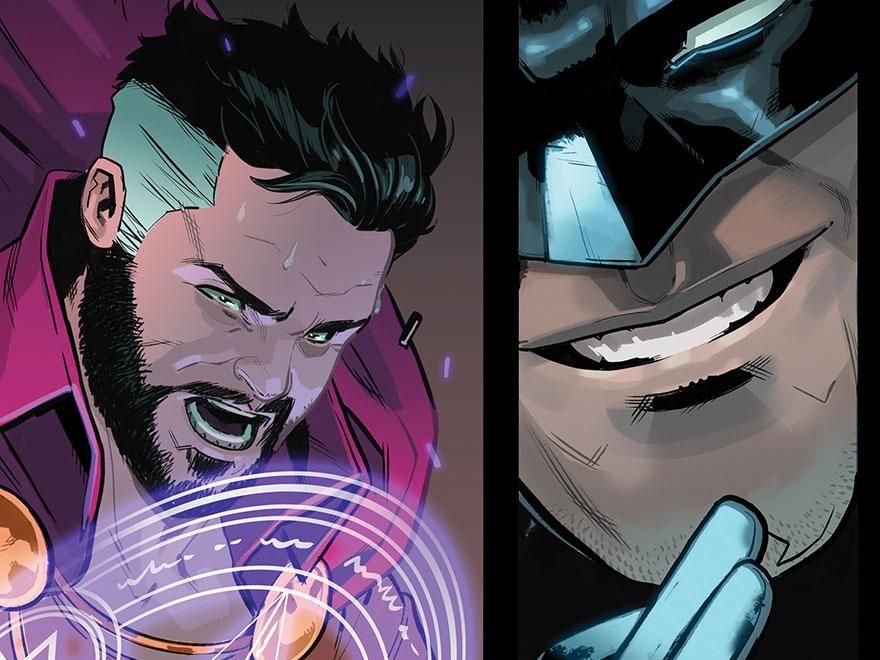
The next story was one of my favorites as Steve Orlando returns to Midnighter (kind of) and Extraño as the magician regales John Constantine with a tale of a night out with the violent vigilante. Orlando and artist Stephen Byrne’s story is pure fanservice and adventure in the best way with iconic visual and verbal moments like Midnighter punching a Nazi vampire’s head off and John Constantine flirting with Extraño at a bar and totally being open to a threesome with Extraño and his werewolf husband. This story is mostly made up of fun things like one-liners, magic, and mayhem. However, Steve Orlando digs a little deeper with his script and commentates on how queer history is rewritten by bigoted historians with lovers becoming relatives (Like in the original Sailor Moon English dub) or “pals” as Midnighter and Extraño fight the aforementioned vampire to stop him from casting a spell that makes people think the mythological heroes Achilles and Patroclus were cousins, not lovers. This is a very real issue, and it’s vindicating to watch Midnighter and Extraño kick the asses of those who would straight-wash history in a thrilling, beautiful way thanks to Orlando’s witty script and Byrne’s power-packed visuals.
The third story in DC Pride is a noir-tinged saga of dark alleys, fisticuffs, and political activism starring Renee Montoya aka The Question from Vita Ayala, Skylar Partridge, and Jose Villarrubia. The plot is fairly straightforward with the Question tracking down missing defense attorney and city council candidate Valeria Johnson. Partridge and Villarrubia bring the dark shadows, atmosphere, and flat background colors when Montoya puts the fear of her into some loutishly heterosexual goons. I love how Skylar Partridge uses inset panels to show Montoya’s speed and skill and match Ayala’s snappy narrative captions. The whole story looks gorgeous, and there’s also a hint of budding romance between Renee Montoya and Valeria Johnson as the latter isn’t just a do-gooder damsel in distress. It definitely feels like a backdoor pilot for a Renee Montoya Question series, and I would love to see more of this creative team fleshing her and her relationship with Valeria out.
The Question story is followed by a hilarious and touching Harley Quinn and Poison Ivy story from Mariko Tamaki, Amy Reeder, and Marissa Louise. Basically, this anti-heroic duo stop a plant monster from going on a rampage (After giving it several cute pet names.) and talk about their relationship. Underneath Louise’s candy-meets-body horror palette and Reeder’s memorable facial expressions and high-wire layouts, they chat about going from the “will they, won’t they” stage to the moving in and starting a life stage. Tamaki’s script is peppered with jokes (Including a classic lesbian U-Haul one.), but she also once and for all shows that Harley and Ivy are a well-matched, occasionally wacky queer couple, and that they’ve brought a lot of support and laughs into each other’s lives. Also, Harley’s hammer should always have a Kirby face on it.
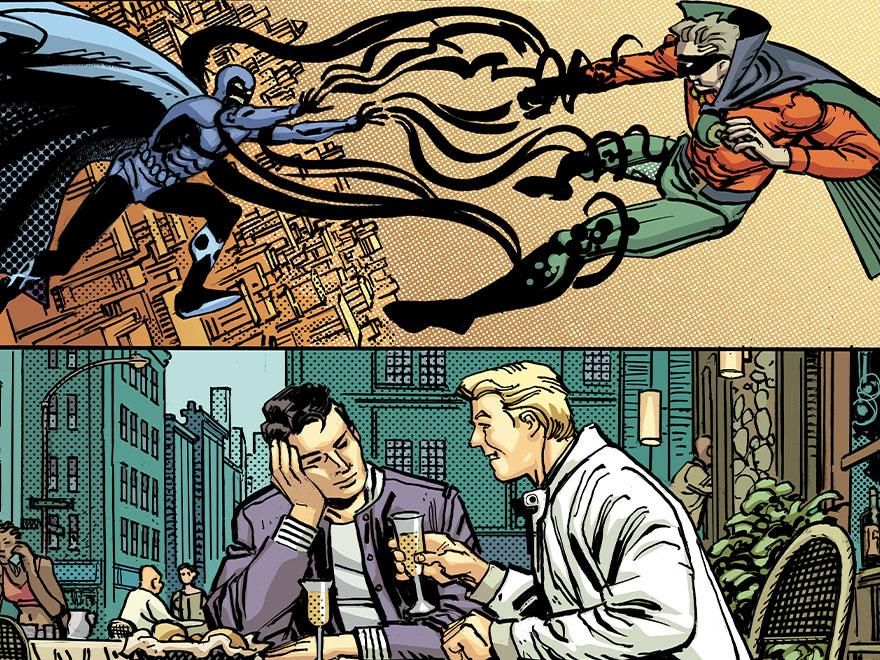
Full disclosure: Sam Johns, Klaus Janson, and Dave McCaig’s Alan Scott and Obsidian story was the one that made me cry. At brunch with Obsidian and his partner, the Golden Age Green Lantern opens up to his estranged son and tells him that Obsidian’s confidence to live as an out gay man encouraged him to finally come out and be his full, true self to the world. Janson uses nine panel grids, Ben-Day dots, and a command of 1940s fashion to show Alan’s secret romance with a train conductor named Jimmy and also walk down memory lane when being gay was a crime and gay bars were shuttered and didn’t have liquor licenses. As well as expanding on Alan Scott coming out in the main DC continuity in Infinite Frontier, this story is an homage to queer elders and their struggles in a world where they could be jailed or even killed holding someone of the same gender’s hand in public. It’s a beautiful intergenerational story and really made me fall in love with Alan Scott as a character even more. He’s the queer grandpa I never had.
The sixth story in DC Pride #1is a fast-moving, romantic story from Danny Lore, Lisa Sterle, and Enrica Erin Angiolini about Jess Chambers (Future State Flash) getting ready for their date with Andy Curry aka Aquawoman. This pair had fantastic chemistry in Future State: Justice League, and it’s nice to see a story centered around their relationship that also riffs on the classic Flash tropes of lateness, Rogues, and legacy. As Jess faces off against Reflek, who was trained by Mirror Master, Sterle and Angiolini get play with different panel shapes simulating the speedster trying to break free from a hall of mirrors while trying to get their outfit, makeup, and gift together. Also, it’s refreshing to see a story featuring a nonbinary character not be all about their gender identity, but focus on action and relationships like any other Flash story. Andy and Jess have a nice thing going, and like many of the other characters who appear in this anthology, I hope to see more of them, their impeccable fashion senses, and cool superpowers in future DC titles.
DC Pride #1 returns to the intergenerational queerness well in a Pied Piper story from Sina Grace, Ro Stein, and Ted Brandt. They introduce a new character, Drummer Boy, who is inspired by Pied Piper to create mind-controlling beats so that he can take money from rich fat cats and save Central City’s gayborhood from gentrification, which is a very real problem in real life today. Drummer Boy calling out Pied Piper’s photo ops and not taking direct action since he’s been rich and famous is something that could be directed at many LGBTQ+ celebrities like Ru Paul, who literally uses his wealth to destroy the Earth. This issue creates a real fantasy in which LGBTQ+ celebrities help their community instead of palling around with war criminals at NFL games while Grace gets in some licks about being smart with one’s direct action and abilities when Pied Piper points out that if Drummer Boy steals money off rich people’s credit cards that they’ll just contest the charges. Drummer Boy has a real activist streak as a hero, and I love the energy that Stein and Brandt visually bring to his powers as well as not making him look like the average Ken-doll superhero body type.
The penultimate story in DC Pride #1introduces the transgender superhero Dreamer, who first appeared in the Supergirl television show, to the comics in a story written by Nicole Maines (Who played Dreamer in the show) and with art by Rachael Stott and Enrica Erin Angolini. Dreamer’s debut is a slice of story as she rushes to clean up a League of Shadows cell before rushing off to date night with Brainiac 5. Maines’ script has a cheery, humorous tone with a hilarious final panel, and Dreamer makes a lot of quips to go with Stott’s acrobatic fight choreography that is still good at showing motion even though her art style is more photorealistic. There’s a big feeling of wanting to get the fights over with so that Dreamer can spend time with the man she loves, and this story could honestly be one big metaphor for work/life balance. Dreamer makes her mark with charm and wholesomeness in the story, and her oneiromantic abilities have real visual flair.
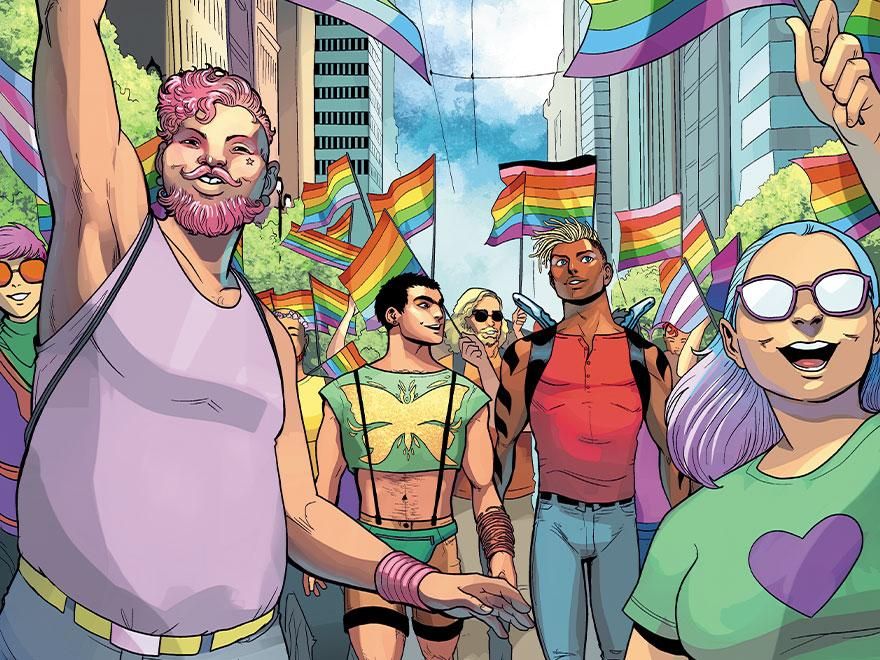
DC Pride #1 wraps up with a superhero spin on a big damn Pride parade with Andrew Wheeler, Luciano Vecchio, and Rex Lokus chronicling Aqualad’s first Pride since coming out with his new friend (and Extraño’s apprentice) Syl. Lokus’ colors match the tone of the story from bright and triumphant to dark and dreary as Eclipso has everyone at Pride airing out their worst thoughts and finally triumphant again with a group of DC’s LGBTQ+ superheroes led by Extraño saving the day and being the true, queer selves in the process. This story is a true victory lap, but Wheeler spends a little time in Aqualad’s head as he takes in the sights and sounds of Pride and also grapples with not wanting to be like his father, the villainous Black Manta. Even though everyone feels isolated and alone when targeted by Eclipso, there is actually a large, vibrant LGBTQ+ community of heroes in the DC Universe and hopefully they show up in stories beyond this anthology, which has honestly been a recurring theme as I read through the stories in DC Pride #1.
DC Pride #1 is a fantastic showcase not just for DC Comics’ LGBTQ+ characters, but the company’s LGBTQ+ creators too as they capture a range of relationships, feelings, sexualities, and gender identities. There’s a lot of focus on established romantic relationships, but some of the stories explore activism, community, and the Midnighter/Extrano/John Constantine is a straight up adventure yarn. I enjoyed seeing myself and my queer siblings uplifted in this comic and hope DC can do something more ongoing with these characters, situations, and especially creators.
Story: James Tynion IV, Steve Orlando, Vita Ayala, Mariko Tamaki Sam Johns, Danny Lore, Sina Grace, Nicole Maines, Andrew Wheeler Art: Trung Le Nguyen, Stephen Byrne, Skylar Partridge, Amy Reeder, Klaus Janson Lisa Sterle, Ro Stein and Ted Brandt, Rachael Stott, Luciano Vecchio Colors: Jose Villarrubia, Marissa Louise, Dave McCaig, Enrica Erin Angiolini, Rex Lokus Letters: Aditya Bidikar, Josh Reed, Ariana Maher, Tom Napolitano, Becca Carey, Steve Wands Story: 9.8 Art: 10 Overall: 9.9 Recommendation: Buy
DC Comics provided Graphic Policy with a FREE copy for review
It’s a bright night for Green Lantern as HBO Max has given the series an order Variety is reporting. That’s not surprising. The big news is who the show will be focused on as the cast of characters and those that wear the Green Lantern ring is varied and large.
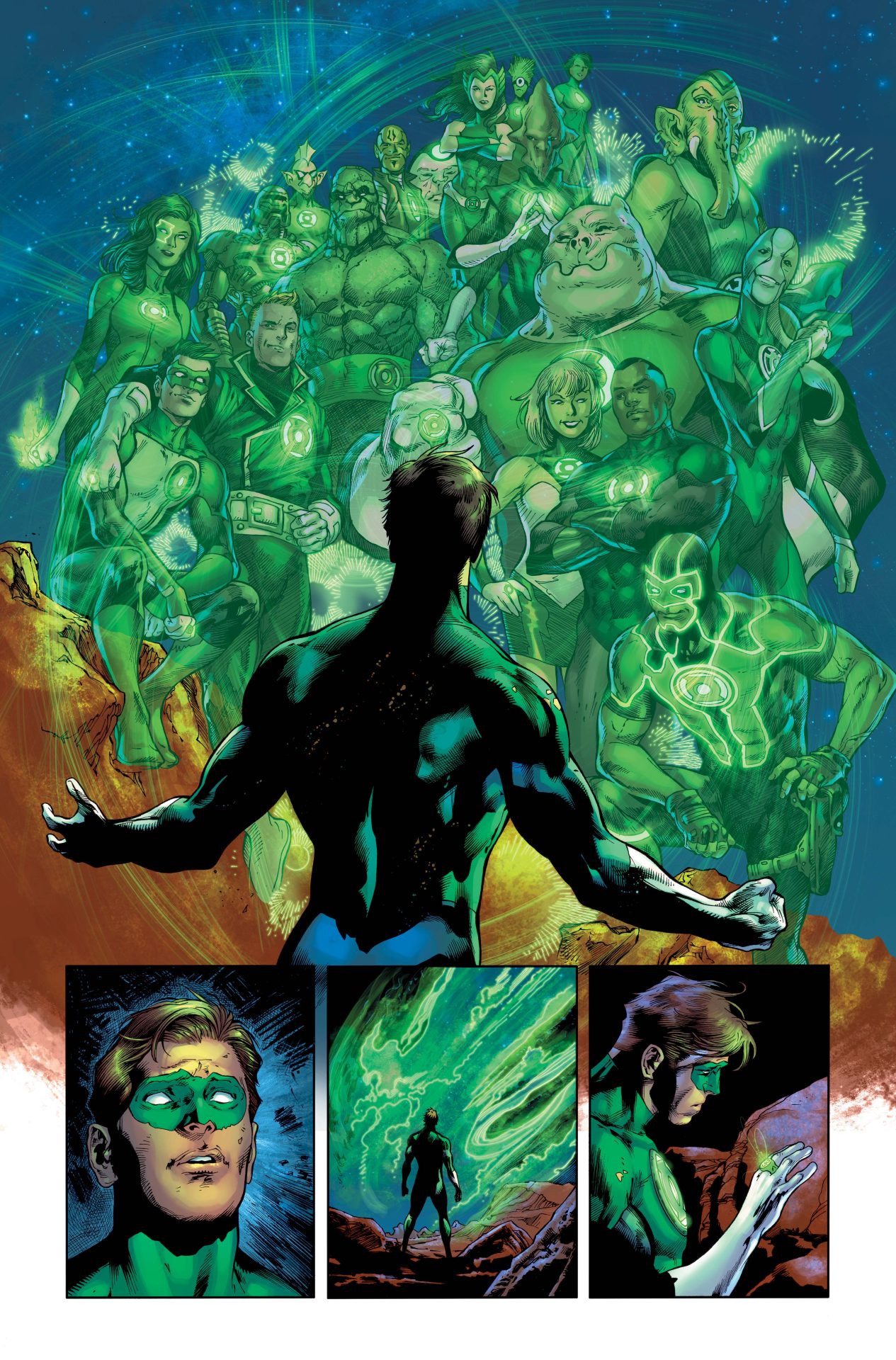
The show will feature numerous Lanterns including Guy Gardner, Jessica Cruz, Simon Baz, and Alan Scott — Earth’s first Green Lantern, and many more. That’s a diverse cast as it features a white man, woman, Muslim man, and Gay man as the focus. The series will also feature other Lanterns like Kilowag and introduce new Lanterns to the Corps.
The series will feature 10 one-hour episodes. It will be co-written and executive produced by Seth Grahame-Smith and Marc Guggenheim, with Grahame-Smith serving as showrunner.
HBO Max is going heavy on DC properties. It not only has inherited the shows from the “defunct” DC Universe app but also has series spinning out of The Batman and The Suicide Squad in the works. Coming from DC Universe is Doom Patrol, Harley Quinn, and Titans. There’s also Strange Adventures and Justice League Dark somewhere in development.