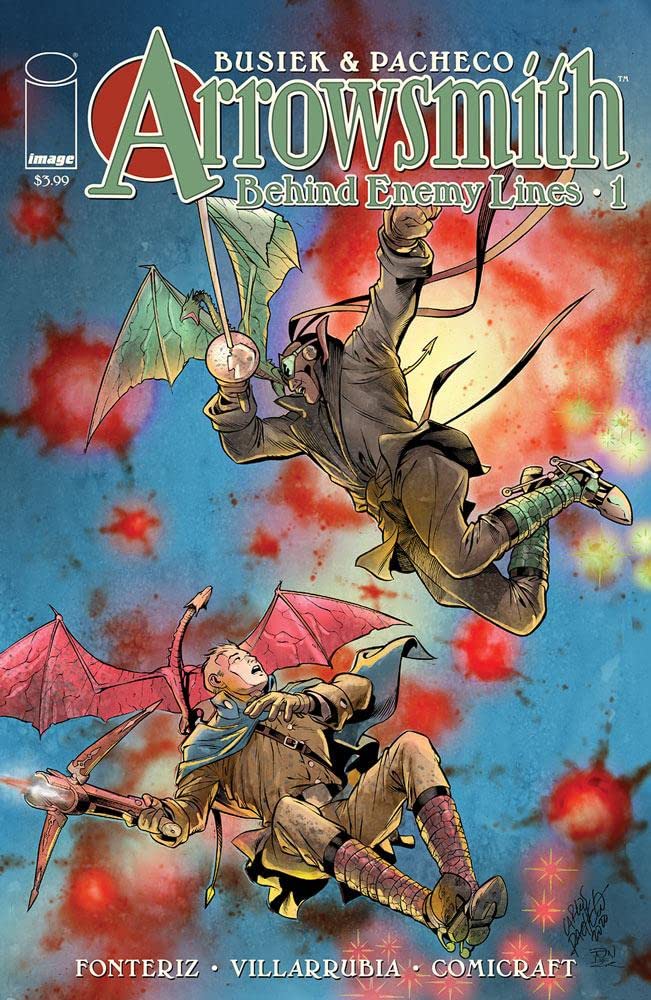
Some of the big news for 2022 is the return of Kurt Busiek to Image Comics. With numerous series coming, things kick off with a new volume of Arrowsmith, Arrowsmith: Behind Enemy Lines. I myself have never read the series so I came into this new series pretty cold only knowing the very basics. Thankfully, the experience is a solid one with it being pretty friendly to new readers.
The world of Arrowsmith takes place during World War I and instead of the heavy use of technology to wage battle, this is a world of magic featuring dragons and spells. It’s an interesting take on classic war stories with a new volume that narrows things down and keeps it simple in many ways.
The story focuses on Fletcher Arrowsmith and the comic kicks off with a mission. What’s smart is it throws the reader into the action and at the same time teaches the rules of this world. For those who are new, it’s a great way to learn how things work and what’s different in this alternate history. For those that have enjoyed what has already come out, it’s just solid action.
Busiek also takes things beyond the action making sure to focus on the human side of things. We really get to know Arrowsmith and what makes him a solid protagonist and more importantly, why we should care about him and cheer for him.
The art by Carlos Pacheco is great with a grounded style about it. What’s excellent is that even though this could just be a comic set during World War I, there’s the subtle differences, the magic and creatures, that makes it stand out. It keeps the readers on their toes to see what’s slightly “off” from our world. José Rafael Fonteriz handles the ink and José Villarrrubia does the colors and the trio deliver a look and style that’s very grounded despite it’s premise.
Arrowsmith: Behind Enemy Lines #1 is a solid start to the series with a debut issue that’s perfect for new readers. I’ve never read what has come before and knew very little but I dove right in without any issues. It’s a fun start taking a familiar concept and setting and delivering a twist. It has me not only looking forward to what’s to come but also wanting to go back and see what has already been released.
Story: Kurt Busiek Art: Carlos Pacheco Ink: José Rafael Fonteriz Color: José Villarrubia Story: 8.25 Art: 8.25 Overall: 8.25 Recommendation: Buy
Image Comics provided Graphic Policy with a FREE copy for review
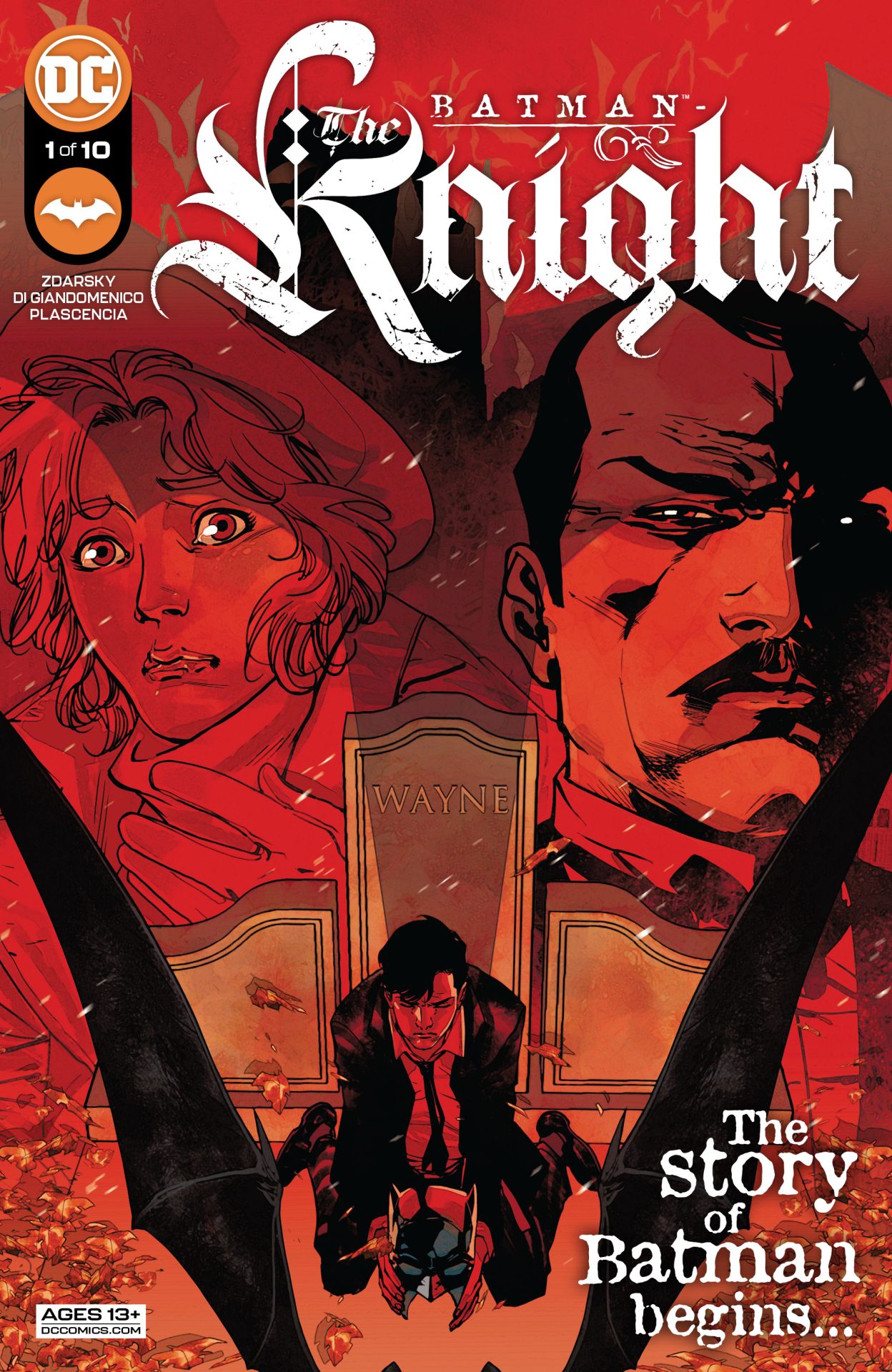
For quite some time, comic readers only knew Chip Zdarsky for his comedic series. With Marvel’s Daredevil, Zdarsky planted a new flag showing off he could do “serious” and more brooding comics. The result is a run that has been praised by critic and fans alike. Now, he’s taken his talents to DC Comics and sees if he can repeat the quality with Batman: The Knight #1, the start of a new series taking a look at Bruce Wayne’s early years.
The early years of Bruce Wayne training to become Batman have been danced around in various ways over the years. Generally though, we get a story about a young man angry and reeling from tragedy lashing out on a journey of training and discovery. The details and specifics change but the general idea remains the same. Batman: The Knight #1 is a new take on the story. It bridges that gap between the angry and the journey around the world to train.
Batman: The Knight #1 is an interesting start to the story. It’s slow and a bit of a headscratcher. We get the foundations of what Bruce Wayne will become but very rough and at times unlikeable. He stands up for justice. He also is very brash and headstrong. At times he comes off as a bully. It’s not until the very end of the comic that we get a better sense of the Bruce Wayne we know.
Zdarsky gives us a slow start in Batman: The Knight #1 and honestly a character that at times is not enjoyable at all. You want to pull him aside and slap him around making Alfred’s handling of things even more saintly than that character already is. But, maybe that’s part of the point and the plan? Zdarsky is delivering a story that we get to see Bruce’s journey to become the world’s greatest detective and it has to start somewhere. The growth is the point of the journey.
The art by Carmine Di Giandomenico is solid. With color by Ivan Plascencia and lettering by Pat Brosseau the characters look great but there’s a timeless aspect to it all that’s interesting. This story could be the present. It could be the past. It’s all kind of up in the air allowing the reader to focus on the interactions between the characters which is key. This is very much focused on Bruce attempting to figure things out and those he entrusts near him. The action is limited and instead we get a solid sense of mood and feelings through the art and its subtle body language.
Batman: The Knight #1 isn’t a bad start but it also doesn’t excite. It’s an interesting comic that doesn’t quite yet make the case as to why it exists and also doesn’t quite make a whole lot of sense character wise leaving out what has lead up to the current state. Zdarsky has show he can play the long game and pays off after a while, we just might need to wait a little bit more until we get to that moment.s
Story: Chip Zdarsky Art: Carmine Di Giandomenico Color: Ivan Plascencia Letterer: Pat Brosseau Story: 7.75 Art: 8.15 Overall: 7.8 Recommendation: Read
DC Comics provided Graphic Policy with a FREE copy for review
Learn the basics about Joan of Arc and her role in shaping France’s history!
Story: Sarah Winifred Searle Art: Maria Capelle Frantz
Get your copy in comic shops! To find a comic shop near you, visit http://www.comicshoplocator.com or call 1-888-comicbook or digitally and online with the links below.
Penguin Young Readers provided Graphic Policy with a FREE copy for review This post contains affiliate links, which means that if you click on one of the product links and make a purchase, we’ll receive a percentage of the sale. Graphic Policy does purchase items from this site. Making purchases through these links helps support the site
Go through the disaster that was 2020 in this chronicle of the year that was with images depicting some of the major events that shaped the world.
Art: Elise Engler
Get your copy in comic shops! To find a comic shop near you, visit http://www.comicshoplocator.com or call 1-888-comicbook or digitally and online with the links below.
Metropolitan Books provided Graphic Policy with a FREE copy for review This post contains affiliate links, which means that if you click on one of the product links and make a purchase, we’ll receive a percentage of the sale. Graphic Policy does purchase items from this site. Making purchases through these links helps support the site
When it comes to indigenous representation in media, it’s few and far between. I remembered growing up only seeing a handful of Native Americans represented. One of those was in the Lone Ranger and Tonto cartoon, which I used to watch every Saturday morning. The other was in the G.I. Joe which featured the character Spirit, who exhibited every stereotype that Americans saw of Native Americans.
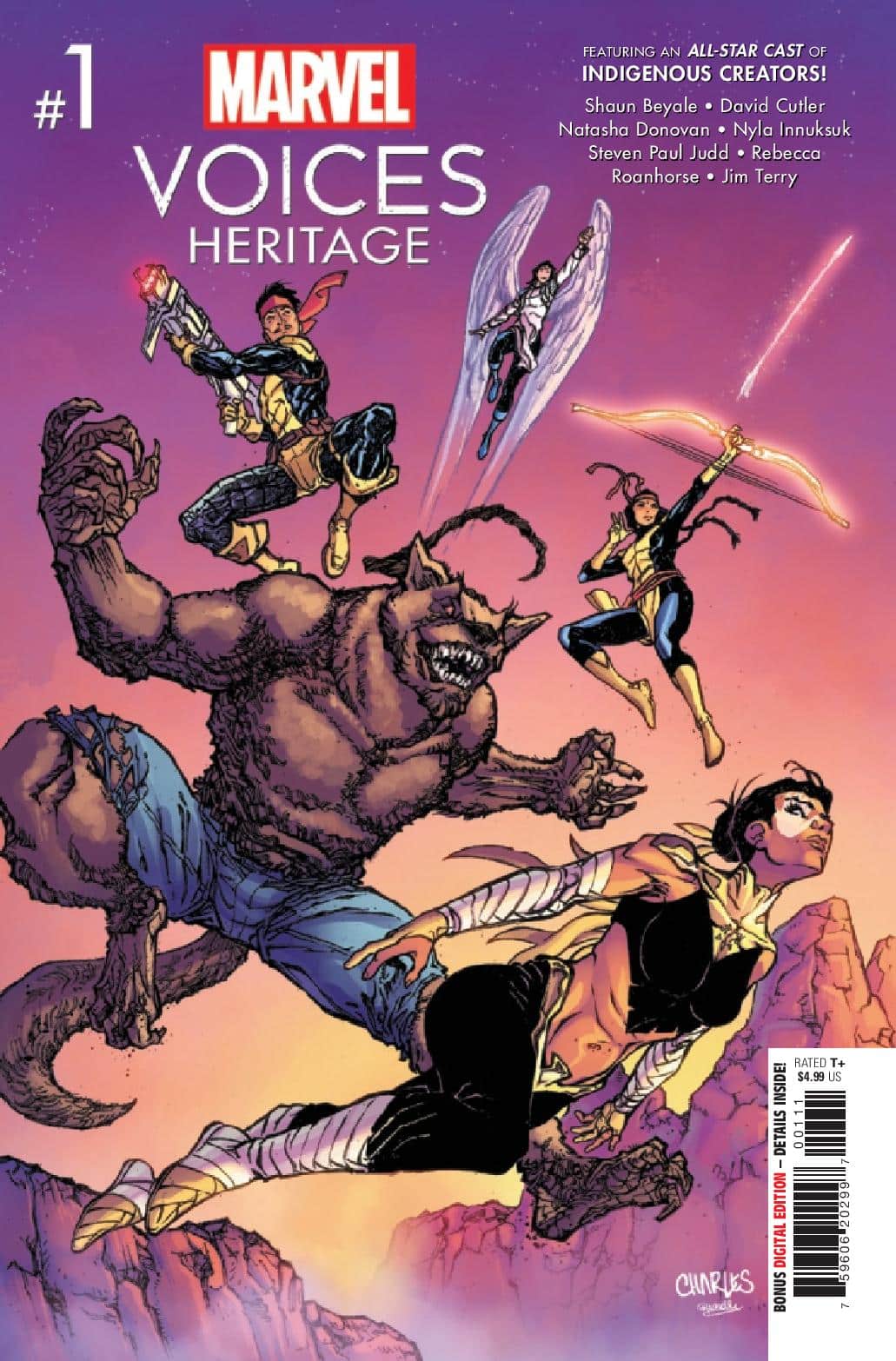
Other than those representations, I remember watching Westerns with my grandfather and seeing a different type of representation. One that I would find out was wrought with negative portrayals infused with incorrect perceptions and lacking truth in most cases. Even today, the representation is sparse, and is now only being really seen in shows like Reservation Dogs and Rutherford Falls. It’s only a start and it still is not enough. In the second season of Marvel Voices, we get Marvel Voices Heritage #1, where we get to see how Marvel portrays its indigenous heroes.
The issue features a nice mix of characters and creators involved. In ”The Unexpected”, Warpath and few of the Native American X-Men fight off a threat to a reservation showing the world they will go wherever they are needed. In “SnowGuard: The Tuurngait’s Song”, Snowguard calls on some long dormant guardians to fight off an ancient evil. In ”American Eagle: Not Dead Yet”, a retired hero, finds out he still has some fight in him, when he breaks up a robbery and proves his mettle. In the last story ”River: A Friend In Need”, River has a special power and it has to do with dead people, something that often gets him in a trouble but one that leaves a boy missing.
Overall, Marvel Voices Heritage #1 is an excellent collection of stories that shines the spotlight on these underrepresented characters. The stories by the different creators are entertaining and enlightening. The art by the different creators is astounding. Altogether, a must buy even if you think you know these characters, you have never seen them like this before.
Story: Nyla Innuksuk , Jim Terry, Steven Paul Judd, Rebecca Roanhorse Art: Natasha Donovan, David Cutler, Shaun Beyale Color: Brittany Peer, Rachelle Rosenberg, Paris Alleyne, Morry Hollowell Ink: Natasha Donovan, José Marzan Jr., Belardino Brabo Letterer: Ariana Maher Story: 10 Art: 10 Overall: 10 Recommendation: Buy
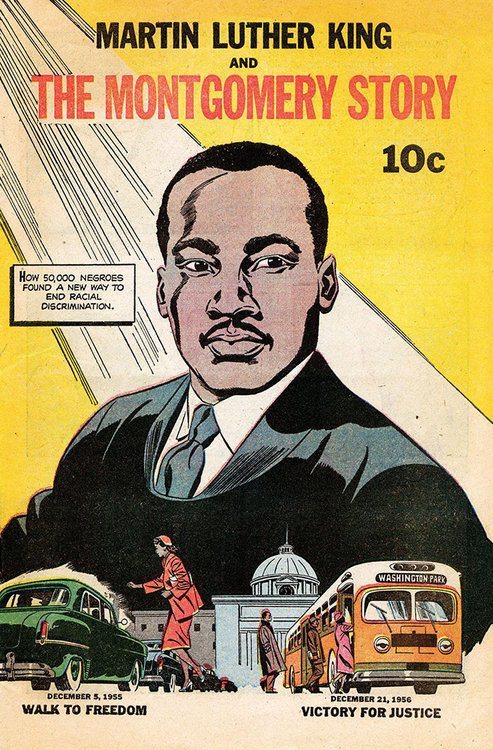
One of the best releases of the last decade of comics is Top Shelf‘s Marchtrilogy which details the life of Congressman John Lewis. Lewis was an instrumental individual in the Civil Rights movement. That successful graphic novel lead Top Shelf to partner with the Fellowship of Reconciliation to publish a new edition of the Martin Luther King and The Montgomery Story. The comic is an amazing piece of history that has been used to promote peaceful, non-violent protests around the world, being translated into numerous languages.
The 16-page comic is a wonderful summary of the Civil Rights movement taking individuals through the methods and thought process used to protest Montgomery’s policy that African Americans were to ride in the back of the bus. The narration is from an individual named “Jones” and his experience through the protest. After the story wraps up, there’s a step-by-step checklist that breaks down the exact methodology used and also how it’s been used throughout the world, in particular, to win India’s independence.
Top Shelf focused not just on reprinting the comic in modern standards, they used similar paper and coloring from the time that it originally was printed. This looks like a copy you might have held decades ago. A fantastic recreation of an important piece of comic and civil rights history.
Everyone should check this out, to learn about United States history, but also how comics have been used to create change and in political movements. Comics have been political since their formation over 100 years ago and have been a tool to fight for political change ever since.
While it’s difficult to get a print copy, there are a few options to at least read it digitally.
Story: Alfred Hassler, Benton Resnik Art: Sy Barry Story: 10 Art: 10 Overall: 10 Recommendation: Buy
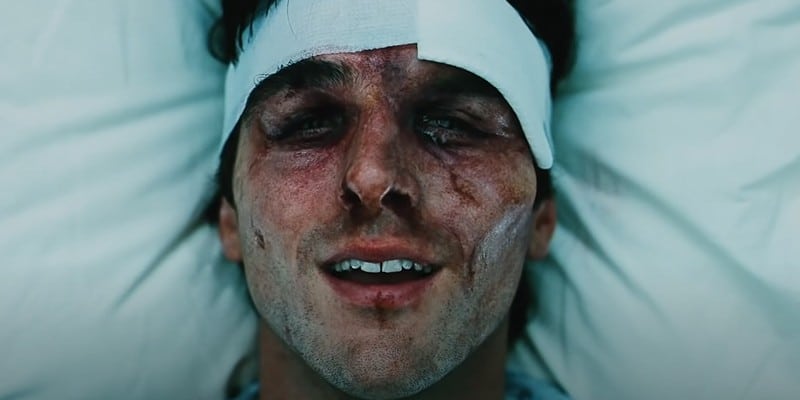
The second episode of EuphoriaSeason 2 begins right where the last one ended with Nate being beaten to bloody pulp by Fezco. This is because in the last season, Nate tipped off the cops on Fezco’s drug business to blackmail Rue and Jules so they wouldn’t bring a DVD of his father/town leader Cal (Eric Dane) having sex with Jules. This plot point gets revisited in the closing moments of the episode, but only after writer/director Sam Levinson threads together an episode looking at the dreams the characters of Euphoria have about relationships and the often dark reality. “Out of Touch” is a dense, yet visual stunning hour of television sprawling across the families and friends of everyone in the main ensemble in contrast with the premiere staying confined to the Fezco flashback and a New Year’s Eve party with a drug dealer pit stop.
After going full gory medical drama, Levinson uses Nate being unconscious to probe his inner thoughts that are bathed in angelic light. This dream sequences shows a softer side of one of the most sociopathic characters on television as he loves, respects, and desires Cassie and wants to build life with her while breaking the cycle of abuse and in the Jacobs family. His dad is an almost comedic figure doing yoga stretches instead of being a menace and interrogating Cassie and Lexi about who attacked Nate at the party and then taking a gun to Fezco’s gas station although he doesn’t start shit because Lexi is there being awkwardly flirtatious around the malt liquor cooler. There is also a darker side of these sequences with images from Cal’s sex tapes, and Nate having sex with his ex (and Cassie’s best friend) Maddy showing up in an image overload. None of Cassie and Nate’s actual interactions are like the dream sequence with a truck ride to some houses under construction ending up being super-terse except when Nate says they can’t see each other again, and they end up having sex on the second floor of an unfinished house in the pitch black. Maddy and her penchant for violence and outburst (As seen in a quick cut montage) is what comes between them, and honestly the Jacobs family has bigger fish to fry thanks to the aforementioned CD.
The other big dream sequence in “Out of Touch” involves a characters that’s the polar opposite of Nate Jacobs: Kat (Barbie Ferreira). She didn’t get much screen time last episode beyond being sweet with her boyfriend Ethan and keeping Jules company, but Sam Levinson returns to her arc of empowerment and escapism from last season. He goes full visual overload with Kat having a vision of a Dothraki warrior from Game of Thrones killing her boyfriend and having rough sex with her, which basically boils down to Ethan being nice so maybe she should let him go. This extends to the real world as he’s darkly lit during their bowling outing while Kat, Jules, and Maddy get Instagram-ready montages of them bonding and having a good time. The other dream sequence involves, I guess, influencer-type women of different shapes and sizes telling Kat to practice self-love while she’s in her bed practicing self-loathing. Euphoria is never subtle, but it’s some heavy-handed messaging about social media’s obsession with ultrapositivity. Levinson is better at digging into his character’s psyches than social commentary so it’s a bit of an unwanted detour even though it does eventually find its way back to the simple, yet effective message of being afraid to be happy for once. (A bathroom chat between Maddy, Kat, and a fellow Euphoria High student gets the point across in a more natural way.)
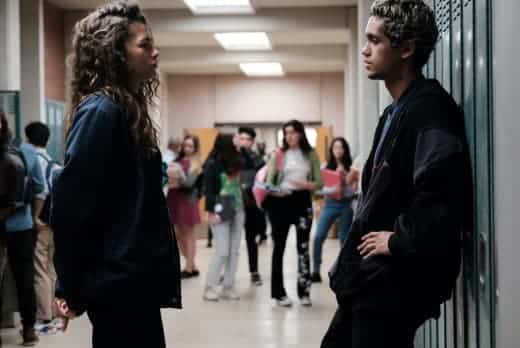
The other main plot line in this episode of Euphoria is Jules getting jealous about Rue’s new friendship with Elliot, and by extension, her relapse into drug use although she does go to a Narcotics Anonymous meeting and introduce her sponsor Ali (Colman Domingo) to her mother. Zendaya and Dominic Fike have an easy chemistry in the scenes they share and feel at ease in each other’s presence with Sam Levinson’s images and Labrinth’s score showing their connection over music and drugs. And when there’s dialogue, Elliot brings out an honesty in Rue that’s the opposite of how she interacts with Jules and her mother later on in the issue. (Ali is a fellow addict and can see through her bullshit.) Rue ends up opening up about her dad passing away from cancer and finds a kind of comfort in the messiness of life as she and Elliot understand that her drug use didn’t come out of grief, and she would probably still be using even if he was alive. Zendaya brings a haze and awkward energy to her performance this episode that plays off Fike’s insight and straightforwardness, and it doesn’t feel contrived at all that Jules think Rue is romantically interested in Elliot.
In addition to these multiple relationship tension plot lines, “Out of Touch” has so much else going on from Fezco harboring a fugitive Faye (The girl doing heroin last episode) to the beginning of a Lexi empowerment arc and Maddy having her own kind of a fantasy sequence as she tries on her employer’s fancy dresses and outfits. Two episodes, and Euphoria is juggling lots of plotlines and succeeding with most of them. Sam Levinson dips into the manic crime saga energy from the premiere with Faye’s, I guess, G-plot that involves her escaping from a motel through a ventilation shaft into a dumpster by a Taco Bell. She’s an awkward presence, especially when she interacts with Lexi and Cal and exists more to show shit could hit the fan with Fezco at any time. Angus Cloud definitely plays him in a more harried and terse way even though there are still sparks between him and Lexi, and he treats Faye kindly although she’s really a pain in the ass.
“Out of Touch” doesn’t get as good as its radiant opening sequence where Nate imagines a happier and more conventional alternate future for himself that doesn’t involve lies, threats, and blackmail, but Sam Levinson does a good job of checking in with characters like Kat, who didn’t do much in the premiere, and Elliot, who has amazing chemistry with Rue. Plus Cal Jacobs reminds everyone that he’s the true antagonist of this show thanks to a menacing performance from Eric Dane with just the right touch of paternality. The sequence with him in the gas station is a great little mini-thriller and shows that Euphoria can be suspenseful and not just visually beautiful and have great musical choices.
Discover the story about Cesar Chavez and the Delano Grape Strike. Who Was the Voice of the People? Cesar Chavez introduces readers to Chavez, unions, and organizing.
Story: Terry Blas Art: Mar Julia
Get your copy in comic shops! To find a comic shop near you, visit http://www.comicshoplocator.com or call 1-888-comicbook or digitally and online with the links below.
Penguin Young Readers provided Graphic Policy with a FREE copy for review This post contains affiliate links, which means that if you click on one of the product links and make a purchase, we’ll receive a percentage of the sale. Graphic Policy does purchase items from this site. Making purchases through these links helps support the site
When it comes to mysterious characters in the MCU, there is only a handful. One of those being satisfied in the recent Hawkeye series, which gave fans, some well deserved answers to our burning questions. As we found what happened to Yelena during the “Blip” and how she has coped with her sister’s death. We also found out exactly where the Kingpin has been during everything going on the wider Marvel Universe.
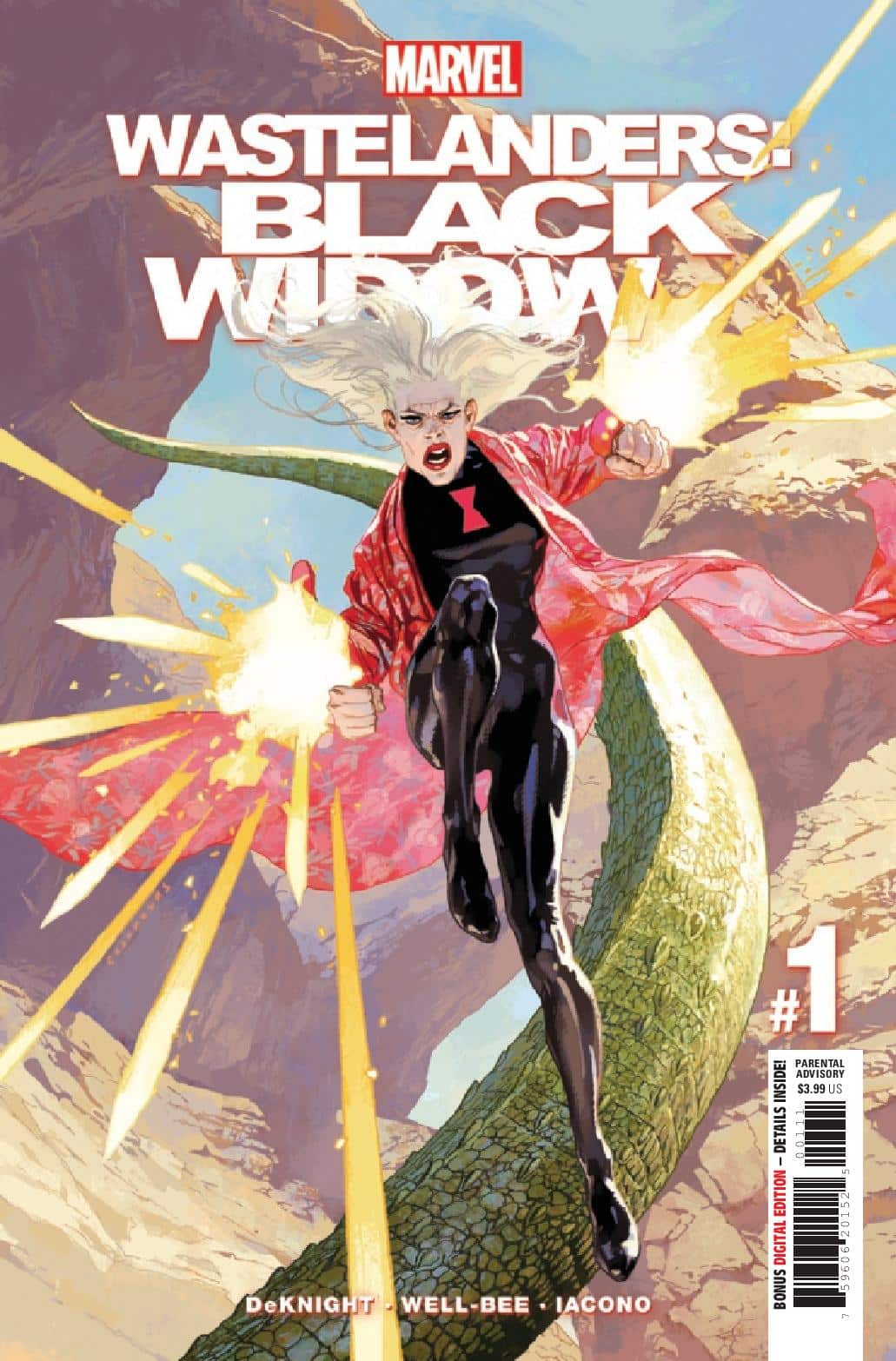
It is Yelena’s sister, Natasha AKA Black Widow that remains ever so enigmatic to longtime fans and viewers. AS Natasha rarely gives up as much as she takes, which is possibly a job hazard. AS being one of the world’s greatest spies, often means hiding in the shadows and plain sight. That is why she may be the most interesting character in the first 3 phases of the MCU. In the latest one shot story in the Wastelanders, we get Wastelanders: Black Widow #1, Natasha Looks to take on one more job, a secret that can change the world
We are taken to the domain of Lizard King, deep down in Florida, where he has taken a prisoner and Black Widow, long thought to have died in the Villain Uprising, has risen from hiding for one big score. We find out happened to her after the villains won, Yelena burying her sister and taking over the mantle of Black Widow, scavenging the Wastelands the best way she could. She works her way though his lair, defeating Hulk’s grandchildren one by one and temporarily slowing down the Lizard King to get to Elias Starr. By the issue’s end, Yelena finds him, but a shadow of his former self, leaving her to take down Red Skull all on her own.
Overall, Wastelanders: Black Widow #1 is an outstanding entry into the Wastelanders and proves that some heroes never die. The story by DeKnight is incredible. The art by the creative is wonderful. Altogether, a story which shows why the MCU should make Yelena the next Black Widow.
Story: Steven DeKnight Art: Well-Bee Color: Mattia Iacono Letterer: Cory Petit Story: 9.0 Art: 9.0 Overall: 9.0 Recommendation: Buy
Marvel provided Graphic Policy with a FREE copy for review
Sometimes, the staff at Graphic Policy read more comics than we’re able to get reviewed. When that happens you’ll see a weekly feature compiling short reviews from the staff of the comics, or graphic novels, we just didn’t get a chance to write a full review for. Given the lack of new comics, expect this weekly update to begin featuring comics that we think you’ll enjoy while you can’t get anything new to read – only new to you.
These are Graphic Policy’s Mini Reviews and Recommendations.
Logan
Joker #11 (DC)– James Tynion, Giuseppe Camuncoli, Cam Smith, and Arif Prianto check back in on Joker’s underrated secondary protagonists, the Sampsons aka the family from Texas Chainsaw Massacre if they struck it rich. They have Joker heading their way and seriously up the stakes while adding a little horror to this crime story. However, Joker #11 isn’t all cannibals and head rolling as Tynion and Camuncoli zero in on the relationship between Jim Gordon and Barbara Gordon, who decides to intervene in the case because her dad is almost dead. The issue shows their different approaches to problem solving even if they have the same goal. Also, new artists Giuseppe Camuncoli and Smith take an almost spectral approach to Joker and make him a force in Gordon’s psyche versus anything corporeal. The Punchline backup story from James Tynion, Sam Johns, and Belan Ortega mostly focuses on the inner workings of the Royal Flush Gang where everything is explained in card suits. It’s pretty mid, but does get some real emotion out of Harper Row and Leslie Thompkins as they try to bring Punchline to justice. Overall: 8.4 Verdict: Buy
What’s the Furthest Place from Here #3 (Image)– Matthew Rosenberg and Tyler Boss lean into the innate creepiness of old people, houses, and technology in the third installment of What’s the Furthest Place from Here. The house the protagonists take shelter in is definitely not empty, and weird shit ensues when they run into some kids dressed up like senior citizens along with a VHS tape glimpse of the missing Sid. Prufrock’s loyalty and foolhardiness takes center stage as he and the group figure out their next move to find some semblance of hope in a hopeless situation. This might make What’s the Furthest Place from Here #3 seem dark and edgy, but Rosenberg and Boss mine a rich vein of humor from the dialogue and body movement of the kids pretending to be old people. Tyler Boss also uses the rhythm of the nine panel grid to lull readers/the cast of characters into an uneasy, yet false sense of security, and boom, he subverts in a cool way towards the end. Finally, what I like most about What’s the Furthest Place from Here is Matthew Rosenberg and Boss’ rich, eccentric approach to setting while not getting slogged down in exposition or revealing too many mysteries. Overall: 8.1 Verdict: Buy
Amazing Spider-Man #85 (Marvel)– This pivotal chapter of the “Beyond” arc is hampered by generic art from Paco Medina and six inkers. Cody Ziglar’s dialogue carries the big fight scene between Ben Reilly and Dr. Octopus, but even the pacing is off on that with poor staging and random gadgets to get to the “big reveal”. However, I do love how well-fleshed out Dr. Octopus has been in the Beyond arc, and while Ben Reilly and the Beyond suits/employees might think he’s just fighting for revenge, his real motivation is showing how Reilly has been manipulated by the Beyond corporation. Ziglar and Medina introduce a new element of rage to Reilly’s character and show that maybe he’s not cut out for this whole Spider-Man thing. He is still sympathetic with his struggles to please Maxine Danger and Beyond being relatable for anyone who’s had to subsume their personality and values for a bottom line. Overall: 7.3 Verdict: Read
Rain #1 (Image)– Joe Hill, David Booher, Zoe Thorogood, and Chris O’Halloran nail the feeling of having everything you want in the world and having it prematurely snatched away from you in Rain #1. Until the titular downpour hits and changes the course of the world, Rain is a queer slice of life book centered around Yolanda and Honeysuckle. Booher’s narration fills in the gaps in their backstory and their parents’ reactions to coming out while Thorogood’s character acting shows their feelings for each other. She also populates with Rain #1 with a colorful cast of characters that are snatched away Hill and David Booher introduce the post-apocalyptic genre elements to the story. Rain #1 shows Honeysuckle’s life in the before times, and it looks like the rest of the series is going to be her coping with the wide scale death and destruction that came from water falling from the sky. Overall: 8.0 Verdict: Buy
Death of Dr. Strange: Bloodstone #1 (Marvel)– Sure, there’s plenty of explosions, quippy one-liners, and yes, monsters, but Tini Howard and Ig Guara use Death of Dr. Strange: Bloodstone #1 to shift the whole Bloodstone family dynamic. Howard begins with an old soap opera trope of introducing a missing sibling, Lyra Bloodstone, who was banished a while back by Elsa and Cullen’s father Ulysses and released after Dr. Strange’s death. Howard and Guara give her a spunky personality and a ravenous appetite, and she helps Elsa and Cullen reshape how they see the world showing that the wizards that control the monsters are worse than the monsters themselves. It’s like one big fantasy/horror metaphor that our energies and critiques should be directed towards people in power not our fellow comrades. And Bloodstone #1 is no slouch in the visual department with Ig Guara channeling anime in the fight scenes, and Dijjo Lima using different colors of energy to show the differences in personality between Elsa, Cullen, and Lyra. Overall: 8.3 Verdict: Buy
Well, there you have it, folks. The reviews we didn’t quite get a chance to write. See you next week!
Please note that with some of the above comics, Graphic Policy was provided FREE copies for review. Where we purchased the comics, you’ll see an asterisk (*). If you don’t see that, you can infer the comic was a review copy. In cases where we were provided a review copy and we also purchased the comic you’ll see two asterisks (**).