Category Archives: Underrated

Underrated: Green Valley

Did you read this book yet? Allow us to remind you why you should with a rerun of a column from 2019.


This is a column that focuses on something or some things from the comic book sphere of influence that may not get the credit and recognition it deserves. Whether that’s a list of comic book movies, ongoing comics, or a set of stories featuring a certain character. The columns may take the form of a bullet pointed list, or a slightly longer thinkpiece – there’s really no formula for this other than whether the things being covered are Underrated in some way. This week: Green Valley


Published by Image, Green Valley was written by Max Landis and features art by Giuseppe Camuncoli, inks by Cliff Rathburn and colours by Jean Francois Beaulieu. The wonderful hardcover collection in my hands collects nine issues and will set you back $29.99 (I paid for this out of my own pocket, and happily so, even though I probably had access to the single issue review copies).

So what’s the story about?
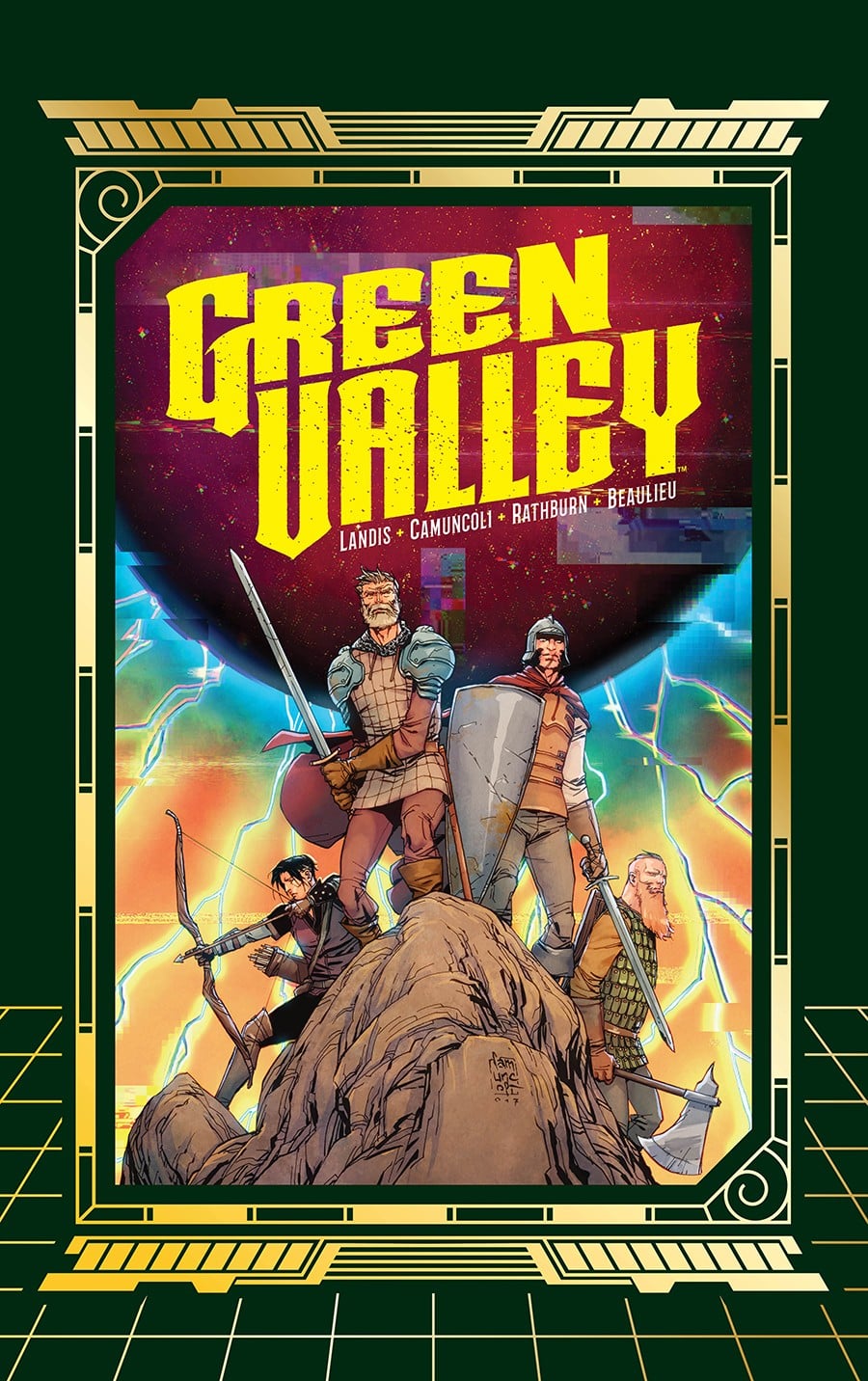
GreenValleyHC.jpg

The knights of Kelodia are the finest in the land, but they’ve never faced a POWER like the one that resides in the Green Valley. Now they’re about to embark on the adventure of a lifetime—to stop a wizard and slay his dragons—but there’s no such thing as magic or dragons…is there? 

You may have noticed by reading this column that I tend to enjoy stories set in and around medieval times, even though I don’t tend to read that many comics set in that era (or at least I didn’t until this year). So when my LCS suggested I pick this up (it was on the counter and the owner told me I’d like it) I did so without question because sometimes I don’t want to read superhero comics.

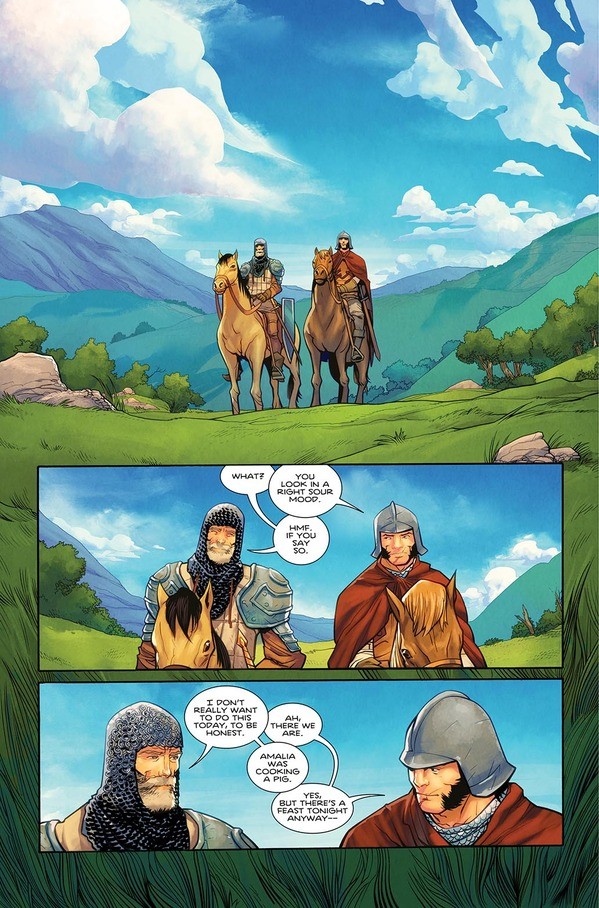
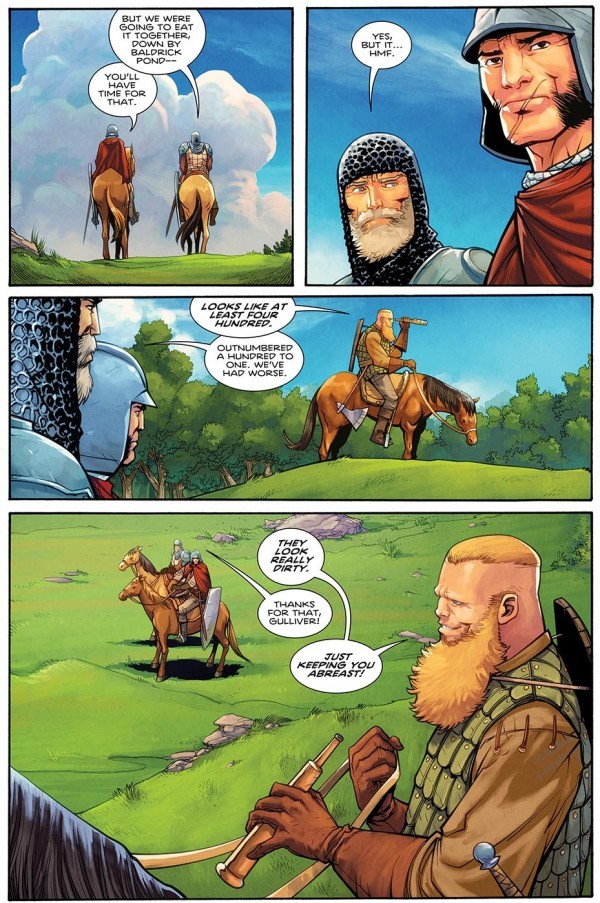
One of the first things I noticed was that the hardcover itself just feels utterly wonderful in your hands.  The above image is of the hardcover, with the comic art inset slightly into the gold and green cover of the book itself in an effect that really doesn’t translate as well in the image as it does in person, but it does give you a hint about the nature of the story, which aside from the cover and text on the back I entered utterly blindly – and I fell in love.
green valley interior 2.jpg
green valley interior.jpg

Green Valley is the kind of book that you will want to read in a single sitting – it grabs you right from the start as you’re introduced to the legendary Knights of Kelodia (all four of them) as they face down a barbarian horde in a brilliant sequence that’s full of dry humour, a genuine feeling camaraderie from the knights  and tense knightly masculinity all wrapped up in some beautiful visuals that are some of the nicest pure-comic pages I’ve seen in quite some time. Were I reviewing this here, I’d be giving this at least 9’s across the board and telling you to buy this without question – the story and art genuinely took me by surprise and had me forget that I really should be doing a bunch of other stuff for the hour or so I sat enraptured in this story.

Without spoiling anything, it’s tough to explain why I loved this story, but that won’t stop me from trying. Green Valley is a very intelligently written book, with dialogue that is, at times, so sharp you could loose a finger. There are moments that span the gamut of human emotion for the characters, and will have you laughing out loud and pumping your fist as the story goes on – just as you’ll feel gut-punched at certain other moment. Max Landis has written one hell of a story that deserves a very special place on your shelf.

Now excuse me while I go reread it (no, I’m not saying that for effect – I’m actually going to reread it now).


Unless the comics industry ceases any and all publication look for a future installment of Underrated to cover more comics that aren’t cracking the top 100.
Underrated: X-Men: The Onslaught Saga

This is a column that focuses on something or some things from the comic book sphere of influence that may not get the credit and recognition it deserves. Whether that’s a list of comic book movies, ongoing comics, or a set of stories featuring a certain character. The columns may take the form of a bullet pointed list, or a slightly longer thinkpiece – there’s really no formula for this other than whether the things being covered are Underrated in some way.

This week: the multi-part crossover event X-Men: The Onslaught Saga.


If I’m totally honest, my Golden Age of X-Men comics is from the mid 90’s to the early 2000’s. This wasn’t exactly when I first started reading the X-Men, that was around 98/99, but because I was largely reading UK reprints, I wasn’t reading the current comics – they were probably always a good two to five years behind what was being published and sold in comic shops depending on the story being presented in the magazine. The reprint magazine had space for three comics in it – this wouldn’t always be three concurrent issues, but was often an issue of Uncanny X-Men and X-Men that were published within the same month and an issue of Uncanny from the 60’s or 70’s). These reprint magazines are actually responsible for the weird dichotomy in my head of knowing the stories very well, but having no context for what issue they came from (yes, the reprint did tell you what comics they were reprinting, but it was much like a tpb; you don’t really notice unless you look in the fine print if the covers).

Over the years, I’ve slowly been picking up and working on completing a run of X-Men comics from issues 100-500, though my focus for years was around 250-400, but because I’ve been largely focused on Uncanny X-Men, I don’t have a lot of the issues that form the giant crossover – if I even have all the Uncanny issues (look, I was often going by cover art and price when picking books up, not sequential numbering, so I have holes everywhere in my collection), so for a story that I really want to read I’ve been picking up collected editions just to be able to read or reread them. There’s collecting for the joy of the hunt and collecting to (re)read the stories – sometimes those things are one and the same, and sometimes they’re not, because I have no intention of risking damaging the early Uncanny issues I own, I’ve also been looking for collected editions of The Dark Phoenix Saga and so on.

Despite having several issues of Uncanny X-Men that comprise the Onslaught Saga, there was a lot I didn’t have, and won’t be getting any time soon, so when I saw this trade for sale at my comic shop I decided to pick it up so I could scratch the itch I had to read it in its entirety.

The Onslaught Saga was a story that came was featured in the reprint magazines just as I had started to read them, and so I ended up missing most of what took place in the story (everything, honestly, other than the aftermath), and so consequently a lot of it was relatively new to me. Sometimes the journey is as important as the conclusion (especially given how two decades later most of the characters in the story are still around).

The basic plot of the story focuses around Xavier losing control after the events of Fatal Attractions (you don’t need to worry about having read that – I still haven’t, though it is in my To-Be-Read pile), and the combined efforts of New York’s heroes to put a stop to his rampage. It’s pure 90’s awesomeness – there’s more destruction that you can shake a stick at, but the story never pulls away from the core focus of the intimate struggle that the heroes face when dealing with an evil Xavier.

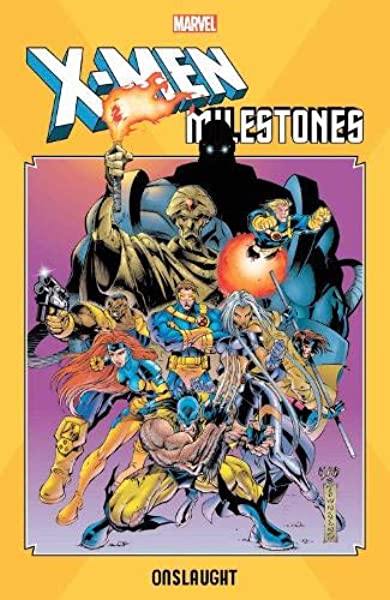
The version I read was the X-Men: Milestones trade (pictured above), and it told a very comprehensive story. There was at least one issue missing, but it was tangentially related (Wolverine #105 was a story about Wolverine helping rescue civilians during the battle), so I assume there could be other tie-ins skipped that don’t further the plot, which keeps the tale on point. Which is good because it’s a big trade, clocking in at over 200 pages (closer to 300, I’d guess without counting/checking). It’s easily the best way to read the story, unless you already have the single issues in your collection.

Which I don’t – yet. Oddly, despite my love of the X-Men from the 90’s, I’ve got a lot of holes to fill, which should be pretty easy given how many are in the back issue bins. After all, 90’s comics aren’t all bad, there’s just a huge number of them in longboxes across the country because so many were printed to satisfy a demand that disappeared almost over night. So that just makes them worth less than the comics from the 70’s and 80’s, but it doesn’t mean they’re not any good.

X-Men: The Onslaught Saga eventually leads into Operation: Zero Tolerance, another story I’m also fond of from that era of X-books, and likely subject of another column at some point in the future, as it holds up fairly well to this day.


Join us next week when we look at something else that is, for whatever reason, Underrated.

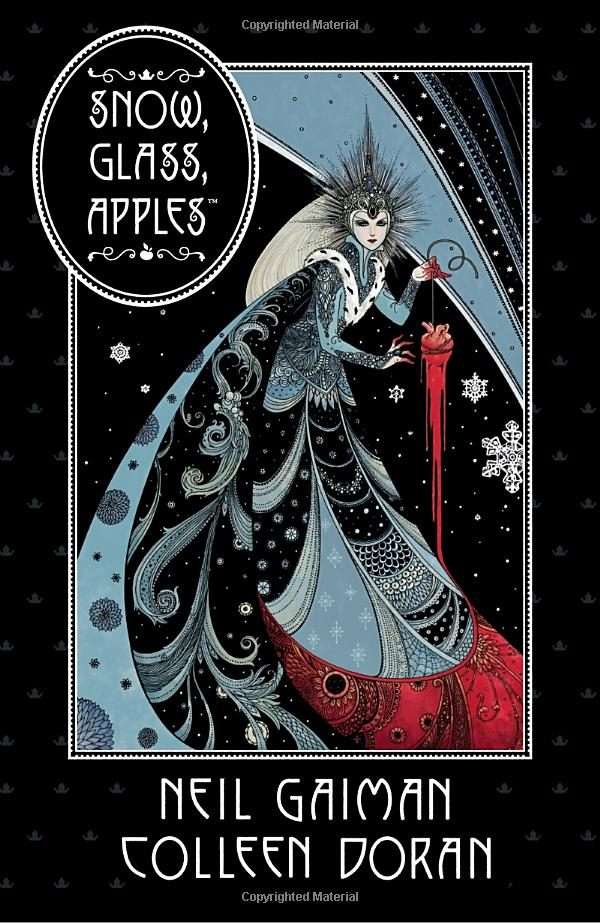
Underrated: Snow, Glass, Apples

This is a column that focuses on something or some things from the comic book sphere of influence that may not get the credit and recognition it deserves. Whether that’s a list of comic book movies, ongoing comics, or a set of stories featuring a certain character. The columns may take the form of a bullet pointed list, or a slightly longer thinkpiece – there’s really no formula for this other than whether the things being covered are Underrated in some way.

This week: Snow, Glass Apples.


Snow Glass Apples

We all know the story of Snow White at this point. Whether that’s from the Disney version, the original Grimm Brothers story, or one of the other iterations released over the years, I would be surprised if you didn’t have some level of familiarity with the story, so I won’t bother to recap or copy and paste a synopsis here because it’s ultimately a moot point.

Neil Gaiman clearly assumes the same, as Snow, Glass, Apples builds upon that innate knowledge of the fairytale by telling the story from the perspective of the Evil Queen. Originally conceived as a short story in 1994, the book I read this morning was adapted from that story, and fleshed out with illustrations by the fantastically talented Colleen Doran.

I’m not entirely sure if I’d classify this as a graphic novel or an illustrated novel, and ultimately it’s a moot point because I enjoyed the shit out of how the words and art interplay across the page.

There’s more of a classic art style to the book, and while it wouldn’t be my cup of tea in, say, a Wolverine story, it’s perfectly suited to the reinterpretation of a classic fairytale.

I featured Snow, Glass, Apple this week not because I think Neil Gaiman or Colleen Doran are an underrated pair of creators, but because this is the kind of book that can easily be missed or skipped over by those who don’t feel the strike of curiosity as they see the cover, and that’s a shame. This is a solid book, and I’m glad my LCS added it to the list of things that they recommended to me.


Join us next week when we look at something else that is, for whatever reason, Underrated.

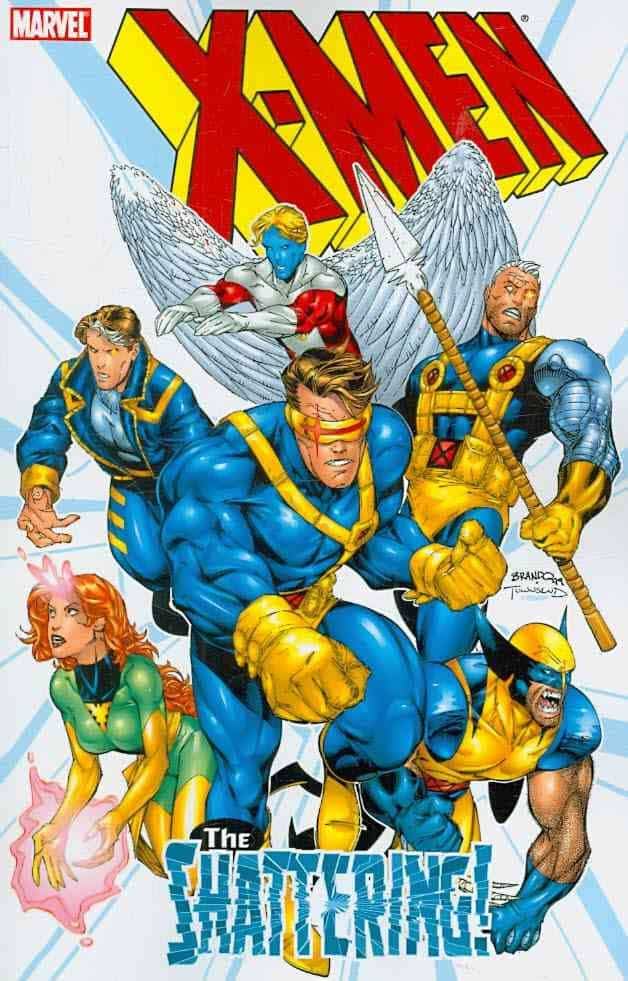
Underrated: X-Men: The Shattering

This is a column that focuses on something or some things from the comic book sphere of influence that may not get the credit and recognition it deserves. Whether that’s a list of comic book movies, ongoing comics, or a set of stories featuring a certain character. The columns may take the form of a bullet pointed list, or a slightly longer thinkpiece – there’s really no formula for this other than whether the things being covered are Underrated in some way.

This week: the multi-part crossover event X-Men: The Shattering.


If I’m totally honest, my Golden Age of X-Men comics is from the mid 90’s to the early 2000’s. This wasn’t exactly when I first started reading the X-Men, that was around 98/99, but because I was largely reading UK reprints, I wasn’t reading the current comics – they were probably always a good two to five years behind what was being published and sold in comic shops depending on the story being presented in the magazine. The reprint magazine had space for three comics in it – this wouldn’t always be three concurrent issues, but was often an issue of Uncanny X-Men and X-Men that were published within the same month and an issue of Uncanny from the 60’s or 70’s). These reprint magazines are actually responsible for the weird dichotomy in my head of knowing the stories very well, but having no context for what issue they came from (yes, the reprint did tell you what comics they were reprinting, but it was much like a tpb; you don’t really notice unless you look in the fine print if the covers).

Over the years, I’ve slowly been picking up and working on completing a run of X-Men comics from issues 100-500, though my focus for years was around 250-400, but because I’ve been largely focused on Uncanny X-Men, I don’t have a lot of the issues that form the giant crossover – if I even have all the Uncanny issues (look, I was often going by cover art and price when picking books up, not sequential numbering, so I have holes everywhere in my collection), so for a story that I really want to read I’ve been picking up cheap collected editions just to be able to read or reread them. And because I have no intention of risking damaging the early Uncanny issues I own, I’ve also been looking for collected editions of The Dark Phoenix Saga and so on.

The Shattering was a story that came out just as I was transitioning away from reprints and into the single issues for most series, and so where parts of the comic is familiar to me, a lot of it is relatively fresh – or fresh enough. I’ve got an obvious soft spot for this period of the X-Men, but I acknowledge that not everybody will enjoy the way that Alan Davis tells the story here – though this isn’t the end of the story by any means because the book ends on a cliffhanger that’s already got me scouring online retailers for the next volume (my LCS didn’t have it – I picked this book up from them and didn’t see any others), because I feel the need to follow up on just how this tale ends and I don’t have all the single issues just yet.

I remember reading bits and pieces of this years ago, and was shocked at the time about the revelation on the final page; I won’t reveal it here in case you’ve never read the story and choose to, but reading the trade knowing what was coming does give you an interesting insight into what’s to come.

Oddly, despite my love of the X-Men from the 90’s, I’ve got a lot of holes to fill, which should be pretty easy given how many are in the back issue bins. After all, 90’s comics aren’t all bad, there’s just a huge number of them in longboxes across the country because so many were printed. That just makes them worth less than the comics from the 70’s and 80’s, but it doesn’t mean they’re not any good.

X-Men: The Shattering leads into The Twelve, a story I am reasonably sure I’ve never read, but seems to be full of all the characters I loved the most when I first started reading about Marvel’s merry mutants. Something I was more than happy to do with a story that is far more Underrated than I ever expected.


Join us next week when we look at something else that is, for whatever reason, Underrated.

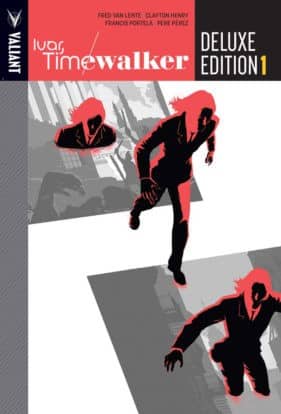
Underrated: Ivar, Timewalker

We’re going back to early 2018 to revisit an old column this week, because if you listen to Those Two Geeks, then you’ll understand why this comic was so loved.


This is a column that focuses on something or some things from the comic book sphere of influence that may not get the credit and recognition it deserves. Whether that’s a list of comic book movies, ongoing comics, or a set of stories featuring a certain character. The columns may take the form of a bullet pointed list, or a slightly longer thinkpiece – there’s really no formula for this other than whether the things being covered are Underrated in some way. This week: Ivar, Timewalker


IVAR_HC_001_ALLEN-281x414.jpg

My comic shop recently got the deluxe hardcover edition of Valiant’s Ivar, Timewalker in on a special order for yours truly, which collects the entire twelve issue run in one place for $40. You can also pick up the series in three softcover trade paperbacks, if you’re so inclined, but I’ve become partial to the oversized hardcovers (especially because of the bonus material in the back, but then I love that stuff). I had already read the final four issues of the series long before I started reading the hardcover, which some would think would be foolish, but when you’re reading a book about time travel then it suddenly becomes less foolish.

In order to give you a bit of context, you’ll find the preview text for the series below.

At this very moment in Geneva, Switzerland, history is being made. A thousand meters underground inside the Large Hadron Collider, researcher Neela Sethi is about to discover time travel – and jeopardize her life in the process. But she doesn’t know that yet. Ten minutes from now, every deadbeat chrononaut, wannabe conqueror, and misguided protector of the timestream will be banging down her door. Good thing that the legendary Ivar, Timewalker, got there first…right? Now it’s down to history’s most jaded, most tempestuous time traveler to stop the worst of everything that is, was, and will be…before time runs out!

The series was written by Fred Van Lente, who was joined by Pere Perez, Francis Portella and Clayton Henry with Robert Gill, the first issue being released in January 2015, with the final issue coming in December of that year. The twelve issue series is one of the more underrated offerings from Valiant Entertainment, as many people don’t tend to think about Ivar, Timewalker when talking about the great comics to have come from this publisher – myself included.

As a story about time travel, Ivar, Timewalker is a series that rewards multiple readings – indeed, you could reasonably start at the beginning of any of the three arcs within the series, though this is admittedly more difficult to do with the deluxe edition than the single issues or the trades. Van Lente put together a story that will leave you with as many questions as it will provide answers with an intelligent script that effortlessly blends a heartbreaking story of loss, hope and determination with a sly wit that will have you laughing out loud more often than you would expect in a series that, technically, isn’t a comedy.

Time travel, and effects travelers can have on history are touched on, and often provide some interesting flashes to a story that at its heart is a tale of two incredibly different people; Ivar himself, and Neela Sethi – the scientist who will invent time travel. For as fantastical as the scenery is in this series (and thanks to the artists, it truly is phenomenal), the true draw is the relationship between the two leads.

And that relationship is why you need to read this wonderful story at least twice. I didn’t realize how good this book was when I first read it, and I dare say it’ll only get better with time. Pardon the pun.

Time travel has never been so wonderful.


Join us next week where there will doubtless be another movie, series, comic or comic related thing discussed that is, for whatever reason, Underrated.

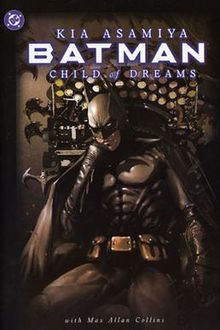
Underrated: Batman: Child Of Dreams

This is a column that focuses on something or some things from the comic book sphere of influence that may not get the credit and recognition it deserves. Whether that’s a list of comic book movies, ongoing comics, or a set of stories featuring a certain character. The columns may take the form of a bullet pointed list, or a slightly longer thinkpiece – there’s really no formula for this other than whether the things being covered are Underrated in some way. This week: Batman: Child Of Dreams


Child_of_Dreams_(manga).jpgThis week I wanted to focus on one of the very few manga books I own. Batman: Child Of Dreams was written and illustrated by Kia Asamiya and was originally published in Magazine Z, before eventually being released in an English language version in 2003. At the time of translation it was common for manga to be flipped so that Western audiences wouldn’t be confused by the traditional right to left reading layout of the source material (I’m told this isn’t the case any longer), so when you’re reading the book you’ll notice Two Face is scarred on the wrong side. It’s a minor thing at best once you understand why it’s there, and don’t attribute the error to an artistic blunder.
The story is about a designer drug that transforms you into somebody for 24 hours before killing you, the trail of which Batman follows to Tokyo with the help of a journalist Yuuko Yagi.

Child Of Dreams works on numerous levels as a book. It’s a compelling Batman story in and of itself, but it also gently introduced those unfamiliar with manga to the medium with characters that they’re already familiar with. Although I would have liked to try to read the book the way it was originally designed to be read, it is still interesting to see Asamiya’s take on the Dark Knight and how his influences and style give a fresh light to a well established character.

Unfortunately, this book didn’t inspire me to jump into manga, nor seek out more works by the creator (simply because I didn’t know how to find either after a very brief search), but it still remains a Batman tale that I enjoy to this day. If you can find this for a decent price, and you want to spend some time with a different take on the Dark Knight, then you can’t go wrong with Batman: Child of Dreams.


Join us next week when we look at something else that is, for whatever reason, Underrated.


Underrated: MY CAPTAIN AMERICA: A GRANDDAUGHTER’S MEMOIR OF A LEGENDARY COMIC BOOK ARTIST EXPLORES THE WORLD OF JOE SIMON

This is a column that focuses on something or some things from the comic book sphere of influence that may not get the credit and recognition it deserves. Whether that’s a list of comic book movies, ongoing comics, or a set of stories featuring a certain character. The columns may take the form of a bullet pointed list, or a slightly longer thinkpiece – there’s really no formula for this other than whether the things being covered are Underrated in some way. This week: Captain America: A Granddaughter’s Memoir of a Legendary Comic Artist .


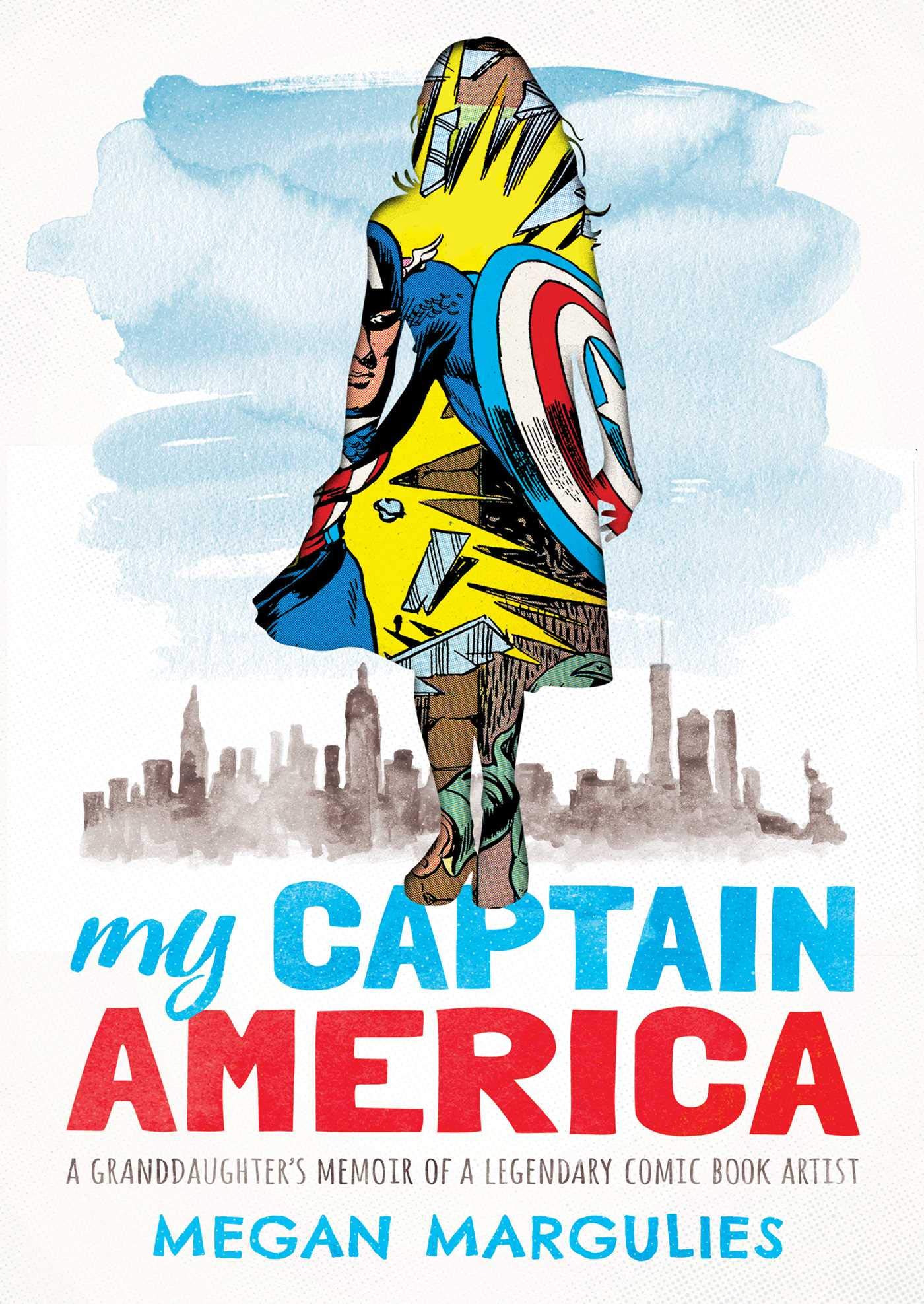
MY CAPTAIN AMERICA: A GRANDDAUGHTER'S MEMOIR OF A LEGENDARY COMIC BOOK ARTIST

In the 1990s, Megan Margulies’s Upper West Side neighborhood was filled with strife, and the small one-bedroom apartment she shared with her parents and two younger siblings was hardly a respite. Salvation arrived in the form of Megan’s spirited grandfather, whose midtown studio became a second home. His living room was dominated by the drawing table, notes, and doodles that marked him as Joe Simon the cartoonist. But for Megan, he was always Daddy Joe.

That was all it took for me to want to read My Captain America: A Granddaughter’s Memoir of a Legendary Comic Artist; it checked all the boxes of my interest – comic book history and the chance to learn more about a legend, Joe Simon. I’ll be honest in saying I can count on one hand the number of memoirs I’ve read (aside from graphic novel memoirs, I could probably use two fingers to count), because ultimately memoirs aren’t typically my thing. Megan Margulies book recounting her relationship with her grandfather, however, was a book that I thoroughly enjoyed.

Although Joe Simon, or Daddy Joe, features prominently in the book, My Captain America… is as much Margulies’ story as it is about Joe Simon.

We follow Marqulies story growing up in the upper west side of New York City in a one bedroom apartment, through the expansion of her family and her rebellious teenage years. Through it all, there’s Joe Simon He is the refuge in a tumultuous young life, the island of calm as the author’s life spirals through familial squabbles and the New York of the late 90’s.

This isn’t a historical record of everything Joe Simon did in his storied comic book career and Marqulies never presents it as such, only bringing up moments that are relevant to the events unfolding on the page. By doing this, she is able to give you an insight into who Joe Simon was, and the impact he had one those around him. Her tidbits also have the effect of being told from a very unique perspective; – and yes, there are certainly aspects of the comic legend that many will be learning about for the first time from this memoir.

You will read about the behind the scenes of Simon’s interviews, snippets of his reactions to events within comics, and even hear about his experience watching Captain America: The First Avenger.

For any fan of Captain America, this book is a must read.

Joe Simon passed away at 98 years old in December 2011. Even knowing that date is coming when reading this book, you can’t help but feel heartbroken when Marqulies peels back the layers of time. The grief we feel as readers is only a fraction of what his family felt, and I’m not ashamed to say that my eyes were more than misty reading those pages. Marqulies pulls on every heart string you have, and some you didn’t know about.

What I was expecting to be an exploration of a comic book legend from a perspective that we’ve never seen before quickly became an intimate look at the relationship between a grandfather and his granddaughter that it was an honor to share.


Purchase: BookshopAmazon (Hardcover)KindleAudiobook Audio CD


Join us next week where there will doubtless be another movie, series, comic or comic related thing discussed that is, for whatever reason, Underrated.

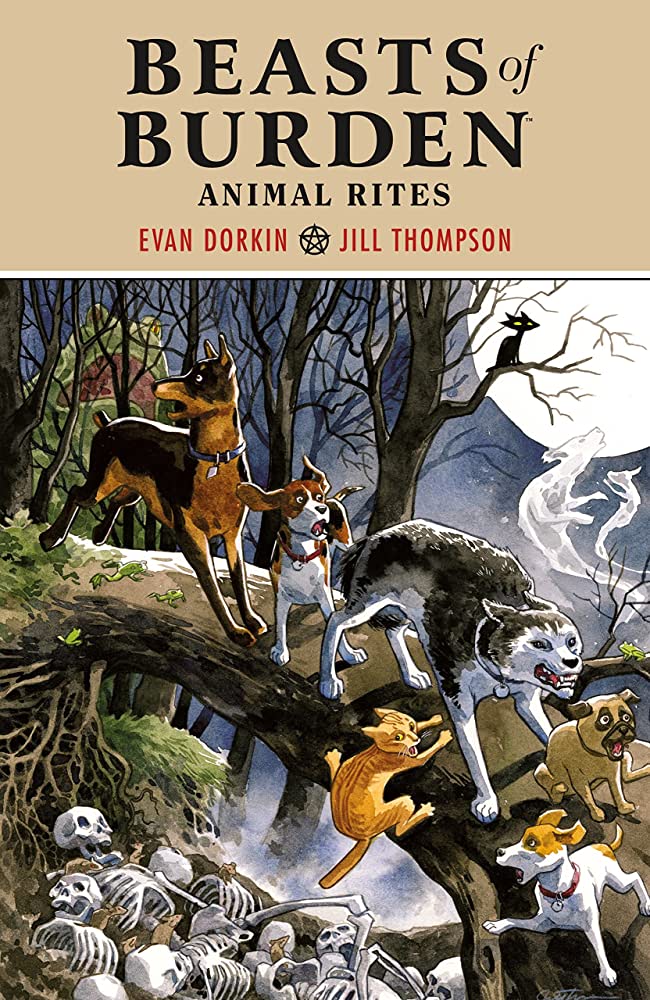
Underrated: Beasts Of Burden: Animal Rites

This is a column that focuses on something or some things from the comic book sphere of influence that may not get the credit and recognition it deserves. Whether that’s a list of comic book movies, ongoing comics, or a set of stories featuring a certain character. The columns may take the form of a bullet pointed list, or a slightly longer thinkpiece – there’s really no formula for this other than whether the things being covered are Underrated in some way. This week: the Dark Horse Comics’ hardcover collection Beasts Of Burden: Animal Rites.


Beasts Of Burden: Animal Rites

I’m willing to bet that a lot of you have never heard of this set of stories. Until recently, I hadn’t either.

A few months ago, the proprietor of my Local Comic Shop told me that I should read a hardcover graphic novel called Beasts Of Burden. It was still shrink wrapped, so I had no idea what is was about other than it featured talking cats and dogs, and that it was apparently right up my alley.  It took me almost two weeks before I finally caved and plonked down the $25 for the comic, an another week before I removed the shrink wrapped outer cover.

Upon cracking the cover and reading the small print (I like knowing what issues have been collected…) I found out that Beasts Of Burden Animal Rites collects eight stories from the series first appearance in the Dark Horse Book Of Hauntings released in 2003 to the first four issue miniseries from 2009, and tells the story of the pets of a sleepy neighbourhood called Burden Hill, and the adventures they get up to while their owners are asleep or at work. Beasts Of Burden: Animal Rites may look like it’s geared toward a younger audience based on the colourful artwork adorning the pages of the trade, but there’s a distinctly mature feel underpinning the comic as the characters deal with subjects that may surprise you.

There’s more than 150 pages of story in the graphic novel (there may be upwards on 170, but the trade is upstairs and I’m not so I can’t verify the story to bonus materials ratio so I guessed conservatively), and I read them all in a single sitting.

Up until the owner of my LCS recommended the collected edition to me, I had never seen any talk about the series anywhere before, which is a genuine shame because Beasts Of Burden: Animal Rites is a fantastic experience. Jill Thompson’s art won three Eisner awards, and it’s easy to see why she received the wins (the collected edition was also nominated for Best Anthology in 2007). Below is a sample from one of the early pages in the collected edition that will give you a feel of how good the artwork is.

bobar.jpg

You may notice the Orphan casually licking himself in the bottom left panel; it’s one of the numerous examples of the audience being reminded that these characters may be talking animals, but that they’re not just humans in animal form. Evan Dorkin infuses such personality into these domesticated little fluff bags with his writing, that by the time we get to experience the comic the resultant final product is frankly just phenomenal.

This collection is about as far from my typical comic book reading as you can get – the majority of my weekly reading is made up of spandex and capes – but there’s something refreshing about reading a collection of almost completely standalone stories featuring the same characters. There is some bleed over, and previous events do impact subsequent issues, but for the most part you could have happily read any issue of the series when initially released without reading the previous. This style gives the collection a really rewarding feeling as you go through it; you’ll notice subtleties to the art and writing that may not impact the stories hugely, but certainly add to the enjoyment of those who pick up on them.

Thematically, the stories touch on some very relatable topics, from acceptance, companionship and the need to help others, to the more supernatural side of things. Following the journey of these characters is incredibly rewarding, and at times touching, especially for those of us who have a pet at home (ironically enough my cat is sleeping on my lap as I write this). If you prefer a more typical-to-comics superhero style story, there is still something here for you; the Burden Hill gang feel very much like a classic super team where almost everyone gets along.

There’s genuinely something here for all walks of comic fandom to enjoy.

Beasts Of Burden: Animal Rites can be found for between $20-25 at your local comic store, depending on where you are (I’m in Canada and the hardcover cost me $25ish – your LCS may have discounted graphic novels).

So why did I want to spend an entire Underrated talking about Beasts Of Burden: Animal Rites? Because it’s one of the best collected editions that you’ve probably never heard of.  I do not exaggerate when I say this was one of the best hardcover collections I’ve read, and held, in my hands in a long time – both because of the content and the presentation.

And that, my friends, makes it criminally Underrated.

Underrated: The Legend Of Zelda: Ocarina Of Time Part 1

This is a column that focuses on something or some things from the comic book sphere of influence that may not get the credit and recognition it deserves. Whether that’s a list of comic book movies, ongoing comics, or a set of stories featuring a certain character. The columns may take the form of a bullet pointed list, or a slightly longer thinkpiece – there’s really no formula for this other than whether the things being covered are Underrated in some way.

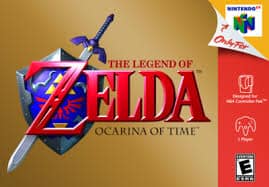
This week: the first part of the manga adaptation of Nintendo’s The Legend Of Zelda: Ocarina Of Time.


Released in 1998 on the Nintendo 64, The Legend Of Zelda: Ocarina Of Time was lauded for years as The Best Game Ever. In many ways the game remains highly revered and fondly thought of by those who played it upon its release. By the time I had finally bought an N64 in 2000, the game was often listed as the Must Have game for the console in the videogame magazines of the time (this was still when information was still largely spread through print rather than on the internet). Although I was exposed to considerably less hype for the game than I would be had the internet been around when I picked it up, there is no denying that the game had a reputation of being one of a handful of games worth buying the console for.

Amazingly, it lived up to the hype.

Despite the game having been surpassed in visual quality and scope over the decades that have followed (including by its own sequels), it remains very high on my Best Game Ever list. Mostly because of the impact it had on me and the influence it continues to have – there is a reason I prefer action RPGs over shooters – but also because it remains a very good game in its own right.

When I had the opportunity to pick up the manga adaptation of the game, I did so without a second thought. Split into two volumes published by Viz Media, and written and drawn by Akira Himekawa (a collaboration of two women A. Honda and S. Nagano), the edition I have reads from the right to left – meaning the manga is presented in its original form with English translation. I was oddly happy about that because it meant that Link remained a lefty in the story, rather than him being a right handed swordsman if the booked had been flipped to read left to right.

If you’ve played the game itself, then you’ll be more than familiar with the story – or at least the bones of it. Akira Himekawa have modified the things that wouldn’t work as well in print as they do in a game (the Great Deku Tree dungeon is much shorter here than when I played it, but the story doesn’t suffer at all for the modification), and they’ve also handled the tough challenge of giving the essentially blank slated Link a personality whilst still feeling familiar to those of us who were (are still?) slightly obsessed with the game remarkably well.

As a person who doesn’t read manga in its original form much, this is a fantastic way for me to get used to reading the pages starting on the right, because for the most part I know the story, so I don’t mind having to concentrate on where my eyes should be going – as an introduction to manga, this is as ideal for me; a story I already love about one of the games that epitomizes my childhood. The Legend Of Zelda: Ocarina Of Time Part 1 might not be everybody’s gateway, but as a comic book fan dipping their toes into the world of manga, this is a pretty underrated starting point. Because most comic book based videogame adaptations tend to be less than stellar.

Which isn’t the case with this. So if you want to start reading manga, but don’t know where to begin… maybe look for a volume that has some common ground with an interest you already have.


Join us next week when we look at something else that is, for whatever reason, Underrated.

Underrated: Wolverine: Save The Tiger

This is a column that focuses on something or some things from the comic book sphere of influence that may not get the credit and recognition it deserves. Whether that’s a list of comic book movies, ongoing comics, or a set of stories featuring a certain character. The columns may take the form of a bullet-pointed list, or a slightly longer thinkpiece – there’s really no formula for this other than whether the things being covered are Underrated in some way. This week:  Wolverine: Save The Tiger.


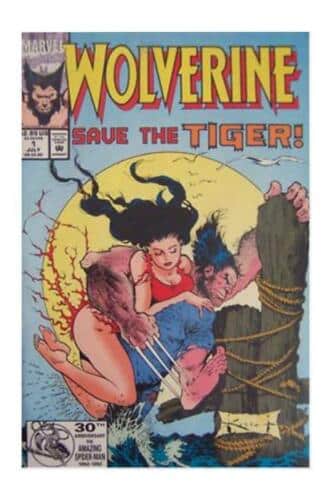
Originally printed in the first ten issues of Marvel Comics Presents from late September ’88 to early January ’99 (MCP started out as a bi-weekly anthology series), Save The Tiger tells the story of Tyger Tiger’s origin in Madripoor.

The story was written by Chris Claremont with art by John Buscema (though the image featured today is of a comic collecting just the ten parts of Save The Tiger with Sam Keith’s artwork on the cover), and leads into Wolverine’s first ongoing solo series (also by Claremont and Buscema initially). Depending on how you read it, whether it’s in the comic pictured to the right or Wolverine Epic Collection: Madripoor Nights or through Marvel Unlimited, you’re going to find a story that still holds up more than thirty years later.

Save The Tiger introduces a lot of what we now associate as standard parts of Wolverine’s life; the Princess Bar, Madripoor, and the characters who make the island a living breathing place. It’s set during the time that the X-Men are thought dead, and so you don’t see Wolverine popping his claws as often as you’d expect when engaging in brawls. It’s an added layer to the story where Claremont is writing the X-Man as avoiding using his claws in order to maintain his cover of being dead. That makes this one of the few stories I’ve read recently where events in another book actually play a larger role behind the scenes than they would otherwise. Given that this is a 30 year old story written by the same person who was also writing the main X-book at the time, it’s not surprising to me that the two books influence each other.

I’ve said it before, and I’ll happily say it again, but I’ve noticed that the older the comic the more story you get in it. That Save The Tiger is told over the course of about 80 pages (the asterisk here is that’s what the floppy book clocks in at, and I’m not sure if there’s ads in there because I read it via the Epic Collection method), but it feels so much longer than that (in a good way) because of the amount of story that Claremont packs into each issue.

Because Claremont also wrote the main X-book for a long time, you’ll find some consequences to the X-Men’s actions here that still isn’t that common today – that it’s tied to Uncanny X-Men wasn’t an issue for me, because even though I’ve long forgotten those events, Claremont still adds enough context within the comic for the reader to understand the poignancy of the moment.

I’m always a sucker for older comics from the 80’s and 90’s, so obviously I’ll be a little more biased toward this one, but Save The Tiger surprised me in how much I actually enjoyed it. It’s not a defining Wolverine story, and consequently won’t be high on the Must Read Wolverine list, but it’s one that’s well worth checking out.


Join us next week when we look at something else that is, for whatever reason, Underrated.

« Older Entries Recent Entries »