Category Archives: Underrated

Underrated: Captain Canuck: Aleph

This is a column that focuses on something or some things from the comic book sphere of influence that may not get the credit and recognition it deserves. Whether that’s a list of comic book movies, ongoing comics, or a set of stories featuring a certain character. The columns may take the form of a bullet pointed list, or a slightly longer thinkpiece – there’s really no formula for this other than whether the things being covered are Underrated in some way. This week: Captain Canuck: Aleph


CCanuckTPB1_S1-RGB_1024x1024

I picked this trade up recently, and finally got around to reading it today, and I remember wondering once I was done why I hadn’t heard about it before. Published by Chapterhouse Captain Canuck: Aleph collects the first six issues of Kalman Andrasofszky and Leonard Kirk‘s 2016 run on the character.

If you’re wondering who the character is, and what the series is about, then wonder no longer!

“Born of the True North and tested in the field of war, Tom Evans is Captain Canuck, Canada’s greatest superhero. After an encounter with an alien artifact granted him superhuman strength and speed, Captain Canuck joined the global crisis intervention agency Equilibrium to take on the greatest threats that the world has ever known.

Captain Canuck needs all his grit and strength to stand up to the machinations of the deadly Mr. Gold and his sinister minions, but his most serious challenge lies much closer to home. What dark family secrets will he discover at the mysterious Site: ALEPH?”

Although Captain Canuck has a rich history, originally debuting back in July 1975, you don’t need to be aware of any of it. Oh, it’s well worth looking up if you’re curious, but to enjoy Aleph it isn’t required reading. What you get with this book is a story about team work, family, and the steely determination of a man who looks like a superhero, and has all the characteristics of  superhero, but feels distinctly more human than superhuman. There are moments where other characters call out the traditional traits of a superhero that Captain Canuck exhibits, but only enough to make you wonder why a hero does what they do. And Canuck gives you his answer in this book; through his actions, not his words.

I paid $10 for this, and it was worth every penny.


Join us next week when we look at something else that is, for whatever reason, Underrated.
Underrated: Marvel Epic Collections

This is a column that focuses on something or some things from the comic book sphere of influence that may not get the credit and recognition it deserves. Whether that’s a list of comic book movies, ongoing comics, or a set of stories featuring a certain character. The columns may take the form of a bullet pointed list, or a slightly longer thinkpiece – there’s really no formula for this other than whether the things being covered are Underrated in some way. This week: Marvel Epic Collections.


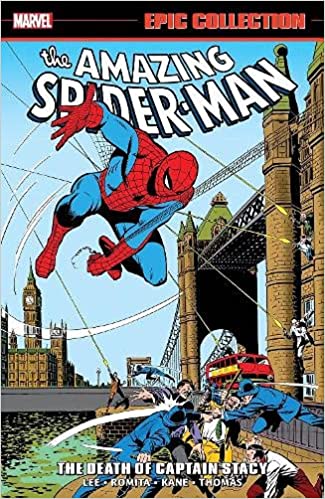
Marvel Epic Collections

I noticed that my reading habits changed a little during the pandemic; rather than individual issues, I was drawn toward complete stories that were typically collected in some form of trade paperback or graphic novel. I say typically because my comic shop began selling sets of various kinds (full runs, miniseries, etc.) and I have picked up a few of those over the last year or two. But more often than not I’ve been reading tpbs. Over the past couple of months I’ve been reading Marvel’s Epic Collections – a series of books with between 3-500 pages that will focus on a particular series told in chronological order. There’s a chance that you may get more than the main series included if there’s a crossover story, but never more than the issues that pertain to the story.

My interest in these was piqued because I found the first volume of Wolverine’s Epic Collection that contained the early issues of Wolverine and around ten parts of a story from Marvel Comics Presents featuring the clawed mutant as the story led directly into the solo series. I didn’t have those issues of MCP, and reading the single issues of the main series in trade was far more convenient than digging out the individual issues. Yes, I paid for convenience, no I am not ashamed. But it did get me looking at other characters, teams and series that were featured in the Epic Collections. Spider-Man, Moonknight and Daredevil all now sit on my shelf (some in the “to read” category), and while they’re solid books, the opportunity they afford a person to be able to read comics from fifty, sixty years ago is fantastic.

I’d never be able to read a bulk amount of early Amazing Spider-Man comics in full colour, in print, unless I had a ton of disposable income or was lucky in finding a great deal, or had picked up an omnibus or two. Yes, there are doubtless trades featuring the odd collected story, Marvel Masterworks, for example, and there have been reprint mags in the UK (but those issues are long out of print), but the volume of the comics in the Epic Collection combined with the retail price makes them the best value for money out there.

Interestingly, because the Epic Collections focus more on collecting stories that either haven’t been published in trade form before they’re not published sequentially. So while the first eight volumes of The Amazing Spider-Man have been released, volumes nine through 14 have yet to have even been given a release date. While this can prove irritating for those looking to read a series in full from start to finish, for me it’s a relief because I’m able to get a complete story with each Epic Collection (minus the odd loose end because the books are collecting full runs for the most part).

There are Epic volumes with more than just the named series, though; Wolverine Volume 13 has nine issues plus an annual of Wolverine, but also the six issue Origin miniseries. I’m sure that this isn’t unique, and that other volumes will feature odds and ends apart from the main series, but for the most part in my (limited) experience the volumes focus on the named series plus crossovers more often than not.

I had thought of buying a Marvel Unlimited subscription to read these early Spider-Man comics, and while that would likely have been cheaper initially, eventually I’d have cancelled it and been unable to read the comics. Plus I tend to prefer print over digital for reading comics, books and graphic novels. Now, excuse me while I crack open the next volume in my pile.


In the meantime, Underrated will return to highlight more comic book related stuff  that either gets ignored despite it’s high quality, or maybe isn’t quite as bad as we tend to think it is.

Underrated: X-O Manowar: Birth

This is a column that focuses on something or some things from the comic book sphere of influence that may not get the credit and recognition it deserves. Whether that’s a list of comic book movies, ongoing comics, or a set of stories featuring a certain character. The columns may take the form of a bullet pointed list, or a slightly longer thinkpiece – there’s really no formula for this other than whether the things being covered are Underrated in some way. This week: X-O Manowar: Birth


The Vine are replaced with the Spider-Aliens, although aside from the name there is little that distinguishes them from the first few comics in the 2012 run. Where as the Vine become one of the more interesting and complex plot points in the VEI stories, the Spider-Aliens show little of the same qualities at this point (yes, there are signs that there is more to the Vine within the first three issues of the VEI run), but then that really just makes it easier to enjoy the battle carnage as Aric tears his way through the soldiers and corporate representatives of the Spider-Aliens.

Although you can enjoy the book without any prior knowledge, for a Valiant fan of the old or new school (or both) this beautifully presented book is a must read. And most of us will seek the story out if we can, but for those not entrenched in Valiant lore, this standalone story here represents an Underrated gem from comics history.


Join us next week when we look at something else that is, for whatever reason, Underrated.

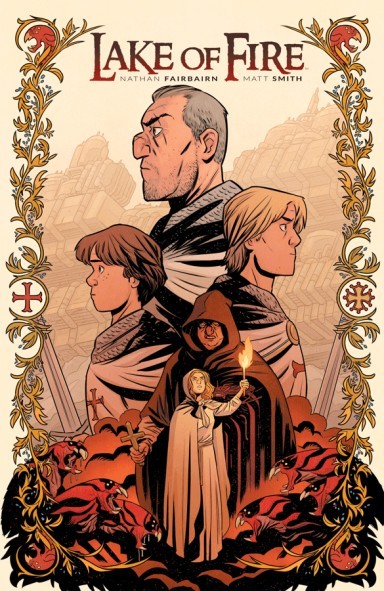
Underrated: Lake Of Fire

This is a column that focuses on something or some things from the comic book sphere of influence that may not get the credit and recognition it deserves. Whether that’s a list of comic book movies, ongoing comics, or a set of stories featuring a certain character. The columns may take the form of a bullet pointed list, or a slightly longer thinkpiece – there’s really no formula for this other than whether the things being covered are Underrated in some way. This week: Lake Of Fire


Lake of Fire

It is 1220 AD, and the gears of the Albigensian Crusade grind on. When an alien spacecraft infested with a horde of bloodthirsty predators crash-lands in the remote wilderness of the French Pyrenees, a small band of crusaders and a Cathar heretic are all that stand between God’s Kingdom and Hell on Earth.

When the owner of my LCS not so subtly recommended this to me by putting it in my pull box, I figured that she’s never steered me wrong yet, so why not give it a go? A few hours ago I opened the cover to the five issue collection, unsure of what I’d be getting beyond the notion that it was essentially aliens verses knights, and I didn’t stop reading until the story was done.

I devoured the entire tpb in one sitting and immediately wondered why I hadn’t read about this somewhere before. Why had nobody told me about this before the owner of my LCS told me to read it?

Published by Image, Lake Of Fire was written, coloured and lettered by Nathan Fairbairn with art by Matt Smith (no, not the guy who played Doctor Who), the comic does have a fairly straight forward knights verses aliens feel to it – not that that is a bad thing as it allows the characters, action and art to really pop.

Yes, there are the fairly standard typical characters within the story, but while Fairbairn does tread familiar ground with the characters, the major players all feel as though they have a weight about them. You have the grizzled old warrior, the naive young knights and the dark priest all present and accounted for, and yes they are popular fantasy archetypes, but they’re well written archetypes which goes a long way in my book. I’d rather a well written archetype than a shallow character for the sake of originality.

That being said, rather than having the characters face off against a supernatural threat Fairbairn instead pits them against a horde of alien predators. I’ve always been partial to seeing how our ancestors would fair against an extraterrestrial threat, and the collected edition of Lake Of Fire scratches that itch remarkably well.

Matt Smith‘s art couldn’t be better suited to the past-meets-future story; the action sequences are easy to follow and once the comic reaches the midpoint the atmospheric art really amps up the threatening feel of the story itself in a case where Fairbairn’s colouring melds so well with Smith’s line art that it’s hard to believe that two people were involved in creating the visuals for the story.

It may seem as if I’m being a little harsh on the story for being relatively straight forward, and that’s not my intent. Lake Of Fire is a fairly easy tale to follow from start to finish, but there are a more layers to the characters than you’d initially expect from the story – such as the relationships between some of the characters – and there’s an underlying theme about acceptance and tolerance in a time when neither of these were encouraged or widely practiced.

As far as recommendations from my LCS go, this is one of the more surprising ones; I didn’t expect much more out of this story than to be able to just pop my feet up with a cup of tea and just relax with a half the story before moving on to something else. Instead I ended up finishing the entire trade in one go and immediately start writing this column. Lake Of Fire is a really enjoyable story that surpasses a lot of the comics currently on the racks – and it’s also entirely self contained.

There are a lot of reasons why I wanted to spotlight the comic this week, but chief among them is that I haven’t heard anything about it anywhere – and that’s why it’s Underrated.


That’s all for this week folks. Join us next week when we talk about something else that falls under the Underrated banner in the comic book world.

Underrated: Scarlet Spider (2012)

Scarlet Spider has always been one of my favourite Spier-Man sub characters, and even more so when his former enemy (and clone) Kaine took up the mantle. However unwillingly. I recently reread the series, and so, as you can see, wanted to revisit an old column.

The series more than holds up.


This is a column that focuses on something or some things from the comic book sphere of influence that may not get the credit and recognition it deserves. Whether that’s a list of comic book movies, ongoing comics, or a set of stories featuring a certain character. The columns may take the form of a bullet pointed list, or a slightly longer thinkpiece – there’s really no formula for this other than whether the things being covered are Underrated in some way. This week: The 2012 Scarlet Spider run.


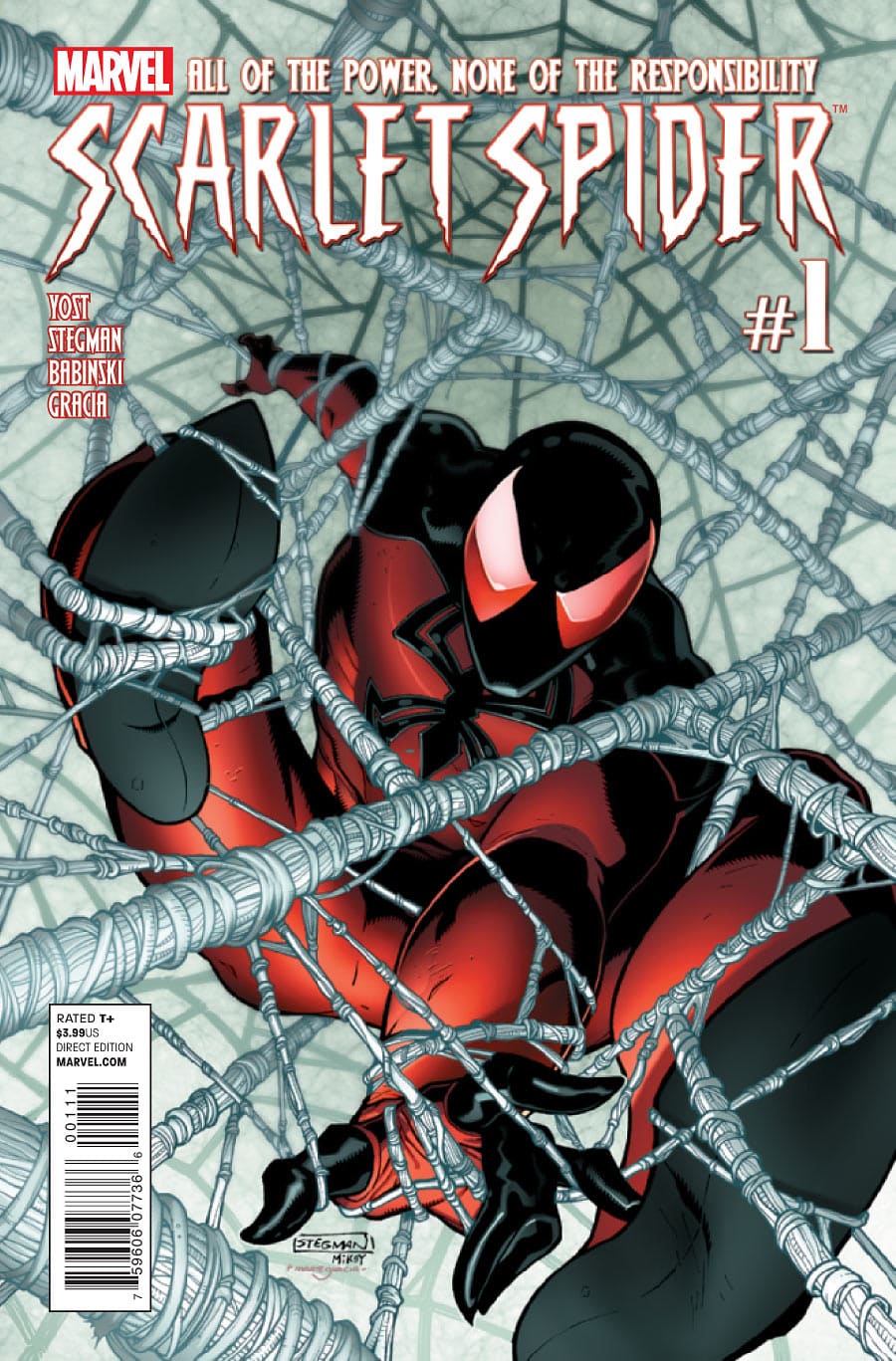
Scarlet_Spider_Vol_2_1

I have always enjoyed stories about villains becoming heroes, struggling to atone for or come to terms with their actions; I’m a sucker for a good redemption story, I’ll admit. There’s something about somebody striving to earn forgiveness when surrounded by people who don’t believe in them I’ve always enjoyed.

With 2012’s Scarlet Spider we get almost the exact opposite of that. A man who just wants to disappear surrounded by those who inexplicably believe in him.

I originally added this to my pull list with its first issue way back in 2012, I had assumed that the Scarlet Spider in question was Ben Reilly in a new costume, and not Kaine. I’m sure had I been reading the Spider-Man comics at the time I’d have known better, but I figured this was a good place to jump on board – and I wasn’t wrong in that sense, but I was wrong about who was wearing the costume. So I settled in to enjoy a story about Spider-Man’s clone, and as I hoped I ended up loving the series.

But not for the reasons I expected. Instead of a heroic story featuring Ben Reilly, Scarlet Spider delivered something I wasn’t expecting – and ended up loving more than I thought I would given my initial expectations of who I was going to be reading about.

The story starts with Kaine trying to get to Mexico, having recently been cured of the cellular degeneration he was suffering as a clone (it’s a whole thing that’s explained in multiple stories and other resources), he’s seeking a chance to finally live his life free of the constant agony he used to suffer. But, as with any good story featuring a Spider, things inevitably get in the way of that and Kaine gets stuck in Houston, quickly becoming the city’s own resident super hero. The series was written by Chistopher Yost, who was joined by a variety of hugely talented pencillers, inkers and colourists throughout the series 25 issue run (there were also  couple of specials and tie-in issues that bulk up the issue count if you want the whole story).

The full run remains one of my favourite Spider stories, in part because of the redemptive nature, but also because it’s just really good. But like all series that features a lesser known character it was cancelled because of low sales – though Kaine still pops up as the Scarlet Spider from time to time, and I will always try to grab those issues as and when I can. Scarlet Spider is a brilliant alternate to Spider-Man as we see a hero with, as the tag line so eloquently puts it, “all of the power, and none of the responsibility.” But Kaine is still a Parker, and as he begrudgingly accepts the responsibility of being the Scarlet Spider, we get to see a villain slowly change into (well, almost) a hero. However reluctantly.

This is a fantastic run, easily one of my favourite parts of my collection, but it’s one I don’t see getting the love it deserves – that’s why the book is Underrated.


Join us next week when we look at something else that is, for whatever reason, Underrated.
Underrated: The Bill Schelly Reader

This is a column that focuses on something or some things from the comic book sphere of influence that may not get the credit and recognition it deserves. Whether that’s a list of comic book movies, ongoing comics, or a set of stories featuring a certain character. The columns may take the form of a bullet-pointed list, or a slightly longer thinkpiece – there’s really no formula for this other than whether the things being covered are Underrated in some way. This week: The Bill Schelly Reader.


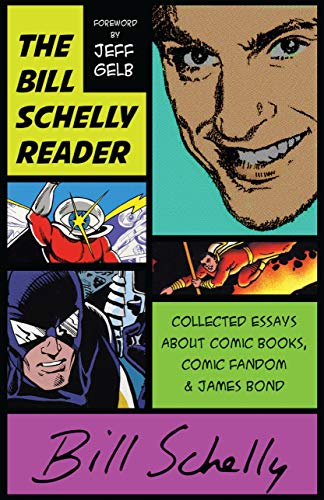
I’ve never been shy about my interest in comic book history, and it was when I was searching for some new books to scratch the itch, I came across The Bill Schelly Reader, a book by Bill Schelly that collects some of his finest prose work on the early history of comics and fandom.

Borrowing the text from the back of the book, because that’ll give you a better synopsis than anything I’ll write:

Bill Schelly has been writing about comics and fandom since 1965. In over 50 years one can do a lot of writing, and The Bill Schelly Reader includes some of the author’s best work on subjects ranging from the golden age of comic fandom to James Bond.

Schelly takes us back to the very beginnings of comic fandom with such articles as:

  • “Batmania”: a short history of the early 1960s fanzine (the first fanzine Bill Schelly ever read) credited for a resurgence of interest in Batman comics during a time of dwindling sales
  • “The First Comicons”: a retrospective on the first conventions organized by comics fans, from the Alley Tally Party to larger events in major cities like New York and Chicago
  • “It Started on Yancy Street”: an issue-by-issue look at the first fanzine devoted entirely to Marvel Comics, and why an unwelcome decision by Marvel led to its demise

In addition, book includes articles about the Silver Age Batman, Hawkman by Joe Kubert, the James Bond books by Ian Fleming, and an interview with the author. With dozens of vintage photos and images!

I’d never knowingly read one of Schelly’s essays before, though that’s mostly because I never got much of an opportunity to read Alter Ego where a lot of his essays were published. Over the course of The Bill Schelly Reader, Schelly dives into the early stages of comic fandom in the 1960’s, exploring the emergence of fanzines and the very first conventions. His essays are deep and incredibly interesting for those of us who want to learn more. A lot of the information that Schelly presents, while by no means the definitive history, paints enough of a picture so that you grasp what those days were like for fans. Remember this was long before any websites or even widely published magazine like Wizard, and so fanzines often had circulation numbers running at less than a thousand issues – and were put together by folks who also had other jobs (not unlike a lot of comics websites, but we don’t need to worry about publishing, printing and distribution of our content).

The essays run an average of ten pages or so each with a lot of additional images that add flavour to the text, and it’s amazing how much info Schelly crams into each one. There’s the odd moment where I found my interest waning, but for the most part the book held my attention from cover to cover (though I’d only read an essay or two a night).

If you’re at all curious about the early days of comic fandom, then I’d highly suggest you take a look at this book. Schelly’s literary work often goes out of print (well, as far as I know from my fifteen minutes of research, anyway), and then inevitably the prices spike. Grab this one if you’re at all interested.


Join us next week when we look at something else that is, for whatever reason, Underrated.
Underrated: The Wrong Earth

This is a column that focuses on something or some things from the comic book sphere of influence that may not get the credit and recognition it deserves. Whether that’s a list of comic book movies, ongoing comics, or a set of stories featuring a certain character. The columns may take the form of a bullet pointed list, or a slightly longer thinkpiece – there’s really no formula for this other than whether the things being covered are Underrated in some way. This week: The Wrong Earth


The Wrong Earth

I initially stumbled over The Wrong Earth because the first issue of the second volume caught my eye. I enjoyed it, a lot, and decided to circle back and order the trade of the first volume.

What’s the book about? Well because I don’t see the need to rewrite the publisher’s blurb for the trade, I’ll paste it below.

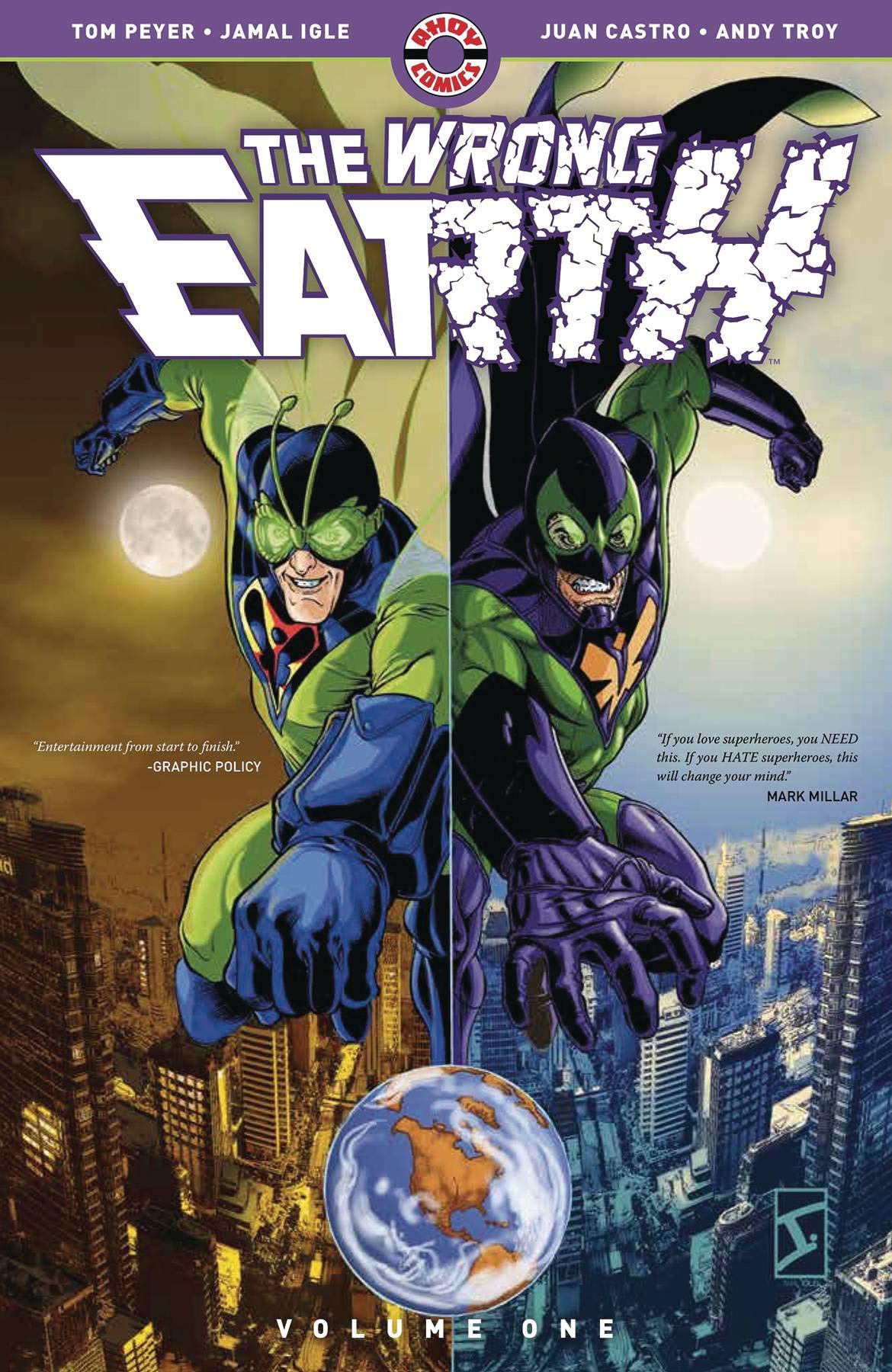
“On dark, gritty Earth-Omega, masked vigilante Dragonfly punishes evil maniacs and evades corrupt authorities. On sun-splashed Earth-Alpha, costumed crook-catcher Dragonflyman upholds the letter of the law. Now they’re trapped on each other’s worlds, where even the good guys don’t share their values!”

If the idea of the Silver Age Batman or the Adam West Batman and Frank Miller’s Dark Knight switching places sounds awesome, to you, well, that’s because it is. But it’s also so much more than just that elevator pitch.

Written by Tom Peyer, featuring art by Jamal Igle, with inks and colours provided by Juan Castro and Andy Troy respectively. Rounding out the creative team is letterer Rob Steen, who’s contributions to the comic are often subtle until you catch the sound effects giving you a nostalgic smile. Wrong Earth is the six issue miniseries that launched publisher Ahoy Comics, who some of you may recognise from comics such as Captain Ginger, Second Coming and Penultiman – but we’re not looking at those today. No, this column is about a book that hooked me from the premise, and then surprised me with just how well executed everything was.

A lot of superhero stories that can be seen to take inspiration from others (in the case, Batman), often struggle to tell a compelling story and also stand apart as anything other than a lesser imitation when all is said and done. Wrong Earth leans into the familiarity of the Silver Age with gleeful abandon; Peyer adds a little more realism to the era without sacrificing any of its fun – but he certainly calls out the foolishness of it all as you see the gritty Dragonfly loses his mind at how innocent the world of Earth: Alpha. Conversely, the reader is commiserating with Dragonfly Man as he realizes that Earth: Omega’s world is a living nightmare – and yet you can’t help but laugh as his Silver Age tricks inexplicably work in the modern era. There’s nothing quite like the sense of familiarity as he explains how he escaped a death trap with his cunning, logic, and a little bit of comics magic.

It shouldn’t work, but it does. It REALLY does.

When it comes to The Wrong Earth, I think I’ve found one of my favourite new stories. It is equal parts the charm of the Silver Age and the gritty sensibilities of modern comics, and yet it works in delivering one of the most entertaining stories from start to finish in this volume. In addition, there’s also five back up stories within the trade that enhance and build out the mythology of (the) Dragonfly/man’s world, which are all utterly fantastic.

I’ve only really scratched the surface with this book, because a lot of it you’ll benefit from going in as blind as you can – it’s fun, really fun, and an engrossing read that swooped below far too many radars. Go find this underrated gem at your favourite retailer now.


Unless the comics industry ceases to exist this week, Underrated will return next week.

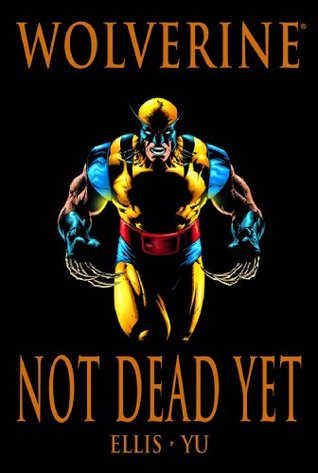
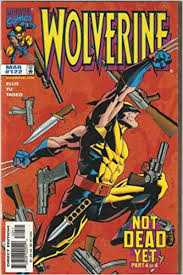
Underrated: Wolverine: Not Dead Yet

This is a column that focuses on something or some things from the comic book sphere of influence that may not get the credit and recognition it deserves. Whether that’s a list of comic book movies, ongoing comics, or a set of stories featuring a certain character. The columns may take the form of a bullet pointed list, or a slightly longer thinkpiece – there’s really no formula for this other than whether the things being covered are Underrated in some way. This week: Wolverine: Not Dead Yet


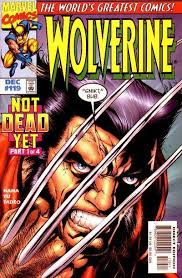
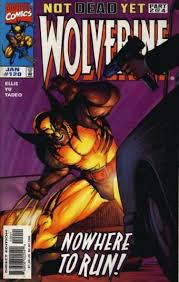
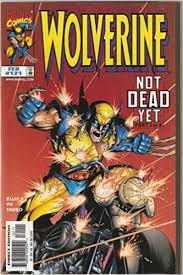
With a new Wolverine series have started last month, I wanted to take a look back at one of the very first Wolverine story arcs I read that wasn’t reprinted from older comics. I didn’t know it at the time, but Not Dead Yet was written by Warren Ellis and drawn by Lenil Francis Yu. When I first read this story, I wasn’t as concerned with knowing who had written it because I didn’t follow creators at the time, only the characters. Only Wolverine and the X-Men.

Originally published in Wolverine v. 2 #119-122 back in the late 90’s, the story was both my first introduction to American comic books and how they were laid out with the advertisements, the page sizes, the recap pages and the preview page with Stan’s Bulletin Box. It really was a transformative experience in how I experienced my comic books at the time as I went from the UK reprint magazines to the real thing. They were unlike anything I could get my hands on at the time; the reprint mags contained three issues, were slightly smaller, and had only minimal personality to them that wasn’t in the original comics. The other comics I was reading at the time were all weekly anthology magazines too – there wasn’t a dedicated 30 odd pages to a single comic and all the little extras that go with it. Looking back on those single issues now, I feel that we’ve lost something along the way as technology has progressed and the need for previews in comics has decreased – but that could just be the nostalgia talking.

This is quite possibly one of my favourite Wolverine stories that I’ve ever read. It’s certainly the one I will always point readers to if given half a chance. The story takes place during the time Wolverine had no adamantium in his body, it is told both in the present and the past by use of flashbacks that serves to emphasize the relationship between the ol’ Canuckle head and a Scottish assassin called McLeish who eventually sets his sights on our favourite mutant. Wolverine is being hunted by one of the best, a man who has planned for years to be able to take down the nearly unkillable Canadian mutant with adamantium bones, but what he doesn’t know is that Wolverine’s bones are no longer coated with the metal, and Logan is suddenly much more vulnerable than he used to be.  I keep coming back to this story every few years, and I have mentioned it several times on my blog, too.  It’s available in trade paperback format, and I highly suggest you pick it up.

I mentioned earlier how I didn’t realize who the creative team was when I read this story more than twenty years ago. In all honestly, it was for another 40 issues of Wolverine when Frank Tieri and Sean Chen started writing the book. So it was years later that I finally realized that Warren Ellis wrote the book, and I remember being somewhat surprised. I’d read and enjoyed a lot of his stuff over the years, but never realised that one of my favourite stories was penned by him.

Wolverine: Not Dead Yet has a timelessness to it that’s only betrayed by the amount of payphones and the style of cars and the odd fashion choice if you’ve a keen eye for those things. This is a tale that focuses less on Wolverine being a superhero and instead takes him back to the shadowy underworld of his past in a much more grounded setting. There’s no spandex in sight, and consequently the story has more of an immediacy to it. This was a time when Wolverine would frequently get his fightin’ togs on when he had a chance, and in Not Dead Yet he doesn’t have that chance.

When it comes to classic Wolverine stories, Not Dead Yet is seldom counted on the list, and one could ask if I would hold it in such high esteem had I not read it at such a formative time in my life. The answer is an easy yes; I read a lot of stories around that time, but none have stayed with me the same way Not Dead Yet has. The story still holds up to this day, and is honestly one of the most common places I’ll start with when going through the back issues of Wolverine in my comic boxes. That‘s why I wanted to focus on this as an Underrated gem this week.


That’s all we have for this week, folks. Come back next time  when there’s something else Underrated to talk about.

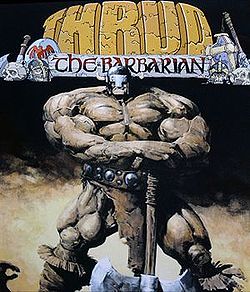
Underrated: Thrud the Barbarian

This column is a rerun from late 2018. Enjoy!

This is a column that focuses on something or some things from the comic book sphere of influence that may not get the credit and recognition it deserves. Whether that’s a list of comic book movies, ongoing comics, or a set of stories featuring a certain character. The columns may take the form of a bullet pointed list, or a slightly longer thinkpiece – there’s really no formula for this other than whether the things being covered are Underrated in some way. This week:  Thrud the Barbarian


Another week, and yet another case of “Alex bought something for Underrated without knowing anything about it beforehand,” or it would be had Alex not received Carl Critchlow‘s Thrud the Barbarian  a few years  ago from the now defunct Comic Bento. Published by Titan Comics, the trade paperback collects the original Thrud the Barbarian five issue miniseries, as well as a couple of single page shorts from White Dwarf magazine, and was originally published in 2013. If you missed this when it first came out, don’t be surprised – I’m not sure it was ever released on a large scale outside Britain.

Thrud the Barbarian is what I’d consider a quintessentially British comic; it blends in equal parts the violence , chaos and destruction that one would expect from a Conan parody with the silliness and tongue in cheek humour that wouldn’t feel out of place in a Monty Python skit. But with a lot more smashed heads and limbs flying free of bodies. The Titan Comics collection consists of five stories that can be read independently of each other (seven if you’re counting the bonus strips), or in one go – which is what I did when rereading it recently.

Honestly, I reread it because I was reorganizing my bookcase and saw the cover again and wanted something fun, easy and not too deep or involved to read. Thrud was certainly that, and I loved every irreverent thought, every stunningly painted cover, and the computer coloured artwork. It was exactly the kind of book that I needed to read after a busy week, a book that I am glad I own, and one I am even happier that I noticed on the shelf.

Thrud2

As a fan of heroic fantasy books, I loved Critchlow’s send up of the genre; the visualization and sight gags and some brilliant punchlines across all the stories in in the collection. I loved every aspect of this book; the sound effects, the dumb-as-a-post hero just wants his beer and the cartoon-like hyper violence that ties it all together in such a lovely package.

Without a doubt this is one of my favourite books I’ve ever written about for this column, even if I did forget I owned it for a little while.

And yet, had it not been for the Bento box, I would never have heard of this book. Which is easily one of the best aspects of the online blind box subscription thingies – the introduction to new and exciting books and comics you otherwise would never have been exposed to. Consequently, this is a book I don’t see getting the love it deserves – that’s why the book is Underrated.


Join us next week when we look at something else that is, for whatever reason, Underrated.
Underrated: X-Cutioner’s Song

The cover of the trade I don’t own.

This is a column that focuses on something or some things from the comic book sphere of influence that may not get the credit and recognition it deserves. Whether that’s a list of comic book movies, ongoing comics, or a set of stories featuring a certain character. The columns may take the form of a bullet pointed list, or a slightly longer thinkpiece – there’s really no formula for this other than whether the things being covered are Underrated in some way.

This week: the multi-part crossover event X-Cutioner’s Song.


The first chapter of X-Cutioner’s Song was published in November 1992 in Uncanny X-Men #294, with subsequent eleven parts coming in issues of X-Factor, X-Men, X-Force and Uncanny X-Men. With the series being billed as revealing the origin of Cable (it didn’t – that came in 1994), there was significant hype and buzz around the comics when they were hitting the shelves nearly thirty years ago, but because I wasn’t into comics at the time, I never heard any of it.

Instead, I noticed a cover when restocking the boxes at my LCS and decided to pick up the arc after the shop owner gave it a quick recommendation. Fortunately, we had a full set (or seven) in stock, so I grabbed the individual issues rather than hunting down a collected edition (partly because I am also building an X-Men and Uncanny X-Men collection, but also because I wanted to read it as it was originally presented in comic form. Complete with the polybags still sealed for some off the comics (I won’t lie, I was tempted to leave them sealed, but at only a couple bucks a comic it didn’t seem worth it.

Plus, I wanted the feeling of cracking those bags and getting to be the first person reading these comics.

I forget sometimes how much dialogue and text there used to be on pages in comics.

Without question, comics from this era were technically published before I started buying single issues, but that doesn’t mean that these issues didn’t kickstart a sense of nostalgia for the old UK reprint magazines that I first came across this arc in. The first issue felt oddly familiar, but beyond that…? It was pure 90’s joy.

After all, 90’s comics aren’t bad. There’s just a huge number of them in longboxes across the country because so many were printed. That just makes them worth less than the comics from the 70’s and 80’s, but it doesn’t mean they’re not worth reading.

“If mankind waited for the ‘right time’ to address the winds of change it’s unlikely we’d ever have crawled from the primordial ooze.”

Scott Lobdell, Uncanny X-Men #294

I don’t know if I had forgotten about the amount of times characters within X-Men comics in the 90’s spouted pearls of wisdom, but I was less than halfway through this first part of X-Cutioners Song and I already had enough one liners to make me sound like I a semi professional couch philosopher thanks entirely to the less than subtle messaging. Messaging that seems just as relevant today as it ever did (and I’m sure we’d all hoped that would be different).

The main plot of X-Cutioner’s Song isn’t fully revealed in the first issue, but there is more than enough information here to reel you in hook line and sinker. The crossover cost me less than $20 to put together, and it was worth every penny to do so – not only because of the nostalgia factor, but primarily because this is a damn good story that holds up today (even the funky fashion choices for the street clothes the X-Men wear don’t detract too much).

With any story crossing over four series, the creative team is, as expected, pretty hefty. There are names that at the time were relatively new faces to the X-Men, but now… well now we consider them as creators who have made significant contributions to the comicsphere, frequently drawing large crowds at conventions;

  • Writers: Scott Lobdell, Fabian Nicieza and Peter David.
  • Pencillers: Brandon Peterson, Andy Kubert, Jae Lee and Greg Capullo
  • Inkers: Terry Austin, Mark Pennington, Al Milgrom and Harry Candelario
  • Colorists: Mike Thomas, Marie Javins, Glynis Oliver, Joe Rosas and Steve Buccellato.

But despite the big names, the characters and import associated with the story, it’s an arc that can easily get overlooked when when you’re looking in the longboxes because the story came in the early 90’s, before the big bust in the comics market. Despite having heard a little about it over the years, largely through comments in UK reprints, I had never actually read the book before. Something I was more than happy to do with a story that is far more Underrated than I ever expected.


Join us next week when we look at something else that is, for whatever reason, Underrated.
« Older Entries Recent Entries »