Category Archives: Underrated

Underrated: Black Beetle: No Way Out

This is a column that focuses on something or some things from the comic book sphere of influence that may not get the credit and recognition it deserves. Whether that’s a list of comic book movies, ongoing comics, or a set of stories featuring a certain character. The columns may take the form of a bullet-pointed list, or a slightly longer thinkpiece – there’s really no formula for this other than whether the things being covered are Underrated in some way. This week:  Black Beetle: No Way Out

The Black Beetle: No Way Out

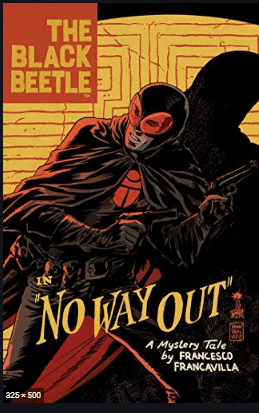
Another week, and yet another case of “Alex bought something for Underrated without knowing anything about it beforehand.” This week we’re looking at the first volume of Francisco Francavilla‘s Black Beetle: No Way Outanother book that I found at a thrift store for an absolute bargain price. Actually, bargain is understating things. I paid $1 for this book (technically $1.25, but at but 4 get 1 free it works out to a dollar). Which is an absolute steal of a deal for a hardcover trade.

Black Beetle: No Way Out is published by  Dark Horse, written and drawn by Francavilla, and takes the form of a modern reinterpretation of the old pulp novels of the 30’s and 40’s, with all the semi futuristic-steampunk technology and sleek lines that includes.

This throwback feeling permeates the entire graphic novel, genuinely allowing it to read as a pulp novel from a bygone era – but one with the tonal sensitivities of today. It’s within this area that Francavilla tells the story of a vigilante who is equal parts the Shadow, the Spider and the Black Bat – and though comparisons to Batman will be made, the only similarity there is that Batman is more prevalent in the cultural awareness of our medium than the other three characters previously mentioned. I’m not saying the comparisons are unfair, but that the similarities are more in line with the characters Batman took inspiration from rather than Bruce Wayne himself.

The story, then, that is told within No Way Out is very reflective of those pulp novels, especially the original covers that are used as story breaks between the individual issues. Francavilla’s artistic approach is very evocative of the art styles of the time – simple colours, thick lines and a sense of foreboding. With Francavilla handling both the writing and the art duties in the book, we’re given a tour-de-force of a creative offering as he delivers an incredible experience.

And that, ultimately, is why I loved this book so much. It’s an incredibly fun pulp story, a classic hero romp with a hero who in’t shy about using his guns. Of course that does leave a little room for folks to be concerned about a lack of substance in the plot, but I think for the most part that is a concern that can be put aside by the artistic offering.

This is a book that’s absolutely worth a read.

Yes, I only paid $1 for it, and yes, I only bought it because it was in a thrit store, but I am so glad that I did. Black Beetle: No Way Out is easily the best thing I have read all week – including the four other books I picked up – and I am frankly astounded that I had never read this before. I’m equally as astounded that I’d never even heard of the book before.  Consequently, this is a book I don’t see getting the love it deserves – that’s why the book is Underrated.


Join us next week when we look at something else that is, for whatever reason, Underrated.

Underrated: Batman: Blink

This is a column that focuses on something or some things from the comic book sphere of influence that may not get the credit and recognition it deserves. Whether that’s a list of comic book movies, ongoing comics, or a set of stories featuring a certain character. The columns may take the form of a bullet pointed list, or a slightly longer thinkpiece – there’s really no formula for this other than whether the things being covered are Underrated in some way.

This week: Batman: Blink


When you think of great Batman comics, stories like Hush, The Long Halloween and Court of Owls come to mind fairly quickly for most of us, and depending on what the person giving you recommendations has read you may also see The Dark Knight Returns, War Games, Knightfall, Bruce Wayne; Murderer and No Man’s Land pop up at various points in the conversation, too. All of which are fantastic choices and well worth reading – indeed, all of those tend to be pretty high on my own recommendation list when talking to customers at the comic shop. But what happens when you’ve read all the main stuff? Well, that’s where something like Batman: Blink comes into play.

This trade collects two stories, Blink and Don’t Blink about a blind man who can see through the eyes of anyone he touches. The first story has him helping Batman track down a killer, and the second explores what happens when the government finds out he can do these things.

Originally presented in Legends of the Dark Knight 156-158 and 164-167, the story is set during the early days of Batman’s career – there’s no specific year, but judging by the framing device of the story being read from Batman’s journal and the Dark Knight’s confidence and lack of technology I’d put it within the second or third year (at latest) which means that we’re seeing a Batman stripped of a lot of what we’re used to seeing of late. There’s a lot more detective work in this story, with writer Dwayne McDuffie allowing the process to be shown on panel rather than as a one off comment or so.

This is Batman as he was before he became the caricature of himself where he could easily defeat Galactus with enough prep time (yeah, I know, different universe, but I’m making a point with extremes), where he’s more a man than a god. You see him get hit by chairs, make mistakes and still push through regardless. This Batman is fallible, and the stakes seem higher because of it in a way that Batman verses a giant monster doesn’t; it’s the human touch, the smaller scale of the threat and the consequences of failure. Plus, the way McDuffie frames the story through Batman’s journal also allows the perspective of an older Batman critiquing his earlier self which adds in both a sense of foreboding and the odd wryly funny line. I also want to highlight the choices of letterer Kurt Hathaway here because the font choice he went with is brilliant; one can easily read the cursive handwriting whilst understanding exactly what it is you’re seeing. Cursive can be tough to penetrate for some folks at times (and I am one of them despite my own writing being hard to read), and when there’s no impediment to the story because of the narration and stylistic choice then you can’t help but become immersed in the narrative.

As you cans see above, the art has a very moody feel to it, with the colours trending toward the blues, greys and other muted hues for the majority of the book – which only serves to make the brightness that much more striking. The story was penciled by Val Semeiks with inks by Dan Green and colours by James Sinclair, and despite the first issue in the book being published almost twenty years ago, the art still has that fresh and vibrant feel. Yes, there’s a sense of classic comics art to the pages, but given the flashback nature of the story, it works in a very meta way as your own sense of “back in the day” creeps into your perspective when reading this trade.

Granted that might just be my old man eyes and memories, and younger readers may not have the same experience (not kids, but folks who haven’t been reading comics since the 90’s; y’all likely won’t have the same perspective, and that’s okay – it’s not a deal breaker for this story).

The main reason I bring up this trade is because until I saw it on the shelf for the price of a single issue, I’d never heard about the story. While it won’t make it into my Must Read section of Batman recommendations, it’s going to be closer to the top of the “oh, this ones really good, too” section. It’s an underrated story, and one that can be easily overlooked when on a shelf among the other great Batman stories.


Join us next week when we look at something else that is, for whatever reason, Underrated.

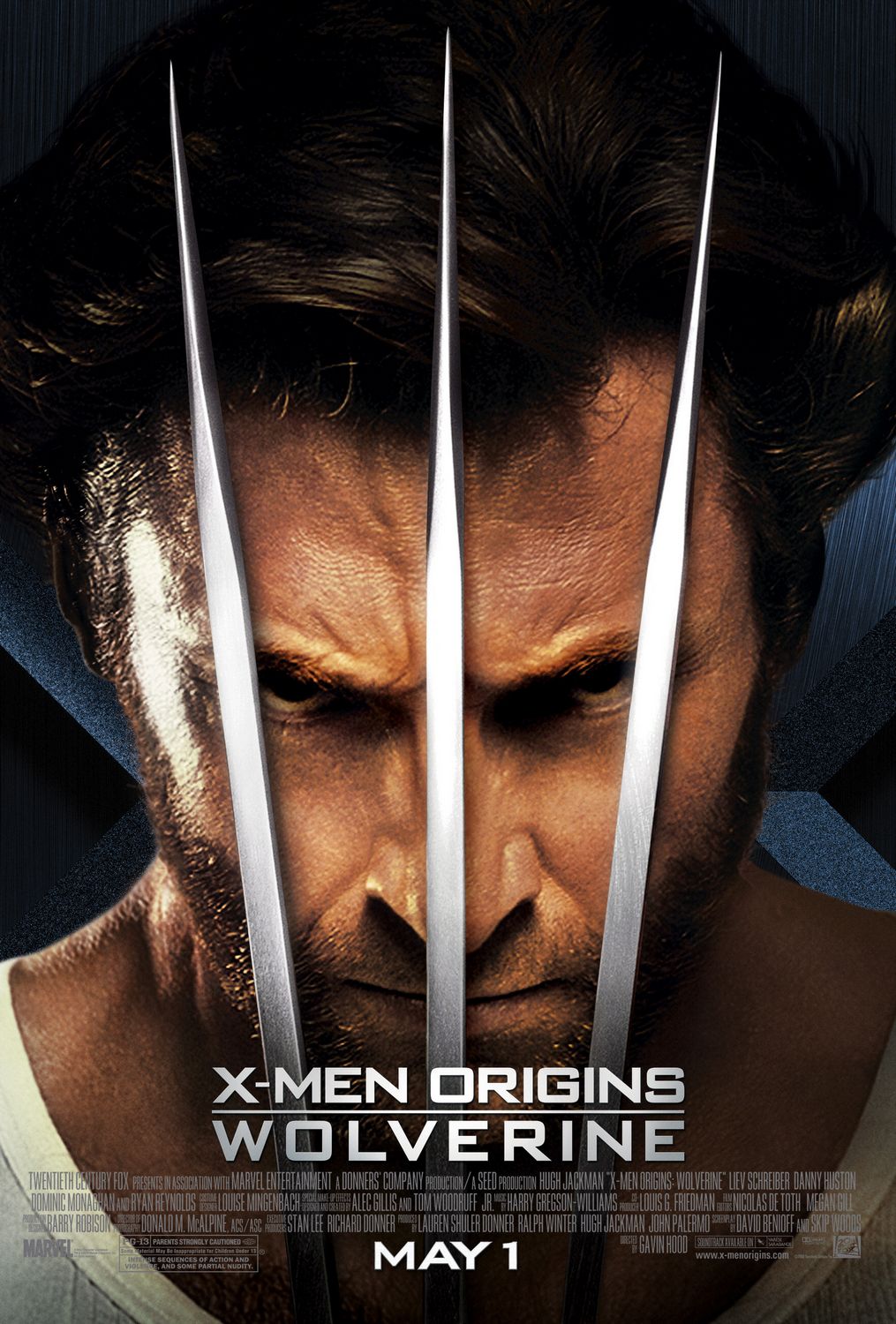
Underrated: X-Men Origins: Wolverine

This is a column that focuses on something or some things from the comic book sphere of influence that may not get the credit and recognition it deserves. Whether that’s a list of comic book movies, ongoing comics, or a set of stories featuring a certain character. The columns may take the form of a bullet pointed list, or a slightly longer thinkpiece – there’s really no formula for this other than whether the things being covered are Underrated in some way. This week: X-Men Origins: Wolverine.


X-Men Origins: Wolverine

This week on Underrated, I wanted to take a look at one of the most reviled movies in the X-Men Franchise, not because I’m going to convince you it’s secretly a great movie that has been unfairly shat on for nearly ten years, but because I want to highlight some of the things that it actually did right. Do they out weight the bad to redeem the movie? Personally, I think so. Although X-Men Origins: Wolverine will never be thought of as a shining example of the character in cinema, and nor should it be, it isn’t the catastrophic mess that we remember it being.

Before you start raging at me (and you’re more than welcome to do so on twitter @karcossa) ask yourself when was the last time you saw this movie? I watched it on the 21st of March this year with the intention of tearing it to pieces in an article, but I actually kind of enjoyed it, so I wrote this instead [note, this article was written on March 23rd, so the movie was quite fresh in my mind]. So before you fire up those angry fingers, give the movie a quick watch and remember I’m not claiming it’s great, just that it isn’t bad.

  • The Opening Sequence
    Honestly, you give me a movie with Wolverine and Sabretooth fighting their way through history based on this opening credit montage and I will throw my money at you. This is a prime example of a movie blowing it’s load too early, if you’ll pardon the expression. We get one of the best opening sequences in the franchise before one of the worst movies. No wonder it got flattened by fans.
  • Liev Schreiber And Hugh Jackman
    Say what you want about the script, plot choices, and pointless cameos, but I will not hear a bad word said about either Schreiber or Jackman’s performances in this movie. It remains a great tragedy that we only got one movie with Liev Schreiber playing Sabretooth opposite Hugh Jackman, and that it was this one. Having watched the movie recently, the two men are almost able to save the movie with their acting chops alone – without them it wouldn’t be worth watching past the title sequence.
  • Most Action Sequences
    Strangely enough, the action sequences in the movie are actually pretty good; Logan and Creed fighting in the bar is awesome, and even the final battle is pretty entertaining (despite the character mutilation of Deadpool). The only downside to the sequence where Team X attacks a compound is that the individual use of the soldier’s abilities makes little sense as a tactical strike, but as a showcase of the individual powers at play it’s pretty good. As is the helicopter fight – right up until the cliched walking away from the explosion end point.
  • The One Liners
    X-Men Origins: Wolverine isn’t a comedy, but there’s quite a few one liners that will at the very least elicit a chuckle from you. Plus, you can also laugh at the so-bad-it’s-good moments.
  • Wolverine Uses All His Powers
    Funnily enough, one of the things this movie gets right is how many other abilities Logan has. At different points in the movie you see him use his enhanced senses of smell, vision and hearing to locate Creed, Zero and Kayla. You don’t see him using his other powers as often as you do his healing and claws (for obvious reasons, I’m sure).

Yes, the movie has its problems, especially with how it fits (or used to fit depending on who you’re talking to) into the X-Men movie franchise, or how it treats certain characters, but if you look at it as a standalone movie that just happens to feature Wolverine… it’s actually not that bad; truth be told, I enjoyed it more than I thought I would, and that’s why it’s the subject of this week’s Underrated.

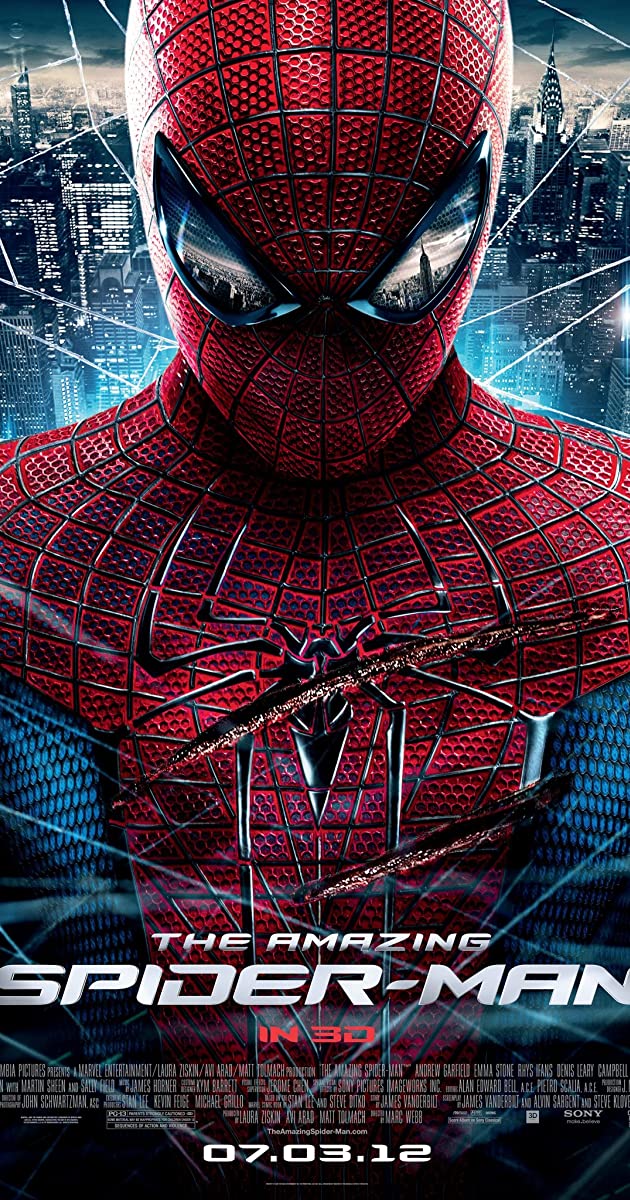
Underrated: The Amazing Spider-Man

This is a column that focuses on something or some things from the comic book sphere of influence that may not get the credit and recognition it deserves. Whether that’s a list of comic book movies, ongoing comics, or a set of stories featuring a certain character. The columns may take the form of a bullet pointed list, or a slightly longer thinkpiece – there’s really no formula for this other than whether the things being covered are Underrated in some way. This week: The Amazing Spiderman


The Amazing Spider-Man

Today I wanted to talk about the first reboot of the Spider-Man movie franchise from waaaaaaaay back in 2012. After the Sam Raimi trilogy which, lets be honest, didn’t exactly end on a high note, Sony would eventually decide to relaunch the Spider-Man movie franchise, and it’s the result of that reboot that I wanted to talk about today.

If you’re surprised that this is the movie we’re focusing on today, you may also have been unaware of the amount of people who still complain about this movie (or maybe that’s just the people I hang out with?) – or you may have never really enjoyed this movie. Though, in recent years Andrew Garfield’s portrayal has become more appreciated. Regardless of where you sit, I’ve always really enjoyed this movie, and feel that it’s stronger than a lot of people give it credit.

Why? To the bullet points!

The chemistry between the leads
One of the strongest aspects of the Amazing franchise is the relationship between Andrew Garfield’s Peter Parker and Emma Stone’s Gwen Stacy. Their interactions on screen approach poetry in some scenes, and without a doubt these two actors elevate the film beyond what a typical pair of romantic leads can do.

 Andrew Garfield’s Spider-Man
Garfield may have been to cool to genuinely pull off a nerdy Peter Parker, but his Spider-Man was top notch; his boundless energy and fast mouth was unlike anything we had seen before in live action, and Garfield pulled it off spectacularly. This was a Spider-Man whose failures were a palpable weight on his spandex clad shoulders, and in the quiet moments throughout the movie you can genuinely sense that through Garfield’s body language.

 The webswinging
The effects team did a wonderful job guiding Spider-Man’s journey through the skies in what is, for my money, the most realistic depiction of a man flying through the air on super strong glue to date.

 The costume
I’m kidding. I wasn’t exactly fond of this movie’s Spider-Man look. The orange lenses weren’t my thing, and the way the red came down the legs weren’t my favourite.

 The lack of the actual words “With great power there must also come great responsibility”
I know this is probably a contentious point to make, but loved that Peter learned this lesson throughout the film without having the quote used just for the audience who feel they must hear those words in the movie. It was far more powerful for Peter to learn it through his actions and reactions than have the lesson spelled out in what could have been an awkward and stilted scene. Plus, it lent a much heavier weight to Uncle Ben’s voice message at the end.

There are quite a few aspects of The Amazing Spider-Man that I thoroughly enjoyed, more than I should probably talk about in this article, but I’m aware that this isn’t a flawless movie – it’s not even the best Spider-Man movie- that honour is reserved for Sam Raimi’s Spider-Man 2. Yes, The Amazing Spider-Man  did have its issues. The Lizard wasn’t the most compelling villain, and his design was somewhat weak, but he isn’t the weakest in any of the Spider-Man movies (Topher Grace as Venom will hold that title for quite some time). His rationale is understandable enough when you break it down for yourself, but you do need to be aware of his misguided, yet deeply hidden altruistic thought process. And only a few years removed from Spider-Man 3, did we really need to see Uncle Ben die again? Not really.

I’m aware that it had it’s problems, but I don’t care; I love it anyway. For years, this was one of my favorite Spider-Man films, until we got the Tom Holland flicks. I’ll always enjoy this movie, but it won’t be the first Spider-Man movie I reach for.


There we have it. Are there other comic book related stuff out there that is, for whatever reason, underrated and under-appreciated?

Absolutely.

Because of that, Underrated will return to highlight more comic book related stuff  that either gets ignored despite it’s high quality, or maybe isn’t quite as bad as we tend to think it is. In the meantime, though, if you do get a chance check out the characters in thisUnderrated, then you may need to hunt through the back issue bins for some, but others do have some stories collected in trades.

Until next time!

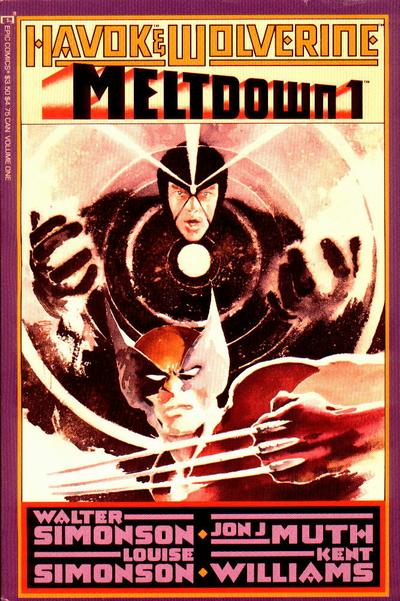
Underrated: Havok and Wolverine: Meltdown

This is a column that focuses on something or some things from the comic book sphere of influence that may not get the credit and recognition it deserves. Whether that’s a list of comic book movies, ongoing comics, or a set of stories featuring a certain character. The columns may take the form of a bullet pointed list, or a slightly longer thinkpiece – there’s really no formula for this other than whether the things being covered are Underrated in some way. This week: Havok & Wolverine: Meltdown.


I don’t remember the first time I read this story, but it was likely in the UK reprint magazine Wolverine Unleashed in the mid to late 90’s. That was also the last time I read it, so when I saw the collected edition at my LCS for $15 I couldn’t pass it up – now because Wolverine is a little bit more marketable than Havok, the trade was just called Wolverine: Meltdown.

Originally published in the late 80’s, Meltdown was written by Walter and Louise Simonson, with illustrations by John J. Muth and Kent Williams. The story is set around the Chernobyl nuclear disaster of the mid 80’s, and finds Havok and Wolverine caught up in the midst of a plot to end the world in nuclear war from the shadows. The art has a wonderful painted look to it at times, but the artists aren’t afraid to experiment with multiple forms of media throughout the book. It’s a choice that is divisive to some – I’ll freely admit when I was younger the art did nothing for me, but I enjoyed the story a fair bit, whereas now I find myself absorbed in the art more than the writing which is a strange twist on how I usually find myself feeling when coming back to stories I haven’t read in 20 some years.

It’s easy to imagine the way this story would have felt when initially released as it presents another possibility behind the Chernobyl disaster as an intentional act to snare the X-Men. Looking back now, it’s a great premise to a story, and one that still holds up despite the very specific time setting. Admittedly, I’ve no idea or memory as to how in continuity/canon this story is within the X-Universe but the story is entertaining enough to allow you to just enjoy it as is, and seeing Wolverine and Havok team up together is still a relatively rare event even today – and while I’m probably in the minority here, I’d love to see more chances for these two mutants to come together on the page.

The main reason I wanted to talk about this book today is solely because it’s a story that I’d completely forgotten about. This isn’t one of the classic Wolverine or X-Men stories that people will talk about, and honestly nor should it be, but it’s still an enjoyable tale that still stands the test of time; admittedly it’s the artwork that will pull you in more than the story, because this is a book that just looks utterly fantastic. The art is at times risky and pushes the envelope of what comics would typically feature 30 years ago (and yet is far more common today). Do yourself a favour and check this story out if you can – it’s a four issue mini series that shouldn’t break the bank if you hunt the individual issues.


Unless the comics industry ceases any and all publication look for a future installment of Underrated to cover more comics that aren’t cracking the top 100.

Underrated: Masters Of The Universe

This is a column that focuses on something or some things from the comic book sphere of influence that may not get the credit and recognition it deserves. Whether that’s a list of comic book movies, ongoing comics, or a set of stories featuring a certain character. The columns may take the form of a bullet pointed list, or a slightly longer thinkpiece – there’s really no formula for this other than whether the things being covered are Underrated in some way. This week: Masters Of The Universe


Masters of the Universe

It’s hard to imagine the impact that Masters of the Universe had on kids in the 80’s and, to a lesser extent, the 90’s. There has been a lot written and recorded about the franchise, from its beginnings as a line of action figures that would be advertised by a now much revered cartoon, to its status as a cult classic, so I have no intention of pretending to add something new to that vast database of knowledge. What I will do, however, is admit that this movie is far better than it has any right to be.

Now, if you’re surprised that this is the movie we’re focusing on today, then that’s possibly because you haven’t yet realized I’ve been on a significant Masters of the Universe kick of late, brought on because I picked up a He-Man figure during Hurricane Fiona (we had lost power for days at this point) so that when power was restored I could send a meme of He-Man when power had finally been restored. Clearly I had forgotten about using an actual gif, which is what ended up happening, but because I had a He-Man my collector brain now needed a Skeletor. And because I found a Skeletor, and Battle Cat for really good prices I ended up with Merman, Triclops and oh gods a new collection had been born.

I suppose my reinvigorated He-Man love came about because of the Masters Of The Universe Revelation cartoon, but it was – oddly enough – seeing an action figure of He-Man that pushed me over the edge again. So it was that I decided to revisit the live action movie from the 80’s with the expectation that it would be a terrible movie… and it honestly wasn’t. Yes, there were definitely departures from the cartoons, there was no Orko, Prince Adam or Snout Spout; the villains were half original (but no less enjoyable). The setting was less Eternia and more six blocks in Oregon with a brilliantly realized Castle Grayskull throne room – due largely to budget cuts the throne room was in dark during the climactic final scene.

Dolph Lundgren’s sword play was… less than authentic, but given how He-Man rarely used his sword in an offensive way in the cartoon it still felt oddly accurate.

The movie isn’t great, but it’s absolutely fantastic for what it is; a fun, romp that’s largely faithful to the spirit of the cartoon if not the letter. Frank Langella’s Skeletor is genuinely sinister, and a true highlight of the movie (along with that bald 80’s authority figure James Tolkan). The movie somehow becomes more than it should be when you want to enjoy it. When you embrace its quirks and foibles and you embrace the Eternian sayings that the movie uses with abandon. This isn’t going to be high on your watch list, but it’s a lot of fun nonetheless.

Good journey, folks.


There we have it. Are there other comic book related stuff out there that is, for whatever reason, underrated and under-appreciated?

Absolutely.

Because of that, Underrated will return to highlight more comic book related stuff  that either gets ignored despite it’s high quality, or maybe isn’t quite as bad as we tend to think it is. In the meantime, though, if you do get a chance check out the characters in thisUnderrated, then you may need to hunt through the back issue bins for some, but others do have some stories collected in trades.

Until next time!

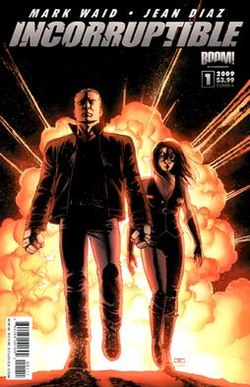
Underrated: Incorruptible

This is a column that focuses on something or some things from the comic book sphere of influence that may not get the credit and recognition it deserves. Whether that’s a list of comic book movies, ongoing comics, or a set of stories featuring a certain character. The columns may take the form of a bullet pointed list, or a slightly longer thinkpiece – there’s really no formula for this other than whether the things being covered are Underrated in some way. This week: Incoruptible


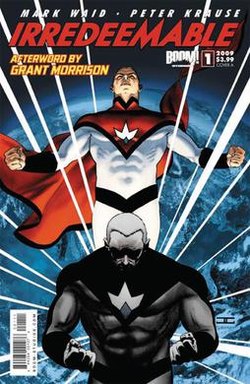
Last wek we looked at Irredeemable, Mark Waid’s exploration of Superman snapping and going from the world’s greatest hero to its most despised villain. That series ran for just shy of 40 issues, and also spawned a spin-off series called Incorruptible that asks the same question but in reverse; what if the world’s greatest villain became its greatest hero?

After seeing the atrocities commited by Waid’s Superman analogue the Plutonian, Max Damage decides that somebody has to stop the rampaging villain – somebody has to give the world hope. And so he sets about becoming everything he isn’t in order to try and save the world, much to the confusion and annoyance of his former gang.

But Max Damage doesn’t have a moral compass; he sees the world in a strange black and white, and so his idea of heroism is to, literally, do the exact opposite of what he once did. He destroys all his ill-gotten gains, rather than anonymously donating it to a charity or those in need (or even returning the stuff), and takes down his old gang.

The switch from villain to hero is so abrupt that when he arrives on scene to help police with a situation, their reaction is pure terror, even when assured that Damage is no longer a villain. Much like the series it span out of, there’s some dark humour on display here as Waid gives us a psychological study of a damaged person trying to atone for their mistakes without actually understanding why what they did was wrong.

As a person who deeply enjoys redemption stories, this is one of the more enjoyable ones I’ve read. Max Damage’s journey from villain to hero is as amusing as it is fascinating; he never quite understands what makes a man a hero or a villain, leading to the question of if an evil man does good things, does that mean they’re not actually evil?

Max Damage’s power set itself is also interesting; the more sleep deprived he gets, the more invulnerable and strong he becomes, which leads to its own set of problems as he realizes just how much the Plutonian was pulling his punches in their earlier encounters, and has to find a solution to the power imbalance if he’s ever to go head to head with his enemy.

Between both Irredeemable and Incorruptible Waid has a great deconstruction of the nature of heroism and villainy that holds up nearly a decade after it debuted. If I’m honest, I prefer the spin-off series, but you can’t really enjoy one without the other; they’re each a side of the same coin, and reading them both concurrently enhances each series more than you would initially expect.

As a series, this is very much loved by many, but it doesn’t get the recognition it deserves. That’s why it’s Underrated.


Join us next week when we look at something else that is, for whatever reason, Underrated.

Underrated: Irredeemable

This is a column that focuses on something or some things from the comic book sphere of influence that may not get the credit and recognition it deserves. Whether that’s a list of comic book movies, ongoing comics, or a set of stories featuring a certain character. The columns may take the form of a bullet pointed list, or a slightly longer thinkpiece – there’s really no formula for this other than whether the things being covered are Underrated in some way. This week: Irredeemable


If you’ve been half paying attention to the gamut of movies hitting the theater this year that have some relation to comics or geek culture, then you’ve probably heard about the movie Brightburn, a superhero horror film that reimagines Superman’s wholesome origin as something much darker – this superpowered alien is a touch less well adjusted, and begins murdering people. Ten years ago, Mark Waid told a similar story. The Plutonian was essentially Superman, though without the influence of Jonathon and Martha Kent, who one day snaps after the world’s snide comments and contempt becomes too much for him to bear.

If you’ve ever wondered about whether Superman could take out the Justice League – or the Paradigm in this universe – the answer, at least according to Waid, is when he snaps he absolutely can.

Irredeemable is as much about the fall of the Plutonian, told in flashbacks, and how the world copes being at the mercy of the terrible supervillain. There are remnants of various teams left alive, but few seem capable of facing the Plutonian head on, instead trying to make the best of the new status quo.

“What if you go from, you know, Captain America to Doctor Doom? What if you go from Superman to Lex Luthor? How do you go from being the greatest hero in the world—someone that everybody knows, and everybody loves, and everyone recognizes—to the greatest villain in the world? What is that path? It’s not a light switch, it’s not an on-off switch, it’s not something that you wake up one day and just become evil.”

Mark Waid on the basis for Irredeemable, markwaid.com podcast.

Irredeemable earned Waid two Eisner awards, and understandably so, as his thirty seven issue deconstruction of the superhero mythos makes for essential reading for any who want to see the darker take on Superman have real consequences. But with as much despair as there is in the comic, there’s also hope, and humour. Waid’s commentary on the superhero genre (including some accurate comments about the frequency of black men with electrical powers, and the less than subtle racism said black hero faces) is another notch on the belt of a series that must be read.

The comic has now been collected in various trades, and can be found on comiXology for those interested in digital reading. I can’t recommend it, and the spin off series Incorruptible enough (more on Incorruptible next week). There’s thirty seven issues of Irredeemable to devour, and that’s it.


Join us next week when we look at something else that is, for whatever reason, Underrated.

Underrated: Your Local Comics Scene

This is a column that focuses on something or some things from the comic book sphere of influence that may not get the credit and recognition it deserves. Whether that’s a list of comic book movies, ongoing comics, or a set of stories featuring a certain character. The columns may take the form of a bullet pointed list, or a slightly longer thinkpiece – there’s really no formula for this other than whether the things being covered are Underrated in some way. This week:  Your Local Comics Scene


In a slightly different than normal entry to this column (read I forgot to write one and am instead repurposing something else) I wanted to take a look at something that most of us either ignore or are blissfully unaware of, and that’s the comics being published in your local area. Obviously your definition of “local area” will vary depending on where you live; New York City may have a much smaller local sphere than my hometown of Exmouth in the South of Devon, England. The local scene there could more reasonably stretch across the entirety of the county of Devon, much like how I’d consider Atlantic Canada to be my current local comics scene now rather than any specific city or province within the region simply due to the volume of independent comics that I come across. But regardless of the size of your local area, my question to you, dear reader, is how active is your local comics scene, and when was the last time you actively sought out local-to-you comics at your Local Comic Shop?

I’ve found a couple of really interesting stories that way (some are also available as webcomics – such as this one), and some… less interesting. But the thing is, because they’re created by people who visit the same shops as I do across the region, I wanted to give them a shot. And I don’t regret doing that with any of the comics I’ve picked up over the years, whether they are from my region or local to an area I have traveled to. 

There’s a chance that your local area may not have anybody actively creating comics for the mass market, but you can probably find a small pamphlet like comic produced locally in a small corner of the shop or a local convention. And if you do find one, then why not check it out? You’ll be supporting local talent, and who knows? Maybe you’ll find your next favourite series…


That’s all we have for this week, folks. Come back next time  when there’s something else Underrated to talk about.

Underrated: Your Local Comics Shop

This is a column that focuses on something or some things from the comic book sphere of influence that may not get the credit and recognition it deserves. Whether that’s a list of comic book movies, ongoing comics, or a set of stories featuring a certain character. The columns may take the form of a bullet pointed list, or a slightly longer thinkpiece – there’s really no formula for this other than whether the things being covered are Underrated in some way. This week:  Your Local Comics Shop


Given the current comics climate, with printers not printing and Diamond not distributing, I wanted to remind us all about one of the things that we’ve all taken for granted at some point or another, and that is the shop you buy your comics from.

I know that some of you prefer to order from DCBS or read digitally, and so don’t have a shop you frequent regularly, but when you want to pick up a board game, statue or toy collectible, then you may go to your LCS rather than Amazon. Ordinarily, at least. Right now, with so many non-essential businesses being closed, going online for our nerd needs is more tempting than ever. But here’s the thing; I know that you’re starving for something to read right now, but this is the time to support the local businesses in your town, city, state/province ahead of a giant company who’s CEO could afford to fund several reading or food programs in our schools.

When all the dust has settled after the Covid 19 pandemic, and it will, you’re going to want to go out and socialize and talk about comics with friends, or strangers, in person and not online. You’re going to want to go to your comic shop.

Right now, you can’t really do that, but there are some idea on how to support your local shop here.

Until you can go back to your LCS, or until you decide to start going to one, spend a minute and think about all small business owners and their employees. Right now they’re worried about lost wages, and potentially a lost business in the future. When this is over, go spend the money you didn’t spend there – if you can.


That’s all we have for this week, folks. Come back next time  when there’s something else Underrated to talk about.

« Older Entries Recent Entries »