Category Archives: Underrated

Underrated: A Once Crowded Sky

This week we’re revisiting a previous entry in the series with Tom King’s A Once Crowded Sky.


This is a column that focuses on something or some things from the comic book sphere of influence that may not get the credit and recognition it deserves. Whether that’s a list of comic book movies, ongoing comics, or a set of stories featuring a certain character. The columns may take the form of a bullet pointed list, or a slightly longer thinkpiece – there’s really no formula for this other than whether the things being covered are Underrated in some way. This week: A Once Crowded Sky


It’s no secret how much I love comics. Or at least it shouldn’t be.
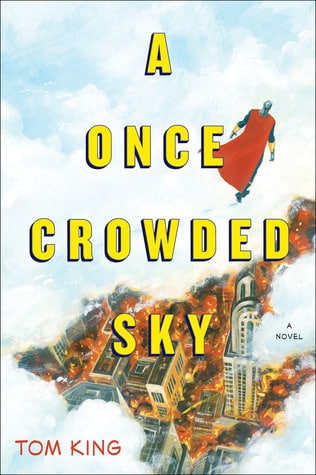
A Once Crowded Sky

While most pretty much all of the comics I read can, to varying degrees, be placed on the superhero side of things, sometimes I’ll pick up the odd non-superhero comic.  I’m a big fan of the modern comic book re-imaginings of the early pulp heroes such as The Black Bat, The Spider, and The Phantom, although one could argue their closeness to the superhero genre renders the example moot, so let me be blunt; the point I am poorly trying to make is that I love superhero stories (of all varieties) in my comics more than any other type of story. 

Amazingly enough, I also read books.

If you look at my book shelf you’ll see a lot of fantasy, sword and sorcery, and historical fiction. There isn’t much set within the last one hundred years or so that I tend to pick up and read. I can think of, maybe, twenty books (or series) that I’ve read in the last fifteen years or so that are set within the last century, and only a handful of them were based around superheroes. One was an average Wolverine tale I read on Kindle, one is the hugely enjoyable Dresden Files series and another was A Once Crowded Sky by some dude named Tom King, which  is the subject of today’s column.

Although the story wasn’t quite mind blowing, it was remarkably well told, and had some incredible ideas within its pages. Perhaps the most interesting thing about the book is actually the way it is told. In a book with multiple point of view characters, each character’s point of view is laid out like a comic book; the book is set up like a text version of a collected comic book tie-in event across multiple issues. It’s a brilliant way to tie in the obvious influence and homage to the four colour medium, as is the occasional comic book page within the book itself.

A Once Crowded Sky is a relative anomaly for me; it’s a superhero story that I read, and enjoyed, that wasn’t in a comic book. Now, my sample size of superhero books is obviously incredibly small compared with that of superhero comics, but the thing I must stress here is it isn’t that I’ve had no access to superhero books, it’s that I simply have no desire to read about superheroes in any other medium that isn’t a comic book, and I have no idea why.

Maybe it’s because up until A Once Crowded Sky every superhero book I’ve looked as has been hard to justify the price tag. I found A Once Crowded Sky for $3 on a table of reduced hardcover books at a chain book store – it’s easily worth four times that amount, but would I have looked at it for more than $3? Seeing as how it took me two days to decide to pick the book up even for about the price of a comic, well, then probably not. Maybe I don’t like superhero books because they lack the visual nature of comics, which probably does have something to do with it, but I’m more then happy reading the Dresden Files novels and graphic novels, but then the Dresden Files and superheroes occupy two different genres. Maybe, and most likely, it’s because there simply hasn’t been much buzz about any superhero books.

So what’s A Once Crowded Sky about, and why should you read it?

“The superheroes of Arcadia City fight a wonderful war and play a wonderful game, forever saving yet another day. However, after sacrificing both their powers and Ultimate, the greatest hero of them all, to defeat the latest apocalypse, these comic book characters are transformed from the marvelous into the mundane.

After too many battles won and too many friends lost, The Soldier of Freedom was fine letting all that glory go. But when a new threat blasts through his city, Soldier, as ever, accepts his duty and reenlists in this next war. Without his once amazing abilities, he’s forced to seek the help of the one man who walked away, the sole hero who refused to make the sacrifice–PenUltimate, the sidekick of Ultimate, who through his own rejection of the game has become the most powerful man in the world, the only one left who might still, once again, save the day.”

Tom King’s debut novel has some lofty ideas, and some great presentation ideas that more than out weigh the at times overly wordy moments as King at times loses himself in backstory and internal monologues. There are flashes of his later brilliance in this 2012 novel, and it’s fascinating to see how he’s grown as a writer since this book. Despite having some rather interesting names for his characters (no, that’s not food – that’s my tongue in my cheek), it’s not hard to identify where their inspiration came from. Soldier of Fortune and Captain America do bear more than a slight similarity, after all.

But by using his own versions of these characters we’re all so familiar with, King is able to tell the story he wants without worrying about the guiding hand of either of the big two publishers impacting his story.

What we’re left with at the end of the day is a solid, and very enjoyable superhero novel written by a man who would go on to write some utterly fantastic comics. This book isn’t on that level, but it’s still well worth checking out should you come across it.

Someday, hopefully soon, superhero books will have their own section in the book store and when they do, that’s where you’ll find me.


Join us next week when we explore another Underrated aspect that may be at best tangentially related to comics!
Underrated: Havok and Wolverine: Meltdown

This is a column that focuses on something or some things from the comic book sphere of influence that may not get the credit and recognition it deserves. Whether that’s a list of comic book movies, ongoing comics, or a set of stories featuring a certain character. The columns may take the form of a bullet pointed list, or a slightly longer thinkpiece – there’s really no formula for this other than whether the things being covered are Underrated in some way. This week: Havok & Wolverine: Meltdown.


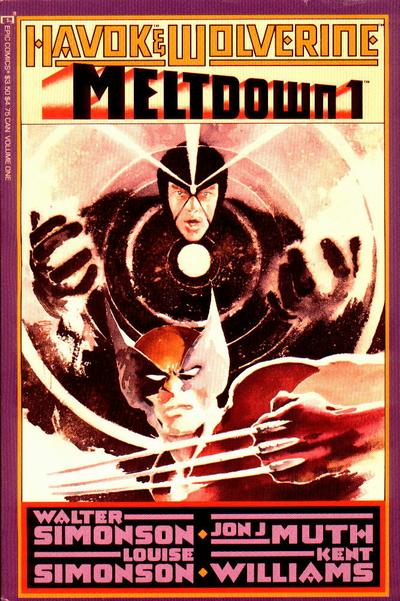
Havok & Wolverine: Meltdown

I don’t remember the first time I read this story, but it was likely in the UK reprint magazine Wolverine Unleashed in the mid to late 90’s. That was also the last time I read it, so when I saw the collected edition at my LCS for $15 I couldn’t pass it up – now because Wolverine is a little bit more marketable than Havok, the trade was just called Wolverine: Meltdown.

Originally published in the late 80’s, Meltdown was written by Walter and Louise Simonson, with illustrations by John J. Muth and Kent Williams. The story is set around the Chernobyl nuclear disaster of the mid 80’s, and finds Havok and Wolverine caught up in the midst of a plot to end the world in nuclear war from the shadows. The art has a wonderful painted look to it at times, but the artists aren’t afraid to experiment with multiple forms of media throughout the book. It’s a choice that is divisive to some – I’ll freely admit when I was younger the art did nothing for me, but I enjoyed the story a fair bit, whereas now I find myself absorbed in the art more than the writing which is a strange twist on how I usually find myself feeling when coming back to stories I haven’t read in 20 some years.

It’s easy to imagine the way this story would have felt when initially released as it presents another possibility behind the Chernobyl disaster as an intentional act to snare the X-Men. Looking back now, it’s a great premise to a story, and one that still holds up despite the very specific time setting. Admittedly, I’ve no idea or memory as to how in continuity/canon this story is within the X-Universe but the story is entertaining enough to allow you to just enjoy it as is, and seeing Wolverine and Havok team up together is still a relatively rare event even today – and while I’m probably in the minority here, I’d love to see more chances for these two mutants to come together on the page.

The main reason I wanted to talk about this book today is solely because it’s a story that I’d completely forgotten about. This isn’t one of the classic Wolverine or X-Men stories that people will talk about, and honestly nor should it be, but it’s still an enjoyable tale that still stands the test of time; admittedly it’s the artwork that will pull you in more than the story, because this is a book that just looks utterly fantastic. The art is at times risky and pushes the envelope of what comics would typically feature 30 years ago (and yet is far more common today). Do yourself a favour and check this story out if you can – it’s a four issue mini series that shouldn’t break the bank if you hunt the individual issues.


Unless the comics industry ceases any and all publication look for a future installment of Underrated to cover more comics that aren’t cracking the top 100.

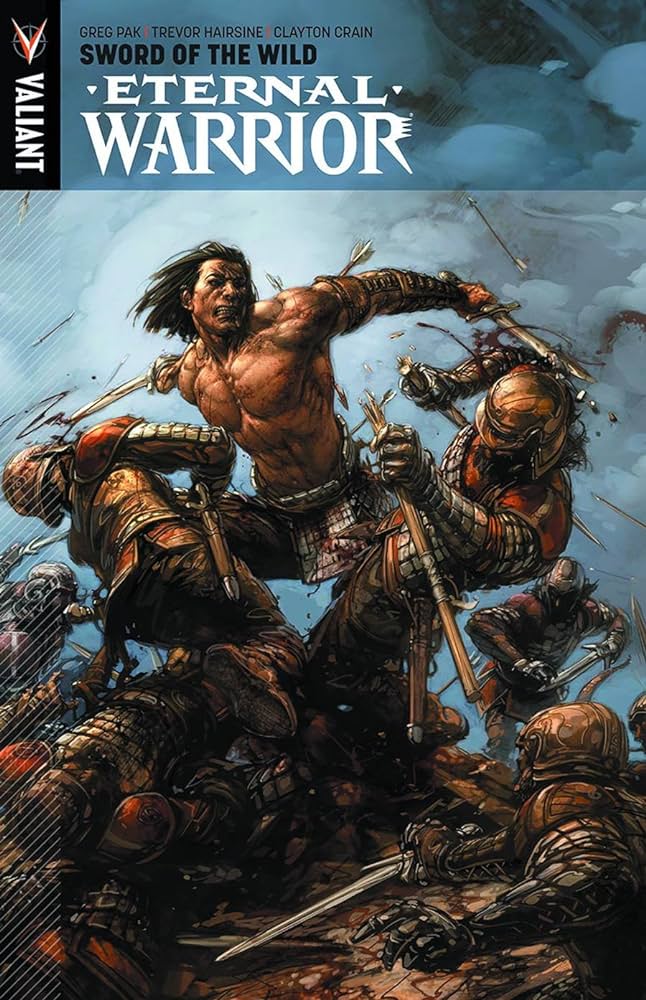
Underrated: Eternal Warrior: Sword of the Wild

This is a column that focuses on something or some things from the comic book sphere of influence that may not get the credit and recognition it deserves. Whether that’s a list of comic book movies, ongoing comics, or a set of stories featuring a certain character. The columns may take the form of a bullet pointed list, or a slightly longer thinkpiece – there’s really no formula for this other than whether the things being covered are Underrated in some way. This week: Eternal Warrior: Sword of the Wild


It should be no secret to you that I am a huge fan of Valiant comics. I’ve also made no secret of my love for the Eternal Warrior. But a lot of that love stems from Book Of Death and Wrath of the Eternal Warrior, and not his first solo series offered since Valiant’s 2012 relaunch, the eponymously titled Eternal Warrior. I first read that series shortly after Book Of Death and didn’t enjoy it as much as I wanted to, and although I’ve heard mixed opinions on it since, I wanted to give the first four issues in the series another chance (you can find them collected as Sword Of The Wild, hence the full title of this week’s column, and what I’ll be referring to them as going forward).

The back of the trade dressing (apparently) reads;

Soldier. Guardian. Warrior. Legend. Across ten millennia and a thousand battlefields, Gilad Anni-Padda has traversed the darkest, most mysterious corners of history. But the horror and bloodshed of constant warfare has finally taken its toll on the man myth calls the Eternal Warrior…and he has abdicated his duties as the Fist and the Steel of Earth for a quiet life of seclusion. But when a blood vendetta from the distant past suddenly reappears in the modern day, he must decide if he will return to the ways of war…for the child who betrayed him thousands of years ago…

Before rereading Sword of the Wild I realised that I had to look at the book as its own entity, removed from the larger continuity of the Valiant universe as a whole. This realisation came because for me Sword of the Wild doesn’t tie in to the portrayal of the Eternal Warrior we were given in Unity, and subsequently Book Of Death and Wrath of the Eternal Warrior (although the latter two came after Sword of the Wild) nor the general continuity Valiant had built at the time. Once I had taken that mentality with the book,  I sat down, opened the front cover and got started… and was immediately transported to what felt like a reimagination of the 90’s era Eternal Warrior.

I say this because although the book doesn’t lot in as well with the Valiant continuity as other books and series have done, it’s still a really enjoyable read. More so than I initially expected. When you look at this book as a standlone story about an immortal warrior finally having enough of the world’s shit and just wants to live the rest of his long days in peace (or at least a portion of them), and remove any preconcieved notions of how it could or should fit into the other stories featuring Gilad Anni-Padda, then you’ll find that there’s a really compelling four issue arc here.

Just on that maybe lines up better with the pre-relaunch Valiant comics than the Valiant Entertainment era.

I really enjoyed this book – far more than I expected to. So why is it today’s subject? Because I hear very few people talk about this volume with the enthusiasm the character deserves because it doesn’t fit the larger Valiant continuity as well as it could. But as a standalone story? It’s pretty good – that’s why the book is Underrated.


Join us next week when we look at something else that is, for whatever reason, Underrated.

Underrated: Crecy

This is a column that focuses on something or some things from the comic book sphere of influence that may not get the credit and recognition it deserves. Whether that’s a list of comic book movies, ongoing comics, or a set of stories featuring a certain character. The columns may take the form of a bullet pointed list, or a slightly longer thinkpiece – there’s really no formula for this other than whether the things being covered are Underrated in some way. This week: Crecy.


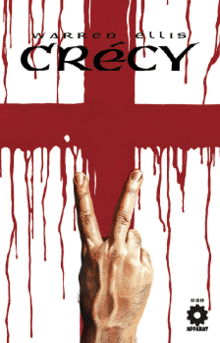
I’ve always been interested by the middle ages, and the English use of the longbow. In part because it’s the origin of one of my favourite hand gestures to use (especially in North America when so few actually know what I’m doing in pictures). Needless to say, when I saw that gesture over a bloody St. George’s cross, I grabbed the book off the shelf. And then noticed that it was a Warren Ellis book.

I am by no means an authority on the Battle of Crecy. I only really know of a few accounts through Wikipedia articles and their sources and the Bernard Cornwall novels surrounding an English Archer named Thomas of Hookton, with the book Harlequin telling the tale of the battle from his perspective. So I won’t claim to know that this book is 100% historically accurate, but it is as faithful a telling as you’re likely to find from the eyes of an archer – whether in a textbook or not.

Ellis utilizes a lead character who frequently addresses the audience when telling the battle’s story and events, showing knowledge of modern times without ever indicating that he knows he’s in a fictional story. It’s an effective story device, and one that I really enjoy for this type of story (but I hope we don’t see it over used, either). The black and white are hides some of the violence, but serves to highlight the mayhem and carnage of the day.

Crecy is a great book – worth every penny of the cover price, and far more Underrated than it should be.


Join us next week when we look at something else that is, for whatever reason, Underrated.

Underrated: The Fox: Freak Magnet/Fox Hunt

This is a column that focuses on something or some things from the comic book sphere of influence that may not get the credit and recognition it deserves. Whether that’s a list of comic book movies, ongoing comics, or a set of stories featuring a certain character. The columns may take the form of a bullet pointed list, or a slightly longer thinkpiece – there’s really no formula for this other than whether the things being covered are Underrated in some way. This week:  The Fox.


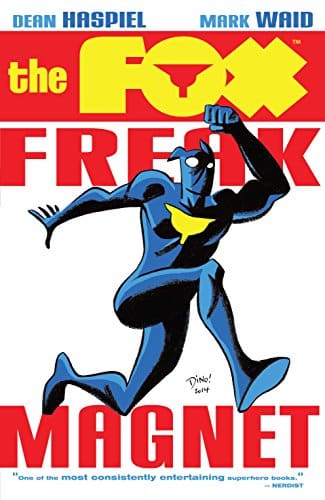
Originally appearing in MLJ Comics Blue Ribbon Comics #4, the Fox continued to feature in the title until it’s cancellation eighteen issues later with #22, although the character only had one cover appearance; issue #16’s ensemble featured every character featured within the comic.  MLJ Comics would eventually become Archie Comics, which brings us to 2014 and the release of the first issue of Freak Magnet.

Haspiel packs the issues with some fantastic art sequences to complement the story.

Written by Mark Waid (Irredeemable/Incorruptible, Daredevil) and Dean Haspiel, who also provides the art, the modern miniseries evokes a sense of chaotic fun that harkens back to the Golden Age of comics, while  remaining fresh and relevant for today’s audience. Officially published by Dark Circle Comics, which is an imprint of Archie ComicsThe Fox had two miniseries by the same creative team; Freak Magnet and Fox Hunt. You can read them in any order, and I say that because I read the sequel, Fox Hunt, prior to Freak Magnet and never once felt as though I was missing out on anything.

 A lot of that is down to the quality of the comics, because Fox Hunt was honestly one of the best story arcs I had the pleasure of reading back in 2015. Fox Hunt seeks to explores the difficulty facing a superhero who just wants to retire, with Paul Patten Jr. steadfastly trying to retire as The Fox. Unfortunately due to his innate freak magnet he’s having a bit of a hard time doing just that (although the million dollar bounty on his head isn’t helping things either). 

Although he is another legacy hero (think RobinFlashUnion Jack, or any character who has taken over for the original hero – the current Fox is the original‘s son), with the way Mark Waid is writing the comic at the moment, the history of the character really doesn’t weigh on the story at all, allowing youto enjoy the two individual miniseries. With Fox Hunt, however, it would be a good idea to read the issues in order – or to wait for the collected edition that will inevitably be released following the conclusion of the first story arc – because this is a linear story.

If it sounds that The Fox is a fun series, well that’s because it is. When it comes to enjoying the comics we read, very few of the comics I have read have been as entertaining as this five issue miniseries. The art work isn’t quite family friendly (there’s the odd scene of mostly off panel violence that Dean Haspiel will highlight by having the odd bit of gristle or unidentified flesh appear on panel), but it’s a far cry from the gritty feel of many modern day comics. Waid and Haspiel‘s story telling is simply a joy to experience, and the light hearted tone never seems to go over the top into the realm of comedy, but certainly elicits a couple of chuckles from me each issue.

A spoiler free summary will not, and cannot, do the comics any justice, and I urge you to take the plunge and go check out either  Freak Magnet or Fox Huntwhen you can. It will absolutely be worth every minute you spend in this world.


Join us next week when we look at something else that is, for whatever reason, Underrated.

Underrated: Freaks Of The Heartland

We’re rerunning an older column this week. I may have gotten to obsessed with Westworld and may have forgotten to write a new column for the week.


This is a column that focuses on something or some things from the comic book sphere of influence that may not get the credit and recognition it deserves. Whether that’s a list of comic book movies, ongoing comics, or a set of stories featuring a certain character. The columns may take the form of a bullet pointed list, or a slightly longer thinkpiece – there’s really no formula for this other than whether the things being covered are Underrated in some way. This week:  Freaks Of the Heartland

foth.jpg

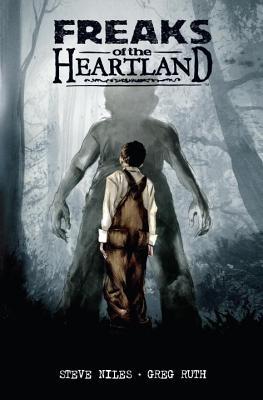
This is another book in the “well this looks interesting” series that usually results in me grabbing, seemingly at random, a trade paperback from the shelves at my LCS. Freaks of the Heartland was originally published as a six issue miniseries around 2004/2005. The series was written by Steve Niles and Greg Ruth handled the art and lettering.

Freaks Of The Heartland is set in the 50’s or 60’s, based on the visual clues throughout the book, and tells the story of young Trevor Owen and his mysterious younger brother Will, a mysterious child who is condemned to live in the barn behind the house. 

When I first cracked the cover, I was struck at how wonderful the art was – which feels like an odd statement given the subject of the book. Ruth’s work is frankly astounding. He is able to give you all you need to know about the characters within a panel or two at the very most – whether this is a facial expression, a gesture or their body language, this is a book where the words are almost unnecessary for your understanding of the story and the journey the characters are on. 

Niles is known for his horror comics, and the story of Freaks of the Heartland has its origins in the horror genre. There is the hidden threat and ominous sense of foreboding are very present throughout this book, and right up until the very end you’re never quite sure how the cards will fall in the conclusion. Nothing is telegraphed, nothing is given away, and the ending is all the more powerful for that. I went into this book without any idea of the plot – I never bothered to read the back of the book, and so I won’t give you anymore plot details here than I have because there are moments and revelations that hit me as I turned each page that I don’t think would have had the same impact upon me had I been more cognizant of the plot when opening the book.

Instead, I hope you’ll take my word for it that this is an utterly fantastic non-superhero story that will make you rethink the power of sequential art as a story telling medium. I genuinely believe that this story, a story that is told in its entirety in one volume, is an example of what comics are truly capable of when you look past the cyclical nature of superhero stories.

I devoured this book in a single sitting and knew immediately that had it been released this year then there is no question it would have made an appearance on my Best Of 2018 list. At this point, I’m thinking I’m going to add some kind of “Best thing I read this year that wasn’t from 2018” category just so I can highlight the book once again.

I usually end this column with a recommendation to check out the book or series or movie in question, but I genuinely can’t recommend this graphic novel to you highly enough If you don’t grab this with both hands when you see then you’ll miss an Underrated gem.


Join us next week when we look at something else that is, for whatever reason, Underrated.

Underrated: A Random Selection Of TPBs

This is a column that focuses on something or some things from the comic book sphere of influence that may not get the credit and recognition it deserves. Whether that’s a list of comic book movies, ongoing comics, or a set of stories featuring a certain character. The columns may take the form of a bullet pointed list, or a slightly longer thinkpiece – there’s really no formula for this other than whether the things being covered are Underrated in some way. This week: a somewhat random selection of trade paperbacks..


This week I wanted to highlight books that have either already appeared in this column, or haven’t appeared yet (but that I plan to cover in more detail in the future). There’ll be no real order here, but each book will be a jumping on point of some kind into a series that are each absolutely worth reading.

Voracious: Diners Dinosaurs and Dives (Action Lab) The elevator pitch for this series is pretty simple and immediately interesting; time travelling chef hunts dinosaurs. But as catchy as that is, it does a disservice to Markisan Naso and Jason Muhr’s series. Across two miniseries (or two trades), the pair have created a story with more flavours than a tyrannosaur steak; there’s a cop drama, genuinely funny and heart warming moments, a deeper exploration of the mechanics of time travel than you’d necessarily expect and some straight up action sequences. This is easily one of the most exciting comic series I’ve read in the last five year (the final part of the trilogy launches in the next couple of months).

God Country (Image) The concept for this story is pretty unique and straight forward; a man with Alzheimer’s regains his memory when holding a mysterious sentient sword. The only problem is, the sword apparently belongs to some space gods… God Country is one of Donny Cates finest stories, and one that has the potential to hit a lot of us who have experienced a loved one suffering with this horrible disease. There’s also an undertone about discovering who you once were, who you are, and the question of whether a sentient sword is a possession or a free being. Plus, with this being made into a movie in the future, you’ll want to read this sooner than later.

Wrath Of The Eternal Warrior: Risen (Valiant) Hardly surprising I’d include a Valiant book, and Risen is the introductory story to one of Valiant’s finest fourteen issue runs in recent memory. This chapter tells the story of how the Eternal Warrior comes back to life each and every time he dies – another simple concept, but one that weighs heavier and heavier each time you see him fall later in the series.

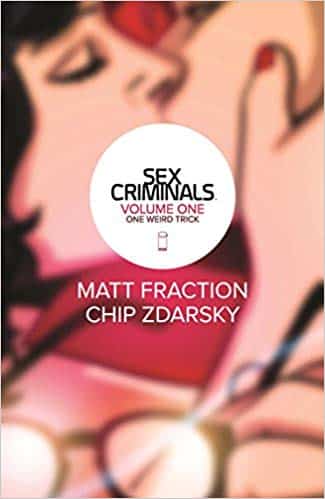
Sex Criminals (Image) Sometimes you just really need a good crime story. And despite the title, this isn’t about sex criminals, but criminals who have sex and then commit a crime. Because every time they orgasm time freezes so they choose to rob a bank (or take a shit in their bosses office). As you do.

Letter 44: Vol I (Oni Press) I had very little idea what this was about when I picked up the first trade, but quickly discovered that it tells the story of humanity’s first contact with extraterrestrial beings, and the president who chose to keep their existence a secret (all the while perpetuating wars to give his soldiers combat experience and developing incredible technology to combat the potential threat). Equal parts political intrigue and science fiction story, I’m still not sure whether the tension is higher in space than it is on Earth, but the story is freaking amazing.

Ether (Dark Horse) A tale about a scientist who can travel inter-dimensionally, Ether explores what would happen if said scientist arrived in a world where magic, not science is the rule of law – but what is magic but as-yet unexplained science?


Join us next week when we look at something else that is, for whatever reason, Underrated.

Underrated: Judge Dredd Megazine

This is a column that focuses on something or some things from the comic book sphere of influence that may not get the credit and recognition it deserves. Whether that’s a list of comic book movies, ongoing comics, or a set of stories featuring a certain character. The columns may take the form of a bullet pointed list, or a slightly longer thinkpiece – there’s really no formula for this other than whether the things being covered are Underrated in some way.

This week: Judge Dredd Megazine


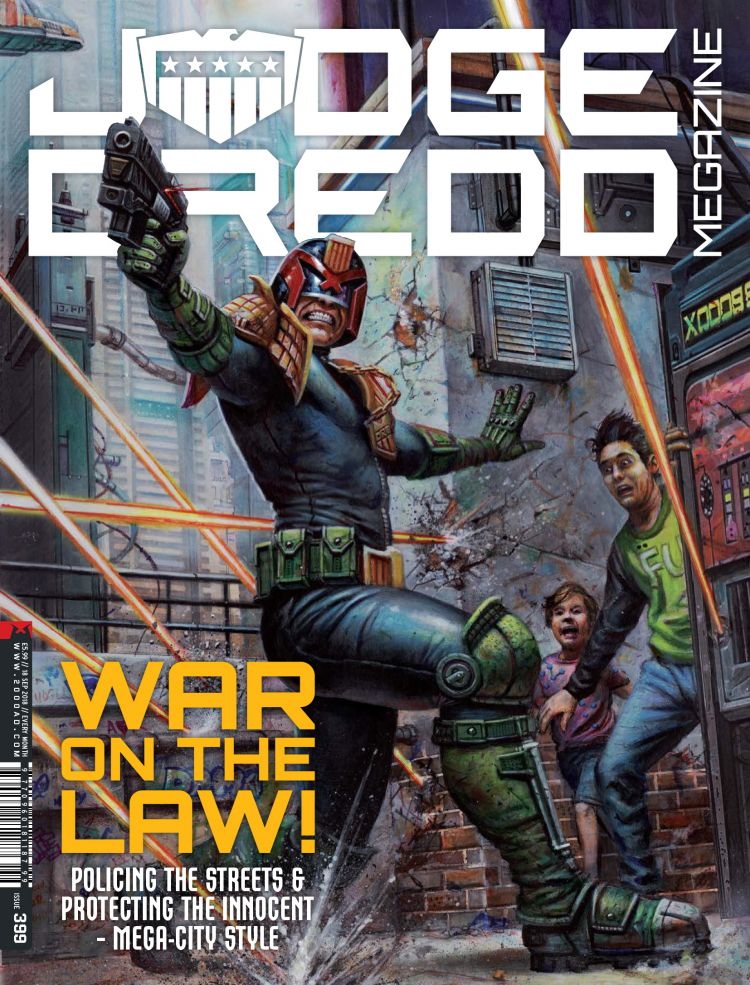
Initially launched in the 90’s as a monthly companion to the weekly anthology comic 2000 AD, Judge Dredd Megazine is a much easier beast to keep track of when you’re importing it (via Diamond and my comic shop) than a weekly comic that would likely cost more than the average Marvel or DC book. Judge Dredd Megazine usually sets me back around $12-17 depending on the exchange rate when I’m picking it up. It’s more than I remember paying for it when I was in England, but not honestly all that much more – and it’s significantly cheaper than flying over to pick it up.

The megazine, a play on words with magazine and Judge Dredd’s home city of Mega City One, generally comes with an additional comic that collects stories previously published within 2000 AD or the megazine itself. I always factor this bonus material into the overall price when the exchange rate is less favourable for me, and still have never felt that I’ve over paid in a large part because of the (48ish page) supplemental insert – plus, the fact that you get around 80-90 pages of anthology comics plus a few text based features as the main draw means that value for money is certainly there.

At this point, I feel it’s worth talking about the way the stories are presented in the megazine, rather than the stories themselves because this is an anthology comic there is always a story that has just begun, or is still early enough in its progress that you can catch on without worrying too much about what you’ve missed. Honestly, it’s probably exposure to Judge Dredd Megazine and 2000 AD as a kid that has enabled me to just pick up a story mid way through and enjoy it without worrying too much about What Came Before as long as the story flows and makes sense (which likely lead to my firm belief that, as much as possible, comics should always be new reader friendly). The stories are written and drawn by some incredibly talented people – the credits for Judge Dredd Megazine #417 include Michael Carroll, Dan Abnett, Phil Winsdale, Chris Roberson, Andrea Mutti, Ales Kot, Mike Dowling and more – with each creator bringing their own unique style and skillset so that the aesthetic of the book’s stories can change noticeably every ten issues or so, but because of the editorial and design team (in #417, that’s editor Matt Smith and designers Sam Grettonm Oz Osbourne and Gemma Sheldrake) there’s a consistent level of quality and visual presentation within the bones of the book that it still feels like the same megazine you know and love.

It’s a unique, yet oddly wonderful, feeling to be able to miss tens of issues and be able to dive right back in. If you’ve ever seen a good friend for the first time after years apart, then that’s the feeling I’m talking about here.

The reason I’ve been reticent to talk about the stories within the book is because there’s no real guarantee that you’ll see the same characters again once the story has been told, although there’s always going to be a Judge Dredd story featured within the megazine, the other three or four stories rotate on a regular basis with the only constant being the quality of what you’re reading. Most are sci-fi in some form, though there has been a more classic fantasy or steam punk story sneak in here and there, so if you’re not into anything but capes and cowls then you may not find anything you like here, and that’s okay. But if you’re wanting to branch out and expand your reading to offerings from across the pond, this is one of the best ways to get a sample of some great comics.

This may not be an underrated gem in the UK, but on this side of the pond? It absolutely is.


Join us next week when we look at something else that is, for whatever reason, Underrated.

Underrated: Black Hammer: Secret Origins

This is a column that focuses on something or some things from the comic book sphere of influence that may not get the credit and recognition it deserves. Whether that’s a list of comic book movies, ongoing comics, or a set of stories featuring a certain character. The columns may take the form of a bullet pointed list, or a slightly longer thinkpiece – there’s really no formula for this other than whether the things being covered are Underrated in some way. This week: Black Hammer: Secret Origins


A lot has been said about Black Hammer, Jeff Lemire’s homage to the classic hero comics of yesteryear, and much of that praise can be found on the back of this very collection. Scott Snyder, Charles Soule, Cullen Bunn, Dan Jurgens and more are all effusive in their praise for a comic that Mark Millar called “the most brilliant comic I’ve read in years.”

I would agree with everything said on the back of the book, honestly. Jeff Lemire is one of the dozen or so writers whose work I will read without caring what it is because I know the quality of writing will always be very high (of course there are some things that just don’t do it for me, but not because they’re bad – but because it’s not entirely my cup of tea). Black Hammer is one of those things that is both really good (better, honestly, than I expected), and entirely my thing.

In short, it’s one of the best things that I have ever read from Jeff Lemire.

So what exactly is the book about? I’ll use the blurb from the back of the book to explain:

Wiped out of their superhero universe by a multiversal crisis, the forgotten heroes of Spiral City now live as a dysfunctional family on a mysterious farm in a small town from which they have no escape.

If it sounds intriguing, well you’ll be happy to know that’s only the very tip of the iceberg. The premise is good, and promises an interesting look at what life looks like after (forced) retirement, but it’s the way that the characters come to life on the page that’s truly gripping. Some have accepted their new lot in life, and are even making the best of what cards they’ve been dealt as they adjust to life after superheroics.

And some, well, some have never given up trying to get home.

The way that Lemire frames the opening parts of Black Hammer (as I write this I have the following three volumes on my read pile, but I’m just looking at volume one today) is that escape is hopeless, and anything other than acceptance is foolishness. But if that were you, would you accept what you’ve been given or do your damnedest to get back to the home you knew, even if it may not be as peaceful as where you are?

The answer, ultimately, would depend on a couple key differences; whether you were at least content with the new life you had or if it was driving you to insanity. Within the pages of Black Hammer, there are characters nearing their breaking point (or in some cases may have already gone beyond the breaking point), and it’s fascinating watching them all struggle to navigate the normal that they now find themselves in.

Black Hammer has spoken to my love of modern takes on distinctly Golden Age heroes. With a Justice League like group of characters locked in mysterious pocket dimension where they’re forced to live normal lives on a farm, we get to explore what happens to a hero on a forced retirement. Not everybody I know is a fan of where this comic is going, and how it’s been getting there, but every issue has been a win for me – which is another reason this appears in this issue of Underrated. But the tinges of something lingering just beneath the surface give a genuine sense of unease to the comic. Black Hammer is very much a slow burn, but it’s going to be incandescent when we get the pay off at the end…


Unless the comics industry ceases any and all publication look for a future installment of Underrated to cover more comics that aren’t cracking the top 100.

Underrated: The Wolverine

This is a column that focuses on something or some things from the comic book sphere of influence that may not get the credit and recognition it deserves. Whether that’s a list of comic book movies, ongoing comics, or a set of stories featuring a certain character. The columns may take the form of a bullet pointed list, or a slightly longer thinkpiece – there’s really no formula for this other than whether the things being covered are Underrated in some way. This week: The Wolverine.


A little while ago on Underrated, I took a look at one of the most reviled movies in the X-Men Franchise, X-Men Origins: Wolverine. This week I wanted to take a look at the sequel to that movie because, ending aside, I think it’s a pretty good movie – no, really, take that cyborg thing out of the equation, and I’d give the movie a sold 8.5 or so out of 10. Obviously the cyborg drops the rating some, but I still really enjoyed the movie. And yes, I did see the movie recently.

The funny thing about The Wolverine, at least for me, is that I only recently realized that people weren’t quite as fond of it as I was. Whether that’s because I was so desperate for a great Wolverine movie that I overlooked a lot of the flaws when I first saw it, or that I just simply enjoyed it more than the folks who had a bone to pick with the film. Obviously, I watched this after having seen Logan, which was exactly the Wolverine movie that I, and many others, have always wanted. Does The Wolverine still hold up after the sequel, or is it really as average as people have been saying?

I genuinely don’t think it is, so allow me to give you a few reasons why.

  • The Opening Sequence
    In this case I’m talking about the entire sequence set in the Canadian wilderness. Hugh Jackman pulls off the broken former hero role incredibly well, and much like the prequel I could have happily watched an entire movie centered around a broken Logan on the outskirts of society. Wait.
  • It’s a great homage to Wolverine’s first solo series
    Look I know that the ending is butchered almost entirely by the mechanized Silver Samurai, but once you get beyond that The Wolverine is a brilliant homage and reinterpretation of the Claremont/Miller series from the 80’s with an updated twist. The hallmarks of the series are there, albeit in a slightly modified form in most cases, as the movie does its level best to pay tribute to that classic four issue miniseries.
  • The choreography
    With this movie having a softer rating than its sequel, you’d be forgiven for wanting more of the brutality from that movie to show up in The Wolverine, but considering the rating I think the choreography of the fight scenes is done very well – yes, a lot is left to your imagination regarding the results of said action, but this is still a movie about a violent mutant and you do get a sense of that… even if it is done in a PG13 way.
  • The story 
    Despite struggling at the final hurdle, the movie’s plot is actually better than a lot of popcorn action flicks. It’s certainly no Logan but it’s a better overall product than both of its immediate prequels.

Yes, the movie has its problems, especially with how it fits (or used to fit depending on who you’re talking to) into the X-Men movie franchise, and how it treats certain characters, but when you look at it as a standalone movie that follows one character after the events of X-Men: The Last Stand… it’s actually pretty good; like I said, I’ve always enjoyed this movie, and that’s why it’s the subject of this week’s Underrated. Plus, without this movie then we’d never have had James Mangold back for the sequel

« Older Entries Recent Entries »