Category Archives: Underrated

Underrated: Thundercats (Wildstorm’s 2002 Series)

This is a column that focuses on something or some things from the comic book sphere of influence that may not get the credit and recognition it deserves. Whether that’s a list of comic book movies, ongoing comics, or a set of stories featuring a certain character. The columns may take the form of a bullet pointed list, or a slightly longer thinkpiece – there’s really no formula for this other than whether the things being covered are Underrated in some way. This week: Thundercats


ThunderCats Wildstorm
Version 1.0.0

In another case of “Alex brought something to read just for this column” we have the Thunder Cats miniseries from Wildstorm that I found in the dollar bin at my LCS. Previous iterations of this theme in Underrated have often been a success (aside from Holy Terror which was a terrible comic, but a great column if I do say so myself), but will this one?

Well… kinda. I read the five issues of the miniseries with no context whatsoever which is par for the course when you find something in a dollar bin with no real idea when it was released (2002 is the answer to that). Assuming that you, dear reader, are like me and have some basic familiarity with the 1980’s cartoon, or one of the later iterations.

The thing is with this miniseries is that there is almost no hint given toprevious events, so if you pick this up hoping for a gentle introduction into the world of the Thundercats then you’ll be a touch disappointed. However, the story is still remarkably easy to follow because although Thundercats is a five issue miniseries it feels more like five episodes of a cartoon show with at best a slim plot that leads from the first to last issue. While this may lead some to claim that is leaves the series feeling like a vapid and disjointed mess, I’ll make the case that it invokes a powerful sense of nostalgia that allows children of the 80’s or 90’s the opportunity to easily reconnect with a treasured piece of your childhood.

I would give you a plot summary, but it basically boils down to “the Thundercats are trying to make a new home and are being opposed by villains.” Which is fine. I enjoyed the overly implistic nature of the main plot almost as much as I enjoyed the feeling that each comic was an episode of the show.

Why, then, does this make an appearance in this week’s Underrated? Because I had never heard of the series before, and made an assumption that if you found this in a dollar bin then you’dlikely pass it over as licensed tat. It isn’t tat at all, and was certainly enjoyable enough to spend a half hour or so with for a column that’s supposed to highlight unsung gems, and at best this is a moderately shiny dollar bin gem (unfortunately I had left it too late to read something else for the column so here we are).

Maybe next week I’ll find an actual gem?


Join us next week when we look at something else that is, for whatever reason, Underrated.
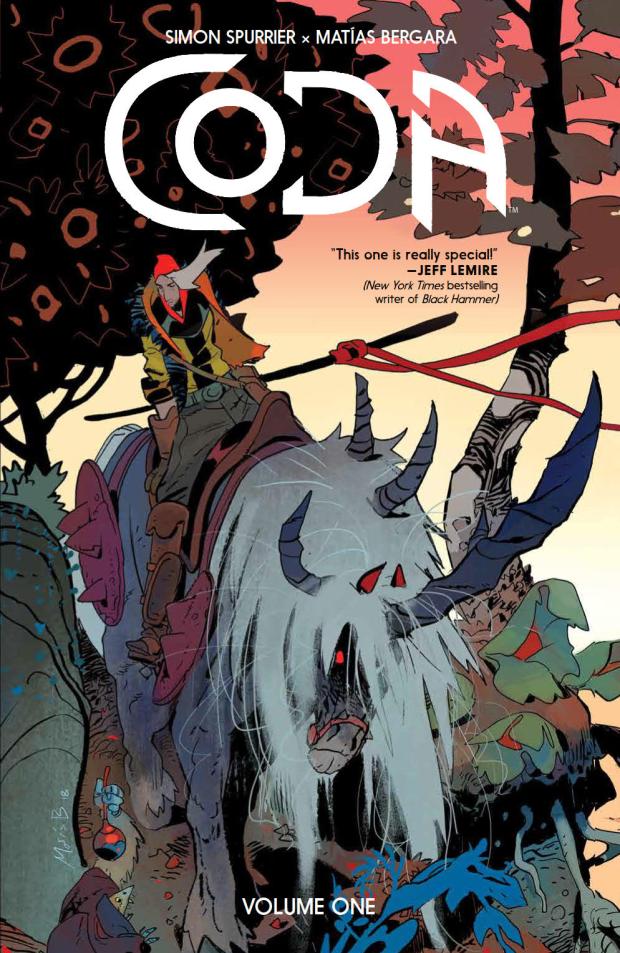
Underrated: Coda

This is a column that focuses on something or some things from the comic book sphere of influence that may not get the credit and recognition it deserves. Whether that’s a list of comic book movies, ongoing comics, or a set of stories featuring a certain character. The columns may take the form of a bullet pointed list, or a slightly longer think piece – there’s really no formula for this other than whether the things being covered are Underrated in some way. This week: Coda


I feel like it’s been a little while since I actually wrote a new Underrated column, but this week I wanted to talk about Coda. Coda is series about a world after the great cataclysm, a post apocalyptic story in a world not unlike Middle Earth from Lord Of The Rings where magic, a once plentiful resource, has become a scarcely sought after treasure.

Originally published by BOOM! as a twelve issue series, Coda has since been collected into three trade paperback collections, which is how I read the complete story. Written by Simon Spurrier with art by Mattias Bergara, the story follows former bard Hum.

A man of few words, Hum seeks a way to save the soul of his wife with nothing but a foul-tempered mutant unicorn and his wits to protect him. He is unwillingly drawn into a brutal power struggle he has little interest in which will decide forever who rules the Weird Wasteland.

The above paragraph is roughly paraphrased from the preview blurb of the first comic, because if you choose to go into the book, then there are a couple of moments early on that I want you to experience the same way I did; having no idea that they would be coming. It won’t make or break the story if you find out about them before you read, but it’s more fun if you don’t know what happening.

Brett’s video review of the first volume is spoiler free, so don’t be afraid to check it out.

Spurrier and Bergara take you on a fantastic journey through the twelve issues or three volumes of Coda, and introduce you to some really interesting characters and story mechanics. If you’re a fantasy fan, then the way this book approaches its world is going to be one you want to have a look at. The standout character in the book is Hum’s mutant unicorn, because his frequent cursing seems to come at just the time to elicit a chuckle from the reader.

The mutant unicorn, affectionately labelled the Nag (or a pentacorn) is just one of a fantastic cast of characters to populate the book. Spurrier breaths a real sense of life and humanity into these often inhuman beings that gives a real sense that the story didn’t start with the first issue – we’ve just picked it up here. What went before, and who Hum really was, aren’t explicitly stated, but we know he was a bard and we know the world ended and magic is gone. Backstory isn’t given explicitly, rather it’s teased out and hinted at as the tale proceeds across strange and stunning vistas that break the traditional fantasy mould and skew more toward a post-apocalyptic design. Which makes perfect sense.

Coda is a story for fantasy fans, but also for those who want an intensely personal story of self discovery. This isn’t the type of comic that treads water, and is always moving at a brisk pace. I devoured all three volumes in a single sitting (or would have if I purchased all three at the same time – after finishing the first, I ordered the others from my comic shop immediately).

I’ve really not heard many people talking about Coda. It wasn’t until I saw the first volume on the shelf the last day my shop was properly open that I had even heard of it. That’s why I wanted to point you toward it today; there’s a chance you’ll find your next favourite Underrated gem of a comic story.


That’s all we have for this week, folks. Come back next time  when there’s something else Underrated to talk about.

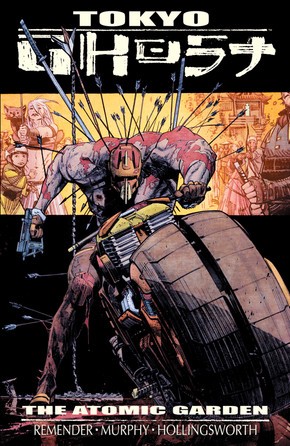
Underrated: Tokyo Ghost: The Atomic Garden

This is a column that focuses on something or some things from the comic book sphere of influence that may not get the credit and recognition it deserves. Whether that’s a list of comic book movies, ongoing comics, or a set of stories featuring a certain character. The columns may take the form of a bullet-pointed list, or a slightly longer thinkpiece – there’s really no formula for this other than whether the things being covered are Underrated in some way. This week:  Tokyo Ghost: The Atomic Garden.


I had never heard of Tokyo Ghost: The Atomic Garden. until I saw the cover of the trade at my LCS, which doesn’t really mean much other than sometimes I miss things. Something about the cover caught my attention as I was putting it on the shelf. There was something about a motorcycle rider stuck full of arrows that made me stop and wonder what the hell I was putting on the shelf, so I flipped the book and read a synopsis that was just curious enough to be immediately interesting, saw Rick Remender’s name and immediately purchased the book.

It never made it to the shelf.

The synopsis that helped to hook me in: The Isles of Los Angeles 2089: Humanity is addicted to technology, a population of unemployed leisure seekers blissfully distracted from toxic contamination, who borrow, steal, and kill to buy their next digital fix. Getting a virtual buzz is the only thing left to live for. It’s the biggest industry, the only industry, the drug everyone needs, and gangsters run it all. And who do these gangsters turn to when they need their rule enforced? Constables Led Dent and Debbie Decay. This duo is about to be given a job that will force them out of the familiar squalor of Los Angeles to take down the last tech-less country on Earth: The Garden Nation of Tokyo. You can check out the first issue on Image’s website from this link if you’re curious.

The promise of a story that deals with the dangers of technology wasn’t lost on the person who works with technology every damn day across two jobs and sees the impact of it on another as digital comics are an always present conversation piece at the shop (usually in how they don’t compare, but then that’s to be expected given the people in the conversation are literally buying physical comics at the time).

Remender takes our current obsession with technology to an extreme with Tokyo Ghost, imagining a world that reminds me of the dystopian future of the Matrix with the worst of a Hollywood drug den spread across LA. If Snake Plisken was here, he’d be trying to escape. Through the haze and horror of a tech addicted world, Remender focuses on a Constable, Led Dent, and his tech-free partner Debbie Decay. We see Debbie try to break Led’s all encompassing tech addiction by forcing him to detox… it’s an oddly uncomfortable story that’s all the more powerful by the striking nature of the addiction.

Look, I know you’re reading this on your phone, tablet, laptop or whatever. But this is a book that’ll remind you to go outside in an oddly non-preachy way. It doesn’t hurt that the art is perfectly suited to do what it needs to do; whether in the hell of LA or the relative paradise of Japan… this is a book that you really should be reading.

That the story is good is a byproduct of it’s message – and that’s one we probably all need to listen to (he says as he goes back to surfing the interwebs, where, incidentally, I discovered this is volume one of two, so maybe technology isn’t all bad…).


Join us next week when we look at something else that is, for whatever reason, Underrated.
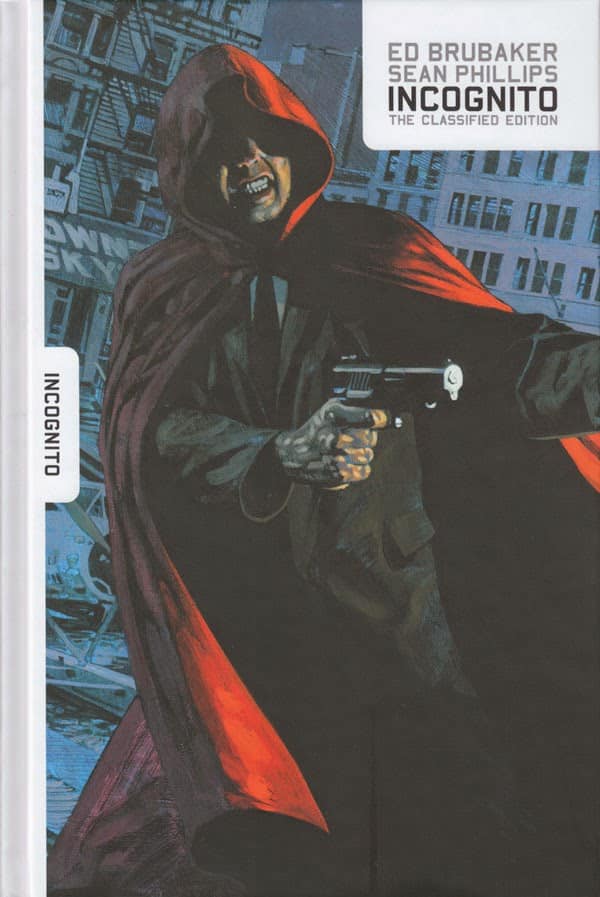
Underrated: Incognito

This is a column that focuses on something or some things from the comic book sphere of influence that may not get the credit and recognition it deserves. Whether that’s a list of comic book movies, ongoing comics, or a set of stories featuring a certain character. The columns may take the form of a bullet pointed list, or a slightly longer thinkpiece – there’s really no formula for this other than whether the things being covered are Underrated in some way. This week: Incognito


My local comic shop recently got the hardcover edition of Incognito in, and it last all of ten minutes on the table where it was in line for pricing as I picked it up and read what amounted to half the first issue before scooping it up before it ever actually made it to the shelf.

Written by Ed Brubaker, with art by Sean Phillips and colours by Val Staples, the hardcover collects both Incognito and the sequel Incognito: Bad Influences within its 360-odd pages as well an essay, a series cover gallery and some interesting process pieces. If you’ve read any of Brubaker and Phillips other work together, such as Criminal, Fatale or Kill Or Be Killed, then you probably have an idea what you’re in for. If you don’t… well, let’s just say you’re in for a very compelling story that you’ll probably want to read multiple times.

If you want to read the series’ synopsis, it’s below. If you don’t… well, skip the next paragraph, I guess. Either way, you’ll find the core premise of the comic below.

What if you were an ex-super villain hiding out in Witness Protection… but all you could think about were the days when the rules didn’t apply to you? Could you be a humdrum office clerk after being the best at years of leaving destruction in your wake? And what if you couldn’t stand it? What would you do then? 

This story is steeped in the pulp fiction of the 30’s and 40’s, stories that undeniably inspired the superhero fiction of today. Brubaker takes those early influences and fills out a world that has descended from them; there’s a very clear path in Incognito back to characters like the Shadow and the Spider (or rather Brubaker’s version thereof), and it gives the reader the sense that we’re barely scratching the surface with the characters and history revealed through the course of the hardcover’s 360-odd pages.

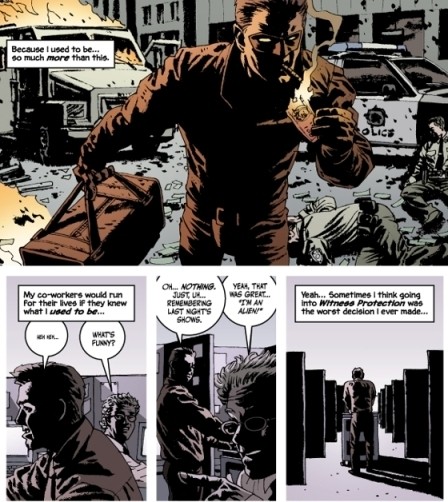
I was immediately taken in by the story as we learned more about Zack Overkill and how he went from a heavy hitting super villain to a lowly file clerk barely noticed by his coworkers. We see flashes of his mandated psychiatric appointments, the oh-so-real struggles he’s facing in a life that he’s not accustomed too. If you remove the super powered aspect from the opening part of the story, you can see a man struggling with his mental health amidst an unfulfilling life of boredom and depression. Is it any wonder that he eventually turns to drugs in order to find an escape?

Zach Overkill is an oddly likable guy despite never hiding (at least from us) what kind of man he used to be; whether this story is about his trying to find redemption, or a larger tale about whether a leopard can truly change its spots is one of the best parts about this book. Brubaker asks you not whether you can change for the better after making a horrible series of life choices, but whether others can accept your change. Whether they truly believe it, or if once they’ve labelled you a villain then that’s how they will always see you.

I should have expected good stuff from this book, but I wasn’t quite prepared with just how good it would be.

In a story that can be so much to so many, we’re left asking ourselves who we really are; are you really the person you think you are, or are you just a product of what this world has made you?


Join us next week where there will doubtless be another movie, series, comic or comic related thing discussed that is, for whatever reason, Underrated.
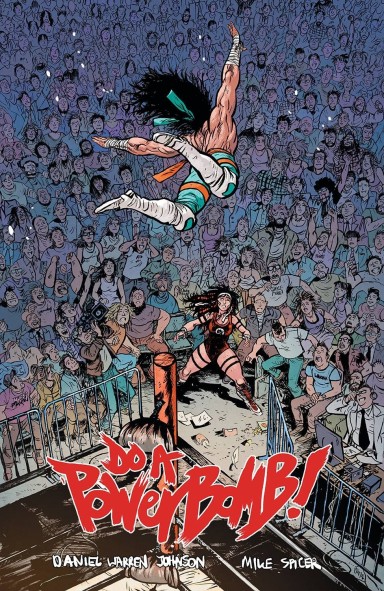
Underrated: Do A Power Bomb!

This is a column that focuses on something or some things from the comic book sphere of influence that may not get the credit and recognition it deserves. Whether that’s a list of comic book movies, ongoing comics, or a set of stories featuring a certain character. The columns may take the form of a bullet pointed list, or a slightly longer thinkpiece – there’s really no formula for this other than whether the things being covered are Underrated in some way. This week: Do A Power Bomb!


For one reason or another, over the past year or so I’ve found myself becoming a fan of professional wrestling again. It’s been more than 25 years since I last consistently watched wrestling, and yet between three or four people in different groups of friends I have being fans, I could feel the pull of curiosity. Needless to say, after the last year of finding my way back into professional wrestling, when Do A Power Bomb! came around I was curious. I’d missed the first issue or two, and so despite the covers drawing me into the comic, I resisted the urge to read them floppy issues until the trade came out.

So what’s it about? I’ve handily copied the blurb for you below.

Lona Steelrose wants to be a pro wrestler, but she’s living under the shadow of her mother, the best to ever do it. Everything changes when a wrestling-obsessed necromancer asks her to join the grandest pro wrestling tournament of all time, which is also the most dangerous! It’s The Wrestler meets Dragonball Z in a tale where the competitors get more than they ever bargained for!

Daniel Warren Johnson created, wrote and illustrated the story, with colours by Mike Spicer and letters by Rus Wooton. As you can probably tell by the blurb and my intro, the comic is about professional wrestling. It’s actually a unique story with how it blends professional wrestling, while acknowledging the scripted and predetermined outcome of each match, with real world consequences of the sport/performance.

As an aside, it’s interesting how given the athleticism required for professional wrestling, it’s not technically a sport as there’s no real winner and loser other than the stories being told. Performance art might be a better description (or sports entertainment, I suppose, which is why that’s a thing). Needless to say, I take umbrage with those claiming wrestling is fake; it’s not fake (those chops and slams hurt), but it is predetermined. Kinda like a movie. Only difference is, these actors/stuntmen/women only get one take in front of a live audience to tell their story and react quickly when something goes wrong.

It’s what goes wrong that Do A Power Bomb! deals with, and the repercussions of that. Without spoiling anything, this story is far deeper than you’re expecting. Far deeper. A comic about professional wrestling can easily be overlooked, and this is a comic with so much more to offer than giants in spandex. It’s an emotional story with some beautiful artwork that captures the frenetic in ring action. You feel the impacts on the mat through the paper.

And that’s why this is underrated.


Unless the comics industry ceases to exist this week, Underrated will return next week.

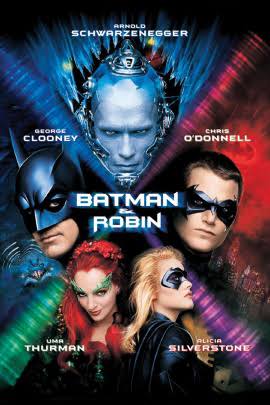
Underrated: Batman And Robin. Yes, The Movie. No, I Am Not Joking

This is a column that focuses on something or some things from the comic book sphere of influence that may not get the credit and recognition it deserves. Whether that’s a list of comic book movies, ongoing comics, or a set of stories featuring a certain character. The columns may take the form of a bullet pointed list, or a slightly longer thinkpiece – there’s really no formula for this other than whether the things being covered are Underrated in some way. This week: Batman And Robin.


You all know the general reputation of this movie. So bad that it ended the original run of Batman films. Nipples on the Batsuit and enough ice puns to chill a bottle of whiskey.

And let us not forget the Bat-credit card.

The last of the movie series that began with Tim Burton’s Batman is not thought of fondly, but I want you to think about a couple of points regarding the movie next time you want to hate on the only George Clooney Batman appearance.

  • It paved the way for Christopher Nolan’s Dark Knight Trilogy
    Alright, so this isn’t necessarily a good thing about the movie, but at least the follow up Batman flick led to one of the strongest movies featuring the Dark Knight we’ve had yet.
  • It’s the only film in which Batman does purposefully or accidentally kill somebody.
    When I say accidentally kill somebody, I mean those moments where he doesn’t seem to care what happens to criminals after he’s run them off a bridge. Or shot their vehicle with missiles. Or left a man on a train.
  • Think of it as a continuation of the Adam West Batman.
    All of a sudden the movie takes on an entirely new look when you see it as being an homage to the biffing and powing of the 60’s.
  • Once you accept it’s not a great movie, it’s surprisingly fun.
    This will never place highly on any comic fans order of Batman movies – at best it might be in the bottom two or three – but it’s always going to place high on the silly and goofy list. Sometimes, after imbibing some mind altering substances, that’s exactly what you want. Don’t take this movie seriously, and you’ll find it a very ice film.
  • Arnold’s ice puns are awful.
    Seriously, they’re very uncool. And yet… you can’t help but laugh at the sheer delight Arnold has in delivering them.
  • It really is so bad it’s great.
    There’s only a few movies that are so shit that you enjoy them, and this is the best of the ones featuring Batman.

You didn’t really think I’d claim this as a good movie, did you? It’s awful. But it’s so awful that it’s really enjoyable (unlike the theatrical cut of Batman V Superman which is considerably worse than the extended version). So enjoyable that it’s almost an underrated gem – which makes it the perfect movie to rewatch when you’ve got a spare moment and want a laugh.


Join us next week when we look at something else that is, for whatever reason, Underrated.

Underrated: Green Valley

Did you read this book yet? Allow us to remind you why you should with a rerun of a column from 2019.


This is a column that focuses on something or some things from the comic book sphere of influence that may not get the credit and recognition it deserves. Whether that’s a list of comic book movies, ongoing comics, or a set of stories featuring a certain character. The columns may take the form of a bullet pointed list, or a slightly longer thinkpiece – there’s really no formula for this other than whether the things being covered are Underrated in some way. This week: Green Valley


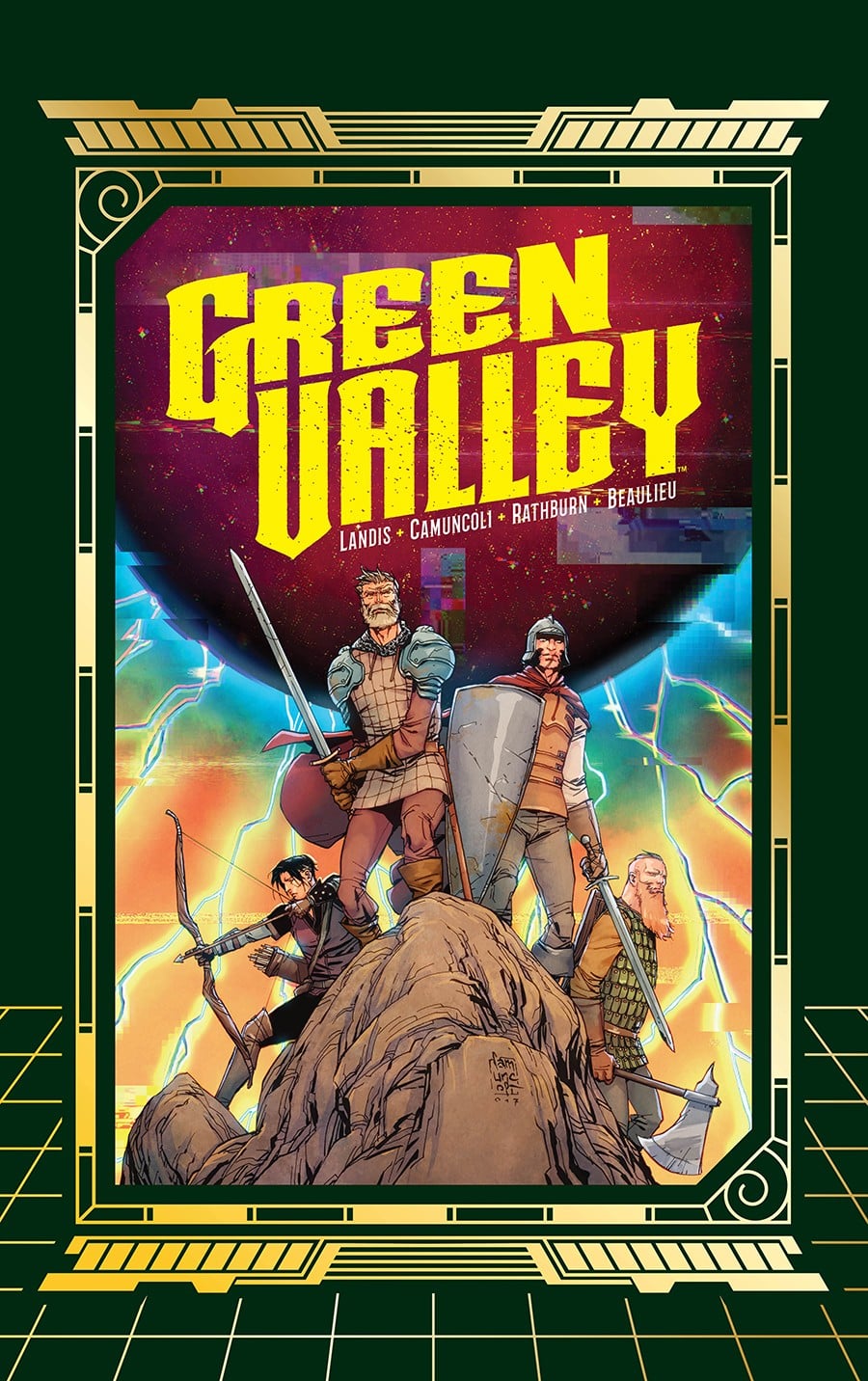
Published by Image, Green Valley was written by Max Landis and features art by Giuseppe Camuncoli, inks by Cliff Rathburn and colours by Jean Francois Beaulieu. The wonderful hardcover collection in my hands collects nine issues and will set you back $29.99 (I paid for this out of my own pocket, and happily so, even though I probably had access to the single issue review copies).

So what’s the story about?

GreenValleyHC.jpg

The knights of Kelodia are the finest in the land, but they’ve never faced a POWER like the one that resides in the Green Valley. Now they’re about to embark on the adventure of a lifetime—to stop a wizard and slay his dragons—but there’s no such thing as magic or dragons…is there? 

You may have noticed by reading this column that I tend to enjoy stories set in and around medieval times, even though I don’t tend to read that many comics set in that era (or at least I didn’t until this year). So when my LCS suggested I pick this up (it was on the counter and the owner told me I’d like it) I did so without question because sometimes I don’t want to read superhero comics.

One of the first things I noticed was that the hardcover itself just feels utterly wonderful in your hands.  The above image is of the hardcover, with the comic art inset slightly into the gold and green cover of the book itself in an effect that really doesn’t translate as well in the image as it does in person, but it does give you a hint about the nature of the story, which aside from the cover and text on the back I entered utterly blindly – and I fell in love.

green valley interior 2.jpg
green valley interior.jpg

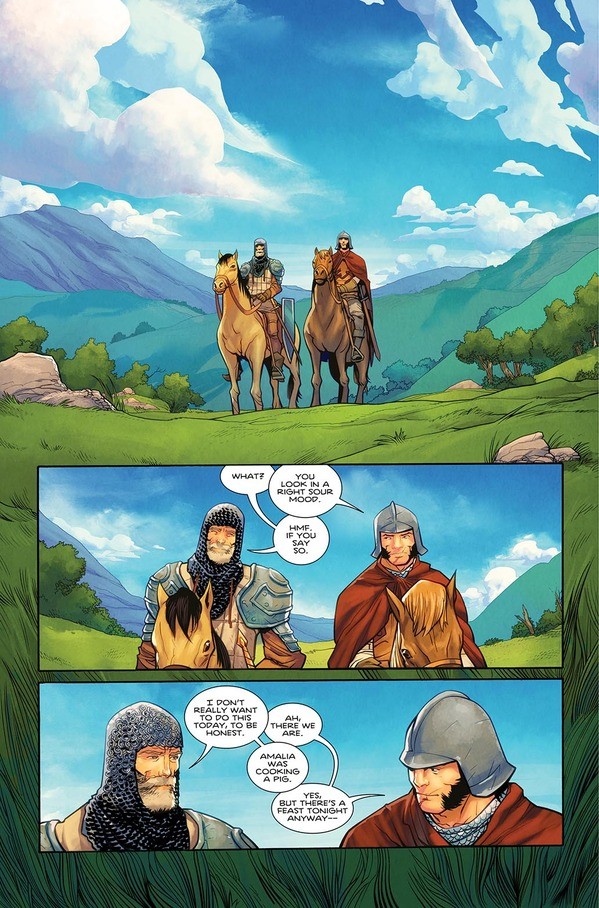
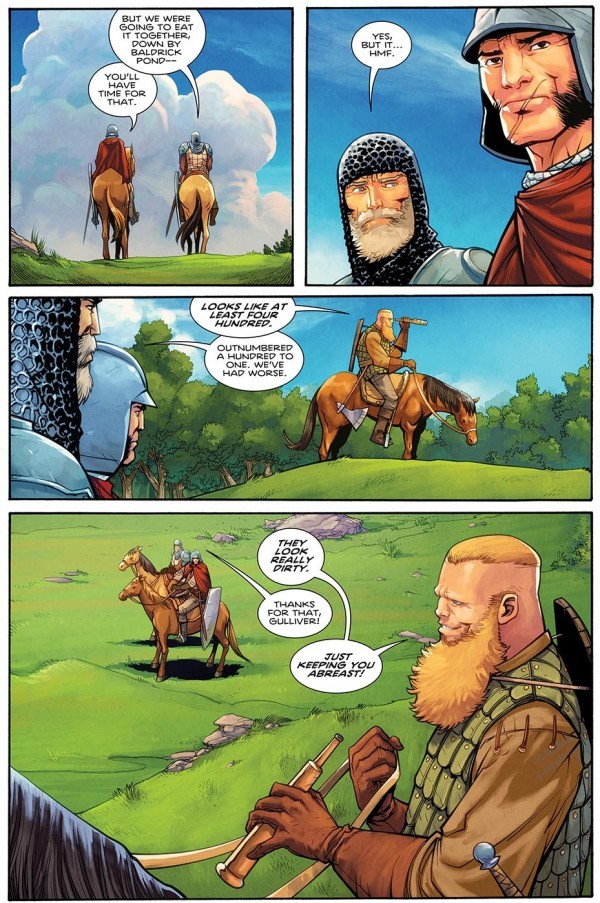
Green Valley is the kind of book that you will want to read in a single sitting – it grabs you right from the start as you’re introduced to the legendary Knights of Kelodia (all four of them) as they face down a barbarian horde in a brilliant sequence that’s full of dry humour, a genuine feeling camaraderie from the knights  and tense knightly masculinity all wrapped up in some beautiful visuals that are some of the nicest pure-comic pages I’ve seen in quite some time. Were I reviewing this here, I’d be giving this at least 9’s across the board and telling you to buy this without question – the story and art genuinely took me by surprise and had me forget that I really should be doing a bunch of other stuff for the hour or so I sat enraptured in this story.

Without spoiling anything, it’s tough to explain why I loved this story, but that won’t stop me from trying. Green Valley is a very intelligently written book, with dialogue that is, at times, so sharp you could loose a finger. There are moments that span the gamut of human emotion for the characters, and will have you laughing out loud and pumping your fist as the story goes on – just as you’ll feel gut-punched at certain other moment. Max Landis has written one hell of a story that deserves a very special place on your shelf.

Now excuse me while I go reread it (no, I’m not saying that for effect – I’m actually going to reread it now).


Unless the comics industry ceases any and all publication look for a future installment of Underrated to cover more comics that aren’t cracking the top 100.

Underrated: Battlepug Volume One

This is a column that focuses on something or some things from the comic book sphere of influence that may not get the credit and recognition it deserves. Whether that’s a list of comic book movies, ongoing comics, or a set of stories featuring a certain character. The columns may take the form of a bullet pointed list, or a slightly longer thinkpiece – there’s really no formula for this other than whether the things being covered are Underrated in some way. This week: Battlepug: Volume One


Disclaimer: Somehow I managed to delete, and save the deletion, of almost the entire text of this column. It is currently about ten minutes before it’s due to go live… 

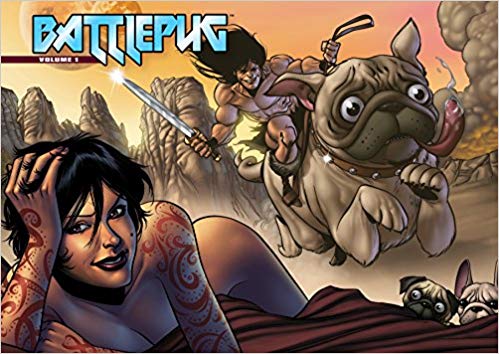
After a visit to the thrift store the other day I found the first volume of Mike Norton‘s BattlepugJoining Norton for the comic is colourist Allen Passalaqu and letter Chris Crank. The story itself is a blend between homage and parody to Conan and He-Man in a world where sword and sorcery is the name of the game in a world where giant cuddly and innocent looking (mostly) animals represent a rather unconventionally large threat. With the first volume taking on a story-within-a-story set up, the framing is of a fairly stereotypical fantasy woman telling a bed time story to her two talking pugs. 

It’s the story within, that bed time story, that holds the origin of the Battlepug as a lone survivor of a village grows to become the Conan figure in all his brutal glory. The book, a slightly oversized hardcover that cost me $6, is presented almost like a children’s book – and because this isn’t a book for kids, that only adds to the brilliance of its presentation. Battlepug is one of those rare stories that is able to both poke fun at and show respect to its genre while exposing the tropes and criticisms that audiences level at classical fantasy. And it does all this with utter seriousness as a giant pug slurps and snorts through the pages.

Although there is a very cohesive and well told story here, there are also brilliant little moments every few pages; jokes in dialogue and imagery, nods of the head to other things the reader should be all too aware of, and things that may not necessarily be on their radar (I’m sure I missed a lot, honestly). There’s a much deeper story for you to unpack upon the second or third reading, and it never gets old. Or it hasn’t for me.

Norton’s story is utterly fantastic. It’s funny, it’s remarkably well written, and it deserves so much more than the hastily rewritten column that it is getting. It is beyond an Underrated gem, and it’s one that I have every intention of revisiting very soon, and in more detail, when I find the second volume.


Join us next week when we look at something else that is, for whatever reason, Underrated.
Underrated: Maverick #1-12

This is a very old rerun, inspired entirely from a comment on a recent episode of Those Two Geeks by the author. The comment meant a lot to me, and so I wanted to make sure this series got a little more love.

This is a column that focuses on something or some things from the comic book sphere of influence that may not get the credit and recognition it deserves. Whether that’s a list of comic book movies, ongoing comics, or a set of stories featuring a certain character. The columns may take the form of a bullet pointed list, or a slightly longer thinkpiece – there’s really no formula for this other than whether the things being covered are Underrated in some way. This week something a little different as we take a look at one of my favourite characters, and his twelve issue solo series from the late 90’s: Maverick.


maverick 4.jpg

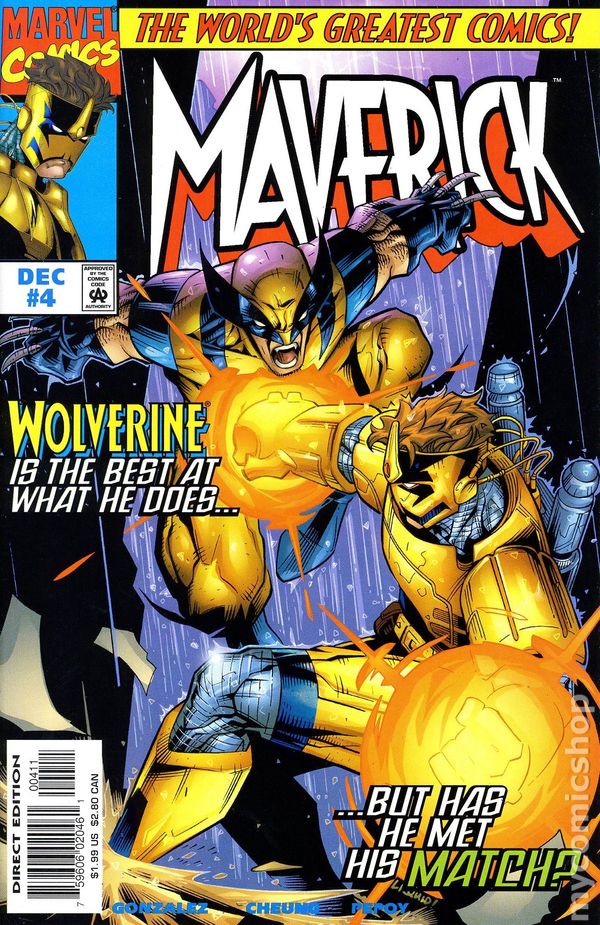
One of the first non-Wolverine comics I ever picked up was Maverick #4. Of course, the reason I picked it up was because Wolverine was on the front cover, so technically, the first non-Wolverine comic I picked up was Maverick #5.  As it turns out, I’d end up reading a lot about Maverick through the years because of Wolverine; Marvel UK’s Wolverine Unleashed was reprinting the original American comics.

Maverick is a product of the 90’s; his  first appearance in 1992’s X-Men #5 had all the hallmarks of the time;  giant shoulder pads, heavy guns, and  a half face mask that allowed his hair to fly free. Maverick would end the decade with a more streamlined version of his armour; sleeker and slightly less bulky for his solo series that ran for twelve issues beginning in 1997.  Although he’s had numerous guest appearances in a few X-Men based comics, Maverick has never really reached the level of popularity of certain other characters introduced during the same time frame, but he does have a very fond place in  this comic lovers heart.

Although Maverick is almost always featured in X-Men related titles, he is most closely associated with everybody’s favourite dead Canadian mutant, having been a significant part of Wolverine’s life before his skeleton was coated in adamantium. But it wouldn’t be fair to Maverick, though, to just write him off as that  mercenary friend of Wolverine’s; Maverick’s own history is a rich bed of potential, and it’s explored within this series.

Born in East Germany to parents who were either Nazi sympathizers or full blown Nazi’s, Christoph Nord was self-described idealist, and fought against the communist regime during the height of the Cold War, joining a West German black ops unit named Cell Six. During this time Nord met and fell in love with a nurse Ginetta Barsalini, whom he fell in love with and married. Not realizing he was a spy until it was too late, Nord was forced to shoot her inn self defense (unwittingly killing his unborn child in the process). Shortly after this Nord was recruited by the CIA, changed his name to David North and ended up on a team with Victor Creed and Logan.

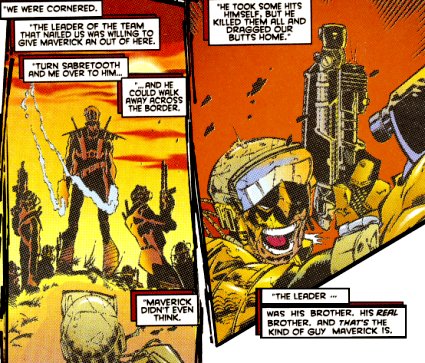
When the team was sent on a mission in East Germany, both Creed and Logan were badly injured. Rather than follow protocol and leave them, North dragged them to the extraction point where he was cornered by Andreas Nord, now an assassin, North saved his teammates the only way he could; killing his own brother in cold blood.

Maverick is a character rooted in tragedy; from his early years already recapped to his contracting a slow acting deadly disease that took his powers before killing him slowly (he was brought back to life moments after his death with some inventive CPR which also returned his powers), before becoming an executioner for a shady government organisation by way of brainwashing before losing his powers (again).

maverick spread

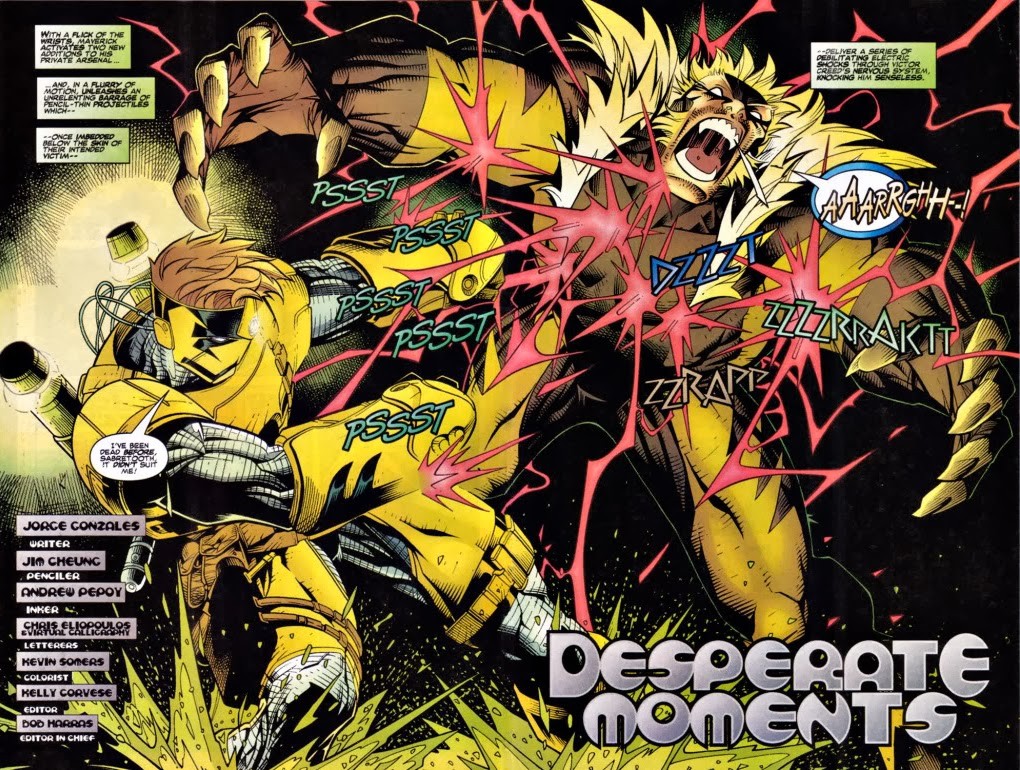
One of the most enjoyable twelve issue series I’ve ever read was Maverick Vol. 2; this run had me from the moment the protagonist died in the opening pages to the very end. It’s a series that has never been, and probably never will be collected into a trade paperback, which means that to read it you’ll need to track down the floppies. The series deals with some suddenly relevant again issues surrounding anti mutant attitudes, Russian gangsters and the struggle of being born to Nazi sympathizing parents, as well as what it’s like for a young facing certain death at the hands of the Legacy Virus. On top of that there’s a few guest stars, some pretty fantastic enemies (some new and some old), and some really great art and writing. Honestly, I tend to read this series on an almost yearly basis.

maverick03.jpg

Other than appearing in a few Wolverine stories that have been released as TPB’s and being a part of the ensemble cast of the 2002 Weapon X series that’s also been at least partly collected into TPB’s, finding Maverick comic appearances is largely a case of scouring the back issue bins at your local comic shop anyway. If you do that, and I highly recommend you do, then hunting for the Maverick #1-12 comics could be an easier (and cheaper) task than hunting for key issues of Deadpool or Wolverine because not many people are looking for them – which is a shame, but could work out to your benefit.

Do yourself a favour; find Maverick. You’ll not be disappointed.

Underrated: Wrath Of The Eternal Warrior

This is a column that focuses on something or some things from the comic book sphere of influence that may not get the credit and recognition it deserves. Whether that’s a list of comic book movies, ongoing comics, or a set of stories featuring a certain character. The columns may take the form of a bullet pointed list, or a slightly longer thinkpiece – there’s really no formula for this other than whether the things being covered are Underrated in some way. This week: Wrath Of The Eternal Warrior.


wotewJust under a year and a half aog, Valiant Entertainment released a deluxe hardcover edition collecting the entire 14 issue run of Wrath Of The Eternal Warrior along with Eternal Warrior: Awakening #1. Fifteen comics presented in an over-sized hardcover along with 20 odd pages of bonus extras that add a lot for  those interested in the process of the creation of the series, all for $49.99. And yes, I did buy this myself (and happily so) despite having access to the review copies and single issues I had picked up when released.

This series remains one of my all time favourites, so getting a chance to read it all in one spot was something I couldn’t pass up.

But despite this being one of my all time greats, it wasn’t until about the midway point that I fell for the series. Wrath Of The Eternal Warrior didn’t start out as a series that wowed me. The first four issues seemed to struggle with pacing and the art style, especially given the series billing as a follow-up to the explosively exciting Book Of Death miniseries that (spoiler) ended in the Eternal Warrior’s death. It’s that death, and those that follow, that form the crux of the series, but without the first four issues you don’t realize the toll taken on the Eternal Warrior with each death and resurrection cycle. The comics that I felt struggled with pacing quickly became some of the most important ground-setting in modern comics – a lesson that I took to heart, and quickly so.

Comics, like all stories, need time to breath.

It would also be fair to say that the art team of Raul Allen and Patricia Martin were not immediately to my taste. In furtherance to that, it would also be fair to say that my taste quickly changed as the series progressed and the elegance and artistic genius of the husband and wife team gave me a new appreciation of the majesty of sequential art.  There are other artists who contribute to the series, all with a fantastic level of talent; it’s these contributions that give the series the honour of being one of the most visually stunning and diverse pieces of sequential art published by Valiant.

Robert Venditti has written some incredible comics in his time, but one of the finest examples of his work comes in the fourteen issue run of Wrath Of The Eternal Warrior. Taking you on a journey through history,  across continents and beyond death, Venditti weaves an incredibly deep tale that reveals a different layer upon each subsequent reading.

It’s also violent as all hell in places, which should satisfy the need we have for a bit of blood and conflict in our comics, but there’s also a deep emotional story here that cannot – and should not – go ignored. The Eternal Warrior is an ancient being, and his life has not always been sunshine and roses – but he still picks himself up and dusts himself off.

Isn’t there a saying that’s roughly it isn’t how many times we fall, but how many times we pick ourselves up?

Wrath Of The Eternal Warrior is a fantastic series, and I envy those of you who get to read the entire thing in one sitting; the deluxe hardcover is worth picking up for that series alone, which is why I haven’t mentioned Eternal Warrior: Awakening at any point in this week’s column because that’s the cherry on top of the fantastic main course. Mixed metaphors aside, Awakening is another really good comic, and serves as another nice bonus for those who buy the collection.

I’ll  make no secret of my abject love for this series, indeed the fact I own both the individual issues and the deluxe hardcover when I also have access to the review copies should hopefully speak volumes to that love. It’s a love that I genuinely believe you’ll share when you give the series a chance – it’s an underrated gem.


Join us next week when we look at something else that is, for whatever reason, Underrated.
« Older Entries Recent Entries »