When it comes to W. Maxwell Prince comics, “weird” doesn’t cut it. From Ice Cream Man to HaHa, strangeness and weirdness are just the first few pages. From there they pivot hard into less traveled territory, a place of in-betweens and unstable angles that often deal in raw and painful emotions. I like to refer to Prince’s work as emotional Twilight Zones. They can be brutal, bruising, darkly sweet, and outright terrifying.
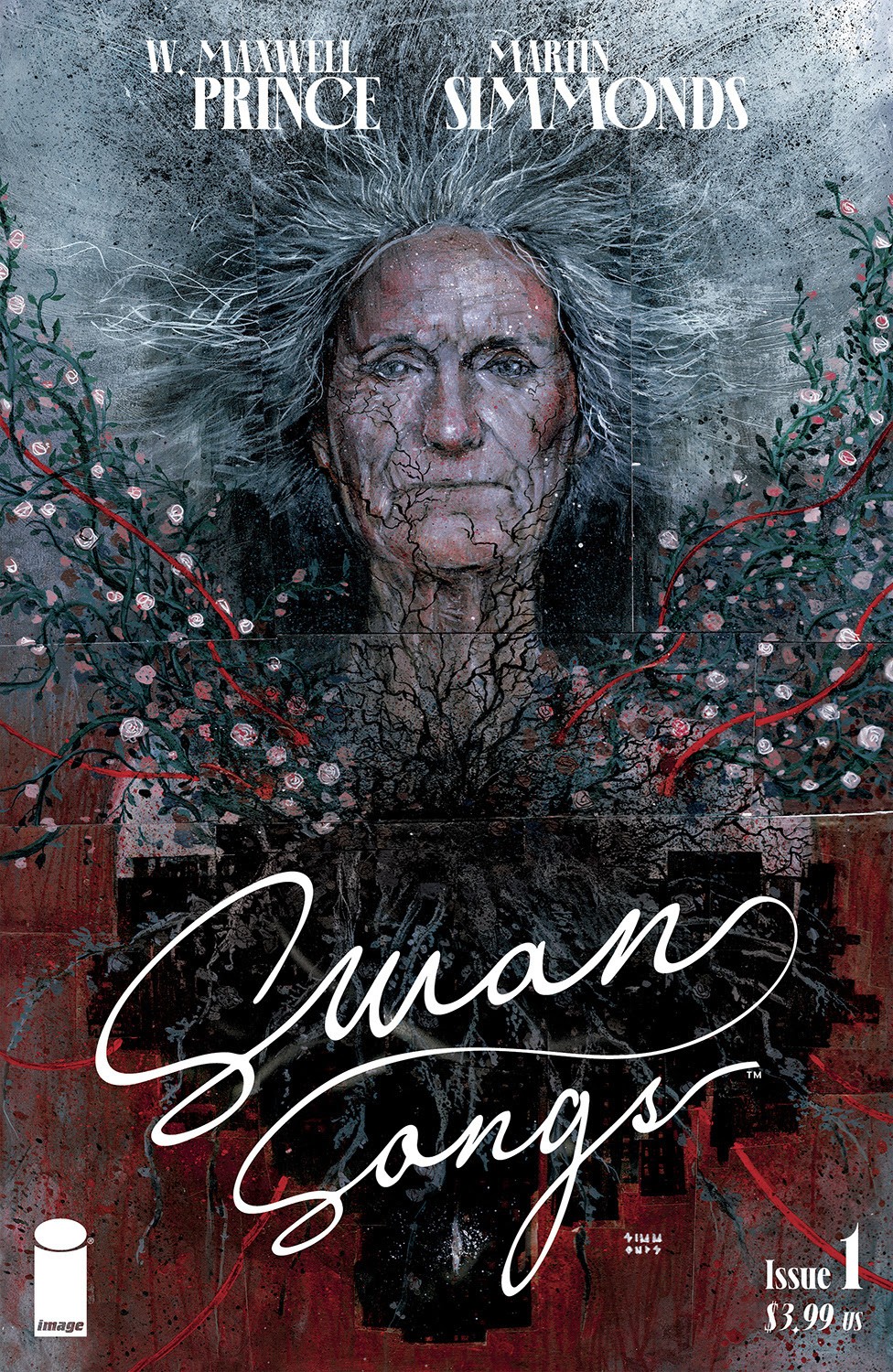
His latest anthology, Swan Songs, goes down the same path, but this time the emotional anchor lodges itself into the concept of endings (hence the title). Issue #1, fully painted by Martin Simmonds (Department of Truth), cracks the spine of the series open with a tender and frightening tale about the apocalypse coupled with the care of a terminally sick parent. It tugs at the more sensitive parts of the soul, and then it adds pain and love to leave a lasting mark on the reader.
Swan Songs will feature a new artist each issue, among them Caspar Wijngaard, Filipe Andrade, Caitlin Yarsky, collage-artist Alex Eckman-Lawn, and Martín Morazzo. The first story, titled “The end of…the world,” follows a young guy that braves a broken-down cityscape in search of a Better Home Magazine before an atomic bomb destroys all life as they know it. His mom, who is bedridden in a near-empty hospital, loves listening to her son read to her from the magazine. The young man wants to indulge his mom one last reading session before the final curtain falls.
One way to approach Maxwell Prince stories is by taking them as emotional puzzles. It’s not that you’re required to make specific pieces fit into place to make sense of the story. Rather, your experience will hinge on how you connect certain story sequences together at a deeper level, taking into account what drives each character to engage with their world. In Swan Songs, this thought exercise is perhaps more guided than Maxwell Prince’s previous work thanks to a strong sense of finality that permeates throughout each page.
Urgency becomes a crucial storytelling device thanks to that focus on endings. Martin Simmonds visuals are a large part of the reason for this, especially in terms of scope. Simmonds takes care to foster an acute sense of impending doom that carries through each page. The city the man runs through in his desperate search looks like it’s ready to collapse under its own weight. Background characters and other signs of life project resignation, whereas buildings and roads look like they’re usefulness has run out. It’s as if everyone and everything in the story knows it’ll all truly end once the comic reaches its final page.
Simmonds’ use of muted colors mixed in with darker shades of reds becomes an integral part of the story’s emotional palette. The setting is made to look like it was hopeless and unsalvageable way before the atom bomb ever threatened to end all life. It creates an interesting contrast with the young man’s mission of finding the last Better Home magazine for his mom.
Horror is allowed to set in as well, especially with the presence of emotional vampires that threaten to block the man’s progression. They help populate a dark world that’s already signed its death warrant and they allow readers to connect even more emotional dots between the main situation and the other concerns that hover around it.
Swan Songs #1 sets the tone for a unique emotional journey that hopes to unsettle with the intention of getting at harder but necessary interpretations of our relationship with the end. There’s melancholy and there’s pain, confusion and frustration, but also the possibility of hope should the individual find it within him or herself to see certain things all the way to their conclusion. And yet, none of this is telegraphed to the reader. You don’t read Swan Songs for answers. You read it for the questions it’ll make you ask. Whatever answers you find are entirely yours.
Writer: W. Maxwell Prince Artist: Martin Simmonds Letterer: Good Old Leon Story: 10 Art: 10 Overall: 10 Recommendation: Read and then stare into nothingness and let it all sink in Release date: July 5, 2023
Image Comics provided Graphic Policy with a FREE copy for review
Creepypasta is horror for the internet age. It started out as user-generated urban legends, more freely dipped in horror, that were shared online in forums and message boards in a style that catered to plausibility. They lived in the grey areas between ambiguity and anonymity, the two things that best describe digital interactions across the board (which is scary in itself). Classic monsters were replaced with hooded figures with abnormally long limbs or faces with frozen smiles on them, carrying names like Candlejack or Ickbarr Bigelsteine. Haunted houses were cast aside for liminal spaces and interdimensional spots that could feature stairs going to places unseen or strange TV shows with names like Candle Cove.
The ScreamBox exclusive Creepypasta movie manages to capture a lot of this with an anthology format that goes for 5-6-minute-long stories, à la The ABCs of Death, that feel like a greatest hits rundown of what Creepypastas are all about. Among the filmmakers that contribute to the film are Daniel Garcia, Buz Wallick, Berkley Brady, Paul Stamper, Carlos Omar De Leon, Tony Morales, Mikel Cravatta, and Carlos Cobos Aroca.
Like all good horror anthologies, the film features a wraparound story which, in this case, follows a man in a strange house who’s looking for a flash drive that’s housing a sensitive video in it. The place is a mess, with dead bodies strewn about and an analogue TV with an 8-bit video game stuck on its start menu screen to round out the atmosphere (here we get a clever Easter egg in the form of Ben Drowned, a popular Creepypasta by Alexander D. Hall, aka Jadusable). The man moves towards a computer screen that sits on a cryptic chat page that directs him to watch sinister video after sinister video as he searches for the right one. We never know who’s writing on the other end.
The short stories range from shadow people to long-legged boogeymen (like Jumby) that kidnap kids. They serve as introductions to urban legends, brief glimpses into horrors that have the potential to become movies independently. The setup is simple enough. One or two characters come into contact with something that defies explanation, and is also off-center weird, only to be immediately haunted or traumatized by it.
Reality itself gets altered to accommodate the beings in these stories, but never to the point of completely breaking away from it. One thing Creepypastas excel at is in projecting a kind of strangeness that flirts with the possibility of being real. I’d argue that’s what makes them so compelling. They aim to scare in a very intimate way while never fully letting go of the little truths that make the mind wonder.
Not every story hits the mark, though. Those that play around with scary imagery and keep to the margins so that the viewer’s mind fills in the blanks are more successful than those that indulge in special effects and overdramatic performances. There’s a story about blue-eyed people that communicate with another dimension, for instance, that could’ve done with some restraint.
On the other hand, There’s a Black Eyed Kids story that’s quite a highlight. It follow a lonely and sick old woman as she’s visited by one of these kids. The segment keeps to a grey toned and heavily shadowed aesthetic that accentuates the horror whenever we’re shown something terrible, if only for a moment, and it sustains the effect throughout the brief runtime. The closing story, about El Cuco (a variation of El Coco), is another high point, and it might be the best the bunch. It builds up the legend of a dark creature with clever use of suggestion and dread. It carries a sense of dark fantasy that makes it come off almost fairytale-like, but not to the point of shedding its Creepypasta identity. Its closing sequence makes sure the anthology ends on a high note.
Creepypasta has the necessary elements to become a very different and exciting horror anthology. It has a unique identity that already sets it apart from the rest. The micro-short story approach plays to the strengths of the Creepypasta concept and opens doors to future entries. Aiming for a stronger selection of stories and a continuation of high-quality wraparound stories will surely lead to the creation of a loyal fanbase that’ll constantly be itching for more. I wouldn’t be surprised if that fanbase isn’t growing now as we speak.
When I was just a wee baby (as in barely a few months old), my mom decided to take me to the movie theater with her to see The Lost Boys (released in July, 1987). Jerry Rees’s The Brave Little Toaster was also playing. My mom apparently weighed her options and decided The Lost Boys would have more of an impact in my early development than a toaster with a smile.
I cried during the entire movie. If you’ve never seen it (and if you haven’t, you should), the vampire make-up effects by artist Greg Cannom were terrifying. The vamps kept their human forms, but their faces transformed into something resembling very angry bats. And then there’s the vamp feeding scene at a punk bonfire. Fangs sunk into skulls and blood flew over the fire as the bikers went into a frenzy.
Years later, still a kid, I watched the movie again and managed to get through it without crying out of pure fear, but what stood out this time was how important the movie’s mother figure, Diane Weist‘s Lucy Emerson, was to the story and how much tension and terror the movie extracts from her as we watch one of her sons worry over her safety thinking she was dating a vampire. It left an impression. What if my mom got targeted by a vampire all of a sudden? Could I kill it on my own or did I need my own Frog Brothers to stake the bloodsucker?
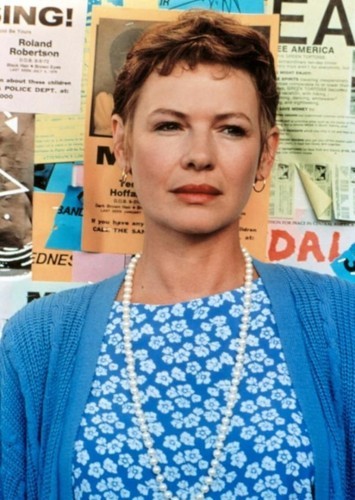
It was easy to empathize with Lucy. She was a single parent moving in with her father at a time when her two kids were at their most rebellious in a new place she later learns is infested with vampires. She becomes a calming presence that could’ve helped more if her kids had let her in on the troubles of Santa Carla and the people they hung out with. One thing I admired was how brave she came off as in a place director Joel Schumacher went lengths to portray as dirty, dangerous, and forgotten. She was strong and she proved it in the final moments of the film, taking a decision for the sake of her family’s safety that jeopardized hers. All of this to say, Lucy Emerson was my first horror mom and she’s remained a favorite ever since.
It goes without saying by now, but my appreciation of horror, and The Lost Boys in particular, started getting nurtured the moment my mom decided to lightly traumatize me as a baby by taking me to the movies to see biker vampires on a big screen. So, in honor of the work mothers do from the moment we’re born, here’s a list of 5 horror movie moms that either scare, take care, or bring chaos to their kids. In other words, the kind of moms that keep steering future generations into horror.
Enjoy, and Happy (belated) Mother’s Day!
1. Ellen Burstyn as Chris MacNeil in The Exorcist (dir. William Friedkin, 1975)
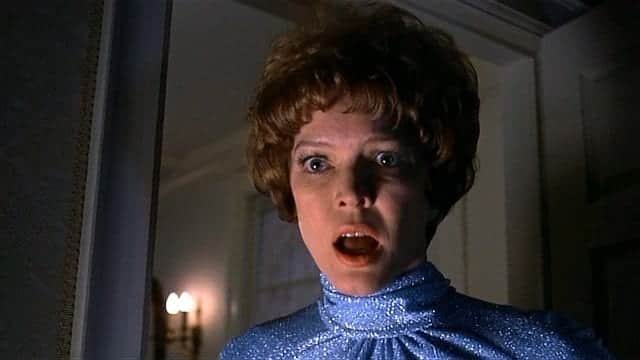
As frightening as the possessed Regan MacNeil is, none of it would’ve worked to the extent it did if the audience couldn’t channel their horror through her mom. Ellen Burstyn made this possible with a spectacular performance as Chris MacNeil, a mom that embodied both the fear of living with a child tormented by something unfathomable and the strength that’s required to fight a battle that initially looked unwinnable.
Burstyn dug deep to portray a mother that had her entire reality flung out the window and yet still managed to hold out hope as a demon tore apart her kid from the inside. Her facial expressions should be studied by anyone interested in capturing what true fear looks like, but also what anger and frustration look like in a supernatural setting. Each one of Chris MacNeil’s screams is a gut punch that makes you reel, heightening the horror of the possession and the idea of what it means to share a household with a sinister entity hellbent on corrupting an innocent soul.
2. Hitomi Kuroki as Yoshimi Matsubara in Dark Water (dir. Hideo Nakata, 2002)
Mothers have a strange and complicated relationship with child ghosts in horror. In movies where the mother is grieving the loss of a daughter, for instance, the ghost becomes a metaphor for loss and denial in the face of death.
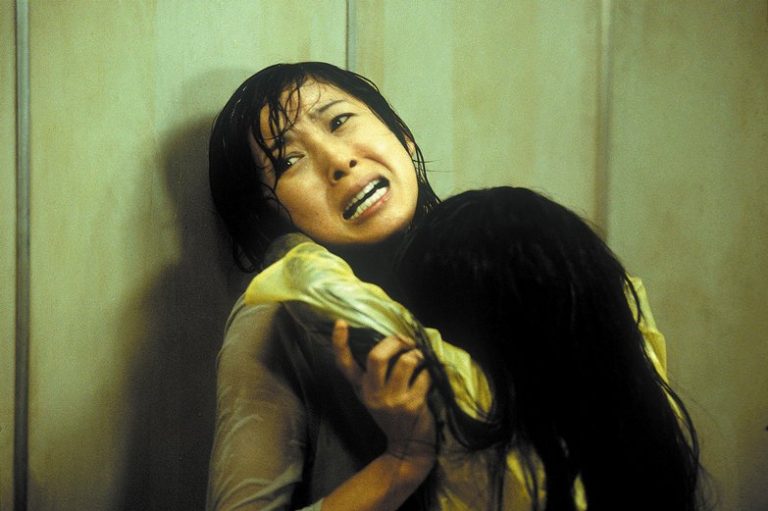
In Hideo Nakata’s Dark Water, though, the connection becomes something different. The story’s mother character, Yoshimi Matsubara, isn’t mourning the loss of a child. She’s getting consumed by the fear of losing hers, all of which stems from the ghost of a little girl that died in the apartment building they live in.
Actress Hitomi Kuroki plays Yoshimi like a tragic beacon of light that lonely ghosts can find a mother in. Her performance captures both the terrors that motherhood brings to the fore and what being a parent represents in the grander scheme of things. Kuroki channels the energy of a haunted house in human form, reluctantly accepting her role despite the consequences of potentially becoming mom to a ghost.
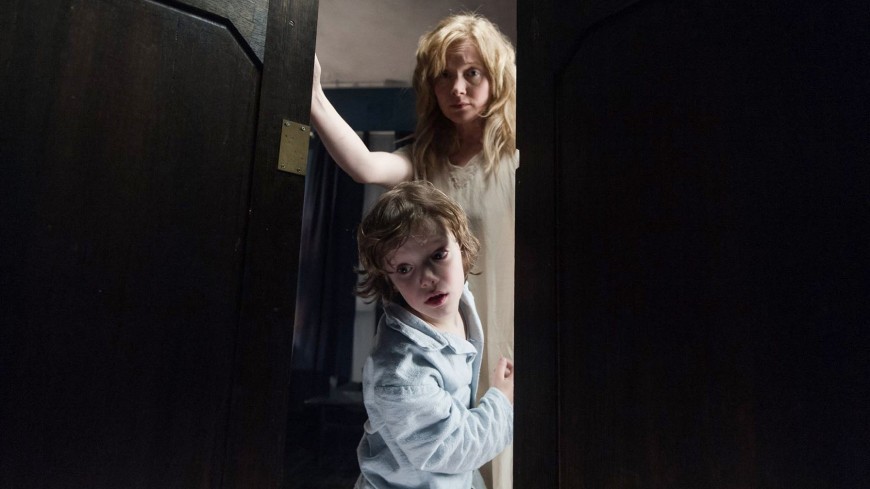
3. Essie Davis as Amelia in The Babadook (dir. Jennifer Kent, 2014)
Perhaps the most influential horror mom in recent times, Essie Davis’ Amelia landed on the scene with a force that reminded viewers how brutal the experience of motherhood can be. The Babadook runs on her intensity, on her up-close and uncomfortably personal pain.
Amelia is a single mom taking care of her high-energy kid, called Samuel. Her life has essentially halted, fully, just because Samuel and his behavior take up so much of her existence, every inch of it, in fact. When the titular demon comes into their home, it finds Amelia ripe for murderous possession.
Director Jennifer Kent managed to paint a rage-filled portrait of a mother that was dealt an extremely bad hand. Essie Davis leans into Amelia’s frustrations and makes a compelling argument against becoming a mom, but only in certain moments. At others, she manages to flip the horror of the Babadook to show how incredibly beautiful it can be to take care of a life you created.
4. Vera Farmiga as Norma Bates in Bates Motel (TV series developed by Carlton Cuse, Kerry Ehrin, and Anthony Cipriano, 2013-2017)
I’m going to cheat here really quick and go for a horror TV series instead of a movie because this example is just too good, and it should be discussed more as a whole. Vera Farmiga’s interpretation of the iconic Norma Bates in Bates Motel is one of the most fascinating takes on the role in the history of the moms in horror.
The series modernizes the Norman Bates story by making the motel he shares with his mother part of a larger ecosystem and by having Norma be very much alive. Drugs, late night rendezvous, and dangerous relationships form in their place of business, and Norma has a hand in everything in one shape or another. And yet, nothing with her is predictable. She can turn a bad situation worse or offer comfort in times when those closest to her are in need.
What’s impressive is how the show interweaves outside influences with the peculiar intricacies of Norma’s relationship and outright manipulation of Norman. Farmiga switches with ease between scheming and selfish to loving and nurturing. She’s a source of torment one episode and a pillar of stability in another. She’s both what Norman needs as a mother and what he desperately needs to run away from. Farmiga puts on a show for the ages as Norma Bates. Her contribution to horror should not be overlooked.
A baby can be a terrifying thing, especially as it grows inside you. It can either be a great source of happiness or a force of existential oppression that can shatter a parent’s identity. Add the fear of some foreign entity shaping and corrupting the life you’re carrying and things can get scarier fast.
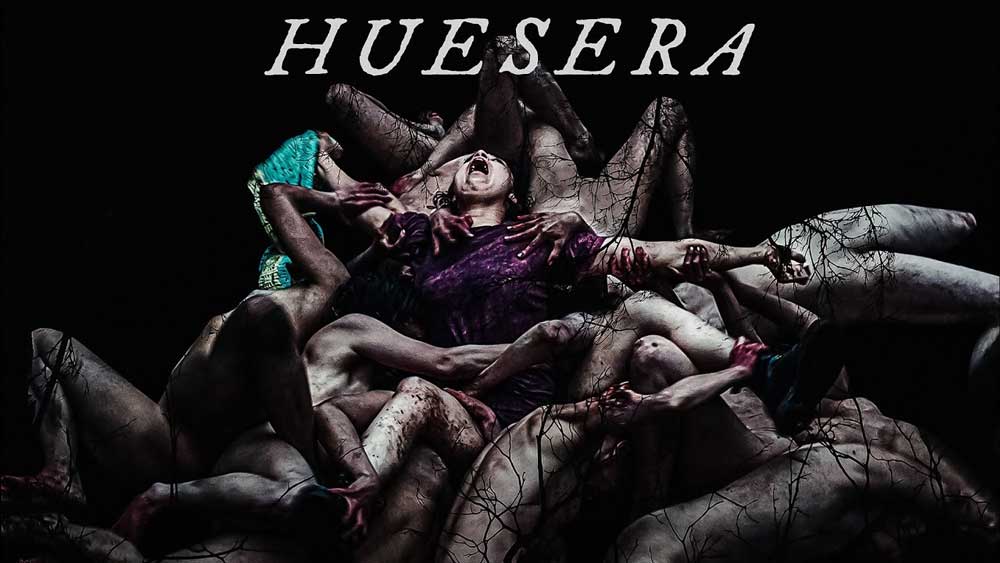
Michelle Garza Cervera’s Huesera indulges in this kind of fear, asking what a child is supposed to mean to a mother and whether they should submit to whatever the answer is. It places the mom-to-be, Natalia Solán’s Valeria, at the center of the story as a kind of victim of pregnancy, someone who went along with social expectations only to open the doors for something sinister to latch onto her baby.
Solán approaches Valeria as a ticking time bomb-type of character that suffers quietly at first, but is then forced to face the entity and the prospect of becoming a mother in the worst ways possible. Watching Valeria unravel is tough, but it comes with the development of a different point of view regarding a mother’s obligations and whether it’s okay to resist them. The very meaning of personal sacrifice is explored here, and it leads to an urgent question more people should ask themselves: is the parent’s life, their dreams and desires, less important than that of the child’s? The answer, Huesera would argue, is not so simple.
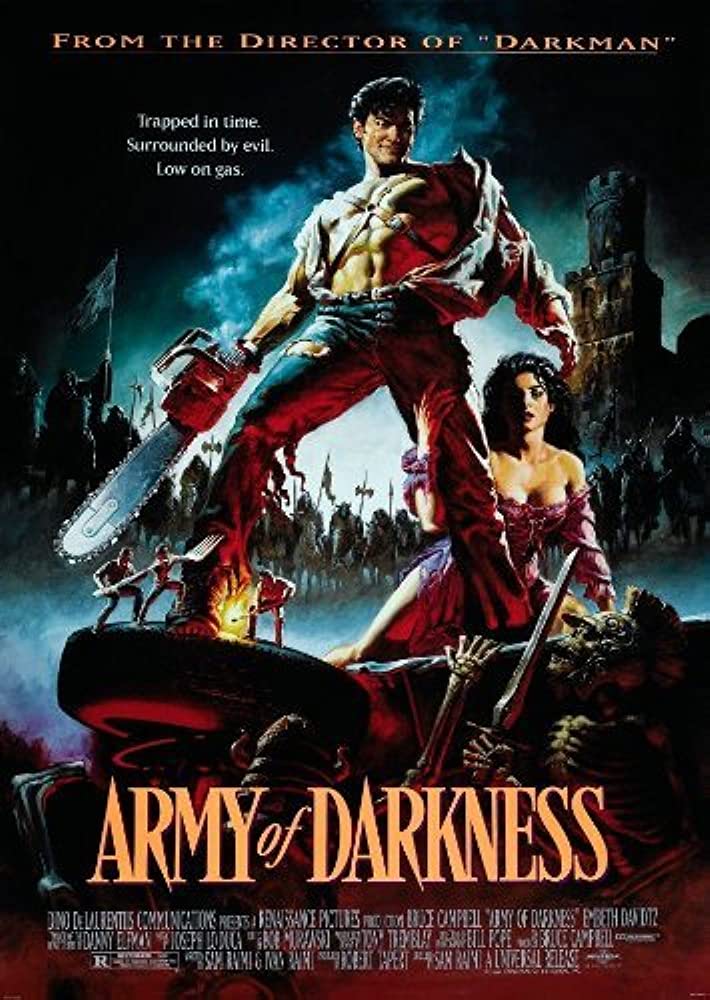
Evil Dead is perhaps the most wildly chimeric franchise in horror cinema. Not a single one of the five movies in its catalogue conforms to a singular identity, or even feels the same. The first movie (released in 1981), for instance, is a low budget horror movie that was intense, scary, and experimental (especially in its approach to camera work). Sure, it had its comedic moments, but it didn’t lean into it all the way. The horror-comedy identity it carries later on really starts being fleshed out in Evil Dead 2 (1987), only to fully embrace the mix in the third movie, Army of Darkness (1992), a direct sequel to part 2’s reimagining of the first film.
This is perhaps best reflected in how its signature character, Bruce Campbell’s Ash, behaves in each one of the movies he’s in (specifically the first three, then followed by the Starz TV series Ash and the Evil Dead, and the various video games based on the universe). He goes from typical college student in the first Evil Dead (1981) to punchline-spewing/chainsaw-wielding hero in Army of Darkness. We can’t speak of one Ash, but of several Ashes. The version people know and love today is mostly the one from Army of Darkness, the one where he’s at his most quotable.
Perhaps the only constant throughout the movies is the source of the demonic threat: the Book of the Dead. This is where the universe’s signature demons, the Deadites, come in. They are a nasty bunch and they might just be the most sadistic, brutal, and evil entities in horror cinema, easily living up to the Evil Dead name. They are cruel and gleeful in their violence, and they settle for nothing less than swallowing souls. And yet, they also change and evolve as the license grows.
All of this to say, the franchise’s DNA can be quite tough to untangle in any traditional way. It’s a Frankenstein’s Monster of a movie universe that built its identity as it went along, to the whims of its creator Sam Raimi.
In the best possible way, Evil Dead is a franchise that relishes in the possibilities of creative freedom when it is allowed to be as chaotic as it wants. It’s one of the most fascinating pieces of cinema because of it, mostly because it hasn’t been torn to pieces to later be rebuilt by higher-ups and corporate interests to the extent other licenses have been (look at Star Wars, the MCU). Not that it hasn’t been meddled with entirely, but Raimi and company have managed to keep most of their vision for it under their control.
So, where does the latest movie in the Evil Dead-verse, the Lee Cronin-directed Evil Dead Rise, rank in it? Can it be fairly ranked even? Is it enough of an Evil Dead movie or is it something else? Things get complicated and messy here, so let’s see if we can find where it fits.
For the purposes of this ranking, I’m sticking with the movies. It makes for a more manageable sample size and it doesn’t short-change the many other mediums the franchise has expanded into (with comics being among its most important story-wise). Also, I don’t believe it’s possible to be a purist with such a mercurial bunch of films, so I’ll be basing my ranking on how well they got the story across and how memorable they end up being because of it.
Let’s start.
5. The Evil Dead remake (dir. Fede Álvarez, 2013)
This movie came as a surprise for reasons that hit at the core of the franchise. It was a remake of the very first movie, but it wasn’t entirely clear who it was for. If it was a way to reintroduce the audience to the story, then the absence of Campbell’s Ash or a character that could inherit the role made it a somewhat strange and disjointed experience.
The movie itself boasts some great Deadite sequences and the makeup effects (by a team of artists that included Vinnie Ashton, CJ Goldman, Suzy Lee, and Jane O’Kane) elevated them by keeping things grounded and practical. The story is partly driven by an addiction metaphor that carries through well, but it ultimately felt a bit generic (a few years too late after the torture porn craze of the early aughts, which ramped up the gore considerably). It’s not as playful with the camera as Raimi’s original and the signature malice of the evil afflicting the cast isn’t as imaginative as what came before.
Not a bad movie, ultimately, but one that didn’t really push the Evil Dead brand in any meaningful way.
4. Evil Dead Rise (dir. Lee Cronin, 2023)
Lee Cronin’s stab at the Evil Dead franchise stands at the crossroads between the 2013 remake and the original trilogy. Its story, which follows a single-parent family in a rundown apartment building that’s about to get the Deadite treatment, certainly attempts at establishing a kind of balance between the new and the old, but it doesn’t quite result in an interesting or new way forward for the universe.
Rise gets one thing undeniably right: the Deadites. Alyssa Sutherland’s possessed mother character, Ellie, stands as one of the most terrifying performances both in the series and in recent horror outings overall. Taking a cue from the original films, the demonic presence here is oppressively evil and it echoes that sinister enthusiasm found in the Deadites from the 1981 film. The generous amounts of blood and gore on display assures viewers Cronin has his eyes on the ball, and it works for the most part.
Where it doesn’t really do much is with its characters. Rise borrows more from the remake than anything else in this department, opting for characters that aren’t entirely memorable (other than Ellie). Establishing a new Ash-type character or anchor character could’ve pushed it all further. In fact, this was a great opportunity to give audiences a female Ash, a new face that could steer Evil Dead into uncharted territory (an idea that has already been explored in the Army of Darkness comics). Unfortunately, it doesn’t.
Rise feels like an Evil Dead movie. In fact, it captures the tone of the very first movie and its remake very well, more so than that of Evil Dead 2 and Army of Darkness. It’s just missing good characters. It seems to be betting on different Books of the Dead to tie in new movies together, but it really needs a compelling character or characters to make this new phase stand out.
3. Army of Darkness (dir. Sam Raimi, 1992)
The Ash we know today, the horror icon, got forged in Army of Darkness. Bruce Campbell dialed up the comedy for part three, going for slapstick and physical comedy in the tradition of the Three Stooges, and it worked well enough to cement Ash as a staple of the horror genre, a legend.
Raimi went from horror/comedy in Evil Dead 2 to dark fantasy/comedy in Army, emphasis on comedy. The shift can be jarring, though. Ash only has one or two quips in part 2 (most notably when he says ‘groovy’ after he attaches a chainsaw to his bloody stump and fashions himself a boomstick), whereas he’s a walking quote factory in part 3. Lines like “Hail to the king, baby” and “come get some” became synonymous with the franchise, becoming Easter eggs themselves when said by some characters in Rise and in the remakeas a tribute to the originals.
The movie does sacrifice a lot of its horror in the name of fun. The good thing is, it turns Army into the funniestmovie in the series in a way that’s unique to it, a distinction it carries to this day. There’s funny, and then there’s Evil Dead funny. Ash becomes the voice of its universe and creates a kind of expectation with his presence in that, physical or not, he should be present or alluded to in everything Evil Dead (hence the callbacks in Rise and the remake).
2. The Evil Dead (dir. Sam Raimi, 1981)
When it comes to pure horror, there’s no beating the original. The Deadites in this one are loyal servants of sadism. Despite the budget constraints, Raimi managed to put on a display of evil the series has yet to match (though Rise comes very close with Deadtite Ellie).
The movie establishes the lore and mythical foundations future outings will adhere to. It places the story in a lone and isolated cabin in the woods (setting up a style that favors small living spaces as a kind of signature of the series, which Rise sticks to but Army of Darkness doesn’t), it features a book bound in human skin that can awaken sleeping demons, it has the reciting of ancient words by accident to bring forth the monsters, and it boasts excessive amounts of blood and gore.
While this movie’s Ash isn’t as quotable as the other ones, Campbell still stands out as the strongest character of the bunch and a worthy protagonist we can follow as his sanity gets tested by the Deadites.
Raimi’s signature camera work makes a statement in The Evil Dead, adding to the already experimental nature of the film while simultaneously carving out a space for itself in the genre. The very first Evil movie is a classic and an outstanding example of horror to boot. It’s an extreme possession story with soul-hungry demons that behave like cruel children playing with tiny insects. It’s my personal favorite and a top-ten best horror movie of all time.
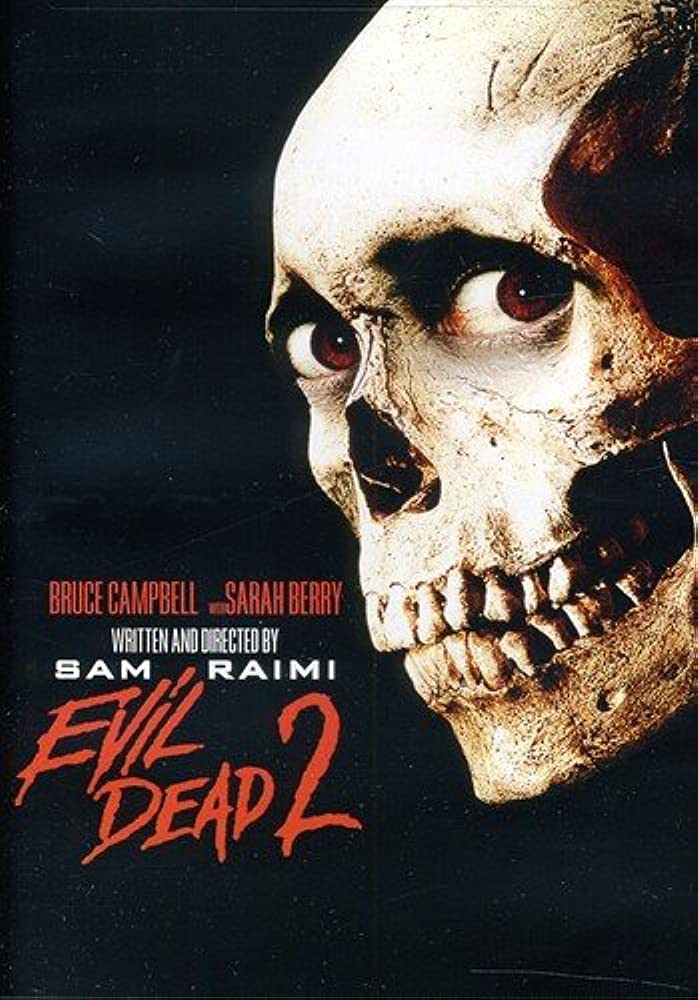
1. Evil Dead 2: Dead By Dawn (dir. Sam Raimi,1987)
This is the one, the Evil Dead formula perfected. It precisely strikes the right balance between horror and comedy while never losing sight of what made the first movie so great. It’s a strange specimen of a movie, though, if we take the first three movies as a legitimate trilogy. It’s not a direct sequel per se, but rather a reimagining of the first.
The story starts things off with Ash and his girlfriend taking a trip to the cabin in the woods without the three other friends that feature in the original. Once there, events are sped up to free up space for deeper explorations of the lore and of Ash’s character. By exploring Ash, I mean letting him take a more aggressive and personal role against the Deadites. He doesn’t quite become the Deadite hunter he is in Army of Darkness, but he certainly tries to meet the Deadites’ violence with his own.
Dead by Dawn is also the first time we get chainsaw-hand Ash. Being such an integral part of the character, it’s easy to forget Ash never gets to use the chainsaw in the first movie. It’s a frustrating tease as he gets close to putting saw to flesh, but it never materializes. Evil 2 fixes that and makes it a part of the character’s identity.
The Deadites retain their sinister look from the first one, but they’re made even more monstrous. The special effects come courtesy of Tom Sullivan, who worked on all three films. They’re playfully maniacal and equally terrifying.
With a more exaggerated take on terror and an eye to build upon the possibilities of the first film, Evil Dead 2 is the perfect Evil Dead movie. Hail to the king.
To contemplate death in the face of natural disasters requires an eagerness to reckon with the uncomfortable, something director Makoto Shinkai has shown he’s more than willing to do in his films. His latest, Suzume, does this in as approachable a way as possible with a story that mixes magical-realism with deep loss to produce a visual marvel that impresses on multiple fronts. In the process, Shinkai presents audiences with the possibility of healing despite the cruel suddenness of death during events that hit with the full force of nature.
Suzume follows the titular character, a seventeen-year-old teen (voiced by Nanoka Hara), as mysterious doors start appearing in moderately populated and highly populated areas to release a giant supernatural worm that can bring about massive earthquakes if allowed to touch ground. She’s aided by a Closer called Souta (voiced by Hokuto Matsumura), a man that travels the country hunting and closing these doors to prevent disasters.
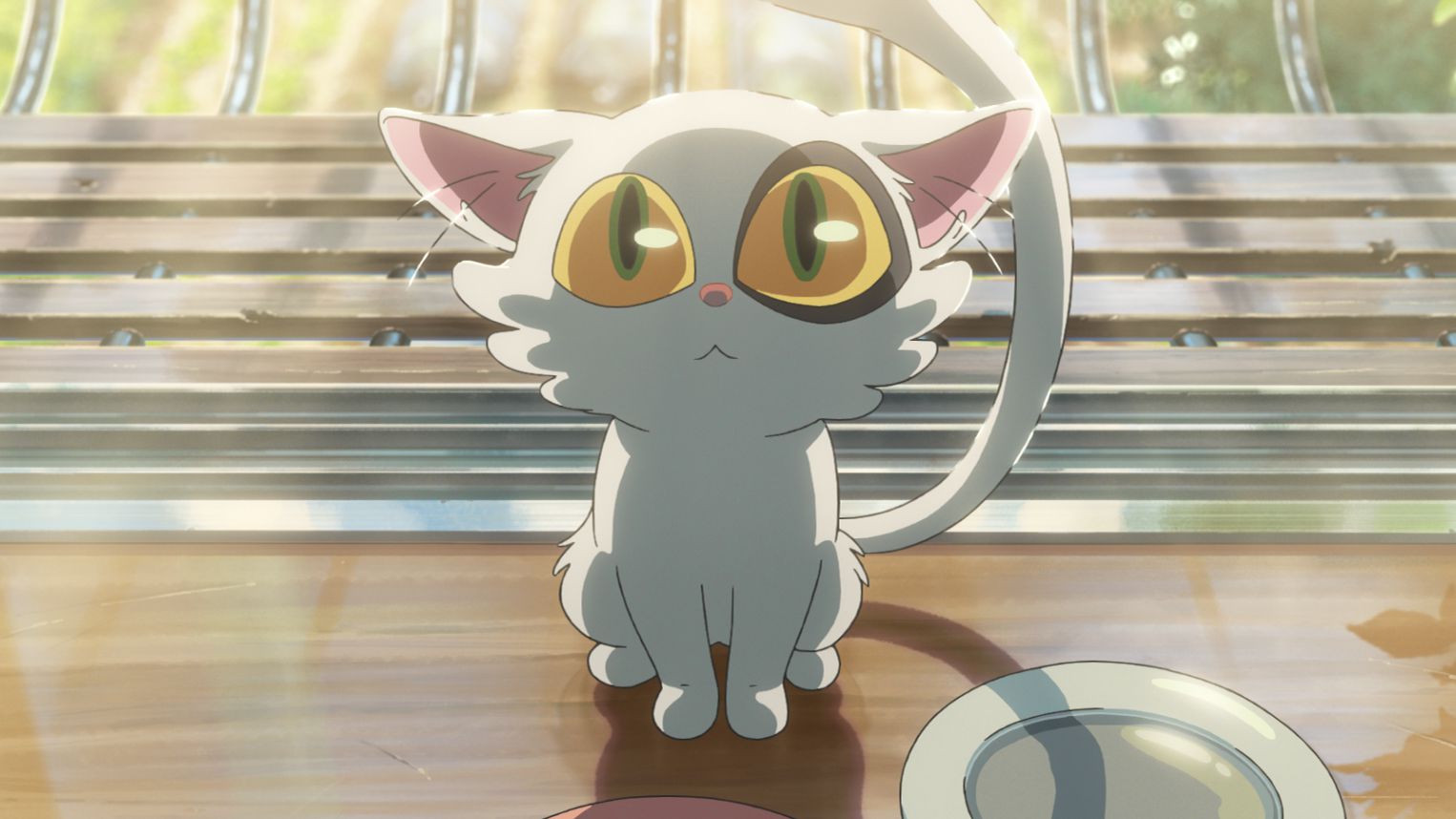
A mysterious talking cat with magical powers turns Souta into a small wooden chair that can run and speak, a development that pushes Suzume to help the man-chair close the new doors that start popping up throughout Japan. As disasters start getting averted, we learn of Suzume’s own history with destructive natural events and the things it can take from people. In her case, it’s her mother’s death that’s reshaped her reality and her dedication to the Closer’s mission.
Despite what the subject matter might suggest, Suzume is a movie that favors a vision of hope and healing in the face of trauma and the grieving process. It’s not difficult to view the doors and the giant worm as representative of the things people wish they could control but ultimately can’t. An inability to accept that preventing every single disaster is impossible, that death can come in many different forms at any given time. The task becomes progressively difficult and riskier the more you attempt to contain the uncontainable.
The story portrays the prevention of natural catastrophes as a kind of fool’s journey that essentially negates life by requiring such an exhaustive dedication to vigilance and readiness. There’s a sense of inevitability to it, of relentless force, that makes the character of Suzume come off as both noble and stubborn at the same time.
The visuals do an excellent job of showing the worm as an unstoppable force without an unmovable object in sight. It can be delayed, but never fully stopped. To an extent, the movie invites a reading that frames the phenomenon as a thing we have to accept, be it as a metaphor for the guarantee of death or as one for the unpredictable certainty of mass traumatic events that we simply can’t always prepare for (or survive regardless of preparedness).
What keeps the story from falling off the deep end into despair is the magical-realist element of the world the movie creates. Only Suzume, Souta, and the cat can see the doors and the worm, but everyone can see the living chair and the talking cat. People react to them with wonder rather than fear or panic and it makes for a very light and colorful experience with several sequences that garner attention just on spectacle alone.
Rounding out the experience are the characters Suzume meets along the way towards each door. They each offer different avenues towards the idea of hope and acceptance and they turn the movie into a living journey with a variety of locations and color palettes to boot. They feel like short stories in their own right and they carry their own arcs.
There are too many metaphors and ideas inhabiting Suzume to account for here, but discovering them on your own is quite rewarding. I latched on to those regarding Japan’s history with natural disasters and crises, especially in recent times with the earthquakes that rocked the country’s nuclear sites. The doors that the worm uses, for instance, are all found in abandoned places such as schools and amusement parks, as if they belong to past traumas people would rather forget than process collectively. There are just so many ways into the story and its characters that repeat viewings are essentially a requirement.
Thankfully, going back into the world of Suzume is an easy sell. It’s a movie that welcomes complexity without overcomplicating the conversations it wants to have on grief, the memory of disasters, and the magic of hope. It truly is a remarkable story that impresses by being as inventive as it is emotionally grounded, and it will become a highlight in anyone’s film education upon watching.
Darkness is perhaps the horror genre’s most reliable source of terror, a factory of fear that churns out multitudes of things that can scare even the most hardened of fans. Used smartly, it can allow audiences to fill in obscure spaces with the ugliest, most terrifying things you can think of by only offering a hint as to what might be moving in the shadows.
Robbie Banfitch’s found footage film The Outwatersis fully invested in seeing this idea through in a way that indulges darkness to the fullest extent. Unfortunately, it stumbles by keeping things too tucked away in the dark to allow audiences to effectively populate the shadows with monsters that defy the very concept of reality (a problem that also hindered Skinamarink’s exercise in unseen and suggested scares).
The movie follows a small group of friends on their way to the Mojave Desert to shoot a music video. A string of earthquakes and aftershocks rock the area they’re going to be filming in and a series of eerie sounds and vibrations start disrupting the silence of the desert in a way that hints at something big crossing over into our realm. Then, reality shifts and the monsters come out.
The story takes its time building up to the horror, but it’s to the point of distraction as very little from the first third of the movie barely affects or colors the events that affect the group as it gets caught up in all the bad that bleeds into our world. What does work to great effect is the sound design, which carries itself well throughout the entire film.
Not one sound reveals exactly what or where it’s coming from and they do an excellent job of helping the audience guess at what their point of origin could be, or what unholy creatures are making them. At times they come off as deep underground explosions, at others it sounds like something impossibly large is marching down the desert.
Once the story transitions into full horror, ambient sounds hint at creatures in pain or angry demons out on the hunt. If there’s one thing The Outwaters succeeds at is in doing a healthy amount of worldbuilding by sound alone. Had the movie leaned more into this, it would’ve have resulted in something entirely new and surprising. But it didn’t.
As I stated earlier, darkness is one of horror’s greatest allies. It gives everyone permission to bring their own fears into the experience so they can mix them in with the stuff the filmmaker decides to reveal. It can be a delicate thing to balance out, which means that keeping the visuals too obscure for an extended period of the movie’s runtime can lead to a whole lot of nothing.
If you think about it, darkness in horror movies are like sandboxes that invite audiences to come in and play with their toys. It’s a challenging play area, though, as its dimensions are almost always just faintly outlined and can change at a moment’s notice. The Outwaters opts for the faintest of outlines, keeping its toys largely inaccessible to the viewer and lost within the darkness it creates. It makes for a frustrating watch as our imaginations can only do so much until we realize we’re staring at a black screen for big chunks of time.
There are daylight sequences that pull the veil back somewhat on a few of the story’s monsters and their particular kind of violence, and they do lead to the occasional striking visual in the process (especially as it reaches the final stretch), but the director’s insistence on keeping things barely visible and disorienting achieves little other than frustration.
Filling in the blanks can be an interesting exercise from a viewer’s point of view, but it’s not unfair to ask the filmmaker provide a bit more to latch onto as well. The audience shouldn’t be doing all the creative heavy lifting, in this regard.
This is compounded by the dizzying camera work that often just hangs loosely on the character’s hands to communicate the idea that what’s captured isn’t being filmed on purpose, as if it’s an automatic reaction from a person that’s lost their mind. It’s an interesting response to found footage conventions, but it’s also overplayed and it doesn’t add to the overall sense of horror it’s going for. It’s another distraction that can have viewers trying to figure out if there’s anything worth searching out for in each shot or not. There usually isn’t.
The Outwaters had the potential to innovate if it had further developed its unsettling sound design. Instead, it goes for a slow burn dominated by drawn out sequences where all the audience gets is a black screen with creepy growls here and there. It misses the point when it comes to inviting the audience to use their imagination to flesh out the monsters that stick to the periphery. There comes a point where showing nothing amounts to just that, nothing.
There’s very little we don’t fear as a people. Horror movies can attest to that, conjuring up stories upon stories that turn anxieties about life and human expression into scary things that can help us process our reactions to them. Often, these stories put characters on the path to confront those fears and perhaps learn a little bit about themselves in the process to be better equipped at dealing with it all. Monsters are slayed and demons are exorcised, all so the character can grow and become stronger. Change, at some level, is the goal, hopefully towards something better.
Michelle Garza Cervera’s Huesera: The Bone Woman doesn’t follow that particular model of horror. Its metaphors about motherhood, social expectations, and personal freedom point to messier and more complex ideas, ones that consider change as a thing that can pass us by and leave ghosts behind. It’s a scary thought, and it’s one that Garza Cervera pulls off with clever aggression.
Huesera follows Valeria (played by Natalia Solián), a young woman that finds a faceless entity has latched on to her first pregnancy. Her haunting strains her relationship with her husband Raúl (Alfonso Dosal) and puts her on a path that paints motherhood as a hungry thing that can very easily eat up a mother’s ability to be her own person.
The movie, written by Garza Cervera (who also featured a segment in the horror anthology movie México Bárbaro II) and Abia Castillo, doesn’t just settle on the fears of motherhood for the duration, though. In fact, I found it to be a red herring that smartly concealed its other, more potent metaphors for when the time was right to make them known. A lot of that is hinted when we meet Valeria’s old love interest, a woman called Octavia (Mayra Batalla), a lost opportunity that figures into Valeria’s struggles in ways that deepen the horror in meaningful and refreshing ways.
One of the great successes of the film lies in its ability to never let the supernatural elements get swallowed up by its metaphors. The entity that oppresses Valeria is terrifying, a faceless being that contorts its body by breaking its bones and knitting them back together to skitter around like an insect with malicious intent. This is tied to Valeria’s own physical reactions to stress and anger, but I’ll leave that for the movie to show.
What’s impressive is how well each horror sequence plays with the sounds of the entity’s bones cracking to ramp up the tension. The entity is mostly shrouded in darkness, but enough of it is shown to give audiences a scary memento to take with them come bedtime. There’s one particular scare that lands like a statement on jump scares, speaking to how powerful subverting expectations in these moments can be (like foregoing the musical crescendo that announces the coming of the jump scare, for instance). They also got the timing of it just right.
At a time when the more indie/arthouse horror movies are keeping their ghosts and specters in very dark shadows and in locations submerged in full black, to put more weight on the viewer to populate those spaces with the things they think hide there, I appreciated that Huesera gives its audience something more concrete to chew on. This pays off in the end especially as Garza Cervera offers up a chilling encounter that is uniquely disturbing, while featuring few nods to some of the best in Japanese horror (in fact, Junji Ito’s Uzumakican be seen on a bookshelf at one point in the film), by showing us how terrifyingly cruel the presence can be.
Another commendable achievement is Garza Cervera’s mastery of tone and lighting to create haunting images in bright settings, which isn’t a regular occurrence in the horror genre. It points to the creative team’s willingness to trust the material and take risks with it.
Natalia Solián’s performance as Valeria pulls all these elements together with her ability to portray absolute fear with her wide range of facial expressions. It’s easy to feel the movie thanks to Solián’s physicality, subdued and quiet in parts while angry and excruciating in others. It’s a remarkable display of character building and it makes the film hit harder as the haunting becomes more sinister.
A lot also has to be said of Huesera’s approach to sexuality and identity, too, in all its dimensions. The characters’ responses to these considerations feel realistic and genuine, not so much as a statement on representation but rather as a fact of life that still clashes with stubborn social norms in manners that aren’t often perceived the same way by everyone involved (all within a Mexican perspective, which has its own specificities). It adds layers to the story, painting a fairly chaotic picture where clear answers are in short supply and not even flirted with.
Huesera is one of those movies that provide an example to follow for filmmakers savvy enough to appreciate its methods. It’s a movie that dares to confront a lot to get at a sense of terror that makes real life be just as scary as the supernatural. It’s themes and metaphors require engagement, the kind that asks viewers to step out of their comfort zones to find meaning in darker places. Huesera justifies that journey into the dark, and it shows very little mercy along the way.
The JFK assassination holds a very strange place in conspiracy theory history. It’s perhaps one of the most documented cases of its kind, a lot of it owed to the official story that came out of the Warren Commission, the group responsible for investigating the killing of the President on November 22nd, 1963. The commission’s conclusion placed the blame entirely on a single individual, a man named Lee Harvey Oswald. He was a US marine that had at one point defected to the Soviet Union and that, according to his wife Marina, had serious delusions of grandeur. The report couldn’t pin down the motive behind the shooting, though. For the express purposes of the official story, Oswald took that information to the grave.
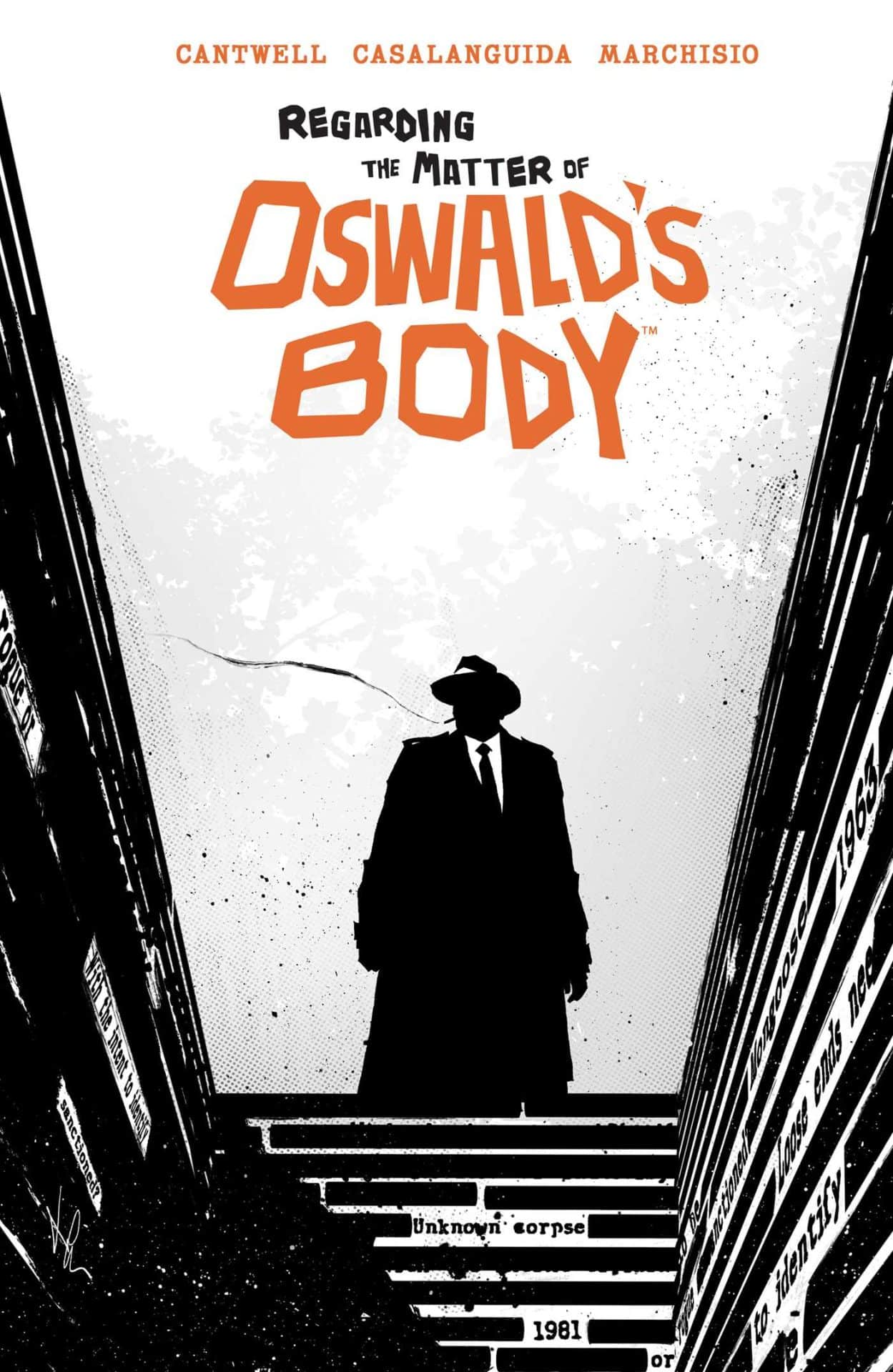
Christopher Cantwell and Luca Casalanguida’s comic Regarding the Matter of Oswald’s Body exhumes Oswald’s body, quite literally, to question that narrative and entertain other possible versions of the truth to try and make sense of the absurdity behind the assassination of John F. Kennedy. It goes the way of the neo-Western to do so, a mix of Western genre conventions and noir beats with arthouse sensibilities sprinkled throughout (though this last ingredient is less present in Cantwell and Casalanguida’s comic).
The comic follows a makeshift posse composed of a bank robber, a car thief, a Civil Rights protester, and a failed G-man put together by the combined element of the mafia and a secret government operative that tasks them with kidnapping a man that is the spitting image of Lee Harvey Oswald.
It’s immediately apparent that, for readers who possess at least a passing knowledge of the conspiracy, the task represents a crucial piece in the assassination’s design and that the group of archetypal losers chosen for it are going to play a part that might shorten their life expectancy considerably. Of course, Oswald is a nobody in this part of the story, so the posse underestimates the mission’s importance by thinking they’re just working towards a generous retirement plant.
Regarding the Matter of Oswald’s Body
While the story is accessible, though it doesn’t make any promises to hold the reader’s hand, those who’ve seen a documentary or two on the assassination will catch on quicker to the mysteries of Oswald’s place in it. I’d even suggest watching Oliver Stone’s JFK(1991) to get a primer on the conspiracy and all the theories that surround it, especially on the enigma of Oswald’s multiple sightings in gun ranges all over the US and even Mexico within impossible timeframes. It’s a fascinating story.
What sets Cantwell and Casalanguida’s comic apart from the countless books, movies, and even video games that deal in JFK’s killing in Dallas, at Dealy Plaza to be exact, is how expertly it adapts Western/cowboy movie elements to that history without sacrificing the highly unsettling aspects of a hushed political assassination in the process.
The haphazard group of criminals that gets forced into the giant conspiracy in Regarding the Matter of Oswald’s Body is burdened by the same moral complications of countless other cowboy characters that feature in American Westerns. They are guided by the promise of financial security to last them a lifetime, they seem hardened but are then unsure of the ethics behind the tasks they’ve been given, and then they question their actions in the grander scheme to reach a conclusion that might end in the kind of bloodshed that’s predicated on the principle of “doing the right thing.”
Without spoiling too much, the story essentially becomes an examination of flawed but regular people who go up against certain interests knowing their chances of success were already low from the moment they accepted the job. The noir elements come up in Cantwell and Casalanguida’s decision to shroud the main characters under the veil of secrecy, to the point where they’re seen as cogs in a machine much bigger and important than just the four of them. They the unlucky victims of history, obscure footnotes that’ll only be relevant to a very select few that already didn’t care much about them to begin with.
Regarding the Matter of Oswald’s Body
Then comes the matter of Oswald’s actual body, the one that was buried in Shannon Rose Hill Cemetery under a lonely grave marker adorned with his last name and nothing else. Just who is buried there if not the real Oswald? This question might as well be same one made about the bird statue’s value in The Maltese Falcon (1941) or what was inside the case that John Travolta and Samuel Jackson were after in Pulp Fiction (1994). In essence, Oswald’s corpse is the forbidden object that often becomes the source of everyone’s troubles and misfortunes once they’ve been hired to retrieve it.
The combination of all these elements result in a truly absurd and compelling piece of storytelling that puts proverbial cowboys in an environment where shadow agencies deceive common criminals into committing national tragedies. The posse at the center of Regarding the Matter of Oswald’s Body, though, doesn’t fight a greedy landowner or a dirty politician. They instead fight a corrupt system hoping to make a dent in it rather than tearing it all down. They know not to deceive themselves with the prospect of a happy ending. In the end, and to Cantwell and Casalanguida’s credit, it was a matter of placing cowboy-like criminals in front of people they’ve been all too familiar with: bad men with bad ideas and the means to execute them.
I’m always wary of stories that feature kids as the main characters. I immediately think it’s going to be another coming-of-age story or a childhood trauma yarn that’ll follow the same old story beats as countless other works that go down similar routes. Not that they’re bad. They’re Just a bit overused, which often makes them predictable. Rodney Barnes and Alex Lins break away from this in their new series Monarch, openly resisting what’s been done before to explore ideas that might hit harder but that must be faced regardless.
Monarch follows Travon, an orphan living in Compton. His foster home seems like a good place and he’s surrounded by people that look out for him, an important factor considering other foster kids who’ve perhaps not been as lucky as him are out to violently bully him for having it marginally better than others.
As if things weren’t hard enough for Travon, aliens descend from the skies thirsty for blood and mayhem, looking like monsters that were exclusively bred to slaughter and maim indiscriminately in the worlds they’ve targeted for invasion. Travon must fight for his life and that of his surrogate family and friends, even if it requires sacrificing things that can’t ever be recovered.
Monarch sets the tone early with its relentless approach to violence. Lins captures both bully violence and alien aggression as things weighed by consequence, making them feel meaningful and necessary to the story rather than gratuitous. Travon’s living environment feels dangerous as a result, a symptom of the status quo, and it helps to build compelling characters that readers can worry about and fear for.
Barnes’ script leans on rawness to build its characters. Travon isn’t a Disneyfied version of a foster child. He’s a boy that is always aware of the hand he’s been dealt so he can never lose focus of the things that are important to him, like the people that have become family in the absence of blood relatives. Barnes makes it a point to present Travon as a survivor, a condition that might end up making him better suited than most to face down a scenario filled with vicious aliens given the things he’s had to live through at such an early age.
It’s in this arrangement that Barnes and Lins’ Monarch sets itself apart from other stories featuring coming-of-age themes and YA-like sensibilities. Nothing here is played safe or to keep readers in their comfort zones. Quite the opposite. Travon and his friends are all at risk of becoming just few more casualties of the invasion at any time. The prospect of that generates an overwhelming sense of tension that makes for compulsive reading.
Fans of the 2011 sci-fi horror film Attack the Block will find a similar appreciation for roughness in the storytelling process that makes Monarch such a hard-hitting experience. In it, a group of kids from South London (an historically underprivileged area) have to fight off malicious aliens and defend their home, dysfunctional and difficult though that place may be. The movie’s strengths lie in turning commonly overlooked characters (in this case, rowdy kids that fall into a life of crime given their circumstances) into protagonists that never shed their complexities. Monarch frames its story and its characters in a similar way, letting the harsh realities of life come along for the ride without feeling the need to soften them to make audiences more comfortable. You just have to embrace the conditions of Travon’s existence and feel them along with him.
Monarch #1 is an impressive debut that builds a living, dangerous world with complex characters that already carry a considerable amount of personal history with them. It’s impossible not to root for Travon and you will keep turning the pages with a certain reluctance for fear of what might happen to him throughout. But turn them you shall, and you won’t want to stop. Monarch is just that good.
Script: Rodney Barnes Art: Alex Lins Colors: Luis NCT Story: 10 Art: 10 Overall: 10 Recommendation: Buy and check out Barnes’ Killadelphia if you haven’t already.
Image Comics provided Graphic Policy with a FREE copy for review
I’m always wary of stories that feature kids as the main characters. I immediately think it’s going to be another coming-of-age story or a childhood trauma yarn that’ll follow the same old story beats as countless other works that go down similar routes. Not that they’re bad. They’re Just a bit overused, which often makes them predictable. Rodney Barnes and Alex Lins break away from this in their new series Monarch, openly resisting what’s been done before to explore ideas that might hit harder but that must be faced regardless.
Monarch follows Travon, an orphan living in Compton. His foster home seems like a good place and he’s surrounded by people that look out for him, an important factor considering other foster kids who’ve perhaps not been as lucky as him are out to violently bully him for having it marginally better than others.
As if things weren’t hard enough for Travon, aliens descend from the skies thirsty for blood and mayhem, looking like monsters that were exclusively bred to slaughter and maim indiscriminately in the worlds they’ve targeted for invasion. Travon must fight for his life and that of his surrogate family and friends, even if it requires sacrificing things that can’t ever be recovered.
Monarch sets the tone early with its relentless approach to violence. Lins captures both bully violence and alien aggression as things weighed by consequence, making them feel meaningful and necessary to the story rather than gratuitous. Travon’s living environment feels dangerous as a result, a symptom of the status quo, and it helps to build compelling characters that readers can worry about and fear for.
Barnes’ script leans on rawness to build its characters. Travon isn’t a Disneyfied version of a foster child. He’s a boy that is always aware of the hand he’s been dealt so he can never lose focus of the things that are important to him, like the people that have become family in the absence of blood relatives. Barnes makes it a point to present Travon as a survivor, a condition that might end up making him better suited than most to face down a scenario filled with vicious aliens given the things he’s had to live through at such an early age.
It’s in this arrangement that Barnes and Lins’ Monarch sets itself apart from other stories featuring coming-of-age themes and YA-like sensibilities. Nothing here is played safe or to keep readers in their comfort zones. Quite the opposite. Travon and his friends are all at risk of becoming just few more casualties of the invasion at any time. The prospect of that generates an overwhelming sense of tension that makes for compulsive reading.
Fans of the 2011 sci-fi horror film Attack the Block will find a similar appreciation for roughness in the storytelling process that makes Monarch such a hard-hitting experience. In it, a group of kids from South London (an historically underprivileged area) have to fight off malicious aliens and defend their home, dysfunctional and difficult though that place may be. The movie’s strengths lie in turning commonly overlooked characters (in this case, rowdy kids that fall into a life of crime given their circumstances) into protagonists that never shed their complexities. Monarch frames its story and its characters in a similar way, letting the harsh realities of life come along for the ride without feeling the need to soften them to make audiences more comfortable. You just have to embrace the conditions of Travon’s existence and feel them along with him.
Monarch #1 is an impressive debut that builds a living, dangerous world with complex characters that already carry a considerable amount of personal history with them. It’s impossible not to root for Travon and you will keep turning the pages with a certain reluctance for fear of what might happen to him throughout. But turn them you shall, and you won’t want to stop. Monarch is just that good.
Script: Rodney Barnes Art: Alex Lins Colors: Luis NCT Story: 10 Art: 10 Overall: 10 Recommendation: Buy and check out Barnes’ Killadelphia if you haven’t already.
Image Comics provided Graphic Policy with a FREE copy for review