Tag Archives: skinamarink

The Outwaters tries and fails to find horror in the unseen

Outwaters

Darkness is perhaps the horror genre’s most reliable source of terror, a factory of fear that churns out multitudes of things that can scare even the most hardened of fans. Used smartly, it can allow audiences to fill in obscure spaces with the ugliest, most terrifying things you can think of by only offering a hint as to what might be moving in the shadows.

Robbie Banfitch’s found footage film The Outwaters is fully invested in seeing this idea through in a way that indulges darkness to the fullest extent. Unfortunately, it stumbles by keeping things too tucked away in the dark to allow audiences to effectively populate the shadows with monsters that defy the very concept of reality (a problem that also hindered Skinamarink’s exercise in unseen and suggested scares).

The movie follows a small group of friends on their way to the Mojave Desert to shoot a music video. A string of earthquakes and aftershocks rock the area they’re going to be filming in and a series of eerie sounds and vibrations start disrupting the silence of the desert in a way that hints at something big crossing over into our realm. Then, reality shifts and the monsters come out.

outwaters

The story takes its time building up to the horror, but it’s to the point of distraction as very little from the first third of the movie barely affects or colors the events that affect the group as it gets caught up in all the bad that bleeds into our world. What does work to great effect is the sound design, which carries itself well throughout the entire film.

Not one sound reveals exactly what or where it’s coming from and they do an excellent job of helping the audience guess at what their point of origin could be, or what unholy creatures are making them. At times they come off as deep underground explosions, at others it sounds like something impossibly large is marching down the desert.

Once the story transitions into full horror, ambient sounds hint at creatures in pain or angry demons out on the hunt. If there’s one thing The Outwaters succeeds at is in doing a healthy amount of worldbuilding by sound alone. Had the movie leaned more into this, it would’ve have resulted in something entirely new and surprising. But it didn’t.

As I stated earlier, darkness is one of horror’s greatest allies. It gives everyone permission to bring their own fears into the experience so they can mix them in with the stuff the filmmaker decides to reveal. It can be a delicate thing to balance out, which means that keeping the visuals too obscure for an extended period of the movie’s runtime can lead to a whole lot of nothing.
outwaters

If you think about it, darkness in horror movies are like sandboxes that invite audiences to come in and play with their toys. It’s a challenging play area, though, as its dimensions are almost always just faintly outlined and can change at a moment’s notice. The Outwaters opts for the faintest of outlines, keeping its toys largely inaccessible to the viewer and lost within the darkness it creates. It makes for a frustrating watch as our imaginations can only do so much until we realize we’re staring at a black screen for big chunks of time.

There are daylight sequences that pull the veil back somewhat on a few of the story’s monsters and their particular kind of violence, and they do lead to the occasional striking visual in the process (especially as it reaches the final stretch), but the director’s insistence on keeping things barely visible and disorienting achieves little other than frustration.

Filling in the blanks can be an interesting exercise from a viewer’s point of view, but it’s not unfair to ask the filmmaker provide a bit more to latch onto as well. The audience shouldn’t be doing all the creative heavy lifting, in this regard.

This is compounded by the dizzying camera work that often just hangs loosely on the character’s hands to communicate the idea that what’s captured isn’t being filmed on purpose, as if it’s an automatic reaction from a person that’s lost their mind. It’s an interesting response to found footage conventions, but it’s also overplayed and it doesn’t add to the overall sense of horror it’s going for. It’s another distraction that can have viewers trying to figure out if there’s anything worth searching out for in each shot or not. There usually isn’t.

The Outwaters had the potential to innovate if it had further developed its unsettling sound design. Instead, it goes for a slow burn dominated by drawn out sequences where all the audience gets is a black screen with creepy growls here and there. It misses the point when it comes to inviting the audience to use their imagination to flesh out the monsters that stick to the periphery. There comes a point where showing nothing amounts to just that, nothing.
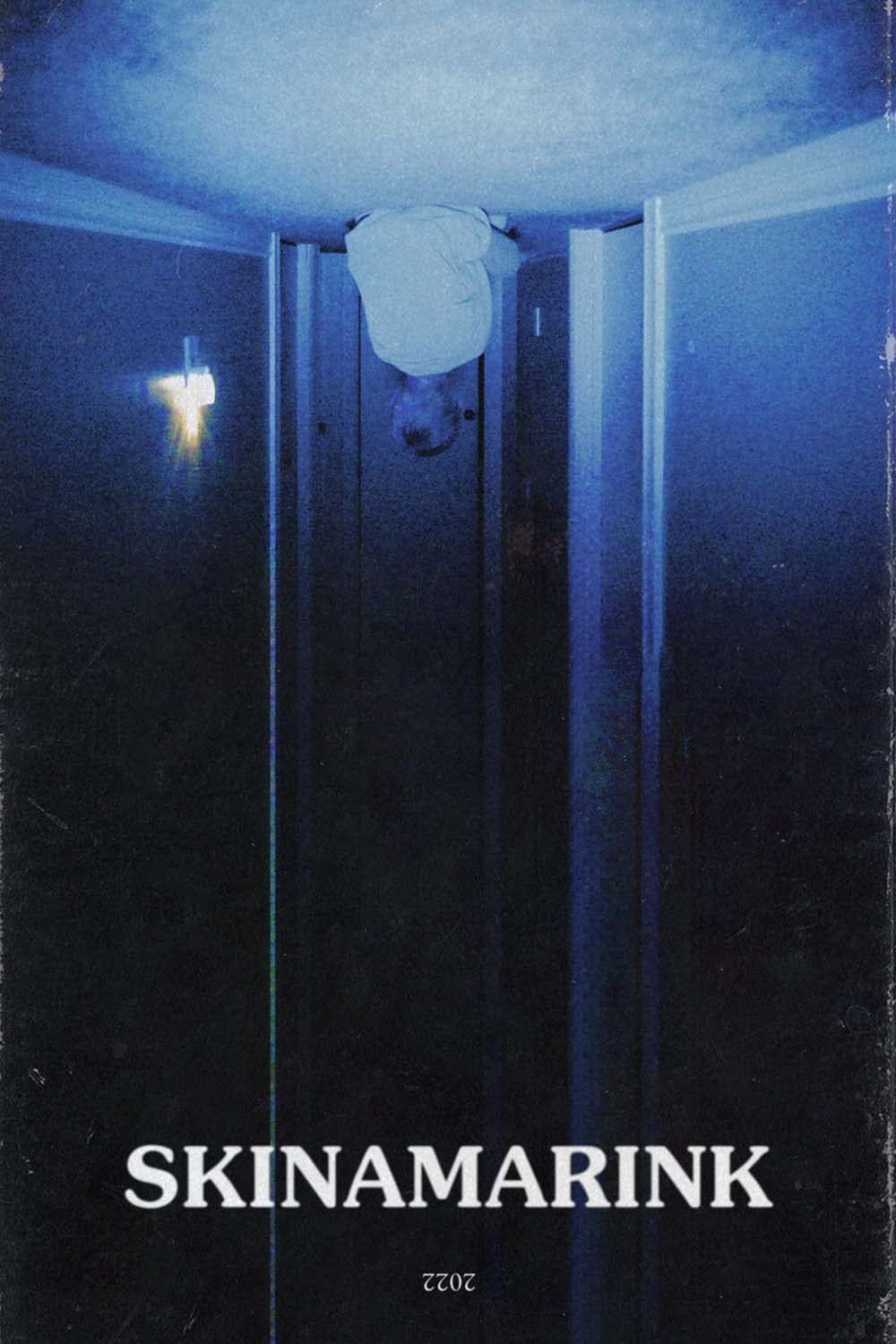
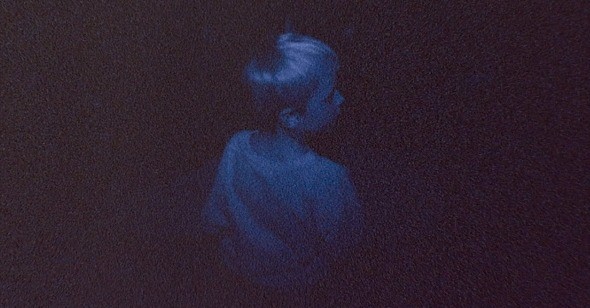
Movie Review: Skinamarink sacrifices tension for experimentation

skinamarink

The slow burn horror film can sometimes mistake quiet with tension, static shots with dread. The best among them avoid falling victim to this. Movies like Hagazussa (2017), The Dark and The Wicked (2020), and The Blackcoat’s Daughter (2015), find ways to unsettle with a carefully orchestrated sequence of events that linger and invite a closer inspection of the horrors they contain. They excel at creating a sense of discomfort that the slow pace intensifies, especially as the creepier aspects of the story take root and become ever-present once revealed.

Kyle Edward Ball’s Skinamarink, unfortunately, doesn’t quite master the intricacies of slow pacing to create a consistently scary, dread-filled, or even tense movie. Its experimental approach to storytelling, which resorts to found footage camerawork to capture the darkest corners of a house haunted by something that’s taking its time tormenting the family that lives there, produces some haunting imagery and a few truly disturbing sequences, but they are spread too far in between to create a real sense of tension and dread throughout.

A micro-budget horror film, Skinamarink centers itself around two kids inside a two-story house that saw its doors and windows disappear, specifically the ones that lead outside. Their parents seem to be missing, out of sight for the majority of the film (if not for all of it depending on how you interpret certain scenes). We only get half glimpses of the kids’ faces, nothing ever so clear that we can distinguish them elsewhere. In fact, most of the movie sticks to dimly lit corridors, ceiling corners, closeups of Legos, and a big TV showing old black & white cartoons, all in near pitch-black conditions.

skinamarink

Early on, the slow quiet mixed in with the darkness creates an effective and even dangerous sensation that makes you think you’re looking in on someone’s nightmare, a kid’s nightmare at that. What we see through the camera are things and places inside the house that would scare any child that’s afraid of the dark and has no parent nearby to protect them from it (a fear many of us go through growing up, and beyond with some people). Often the only source of light is the glow of the TV screen or a night light, sometimes the hallway light or the one in the kids’ bedroom. The rest of the time everything is covered in a blueish hue that’s meant to communicate the absolute lack of any natural source of light.

In an interview with slashfilm.com, Ball stated that he achieved this lighting effect by mounting a sun gun on top of the camera and then putting a blue filter over it, which was also used to grade with. The effect succeeds in creating a kind of living darkness where the camera’s inability to clearly capture what’s there instead creates a dark canvass that the audience’s imagination can then populate with strange things moving in the background that might not be not entirely human.

What betrays this impressive visual setup is that there are huge chunks of the film where nothing concrete happens. I can fill in the darkness with all manner of monsters and demons, but there were stretches were I felt that was all I was doing. Once I played around with my imagination, I wanted to see something more from the mind of the director. The ratio of personal input vs. storytelling is severely unbalanced.

When the story lands on a horror sequence with images crafted by the director, the scares are effective and the imagery creates its own kind of Hell. Ball knows how to produce faint but malicious shapes that leave a lasting mark in the darkness, leaving a kind of afterimage that you just can’t shake off.

skinamarink

Now, because of the story’s glacial pace, these parts of the story don’t entirely land or disturb with the force they could’ve. The reason is that too much time passes between them to allow for tension to set. Add in Ball’s overuse of the cartoons, which provide a hint as to what the kids are experiencing in certain parts of the story, and the strategy starts to feel repetitive and tedious before long.

The nightmare scenario Ball creates in Skinamarink falls in line with his previous work, available to watch on YouTube, which consists of short films based on nightmares users leave on his channel’s comment section, or on his other social media pages. These videos are absolutely terrifying and way more effective in capturing the deceitful dimensions of a nightmare. What helps them the most, though, is their length. They are very short, minutes long in most cases. They are extremely similar stylistically and they do a better job of balancing audience interpretation with specific instances of horror.

Discovering Ball’s previous work led me to believe that Skinamarink would’ve worked better as a short film. The time constraint could’ve given tension and dread a better chance to shine and to sustain itself. As is, the movie feels more like something you’d find in a museum under experimental video art. You go in, watch a bit, and then move on.

skinamarink
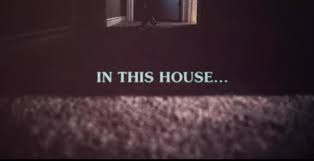
Taken from the Skinamarink trailer

There’s nothing wrong with experimentation or with asking audiences to put in more on their part to enrich the viewing experience. I enjoyed trying to figure out if something was actually moving in the darkness or if it was just that the camera produced too fuzzy an image because of the house’s all-consuming shadows. Problem was that the effect got stale way before the halfway point and it didn’t really offer anything new to keep me interested as the story progressed. Creepy sound design and minimalistic dialogue help turn the house into a claustrophobic nightmare of childhood fears too, but it gets lost in the tedium. Oddly enough, getting lost in the tedium is exactly what some viewers will experience while watching the movie.