Author Archives: Jon Carroll

James Gunn’s Superman is a crowd pleasing blockbuster that revives the classic superhero

Superman

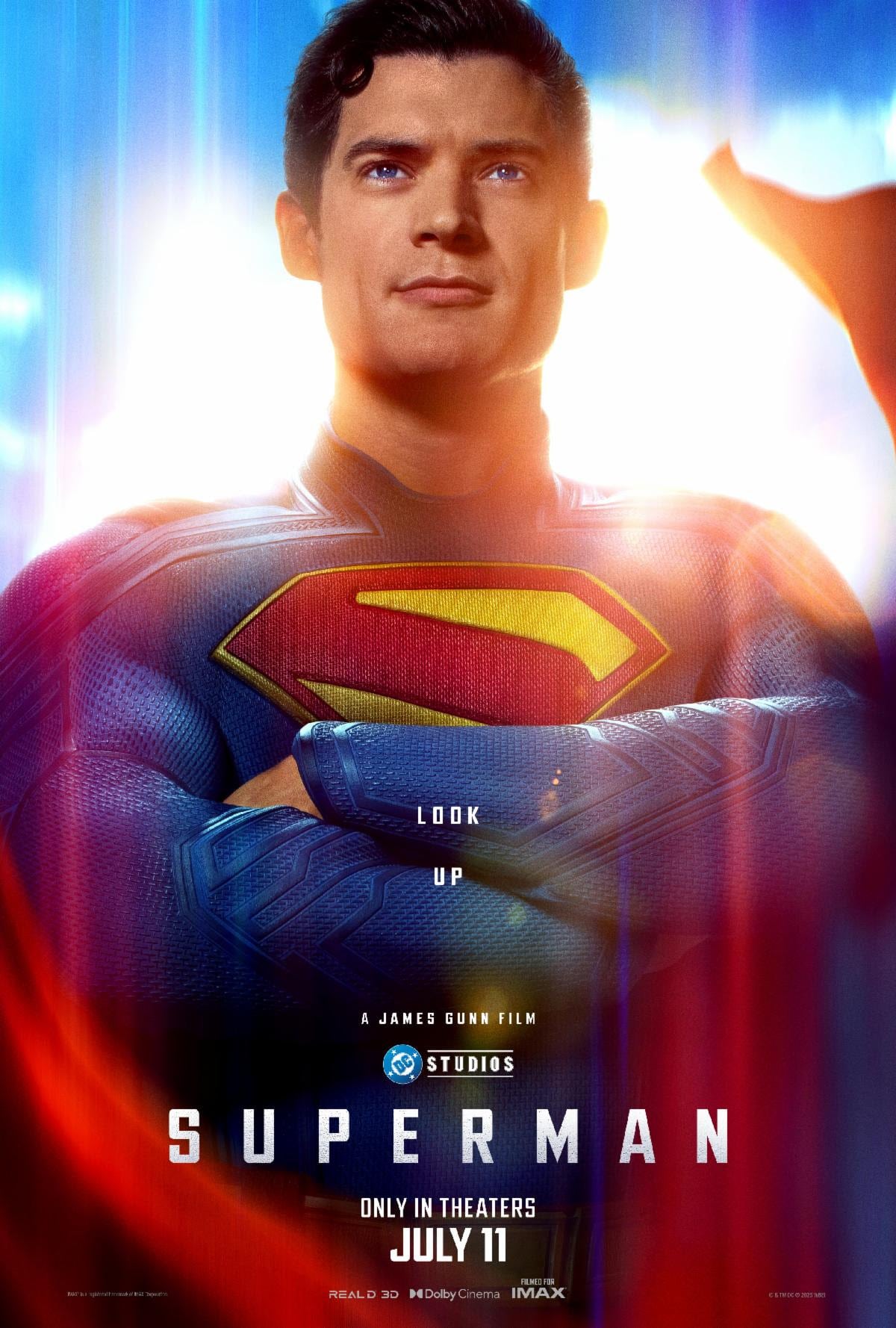
James Gunn has done the impossible with Superman. Yes, it’s a crowd pleasing blockbuster based on a comic property but that’s been done so often it’s starting to become boring. Yes, it revives the fortunes of a superhero franchise that’s seen better days but that’s been done to great effect with Batman, Spider-Man and (hopefully) Fantastic Four.

What James Gunn has done with his masterpiece film is to create a comic book movie that simulates the experience of reading a comic book. 

Most people reading this review are fans of characters who were created long before we were born. At some point all of us walked into the local comic shop (or pharmacy, stationary store or 7-11) and picked up an issue of a publication featuring a hero in colorful, skin-tight clothing doing battle with the forces of evil. The adventure had already begun when we arrived but we didn’t care. The story at hand pulled us in and made us want to know more.

Gunn’s movie opens with a block of text filling us in on the background of what is to come. It’s a  move that can’t help but evoke Star Wars’ legendary opening in media res. From there the movie is a frantic dash to the finish line with threat following threat as the plot begins to develop. 

Gunn uses exposition sparingly, letting the characters speak for themselves. He doesn’t waste time telling you the history of the Green Lantern Corps or that Mister Terrific is an Olympic gold medalist and the third smartest man in the world. He lets Nathan Fillion and Edi Gathegi tell you what you need to know with their performances and pithy, to-the-point dialog. I don’t know if Isabella Merced’s Hawkgirl is a reincarnated Egyptian princess or a Thanagarian space-cop and I don’t care. She has a chip on her shoulder, a big mace and a pitch perfect battle cry. 

For his main cast Gunn relies heavily on archetypes. David Corenswet’s Superman lacks the wry wit of Christopher Reeve and the majestic gravitas of Henry Caville but he makes up for it with an appealing earnestness and a desire to do good in a world that is more complicated than he’d like to imagine. Nicholas Hoult’s Luthor is a more peevish take on the character then we’ve seen but turns up the menace in one of the movie’s few genuinely disturbing scenes that also brought tears to my eyes. The real standout performance is given by Rachel Brosnahan. Past attempts to render Lois Lane on the big screen have all been missing the essential combination of toughness and compassion that attracts Superman’s attention but makes her more than just his girlfriend. Brosnahan displays these traits in spades making her the definitive movie version. 

Superman isn’t perfect. The humor, which I enjoyed, may come across as heavy handed to viewers who prefer more serious superhero fare. There’s also a third act reveal that makes the plot seem more complicated than it needs to be in retrospect. Most damning of all is a revelation about Superman’s homeworld Krypton that undermines the movie’s pro-immigrant message at a time when it is sorely needed in the real world. For all its flaws Superman is well worth your time. It’s a beautifully shot, superbly acted film full of color, action and memorable moments with characters that you will come to love if you didn’t go in loving them already. I enjoyed it more than any movie I’ve seen this year and more than any superhero movie I’ve seen in a long time.

And yes, Krypto does steal the show.

Overall: 9/10

The Point of Heroes in a Dark World

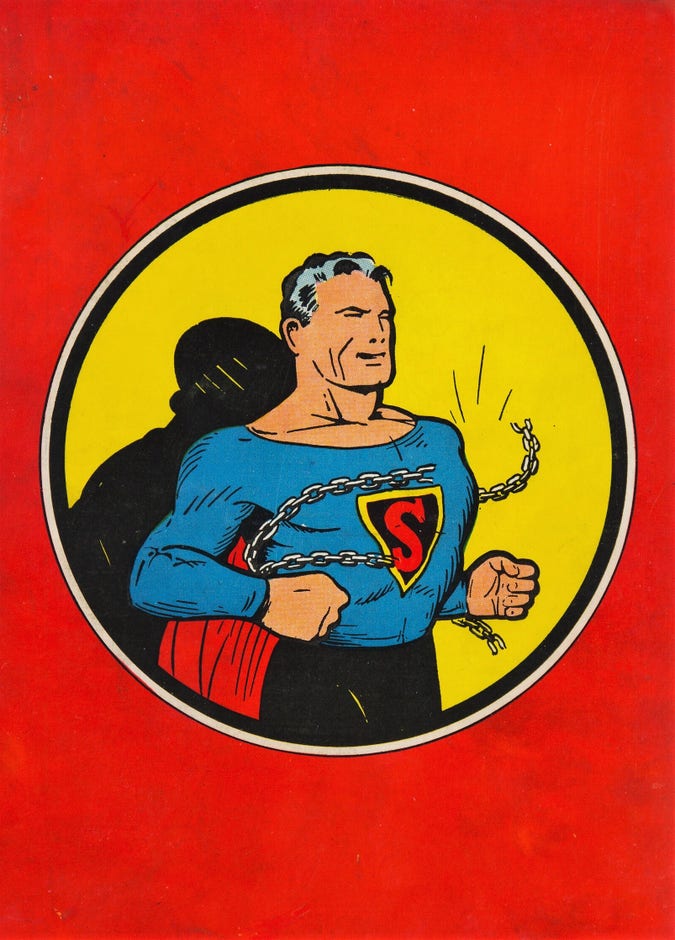
Superman - art by Joe Shuster (1939)

In the wake of the 2024 election, comics writer Mark Waid posted the following on BlueSky:

…I don’t believe in the basic goodness of my fellow Americans anymore, and without this, I cannot write superheroes. There’s no point.

Mark Waid is a writer for whom I have the greatest respect. His work on The Flash and The Fantastic Four with the late Mike Wieringo and others are essential reading. His despair is understandable but I hope that he can muster up whatever magic he needs to do the work in the wake of the horrific choice made by the majority of our countrymen. His stories do matter to a lot of people, never more so than now as the entire world begins a long, dark journey whose end is uncertain. Hope will be hard to find and we will often be unable to see the stars through the clouds.

Superheroes are not now and have never been figures of social realist fiction. Even Alan Moore and Dave GibbonsWatchmen revels in the absurdity of the genre. Perhaps the most unrealistic thread at the heart of the concept is the notion that a person gifted with an amazing power or great wealth will use it for the benefit of others and not themselves.

Human beings are deeply flawed creatures. We must constantly choose between good and evil while trying to thrive (or at least survive) in a dangerous world. Our humanity is the sum total of the choices we make throughout our lives and can be squandered and regained many times. There are certainly points of no return, but to view the voting booths of Pennsylvania and Georgia as the equivalent of the gas chambers of Auschwitz or the killing fields of Cambodia is not helpful at this point. 

If good and evil exist in reality as opposite ends of a spectrum painted in shades of gray, then the superhero must exist in the brightest primary colors we can get onto paper or the digital screen. They are not a reflection of the facts of life but a refutation of it. They are visions of power conjured up by the maligned and the marginalized (Jews, immigrants, people of color, LGBTQIA+ and women) at a time of turbulence for the entire world that was almost as great as the one we face today. The fact that we can even conceive of an alien from another planet who came only to do good, proves that we have at least the seed of goodness beneath all of the excrement on which the foul weeds of Hitler, Stalin, and their modern descendants sprout. To lose that would be to abandon the best part of ourselves, to feed the human to the beast.

I don’t really believe in God, certainly not the kind, benevolent, one of my Catholic upbringing. If he does exist though, the best he was able to create was humanity: flawed, broken and bound to the Earth. We created a champion of truth and justice who is as indestructible as he is incorruptible and who can show us the stars as he takes his dog for a walk on the moon.

If you ask me, when it comes to creators, we’ve done God one better. He made us and we made Superman. Superman does good and doing so inspires us to do better. That’s the point.

Anthony Desiato Takes Us on a Tour and Talks My Comic Shop Country

In 2010 Anthony Desiato began his chronicle of Alternate Realities, a comic shop in southern Westchester, where he had once worked, manning the counter along with a cast of characters that is not easily forgotten. He would follow My Comic Shop Documentary with a series of short features and My Comic Shop History, a podcast that explores one store’s place within the broader framework of the comics industry at large. In his latest feature, My Comic Shop Country, he sets off on an odyssey to discover what makes some of the best local comic shops in America so great.

Anthony was kind enough to answer a few questions about his new project over email.

Graphic Policy: You’ve spoken a lot on your podcast about how you became interested in comics but my impression is that you’re almost as much of a film guy as a comic guy. What was it that got you interested in making films instead of say creating comics?

Anthony Desiato: It’s hard to say why I never really felt that pull to try my hand at writing a comic (at least not yet). As far as film, though, Clerks was a big early influence in my thinking that maybe I could make my own movie one day. Couple that with my journalism background in undergrad, and I think the path to documentary filmmaker gets a little clearer. And since most of my creative output as a documentarian has involved comics, I’ve been able to combine my two greatest interests.

My Comic Shop Country

GP: One thing that struck me about the proprietors of a lot of the stores you visited was that very few seemed to have much, if any, retail experience prior to opening up or being hired at their shops. How much do you think that has helped them to succeed or held them back?

AD: I loved putting that little sequence together where some of our retailers reveal their backgrounds. We have a former teacher, house-builder, and insurance salesman, to name a few. I don’t think the lack of formal business training is necessarily a roadblock, especially since the comics retail model is sort of its own beast. I think the harder task is taking your hobby and turning it into a career and finding the balance between fan and businessperson.

GP: You and I both grew up in Westchester County between the early nineties and the early 2000s, you in Scarsdale and me in New Rochelle. We both remember the vibrant community of shops that existed throughout the county in those days and which has since contracted quite a bit despite its proximity to the heartland of comics publishing in NYC. Did you notice a similar pattern in other areas you visited where a large number of shops had been whittled down to a few?

AD: Not particularly, though I can’t say I was investigating that angle in a significant way for this project. To your point, though, the Westchester comics scene was certainly something to behold, and it’s striking to see how much it’s changed. It’s weird to think that you once had Dragon’s Den and 1 If By Cards 2 If By Comics across the street from each other and Alternate Realities half a mile up the road, and now only one of them (1 If, now American Legends) is still operating and only does a little bit of comics. Westchester is quite the microcosm for the industry as a whole in terms of its contraction.

GP: One thing a lot of comic shop programming like Comic Book Men or You Tube’s Comic Book Palace tend to focus on is talk about actual comic stories but your features have tended to focus on things like personalities or business rather than whether Plastic Man is better than Punisher. What’s the thinking behind this more sociological approach?

AD: It’s definitely a conscious effort on my part to chart a different path, and there are a few factors driving this approach. At my old comic shop, Alternate Realities, we certainly all came together initially over a shared love of comics, but in terms of what fascinated me about that place, the comics were really secondary. It was the personalities, particularly of the owner and some of our more colorful community members. So that was my starting point: the people. For me, comic shops have been a wonderful backdrop and vehicle to tell human interest stories, and I suppose that’s where my ultimate interest lies. Regarding that Plastic Man v. Punisher debate in Country, I’m far more interested in the fact that those guys are having that conversation, and why they feel comfortable to do so, than I am about the specifics of their argument. Also, as much as comics fans are the natural target audience for my projects, I genuinely believe they can speak to a wider audience, and the more sociological approach, as you put it, is sort of aimed at that.

GP: Were there any stores you would have liked to include but couldn’t due to timing, travel issues or lack of a personal connection to the store owner?

AD: I’m genuinely pleased with the mix of shops in the film, and I 100 percent believe I was able to tell the story I needed and wanted to with them. Would someplace like Mile High Comics been cool to visit and include, especially given the sheer size of their operation? Sure. But no regrets on the casting front.

GP: This is a time unlike any other in the history of the comics industry. How are the stores you profiled coping with the pandemic and the hopefully temporary implosion of the comics distribution system? What’s the most interesting response you’ve seen to Covid-19 as you’ve followed up with your subjects?

AD: Almost every shop I follow is adapting in some way, whether it’s curbside pickup, mail-order, live video sales, or some mixture. They’re spotlighting older content, making mystery boxes, and engaging more via social media (and video in particular). It’s legitimately inspiring to see what they’re doing to keep product moving. I don’t know that there’s any one thing I can point to as most interesting per se, but I have been very impressed by the speed with which they’ve adapted. Necessity is the mother of invention, of course, but still. I tip my hat to them. And it’s amazing to see customers rally around these efforts.

GP: Now more than ever change is inevitable. What do you think is the biggest change that is needed for the American comic book store as we know it to survive? What does the future of comic book retail look like in 2025?

AD: There’s a lot to unpack there. People always seem very quick to declare the comics retail industry dead. I certainly do worry about shops weathering this, especially smaller, younger stores with maybe a small customer base or lack of reserve funds. But overall, I think shops will endure as they have in the past and as they are right now. We’ve seen shops pivot in so many creative ways during this time when they’ve had to keep their doors closed and didn’t even have new product flowing. I definitely think that many of these innovations–Facebook and Instagram Live sales, online ordering, and so on–will become a regular part of the workflow. I am curious about whether DC will continue to distribute through other channels besides Diamond once this crisis has passed. Big-picture, though, as far as what change I feel is most needed? I’m sure a lot of retailers would point to returnability or something along those lines. But I genuinely think there needs to be a large-scale awareness campaign about comics undertaken not even by publishers, but by their parent companies. Improving efficiencies in the day-to-day of the comics retail industry is certainly needed, but really taking a wide view, there needs to be true growth.

GP: Do you think that there is anything more for you to say about comics after three documentaries and 6 seasons of the podcast? What other topics would you like to explore within comics and without?

AD: Ha, are you saying I should give it a rest? Candidly, I’m currently weighing my options about where to take the podcast in the future as well as where to turn my attention film-wise. On the film side, I don’t necessarily see myself doing something shop-centric again. I feel I said what I needed and wanted to say about shops in Country. Looking ahead, I was developing an idea for another film elsewhere in the comic book world, but the pandemic and its fallout have made me rethink it a bit. As far as the podcast, you know I like to shake up the theme each season. I definitely feel like I told a full-circle story on the podcast from 2015 to 2020. What the next story is hasn’t quite revealed itself to me just yet, but I’m sure it will. The aftermath of the pandemic sure seems like the obvious choice, but I think there may actually be a different path forward.

GP: If Alternate Realities were to somehow return from the dead in true comic book fashion as a permanent store, what would be the perfect location for it to return assuming its old spot were unavailable?

AD: While the spirit of AR could theoretically be reborn anywhere, in my ideal scenario it’d be somewhere on Central Avenue in lower Westchester. While rents tend to be quite high there, it’s such a major artery in the area that you can pull folks in from all parts. And given AR’s long history on Central, its return there would make quite a splash.
Review: Conan the Barbarian #1

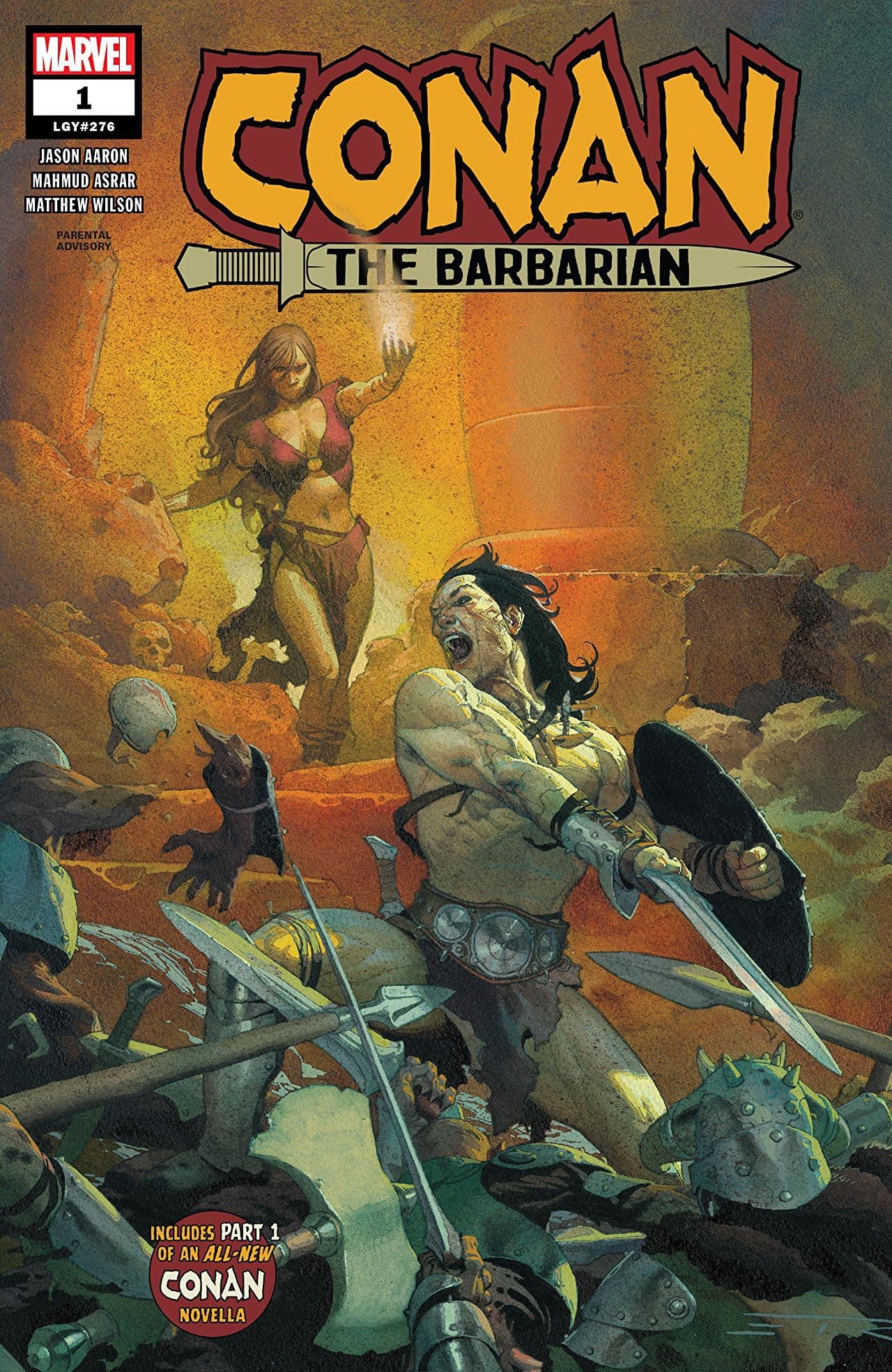
CONAN THE BARBARIAN #1

I was skeptical when Marvel announced they had reacquired the rights to publish comics based on Robert E Howard’s Cimmerian adventure. Conan is one of my favorite characters but Howard’s vision was a singular one and few creators have matched his best work let alone bettered it. Where else do you go after comics have adapted every good Conan story at least twice? How could new Conan comics be anything other than superfluous additions to a canon that didn’t need expansion?

Jason Aaron proves me wrong by approaching Conan in a way that is both original and familiar. Conan confronts the Crimson Witch, a supernatural foe bent on his destruction. It’s a thin plot but Aaron’s choice to set the story at two different points in Conan’s career elevates the material. The bulk of the action takes place when Conan is a teenage pit fighter, but fast forwards to his days as a middle-aged King. The change in perspective allows the reader to compare and contrast Conan’s attitudes towards life as a young man and an adult while giving us the fulfillment of a single issue story embedded within a longer, more complex story arc. There is also a promise implicit in the premier title: The Life and Death of Conan. I don’t imagine for a second that Marvel will kill off such a major property forever but I’m excited to watch the comic book death and resurrection narrative play out with Conan at its center.

Mahmud Asrar was the right artist to pair with Aaron’s bracing script. His line work is adept at capturing the brutality and sensuality of the Hyborian age, aided by Matthew Wilson’s palette of muted earth tones and brilliant reds. Letterer Travis Lanham’s copy is as easy to read as it is inconspicuous. This is an excellent comic, crafted by creators working at the peak of their skills. Any fan of Conan or Howard will find something here to love. The character’s long history should not intimidate new readers; they summarize everything you need to know out on the first two  pages. Conan the Barbarian is one of the best fantasy comic debuts in years.

It’s not a perfect book, however. The problem lies in context. The new Conan is a throwback to the days when Roy Thomas, Barry Smith and John Buscema first translated Howard’s work from pulp fiction to sequential art. There’s nothing wrong with that but I can’t help think Comics Gate will be happy to see such a work of apolitical adventure fiction dominating sales charts. Conan himself is too close to their ideal: a blue-eyed juggernaut who takes what he wants be it wine, women or the right to rule a nation by main strength. While there is nothing as offensive as racist caricatures or sexual violence here, there is also nothing to refute their presence elsewhere in the saga. It’s an uncritical appreciation of Howard’s work with no acknowledgement of its more problematic elements. I hope Aaron and company delve deeper in future installment because it would be a shame to see a comic with this much promise turn out to be just another pale pastiche.

Story: Jason Aaron Art: Mahmud Asrar 
Colors: Matthew Wilson Letters: Travis Lanham
Story: 8.5 Art: 9.0 Overall: 8.75 Recommendation: Buy

Marvel Comics provided Graphic Policy with a free copy for the purposes of this review but I went ahead and bought one anyway. 

Movie Review: Aquaman

Aquaman

One of the great joys of reading superhero comics is the eclectic nature of their inspiration. The genre has drawn on everything from pulp fiction to mythology, creating a body of work that is idiosyncratic and often gloriously absurd. Superhero movies, however, have tended to eschew this everything but the kitchen sink approach to present more grounded, realistic visions of the world they are trying to represent.

James Wan’s Aquaman is the first movie I have seen that really felt like reading a comic rather than just watching an adaptation of one. It’s the story of Arthur Curry, the son of an Atlantean queen and a human lighthouse keeper who must claim his birthright to stop his evil half-brother, Orm from becoming Ocean Master and waging a war of vengeance upon the surface world. The plot follows the same sort of meandering structure one would expect of a story being spread across five issues rather than three acts and its influences are pulled from across the cultural landscape including comics, film and mythology.  Wan’s visuals are spectacular presenting us with a lot of old concepts that feel fresh in the new light of his directorial vision. I was never really surprised but I wasn’t bored either. The characters are  archetypal and they fill their roles in the story with a good humor that is missing from more serious movies of this genre while never descending into parody.

Aquaman’s  greatest flaw is that the script itself is weak, relying far too heavily on tired tropes and cliched dialog for its own good. The first forty five minutes are a slog through a morass of set-up and exposition accompanied by some very dodgy CGI that makes several actors look more like cartoons or the victims of an over-enthusiastic plastic surgeon. The performances are mediocre overall though it’s hard to say whether they might have been improved with better material. Jason Momoa and Amber Heard  manage to plow through on shear charisma and almost impossible levels of raw sex appeal but I am forced to admit that Momoa’s range as an actor is limited to playing versions of himself. The comparison has been made to Flash Gordon but Aquamanlacks an actor of Max von Sydow’s talents to lend it weight and one of Brian Blessed’s exuberance to lift it up.  

Aquaman isn’t a great movie. It’s not going to win any Oscars and it may well be largely forgotten a year after its home viewing release. In spite of all its defects however  I enjoyed it more than any other superhero movie I’ve seen this year even if both Black Panther and Infinity War were better made.  Aquaman wears its soul on it’s sleeve and while there are moments where it struggles to stay afloat, it still manages to keep its head above water.

Overall Rating: 8 Recommendation: See

Around The DC Universe: Titans, Jason Todd, The Longbow Hunters, and More!

Welcome to “Around the DC Universe,” Graphic Policy’s weekly guide to the best comics and shows on DC Entertainment’s premium subscription service.
Original Series

After a week away from this column I had a bit of catching up to do with Titans. The show continues to be one of the best that DC has ever produced, finally bringing the team together in one episode and introducing the second Robin, Jason Todd in another. With the series entering its second half the characters are really starting to gel as a group. It’s a lot of fun to see the chemistry between them at work and watching Dick take on the villainous Nuclear Family as Robin was tremendously satisfying. Jason too is very well done. There aren’t many portrayals of the character to hold up against Curran Walters’ for comparison but he does a good job defining him nonetheless. Walters’ Jason evokes the blend of sympathy and disdain that the character demands with a screen presence that is magnetic. He’s a great addition to the regular ensemble and I hope to see more of him as the series develops.

Comics

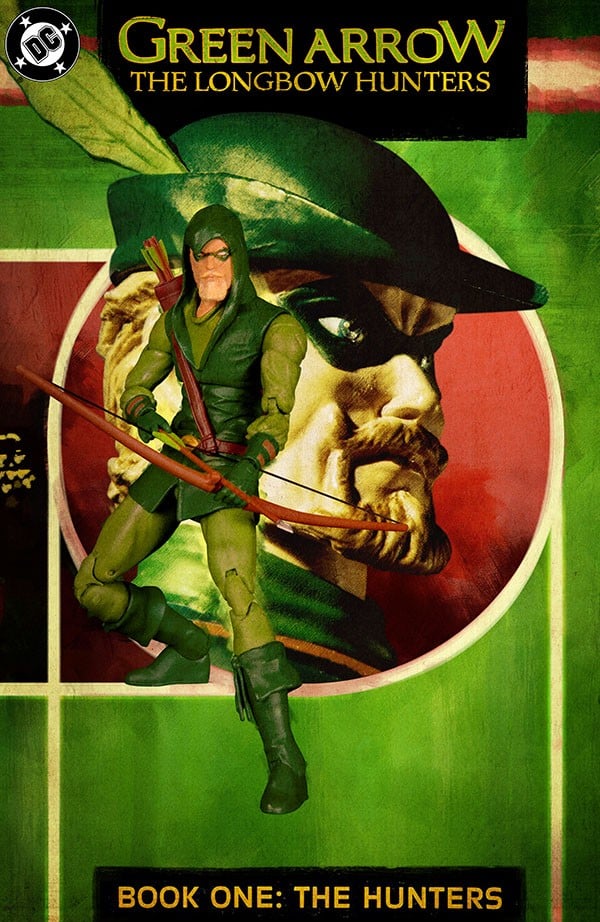
One of the earliest series I recommended through this column was Kevin Smith’s run on Green Arrow. This time around I call your attention to another classic story featuring the emerald archer: The Longbow Hunters by writer/artist Mike Grell. From the same era as Miller and Mazzuchelli’s Batman Year One and Tim Truman’s Hawkworld, this three issue mini series reintroduced Oliver Queen to the post-Crisis DC Universe. Grell’s Ollie is a grounded, urban vigilante on the hunt for a serial killer who stalks the streets of Seattle amidst a much larger affair involving rogue intelligence operatives and mysterious assassins. Fans of the TV show Arrow will recognize many familiar elements in the mini series itself and the follow up ongoing series with artist Ed Hannigan, several issues of which are also available on DC Universe in Green Arrow (1987). While the art is gorgeous and the stories compelling in their own right I do think this run is missing something. A notably conservative creator Grell never fully embraces the liberal politics that have been one of  Oliver’s trademarks ever since Denny O’Neill and Neal Adams got their hands on him in the late seventies.  One might expect a critique of the lefist point of view, coming as the series does at the height of the Reagan era, but ideology is mostly ignored to the detriment of the characterization of comics’ proudest liberal. While it does strike slightly right of the bullseye, The Longbow Hunters is still a high water mark in Green Arrow’s career and is worth the attention of anyone who is interested in his adventures.

Technical Issues

The addition and subtraction of new comics remains the biggest problem with the DC Universe service. As I reported several weeks ago, the powers that be seem to be discussing how to improve the comics portion of the site by changing how the library is curated. What this means is still being left vague by the moderators of the community forums but the sense of disaffection among users is palpable. Nothing has been added to the comics library to replace Dark Victory after that title expired on November 12th and there have been no announcements about any forthcoming special features.

While I appreciate DC’s commitment to using subscriber feedback to improve the user experience, by not continuing  to rotate new special feature titles while they discuss a fix they’re giving the impression to anyone who doesn’t follow the community forums that they’ve abandoned comics streaming as a feature. Coming on the heels of the demise of Filmstruck it doesn’t breed confidence in Warner Brothers’ long term commitment to this product or its users. I for one think that there is a lot of untapped potential in DC Universe and would hate to see it fail to live up to it. 

Around the DC Universe: Titans, Doom Patrol, Dark Victory, and Green Lantern

Welcome to “Around the DC Universe,” Graphic Policy’s continuing feature that helps you get the most out of your subscription to DC’s premier comic book and video streaming service.

Originals

This week Titans introduced their version of The Doom Patrol. I’m not particularly knowledgeable about any of the comic book versions of the team but I did enjoy watching this episode. Brendan Fraser especially stood out as Robot Man, striking a perfect balance between goofiness and pathos that made me want to watch more.

I hate to say it but the one part of this show I’m not loving is Starfire/Kory Anders. Anna Diopp does a fine job of portraying the character but I don’t think the writers really know what to do with her.  Her costume is also completely ridiculous. I was willing to accept it in the beginning since it made sense in the context in which she’s introduced but four episodes (and a transatlantic flight) later the fact that she’s still wearing it stretches the bounds of credibility by making her stick out like a sore thumb. Hopefully the whole crew will be due for a change of clothes soon.

Special Features

Last Tuesday Batman: Dark Victory was added to the service for a limited time (they’ll be taking it down November 11th). This sequel to The Long Halloween, which features the fallout of the Holiday murders on the Gotham underworld and a version of Robin’s origin, is an improvement on the original but it does rely on it rather heavily for the purposes of continuity. It’s probably not the best choice if you steered clear of The Long Halloween and its not good enough in my opinion to make reading The Long Halloween worth it. If you ignored my advice or if you’re only discovering this column after learning that the original was not your taste, then check it out. It’s by far Jeph Loeb’s most readable epic.

Comics

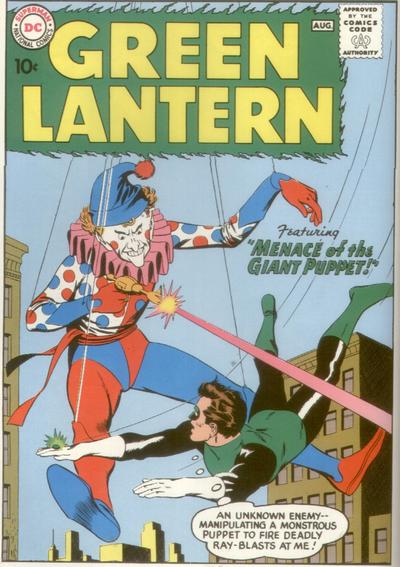
If you were hoping for some Green Lantern comics to go along with the release of the first issue of Grant Morrison and Liam Sharp’s run, then prepare to be disappointed. DC Universe’s current selection is rather spotty and missing some well regarded material including most of the classic runs by Denny O’Neil/Neal Adams and Geoff Johns. The best stuff currently available to binge are the first twenty issues of Hal Jordan’s original series from the 1960s with stories by John Broome and art by Gil Kane. While these comics are plenty goofy (as well as being full of the casual racism and sexism of the silver age) they are still worth reading as historical documents. It was editor Julius Schwartz’s reinvention of Green Lantern (along with The Flash) that set the tone for a new generation of comics. Gil Kane is perhaps the best representative of DC’s silver age style with his dynamic sense of motion and more modern page layouts (though he would not really hit his stride until later in the run when he began to ink himself) and Broome managed to weave entertaining science-fiction yarns that saw Hal adventuring across both time and space, introducing key concepts and characters along the way.

Around the DC Universe: Titans, Swamp Thing, and More!

Originals

Stuff is finally starting to come together on Titans. This week saw Starfire and Beast Boy pulled into the main thread alongside Dick and Rachel. I like how they’re using Starfire to add an element of real mystery to Raven’s story line. Just about everyone knows what Rachel’s big reveal is but it will be interesting to see exactly how Kory fits into it. That said, after the Hawk and Dove episode I’m worried they won’t keep her core background as an alien intact. The juxtaposition of sci-fi and fantasy elements is a feature of superhero comics that has been largely neglected on TV and it would be nice for Titans to break the mold.

Comics

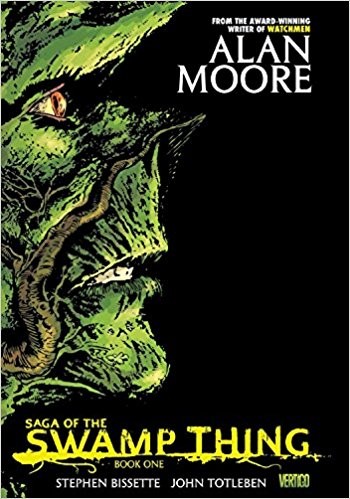
Between Halloween and recent casting news regarding the upcoming Swamp Thing series, this is the perfect time to read some of the best horror comics ever published by DC or anyone else. Alan Moore‘s run on The Saga of Swamp Thing is one of the high water marks of the medium as groundbreaking as The Dark Knight Returns or Watchmen and maybe even more influential by virtue of the fact that it was an ongoing monthly series. The earliest issues with art by Stephen Bissette and and John Tottlebein are currently on DC Universe and it actually stands apart from the bulk of the run quite well though you do miss out on the early appearances of John Constantine. What’s here is more than worth it, a look into some of the murkier corners of the DC Universe including a guided tour of Hell itself. Be warned that there are many uncomfortable themes including rape, incest and necrophilia. These are not comics for the squeamish either. No evokes the corrupting atmosphere of body horror quite like the team of Bissette and Totlebein. If you’re a big fan of movies like John Carpenter’s The Thing or David Cronenberg’s The Fly, then The Saga of Swamp Thing is a must read. Available on DC Universe in The Saga of The Swamp Thing (1982) #21-34 and Swamp Thing Annual (1985) #2. Read the Swamp Thing Annual between issues 31 & 32.

Technical Issues

After almost 2 months since release it’s time for an update on technical issues. Overall I’d say DC Universe has gotten a lot better. The community portion of the site has added moderator tags and restricted one of the boards to moderator posts so it’s much easier to get official announcements.The inability to directly interact with other users remains a stumbling block but there has been improved functionality in terms of what you can post and the ability to bookmark threads. Communication  is greatly improved but there are still blind spots. Death of Superman was up for the better part of October missing key issues in the story. This was never addressed despite the fact that this was pointed out by myself and other users in several spots on the community and through direct communication with customer service using the form available through the app itself.

The rotation of special feature comic titles continues to prove frustrating. While DC has mostly been adding worthwhile titles on a regular schedule, the rate at which they rotate out is inconsistent and you have to dig to find out how long a given issue will be available. It would be nice to know in advance how much time there is to read a given special feature without have to trawl through a message board. Similarly three out of four issues of Batman: Year One, which I had thought would be part of the regular library until at least the end of this month, mysteriously vanished while issues of Batman ’66 seemed to appear without warning.

To add a further wrinkle to the matter DC originally stated that their full digital library would be available for purchase in October, presumably at a per issue price similar to ComiXology (though DC has stated that the two services’ libraries will not sync meaning you would need to purchase a book twice to read it on both apps). This note has now been replaced with one that states more comics are coming soon. Whether this means that DC is planning to retool DC Universe to have an unlimited library similar to Marvel’s remains to be seen. It does seem unlikely that DC, a company that relies far much on “evergreen” trades like The Dark Knight Returns or Watchmen, would want to hazard risking those sales by making such titles available digitally for such a low price point (especially given the cost of producing their original shows) but there is also a lot of discontent in the community with the current vault approach. If anyone from DC is reading this I would suggest a hybrid approach: regular monthly titles released in a style similar to Marvel Unlimited with a six month or even a year lead time to preserve comic shop sales and a rotating, themed  selection of the best selling boutique material in trade. This should allow for a better value for money for readers who are primarily interested in new material while DC is able to maintain the value of their older titles.

Around the DC Universe: Hawk and Dove Debut, Long Halloween, and Gotham Knight

Welcome to Around the DC Universe, Graphic Policy’s continuing feature that helps you get the most out of your subscription to DC’s premier comic book and video streaming service.

Originals

Last Friday saw the premier of the second episode of DC Universe’s first original series Titans introducing the characters of Hawk and Dove. I was a little thrown off by the fact that they seem to be portrayed as ordinary vigilantes rather than the avatars of peace and war respectively.  Still the writers and actors managed to make their troubled love story compelling, especially at the climax of the episode, a not quite cliffhanger which left me hungry for more. The series is really going from strength to strength by focusing on Dick and Rachel’s relationship and their troubled pasts. It’s must see TV for me at this point and if I had the opportunity I would be binge watching it right now.

Special Features

On Tuesday DC Universe added Batman: The Long Halloween just in time for the holiday next week. Conceived as a sequel of sorts to Frank Miller and David Mazzuchelli’s Batman Year One, The Long Halloween features a collection of Batman’s greatest villains serving as foils for the Dark Knight while he investigates a series of murders by the mysterious Holiday Killer. While this story by Jeph Loeb with art by Tim Sale sounds tempting it’s one of the most overrated Batman stories of all time in my opinion. Despite drawing inspiration from everything from Miller’s seminal work to films like The Godfather and Silence of the Lambs, Loeb and Sale can’t manage more than a murky mystery with an uncertain conclusion (I’ve read it at least four times and I still can’t quite figure out who Holiday is supposed to be). While some of the hero versus villain vignettes are amusing (particularly the Joker standing in as the Grinch) The Long Halloween never rises to become more than the sum of its parts.

Comics

Fortunately there are much better Batman stories available on DC Universe for you to read as you get ready for trick or treat.

Start with Batman: Madness- A Legends of the Dark Knight Halloween Special also by Loeb and Sale. It was one  of a series of Halloween themed one shots that was the inspiration for The Long Halloween and is infinitely better. This issue features The Mad Hatter and displays the deft character work that Loeb was known for before he transitioned into writing continuity dense epics focusing as much on Jim Gordon and his relationships with his wife and his young daughter Barbara as it does on Batman and the Hatter.

In Batman: The Last Arkham the Dark Knight finds himself an inmate of the infamous Arkham Asylum. Viewers of Batman: The Animated Series will find elements reminiscent of the season one episode “Dreams in Darkness” but the comic also features the debut of the villainous Zsasz and some truly exceptional art by the late, great Norm Breyfogle. This is truly one of the highlight of Breyfogle’s career defining run on the character with writer Alan Grant, producing a creepy, atmospheric romp through Gotham’s house of madness. Available on DC Universe in Batman: Shadow of the Bat(1992) #1-4.

Last but not least is a short but legendary series of stories from Detective Comics by writer Steve Engelhart and artist Marshall Rogers. While this run is mostly remembered for its ending (“The Joker’s Laughing Fish”) that story doesn’t really hold up quite as well without the context of those that preceded it. These are tremendously influential comics inspiring not one but two episodes of the Animated Series and reinventing the character of Deadshot from a goofy silver age nemesis to a modern super villain. It’s also way ahead of its time in creating a true multi-issue arc.  Rogers’ work is still the definitive Batman for many fans who were lucky enough to read it growing up and it remains a high water mark of the era. Available on DC Universe in Detective Comics (1937) #471-476.

TV and Movies

While there is no shortage of Batman related features on the service’s video streaming section at the moment a good one you might have missed is Batman: Gotham Knight.Set in continuity with Christopher Nolan’s Batman films between Batman Begins and The Dark Knight  this is an animated anthology uniting western writers, including Greg Rucka and Brian Azzarello with Japanese directors to create one of the most successful fusions of super heroes and anime ever. Azzarello’s segment (“Working Through the Pain”) is a highlight and one of the best Batman stories ever written: the tale of how a young Bruce Wayne learned to deal with the pain of physical injury in India.

Around the DC Universe: Titans Debuts

Welcome once again to Graphic Policy’s regular roundup of the best, the worst and the goofiest content on DC Universe, the premier subscription service for all things from DC Entertainment.

Originals

A new heading gets added to the feature this week with the much anticipated debut of Titans, the first DC Universe exclusive original series. Early reactions to the series’ teaser material was decidedly mixed with many fans decrying what appeared to be it’s dark and gritty tone and the open use of profanity, especially when associated with a franchise with many younger fans thanks to the animated series Teen Titans (also available on DC Universe) and Teen Titans Go!

I was honestly surprised by how much I enjoyed the premier episode. The show is indeed dark and gritty but the tone works really well to provide a fresh take on thirty year old material that has been adapted several times before.
In this iteration Titans is very much an examination of young people coping with trauma, a theme that is all too relevant in the wake of #metoo and a generation of young veterans suffering from PTSD. Raven (played by Tegan Croft) is the real standout of the show and much of what occurs is seen from her viewpoint, something that makes the tone very apropos. I was a little worried that they were going to draw Dick Grayson too far towards the rendition from All Star Batman and Robin but Brenton Thwaites retains an essential likeability and vulnerability even while brutally wading into criminals with no quarter asked or given. “Fuck Batman” was a shocking and needlessly edgy line in the trailer but in the context in which it used it did work for me. I’d go so far as to say that this portrayal of the “boy” wonder might be the definitive live action one for a generation.

If there’s a flaw in the first episode it’s that Anna Diop’s Starfire is too far divorced from Robin and Raven’s plotline for much of the runtime. I get the feeling they were trying to make her mysterious but she came across as more of a distraction than anything else. Hopefully their paths will dovetail together next week. While I’m mostly over the idea of R (or in this case TV MA) rated superheroes I think it does work here.

One episode is not enough to justify $75 for a year’s subscription but if the rest of the season is as good or better a month or two to binge the entire thing will certainly be worth it.

Comics

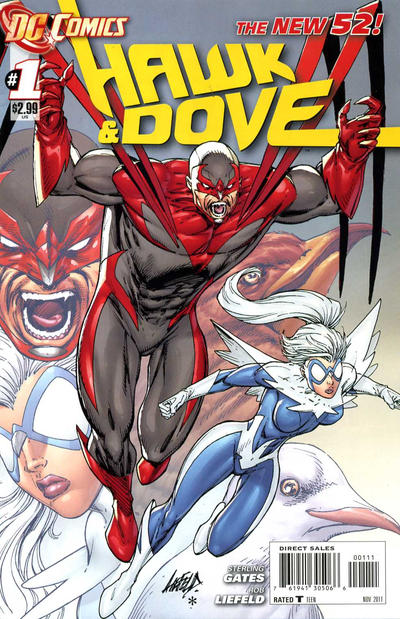
I’ve been busy catching up on analog comics for the last two weeks so I haven’t spent as much time reading on DC Universe as usual. One title I did get to finish though was Hawk and Dove (2011) by artist Rob Liefeld, scripted for the first five issues by Sterling Gates and done solo by Liefeld for the last three. Hawk and Dove‘s cardinal sin isn’t that it’s bad; it’s that its boring. At no point in this run do we get a sense of the characters as anything other than generic super heroes. There’s nothing compelling here, no reason why we should care what happens to anyone. The story also seems to be a continuation of threads laid down in a previous series, an odd choice given that the New 52 was supposed to be a fresh start for all but the most successful DC titles. It’s not even worth it for Liefeld fans as his work here feels rushed and bland. It’s almost like he lost interest or ran out of time halfway through, producing  a forgettable story and a poor introduction to the characters.

A much better use of your time is the first six issues of All Star Western (2011) written by Jimmy Palmiotti and Justin Gray with artwork by Moritat. Bringing Jonah Hex to Gotham City in the late nineteenth century was a stroke of brilliance and making his sidekick Amadeus Arkham makes for some great odd couple dynamics as the two try to solve a series of murders similar to the Jack the Ripper killings. The art (reminiscent of the french master Moebius) is in turns sexy, and disturbing and never less than brilliant. The only bad thing I can say about these comics is that there are not enough of them. All Star Western ran longer than any of the other New 52 launch titles without traditional superhero leads and only the first trade’s worth of material is available to read online with a DC Universe subscription. Hopefully more will be uploaded soon as these are some of the best comics produced by a major company in recent years and the series only gets better from here.

« Older Entries