Author Archives: Logan Dalton

Why Boromir Was the Best Character in the Fellowship of the Ring

Wow, I can’t believe it’s been 20 years since eight-year-old me read an 1,008 page fantasy novel called The Lord of the Rings (And The Hobbit too because it’s an actual children’s book.) just so I could be allowed to watch a fantasy movie called Fellowship of the Ring on VHS. There was also the Fellowship of the Ring video game for GameBoy Advance that had characters from the book, like Tom Bombadil, but would glitch out midway through the Mines of Moria. This was a glitch that not even the Prima strategy guide or GameFAQs.com could fix. 

As you can tell from this introductory paragraph, The Lord of the Rings has been a huge part of my life. Along with Star Wars, The Chronicles of Narnia, and good ol’ Redwall, it was my first fandom and is partially why I’m interested in genre fiction and, by extension, write for this website. One thing I love about going back and re-watching The Lord of the Rings films is seeing how my relationship with the characters and themes has evolved over the years. For example, when I was younger, I hated how “slow” the scenes in The Shire were at the beginning of The Fellowship of the Ring, and would fast forward to when Frodo (Elijah Wood) and Sam (Sean Astin) began their journey. Now, I understand the contrast between the idyllic, adorable life of the Hobbits with the darkness that pervades the rest of the film as Peter Jackson shifts the tone from light comedy to fantasy thriller, and how these scenes establish the intoxicating power of the Ring through its effects on Bilbo (Ian Holm), Gandalf (Ian McKellen), and Frodo.
Boromir

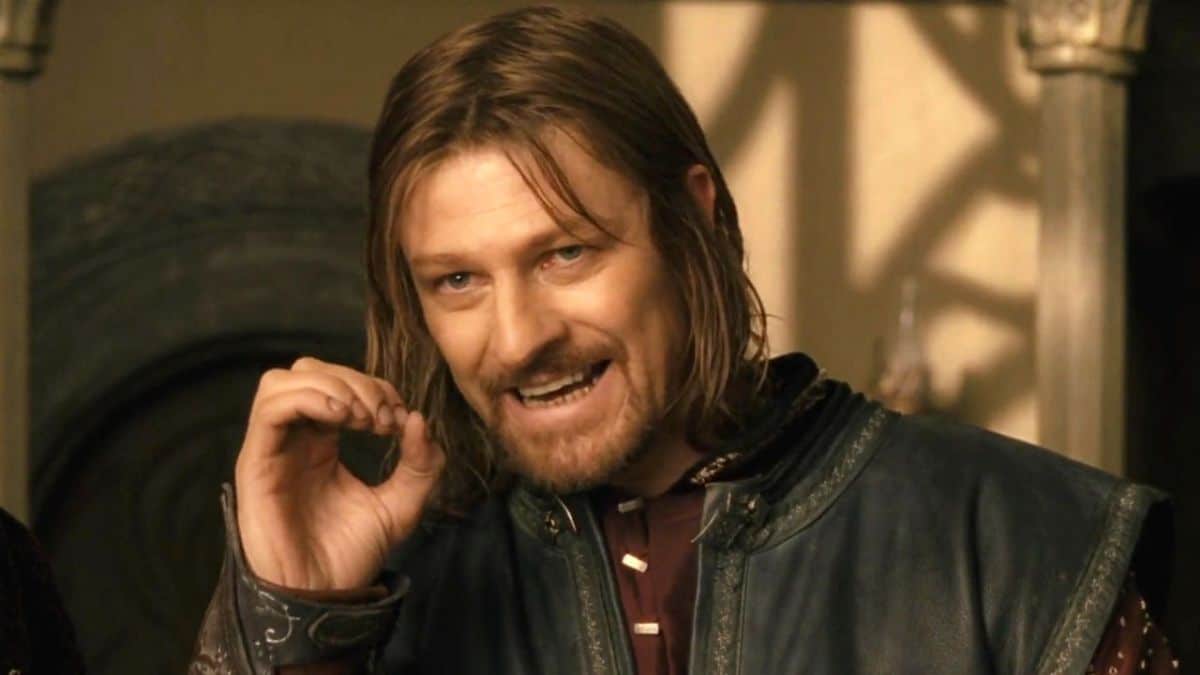
My relationship with a character that has changed the most is Boromir, who is played admirably by Sean Bean (Game of Thrones, Goldeneye). He joins the Fellowship of the Ring at Rivendell and is the only main cast member to die permanently. When I was younger, I thought he was the heel to Aragorn’s babyface and preferred his kinder, younger brother, Faramir (David Wenham), who is a wonderful character and may get an article of his own when the 20th anniversary of The Two Towers and The Return of the King rolls around. However, as I’ve gotten older, I started to connect with him as a flawed, tragic figure that ends up making a big sacrifice that sets up the hobbits, Merry (Dominic Monaghan) and Pippin (Billy Boyd), on their own hero’s journey. While studying texts like the Song of Roland, Beowulf, and Dante’s Inferno (Boromir is totally what medieval theologians would call “a virtuous pagan”.), I started to see Boromir as a more modern version of the tragic hero archetype, who is consumed by pride and greed, but ends up redeeming himself in the end through death. He is a glowing example of the rich intertextuality of J.R.R. Tolkien’s fantasy epic as well as Jackson, Fran Walsh, and Philippa Boyens’ film adaptation, and how these works are in conversation with older myths, legends, and stories.

However, I’ve started to connect with Boromir on a personal as well as intellectual level. As I’ve gotten older, I’ve had to take on more responsibilities like a multi-faceted full time job, paying the bills, and relationships to name a few. So, I relate to Boromir’s struggles with balancing what his father Denethor (And, by extension, his home country, Gondor) want him to do, and what he personally wants to do with his life. Boromir’s constant mentions of Gondor and “his city”  could easily be substituted with “the project”, “the numbers”, or insert office jargon here. However, you can definitely tell that Boromir cares deeply about his city as evidenced by his monologue to Aragorn in Lothlorien where he uses poetic language and describes Minas Tirith as the “The White Tower of Ecthelion, glimmering like a spike of pearl and silver”. Howard Shore’s score soars during this scene, and for a  second, it looks like we might get an Aragorn (Viggo Mortensen) and Boromir team-up to save the day. Alas, that’s not going to happen partially due to Boromir’s father Denethor’s desire for power and a weapon to defend his country.

Basically, Boromir’s whole motivation as a character in Fellowship of the Ring comes from a flashback scene in The Two Towers extended edition where he celebrates a great victory for Gondor, gives a short speech, and then breaks out the ale. However, his celebration is undercut by the appearance of his father Denethor (John Noble) aka the ultimate middle manager. Denethor isn’t the King of Gondor: his actual rank is Steward. Basically, he’s keeping the seat warm until the actual king (Aragorn, in this case) returns and is like an interim head coach if the “interim” tag never came off for hundreds of years. You can definitely see this in the way Noble plays Denethor as if he has the biggest of sticks up his ass, berates Faramir for making a strategic retreat instead of fighting while outnumbered, and doesn’t indulge in a pint of ale.
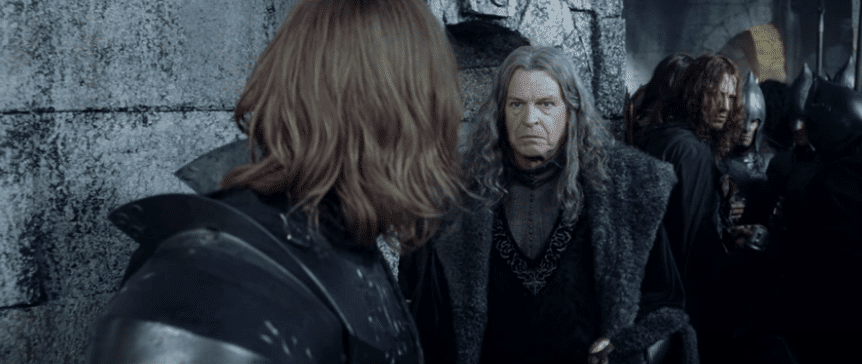
In this wonderful scene, Boromir tells his father that he wants to stay in Gondor instead of traveling to Rivendell to take an object that was responsible for the death of one of the greatest leaders of Men. (Isildur aka Aragorn’s ancestor from over 3,000 years ago.) His brother Faramir, ever being the empathetic one and trying to earn his father’s favor, says he’ll go to Rivendell, but Denethor doesn’t think he’ll toe the party line and forces Boromir to go and get the One Ring for Gondor so they can defeat Sauron and Mordor. This is in spite of the fact that the One Ring has brought nothing but suffering and death and should be destroyed. In a more modern setting, Boromir would be a top employee sent by a manager to do something unethical to get an edge on a competitor, but it ends up hurting the company and the employee. It’s very much a lose/lose situation. 

With the information gained from this extended scene, Boromir’s behavior in the Fellowship of the Ring makes sense from the way he contemptuously throws down Isildur’s blade Narsil, which cut the One Ring from Sauron’s finger, in Rivendell to his firsthand knowledge of Mordor because it borders Gondor. I love how Sean Bean talks with his hands while delivering dialogue about how “one does not simply walk into Mordor”. On a more positive note, the way he treats the hobbits, especially Merry and Pippin, mirrors the way he treats his younger brother, Faramir. There’s a hilarious scene where he spars with them and then ends up being tackled by them and wrestling like a big brother and his younger brothers or nephews. In Moria, he helps them jump across a chasm in a tense chase sequence. These scenes add humanity to Boromir and show that beyond the company line of “bring the Ring to Gondor”, he cares about fostering close relationships with other people, and there’s a reason why his men were raucously cheering in the flashback scene. It shows that Boromir is more than just the mission his father sent him just like we’re more than our job titles and professions.

These moments counterbalance the scenes where Boromir acts condescendingly to Frodo (I hate how he ruffles his hair like the hobbit is a puppy.) and especially the pivotal sequence where he tries to take the Ring from him, tells him that he’ll fail in his mission, and that the Ring belongs to him. In this moment, the corrupt influence of the power of the Ring plus Denethor’s mission consumes him, and he acts like a total asshole leading Frodo to put the Ring on (Never a good idea.) to evade him. Boromir’s treatment of Frodo at the end of The Fellowship of the Ring has parallels to someone having a bad day and taking it out on a co-worker or even a totally innocent customer service professional for an unrelated reason. 

Boromir

However, Boromir still has some good qualities and apologizes to Frodo (Even though Frodo is off in the netherworld of the Ring and can’t hear.) with Bean’s voice breaking as he comes to his senses. Fittingly, he ends up taking his little bros, Merry and Pippin, under his wing and protects them from the attacking Uruk-Hai whose only instructions are to capture Hobbits and kill everyone else. His protection of Merry and Pippin ends up being his redemption and inspires the hobbits to become soldiers in the armies of Rohan and Gondor respectively with Pippin mentioning Boromir’s sacrifice specifically when he swears his service to Denethor. Also, Pippin being in Minas Tirith ends up saving Faramir’s life as Denethor goes totally crazy and tries to burn his son to death because he has totally lost hope. It’s like he saved his brother beyond the grave, and in my head canon, he’s smiling somewhere as Faramir finds love with another kind, heroic character, who is underappreciated by her people aka Eowyn.

Boromir doesn’t have the traditional hero arc of Aragorn, who goes from pipe smoking, weather-beaten Ranger to well-groomed King of Gondor and atones for Isildur’s mistakes as he distracts the armies of Mordor at the Black Gate so Frodo and Sam can destroy the Ring. However, Boromir’s storyline is more relatable to me as a human and worker in a late capitalist hellscape because his passions and values are subsumed to a never ending for a bureaucrat (Denethor) desperately trying to hold onto power in a world where he has become quite irrelevant. 

In the end, Boromir doesn’t save the world or achieve some great destiny just like so many of us won’t be remembered in history books as great leaders or figures. However, he did have one great moment where he got to be himself and protect his surrogate brothers, Merry and Pippin. Boromir gives them hope that they’ll survive the next two films as well as returning to the Shire as sword-wielding, armor-wearing heroes. In a world where the wealth gap is increasing, the climate is rapidly changing, and a pandemic ravages the lands, I feel this one great moment where I know I made a difference is all I can hope for in life.

But, hopefully, it doesn’t involve me being shot through with some seriously gnarly arrows… 
Review: Inferno #1

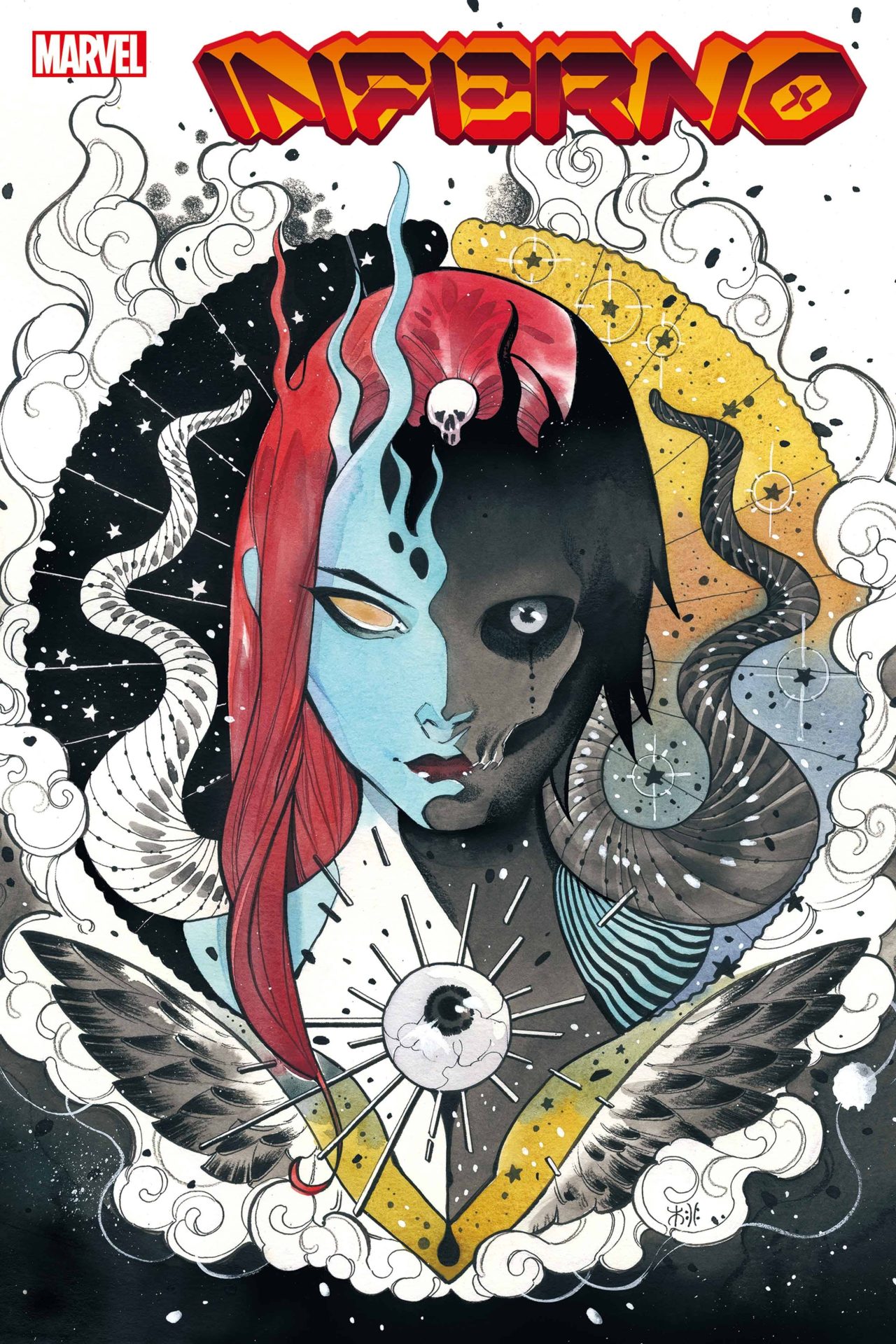
A lot of Inferno #1 is a table-setting tease, but boy, it’s nice to see Moira X back in action and in direct confrontation with the one mutant that can negate her abilities and quash her plans, Destiny. Jonathan Hickman, Valerio Schiti, and David Curiel bring a small semblance of the epic thunder of House of X and Powers of X back in the high stakes arguments between Moira, Professor X, and Magneto as well as a brutal opening battle sequence between X-Force and Orchis. Plus there’s all the underlying elements about Krakoa being on thin ice culminating in a not exactly a shocker of a final sequence, but a statement piece that definitely has me invested in Inferno #2.

For all its flaws, Inferno is a book that is both time-spanning and cloak and dagger, and Schiti is good artist pick to juggle all this. He can use wide open layouts for fight and group scenes and then trim down and go tighter with nine panel grids as Mystique and Destiny confront Moira X and the use of her abilities to try to “cure” mutants once and for all. This storyline is something that has definitely popped up in X-Men stories quite a bit, but Hickman adds a SF wrinkle with the use of multiple timelines and reincarnation abilities. There’s also the failed utopia angle, and the last third of Inferno features plenty of hot people with superpowers acting like academics on a subcommittee with Madripoor substituting for the local watering hole. However, this awkwardness sells the last couple pages even more with Valerio Schiti nailing every Quiet Council member’s reaction to their new member.

Inferno #1’s extended length leads to plenty of Jonathan Hickman self-indulgence, including double data page spreads, a Warlock and Cypher interlude that might be Krakoa’s last happy moment before everything burns, and very long conversations. All the Orchis/Quiet Council maneuvering aside, Inferno is really the story of two couples: Xavier and Magneto, Destiny and Mystique. They are joined together via Moira X and set at cross purposes by her with Destiny seeing Moira’s real threat in her tenth life (The aforementioned cure). On the other hand, Moira sets Xavier and Magneto against Destiny and says she’s a threat to Krakoan stability, which leads them to do some very morally questionable things. This is par for the course in the “Dawn of X”/”Reign of X” era, their characters in general, and definitely backfires as evidenced by the issue’s first image of them crawling out of resurrection pods before a Cerebro-rocking Emma Frost. This page is a shining example of how Inferno #1 is more appetizer than full meal.

The Xavier/Magneto scenes definitely feel like they could be plucked from the better parts of Hickman’s X-Men run and also showcase Schiti’s skill with character acting. David Curiel also ups the intensity of the colors depending on the flow of conversation. Moira X is Krakoa’s ringer, and why they keep attacking Orchis over and over even as this starts to expose the resurrection protocols to their enemies. As anyone who has interacted with X-Men media knows, Sentinels are bad, and mutants are good. But after the double digit failures in taking out Nimrod, Magneto and Xavier start to wonder if a partnership with these machines might be a good idea. Unfortunately, Moira X has seen the future and knows this isn’t a viable path and directs their energies to a pre-cognitive mutant instead. Schiti draws panels of them sabotaging the resurrection process with close-up shots of Mr. Sinister (Or a clone) and Krakoan language vials that scream death of a utopia.

However, Jonathan Hickman and Valerio Schiti keep things ambiguous and basically smash cut to the election of a new Captain Commander and the ending Quiet Council meeting saving the consequences for a future issue. Sneaky, morally ambiguous Xavier and Magneto is a great time though even as they speak about humility and posture about resigning their positions of leadership and letting a new generation take over. It’s unclear how Inferno fits with Trial of Magneto, but these are two mutants that definitely don’t seem to be relinquishing power any time soon, hence, the shady shit with Moira X.

Inferno #1 returns to one of the most interesting plot threads from House of X/Powers of X: Moira MacTaggert being one of the most powerful mutants, who also acts as a kind of meta-commentary on the ideological evolution of the X-Men. (I can take or leave the Orchis stuff.) She has plenty of panel time in this issue, but it’s all set up for future conflicts that will hopefully shake Krakoa at its core and end Hickman’s run on the mutant books in a suitably dramatic fashion. For now, there’s a lot of speeches, posturing, and everyone’s favorite, data pages.

Story: Jonathan Hickman Art: Valerio Schiti
Colors: David Curiel Letters: Joe Sabino
Story: 7.0 Art: 8.0 Overall: 7.5 Recommendation: Read

Marvel Comics provided Graphic Policy with a FREE copy for review


Purchase: comiXologyKindleZeus ComicsTFAW

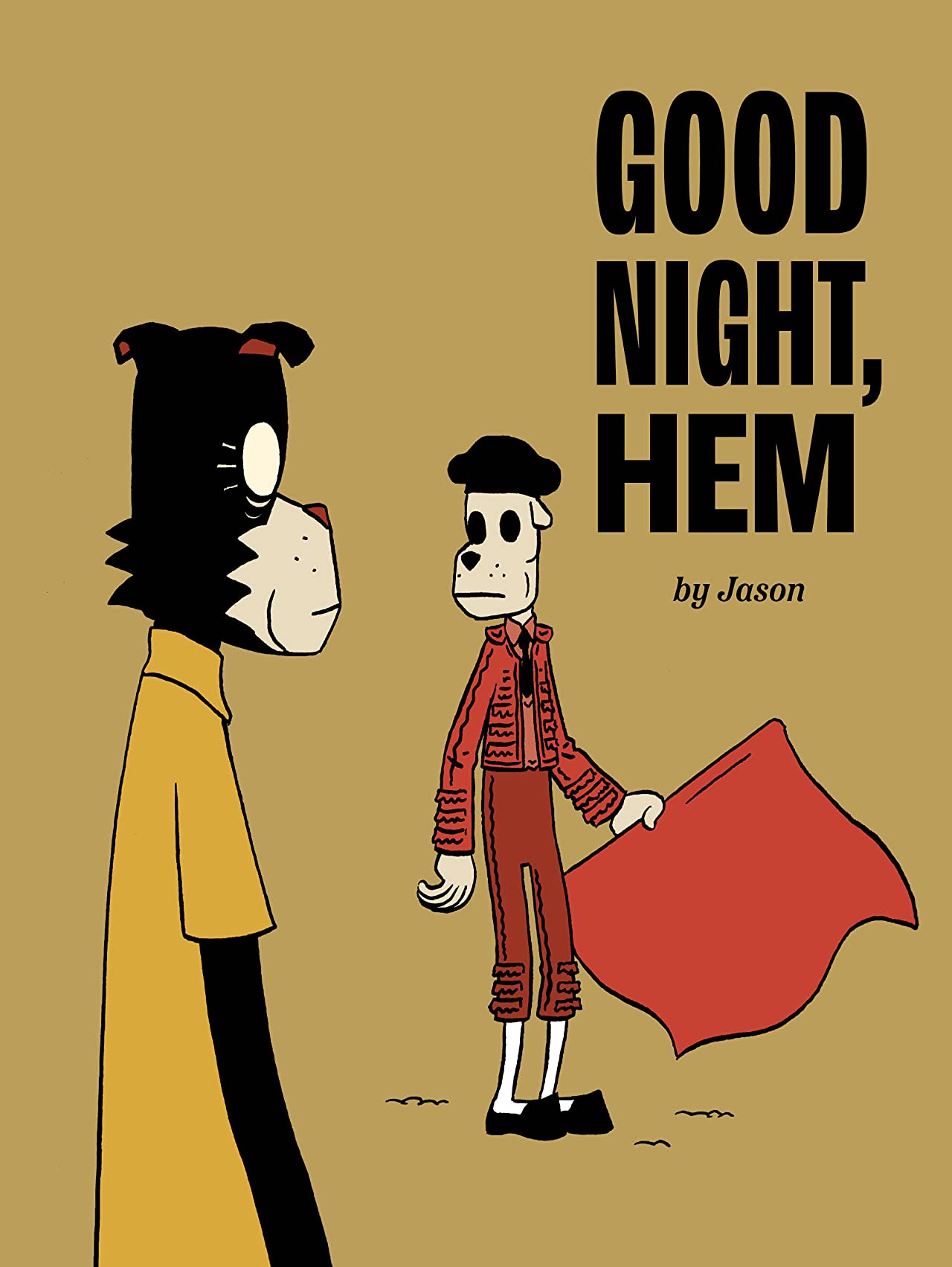
Review: Good Night, Hem

Good Night, Hem

Throughout his career, Norwegian cartoonist Jason has been a master of mixing highbrow literary references with George Herriman-esque slapstick complete with funny animal characters. Good Night, Hem is no exception even if it takes a bit of time to build momentum and become truly emotionally resonant. The book consists of three chapters, basically, two short stories and a coda that ties everything together set during different time periods of Ernest Hemingway’s life. Chapter 1 follows his exploits with the “Lost Generation” (Highlighted in silhouette) in 1922 as he goes from the literary haven of Paris to the fiesta, and of course, bull fights of Pamplona, Spain. Chapter 2 is set in 1944 as he and a crack team of nobodies try to take out Hitler while chapter 3 wraps up in Cuba in 1959 as Hemingway takes stock of the events of the book and reflects on his life and his friendship with Athos, the immortal musketeer.

Although Jason sticks to a simple, yet powerful four panel per page layout and an iconic art style throughout Good Night, Hem, the first chapter of the comic is a wee bit of sensory overload. He keeps introducing names, faces, and some figures. Some like F. Scott Fitzgerald have gained immortality while the others hang out in the footnotes of biographies and had me digging through my old 20th Century American Literature syllabus. The constant namedropping and petty squabble interspersed with moments of humor and literary genius (i.e. Hemingway’s iceberg) don’t make for exactly pleasant reading, and the first chapter lacks focus compared to the second and third.

However, the first and lengthiest chapter isn’t a complete drag as Jason brings back one of his finest creations, Athos the Immortal about a decade after his last appearance in Athos in America. Athos’ physical presence alone brings the energy and melodrama of romanticism to a world of modernism, ennui, and infidelity as he truly lives with his heart on his sleeve leaping into the Seine River because he was rejected by the woman he was supposed to marry. The dynamic between him and Hemingway is really fun, and Jason gets playful (and a tad Shakespearean) and has them swap places for a day showing the power of fiction to try on different personalities and a way of looking at the world. It’s really clever that Jason makes them the same species of animal and has them end up having matching shiners, but what’s not clever and funny is their trick involves attempting or succeeding to be with each other’s lover. This doesn’t end up going well and is something that a problematic figure like Hemingway would try to pull, but it’s a classic storytelling trope that hasn’t aged very well. It does play the role of creating a rift between the men and also saps Hemingway of his fast talking, punching first personality.

If Chapter 1 saps Ernest Hemingway’s famous persona, the second chapter rejuvenates it as he basically wants to kill a bunch of Nazis and end World War II. There is a heightened fantasy (and comedy) feel to this part of Good Night, Hem like Inglourious Basterds, but with more restraint. (Except in the big mission scene.) Jason takes the stories of Hemingway’s exploits during World War II, including manning a Nazi hunting submarine in Cuba before the United States entered the war, and speculates what would have happened if he had achieved his ultimate goal of punching out Hitler and ending the war himself. Unfortunately, the result isn’t pretty with panels of Hemingway’s being mowed down or irreparably psychologically damaged.

Most of chapter two focuses on a side character named Paul, who finds romance in the midst of training, sneaking, and getting ready to fight Nazis, and Jason sets him up for tragedy culminating in a panel where he draws him like a beat-up rag doll repeating the same line of dialogue. War is never glorious even when it involves killing Nazis, and Jason shows the recklessness of Hemingway’s “hero ball”, initially through the farcically bad training exercises and finally through SS rifle fire. The cumulative effect of the fight scene is enough to draw him into yet another depression, but storywise, it’s the most effective part of Good Night, Hem. Jason takes his time setting up the relationship between Paul and Marie. He also both visually, and through dialogue, creates a parallel between Paul and F. Scott Fitzgerald and makes him a romantic who wants to live an adventurous life and write it down like Hemingway. This doesn’t happen.

Athos returns in chapter three as Ernest Hemingway contextualizes the events of Good, Night Hem into a tight narrative structure a la his actual writing. The cynic in me says that it’s Jason covering his ass after the meandering of chapter one, but it is a nice tone poem on immortality, adventures, and the simple pleasures of petting a cat and having a quiet life. Jason uses the character of Athos to show how any historical figure can be treated as a hero or larger than life when they have some very deep flaws. (See the flashback montage of Hemingway and his relationships with women.) I love how he depicts the aging process as well as turning in some of his sharpest, most insightful writing.

Good Night, Hem gets off to a wobbly, frenetic start with names and incidents and overlapping conversation that is really only readable thanks to Jason’s layouts and comedic timing. However, it picks up in chapter two with tragicomic thoughts on war, heroism, friendship, and immortality and ends up being a decent little read even if it’s not Jason’s best stirring up powerful emotions through black and white panels of anthropomorphic animals.

Story/Art: Jason
Story: 6.0 Art: 8.4 Overall: 7.2 Recommendation: Read

Fantagraphics provided Graphic Policy with a FREE copy for review


Purchase: comiXologyAmazonKindleTFAWBookshop

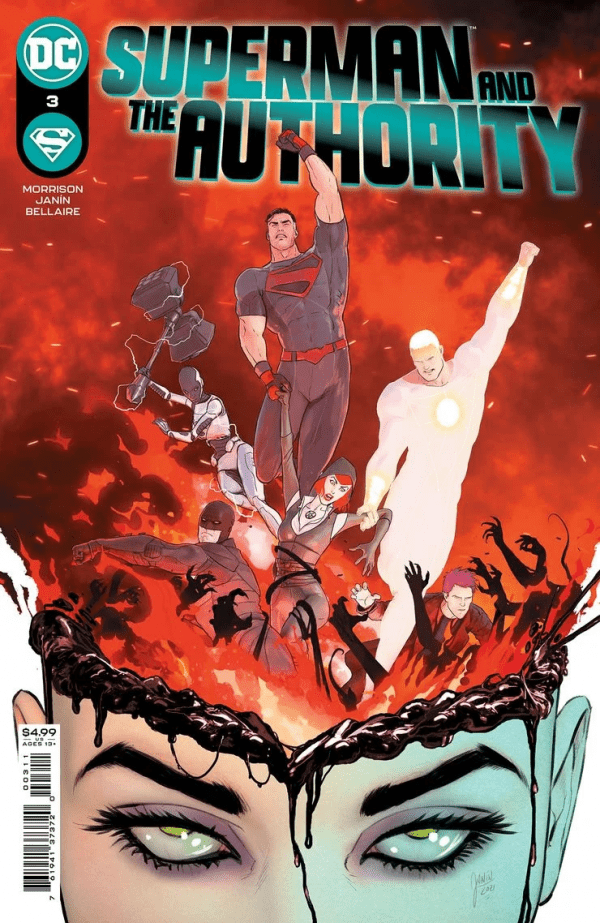
Review: Superman and the Authority #3

Superman And The Authority #3

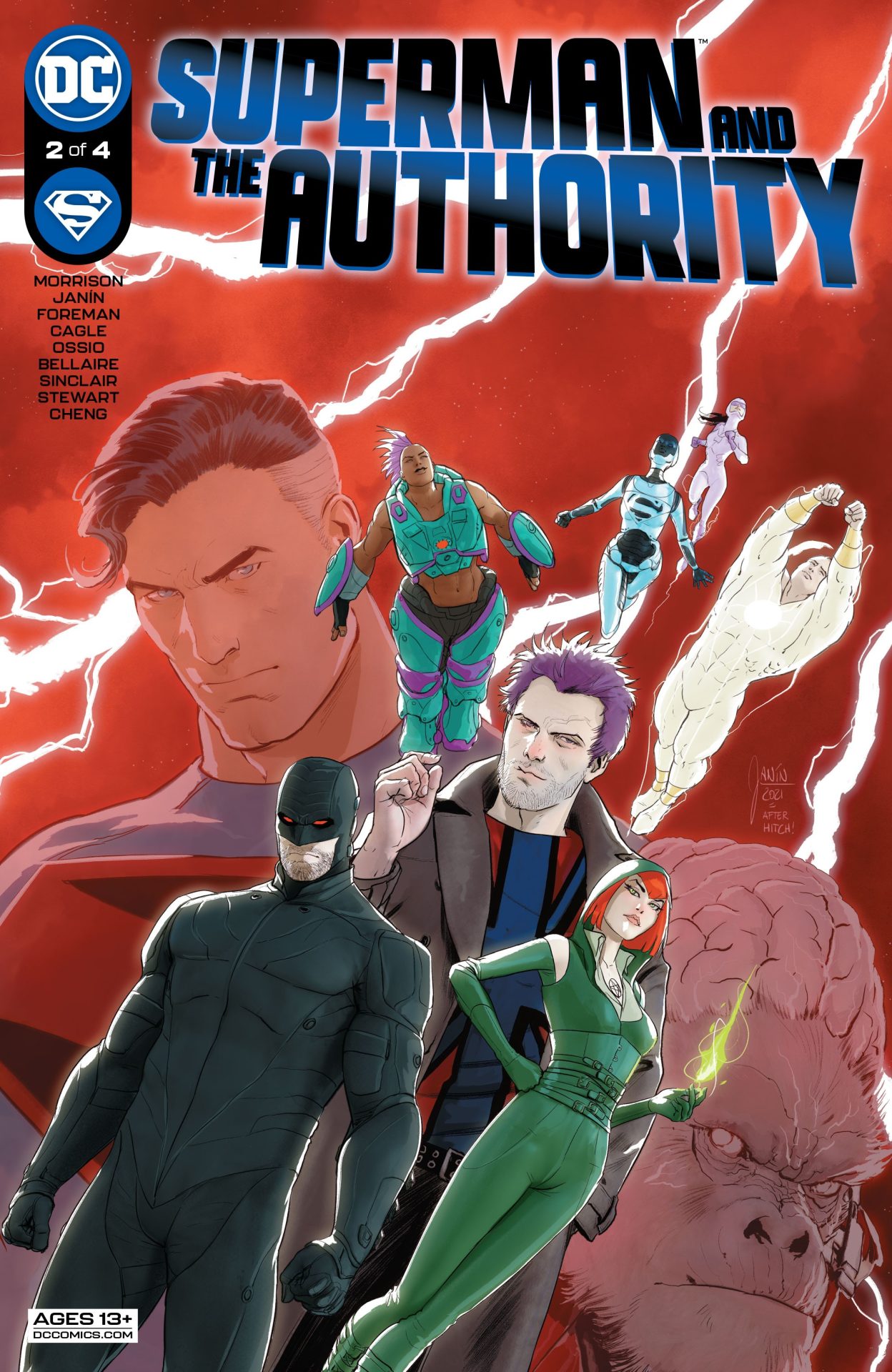
The shape of Grant Morrison’s storyline becomes clearer in the penultimate issue of Superman and the Authority #3 with the team going on their first mission and a larger (and very old school) foe rears its ugly head even as the recruitment drive continues. Yes, the final member of The Authority is Lightray aka Lia Nelson from Earth-9 aka the Tangent Comics universe giving the book a continued 1990s/early 2000s feel a la the original team. This extends to Travel Foreman and Alex Sinclair’s visuals in an early sequence where the team must rescue June Moone aka the Enchantress from her old nemesis Dzamor that features edgy, energy-filled art work and a delicate Sandman-esque script from Morrison, whose Superman uses cleverness not punching to win the day. However, this art goes bye bye and is replaced by the sleek, modern stylings of Mikel Janin and Alex Sinclair for the inter-team banter and battles to come.

Superman and the Authority #3 really builds off the previous issue’s character-driven focus to put team members which we already care about in intense situations with Grant Morrison splitting the team up in smaller groups except for their leader, Superman, who gets to go mano a mano in his situation. As mentioned in the last paragraph, Superman’s cleverness, not his waning super strength gets a workout in this issue until the final few pages, and the Authority lineup covers up his weaknesses while also acting like variables in equations. For example, Enchantress has no upper limit to her magical abilities when she merges June Moone and Enchantress as one, Manchester Black’s psychic skills and general bad attitude come in handy rescuing and merging said technologies, and Apollo’s solar powered strength slots in nicely for Superman’s old abilities. Plus he treats Superman with the most respect and deference with the exception of Steel, who has a personal relationship with him through her uncle.

Even if this Authority team doesn’t have a multi-adventure/arc future mapped out for them, the interpersonal dynamic that Morrison and Janin craft for the team through dialogue, facial expressions, and body language make for an entertaining time. Manchester Black plays the role of punching bag, (*groans*) devil’s advocate, and general wise-ass, and his continued being cut down to size is more memorable than the bigger plot. Six months from now, I won’t care what the Big Bad was up to (I do admire Grant Morrison’s nod to history and Mikel Janin’s body horror design choice.), but I will remember that Old Man Superman praised the activist-minded nature of late millennial/Generation Z and showed how shallow the “old is good, new is bad” paradigm of books like Kingdom Come were in a two panel exchange with Black. This Superman doesn’t have a no-killing policy because of the Comics Code Authority or Mark Waid, but because death ultimately prevents restorative justice, which is what he seems to be aiming for with this new team.

Yes, that’s the actual Round Table

Superman and the Authority #3 is titled “Grimdark”, and it fits the active violence of the story as well as the literal darkness enshrouding Lightray at her crash pad where Apollo and Enchantress try to snag her. Lightray gets an abbreviated version of the solo sub-stories that Steel, Midnighter and Apollo, and Enchantress got in the previous, and Jordie Bellaire’s palette does a lot of the heavy lifting as she goes from being the first child born on Mars to an influencer type figure and then hiding in the dark talking to a mysterious figure. Bellaire uses a dark red panel for her birth because she was the child of an affair then uses a bright palette for her superhero identity and then turning to utter darkness until Apollo pops in with his whole solar deal. The brightness doesn’t let up as Apollo ends up in physical combat with Lightray’s “body guard”. Introducing a new cast member this late in the game is a risky, but Morrison, Janin, and Bellaire roll the dice and resurrect a wild card character that brings an element of sadness, vulnerability, and pure potential. I’m excited to see the role Lightray plays in Superman and the Authority‘s endgame.

For the most part, Superman and the Authority #3 avoids the “middle chapter” issue in serialized comics as Grant Morrison, Mikel Janin, and Jordie Bellaire bring out the team’s opponent, show an aging Superman using his mind instead of his powers and playing the role of strategist instead of tank, and give a glimpse of the actual Authority team in action. It hits that sweet spot between light and darkness kind of like June Moone/Enchantress and her fun new look. (Her attempts at flirting with Apollo are pretty pathetic though.)

Story: Grant Morrison  Art: Mikel JaninTravel Foreman
Colors: Jordie Bellaire, Alex Sinclair Letters: Steve Wands
Story: 8.0 Art: 8.7 Overall: 8.3 Recommendation: Buy

DC Comics provided Graphic Policy with a FREE copy for review


Purchase: comiXologyKindleZeus ComicsTFAW

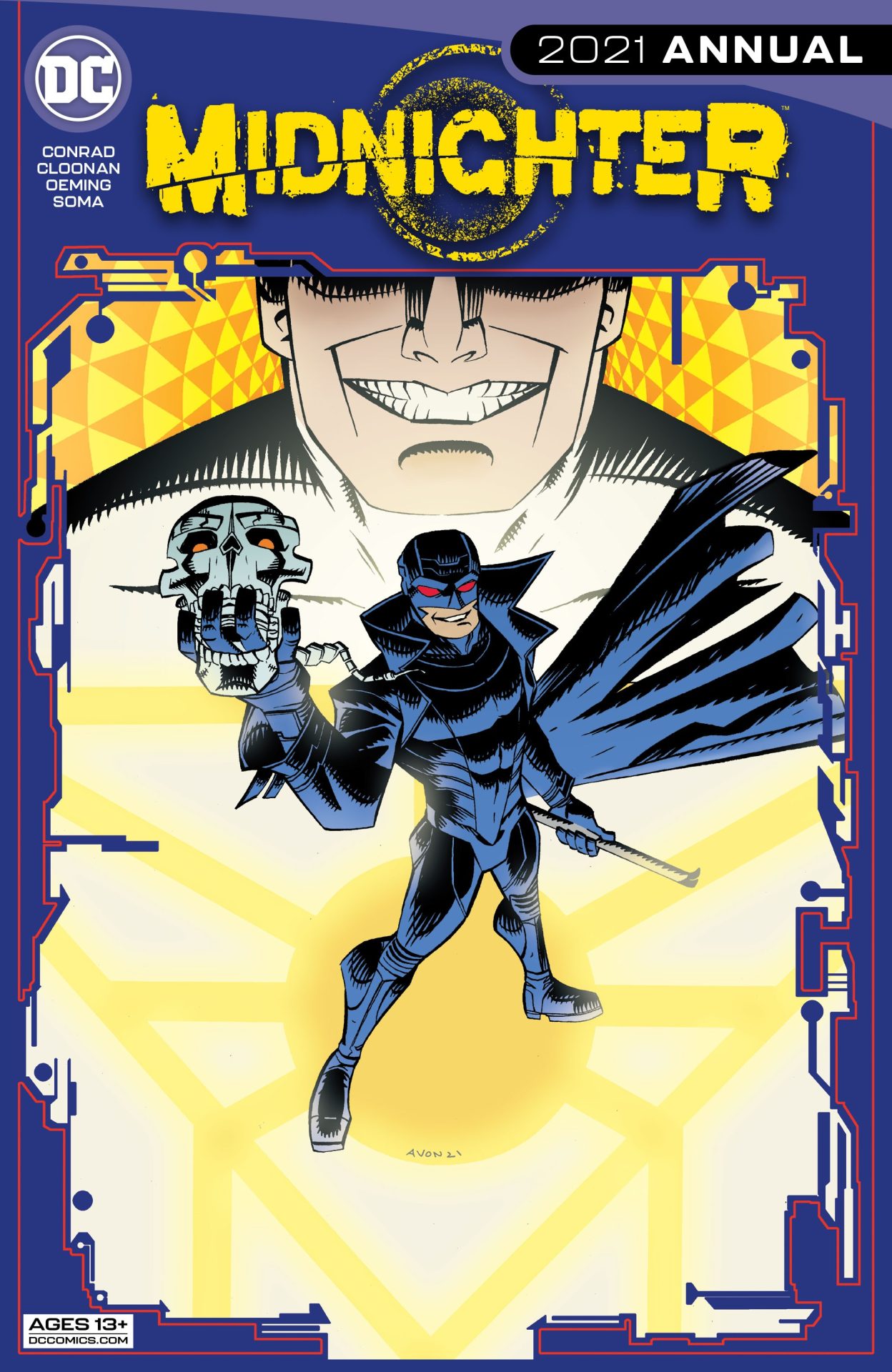
Review: Midnighter Annual 2021

Midnighter Annual

After a series of short backups in Action Comics, Michael Conrad, Becky Cloonan, Michael Avon Oeming, and Taki Soma get to wrap up their time travel/action movie/love story/techno-thriller/body horror saga in Midnighter Annual. It’s a good time and Midnighter, Apollo, and Shilo Norman aka Mister Miracle have throuple-like chemistry as they escape from various explosions, killer robots, and try to figure out the mechanics of the whole time loop deal and make sure organic life isn’t extinct while cracking jokes and having heart to hearts. However, Oeming and Soma’s very un-house style-like art and colors are what make this arc such a great read.

Visually, Midnighter Annual isn’t a DC Comic nor a Wildstorm comic: it’s a Michael Oeming and Taki Soma comic. Their power-packed style with a side of flat colors and slight psychedelic elements is front and center in the book from the first action sequence where Midnighter, Apollo, and Shilo fight off Andrej Trojan’s drones/cultists and remember that Midnighter can teleport anywhere. (He didn’t do this in previous issues because it led to Shilo’s death in multiple timelines.) Oeming’s gift for cartooning brings out the different personalities of the lead characters. This ranges from Apollo casually using his godlike abilities to protect the man he loves to Midnighter relishing in each goon he takes out and Shilo stressing out and quipping like standup comic having an anxiety attack to deal with how out of his depth he is. Although their faces (Except for Apollo and Trojan) are hidden by masks, Michael Avon Oeming makes their faces super expressive in his signature style.

Plus Midnighter always perceiving himself wearing a mask (Until the end when we get in true paradox mode.) is the perfect for his visual. It reminds me of a Steve Orlando interview from 2015 where he talks about Midnighter only knows fighting and doesn’t know basic stuff like if he likes the taste of bagels or going to the movies. To get the job done and break the time loop, Midnighter must compartmentalize, and there’s no time for opening up or sharing your feelings even with the man who loves him most, Apollo. Midnighter and Apollo share many embraces and sweet moments across this double-sized comic, but Midnighter never lets him in on the secret that Trojan is literally in his head until nearly the end of the issue. Becky Cloonan and Michael Conrad make fun of this with cheeky, innuendo-laden dialogue about threesomes, but you can tell in Oeming’s art and use of negative space that this lack of disclosure has created a rift between this iconic power couple.

However, Apollo isn’t just an all-powerful foil for Midnighter in Midnighter Annual. He gets to have his own personality and reactions to situations including a triple dose of pettiness and being over it all. When Andrej Trojan’s chief scientist releases sarin gas to take out Midnighter and company, Apollo shields them from the poison and backhands his henchmen like he’s swatting flies. Even though he is full of emotional depth, Apollo is basically a god in this comic as Midnighter alludes to a pinpoint line of dialogue from Cloonan and Conrad. He can make gold sparks come out of his hands, and Taki Soma uses a brighter color palette whenever he jumps into action. Part of what Midnighter and Apollo a great couple is their love, passion, and chemistry despite their differences in personality, and Midnighter Annual definitely doesn’t shy away from those.

I think that this is the part of the review where I have to confess that I’m not the biggest fan of time travel-driven stories. However, Becky Cloonan, Michael Conrad, and Michael Avon Oeming through dialogue and visuals show that they’re more focused on Midnighter’s journey than the nitty gritty of time travel mechanics a la a much weirder (and less incestuous) Back to the Future. In a chilling scene with dark background colors and a nine panel grid layout from Oeming, Midnighter is offered a release from the stress of time loops and stopping the world’s extinction from Trojan, but that would be a total cop out for a guy who was beating baddies to death with a hammer a few issues of Action Comics ago. Between juggling multiple timelines, taking a copious amount of notes, and doing strange things to protect Shilo and Apollo, you know he’s not going to take the easy way out and leans into that complexity.

Even though it’s a non-stop action thrill ride with a garish color palette from Taki Soma and uniquely kinetic art from Michael Avon Oeming that’s an argument against house styles, Midnighter Annual is another installment in the beautiful love story between Midnighter and Apollo, but with some very trippy obstacles. Add in the everyman vibe of Shilo Norman plus the sense of humor in Conrad and Cloonan’s script, and this is is the flashy conclusion to this Midnighter arc that his fans deserve while cementing Andrej Trojan as a memorable member of his rogues gallery as he tries to avoid the thing that closes all of our loops, er, lives aka death.

Story: Michael Conrad, Becky Cloonan Art: Michael Avon Oeming
Colors: Taki Soma Letters: Dave Sharpe
Story: 7.9 Art: 9.0 Overall:8.4 Recommendation: Buy

DC Comics provided Graphic Policy with a FREE copy for review


Purchase: comiXologyKindleZeus Comics TFAW

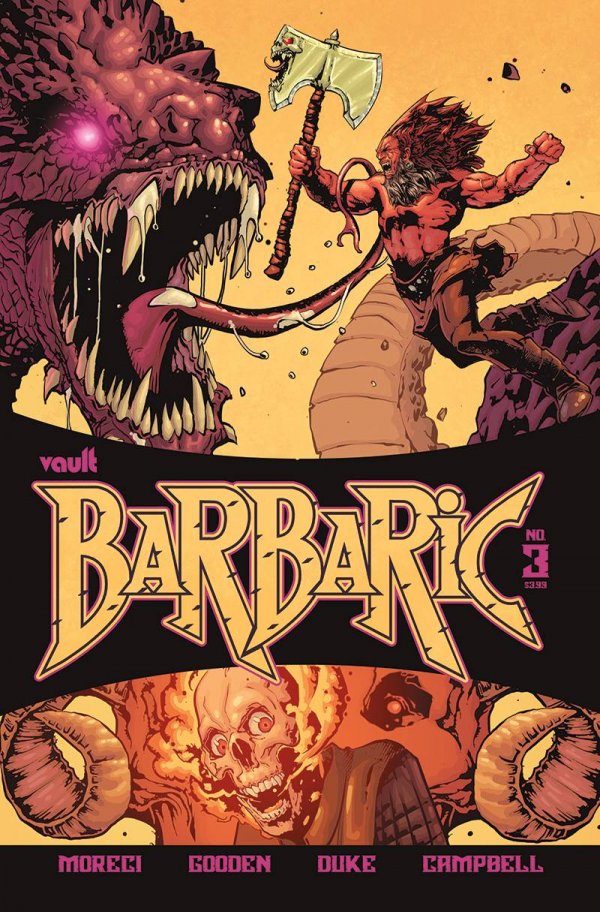
Review: Barbaric #3

Barbaric #3

Barbaric doesn’t wear out its welcome and wraps up its first arc in a speedy fashion. Michael Moreci, Nathan Gooden, and Addison Duke tell a fairly heartfelt fantasy story, but with buckets of blood, limbs flying, weird magic shit, and plenty of jokes. Barbaric #3 truly shows that this comic is a sword and sorcery tale without all the boring walking and exposition bits, all killer and no filler. The opening sequence is a bit talky with Soren struggling with the expansion of her magical abilities, but it provides an opportunity for our protagonist Owen to prove that he gives a shit and also poke fun at the concept of the afterlife. After that, it’s pages upon pages for Moreci, Gooden, and Duke to pile one-liners over riveting action scenes with heads flying and a color palette that won’t quit.

Although one of its main cast members is a bloodthirsty talking axe, Barbaric has a story of redemption and friendship at its core. Reading this book is almost like having dessert before dinner because you get the insanely kinetic double page spreads filled with weapons, blood, and bodies tumbling everywhere from Nathan Gooden, and then he and Michael Moreci slow it down and show that Owen genuinely cares for Soren and vice versa. Gooden takes a break from the big, splashy layouts to use more grids and close-up’s of their faces to capture the pain, disdain, and eventually camaraderie that they feel for each other. Barbaric #3 proves once and for all that Owen actually gives a shit about people and isn’t subject to the typical barbarian box of hating witches and magic and the supernatural even though he’d rather be hitting the magical people and objects. They make a good team in the end taking out weird cultists and even learning something new about themselves in the end.

Addison Duke’s color palette is not secretly one of my favorite parts of Barbaric. He shows off a range of tones with his choices this issue from dark despair to pink rage, red ultraviolence, and green decay as Owen’s snake demon foe shows himself in all his sickening Mayor Wilkins meets Shuma Gorath glory. However, Duke’s colors are what transform a great scene into one that’s truly memorable as he floods in golds and white in a page where Owen experiences a form of paradise that’s a little more sensual than the mainline Protestant conception of Heaven. It’s a gorgeous void and complements Nathan Gooden’s lightly inked line work as Owen realizes it’s all a ruse, and that he doesn’t deserve any kind of eternal reward and needs to get back to the raw red of reality and rescue his friend. All in all, the background colors that Addison Duke uses tell their own kind of story as the issue progresses.

Moreci, Gooden, and Duke definitely stick the landing in Barbaric #3 shooting for both big character and action beats while ending things on the jokey tone that has made this series so endearing. If you want a fantasy comic that isn’t full of shit and is self-aware, violent, and makes you deeply care about its (not so) golden trio, the three issues of Barbaric are worth seeking out.

Story: Michael Moreci Art: Nathan Gooden
Colors: Addison Duke Letters: Jim Campbell

Story: 8.0 Art: 8.8 Overall: 8.4 Recommendation: Buy

Vault provided Graphic Policy with a FREE copy for review


Purchase: comiXologyKindleZeus ComicsTFAW

Review: Superman and the Authority #2

Superman and the Authority #2

Superman and Manchester Black assemble the new Authority squad in Superman and the Authority #2, and the issue goes about the ol’ recruitment drive issue in a creative way while still leaving time for plenty of interactions between the Man of Steel and his predominantly fans turned teammates. Grant Morrison structures this comic in a really engaging way collaborating four artists and four colorists to tell a frame story featuring Superman, Manchester Black, and their new teammates (Mikel Janin and Jordie Bellaire), a Natasha “Steel” Irons solo adventure (Fico Ossio and Sebastian Cheng), an Apollo and Midnighter team-up (Evan Cagle and Dave Stewart), and a June Moone aka Enchantress spookfest (Travel Foreman and Alex Sinclair). Each of these small units of story allow Morrison and the artists to play in different genres and flesh out each member of The Authority while building to a bigger whole.

The Grant Morrison-penned banter between Manchester Black and Superman along with the clean lines of Janin and strong colors tie together the disparate art styles and sub-stories of Superman and the Authority #2. This older Superman is vulnerable and self-aware about it taking Black’s snipes about his power set reduction in stride while quipping about being “a samurai in autumn” and not caring if he has to take a spaceship (That’s quite cool) everywhere instead of flying. He also is straight up revered by his teammates with Natasha Irons joining the team simply because he’s on it, and Midnighter using the Authority team membership as his anniversary present for Apollo, who breaks his usual reticence and gushes about how Superman was an inspiration to him. (Even if he’s a bit more violent than the Man of Steel.) June Moone gets the last story, and the team doesn’t really interact with her that much, but almost silently, Superman’s silhouette acts as a figure of hope in the middle of the utter hopelessness of the Hilltop Sanitorium.

Natasha Irons gets the first short story, and Morrison, Ossio, and Cheng craft a story that in a previous age might be called cyberpunk. Basically, her and her uncle, John Henry Irons’ Metropolis headquarters has been overrun by sentient Internet beings endangering their operations as well as their city and the whole world. Grant Morrison and Fico Ossio take a literal approach to the enemies they fight, such as trolls, “eternal edgelords”, and of course, plain ol’ misinformation that continues to take the world especially in a world ravaged by the COVID-19 pandemic. (If you’re reading this review and haven’t been vaccinated, please get the vaccine.) Sebastian Cheng’s garish color palette as Irons battles the racist, sexist slime of the Internet feels like you’re in the middle of a flame war, and Ossio overwhelms the page with figures. However, Steel is no damsel in distress and uses her empathy and intelligence to deal with the threat and prove that she’s a worthy successor to Superman as hero of Metropolis and will fill the tech role (Think Angela Spica in the original Authority) well.

As a known Midnighter fan, of course, the second sub-story from Grant Morrison, Cagle, and Stewart is my favorite as Midnighter and Apollo bicker like an old married couple while trying to save some psychic kids that are being trafficked in a very high tech, body horror kind of way. Evan Cagle and Dave Stewart’s art showcases the dark badass nature of Midnighter with sweeping shadows and minimalist imagery in panels like guns falling or bloods dripping to just show how in control of the situation he is. However, there’s a bit of the hiccup in the action, and this gives Apollo a chance to play hero and then murder children with his yellow glow getting a little sadder. The atomic sheen that Stewart gives Apollo gives Morrison a chance to do some political commentary via Superman and Manchester Black about “idealistic liberals” and basically how a Democrat was responsible for dropping the only atom bombs in history. It’s a fitting observation as leftists and progressives become increasingly disgruntled with a party that won’t do squat while it has control of the legislative and executive departments and negotiates with a party that was responsible for and tolerated a right wing insurrection. Personally, Midnighter and Apollo have a fun, flirtatious dynamic, but their good intentions (Saving Middle Eastern children) turned downright genocidal is a spot-on metaphor for American foreign policy as well as the failure of “liberal” ideals.

Finally, the June Moone story is for fans of Grant Morrison’s work on Arkham Asylum and is a little bit like a less gory, easier to follow Nameless. Travel Foreman and Alex Sinclair’s visuals are suitably atmospheric with plenty of dark shadows and corridors plus a mainly monochromatic palette with hints of red. It’s a Lovecraftian psychodrama as June Moone’s boyfriend has been having an affair with the Enchantress and wants to unleash her tonight with the help of an elder, purple god. After the science fiction and superheroics of the majority of Superman and the Authority #2, Morrison, Foreman, and Sinclair capture hopelessness in a house with the door held slightly ajar in the end. Out of the Authority team members, Enchantress is the least traditionally heroic, but every Authority squad needs a shaman or wizard type figure, and she’s a powerhouse on that account. But first the team will have to play Orpheus to her Eurydice.

Superman and the Authority #2 is a master class in how to assemble a superhero team in the space of a single issue. Grant Morrison, Mikel Janin, Fico Ossio, Evan Cagle, and Travel Foreman seamlessly combine multi-genre short stories with a thematically rich overarching narrative of an aging Superman and a chaotic Manchester Black trying to do this superhero thing the right way. (No genocides, please!) I can’t wait to see this merry band fight through Hell, and Apollo fangirl over (hot dad) Superman some more!

Story: Grant Morrison Art: Mikel Janin, Fico Ossio, Evan Cagle, Travel Foreman
Colors: Jordie Bellaire, Sebastian Cheng, Dave Stewart, Alex Sinclair Letters: Steve Wands
Story: 8.6 Art: 9.2 Overall: 8.9 Recommendation: Buy

DC Comics provided Graphic Policy with a FREE copy for review


Purchase: comiXologyKindleZeus ComicsTFAW

Review: X-Men: The Trial of Magneto #1

X-Men: The Trial of Magneto #1

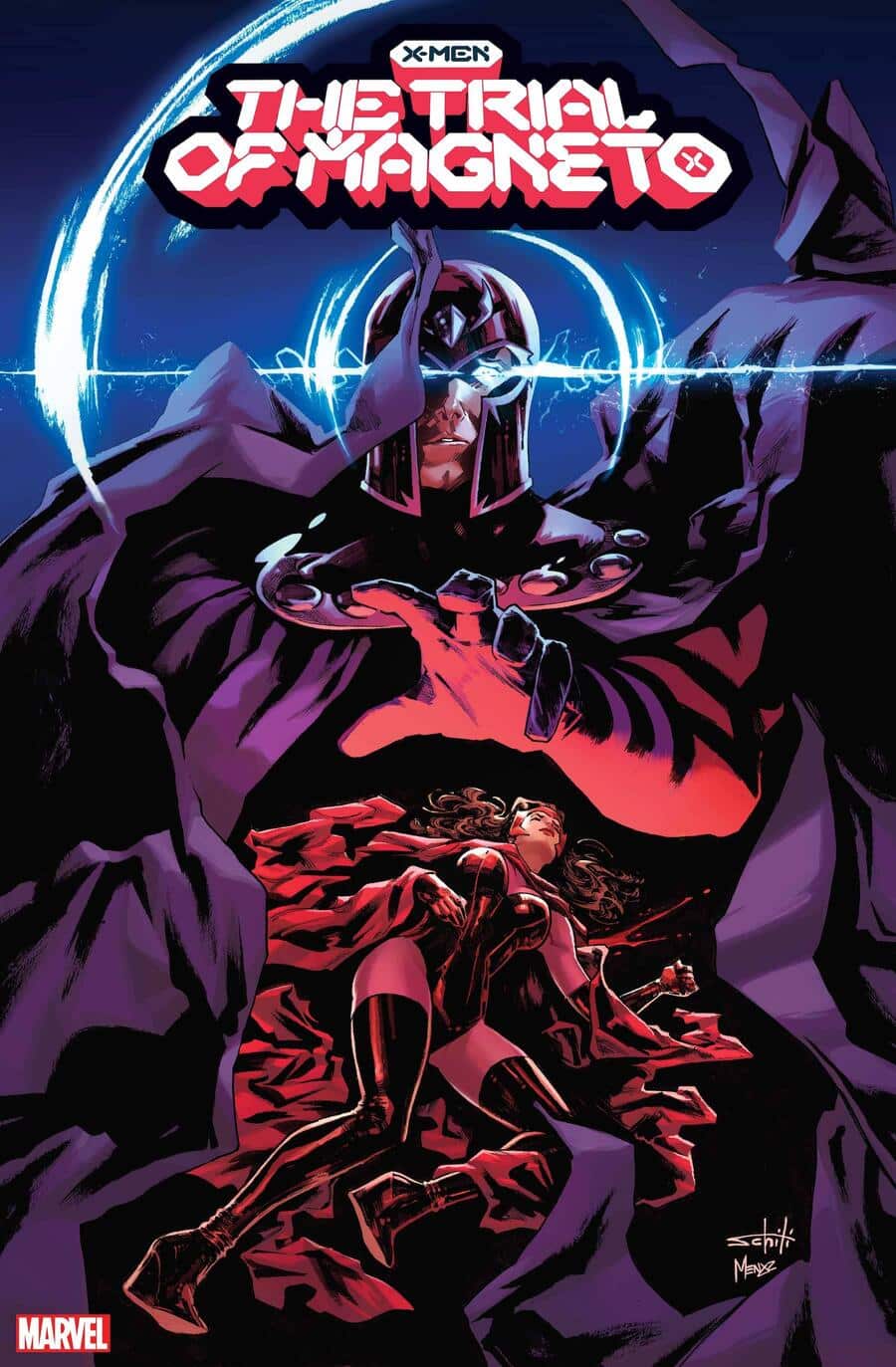
X-Men: The Trial of Magneto #1 begins as CSI: Krakoa and then blossoms into a goddamn operatic comic book. Leah Williams and Lucas Werneck (Plus some bombastic and beautiful colors from Edgar Delgado.) structure the issue into almost three acts. There’s X-Factor (Plus babysitters, the X-Men and X-Force) investigating the Scarlet Witch’s murder, scanning the scene of the crime with Rachel Summers’ chronoskimming and Akihiro’s senses, and an autopsy and X-Ray on her body. This is followed by Magneto being treated as the key suspect of her murder, and lots of fighting and cutting dialogue. The third act is a sad, meditative one with almost poetic captions from Williams as Scarlet Witch’s old Brotherhood of Mutants teammates share a drink together before flowing into the cliffhanger for next issue. Like a good grunge song, X-Men: The Trial of Magneto #1 has a good balance of “loud” and “soft” moments, and Werneck is game for it all drawing everything from an ornate double page spread of Wanda’s body in a verdant autopsy theater to showing Polaris’ shocked expression as she realizes someone close to her might be the murderer.

The main thing I loved about The Trial of Magneto is what a meaty read it was. Leah Williams packs those 36 pages with everything from Krakoan in-fighting to bonkers battles and characters showing off their abilities in a story relevant and finally just allowing individuals to grieve. She and Lucas Werneck take break from the “fighting Magneto/mystery solving” part of the plot to cut away to Vision mourning for his ex-wife, or Kyle comforting Speed, who stands vigil alone at his mother’s body wishing Wiccan was there to help figure things out. (He’s stuck in the current “Last Annihilation” crossover.) Williams shows great range as a writer coaxing a variety of tones from characters through her dialogue and narration with the help of letterer Clayton Cowles, who uses an all-caps font to great effect when Quicksilver becomes totally consumed by grief and rage. She has spent time developing the cast of X-Factor, and they are ready to be put in a stressful situations like where Magneto saying Polaris is “unhinged and inconsistent” hurts more than any metal claws or piece of debris. Northstar’s leadership abilities (and super speed) come into play as he is sassy towards the interfering X-Force and X-Men while saving the day and preventing Quicksilver from bludgeoning his father to death. Like a proper crossover/event miniseries, The Trial of Magneto has a large cast of characters, and they all get to shine.

X-Men: The Trial of Magneto #1

Trial‘s strong characterization extends to the art where Werneck sets up some iconic panels like Laura, Logan, and Akihiro all leaping into the master of magnetism with quips and a devil-may-care attitude. I love how Wolverine doesn’t give a damn that Magneto pulled out his adamantium skeleton back in the 1990s and is just there to run interference while the next generation does the ass kicking. This bond between the claw mutants is nicely set up earlier in the comic when Laura and Logan basically finish Akihiro’s sentences as he figures out how Wanda was murdered. Edgar Delgado’s colors come in handy during the forensics sequences differentiating between the past and present using a sad red that comes back towards the end of the book where Toad, Mastermind, Blob, and Quicksilver are drinking and grieving. They’ve come a long way from the schemes and overwrought dialogue of the Silver Age and pack a real emotional punch while Leah Williams’ narration verbally captures the mood of the scene. The tiki bar has turned into a wake.

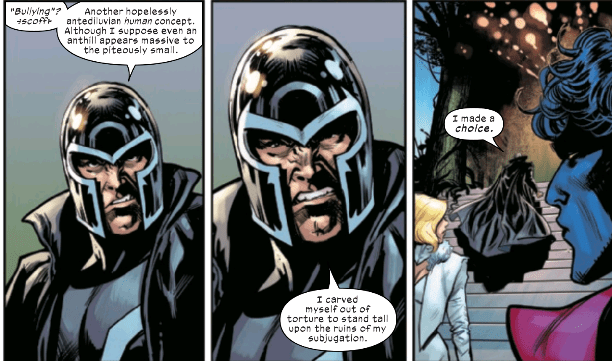
Connected to grief and emotions, The Trial of Magneto also has a lot of rage beginning with Magneto tossing his helmet to the side during a Quiet Council in an aerial panel from Werneck. He has had enough and is total unchecked id who just wants to resurrect his daughter because mutants are beyond such petty things as life and death. And getting egged on by Mystique and other members of the Quiet Council doesn’t help things. Williams’ writing for Magneto can be described as majestic and blunt as he says whatever he feels about everyone around him and fights the combined forces of X-Force, X-Factor, and X-Men featuring some big damn, wallop-packing panels. There are also some chilling panels of Krakoans celebrating her death while Magneto listlessly walks by that are probably the most disturbing scenes in a bleak comic.However, the show is almost stolen by Quicksilver, who immediately becomes this series’ beating heart and shows how much folks really cared about Wanda even though she was seen as a pariah on Krakoa.

In a truly dramatic entrance, Quicksilver arrives on the scene of The Trial of Magneto #1 almost invisibly as he startles Cyclops, and then Leah Williams and Lucas Werneck cut to the next page where Magneto’s head is being used as a punching bag with panels rocking back and forth across the page turning layout into speed lines. However, actual speed lines come into play when Northstar restrains an angry Quicksilver in a great riff on the classic speedster-on-speedster battle. Williams and Werneck know the tropes that make superhero comics so exciting and visceral and deploy them in emotionally resonant ways, which is why The Trial of Magneto #1 is such an epic read. Quicksilver also 100% lays his feelings about Wanda on the page, and Lucas Werneck draws quite a few close-ups of him crying because of his sister’s passing. He also feels guilty because he has felt responsible for her well-being since back in the Brotherhood of Evil Mutants days. (Seriously, their tender interactions are the highlight of some pretty sub-par comics, Jack Kirby art aside.) Werneck’s facial expressions do the lion’s share of showing this guilt, rage, and melancholy and even though I can’t remember the last time I saw Pietro in a Marvel comic, I want to give him a hug.

X-Men: The Trial of Magneto #1 has the melodrama, action, questionable morality, and high stakes emotions that are what make X-Men comics so great. Leah Williams, Lucas Werneck, Edgar Delgado, and Clayton Cowles craft a comic worthy of a white cape wearing anti-hero grieving his daughter (and being a little bit dodgy), who is almost beaten to death by his son. Oedipus (Re)X sans the incest bit and with more metallic manipulation.

Story: Leah Williams Art: Lucas Werneck
Colors: Edgar Delgado Letters: Clayton Cowles
Story: 8.8 Art: 8.6 Overall: 8.7 Recommendation: Buy

Marvel Comics provided Graphic Policy with a FREE copy for review


Purchase: comiXologyAmazonKindleZeus ComicsTFAW

Review: The Unbelievable Unteens #1

The Unbelievable Unteens #1

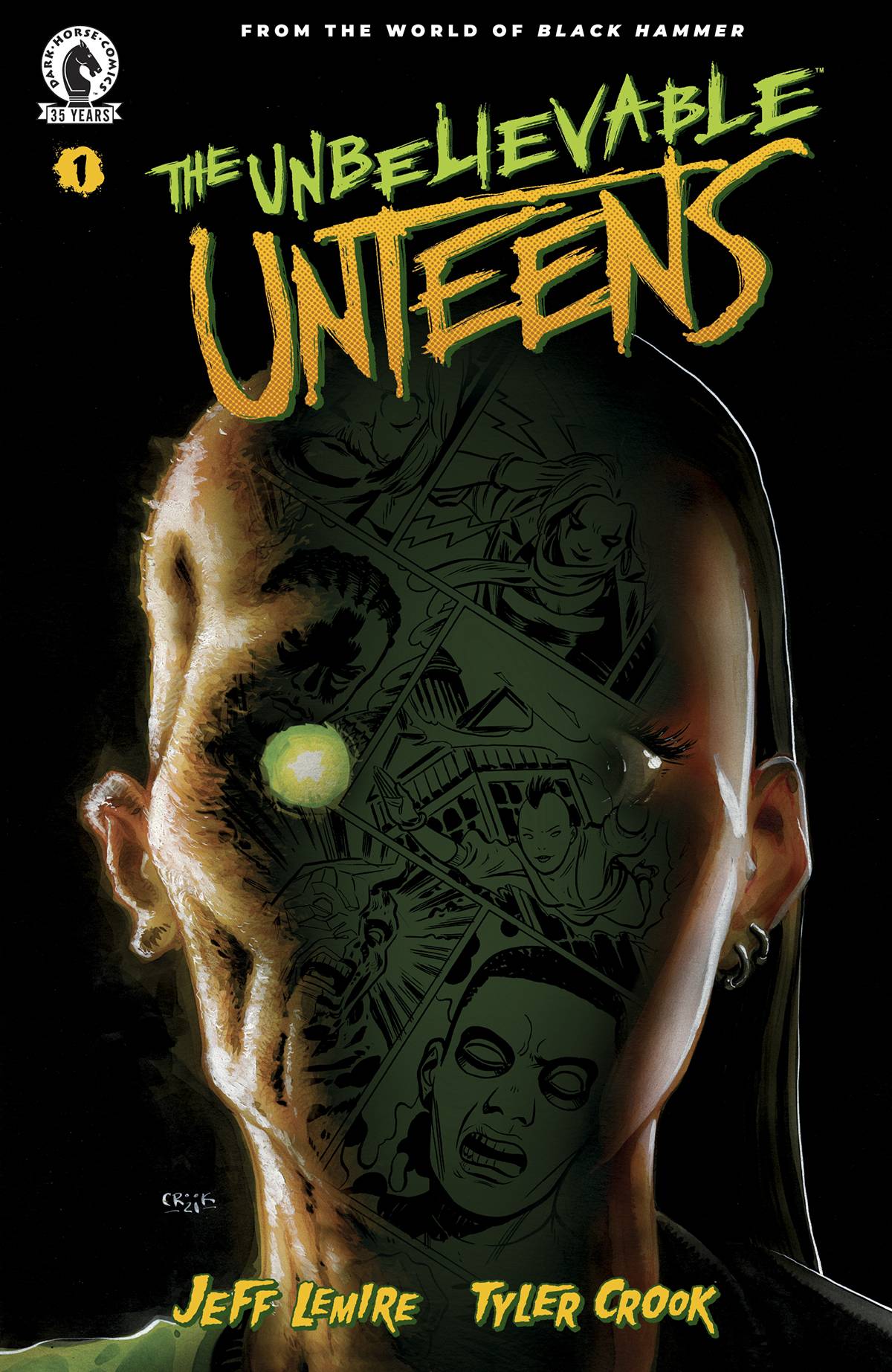
Jeff Lemire and Tyler Crook successfully bridge the gap between two of my three favorite comics genres, namely, superhero and autobiography in The Unbelievable Unteens #1. (It’s not relevant to this review, but my other favorite is fantasy.) Set in 1997 aka one of the darkest times for direct market comics, it follows Jane Ito, a burnt out cartoonist from Spiral City, who writes and draws a superhero book called The Unbelievable Unteens. However, these characters may have actually existed, and the story takes tonal twists and turns and culminates in one hell of a final page.

The Unbelievable Unteens wouldn’t work as a comic without Crook’s ease at going from the melancholy washes of the autobio comic to the cleaner lines and flat, yet dynamic colors of a superhero comic from that fun time when Uncanny X-Men and New Teen Titans ruled the Earth. However, the superhero bits aren’t all fun and games as Lemire and Tyler Crook use Jack Sabbath as the bridge between Jane’s lonely, rainy reality and the world of the Unteens hinting at some kind of a “Dark Phoenix Saga”/”Judas Contract” situation that broke these smiling, teen heroes apart. This is in addition to his macabre looks and the dark washes of color that Crook uses in every panel he appears. As Jane and Jack root around the old Unteens’ mansion, the book (Visually) falls into horror territory a la the first arc of Sandman, Swamp Thing, or Hellblazer. It’s almost like the finished product if Chris Claremont and Bill Sienkiewicz decided to turn New Mutants into a full-on horror comic after the “Demon Bear Saga”, which is a delicious proposition indeed.

Despite all the references to other superhero or superhero adjacent comic (I haven’t mentioned the obvious: Animal Man #26 where Grant Morrison themself is responsible for all the hardships Buddy Baker has gone through.), The Unbelievable Unteens stands on its own as a story about a 28 year old woman, who is stuck in a monotonous existence, and has a chance to go on a nostalgic adventure that may end up not being so nostalgic or adventures. (Having strobe/light-up powers is quite cool though and very 1980s.) Before going into the finding the lost superhero team bit, Jeff Lemire and Crook bask in the utter shittiness and loneliness of Jane Ito’s life capturing the pain of her at her drawing table in her face as well as through dialogue about her making a small mistake on a commission. Perhaps drawing on from their own experiences, these pages take a snapshot of the physical pain and utter grind of making comics that is contrast with the enthusiastic fans asking for autographs, taking pictures, and trying to squirrel out plot points from her. It’s uncanny how Lemire’s dialogue is the exact boilerplate conversation between pro and fan.

However, once Jack Sabbath enters the picture, The Unbelievable Unteens picks up momentum with more speed lines, expressiveness, and especially the pop of the palette that Tyler Crook uses for flashback sequences. Jack pulls big grins and faces like he’s in a melodramatic superhero comic while Jane is more standoffish in her posture and speech. Lemire’s plotting is quite logical, and Jane doesn’t start to buy into the Unteens being real until she sees a mansion that is basically a 3D model of the drawings she uses. This setting triggers a flashback that gives just enough detail about the Unteens’ powers and origins to make them somewhat memorable and set up the quest to find them with a comic book written by the protagonist.

Yeah, this comic is pretty freaking meta, and that’s okay because it shows that postmodern superhero/horror/autobio comics can fit in the Black Hammer Universe. It’s the perfect canvas for Jeff Lemire and his versatile collaborators like Tyler Crook, who goes from riffing on Adrian Tomine in The Loneliness of a Long Distance Cartoonist to Walt Simonson in The Uncanny X-Men and the New Teen Titans in the space of a single comic issue while having his own style and approach to storytelling. For example, I’m a huge fan of how the flashback/comics actually drawn by Jane Ito fit inside the actual pages like a key or guidebook to the larger universe.

The Unbelievable Unteens #1 is the perfect comic for readers who have Chris Claremont, Joe Matt, and definitely Alan Moore on their bookshelves. Jeff Lemire and Tyler Crook also put Jane Ito on the first steps of a reality-blurring emotional journey and give us a good gauge on her temperament before throwing her in the deep end of a genre shift that is reflected powerfully by the comic’s art style and color palette.

Story: Jeff Lemire Art/Color/Letters: Tyler Crook
Story: 8.6 Art: 9.0 Overall: 8.8 Recommendation: Buy

Dark Horse Comics provided Graphic Policy with a FREE copy for review


Purchase: comiXologyKindleZeus ComicsTFAW

Review: Crush and Lobo #3

“I’m gonna kill you. If you don’t beat me to it.“- “Kyoto” by Phoebe Bridgers

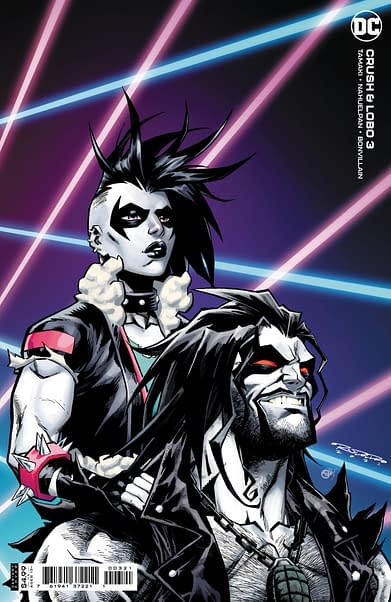
Crush and Lobo #3 is the middle chapter of a relationship drama writ cartoonishly and cosmically large from Mariko Tamaki, Amancay Nahuelpan, and Tamra Bonvillain. In this issue, Crush arrives at a space prison and meets with Lobo aka Inmate 2981 for Parents’ Day swapping stories with a preying mantis alien, who has witnessed many acts of head eating. Their encounter starts okay, but like most things featuring the Main Man, it goes off the rail quickly. After two issues of mainly Crush (Who is an icon by the way.), we get to be spend more time with Lobo in Crush and Lobo #3, and Tamaki and Nahuelpan toy around with reader expectations by having him extol the virtues of therapy. (It’s mandatory, or you get lobotomized.)

Although Crush and Lobo #3 has the sarcastic asides and action-filled mayhem that Mariko Tamaki and Amancay Nahuelpan excel at, this issue begins a little slower and digs into the annoyance of a parent, who says they’ll improve your relationship, but keeps backsliding. Lobo wants to rebuild his relationship with Crush and even invites her to see a robot therapist at his prison to “break the cycle”, but, of course, he has ulterior motives. As evidenced in her mainstream comics work (See this week’s I Am Not Starfire for an extremely recent example.), Tamaki isn’t afraid to play around with the traditional versions of characters. But Lobo is very allergic to change: his existence basically predicates being a loud, brash chaotic son of a bitch. Mariko Tamaki walks a thin line between deconstructing Lobo and playing him utterly straight milking a lot of comedy out of his active listening to the aforementioned mantis alien. Nahuelpan’s art is almost deadpan, and Bonvillain has a palette suitable for a low lit space prison with little pops of color for the orange jumpsuits and aliens. It’s all to lure readers into a false sense of security, but the series is halfway through and is screaming for a big Lobo moment.

However, as befitting her top billing in the title, Crush, not Lobo, gets the big action sequence in Crush and Lobo #3 as Amancay Nahuelpan gets to cut loose after pages of talking heads. (He draws some fun background squabbles during Crush and Lobo’s heart to heart.) He slices and dices the page, and Tamra Bonvillain adds blues and blacks as Crush springs into combat against the prison guards, who are attacking her no apparent reason and also calling her “little girl”. This is something that Crush hates being called, and she goes berserk. I love this little moment because it gives Crush a strong motivation for her actions instead of “Oh, it’s been a few pages, let’s have a fight scene.”. Tamaki and Nahuelpan continue to portray her as utterly competent and utterly screwed as she is swarmed by more and more security guards and only figures out what the audience knows until too late. If the first issue’s breakup with Katie was rock bottom, Crush and Lobo #3 ends in a more precarious situation. Lobo is walking tall and practically begging to be drawn by Simon Bisley as he walks away from a drama-filled situation chewing on a grenade pin.

Because the focus is more on Crush and Lobo’s relationship, this issue only features one Katie flashback, and it’s when Crush missed meeting her parents. The scene is a little over a page, and Amancay Nahuelpan draws Katie and her parents in a more photorealistic style to show the difference between her normal life and Crush’s superhero/antihero shenanigans. It also shows that Crush is more comfortable doing something that she is good at (i.e. kicking ass) than having an emotionally vulnerable conversation, which is a thread that flows through Crush and Lobo #3. Until overwhelmed by sheer numbers, Crush holds her own against her opponents. You can’t say the same about her angst-filled chat with a Lobo, who is talking more like Bojack Horseman than the Main Man thanks his group therapy sessions.

Crush and Lobo #3 finally gets the two leads of the series in the same room together, and Mariko Tamaki and Amancay Nahuelpan give the two Czarnians wonderful chemistry before blowing it all to hell. The space prison is a fun setting, and this issue has plenty of humor and fisticuffs to go with the attempts at heart-to-hearts

Story: Mariko Tamaki Art: Amancay Nahuelpan
Colors: Tamra Bonvillain Letters: Ariana Maher
Story: 8.0 Art: 8.4 Overall: 8.2 Recommendation: Buy

DC Comics provided Graphic Policy with a FREE copy for review


Purchase: comiXologyKindleZeus ComicsTFAW

« Older Entries Recent Entries »