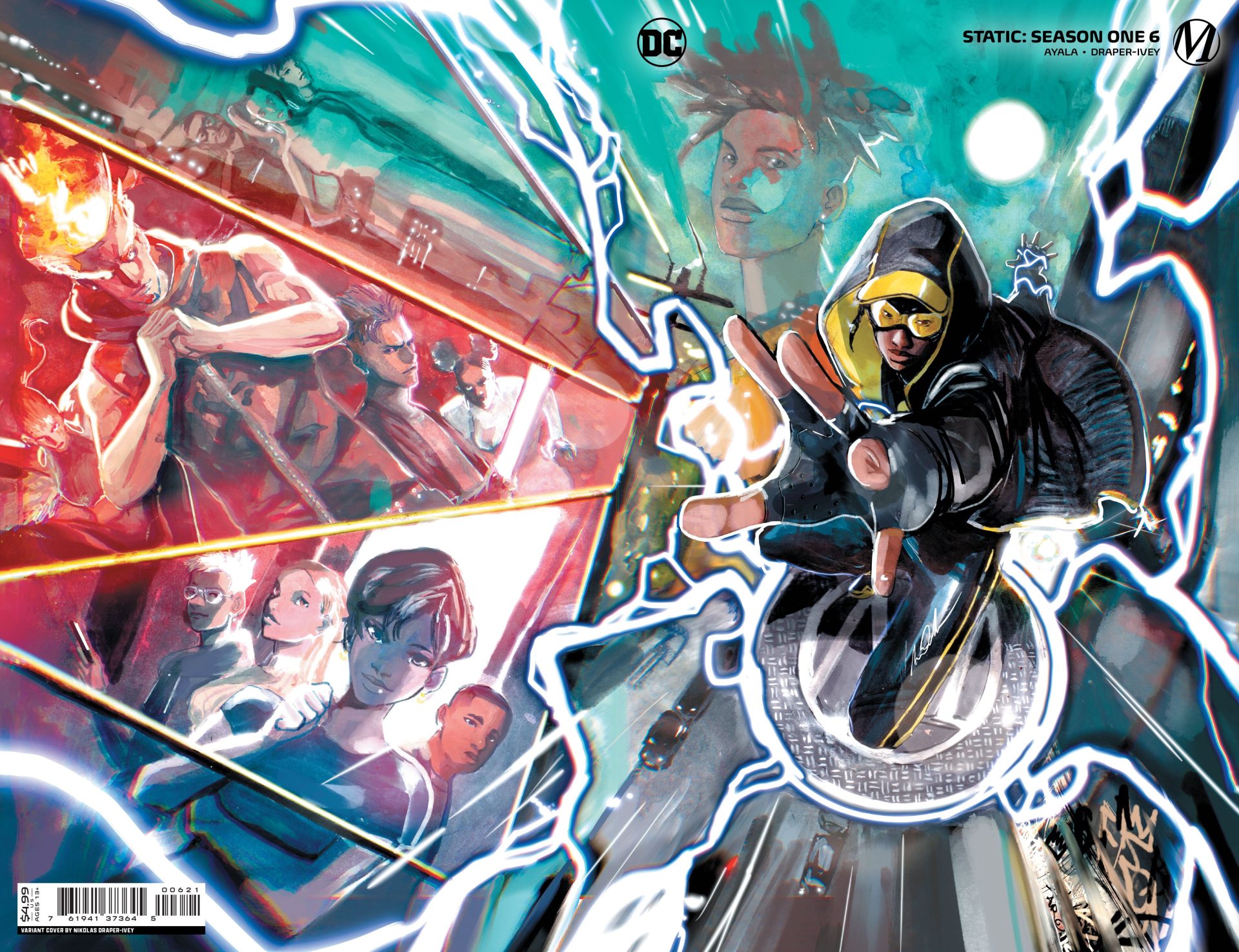
Vita Ayala and Nikolas’ Draper-Ivey’s reinvention of Virgil Hawkins for the 2020s comes to a successful end in Static: Season One #6. The plot of the comic is pretty straightforward: Static and his friends are trying to shut down a government black site and rescue some fellow Bang Babies (Aka the metahumans of the Milestone universe.) when they run into other Bang Babies, who are working for the government because of money or other reasons. However, Static Season One has mainly been about Static’s journey so it’s fitting that this comic shows him do incredible things with his electromagnetic abilities.
Best of all, this focus on action in Static: Season One #6 allows Draper-Ivey to flex his skills with layout, poses, and especially color. Kind of like turning up the voltage, Nikolas Draper-Ivey saturates with white space, blue, and cool glitch effects that show the strain that Static is going through to help his friends and get out alive. It’s the climax of some super-kinetic storytelling with Draper-Ivey capturing the greatest hits of a fight scene through speed lines, small panels, and poses straight out of anime. Everything is hyper-stylized and dynamic with the act of throwing a baseball bat turning into a momentum changer as Static’s abilities bleed into almost every panel on the page.
Static has become much more focused with his abilities compared to the early issues, and this visual depiction of him flows directly into Ayala’s words and script, which is all about the importance of community and using anger to create change. Static Season One began with a moment ripped from recent headlines with Virgil Hawkins and the other Bang Babies getting their abilities at a Black Lives Matter protest, and Vita Ayala and Nikolas Draper-Ivey haven’t shied away from exploring the realities of systemic racism and false media narratives. In this issue, Ayala takes aim at the hollowness of the American dream through their writing of the smarmy “G-man” Jones, who unironically extols the virtues of bootstraps capitalism and generally talks shit about folks like Static, who aim to unite their community against injustice.
I might be reading into this a little too much, but Jones’ dialogue, especially about “community building”, reminds me a lot of how Barack Obama was perceived earlier in his political career as a progressive and community organizer. However, he ended up being just another neoliberal imperialist and hasn’t done much in recent years to push back against that, such as ending the 2020 NBA player strike or criticizing the defund the police movement. From his generic name to his shadowy actions, Jones represents the status quo that Static and his friends and family are trying to overturn or shed light on. However, he’s definitely a “Season One” kind of bad guy with Season Two teasing an even more intriguing threat for Static and company.
In the midst of all the fight and cool powers, Ayala and Draper-Ivey don’t neglect the relationship between Static and his family giving them a nice scene bathed in light where he outlines why he wants to be a superhero and their reactions to his plan. It’s only about three pages and most of the characterization has been done in previous issues, but the Hawkinses ground Static giving him a base and set of values as he sets out to change the world and protect his fellow Bang Babies while looking good doing it. You can see what his parents and sister instilled in him through Static’s actions throughout the book, especially as he addresses the whole world via his friend Darius’ streaming rig. (He got some great character development too going from an annoying clout chaser to being Oracle with a Twitch account.
Static: Season One #6 features unique visuals and high energy storytelling from Nikolas Draper-Ivey while showing Static truly coming into his own as a superhero. Vita Ayala and Draper-Ivey use superpowers to explore big universal ideas like family, community, and power structures in an action-driven narrative. I’m definitely looking forward to Season Two, and there’s much to explore with mysterious villains as well as Static’s non-family supporting cast that were such a memorable part of the original comic and WB Kids cartoon.
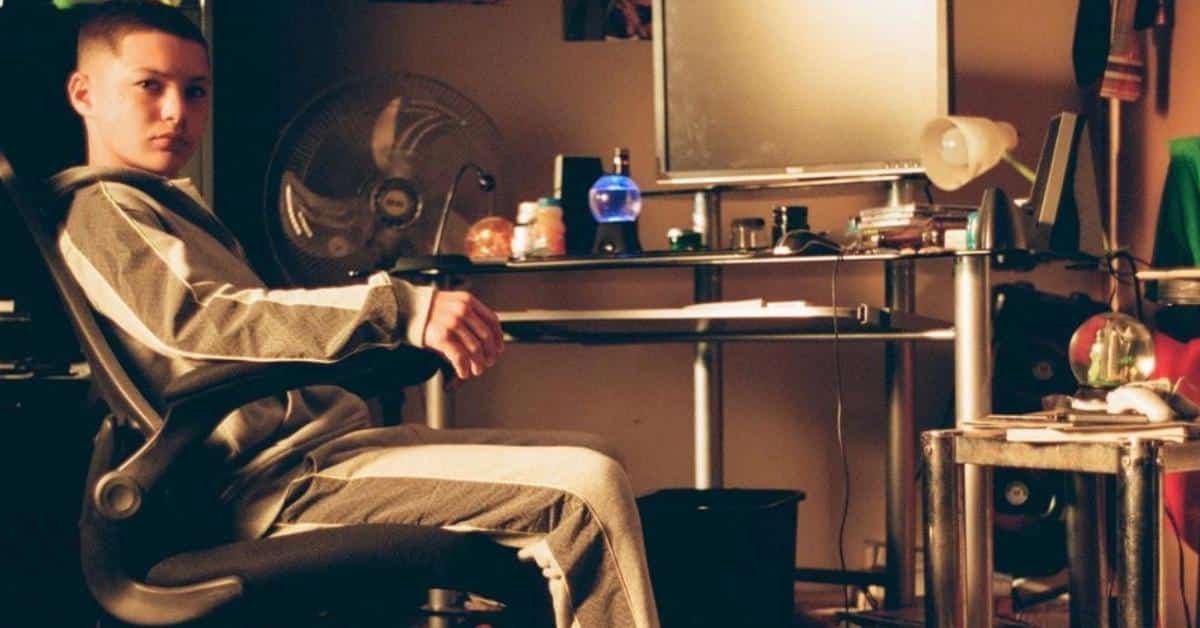
Euphoriawraps up its second season in a final episode that is violent, emotional, and occasionally even farcical. Writer/director/creator Sam Levinson begins with last episode and arguably this season’s tensest storyline with Fezco (Angus Cloud) about to go to Lexi’s (Maude Apatow) play, but Custer (Tyler Chase) wants to have a little chat aka the police are on his door step to get him and Ashtray (Javon Walton) for the murder of Mouse way back in the season premiere. Since last episode, Ashtray has known what’s going on and immediately slices Custer’s throat in a move that causes Fezco to backhand him for this act of violence and then help him arrange the evidence so Fezco can take the fall. However, this doesn’t end up working out. Walton’s wordless, glance-heavy approach to acting has been one of the highlights this season, and Levinson mines so much emotion from letting the camera linger on him and remind the audience that he’s a kid facing death.
After the violent opening sequence, Sam Levinson goes idyllic and gives us one last look at Lexi and Fezco’s relationship as a kind of what it could have been. Apatow and Cloud continue to have fantastic chemistry even if they’re just chatting over the phone, and even their differences make for both entertaining and real conversations. For example, Lexi mentions her abhorrence of guns while Fezco mentions how they’re necessary for protection, and you can see the kind of violent people he has had to deal with in the tension in his face. But on the flipside, Fezco’s life goal is to have a farm like Little House on the Prairie, which Lexi has never seen, and they bond over this innocent (If problematic in its treatment of Native Americans.) show, and they have realize they have shared values like curiosity, empathy, and caring about their families. The season finale of Euphoria Season 2 is dark and violent, but there is room for sweetness like Rue’s (Zendaya) reaction to Lexi’s play and asking to spend time with her as well as Rue giving Jules (Hunter Schafer) a forehead kiss. (But that seems more like a goodbye than a reconciliation especially with how little screen time Jules has gotten in the back third of the season.)
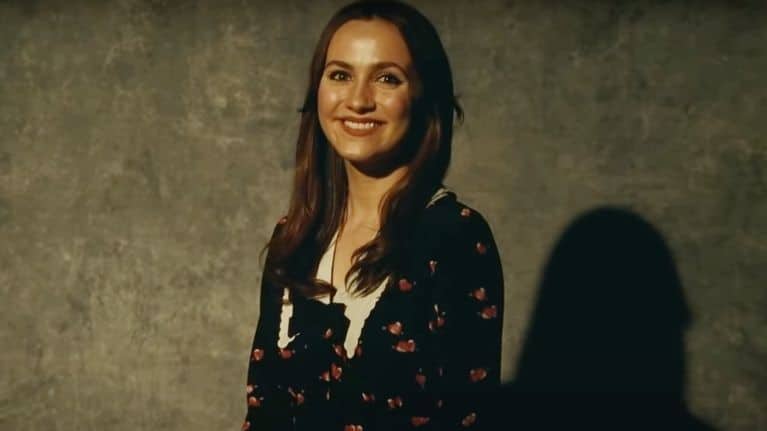
However, these moments are few and far between and mainly center on Rue healing through art and conversation from the trauma of her addiction and father’s death. This episode is mostly drama-filled beginning with the aforementioned murder and flowing into Lexi’s play, which completely goes off the rails with Cassie (Sydney Sweeney), Suze (Alanna Ubach), and Maddy (Alexa Demie) all jumping on the stage. Mentioning that she’s a villain in her monologue is on the nose, but that’s Euphoria trademark at this point, and Levinson and Sweeney unleash the horror film monster inside the high school cheerleader, who played the victim even when she was sleeping with her best friend’s boyfriend. Cassie’s monologue is cringeworth and even veers into racist territory when she compares her treatment in Lexi’s play to Afghan women being beheaded. She completely lays into Lexi for just being an observer and not taking chances in life, which causes Suze to intervene and shows how self-centered Cassie is because Lexi was trying to keep the family together. Combined with Fezco not showing up, Lexi is in a real down place, and Maude Apatow uses more passive body language to show how overwhelmed she is by her sister’s actions.
But the messiness doesn’t stop at the Howard family enacting their dynamic on stage, but gets even wilder when Cassie uses the names of the characters in the play to allude to her situation leading to a verbal confrontation with Maddy. After a short lull, the play restarts, and of course, it’s a scene based on last season’s infamous carousel “ride” leading Cassie to assault the actress playing her. Maddy jumps up on stage to take Cassie out, and she ends up slapping and hitting her head against the wall with cellphones filming everything. Most of the episode focuses on the more substantial Rue and Fezco plotlines, but there’s a little coda where Sam Levinson includes a shot of Maddy using a Coke can as an ice pack and has her basically tell Cassie that this is just Round One, and that she doesn’t sympathize with her because she was dumped by Nate (Jacob Elordi) last episode.
And speaking of Nate, there is a resolution to his and his father Cal’s (Eric Dane) plot this season. After dumping Cassie, Nate gets in his car with a gun, jump drive, and a bottle of beer hell bent on something with Levinson cutting between him driving and Fezco, Ashtray, and Faye (Chloe Cherry) getting ready for their door to get kicked in. He ends up finding his dad and a bunch of queer people squatting in one of the Jacobs construction sites. Returning to patriarch mode, Cal’s voice deepens and gets more serious as he wants to find some kind of peace with his son.
However, that doesn’t happen as Nate reveals that he saw Cal’s stash of sex tapes growing up and had traumatic dreams of Cal having sex with him. Sam Levinson firmly points the camera at Nate’s angry face while Cal mentions that he does feel happier, which is the opposite of how Nate wants him to feel. So, that’s why he plants the jump drive on the scene as East Highland’s police come in and arrest Cal while Nate strides out. However, there are a few shots of him looking back with the blue and red on his face that might be regret or his dad’s reputation getting irreparably damaged. Or maybe he knows running the family business is out of question now. Cal is a pedophile, and it’s good to see him face justice. However, there’s zero evidence that Nate will try to break the cycle of toxicity in the Jacobs family with him pointing guns at people to get his way and straight up saying to his dad’s friends that he hurts people to get what he wants.
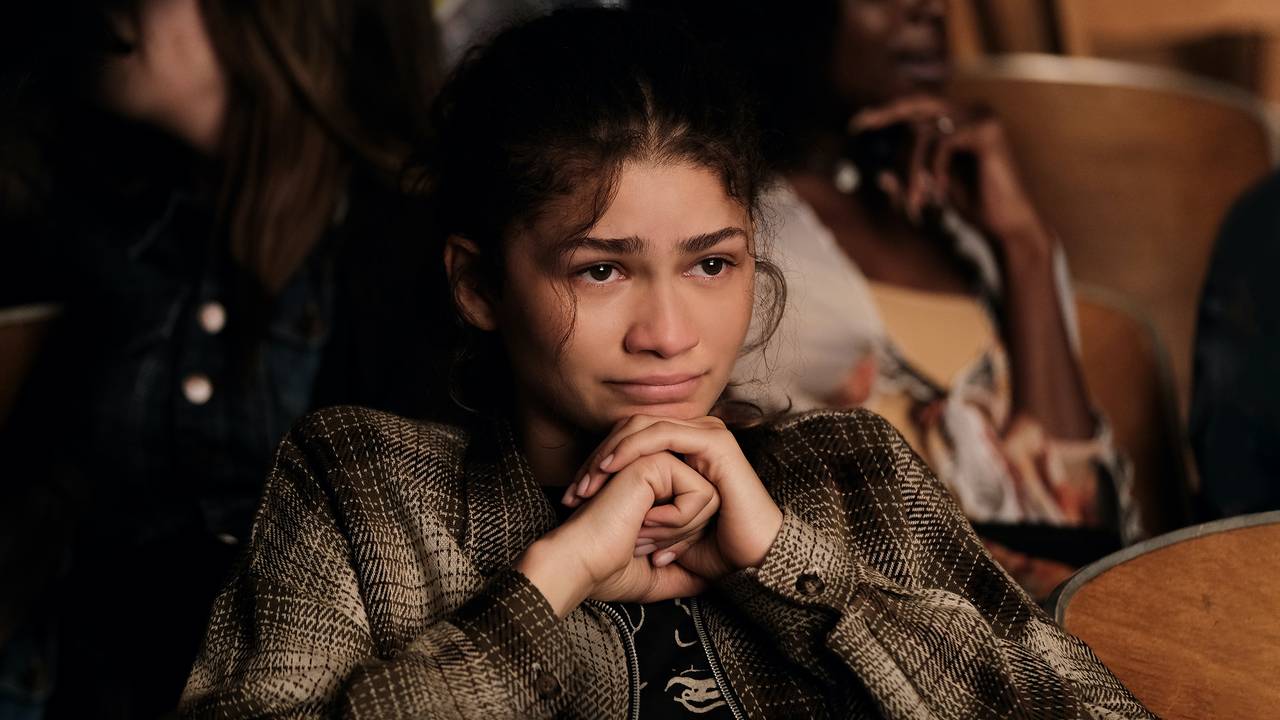
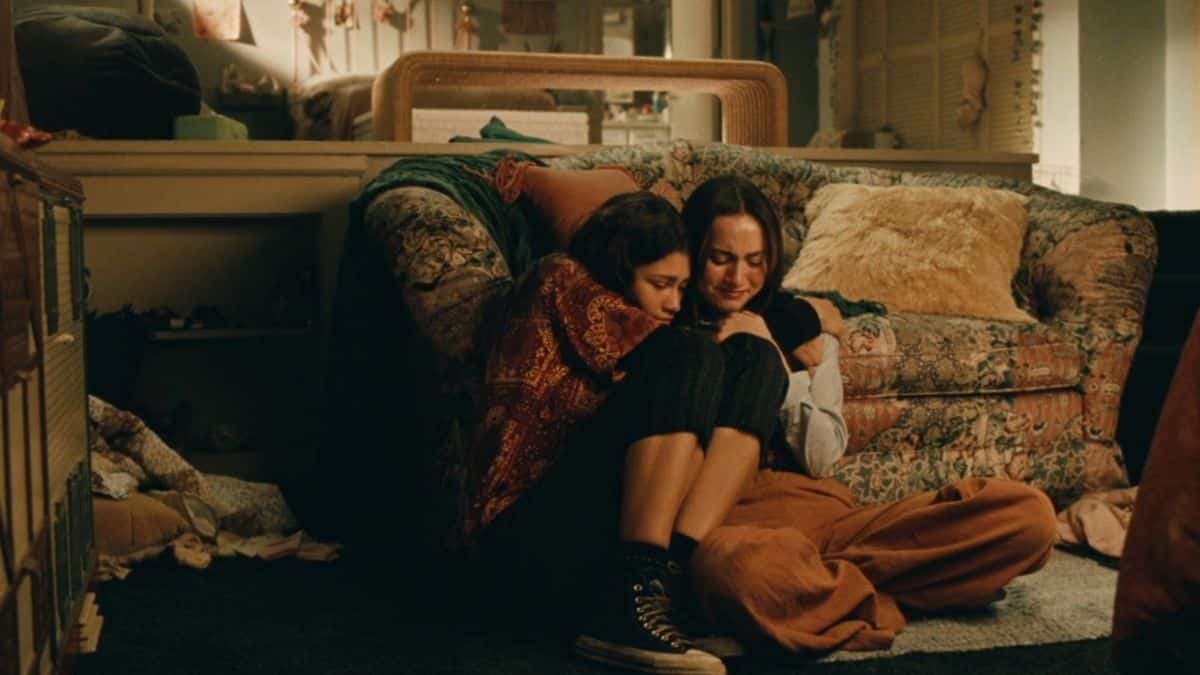
There’s still the dangling plot thread of Rue owing Laurie money, and it seems like the last two episodes wrapped up her storylines with Leslie, Gia, and Ali. But the season two finale is the most hopeful Rue’s story has been in a long time with Zendaya’s giving an emotionally vulnerable performance in her reaction to the play. Sam Levinson weaves in flashbacks from her father’s wake to actors on stage and the audience that Rue is watching from, and she ends up beaming at its ending: an awkward candid photo of Rue, Lexi, Cassie, Maddy, and Kat at the wake taken by Suze. The play inspires her to reconnect with Lexi, who has provided contexts and a narrative for what she’s feeling. The most touching scene in the episode (Along with Lexi dedicating the play to Fezco) is them hugging and empathizing over their dads with this scene bridging over to a voiceover mentioning that Rue was clean for the rest of the school year. Because they don’t know what’s going on with Fezco and Ashtray, these scenes seem like a bubble of hope that will probably get burst next season. But it’s nice to see Rue grow as a character, and even though Jules being relegated to the sidelines is unfortunate, it could symbolize that she’s moving on from that relationship to new ones.
However, not everything with Rue works in this episode. She gets Elliott (Dominic Fike) to ask forgiveness for telling her mom that she’s using drugs, but then also thanks him for getting rid of them and kickstarting her path to sobriety. Elliott is still using drugs so he’s probably not the best friend for Rue, which is something he alluded to in the season two premiere. However, instead of just having this short encounter, Elliott plays a whole acoustic song co-written by Zendaya and series composer Labrinth with lyrics referring to Rue growing apart from her friends. Fike has a fine voice, but this scene drags on , and the themes in the lyrics are explored in further depth during the play. Plus the play is more powerful because of Lexi and Rue’s long friendship, which is strained, but has potential. The scene is redundant and would be better off as a DVD extra (If those still exist.), especially since the fate of Jules and Rue’s relationship ends up being told in voiceover. The pacing and placement of the scene is way off, but an incisive acoustic ballad for recovery and separation makes sense in contrast with the highly choreographed, postmodern pop “All for Us”, which played when Rue relapsed at the end of season one.
However, the most heart-rending parts of the Euphoria Season 2 finale is the SWAT raid on Fezco and Ashtray’s house. It’s already been set up by a soft minor tone score from Labrinth, gaps in conversation, and heavy breathing from Angus Cloud, Chase, and Cherry. (Walton is always the stoic.) But when it happens, Euphoria truly becomes the crime drama set up in this season’s premiere. Fezco immediately surrenders, but Ashtray holes up in a bath tub with a machine gun and shoots back at the SWAT team injuring Fezco in the process, who is pleading for the police to take him alive because he’s just a kid. Firing a semiautomatic might seem cool and badass, but by inserting shots of Ashtray’s completely overwhelmed face, it grounds his last moments as he keeps firing and never surrenders. Also, Levinson puts in some of the Rue voice over about how her father’s death seemed like a movie and was unreal on shots of Fezco being ziptied and carried out by the police.
The crime plotline seemed like another show than Euphoria for much of this season, but by centering it around characters fans care about like Fezco, Ashtray, and scene stealer Faye, it ends up adding a lot of tension and danger to the show. The shootout is utter carnage and tragedy with bullets flying indiscriminately and destroying Fezco’s grandmother’s house and legacy as well as Ashtray’s life before it really started. Most of the other parts of the episode deal with Rue’s continued grief over her father’s death, and this plot will eventually give Rue and Lexi something to grieve at in the third season because Sam Levinson focuses on the moment, and not other characters’ reactions to Ashtray’s death and Fezco’s arrest.
Elliott’s musical interlude went on for far too long and Jules along with Kat were forgotten, but “All My Life, My Heart Has Yearned for a Thing I Cannot Name” is heartbreaking season finale centered around griefs, both old and new. After missteps trying to make him sympathetic, Levinson shows real consequences for Cal Jacobs and plunges Nate into even more darkness. He uses the power of narrative to help Rue contextualize her life and have Cassie continue to ruin her life through Lexi’s play. Also, Lexi’s arc is probably the most compelling one this season with her going from the sidelines to the literal spotlight, and Maude Apatow being a charisma-filled, yet vulnerable leading lady. Finally, from the first scene of season two, Sam Levinson colored in the world of Fezco, the drug dealer with a heart of gold, and turned what started as a Tarantino-esque fever dream into cold, sad reality.
Compared to season one, Euphoria isn’t as effective giving the main ensemble their own journeys, but Rue’s struggles with addictions and journey to hope continue to be compelling and harnesses Zendaya’s unparalleled skills as a performer whether she’s the center of the story or reacting to art about her character’s life.
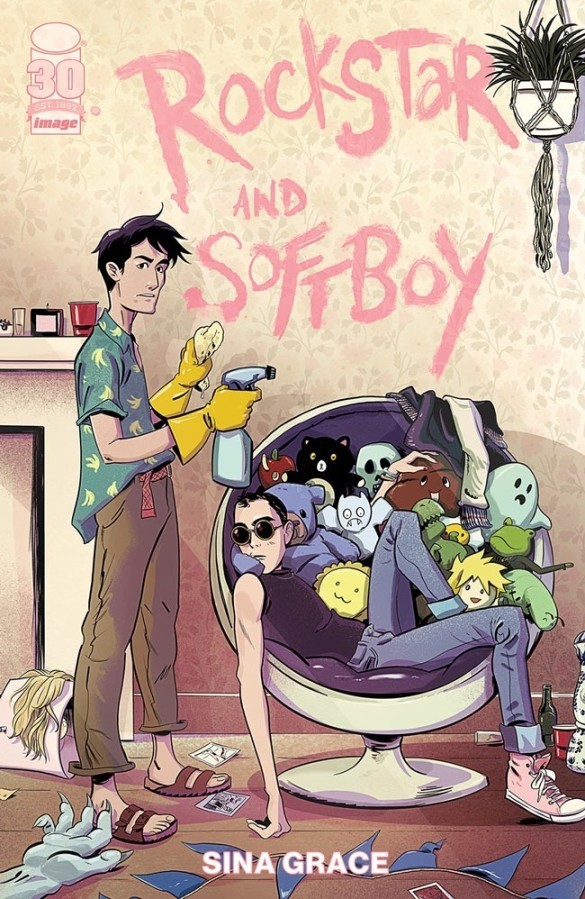
Rockstar and Softboyis a breezy anthem to queer male friendship from writer/artist Sina Grace and features everything from power bottoms and party animals to chainsmoking cats and magical girl transformations. The story centers around two besties, the titular Rockstar and Softboy, who are a musician and a video game developer living together in Los Angeles. They are both gay, but their relationship is strictly platonic. The comic’s story centers around them throwing a big-ass house party to help Softboy get laid and break his creative block, but it goes very wrong. However, Rockstar and Softboy is mostly good vibes and even better outfits.
One thing I love about Grace’s work as an artist in both his autobio comics and even the slightly more surreal slice of life series Lil Depressed Boy is his ability to use clothing to flesh out a character’s personality. And that’s on full display in this book from the different “cliques” that attend the house party to Rockstar and Softboy’s own wardrobes. Sina Grace uses a full page spread to show their chest-baring party get-up’s as they’re ready to have a good time, mix and mingle, and meet some new friends and lovers. However, when they end up getting in a fight, Rockstar goes full sweatpants and comfiness, and Grace uses a darker color palette. But when they reunite, the colors go full Saturday morning sentai because Rockstar and Softboy combines slice of life and magical realism with plenty of nods to both occult chic and Japanese pop culture.
Along with his eye for fashion, use of white space to make the story breathe, and memorable poses for his characters (I’m still laughing at Rockstar’s demonstration of what “dicked down” looks like to Softboy.), Sina Grace writes fun, conversational dialogue in Rockstar and Softboy with captions that add context to their relationship and punch up the comedy of certain scenes like when they met at an ABBA tribute show. He digs into the differences between the two lead characters that lead to the big tension in the comic, but also make for some fun moments when Softboy’s FOMO leads to him okaying the party even though he just wants to relax and/or attempt to work on his video game.
Creativity and queerness are the beating heart of Rockstar and Softboy behind the jokes, one-liners, silly faces, and urinating coyotes. From the first few pages, Grace sets up Rockstar and Softboy’s creative synergy with Softboy adding emotion and lyrics to Rockstar’s tunes while Rockstar acts as a sounding board for game ideas. The party initially happens because Rockstar wants to get Softboy’s creative juices flowing so he can finish the KickStarter for his video game, but it ends up inspiring something totally different. Rockstar and Softboy is breezy and free-flowing, but it also acknowledges the the difficulty of the creative act as well as the eccentricity of artists with Softboy going full Charlie Day conspiracy board as he plans out the levels in his game. The queerness comes out in how the boys and their party guests flaunt gender norms through fashion. (The party’s wild car is a nonbinary wizard who lives in their mom’s basement aka a bit relatable.) There’s even an homage to the Orville Peck gays midway through the story as Sina Grace continues to be the master of needle dropping in comics even though the medium is just visual.
Rockstar and Softboy is a rare and wonderful queer friendship story from Sina Grace that isn’t afraid to embrace its chaotic side once the house party gets going. The comic is also filled with frank and honest conversations from the main characters as they discuss their relationships, flaws, and why they end up clicking in the end. It’s definitely worth adding to your Sina Grace slice of life/memoir library, and he even uses some tricks from working in superhero comics for the big gay super sentai battle royale at the end in a fusion of indie and mainstream styles.
Story/Art: Sina Grace Letters: Rus Wooton Story: 8.9 Art: 8.5 Overall: 8.7 Recommendation: Buy
Image Comics provided Graphic Policy with a FREE copy for review
Sam Levinson and Euphoriareally put it all together in the soul-churning, emotional, and just plain extra penultimate episode of season two with “The Theater and It’s Double“. Simply put, we finally get to see Lexi’s (Maude Apatow) play in all its glory, and how it affects each cast member of Euphoria from humiliation (Nate Jacobs) to roaring laughter (Suze Morgan). The device of the play allows Levinson and cinematographer Marcell Rev to play with time and show Lexi’s perspective of key events of the show, including Rue’s (Zendaya) dad’s death, her and Cassie’s (Sydney Sweeney) dad’s alcoholism, and Cassie’s friendship with Maddy (Alexa Demie) that has been ripped to shreds thanks to her sleeping with and now being in an incredibly, toxic controlling relationship with Nate (Jacob Elordi). There’s also a bigger universal point of using art to make sense of things that have happened to us, which Lexi elaborated on earlier in this season in the fake behind the scenes interview scenes, but now it’s come to beautiful life.
The basic arc of Lexi’s play is how her friendships with Rue, Cassie, and Maddy have evolved over the years all wrapping up with a song and dance number with Ethan (Austin Abrams) playing a very thinly veiled version of Nate Jacobs that brings the house down. (Abrams’ comedic timing, dancing, and playing Suze in drag provide energy and much needed comic relief to a tense hour.) Sam Levinson brilliantly cuts from the play to the event that inspired the scene in the play, including Rue’s dad’s wake and a grainy, nostalgic scene of Rue and Lexi talking about going to high school, and if they should try to be cool. It reinforces that as recently as last season (See the Halloween party.) that these characters had a real friendship, but Rue’s addiction has put a strain on her relationship with Lexi along with every other one in her life.
The actors in the play combined with well-time reaction shots of the characters they’re based on provide opportunities for reflection and even humor with Levinson adding scenes that give context to the play like Maddy banging on the bathroom door to confront Cassie one last time, or Nate getting off on controlling everything about Cassie including her clothing and seeing Maddy, Jules, and finally his own dad while having sex with her. It’s Euphoria in fever dream mode even though Sam Levinson does poke fun at the aesthetic (and especially makeup) of Season One in the costumes in Lexi’s play. As well as being visually engaging, this type of structure mimics how most people actually see the world as loosely connected fragments of past, present, and sometimes future.
I’ll return to the play later, but while Lexi’s play is happening, there’s a white knuckle thriller going on at Fez’s (Angus Cloud) residence as he tries to get the best fit for sitting in the front row in her play. Cloud brings a happiness and sweetness to the role that you can see in his phone conversations with Lexi in the beginning of the episode and as he asks Faye (Chloe Cherry) questions about what he should wear or if he’s handsome or not. However, while this is going on, Custer (Tyler Chase) is up to no good and is whispering and sweating because he’s probably in kahoots with the police. Thankfully, Ashtray, played by a silent, yet deadly Javon Walton, has Fez’s back though, and brings a defensive menace and awareness every time he’s in frame. This is definitely a kid who’s killed a man.The scenes at Fez’s house seem to be in their own reality, and there seems to be a time gap between what’s going on there and the play. It’s like there’s a missing reel between Fez putting his pants on, and Lexi and her assistant director Bobbi looking out at the crows and seeing an empty seat.
Between bits of the play, Levinson takes time to check in with Rue and her relationships with her mom Leslie (Nia King), sister Gia (Storm Reid), and ex-girlfriend Jules (Hunter Schafer). Most of Rue’s and Jules’ interactions are through silent, awkward glances as they sit far apart at the play, and the loud blowing of the hands dryer cuts off any opportunity for conversation in the school restroom. They are far from speaking terms after the intervention a couple episodes ago, but do share laughs at Ethan’s utter demolition of Nate Jacobs in the play. It’s nice to see Rue happy and having a good time for once even if it’s at a homoerotic dance to “Holding Out for a Hero”. The scenes with Leslie and Gia are done in extreme close-up with Leslie bringing the real talk to Rue and saying that she’s focusing on Gia, who has been struggling with her grades and being in detention this year. Coupled with her confession that she doesn’t know anything about Gia’s life, Rue’s ignorance shows how self-absorbed she’s been as a side effect of her addiction. After the shit she’s gone through the past couple episodes, Leslie isn’t afraid of tough love and having Rue experience the consequences of her actions even after last episode concluded with her tearfully pleading for Rue to be in rehab, not detox.
Sam Levinson’s use of the play gives Lexi some of her strongest moments as a character as she bares her soul to the entire school about how she wishes she looked like her sister Cassie and wasn’t boring, forgettable, and always on the sideline. But the tables are turned in “The Theater and It’s Double”, and Lexi gets the A-plot and the insightful voice-over narration. She and her play end up having an effect on the actual plot of Euphoria as let’s just say people react to art in different ways. This episode is also an opportunity for Maude Apatow to be a real leading lady nailing everything from screwball backstage banter to sitcom style jokes about marijuana and puberty and even some big emotional beats that mostly happen when she’s looking out at the audience or beaming at her cast making her life into art like Marta (Izabella Alvarez) bawling her eyes out in a scene based on when Maddy lived with the Howards after her family was constantly fighting and before she started dating Nate.
I’ve hinted at it throughout the review, but the most memorable moment of the episode is a dance scene set to “Holding Out for a Hero” that lampoons the intense scenes of Nate grunting and working out as well as the slow motion, Gregg Araki-esque locker room sequences in Euphoria Season 1 and turns it into a big gay joke complete with a punching bag and medicine balls standing in for something more phallic. Even though she tells Fez that her play isn’t cruel, Lexi holds up a mirror to how toxic and repressed Nate Jacobs is that is greeted by the sneering laughs of his peers that is honestly the best part of the episode, especially Maddy gassing Lexi up from the audience. (They have a cute flashback where Maddy puts glitter makeup on Lexi and tells her about the importance of confidence.) Rev lights Nate in red, and Jacob Elordi’s face is stern and unrelenting until the musical number just won’t stop so he leaves the theater with Cassie tagging along beside him. He feels like a fool just like his dad, and it’ll be interesting to see what he decides to do in the finale as he lumps Cassie in together with her sister.
“The Theater and It’s Double” is a creative, engaging episode of Euphoria that caps off Lexi’s arc of self-reflection and confidence this season and showcases Maude Apatow and Austin Abrams as a charismatic actors. Levinson uses the play to mess around with time in the story and build tension in Fez’s plot line while providing commentary on Lexi and Rue’s friendship, Rue’s addiction, and Maddy and Cassie’s fractured friendship plus their relationship with Nate Jacobs. I love how he pulls the camera away to show the audience and artifice of the stage, which is a metaphor for how many of Euphoria’s characters are self-absorbed for various reasons. Episodes like this are why I fell in love with Euphoria originally, and Lexi Howard joins the pantheon of characters that use narrative to cope and understand tough times in their lives. And times will definitely be tough for her as Fez didn’t make the show…
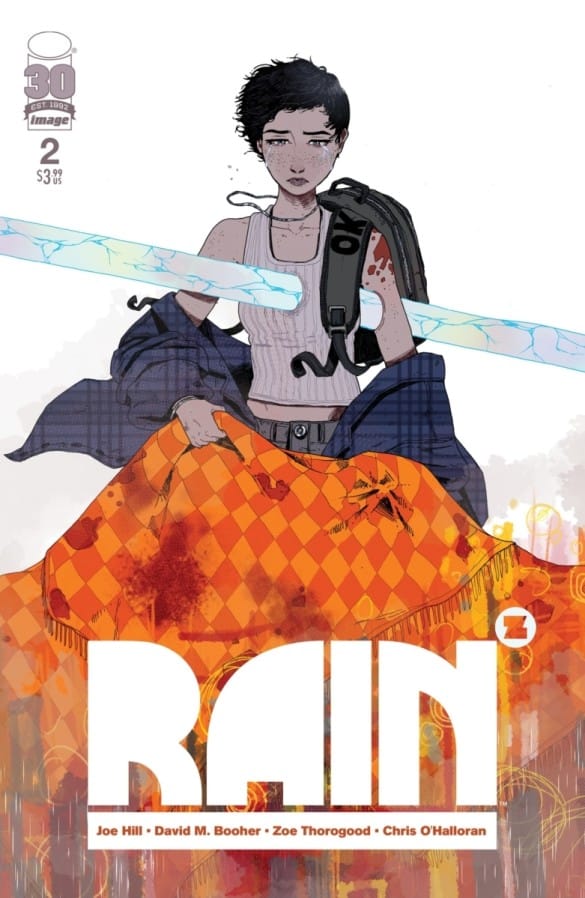
The road trip part of the apocalyptic road trip kicks in in Joe Hill’s Rain #2 as Honeysuckle Speck heads to Denver to tell her girlfriend Yolanda’s dad, Dr. Rusted, that his wife and daughter died in the rain of stony needles. Along the way, she picks up a couple stragglers/traveling companions and runs into a weird doomsday cult that gives Zoe Thorogood and Chris O’Halloran a chance to showcase their action chops. However, for the most part, Joe Hill, David Booher, and Thorogood focus on the human side of the end of the world. Like how do you wake up and eat breakfast when the woman you love is stuck with hundreds of needles and a short drive to Denver becomes a hell of a walk thanks to the whole tire puncturing thing.
With the exception of a giant wall of text exposition scene featuring the supporting character Ursula talking about her husband being possibly murdered by the government, Rain #2 never feels like an adaptation of a novella. For example, Thorogood uses a classic nine page grid to show the big picture of the president tweeting about the needles and the more personal story of Honeysuckle removing the needles from Yolanda with a news anchor getting emotional about his wife and kids being stuck in the epicenter of the event acting as a middle ground to show that is a horrifying event that not even the most calm and collected profession can evade. On top of the art is Booher’s narrative captions which collect Honeysuckle’s feelings and memories of Yolanda in evocative prose. It makes for a dense, resonant reading experience with O’Halloran’s flat reds and blues conveying the reflection meets sadness/rage that Honeysuckle and other folks in this Kansas/Colorado area are feeling. Thorogood also picks interesting angles for her images, and Honeysuckle doesn’t even show her face until page three because she is consumed with grief while also coming up with a plan to find Yolanda’s father.
Another strength of Rain #2 is the dialogue from Joe Hill and/or David Booher. At times, Honeysuckle feels like a cowboy, and Thorogood puts in lots of panels focusing on her boots that will protect her from the needles littering the ground on her way to Denver. She quips like she’s in a Bruce Willis movie to a death cult/tax shelter that claims the rain was predicted by their leader and will help them find enlightenment in another dimension, and she scraps like an unlikely hero in the aforementioned scene that is also depicted in yet another nine panel grid. (Silent this time because talking or even captions often ruin the flow of a fight.) Wisely, Hill, Booher, and Zoe Thorogood don’t strip away all the slice of life trappings from the book with waffles, iPads, Starbucks, and (not that they’re helpful) umbrellas still making appearances in addition to two page spreads of apocalyptic landscapes with impaled bodies. Plus a determined Honeysuckle isn’t afraid to go all Wolverine on some cultists.
Not really in content, but in form, Rain #2 reminds me of the better Vertigo books which would pair a prose stylist with a skilled visual storyteller to create comics bursting to the seams with information while also being fun to read and follow. Joe Hill, David Booher, Thorogood, and Chris O’Halloran have balanced heavy emotions of unexpected loss of life with quirky post-apocalyptic story elements like a kid with a cape who thinks he’s a vampire or an MMA fighter turned cat protector. Zoe Thorogood’s ability with facial expressions and Hill and Booher’s insightful captions really connect me to Honeysuckle as a character while I’m also intrigued to learn more about how this disaster is affecting the world and perhaps even its origin.
Story: Joe Hill Adaptation: David BooherArt: Zoe Thorogood Colors: Chris O’Halloran Letters: Shawn Lee Story: 7.8 Art: 9.0 Overall: 8.4 Recommendation: Buy
Image Comics provided Graphic Policy with a FREE copy for review
Although Sam Levinson wisely bookends “A Thousand Little Trees of Blood” with sequences of Rue (Zendaya) dealing with her withdrawals with the help of her mom Leslie (Nia King), little sister Gia (Storm Reid), and sponsor Ali (Colman Domingo), Euphoriais back to its multiple storyline juggling ways in “A Thousand Little Trees of Blood.” And they range from sick and twisted, yet compelling (Anything Nate Jacobs touches) to too damn sweet (Fezco and Lexi talking about her playing and crying and Stand By Me) and utterly forgettable (Kat and Ethan break up after barely interacting this season). There’s also that crime plot line baked in, and Laurie doesn’t make an appearance, but it definitely seems like Fezco (Angus Cloud) and Ashtray (Javon Walton) could be in trouble from the police or a rival drug operation. This episode feels like a deep breath before a tragedy, and its ending is especially bleak after the slight hope at the end of the whirlwind of “Stand Still Like the Hummingbird”.
Levinson spends most of the opening of “A Thousand Little Trees of Blood” showing Rue struggle with drug withdrawal as there’s bit of time between her returning to rehab. She has less screen time than the previous episode, but Zendaya still gives a strong physical and verbal performance as Rue calls Ali and apologizes for reducing him to his addiction to crack and struggles with his ex-wife and children. It’s interesting to see the difference between the eloquence of Zendaya’s narrator and the sheer emotion of her speech patterns as Rue with her realization that Ali is under no obligation to forgive her. This idea continues in his interactions with Gia, who helps him make dinner, and he gives her attention and advice in contrast with Leslie, who’s trying to keep the family together, and Rue, who is consumed by her addiction. They aren’t chatting away like buddies, but Ali can get through the defenses Gia has built for herself after the trauma of her dad dying and Rue overdosing. Domingo is one of the true “good” people in Euphoria, and the fact that he helps and believes in Rue even after she treated him like shit gives an air of hope to every scene he’s in. That’s why the dark coda to this episode hits so hard because he’s not there when Leslie gets a fateful call from a healthcare provider.
Before diving into the utter drama of the Nate/Cassie/Maddy situation, I want to touch on this episode’s main misfire, and a character arc/relationship that has been scattershot all season. I kid you not, but Kat (Barbie Ferreira) got her boyfriend Ethan (Austin Abrams) to break up with her because she faked having a brain disorder and then jumped down his throat when he feigned skepticism about it after she pivoted from talking about possibly breaking up. It’s dysfunction at its finest, and I feel bad for the waiter, who lost out on the table at the restaurant that they’re meeting at. Honestly, the conversation is a metaphor for how Kat and Ethan have been characterized all season, which is vague and written in broad strokes like the scene about self-love that ended up having nothing to do with the conversations they actually have. Also, I hate to say this, but Kat and Ethan could have been written out of this season, and it would have had no effect on the story although he is involved in Lexi’s (Maude Apatow) play down the road.
Sam Levinson crafts scenes where Nate (Jacob Elordi), Cassie (Sydney Sweeney), and Maddy (Alexa Demie) are apart to really vent their feelings about the situation of Nate and Cassie sleeping together even though Maddy loves Nate and is Cassie’s best friend until going full darkness with a bit of an erotic thriller when he finally decides to act. For the most part, Sweeney is in freak out mode and playing Cassie totally unhinged leading up to a scene where she reunites with Nate and says that she ruined her life to be with him. Her mom Suze (Alanna Ubach) plays off her with pure disdain as she just wants to drink her wine and watch day time TV instead of having her daughter try to justify betraying a friend. There is a look towards of the end of the episode where Suze maybe realizes that she should have been more listening and empathetic towards her daughter and figured out why she was so obsessed with Nate.
Yes, she could have been more like Samantha (Minka Kelly), who Maddy babysits for and opens up to after sharing a couple glasses of wine at her pool. Before they chat, there’s another scene of Maddy trying on Samantha’s clothes and presumably fantasizing about a stable life with nice things as Levinson cuts to a camera on the digital clock in the closet. However, Maddy isn’t punished, but finds a listening ear in Samantha, who slept with one of her friend’s boyfriends in college and never heard from her again. This definitely sets Maddy off, but they end up finding common ground when Samantha shares that people back then thought she was too “messy” to be a mom or married. Characters have said the same thing about Maddy this season, and Nate’s mom Marsha (Paula Marshall) even refers to how she behaved at the carnival last season when Nate choked her. Marsha also mentions that she was glad Nate didn’t get her pregnant because she would have kept the baby out of spite. The chat between Samantha and Maddy shows that she can break the cycle of break up/get back together with Nate and get a fresh start.
However, this is all undercut when “A Thousand Little Trees of Blood” goes full horror, including a creepy static shot of Nate sitting in Maddy’s bedroom with a gun while she changes after her babysitting job. It gets even worse as Sam Levinson goes for intense close-ups, and Nate doesn’t address their relationship or the cheating at all. He just wants the CD of his dad having sex with Jules (Hunter Schafer) so it won’t get out that he’s the son of a pedophile when he takes over his dad’s real estate company. This sequence and another one where Nate gives the disk to Jules shows how free he feels without his dad in the picture, but he’s still “flawed” like his wine-drunk mom Marsha said earlier in the episode. These two scenes show that Nate is beyond redemption even though Jules darkly jokes about him being a good person, and he continues to be manipulative inviting Cassie over to stay with him as she is in the throes of emotion. Jacob Elordi channels real darkness in his portrayal of Nate from his half-bored line delivery to his overpowering physicality as every woman he interacts with this episode from his mom to Jules is afraid he’s going to get violent. It’ll be interesting to see what happens with the CD he gave Jules, especially after an earlier scene in the episode implied that he wanted to wipe all traces of his dad’s pedophilia to not ruin the family business.
A dark cloud of toxic masculinity in the form of Nate Jacobs was over Euphoria this episode, but there was room for sweetness in Lexi and Fezco’s interactions. Cinematographer Marcell Rev even lights up their scenes making it feel like a relaxed mid-afternoon hang instead of an emotional roller coaster with rain and darkness. Fez continues to be interested in Lexi and asks about the premise of her play that he basically deduces is Stand By Me with women so they end up watching the movie, crying, and singing at the end. This time is a nice escape from the conflict between Maddy and Cassie as well as Fezco getting reprisals for Ashtray killing a rival drug dealer in the season premiere either from other drug dealers or the police. It also fits in with Lexi’s character as she uses fiction and fitting her life into narrative to make sense of things, hence, the play.
While continuing to focus on his strong suit as writer/director/creator, namely Rue’s addiction and letting Zendaya’s explore those painful emotions, Sam Levinson also resolves (for now) the Nate/Cassie/Maddy situation while giving each character some time on their own to chat with either their own mothers or mother-type figure about relationships and who they are as people. The support or lack of support they get ends up dictating their actions this episode, and we also see this is in Rue’s story with Leslie fighting to get her in rehab and not just detox as the hour concludes. “A Thousand Little Trees of Blood” didn’t have the momentum of the previous episode, but it felt less bloated than many of the episodes this season that juggle multiple plotlines even if Kat and Ethan’s stories this season have been non-starters.
The premise of Hecate’s Willby cartoonist Iolanda Zanfardino is centered around the last works (Or will and testament) of a New York guerrilla artist named Hecate before she goes back to “normal life” as Rebecca the tailor. In addition to her art, Hecate is also doing costumes for a revival of Rent at a local queer community center, and her ex is in the cast so there’s lots of sniping behind the scenes. Hecate’s Will #2 is a true slice of life story going through Hecate’s day-to-day as she makes her art, visits friends, and grapples with what normalcy is through a queer lens.
My favorite sequence in Hecate’s Will #2 is a silent page early on where Hecate is walking from her art installment to her friend Amber’s clothing store to pick up some outfits and smoke weed. Zanfardino nails aggressive, powerful queerness as she brings out the bold red in Hecate’s hair as she walks by some boomer white women in her jacket with a dyke patch on it and simulates cunnilingus as they wander off feebly talking shit. Iolanda Zanfardino’s art is so playful in this scene as she shows Hecate channeling the swagger and fearlessness in her art that she installs in very public places like the New York Times building. (Take that opinion page that belongs in the Washington Times!)
However, Hecate contains millions, and we her softer side as she smokes with her friends Amber and roasts New Yorkers, who pay a high price for clothes they could find cheaper at a thrift store, but they don’t want to spend the time or effort to go to those spaces. She’s also kind to a young trans kid who doesn’t want to have his top surgery scars showing in his costume and has flashbacks about her childhood in Italy and is generally a fascinating character. Iolanda Zanfardino goes away from melodrama in her plotting and spends a lot of time on Hecate’s inner life through both narrative captions and powerful images like a close-up of her lip quivering when she realizes that she’s mesmerized by her ex’s talent. But, then, a laugh brings her out of her reverie, and she’s back to hating.
Hecate’s Will #2 goes from big ideas about art, queerness, discourse, and found family to more personal moments like the aforementioned friendship/passive aggressive ex thing with style and grace. Iolanda Zanfardino doesn’t just preach her ideas about wonderful queer community helping people experiencing homelessness, but shows it in action in a holiday dinner montage that is juxtaposed with captions about Hecate thinking about spending holidays with her biological family once she “retires” from art and becomes Rebecca again. The art is happy, but the words are sad. However, there is a real air of hope to wrap up the comic even though Hecate may end up turning her back on her work and community to embrace normalcy, whatever the hell that means.
Boasting a variety of storytelling styles from the full page spreads of Hecate’s art to dinner table montages and characterization expanded up on in glances, Iolanda Zanfardino’s Hecate’s Will #2 unpacks its protagonist’s journey and feeling at its own pace leaving time for being deep in thought, taunting the straights, or spending time with old friends. It’s art about art, but mainly focuses on Hecate’s daily life, friendships/drama, and the personal context behind her images ending up as an intimate character study that embraces the collective (Aka the dinner at the end) and not just navel gazing.
“Stand Still Like the Hummingbird” is a beyond stressful episode of Euphoria as Rue Bennett leaves physical and emotional damage in her wake when an intervention featuring her mom Leslie (Nika King), sister Gia (Storm Reid), Jules, and Elliot goes terribly wrong. Zendaya is an Emmy-worthy wrecking ball in this episode and burns bridges with literally everyone except Laurie, who wants to get her hooked on morphine and sexually traffick her. Writer/director Sam Levinson creates tension in this episode from a variety of pressure points from Rue withdrawing to how she says terrible things to Leslie, Gia, and Jules and finally her fear of Laurie after Jules tells her that she and Leslie flushed the drugs down the toilet. Plus she makes a little pit stop at the Howards’ house and reveals that Cassie has been sleeping with Nate, which predictably makes Maddy go psycho, and more pragmatically for Rue, it allows her to avoid an intervention while evading police, causing a car accident, and committing robbery along the way.
Unlike the bloat of the previous three episodes, Levinson’s script is lean, mean, and emotionally compelling spending almost 20 minutes on Leslie, Gia, and later, Jules confronting for relapsing in her drug use. He really pulls at the heart strings by opening with Leslie and Rue off-screen arguing while Gia is in her bed putting headphones in and just feeling terrible. Reid does a good job playing basically a kicked dog and has a great moment later in the episode when she’s just messing around on her phone trying to keep her mind off the fact that her sister is back on hard drugs and is on the run. However, once the camera focuses on Leslie and Rue, it’s a heated, close quarters battle filled with anger, sadness, tears, and the dashed off sarcasm that Zendaya delivers deadpan and is worse than yelling “Fuck you” at her mom and friends. She tells Gia that she has to be a lawyer or neurosurgeon so that Leslie doesn’t look like a bad mom after her dad passed away, and the low blows are fully on display later in her conversation with Jules when she says that Jules doesn’t actually love her, but wants to be loved. Rue also brings up how she left her behind while taking the train at the end of Season One and ultimately salts the ground of her friendship.
Sam Levinson and editor Julio Perez do an excellent job of opening up the cramped frame to show that Jules and Elliot have been listening to Rue’s outburst the whole time, and they and Marcell Rev play with foreground and background a lot in “Stand Still Like the Hummingbird”. For example, there’s a lingering shot focusing on morphine and a chipmunk knick knack while Laurie feigning motherliness to Rue in the bath tub is blurred out in the background. Unlike Leslie, Laurie just cares about her money and will do everything to get it back. Martha Kelly brings an even keel, Midwestern faux warmth to the role of Laurie, and her kind demeanor is the exact opposite of her high security dwelling with locks from the inside on all the doors and all but one window locked as well plus parrots acting as a kind of analog security system to go with her muscle that made teenagers strip down in the Euphoria Season 2 premiere. It’s a frightening environment, and Levinson directs a mini-thriller with the threat of Rue being sex trafficked looming in the background every time a floorboard creaks or the scary men that Laurie keeps around almost wake. Oh, and while this is going on, Rue is about to dry heave from her withdrawals even though it’s not as bad as earlier in the episode.
The scenes between Leslie driving Rue back to rehab and her harrowing night at Leslie’s are basically one big chase sequence broken up by the aforementioned interlude at the Howards’ house and a shorter one where Fezco gives her some tough love and physically lifts a withdrawing Rue from his house after she tries to take some of his grandma’s pills. After the raid last season, Fezco has completely separated his work as a drug dealer with his home life so his inability to help Rue makes sense. The scene at the Howards, which features Maddy, Cassie, Lexi, and the always underutilized Kat is full of drama thanks to the big reveal with Alexa Demie doing some impressive acting with her hands and obliterating Cassie with cutting remarks. However, it comes across as petty high school drama in the middle of an intervention with a suicidal drug addict, who could lose her freedom. And Leslie understands as she tries to talk over the bullshit and get back to helping Rue, who gets away.
What follows is a physical manifestation for all the emotional hurt that Rue has shown the people she loves as she steals from a random rich and angry couple’s house and then goes on the run from the police ruining people’s get togethers, yards, and of course, the aforementioned car accident. The first bit of the episode was mostly score-less, but Labrinth’s bass and vocals kick in as Rue hops fences, hides in trash bins, and eludes cops, flames on a grill, and prickly pear cacti to just name a few. Sam Levinson films this chase sequence to show how self-centered Rue is in her quest to get some pills to stave off the withdrawal sickness that has her clutching her stomach and vomiting between parkour, real life Frogger, and Grand Theft Auto sans the cars. After the fiery, yet emotionally grounded conversation/argument/intervention with her family and friends, this part of the episode is very heightened and honestly transitions very well into the world of drug kingpin Laurie. It also show that Rue has hit rock bottom and alienated all of her family and friends except for her mom, who searched for her all night and welcomes her in the episode’s closing minutes.
Along with addiction, primal fear, and anxiety, Levinson and Zendaya tap into Rue’s grief about the loss of her father. It flares up early on when she throws it in Leslie’s face and returns when she’s submerged in the tub at Leslie’s house in almost a recreation of Euphoria’s pilot’s opening scene that began with Rue’s birth. There’s a flashback of her dad holding her, her heartfelt speech at his funeral, and even her looking at Gia in the infant ward showing the bond they had from the beginning. This sequences creates sympathy for Rue that even though she’s slagged off the people she cares about most in her life that she’s still a human being who’s going through utter hell that happens to be an addict.
Heart-rending performances from Zendaya, Nika King, Hunter Schafer, and Storm Reid plus a gonzo foot chase and a tense mini-thriller that sets up Laurie as an even more sinister figure than Cal Jacobs makes “Stand Still Like the Hummingbird” easily the best episode of Euphoria Season 2. Sam Levinson doesn’t shy away from showing rock bottom for an addict with he and Zendaya putting the lies, sneaking, and manipulation on the play to go with the pain and anger that Rue feels as she struggles with withdrawal symptoms, estranging her family and friends, and having to payback a chilling drug lord. Zeroing in on Rue’s addiction and how it affects everyone around her was effective and honest storytelling from Levinson, but it does make the show’s other subplots (Cassie sleeping with Nate, Lexi’s play, Kat’s relationship issues, whatever the fuck Cal Jacobs is going through) pale in comparison.
Euphoriareally bounces back in the middle episode of Season Two. It leans on its two main strengths: a unique visual style from writer/director/creator Sam Levinson and cinematographer Marcell Rev as well as music that brings out the inner lives of characters whether that’s Labrinth’s score (He has a cameo in “You Who Cannot See, Think of Those Who Can“) or the cues chosen by music supervisor Jen Malone. Beginning with a montage of Jules and Rue in various famous paintings (Frida Kahlo’s self-portrait, “Birth of Venus”), photographs (John Lennon and Yoko Ono by Annie Leibovitz), and films (Titanic, Brokeback Mountain), Levinson sets up a basic, yet powerful theme of our own self-reality being different that what people perceive and explores it through different cast members of Euphoria culminating in powerful montage that nails where different characters are in their stories in one image. There are other connections between the storylines like alcohol’s ability to make character’s tell the truth about themselves (Often in a disgusting way) and love triangles, namely, Rue/Jules/Elliot and Nate/Cassie/Maddy.
Sam Levinson spends this episode cutting between three major storylines. There’s Rue, Elliot, and Jules hanging out and failing at platonic relationships and monogamy broken up by a liquor store theft that shows Dominic Fike can do funny and mixed signals. Along with this, there’s Maddy’s birthday party, which means Cassie’s anxiety is on overload as she wants to celebrate her friend and also feels guilty about sleeping with Nate behind her back. Finally, in a sequel to the flashback sequence from last episode, Cal Jacobs dusts off his old jeep and drives to the gay bar where he shared a tender moment with Derek as a teenager and realizes he hates himself, is a hypocrite, a fool, and predator.
The early part of the episode leans heavily on the chemistry between Fike and Hunter Schafer as Jules and Elliot joke about Rue faking an orgasm at the start of the episode and start messing around until Rue sends them a text about being outside. The faked orgasm happens because Rue is so high from the stock of drugs she got in the previous episode (And is definitely not selling), and Levinson contrasts the awkwardness between Rue and Jules with the physical bond between Jules and Elliot. Elliot is definitely being manipulative in this episode, but he has a moment of clarity when he comes clean later in the episode and tells Jules that he has been doing drugs with Rue. For once, he speaks directly instead of hiding behind flirtation or jokes.
Intensified by Rue getting high, “You Who Cannot See, Think of Those Who Can” spends a lot of time showing Rue’s feelings about her dad’s passing and relationship with Jules in dream sequences set up Labrinth’s vocal and scores. As mentioned earlier, Labrinth appears in this episode singing and embracing Rue as she thinks about her father and is actually swaying by herself in her room. This is the slowed down, sadder version of the musical number at the end of Euphoria Season One, and Rue sits in her grief and negative energy. In fact, after Rue drinks alcohol, Zendaya strips the humor from her performance and goes darker and more straightforward. Her actions may have had an influence on Elliot finally telling Jules about his and Rue’s drug use that is how they initially bonded in the season premiere. Labrinth’s fallen angel score and vocals convey Rue’s emotions in this episode better than any dialogue and shows Euphoria is at its best when it shuts the fuck up and lets him, Rev, and Sam Levinson paint with sound and light.
In contrast with these more physical sequences, the party is a little talkier with some flat CW-esque line delivery from Jacob Elordi about where he stands with Cassie and Maddy. However, Alexa Demie gets to channel some of the energy from the carnival episode last season and pick apart Nate’s tone of voice with Kat backing her up and helping her call out some of his toxicity while also wanting to be with him. And, of course, this is happening while a super drunk Cassie is in the hot tub right next to him. After being rejected and snubbed by Nate, Sydney Sweeney nails Cassie’s sad, drunk state as she dances alone to a Sinead O’Connor song and becomes interwined with balloons all leading up to an epic moment of vomit that kills the party and once and for all reveals that something isn’t right with her. Cassie is suffering alone this episode with Lexi turning her story into a play, Maddy and Nate dealing with their relationship status, Kat not being into her underwritten relationship with Ethan, and her mom trying too hard to be Amy Poehler’s character in Mean Girls.
That theme of suffering alone continues to a much less sympathetic character: Cal Jacobs. The veneer of stern patriarch is all but gone in this episode as he returns to the gay bar he frequented with Derek and slow dances with man whose face almost gets superimposed with Derek’s. As O’Connor’s music plays (The same song as Cassie dances to.), Levinson slyly cuts to the other, predominantly younger denizens of the gay bar to show that Cal is in his own little world. Eventually, awkward looks turn into full on melodrama as Cal is unceremoniously kicked out of the bar when he tries to relive his wrestling and then rants to his wife and sons about how he loves to sleep with men and transgender women while urinating in the foyer. Even though both feature nostalgic New Wave music, Cal’s scenes in this episode are the polar opposite of the previous as Eric Dane goes full id and destroys his reputation and persona of town father in a single night. He’s super pathetic and doesn’t respect people’s boundaries and is definitely the worst part of Euphoria, but it’s nice to see Sam Levinson utterly cut him down to size instead of creating sympathy for him.
Lexi’s play auditions and Fezco, Ashtray, and Faye’s movie night seem extraneous and not as connected to the three major storylines, but for the most part, “You Who Cannot See, Think of Those Who Can” lets Levinson, Rev, and Labrinth wallow and play in light, darkness, music, and emotion that is bolstered by strong performances from Zendaya, Hunter Schafer, Sydney Sweeney, and Eric Dane with Sweeney and Dane seasoning their tears with gallows humor. With the aid of alcohol, drug abuse, projectile vomiting, and public urination, this episode rips the Band-Aid of the facade that characters have built for themselves whether that’s a play tent in a snow storm (Rue) or a well-built mansion (Cal Jacobs).
Steve Orlando, Creees Lee, and Rain Beredo put their own imprint on the Marauders in Marauders Annual #1 with a more active approach to the team’s activities, queer subtext/text, deep cut characters from the merry mutant library, and general mayhem. This issue wisely combines the assembling the team and first mission to make for a satisfying reading experience. It has explosive action and also grapples with Krakoa’s ideology with this issue’s antagonist, Brimstone Love (Last seen in X-Men 2009!)
Before sending the Marauders on a rescue mission, Orlando and Lee take some time letting readers get to know the new members of the team, namely, Akihiro, Psylocke, Aurora, Tempo, and Somnus. The cold open of Marauders Annual #1 is centered around Akihiro and shows a side of him not usually explored my most of his writers as he investigates a Morlocks graveyard in Greenwich, Connecticut and tries to figure out who’s been preying on mutants. He ends up motivating the Marauders’ first mission. With close-ups of Psylocke’s face, Creees Lee captures the sadness and regret she’s felt after Hellions, and the way her daughter was used to blackmail and manipulate her ends up being her motivation for joining the team.
Tempo’s intro sequence is the most clever, and she uses her powers to fast forward through a breakup conversation with Orlando and letterer Cory Petit turning in one hell of a run on piece of dialogue. He and Lee indulge in some soapiness meets disaster bisexuality by having two of Akihiro’s exes on the team, namely, Somnus (Who gives Iceman the prom night he deserved) and Aurora. All of the Marauders have a heart to help their fellow mutants, but have been through shit in their personal lives so being on this team is an opportunity to turn this negative energy into something positive and productive. The Marauders are a little messier and edgier than the X-Men, but have more of a moral compass than the X-Force and bring more of an inclusive approach to Krakoa in contrast with the cloak and dagger work of the Hellfire Trading Company and Quiet Council even though Kate Pryde and Bishop are still involved in that side of the business.
What makes Brimstone Love such a compelling antagonist in addition to his Tenacious D music video design is that what he’s seeing makes sense in many cases. Krakoa definitely has a cult-ish vibe, and by making a country ostensibly only for mutants, it does go against Professor X’s initial ideas of mutant/human coexistence. (The climax of the comic happening at the long-neglected Xavier School for Gifted Youngsters drives the point home.) The Morlock Carver especially makes some great points about Krakoa only being for “good” and good looking mutants, which makes sense because many of the former Morlocks are kept out of public life and live in a kind of retirement community in Arizona as seen in the previous volume of Marauders. Carver betraying Akihiro undermines his ideas, but it shows that Steve Orlando (and hopefully other “Destiny of X” writers) is critically dissecting the Krakoan experiment and even connecting the current Marauders team to the original mutant-killing one from the “Mutant Massacre” crossover.
On the flipside, what Brimstone Love and his followers use to explain their actions reminds me of what a lot of cis het allies say to queer folks (*cough* Bachelorette parties at gay bars, or having “ally” be a part of the LGBTQ+ umbrella) when they’re mad that we want spaces for our community. For example, a human talks about how the founding of Krakoa undermined his work to fight for “mutant rights” in a way that sounds like a lot of liberals who think that fighting for LGBTQ+ rights ends with the freedom to marry. Because maybe some of us don’t want to be apart of this institution and form relationships in a new way. That’s just an example off the top of my head, and it’s cool to see Orlando and Creees Lee engage with queerness via the mutant metaphor while also featuring a superhero team where the queer members outnumber the straight ones.
Marauders Annual #1 rejuvenates the concept of the Marauders of a team with new members that are sure to bring intrigue, drama, and cool powers. (See the Lee’s visualizations of Somnus and Tempo’s abilities.) Steve Orlando and Creees Lee also use the new-look Marauders to explore things like respectability politics and safe spaces while also including violent brawls against bad guys from the 1990s that look like a fundamentalist preacher’s worst nightmare. I’m all aboard with this new book and am interested to see how Marauders recontextualizes characters from the X-Book’s past while engaging with the metaphorical connection between queerness and being a mutant while having kick-ass, attitude filled fight scenes.
Story: Steve Orlando Art: Creees Lee Colors: Rain Beredo Letters: Cory Petit Story: 8.2 Art: 7.7 Overall: 8.0 Recommendation: Buy
Marvel Comics provided Graphic Policy with a FREE copy for review